Characterisation of
“Catalão” and “Salsichão” Portuguese traditional
sausages with salt reduction
Marta Laranjo
a, Ana Gomes
b, Ana Cristina Agulheiro-Santos
a,b, Maria Eduarda Potes
a,c, Maria João Cabrita
a,b,
Raquel Garcia
a, João Miguel Rocha
a,1, Luísa Cristina Roseiro
d, Maria José Fernandes
e,
Maria Helena Fernandes
e, Maria João Fraqueza
e, Miguel Elias
a,b,⁎
aInstituto de Ciências Agrárias e Ambientais Mediterrânicas (ICAAM), Instituto de Investigação e Formação Avançada (IIFA), Universidade de Évora, Pólo da Mitra, Ap. 94, 7006-554 Évora, Portugal
b
Departamento de Fitotecnia, Escola de Ciências e Tecnologia, Universidade de Évora, Pólo da Mitra, Ap. 94, 7006-554 Évora, Portugal c
Departamento de Medicina Veterinária, Escola de Ciências e Tecnologia, Universidade de Évora, Pólo da Mitra, Ap. 94, 7006-554 Évora, Portugal d
Instituto Nacional de Investigação Agrária e Veterinária, I.P., Campus do IAPMEI (Edifício S), Estrada do Paço do Lumiar, 22, 1649-038 Lisboa, Portugal e
CIISA, Faculty of Veterinary Medicine, University of Lisbon, Avenida da Universidade Técnica, Pólo Universitário do Alto da Ajuda, 1300-477 Lisbon, Portugal
a b s t r a c t
a r t i c l e i n f o
Article history: Received 21 August 2015
Received in revised form 16 December 2015 Accepted 26 January 2016
Available online 27 January 2016
The present study evaluated the effect of salt reduction on traditional dry-cured sausages' safety, quality and product acceptance, comprising physicochemical and microbiological parameters, biogenic amines, fatty acids, texture profile and sensory analysis. According to our results, salt content had a major effect on microbiological counts, although not compromising the products' safety. Marked differences were identified regarding biogenic amines, in particular for histamine, tyramine and cadaverine, which were detected in larger amounts in products with 3%. Moreover, significant differences in the fatty acids profile have also been found, but only in less abundant components such as linoleic, lauric and heneicosanoic acids. Texture profile analysis of low-salt products, revealed a decrease in hardness and chewiness, along with an increase in adhesiveness values. Sensory evaluations revealed that despite the less intense aroma, products with 3% salt, had a more balanced salt perception. Our results suggest that salt content may be reduced to 50% in dry-cured products, with the obvious health-related advantages.
© 2016 Elsevier Ltd. All rights reserved. Keywords: Sodium chloride Dry-cured sausages Safety Biogenic amines Fatty acids
Texture profile analysis Sensory evaluation
1. Introduction
Sodium chloride has a number of technological benefits, which make
it an essential ingredient for food industry and meat industry in partic-ular. Due to its antimicrobial properties, it inhibits both the growth of the microbiota involved in products' spoilage and pathogens that
might pose consumers' health at risk (Slobodan & Vesna, 2011).
Fur-thermore, it also has the ability to enhance meat products' texture,
col-our and taste (Aaslyng, Vestergaard, & Koch, 2014; Corral, Salvador, &
Flores, 2013; Tobin, O'Sullivan, Hamill, & Kerry, 2013).
The correlation between excessive salt consumption and high blood
pressure has been repeatedly demonstrated over the years (MacGregor
& de Wardener, 2002). Hypertension in its turn increases the risk of
developing cardiovascular diseases, which is known to be the leading
cause of global death (WHO, 2011). A similar scenario has been
ob-served in Portugal, where cardiovascular diseases are among the
prima-ry causes of morbidity, mortality and disability (Ribeiro, Furtado, &
Pereira, 2013), as a result of several risk behaviours, namely dietary
habits. Furthermore, salt in processed meats is considered an important
risk factor for stomach cancer (Key et al., 2004). In face of its negative
impact on public health, recommendations have been made in order
to reduce salt consumption (Bibbins-Domingo et al., 2010; EC, 2012;
WHO, 2002).Bibbins-Domingo et al. (2010)predicted the effect of
die-tary salt reduction on the development of cardiovascular diseases, and estimated that even moderate reductions could substantially diminish coronary heart disease, strokes and the annual number of deaths. For this reason, meat products are frequently associated with high salt levels, making them unappealing from the nutritional standpoint, lead-ing to an increaslead-ing pressure over meat industry to reduce the amounts of added salt.
Despite the health benefits associated to salt reduction, some issues
on products' safety and sensory properties can arise (Benedini, Parolari,
Toscani, & Virgili, 2012). Regarding sensory properties, products' colour
is affected by the reduction of salt content, where a paler colour is
usu-ally observed (Aaslyng et al., 2014; Tobin et al., 2013). Moreover, a less
⁎ Corresponding author at: Instituto de Ciências Agrárias e Ambientais Mediterrânicas (ICAAM), Instituto de Investigação e Formação Avançada (IIFA), Universidade de Évora, Pólo da Mitra, Ap. 94, 7006-554 Évora, Portugal.
E-mail address:[email protected](M. Elias). 1
New address: Centro de Engenharia Biológica, Universidade do Minho, Campus de Gualtar, 4710-057 Braga, Portugal; Departamento de Engenharia Química; Faculdade de Engenharia da Universidade do Porto, Rua Dr. Roberto Frias, 4200–465 Porto, Portugal.
http://dx.doi.org/10.1016/j.meatsci.2016.01.015
0309-1740/© 2016 Elsevier Ltd. All rights reserved.
Contents lists available atScienceDirect
Meat Science
salty taste, as well as a weaker characteristicflavour, has also been
re-ported (Corral et al., 2013; Ruusunen & Puolanne, 2005). In Italian
sala-mi, salt reduction induced a significant increase in lipid oxidation
(Zanardi, Ghidini, Conter, & Ianieri, 2010). On the other hand, from
the technological standpoint, small amounts of salt influence meat
proteins' ability to retain water, therefore affecting texture, as well as
the binding capacity of meat and fat (Desmond, 2006). Moreover,
mi-crobial loads are prone to increase, compromising products' stability, due to the lack of the salt's antibacterial effect. The released bacterial decarboxylases can remove the amino acids carboxyl group, leading to the accumulation of biogenic amines, which are often associated to
consumers' adverse reactions (Alvarez & Moreno-Arribas, 2014).
In Portugal, the production of dry-cured sausages is a deeply rooted practice, often related with cultural practices that are characteristic of each region. For this reason, apart from food safety issues, a reduction in salt content must be carefully evaluated in order to prevent products' mischaracterisation.
Taking the abovementioned issues into account, the present study evaluated the effect of a 50% reduction in salt content in two Portuguese
traditional products:“Catalão” and “Salsichão”, without depreciating
the products' sensory characteristics. For that purpose, physicochem-ical and microbiologphysicochem-ical parameters, biogenic amines, fatty acids (FA)
profiles and texture profile analysis (TPA) were assessed as function
of the amount of added salt. Sensory evaluation was also performed in order to determine the impact of salt reduction on consumers' acceptability.
2. Materials and methods
2.1. Dry-cured sausages processing and sampling procedures
Meat obtained from hybrid Iberian × Duroc pigs, was manually cut into large pieces and then mechanically minced (5.0 mm × 5.0 mm) and mixed with minced (5.0 mm × 5.0 mm) backfat (5%), white wine (3,5%), sodium chloride (NaCl), black pepper (Piper nigrum L.) (0.15%), white pepper (0.15%), cumin (Cuminum cyminum L.) (0.10%), disodium diphosphate (0.04%), pentasodium triphosphate (0.04%), NaNO3
(0.003%) and KNO2(0.003%). Nitrates and nitrites have been added in
the form of the commercial additive NITROS 5/5 (Formulab, Portugal). Two meat batters were processed differing only in salt content: low-salt (3% NaCl) and regular-low-salt (6% NaCl).
The batters were left for two days under refrigeration at 5 °C and 90% relative humidity for maturation purposes.
Salted natural casings were desalted as follows: casings were washed with running water and maintained in 3% acetic acid (v/v) for 1 h. After draining, washed casings may be stored at 7 °C for a maximum
of 48 h. Immediately before stuffing, casings were rehydrated in 2%
acetic acid (v/v) at room temperature for 30 min and then for another 45 min in water.
Each meat batter was then divided and stuffed into cleaned natural
casings with 36–38 mm (pig small intestine) for “Catalão” and 50–
55 mm (pig large intestine, rectum) for“Salsichão”. Each sausage
(end-product) weighted around 150 g for“Catalão” and around 300 g
for“Salsichão”.
Chemical and microbiological characteristics of raw meat, salt (only microbiological parameters) and casings have been studied before
(Elias & Carrascosa, 2010).
The drying process took place in an environmental controlled
chamber (7 °C and 80–85% relative humidity) until a 35% weight loss
was reached, which took about 18 days or 35 days for“Catalão” and
“Salsichão”, respectively.
Three independent batches were processed, with duplicate samples being collected at three different ripening stages: 0% (meat batter,
im-mediately before stuffing), 20% (half-cured product) and 35% weight
loss (end-product). Sausages were immediately analysed for physico-chemical and microbiological parameters, TPA and sensory evaluation,
whereas samples for determining biogenic amines and FA profiles
were immediately frozen and kept at−20 °C until they were analysed.
Textural and sensory analyses were performed only for end-products. 2.2. Physicochemical parameters
Dry-cured sausages salt content was confirmed following the
analyt-ical protocol described inISO 1841-2 (1996). After the casings were
removed, pH was determined using a Crison 507 pH-meter (Barcelona,
Spain) according to procedures described inISO 2917 (1999)and water
activity (aw) measured with a hygrometer (Hygroskop Rotronic DT, Zurich, Switzerland) equipped with a WA-40 probe at 25 °C.
2.3. Microbiological analyses
Microbial analyses were performed following the analytical
proto-cols described byLaranjo et al. (2015). For that purpose, 10 g of each
sample were diluted into 90 mL of peptone water (BDH Prolabo), deci-mal dilutions prepared, pour-plated and incubated as follows: meso-philic bacteria in Tryptone Glucose Extract (TGE) Agar (Scharlau) at 30 °C for 48 h; lactic acid bacteria (LAB) in de Man, Rogosa and Sharpe (MRS) Agar (Scharlau) at 30 °C for 48 h under anaerobic conditions in an AnaeroJar (Oxoid) using an AnaeroGen sachet (Oxoid); entero-bacteria in Violet Red Bile Glucose Agar (VRBG) (Biokar) at 30 °C for 48 h; enterococci in Slanetz and Bartley Agar (Biokar) at 37 °C for 48 h, staphylococci in Mannitol Salt Agar (MSA) (Biokar) at 37 °C for 48 h; yeasts and moulds in Rose Bengal Chloramphenicol (RBC) (Scharlau) at 25 °C for 48 h. Campylobacter spp. enumeration was performed with 10 g of sample homogenised in 90 mL of supplemented Nutrient Broth (Oxoid) and inoculated in Campylobacter Blood Free Selective Medium Agar (LABM). Plates were incubated for 48 h at 41.5 °C under microaerophilic conditions in an AnaeroJar (Oxoid) using a GENBox microaer sachet (bioMérieux). For E. coli counts 10 g of the sample were homogenised in Tryptose Phosphate Broth (Oxoid) and an aliquot was inoculated in Tergitol 7 (Biokar) supple-mented with triphenyltetrazolium chloride (TTC) (Biokar). Incubation was carried out 44 °C for a 24 h period. All microbiological analyses were carried out in triplicate and results expressed in log CFU/g.
For Salmonella spp. detection a pre-enrichment was performed homogenising 25 g of sample in 225 mL of peptone water (Scharlau) and incubated at 37 °C for 18 h. After this selective enrichment step, the resulting cell suspension was inoculated both in Rappaport Vassiliadis Broth (Scharlau) and in Muller-Kauffmann Tetrathionate (MKTT) Broth (Scharlau) supplemented with iodine solution and Brilliant Green-Novobiocin (Scharlau). After a 24 h incubation period, at 42.5 °C and 37 °C, respectively, both cultures were inoculated by surface streaking cultures in Xylose Lysine Deoxycholate (XLD) Agar
(Scharlau) and Hektoen Enteric Agar (Scharlau) andfinally incubated
at 37 °C for 24 h. Salmonella spp. presence was assessed by the growth
of typical colonies, their subsequent isolation and identification being
performed according toISO 6579 (2002).
2.4. Biogenic amines profile
The analytical protocol described byRoseiro, Santos, Sol, Silva, and
Fernandes (2006)was followed for biogenic amines extraction and
quantification. Four grams of previously homogenised samples were
ex-tracted with perchloric acid aqueous solution (0.4 M) and extracts were
centrifuged (10 min at 800g). The supernatant wasfiltered and the
resulting pellet extracted once more. Supernatants were combined,
the internal standard (1,7-diaminoheptane) was added andfinal
vol-ume adjusted to 50 mL. Biogenic amines derivatization was carried out using dansyl chloride in alkaline medium. The unreacted dansyl
chloride was then removed with ammonia andfiltered through an
Acrodisc membrane 25 mm GHP, GF 0.45μm (Gelman Sciences, Inc.).
chromatographic separation. The HPLC system was composed by an Al-liance Separation Module 2695 (Waters, Milford, MA), coupled to a Dual λ UV/Vis Detector 2487 (Waters, Milford, MA) set for 254 nm wave-length. Chromatographic separation was carried out with a Spherisorb
5μm ODS2 column with 4.0 × 125 mm (Waters, Germany) column
and a gradient elution program combining aqueous ammonium acetate solution 0.1 M as solvent A (Panreac, Barcelona, Spain) and acetonitrile as solvent B (Panreac, Barcelona, Spain). The gradient began at 50% and finished at 90% acetonitrile in 19 min with a 10 min equilibration step before the next analysis.
2.5. Fatty acids profile
After processing, sausages were minced, lyophilized and stored
under refrigeration at 4 °C in glassflasks until further analysis. FA
were extracted by accelerated solvent extraction (ASE) means using a
34 mL stainless steel extraction cell (fitted with two cellulose filters)
coupled to a Dionex 100 system. For that purpose, 300 mg of the lyoph-ilized sample were blended with 6 g of drying agent (Diatomaceous Earth, Dionex Corporation, California) and loaded into extraction cell. Lipidic fraction was extracted twice by static extraction cycles (5 min each) using a chloroform/methanol (60:40 (v/v)) solution (Merck, Darmstadt, Germany) containing 100 mg/L of 2,6-Di-tert-butyl-4-methylphenol (BHT), to prevent oxidation, at 100 °C and 12.4 MPa. Solvent was removed using a rotavapor R-114 coupled to a B-480 bath, a Vacobox B-177 and a vacuum controller B-720 (all from Buchi). Solid residue was then suspended in 1 mL chloroform and an
al-iquot (100μL) was once more dried under a stream of nitrogen and the
residue saponified in the presence of methanolic NaOH 0.5 N solution
(70 °C, 15 min). Samples fatty acids esterification was performed
using boron-trifluoride-methanol (10 g BF3/L CH3OH,
Merck-Schuchardt, Germany), according toMorrison and Smith (1964).
Quan-tification of fatty acids methyl esters (FAMEs) was accomplished using a
GC system (Hewlett Packard 6890 Series) equipped with split-splitless
injector, an auto-sampler, a flame-ionisation detector (FID), an
Omegawax 320 fused silica capillary column (30 m × 0.32 mm i.d.,
0.25μm film thickness, Supelco, Bellefonte, PA, USA) and HPChem
software (2002). During chromatographic analysis, oven temperature was raised from 140 °C to 240 °C at 4 °C/min rate and injector and detector temperatures were set to 250 and 270 °C, respectively.
Helium was used as carrier gas and wasflowing through the system at
a 1.2 mL/min rate. For peaks identification a 37-component FAME Mix
standard (Supelco) was used as reference complemented with the
determination of Kovats indexes (data not shown). For each sample,
the relative fatty acid composition was quantified.
2.6. Texture profile analysis
TPA was accomplished in accordance toCaine, Aalhus, Best, Dugan,
and Jeremiah (2003)andHonikel (1997)procedures. For that purpose,
five 1 cm thick slices from three different sausages were used. Double compression cycle tests were carried out at room temperature
(20 °C ± 1 °C) using a cylindricalflat-ended plunger (with a diameter
of 1.13 cm and an area of 1 cm2) coupled to a Stable Micro System
TA-Hdi (Stable Micro Systems, Godalming, England). Force/time curves obtained for double 50% compressions at 1 mm/s speed, separated for 5 s intervals each were used to determine hardness, adhesiveness, springiness, cohesiveness, resilience and chewiness.
2.7. Sensory evaluation
Ten qualified tasters (five women and five men with ages between
35 and 60 years) trained in accordance withISO 8586-1 (1993)were
se-lected. Sensory evaluation took place in a room especially prepared for
that purpose following the methodology described by ISO 8589
(2012). Thirty minutes prior each session, sausages were sliced (3 mm
thick) and three slices were randomly disposed in white dishes. Each
dish was identified with a random three digit number. Moreover,
neu-tral water and crackers were also provided so tasters could rinse their mouths between evaluations. Each sample was rated in triplicate. Tasters were asked to rate samples' colour intensity, off colours, aroma
intensity, off aromas, hardness, succulence,flavour intensity, off
fla-vours, salt perception and overall acceptability based on a 0 (“minimum
perception”) to 100 (“maximum perception”) quantitative descriptive
analysis (QDA®) scale. Salt perception was the exception, where 50% corresponds to the optimum value.
2.8. Statistical analysis
Analyses of variance (ANOVA) for the factors salt content, calibre
and weight loss were performed using Statistica™ v.8.0, software from
Statsoft (StatSoft Inc., 1984–2007). The factor batch was not considered,
since there were no significant differences between batches (data not
shown). Pearson's correlation and principal component analysis (PCA)
were also carried out. Tukey Honest Significant Difference (HSD) test
was used to determine significant differences (P b 0.05). Grubbs test
(α = 0.05) was run to detect outliers.
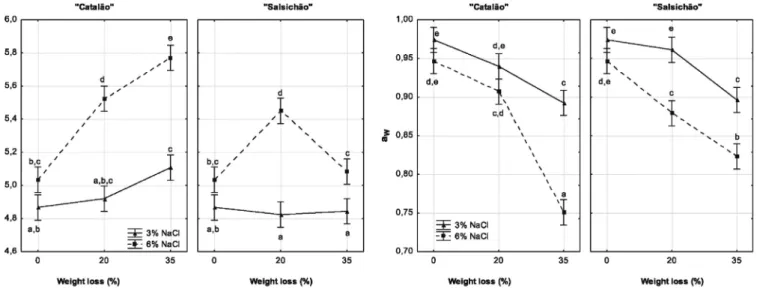
Fig. 1. pH and aWvalues throughout the ripening process according to salt content and product type. Vertical bars denote 0.95 confidence intervals and different letters represent significantly different arithmetic means (HSD test, P = 0.05).
3. Results
3.1. Physicochemical parameters
Results regarding saltfinal content showed slight variations, ranging
from 3.09 up to 4.19% and from 7.01 to 7.15% in products with 3 and 6%
salt, respectively. Despite of the observedfluctuations, they remained at
controlled levels, thus not affecting the obtained results.
pH changed considerably with salt throughout ripening, with lower
values being found in low-salt products as shown inFig. 1(Pb 0.05).
Irrespective of salt content, pH consistently increased in“Catalão”,
espe-cially in 6% NaCl sausages, where a sharped increment (about 0.5 units) was found at the beginning of the ripening process (between 0% and
20% weight loss). When sausages reached 35% weight loss, thefinal
pH was 5.11 and 5.77 for products containing 3 and 6% salt, respectively.
Despite the increment observed in“Salsichão” at 20% weight loss, the
pH of thefinal product significantly decreased to 5.08 (P b 0.05). On
the other hand, low-salt“Salsichão” did not differ throughout ripening
with afinal pH of 4.84.
After the initial two days maturation period, the regular-salt meat
batter had an aWof 0.95, which was already slightly lower than that
of the low-salt meat batter (0.97). This difference became more
pronounced throughout the ripening process both for“Catalão” and
“Salsichão”. Low-salt “Catalão” had a final aWof 0.89, whereas
regular-salt had 0.75; for“Salsichão”, aWvalues of 0.90 (low-salt) and 0.82
(regular-salt) were obtained. 3.2. Microbiological analyses
Foodborne pathogenic bacteria like Salmonella spp. and Campylobac-ter spp., as well as moulds, were absent from all tested samples. E. coli was detected in a few samples, but counts were below 1 log CFU/g.
ANOVA for microbiological results denotes a significant salt effect for
mesophilic bacteria, LAB, coagulase-negative staphylococci and yeasts
(Table 1) (Pb 0.05).
With the exception of enterococci and coagulase-negative staphylo-cocci, all other microbial groups showed higher counts in the low-salt meat batter. In the case of mesophilic bacteria and LAB, this relationship remained generally unchanged throughout ripening, for both product types. In the early processing stages (0% weight loss), mesophilic counts were 7.86 to 6.70 log CFU/g (for 3 and 6% salt, respectively), which have
dropped in thefinal product ranging from 4.92 to 6.21 log CFU/g. The
initial counts for LAB were 7.62 and 4.91 log CFU/g (3 and 6% salt, re-spectively) remaining in similar levels in the end-product. Regular-salt “Salsichão” was the only product for which LAB counts were higher in the end-product (7.44 log CFU/g) than in the meat batter (4.91 log
CFU/g) (Pb 0.05). Coagulase-negative staphylococci and yeasts evolved
in fairly the same way during ripening of regular-salt dry-cured
sausages, where significant lower counts were found for both microbial
groups at the end of ripening (Pb 0.05). Regarding regular-salt
formula-tions, no significant differences were identified between
coagulase-negative staphylococci at the beginning and at the end of ripening
(P N 0.05). However, low-salt sausages generally showed
signifi-cantly lower counts for coagulase-negative staphylococci and yeasts
(Pb 0.05). For these samples, coagulase-negative staphylococci final
counts ranged from 0.00 to 2.29 log CFU/g (“Catalão” and “Salsichão”,
respectively), while yeasts varied from 3.11 to 3.25 log CFU/g
(respec-tively for“Salsichão” and “Catalão”). Following the general trend,
enterobacteria substantially decreased throughout the ripening process, irrespective of salt content or product type, where 6.83 and 6.40 log CFU/g were observed in low-salt and regular-salt meat batters,
respec-tively (Pb 0.05). In end-products, counts ranged between 0.43 and
3.96 log CFU/g, with regular-salt“Salsichão” showing the highest values.
Concerning enterococci, no significant differences were observed
dur-ing ripendur-ing, as function of salt content or product type, withfinal
counts ranging between 1.24 and 2.96 log CFU/g. Low-salt“Salsichão” Tab
le 1 Fa ctorial A N O VA for m icrob ial counts (expres sed in log C FU /g) regarding product type, salt cont en t and weight loss. Counts (log CFU/g) “Catalão ” “Salsichão ” 3% NaCl 6% NaCl 3% NaCl 6% NaCl 0% 20% 35% 0% 20% 35% 0% 20% 35% 0% 20% 35% Mesophilic bacteria 7.86 b± 0.06 8.19 b± 0.18 6.03 a,b ± 0.08 6.70 a,b ± 0.09 4.42 a± 3.83 4.92 a,b ± 0.31 7.86 b± 0.06 7.02 a,b ± 0.18 5.47 a,b ± 0.89 6.70 a,b ± 0.09 6.50 a,b ± 0.14 6.21 a,b ± 0.38 Lactic acid bacteria (LAB) 7.62 d± 0.95 8.20 d,e ± 0.40 7.50 c,d ± 0.07 4.91 a± 0.04 6.25 b,c ± 0.44 5.23 a,b ± 0.28 7.62 d± 0.95 9.37 e± 0.09 7.82 d± 0.09 4.91 a± 0.04 8.26 d,e ± 0.12 7.44 c,d ± 0.16 Enterobacteria 6.83 d± 0.08 4.00 b,c ± 0.03 1.74 a± 0.02 6.40 d± 0.02 5.00 c,d ± 0.06 0.43 a± 0.75 6.83 d± 0.08 3.96 b,c ± 0.00 3.46 a,b ± 0.71 6.40 d± 0.02 3.96 b,c ± 0.00 3.96 b,c ± 0.00 Enterococci 1.24 a± 1.13 5.56 d± 0.08 1.93 a,b ± 1.08 2.68 a,b,c ± 0.07 4.42 c,d ± 0.51 2.22 a,b,c ± 0.05 1.24 a± 1.13 5.14 d± 0.03 4.07 b,c,d ± 1.83 2.68 a,b,c ± 0.07 1.96 a,b ± 0.00 2.96 a,b,c,d ± 0.00 Coagulase-negative staphylococci 3.58 b,c ± 0.26 2.54 c± 2.34 0.00 a± 0.00 3.65 c± 0.08 5.65 d± 0.13 4.21 c± 0.15 3.58 b,c ± 0.26 3.12 b,c ± 0.26 2.29 b± .15 3.65 c± 0.08 6.14 d± 0.03 2.96 b,c ± 0.00 Yeasts 5.09 c,d,e ± 0.04 4.79 b,c,d ± 0.27 3.25 a,b ± 0.27 4.88 b,c,d ± 0.06 6.07 d,e ± 0.14 4.29 b,c ± 0.22 5.09 c,d,e ± 0.04 5.15 c,d,e ± 0.08 3.11 a± 0.21 4.88 b,c,d ± 0.06 6.72 e± 0.25 4.45 b,c,d ± 0.39 Da ta ar e given as m e an ± sta nda rd d ev ia ti on (n = 6 ). In the sa me lin e, diff erent letters repres ent sign ifi cant dif ferent arith m e tic m eans (P b 0.05 ).
was the exception, with significantly higher counts both in half-cured and end-products (5.14 and 4.07 log CFU/g, respectively).
3.3. Biogenic amines profile
The use of different salt contents in dry-cured sausages had a major impact in the amounts of individual biogenic amines, with special em-phasis for tyramine and cadaverine, where higher levels were detected
in low-salt products (Pb 0.05). Likewise, total biogenic amines and
vasoactive amines (tryptamine, phenylethylamine, histamine and
ty-ramine) also denoted higher contents in low-salt sausages (Pb 0.05).
Higher mean levels of total biogenic amines (682.35 mg/kg) were al-ready detected for low-salt meat batters in contrast to the regular
ones (423.41 mg/kg) (Table 2). After thefirst ripening stage
(com-prised between 0 to 20% weight losses), lower contents of total bio-genic amines were observed for all product types. Such reduction
was more pronounced in low-salt“Salsichão” with a general decrease
of the eight studied amines (Pb 0.05). Nevertheless, biogenic amines
levels increased again throughout the ripening period, regardless of salt content or product type. Considering the whole drying process, total biogenic amines have globally decreased during ripening, with higher contents being observed in end-product low-salt sausages
(592.81 mg/kg and 915.84 mg/kg for“Catalão” and “Salsichão”,
re-spectively), while regular-salt products showed 378.01 mg/kg and
390.14 mg/kg, respectively for“Catalão” and “Salsichão”. The observed
differences were largely due to cadaverine (up to 577.87 mg/kg in
low-salt“Salsichão”). The lowest contents of cadaverine were detected
in regular-salt sausages, ranging from 103.36 mg/kg (“Catalão”) to
93.34 mg/kg (“Salsichão”). A similar effect was also noticed for
tyra-mine, whichfinal mean contents were significantly higher in
low-salt products (214.33 mg/kg in “Catalão” and 173.91 mg/kg in
“Salsichão”) (P b 0.05). On the other hand, for regular-salt sausages,
ty-ramine final contents were 43.31 mg/kg and 122.62 mg/kg (in
“Catalão” and “Salsichão”, respectively). Histamine, which is generally the most problematic amine, remained at low levels. The highest mean
content corresponded to 15.02 mg/kg found in low-salt“Salsichão”
sausages. Instead, high levels of vasoactive amines were found in “Catalão” end-products (166.39 mg/kg in regular-salt and 326.09 mg/kg in low-salt).
Generally,“Salsichão” has significantly higher values for most
bio-genic amines than“Catalão” (data not shown). This calibre effect may
be explained by a faster dehydration of small calibre sausages, which would then evidence less microbial activity.
3.4. Fatty acids profile
In general, the FA profile did not change significantly throughout
Tab le 2 Fa cto rial A NOVA fo r b iog enic amin es co ntent (e xpress ed o n a d ry ma tter b asi s in mg /k g) regarding p rod u ct ty p e ,s alt con te nt an d w eigh t loss. Biogenic amines “Catalã o” “Salsichão ” 3% NaCl 6% NaCl 3% NaCl 6% NaCl 0 20 35 0 20 35 0 20 35 0 20 35 Tryptamin e 110.22 c,d,e ± 6.99 95.73 c,d ± 13.09 111.75 c,d,e ± .03 90.69 c± 7.39 108.35 c,d,e ± 8.25 117.22 d,e ± 29.04 110.22 c,d,e ± 6.99 3.01 a± 4.70 44.37 b± 17.34 90.69 c± 7.39 124.73 e± 12.49 119.87 d,e ± 7.05 P h en y le th y la m in e ND 34.27 b± 17.29 ND ND ND ND ND ND ND ND ND ND Putrescin e 17.10 d± 2.52 11.05 c,d ± 1.71 8.31 b,c ± 1.54 14.80 d± 4.20 7.75 b,c ± 4.13 4.43 a,b ± 2.44 17.10 d± 2.52 8.08 b,c ± 2.35 24.57 e± 6.31 14.80 d± 4.20 6.95 b,c ± 0.65 ND Cadaverin e 305.19 e± 18.77 121 .80 b,c ± 48.41 178. 37 d± 15. 32 162 .47 c, d± 1 4 .8 2 87.25 b± 13.39 103.36 b± 10.81 305.19 e± 18.77 5.70 a± 3.56 577.87 f± 44.43 162.47 c,d ± 14.82 84.12 b± 25.65 83.34 b± 41.62 Histamine ND 6.12 b± 0.55 ND ND ND 5.86 b± 1.06 ND 12.50 c,d ± 5.66 15.02 d± 6.53 ND 8.32 b,c ± 0.71 9.04 b,c ± 0.59 Tiramine 160.28 c± 10.19 196.81 e± 25.71 214.33 e± 5.19 14.38 a± 2.55 59.91 b± 8.35 43.31 b± 12.47 160.28 c± 10.19 13.09 a± 3.48 173. 91 d± 1 3 .2 7 14.38 a± 2.55 102.43 c± 9.11 122.62 c± 9.39 Spermidine 33.60 b,c ± 3.93 27.53 a,b,c ± 11.34 2 5 .7 6 a, b,c ± 11. 22 89. 10 d± 1 8 .8 9 45.78 c± 18.44 53.22 c± 36.33 33.60 b,c ± 3.93 ND 42.28 c± 13.23 89.10 d± 18.89 ND 6.39 a,b ± 1.35 Spermine 55.96 b± 32.95 46.70 b± 29.01 54.30 b± 25.29 51.96 b± 6.74 57.68 b± 2.71 50.62 b± 3.50 55.96 b± 32.95 ND 37.81 b± 11.07 51.96 b± 6.74 55.38 b± 4.43 48.90 b± 2.43 Total 1 6 82.3 5 d± 4 4.14 5 40.0 1 c± 1 03.4 3 592. 81 c, d± 4 7 .7 9 423.41 c,d ± 35.32 366.72 b± 22.78 3 7 8 .0 1 b± 5 9 .0 1 682.35 d± 44.14 42.39 a± 6.62 915. 84 e± 7 3 .6 2 423.41 b± 35.32 3 8 1 .9 3 b± 28. 20 39 0.14 b± 125 .06 Vasoactive 2 270.50 d± 15.52 332.93 e± 46.70 326.09 e± 9.51 105.08 a± 8.86 168.26 c± 9.46 166.39 c± 22.80 270.50 d± 15.52 28.61 a± 6.62 233.30 d± 23.33 105.08 a± 8.86 235.47 d± 16.13 251.52 d± 51.86 Da ta ar e g iv en as m ean ± st andard d eviat ion (n = 6 ). In the sa m e line, di ff ere n t letters represe n t signi fi ca nt ly di ff e re nt ar it hm e ti c m e ans (P b 0.05 ). ND-n o t det ect ed. 1 T o tal b iogenic am o unt w as calculated using the sum o f indiv idua l amines. 2 Va so ac tive co nten t w as ca lcula ted b as ed o n th e sum o f trypt am ine, p h enylethy la m ine, h is ta min e an d ty ram ine.
Fig. 2. Fatty Acids groups according to salt content and product type. SFA-Saturated fatty acids; MUFA—Monounsaturated fatty acids; PUFA—Polyunsaturated fatty acids. Vertical bars denote 0.95 confidence intervals and different letters represent significantly different arithmetic means (HSD test, P = 0.05).
ripening, or according to the amount of salt or product type (data not shown). By decreasing order of importance, oleic (45.26%), palmitic (23.17%), stearic (12.31%) and linoleic (6.16%) were the most abundant
FA (Fig. 2). Despite this, as can be seen inTable 3, differences were
iden-tified in FA present in smaller amounts, such as lauric, linoleic and
heneicosanoic acids. According to our results, heneicosanoic acid
denot-ed an important decrease in“Salsichão” sausages from 0.34 to 0.13%,
when higher amounts of salt were used. In opposition, the other two
FA increased in“Catalão” with salt content: lauric acid from 0.06 to
0.24% and linoleic acid from 5.58 to 6.66%. The opposite trend was
ob-served for PUFA, which increased with salt content, but only in“Catalão”
sausages (Fig. 2) (Pb 0.05).
3.5. Texture profile analysis
Both salt content and product type had a significant impact in
sausages texture profile analysis, leading to noticeable changes on
al-most parameters assessed (Pb 0.05) (Table 4). The exception was
springiness, where no important differences were observed. Chewiness values are higher in low-salt sausages, with higher values being
estimat-ed for“Salsichão”, however no significant differences between products
were observed for regular-salt sausages. Adhesiveness, on the other hand, is lower in low-salt sausages, irrespective of calibre, while an op-posite trend was observed for cohesiveness and hardness, which is in good agreement with the results obtained in sensory analysis. 3.6. Sensory evaluation
Some of the evaluated sensory parameters were affected by salt
con-tent, as highlighted inTable 5. These include aroma intensity, off
aromas, hardness,flavour intensity and obviously salt perception. In
fact, salt perception, as well asflavour intensity, denoted a significant
increase, when larger amounts of sodium chloride were added to the
formulation (Pb 0.05). On the contrary, sausages' hardness followed
the opposite trend. Based on a scale of 0 to 100, tasters globally rated
the products between 66 and 70, with no significant differences being
noticed as a function of the products' salt content. However, it was
possible to identify a positive correlation between the overall
apprecia-tion and sausages'flavour intensity (r = 0.71).
A principal component analysis (PCA) was run for parameters related to sausages texture both from TPA (hardness, adhesiveness, cohesiveness, springiness, resilience and chewiness) and sensory
evalu-ation (hardness,fibrousness, succulence) (Fig. 3). Two principal
compo-nents were extracted, which explain 91.05% of the observed variance:
PC1 accounted for 76.32%, while PC2 for 14.73%. Thefirst component
in-cluded all assessed parameters, with the exception offibrousness that
was part of the second component. Furthermore, adhesiveness seems
to respond to salt content (Fig. 3), although there is no correlation
be-tween adhesiveness and NaCl concentration. 4. Discussion
Portuguese traditional dry-cured sausages, recognised by consumers as safe and high quality products, are still being manufactured according to traditional methods. Meat quality combined with the traditional pro-cessing technology provides them with unique sensory properties. In this context, salt content reduction alone was carefully investigated, without compromising safety and authenticity of products. For this pur-pose, two salt concentrations were tested: 6% (regular-salt content) and
3% (low-salt content) in“Catalão” and “Salsichão” sausages, keeping all
other processing conditions unchanged. Since they are closely related to
safety and dry-cured sausages stability, pH, aw, microbiota and biogenic
amines were analysed throughout the ripening process. Moreover, FA, TPA and sensory evaluation were assessed in end products.
Differences in pH evolution throughout processing were clearly de-pendent on the amount of salt. Low-salt products showed lower pH values, as a result of higher LAB counts. Irrespective of sausage calibre, low-salt products pH was always below 5.2, a value considered safe
for traditional dry-cured sausages (Roseiro et al., 2010). In regular-salt
sausages, an increment in pH during processing was observed as a result
of a less marked LAB growth (especially in“Catalão”) and of the
forma-tion of ammonia that usually occurs in these products. Nevertheless, a
sharp awdecrease nsured microbiological stability. Several studies
have reported no changes in pH due to salt content (Corral, Salvador,
Table 4
Two-way ANOVA for texture profile analysis (TPA) parameters concerning product type and salt content.
TPA “Catalão” “Salsichão”
Parameter 3% NaCl 6% NaCl 3% NaCl 6% NaCl
Hardness 42.249b ± 5.820 32.637a ± 5.376 58.610c ± 8.414 35.419a ± 7.511 Adhesiveness −3.736a ± 2.447 −1.918b ± 1.534 −3.792a ± 1.555 −1.699b ± 0.895 Cohesiveness 0.417a,b ± 0.038 0.391a ± 0.032 0.447b ± 0.05 0.443b ± 0.04 Springiness 0.979 ± 0.101 0.914 ± 0.146 1.026 ± 0.278 0.931 ± 0.063 Resilience 0.096a,b ± 0.021 0.082a ± 0.016 0.116b ± 0.03 0.099a,b ± 0.016 Chewiness 17.29b± 3.435 11.737a± 3.097 26.72c± 7.809 14.525a,b± 2.894
Data are given as mean ± standard deviation (n = 6). In the same row, different letters represent significantly different arithmetic means (P b 0.05). Table 3
Two-way ANOVA for methyl ester fatty acid-derivatives (expressed in %) regarding product type and salt content.
Fatty acids (FA) “Catalão” “Salsichão”
3% NaCl 6% NaCl 3% NaCl 6% NaCl
Lauric (C12:0) 0.058a± 0.02 0.242b± 0.00 0.073a± 0.03 0.078a± 0.04 Myristic (C14:0) 1.13 ± 0.14 1.31 ± 0.00 1.24 ± 0.12 1.19 ± 0.07 Palmitic (C16:0) 22.30 ± 2.60 23.77 ± 0.00 23.37 ± 0.43 23.23 ± 0.43 Palmitoleic (C16:1) 2.40 ± 0.28 2.58 ± 0.00 2.51 ± 0.16 2.47 ± 0.15 Margaric (C17:0) 0.32a,b ± 0.04 0.439b ± 0.00 0.288a ± 0.09 0.352a,b ± 0.04 Margaroleic (C17:1) 0.32 ± 0.04 0.38 ± 0.00 0.27 ± 0.08 0.37 ± 0.04 Stearic (C18:0) 11.77 ± 1.33 13.11 ± 0.00 12.25 ± 0.30 12.09 ± 0.55 Oleic (C18:1) 45.88 ± 5.47 45.61 ± 0.00 43.95 ± 0.94 45.59 ± 1.47 Linoleic (C18:2) 5.582a ± 0.73 6.663b ± 0.00 6.078a,b ± 0.28 6.332a,b ± 0.17 Linolenic (C18:3) 0.425a,b ± 0.06 0.569b ± 0.00 0.393a ± 0.05 0.511a,b ± 0.09 Gadoleic (C20:1) 0.97 ± 0.13 1.05 ± 0.00 1.03 ± 0.10 1.04 ± 0.05 Heneicosanoic (C21:1) 0.329b ± 0.09 0.240a,b ± 0.00 0.343b ± 0.07 0.128a ± 0.03 Data are given as mean ± standard deviation (n = 6). In the same line, different letters represent significant different arithmetic means (P b 0.05).
Belloch, & Flores, 2014; Roseiro et al., 2008). In the meanwhile, the more acidic environment that was established in low-salt meat batters after the two-day maturation period also induced a reduction (especially in “Catalão”) on coagulase-negative staphylococci counts. Besides their
important effect on products'flavour, organic acids present in wine
con-tribute to reduce the pH of meat batters and to inhibit the undesirable microbiota, and ethanol may also inhibit sensible microorganisms like
moulds (Coloretti et al., 2014). According to our results this effect was
not detectable, since no moulds were detected.
During the dry-curing process, good environmental conditions
(such as pH and aw) favour growth of both technological and spoilage
microbiota, including LAB and enterobacteria, which actively participate
in biogenic amines accumulation (González-Tenorio et al., 2013; Li et al.,
2014). Furthermore, bacterial proteolytic activity results in the
avail-ability of precursor amino acids (Latorre-Moratalla, Bover-Cid,
Bosch-Fusté, Veciana-Nogués, & Vidal-Carou, 2014). On the other hand,
bio-genic amines accumulation is inhibited due to antimicrobial substances used in dry-cured sausages, such as NaCl. Thus, higher content of biogenic amines was found mainly in low-salt products throughout the ripening process. Since LAB, particularly Enterococcus spp., are
known for their ability to decarboxylate tyrosine (Bargossi et al.,
2015), lower LAB counts in regular-salt products, resulted in lower
amounts of tyramine (r = 0.49, Pb 0.05). Similarly, slightly lower
enterobacteria counts, might have led to lower cadaverine contents. In fact, higher contents in biogenic amines were usually observed at the start of the ripening process.
Total biogenic amines content throughout the curing process
was mainly influenced by cadaverine and tyramine (by decreasing
order of importance), since they are the most abundant amines in dry-cured sausages. Previous studies had already reported the prevalence of tyramine and cadaverine over other exogenous biogenic amines
(Latorre-Moratalla et al., 2008; Lu et al., 2010; Papavergou, Savvaidis,
& Ambrosiadis, 2012). Interestingly, relative higher contents of
tryptamine, corresponding to nearly 30% of total biogenic amines content, were detected in regular-salt sausages.
Among the four products tested, low-salt“Salsichão” showed a quite
different evolution pattern. A sharp decline in biogenic amines content was observed from the meat batter to the intermediate ripening step, followed by an important increase afterwards. In our opinion, these re-sults cannot be explained by the existing microbiota. The formation of biogenic amines in sausages is dependent on the interaction of numer-ous factors (pH, calibre, seasoning, etc), which due to their complexity
are not yet fully understood (Bover-Cid, Schoppen, Izquierdo-Pulido, &
Vidal-Carou, 1999; Ikonić et al., 2013; Komprda et al., 2004; Lorenzo,
Martinez, Franco, & Carballo, 2007; Suzzi & Gardini, 2003). Furthermore,
the consumption of biogenic amines as nitrogen source is usually
point-ed out as the main cause for their decline (Bover-Cid, Izquierdo-Pulido,
& Vidal-Carou, 2001; Roseiro et al., 2010). On the other hand, the
pro-duction of amines is often strain-dependent rather than related to a
spe-cific microbial group. Thus, the strong increase detected a posteriori,
may be due to the growth of strains with higher decarboxylase activity. The importance of biogenic amines relies on them representing a toxicological hazard, which results in the occurrence of undesirable symptoms when ingested. Despite the lack of legislation applicable to dry-cured sausages, a safety limit of 100 mg histamine/kg of food is
usu-ally considered (Eerola, Sagués, & Hirvi, 1998; Silla Santos, 1996). The
accumulation of histamine in our end-products never exceeded the
mentioned limit. However, vasoactive amines'final contents were
gen-erally quite high, resulting mainly from high levels of both tryptamine and tyramine. These results are of particular importance, since putres-cine and cadaverine are known for potentiating the toxic effect of hista-mine and tyrahista-mine, even though they do not represent a potential
hazard to consumers themselves (Larqué, Sabater-Molina, & Zamora,
2007). Moreover, an important positive correlation was observed
be-tween LAB counts and tyramine (r = 0.40; Pb 0.05), which is in good
agreement with previous studies (Curiel et al., 2011; Lu et al., 2010).
Lipolytic activity is often associated with coagulase-negative
staphy-lococci (Martin, Colin, Aranda, Benito, & Cordoba, 2007) and mainly
with the activity of endogenous lipases, which preferentially release
oleic and linoleic acids (Zanardi, Ghidini, Battaglia, & Chizzolini, 2004).
However, lipolytic activity can vary considerably depending on the
strain (Ordoñez, Hierro, Bruna, & de la Hoz, 1999). Moreover, according
toZanardi et al. (2004)FA profiles do not depend on the processing
con-ditions, but mostly from the composition of raw material itself, despite the pro-oxidant effect of salt. Our results show an increase of lauric
and margaric acids, further denoting a significant positive correlation
with salt content (r = 0.99 and r = 0.93, respectively). Likewise, a
significant correlation of lauric (r = 0.99), margaric (r = 0.93) and
linolenic (r = 0.90) acids with coagulase-negative staphylococci counts. These results suggest the presence of coagulase-negative staphylococci endogenous strains with remarkable lipolytic activity. In contrast, only heneicosanoic acid decreased with salt content. In a general way, in dry-cured sausages, monounsaturated fatty acids (MUFA) are the most abundant, which is positive from the nutritional standpoint, al-though they are more susceptible to oxidation process. However, a moderate lipid oxidation is desirable, in order to enable the release of
aroma andflavour compounds.
Regarding sensory evaluation the salty taste seems to be the
out-standing factor, followed byflavour intensity. Clearly, taste attributes
Fig. 3. Principal Component Analysis. Projection of selected variables (textural and sensory data) and samples on the factor-plane, considering two main factors: salt content and calibre. Attributes abbreviations are preceded by S or T depending if they resulted from sensory analysis or texture profile analysis (TPA), respectively. Attributes abbreviations: H (hardness), F (fibrousness), Su (succulence), Ad (adhesiveness), Co (cohesiveness), Sp (springiness), and R (resilience). Products: C 3% (low-salt“Catalão”), C 6% (regular-salt “Catalão”), S 3% (low-salt “Salsichão”), and S 6% (regular-salt “Salsichão”).
Table 5
Two-way ANOVA for sensory attributes considering product type and salt content. Sensory attribute “Catalão” “Salsichão”
3% NaCl 6% NaCl 3% NaCl 6% NaCl
Colour intensity 68 ± 13 73 ± 10 71 ± 12 74 ± 11 Off colours 0 0 0 0 Marbled 73 ± 11 68 ± 13 64 ± 17 68 ± 13 Aroma intensity 69 ± 14 72 ± 13 68 ± 14 76 ± 11 Off aromas 0 1 ± 3 0 0 ± 1 Hardness 53a,b ± 10 49a ± 8 59b ± 14 49a,b ± 12 Fibrousness 29 ± 28 21 ± 23 16 ± 22 23 ± 24 Succulence 69 ± 11 71 ± 12 64 ± 17 69 ± 11
Flavour intensity 68a,b
± 11 72a,b ± 11 65a ± 12 75b ± 7 Offflavours 0 ± 2 1 ± 3 1 ± 5 1 ± 4 Salt perception 54a ± 8 65b ± 13 53a ± 9 70b ± 15 Overall appreciation 70 ± 11 69 ± 11 66 ± 14 69 ± 9 Data are given as mean ± standard deviation (n = 6). In the same row, different letters represent significantly different arithmetic means (P b 0.05).
are preponderant over products' overall appreciation. Furthermore, salt content does not necessarily correlate with the lower rates attributed to
flavour (Aaslyng et al., 2014). In our study, panellists identified a
signif-icant reduction inflavour intensity in low-salt products.
Principal component analysis showed an association between
low-salt“Catalão” and sensory attributes, namely fibrousness and
succu-lence, and low-salt“Salsichão” with sausages' textural cohesiveness.
There is a positive correlation between regular-salt“Salsichão” and
“Catalão”, which is highlighted as a result of the sausages' textural adhe-siveness. In fact, adhesiveness increased as a result of higher salt con-tents. Regarding hardness, PCA projection of variables revealed a very close relationship between hardness evaluated by TPA and hardness as sensed by panellists, which means that the tasters accurately evaluat-ed the samples.
5. Conclusion
Regarding salt content and product type, the former factor had the greatest impact on the studied parameters. Low-salt sausages showed
higher awvalues and a more intense production of biogenic amines,
than regular-salt sausages. Even though, no food safety issues arose re-garding microbial contaminations or histamine levels, associated with the salt reduction. Moreover, considering sensory analysis, and despite no clear preference for one of the tested salt contents, a more balanced salt taste was associated to low-salt products. For the abovementioned reasons, a reduction in salt content should be considered in the process-ing of these dry-cured products, with the obvious health-related advantages.
Acknowledgements
The authors acknowledgefinancial support provided by PRODER
13.021 (QREN/PRODER/Medida 4.1), Programa Operacional Regional do Alentejo (InAlentejo) ALENT-07-062-FEDER-001871 (Laboratório de Biotecnologia Aplicada e Tecnologias Agro-Ambientais) and also by FCT (Fundação para a Ciência e a Tecnologia) under the Strategic Project PEst-OE/AGR/UI0115/2014 and co-funded by FEDER funds through the COMPETE Programme. The authors also wish to thank PALADARES ALENTEJANOS, Lda. for their collaboration and A. Oliveira and G. Pias for their technical assistance.
References
Aaslyng, M. D., Vestergaard, C., & Koch, A. G. (2014).The effect of salt reduction on senso-ry quality and microbial growth in hotdog sausages, bacon, ham and salami. Meat Science, 96(1), 47–55.
Alvarez, M. A., & Moreno-Arribas, M. V. (2014).The problem of biogenic amines in fermented foods and the use of potential biogenic amine-degrading microorganisms as a solution. Trends in Food Science & Technology, 39(2), 146–155.
Bargossi, E., Tabanelli, G., Montanari, C., Lanciotti, R., Gatto, V., Gardini, F., & Torriani, S. (2015). Tyrosine decarboxylase activity of enterococci grown in media with different nutritional potential: tyramine and 2-phenylethylamine accumulation and tyrDC gene expression. Frontiers in Microbiology, 6, 259.http://dx.doi.org/10.3389/fmicb. 2015.00259.
Benedini, R., Parolari, G., Toscani, T., & Virgili, R. (2012).Sensory and texture properties of Italian typical dry-cured hams as related to maturation time and salt content. Meat Science, 90(2), 431–437.
Bibbins-Domingo, K., Chertow, G. M., Coxson, P. G., Moran, A., Lightwood, J. M., Pletcher, M. J., & Goldman, L. (2010).Projected effect of dietary salt reductions on future car-diovascular disease. New England Journal of Medicine, 362(7), 590–599.
Bover-Cid, S., Izquierdo-Pulido, M., & Vidal-Carou, M. C. (2001).Changes in biogenic amine and polyamine contents in slightly fermented sausages manufactured with and without sugar. Meat Science, 57, 215–221.
Bover-Cid, S., Schoppen, S., Izquierdo-Pulido, M., & Vidal-Carou, M. C. (1999).Relationship between biogenic amine contents and the size of dry fermented sausages. Meat Science, 51(4), 305–311.
Caine, W. R., Aalhus, J. L., Best, D. R., Dugan, M. E., & Jeremiah, L. E. (2003).Relationship of texture profile analysis and Warner-Bratzler shear force with sensory characteristics of beef rib steaks. Meat Science, 64(4), 333–339.
Coloretti, F., Tabanelli, G., Chiavari, C., Lanciotti, R., Grazia, L., Gardini, F., & Montanari, C. (2014).Effect of wine addition on microbiological characteristics, volatile molecule
profiles and biogenic amine contents in fermented sausages. Meat Science, 96, 1395–1402.
Corral, S., Salvador, A., Belloch, C., & Flores, M. (2014).Effect of fat and salt reduction on the sensory quality of slow fermented sausages inoculated with Debaryomyces hansenii yeast. Food Control, 45, 1–7.
Corral, S., Salvador, A., & Flores, M. (2013).Salt reduction in slow fermented sausages af-fects the generation of aroma active compounds. Meat Science, 93(3), 776–785.
Curiel, J. A., Ruiz-Capillas, C., de Las Rivas, B., Carrascosa, A. V., Jimenez-Colmenero, F., & Munoz, R. (2011).Production of biogenic amines by lactic acid bacteria and enterobacteria isolated from fresh pork sausages packaged in different atmospheres and kept under refrigeration. Meat Science, 88(3), 368–373.
Desmond, E. (2006).Reducing salt: A challenge for the meat industry. Meat Science, 74(1), 188–196.
EC (2012). Implementation of the EU Salt Reduction Framework. Retrieved fromhttp:// ec.europa.eu/health/nutrition_physical_activity/docs/salt_report_en.pdf.
Eerola, S., Sagués, A., & Hirvi, T. (1998).Biogenic amines infinnish dry sausages. Journal of Food Safety, 18, 127–138.
Elias, M., & Carrascosa, A. V. (2010).Characterisation of the Paio do Alentejo, a traditional Portuguese Iberian sausage, in respect to its safety. Food Control, 21(1), 97–102.
González-Tenorio, R., Fonseca, B., Caro, I., Fernández-Diez, A., Kuri, V., Soto, S., & Mateo, J. (2013).Changes in biogenic amine levels during storage of Mexican-style soft and Spanish-style dry-ripened sausages with different a(w) values under modified
atmo-sphere. Meat Science, 94(3), 369–375.
Honikel, K. -O. (1997).Reference methods supported by OECD and their use in Mediterranean meat products. Food Chemistry, 59(4), 573–582.
Ikonić, P., Tasić, T., Petrović, L., Škaljac, S., Jokanović, M., Mandić, A., & Ikonić, B. (2013).
Proteolysis and biogenic amines formation during the ripening of Petrovská klobása, traditional dry-fermented sausage from Northern Serbia. Food Control, 30, 69–75.
ISO 1841-2 (1996).Meat and meat products— Determination of chloride content — Part 2: Potenciometric method.
ISO 2917 (1999).Meat and meat products— Measurement of pH (Reference method).
ISO 6579 (2002).Microbiology of food and animal feeding stuffs—Horizontal method for the detection of Salmonella spp.
ISO 8586-1 (1993).Sensory analysis—General guidance for the selection, training and mon-itoring of assessors—Part 1: Selected assessors.
ISO 8589 (2012).Sensory analysis—General guidance for the design of test rooms.
Key, T., Schatzkin, A., Willett, W. C., Allen, N. E., Spencer, E. A., & Travis, R. C. (2004).
Diet, nutrition and the prevention of cancer. Public Health Nutrition, 7(1 A), 187–200.
Komprda, T., Smela, D., Pechova, P., Kalhotka, L., Stencl, J., & Klejdus, B. (2004).Effect of starter culture, spice mix and storage time and temperature on biogenic amine con-tent of dry fermented sausages. Meat Science, 67(4), 607–616.
Laranjo, M., Agulheiro-Santos, A. C., Potes, M. E., Cabrita, M. J., Garcia, R., Fraqueza, M. J., & Elias, M. (2015).Effects of genotype, salt content and calibre on quality of traditional dry-fermented sausages. Food Control, 56, 119–127.
Larqué, E., Sabater-Molina, M., & Zamora, S. (2007).Biological significance of dietary poly-amines. Nutrition, 23(1), 87–95.
Latorre-Moratalla, M. L., Bover-Cid, S., Bosch-Fusté, J., Veciana-Nogués, M. T., & Vidal-Carou, M. C. (2014).Amino acid availability as an influential factor on the biogenic amine formation in dry fermented sausages. Food Control, 36(1), 76–81.
Latorre-Moratalla, M. L., Veciana-Nogués, T., Bover-Cid, S., Garriga, M., Aymerich, T., Zanardi, E., ... Vidal-Carou, M. C. (2008).Biogenic amines in traditional fermented sau-sages produced in selected European countries. Food Chemistry, 107(2), 912–921.
Li, M., Tian, L., Zhao, G., Zhang, Q., Gao, X., Huang, X., & Sun, L. (2014).Formation of bio-genic amines and growth of spoilage-related microorganisms in pork stored under different packaging conditions applying PCA. Meat Science, 96(2 Pt A), 843–848.
Lorenzo, J. M., Martinez, S., Franco, I., & Carballo, J. (2007).Biogenic amine content during the manufacture of dry-cured lacon, a Spanish traditional meat product: Effect of some additives. Meat Science, 77(2), 287–293.
Lu, S., Xu, X., Shu, R., Zhou, G., Meng, Y., Sun, Y., ... Wang, P. (2010).Characterization of bio-genic amines and factors influencing their formation in traditional Chinese sausages. Journal of Food Science, 75(6), M366–M372.
MacGregor, G., & de Wardener, H. E. (2002).Salt, blood pressure and health. International Journal of Epidemiology, 31, 320–327.
Martin, A., Colin, B., Aranda, E., Benito, M. J., & Cordoba, M. G. (2007).Characterization of Micrococcaceae isolated from Iberian dry-cured sausages. Meat Science, 75(4), 696–708.
Morrison, W. R., & Smith, L. M. (1964).Preparation of fatty acid methyl esters and dimethylacetals from lipids with boronfluoride-methanol. Journal of Lipid Research, 5, 600–608.
Ordoñez, J. A., Hierro, E. M., Bruna, J. M., & de la Hoz, L. (1999).Changes in the components of dry-fermented sausages during ripening. Critical Reviews in Food Science and Nutrition, 39(4), 329–367.
Papavergou, E. J., Savvaidis, I. N., & Ambrosiadis, I. A. (2012).Levels of biogenic amines in retail market fermented meat products. Food Chemistry, 135(4), 2750–2755.
Ribeiro, S., Furtado, C., & Pereira, J. (2013).Association between cardiovascular disease and socioeconomic level in Portugal. Revista Portuguesa de Cardiologia, 32(11), 847–854.
Roseiro, C., Santos, C., Sol, M., Silva, L., & Fernandes, I. (2006).Prevalence of biogenic amines during ripening of a traditional dry fermented pork sausage and its relation to the amount of sodium chloride added. Meat Science, 74(3), 557–563.
Roseiro, L. C., Gomes, A., Goncalves, H., Sol, M., Cercas, R., & Santos, C. (2010).Effect of pro-cessing on proteolysis and biogenic amines formation in a Portuguese traditional dry-fermented ripened sausage“Chouriço Grosso de Estremoz e Borba PGI”. Meat Science, 84(1), 172–179.
Roseiro, L. C., Santos, C., Sol, M., Borges, M. J., Anjos, M., Goncalves, H., & Carvalho, A. S. (2008).Proteolysis in Painho de Portalegre dry fermented sausage in relation to rip-ening time and salt content. Meat Science, 79(4), 784–794.
Ruusunen, M., & Puolanne, E. (2005).Reducing sodium intake from meat products. Meat Science, 70(3), 531–541.
Silla Santos, M. H. (1996).Biogenic amines: Their importance in foods. International Journal of Food Microbiology, 29(2–3), 213–231.
Slobodan, L., & Vesna, M. -s. (2011).Salt reduction in meat products— challenge for meat industry. Technologija Mesa, 52, 22–30.
Suzzi, G., & Gardini, F. (2003).Biogenic amines in dry fermented sausages: a review. International Journal of Food Microbiology, 88(1), 41–54.
Tobin, B. D., O'Sullivan, M. G., Hamill, R. M., & Kerry, J. P. (2013).The impact of salt and fat level variation on the physiochemical properties and sensory quality of pork break-fast sausages. Meat Science, 93(2), 145–152.
WHO (2002).World health report. Geneva: World Health Organization.
WHO (2011).Global Atlas on cardiovascular disease prevention and control. (Geneva).
Zanardi, E., Ghidini, S., Battaglia, A., & Chizzolini, R. (2004).Lipolysis and lipid oxidation in fermented sausages depending on different processing conditions and different anti-oxidants. Meat Science, 66(2), 415–423.
Zanardi, E., Ghidini, S., Conter, M., & Ianieri, A. (2010).Mineral composition of Italian sa-lami and effect of NaCl partial replacement on compositional, physico-chemical and sensory parameters. Meat Science, 86(3), 742–747.