Maria Elizabeth Ellison de Matos
CLIL as a Catalyst for Developing Reflective Practice in Foreign
Language Teacher Education
Thesis presented for the award of Doctorate in Didactics of Languages
from the Faculty of Arts and Humanities of the University of Porto.
Supervised by Professor Maria da Graça Lisboa Castro Pinto, Faculty of
Arts and Humanities, University of Porto, and Professor Victor Pávon
Vazquez, Faculty of Humanities, University of Córdoba.
Porto
2014
iii Abstract
This thesis is a study of two foci, one an established practice in teacher education, systematic reflection, the other a new educational approach (to Portugal), Content and Language Integrated Learning (CLIL). These converge within a reflective model of teacher education where each one influences the other in cycles of reflective practice which expose developing teacher knowledge of CLIL in action and bring about change in attitudes and educational practices. It examines the perspectives of three experienced English language teachers who experimented with short sequences of CLIL across an academic year during their teaching practicum in primary schools. The three teachers formed a multiple case study where qualitative data were collected at three key phases (Pre- Action- and Post-Action) using a variety of tools and modes to obtain reflections on eight foci which formed broad deductive categories: context, understanding of CLIL, methodology, CLIL vs. ELT, ELT for young learners, learners, teacher competences, and personal and professional development. The data were analysed along two dimensions: content and types of reflection on CLIL. Sub-categories for content of reflection were formed using a grounded approach. Types of reflection were analysed using a rubric tool which consisted of descriptors for four types of reflection identified in the literature and studies: Type 0. Descriptive/behavioural; Type 1. Descriptive/analytical; Type 2. Dialogic/interpretative; and Type 3. Critical/transformatory.
The findings revealed many sub-categories for each of the eight deductive categories, which capture rich detail of teachers’ perceptions of CLIL, the majority of which emerged during the Action-phase. There was no logical sequence of progression through types of reflection with time as a range was detected at each phase. This refutes the idea of hierarchies or developmental stages of reflection, and supports the idea of reflection as responding to pedagogical circumstances. Amount of experience was not synonymous with more Type 3 critical/transformatory reflection, as action becomes routine, knowledge becomes tacit, less easily surfaced and articulated, and more difficult to problematise. This type of reflection was least engaged in, distanced from action and less detailed. This raises the issue of the need to further develop strategies which support teachers so they may attribute meaning to their actions which may lead to further change in practice.
iv
The study underlines the importance of experimenting with new educational approaches within a reflective practice model in teacher education which brings about and captures details of action that contribute to its knowledge base. It has implications for a number of areas: for teacher education which incorporates a pedagogy of reflection; for shaping best practice in English language teaching and the teaching of foreign languages to young learners; for CLIL teacher education involving language teachers; for the implementation of CLIL in primary schools in Portugal; and the development of the profile of the English language teacher.
Key words: Reflective practice; dimensions of reflection; Content and Language Integrated Learning (CLIL); English Language Teaching (ELT); primary English language teaching; second/foreign language teacher education.
v Resumo
A presente tese constitui o estudo de dois focos: um respeitante à prática instaurada na formação de professores, reflexão sistemática, e outro relativo a uma nova abordagem educativa (para Portugal), ‘Aprendizagem Integrada de Conteúdos e de Língua’ (AICL). Convergem ambos num modelo reflexivo de formação de professores em que cada um influencia o outro em ciclos de prática reflexiva que exibem a evolução do conhecimento do AICL em ação por parte do professor e ocasionam mudança de atitudes e de práticas educativas. Examina esta tese os pontos de vista de três professoras com experiência letiva de língua inglesa que praticaram sequências curtas de AICL ao longo de um ano académico durante a sua prática de ensino em escolas do 1.º ciclo. As três professoras possibilitaram um estudo de caso múltiplo, cujos dados qualitativos foram recolhidos em três fases cruciais (Pré- Ação- e Pós-Ação), usando uma variedade de instrumentos e de modos de obter reflexões sobre oito focos correspondentes a categorias dedutivas abrangentes: contexto, compreensão do AICL, metodologia, AICL vs. o ensino do Inglês como língua estrangeira, o ensino precoce do Inglês; aprendentes num contexto AICL, competências relativas aos professores, e desenvolvimento pessoal e profissional. As subcategorias relacionadas com o conteúdo da reflexão foram criadas com base numa abordagem fundamentada. Foram ainda analisados três tipos de reflexão tirando partido de um instrumento formado por descritores destinados a quatro tipos de reflexão identificados na literatura e em estudos: Tipo 0. Descritivo/comportamental; Tipo 1. Descritivo/analítico; Tipo 2. Dialógico/interpretativo; e Tipo 3. Crítico/transformador.
Os resultados revelaram muitas subcategorias para cada uma das oito categorias dedutivas que captam com pormenor as perceções dos professores sobre o AICL. A maioria emergiu durante a fase da ação. Não se registou, com o tempo, uma sequência lógica progressiva através dos tipos de reflexão, na medida em que foi detetada uma série em cada fase. A ideia de hierarquias de estágios de desenvolvimento da reflexão é assim rebatida e, em contrapartida, é defendida a ideia de a reflexão responder às circunstâncias pedagógicas. O facto de se possuir mais experiência não é sinónimo de o Tipo 3 de reflexão crítico/transformador ocorrer em maior número, porquanto a ação torna-se rotina, o conhecimento passa a ser tácito, menos facilmente traduzível e articulado, e consequentemente de mais difícil problematização. A reflexão em causa
vi
foi menos adotada, por estar mais distante da ação e ser menos pormenorizada. Tal facto faz com que seja necessário desenvolver estratégias que ajudem os professores a atribuir significado às suas ações que podem levar, por seu lado, a mudanças na prática.
Este estudo sublinha a importância de experimentar novas abordagens educativas num modelo de prática reflexivo destinado à formação de professores que ocasione e granjeie pormenores de ação que contribuam para a sua base de conhecimento. Comporta igualmente implicações para uma série de áreas: para a formação de professores visto que incorpora uma pedagogia de reflexão; para dar forma a uma melhor prática do ensino de língua inglesa e de línguas estrangeiras para aprendentes jovens; para a implementação do AICL nas escolas do 1.º ciclo em Portugal; e para o desenvolvimento do perfil do professor de língua inglesa.
Palavras-chave: Prática reflexiva; dimensões de reflexão; Aprendizagem Integrada de Conteúdos e de Língua (AICL); ensino do Inglês como língua estrangeira; o ensino precoce do Inglês; formação de professores de língua segunda/estrangeira.
vii
Acknowledgements
There are many to whom the carrying out of the study and writing of this thesis are owed a debt of gratitude.
I would like to thank the three teachers and the school communities in which they carried out their CLIL projects without whose participation and cooperation this study would not have been possible.
To my supervisors: Professor Graça Pinto, for her infinite patience, wisdom and constant support in guiding me through the stages of my research and writing of this thesis; and Professor Victor Pavón for his expert suggestions regarding CLIL, his encouragement and swift responses to my every query. I am indeed fortunate to have been the recipient of their professionalism and expertise.
I would especially like to thank Professor Cristina Parente from the Department of Sociology (FLUP) for her advice regarding the methodological design of the study.
To the three independent raters who validated the rubric tool used in the analysis of the findings of the study.
To colleagues and ‘critical friends’ who have, in one form or another, provided a sounding-board for working through my ideas: Elena Galvão, Felisbela Martins, Fernanda Martins, Maria Alfredo Moreira, Nicolas Hurst, Paulo Santos, and Simone Tomé.
To library staff at FLUP, in particular Dr João Emanuel Leite, for the swift acquisition of journal articles and books requested.
And last, but by no means least, my family, for the love, patience and understanding they have shown throughout.
viii Contents Abstract ………...iii Resumo ……….v Acknowledgements……….vii Contents………...viii
List of acronyms and abbreviations………....xiv
List of figures and tables……….xv
Introduction………...1
Part I. Theoretical background: reflection on change in foreign language teacher education, Content and Language Integrated Learning, and reflective practice……….15
Chapter 1. Change in foreign language teacher education: reaction to and action for………..17
Introduction……….19
1. External forces: drivers of change in education………...20
1.1. European policy………....21
1.2. Mindsets of the new generation of learners………...23
2. Internal forces: Critiquing foreign language teacher education ………...25
3. Changing landscapes in foreign language teacher education………..27
4. The importance of teacher development...31
5. New directions………....33
5.1. CLIL: A new educational approach………...33
5.2. CLIL across Europe………...36
5.3. CLIL in Portugal………..37
6. Teacher education as driving and responding to change………....39
Summary……….41
Chapter 2. Understanding Content and Language Integrated Learning (CLIL)……...43
Introduction………...45
1. The essence of CLIL………..45
1.1.The scope of definition……….46
1.1.1. CLIL and immersion education………48
1.1.2. CLIL and bilingual education………...50
1.1.3. Controversy over the label………....51
1.2.The uniqueness of CLIL………...52
ix
1.3.1. Second language acquisition theories………..56
1.3.2. Cognitive learning theories: constructivism and social constructivism………..57
1.4. Language in CLIL………59
1.4.1. BICS and CALP………. 60
1.4.2. Meaning and use vs. focus on form……….62
1.4.3. Teacher language proficiency and use………..64
1.4.4. A shift in perspectives: language as a tool for learning………....66
2. Methodology………...67
2.1. Conceptual frameworks………...68
2.2. The 4Cs framework………..69
2.3. Planning for CLIL………....71
2.4. Scaffolding………...72
2.5. Materials and tasks………...75
2.6. Assessment………...78
3. Benefits of CLIL………...80
4. Concerns………...81
5. CLIL vs. English Language Teaching (ELT)………...85
5.1. Similarities and differences………...86
5.1.1. Aims………...87
5.1.2. Approaches/methodology………...88
5.2. Mutual gains: incorporating best practices………...89
6. ELT and/or CLIL for Young Learners ………...91
6.1. The case for the early start………....91
6.2. ELT for Young Learners in Portugal………....94
6.3. The limitations of traditional ELT for young learners………..95
6.4. The case for CLIL………...97
6.4.1. Examples of successful CLIL projects for young learners……....99
7. Implementing CLIL………...100
7.1. Grassroots initiatives……….…..101
7.2. Reasons for implementation………...102
7.3. Essentials of implementation………..…103
7.3.1. Stakeholder support………...105
x
7.3.3. Teachers and collaboration………...107
8. Teacher education for CLIL……….108
8.1. CLIL training courses……….109
8.2. Standardising competences for CLIL: Towards a CLIL Teacher profile………...112
8.3. European support for CLIL teacher education………...114
9. Research in CLIL………...117
Summary………...118
Chapter 3. Conceptualisations of reflection and reflective practice in foreign language teacher education………...121
Introduction………..123
1. Definitions and principles of reflection and reflective practice………123
2. Dimensions of reflection………...131
2.1. Content - what teachers reflect on...132
2.2. Types of reflection...136
3. Operationalising reflective practice………...142
3.1. Broad frameworks: Traditional models of foreign language teacher education………143
3.1.1. The Craft Model………...144
3.1.2. The Applied Science Model………144
3.1.3. The Reflective Model………..145
3.2. Supporting teachers’ reflection: the role of the facilitator...148
4. Modes, techniques and tools for promoting reflection……….153
4.1. Written reflection...154
4.1.1. Journal writing...155
4.1.2. Lesson reports...158
4.2. Spoken reflection...158
4.2.1. Pre- and post-lesson conferences...159
4.3. Techniques and tools...161
4.3.1. Micro-teaching...161
4.3.2. Observation tasks...161
4.3.3. Lesson plans...162
4.3.4. Using films of teachers' lessons...163
xi
4.3.6. Portfolios……….165
4.3.7. Action research...167
5. Operationalising CLIL within a reflective model at FLUP………...168
5.1. Masters degrees in Teaching English and another Foreign Language at FLUP………...169
5.1.1. Master in Teaching English and another Foreign Language in Basic Education (MEIB)………...170
5.1.2. Content of the English language teaching programme for MEIB………171
5.2. Stages of the reflective model and CLIL………...172
5.2.1. Stage 1. Pre-training. Trainee’s existing conceptual schemata or mental constructs………...173
5.2.2. Stage 2. Professional education/development……….174
5.2.3. Goal: Professional Competence………..183
Summary………...183
Part II. The Study………185
Chapter 4. Design and Methodology of the Study………...187
Introduction………...189
1. Purpose of the study………....189
1.1 Aims and research question………....191
2. Research paradigm………...191
2.1. Case study………..193
3. Boundaries of the current study………...198
3.1. Project requirements………..200
3.2. Teachers and their teaching contexts……….203
3.2.1. Teacher C………204
3.2.2. Teacher R………206
3.2.3. Teacher CD………...209
3.2.4. Other participants………... 211
3.3. University seminars for the CLIL teachers………...212
3.4. Key phases of the study……….215
4. Dimensions of reflection of the study……….….215
4.1. Content - what teachers reflected on……….216
xii
5. Data-gathering opportunities………...218
6. Data-gathering tools: choice, design and administration...220
6.1. Questionnaires...221
6.2. Films of lessons...227
6.3. Audio-recorded seminar at FLUP and field-notes...228
6.4. Written reflection on the self-observation process...230
6.5. Audio-recorded post-lesson discussions...231
6.6. Post-lesson written reflections of lessons...233
6.7. Audio-recorded interview with each teacher...234
6.8. Final written reflection on the CLIL project...236
7. Complementary tools...237
7.1. Written reflections on observations of the generalist teacher…………237
7.2. Lesson plans...238
7.3. Interviews with generalist teachers...239
8. Approach to data analysis...241
8.1. Processing and organisation of data...242
8.2. First dimension of analysis: content of reflections...243
8.3. Second dimension of analysis: type of reflection...244
8.3.1. Reliability of the rubric...244
9. Triangulation...245
Summary...246
Chapter 5. Findings and discussion………...247
Introduction………..249 1. Content……….…249 1.1. Context...253 1.2. Understanding of CLIL………264 1.3. Methodology...275 1.4. CLIL vs. ELT...290
1.5. ELT for Young Learners………...303
1.6. Learners……….310
1.7. Teacher competences...323
1.8. Personal and professional development………...336
2. Types of reflection within and across phases………...345
xiii
Conclusions………...357
Introduction……….359
1. Summary of findings………...361
2. Implications of findings………...369
2.1. Implications for developing reflective practices………...369
2.2. Implications of findings about CLIL………372
3. Limitations of the study………...378
4. Future lines of study………380
References………...385
Appendices………...411
xiv
List of acronyms and abbreviations
AECs: Atividades de Enriquecimento Curricular AICL:Aprendizagem Integrada de Conteúdos e Língua CBI: Content Based Language Instruction
CEFR: Common European Framework of Reference for Languages CLIL: Content and Language Integrated Learning
EAP: English for Academic Purposes EMI: English Medium Instruction ELT: English Language Teaching EFL: English as a Foreign Language ESP: English for Specific Purposes
ECML: European Centre for Modern Languages
EMILE: Enseignement d’une Matière par l’Intégration d’une Langue Etrangère ESL: English as a Second Language
FLUP: Faculdade de Letras da Universidade do Porto
MEIB: Master in Teaching English and another Foreign Language in Basic Education MEIBS: Master in Teaching English and another Foreign Language in the third cycle of Basic Education and Secondary Education
PPK: Personal Practical Knowledge SLA: Second Language Acquisition
STEPS – UP: Support for Teaching English in Primary Schools – University of Porto TBL: Task Based Learning
TPR: Total Physical Response
xv
List of figures and tables Figures
Figure 1. Bloom’s Taxonomy of Cognitive Processes
(adapted from Ellison, 2010b)……….59
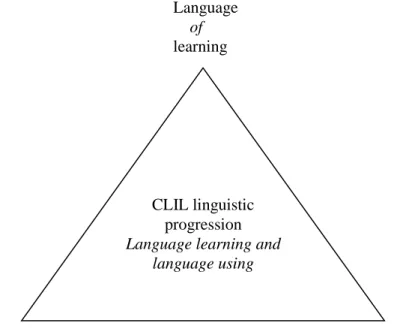
Figure 2. The Language Triptych (from Coyle et al., 2010: 36)……….61
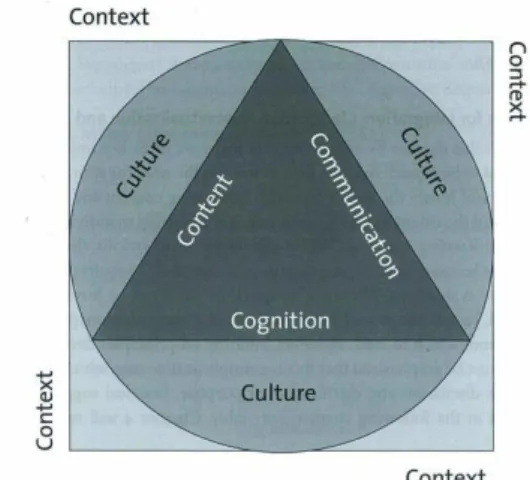
Figure 3. The 4Cs Framework (Coyle et al., 2009: 12)………...70
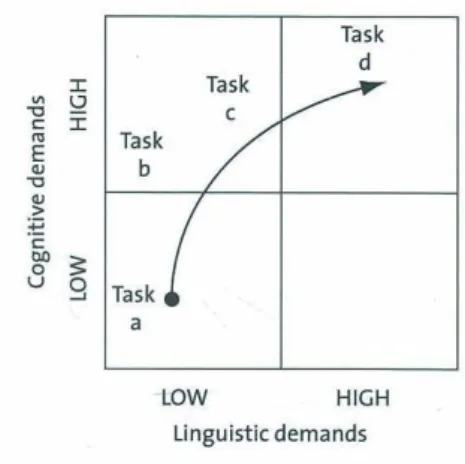
Figure 4. The CLIL Matrix (Coyle et al., 2010: 43)………...76
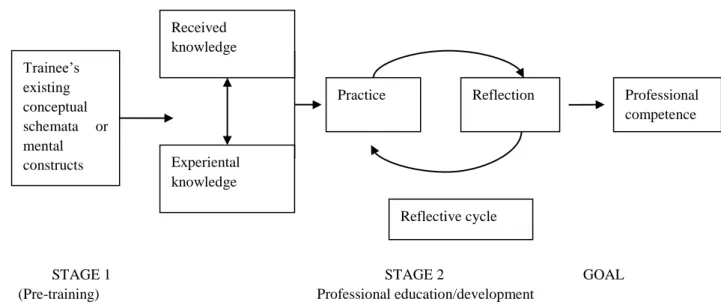
Figure 5. The Reflective practice model of professional education/development (Wallace, 1991:49)...146
Figure 6. Enriched reflection (Ur, 1991:7)………....147
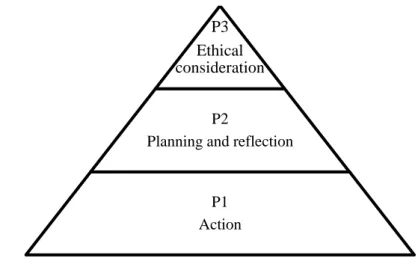
Figure 7. The Practice Triangle of Handal and Lauvås (1987)...150
Tables Table 1. The 4Cs curriculum (Coyle et al., 2009: 12)……….54
Table 2. Boundaries of the study………...199
Table 3. The seminar programme for CLIL teachers during the phases of the study.……….214
Table 4. Key phases of the study, purpose and data-gathering tools………....220
Table 5. Sub-categories for deductive category: context………..253
Table 6. Reflection types per phase: context……….…263
Table 7. Sub-categories for deductive category: understanding of CLIL…………....264
Table 8. Reflection types per phase: understanding of CLIL………...274
Table 9. Sub-categories for deductive category: methodology………...275
Table 10. Reflection types per phase: methodology………..289
Table 11. Sub-categories for deductive category: CLIL vs. ELT……….290
Table 12. Reflection types per phase: CLIL vs. ELT………....303
Table 13. Sub-categories for deductive category: ELT for young learners…………...303
Table 14. Reflection types per phase: ELT for young learners……….309
Table 15. Sub-categories for deductive category: learners………...310
Table 16. Reflection types per phase: learners………..322
Table 17. Sub-categories for deductive category: teacher competences………..323
Table 18. Reflection types per phase: teacher competences……….336
Table 19. Sub-categories for deductive category: personal and professional development………337
xvi
Table 21. Types of reflection per case/phase of study...346 Table 22. Majority reflection type per lesson sequence per teacher...347 Table 23. Majority reflection types per case/phase………...351
1 Introduction
2 Introduction
“[R]eflective teaching is predicated on lifelong professional renewal.”
(Nunan and Lamb, 1996: 122)
The study presented in this thesis is centred on a vital component of teaching and teacher education practices anywhere – reflection. Reflection lies at the core of teacher education programmes that aim to prepare teachers for a career of life-long learning and professional development. Reflection is part of a ‘spiral’ that circles for as long as one wants to learn and believe that one’s practice can always improve. This thesis also embraces ‘change’, and reflective practices are essential in examining and processing change. Reflection acts as a lens on practice which must be viewed systematically in order to bring about change (Loughran, 2002: 33). This change may be a practical response, a heightened awareness of the state of one's practice or a change in attitude. Whatever the form that this change takes, it will always translate into a different way of seeing things, what Boud et al. (1985: 19) call “new understandings and appreciations”. Another way of stating this is provided by Kemmis (1985: 141) who says that the “product [of reflection] is 'praxis' (informed, committed action)”. It is this which has led the author of this study (henceforth referred to as ‘the author’) to attempt to experiment with new practices in teacher education which may afford student-teachers the opportunity of experiencing new understandings and appreciations of their practice which may lead to their personal and professional development.
The author’s own new understandings and appreciations have come about during a process of reflection on foreign language teacher education, the external and internal forces which have been driving it in recent decades, the new generation of learner, and an interest in the potential of new, alternative educational approaches such as is the case of Content and Language Integrated Learning (CLIL) in Portugal. This has brought about a problematising of teacher education practices within the English language teacher education programme at Faculdade de Letras, Universidade do Porto (FLUP), and a renewed commitment to developing a teacher education programme which serves the needs of teachers this century.
3
This thesis consists of a reflection on all of these key areas. The study within it is a convergence of teacher education practices which fuse an established feature of the teacher education programme, namely (systematic) reflection, with the practice of a new educational approach in the Portuguese context – CLIL. It is CLIL that acts as a catalyst for stimulating reflection and developing reflective practices within the teacher education programme.
CLIL is not a totally new phenomenon. It has been around in various guises for many years (Mehisto et al., 2008: 8-10; Coyle et al., 2010: 2; Dalton-Puffer et al., 2010: 3). Interest in CLIL and its growth since the mid 1990s has come about as a result of reflection on the state of foreign languages education, the need to raise standards and renew students’ interest in learning languages. CLIL offers teachers and learners a unique means of learning and understanding both academic subject content and a foreign language, one which simultaneously involves the development of thinking processes and invites new perspectives on cultural understanding. Such a “multiperspectival approach” is also in line with European Union ideals of a “joint European culture” (Wolff, 2002: 48) where its citizens speak two or more languages. As such, CLIL is also credited as a potential contributor to achieving European goals of unity and diversity through enhancing plurilingualism.
The ‘pragmatism’ of CLIL also extends to what is often termed the ‘added value’ of this educational approach. Incorporated within this is the immediacy of application within the learning environment which makes it more appealing to learners who can see the need to learn and use the foreign language within and beyond the classroom. This helps to overcome motivational problems associated with future rather than immediate use of the foreign language (Baetens Beardsmore, 2002: 26). This makes learning more authentic and meaningful. The idea of relevance is key. As Marsh states (2002: 60), “Without relevance it can be hard to achieve meaningful learning”. CLIL is about gaining knowledge and skill simultaneously (Marsh, 2000: 6). It offers an alternative fresh approach to learning which deals with ‘real’ content in authentic learning contexts which offer learners “new ways of seeing the world through studying a new language” and opportunities to “develop their abilities as communicators through accessing this new knowledge” (King, 2009: 4).
4
Further added value is attributed to CLIL through enhanced cognitive development brought about by more learner engagement in understanding content through the language. It could also be said that the multi-tasking required of learners in CLIL contexts is synonymous with the behaviour of the generation whose operating mantra is ‘learn now, use now’. Mehisto et al. (2008: 21) state that CLIL is “a just-in-time approach as opposed to a just-in-case approach”. Added to this is the idea of integrated learning which is commonplace in the lives of today’s youth (Marsh, 2006: 32). This, in turn, filters over to collaboration between teachers (integration of people) and fusing different ways of teaching (integration of methodologies). This reflects new styles of learning and teaching. CLIL promotes inter-disciplinarity and the development of skills which can be used across different subjects. This, in turn, may lead to improved quality of opportunities for academic, social and economic mobility for many more people than an educated elite, thus making plurilingualism a reality within an integrated Europe.
The implementation of a CLIL approach in schools requires curricular transformation through examining different perspectives on teaching and learning which form a new type of didactics (de Bot, 2002: 31). Wolff (2002: 48) suggests that the true potential of CLIL lies in exchanging “encrusted educational structures” with modern pedagogical principles which promote collaborative teaching and learning, and autonomy within a “complex whole approach” to education as opposed to isolated and fragmentary subject teaching. This is further supported by Ting (2010) who suggests that education needs to guide and support understanding and application of the most important factual information:
Potentially, CLIL can open a new chapter in 21st century education, one which
must provide learners with a deep-level comprehension of concepts rather than a myriad of facts. The challenge for (…) education today is not the inculcation of facts but empowering learners with a solid concept-base to discern trash from treasure. (Ting, 2010: 14).
CLIL is thus hailed as a ‘change agent’ bringing about transformation in educational practices in Europe (Wolff, 2012: 106; Coyle, 2013: 244). Marsh et al. (2005: 8) state that CLIL “threatens certain established ‘ways of thinking’, and offers opportunities for initiating change in education”. This is what gives CLIL the potential to be a good catalyst. It demands and promotes reflection from those involved (Coyle, 2002: 28;
5
Muñoz, 2002: 36). It provides the necessary tension or puzzle that sets into motion cycles of planning, action and reflection which bring about change. It involves teachers in challenging their beliefs about teaching and questioning long-established approaches and methods of how languages are acquired and learned. However, for teachers to learn from engaging in new practices, they should be involved in systematic reflection which will help them extract new meaning from them. If they are not involved in reflective practice, then their new experiences run the risk of simply turning into new formulae which in a short space of time become routised, unquestioned practice.
Cruickshank (1987: 1) posits a fundamental question for teacher educators everywhere: “Question: What is more important to the beginning teacher than being readied for the first year of teaching? Answer: Being readied for all the years that follow”. His answer begs a further question for teacher educators: But how do we ready teachers for all those years or rather: how do we prepare teachers for life-long learning in a world of constant change where education must and should do its best to keep up and equip those within it with the skills needed to manage change? A sense of responsibility placed on the shoulders of teacher educators resonates in the statement of Yost et al. (2000: 39), “[T]eachers of the future must have the intellectual, moral and critical thinking abilities to meet the challenges of 21st century schools”. Larrivee (2000: 293) furthers this by suggesting a change in power dynamics to provide for authentic learning communities:
These changing demands call for teaching styles that better align with emerging metaphors of teacher as social mediator, learning facilitator, and reflective practitioner. Being able to function in these roles begins with teacher self-awareness, self-inquiry, and self-reflection, not with the students.
This involves commitment and responsibility on the part of all concerned, no least teachers themselves as instruments of their own development. So how can teacher educators help teachers become reflective? How can reflective practices be set in motion? This is best done when teachers are made aware of what constitutes reflective practice and how they can become consciously engaged in it so as to help them become self-aware of their own acts of reflection. This could be done at the beginning of any teacher education course whether pre- or in-service. This may begin with an examination of beliefs and values about teaching, and what has brought them to this point when they want to embark on or continue in this chosen profession. This is the
6
starting point for reflection and on what all other input is judged against. New concepts from the knowledge base of teacher education will be presented in theory, but for these to be fully understood they must be reflected upon in the broadest sense with a consideration of the implications for practice, and then tested in practice. As Zeichner and Liston (1996: 1) state:
If a teacher never questions the goals and the values that guide his or her assumptions, then it is our belief that this individual is not engaged in reflective teaching. This view is based on a distinction between teaching that is reflective and teaching that is technically focused.
Without reflection, there is the danger that input on teacher education programmes may be viewed in the technical sense as a ‘given’ and not stimulus for analysis. Cruickshank warns at the limitations of the technical preparation of beginning teachers which may serve them for the first year of teaching and little else (1987: 1-2). Such preparation for surviving the practicum will not bring about autonomous practices that will lead to change (Paiva et al., 2006: 79). Larrivee (2000: 293) states that, “Unless teachers develop the practice of critical reflection, they stay trapped in unexamined judgements, interpretations, assumptions, and expectations”. Encouraging teachers to become reflective from early on is a necessity in teacher education programmes and it is crucial that this is taken through to their practicum so that its relevance becomes apparent in the practice of being a teacher and the term does not become resigned to theory. This is, however, a challenge. Van Lier (1994: 340) cited in Norrish and Pachler (2003) voices a common concern:
[P]ractitioners tend to be, (…) missing in action rather than lost in thought. The pressure to act fast and well, to ‘perform’ well-crafted lessons, or in less happy circumstances, to go through routinized motions so as to reach the end of the day with the least amount of hassle, creates its own rhythm of movement, within which systematic reflection and teacher research seem to find no place, except for the most restless and courageous souls.
Reflection needs time, and this is what seems to be constantly lacking in the day-to-day lives of teachers. The danger is that if reflection does not take place, resolving the problems of teaching becomes reduced to a what Korthagen and Vasalos (2005: 48) describe as a “ 'quick fix'- a rapid solution (...) rather than shedding light on the underlying issues”. It is therefore highly important that teacher education programmes
7
make time for reflection so that teachers may recapture the essence of their practice close to the event so that it does not become lost to time.
The author became all too aware of the above challenges when, in 2004/2005, she became involved in the supervision of student-teachers during their teaching practicum as part of the post-graduate course in foreign language teaching1, the precursor to the current Masters degree in teaching English and another foreign language in the third cycle of basic and secondary education. Her experience of supervising student-teachers in schools, reading their lesson plans, observing their practice, listening to their post-observation feedback, witnessing their project presentations (the topics of which had been determined by the university teachers and amounted to theoretical lectures which mirrored their university lessons) had provided her with enough evidence to conclude that there was a definite lack of reflection on, and during their practice. The gap between theory and practice was as evident at the end as it had been at the beginning of the practicum. There was little attempt to transform practice into something relevant, but rather to reproduce and perpetuate the prescriptive approach (Gebhard et al., 1990: 16) previously delivered in theoretical classes at the university.
There was a real need to make the practicum provide for something more relevant and useful which would equip student-teachers with skills for life-long learning within their teaching careers (Wallace, 1991: 58; Van Looy and Goegebeur, 2007: 109). This meant developing a programme which allowed for more autonomy and reflection so as to enable the following:
a closer link between theory and practice;
the opportunity for student-teachers to develop a better awareness of themselves as teachers and of teaching;
to allow student-teachers to ‘own’ and ‘create’ knowledge which would develop throughout and beyond their practicum;
to provide student-teachers with more autonomy to make decisions from which guide their own personal and professional development;
to encourage them to understand what goes on in their classrooms and be able to answer the whys of teaching and in doing so develop their critical thinking;
to encourage effective collaboration among and between members of teaching groups.
1 This is commonly referred to as the ‘Curso de Especialização em Ensino’. This was terminated at FLUP
at the end of the academic year 2008/2009, the same year in which the Masters degrees in teaching foreign languages were introduced.
8
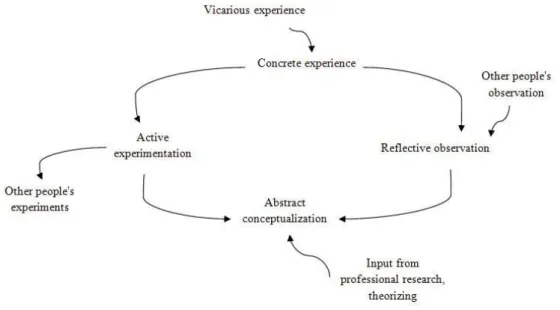
Wallace’s ‘reflective model’ (1991: 48-59; 1998: 13) was seen as having the potential to realise this and was introduced into the English language teacher education programme in 2006. The model provides a two-stage framework for reflective practice from “Pre-training” to “Professional education/development” which leads to the goal of “Professional competence” (Wallace, 1991: 49). Systematic reflection became integrated within the practicum through observation tasks (adapted from Wajnryb, 1992) initiated in faculty seminars, conducted in schools and reflected upon in both. These tasks helped student-teachers see the link between the “received knowledge” gained from their university course and teaching practice seminars, and the “experiential knowledge” (Wallace, 1991: 14-15) gained from observation and eventual practice, and how both contributed to the development of their own reflective practice. They served as a guide for helping them notice ‘gaps’ in teaching and learning themselves which they could focus on in their own action research projects. Other means by which systematic reflection was incorporated into the teacher education programme were through reflective lesson plans incorporating lesson rationales and procedural aims, written reflections on lessons and other aspects of the teaching practice as well as seminar discussions where experiences could be shared and new perspectives gained from this dissemination, and student-teacher-led action research.
The reflective model has remained in operation in the programme for English language teacher education until now. According to the literature, foreign language teacher education at this juncture is one that is centred on the teacher-learner and the knowledge they bring to and create through their experience. It is constructivist, experiential, inquiry-based and reflective. It could be said that the model of English language teacher education at FLUP has been developing along these lines, but it can also be said that it is in danger of becoming static in its content which should be constantly in review. Ur (1996: 8) warns of the dangers of perpetuating the same content and techniques from one group of teachers to another, year after year. Similarly, Nunan and Lamb (1996: 120) remind us of the need to keep in touch with change because “what is technically sound today may not be technically sound tomorrow”, and that our ideas as to what is appropriate methodology evolve in the course of our reflective practice. Wallace (1991: 54) also cautions that reflection is not simply a question of whether it happens or not, but rather an issue of quality, “Improving the quality of reflection in professional
9
education and development must be a major aim of the reflective model”. This has been the long-term mission of the English language teacher education programme at FLUP.
In the academic year 2008-2009, Content and Language Integrated Learning (CLIL) was introduced into the didactics of English language programme of the Masters in teaching foreign languages as part of theoretical awareness-building of other practices and trends in foreign language teaching. The author had gained some insights into the experiences of English language teachers conducting CLIL projects in primary schools through small-scale research conducted in 2008 with teachers from the STEPS – UP Project2. These projects had three main goals: to make learning in English language lessons more relevant and meaningful; to improve collaboration within schools (between the generalist primary teachers and primary English language teachers) so that the school community could become aware of the positive contribution that English language lessons could make; and to raise the profile of the English language teachers and combat the sense of isolation they frequently experienced. From qualitative data obtained from written questionnaires and reflections, a number of conclusions were drawn related to collaboration, benefits to learning and teaching, and difficulties and constraints encountered (see Ellison, 2010a: 8-11). The STEPS project ended in 2009, but the work related to CLIL had provided significant motivation to continue further studies into this educational approach.
In 2009, student-teachers following the Masters degree in Teaching English and another Foreign Language in Basic Education (MEIB) were encouraged to develop and execute a CLIL-type lesson during part of their practicum in primary schools. During this year small-scale research was conducted into what teachers did to support content and language learning in primary CLIL lessons. An observation tool of scaffolding criteria
2 In 2005 the author became the pedagogic coordinator of the S.T.E.P.S – UP project (Support for
Teaching English in Primary Schools – University of Porto) a protocol between FLUP and Porto city council for the recruitment and support of primary English language teachers in schools within the city as part of the Ministry of Education initiative to introduce English language as an extra-curricular activity. Support from STEPS was varied and constant consisting of a four-year content and language syllabus, online platform, regular face-to-face teacher development sessions and meetings. A community of practice which nurtured a spirit of collaboration was developed. Teachers were encouraged to reflect privately and openly about their experiences, and share ideas and materials. They were also encouraged to engage in small-scale CLIL projects in the schools where they were teaching.
10
was developed by examining key features of CLIL pedagogy and existing tools used for CLIL teacher performance. The tool was used to detect evidence of scaffolding in the CLIL lessons of two student-teachers. These lessons were filmed. The study also aimed to detect other strategies used by these teachers to support learning which contributed to an accumulating taxonomy of such strategies (see Appendix 1.) The experience of these student-teachers, though very brief, their filmed lessons and the taxonomy of scaffolding strategies, provided important materials for analysis and use in the Masters programme. Since that time, the inclusion of CLIL in the English language teacher education programme has evolved. This evolution is partly the result of the opportunity CLIL afforded the programme to developing reflective practice which is the focus of the current study presented in Part II of this thesis.
Once separate, but now converging foci, reflective practice and CLIL are brought together in this study within a reciprocal relationship where each is dependent upon and supports the development of the other. The purpose of this study is to continue to develop an understanding of CLIL by incorporating a longer CLIL experience, over one academic year, into the practicum of three experienced primary English language teachers who were unfamiliar with this educational approach. CLIL would provide the stimulus for developing reflective practice during their experience which would surface and capture the complexity of their thinking over time. This would provide insights into the way teachers reflect, and whether the type of reflection is determined by time or content. Studies have been conducted into the types of reflection student-teachers engage in during their teaching course and practicum (see Appendix 2 for a list of conceptual frameworks of reflection from these studies), but these have not involved student-teachers of foreign languages or CLIL. Studies related to teachers’ perspectives on CLIL practice have mainly related to content teachers and not language teachers teaching the content subject. An exception is the study of Hunt et al. (2009) who investigated the work of student-teachers of French as a foreign language conducting content lessons through French in a lower secondary school in the UK.
The current study combines research into what English language teachers reflect on (content) and how they reflect (types of reflection) when teaching CLIL. The contribution is thus two-fold: to an understanding of CLIL as taught by English language teachers in primary schools in Portugal, and to an understanding of teacher
11
reflection, both of which may help to develop the English language teacher education programme at FLUP and contribute to an understanding of the requirements of teacher education for language teachers in CLIL. These constitute the main aims of the study which are determined by answers to the following research question:
1. What are the perspectives of teachers during their CLIL experience? a) What do the teachers reflect on during their CLIL experience? b) What types of reflection do they engage in?
c) Do the foci and types of reflection change over time?
This thesis is divided into two parts. Part I consists of three chapters. As the introductory chapter of the thesis, Chapter 1 provides the background to professional development in teacher education, placing CLIL and reflective practice within it and positioning them for further exploration in later chapters. Entitled ‘Change in foreign language teacher education: reaction to and action for’, this first chapter examines the forces from outside and within the profession which have brought about change. This is mapped on a trajectory of foreign language teacher education over recent decades which have seen a growing appreciation of teacher perspectives and cognition as contributing to its knowledge base. The chapter sets out the new agenda for teacher education this century which is experiential, constructivist, reflective and inquiry-oriented, and involves experimenting with new educational approaches such as CLIL which is discussed in Chapter 2.
As a growing phenomenon in foreign language teaching and part of the new knowledge base of teacher education, CLIL demands reflection on what it is, and why and how it has evolved as an agent of change. This is the essence of Chapter 2, ‘Understanding Content and Language Integrated Learning’. This chapter attempts to problematise CLIL and in doing so draw attention to key characteristics of this educational approach which make it distinct from others. It examines the competences required of teachers and what teacher educators and stakeholders need to know in order for teachers to be well-prepared, and for CLIL to be implemented effectively in schools.
Chapter 3 addresses the complex concept of reflection and how this has been viewed by those involved in teacher education. This includes the processes involved in reflection
12
as well as the dimensions of content and types of reflection teachers engage in. It puts forward the necessity to develop reflective practices in teacher education in order for teacher-learners to surface and draw meaning from their experiences. Procedures, strategies and tools which engage teachers in systematic reflection are presented, as well as the model of reflective practice at FLUP, how this is operationalised, and how CLIL may be included in it.
Part II of the thesis applies the theoretical concepts explored in Part I to the study which fuses the CLIL experiences of three language teachers within cycles of reflection on and during their practice. It consists of two chapters. The first of these, Chapter 4, provides details of the unique situated nature of the study, its purpose and main aims. It involved qualitative research within a multiple case study. Details of the boundaries of the case study are provided and explained as are decisions regarding the design and methodology. These include the three key phases (Pre- Action- and Post-action), the choice of data-gathering tools, and the two main dimensions along which data were organised. The dimensions are the content of teachers’ reflections and the type of reflection teachers engaged in. The content of teachers’ reflections are divided into eight broad areas of focus for analysis: Context; Understanding of CLIL; Methodology; CLIL vs. ELT; ELT for young learners; Learners; Teacher competences; and Personal and professional development. The tool or ‘rubric’ used to analyse the other dimension, the types of reflection teachers engaged in, is presented, as is the means by which it was used.
In Chapter 5 the findings of the study are presented and discussed. This is done in two sections which relate to the main dimensions of content and types of reflection. The section on content of teachers’ reflections is organised according to the eight broad areas of focus mentioned above and the sub-categories and themes which emerged across the three cases (in the reflections of the three teachers). Findings are illustrated by extracts from teachers’ spoken and written reflections. The Conclusion of the thesis summaries these findings and explores their significance in relation to the aims of the study and the implications for the foreign language teacher education programme at FLUP and beyond. Limitations of the investigation are identified and possibilities for future lines of inquiry are suggested.
13
It is important, at this point in the thesis, to clarify the use of terminology which is recurrent across chapters.
English as a foreign, second or additional language
These terms are not entirely synonymous although much of their use in the literature would suggest that they are. Carter and Nunan (2001: 2) make a distinction between English as a Second Language (ESL) and English as a Foreign Language (EFL) with the former taught in countries where English is the predominant language of communication outside the classroom context, and the latter where another language is the predominant language of communication outside the classroom. The learner in an ESL context is taught the English language in order to be able to function linguistically in that context. Such is the case of the education of immigrants to English-speaking countries or children in immersion programmes. English as a Foreign Language is that which is taught in non-English-speaking countries where it may be a subject within a school’s curriculum. However, in core books about language teacher education, notably those edited by Richards and Nunan (1990), and more recently, by Burns and Richards (2009) and Tedick (2010), as well as a number of state-of-the-art publications, (see, for example, Wright, 2010; Johnson, 2006) ‘Second Language Teacher Education’ (SLTE) is used as an umbrella term which encompasses many English language teaching contexts and purposes for teaching English. In Portugal, the country in which this study was conducted, English is mainly taught as a foreign language. The term L1 is used to refer to the student’s mother-tongue, and L2 to the target language of learning and instruction.
CLIL is frequently associated with EFL contexts, though depending on perspectives, this can also include immersion contexts where ESL is taught. The term ‘additional’ language is also used in CLIL. This is because the CLIL language may be a minority language, heritage language or a second official language such as the case of Gaelige in Ireland (see Dillon, 2009 for a study on The CLIL Approach in Irish Primary Schools: A Multilingual Perspective) additional to other languages already known to the learner. Some scholars prefer the term “vehicular language”, claiming that this is a more “inclusive term” (see Coyle et al., 2010: 1).
14 Multilingual and plurilingual
These terms are frequently used interchangeably though they mean different things. This difference is made explicit in the Common European Framework of Reference for Languages:
Plurilingualism differs from multilingualism, which is the knowledge of a number of languages, or the co-existence of different languages in a given society. Multilingualism may be attained by simply diversifying the languages on offer in a particular school or educational system, or by encouraging pupils to learn more than one foreign language, or reducing the dominant position of English in international communication. Beyond this, the plurilingual approach emphasizes the fact that as an individual person’s experience of language in its cultural contexts expands, from the language of the home to that of society at large and then to the languages of other peoples (whether learnt at school or college, or by direct experience), he or she does not keep these languages and cultures in strictly separated mental compartments, but rather builds up a communicative competence to which all knowledge and experience of language contributes and in which languages interrelate and interact. In different situations, a person can call flexibly upon different parts of this competence to achieve effective communication with a particular interlocutor (2001: 4).
We can interpret this as multilingualism being entwined in social and educational policy, school curricula, and language knowledge and language learning, and plurilingualism as a desirable state of functionally linguistic and cultural competence. Both multilingualism and plurilingualism are commonly cited goals of European supra-national institutions in policy statements (for an in-depth discussion of the uses of these terms, see Pinto, 2013). In this thesis, the author’s use of the terms is in accordance with that of the Common European Framework of Reference cited above.
15 Part I.
Theoretical background: reflection on change in foreign language teacher education, Content and Language Integrated Learning, and reflective practice.
17 Chapter 1
19 Introduction
At no time in recent years have we experienced life in such an unstable, fragile and critical world where the only predictable thing is ‘change’. This is felt in all aspects of life in the 21st century and none more so than education. This sector is often criticised for not keeping pace with change, or providing young people with the necessary knowledge, skills and understanding that are needed for the times in which we live and beyond. Teachers and teacher educators are at the forefront of change. For some this may be an uncomfortable position, for others it is an opportunity to influence practice for the betterment of themselves and others. Regardless of which group one falls into, change brings with it further challenges. It is the responsibility of those involved in teacher education to prepare student-teachers with the attitude to both embrace change and to effect it. This chapter sets into motion a cycle of reflection on the main drivers of change in education this century, and in foreign language education in particular.
Agents of change come from outside and within the profession. External influences are led by the forces of globalisation which influence social, economic and political policy such as that of the supra-national institutions of Europe. European policy statements influence national and local practice. These, and initiatives regarding foreign language teacher education, are discussed in this chapter in relation to broad European objectives for enhancing multilingualism and plurilingualism. The young people who occupy classrooms also drive change. This is a generation born into a globalised world which demands a broad range of skills to deal with the vast amounts of information made available through technology and the Internet. They need to be able to understand, analyse, evaluate, manipulate, and use it, and they need opportunities to develop competences so that they may do all of these things. Education must provide these opportunities. Change is also influenced by those within the profession who may sense that what they provide is no longer adequate for those it is meant to serve. This chapter sets out to highlight this through a mapping of the trajectory of language teacher education which documents its changing emphases and influences in recent years. The reflective cycle of this chapter ends by suggesting new directions which could be taken to fill the gaps identified in educational approaches and foreign language teacher education. These relate specifically to Content and Language Integrated Learning (CLIL), and a European framework which points to what a modern forward-looking
20
teacher education for the 21st century should comprise in order to fulfill the needs of
both teachers and students.
1. External forces: drivers of change in education
Agents of change come in many different guises. Asikainen et al. (2010: 3) identify seven global forces as the drivers of change: socio-demographic shift; science and technological innovation; re-shaped work and organisational cultures; new knowledge and competence demands; imperatives of sustainable development; governance, safety and security; and globalisation. They also identify a corresponding set of factors that drive innovation: neurological, cognitive, motivational factors and social bases of learning; dynamics of lifelong learning and the potential of E-Learning 2.0/3.0; value-creating networks and clusters of innovation; education systems and informal learning; human technologies that support learning; technology-based working and operating environments; private and public sector educational and resources providers. It is easy to identify education as a key factor and facilitator of such change and innovation, though less easy to determine how it may bring it about. This is because educational institutions and educators have not always kept pace with change to the extent that there is a perceived gap between the type of education that young people are receiving and their immediate and future needs (Coyle et al., 2010: 153). Deficits or gaps in education should be acknowledged and addressed before any attempts at change are made.
The ease with which knowledge is transmitted through continuous advances in technology has brought about what is now known as a ‘knowledge society’. It is a society of easy access, quick thinking, risk-taking, and on-the-spot decision-making. It is not simply a question of what knowledge is transmitted, but the extent to which that knowledge can be manipulated, used, and new knowledge created. However, in order to function and reap the benefits of this new society, citizens need to develop a range of skills and competences. The Key Competences for Lifelong Learning in Europe Framework (European Commission, 2006a) lists the following as essential competences: mathematical, scientific and technological, digital, interpersonal, intercultural and social competences, entrepreneurship and cultural adaptability. These are all inextricably linked to communication and learning skills. Languages are crucial conduits in these processes. They have become important human and economic capital, and are now seen as an important part of professional competence (Takala, 2002: 40).
21
The cascading consequences brought about by globalisation are thus manifested in major shifts in knowledge, economies, and people over newly ‘borderless’ regions. As Coyle et al. (2010:157) put it:
Globalisation invites language shift, especially in terms of human mobility and migration, which leads to dynamic multilingual societies. Because of the impact of multilingualism and plurilingualism on societies, educational systems are under pressure to adapt quickly and accordingly.
This resonates with and directly impacts upon education and curricula, and how we should prepare learners to meet the challenges of the society in which they live (Marsh, 2006: 31). It demands a re-positioning of the role of languages within a ‘competence-oriented’ education. With this has come a renewed interest in foreign language teaching because of the “dire need” for Europe to educate multilingual citizens as the “linguistic consequences of globalization are more and more evident” (Lasagabaster, 2008: 30) which has forced European policy makers to take note and consider new strategies. 1.1. European policy
Since the 1990s there has been a steady stream of policy statements and initiatives from supra-national European institutions aimed at improving integration, mobility of its peoples and developing robust economies whilst maintaining diversity in its cultures and languages. Such initiatives included references to language policy aimed at developing multilingualism and plurlingualism (for an in-depth account of European policy initiatives, see Marsh, 2002 and Marsh, 2013). However, at the same time there was a perceived “delivery gap” between education and student performance in foreign languages which presented itself as a barrier to economic competitiveness (Marsh, 2002: 9). Marsh states that for languages to thrive, the core conditions of “need and use” must be in place (2002: 49). These must be evident within the classroom context for students to gain a perspective of their own learning. There was concern within the institutions of Europe that at a time where unity was on the agenda, the citizens of Europe, and alarmingly, its youth, did not appear to be equipped with the necessary skills to be able to communicate.
A reaction to this was what was to become a mission of the European supra-national institutions – to encourage its citizens to become multilingual. This was laid down in
22
1995 as an objective of the European Commission’s white paper, ´Teaching and Learning: Towards the Learning Society’:
Proficiency in several Community languages has become a precondition if citizens of the European Union are to benefit from occupational and personal opportunities open to them in the border-free Single Market. This language proficiency must be backed up by the ability to adapt to working and living environments characterized by different cultures.
Languages are also the key to knowing other people. Proficiency in languages helps to build up the feeling of being European with all its cultural wealth and diversity and of understanding between the citizens of Europe.
Multilingualism is part and parcel of both European identity/citizenship and the learning society. (1995: 47).
Strategies to achieve this were also suggested, namely starting foreign language learning in pre-school, and studying certain subjects in the first foreign language in secondary schools. Multilingualism became firmly entrenched on the agenda when the European Commission declared its commitment to this ideal at the March 2002 Barcelona European Council where it was announced that “Every European citizen should have meaningful communicative competence in at least two other languages in addition to his or her mother tongue” (MT + 2) from an early age (2003: 4). This later became part of the Action Plan 2004 – 2006, ‘Promoting Language Learning and Linguistic Diversity’. This was considered an ambitious and according to some, utopian or idealistic objective for the time (Wolff, 2002: 48; Marsh, 1998: 53). A European Quality Label was created as an incentive to educators to devise innovative means of developing foreign language learning. MT + 2 is one way of realising the European ideal of unity in diversity as citizens are encouraged to expand their linguistic horizons by learning an additional two languages in order to communicate on a broad European scale. With increased European expansion and more mobility, there is further need for citizens to possess functionally linguistic skills.
The reaction of member states to MT + 2 was varied. This included lowering the onset of foreign language learning to primary schools to provide for more year-on exposure, though in some cases (Portugal included) this trend led to the reduction in the hours allocated to foreign languages in lower and upper secondary schools. However, early language programmes are not always effectively organised in relation to foreign language teaching in the other cycles of compulsory education and other areas of the
23
primary curriculum. At most, they can help develop positive attitudes to the language and motivation to learning (Muñoz, 2002: 35) though this is dependent on quality, meaningful exposure. The reality in the Portuguese context is that many programmes are poorly structured, under-resourced or resourced with inappropriately qualified teachers without fixed-term contracts, are optional, lack coherent national syllabi, and are tagged on to the end of the school day as ‘extra-curricular’ activities with all the negativity that that brings with it. Such programmes have indeed backfired with poor quality provision and resulted in negative attitudes towards foreign languages.
Operationalising the European vision of MT + 2 was always going to be challenging with limited curricular time and human resources. As Marsh (2002: 52) states, “Put simply, to convert the rhetoric on linguistic and cultural diversity into practical action, an extra means of delivery would need to be found which would complement existing language teaching, yet enhance the scope and breadth of language learning”. What was needed was something that did not compromise on curricular time, delivered on foreign language learning and provided much needed ‘functional environments’ for language to be used (de Bot, 2002: 31; de Graaff et al., 2007: 604). It was understood that providing more of the same in terms of foreign language lessons was not necessarily the solution. There needed to be more pragmatic use of the language, not simply more knowledge of it, and one which suited the new generation of learner (Marsh, 2003: 2).
1.2. Mindsets of the new generation of learners
The new generation of learners are digital natives who are used to getting instant fixes from their freshly acquired knowledge. Technology has greatly impacted on the way such learners process and use information (Asikainen et al., 2010: 8). This is the mindset of Generation Y (born between 1982 and 2001) and the orientation of Generation C (born between 2002 and 2025). Young people nowadays need a broad range of competences to deal with the information overload this world beams out at them, and which they absorb at a rapid pace. They need to be able to understand it, analyse it, evaluate it, and use it. In other words, they need to be able to think about it critically. Fleetham (2003: 6) sums this up by saying that:
Global trends in the way we work, relax and learn demand changes in young people. (…) In our evolving world, the ability to think is fast becoming more desirable than any fixed set of skills and knowledge. We need problems solvers,