UNIVERSIDADE DA BEIRA INTERIOR
Ciências
Novel Affinity Chromatography Processes for the
Purification of Plasmid DNA Using Small Aromatic
Molecules
Catarina Caramelo Nunes
Tese para obtenção do Grau de Doutor em
Bioquímica
(3º ciclo de estudos)
Orientador: Prof. Doutora Cândida Ascensão Teixeira Tomaz
Co-orientadores: Prof. Doutor Paulo Jorge da Silva Almeida
Prof. Doutor João Carlos Nunes Marcos
iii
Work supported by FCT, the Portuguese Foundation for Science and Technology SFRH/BD/64918/2009, PTDC/QUI-QUI/100896/2008, and FCT-COMPETE PEst-C/SAU/UI0709/2011.
v
To my parents and sister
Somewhere, something incredible is waiting to be known. Carl Sagan
vii
Acknowledgments
There are never enough words to express deep gratitude towards all of those persons that were somehow involved in making this journey a true adventure of science and growth.
I gratefully thank my supervisors, Professor Cândida Tomaz, Professor Paulo Almeida and Professor João Carlos Marcos for all the knowledge transmitted, unconditional support and more importantly, for the friendship and kindness that made everything much more easy. A special thank to Professor Cândida for following my work, and also my troubles up close, always with a kind word of support.
I thank all my friends and colleagues for the help, friendship and all those good and funny lab moments filled with work, science and laugh.
A very special thank to my friend Marta Gabriel for the unconditional help, friendship and support. Thanks for always having my back. I also give a special thank to my friend José Nunes for the friendship and all of those great and funny conversations. You both proved that even in the middle of a storm, the rainbow can still always appear.
I give my deepest thanks to my family, my parents and my sister, for their unconditional love and support. For the help and patience through so many troubled paths and adventures. You truly are the best family one could ever have, and wish for.
I thank Fundação para a Ciência e a Tecnologia for the scholarship and financial support.
Finally, I would like to thank the Universidade da Beira Interior.
ix
List of publications
Papers included in the thesis:
I. Aromatic ligands for plasmid DNA chromatographic analysis and purification: an overview
C. Caramelo-Nunes, P. Almeida, J.C. Marcos, C.T. Tomaz Submitted for publication (2013).
II. Specific berenil–DNA interactions: An approach for separation of plasmid isoforms by pseudo–affinity chromatography
C. Caramelo-Nunes, T. Tente, P. Almeida, J.C. Marcos, C.T. Tomaz Analytical Biochemistry (2011) 412: 153-158.
III. Purification of plasmid DNA from clarified and non-clarified Escherichia coli lysates by berenil pseudo-affinity chromatography
C. Caramelo-Nunes, M. Gabriel, P. Almeida, J.C. Marcos, C.T. Tomaz Journal of Chromatography B (2012) 904: 81-87.
IV. Negative pseudo-affinity chromatography for plasmid DNA purification using berenil as ligand
C. Caramelo-Nunes, M.F. Gabriel, P. Almeida, J.C. Marcos, C.T. Tomaz Submitted for publication (2013).
V. Specific recognition of supercoiled plasmid DNA by affinity chromatography using
the intercalator DAPP as ligand
C. Caramelo-Nunes, P. Almeida, J.C. Marcos, C.T. Tomaz Journal of Chromatography B (2013) 928: 121-124.
VI. Dynamic binding capacity and specificity of 3,8-diamino-6-phenylphenanthridine-Sepharose support for purification of supercoiled plasmid deoxyribonucleic acid
C. Caramelo-Nunes, D. Bicho, P. Almeida, J.C. Marcos, C.T. Tomaz Journal of Chromatography A (2013) 1307, 91-98.
Patent included in the thesis:
I. Suporte cromatográfico de afinidade para purificação de DNA plasmídico
superenrolado utilizando 3,8-diamino-6-fenilfenantridina (DAPP) como ligando.
Portuguese patent application n. 106595.
Papers from scientific conferences:
I. Separation of plasmid DNA from non clarified lysate impurities using berenil as ligand in pseudo-affinity chromatography
C. Caramelo-Nunes, M. Gabriel, P. Almeida, J.C. Marcos, C.T. Tomaz
Actas do Simpósio 2011: Transferência do Conhecimento e Tecnologia (2011) ISBN: 978-989-654-084-5, 41-43.
II. DAPP as affinity ligand: support characterization and chromatographic studies with pDNA
C. Caramelo-Nunes, P. Almeida, J.C. Marcos, C.T. Tomaz
xi
List of scientific communications
Oral scientific communications resultant of the Doctoral work:
I. A New Aproach For Affinity Chromatography Plasmid Purification Using Berenil As
Ligand
C. Caramelo-Nunes, T. Tente, P. Almeida, J.C. Marcos, C.T. Tomaz
V ANNUAL CICS SYMPOSIUM, July 6, University of Beira Interior, Covilhã, Portugal, 2010.
II. Small natural ligands for plasmid DNA purification by affinity chromatography
C. Caramelo-Nunes, T. Tente, P. Almeida, J.C. Marcos, C.T. Tomaz
8th European Symposium on Biochemical Engineering Science (ESBES), September 6-8, Bologna, Italy, 2010.
III. Separation of plasmid DNA from non clarified lysate impurities using berenil as ligand in pseudo-affinity chromatography
C. Caramelo-Nunes, M.F. Gabriel, P. Almeida, J.C. Marcos, C.T. Tomaz
Simpósio 2011 – Transferência de Conhecimento e Tecnologia, December 15-16, University of Beira Interior, Covilhã, Portugal, 2011.
IV. Specific berenil–DNA interactions: an overall study in pDNA purification by pseudo-affinity chromatography
C. Caramelo-Nunes, M.F. Gabriel, P. Almeida, J.C. Marcos, C.T. Tomaz
7th National Meeting on Chromatography, January 9-11, University of Porto, Porto, Portugal, 2012.
V. Intercalator DAPP as a new affinity ligand for supercoiled pDNA chromatographic separation
C. Caramelo-Nunes, P. Almeida, J.C. Marcos, C.T. Tomaz
32nd International Symposium on the separation of Proteins, Peptides and Polynucleotides, September 23-26, Istanbul, Turkey, 2012.
VI. DAPP as affinity ligand: support characterization and chromatographic studies with pDNA
C. Caramelo-Nunes, P. Almeida, J.C. Marcos, C.T. Tomaz
Simpósio 2011 – Transferência de Conhecimento e Tecnologia, December 6-7, University of Beira Interior, Covilhã, Portugal, 2012.
Poster presentations resultant of the Doctoral work:
I. Small natural ligands for plasmid DNA purification by affinity chromatography
C. Caramelo-Nunes, T. Tente, P. Almeida, J.C. Marcos, C.T. Tomaz
8th European Symposium on Biochemical Engineering Science (ESBES), September 6-8, Bologna, Italy, 2010.
II. Purification of plasmid DNA from non clarified lysates using berenil as ligand in pseudo-affinity chromatography
C. Caramelo-Nunes, M.F. Gabriel, P. Almeida, J.C. Marcos, C.T. Tomaz Affinity 2011, June 16-19, Tavira, Portugal, 2011.
III. Purification of plasmid DNA from clarified cell lysates by a single chromatographic step using berenil as ligand
C. Caramelo-Nunes, M.F. Gabriel, P. Almeida, J.C. Marcos, C.T. Tomaz Preparative and Process Chromatography, July 10-13, Boston, USA, 2011.
IV. DAPP-Sepharose affinity chromatography: supercoiled pDNA purification from
clarified E. coli lysate solutions
C. Caramelo-Nunes, P. Almeida, J.C. Marcos, C.T. Tomaz
19th International Symposium on Separation Sciences - New Achievements in Chromatography, September 25 - 28, Poreč, Croatia, 2013.
xiii
Resumo alargado
As terapias moleculares que se baseiam na prevenção e tratamento de doenças por transferência genética, estão a tornar-se fortes alternativas aos tratamentos clássicos. A administração dos genes terapêuticos é feita recorrendo a veículos ou vetores que podem ser de origem viral ou não viral. Presentemente, os vetores virais ainda são considerados os mais eficientes para a administração genética, contudo os vetores baseados em DNA plasmídico (pDNA) estão a ganhar popularidade devido à sua simplicidade de produção e segurança, sendo o terceiro tipo de vetor mais usado em ensaios clínicos. Desta forma, a investigação relacionada com novos métodos para a obtenção de quantidades substanciais de pDNA de grau terapêutico tem aumentado bastante. O pDNA para fins terapêuticos deve estar em conformidade com as especificações das agências reguladoras, seguindo rigorosos critérios de qualidade em termos de uso de reagentes tóxicos ou de origem animal, bem como de pureza relativamente aos restantes constituintes dos lisados celulares. Contudo, as semelhanças existentes entre o pDNA e os seus contaminantes comuns, como proteínas, endotoxinas, DNA genómico e RNA, podem complicar a sua separação, pelo que o processo de purificação deverá ser extremamente eficiente.
A cromatografia líquida é o método mais utilizado para a purificação de pDNA, uma vez que é um processo relativamente simples, robusto, versátil e altamente reprodutível. Os métodos cromatográficos exploram propriedades do pDNA como tamanho, hidrofobicidade, carga e a afinidade das suas bases aos ligandos, para o separar das suas impurezas com a maior eficiência possível. A flexibilidade deste tipo de processo advém da grande variedade de suportes e ligandos que podem ser usados, tendo em conta as especificidades da molécula a separar. A identificação e seleção de ligandos de elevada seletividade e afinidade é presentemente uma prioridade no desenvolvimento de novos processos cromatográficos. De facto, a composição química dos suportes determina as interações estabelecidas com as moléculas alvo, permitindo uma interação preferencial com estas em detrimento das moléculas contaminantes.
Assim sendo, o objetivo deste trabalho foi desenvolver novos métodos cromatográficos para a purificação de pDNA de grau terapêutico, com o propósito de implementar métodos mais eficientes, mais simples, com menor custo e menor impacto ambiental. O ligando de "minor groove" berenil e o intercalante 3,8-diamino-6-phenylphenanthridine (DAPP) foram as moléculas escolhidas para serem testadas como ligandos cromatográficos. Ambos foram imobilizados numa matriz de Sepharose epoxi-ativada, em condições moderadas, sem recorrer a catalisador e com rácios de ligando:Sepharose relativamente baixos.
O berenil estabelece ligações não covalentes reversíveis com as bases do DNA, preferencialmente ao nível das sequências A-T. Liga-se principalmente através de interações hidrofóbicas, contudo, outras interações como as electrostáticas, van der Waals e pontes de
hidrogénio não podem ser negligenciadas. Com quantidades moderadas de sulfato de amónio no eluente, a matriz berenil-Sepharose mostrou ser bastante eficaz na separação e purificação de pDNA presente em lisados clarificados e não clarificados, usando três métodos distintos. Contudo, a separação da isoforma superenrolada das restantes não foi conseguida em nenhum dos casos. Porém, se a solução injetada for constituída por uma mistura purificada das isoformas superenrolada e circular aberta, estas são facilmente separadas. Usando o suporte berenil-Sepharose foi possível purificar dois plasmídeos de diferentes tamanhos a partir de lisados clarificados contendo cada uma deles. O mesmo se verificou quando o processo de clarificação foi substituído por um segundo passo cromatográfico. Em ambos os casos, as soluções de pDNA obtidas estavam de acordo com as especificações exigidas para um produto com aplicações terapêuticas. No entanto, os rendimentos obtidos apresentaram algumas diferenças importantes: os dois ensaios cromatográficos consecutivos originaram rendimentos relativamente baixos (33%), enquanto no método cromatográfico associado a um passo de clarificação foi obtido um rendimento superior para o pDNA de menor tamanho relativamente ao de maior dimensão (85% vs 45%). Estudos de cromatografia negativa foram também realizados com este suporte, os quais demonstraram algumas vantagens em termos de quantidade de sal utilizado e tempo total do método. Neste caso, o rendimento obtido foi bastante bom (87%) mas, apesar de as soluções de pDNA terem graus de pureza semelhantes às obtidas por cromatografia positiva, a redução da contaminação de DNA genómico não se revelou tão eficiente.
As moléculas de DAPP têm alguma especificidade para com as sequências A-T e ligam-se ao pDNA por introdução reversível e não covalente dos anéis aromáticos condensados entre dois pares de bases consecutivos, enquanto o grupo fenilo se introduz no "minor groove". Tal sugere que as interações hidrofóbicas têm um papel importante na ligação. Contudo, quando as moléculas de DAPP estão protonadas, estas ligam-se ao pDNA de forma muito mais forte devido ao estabelecimento de fortes interações electrostáticas. A ligação do pDNA à matriz DAPP-Sepharose é influenciada por variações de pH e pela presença de sal nas fases líquidas. Na verdade, a retenção total de todos os constituintes do lisado clarificado injetado só foi possível a um pH inferior ao pKa da molécula de DAPP (5,8), verificando-se que a presença de sal destabiliza essa mesma retenção. Assim, a eluição das espécies retidas foi facilmente conseguida por adição de pequenas quantidades de cloreto de sódio ao eluente. Todas estas características permitiram a purificação com sucesso de pDNA superenrolado, de diferentes massas moleculares, o qual foi obtido de acordo com as especificações das agências reguladoras. Uma vez mais, o rendimento para o pDNA de menor tamanho ultrapassou em muito o do pDNA de maiores dimensões (94% vs 65%). A capacidade dinâmica de ligação ao pDNA obtida para o suporte DAPP-Sepharose foi de 336,75 µg pDNA/mL gel, um valor aceitável considerando que é um suporte não comercial, com uma densidade de ligandos relativamente baixa (0,15 mmol DAPP/g Sepharose derivatizada). Para além disso, a
xv
constante de dissociação (2,29 ± 0,195 x 10-7 M) constitui uma evidência importante de que esta matriz apresenta uma elevada afinidade para com o pDNA.
Em conclusão, o DAPP-Sepharose apresenta as características ideais para ser aplicado como suporte de afinidade na purificação de pDNA superenrolado de grau farmacêutico. Em comparação com a fase estacionária de berenil-Sepharose, usa quantidades de sal muito menores, tendo portanto um impacto económico e ambiental menor, ao mesmo tempo que permite a obtenção de pDNA com melhor qualidade e rendimento mais elevado. Para além disso, também permite a separação da isoforma superenrolada da linear e circular aberta, mesmo a partir de lisados complexos.
Desta forma, combinar um passo cromatográfico, usando o suporte DAPP-Sepharose, com processos optimizados de produção, extração e clarificação, pode ser extremamente vantajoso para a produção de pDNA. Para além disso, uma vez que a maior desvantagem deste suporte é a sua baixa capacidade para com o pDNA, que por sua vez está diretamente relacionada com a matriz usada, será extremamente interessante usar, como alternativa, outras matrizes mais estáveis e com macroporos interconectados que permitam uma elevada transferência de massa dos solutos.
Palavras-chave
Berenil-Sepharose, cromatografia de afinidade, cromatografia negativa de pseudo-afinidade, cromatografia de pseudo-afinidade, DAPP-Sepharose, DNA plasmídico superenrolado, intercalante, ligando de minor groove, pequenos ligandos do DNA, purificação de plasmídeos.
xvii
Abstract
Molecular therapies are gaining importance as an effective therapeutic approach for various types of diseases. The most efficient vectors used to introduce the therapeutic genes are of viral origin however, non-viral vectors based on pDNA are gaining popularity due to their superior safety and easy of production. These factors have increased the demand for high quantities of pharmaceutical grade plasmid DNA (pDNA). Therefore, the research for more efficient pDNA purification protocols has also increased. Moreover, the final pDNA product must meet stringent quality criteria established by the regulatory agencies.
Liquid chromatography is the method of choice for the purification of pDNA, since it is simple, robust, versatile and high reproducible. The most important features of a chromatographic procedure are the use of suitable stationary phases and ligands. As conventional purification protocols are being replaced by more sophisticated and selective procedures, the focus changes towards designing and selecting ligands of high affinity and specificity. In fact, the chemical composition of the chromatographic supports determines the interactions established with the target molecules, allowing their preferential retention over the undesirable ones.
With these facts in mind, the aim of this work was to develop new chromatographic methods for the purification of pharmaceutical grade pDNA, with the purpose of improving the overall procedures to more effective, simple, economic and environmental-friendly ones. The minor groove binder berenil and the intercalator 3,8-diamino-6-phenylphenanthridine (DAPP) where chosen to be used as ligands in pDNA chromatographic purification studies. They were immobilized to an epoxy-activated Sepharose matrix using a relatively mild curing method, without a catalyst and with quite small ligand:Sepharose weight ratios.
Berenil binds pDNA preferentially through hydrophobic interactions but other types of interaction contributions cannot be neglected. It was shown to be quite effective at separating and purifying pDNA from clarified and non-clarified cell lysates, using three different approaches, although isoform resolution was not obtained in either case. Using mild amounts of ammonium sulphate in the eluent, berenil-Sepharose support was able to purify distinct pDNA of two different sizes from clarified cell lysates. Moreover, the ability was continual when the clarification process was replaced by a second chromatographic run. In all cases plasmid solutions were in accordance to the specifications of a pharmaceutical product, however the yields were quite different: two consecutive chromatographic runs lead to lower recoveries (33%) and smaller pDNA molecules have higher recoveries using one run through the column (85% vs 45%). A negative chromatography approach was also performed with berenil-Sepharose, showing some advantages in terms of salt usage as well as procedure time. In this case the recovery yield was quite good (87%) and although pDNA solutions had a comparable purity to that obtained with the other approaches, the gDNA reduction was not so effective.
DAPP is slightly A-T specific and binds DNA through non-covalent, reversible stacking interactions of the condensed aromatic moiety into two successive base pairs, while the phenyl residue gets inserted into the minor groove. In addition, protonated DAPP molecules bind to DNA much strongly due to the generation of strong electrostatic interactions. Plasmid DNA binding to DAPP-Sepharose varies with pH and is affected by the presence of salt in the eluent. In fact, total retention of clarified lysate components was only possible with a pH below DAPP's free state pKa (5.8) and the presence of salt destabilizes that same retention. So, the elution of bound species was simply performed by adding small amounts of sodium chloride to the buffers. These features were successfully applied for purification of sc pDNA with two distinct sizes that were obtained according to the regulatory agencies specifications. Once more, the recovery yield of the smaller pDNA molecule was higher than the one obtained for the largest one (94% vs 65%).
In conclusion, DAPP-Sepharose showed exceptional characteristics to be used as an affinity support for the purification of pharmaceutical grade sc pDNA. In comparison with berenil-Sepharose, it uses much smaller amounts of salt, with less economic and environmental impact, while improving the quality and yield of the obtained plasmid fractions. Moreover, it is able to separate sc pDNA from linear and oc isoforms even in complex lysates.
Moreover, combining DAPP-Sepharose chromatography with other optimized production, extraction and clarification procedures, can offer a number of advantages for pharmaceutical pDNA purification. Also, since the most significant disadvantage of this DAPP-Sepharose support is the relatively low capacity for pDNA, which in turn is strongly related to the solid matrix used, other more stable stationary phases with low pressure drops and interconnected macropores, that allow a high mass transfer of solutes, are quite fascinating alternatives.
Keywords
Affinity chromatography, berenil-Sepharose, DAPP-Sepharose, intercalator, minor groove binder, negative pseudo-affinity chromatography, plasmid purification, pseudo-affinity chromatography, small DNA ligands, supercoiled plasmid DNA.
xix
Thesis overview
This doctoral thesis is structured in five main chapters. The first chapter consists of a succinct literature revision closely related to the purposed objectives, in which the review article (Paper I) was included. The second chapter includes the global aims of this doctoral work and its development purpose. The third chapter includes the work developed during the PhD studies in form of original research articles, organized as follows:
Paper II - Specific berenil–DNA interactions: An approach for separation of plasmid isoforms by pseudo–affinity chromatography
Paper III - Purification of plasmid DNA from clarified and non-clarified Escherichia coli lysates by berenil pseudo-affinity chromatography
Paper IV - Negative pseudo-affinity chromatography for plasmid DNA purification using berenil as ligand
Paper V - Specific recognition of supercoiled plasmid DNA by affinity chromatography using the intercalator DAPP as ligand
Paper VI - Dynamic binding capacity and specificity of 3,8-diamino-6-phenylphenanthridine-Sepharose support for purification of supercoiled plasmid deoxyribonucleic acid
The fourth chapter includes the patent originated from the research work and finally, the fifth chapter summarizes all the concluding remarks obtained throughout the PhD work.
xxi
Index
List of figures... xxiii
List of tables... xxv
Abbreviations... xxvii
Chapter 1 Introduction ... 3
1. Molecular therapies: an overview... 3
1.1. Approaches and strategies for gene therapy... 4
1.2. Strategies for gene delivery... 4
1.3. Gene delivery systems... 5
1.3.1. Viral based vectors... 6
1.3.2. Non-viral based vectors... 8
1.4. Therapeutic uses for gene therapy... 10
2. Therapeutic plasmid DNA manufacture... 11
2.1. Production and extraction of pDNA... 13
2.2. Purification of pDNA... 16
2.2.1. Chromatographic methods for pDNA purification... 18
3. References... 21
4. Paper I - Aromatic ligands for plasmid DNA chromatographic analysis and purification: an overview... 27
Chapter 2 Global aims... 65
Chapter 3 Paper II - Specific berenil-DNA interactions: an approach for separation of plasmid isoforms by pseudo-affinity chromatography... 69
Paper III - Purification of plasmid DNA from clarified and non-clarified Escherichia coli lysates by berenil pseudo-affinity chromatography... 77
Paper IV - Negative pseudo-affinity chromatography for plasmid DNA purification using berenil as ligand... 87
Paper V - Specific recognition of supercoiled plasmid DNA by affinity chromatography using the intercalator DAPP as ligand... 97
Paper VI - Dynamic binding capacity and specificity of 3,8-diamino-6-phenylphenanthridine-Sepharose support for purification of supercoiled plasmid DNA... 103
Chapter 4 Patent - Suporte cromatográfico de afinidade para purificação de DNA plasmídico superenrolado utilizando 3,8-diamino-6-fenilfenantridina (DAPP) como ligando... 115
Chapter 5 Concluding remarks and future trends... 131
xxiii
List of figures
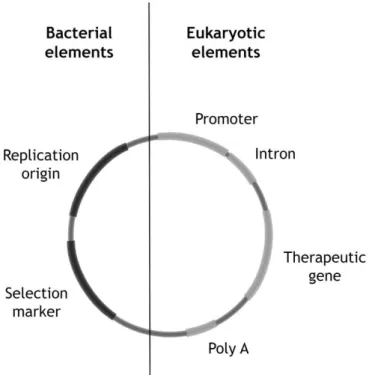
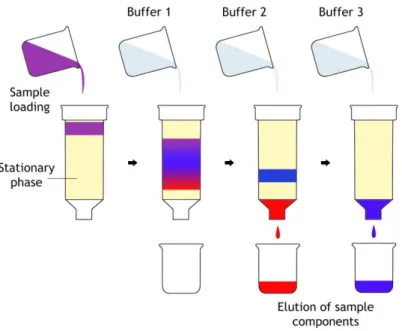
Figure 1.1 - Strategies for gene administration... 5 Figure 1.2 - Clinical targets for gene therapy by July 2013... 10 Figure 2.1 - Vectors used in gene therapy clinical trials by July 2013... 11 Figure 2.2 - Steps in the manufacturing process of pDNA... 12 Figure 2.3 - Different pDNA topologies... 13 Figure 2.4 - Illustration of a typical pDNA vector construct... 14 Figure 2.5 - Basic illustration of a generic liquid chromatography process. After packing the stationary phase into a column, the sample which is in the adequate buffer (usually the equilibration buffer - equilibration not shown), is loaded. The matrix is then washed with distinct buffers to enable the separated elution of the sample components... 17
xxv
List of tables
Table 1.1 - Characteristics of viral delivery systems... 7 Table 1.2 - Characteristics of the most common non-viral delivery systems... 9 Table 2.1 - FDA specifications on impurities content for Plasmid DNA Vaccines... 12
xxvii
Abbreviations
AC Affinity chromatographyAEC Anion-exchange chromatography AT Adenine - thymine
bp Base pair CsCl Cesium chloride DNA Deoxyribonucleic acid EtBr Ethidium bromide
GC Guanine - cytosine
gDNA Genomic deoxyribonucleic acid HAC Hydroxypatite chromatography
HIC Hydrophobic chromatography
IMAC Immobilized metal-ion affinity chromatography kbp Kilo-base pair
mRNA Messenger ribonucleic acid oc Open circular
pDNA Plasmid deoxyribonucleic acid RNA Ribonucleic acid
RPIPC Reverse-phase ion-pair chromatography RPLC Reverse-phase liquid chromatography
sc Supercoiled
SDS Sodium dodecyl sulfate SEC Size-exclusion chromatography SiRNA Small interfering ribonucleic acid
TAC Thiophilic adsorption chromatography THAC Triple-helix affinity chromatography
1
3
Introduction
1.
Molecular therapies: an overview
The groundwork for molecular therapies was established in the late 70´s and early 80´s with the emergence of subcloning techniques of mammalian genes into prokaryotic plasmids and bacteriophages (Flotte, 2007). Inevitably, the following years testified the first clinical trials using quite different approaches (Cavazzana-Calvo et al., 2000; Rosenberg et al., 1990; Tang et al., 1992). However, the great amount of tests that followed (Edelstein et al., 2007) were greatly improved by the conclusion of the human genome project (McIlwain, 2000), since a better understanding of genetics and related diseases was achieved.
Molecular therapies aim at treating and preventing diseases by gene transfer, eliminating the cause instead of only treating the symptoms (Mountain, 2000). In theory, all diseases of genetic origin can be treated by gene therapy, administrating healthy copies of the mutated gene or promoting a therapeutic immune response with the administration of genes encoding specific antigens (Brown et al., 2001). When a direct injection of DNA leads to an immune response sufficient enough to protect an organism from live infectious agents, the gene therapy approach is referred to as DNA vaccines (Kutzler et al., 2008).
The production of any chosen transgene can be possible with gene therapy. It can be a protein which is deficient due to e.g. a genetic abnormality, or it can be a protein with a therapeutic effect (Gothelf et al., 2010). The recipient organism or tissue acquires the ability to synthesize the therapeutic agent using the genetic information provided by the transferred transgene (Rome et al., 2007), restoring the defective gene's function or initiating a new one (Stribley et al., 2002). Thus, gene therapies require an extensive research to identify the genetic origin of a target disease.
The gene therapy process involves three steps: administration of DNA into the body, delivery of the genetic material from the administration site to the nucleus of target cells and finally the expression or output of the therapeutic gene product (Stribley et al., 2002). The administration is performed by the introduction of an appropriate carrier or vector into the body, either locally (direct tissue injection) or into the blood stream (systemic delivery). Next, the delivery system has to "find" its target tissue, enter the cells, pass the cytoplasm and reach the nucleus. There, the therapeutic gene is transcribed and the resultant mRNA (messenger RNA) is translated into the therapeutic protein. Lastly, this protein acts on its receptor, inducing the biological effect, resulting in the expected therapeutic benefits (Rubanyi, 2001).
However, the successful implementation of a gene therapy treatment still has to overcome many challenges such as choosing the appropriate gene, select a suitable and safe delivery system, targeting the right tissue, controlling the host immune response against the
transferred gene and vector system, to avoid dangerous side effects or the destruction of the gene, achieving a stable transfection and an appropriate gene expression and finally, the obtained results must supersede those from conventional therapy (Stribley et al., 2002; Worgall, 2005).
1.1.
Approaches and strategies for gene therapy
There are two distinct types of gene therapy, the commonly used somatic gene therapy and germ-line gene therapy. Somatic gene therapy implicates the introduction and expression of recombinant genes into somatic cells, with the objective of treating an inherited or acquired disease. In this case, the modified DNA will not pass to the subsequent generations (Williams and Orkin, 1986). On the other hand, germ-like gene therapy affects the reproductive cells of an individual, eliminating an inherited disease and affecting all subsequent generations (Stribley et al., 2002).
Regardless of the gene transfection technique, gene therapy can be divided into three different approaches, distinguished by where the final product will act (Gothelf et al., 2010):
a) The intracrine approach, or single cell approach, in which the therapeutic product acts on the cells that produce it. In this case, every cell in a population must be targeted so that all therapy benefits can be achieved.
b) The paracrine approach, in which the transfected cells produce a therapeutic product that acts locally on neighbouring cells.
c) The systematic approach, in which normal cells are chosen to act as "factories" for the therapeutic product, and are transfected with the gene. The protein is then delivered to the blood stream where it can act systematically (Gothelf et al., 2010).
Moreover, depending on the intended outcome, gene therapy may be classified as corrective or cytotoxic. The first strategy aims at the correction of a genetic defect by transferring the genes directly to the target cells. Differently, the cytotoxic strategy has the objective of destroying the target cells, using a cytotoxic pathway. For example, the therapeutic gene may encode a product that transforms a monotoxic prodrug into a toxic chemical, mediating not only the death of the cell that has taken up the gene but also the ones surrounding it (Stribley et al., 2002).
1.2.
Strategies for gene delivery
The administration of the therapeutic gene can be achieved through two distinct strategies, the ex vivo and in vivo approaches (Figure 1.1) (Stribley et al., 2002; Thomas and Klibanov, 2003).
5
Figure 1.1. Strategies for gene administration (based on Stribley et al., 2002).In the ex vivo approach, the cells are harvested from patients after surgical biopsy or organ resection, the cells are cultured and the therapeutic genes are inserted in vitro. The transfected cells are carefully selected, expanded and reintroduced back into the patient. The effectiveness of this strategy depends on the permanent expression of the therapeutic gene. On the other hand, the in vivo approach is characterized for the direct injection of the genetic material into the target organ or patient. This is the only practicable option in tissues for which individual cells cannot be cultured in sufficient amounts or the cultured cells cannot be re-implanted. As opposed to the ex vivo strategy, permanent integration may not occur and only a temporary expression of the gene product takes place, since the sequences may undergo degradation or elimination from the cells (Stribley et al., 2002; Thomas and Klibanov, 2003).
1.3.
Gene delivery systems
The success of gene therapy greatly depends on the development of the appropriate carrier or vector. This vehicle has the purpose of carry the therapeutic gene into the intracellular
environment of the target cells (Stribley et al., 2002). Gene delivery systems should be designed to protect the carried DNA from degradation and to efficiently transfer the genes to the target cells (Han et al., 2000). Moreover, the vectors should be non-toxic to the target organism (Anderson, 1998). Currently used delivery systems can be divided into two main categories, viral and non-viral. Thus, there are some reports of the use of hybrid viral/non-viral vectors, produced from viral/non-viral particles associated with DNA complexes (Curiel et al., 1991), cationic lipid formulations (Fasbender et al., 1997) or synthetic polymers (Keswani, 2012). However, given the wide diversity of target cells, a single vector system is unlikely to be suitable for all gene therapy applications.
1.3.1.
Viral based vectors
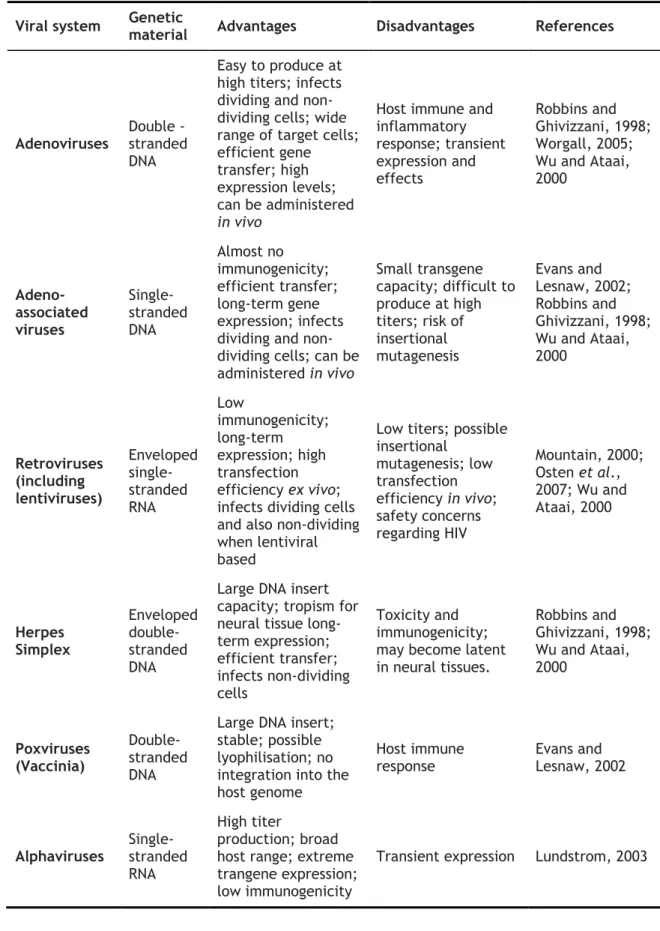
Viral vectors are the most commonly used vehicles in gene therapy (Johnson-Saliba and Jans, 2001), since viruses have evolved to become highly efficient at delivering their DNA to specific cell types while avoiding immunosurveillance (Robbins and Ghivizzani, 1998; Rubanyi, 2001). Viruses are not more than small DNA or RNA genomes surrounded by protein shells or capsids, which protect the genome and deliver it to specific cells (Evans and Lesnaw, 2002). They can efficiently recognize and enter cells, travel through the cytoplasm, translocate into the nucleus and express their genes in the host cell (Robbins and Ghivizzani, 1998; Rubanyi, 2001). Since viruses have limited genetic information, they greatly depend on the host cells machinery for their replication (Evans and Lesnaw, 2002).
Step one of designing a viral vector is to identify the viral sequences required for viral particle assembly, packaging of viral genome into the particles and delivery of the therapeutic gene. After that, some key genes are deleted from the viral genome to reduce the immuno- and pathogenicity of the vector. The residual viral genome and the therapeutic gene or transgene are then integrated into the vector structure (Pfeifer and Verma, 2001).
The most common gene therapy viral vectors are the adenoviruses, adeno-associated viruses, retroviruses, which include the lentiviruses, and the herpes simplex viruses. Also, poxviruses and alphaviruses have also been referred. Despite their success, there are many problems associated with viral vectors related to immunogenicity, insertional mutagenesis and latency (table 1.1).
7
Table 1.1. Characteristics of viral delivery systemsViral system Genetic
material Advantages Disadvantages References
Adenoviruses
Double - stranded DNA
Easy to produce at high titers; infects dividing and non-dividing cells; wide range of target cells; efficient gene transfer; high expression levels; can be administered in vivo
Host immune and inflammatory response; transient expression and effects Robbins and Ghivizzani, 1998; Worgall, 2005; Wu and Ataai, 2000 Adeno-associated viruses Single-stranded DNA Almost no immunogenicity; efficient transfer; long-term gene expression; infects dividing and non-dividing cells; can be administered in vivo Small transgene capacity; difficult to produce at high titers; risk of insertional mutagenesis Evans and Lesnaw, 2002; Robbins and Ghivizzani, 1998; Wu and Ataai, 2000 Retroviruses (including lentiviruses) Enveloped single-stranded RNA Low immunogenicity; long-term expression; high transfection efficiency ex vivo; infects dividing cells and also non-dividing when lentiviral based
Low titers; possible insertional mutagenesis; low transfection efficiency in vivo; safety concerns regarding HIV Mountain, 2000; Osten et al., 2007; Wu and Ataai, 2000 Herpes Simplex Enveloped double-stranded DNA
Large DNA insert capacity; tropism for neural tissue long-term expression; efficient transfer; infects non-dividing cells Toxicity and immunogenicity; may become latent in neural tissues. Robbins and Ghivizzani, 1998; Wu and Ataai, 2000 Poxviruses (Vaccinia) Double-stranded DNA
Large DNA insert; stable; possible lyophilisation; no integration into the host genome Host immune response Evans and Lesnaw, 2002 Alphaviruses Single-stranded RNA High titer production; broad host range; extreme trangene expression; low immunogenicity
1.3.2.
Non-viral based vectors
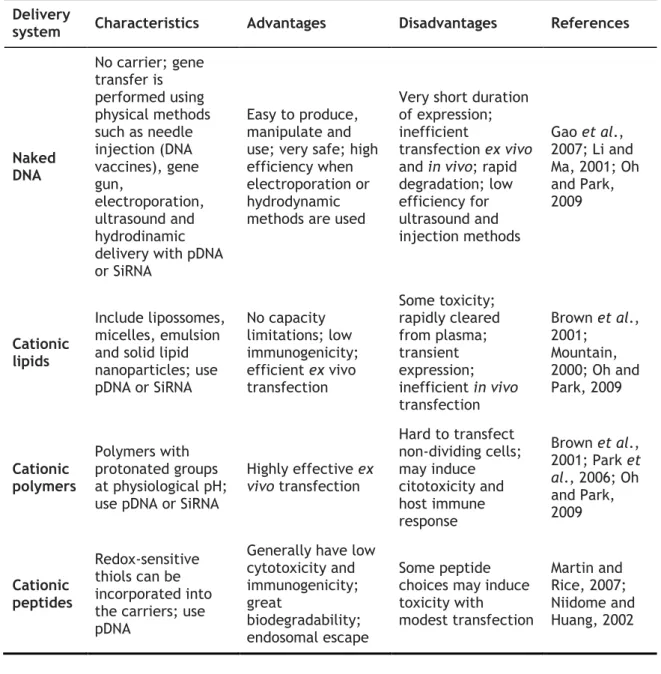
Although less efficient, non-viral vectors have been developed to substitute viral vectors for their simplicity, ease of production and avoidance of immunogenicity and oncogenicity (Li and Ma, 2001). Viral vectors are based on plasmid DNA (pDNA) however, small interfering RNAs (SiRNAs) are emerging as an innovative way to incorporate the therapeutic genes (Oh and Park, 2009). Independently of the nucleic acid type, an efficient non-viral in vivo gene therapy approach must have a few optimized features, such as the solute for administration, the administration route, the design of the nucleic acid construct and selection of target cells (Nishikawa and Hashida, 2002).
Non-viral gene delivery systems consist mainly of four categories; a) direct naked DNA or RNA delivery, in the absence of a carrier and using a physical method such as injection, electroporation or gene gun, b) cationic lipids formulated into liposomes and complexed with DNA/RNA (lipoplexes), c) cationic polymers complexed with DNA/RNA (polyplexes) and d) DNA condensation with cationic peptides. A combination of both cationic lipids and cationic polymers complexed with DNA (lipopolyplexes) was also reported (Brown et al., 2001; Li and Ma, 2001; Martin and Rice, 2007; Niidome and Huang, 2002; Oh and Park, 2009; Park et al., 2006). Moreover, bacteria have also been used to transfer plasmid DNA into various cell types through a process called bactofection (Akin et al., 2007).
9
Table 1.2. Characteristics of the most common non-viral delivery systemsDelivery
system Characteristics Advantages Disadvantages References
Naked DNA No carrier; gene transfer is performed using physical methods such as needle injection (DNA vaccines), gene gun, electroporation, ultrasound and hydrodinamic delivery with pDNA or SiRNA
Easy to produce, manipulate and use; very safe; high efficiency when electroporation or hydrodynamic methods are used
Very short duration of expression; inefficient
transfection ex vivo and in vivo; rapid degradation; low efficiency for ultrasound and injection methods Gao et al., 2007; Li and Ma, 2001; Oh and Park, 2009 Cationic lipids Include lipossomes, micelles, emulsion and solid lipid nanoparticles; use pDNA or SiRNA No capacity limitations; low immunogenicity; efficient ex vivo transfection Some toxicity; rapidly cleared from plasma; transient expression; inefficient in vivo transfection Brown et al., 2001; Mountain, 2000; Oh and Park, 2009 Cationic polymers Polymers with protonated groups at physiological pH; use pDNA or SiRNA
Highly effective ex vivo transfection Hard to transfect non-dividing cells; may induce citotoxicity and host immune response Brown et al., 2001; Park et al., 2006; Oh and Park, 2009 Cationic peptides Redox-sensitive thiols can be incorporated into the carriers; use pDNA
Generally have low cytotoxicity and immunogenicity; great biodegradability; endosomal escape Some peptide choices may induce toxicity with modest transfection Martin and Rice, 2007; Niidome and Huang, 2002
Non-viral systems are normally prepared by simply mixing a solution of nucleic acid encoding for the target gene with one of the aforementioned carriers. Particle size is usually 1-1000 nm range and they are administered short after preparation, since long-term stability had yet not been proven (Brown et al., 2001).
Gene delivery carriers are designed to enable high functional delivery and gene expression and depending on their final goal, they can be divided into distinct groups, such as, those designed to release the therapeutic genes in the tissue to achieved a continuous or controlled expression, those designed to release the nucleic acid in the cytosol, the ones designed to enhance nucleic acid delivery to the cytosol or nucleus, those designed to target delivery to specific cell types and those forming condensed complexes with DNA/RNA to protect it from nucleases and other blood components (Niidome and Huang, 2002).
Many extra and intracellular barriers can hamper the administration performance and gene delivery with non
plasma, DNA uptake by the reticuloendothelial system, trans
inability to target DNA to specific organs and the oral route itself. The intracelular barriers count with lysosomal degradation of DNA, difficulties in translocation of DNA to the nucleus, endosome escape and troubles with cyto
The focus of a great fraction of non
its entrance mechanisms into the cell. However, not enough work has been directed to the nucleic acid fraction
optimization may lead to prolonged expression levels and, therefore play in enhancing the transfection efficiency
1.4.
Independently of the vector
for classic treatments. For this to happen successfully, the role of the therapeutic gene in disease pathophysiology must be clearly understood
according to the data published by the Journal of Gene Medicine, there were 1970 approved gene therapy clinical trials worldwide (
the vast majority (64,2%) were addressed to cancer diseases (F
The therapeutic goal of any cancer treatment is to effectively kill most of cancer cells without damaging normal cells. For
administration of a copy of a mutated tumour suppressor gene, the administration of a gene encoding for an enzyme which act
which encodes fo
Many extra and intracellular barriers can hamper the administration performance and gene delivery with non-viral vectors. Among the extracellular barriers are the DNA degradation in plasma, DNA uptake by the reticuloendothelial system, trans
inability to target DNA to specific organs and the oral route itself. The intracelular barriers count with lysosomal degradation of DNA, difficulties in translocation of DNA to the nucleus, endosome escape and troubles with cyto
The focus of a great fraction of non
its entrance mechanisms into the cell. However, not enough work has been directed to the nucleic acid fraction
optimization may lead to prolonged expression levels and, therefore play in enhancing the transfection efficiency
1.4.
Therapeutic uses for gene therapy
Independently of the vectorfor classic treatments. For this to happen successfully, the role of the therapeutic gene in disease pathophysiology must be clearly understood
according to the data published by the Journal of Gene Medicine, there were 1970 approved gene therapy clinical trials worldwide (
the vast majority (64,2%) were addressed to cancer diseases (F
The therapeutic goal of any cancer treatment is to effectively kill most of cancer cells without damaging normal cells. For
administration of a copy of a mutated tumour suppressor gene, the administration of a gene encoding for an enzyme which act
which encodes for an antigen designed to generate a protective immune response against Many extra and intracellular barriers can hamper the administration performance and gene viral vectors. Among the extracellular barriers are the DNA degradation in plasma, DNA uptake by the reticuloendothelial system, trans
inability to target DNA to specific organs and the oral route itself. The intracelular barriers count with lysosomal degradation of DNA, difficulties in translocation of DNA to the nucleus, endosome escape and troubles with cyto
The focus of a great fraction of non
its entrance mechanisms into the cell. However, not enough work has been directed to the nucleic acid fraction of the vector, commonly a plasmid DNA.
optimization may lead to prolonged expression levels and, therefore play in enhancing the transfection efficiency
Therapeutic uses for gene therapy
Independently of the vector, gene therapy approaches are becoming an important alternative for classic treatments. For this to happen successfully, the role of the therapeutic gene in disease pathophysiology must be clearly understood
according to the data published by the Journal of Gene Medicine, there were 1970 approved gene therapy clinical trials worldwide (
the vast majority (64,2%) were addressed to cancer diseases (F
Figure 1.2. Clinical targets for gene therapy by July 2013 (adapted from
The therapeutic goal of any cancer treatment is to effectively kill most of cancer cells without damaging normal cells. For
administration of a copy of a mutated tumour suppressor gene, the administration of a gene encoding for an enzyme which act
r an antigen designed to generate a protective immune response against Many extra and intracellular barriers can hamper the administration performance and gene viral vectors. Among the extracellular barriers are the DNA degradation in plasma, DNA uptake by the reticuloendothelial system, trans
inability to target DNA to specific organs and the oral route itself. The intracelular barriers count with lysosomal degradation of DNA, difficulties in translocation of DNA to the nucleus, endosome escape and troubles with cytoplasmatic stability of DNA
The focus of a great fraction of non-viral gene therapy studies is the vector optimization and its entrance mechanisms into the cell. However, not enough work has been directed to the
of the vector, commonly a plasmid DNA. optimization may lead to prolonged expression levels and, therefore play in enhancing the transfection efficiency (van Gaal
Therapeutic uses for gene therapy
, gene therapy approaches are becoming an important alternative for classic treatments. For this to happen successfully, the role of the therapeutic gene in disease pathophysiology must be clearly understood
according to the data published by the Journal of Gene Medicine, there were 1970 approved gene therapy clinical trials worldwide (http://www.abedia.com/wiley/index.html
the vast majority (64,2%) were addressed to cancer diseases (F
. Clinical targets for gene therapy by July 2013 dapted from http://www.abedia.com/wiley/index.html
The therapeutic goal of any cancer treatment is to effectively kill most of cancer cells without damaging normal cells. For that purpose, gene therapy for cancer may consist administration of a copy of a mutated tumour suppressor gene, the administration of a gene encoding for an enzyme which activates an anti
r an antigen designed to generate a protective immune response against Many extra and intracellular barriers can hamper the administration performance and gene viral vectors. Among the extracellular barriers are the DNA degradation in plasma, DNA uptake by the reticuloendothelial system, trans
inability to target DNA to specific organs and the oral route itself. The intracelular barriers count with lysosomal degradation of DNA, difficulties in translocation of DNA to the nucleus,
plasmatic stability of DNA
viral gene therapy studies is the vector optimization and its entrance mechanisms into the cell. However, not enough work has been directed to the
of the vector, commonly a plasmid DNA. optimization may lead to prolonged expression levels and, therefore play
van Gaal et al., 2006)
Therapeutic uses for gene therapy
, gene therapy approaches are becoming an important alternative for classic treatments. For this to happen successfully, the role of the therapeutic gene in disease pathophysiology must be clearly understood
according to the data published by the Journal of Gene Medicine, there were 1970 approved http://www.abedia.com/wiley/index.html
the vast majority (64,2%) were addressed to cancer diseases (F
. Clinical targets for gene therapy by July 2013 http://www.abedia.com/wiley/index.html
The therapeutic goal of any cancer treatment is to effectively kill most of cancer cells that purpose, gene therapy for cancer may consist administration of a copy of a mutated tumour suppressor gene, the administration of a gene
ivates an anti-cancer prodrug,
r an antigen designed to generate a protective immune response against Many extra and intracellular barriers can hamper the administration performance and gene viral vectors. Among the extracellular barriers are the DNA degradation in plasma, DNA uptake by the reticuloendothelial system, transfection inhibited by mucus, inability to target DNA to specific organs and the oral route itself. The intracelular barriers count with lysosomal degradation of DNA, difficulties in translocation of DNA to the nucleus,
plasmatic stability of DNA (
viral gene therapy studies is the vector optimization and its entrance mechanisms into the cell. However, not enough work has been directed to the
of the vector, commonly a plasmid DNA. optimization may lead to prolonged expression levels and, therefore play
., 2006).
, gene therapy approaches are becoming an important alternative for classic treatments. For this to happen successfully, the role of the therapeutic gene in disease pathophysiology must be clearly understood (Flotte, 2007)
according to the data published by the Journal of Gene Medicine, there were 1970 approved http://www.abedia.com/wiley/index.html
the vast majority (64,2%) were addressed to cancer diseases (Figure
. Clinical targets for gene therapy by July 2013 http://www.abedia.com/wiley/index.html
The therapeutic goal of any cancer treatment is to effectively kill most of cancer cells that purpose, gene therapy for cancer may consist administration of a copy of a mutated tumour suppressor gene, the administration of a gene
cancer prodrug, the administration of a gene r an antigen designed to generate a protective immune response against
Cancer diseases (64,2%) Monogenic diseases (8.9%) Infectious diseases (8,2%) Cardiovascular diseases (8,1%) Healthy volunteers (2,6%) Gene marking (2,5%) Neurological diseases (1,9%) Others (1,5%) Ocular diseases (1,4%) Inflammatory diseases (0,7%)
Many extra and intracellular barriers can hamper the administration performance and gene viral vectors. Among the extracellular barriers are the DNA degradation in fection inhibited by mucus, inability to target DNA to specific organs and the oral route itself. The intracelular barriers count with lysosomal degradation of DNA, difficulties in translocation of DNA to the nucleus,
(Brown et al., 2001)
viral gene therapy studies is the vector optimization and its entrance mechanisms into the cell. However, not enough work has been directed to the of the vector, commonly a plasmid DNA. Nevertheless, plasmid optimization may lead to prolonged expression levels and, therefore playing an important role
, gene therapy approaches are becoming an important alternative for classic treatments. For this to happen successfully, the role of the therapeutic gene in
(Flotte, 2007). By Ju
according to the data published by the Journal of Gene Medicine, there were 1970 approved http://www.abedia.com/wiley/index.html
ure 1.2).
. Clinical targets for gene therapy by July 2013 http://www.abedia.com/wiley/index.html).
The therapeutic goal of any cancer treatment is to effectively kill most of cancer cells that purpose, gene therapy for cancer may consist administration of a copy of a mutated tumour suppressor gene, the administration of a gene
the administration of a gene r an antigen designed to generate a protective immune response against
Cancer diseases (64,2%) Monogenic diseases (8.9%) Infectious diseases (8,2%) Cardiovascular diseases (8,1%) Healthy volunteers (2,6%) Gene marking (2,5%) Neurological diseases (1,9%) Others (1,5%) Ocular diseases (1,4%) Inflammatory diseases (0,7%)
Many extra and intracellular barriers can hamper the administration performance and gene viral vectors. Among the extracellular barriers are the DNA degradation in fection inhibited by mucus, inability to target DNA to specific organs and the oral route itself. The intracelular barriers count with lysosomal degradation of DNA, difficulties in translocation of DNA to the nucleus,
., 2001).
viral gene therapy studies is the vector optimization and its entrance mechanisms into the cell. However, not enough work has been directed to the Nevertheless, plasmid an important role
, gene therapy approaches are becoming an important alternative for classic treatments. For this to happen successfully, the role of the therapeutic gene in By July 2013, and according to the data published by the Journal of Gene Medicine, there were 1970 approved http://www.abedia.com/wiley/index.html). Of those,
The therapeutic goal of any cancer treatment is to effectively kill most of cancer cells that purpose, gene therapy for cancer may consist of the administration of a copy of a mutated tumour suppressor gene, the administration of a gene the administration of a gene r an antigen designed to generate a protective immune response against
Cancer diseases (64,2%) Monogenic diseases (8.9%) Infectious diseases (8,2%) Cardiovascular diseases (8,1%) Healthy volunteers (2,6%) Neurological diseases (1,9%) Inflammatory diseases (0,7%)
Many extra and intracellular barriers can hamper the administration performance and gene viral vectors. Among the extracellular barriers are the DNA degradation in fection inhibited by mucus, inability to target DNA to specific organs and the oral route itself. The intracelular barriers count with lysosomal degradation of DNA, difficulties in translocation of DNA to the nucleus,
viral gene therapy studies is the vector optimization and its entrance mechanisms into the cell. However, not enough work has been directed to the Nevertheless, plasmid an important role
, gene therapy approaches are becoming an important alternative for classic treatments. For this to happen successfully, the role of the therapeutic gene in ly 2013, and according to the data published by the Journal of Gene Medicine, there were 1970 approved ). Of those,
The therapeutic goal of any cancer treatment is to effectively kill most of cancer cells the administration of a copy of a mutated tumour suppressor gene, the administration of a gene the administration of a gene r an antigen designed to generate a protective immune response against
cancer cells
converts a prodrug into a toxic metabolite 2001)
levels of direct killing of cancer cells, tumour regression is a promising reality 2009)
radiotherapy, can improve treatment efficiency, minimize treatment diminish cancer cell growth
Besides cancer, a wide range of other indications have approved gene therapy trials (Fig 1.
pathologies
in the next few years.
2.
Naked/p
only by retroviruse
(http://www.abedia.com/wiley/index.html
Since pDNA is an important alternative to viral based vectors
development of better production and purification processes is an urgent step for gene therap
The therapeutic pDNA manufacture process may include several generic steps (Figure 2.2) such as plasmid construction, transfection into
cancer cells or the administration of a gene that encodes for a toxin or an enzyme that converts a prodrug into a toxic metabolite
2001). Even though gene therapy ha
levels of direct killing of cancer cells, tumour regression is a promising reality 2009). Moreover, cooperation with other more established therapeutic modalities radiotherapy, can improve treatment efficiency, minimize treatment
diminish cancer cell growth
Besides cancer, a wide range of other indications have approved gene therapy trials (Fig 1.2). With continuing research of the underlying genetic mechanisms of those and many other pathologies, the targets as well as the trials approved will most certainly grow spectacularly in the next few years.
2.
Therapeutic plasmid DNA
Naked/plasmid DNA is the third most used vector in
only by retroviruse
http://www.abedia.com/wiley/index.html
Since pDNA is an important alternative to viral based vectors
development of better production and purification processes is an urgent step for gene therapy success.
The therapeutic pDNA manufacture process may include several generic steps (Figure 2.2) such as plasmid construction, transfection into
or the administration of a gene that encodes for a toxin or an enzyme that converts a prodrug into a toxic metabolite
Even though gene therapy ha
levels of direct killing of cancer cells, tumour regression is a promising reality Moreover, cooperation with other more established therapeutic modalities radiotherapy, can improve treatment efficiency, minimize treatment
diminish cancer cell growth
Besides cancer, a wide range of other indications have approved gene therapy trials (Fig continuing research of the underlying genetic mechanisms of those and many other
the targets as well as the trials approved will most certainly grow spectacularly in the next few years.
Therapeutic plasmid DNA
lasmid DNA is the third most used vector in
only by retroviruse
http://www.abedia.com/wiley/index.html
Figure 2.1. (adapted from
Since pDNA is an important alternative to viral based vectors
development of better production and purification processes is an urgent step for gene y success.
The therapeutic pDNA manufacture process may include several generic steps (Figure 2.2) such as plasmid construction, transfection into
or the administration of a gene that encodes for a toxin or an enzyme that converts a prodrug into a toxic metabolite
Even though gene therapy ha
levels of direct killing of cancer cells, tumour regression is a promising reality Moreover, cooperation with other more established therapeutic modalities radiotherapy, can improve treatment efficiency, minimize treatment
diminish cancer cell growth (Dutreix et al
Besides cancer, a wide range of other indications have approved gene therapy trials (Fig continuing research of the underlying genetic mechanisms of those and many other
the targets as well as the trials approved will most certainly grow spectacularly
Therapeutic plasmid DNA
lasmid DNA is the third most used vector in
only by retroviruses and adenoviruses (Figure 2.1)
http://www.abedia.com/wiley/index.html
Figure 2.1. Vectors used in
dapted from http://www.abedia.com/wiley/index.html
Since pDNA is an important alternative to viral based vectors
development of better production and purification processes is an urgent step for gene
The therapeutic pDNA manufacture process may include several generic steps (Figure 2.2) such as plasmid construction, transfection into
or the administration of a gene that encodes for a toxin or an enzyme that converts a prodrug into a toxic metabolite (Alvarez
Even though gene therapy has found quite a challenge in efficiently generate high levels of direct killing of cancer cells, tumour regression is a promising reality
Moreover, cooperation with other more established therapeutic modalities radiotherapy, can improve treatment efficiency, minimize treatment
et al., 2010)
Besides cancer, a wide range of other indications have approved gene therapy trials (Fig continuing research of the underlying genetic mechanisms of those and many other
the targets as well as the trials approved will most certainly grow spectacularly
Therapeutic plasmid DNA manufacture
lasmid DNA is the third most used vector in
s and adenoviruses (Figure 2.1)
http://www.abedia.com/wiley/index.html).
Vectors used in gene therapy
http://www.abedia.com/wiley/index.html
Since pDNA is an important alternative to viral based vectors
development of better production and purification processes is an urgent step for gene
The therapeutic pDNA manufacture process may include several generic steps (Figure 2.2) such as plasmid construction, transfection into
or the administration of a gene that encodes for a toxin or an enzyme that Alvarez et al., 2000;
found quite a challenge in efficiently generate high levels of direct killing of cancer cells, tumour regression is a promising reality
Moreover, cooperation with other more established therapeutic modalities radiotherapy, can improve treatment efficiency, minimize treatment
., 2010).
Besides cancer, a wide range of other indications have approved gene therapy trials (Fig continuing research of the underlying genetic mechanisms of those and many other
the targets as well as the trials approved will most certainly grow spectacularly
manufacture
lasmid DNA is the third most used vector in gene therapy
s and adenoviruses (Figure 2.1)
gene therapy clinical
http://www.abedia.com/wiley/index.html
Since pDNA is an important alternative to viral based vectors
development of better production and purification processes is an urgent step for gene
The therapeutic pDNA manufacture process may include several generic steps (Figure 2.2) such as plasmid construction, transfection into suitable
or the administration of a gene that encodes for a toxin or an enzyme that al., 2000; Schätzlein and Uchegbu, found quite a challenge in efficiently generate high levels of direct killing of cancer cells, tumour regression is a promising reality
Moreover, cooperation with other more established therapeutic modalities
radiotherapy, can improve treatment efficiency, minimize treatment-associated toxicity and
Besides cancer, a wide range of other indications have approved gene therapy trials (Fig continuing research of the underlying genetic mechanisms of those and many other
the targets as well as the trials approved will most certainly grow spectacularly
gene therapy trials (17,7%), surpasse
s and adenoviruses (Figure 2.1)
clinical trials by July 2013 http://www.abedia.com/wiley/index.html).
Since pDNA is an important alternative to viral based vectors (Li and Ma, 2001) development of better production and purification processes is an urgent step for gene
The therapeutic pDNA manufacture process may include several generic steps (Figure 2.2) suitable bacterial host cells,
Adenovirus (23.5%) Retrovirus (19.1%) Naked/Plasmid DNA (17.7%) Vaccinia Virus (7.8%) Lipofection (5.5%) Adeno-associated virus (5.2%) Poxvirus (4.8%) Lentivirus (3.3%)
Herpes simplex virus (3.1%) Other categories (6.8%) Unknown (3.2%)
or the administration of a gene that encodes for a toxin or an enzyme that Schätzlein and Uchegbu, found quite a challenge in efficiently generate high levels of direct killing of cancer cells, tumour regression is a promising reality (Templeton,
Moreover, cooperation with other more established therapeutic modalities
associated toxicity and
Besides cancer, a wide range of other indications have approved gene therapy trials (Fig continuing research of the underlying genetic mechanisms of those and many other
the targets as well as the trials approved will most certainly grow spectacularly
trials (17,7%), surpasse
s and adenoviruses (Figure 2.1)
by July 2013 ).
Li and Ma, 2001) development of better production and purification processes is an urgent step for gene
The therapeutic pDNA manufacture process may include several generic steps (Figure 2.2) bacterial host cells,
Adenovirus (23.5%) Retrovirus (19.1%) Naked/Plasmid DNA (17.7%) Vaccinia Virus (7.8%) Lipofection (5.5%) associated virus (5.2%) Poxvirus (4.8%) Lentivirus (3.3%)
Herpes simplex virus (3.1%) Other categories (6.8%) Unknown (3.2%)
11
or the administration of a gene that encodes for a toxin or an enzyme that Schätzlein and Uchegbu, found quite a challenge in efficiently generate high Templeton, Moreover, cooperation with other more established therapeutic modalities such as associated toxicity and
Besides cancer, a wide range of other indications have approved gene therapy trials (Figure continuing research of the underlying genetic mechanisms of those and many other the targets as well as the trials approved will most certainly grow spectacularly
trials (17,7%), surpassed
s and adenoviruses (Figure 2.1)
Li and Ma, 2001), the development of better production and purification processes is an urgent step for gene
The therapeutic pDNA manufacture process may include several generic steps (Figure 2.2) bacterial host cells,
Naked/Plasmid DNA (17.7%)
associated virus (5.2%)
cultivation/fermentation, pDNA extraction by cell disruption (lysis), clarification, purification and polishing of pDNA solutions (Shamlou, 2003; Voβ et al., 2003).
Figure 2.2. Steps in the manufacturing process of pDNA (based on Ferreira et al., 2000 and Shamlou, 2003).
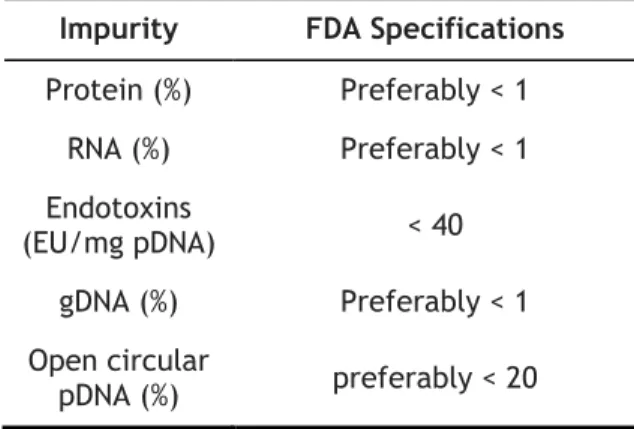
Moreover, to be used as a therapeutic product, pDNA must follow strict quality criteria in terms of purity and supercoiled (sc) content, established by the regulatory agencies (FDA, 2007). Table 2.1 shows FDA's recommendations for pharmaceutical grade pDNA.
Table 2.1. FDA specifications on impurities content for Plasmid DNA Vaccines (FDA, 2007).
Impurity FDA Specifications
Protein (%) Preferably < 1 RNA (%) Preferably < 1 Endotoxins (EU/mg pDNA) < 40 gDNA (%) Preferably < 1 Open circular pDNA (%) preferably < 20