Original Article 1087
-CHANGE IN BLOOD PRESSURE LEVELS IN COLLEGE STUDENTS
Luana Savana Nascimento de Sousa1, Layla Gonçalves do Nascimento Macêdo2, Jayne Ramos Araujo Moura3, Mayla Rosa Guimarães 4, Regina Célia Vilanova Campelo5, Ana Roberta Vilarouca da Silva6
1 Undergraduate Nursing student, Universidade Federal do Piauí (UFPI). Picos, Piauí, Brazil. E-mail: [email protected] 2 Nurse, Family Health Strategy, Itainópolis. Itainópolis, Piauí, Brazil. E-mail: [email protected]
3 Undergraduate Nursing student, UFPI. Picos, Piauí, Brazil. E-mail: [email protected] 4 Undergraduate Nursing student, UFPI. Picos, Piauí, Brazil. E-mail: [email protected]
5 M.Sc. in Sciences and Health. Technical Director of Federação de Ginástica do Piauí. Picos, Piauí, Brazil. E-mail: rcvcampelo@ hotmail.com
6 Ph.D. in Nursing. Faculty, Nursing Program and Master’s Program in Sciences and Health. UFPI. Picos, Piauí, Brazil. E-mail: [email protected]
ABSTRACT: The aim in this study was to evaluate the pressure levels in college students and their relation with socioeconomic level, lifestyle and biochemical data. This is a descriptive, cross-sectional study, conducted with 550 students from a public university in Picos-PI, in 2013. A form containing socioeconomic data, lifestyle, waist circumference, blood pressure, fasting serum glucose, triglycerides and HDL-cholesterol was applied. We observed elevated blood pressure levels in 21.5% of males and 2.2% of females, with signiicant representation (p<0.0001). There was a statistically signiicant association for smoking (p<0.0001) and alcohol consumption (p<0.0001) with systolic and diastolic blood pressure, as well as for waist circumference (p=0.0039). When considering the quality of life for the coming years, it is important to note the need to implement measures that promote changes in lifestyle with the acquisition of healthy habits. DESCRIPTORS: Students. Risk factors. Arterial pressure.
ALTERAÇÃO DOS NÍVEIS DE PRESSÃO ARTERIAL EM
UNIVERSITÁRIOS
RESUMO: Objetivou-se avaliar os níveis pressóricos em universitários e sua relação com o nível socioeconômico, o estilo de vida e os dados bioquímicos. Trata-se de um estudo descritivo, transversal, desenvolvido com 550 estudantes de uma universidade pública de Picos-PI, em 2013. Foi aplicado um formulário contendo dados socioeconômicos, estilo de vida, medida da circunferência abdominal, pressão arterial, níveis séricos de glicemia de jejum, triglicerídeos e HDL-colesterol. Observaram-se níveis pressóricos elevados em 21,5% do sexo masculino e 2,2% nas mulheres, com representação signiicante (p<0,0001). Houve associação estatisticamente signiicante para o tabagismo (p<0,0001) e para o consumo de álcool (p<0,0001) com a pressão arterial sistólica e diastólica, bem como para a circunferência abdominal (p=0,0039). Assim, pensando na qualidade de vida dos próximos anos, é importante observar a necessidade de implementação de medidas que promovam mudanças no estilo de vida com aquisição de hábitos saudáveis.
DESCRITORES: Estudantes. Fatores de risco. Pressão arterial.
CAMBIOS EN LOS NIVELES DE LA PRESIÓN ARTERIAL DE
UNIVERSITARIOS
RESUMEN: El objetivo fue evaluar los niveles de presión arterial en estudiantes y su relación con el nivel socioeconómico, estilo de vida y datos bioquímicos. Estudio descriptivo, transversal, desarrollado con 550 estudiantes de una universidad pública de Picos-PI, Brasil, en 2013. Se aplicó formulario con informaciones socioeconómicas, estilo de vida, medición de la circunferencia de la cintura, presión arterial, niveles de glucosa en suero en ayunas, triglicéridos y HDL-colesterol. Fueron observados altos niveles de presión arterial en 21,5% de los hombres y 2,2% de las mujeres, con representación signiicativa (p<0,0001). Hubo asociación estadísticamente signiicativa con tabaquismo (p<0,0001) y consumo de alcohol (p<0,0001), con presión arterial sistólica y diastólica, y también como para circunferencia de la cintura (p=0,0039). Así, para la calidad de vida en los próximos años, es preciso implementar medidas para promover cambios en el estilo de vida con adquisición de hábitos saludables.
INTRODUCTION
Despite constant stimuli to adopt healthy life practices and the growing therapeutic arse-nal, cardiovascular diseases are still the main cause of morbidity and mortality in developed and emerging countries.1 Data from the Ministry
of Health appoint that, today, chronic conditions are responsible for 72% of the causes of death in Brazil.2 Arterial hypertension (AH) is one of the
main risk factors for the worsening of this scenario,
estimating that 25.5% of women and 20.7% of men
aged ≥18 years have blood pressure (BP) levels
superior to normal parameters.3
Due to the high morbidity and mortality and negative repercussions for the quality of life, and due to their socioeconomic impact, the chronic conditions are a source of concern and lead to the
identiication of the need to implement public
policies to raise the population’s awareness about
the main cardiovascular risk factors, as these
conditions represent health problems that require continuous management by the patients over a long period.4
These factors can be veriied in different pop -ulations, including college students. Upon getting into college, students go through different lifestyle changes that can favor the emergence of one or
several risk factors for AH and other chronic con
-ditions, such as increasingly insuficient physical exercise, consumption of substances like tobacco
and alcoholic beverages and bad eating habits.5-6
It is important to highlight that, among col-lege students, a high prevalence of cardiovascular
risk factors is observed, which is a source of con -cern, as this group has access to information and is expected to serve as a model for the establishment of healthy life habits for the general population.7-8
The objective in this study was to assess the pres-sure levels in college students and their relation with the socioeconomic level, lifestyle and bio-chemical data.
METHOD
A descriptive and cross-sectional study was developed with college students from a public university in a city in the interior of Piauí, Brazil. The study population consisted of 2,868 male and female college students enrolled at the place of study. For the sample size, a formula was used
for inite populations, resulting in 550 participants. A stratiied sampling process was applied per
course and graduation period by response to the
invitation. The data were collected between Janu-ary and March 2013.
The selection of the participants complied with the following inclusion criteria: being actively enrolled in one of the university’s nine courses, age 18 years or older, and participating in all phases of the research.
Students present in the classroom were in-vited. On that occasion, the research objectives were explained, as well as what each student should do
in participating, such as illing out a form with so
-cioeconomic data, lifestyle including bad habits like smoking, drinking, and healthy habits like physical
exercise. The waist circumference (WC) and BP were measured and blood was collected to assess the serum levels of venous glucose, triglycerides and HDL-cholesterol (with 12 hours of fasting). A laboratory was hired for the collection and
bio-chemical analyses. The entire data collection took place at the university in a room booked in advance.
As to the lifestyle, students who did not practice at least 30 minutes per day of light or
moderate activity ive days per week were classi
-ied as sedentary; or 20 minutes per day of intense activity three or more days per week. Light or moderate activities are considered as: walking, walking on treadmill, bodybuilding, water gym -nastics, gymnastics in general, swimming, martial arts, cycling and volleyball. Intense activities are: running, running on treadmill, aerobics, soccer,
basketball and tennis.9
What smoking is concerned, the students were classiied in four categories: daily smok
-ing, occasional smokers, former smokers and non-smokers. Daily smokers were considered to be people who smoked at least one cigarette per
day, one month before completing the
question-naire; occasional smokers were people who did not smoke daily; former smokers were people who, after having smoked, quit smoking at least one month earlier; and non-smokers were people who had never smoked or had been smoking for
less than one month.10
As for drinking, the Alcohol Use Disorders Identiication Test (AUDIT) was used as a mea -sure, which is a ten-question test developed by the World Health Organization as a screening tool,
speciically to identify people with harmful alcohol
consumption, as well as people who have already developed an addiction. The version adapted for Brazil was used.11-12
analyzed according to the recommendations of the Brazilian Society of Cardiology,13 and the pressure
levels according to the VI Brazilian Hypertension Guidelines.14
The data were analyzed through the
Statis-tical Package for the Social Sciences (SPSS), ver -sion 20.0. For the descriptive analysis, absolute and relative frequencies were calculated, as well as central trend and dispersion measures. The Kolmogorov-Smirnov test was applied to assess the normality of the sample. Pearson’s Chi-square and the Fisher-Freeman-Halton test were applied
to check for discrepancies between the observed
and expected frequencies of the events studied. The rejection level established for the null hypoth-esis was lower than or equal to 0.05 (5%).
The development of the study followed the Brazilian and international ethical standards for research involving human beings and received approval from the Institutional Review Board of the Universidade Federal do Piauí, under protocol n. 0408.0.045.000-11. Project funded by the call of the Infrastructure Program for Young Researchers of the Piauí Research Foundation.
RESULTS
The research involved 550 college students from the Bachelor programs in Nursing, Nutrition, Administration, Information Systems and Teach-ing Diploma programs in Mathematics, Pedagog-ics, Languages, History and Biology.
As regards the sample characteristics, what the socioeconomic data are concerned, 66.2% were female, 85.1% were between 18 and 25 years of age, with an average age of 22.6 years. The most predominant self-referred color was mulatto, cor-responding to 51.6%. As to the employment situa-tion, 69.3% only studied. What the economic class
is concerned, 51.8% were classiied between classes
C1 and C2, with a mean income of R$1,629.00. The large majority of the students (86.7%) were single, and 39.6% lived with their parents.
What the practice of physical exercise is con-cerned, it is highlighted that 71.7% were sedentary.
As for smoking, 91.8% afirmed that they never smoked or were smoking for less than one month. And, regarding the drinking variable, 48.5% were classiied in zone II, of medium risk.
The anthropometric data, pressure levels and biochemical data for the sample have been described in Table 1.
Table 1 - Anthropometric data, pressure levels and biochemical data among students from a public university. Picos-PI, 2013
Variables n % Mean ±SD*
Waist circumference 78.3+10.3 Normal 518 94.2
High 32 5.8
Fasting glucose 83.3±11.9 Normal 543 98.7
High 7 1.3
Triglycerides 122.2±55.0 Normal 446 81.1
High 104 18.9
HDL† cholesterol 43.9±8.0 Normal 195 35.5
Low 355 64.5
Blood pressure SBP‡: 109.9±12.1 Excellent 369 67.1 DBP§: 69.9±9.7 Normal 133 24.2
Borderline 48 8.7
*Standard Deviation;†High Density Lipoprotein; ‡SBP - Systolic Blood Pressure; §DBP - Diastolic Blood Pressure.
Concerning the variable WC, 94.2% com-plied with normal parameters, and 5.8% were
classiied as high (mean 78.3 cm). 98.7% had their
fasting glucose within normal parameters and only 1.3% for high glucose (mean 83.3 mg/dl). What the triglyceride level is concerned, 18.9% of the sample showed higher than ideal parameters (mean 122.2 mg/dl); Regarding HDL-cholesterol levels, 64.5% presented low levels (mean 43.9 mg/ dl), and 8.7% revealed borderline BP levels (mean SBP 109.9 mmHg and DBP 69.9 mmHg).
Table 2 displays the stratiication of BP per
sex, age range and economic class.
Table 2 - Stratiication of blood pressure variable
per sex, age range and economic class of students at a public university. Picos-PI, 2013
Variables
Blood pressure
p
Normal High
n % n %
Sex <0.0001*
Female 356 97.8 8 2.2 Male 146 78.5 40 21.5
Age range <0.0001* 18–25 430 91.8 38 8.2
26–51 72 87.8 10 12.2
Economic class SBP: 0.003* A–B 171 86.8 26 13.2 DBP: 1.000* C–D–E 331 93.8 22 6.2
When associating the socioeconomic vari-ables with the BP, 21.5% of the male students showed high BP. The predominant age range was between 26 and 51 years old, with 12.2%
presenting high BP levels. Signiicant representa -tions were found for sex (p<0.0001) and age range (p<0.0001) in relation to SBP and DBP, and an asso-ciation between economic class (p=0.003) and SBP. Table 3 demonstrates the association
be-tween lifestyle (drinking, smoking and exercising)
and BP.
Table 3 – Association between lifestyle (drinking, smoking and physical exercise) and blood pressure of students at a public university. Picos-PI, 2013
Variables
Blood pressure
p
Normal High
n % n %
Physical exercise >0,532*
Active 136 87,7 19 12,3
Sedentary 376 95,2 19 4,8
Smoking <0,0001*
Daily or occasional smokers
39 86,7 6 13,3
Never smoked or smoking for less than one month
463 91,7 42 8,3
Drinking <0,0001*
Zone I – Zone II 425 91,5 39 8,5
Zone III – Zone IV 77 89,5 9 10,5
*Chi-Squared
It was veriied that 4.8% of the sedentary individuals had increased BP. As regards smok -ing, 13.3% were considered daily or occasional
smokers, with high pressure levels. Concerning
alcohol use among the students, between zones II and IV, 10.5% of students with high BP levels
were found. A statistically signiicant association was found for smoking (p<0.0001) and drinking
(p<0.0001) with SBP and DBP.
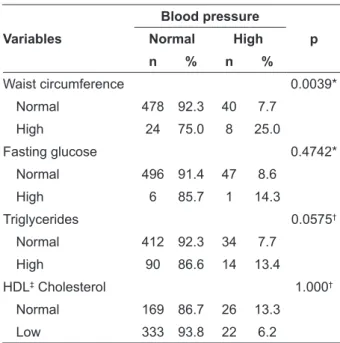
Table 4 displays the association between BP data and other components of the Metabolic Syndrome (MS) according to the National Choles-terol Education Program Adult Treatment Panel III (NCEP-ATP III).
Table 4 – Association between blood pressure and anthropometric and biochemical data of students at a public university. Picos-PI, 2013
Variables
Blood pressure
p
Normal High
n % n %
Waist circumference 0.0039*
Normal 478 92.3 40 7.7
High 24 75.0 8 25.0
Fasting glucose 0.4742*
Normal 496 91.4 47 8.6
High 6 85.7 1 14.3
Triglycerides 0.0575†
Normal 412 92.3 34 7.7
High 90 86.6 14 13.4
HDL‡ Cholesterol 1.000†
Normal 169 86.7 26 13.3
Low 333 93.8 22 6.2
*Fisher-Freeman-Halton; †Chi-Squared; ‡High Density Lipo-protein
When associating BP with waist circumfer-ence, glucose, triglycerides, HDL-cholesterol, it was observed that 25.0% of the students had high waist circumference and pressure levels; 14.3% of the high glucose levels belonged to students with high BP levels; 13.4% of the college students stood out with high triglycerides and BP; 6.2% of the sample presented low plasma levels of HDL-cholesterol and above-normal BP. Statistical
signiicance was found for waist circumference
only (p=0.0039).
DISCUSSION
It was veriied that most research partici -pants were female. Concerning this variable, this
inding may be related to the fact that women rep -resent a majority in society15 and are also the most
frequent sex in research samples involving college students.16-18 As for age, the most prevalent age
range was between 18 and 25 years, the expected range for studies in this population, with results similar to other studies.18
in the age range between 26 and 51 years. In the
interpretation of the data, it was veriied that the
prevalence of high pressure levels in men in this age range who belonged to the groups with high purchasing power can be determined by the
aca-demic life behavior, such as: sedentariness, smok -ing and harmful alcohol consumption.
Concerning physical exercise, significant levels of sedentariness were found. The charac-teristics associated with low levels of exercising
among the college students are inluenced by some
factors, including sex, age, employment situation, economic characteristics (monthly income, social class and whom the student lives with) and life habits (dieting or not). High levels of sedentariness are more frequent in students who have been at university longer when compared to sophomores, indicating a downward trend in physical exercise. In the assessment of the biochemical data (triglycerides, HDL-cholesterol, fasting glucose), important triglyceride levels superior to expecta-tions (18.9%) and HDL-cholesterol below normal parameters (64.5%) were found. In a study in the United States involving 189 students,20 it was
identiied that HDL-cholesterol was inferior to the
suggested level in 20.1% and that the triglyceride levels were increased in 17.5% of the sample. The levels found here are higher and a source of con-cern for the college population with a view to the control of dyslipidemias.
The increased prevalence of BP in this public varies considerably. The result found here (8.7%) was intermediary, lower than that observed in a study involving 667 college students from Lubango, Angola, which found 23.5% of students with above-normal pressure levels.21 On the other
hand, it was higher than an analysis of 702 college students from Fortaleza-CE, which found 7.4% of students with increased blood pressure.18
Concerning the association between BP levels and sex, a higher prevalence of increased pressure levels was found among men than among women (p<0.0001). Findings from different studies indicate a lower prevalence of AH in women when compared to men up to the age of 55 years and,
after that age, a signiicant increase of the disease
occurs among women.8,21
As to the students’ lifestyle, smoking and drinking should be highlighted, as both were as -sociated with altered BP levels. The exacerbated consumption of alcohol and cigarettes are factors that predispose to health problems and the de-velopment of diseases, which are interdependent
elements that are hard to control.22 Nevertheless,
alcohol consumption mostly happened in the
medium-risk zone (48.5%) and predominantly involved non-smokers (91.8%).
Several authors highlight the need for interventions in the academic context.23-24 In an
exploratory analysis at the University of Aveiro, Portugal, aiming to compare sophomores with
vet-eran students, a higher percentage of smokers was
demonstrated (19.3%) among students exposed to the academic life than among sophomores (0.0%), suggesting that a high education level does not seem to protect a healthier lifestyle.24
As regards drinking, 64.2% of the students
consumed alcoholic beverages. Despite this high frequency, the majority who consumed alcohol
was rated in the low and medium-risk zones. Lower rates can be observed in the literature, like
in a study developed at Universidade Salgado de Oliveira, Goiânia Campus, involving 200 nursing students, which appointed that 53% of the students consumed alcohol, besides 36% of the students mentioned increased consumption after they had started college.25
In addition, a strong association was ob-served between central obesity and high pressure
levels. Central obesity is an important risk factor
for the development and progression of
cardiovas-cular diseases, with clearly known harmful effects
described by different authors,8 besides the fact
that the fat distribution is another important risk
factor for obesity-related diseases.23 Overweight
with central fat deposits is a factor predisposing to high blood pressure. The prevalence of AH among obese people is higher when compared to non-obese individuals.21
The association between WC and AH was also analyzed in a similar study developed at Universidade Federal do Piauí, involving 605 students, when it was discovered that abdomi-nal obesity was present in 2.4% of the students, independently of gender. A lower rate than that found in this study, with 5.8% of WC above normal standards.8
CONCLUSION
Based on the analysis of the students’ pres-sure levels, isolated cases above the ideal param-eters were found, while participants with high BP simultaneously presented increased WC,
-tion, the accumulation of fat in the organism and central obesity are important determinants in the increase of blood pressure levels. Concerning the socioeconomic data, an association was found with the variables: sex, age range and economic class
(p<0.05). Nevertheless, no statistically signiicant
association was found with the biochemical data. One of the limitations in this study was the absence of statistical analysis that may infer on the cause and effect between high blood pressure and triggering factors, due to the impossibility of these analyses because of the cross-sectional design. An-other limitation was not having investigated the students’ institutional characteristics, such as the year of entry, class group and daily hours spent at college and associations with BP levels.
As the incidence and prevalence of chronic conditions increase considerably as age advances, it is important to execute prevention actions, so that these diseases are detected early, and to de-velop other studies to assess the strategies used, as well as the impact on this public’s lifestyle.
REFERENCES
1. Garofolo L, Ferreira SRG, Miranda Junior F. Study of risk factors associated with Peripheral Arteriopathy in Japanese-Brazilians from Bauru (SP). Arq Bras Cardiol. 2014; 102(2):143-50.
2. Ministério da Saúde (BR). Secretaria de Vigilância e m S a ú d e . D e p a r t a m e n t o d e A n á l i s e d e Situação de Saúde. Plano de ações estratégicas para o enfrentamento das doenças crônicas não transmissíveis (DCNT) no Brasil 2011-2012 [online]. Brasília (DF): MS; 2011 [acesso 2015 mai 10]. Disponível: http://actbr.org.br/uploads/ conteudo/918_cartilha_dcnt.pdf
3. Ministério da Saúde (BR). Secretaria de Vigilância em Saúde. Secretaria de Gestão Estratégica e Participativa. Vigitel Brasil 2010: vigilância de fatores de risco e proteção para doenças crônicas por inquérito telefônico [online]. Brasília (DF): MS; 2011 [acesso 2015 mai 10]. Disponível: http://bvsms. saude.gov.br/bvs/publicacoes/vigitel_2010.pdf
4. Silva FM, Budó MLD, Silveira CL, Badke MR,
Beuter M. Hipertensão: condição de não doença – o signiicado da cronicidade na perspectiva dos sujeitos. Texto Contexto Enferm [online]. 2013 [acesso 2015 mai 10]; 22(1):123-31. Disponível em: http://www.scielo.br/scielo.php?pid=S0104-07072013000100015&script=sci_abstract&tlng=pt 5. Gasparotto GS, Gasparotto LPR, Rossi LM,
Moreira NB, Bontorin MS, Campos W. Association between moment of the undergraduate course and cardiovascular risk factors in university students. Rev Latino-Am Enfermagem. 2013; 21(3):687-94.
6. Lima ACS, Araújo MFM, Freitas RWJF, Zanetti ML, Almeida PC, Damasceno MMC. Risk factors for Type 2 Diabetes Mellitus in college students: association with sociodemographic variables. Rev Latino-Am Enfermagem. 2014; 22(3):484-90. 7. Correia BR, Cavalcante E, Santos E. A prevalência
de fatores de risco para doenças cardiovasculares em estudantes universitários. Rev Bras Clin Med. 2010; (8):25-9.
8. Martins MCC, Ricarte IF, Rocha CHL. Maia RB, Silva VB, Veras AB, Souza Filho MD. Pressão arterial, excesso de peso e nível de atividade física em estudantes de universidade pública. Arq Bras Cardiol. 2010; 95(2):192-9.
9. Secretaria Nacional de Políticas sobre Drogas (BR). I Levantamento Nacional sobre o uso de álcool, tabaco e outras drogas entre universitários das 27 capitais brasileiras. Brasília (DF): Secretaria Nacional de Políticas sobre Drogas; 2010.
10. Shafey O, Dolwick S, Guindon GE, editors. Tobacco country proiles. Proccedings of the 12Th World Conference on Tabacco or Health. 2nd ed. Helsinki (FI): World Health Organization, and International Union Against Cancer; 2003.
11. Méndez EB. Uma versão brasileira do AUDIT (Alcohol Use DisordersIdentiication Test) [tese]. Pelotas (RS): Universidade Federal de Pelotas; 1999. 12. Figlie NB, Pillon SC, Dunn J, Laranjeira R. The
frequency of smoking and problem drinking among general hospital inpatients in Brazil – using the AUDIT and Fagerström questionnaires. São Paulo Med J. 2000; 118(5):139-43.
13. Sociedade Brasileira de Cardiologia. IV Diretriz Brasileira Sobre Dislipidemias e Prevenção da Arterosclerose. Arq Bras Cardiol. 2007; 88(supl1):2-19.
14. Sociedade Brasileira de Cardiologia. Sociedade Brasileira de Hipertensão. Sociedade Brasileira de Nefrologia. VI Diretrizes Brasileira de Hipertensão. Arq Bras Cardiol. 2010; 95(1 Supl.1):1-51.
15. Instituto Brasileiro de Geograia e Estatística. Censo Demográico 2010. Brasília (DF): IBGE [acesso 2014 Jul 15] Disponível em: http://www.censo2010. ibge.gov.br
16. Lira Neto JCG, Silva AP, Costa EPN, Silva ARV, Freitas RWJF. Analysis of overweight and obesity in university students. Rev Enferm UFPE [online]. 2012 [acesso 2015 mai 10]; 6(11):2770-6. Disponível em: http://www.revista.ufpe.br/revistaenfermagem/ index.php/revista/article/view/3193/pdf_1665 17. Silva LR, Silveira SS, Freitas RWJF, Sousa VEC,
18. Pereira DCR, Araújo MFM, Freitas RWJF, Teixeira CRS, Zanetti ML, Damasceno MMC. Neck circumference as a potential marker of metabolic syndrome among college students. Rev Latino-Am Enfermagem. 2014; 22(6):973-9.
19. Fontes ACD, Vianna RPT. Prevalência e fatores associados ao baixo nível de atividade física entre estudantes universitários de uma universidade pública da região Nordeste – Brasil. Rev Bras Epidemiol. 2009; 12(1): 20-9.
20. Fernandes J, Lofgren IE. Prevalence of metabolic syndrome and individual criteria in college students. J Am Coll Health. 2011; 59(4):313-21.
21. Simão M, Hayashida M, Santos CB, Cesarino EJ, Nogueira MS.. Hipertensão arterial entre universitários da cidade de Lubango, Angola. Rev Latino-am Enfermagem [online]. 2008 [acesso 2015 mai 10]; 16(4): Disponível em: http://www.revistas. usp.br/rlae/article/viewFile/16988/18906
22. Mascena GV, Cavalcante MSB, Marcelino GB, Holanda SA, Brandt CT.Fatores de risco cardiovascular em estudantes da Faculdade de Ciências Médicas de Campina Grande. Medicina (Ribeirão Preto). 2012; 45(3):322-8.
23. Ramis TR, Mielke GI, Habeyche EC, Oliz MM, Azevedo MR, Hallal PC. Tabagismo e consumo de álcool em estudantes universitários: prevalência e fatores associados. Rev Bras Epidemiol. 2012; 15(2):376-85.
24. Brandão MP, Pimentel FL, Cardoso MF. Impact of academic exposure on health status of university students. Rev Saúde Pública. 2011; 45(1):49-58. 25. Barros CVL, Barros DAC, Bernardes MJC, Lima WV,
Silva LCS. A inluência do convívio universitário na adesão ao alcoolismo. Rev Eletr Itinerarius Relectionis [online]. 2012 [acesso 2015 mai 10]; 2(13):1-12. Disponível em: http://www.revistas. ufg.br/index.php/ritref/article/view/22312/13214
Correspondence:Ana Roberta Vilarouca da Silva Rua Cícero Eduardo, 905
64600-000 - Junco. Picos, PI, Brasil E-mail: [email protected]