○ ○ ○ ○ ○ ○ ○ ○ ○ ○ ○ ○ ○ABST RAC T○ ○ ○ ○ ○ ○ Pe r i m e n o pa u s e : b i o l o g y ○ ○a n d p s y c h o s o c i a l a s p e c t s○ ○ ○ ○ ○ ○ ○ ○ ○ ○ ○ ○ ○ ○ ○ ○ ○ ○
Clinical characteristics and hormonal profile
T he World Health Organization defines perimenopause as the period (2-8 years) pre-ceding menopause and the one-year period af-ter final menses, resulting from the loss of ovar-ian follicular activity.1,2 T he initiation of perimenopause is characterized by intense bio-logical variability secondary to endocrino-logical and clinical changes.3,4 T hus, the perimenopause or so-called “menopausal tran-sition” represents the passage from reproduc-tive to non-reproducreproduc-tive life.
T he perimenopause usually begins at a mean age of 45.5-47.5 years5 and has an aver-age duration of 4 years until menopause oc-curs6 (mean age of 51.3 years). It is possible that the timing of menopause may be influ-enced by different factors such as cigarette smoking, living at high altitudes and history of depression.7 -9 T he maj ority of perimenopausal women experience irregular menstrual periods, when shortened cycles or longer periods of amenorrhea may reflect the large fluctuation of the ovarian estrogen se-cretion observed during this time. Generally, the first apparent hormonal change of the perimenopause is a rising concentration of the pituitary gonadotrophin follicle-stimulating hormone (FSH). T he rising FSH concentra-tion is probably caused by an exponential de-cline of gonadotrophin-sensitive ovarian folli-cles as menopause approaches.
Follicular development at this time has been demonstrated to be erratic, with
conse-quent variability in estrogen levels and an in-creased percentage of anovulatory cycles.10 T hus, the pituitary gland is stimulated to pro-duce more FSH in an effort to stimulate the resistant follicles. T he production of FSH and luteinizing hormone (LH) by the pituitary gland are subject to a predominantly negative feedback by the ovarian sex steroids (estrogen and progesterone). During the menopausal transition, there may be a fluctuation of cir-culating levels of sex steroids, particularly a re-duction of estrogens and inhibin – the latter produced in the granular cells of the ovary. T his fluctuation may disturb the negative feedback of the pituitary FSH secretion, while LH pro-duction may remain in the normal range.2 However, serum levels of FSH and estrogens (estradiol, estrone) can widely fluctuate from cycle to cycle and from woman to woman dur-ing the perimenopause. Consequently, confir-mation of the perimenopause is usually based on laboratory tests and a woman’s medical his-tory, as well as on the characteristics of somatic and emotional symptoms she reports.3, 4 After one year of amenorrhea (postmenopause), women experience a well-defined profile of hormones, with low estrogen and progester-one, and high gonadotrophin levels.
In addition to changes in the hormonal profile, the perimenopause is typically marked by the presence of vasomotor symptoms such as hot flushes and night sweats (hot flushes that occur with perspiration during sleep). T hese symptoms are experienced by 45-85% of women.11,12 Hot flushes are similar to a heat dissipation response,13 and their complete physiological mechanisms remain undeter-mined. One hypothesis regarding the
mecha-depressive disorders,
and hormonal variability
Center for Women’s Mental Health, Perinatal and Reproductive Psychiatry
Clinical Research Program, Massachusetts General Hospital, Harvard
Medical School, USA.
CO N TEX T: Several investig atio ns have po stulated that the perimeno pause may represent a perio d o f in-c rea sed psyin-c hia triin-c vulnera b ility, pa rtiin-c ula rly fo r mo o d d iso rd e rs. This re vie w c ha ra c te riz e s the perimeno pause, including bio lo g ical chang es, the influence o f psycho so cial facto rs and the mo st co m-mo n clinical manifestatio ns. Clinic-based studies and co mmunity-based surveys addressing the prevalence o f depressive sympto ms in perimeno pausal wo men are critically reviewed. W e also discuss the po ten-tial g reater vulnerability to mo o d disturbance dur-ing the perimeno pause in respo nse to ho rmo nal variability. A therapeutic alg o rithm fo r manag ement o f d e p re ssive sy mp to ms in mid d le -a g e d perimeno pausal wo men is also presented. The ro le o f estro g en in the treatment o f perimeno pausal de-pressive sympto ms is particularly discussed. In ad-ditio n, we review the existing data reg arding the po tential efficacy o f estro g en as an antidepressant a g e nt (mo no the ra p y, a ug me nta tio n stra te g y o r pro phylaxis).
DESIGN : N arrative review.
KEY W O RDS: Perimeno pa use. Depressio n. Review. Estro g en. Treatment.
R
e
v
ie
w
A
r
nism of hot flushes suggests that the changes observed in the thermoregulatory system in the hypothalamus, possibly modulated by fluctua-tions in levels of sex steroids and the opioid peptides, play an important role.14 T hus, hot flushes would be more likely to occur in re-sponse to hormonal fluctuations rather than simply to the decline of levels of estrogen.2 Nonetheless, some clinical studies suggest that estrogen administration decreases the occur-rence of hot flushes in a dose-dependent fash-ion.15, 16 In addition, a community-based lon-gitudinal study investigating 453 pre-, peri-and postmenopausal women (aged 48-59 years), has also demonstrated that the fre-quency of hot flushes correlates with serum levels of FSH and estradiol in perimenopausal women.17
Physiological changes and some physical manifestations associated with the transition to menopause include urogenital atrophy caus-ing dyspareunia, dysfunctional uterine bleed-ing, and a higher risk for osteoporosis and car-diovascular disease. T hese changes may ac-count for the high frequency with which perimenopausal women seek medical consul-tation as compared to pre- or postmenopausal women.18
T he role of socio-cultural factors and demographic characteristics
Several studies have tried to correlate well-being during the perimenopause with differ-ent demographic characteristics and other con-ditions, including socioeconomic status, eth-nicity, marital satisfaction and quality of fam-ily relationships.19, 20 C onventionally, the menopausal transition has been identified as a non-adaptive event,21 during which women are at risk of losing a “major role,” i.e. maternity. T hus, the “empty-nest syndrome” (when chil-dren leave home) has been proposed as a psy-chosocial cause of psychological symptoms manifesting during the menopausal transition. T he relative validity of this theory appears to be restricted to women who are too engaged and over-involved with their children, and would consequently feel useless, isolated and depressed when the children leave home.22 Conversely, more psychologically healthy women would consider this period an oppor-tunity to return to work and to dedicate more time to leisure activities and the marital rela-tionship.23
Studies of Japanese society conducted and reviewed by Lock24,25 suggest that the experi-ence of menopause may vary considerably. Compared to North American women, Japa-nese women experienced fewer menopausal
somatic and emotional symptoms (i.e., depres-sion, anxiety, night sweats and particularly hot flushes, the latter considered a “true” symp-tom of menopause), and a lower rate of oste-oporosis, breast cancer and cardiovascular dis-ease. Lock postulates that these findings could be correlated with different cultural and bio-logical factors, such as the relatively higher value of older women in Japanese culture, as well as the fact that the Asian diet contains many soy products, which may influence hor-monal profiles in peri/postmenopausal women. A recent survey including more than 4000 Japanese women (aged 45-55) also confirmed the association between dietary factors and the timing of menopause. High calcium and soy product intakes were significantly associated with menopause at a later age (ORs = 1.25 and 1.42, respectively). Conversely, higher in-takes of fat, cholesterol, and coffee – more fre-quently observed in occidental societies - were inversely and significantly associated with later menopause (ORs for the highest thirds of fat, cholesterol and coffee intakes were 0.78, 0.79, and 0.70, respectively).26
T he degree to which demographic char-acteristics and habits may influence the meno-pausal transition depends on the population investigated. Studies based on women attend-ing menopause clinics 27-29 note high rates of physical (up to 96% ) and emotional com-plaints (up to 63%), which are poorly corre-lated with marital status, employment or life-style. A cross-sectional community-based study in England (pre-, peri- and postmenopausal women) suggested, on the other hand, that the presence of somatic symptoms, depressed mood and sleep problems could be predicted by social class and absence of employment. In addition, a recent study of more than 500 pre-, peri- and postmenopausal womenpre-, in a pri-mary-care clinic in Massachusetts, demon-strated that marital disruption and employ-ment status, as well as somatic symptoms and history of depression, may influence the like-lihood of depressive symptoms in this popula-tion (H. Joffe, personal communicapopula-tion). In contrast, a community-based cross-sectional study of 2001 women in Australia showed that past and present social and physical health (in-cluding marital status, employment, report of stress and prior health problems) may influ-ence the profile of treatment-seeking women, but appear to have little relevance for the ma-jority of the middle-aged population.30 A pro-spective study of 2565 women (Massachusetts Women’s Health Study)31 also confirmed that the majority of women reported relief or a neutral feeling about the event of menopause.
Higher rates of physical symptoms and depres-sion influenced negative feelings towards the menopause, while education and marital sta-tus were not significantly correlated. In sum-mary, poorer social and health conditions ap-pear to negatively influence the reported ex-perience of some but not all perimenopausal women, particularly those who report more physical and emotional symptoms and who consequently seek specific treatment for these symptoms.
D e p r e s s i v e s y m p t o m s i n
○ ○ ○ ○p e r i m e n o pa u s a l w o m e n○ ○ ○ ○ ○ ○ ○ ○ ○ ○ ○ ○ ○ ○ ○ ○
T he mechanism by which the perimeno-pause is associated with an increased risk for depressive symptoms in middle-aged women is still controversial.32 Most studies examining this question vary greatly in design. For exam-ple, data are derived from different settings (gynecological clinics versus community-based studies), and have included women with di-verse menopausal status, ascribed primarily to age.33 T hese studies also suffered from a lack of standardized instruments for evaluating psy-chiatric symptoms.19 It is therefore more in-formative to review them separately.
Clinic-based studies
met DSM-IV criteria for Depressive Disorders (Major Depressive Disorder, Dysthymic Dis-order, and Depressive Disorder Not Otherwise Specified [NOS]). T here were no demographic characteristics strongly associated with depres-sion in this population.34
Cross-sectional and longitudinal studies Most cross-sectional studies suggest that perimenopausal women (commonly defined as women aged 45-55 presenting with changes in menstrual pattern) are more likely to report depressive symptoms compared to premeno-pausal (i.e. women at the same age still having regular menstrual periods) or postmenopau-sal women.11,19 In one study by Ballinger (1977),35 in which 217 female medical outpa-tients (aged 40-54 years) were screened using the General Health Questionnaire, 52.5% of the sample was identified as fitting the descrip-tion of “psychiatric case”. Depressive symp-toms in this population were more frequent among women who were perimenopausal or in those who had just become menopausal. A cross-sectional survey of 850 pre-, peri- and postmenopausal women (aged 45-65), which was representative of the general population of South-East England, demonstrated a 25-30% frequency of depressed mood based on specific questions selected from the Leeds scales, which were developed to assess mood in general populations. T he prevalence of de-pression increased significantly in peri- and postmenopausal women compared to those who were not yet menopausal.36 A survey of 152 women in Stockholm 37 identified higher prevalence of negative mood among women who reported dysmenorrhea or at least a 6-month period of amenorrhea, as well as a his-tory of premenstrual complaints and vasomo-tor symptoms. Other facvasomo-tors, such as cigarette smoking and lack of exercise, were significantly associated with negative mood and reduced sexual interest.
T he Massachusetts Women’s Health Study (a 5-year prospective cohort investigation) as-sessed 2 5 6 5 subj ects (aged 4 5 -5 5 years) through semi-structured interviews to obtain information regarding sociodemographic sta-tus, social supports, life style, physical health and health-care utilization, menstrual status, and depressive symptoms. Results indicated that a long period of perimenopause (as de-fined by experiencing a change in cycle regu-larity or amenorrhea for 11 months or less) was significantly associated with physical dis-comfort and depression (the latter assessed by the Center for Epidemiological Studies-De-pressive Scale [CES-D] scores above 15). In
addition, the rate of depression decreased as subjects become postmenopausal.31
Kaufert et al. (1992) assessed 469 women (mean age of 48.4 years) in a 3-year prospective study (The Manitoba Project).38 No precise defi-nition of the perimenopause was used. The in-vestigators characterized as perimenopausal all women who were neither premenopausal (women reporting regular cycles) nor postmeno-pausal (women who reported amenorrhea at two consecutive interviews). Women who had un-dergone hysterectomy and oophorectomy (sur-gical menopause) constituted a fourth group. Over the 3-year period of the study, over 75% of the women reported some change in their men-strual status. Results indicated that depression, as measured by a CES-D score of greater than 15, was relatively persistent for 25% of women across three or more interviews. Additionally, the surgical menopause group was the only of the four groups evaluated which had any impact on the likelihood of depression (CES-D scores >15). Conversely, differences in health conditions (e.g. arthritis) and current stressors (e.g. marital prob-lems or difficulties with children) markedly af-fected the likelihood of becoming depressed.
Finally, preliminary data from a prospec-tive cohort study of older premenopausal women (aged 36-44) (“Harvard Study of Mood and Cycles”);39 Harlow et al., 1999) suggest that reported changes in menstrual regularity are significantly associated with the new onset of depressive episodes (B. Harlow, personal communication). T he extent to which reproductive endocrine markers correlate with onset or recurrence of depression among the cohort in question, as they are prospectively followed, may refine our understanding of spe-cific populations and risk for depression dur-ing the perimenopause.
In conclusion, despite methodological limitations associated with inconsistent defi-nitions of menopausal status and with vari-able criteria, most cross-sectional and prospec-tive community-based studies suggest an as-sociation between the perimenopause and the occurrence of depressive symptoms. It remains to be more clearly delineated which circum-stances may drive the observation that not all women manifest perimenopausal depressive symptoms, including psychosocial factors, hormonal changes, and past history of psychi-atric illness.
Hormonal changes and vulnerability to depression: possible models of interaction
Various theories attempt to explain the mechanism of mood changes seen in some women during the menopausal transition.40
Some authors suggest the existence of specific subpopulations of women with a particular vulnerability to depression during periods of intense hormonal fluctuations (reproductive-associated mood disturbance), such as premen-strual periods, the puerperium or the transi-tion to the menopause.41,42 T he menarcheal ini-tiation of cyclic fluctuation of gonadal ster-oids (estrogen and progesterone) is coincident with the beginning of gender-based differences in rates of depression.43-44 It is thus intuitive that cyclic fluctuations may influence a preex-isting vulnerability to mood disturbance, in-creasing the risk for depressive disorders. Sup-porting this hypothesis of a continuum of vul-nerability, several studies suggest that women who suffer from severe premenstrual syndrome are more likely to present with depressive symptoms as the menopause approaches,34,39 and may report more physical symptoms45 and social dysfunction.46
T he “estrogen withdrawal theory”40 pro-poses that onset or worsening of mood symp-toms in perimenopausal women may be sec-ondary to a hypoestrogenic state. T he higher incidence of depression in women who have undergone bilateral oophorectomy (surgical menopause) compared with naturally meno-pausal women would strengthen this theory. Roca et al. also demonstrated a temporal cor-respondence between restoration of ovarian function (as measured by serum levels of FSH) and improvement in mood (based on CES-D scores) in an 8 -week follow-up of perimenopausal women.47 Nonetheless, women with perimenopausal depressive symp-toms may show diverse hormonal changes, such as lower LH and free-tryptophan levels.48 In addition, estrogen and progesterone levels may vary widely from one cycle to the next during the menopausal transition2 and may not necessarily correlate with changes in mood.
on vasomotor symptoms (the latter attributed possibly to hypothalamic thermoregulatory dyscontrol) may be independent.3
T he presence of other hormonal fluctua-tions at the time of the perimenopause may re-strict the importance of estrogen levels per se as the critical hormonal risk factor in reproduc-tive-endocrine-associated depressions. Results of one recent study of 50 endocrinologically con-firmed perimenopausal women (as defined by history of menstrual irregularity and amenorrhea for less than 12 months, aged 40-55 years, and serum levels of FSH > 25 IU/L), evaluating the antidepressant efficacy of 17 b-estradiol compared with placebo, suggested that changes in serum levels of FSH (between two evaluations) correlated strongly with changes in MADRS scores, independent of the treatment applied.50 Despite this interesting preliminary finding, it is premature to conclude that an ab-solute decline in serum levels of gonadal ster-oids, rather than the heightened sensitivity to
hormonal variability, account for the onset or exacerbation of mood disturbance in perimenopausal women.
D e p r e s s i o n i n p e r i m e n o pa u s a l w o m e n :
○ ○T h e r a p e u t i c i m p l i c a t i o n s○ ○ ○ ○ ○ ○ ○ ○ ○ ○ ○ ○ ○ ○ ○ ○ ○ ○
General considerations
T he evaluation of women aged 40-55 years who present with depressive symptoms should typically include inquiries regarding recent changes in menstrual characteristics and perimenopausal-related somatic symp-toms. Such questions should complement any standard thorough psychiatric assessment.32 For example, questions regarding the presence of vasomotor symptoms (hot flushes or cold sweats) and patterns of sleep are crucial and should be incorporated into the clinical as-sessment, regardless of signs of menstrual ir-regularity. A decrease in sexual pleasure or
desire should also be investigated, taking into account the possibility that the hormonal changes such as estrogen deficiency may re-sult in vaginal dryness and atrophy and sub-sequent dyspareunia.51
If a woman experiences somatic or emo-tional symptoms but few menstrual irregulari-ties, the investigation of serum levels of FSH and estradiol on day 2 or 3 of the cycle may be helpful. In these cases, FSH levels greater than 20 UI/L, with estradiol levels < 60 pg/ml, in-dicate decreased ovarian function and, com-bined with clinical symptoms, suggest perimenopausal status, even in the absence of irregularity in menstrual function.32
In patients who present with mild to mod-erate symptoms of depressed mood and irrita-bility, combined with somatic symptoms of the perimenopause (including vasomotor symp-toms and/or sexual dysfunction) the potential role of hormone replacement therapy (HRT ) should be considered as a frontline treatment.32
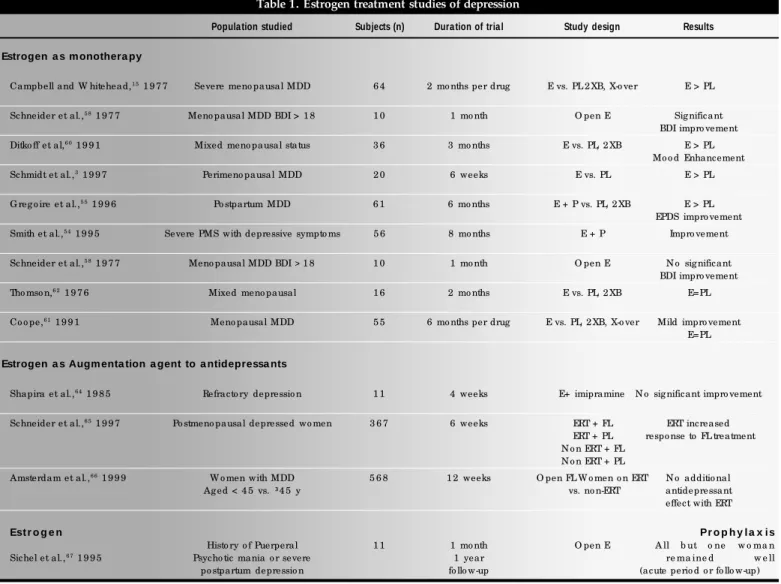
Table 1. Estrogen treatment studies of depression
Popula tion studied Subjects (n) Dura tion of tria l Study design Results Estrogen a s m onothera py
Campbell and W hitehead,1 5 1 9 7 7 Severe meno pausal MDD 6 4 2 mo nths per drug E vs. PL 2 XB, X-o ver E > PL
Schneider et al.,5 8 1 9 7 7 Meno pausal MDD BDI > 1 8 1 0 1 mo nth O pen E Sig nificant BDI impro vement
Ditko ff et al,6 0 1 9 9 1 Mixed meno pausal status 3 6 3 mo nths E vs. PL, 2 XB E > PL Mo o d Enhancement
Schmidt et al.,3 1 9 9 7 Perimeno pausal MDD 2 0 6 weeks E vs. PL E > PL
G reg o ire et al.,5 5 1 9 9 6 Po stpartum MDD 6 1 6 mo nths E + P vs. PL, 2 XB E > PL EPDS impro vement
Smith et al.,5 4 1 9 9 5 Severe PMS with depressive sympto ms 5 6 8 mo nths E + P Impro vement
Schneider et al.,5 8 1 9 7 7 Meno pausal MDD BDI >1 8 1 0 1 mo nth O pen E N o sig nificant BDI impro vement
Tho mso n,6 2 1 9 7 6 Mixed meno pausal 1 6 2 mo nths E vs. PL, 2 XB E=PL
Co o pe,6 1 1 9 9 1 Meno pausal MDD 5 5 6 mo nths per drug E vs. PL, 2 XB, X-o ver Mild impro vement E=PL
Estrogen a s Augm enta tion a gent to a ntidepressa nts
Shapira et al.,6 4 1 9 8 5 Refracto ry depressio n 1 1 4 weeks E+ imipramine N o sig nificant impro vement
Schneider et al.,6 5 1 9 9 7 Po stmeno pausal depressed wo men 3 6 7 6 weeks ERT + FL ERT increased ERT + PL respo nse to FL treatment N o n ERT + FL
N o n ERT + PL
Amsterdam et al.,6 6 1 9 9 9 W o men with MDD 5 6 8 1 2 weeks O pen FL W o men o n ERT N o additio nal
Ag ed < 4 5 vs. ³4 5 y vs. no n-ERT antidepressant
effect with ERT
Est r o g e n Pr o p h y l a x i s
Histo ry o f Puerperal 1 1 1 mo nth O pen E A ll b ut o ne w o ma n
Sichel et al.,6 7 1 9 9 5 Psycho tic mania o r severe 1 year re ma ine d w e ll
po stpartum depressio n fo llo w-up (acute perio d o r fo llo w-up)
1. World Health Organization. Research on the menopause in the 1990s: report of a WHO scientific group. Geneva: WHO Techni-cal Report Series number 866; 1996.
2. Teede H, Burger HG. T he menopausal transition. In: Studd JWW, editor. T he Management of Menopause - Annual Book Review. London, England: Parthenon Publishing Group; 1998:1-12. 3. Schmidt PJ , R oca C A, B loch M , R ubinow D R . T he
perimenopause and affective disorders.Semin Reprod Endocrinol 1997;15(1):91-100.
4. T he North American Menopause Society. Clinical challenges of perimenopause: consensus opinion of the North American Meno-pause Society. MenoMeno-pause 2000;7:5-13.
5. Treolar AE. Menstrual cyclicity and the premenopause. Maturitas 1981;3:249-64.
6. McKinlay SM. T he normal menopause transition: an overview. Maturitas 1996;23:137-45.
7. Midgette AS, Baron JA. Cigarette smoking and the risk of natural menopause. Epidemiology 1990;1:475-80.
8. Speroff L. T he menopause: a signal for the future. In: Lobo RA, editor. Treatment of postmenopausal women. New York, NY: Raven Press Ltd.; 1994:1-10.
9. Harlow BL, Cramer DW, Annis KM. Association of medically treated depression and age at natural menopause. Am J Epidemiol 1995;141:1170-6.
10. Metcalf MG, D onald RA. Fluctuating ovarian function in perimenopausal women. N Z Med J 1979;89:45-7. 11. McKinlay SM, Jeffreys M. T he menopausal syndrome. Br J Prev
Soc Med 1974;28:108-15.
○ ○ ○ ○ ○ ○ ○ ○ ○ ○ ○ ○ ○ ○ ○ ○ ○ ○ ○ ○ ○ ○ ○ ○ ○ ○ ○ ○ ○ ○ ○ ○ ○ ○ ○ ○ ○ ○ ○ ○ ○ ○ ○ ○ ○ ○ ○ ○ ○ ○ ○ ○ ○ ○ ○ ○ ○ ○ R EFER EN C ES○ ○ ○ ○ ○ ○ ○ ○
12. Swartzman LC, Edelberg R, Kemmann E. T he menopausal hot flush: symptom reports and concomitant physiological changes. J Behav Med 1990;13:15-30.
13. Freedman RR. Hot flashes revisited. Menopause 2000;7:3-4. 14. Kronenberg F. Hot flashes: Phenomenology, quality of life, and
search for treatment options. Exp Gerontol. 1994;29:319-36. 15. Campbell S, Whitehead M. Oestrogen therapy and the
meno-pause syndrome. Clin Obstet Gynaecol. 1977;4:31-47. 16. Haas S, Walsh B, Evans S, Krache M, Ravnikar V, Schiff I. T he
effect of transdermal estradiol on hormone and metabolic dynamics over a six-week period. Obstet Gynecol 1988;71:671-6. 17. Guthrie JR, Dennerstein L, Hopper JL, Burger HG. Hot flushes,
menstrual status, and hormone levels in a population-based sam-ple of midlife women. Obstet Gynecol 1996;88:437-42. 18. Mitchell ES, Woods NF. Symptom experiences of midlife women:
observations from the Seattle Midlife Women’s Health Study. Maturitas 1996;25:1-10.
19. Jaszmann L, Van Lith ND, Zaat JC. T he age of menopause in the Netherlands. T he statistical analysis of a survey. Int J Fertil 1969;14:106-17.
20. Baram DA. Physiology and symptoms of menopause. In: Stewart DE, Robinson GE, editors. A clinician’s guide to menopause. Washington DC: American Psychiatric Press; 1997:9-27. 21. Woods NF. Menopause, models, medicine and midlife. San
Fran-cisco, CA: North American Menopause Society; 1995. 22. Bart PB, Grossman M. Menopause. In: Notman MT, Nadelson CC,
editors. The Woman Patient. New York: Plenum; 1978:337-54. 23. Glenn ND. Psychological wellbeing in the post-parental stage:
some evidence from national surveys. J Marital Fam T her 1975;32:105-10.
24. Lock M. Ambiguities of aging: Japanese experience and percep-tions of menopause. Cult Med Psychiatry 1986;10:23-46. 25. Lock M . Menopause in cultural context. Exp G erontol
1994;29:307-17.
26. Nagata C, Takatsuka N, Inaba S, Kawakami N, Shimizu H. Asso-ciation of diet and other lifestyle with onset of menopause in Japa-nese women. Maturitas 1998;29:105-13.
27. Anderson E, Hamburger S, Liu JH, Rebar RW. Characteristics of menopausal women seeking assistance. Am J O bstet Gynecol 1987;156:428-33.
28. Hay AG, Bancroft J, Johnstone EC. Affective Symptoms in Women Attending a Menopause Clinic. Br J Psychiatry 1994;164:513-6. 29. Novaes C, Almeida OP. Premenstrual syndrome and psychiatric mor-bidity at the menopause. J Psychosom Obstet Gynaecol 1999;20:56-7. 30. Morse CA, Smith A, Dennerstein L, Green A, Hopper J, Burger H. T he treatment-seeking woman at menopause. Maturitas 1994;18:161-73.
31. Avis NE, McKinlay SM. A longitudinal analysis of women’s atti-tudes toward the menopause: results from the Massachusetts Women’s Health Study. Maturitas 1991;13:65-79. 32. Burt VK, Altshuler LL, Rasgon N. Depressive symptoms in the
perimenopause: prevalence, assessment, and guidelines for treat-ment. Harv Rev Psychiatry 1998;6:121-32.
33. Bungay GT, Vessey MP, McPherson CK. Study of symptoms in middle life with special reference to the menopause. Br Med J 1980;281:181-3.
Administration of estrogen may also help to improve quality of life and to prevent a large amount of health problems for women ap-proaching the menopause.52,53 If depressive symptoms do not improve after a few weeks of hormone treatment, other interventions, in-cluding psychotherapy and antidepressant medication, should be explored. Women should also be encouraged to explore other potential sources of stress like marital relation-ships, shifting relationships with friends, changes in role expectations, and new-onset health problems.
Estrogen as an antidepressant agent or augmentation strategy
Several studies have investigated the pu-tative antidepressant benefit of estrogen in dif-ferent subpopulations. T hese are summarized in Table 1.
T he antidepressant benefits of estrogen monotherapy for the treatment of premen-strual54 and postpartum55 depressive symptoms have been described. However, some study limitations, such as the concomitant use of antidepressants by 47% of subjects studied by Gregoire et al.55 may restrict the generalization of their results.
It has been shown that estrogen replace-ment therapy improves subjective wellbeing and quality of life during the
perime-nopause.56,57 Estrogen treatment studies also suggest superior efficacy over placebo in treat-ing minor depression in peri- and postmeno-pausal women.58-60 However, previous studies have not consistently found that estrogen has a significant antidepressant benefit in perimenopausal women.61,62 More recently, a double-blind, placebo-controlled study of raloxifene (a selective estrogen receptor modu-lator with estrogen agonist effects) has also failed to show significant effects on mood.63
Previous investigation of the antidepressant effect of estrogen in peri- and postmenopausal women has been confounded by multiple fac-tors, including the heterogeneity of methods to define and assess menopausal and hormonal status, lack of standardized diagnostic and out-come measurements, differences in hormone preparations, and the wide range of doses and different methods of administration.43,49
To date, only two studies3,15 demonstrate putative efficacy of estrogen monotherapy as a treatment for depression in peri- or post-menopausal women. We recently concluded a double-blind, placebo-controlled study dem-onstrating the efficacy of transdermal patches of 1 7 b-estradiol in the treatment of endocrinologically confirmed perimenopausal women with depression.68 T he extent to which estrogen may be used as a primary treatment for mood disturbance, and in what
popula-tion it might prove to be most efficacious, re-mains unclear.
○ ○ ○ ○ ○ ○ ○ ○ ○ ○ ○C o n c l u s i o n s○ ○ ○ ○ ○ ○ ○ ○ ○
Review of the literature strongly suggests a relationship between the perimenopause and depressive symptoms. In addition, women who report a prior history of depression and/or ex-perience depressive symptoms during periods of great hormonal variability (e.g. premenstrual periods and the puerperium) appear to be more vulnerable to depression at perimenopause. T he extent to which fluctuations of FSH and E2 levels, rather than the absolute decline of estrogen production, may influence the recur-rence or new onset of depression during the menopausal transition is still unclear. Future studies should prospectively investigate the temporal association between hormonal changes, somatic symptoms and depressive episodes, as menopause approaches.
34. Novaes C, Almeida OP, de Melo NR. Mental Health among perimenopausal women attending a menopause clinic: possible association with premenstrual syndrome? C limacteric 1998;1:264-70.
35. Ballinger CB. Psychiatric morbidity and the menopause: survey of a gynaecological outpatient clinic. B r J Psychiatry 1977;131:83-9.
36. Hunter M, Battersby R, Whitehead M. Relationships between psychological symptoms, somatic complaints and menopausal sta-tus. Maturitas 1986;8:217-28.
37. Collins A, Landgren BM. Reproductive health, use of estrogen and experience of symptoms in perimenopausal women: a popula-tion-based study. Maturitas 1994;20:101-11.
38. Kaufert PA, Gilbert P, Tate R. T he Manitoba Project: a re-exami-nation of the link between menopause and depression. Maturitas 1992;14:143-55.
39. Harlow BL, Cohen LS, Otto MW, Spiegelman D, Cramer DW. Prevalence and predictors of depressive symptoms in older pre-menopausal women: the Harvard Study of Moods and Cycles. Arch Gen Psychiatry 1999;56:418-24.
40. Schmidt PJ, Rubinow DR. Menopause-related affective disorders: a justification for further study. Am J Psychiatry 1991;148(7):844-52. 41. Arpels JC. T he female brain hypoestrogenic continuum from the premenstrual syndrome to menopause. A hypothesis and review of supporting data. J Reprod Med 1996;41:633-9. 42. Studd JWW. Oestrogens and depression in women. Br J Hosp
Med 1992;48:211-3.
43. Joffe H, Cohen LS. Estrogen, serotonin, and mood disturbance: where is the therapeutic bridge? Biol Psychiatry 1998;4(9):798-811.
44. Kessler RC, McGonagle KA, Swartz M, Blazer DG, Nelson CB. Sex and depression in the National Comorbidity Survey. I: Life-time prevalence, chronicity and recurrence. J Affect Disord 1993;29:85-96.
45. Morse CA, Dudley E, Guthrie J, Dennerstein L. Relationships between premenstrual complaints and perimenopausal experiences. J Psychosom Obstet Gynaecol 1998;19(4):182-91.
46. Larsson C, Hallman J. Is severity of premenstrual symptoms re-lated to illness in the climacteric. J Psychosom Obstet Gynaecol 1997;18:234-43.
47. Roca CA. Estrogen and Mood in Perimenopausal Women. In: Mood & Psychotic Disorders in Women: An Update on Treat-ment. Washington DC: American Psychiatric Association Annual Meeting; 1999.
48. Guicheney P, Leger D, Barrat J, et al. Platelet serotonin content and plasma tryptophan in peri- and postmenopausal women: vari-ations with plasma oestrogen levels and depressive symptoms. Eur J Clin Invest. 1988;18:297-304.
49. Holte A. Menopause, mood and hormone replacement therapy: methodological issues. Maturitas1998;29(1):5-18. 50. Soares CN, Almeida OP. Associação entre depressão na
peri-menopausa e níveis séricos de estradiol (E2) e hormônio folículo-estimulante (FSH). Rev Bras Psiquiatr 2000;22(1):17-21. 51. Sarrel PM . Sexuality and menopause. O bstet Gynecol
1990;75(Suppl):26S-30S.
52. Jensen J, Nilas L, Christiansen C. Influence of menopause on se-rum lipids and lipoproteins. Maturitas 1990;12:321-31. 53. Tang MX, Jacobs D, Stern Y, et al. Effect of oestrogen during
menopause on risk and age at onset of Alzheimer’s disease. Lancet 1996;348:429-32.
54. Smith RN, Studd JW, Zamblera D, Holland EF. A randomised comparison over 8 months of 100 micrograms and 200 micrograms twice weekly doses of transdermal oestradiol in the treatment of severe premenstrual syndrome. B r J O bstet G ynaecol. 1995;102:475-84.
55. Gregoire AJP, Kumar R, Everitt B, Henderson AF, Studd JWW. Transdermal oestrogen for treatment of severe postnatal depres-sion. Lancet 1996;347:930-3.
56. Wiklund G, Berg M, Hammar M, Karlberg J, Lindgren R, Sandik K. Long-term effect of transdermal hormonal therapy on aspects of quality of life in postmenopausal women. M aturitas 1992;14:225-36.
57. Karlberg J, Mattsson LA, Wiklund I. A quality of life perspective on who benefits from estradiol replacement therapy. Acta Obstet
Gynecol Scand 1995;74:367-72.
58. Schneider MA, Brotherton PL, Hailes J. T he effect of exogenous oestrogens on depression in menopausal women. Med J Aust 1977;2:162-3.
59. Pearce J, Hawton K, Blake F, et al. Psychological effects of con-tinuation versus disconcon-tinuation of hormone replacement therapy by estrogen implants: a placebo-controlled study. J Psychosom Res 1997;42:177-86.
60. Ditkoff EC, Crary WG, Cristo M, Lobo RA. Estrogen improves psychological function in asymptomatic postmenopausal women. Obstet Gynecol 1991;78:991-5.
61. Coope J. Is oestrogen therapy effective in the treatment of meno-pausal depression? J R Gen Pract 1981;31:134-40. 62. T homson J. Double blind study on the effect of estrogen on sleep,
anxiety and depression in perimenopausal women: preliminary results. Proc R Soc Med 1976;69:829-30.
63. Nickelsen T, Lufkin EG, Riggs BL, Cox D A, C rook T H. Raloxifene hydrochloride, a selective estrogen receptor modula-tor: safety assessment of effects on cognitive function and mood in postmenopausal women. Psychoneuroendocrinology 1999;24:115-28.
64. Shapira B, Oppenheim G, Zohar J. Lack of efficacy of estrogen supplementation to imipramine in resistant female depressive. Biol Psychiatry 1985;20:576-9.
65. Schneider LS, Small GW, Hamilton SH, et al. Estrogen replace-ment and response to fluoxetine in a multicenter geriatric depres-sion trial. Am J Psychiatry 1997;5:97-106.
66. Amsterdam J, Garcia-Espana F, Fawcett J, et al. Fluoxetine effi-cacy in menopausal women with and without estrogen replace-ment. J Affect Disord 1999;55:11-7.
67. Sichel DA, Cohen LS, Robertson LM, Ruttenberg A, Rosenbaum JF. Prophylactic estrogen in recurrent postpartum affective disor-der. Biol Psychiatry 1995;38:814-8.
68. Soares CN, Almeida OP, Joffe H, Cohen LS. Efficacy of estradiol for the treatment of depressive disorders in perimenopausal women: A Randomized, double-blind, placebo-controlled trial. Arch Gen Psychiatry 2001 (in press).
CONTEXTO: Diversos trabalhos têm apontado a
peri-menopausa como um período de maior vulnerabilidade para o surgimento de transtornos psiquiátricos, particularmente os quadros depressivos. Esse artigo revisa, primeiramente, o conceito de peri-menopausa, descrevendo suas características clínicas, alterações biológicas e aspectos psicossociais. Estudos sobre a prevalência de transtornos depressivos durante a peri-menopausa, abordando diferentes sub-populações (mulheres atendidas em serviços ginecológicos especializados, estudos populacionais transversais e longitudinais), são discutidos de forma crítica. Nesse artigo também abordamos
○ ○ ○ ○ ○ ○ ○ ○ ○ ○ ○ ○ ○ ○ ○ ○ ○ ○ ○ ○ ○ ○ ○ ○ ○ ○ ○ ○ ○ ○ ○ ○ ○ ○ ○ ○ ○R ESU M O○ ○ ○ ○ ○ ○
Clá udio de N ova es Soa res, M D, PhD. Po st-do c to ra l Resea rc h Fello w, Center fo r W o men’s Menta l Hea lth, Perina -ta l a nd Repro duc tive Psyc hia try Clinic a l Resea rc h Pro g ra m, Ma ssa c husetts G enera l Ho spita l, Ha rva rd Medic a l Sc ho o l, USA. Spo nso red b y a sc ho la rship fro m FAPESP, Bra z il (9 9 / 0 8 4 5 9 -3 )
Lee Stua rt Cohen, M D. Asso c ia te Pro fesso r, Depa rtment o f Psyc hia try, Direc to r, Center fo r W o men’s Menta l Hea lth, Perinatal and Repro ductive Psychiatry Clinical Research Pro -g ra m, Ma ssa c husetts G enera l Ho spita l, Ha rva rd Medic a l Sc ho o l, USA.
Sources of funding: N o t declared
Conflict of interest: N o t declared
La st received: 2 4 March 2 0 0 0
Accepted: 6 June 2 0 0 0
Address for correspondence:
Cláudio de N o vaes So ares
Perinatal and Repro ductive Psychiatry Clinical Research Pro g ram - Massachusetts G eneral Ho spital - Harvard Medical Scho o l
1 5 Parkman Street W ACC 8 1 2 Bo sto n, MA 0 2 1 1 4 , USA Email: cso ares@ partners.o rg
CO PYRIG HT© 2 0 0 1 , Asso ciação Paulista de Medicina
○ ○ ○Pu b l i sh i n g i n f o r m a t i o n○ ○ ○ ○ ○ ○ ○ ○ ○ ○ ○ ○ ○ ○ ○ ○ ○
as alterações hormonais presentes durante a transição menopausal, e o seu possível papel de “gatilho” no surgimento/exacerbação de quadros depressivos. Apresentamos um modelo de abordagem terapêutica para os quadros depressivos surgidos entre mulheres na faixa etária correspondente à peri-menopausa. O papel da terapêutica de reposição hormonal, nesses quadros, é discutido através da revisão dos estudos existentes sobre o uso de estrógenos como agente antidepressivo (monoterapia, terapêutica adjuvante ou profilaxia).
TIPO DE ESTUDO: Revisão narrativa
PALAVRAS-CHAVE: Peri-menopausa. Depressão.