1 Cyprus University of Technology, School of Health Sciences, Department of Nursing, Cyprus. 2 National & Kapodistrian University of Athens, Faculty of Nursing, Athens, Greece. 3 Clinical Cardiologist, Private
Practice, Kastoria, Greece.
ABSTRACT
Objective: To systematically review evidence on dysfunctional psychological responses of Intensive Care Units nurses (ICUNs), with focus on anxiety and depressive symptoms and related factors. Method: A literature search was performed in CINAHL, PubMed and Scopus databases, from 1999 to present, along with a critical appraisal and synthesis of all relevant data. he following key words, separately and in combination, were used: “mental status” “depressive symptoms” “anxiety” “ICU nurses” “PTSD” “burnout” “compassion fatigue” “psychological distress”. Results: hirteen quantitative studies in English and Greek were included. he results suggested increased psychological burden in ICUNs compared to other nursing specialties, as well as to the general population.
Conclusions: Studies investigating psychological responses of ICUNs are limited, internationally. Future longitudinal and intervention studies will contribute to a better understanding of the phenomenon.
DESCRIPTORS
Nursing, Team; Intensive Care; Anxiety; Depression; Burnout, Professional; Review.
Dysfunctional psychological responses among Intensive
Care Unit nurses: a systematic review of the literature
Respostas psicológicas disfuncionais em enfermeiros de Unidades de Cuidados Intensivos: uma revisão sistemática da literatura
Respuestas psicológicas disfuncionales en enfermeros de Unidades de Cuidados Intensivos: una revisión sistemática de la literatura
Maria Karanikola1, Margarita Giannakopoulou2, Meropi Mpouzika1, Charis P. Kaite1, Georgios Z. Tsiaousis3, Elizabeth D.E.
Papathanassoglou1
Recebido: 10/05/2015 Aprovado: 06/07/2015
ARTIGO DE REVISÃO DOI: 10.1590/S0080-623420150000500020
Corresponding author: Maria Karanikola
INTRODUCTION
he Intensive Care Unit (ICU) is considered to be a stressful work environment for nurses, since a grow-ing body of evidence suggests several work-related stress sources(1,2). Prolonged work-related stress has been linked
with psychological disturbances that afect nurses’ physi-cal and mental health status(1,3), along with altered
profes-sional performance, mediated through emotional exhaus-tion, vicarious trauma, fatigue, and professional burnout(4,5).
Work-related stress has also been found to be associated with anxiety and depressive symptoms in critical care nurses (CCNs)(4). Anxiety and depressive symptoms at
work may result in behavioural alterations such as apathy, irritability, anger, careless behaviour or absenteeism (5).
Fi-nally, depressive symptoms among nurses have been linked with a higher number of patient falls and medication er-rors, as well as with lower quality of care and higher health care expenditure(6).
Since work-related stress manifestations are linked with the quality of the delivered nursing care(7), this may be an
important issue for nurse managers. However, the mani-festations of psychological distress among CCNs have not been adequately investigated. hus, the prevalence of symp-toms of mental health disorders in CCNs is investigated in the present study.
Objectives
he aim of the present study was to critically review the literature on manifestations of psychological disturbances among nurses working in ICUs. he focus was upon the prevalence of mental health disorders and the factors as-sociated with them.
METHOD
he present systematic review consisted of three distinct phases: a) a systematic literature search, b) critical appraisal of the selected articles, and c) a synthesis of the data in a critical way. he systematic literature search was performed between September and October 2014 in the CINAHL, PubMED and Scopus databases, using the following search terms (as stand-alone ones or in combination): “critical care nurses”, “ICU nurses”, “mental status”, “mental health”, “de-pression”, “depressive symptoms”, “anxiety”, “psychological status”, “PTSD”, “burnout” “compassion fatigue”, “psycho-logical distress”. References of identiied studies were also checked for relevancy. Inclusion criteria were: publication in a peer-reviewed journal dating from 1999 to present, in the English or Greek language; quantitative design, aim-ing to explore the level of mental health among CCNs with special focus on anxiety and depressive symptoms; hospital nurses (CCNs included) or CCNs alone employed in various types of ICUs as the target population. he stud-ies that were excluded: a) only aimed to investigate the level of burnout or compassion fatigue or substance abuse or secondary PTSD/ vicarious trauma without exploring the level of anxiety or depressive symptoms; b) applied a qualitative design; c) were case studies, or review articles; d)
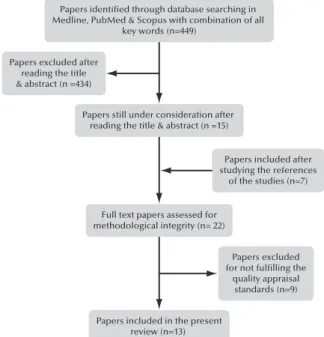
explored particular types of anxiety, such as anxiety towards death. he combined search strategies returned 449 papers. he titles, the abstracts and the full texts were studied, and 434 papers were excluded. he remaining 15 papers, as well as 7 papers added after citation searching, were further studied in detail. After taking into consideration the in-clusion and exin-clusion criteria, along with quality appraisal standards, thirteen papers were eventually included in the analysis (Figure 1).
Papers identified through database searching in Medline, PubMed & Scopus with combination of all
key words (n=449) Papers excluded after
reading the title & abstract (n =434)
Papers still under consideration after reading the title & abstract (n =15)
Papers included after studying the references
of the studies (n=7) Full text papers assessed for
methodological integrity (n= 22)
Papers included in the present review (n=13)
Papers excluded for not fulfilling the
quality appraisal standards (n=9)
Figure 1 – Flow chart: Process of sampling – Limassol, Cyprus, 2015.
All papers considered for inclusion in this review were assessed with regard to their methodological adequacy with a modiied form of the standardized tool “Critical Ap-praisal Skills Programme” (CASP)(8), in combination with
Roe’s model for critical appraisal of quantitative studies(9).
RESULTS
characteristicsOfthestudiesincluded
he majority of included papers were written in English (12) and only one in Greek. he current review integrated the indings of approximately 3.000 participants, the major-ity of them being women. he included studies were con-ducted in the following countries: four in the USA, one in Germany, three in Greece, one in Japan, one in Nigeria, one in France, one in Eastern Taiwan, and one in Turkey. he most frequently used tools were: a) the Hospital Anxiety Scale (HADS), b) the Hamilton Anxiety Scale (HAS), c) the Beck Anxiety Inventory (BAI), and d) the Beck De-pression Inventory (BDI). All studies were published from 2003 onwards. he main features of the included studies are presented in Chart 1.
degreeOfanxietyanddepressivesymptOms amOng ccnsandassOciatiOnwithwOrk-related stressOrs
he prevalence of anxiety symptoms in Greece indicates that approximately 20% of participants were experiencing anxiety symptoms of moderate intensity, whereas 4% of them were sufering from symptoms of severe intensity(1,10).
Symptoms with the greater intensity were: a) sleep distur-bances, b) anxiety mood, c) cognitive disorders and d) ten-sion. he most important factors that appeared to be related with anxiety symptoms were: a) female sex, b) employment in a public hospital, and c) years of work experience as a critical care nurse. In addition, the number of ICU beds was found to be correlated with anxious mood. Overall, anxiety symptoms among Greek ICU nurses appeared to be re-lated to prevailing staing conditions(10). Moreover, it was
shown that satisfaction from nurse-to-physician interaction is associated with CCNs’ anxiety state, tension, and depres-sive symptoms, whilst satisfaction from interaction among nursing personnel was correlated with the levels of anxiety, tension, and sleep disturbances(1). Overall, although anxiety
symptoms might be associated with the degree of satisfac-tion from professional interacsatisfac-tion, the latter was not re-ported as a strong predictor of anxiety symptoms and might not be a signiicant indicator of ICU nurses’ well-being(1).
Nevertheless, it is worth mentioning that both studies fo-cused on the intensity of anxiety symptoms, without taking into consideration the diference between state and trait dimensions of anxiety.
Other researchers in Greece(11) attempted to determine
whether a rotating shift system, including night shifts, is as-sociated with changes in the secretion of hormones in nurses, and subsequently with their mental status. hey performed a cross-sectional survey in 32 CCNs during 2006. Measure-ments were made at the beginning and the end of each shift. Results showed a statistically greater reduction of cortisol levels between the two measurements among nurses working in rotation compared to nurses in the morning shift group (p=0.032). Moreover, levels of the thyroid-stimulating
hor-mone (TSH) were statistically signiicantly increased in the rotating group but not in the morning shift group (p=0.049). More importantly, positive correlations were noted between TSH changes and scores in the General Health Question-naire (GHQ) in the night shift group. his questionQuestion-naire mainly assesses the degree of anxiety and depressive symp-toms. herefore, it was proposed that psychosomatic distur-bances as well as anxiety and depressive symptoms might be more common among critical nurses doing night shifts. In conclusion, this study linked the circular working hours of ICU nurses with the dys-regulation of both the circadian rhythm of hormone secretion and other parameters related to mental and physical health. he psychosomatic efects from those variations were: a) sleep disturbances, b) tension, c) depressive mood, d) cognitive disorders, and e) tension in personal and social life.
he association among type of shift, sleep qual-ity, chronic fatigue, anxiety and depressive symptoms was studied elsewhere, too(12). A study in the USA revealed that
almost 1 out of 4 ICU nurses (23%) reported clinical de-pressive symptoms of mild, moderate or severe degree and 1 out of 3 nurses (32%) reported clinical anxiety symptoms of mild or moderate degree. Furthermore, results indicated that nurses who were working during the night shift were at a higher risk of developing depressive symptoms compared to their colleagues who were working on morning shifts. Moreover, depressive symptoms, along with self-assessed quality of sleep, were found to be important contributors to chronic fatigue in CCNs.
Another work-related stressor, the imbalance between efort and reward was further investigated in CCNs, and a possible association with mental health status was as-sessed(13). his study showed that approximately 10.2% of
ICU nurses reported clinical anxiety and depressive symp-toms (cut-of point 11 in the HADS scale). Moreover, the level of depressive symptoms in the study sample was higher compared to a healthy control group (t=4.21, df=117, p<0.0001). Furthermore, Post Traumatic Stress Disorder (PTSD) symptoms were also identiied in 7.7% of CCNs. Work-related factors that were found to be associated with psychiatric symptoms, i.e anxiety and depressive symp-toms, and PTSD, were the degree of reward (r= 0.38-0.49, p<0.01), efort (r= 0.41-0.50, p<0.01), and over-commit-ment (r= 0.39 – 0.54, p<0.01), whilst the imbalance be-tween efort and reward was only associated with reported PTSD symptoms (0.19, p<0.05). Perceived social support was negatively associated with the manifestation of psy-chiatric symptoms (r=-0.37 for PTSD, r=-0.40 for anxiety symptoms, and r=-0.63 for depressive symptoms, p<0.01). Overall, according to the researchers’ interpretation of their indings, the occurrence of anxiety and depressive symp-toms in CCNs may be associated with the overwhelming efort–reward imbalance, in combination with the responsi-bility of caring for high-risk patients, as well as the load of administrative tasks that ICU nurses are faced with.
his was, too, the conclusion of a study aiming to explore the relationship between work-related stress factors and mental/ physical symptoms among diferent nursing specialties in Japan(4). In this study, the mental status was assessed with the
Brief Job Stress Questionnaire(14), which includes subscales
for vigor, irritability, fatigue, anxiety and depressive mood. As far as ICU nurses were concerned, the researcher found they were experiencing anxiety and depressive symptoms and fatigue at a higher level than other nursing specialties (p<0.05), independently of demographic variables. Work-related factors that were associated with these symptoms were the nature of the work and subsequent overload (i.e. the pressure of caring for critically ill patients), quality of workplace environment, perception of being suitable for this job and challenged by the tasks required by it.
According to a study from Nigeria(15), reported anxiety
symptoms of nurses in a University College Hospital were associated with burnout indices. he sample in this study was drawn from the ICU, the Accident and Emergency Department, Oncology, Dentistry and General Outpa-tients Departments. According to the results, nurses re-ported higher levels of burnout and anxiety symptoms (STAI, p <0.01 and p<0.05 respectively) (16), and worse
overall mental health status (GHQ-12, p< 0.05). Moreover, statistically signiicant associations were found between the level of education and: 1) anxiety symptoms (STAI, r=0.2, p<0.05); and 2) mental health status (GHQ-30, r=0.19, p<0.05)(16-18).
Two studies(4,15) recruited nurses from diferent nursing
specialties, including ICU nurses. Another study explored the manifestation of depressive symptoms and possible asso-ciations with burnout symptoms in ICU nurses in France (19).
In particular, this study aimed to identify factors linked to the onset of professional burnout among CCNs. Accord-ing to the results, the frequency of depressive symptoms was signiicantly higher among nurses sufering from se-vere burnout. Moreover, clinical symptoms of depression were described by approximately 12% of participants, whilst 78% of them revealed severe symptoms of the burnout syn-drome (p<0,0001).
Although all aforementioned studies so far provide evidence for the association between levels of work related stress and the degree of self-reported psychiatric symptoms, a prospective study in Turkey revealed the opposite. In par-ticular, the aim of this study was to compare the level of oxidative stress in 60 CCNs against 60 general care nurs-es, at the beginning and the end of their shift (morning vs. evening/night shift)(20). Moreover, the level of anxiety
symptoms was assessed. With regard to the results, oxida-tive stress indices were increased among all nurses at the end of day and of night shifts (p < 0.05); however, they were not signiicantly diferent at the beginning and the end of the shifts among CCNs compared to nurses of general care (p > 0.05). he same trend was noted in relation to anxiety symptoms (p > 0.05). he reported level of anxiety symptoms was not clinically relevant (STAI, mean=39, scale range=20-80). hus, this study suggested that the level of
stress and anxiety symptoms was not associated with the type of working shift, i.e. day or night. Moreover, this study implied that the increase of oxidative stress is due to el-evated physical activity, thus irrelevant to the speciic work environment (ICU or general care) or personality traits.
he association between personality features and mental health status was the focus of other researchers. Within this framework, a possible link between resilience and symp-toms of psychological morbidity was assessed(21). Findings
indicated that approximately one out of ive critical nurses displayed clinical symptoms of anxiety, whereas one out of ten had depressive and PTSD symptoms. he presence of resilience was associated with a signiicantly lower preva-lence of PTSD (8% vs. 25%, p<0.01). Similarly, the fre-quency of anxiety and depressive symptoms was lower in nurses who were characterized by resilience (2% vs. 14%, p=0.001, and 8% vs. 21%, p=0.03, respectively).
Another important issue is the exploration of the fac-tors related to CCNs’ intention to leave their job. his was the aim of a study in eastern Taiwan(22). Approximately half
of participants reported that they intended to leave their work. he majority of factors associated with that intention were connected, more or less, to the level of self – reported mental health status. In particular, participants identi-ied as such factors the level of their physical health, the number of diseases, the degree of happiness, the presence of depressive symptoms, job satisfaction, quality of sleep, and educational level (p=0.05-0.001). he most signiicant predictors of the nurses' intention to leave their profession were depressive symptoms and poor sleep quality. Addi-tionally, the type of ICU was associated with the intention to quit (surgical vs. medical, p<0.0001), which may indicate that it was indirectly associated with the manifestation of depressive symptoms.
symptOmsOf pOst traumatic stress disOrder amOng ccns.
A study in the USA(23) explored whether there was an
increased prevalence of Post Traumatic Stress Disorder (PTSD) symptoms in ICU nurses compared to nurses from other specialties. Twenty-two percent of CCNs re-ported clinical symptoms of anxiety, whilst 31% of them clinical symptoms of depression. Moreover, ICU nurses had an increased prevalence of PTSD (24%, 95% CI, 18-29) compared to nurses from other specialties (14%, 95% CI, 8-20, p=0.003). he above results were further conirmed in a sample of 140 CCNs from the Atlanta area(23). In
1.23-1.71, p = 0.026). Other characteristics that were found to be associated with the manifestation of PTSD symptoms were marital status (p=0.04), age (p=0.06), and number of work-ing days per week (p=0.05). With regard to the main symp-toms of PTSD that were reported, 21% of nurses recalled having nightmares and 17% reported having severe anxiety or panic attacks related to the work experience in the ICU. Overall, the most pronounced PTSD symptoms revealed were: a) sleep disturbances, b) irritability, c) restlessness, d) feelings of anger or irritation, and e) muscle tension. Work-related factors that were described as traumatic by ICU nurses were: inpatient death; verbal abuse from other nurses, physicians and relatives of inpatients; extensive open wounds; massive bleeding or heavy injuries; care of people with poor life expectancy; cardiopulmonary rescuscitation (CPR); feelings of incompetence; and the high ratio of inpatients to nurses. hese events were relived in dreams and caused avoidance behavior and hyper-vigilance, which would last over a month.
Other researchers(24) investigated the relationship among
PTSD, anxiety and depressive symptoms, and social support in nurses employed in emergency rooms, ICUs and
gen-eral medical wards in a Level 1 Trauma center. he scores reported by CCNs on the instruments employed were: a) 11.1±14.0 [scale range (SR) 0-66)] for PTSD, which indi-cates absence of symptoms, b) 24.68± 5.2 [Beck Anxiety In-ventory (BAI), SR=0-63], which indicates moderate levels of anxiety symptoms, and c) 4.96 ± 6.18 [Beck Depression Inventory (BDI), SR=0-63], which denotes absence of de-pressive symptoms. Moreover, particular work-related fac-tors were associated with nurses’ mental health disturbances. hese factors were: a) death or altered body image of the patient, b) poor patient outcomes due to delayed treatment, c) performing painful and/or life-threatening procedures, d) negative public image of nurses, e) absence of contact with the patient, f ) dissatisfaction coming from patients’ family members, and h) medication errors. Results indicated that CCNs reported a signiicant level of anxiety symptoms, al-though no clinically signiicant symptoms of PTSD and depression were noted.
Overall, the factors related to CCNs’ psychological mor-bidity according to the studies included are presented in Chart 3, whilst the frequencies and mean scores of anxiety, depressive and PTSD symptoms in Chart 2.
Chart 1. Methodological features of the studies included – Limassol, Cyprus, 2015.
Study/
Origin Aim Design/ sample/ instruments Main limitations
1 Germany(13)
To investigate the association among effort reward imbalance, mental health status and resources in diverse professional groups in ICUs.
• Descriptive cross-sectional design, single-centre study • Self-reported questionnaires
• Purposeful sampling (142 nurses and physicians) • Instruments: ERI, BSI, HADS-D, IES, F SozU-K-22, LSQ • Cronbach’s alpha α =0.90
• Decreased external validity: Low response rate
Purposeful sample
• The cross-sectional design does
not allow conclusions regarding causality to be made
2 (1)
Greece
To investigate potential associations between
the severity of anxiety
symptoms and i) demographic, vocational, educational factors and ii) satisfaction from interactions.
• Descriptive correlational design, multi-centre study • Self-reported questionnaires
• 229 members of nursing personnel • Convenience sample
• Instruments: HAS, Interactions IWS subscale • Reliability: Cronbach's alpha α = 0.896
• Construct validity: Factor analysis with Varimax
rotation
• No consideration of the
difference between state and trait
dimensions of anxiety. • Decreased external validity
(convenience sample)
• The cross-sectional design does
not allow conclusions on causality to be made
3 USA(21)
To investigate possible associations between resilience and symptoms of psychological morbidity
in CCNs
• Cross-sectional, nation-wide study • Self-reported questionnaires • 744 CCNs
• Random sample
• Instruments: HADS, PDS, MBI, CD-RISC
• Reliability: Cronbach’s alpha α > 0.77 for all scales &
subscales used
• Low response rate
4 Turkey(20)
To evaluate the oxidative
stress parameters and
anxiety symptoms, and
associations with type of i) shift and ii) ward.
• Prospective, single-centre study
• Self-reported questionnaires & blood tests • 120 nurses in ordinary service and ICU • Convenience sample
• Instruments: TAS, TOS, OSI, STAI
• Measurements: Biochemical analysis, total oxidant status, total antioxidant status
• Small sample size • Convenience sample
• Biological factors were not taken
into consideration
• The metric properties of the STAI-S subscale were not tested
5 Greece(10)
To investigate the degree
of anxiety symptoms and
the relationship with demographic, educational and professional factors.
• Descriptive correlational, multi-centre study • Self-reported questionnaires
• 229 ICU nurses • Convenience sample • Instruments: HAS
• Reliability: Cronbach's alpha α = 0.896
• Construct validity: Factor analysis with Varimax
rotation
• No consideration of the
difference between state and trait
dimensions of anxiety • Convenience sample
• The cross-sectional design does
not allow conclusions on causality to be made
• Stafing per shift was not
estimated
Study/
Origin Aim Design/ sample/ instruments Main limitations
6 (11) Greece
To investigate whether a rotating shift system is associated with changes to the secretion of hormones
and mental status in CCNs
• Cross-sectional survey, single-centre study • Self-reported questionnaires & blood samples • 32 CCNs
• Convenience sample
• Instruments: SSI (SQ, PHQ, CQ, CTI, GJS, CF, GHQ, CSAQ, CMQ, EPI, SDS)
• Reliability: Cronbach’s alpha ranged from 0.7 to 0.92
• Small sample size • Convenience sample
• The type of shift during the day
prior to blood sampling, or other events that might have occurred during the shift and might have affected hormone levels were not assessed
7 Central (4)
Japan
To investigate the association between
job-related stressors and mental and physical
self-reported health status
• Cross-sectional, multi-centre study • Self-reported questionnaires • Purposeful sample • 1.551 female hospital
nurses
• Instrument: BJSQ
• The metric properties of the
instruments used were not measured
• Decreased external validity due to the special cultural context of Japan
• Inclusion of auxiliary nurses in
the sample
• The cross-sectional design does
not allow conclusions on causality to be made
8
(22) Eastern
Taiwan
To explore the factors related to CCNs’ intention
to leave their profession
• Cross sectional exploratory, single-centre study • Self-reported questionnaires
• 130 nurses employed in two ICUs of one medical
centre
• Purposeful sample
• Instruments: A researcher – designed questionnaire based on Cooper’s model, VAS
• Structured tools for the
measurement of variables were not used
• The cross-sectional design does
not allow conclusions on causality to be made
• Decreased external validity
due to the special cultural characteristics of Taiwan
9 USA(23)
To compare the prevalence
of PTSD, anxiety and
depressive symptoms between ICU and general care nurses
• Cross-sectional, multi-centre study • Self-reported questionnaires
• 351 nurses (230 ICU nurses & 121 general medical or surgical nurses) and 140 ICU nurses
• Purposeful sample
• Instruments: PTSS-10, HADS
• The cross-sectional design does
not allow conclusions on causality to be made
• Decreased external validity
(purposeful sample)
10 France(19)
To investigate factors associated with the onset of professional burnout
in CCNs, including
depressive symptoms
• Cross-sectional study • Self-reported questionnaires • 2.392 CCNs
• Random sample • Instruments: MBI, CES-D • Nation-wide study
• Inclusion of nursing personnel of
different educational backgrounds/ task orientations
• The metric properties of the tools
used were not tested
11 USA(24)
To investigate the relationship between
PTSD and psychological experiences of ER, ICU
and general medicine
nurses in a Level 1 Trauma
Center
• Cross-sectional single-centre study • Self-reported questionnaires • 125 Nurses
• Purposeful sample
• Instruments: MPSS, MSPSS, PDEQ, BAI, BDI-II
• Sample of nurses employed in
only one hospital
• Low response rate
12 Nigeria(15)
To investigate burnout dimensions and related factors amongst hospital health professionals.
• Cross-sectional, single-centre study • Self-reported questionnaires
• 260 health professionals, including ICU nurses • Purposeful sample
• Instruments: MBI, GHQ-12, STAI
• Cronbach’s alpha ranged from 0.70 to 0.86
• Sample of nurses employed in
only one hospital
• The correlational nature of
the study design does not allow causality assumptions to be made
13 USA(12)
To investigate the association among chronic fatigue, type of shift,
sleep quality, anxiety and
depressive symptoms
• Descriptive correlational design, multi-centre,
nation-wide study
• Self-reported questionnaires • 142 female CCNs
• Random sample
• Instruments: SSICFS, PSQI, BDI-II, BAI II, SSIGBIS • Reliability: Cronbach’s alpha 0.81 <α< 0.90 for all
scales used
• The correlational nature of
the study design does not allow causality assumptions to be made
Abbreviations: BAI: Beck Anxiety Inventory; BDI-II: Beck Depression Inventory II; BJSQ: Brief Job Stress Questionnaire; BSI: Brief Symptom Inventory; CD-RISC: Connor-Davidson Resilience Scale; CES-D: Center for Epidemiological Studies Depression Scale; CF: Chronic Fatigue; CMQ: Composite Morningness Questionnaire; CQ: Coping Question-naire; CSAQ: Cognitive Somatic Anxiety Questionnaire; CTI: Circadian Type Inventory; EPI: Eysenck Personality Inventory; F SozU-K-22: Social Support Questionnaire “F-SozU”;
GHQ: General Health Questionnaire; GHQ-12: General Health Questionnaire-12; GJS: General Job Satisfaction; HADS: Hospital Anxiety and Depression Scale; HADS-D: Hos-pital Anxiety and Depression Scale; HAS: Hamilton Anxiety Scale; IES: Impact of Event Scale; IWS: Index of Work Satisfaction; LSQ: Life Satisfaction Questionnaire; MBI: Maslach Burnout Inventory; MPSS: Modiied Posttraumatic Symptom Scale; MSPSS: he Multidimensional Scale of Perceived Social Support; OSI: Oxidative Stress Index; PDEQ: he Peri-traumatic Dissociative Experience Questionnaire; PDS: Posttraumatic Diagnostic Scale; PHQ: Physical Health Questionnaire; PSQI: Pittsburgh Sleep Quality Index; PTSS-10: Post Traumatic Stress Syndrome 10 Questions Inventory; SQ: Sleep Questionnaire; SSI: Standard Shiftwork Index; SSICFS: Shiftwork Index Chronic Fatigue Scale; SSIGBIS: Standard Shiftwork Index General Biographic Information Section; STAI: State Trait Anxiety Inventory; TAS: Total Antioxidant Status; TOS: Total Oxidant Status; VAS: Visual Analogue Scale; ER:Emergency Room; CCNs: Critical Care Nurses; ICU: Intensive Care Unit.
Chart 3. Factors related to ICUNs’ psychological morbidity according to the studies included –Limassol, Cyprus, 2015.
Factors related to ICUNs’ psychological morbidity Studies Included by Reference Number
(13) (1) (21) (20) (10) (11) (4) (22) (23) (19) (24) (15) (12) Demographics/personal characteristics
Age/ Long work experience × × × ×
Female Gender × ×
Patients’ condition
Extensive open wounds/Massive bleeding/Heavy injuries ×
Painful and life-threatening procedures ×
Death × × ×
Therapy related factors
Poor outcomes due to delayed treatment ×
Medication errors ×
No contact with patients ×
Personality characteristics
Resilience ×
Perception of role incompetence × ×
Job itness/ Job satisfaction × ×
Chart 2. Frequencies and mean scores of anxiety, depressive and PTSD symptoms according to the results of the studies included – Limassol, Cyprus, 2015.
Studies Included by
Reference Number
Clinical Symptoms
Anxiety Symptoms PTSD Symptoms Depressive Symptoms
Frequencies
(Scale used) (Scale range)Mean±SD Frequencies(Scale used) (Scale range)Mean±SD Frequencies(Scale used) (Scale range)Mean±SD
(13) 10.2% (HADS) 5.6±3.9 (HADS, 0-21) 7.7% (IES-R) (IES-R, 0-5)2.8± 1.6 (HADS)10.2% 4.8±4.2 (HADS, 0-21)
(1) 3.1% severe (HAS)20.8% moderate 0.71 ±0.66 (HAS, 0-3) NE NE NM 0.65±0.97 (HAS, 0-3)
(21) 18% (HADS) 12.5±3.0 (HADS, 0-21) 21% (PDS) NM 11% (HADS) 10.6±1.8 (HADS,0-21)
(20) NM 39.66±5.67, 38.93±6.0733±5.1, 37.46±4.63
(STAI-S, 20-80) NE NE NE NE
(10)
19.9% moderate 3.9% severe 1.8% very severe
(HAS)
0,72±0,69
(HAS, 0-3) NE NE NM (HAS, 0-3)65 ±0,97
(11) NM 25.1±2.9( morning shift)27.2±1.2 (rotating shift)
(STAI, 14-70) NE NE NM NE
(4) NM 7.4 (BJQS, 3-12) NE NE NM 12.1 (BJSQ, 6-24)
(22) NM NE NM NE NM 5.18±2.19 (SDQ, 0-10)
(23) 20 – 22% (HADS) NM 24 – 29 %(PTSS-10) NM 26-31% (HADS) NM
(19) NE NE NE NE 12% (CES-D) NM
(24) NM 24.68± 5.2 (BAI, 0-63) NM (MPSS-SR, 0-66)11.1±14.0 NM 4.96 ± 6.18 (BDI, 0-63)
(15) NM NM NE NE NM NM
(12) 32 % (BAI) 5.93±5.41 (Night shift)5.22±4.59 (Day shift)
(BAI, 0-63) NE NE 23 % (BDI)
7.18±4.59 (Day shift) 10.35±7.89(Night shift)
(CES-D, 0-63)
Abbreviations:BAI: Beck Anxiety Inventory; BDI: Beck Depression Inventory; BJSQ: Brief Job Stress Questionnaire; CES-D: Center for Epidemiological Studies Depression Scale;
HADS: Hospital Anxiety and Depression Scale; HAS: Hamilton Anxiety Scale; IES-R: Impact of Event Scale Revised; MPSS-SR: Modiied Posttraumatic Symptom Scale-Self Report;
NE: Not explored; NM: Not mentioned; PDS: Posttraumatic Diagnostic Scale; PTSS-10: Post Traumatic Stress Syndrome 10 Questions Inventory; SDQ: Self Developed questionnaire;
STAI: State Trait Anxiety Inventor.
Factors related to ICUNs’ psychological morbidity Studies Included by Reference Number
(13) (1) (21) (20) (10) (11) (4) (22) (23) (19) (24) (15) (12) Psycho – somatic well being
Decreased quality of sleep × × ×
Fatigue ×
Burnout syndrome × × ×
Administration/ Organizational policies
Dysfunctional administration ×
Public hospital ICU × ×
Round-the-clock schedule × ×
Night /Evening shift × ×
Type of ICU (surgical/ medical) × ×
Quality of Tasks/ Overload
Increased administrative tasks/ Nurse in charge × × ×
Task requirements/ Routine × ×
High responsibility/ Care for people at high risk/ Job control × × ×
Effort-reward imbalance ×
Increased task load × ×
Stafing conditions/ Pa-N ratio/ Number of beds × × ×
Quality of Interactions
Quality of professional interactions/environment × × × ×
Dissatisfaction coming from patients’ families ×
Quality of relationship with patients × × ×
Verbal abuse (N-N, P-N, Pa-N) ×
Abbreviations: N-N: Nurse to nurse; Pa-N: Patient to nurse; P-N: Physician to nurse.
… continuação
DISCUSSION
his was the irst systematic review which aimed to in-vestigate the prevalence of anxiety and depressive symptoms among CCNs, including symptoms of PTSD, as well as re-lated factors associated with the manifestation of these dis-turbances. he main inding was that almost 1 out of 5 criti-cally care nurses sufered from psychological distress. More speciically, the prevalence of anxiety ranged in included studies from 10.2% to 32%, whilst the frequency of depres-sive symptoms from 11% to 31%. his variability could be attributed to the variety of the tools used, to diverse sam-pling techniques, as well as to the diferent cultural contexts within which studies were performed. Additionally, speciic factors were associated with ICU nurses’ psychological mor-bidity, namely: demographics, personality traits, quality of professional interactions (between nurses of diferent rank-ing, as well as between nurses and physicians), therapeutic procedures, need for higher responsibility, patients’ grave condition or death, nurses’ physical well-being, administra-tion policies, task requirements, and work overload.
With regard to the methodological features of the re-viewed studies, the vast majority of them adopted a cross-sectional design. As a result, assumptions on causality link-ing work-related factors to psychiatric symptoms could not be safely drawn. Another important limitation of the reviewed studies lies in the fact that most people who suf-fer from severe symptoms of psychological disturbances are
reluctant to participate. hus, the true percentage of people with clinical anxiety and depressive symptoms may have been underestimated. On the other hand, most reviewed studies used valid tools with adequate psychometric prop-erties, which enhance the internal validity of the reported results. Moreover, almost half of the studies were nation-wide, multi-centered and applied random sampling, char-acteristics that render their results generalizable within the particular cultural context.
According to the results of the reviewed studies, an increased prevalence of anxiety and depressive symptoms among critically care nurses compared to other nursing spe-cialties was shown(4,24). his prevalence should also be
com-pared to the one of the general population(25). Considering
that almost all studies included only female nurses, a com-parison to the female general population would have been more appropriate. According to the WHO (25), the prevalence
of depressive symptoms among women of reproductive age is approximately 20% in developed countries. However, this frequency represents the lifelong prevalence(25,26), whereas in
the studies included in the current review cross-sectional prevalence is reported; and such prevalence for the gen-eral female population is signiicantly lower than 20%(25,26).
Another study inding was that depressed mood and se-vere sleep disturbance are the main causes of CCNs leaving the profession,(22) which underlines the need for targeted
interventions towards this vulnerable group of employees. Screening procedures need to be implemented, since it is well known that those who sufer from such symptoms ap-pear reluctant to seek professional help(26). In particular, only
2 out of 5 people who experience symptoms of mood or anxiety disorders seek assistance form health care profes-sionals during the irst year of the onset of the disorder(26);
this delay may not only jeopardize the quality and safety of delivered care, but may also inluence the clinical outcome of such symptoms negatively(27).
With regard to PTSD symptoms, three studies dem-onstrated data in relation to their frequency. One study in Germany(13) showed that almost 1 out of 10 CCNs reported
such symptoms, whilst 2 studies in the USA revealed a much higher prevalence (21 and 29%) (21,23). his diference might
be attributed to diferences in study designs, organizational cultures or organizational health care systems between the two countries. In any case, nurses described speciic work-related traumatic events, (such as inpatient death, verbal abuse, etc), which were relived in dreams and would fur-ther lead to avoidance behavior and hyper-vigilance(23,28).
Worth mentioning is also the fact that, in relation to the burnout syndrome, only one study has explored a possible association with symptoms of PTSD(23). Since, according to
this study,(23) the majority of nurses who met the criteria of
PTSD reported at the same time symptoms of emotional exhaustion and depersonalization, further research in this direction is needed, in order to clarify any causal relationship. Additionally, of particular concern is the fact that symptoms of PTSD are associated with substance abuse and depres-sion(29). In any case, such symptoms may have an efect on
the quality and safety of delivered care. As mentioned ear-lier, it appears that anxiety and depressive symptoms coexist most of the times with burnout symptoms(19,30). Furthermore,
it has been shown that CCNs who sufer from professional burnout may develop feelings of despair and hopelessness. hese conditions are of particular importance, since they are considered to represent risk factors for suicidal behavior(30).
All the above should be taken into consideration in future research, as well as for targeted interventions aiming to al-leviate CCNs from such symptoms.
limitatiOns
Cross-sectional study design, with its inherent restric-tions, and tendency of afected individuals to abstain from such studies have been mentioned above. A further limita-tion was that the studies included were solely in the English and Greek languages. As a result, data published in other languages, including any possible contradictory indings, were not included. Additionally, the fact that only data pub-lished in peer reviewed journals were included in the present study may have resulted in selection bias(31); studies reporting
against the association between psychiatric symptoms and critical care nursing may have not been published, thus could not possibly have been included in the present study.
CONCLUSION
he results of this review suggest considerable psycho-logical morbidity in CCNs. Special attention needs to be given to symptoms of PTSD, which were reported as be-ing rather frequent. Psychological burden in this population was associated with a variety of factors, from demograph-ics and quality of professional interactions, to task require-ments and work overload. In conclusion, studies in relation to psychological responses of nurses employed in the ICU are limited, internationally. hey do, however, generate the necessary basis for future prospective studies, that will be designed to test interventions aimed at supporting the role of ICU nurses and, ultimately, at ameliorating their herein demonstrated psychological morbidity.
RESUMO
Objetivo: Rever sistematicamente evidências de respostas psicológicas disfuncionais em Enfermeiros de Unidades de Cuidados Intensivos (EUCI), com foco na ansiedade, sintomas depressivos e fatores relacionados. Método: Foi realizada uma pesquisa bibliográica, com avaliação crítica e síntese de dados dos estudos, nas bases de dados da CINAHL, PubMed e Scopus, para o período de 1999 até ao presente. Foram utilizados os seguintes termos de pesquisa, individualmente ou em combinação: “estado mental” “sintomas depressivos” “ansiedade” “enfermeiros de UCI” “PTSD” “burnout” “fadiga da compaixão” “stress psicológico”. Resultado: Foram incluídos treze estudos quantitativos em Inglês e Grego. Os resultados sugerem um aumento da carga psicológica nos EUCI comparativamente com outras especialidades de enfermagem, assim como com a população em geral. Conclusões: Estudos internacionais de investigação sobre a resposta psicológica de EUCI são limitados. Estudos futuros, longitudinais e de intervenção, irão contribuir para uma melhor compreensão do fenômeno.
DESCRITORES
Equipe de Enfermagem; Terapia Intensiva; Ansiedade; Depressão; Esgotamento Proissional; Revisão.
RESUMEN
de investigación acerca de la respuesta psicológica son limitados. Estudios futuros, longitudinales y de intervención, contribuirán a una mejor comprensión del fenómeno.
DESCRIPTORES
Grupo de Enfermería; Cuidados Intensivos; Ansiedad; Depresión; Agotamiento Profesional; Revisión.
REFERENCES
1. Karanikola MN, Papathanassoglou EDE, Kalafati M, Mpouzika M. Exploration of the association between professional interactions and emotional distress of intensive care unit nursing personnel. Dimens Crit Care Nurs. 2012;31(3):37-45. DOI: 10.1097/ DCC.0b013e31823a55b8.
2. Lee SJ, Lee JH, Gillen M, Krause N. Job stress and work-related musculoskeletal symptoms among intensive care unit nurses: a comparison between job demand-control and effort-reward imbalance models. Am J Ind Med. 2014;57(2):214-21. DOI: 10.1002/ajim.22274.
3. Karanikola M, Albarran WJ, Drigo E, Giannakopoulou M, Kalafati M, Mpouzika M, Tsiaousis G, Papathanassoglou EDE. Moral distress, autonomy and nurse-physician collaboration among ICU nurses in Italy. J Nurs Manag. 2014;22(4): 472-84. DOI: 10.1111/jonm.12046 4. Kawano Y. Association of job-related stress factors with psychological and somatic symptoms among Japanese hospital nurses: effect of
departmental environment in acute care hospitals. J Occup Health. 2008;50(1):79-85.
5. Enns V, Currie S, Wang J. Professional autonomy and work setting as contributing factors to depression and absenteeism in Canadian nurses. Nurs Outlook. 2015;63(3):269-77. DOI: 10.1016/j.outlook.2014.12.014.
6. Garrouste-Orgeas M, Perrin M, Souir L, Vesin A, Blot F, Maxime V, Beuret P, Troché G, Klouche K, Argaud L, Azoulay E, Timsit JF. The Iatroref study: medical errors are associated with symptoms of depression in ICU staff but not burnout or safety culture. Intensive Care Med. 2015;41(2):273-84. DOI: 10.1007/s00134-014-3601-4.
7. Zúñiga F, Ausserhofer D, Hamers JP, Engberg S, Simon M, Schwendimann R. Are Stafing, Work Environment, Work Stressors, and Rationing of Care Related to Care Workers’ Perception of Quality of Care? A Cross-Sectional Study. J Am Med Dir Assoc. 2015 May 28. pii: S1525-8610(15)00310-2. DOI: 10.1016/j.jamda.2015.04.012. [Epub ahead of print]
8. Critical Appraisal Skills Programme (CASP). [cited 2014 October 22]. Available from: http://www.casp-uk.net/
9. Roe B. Undertaking a critical review of the literature. Nurse Researcher. 1993;1:38-9.
10. Karanikola N, Stathopoulou H, Kalafati M, Terzi AM, Mpouzika M, Papathanassoglou EDE. Assessment of anxiety symptoms among intensive care nursing personnel in Greece. Hellenic Journal of Nursing. 2009;48:447-57.
11. Korompeli A, Sourtzi P, Tzavara C, Velonakis E. Rotating shift-related changes in hormone levels in intensive care unit nurses. J Adv Nurs. 2009; 65(6):1274-82. DOI: 10.1111/j.1365-2648.2009.04987.x.
12. Ruggiero JS. Correlates of fatigue in critical care nurses. Res Nurs Health. 2003;26(6):434-44.
13. Jasper S, Stephan M, Al-Khalaf H, Rennekampff HO, Vogt PM, Mirastschijski U. Too little appreciation for great expenditure? Workload and resources in ICUs. Int Arch Occup Environ Health. 2012;85(7):753-61. DOI: 10.1007/s00420-011-0721-9.
14. Shimomitsu T, Yokoyama K, Ohno H, Martua T, Tanigawa T. Manual of the Brief Job Stress Questionnaire. In: Reports on the study of the Brief Job Stress and its effects on health and in the workplace: The research grant for the prevention of work-related diseases from the Japan Ministry of Labour. Tokyo:The Ministry of Labor; 2000. p. 17-27.
15. Olley BO. A comparative study of burnout syndrome among health professionals in a Nigerian teaching hospital. Afr J Med Med Sci. 2003;32(3):297-302.
16. Spielberger CD, Gorsuch RL, Lushene RE. STAI Manual for the State-Trait Anxiety Inventory. Pao Alto: Consulting Psychologist Press; 1970. 17. Maslach C, Jackson SE. The Maslach Burnout Inventory Manual. 2nd ed. Alto CA: Consulting Psychologists Press; 1986.
18. Goldberg DP, Williams PA. User’s Guide to the General Health Questionnaire. NFER: Windsor; 1988.
19. Poncet CM, Toullic P, Papazian L, Kentish-Barnes N, Timsit J, Pochard F, et al. Burnout syndrome in critical care nursing staff. Am J Respir Crit Care Med. 2007;175(7):698-704.
20. Ulas T, Buyukhatipoglu H, Kirhan I, Dal MS, Eren MA, Hazar A, et al. The effect of day and night shifts on oxidative stress and anxiety symptoms of the nurses. Eur Rev Med Pharmacol Sci. 2012;16(5):594-9.
21. Mealer M, Jones J, Newman J, McFann KK, Rothbaum B, Moss M. The presence of resilience is associated with a healthier psychological proile in intensive care unit (ICU) nurses: results of a national survey. Int J Nurs Stud. 2012;49(3):292-9. DOI: 10.1016/j.ijnurstu.2011.09.015. 22. Lai HL, Lin YP, Chang HK, Wang SC, Liu YL, Lee HC, et al. Intensive care unit staff nurses: predicting factors for career decisions. J Clin
Nurs. 2008;17(14):1886-96.
23. Mealer ML, Shelton A, Berg B, Rothbaum B, Moss M. Increased prevalence of post-traumatic stress disorder symptoms in critical care nurses. Am J Respir Crit Care Med. 2007;175(7):693-7.
24. Kerasiotis B, Motta WR. Assessment of PTSD symptoms in emergency room, intensive care unit, and general loor nurses. Int J Emerg Ment Health. 2004;6(3):121-33.
25. World Health Organization. Women’s health. Fact sheet n. 334, September 2013 [cited 2014 October 18]. Available from: http://www. who.int/mediacentre/factsheets/fs334/en/
27. Falkenberg I, Valmaggia L, Byrnes M, Frascarelli M, Jones C, Rocchetti M, Straube B, Badger S, McGuire P, Fusar-Poli P. Why are help-seeking subjects at ultra-high risk for psychosis help-help-seeking? Psychiatry Res. 2015. pii: S0165-1781(15)00287-5. DOI: 10.1016/j. psychres.2015.05.018.
28. de Boer J, van Rikxoort S, Bakker AB, Smit BJ. Critical incidents among intensive care unit nurses and their need for support: explorative interviews. Nurs Crit Care. 2014;19(4):166-74. DOI: 10.1111/nicc.12020.
29. Tarsai M, Kalantarkousheh SM, Lester D. The defeat-entrapment theory versus Beck’s hopelessness theory of depression and suicidality: A cross-national analysis in Iran and the United States. Int J Soc Psychiatry. 2015 Apr 27. pii: 0020764015583921. [Epub ahead of print]
30. Iliceto P, Pompili M, Spencer-Thomas S, Ferracuti S, Erbuto D, Lester D, Candilera G, Girardi P. Occupational stress and psychopathology in health professionals: an explorative study with the multiple indicators multiple causes (MIMIC) model approach. Stress. 2013;16(2):143-52.
31. Mahood Q, Eerd DV, Irvin E. Searching for grey literature for systematic reviews: challenges and beneits. Res Synth Methods. 2014; 5(3):221-34. DOI: 10.1002/jrsm.1106.
Funding: This study has been funded by the Cyprus University of Technology, (internal funding)