http://dx.doi.org/10.1590/S1678-9946201759065
(1) Universidade Federal do Triângulo
Mineiro, Programa de Pós-Graduação em Medicina Tropical e Infectologia, Uberaba, Minas Gerais, Brazil
(2) Instituto Federal de Educação, Ciência e
Tecnologia do Triângulo Mineiro, Disciplinas de Microbiologia e Imunologia, Uberaba, Minas Gerais, Brazil
Correspondence to: Luciana de Almeida Silva Teixeira
Universidade Federal do Triângulo Mineiro, Programa de Pós-Graduação em Medicina Tropical e Infectologia, R. Getúlio Guaritá, s/n, CEP 38025-440, Uberaba, MG, Brazil
E-mail: [email protected]
Received: 27 March 2017
Accepted: 28 July 2017
Prospective study of patients with persistent symptoms of dengue in Brazil
Luciana de Almeida Silva Teixeira1, Fabiana Prado dos Santos Nogueira1, Gabriel Antonio Nogueira Nascentes2
ABSTRACT
Dengue is an arboviral infection clinically recognized as an acute and self-limited disease. Persistence of dengue symptoms is known, but it has been little studied. The aim of this study was to characterize persistent symptoms in 113 patients with dengue followed up clinically and by laboratory testing at a tertiary hospital. Symptoms that persisted for more than 14 days were observed in 61 (54.0%) patients, and six (6.2%) of them had symptoms for 6 months or more. The persistent symptoms identified were myalgia, weakness, hair loss, memory loss, reduced resistance to physical effort, headache, reasoning problems, arthralgia, sleepiness- and emotional lability. The progression to persistent symptoms was significantly associated with hospitalization, older age, more severe disease, the presence of bleeding and comorbidities upon univariate analysis. Upon multivariate analysis, the presence of persistent symptoms continued to be significantly associated only with increased age and dengue with warning signs. The platelet count during the acute phase of the disease was significantly lower in the group with persistent symptoms. In conclusion, the frequency of progression to persistent symptoms in dengue is relevant in patients seen at a tertiary hospital and the persistence of symptoms is more common in patients with dengue with warning signs.
KEYWORDS: Dengue. Clinical. Persistent symptoms
INTRODUCTION
Dengue is a viral disease transmitted by arthropods that occurs in more than 100 countries and whose incidence has been increasing over the past 50 years1. In 2013, based on the identification of 58.4 million cases of dengue worldwide, the aggregate global cost of the disease was estimated to be US$ 8.9 billion2. However, this number is probably underestimated because the additional costs resulting from the persistence of dengue symptoms in part of the affected population were not considered3.
The present study prospectively investigated patients with dengue attended and followed up at a university hospital in Brazil to evaluate the persistence of symptoms and factors associated with this evolution.
PATIENTS AND METHODS
Patients
Patients seen at the University Hospital of the Federal University of Triângulo Mineiro (HC/UFTM), Uberaba, Minas Gerais, Brazil, between January 2012 and May 2015, were included.
The criteria for inclusion were age older than 14 years (minimum age of admission to the emergency department of the Clinic of HC/UFTM); hospitalized and/or receiving outpatient care (at least one outpatient visit) at the HC/UFTM; clinical suspicion of dengue recorded on the chart; positive serology for dengue (ELISA IgM or NS1) - and agreement to participate in the study.
Patients who died were not included in the study since it was not possible to evaluate persistent symptoms of dengue in this group. The research was approved by the Ethics Committee of UFTM in 2011, Process Nº 1966.
Serological diagnosis
The ELISA IgM and NS1 assays were carried out at the referral services of the municipality, at the Macroregional Reference Laboratory and at the HC/UFTM using kits provided by the Brazilian Ministry of Health. All results were confirmed in the computerized exam registration system of the State of Minas Gerais (Gerenciador de Ambiente Laboratorial/GAL/Fundação Ezequiel Dias).
Clinical data
The signs and symptoms of the patients were systematically investigated using a specific clinical chart to characterize the acute phase of the disease (up to 14 days from the onset of symptoms). Spontaneous complaints were recorded and the patients were then asked about the presence of the following signs/symptoms and their respective duration: fever, headache, retro-orbital pain, myalgia, exanthema, prostration, arthralgia, nausea, vomiting, diarrhea, sleepiness, weakness, coryza- and cough. The patients were also questioned about spontaneous bleeding, warning signs (intense abdominal pain, persistent vomiting, painful hepatomegaly, pre-syncope, mucosal bleeding, sleepiness/irritability, and respiratory distress), date of onset and duration, and presence of signs of shock
(hypotension, cold extremities, cyanosis, and rapid pulse). Information about the presence of comorbidities, history of medication use, allergies, and personal history of diseases was also obtained. Comorbidities were identified based on the patient’s self-report, complementary tests, and previous medical follow-up.
In the case of patients hospitalized at the HC/UFTM, the records were reviewed to search for warning signs and signs of shock identified during medical care. Data reported by the patient were compared to those recorded during hospitalization at the HC/UFTM.
The participants underwent outpatient follow-up consisting of at least one weekly visit up to one month after the onset of symptoms and a monthly visit while the patient continued to report any symptom related to the disease. Additional visits were scheduled according to the clinical needs of patients. Another specific chart was used during the outpatient follow-up to record the spontaneous complaints of the patients and then applying the objective inquiry about the presence of fever, headache, retro-orbital pain, myalgia, exanthema, prostration, arthralgia, nausea, vomiting, diarrhea, sleepiness, weakness, coryza, cough, hair loss, cognitive state, memory loss, reasoning problems and skin changes. The objective signs were extracted from a survey of symptoms reported in a previous study10. All visits were conducted by at least one of the two participating physicians.
For the analysis, the presence of persistent symptoms of dengue was defined as the identification of previously non-existing symptoms lasting more than 14 days, which were attributed to the disease by the patient. Signs and symptoms that occurred up to two weeks of the disease onset were associated with the acute phase.
Laboratory data
The results of blood counts and liver tests (aspartate aminotransferase - AST, and alanine aminotransferase – ALT) performed at the HC/UFTM during the follow-up of patients at the institution were requested. The number of repetitions of each test, the most altered value found and the day of disease on which the worst result was obtained were recorded. The results were collected using the Esmeralda computerized laboratory information system installed at the HC/UFTM.
an increase was expressed as the number of times the result exceeds the upper limit of the reference range.
Classification of dengue
The patients of the study were classified into three groups: dengue, dengue with warning signs, and severe dengue. Since cases of dengue without fever have been recognized, dengue was considered when a clinical suspicion was made by the attending physician associated with a positive serological test. The parameters recommended by the World Health Organization (WHO)14 and by the Brazilian Ministry of Health13 were used for the groups classified as dengue with warning signs and severe dengue. Thus, the “dengue with warning signs” group was defined as the presence of dengue accompanied by at least one of the following signs/symptoms: severe abdominal pain, persistent vomiting, painful hepatomegaly, pre-syncope, bleeding, sleepiness/irritability, mucosal bleeding, and respiratory distress. The “severe dengue” group was defined as the presence of signs of shock (postural hypotension, cold extremities, cyanosis, and rapid pulse), severe hemorrhage (hematemesis and melena), and severe organ dysfunction (e.g., respiratory failure).
Data analysis
The association between each clinical parameter and the presence of persistent symptoms was evaluated using the classical chi-square test or Fisher exact test. The strength of the association was measured by calculating relative risks (RR) with 95% confidence intervals (95% CI). Age was compared in relation to the clinical parameters using the nonparametric Mann-Whitney or Kruskal-Wallis test, followed by the Dunn test. The statistical analyses were performed using the Statistica 10.0 software (Statsoft, Tulsa, OK, 2011) and MedCalc 12.2 programs (MedCalc Software, Ostend, Belgium). The level of significance was set at p<0.05.
RESULTS
During the study period, 176 subjects with suspicion of dengue were seen at the HC/UFTM. Of these, 51 had no diagnostic confirmation (27 did not undergo serological testing and did not return to the service, 21 had negative serology and the ELISA IgM result was indeterminate in 3). In addition, of the 125 patients with a confirmed diagnosis of dengue, 7 died and 5 attended only one medical visit. Thus, 113 patients were followed up during the study until medical discharge and all of them presented clinical suspicion and
serological diagnostic confirmation (93 positive ELISA IgM and 20 positive NS1).
Of the 113 patients included in the study, 49 (43.4%) were hospitalized at the HC/UFTM, which is a tertiary hospital. The most frequent reason for admission was evidence of bleeding accompanied or not by thrombocytopenia in 35 patients (31.0%). There was agreement between the warning signs and signs of shock reported by the patients and those recorded during hospitalization at the HC/UFTM. The presence of persistent symptoms was observed in 61 (54.0%) of the patients in this study. Demographic data of patients are shown in Table 1.
Table 1 - Demographic data of the 113 patients with dengue
in the study
Characteristics n %
Gender
Male 42 37.2
Female 71 62.8
Age (years)
14-30 43 38.1
30-60 55 48.7
> 60 15 13.3
Hospitalization
No 62 54.9
Yes 49 43.4
Unknown 2 1.8
Classification of dengue
Dengue 62 54.9
Dengue with warning signs 45 39.8
Severe dengue 6 5.3
Reason for hospitalization
Bleeding/thrombocytopenia 35 31.0
Abdominal pain/hepatomegaly 19 16.8
Pre-syncope/lethargy/mental confusion/ sleepiness
8 7.1
Respiratory distress 8 7.1
Persistent vomiting 7 6.2
Shock/signs of shock 4 3.5
Respiratory failure 3 2.7
Other 4 3.5
Comorbidity
No 49 43.4
Yes 63 55.8
Unknown 1 0.9
Persistent symptoms
No 52 46.0
Evaluation of the initial symptoms of dengue showed that only 100 (88.5%) of the patients reported fever. The most common symptom was weakness accompanied or not by prostration, reported by 111 (98.2%) of the participants. The frequency of the other signs and symptoms was headache in 100 (88.5%) patients, nausea in 86 (76.1%), retro-orbital pain in 75 (66.4%), exanthema in 71 (62.8%), sleepiness in 71 (62.8%), arthralgia in 63 (55.8%), diarrhea in 55 (48.7%), vomiting in 39 (34.5%), cough in 34 (30.1%), abdominal pain in 23 (20.4%), coryza in 19 (16.8%), and pruritus in 18 (15.9%).
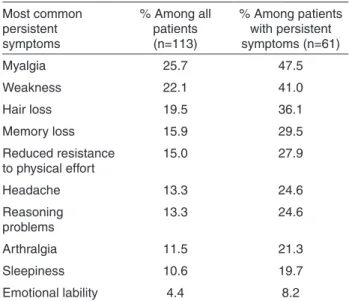
Myalgia and weakness were the two most common symptoms during the acute phase of the disease and among the persistent symptoms. Recurrent symptoms that had not been previously established in the directed interview were identified. The most common symptoms were reduced resistance to physical effort and emotional lability. In the 61 patients with persistent symptoms, the duration of symptoms ranged from 1 to 12 months. Symptoms persisted for up to one month in 27 (44.3%) patients, for 2 to 5 months in 27 (44.3%), and for 6 months or more in 7 (11.5%) patients. No specific therapeutic intervention was performed and the symptoms resolved over time. The main persistent signs and symptoms of the disease are listed in Table 2.
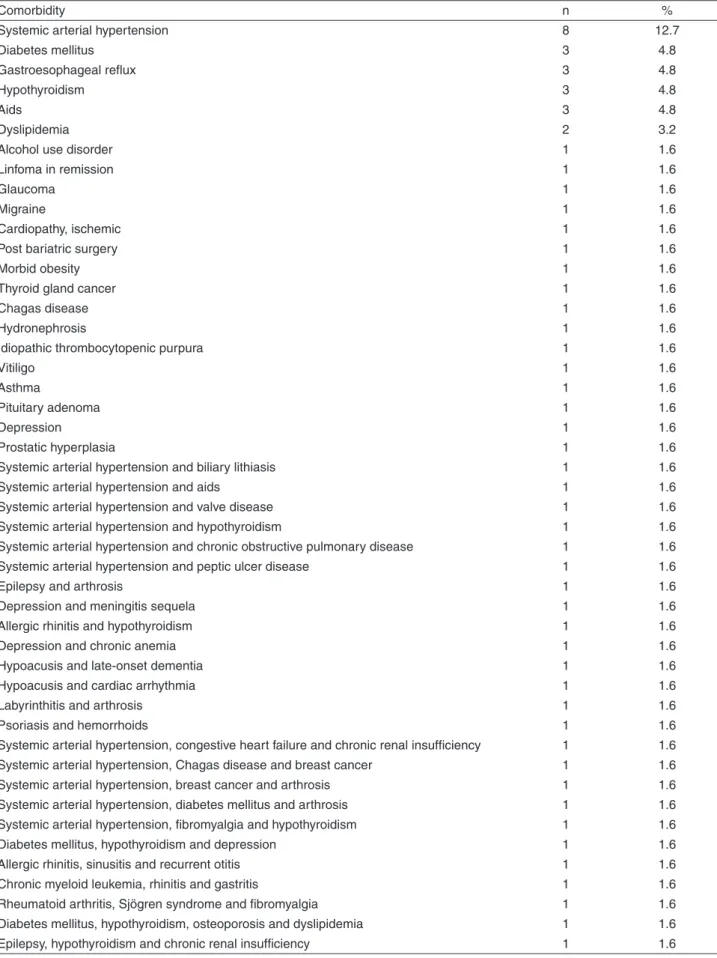
The presence of comorbidities and persistent symptoms increased significantly with age (Table 3). The most frequent comorbidities were systemic arterial hypertension in 19 (30.2%) patients, hypothyroidism in 9 (14.3%) and diabetes mellitus in 6 (9.5%) patients. All comorbidities are described in Table 4.
A total of 481 blood counts, 283 AST measurements and 272 ALT measurements were obtained from the 113 patients followed up in this study.
During the acute phase of the disease, an altered hematocrit value was observed in only 17 (15%) patients, including 12 (10.6%) with increased hematocrit and five with low hematocrit, associated with severe bleeding. Among the 45 patients classified as dengue with warning signs, 39 (87%) had no altered hematocrit value. Thrombocytopenia was observed in 80 (71%) patients and was more common on day 6 of the disease. Leukopenia was present in 66 (58%) patients and was more common
Table 2 - Most common persistent symptoms shown by the
patients during the study
Most common persistent symptoms
% Among all patients (n=113)
% Among patients with persistent symptoms (n=61)
Myalgia 25.7 47.5
Weakness 22.1 41.0
Hair loss 19.5 36.1
Memory loss 15.9 29.5
Reduced resistance to physical effort
15.0 27.9
Headache 13.3 24.6
Reasoning problems
13.3 24.6
Arthralgia 11.5 21.3
Sleepiness 10.6 19.7
Emotional lability 4.4 8.2
Table 3- Association between age and clinical parameters in patients with dengue
Clinical parameter
Age (years)
p-value
Mean (± SD) 1 Median
(minimum-maximum)
Classification of dengue
Dengue 39.2 ± 15.4 38.5 (17.0-80.0) 0.105
Dengue with warning signs 41.4 ± 19.2 39.0 (14.0-92.0)
Severe dengue 55.3 ± 18.0 57.5 (35.0-84.0)
Comorbidity
No 31.1 ± 12.1 27.0 (14.0-60.0) <0.001
Yes 48.6 ± 17.2 49.0 (17.0-92.0)
Persistent symptoms
No 32.9 ± 12.3 29.0 (14.0-64.0) <0.001
Yes 47.8 ± 17.6 48.0 (15.0-92.0)
1 The results are expressed as the mean ± standard deviation. 2 The p-value refers to the result of the nonparametric Mann-Whitney
Table 4- Comorbidities shown by 63 patients in the study
Comorbidity n %
Systemic arterial hypertension 8 12.7
Diabetes mellitus 3 4.8
Gastroesophageal reflux 3 4.8
Hypothyroidism 3 4.8
Aids 3 4.8
Dyslipidemia 2 3.2
Alcohol use disorder 1 1.6
Linfoma in remission 1 1.6
Glaucoma 1 1.6
Migraine 1 1.6
Cardiopathy, ischemic 1 1.6
Post bariatric surgery 1 1.6
Morbid obesity 1 1.6
Thyroid gland cancer 1 1.6
Chagas disease 1 1.6
Hydronephrosis 1 1.6
Idiopathic thrombocytopenic purpura 1 1.6
Vitiligo 1 1.6
Asthma 1 1.6
Pituitary adenoma 1 1.6
Depression 1 1.6
Prostatic hyperplasia 1 1.6
Systemic arterial hypertension and biliary lithiasis 1 1.6
Systemic arterial hypertension and aids 1 1.6
Systemic arterial hypertension and valve disease 1 1.6
Systemic arterial hypertension and hypothyroidism 1 1.6
Systemic arterial hypertension and chronic obstructive pulmonary disease 1 1.6
Systemic arterial hypertension and peptic ulcer disease 1 1.6
Epilepsy and arthrosis 1 1.6
Depression and meningitis sequela 1 1.6
Allergic rhinitis and hypothyroidism 1 1.6
Depression and chronic anemia 1 1.6
Hypoacusis and late-onset dementia 1 1.6
Hypoacusis and cardiac arrhythmia 1 1.6
Labyrinthitis and arthrosis 1 1.6
Psoriasis and hemorrhoids 1 1.6
Systemic arterial hypertension, congestive heart failure and chronic renal insufficiency 1 1.6
Systemic arterial hypertension, Chagas disease and breast cancer 1 1.6
Systemic arterial hypertension, breast cancer and arthrosis 1 1.6
Systemic arterial hypertension, diabetes mellitus and arthrosis 1 1.6
Systemic arterial hypertension, fibromyalgia and hypothyroidism 1 1.6
Diabetes mellitus, hypothyroidism and depression 1 1.6
Allergic rhinitis, sinusitis and recurrent otitis 1 1.6
Chronic myeloid leukemia, rhinitis and gastritis 1 1.6
Rheumatoid arthritis, Sjögren syndrome and fibromyalgia 1 1.6
Diabetes mellitus, hypothyroidism, osteoporosis and dyslipidemia 1 1.6
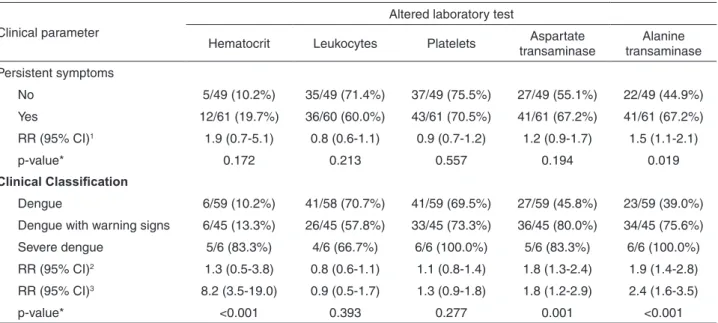
on day 4, elevated AST was observed in 68 (60%) and was more common on day 7, and elevated ALT was observed in 63 (56%) and was more common on day 8 of the disease. A significant association was observed between altered hematocrit, AST and ALT and the dengue with warning signs (RR: 1.3; 1.8; 1.9, respectively) and severe dengue (RR: 8.2; 1.8; 2.4, respectively). When compared to the presence of persistent symptoms, the association was significant only with altered ALT (RR: 1.5) (Table 5).
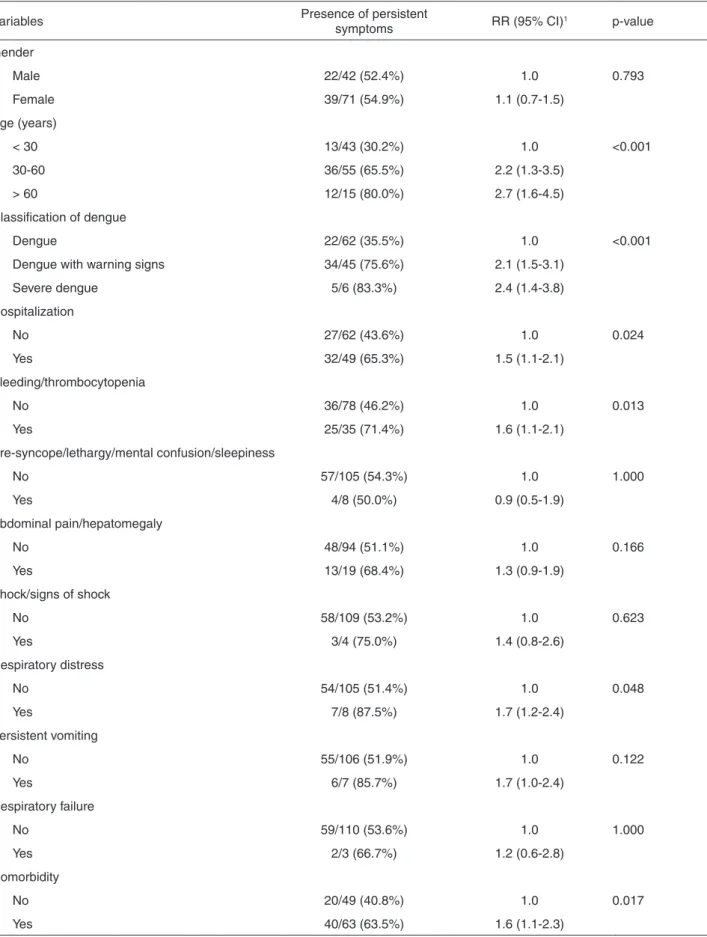
The progression to persistent symptoms was significantly associated with older age (30-60 years RR: 2.2; > 60 years RR; 2.7), dengue with warning signs (RR: 2.1), severe dengue (RR: 2.4), hospitalization (RR: 1.5), presence of bleeding (RR: 1.6), respiratory discomfort (RR: 1.7), and comorbidities (RR: 1.6) (Table 6).
DISCUSSION
The WHO, and consequently the Brazilian protocols that are based on its recommendation, defines the presence of fever accompanied by two or more of the following criteria as the diagnosis of probable dengue: nausea/vomiting, exanthema, myalgia, headache, positive tourniquet test or any warning sign13,14. In the present study, individuals with symptoms compatible with the disease, which led to a clinical suspicion by the attending physician even in the absence of fever, were considered suspected cases of dengue. In this respect, about 10% of all evaluated
participants did not report fever and the diagnosis would not have been made if the classical definition of the disease would have been followed. On the other hand, of the 13 individuals without fever, only in 3 of them the illness was confirmed by NS1 and in 10 by ELISA IgM. Considering that IgM has also been used in an unreported number of patients to establish the diagnosis of the disease and it can remain positive for some months, it is not possible to rule out the hypothesis of some other infection instead of dengue.
The prevalence of dengue with persistent symptoms reported in the literature varies widely, from 2 to 68%3. In contrast to a retrospective study previously published by our group, the prospective follow-up of patients in the present study provided more reliable information. Nevertheless, the prevalence of persistent symptoms was similar to that found in the previous retrospective study, 50-60%10.
The most common persistent symptoms of dengue reported in different studies were myalgia11, arthralgia15, and headache12. Other prevalent symptoms include weakness, adynamia, fatigue and asthenia8,9,11,12,15,16, whose duration can reach 2 years11. These symptoms were also the most frequent in the present study. However, the marked presence of other symptoms such as hair loss, memory loss, reasoning problems, sleepiness and emotional lability should be highlighted. The repercussions of these persistent symptoms on the work capacity and quality of life of affected individuals require further investigation17.
The global economic impact of dengue involves an
Table 5 - Comparison between altered laboratory tests and the clinical parameter in patients with dengue
Clinical parameter
Altered laboratory test
Hematocrit Leukocytes Platelets Aspartate
transaminase
Alanine transaminase
Persistent symptoms
No 5/49 (10.2%) 35/49 (71.4%) 37/49 (75.5%) 27/49 (55.1%) 22/49 (44.9%)
Yes 12/61 (19.7%) 36/60 (60.0%) 43/61 (70.5%) 41/61 (67.2%) 41/61 (67.2%)
RR (95% CI)1 1.9 (0.7-5.1) 0.8 (0.6-1.1) 0.9 (0.7-1.2) 1.2 (0.9-1.7) 1.5 (1.1-2.1)
p-value* 0.172 0.213 0.557 0.194 0.019
Clinical Classification
Dengue 6/59 (10.2%) 41/58 (70.7%) 41/59 (69.5%) 27/59 (45.8%) 23/59 (39.0%)
Dengue with warning signs 6/45 (13.3%) 26/45 (57.8%) 33/45 (73.3%) 36/45 (80.0%) 34/45 (75.6%)
Severe dengue 5/6 (83.3%) 4/6 (66.7%) 6/6 (100.0%) 5/6 (83.3%) 6/6 (100.0%)
RR (95% CI)2 1.3 (0.5-3.8) 0.8 (0.6-1.1) 1.1 (0.8-1.4) 1.8 (1.3-2.4) 1.9 (1.4-2.8)
RR (95% CI)3 8.2 (3.5-19.0) 0.9 (0.5-1.7) 1.3 (0.9-1.8) 1.8 (1.2-2.9) 2.4 (1.6-3.5)
p-value* <0.001 0.393 0.277 0.001 <0.001
* The p-value corresponds to the result of the chi-square test. For parameters with p<0.05. RR (95% CI)1 indicates the risk of
individuals with a diagnosis of dengue and persistent symptoms to have altered laboratory tests compared to patients without persistent symptoms. RR (95% CI)2 indicates the risk of individuals with a diagnosis of dengue and warning signs to have altered
laboratory tests compared to patients with dengue. RR (95% CI)3 indicates the risk of individuals with severe dengue to have altered
Table 6 - Univariate analysis of the association between persistent symptoms and clinical variables
Variables Presence of persistent
symptoms RR (95% CI)1 p-value
Gender
Male 22/42 (52.4%) 1.0 0.793
Female 39/71 (54.9%) 1.1 (0.7-1.5)
Age (years)
< 30 13/43 (30.2%) 1.0 <0.001
30-60 36/55 (65.5%) 2.2 (1.3-3.5)
> 60 12/15 (80.0%) 2.7 (1.6-4.5)
Classification of dengue
Dengue 22/62 (35.5%) 1.0 <0.001
Dengue with warning signs 34/45 (75.6%) 2.1 (1.5-3.1)
Severe dengue 5/6 (83.3%) 2.4 (1.4-3.8)
Hospitalization
No 27/62 (43.6%) 1.0 0.024
Yes 32/49 (65.3%) 1.5 (1.1-2.1)
Bleeding/thrombocytopenia
No 36/78 (46.2%) 1.0 0.013
Yes 25/35 (71.4%) 1.6 (1.1-2.1)
Pre-syncope/lethargy/mental confusion/sleepiness
No 57/105 (54.3%) 1.0 1.000
Yes 4/8 (50.0%) 0.9 (0.5-1.9)
Abdominal pain/hepatomegaly
No 48/94 (51.1%) 1.0 0.166
Yes 13/19 (68.4%) 1.3 (0.9-1.9)
Shock/signs of shock
No 58/109 (53.2%) 1.0 0.623
Yes 3/4 (75.0%) 1.4 (0.8-2.6)
Respiratory distress
No 54/105 (51.4%) 1.0 0.048
Yes 7/8 (87.5%) 1.7 (1.2-2.4)
Persistent vomiting
No 55/106 (51.9%) 1.0 0.122
Yes 6/7 (85.7%) 1.7 (1.0-2.4)
Respiratory failure
No 59/110 (53.6%) 1.0 1.000
Yes 2/3 (66.7%) 1.2 (0.6-2.8)
Comorbidity
No 20/49 (40.8%) 1.0 0.017
Yes 40/63 (63.5%) 1.6 (1.1-2.3)
annual cost of the disease of US$ 8.9 billion. Considering published data on the persistence of dengue symptoms, Tiga
et al.3 estimated a 43% increase in the impact attributed to persistent symptoms over previous estimates.
Other variables associated with persistent symptoms are gender and age. An association of female gender and advanced age with the presence of persistent symptoms has been observed in other studies3,11,12. This would be consistent with the view that older patients have a lower regenerative capacity of affected tissues and would, therefore, take longer to recover from the disease. In the case of female gender, other factors such as reproductive function, genetic constitution and psychosomatic factors need to considered. In the present study, the variables associated with the progression to persistent symptoms were older age, dengue with warning signs, severe dengue, hospitalization, presence of bleeding, respiratory distress and comorbidities. No association with gender was observed. This result may be explained by the size of the analyzed sample, especially the small number of patients with severe dengue and the impact of the disease in older individuals who are more frequently affected by comorbidities and are more likely to be hospitalized.
Regarding the results of the laboratory tests, most patients classified as dengue with warning signs showed no alterations in hematocrit on admission or during evolution of the disease. In the case of patients with normal hematocrit, this parameter loses its utility as a marker of adequate hydration as recommended by the WHO13,14. On the other hand, alterations in hematocrit were significantly associated with severity. Thus, hematocrit alterations should be considered if present, but their absence does not exclude severe disease.
Liver involvement has been reported to be relatively common in dengue and is characterized by necrosis and apoptosis of hepatocytes and Kupffer cells induced by the dengue virus itself18. Transaminase levels as a measure of liver damage have been used in several studies and increased levels of these enzymes have been associated with a poor prognosis19-21. Increased liver enzymes were observed in 60% of the patients and increased ALT levels were associated with the progression to persistent symptoms of dengue.
A limitation of the present study is the fact that only patients seen at a tertiary hospital were included. Thus, the present results may not reflect what happens to cases seen in primary care. To analyze the presence or absence of hospitalization, only the records of the HC/UFTM and the information provided by the patients were analyzed as it was not possible to track hospitalizations in other medical units. Regarding the characterization of persistent
symptoms, the report of the patients was subjective on many occasions (e.g., limitation of physical effort), a fact that impairs the collection of more precise information about the intensity of symptoms. Furthermore, the frequency of persistent symptoms might have been overestimated since only patients who were regularly seen at the HC/UFTM until medical discharge were included.
The present results confirm the persistence of symptoms attributed to dengue for prolonged periods and its association with advanced age and severity of the disease. Further studies are needed to characterize the physiopathogenic factors of the disease associated with the progression to persistent symptoms, as well as the repercussion of these symptoms on the social and economic life of affected patients.
ACKNOWLEDGMENTS
We thank the UFTM medical students Rafael Silva Côrtes and Isabela Borges de Melo for their help with the creation of a specific outpatient clinic for patients with dengue.
REFERENCES
1. Guzman MG, Harris E. Dengue. Lancet. 2015;385:453-65.
2. Shepard DS, Undurraga EA, Halasa YA, Stanaway JD. The global economic burden of dengue: a systematic analysis. Lancet Infect Dis. 2016;16:935-41.
3. Tiga DC, Undurraga EA, Ramos-Castañeda J, Martínez-Vega RA, Tschampl CA, Shepard DS. Persistent symptoms of dengue: estimates of incremental disease and economic burden in Mexico. Am J Trop Med Hyg. 2016;94:1085-9.
4. Simmons CP, Farrar JJ, Chau NV, Wills B. Dengue. N Engl J Med. 2012;366:1423-32.
5. Lim M, Goh HK. Rhabdomyolysis following dengue virus infection. Singapore Med J. 2005;46:645-6.
6. Finsterer J, Kongchan K. Severe, persisting, steroid-responsive dengue myositis. J Clin Virol. 2006;35:426-8.
7. Kohli U, Saharan S, Lodha R, Kabra SK. Persistent thrombocytopenia following dengue shock syndrome. Indian J Pediatr. 2008;75:82-3.
8. Seet RC, Quek AM, Lim EC. Post-infectious fatigue syndrome in dengue infection. J Clin Virol. 2007;38:1-6.
9. Low JG, Ooi EE, Tolfvenstam T, Leo YS, Hibberd ML, Ng LC, et al. Early dengue infection and outcome study (EDEN) - study design and preliminary findings. Ann Acad Med Singapore. 2006;35:783-9.
11. García G, González N, Pérez AB, Sierra B, Aguirre E, Rizo D, et al. Long-term persistence of clinical symptoms in dengue-infected persons and its association with immunological disorders. Int J Infect Dis. 2011;15:e38-43.
12. Halsey ES, Williams M, Laguna-Torres VA, Vilcarromero S, Ocaña V, Kochel TJ, et al. Occurrence and correlates of symptom persistence following acute dengue fever in Peru. Am J Trop Med Hyg. 2014;90:449-56.
13. Brasil. Ministério da Saúde. Secretaria de Vigilância em Saúde. Secretaria de Atenção à Saúde. Departamento de Vigilância das Doenças Transmissíveis. Dengue: diagnóstico e manejo clínico: adulto e criança. Brasília: 5ª ed. Ministério da Saúde; 2016. [cited 2017 July 28]. Available from: http://portalsaude. saude.gov.br/images/pdf/2016/janeiro/14/dengue-manejo-adulto-crianca-5d.pdf
14. World Health Organization. Dengue: guidelines for diagnosis, treatment, prevention and control. Geneva: WHO; 2009. [cited 2017 July 28]. Available from: http://www.who.int/tdr/ publications/documents/dengue-diagnosis.pdf?ua=1
15. Tristão-Sá R, Kubelka CF, Zandonade E, Zagne SM, Rocha NS, Zagne LO, et al. Clinical and hepatic evaluation in adult dengue
patients: a prospective two-month cohort study. Rev Soc Bras Med Trop. 2012;45:675-81.
16. Dettogni RS, Tristão-Sá R, Santos M, Silva FF, Louro ID. Single nucleotide polymorphisms in immune system genes and their association with clinical symptoms persistence in dengue-infected persons. Hum Immunol. 2015;76:717-23.
17. Lum LC, Suaya JA, Tan LH, Sah BK, Shepard DS. Quality of life of dengue patients. Am J Trop Med Hyg. 2008;78:862-7.
18. Martina BE, Koraka P, Osterhaus AD. Dengue virus pathogenesis: an integrated view. Clin Microbiol Rev. 2009;22:564-81.
19. Parkash O, Almas A, Jafri SM, Hamid S, Akhtar J, Alishah H. Severity of acute hepatitis and its outcome in patients with dengue fever in a tertiary care hospital Karachi, Pakistan (South Asia). BMC Gastroenterol. 2010;10:43.
20. Trung DT, Thao TT, Hien TT, Hung NT, Vinh NN, Hien PT, et al. Liver involvement associated with dengue infection in adults in Vietnam. Am J Trop Med Hyg. 2010;83:774-80.