ISSN 0100-879X
CLINICAL INVESTIGATION
www.bjournal.com.br
www.bjournal.com.br
Volume 45 (9) 792-874 September 2012
Braz J Med Biol Res, September 2012, Volume 45(9) 869-874
doi:
10.1590/S0100-879X2012007500095
Evaluation of hemostatic changes using thromboelastography after
crystalloid or colloid fluid administration during major orthopedic
surgery
I. Topçu, M. Çivi, T. Öztürk, G.T. Kele
þ
, S. Çoban, E.A. Yentür and G. Okçu
Institutional Sponsors
The Brazilian Journal of Medical and Biological Research is partially financed by
Faculdade de Medicina de Ribeirão Preto Campus
Ribeirão Preto
Explore High - Performance MS Orbitrap Technology In Proteomics & Metabolomics
Evaluation of hemostatic changes using
thromboelastography after crystalloid or
colloid fluid administration during
major orthopedic surgery
I. Topçu
1, M. Çivi
1, T. Öztürk
1, G.T. Keleş
1, S. Çoban
1,
E.A. Yentür
1and G. Okçu
21Department of Anesthesiology and Reanimation,
Faculty of Medicine, Celal Bayar University, Manisa, Turkey
2Department of Orthopedics and Traumatology,
Faculty of Medicine, Celal Bayar University, Manisa, Turkey
Abstract
The effects of Ringer lactate, 6% hydroxyethyl starch (130/0.4) or 4% succinylated gelatin solutions on perioperative coagulability
were measured by thromboelastography (TEG). Seventy-five patients (ASA I-III) who were to undergo major orthopedic proce -dures performed under epidural anesthesia were included in the study. Patients were randomly divided into three groups of 25
each for the administration of maintenance fluids: group RL (Ringer lactate), group HES (6% hydroxyethyl starch 130/0.4), and group JEL (4% gelofusine solution). Blood samples were obtained during the perioperative period before epidural anesthesia (t1,
baseline), at the end of the surgery (t2), and 24 h after the operation (t3). TEG data, reaction time (R), coagulation time (K), angle
value (α), and maximum amplitude (MA) were recorded. TEG parameters changed from normal values in all patients. In group RL, R and K times decreased compared to perioperative values while the α angle and MA increased (P < 0.05). In group HES, R and K times increased, however, the α angle and MA decreased (P < 0.05). In group JEL, R time increased (P < 0.05), but K time, α angle and MA did not change significantly. In the present study, RL, 6% HES (130/0.4) and 4% JEL solutions caused
changes in the coagulation system of all patients as measured by TEG, but these changes remained within normal limits.
Key words: Hydroxyethyl starch; Ringer lactate; Gelatin; Coagulation; Thromboelastography; Orthopedic surgery
Introduction
Intraoperative fluids are given for compensatory in
-travascular volume expansion, replacement of lost fluids and third space losses, and as maintenance fluids. Since
hypovolemia may cause organ dysfunction leading to death, it deserves our utmost attention (1,2). Any delay in replacing intravascular volume may damage systemic hemodynamics,
microvascular flow, and ultimately organ function. Adminis
-tration of iv fluids during the intraoperative period in order
to optimize stroke volume, particularly in orthopedic and abdominal surgery patients, has decreased postoperative complications and length of hospitalizations (3,4). Crystal-loid and colCrystal-loid solutions and combinations thereof can be
given as volume replacement for hypovolemia. Colloid fluids
are more effective in correcting intravascular volume and
microcirculation deficits than crystalloid solutions (5,6).
Coagulopathy may develop in patients who have un-dergone major surgery or trauma, even in those without coagulation disorders. This can occur through loss of blood, loss of coagulation factors, consumption of platelets, and iv fluid replacement (7). Hypercoagulability has developed with
the use of crystalloids and hypocoagulability with the use of colloids from iv volume resuscitation fluids used in major
surgeries (8,9). Gelatin solutions are able to form a basis for coagulopathy through hemodilution, hydroxyethyl starch
(HES) solutions both by hemodilution and by damaging the interaction between fibrin and platelets (10,11).
Thromboelastography® (TEG®) is a tool capable of
monitoring all phases of hemostasis by using whole blood
Correspondence: I. Topçu, Department of Anesthesiology and Intensive Care, Faculty of Medicine, Celal Bayar University, Manisa, Turkey. Fax: +90-236-237-0213. E-mail: [email protected]
870 I. Topçu et al.
as a test material (12,13). The TEG system monitors both hemorrhagic and prothrombotic states. Platelets play a major role in hemostasis. Platelet mapping by TEG mea-sures the effects of platelet-inhibiting drugs and shows platelet pathologies. TEG can determine the strength, durability and kinetics of the clot formed. While strength
and durability determine whether or not a clot fulfills its
role in hemostasis, kinetics indicates whether or not clot
formation is sufficient in terms of quantitative factors. TEG
permits the strength of blood coagulation to be measured in
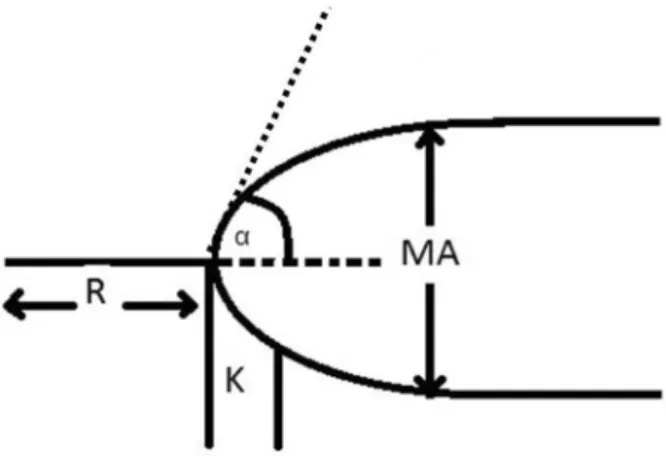
real time. Reaction time (R), coagulation time (K), α angle,
and maximum amplitude (MA) are the parameters usually
measured by TEG (Figure 1). Long R and K times and a low α angle and MA value indicate hypocoagulopathy, and short R and K times and high α angle and MA value indicate
hypercoagulopathy (14).
In this study, we evaluated the effect of the crystalloid
Ringer lactate (RL) and the colloids 6% HES (130/0.4)
and 4% succinylated gelatin solutions on perioperative (major orthopedic procedures) coagulability changes as measured by TEG.
Material and Methods
The research protocol was approved by the university Ethics Committee. Adult patients (ASA I-III) upon which major orthopedic surgery was planned in our university medical center were approached for inclusion in the study. Those with malnutrition, hypoproteinemia, abnormal co-agulation tests, and those taking anticoagulants, suffering from ischemic heart disease, liver or kidney failure were excluded from the study.
Patients were brought to the operating room without
being premedicated. Maintenance fluid requirements were calculated according to the 4-2-1 rule defined by Holliday and Seger (15), and an infusion of RL solution was started
at the appropriate rate. An epidural catheter was placed
using the loss of resistance technique at L2-L3 or L3-L4,
and bupivacaine was administered. An arterial cannula and central venous catheter were placed. Intraoperatively, heart rhythm (ECG), invasive and non-invasive arterial blood pressures, peripheral oxygen saturation (SaO2), end-tidal
carbon dioxide (EtCO2), central venous pressure (CVP), and
urine output were monitored. Pre-induction, post-induction and postoperative mean arterial pressure, heart rate, and CVP were recorded.
Patients were randomized using a computer-generated
sequence of random numbers immediately before induction
of anesthesia and assigned to one of three groups: group
RL received 13-15 mL·kg-1·h-1 RL (Vacoliter®,
Eczacıbaşı-Baxter, Turkey), group HES received 6-8 mL·kg-1·h-1 6%
HES 130/0.4 (Voluven®, Fresenius Co., Germany) and
group JEL received 8-11 mL-1·kg-1·h-1 4% gelofusine
(Gelofusin®, B. Braun Co., Germany) solutions. Fluid losses due to hunger were first calculated in all patients and the
infusion was then regulated so that this quantity could be
given within 3 h. Normovolemia was obtained. The maximum
dose of colloids permitted was 40 mL/kg. Blood loss was
measured by monitoring blood accumulated in the aspirator
and numbers of compresses used. Hematocrit was tracked
during surgery and when the level of hemoglobin fell below
8 g/dL, blood was administered. Surgery times, volume of
iv fluids given during surgery, urine output, and blood loss
were recorded.
Blood samples for TEG were taken at baseline (t1, before epidural anesthesia), at the end of surgery (t2), and 24 h postoperatively (t3). TEG analysis was done by an anesthesiologist blind to the study group of the patient using a Thrombelastograph® 5000 coagulation analyzer (Haemonetics Corp., USA). The TEG tool was adjusted to
perform measurements at 37°C. One milliliter of citrated blood was shaken within a kaolin tube and then mixed.
From this sample, 340 µL blood was placed in a TEG tube with an automatic pipette and 20 µL calcium was added in
order to counteract the effect of citrate. A single-use piston covered with a plastic casing was dropped into the blood sample by means of a wire. The TEG tool was started and the following data were transmitted to a computer screen: R time (normal value: 3-8 min), K time (normal value: 1-3
min), α angle (normal value: 55-78°), and MA (normal
value 51-69 mm) (Figure 1). Pre- and 24-h postoperative prothrombin time and activated partial thromboplastin time values were also measured. Following surgery, patients were transferred to the postanesthesia care unit. Oxygen
(4 L/min) was given by a nasal cannula and patients were
Figure 1. Definition of the thromboelastography (TEG®)
param-eters. R = time of latency from the time that the blood was placed in the TEG® analyzer until the initial formation of fibrin; α = value
that measures the rapidity of fibrin build-up and cross-linking, i.e., the kinetics of clot strengthening; K = a measure of the rapidity to reach a certain level of clot strength; MA = maximum amplitude, a direct function of the maximum dynamic properties of fibrin and
platelet bonding, which represents the ultimate strength of the
monitored for 24 h. RL as maintenance fluid
was given to all patients at the same rate as it was given during surgery. Postoperative anal-gesia was obtained using bupivicaine, fentanyl and patient-controlled epidural analgesia.
Statistical analyses were performed using SPSS for Windows® V 14.0 (SPSS, USA).
Descriptive analyses (mean and standard deviation) were performed, as well as one-way ANOVA for inter-group comparisons of
quantitative data and Tukey honestly signifi
-cant difference (HSD) for the determination of
the group responsible for the difference. The Kruskal-Wallis test was used for intergroup comparisons of data that were not normally dis-tributed. The Mann-Whitney U-test was used in order to determine the group responsible for
the difference. The paired sample t-test was used for “in-group” comparison of normally distributed parameters and the Wilcoxon sign test was used for “in-group” comparison
of non-normally distributed parameters. The chi-square test was used for qualitative data analysis. A value of P < 0.05 was considered to be statistically significant.
Results
Seventy-five patients undergoing major lower extrem
-ity orthopedic surgery participated in the study (25 in each group). No differences in demographic or preoperative oxygen saturation values were detected. The numbers of knee and hip operations performed and operation times were similar for the three groups. The volume of intravenous
perioperative fluid given was significantly greater in group RL (3.85 ± 1.73 L) than in group HES (2.85 ± 0.46 L) and
group JEL (2.53 ± 0.50 L, P < 0.05). However, the require
-ment for blood transfusion was similar among groups (Table 1). No differences in preoperative hematological laboratory values were found among groups (Table 2).
TEG results are shown in Table 3. R values in group
RL immediately postoperatively and 24 h postoperatively were significantly lower than preoperative values (P < 0.05). R values in group HES and group JEL were significantly
higher immediately and 24 h postoperatively than in the
preoperative period (P < 0.05).
K values in group RL immediately postoperatively and 24 h postoperatively were significantly lower than the preoperative values (P < 0.05). In groups HES and JEL, K
values immediately postoperatively and 24 h
postopera-tively were significantly higher than preoperative values (P < 0.05; Table 3).
TEG α angles in group RL immediately postoperatively and 24 h postoperatively were significantly higher than the preoperative values (P < 0.05). TEG α angles in group HES immediately postoperatively and 24 h postoperatively were significantly lower than the preoperative values (P <
0.05), but those of group JEL were not significantly differ
-ent (Table 3).
MA in group RL immediately postoperatively and 24 h
postoperatively were significantly higher than the preopera
-tive values (P < 0.05). MA values in group HES immediately postoperatively and 24 h postoperatively were significantly lower than preoperative values (P < 0.05), but those of group JEL were not significantly different (Table 3).
Discussion
Hypercoagulability changes occurred in both in vitro
and in vivo studies in which crystalloid solutions were
used (16-18). These changes are thought to be caused by the disruption of balance between naturally circulating anticoagulants, activated procoagulants, and a decrease in antithrombin III (18). This effect decreases the positive feedback threshold of the intrinsic coagulation cascade, allowing coagulation to increase. This is the case with rapid infusions in patients with accompanying vascular disease (18). Colloids interrupt the increase in coagulation stimulated
Table 1. Demographic data of patients receiving different maintenance fluids
during orthopedic surgery.
Group RL Group HES Group JEL
Age (years) 65.84 ± 9 65.88 ± 10.1 64.12 ± 12.02 Gender (M/F) 8/17 6/19 9/16 Operation (knee/hip) 13/12 12/13 13/12 Duration of operation (min) 140.8 ± 31.9 142.8 ± 52.6 134.6 ± 29.4
Infused volume (L) 3.85 ± 1.73* 2.85 ± 0.46 2.53 ± 0.5
Blood transfusion (yes/no) 8/17 9/16 6/19
Data are reported as means ± SD or number for 25 patients/group. RL = Ring
-er’s lactate; HES = 6% hydroxyethyl starch (130/0.4); JEL = 4% succinylated gelatin. *P < 0.05, compared to other groups (ANOVA).
Table 2. Preoperative laboratory values of patients receiving
dif-ferent maintenance fluids during orthopedic surgery.
Group RL Group HES Group JEL
PT (s) 11.42 ± 0.94 11.44 ± 0.8 11.28 ± 0.51 aPTT (s) 25.17 ± 2.98 24.57 ± 2.77 23.76 ± 2.86
HGB (g/dL) 12.56 ± 1.34 12.22 ± 1.47 12.36 ± 1.13 HTC (%) 36.38 ± 3.84 34.55 ± 3.2 36 ± 3.51
Data are reported as means ± SD for 25 patients/group. There were no statistical differences among groups (ANOVA). RL = Ringer’s lactate; HES = 6% hydroxyethyl starch (130/0.4); JEL = 4% succinylated gelatin; PT = prothrombin time; aPTT = ac
-tivated partial thromboplastin time; HGB = hemoglobin; HTC =
872 I. Topçu et al.
by the surgical insult, but changes in coagulation are more
distinctive depending on changes caused by fluid admin
-istration (18). In other words, an increase in coagulation immediately occurs when crystalloid is given, even before the surgery has begun. On the other hand, when colloids
are given, platelet aggregation is blocked (e.g., after HES
administration) and coagulation strength decreases with antiplatelet activity (8).
In the present study, hypercoagulable changes in TEG
parameters were observed with the administration of RL,
although values remained within normal limits. These results are similar to those reported by Ruttmann et al. (18) in a study of patients undergoing peripheral vascular surgery
with epidural anesthesia. However, these investigators (18) did not find an increase in coagulation with colloids, and
thought that perioperative coagulation changes were due to dilution rather than to the surgical stimulus. Martin et al.
(16) evaluated thromboelastographic coagulation profiles
during major surgery and discovered that hypercoagulability
caused by RL continued into the postoperative period, in agreement with our findings. On the contrary, Butwick et al. (19) reported no changes in TEG parameters with 1500 mL RL given before regional anesthesia in caesarean delivery.
As mentioned above, dilution is an important determinant
of the effects of crystalloids on coagulation; thus our results differed from theirs due to the larger amount of fluid given
to our patients.
Colloids are extremely effective volume expander
solutions. However, the effects of synthetic colloid fluids
on hemostasis are still unclear. Mardel et al. (20) reported
that using gelatin-based products decreased clot quality by intervening in the polymerization of fibrin monomers and by decreasing fibronectin functions. Dextrans have more negative effects on coagulation than gelatins or HES (21).
As measured by TEG, high molecular weight starches and dextrans weaken the usual hypercoagulability caused by surgery (22). The effects of colloids on blood coagulation depend on their molecular weight and rate of elimination (23).
In the present study, TEG parameters increased more
(longer R and K times) in 6% HES (130/0.4) patients than in the 4% JEL group, but measurements remained within normal reference limits [HES group: R values (t1 = 4.23 ± 0.8, t2 = 4.85 ± 1.52, t3 = 4.75 ± 1.49), K values (t1 = 1.44 ± 0.38, t2 = 1.93 ± 0.58, t3 = 2.24 ± 1.21) and JEL group: R values (t1 = 5.08 ± 1, t2 = 5.33 ± 1.18, t3 = 5.62 ± 1.16), K values (t1 = 1.64 ± 0.32, t2 = 1.87 ± 0.78, t3 = 1.97 ± 0.91)]. Butwick et al. (19) obtained similar results
in their cesarean operations. In another study comparing
postoperative JEL, 6% HES (200/0.7), and albumin in car
-diac surgery patients, clot formation time, α angle, and clot strength resulting from fibrinogen were disrupted with both HES (200/0.7) and JEL. However, the disruption was more pronounced with HES solution, but hemostatic parameters
were not affected by albumin (24).
In their study of TEG findings in three groups of knee
replacement surgery patients [RL, RL + 4 mL·kg-1·h-1 JEL,
RL + 3 mL·kg-1·h-1 6% HES (200/0.5)], Innerhover et al. (25)
found that both colloids resulted in significantly lower total clot strength compared to RL; they suggested that this was due to a decrease in the effectiveness of fibrinogen and to
disruption of hemostasis by platelets. In the same study,
fibronectin concentrations decreased more with RL than with HES and JEL solutions. Even though lower fibronectin
concentrations contributed to the decreased clot strength resulting from colloids, clot strength in the study was affected
similarly by both colloids (25). When 1500-2000 mL JEL,
HES (130/0.4) or RL solutions were administered periopera
-tively to major orthopedic surgery patients, Mittermayr et al.
(26) found the greatest decrease in α angle, clot formation time and fibrin polymerization with HES, a lower decrease with the JEL solution, and the least decrease with RL. In
a study of abdominal surgery patients whose coagulation
was evaluated following the administration of 4% JEL, 6% HES 70/05, or 6% HES 200/0.5 (enough to keep the CVP between 10 and 14 mmHg), blood loss, requirement for blood transfusion, and thrombin and fibrin formation were
similar in the three groups of patients, but factor VIII and von
Willebrand factor levels increased more in the JEL group compared to the other groups (27). Thus, JEL and HES
Table 3. Thromboelastography parameters of patients receiving
various maintenance fluids.
Parameter/time Group RL Group HES Group JEL
R (min)
t1 5.79 ± 1.34* 4.23 ± 0.8* 5.08 ± 1* t2 3.46 ± 1.95# 4.85 ± 1.52 5.33 ± 1.18
t3 4.11 ± 1.8 4.75 ± 1.49 5.62 ± 1.16 K (min)
t1 1.96 ± 0.66* 1.44 ± 0.38* 1.64 ± 0.32 t2 1.25 ± 0.58# 1.93 ± 0.58 1.87 ± 0.78
t3 1.71 ± 0.64 2.24 ± 1.21 1.97 ± 0.91
α angle
t1 64.86 ± 7.47* 65.04 ± 4.84* 69.47 ± 6.94 t2 76.20 ± 7.28# 62.14 ± 6.32 67.79 ± 4.71
t3 70.54 ± 7.73 60.55 ± 8.14 67.84 ± 4.83 MA (mm)
t1 59.82 ± 4.71* 63.02 ± 5.68* 64.35 ± 6.41 t2 67.08 ± 5.77 60.32 ± 4.96 63.03 ± 6.24 t3 65.86 ± 4.58 60.90 ± 6.19 62.83 ± 7.15
Data are reported as means ± SD for 25 patients/group. RL = Ringer’s lactate; HES = 6% hydroxyethyl starch (130/0.4); JEL = 4% succinylated gelatin; R = reaction time; K = coagulation time; MA = maximum amplitude; t1 = baseline; t2 = at the end of surgery; t3 = 24 h after surgery. *P < 0.05, compared to other times within groups; #P < 0.05, compared to t3 within groups
solutions can be safely used in major abdominal patients without causing coagulopathy.
The effects of 5% albumin and synthetic colloids (6%
HES (130/0.4) and 4% JEL) on hemostasis were evalu
-ated by Haas et al. (28) in pediatric patients undergoing
surgery. They found that, in hemostatic terms, the JEL so
-lution could be used as an excellent alternative to albumin
for fluid replacement in pediatrics; the greatest effects on
coagulability occurred with the HES solution (28). All col
-loids affect the coagulation system but, by using TEG, in
vitro studies suggest that JEL solutions are less intrinsically
anticoagulant than HES, whereas dextran has the most
potent antithrombotic effects (29).
In the present study, RL solution was used as the basal and replacement fluid in group RL, thus the amounts of infused RL were high, as they were in other studies with
similar designs (7,25). RL was used as the maintenance fluid in all of our study groups, as commonly done in clinical
practice as well as in studies using crystalloids vs colloids
as perioperative fluids to maintain normovolemia. We did
not think it was appropriate for the colloid groups to also
receive colloid as their maintenance fluid because such a perioperative fluid strategy for major surgery patients is
rarely encountered in clinical practice.
In the present study, RL, 6% HES (130/0.4) and 4% JEL
solutions given during major orthopedic operations changed TEG parameters, which, however, remained within normal limits. In major orthopedic procedures, which carry a high risk of thromboembolism, all perioperative infusion solutions can create undesirable effects in the hemostatic system. Perioperative TEG testing may be a useful tool to monitor patients with a high risk of thromboembolism.
References
1. Mythen MG, Webb AR. Intra-operative gut mucosal hypoper-fusion is associated with increased post-operative complica-tions and cost. Intensive Care Med 1994; 20: 99-104.
2. Deane SA, Gaudry PL, Woods P, Cass D, Hollands MJ,
Cook RJ, et al. The management of injuries - a review of deaths in hospital. Aust N Z J Surg 1988; 58: 463-469. 3. Sinclair S, James S, Singer M. Intraoperative intravascular
volume optimisation and length of hospital stay after repair of proximal femoral fracture: randomised controlled trial. BMJ
1997; 315: 909-912.
4. Wakeling HG, McFall MR, Jenkins CS, Woods WG, Miles
WF, Barclay GR, et al. Intraoperative oesophageal Doppler
guided fluid management shortens postoperative hospital
stay after major bowel surgery. Br J Anaesth 2005; 95: 634-642.
5. Norberg A, Brauer KI, Prough DS, Gabrielsson J, Hahn RG, Uchida T, et al. Volume turnover kinetics of fluid shifts after hemorrhage, fluid infusion, and the combination of hemor
-rhage and fluid infusion in sheep. Anesthesiology 2005; 102: 985-994.
6. Hillman K, Bishop G, Bristow P. The crystalloid versus colloid
controversy: present status. Ballieres Clin Anaesth 1997; 11: 1-13.
7. Mittermayr M, Streif W, Haas T, Fries D, Velik-Salchner C,
Klingler A, et al. Effects of colloid and crystalloid solutions
on endogenous activation of fibrinolysis and resistance of polymerized fibrin to recombinant tissue plasminogen activa -tor added ex vivo. Br J Anaesth 2008; 100: 307-314. 8. Ruttmann TG, James MF, Aronson I. In vivo investigation
into the effects of haemodilution with hydroxyethyl starch (200/0.5) and normal saline on coagulation. Br J Anaesth
1998; 80: 612-616.
9. Egli GA, Zollinger A, Seifert B, Popovic D, Pasch T, Spahn DR. Effect of progressive haemodilution with hydroxyethyl starch, gelatin and albumin on blood coagulation. Br J An-aesth 1997; 78: 684-689.
10. Niemi TT, Kuitunen AH. Artificial colloids impair haemosta -sis. An in vitro study using thromboelastometry coagulation analysis. Acta Anaesthesiol Scand 2005; 49: 373-378.
11. Petroianu GA, Liu J, Maleck WH, Mattinger C, Bergler WF.
The effect of in vitro hemodilution with gelatin, dextran, hydroxyethyl starch, or Ringer’s solution on Thrombelasto-graph. Anesth Analg 2000; 90: 795-800.
12. Glidden PF, Malaska C, Herring SW. Thromboelastograph assay for measuring the mechanical strength of fibrin seal -ant clots. Clin Appl Thromb Hemost 2000; 6: 226-233.
13. Yee DL, Edwards RM, Mueller BU, Teruya J. Thromboelas -tographic and hemostatic characteristics in pediatric patients with sickle cell disease. Arch Pathol Lab Med 2005; 129: 760-765.
14. Mallett SV, Cox DJ. Thrombelastography. Br J Anaesth 1992; 69: 307-313.
15. Holliday MA, Segar WE. The maintenance need for water in parenteral fluid therapy. Pediatrics 1957; 19: 823-832.
16. Martin G, Bennett-Guerrero E, Wakeling H, Mythen MG, el-Moalem H, Robertson K, et al. A prospective, randomized comparison of thromboelastographic coagulation profile in
patients receiving lactated Ringer’s solution, 6% hetastarch in a balanced-saline vehicle, or 6% hetastarch in saline dur-ing major surgery. J Cardiothorac Vasc Anesth 2002; 16: 441-446.
17. Janvrin SB, Davies G, Greenhalgh RM. Postoperative deep
vein thrombosis caused by intravenous fluids during surgery.
Br J Surg 1980; 67: 690-693.
18. Ruttmann TG, James MF, Finlayson J. Effects on coagula-tion of intravenous crystalloid or colloid in patients under-going peripheral vascular surgery. Br J Anaesth 2002; 89: 226-230.
19. Butwick A, Carvalho B. The effect of colloid and crystalloid preloading on thromboelastography prior to Cesarean deliv-ery. Can J Anaesth 2007; 54: 190-195.
20. Mardel SN, Saunders FM, Allen H, Menezes G, Edwards CM, Ollerenshaw L, et al. Reduced quality of clot formation
with gelatin-based plasma substitutes. Br J Anaesth 1998; 80: 204-207.
21. Mishler JM. Synthetic plasma volume expanders - their
pharmacology, safety and clinical efficacy. Clin Haematol
874 I. Topçu et al.
22. Jones SB, Whitten CW, Despotis GJ, Monk TG. The influ -ence of crystalloid and colloid replacement solutions in acute normovolemic hemodilution: a preliminary survey of hemostatic markers. Anesth Analg 2003; 96: 363-368.
23. de Jonge E, Levi M. Effects of different plasma substitutes
on blood coagulation: a comparative review. Crit Care Med
2001; 29: 1261-1267.
24. Niemi TT, Suojaranta-Ylinen RT, Kukkonen SI, Kuitunen AH.
Gelatin and hydroxyethyl starch, but not albumin, impair hemostasis after cardiac surgery. Anesth Analg 2006; 102: 998-1006.
25. Innerhofer P, Fries D, Margreiter J, Klingler A, Kuhbacher G, Wachter B, et al. The effects of perioperatively administered colloids and crystalloids on primary platelet-mediated hemo-stasis and clot formation. Anesth Analg 2002; 95: 858-865.
26. Mittermayr M, Streif W, Haas T, Fries D, Velik-Salchner C,
Klingler A, et al. Hemostatic changes after crystalloid or col
-loid fluid administration during major orthopedic surgery: the role of fibrinogen administration. Anesth Analg 2007; 105: 905-917.
27. Huttner I, Boldt J, Haisch G, Suttner S, Kumle B, Schulz H. Influence of different colloids on molecular markers of hae -mostasis and platelet function in patients undergoing major abdominal surgery. Br J Anaesth 2000; 85: 417-423.
28. Haas T, Preinreich A, Oswald E, Pajk W, Berger J, Kueh
-bacher G, et al. Effects of albumin 5% and artificial colloids
on clot formation in small infants. Anaesthesia 2007; 62: 1000-1007.