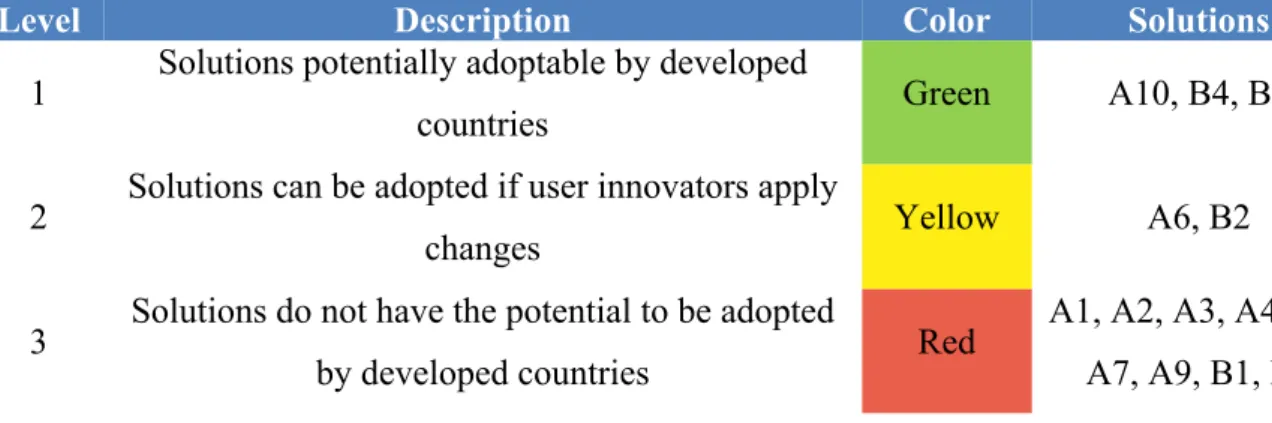
User
Innova
t
ion
in
Hea
l
thcare
A
perspec
t
ive
across
deve
lop
ing
coun
tr
ies
João
Pedro
S
i
lva
D
isser
ta
t
ion
wr
i
t
ten
under
the
superv
is
ion
o
f
Pro
fessor
Pedro
O
l
ive
ira
and
Pro
fessor
He
lena
Canhão
D
isser
ta
t
ion
subm
i
t
ted
in
par
t
ia
l
fu
l
f
i
lmen
t
o
f
requ
iremen
ts
for
the
MSc
in
Managemen
t
w
i
th
Spec
ia
l
iza
t
ion
in
S
tra
tegy
and
En
trepreneursh
ip
,
a
t
Abstract
The healthcare sector faces vital challenges, on the one hand the spread of chronic diseases at a global scale. On the other hand, rising delivery costs in healthcare create a necessity for innovation.
Research show patients and caregivers as one of the sources for innovation in healthcare, by self-providing treatments, therapies or medical devices to better cope with their unmet needs, imposed by health disorders commercially unattractive for medical manufacturers’ investment (Oliveira et al., 2015).
Van der Boor et al. (2014) concluded that high levels of need, the existence of flexible platforms, and the access to information and communication technology, contribute to the occurrence of this phenomenon in the developing world.
Our research questions are: What are the major drivers for user innovation in healthcare, in developing countries? Which socio-economic factors influence user innovations development in these countries? Which local complementary assets affect entrepreneurship? To what extent can user solutions, created in developing countries, be adopted in developed regions?
We applied a multiple case-study method, conducting eleven semi-structured interviews and four surveys of “patient innovators” from 13 developing countries.
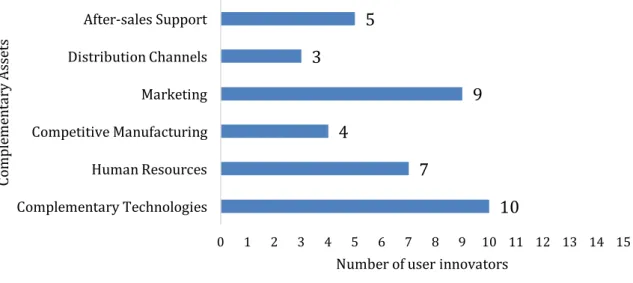
86.7% of the innovations were developed by users with a clear perception of the fragile conditions in the analysed countries. Reputation achieved amongst their communities was recognized by users as another major driver (46.7%). The most problematic socio-economic factor verified is healthcare, where 86.7% of user innovators reported issues. 66.7% of users rely on complementary technologies as the major complementary asset. Furthermore, 20.0% sample solutions could be adopted by developed countries.
Keywords: user innovation, healthcare, developing countries, complementary assets,
Resumo
O setor da saúde enfrenta desafios vitais, por um lado devido ao alastramento global de doenças crónicas. Por outro, devido aos aumentos nos custos da saúde, gerando-se uma necessidade de inovação.
Estudos mostram doentes e cuidadores como uma das fontes de inovação, ao criarem tratamentos, terapias ou dispositivos médicos para lidar melhor com as necessidades não atendidas, impostas por problemas de saúde comercialmente pouco atrativos para investimentos dos fabricantes médicos (Oliveira et al., 2015).
Van der Boor et al. (2014) concluiu que altos níveis de necessidade, existência de plataformas flexíveis e acesso a tecnologias da informação e comunicação, contribuem para a ocorrência deste fenómeno no mundo subdesenvolvido.
As questões de investigação são: Quais os principais fatores para a inovação de doentes utilizadores, nos países subdesenvolvidos? Que fatores socioeconómicos que influenciam o desenvolvimento de inovações por utilizadores nesses países? Que ativos complementares locais que afetam o empreendedorismo? Em que medida estas soluções, criadas em países subdesenvolvidos, poderão ser adotadas em regiões desenvolvidas?
Aplicamos um método de estudo-de-caso múltiplo, com quinze entrevistas semiestruturadas e quatro questionários de “doentes inovadores”. A amostra é composta por 13 países subdesenvolvidos.
86.7% das inovações foram desenvolvidas por utilizadores conscientes das condições frágeis nos países analisados. A reputação que utilizadores inovadores adquirem nas suas comunidades é outra das motivações (46.7%). A saúde é o fator socioeconómico verificado mais problemático, 86.7% dos inovadores reportaram problemas. 60.0% dos utilizadores apostam em marketing e/ou tecnologias complementares como ativos complementares. Além disso, 20.0% destas inovações podem ser adotadas por países desenvolvidos.
Palavras-chave: inovação por utilizadores, saúde, países subdesenvolvidos, ativos
Acknowledgements
First of all, a word of appreciation to all these patients, caregivers and collaborators that I have been in contact with during these last months. The worldwide community should recognize their stories and I am truly honoured to have met these people. I will never forget the role that the Rwandan journalist, Joseph Masengesho, played during my Dissertation experience, a true example of humility.
Secondly, my advisors played a crucial role in the entire process. Both the Professors Pedro Oliveira and Helena Canhão displayed a great interest in my work and were committed from the beginning until the delivery day. Salomé Azevedo was an indispensable help, I cannot thank her enough for the time she reserved to clarify my questions. Indeed, she was the responsible for introducing me to this topic and motivated me to always be demanding with both my work and myself. Ana Duarte provided me valuable knowledge on how to find solutions and useful feedback, for that a special thanks to her.
A word of tribute to the person responsible for introducing the concept of user innovation into our community, Professor Eric von Hippel.
Without forgetting my family, mom, dad and my grandparents, for their constant motivation and support, and for giving me the opportunity to have a unique experience at this university.
Paulo Dinis, firstly for introducing me the beauty of the healthcare system, then for being the most respectful mentor and an indisputable role model to follow.
Last but not less important, Maria, the one and only, the responsible for my self-improvement and for helping me to overcome the obstacles that appeared throughout the given tasks, regardless the distance. Without all of them, these pages would be empty!
Table of Contents
Abstract ... i Resumo ... ii Acknowledgements ... iii List of Tables ... 6 List of Figures ... 6 List of Pictures ... 6 List of Acronyms ... 7 1. Introduction ... 8 2. Literature Review ... 10 2.1. Healthcare System ... 10 2.1.1. Healthcare in Developing Countries ... 11 2.1.2. Healthcare Perspectives ... 12 2.2. User Innovation ... 13 2.2.1. Drivers in User Innovation ... 15 2.2.2. The process behind User Innovation ... 15 2.2.3. User entrepreneurs ... 16 2.2.4. User Innovation in Healthcare ... 17 2.2.5. User Innovation in Developing Countries ... 18 3. Research context and methods ... 21 3.1. Approach ... 21 3.2. Country Selection ... 21 3.3. Innovations Selection ... 22 3.4. Data Collection and Sample ... 22 3.5. Coding ... 24 4. Results ... 26 4.1. Drivers in healthcare across developing countries ... 26 4.1.1. Local need information ... 26 4.1.2. Solution related knowledge ... 29 4.2. Existent socio-economic factors in developing countries ... 30 4.2.1. Healthcare ... 30 4.2.2. Environment ... 31 4.2.3. Education ... 32 4.2.4. Technology ... 33 4.3. Complementary assets ... 34 4.3.1. After-sales support ... 34 4.3.2. Distribution channels ... 34 4.3.3. Marketing ... 35 4.3.4. Competitive manufacturing ... 35 4.3.5. Human resources ... 35 4.3.6. Complementary technologies ... 36 4.4. Reverse Innovation ... 36 5. Discussion and Conclusions ... 38 5.1. Hypothesis ... 38 5.2. Outcomes ... 39 5.2.1. Patient innovators in developing countries ... 39 5.2.2. Socio-economic conditions ... 405.2.3. Patient innovators as entrepreneurs ... 41 5.3. Reverse Innovation ... 43 5.4. Policy Implications ... 43 5.4.1. Medical personnel ... 43 5.4.2. Policy makers ... 44 5.5. Limitations ... 44 5.6. Future Research ... 45 References ... 46 Exhibits ... 50 Exhibit 1 - Gérard Niyondiko (A1) ... 50 Exhibit 2 - Didier Lalaye (A2) ... 51 Exhibit 3 - MOJA Team (A3) ... 52 Exhibit 4 - Jean Luc Semedo and Evelyne Ines (A4) ... 53 Exhibit 5 - Olivia Koburongo (A5) ... 54 Exhibit 6 - Brian Gitta (A6) ... 55 Exhibit 7 - Askwar Hilonga (A7) ... 56 Exhibit 8 - Joel Barquez (A8) ... 57 Exhibit 9 - Michael Wahl and Starla Wahl (A9) ... 58 Exhibit 10 - Eddy Agbo (A10) ... 59 Exhibit 11 - Daniel Habanabakyze (B1) ... 60 Exhibit 12 - Neema Shosho (B2) ... 61 Exhibit 13 - Raghuraj Raju (B3) ... 62 Exhibit 14 - Fawad Bhatti (B4) ... 63 Exhibit 15 - Mick Ebeling (B5) ... 64 Exhibit 16 - Indicators Definition ... 65 Exhibit 17 - Analysed Countries ... 66 Exhibit 18 - User Innovators Found ... 68 Exhibit 19 - Sample ... 70 Exhibit 20 - Questionnaire ... 71 Exhibit 21 - Interview Script ... 76 Exhibit 22 - Evaluation for Reverse Innovation ... 78
List of Tables
Table 1 - Verified Sample of user innovators ... 24 Table 2 - Coding for Drivers in user innovation ... 25 Table 3 - Coding for Complementary Assets ... 26 Table 4 - Reverse Innovation classification ... 37 Table 5 - Results for Drivers in User Innovation ... 39 Table 6 - Results for creation of companies by user innovators ... 42 Table 7 - Results for IPR protection ... 43 Table 8 - Results for Reverse Innovation ... 43 Table 9 - Analysed Countries ... 67 Table 10 - User Innovators found ... 69 Table 11 - Data Gathering ... 70 Table 12 - Evaluation for Reverse Innovation ... 79List of Figures
Figure 1 - A model for reverse innovation in health care ... 20 Figure 2 - Methodology used ... 21 Figure 3 - Results for Socio-economic factors ... 41 Figure 4 - Results for Complementary Assets ... 42List of Pictures
Pictures 1 – Faso Soap, by Gérard Niyondiko ... 50 Pictures 2 – DAWA Mobile Health, by Didier Lalaye ... 51 Pictures 3 – MOJA App, by MOJA Team ... 52 Pictures 4 - HOPE, by Jean Luc Semedo and Evelyne Ines ... 53 Pictures 5 – Mama-Ope, by Olivia Koburongo ... 54 Pictures 6 – Matibabu, by Brian Gitta ... 55 Pictures 7 - Nanofilter®, by Askwar Hilonga ... 56 Pictures 8 – Blood Donors Network, by Joel Barquez ... 57 Pictures 9 – DriButts, by Michael Wahl and Starla Wahl ... 58 Pictures 10 – Urine Malaria Test, by Eddy Agbo ... 59 Pictures 11 – Low-cost hand bike, by Daniel Habanabakyze ... 60 Pictures 12 – Afya Slices, by Neema Shosho ... 61 Pictures 13 – HealthPlix, by Raghuraj Raju ... 62 Pictures 14 – Trequant, by Fawad Bhatti ... 63 Pictures 15 – 3D printing arm, by Mick Ebeling ... 64List of Acronyms
BRICS – Brazil, Russia, India, China and South Africa DRC – Democratic Republic of Congo
EL – Education Level
GDP – Gross Domestic Product GNI – Gross National Income HDI – Human Development Index HIC – high-income country
ICT – Information and Communications Technology IHD – Ischemic Heart Disease
IPR – Intellectual Property Right LIC – low-income country
OECD – Organization for Economic Cooperation and Development pc – per capita
SMS – short message service UK – United Kingdom UN – United Nations
USA – United States of America WHO – World Health Organization
1. Introduction
Patients constitute the largest group of stakeholders in the healthcare sector, furthermore Habicht, Oliveira and Shcherbatiuk (2012) noticed that the current services’ provision often fails to meet their needs. Several studies (Greco & Eisenberg, 1993; Shortell, Bennett & Byck, 1998; Shortell et al., 2001) concluded how difficult is to change the clinicians’ behaviors, the current medical practices, and the healthcare organizations, Faulkner & Kent (2001) added that, oftentimes, this happens due to regulations imposed by laws. Additionally, the rising costs on health and long-term care will continue to put pressure on public budgets over the next decades. In 2014, the percentage of Growth Domestic Product spent on public health along Organization for Economic Cooperation and Development (OECD) countries was, on average, 7.7%i of the total healthcare expenditure (12.4%ii).
Innovation is seen as a critical way of improving the health systems’ ability to address the problems of aging populations and the rise of chronic diseases, while containing escalating costs (OECD, 2011b). Zaltman et al. (1973) consider innovation as a crucial component of productivity and competitive survival. As the changing global economy generates further fiscal and social pressures, additional reform approaches will be necessary (OECD, 2011a). Herzlinger (2006), after an unsuccessful exploration on the reasons behind healthcare innovations, suggested a strategy that would make healthcare better and cheaper. This strategy consists of “breaking down” the problems by look at the different types of innovations and forces affecting them, like policy makers, or consumers.
Von Hippel (2005) explored consumers as a source of innovation by making use of Adam Smith’s statement in 1776, “a great part of the machines made use of in those
manufacturers in which labor is most subdivided, were originally the invention of common workmen (…)”. These workmen are defined by von Hippel (1976) as user innovators, the
ones that “invented, prototyped and field-tested instruments”.
We find this phenomenon’s presence across different industries (Enos, 1962; Freeman, 1968; Riggs & von Hippel, 1996; Tietz et al., 2004; Lüthje, Herstatt, & von Hippel, 2005; Baldwin, Hienerth, & von Hippel, 2006; Oliveira & von Hippel, 2011), either in product novelties (consumer or industrial), or services. User innovators begin by developing solutions for personal use, without considering the value of them for others (Zejnilović, Oliveira, & Canhão, 2016).
One particular field where user innovation has given signs of its existence and importance is healthcare (Habicht et al., 2012; Oliveira & Canhão, 2014; Oliveira et al., 2015;
i http://bit.ly/2rOv3RN ii http://bit.ly/2rLDVrY
Zejnilović et al., 2016; von Hippel, 2016). Patients and caregivers are the ones who know best their difficulties and challenges caused by health conditions (Habicht et al., 2012). Through a sample with 500 rare diseases patients and caregivers, Oliveira et al. (2015) observed that 8% were considered as introducers of new solutions to the world.
When looking at the geographic origin of innovations, researchers have also explored the role of users as innovators in developing countries. Van der Boor, Oliveira and Veloso (2014) verified, through a study on mobile banking services, that as users in developing markets increasingly have access to many of the same technologies, the opportunity for possible innovations expands on the user’s side. The same authors (2014) even observed that three-quarters of the innovations, originated from developing countries, have already diffused to developed ones. As an example, the case of Gatorade® (Govindarajan & Trimble, 2012) prove that solutions created on the developing side can have an impact on the developed world. This liquid’s recipe was created in Bangladesh to be used in cholera victims for rapid rehydration, and later on adopted by the Western world as an energy drink.
Considering need as a determinant driver for innovation and developing countries as high-need environments, this study aims to examine the extent to which patients and caregivers (users) innovate in these regions, the socio-economic factors that influence these innovations, and the assets these innovators acquire in order to diffuse.
It is of major importance to understand the concept of reverse innovation, how it occurs, and its impact. With this in mind, our research proposes to answer the following questions: Ø Research Question 1: What are the major drivers for user innovation in healthcare,
in emerging countries?
Ø Research Question 2: Which socio-economic factors influence user innovations in these countries?
Ø Research Question 3: Which local complementary assets affect entrepreneurship? Ø Research Question 4: To what extent can user solutions, created in developing
countries, be adopted by developed regions?
The structure of this dissertation is the following: the coming section comprises a review on the existent literature, which served as basis for our research. Then, we present the methodology used, including the coding used to evaluate user driven solutions. Chapter four brings the major findings, supported by evidence obtained from the sample. Lastly, we will retrieve the major outcomes, present limitations confronted during the study, and suggest recommendations for further research.
2. Literature Review
This section aims to inspect the current available literature that explains and supports the patient innovation phenomenon. This enables to analyse the existent theory at our disposal, to verify the academic application on this matter and provide cases of novel solutions developed by users.
First, we present an overview on the current state of the socio-economic conditions within the healthcare system, particularly addressing developing countries, and exposing the major problems amongst these regions. Subsequently, we scrutinize what to expect for this sector.
Afterwards, we introduce the user innovation concept, by giving a notion of its importance and providing evidence of its existence throughout numerous fields. Moreover, we provide literature on the user innovation process stages and the user entrepreneurial concept. Regarding the presence of this phenomenon in the healthcare system, we presented literature allowing to understanding why patients, caregivers and collaborators innovate and why this is becoming important for the academic society. Ultimately, we introduced literature on user innovation across developing countries, helping us to understand the users’ major motivations, and adopted processes, to innovate. Within this, we examined and explored the reverse innovation phenomenon.
2.1. Healthcare System
Notwithstanding, the exponential advancements in technology that are transforming healthcare (Taylor, 2015), this sector is still consuming an escalating share of income in developed and developing nations alike. In a world where public health expenditure in OECD countries represents 6.7% from the 9.3% of total health expenditure (OECD, 2011a), major findings can help to the cost savings policy that can be followed.
There are both demographic and non-demographic reasons for these rising costs. Whilst, the demographic ones relate broadly to the age structure of the population and the evolution of its health status, the critical non-demographic driver is income (OECD, 2013). In this mode, OECD average health expenditure to GDP ratio is projected to more than double between 2010 and 2060, whereas regarding BRICS is set to more than triple (OECD, 2013).
On average, across OECD countries, about 20% of health spending is paid directly by patients, which can create barriers to healthcare access (OECD, 2015a). As an illustration, and considering the low-income households, OECD (2015a) reported that are four to six times more likely to present unmet needs for medical and dental care due to financial or other
reasons, than those with higher income.
The current healthcare system rewards innovation that prolongs life (Habicht et al., 2012). Indeed, advances in this sector have been made, still, in many countries there is room to implement best practices in acute care, further reducing mortality (OECD, 2015b). However, improvements should be done carefully and technology can be overused, if offered to patients for whom innovations provide no benefit (Bodenheimer, 2005).
OECD (2011a) advises that a structural pressure is the long-term fundamental shift of wealth creation, away from developed nations towards emerging economies, meaning that the most developed nations should attribute more funds to less developed nations.
2.1.1. Healthcare in Developing Countries
Many people along the developing world still live without access to healthcare, from which they could benefit greatly (O'Donnell, 2007). Akin et al. (1987) observed that, in 1983, low- and middle-income countries experienced, on average, infant mortality rates about eight times higher than the industrialized countries. Furthermore, there are large discrepancies between rich and poor in these underprivileged countries with respect to health and education outcomes (Devarajan & Reinikka, 2004). In addition, O’Donnell (2007) stated that effective healthcare interventions are underutilized across developing nations.
Additionally, incentives for effective healthcare delivery are scarce and, as the nature of health problems change, the effect on the population’s overall health condition will be difficult to verify (Jack, 1999). As an example, Devarajan and Reinikka (2004) conducted a survey on primary healthcare facilities in Bangladesh and found a doctors’ absenteeism rate of 74%.
Besides the efforts that are being made, such as health financing, price subsidies, and poverty alleviation programs, O’Donnell (2007) stressed that the difficulty lies on detailed policy initiatives’ design, aiming to tackle root problems within severe economic, institutional, and political constraints. The vested interests that block the poor’s access to better services will not be overcame, along with a limited capacity that unable the adoption of these radical changes (Devarajan & Reinikka, 2004).
Indeed, Ranck (2011) discovered that the communication gap between managers of health services, health workers at the periphery and the patient population they serve, has been a barrier to an efficient service delivery. Meanwhile, the widespread use of SMS, the least-expensive mobile phone function, offers a solution that could rapidly overcome communication weaknesses, potentially leading to improved delivery of health services and better health outcomes (Zurovac, Talisuna, & Snow, 2012). Conclusions from the study
promoted by Déglise, Suggs and Odermatt (2012) showed that text messaging seems to improve the process of care and was well accepted by both health workers and the targeted population. The majority of users and beneficiaries were familiar with mobile phones and SMS for private and professional use, and technology was reliable.
Some modern health innovations, especially technological advancements, have been inaccessible to developing countries for much of the 20th century because of both financial constraints and general lack of infrastructures. Harvey et al. (2014) noticed the change over the past decade, major healthcare companies started to look to the developing world in order to compensate slow growth in more developed nations. Consider the portable ultrasound machines’ example, they were originally produced to meet urgent diagnostic needs in resource-limited war zones, but manufacturers soon recognized their potential to diagnose gaps in resource-limited settings within the developing world. Albeit small-cap ultrasound manufacturers were the first to explore this market, more recently, large-cap imaging equipment manufacturers entered this market, by offering their own portable low-cost ultrasound models (Harvey et al., 2014).
Notwithstanding, the alert given by O’Donnell (2007) for the urgent need to establish mechanisms that would increase the availability and improve the quality of healthcare in the developing world, there are many innovations in regulation of care holding promising to improve access for the most needed (Peters, 2008).
These regions have the potential to greatly improve health service efficiency, expand or scale up treatment delivery to thousands of patients in developing countries, and improve patient outcomes (Blaya, Fraser, & Holt, 2010).
For O’Donnell (2007), lowering the barrier of distance is of crucial need, although it requires either taking people to services or services to people.
2.1.2. Healthcare Perspectives
Innovation is seen as an important path to follow in order to increase the system’s efficiency, thus lowering the costs (Robinson & Smith, 2008).
Akin et al. (1987) summarized the three main problems in the healthcare sector: firstly, the insufficient spending on cost-effective health programs, which translates into an allocation problem; secondly, poor quality public healthcare programs, reflecting inefficiency; last but not less important, an inequitable distribution of health services’ benefits.
By making a comparison with the field of consumer goods, von Hippel (2016) described the possibility of complementing the traditional, expert-driven model of public health intervention development with a health intervention model that builds upon solutions
developed by the public. The same author (2016) stated this could be one of the ways to improve efficiency in a field desperate for a cost saving model.
Despite the lack of infrastructure and backup systems in resource-poor environments, well-designed e-health solutions may have a much larger impact on the quality of care than in more developed areas (Blaya et al., 2010). Thus, any new opportunity that may improve individual well-being and address to the cost issue is warmly welcomed by healthcare stakeholders (Zejnilović et al., 2016).
Examples like reliable home tests for pregnancy and HIV, administered by patients, or laparoscopic instruments that empty the hospital’s operating rooms in favour of ambulatory facilities (Robinson & Smith, 2008), are two innovative examples within this field.
2.2. User Innovation
Amabile (1997), broadly described innovation as something novel and useful, earlier Porter (1990) stated that innovation include either new technologies or new ways of doing things. Hence, it is something new that breaks into the market or society, and defined as something original and more effective (Frankelius, 2009).
According to Bogers, Afuah and Bastian (2010), the user innovation concept started to be developed in the 1970s. Von Hippel (1976) acknowledges these users as the ones that “invented, prototyped and field-tested instruments”, other than manufacturers. The same author (2005) distinguishes users from manufacturers, being the first “firms or individual
consumers that expect to benefit from using a product or a service”, contrasting with
manufacturers that “expect to benefit from selling a product or a service”.
Users exploiting products as inputs in their innovation processes, or using products to satisfy their personal needs, are considered user innovators (Bogers et al., 2010). This type of users, at a first stance, must have a strong unfulfilled need (Urban & von Hippel, 1988), not likely to be solved by others (Morrison, Roberts, & von Hippel, 2000), and they need to possess “local” and valuable information for the innovation (Lüthje et al., 2005).
Von Hippel (1986, 2005), and Urban and von Hippel (1988) go further and defined lead
users, as the ones who find future general needs, as the marketplace face the same needs
months or years after them. Lead users can provide both new product concept and design data to the market (von Hippel, 1986). Lüthje (2004) classified lead users as the ones that provide sources of new service ideas with high commercial potential. In addition, Oliveira and von Hippel (2011) classified a service innovation as user-developed if the developer expects to “benefit from use”, and provider-developed if it expects to “benefit from sales”.
refining were developed by user firms; Freeman (1968) found that the most widely licensed chemical production processes were improved by final users; von Hippel (1976, 1988) noticed that users were the actual developers of 82% of all commercialized scientific instruments and 63% of all semiconductor and electronic subassembly manufacturing equipment innovations; Pavitt (1984) discovered that a considerable number of inventions by British firms were for in-house use; Shah (2000) identified that the most commercially important equipment innovations in four sporting fields have been developed by individual users.
It is becoming increasingly easier for many users to get what they want by designing it for themselves (von Hippel, 2005). Users are getting more access to tools and technologies, like cell phones and Internet, allowing them to solve problems in novel ways (Baker & Nelson, 2005), the costs for users to overcome a variety of unmet needs are greatly reduced (Van der Boor et al., 2014).
Von Hippel (2005) defends that products, services, and processes developed by users become more valuable to society if diffused to others who can also benefit from them. Oftentimes, innovators freely reveal their solutions because it is the best or the only practical option available to them, and provide innovators with significant private benefits (von Hippel, 2005). Raymond (1999) found that users who freely reveal what they have done often find that others improve or suggest improvements to the innovation, for mutual benefit, just then they diffuse either within peer-to-peer networks, or through a producer that offers the innovation in a market (Harhoff, Henkel, & von Hippel, 2003; Baldwin et al., 2006; De Jong et al., 2015).
The available literature on user innovation (Enos, 1962; Freeman, 1968; Pavitt, 1984; von Hippel, 1988; Shah, 2000) has proven this phenomenon exists across different fields. Take the following studies as examples: after studying the role of users in software development, Voss (1985) discovered the circumstances in which users lead the development of new applications; Riggs and von Hippel (1996) examined an early form of electronic home banking that utilized a telephone channel between customer and bank, relating it with the user development of novel banking services; Oliveira and von Hippel (2011), based on a sample of all important retail and commercial service innovations commercialized by banks between 1975 and 2010, built the first study on the role of user innovators in the development of new financial services.
A more recent phenomenon was reported by von Hippel (2016). Free innovation consists of innovations developed and given away by consumers as a “free good”, resulting in social welfare improvements. As the author defends (2016), free innovation is not money-driven,
and incorporates two criteria: on one hand, has to be developed by consumers at private cost and during leisure time. On the other hand, can be potentially acquirable by anyone without payment. All in all, free innovators benefit from such innovations through the fun and learning from developing them.
2.2.1. Drivers in User Innovation
Considerable research (Franke, von Hippel, & Schreier, 2006; Urban & von Hippel, 1988) showed that individual need is often a more important driver for innovation by users, than potential market size. Following this, users may innovate if they are able and willing to pay for the development of something that is not available on the market (von Hippel, 2005). Oftentimes customer needs in a given market are heterogeneous, in addition standard products available in the marketplace repeatedly leave important needs unfulfilled (Franke & von Hippel, 2003).
As noted, transfer information from the users’ side to manufacturers can be costly and it might not be accurate, known as “sticky” information (von Hippel, 1994). Von Hippel (1998) and Kuusisto et al. (2013) concluded it is more appropriate for users to solve their own needs instead of depending on “manufacturer-based” solutions.
“Local solution information” is another driver for user driven innovations, verified through a study on innovations from mountain bikers by Lüthje et al. (2005). Stickiness of either need or solution knowledge diminishes the opportunity to find a solution for a given problem (Kuusisto et al., 2013).
In their studies, Lerner and Tirole (2002), and Lakhani and von Hippel (2003), consider “local technical knowledge” as a driver for the creation of user innovations. The acquired enjoyment as users perform an innovation activity, whether by fun or to increase the required knowledge associated to the solution, constitute an incentive for users to came up with solutions (Lakhani and von Hippel, 2003). Moreover, the reputation derived from making high-quality contributions to the community is also perceived as a driver to develop user solutions (Rheingold, 1993; Constant, Sproull, & Kiesler, 1996; Raymond, 1999; Lerner & Tirole, 2002; Lakhani & von Hippel, 2003). Through a study on user innovations across the consumer goods industry, Lüthje (2004) noticed the level of experience and expertise with a solution’s technicality increases the likelihood to innovate.
2.2.2. The process behind User Innovation
As Røtnes and Dybvik Staalesen (2009) concluded, from a study on Nordic countries, the innovation process can vary from user to user, and it goes through distinctive innovation stages.
Every process starts with a need and an identification of the problem that users face (Kuusisto et. al, 2013). Afterwards, the innovation process starts, comprising four stages:
ideation, specification, implementation, and diffusion (Kuusisto et. al, 2013; Lüthje, 2004;
Lüthje et al., 2005; Baldwin et al., 2006; von Hippel, 2005; Shah, 2000).
The ideation phase is characterized by the moment where users idealize a product, service, or strategy, enabling to overcome the problem, formerly identified as such. Users have the idea on their minds but do not “drawn it up” (Lüthje, 2004).
Moving to the following stage indicates there was a planification of the idea, such as a draw, or a model, indicating that the user has followed up the first step and is able to describe the solution and how to develop it (Oliveira, 2014). This is called specification and implies there is not yet a final product, however might have been already some experimentation.
Subsequently, we have the development of the solution, in which user innovators materialize what has been idealized in the previous stages and is ready to be used, whether as a basic or an advanced structure. Von Hippel (2005) states the solution can be something existent, used with other purpose, an incremental adaptation/innovation, something novel, or an existing solution adopting a low-cost approach. This step regards just to a personal use, meaning that no diffusion of the solution has been made (Oliveira, 2014).
Finally, and after the user experienced personally the solution, it makes an effort to communicate the novelty to others.
2.2.3. User entrepreneurs
Usually, after becoming innovators, users decide between selling their ideas to established manufacturers, create a venture with them, or settle a company and start selling their own products or services (von Hippel, 2005). This latest option is known as user entrepreneurship and, as von Hippel (2005) stated, after obtaining a benefit from using a developed product or service, users can opt for the commercialization of their solutions, profiting from them. This type of entrepreneurs contrast with the remaining as the latter are only focused on financial benefits derived from solutions developed (Shcherbatiuk & Oliveira, 2012).
After analysing the behaviour of user innovators in three countries, von Hippel, Ogawa and de Jong (2011) concluded that users who develop innovations do not need a superior effort to become “casual entrepreneurs”. As these same authors (2011) defend, user driven innovations are becoming common and easier, thus they do not need to give up from their careers.
It has been studied (Shah & Tripsas, 2007; Amit, Muller & Cockburn, 1995) there is a higher probability to have users entering in industries that offer higher levels of enjoyment (regardless the economic benefit, like the case of producers) and lower opportunity costs.
We can find available literature on this topic across distinct industries: in the microcomputer and stereo components (Langlois & Robertson, 1992), within radical sports (Shah, 2000), or along the mountain bicycle business (Lüthje et al., 2005).
2.2.4. User Innovation in Healthcare
Goeldner & Herstatt (2016) distinguish professional users (physicians and nurses) from non-professional users (patients and relatives). Bearing this in mind, Habicht et al. (2012) characterize patient innovators as those who come up with novel treatments, strategies, and medical or non-medical equipment to help them better cope with their diseases. Within this field, user innovators face particular needs, which serve as drivers for the creation and development of solutions (Habicht et al., 2012), these drivers will be extensively covered along the methodology section.
Rare diseases’ patients tend to be underserved both clinically and scientifically (Griggs et al., 2009). Aiming to find possible solutions for this problem, Oliveira and Canhão (2014) stressed that, oftentimes users “can serve themselves”. Thus, users might be recognized as innovators in regards to services they deliver to themselves.
An enquiry (von Hippel et al., 2014; De Jong et al., 2015) estimates that 4 to 6% of US, Japan, Finland, and the UK citizens modify or create new products and services for personal use, and up to 7% of these innovations are classified as healthcare products. Furthermore, from a study with 500 rare diseases’ respondents, Oliveira et al. (2015) portray that 36% of the respondents claim they have innovated, which after validation from two medical experts, 8% were considered to introduce something new to the world. These authors (2015) also reported a positive relationship between the impact of a solution on the respondents’ overall quality of life, and likelihood of solution sharing. In addition, Oliveira and Canhão (2014) noted an inverted U relationship between age and solution sharing.
Although qualitative research (Frydman, 2009) found that patients and caregivers are the drivers of institutional research, Oliveira et al. (2015) concluded they have also invented countless valuable solutions in order to improve their own personal health conditions. Oliveira and Canhão (2014) described the case of Tal Golesworthy, a process engineer who, in 1992, was diagnosed with Marfan Syndrome, a rare disease resulting in a decreasing functionality and resilience of the aorta. He reached to a point when surgery was inevitable, forcing him to a lifetime anticoagulation therapy. As an engineer and with technical
knowledge, he decided to create a more suitable solution for himself, and invented the External Aortic Root Support (EARS), matching the patient’s aorta and eliminating the need for anticoagulant drugs.
Many evidences of innovations by patients made a strong impact on disease related practices, some representing state-of-the-art technology (Habicht et al., 2012; Oliveira et al., 2015). However, research (Habicht et al., 2012; Oliveira & Canhão, 2014; Oliveira et al., 2015) defends this matter is not sufficiently explored, yet.
2.2.5. User Innovation in Developing Countries
Need is crucial towards innovation, in two ways: on one hand, high levels of need increase the number of user innovators (Urban & von Hippel, 1988; Franke et al., 2006). On the other hand, high need increases diffusion rates due to the growing potential market size (Mansfield, 1968; Geroski, 2000). Unique market needs and scarcity of alternatives can lead to valuable innovations from developing regions (Van der Boor et al., 2014).
To the best of our knowledge, just a few studies (e.g. Govindarajan & Trimble, 2012; DePasse & Lee, 2013; Van der Boor et al., 2014; Snowdon et al., 2015) have been done up to now, to understand this phenomenon in developing regions.
Van der Boor et al. (2014), from their study on mobile banking services, concluded that 85% of the innovations within this field were originated from emerging markets. By perceiving that innovations occur more often in places where need is high, corroborates the finding that the majority of innovations are stimulated by market needs, rather than technological opportunity (Utterback, 1974; Hipp, & Grupp, 2005).
If we take the study from Acemoglu and Linn’s (2004) as example, we conclude that a larger potential market size for a new drug, leads pharmaceutical firms to invest more in its development. This perspective shows that investment decisions are skewed towards the most developed and rich markets, instead of addressing people and issues with higher needs (Van der Boor et al., 2014).
Studies performed previously (Schmookler, 1966; Mansfield, 1968; Mowery & Rosenberg, 1979), verify a positive relation between expected benefit from innovation and investment to innovate. After a study on the pharmaceutical industry, Trouiller et al. (2002) considered that, not only the levels of investment are lower in markets with a lower potential for profits, but the quantity of commercialized drugs for malaria is also smaller. With this description in hand, it is more likely to find a wider range of unmet needs, as well as customers who potentially create solutions to meet their own needs (Van der Boor et al., 2014). As is the case of developing markets, where the portfolio of commercially offered
products and services is typically smaller and of lower quality (Flam & Helpman, 1987; Trouiller et al., 2002).
By having as starting point the previously mentioned drugs for malaria’s case, Van der Boor et al. (2014) listed the main contributors to innovations in these countries as the high level of need, the existence of flexible platforms and an increasing access to ICT.
Considering the case studied by Sternin and Choo (1999) on Vietnamese childhood malnutrition, where the innovators were the mothers of malnourished children and the consequences of their poor food regime triggered the need to innovate. Aiming to tackle their kids’ problem, they changed the children’s food habits and improved their quality of life. After these results, the approach to deal with the problem was diffused into other regions like Bangladesh, Bhutan, Egypt, Mali, Mozambique and Nepal. In line with this, Van der Boor et al. (2014), found that services developed by users diffused at more than double the rate of producer-innovations.
2.2.5.1. Reverse Innovation
Several studies (Flam & Helpman, 1987; Grossman & Helpman, 1991) found evidence of a conversion in quality regarding North and South, across some industries. This reality, along with a lag reduction between industries in both regions, presents a higher possibility that products and services created in the South will also be new to the world (Van der Boor et al., 2014), known as reverse innovation.
Literature (Immelt, Govindarajan & Trimble, 2009; Govindarajan & Trimble, 2012) defines reverse innovation as a process firstly adopted in developing regions and then in the developed world.
Altogether, Van der Boor et al. (2014), observed that three-quarters of the innovations originated from emerging markets have been diffused to OECD countries. Consider the Ushahidi’s case (DePasse & Lee, 2013), a crowdsourcing program used to map disaster impact and response (firstly used during the 2008 Kenyan presidential election and subsequently applied in 2010’s Haitian earthquake’s aftermath). After the success in these low-income countries settings, “crossed over” to USA (high-income country), aiming to monitor infrastructure damage during hurricanes.
Reverse innovation can be successful due to the unique characteristics of developing countries that provide powerful incentives, or “gaps”, leading to innovation (DePasse et al., 2016).
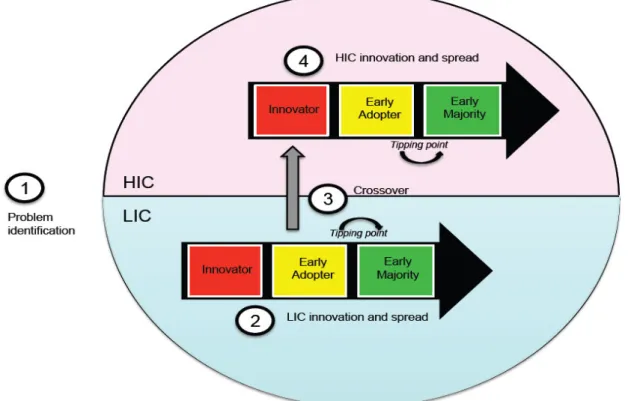
In order to sum up this phenomenon, DePasse and Lee (2013) designed a model to be applied in the healthcare field, presented in Figure 1 (DePasse & Lee, 2013). Composed by
four steps, these authors (2013) describe them. Being the first an identification of the problem, a high-priority complication common to both low income countries and high income countries, and subject to more favourable innovation conditions in the lower-income setting. The second one consists of LIC innovators that develop and test new ideas, and then share these solutions with LIC early adopters. Thirdly, there is “cross-pollination” from lower- to higher-income settings. Lastly, HIC early adopters will be more likely to embrace it.
Figure 1 - A model for reverse innovation in health care
3
. Research
context
and
methods
This study was conducted through a multiple case-study method, defined by Yin (1984, 2009) as an “empirical inquiry that investigates a contemporary phenomenon within its rea l-life context”. Thesameauthor(1984, 2009)recommendsthisapproach whenthereis no clarity on the boundaries between phenomenon and context, and when a variety of evidence sources have been used.
Figure 2 outlinesthe methodology applied alongthe current research.
Figure 2 - Methodology used 3.1. Approach
Research(Yin, 1984; Eisenhardt, 1989; Leonard-Barton, 1990)showsthe casestudy method isthe most accurate when addressingto complex phenomena, which are not carefully studied or entirely understood. Takinginto account that ourresearch enquiry consists of “how” and “why”type of questions, Yin(1984) considersthis method asthe oneto be applied. All in all, the presence of user innovations in healthcare, particularly in developing countriesis,tothe best of our knowledge, largely unexplored by userinnovationtheoryin general. Hence,we chosethis methodin orderto validatethe currentliterature onthis matter, orto start considering newtheorythat might be supportedthrough empirical research.
This particular approach can be exploratory, explanatory, or even descriptive (Yin, 1984). The structure chosen was an exploratory one, which refersto a research handled for a problem that has not been studied clearly(Shields & Rangarjan, 2013).
Thecasestudy methodcanacquireeithertheform ofsingle or multiplecase designs (Yin, 1984), being the later preferred by having a greater capacity to be externally validated (Dul & Hak, 2007).
3.2. Country Selection
Thelist of countries under analysis was chosentakinginto account the differentlevels of development worldwide, and whetherthey were accurate representatives ofthe developing
Research Questions
Data Collection
and Analysis Coding
Discussion and Conclusions
countries’ characteristics socio-economic characteristics. Thus, we opted for using the country classification lists by the World Bank and the UN, referent to 2016. We chose not to focus just on the economic criteria but to address other conditions as well. Consequently, we followed the UN Development Programme’s Country Classification System, built from the Human Development Index to capture the multifaceted nature of development (Nielsen, 2011).
Sullivan and Sheffrin (2003) considered a developing economy, or less developed country, as a nation with a relatively less developed industrial base and a lower HDI. Considering this, we decided to analyse one economic criteria and nine social indicators. A definition of each is provided on Exhibit 16.
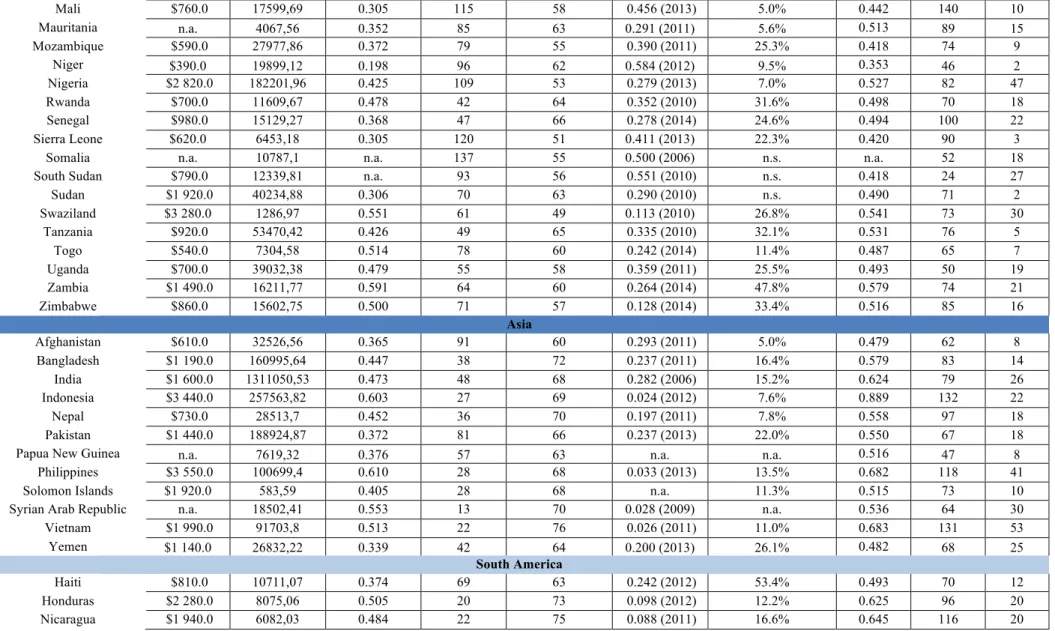
With these measures, we have reached to a final list of 54 countries across Africa, Asia and South America (Exhibit 17).
3.3. Innovations Selection
We encompassed the grounded theory to collect data. Amongst all the discovered innovations, only the ones created to solve a personal need, a need of a relative or close friend, or by persons facing a general need in their community, were considered. We coded them as patients, caregivers, or collaborators, respectively, having as base the definitions provided by von Hippel (2005, 2016) and Habicht et al. (2012). Although this led to a reduced number of innovations validated, it led to more reliable findings, considering the theory on user innovation.
Our search was mainly online, through search engines like Google and DuckDuckGo, using combinations of keywords such as “came up with”, “create to help”, or “developed”. Besides, worldwide newspapers, blogs and articles have also been consulted.
The expertise of the Patient Innovationiii team provided us a sound knowledge on how to
find solutions, and how to identify and describe the user innovation phenomenon in healthcare. Additionally, from the pool of more than 700 solutions, we have selected three user innovations previously identified as such.
Overall, the final sample includes 36 solutions, by 38 users (since 2 of them were co-authored), from 21 developing countries (Exhibit 18).
3.4. Data Collection and Sample
Afterwards, we have decided to gather information through interviews, by virtue of what Eisenhardt and Graebner (2007) stated, “interviews are a highly efficient way to gather rich,
empirical data, especially when the phenomenon of interest is highly episodic and infrequent”. In some cases, innovators were not available for an interview, so they agreed to
answer a survey.
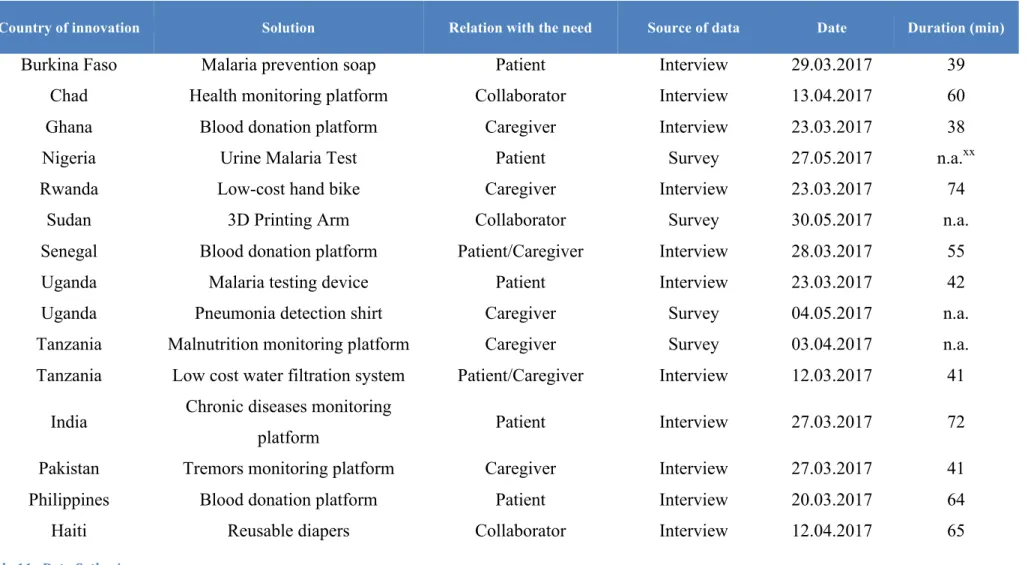
The available data source is a result of eleven semi-structured and extensive interviews and four surveys. All the innovators were contacted by e-mail and social networks, and the interviews were conducted via Skype and Whatsapp. The interviews followed a script (Exhibit 21), and they were recorded and conducted by a unique interviewer (the author), in order to keep consistency along the process. The answers provided by the interviewees have been entirely transcribed, resulting in 62 pages of text. The duration differed from 38 minutes to 74 minutes, with an average time of 56 minutes. The survey sent followed the script used to do the interviews and it consists in a document with a brief explanation of the study and six pages of questions (Exhibit 20).
Table 1 translates the verified sample used to perform the analysis. For each innovator information is provided regarding the country of birth and the country where the solution was firstly implemented, the innovator’s type of need and its personal details (current age and gender). The code given for each solution follows Habicht et al. (2012) division regarding the different contexts in which patient innovators innovate. Group A includes all innovations that emerged from “dead end situations”, group B contemplates innovations regarding “strong
constrains on the daily life”, and group C includes cases of innovations which occurred in
“rare conditions” contexts. This last situation is not verified in our sample, due to the inexistence of cases comprising the characteristics of rare conditions. The following coding section explains these attributes in more detail.
The final sample consists in 15 solutions from 13 different countries, where six innovators were patients (A1, A6, A7, A8, A10, B3), five caregivers (A3, A5, B1, B2, B4), and three collaborators (A2, A9, B5). Solution A4, is the result of a collaboration between a patient and caregiver.
Code Country of birth Country of innovation Type Age Gender Solution Picture
A1 Burundi Burkina Faso Patient 39 Male prevention soap Malaria
A2 Chad Chad Collaborator 33 Male monitoring Health
24
A3 Ghana Ghana Caregiver 33 Male Bloodpla donatform tion
A4 SenegaCameroon l and Senegal CaregPatieniver t/ and24 23
Male and Female
Blood donation platform A5 Uganda Uganda Caregiver 26 Female dePneumontection shiairt
A6 Uganda Uganda Patient 24 Male Malardeviatesice ting
A7 Tanzania Tanzania Patient 40 Male fLowiltra costiont sys watertem
A8 Philippines Philippines Patient 48 Male Bloodpla donatform tion
A9 USA Haiti Collaborator and40
40 Male
and
Female Reusable diapers A10 Nigeria Nigeria Patient 51 Male Urine MaTest laria
B1 Rwanda Rwanda Caregiver 23 Male Low cosbike t hand
B2 Tanzania Tanzania Caregiver 31 Female Mamonlnuitortritingion platform B3 India India Patient 35 Male Chronmonicitor diseasesing
platform B4 Pakistan Pakistan Caregiver 23 Male monTremorsitoring
platform B5 USA Sudan Collaborator 47 Male 3D Printing Arm Table 1 - Verified Sample of user innovators
3.5. Coding
Lüthje et al. (2005) inthestudy of innovations developed by mountain bikers,concluded that users with a problem are compelledto develop solutions, becausethey possesslocal need information. In the same study, the impact of local technical knowledge on innovations was analysed, revealing that usersalready havetherequired knowledgeto developatechnical
solution. Knowing this, we started to code the solutions accordingly to the type of need a patient had, or still has, and the knowledge a user owns to develop a solution.
Habicht et al. (2012) distinguishes among three types of situations: dead end situations, when patients face scenarios where there is no hope of making progress regarding their health condition (e.g., fatal diagnosis); strong constrains on daily life, when “patients cannot escape
their situation”, living with their health disorders permanently. At last rare conditions, health
disorders that affect a small portion of people worldwide. Rare conditions are considered niche markets, where there are no commercial incentives, and less investment for innovation.
Two more codes were added within this coding, in order to transcribe the sub-category
Local Environment. Firstly, the limited professional expertise (Dreier, 2016), meaning a user
perceives the lack of knowledge given by health professionals, either to explain the condition or to treat patients in a correct manner. Secondly, we have included characteristics of
developing countries (DePasse et al., 2016), where a user acknowledges the unique
constraints within his/her community.
Afterwards, we coded our sample based upon local technical knowledge, encompassing the following drivers: enjoyment of the innovation activity (Lerner & Tirole, 2002; Lakhani & von Hippel, 2003), enhanced reputation that may flow from making high-quality
contributions (Lakhani & von Hippel, 2003) and greater level of experience and expertise with a given product (Lüthje, 2004; Kuusisto et al., 2013).
Table 2 sums up the different drivers that led patients, caregivers, and collaborators to innovate.
Category Sub-Category Driver Reference
Local need information
Disease motivated
Dead end situations
Habicht et al. (2012) Rare conditions
Strong constrains on the daily life
Local environment
Limited professional expertise Dreier (2016) Characteristics of developing
countries (DePasse et al., 2016)
Local technical knowledge
Enjoyment of the innovation activity
Lerner & Tirole (2002); Lakhani & von Hippel
(2003) Enhanced reputation that may
flow from making high-quality contributions
Lakhani & von Hippel (2003) Greater level of experience and
expertise
Lüthje (2004); Kuusisto et al. (2013)
We also have coded our findings regarding the existent complementary assets required for commercialization. According to Teece (1986), a complementary asset is what provides an innovation with the necessary services so that it can become commercialized in a successful manner. In line with this, a complementary asset is seen as a different asset from the core solution, which increases its value (Teece, 1986).
Innovations created by users generally have a narrow access to this kind of assets (Agarwal & Shah, 2014). After-sales support, distribution channels, marketing, competitive
manufacturing, human resources and complementary technologies are examples of
complementary assets given by Teece (1986) and Svensson (2007).
Considering this, we adopt the following line of coding to classify our sample (Table 3).
Code Sub-code Reference
Complementary assets After-sales support Teece (1986); Svensson (2007) Distribution channels Marketing Competitive manufacturing Human Resources Complementary technologies Table 3 - Coding for Complementary Assets
4. Results
In the following chapter, we present the most important drivers, the socio-economic factors that influenced the creation and development of the innovations, and the complementary assets that contributed to the commercialization of the solutions under analysis.
4.1. Drivers in healthcare across developing countries 4.1.1. Local need information
As mentioned before, and according to the literature, this driver is divided in different types of needs. For each type, we provided quotes from the interviews that supported our classification.
4.1.1.1. Dead end situations
Ten solutions came from users that lived closely with near dead situations (from A1 to A10).
“I almost died from malaria while doing my military service in Burundi, where I
was almost left for death because of malaria (…)” (A1)
“(…) the parasite can enter in the penis and then small worms are created in the
system and when people urinate came with blood. Schistosomiasis is really painful for kids when they urinate.” (A2)
“She started with normal headaches and then started to be complicated. She
started to spend the entire days in her bed and stopped doing things by her.”
(A3)
“I lost a lot of blood when I had my accident, the diagnostic was if we cannot
find a blood donor, I could not move my leg, I could die.” (A4)
“(…) after her grandmother fell ill, and was moved from hospital to hospital
before being properly diagnosed with pneumonia.” (from http://bit.ly/2klAnJG
on 17.05.2017) (A5)
“I have always lived with malaria as I was growing up. But it was when I had 20
years old that suffered more severely, living with malaria for 2, 3 weeks.” (A6)
“After the doctor diagnosed me several water-related diseases and, besides
giving me medicine, I was told to wash my hands with soap. I need to change my life style (…)” (A7)
“My platelet level was already in a critical condition, it was already 90.000 and I
think the recommended platelet level is 450.000 and 500.000.” (A8)
“(…) they are uneducated and they are living in very very dangerous situations
when it comes to sanitation.” (A9)
“Having grown up in Nigeria, (…) contracted malaria multiple times from a young age.” (from http://bit.ly/2r4KrvX on 27.05.2017) (A10)
4.1.1.2. Strong constrains on the daily life
Five innovations were triggered by imposed limitations throughout their lives. Two consisting in a physical disability (B1, B5) and three regarding chronic diseases (B2, B3, B4).
“(…) it was very hard for his uncle to leave the house because he had a
“Lots of my friends and family are overweight and obese, with hypertension and
diabetes. And people close to my family have babies that are undernourished.”
(B2)
“(…) I started to understand how chronic health conditions are poorly managed
in India. I realised that in our country, the chronic care management is not extended beyond the hospitals or clinics.” (B3)
“He did not use to move that much, he was still able to drink stuff but he had to
reduce some actions and eating was a bit bad, eating bread was easy for him but eating anything like soup or like rice was a bit difficult.” (B4)
“Seeing this 12-year-old boy, who lost both of his arms and see this boy who
would rather be dead, than live with no arms and be a burden to his family.”
(B5)
4.1.1.3. Limited professional expertise
In this category, patients, caregivers and collaborators perceived the necessity to create a solution that could assist patients to receive a better treatment or a better monitoring (A2, A8, A9, B1, B3, B4). The following quotations provide examples of this driver:
“(…) (nurses) they really do not have time to talk about the disease, they do not
know how people contract the disease (…)” (A2)
“It is just the basic information and another thing is that there is no medicine for
dengue, all they have is just to administer some injections and medicines to help you fight, or get me in a condition to be able to fight the disease.” (A8)
“Even if they get the disease and they go and see a doctor, the likelihood of that
doctor having the proper medication is about 10%.” (A9)
4.1.1.4. Characteristics of developing countries
User innovators stated they were aware of their surrounding environments and the fragile conditions in which they live (A1, A2, A3, A4, A6, A7, A8, A9, A10, B1, B2, B3, B5).
“My village was far away from hospitals and at night people from the village had
to carry me with their own hands to the closest hospital.” (A1)
“In the village, they do not have a laboratory, so they did not know that he was
suffering from schistosomiasis.” (A2)
“Here in Ghana, there was always a complaint for blood and not very much was
“(…) she had to go every month to a hospital to receive blood transfusions, until
she stopped receiving this treatment because of a blood shortage in the hospital.”
(A4)
“Generally, in Uganda, a person can catch malaria 2 or 3 times a year (…)” (A6)
“These problems are seen as a part of life, I lived with these problems since
always because my parents did not have much money and in Tanzania the bottled water is very expensive.” (A7)
“Not all people in the Philippines know their blood type.” (A8)
“What is happening is that faecal matter is getting into the water or is getting
into the homes, causing the deaths from water.” (A9)
“How do we detect malaria easily? Most rapid blood tests are difficult to use. A
simple non-invasive test was critically needed.” (A10)
“The rural areas make so hard for the populations to get access to wheelchairs
that can be used in those rural areas (…)” (B1)
“Many families especially in rural communities associate chronic malnutrition as
shame or witchcraft so they delay seeking for medical help.” (B2)
“One of the things of course is that doctors in India are very busy.” (B3)
“I think the major driver was when I realized that Daniel was a victim of war, he
was an innocent boy whose life was completely shattered for something that he had no control over.” (B5)
4.1.2. Solution related knowledge
Taking into account the stickiness of information on the user’s side, innovators increasingly depend on “local solution information” (Lüthje et al., 2005).
4.1.2.1. Enjoyment of the innovation activity
Three user innovators stated they had performed their solutions either by fun or to increase the required knowledge associated to the solution (A3, A6, B5).
“I love technology so I would like to use technology to solve.” (A3) “I lived with this health disorder and I love technology.” (A6)
“Could go and helped him and print him an arm, make his life in anyway better,
4.1.2.2. Enhanced reputation that may flow
Seven user innovators highlighted how their reputation was recognized by the communities they are living in (A1, A2, A4, A5, A8, A9, A10). The following quotations serve as illustration for this driver:
“The winning of a national prize in 2015 from an NGO Reach for Change, that
enabled us to have more recognition.” (A4)
“(…) has been short-listed for this year’s Royal Academy of Engineering’s
Africa Prize (…)”
(from http://bit.ly/2pX4mJt on 18.05.2017) (A5)
“Since then achieved the 2nd place at the Social Innovation Camp Asia, in
Malaysia. 2nd place at Microsoft’s Apps for Asia, and because of that we were able to exhibit the application back in 2013 in New Deli, India. And just recently, last December, we just received an acclamation award by our department of health, by the Philippine blood center.” (A8)
4.1.2.3. Greater level of experience and expertise
The level of experience and expertise has a positive relation with the creation of solutions by user innovators, adjustable to them or their peers (Lüthje, 2004; Kuusisto et al., 2013). We found two cases where user innovators made use of their expertise (A7, B1).
“I studied about nanomaterials for about seven years, and my PhD thesis focused
on how to put this component on a filter (…)” (A7)
“After completing his vocational training, he thought of something to help his
community and to offer them the possibility to afford a wheelchair.” (B1)
4.2. Existent socio-economic factors in developing countries
The verified socio-economic factors across the existent countries in the sample are seldom comparable with the ones observable amongst the developed nations.
4.2.1. Healthcare
During the interviews, 13 user innovators made references to the fragile state of the healthcare system of the countries where innovations occurred (A1, A2, A3, A4, A7, A8, A9, A10, B1, B2, B3, B4, B5). The following quotations present examples of problems involving this socio-economic factor:
“Hospitals are inserted in strategical areas, not accordingly with diseases, but
given the terrorist attacks.” (A1)
“Very poor, very poor, Senegal is a poor country so there are a lot of problems
in healthcare.” (A4)
“(…) these days the government is trying to spread. But sometimes there is just a
building, there are no doctors or nurses and no medicine.” (A7)
“(…) it is the worst situation that I have ever seen, the medical situation in Haiti
is horrible, is terrible, it is what you see on the news.” (A9)
“There is Abajyanama b'ubuzima (or health advisers) at every village, making
easier to connect patients to first aid, but very few specialized medical personnel in Rwanda and to get in contact with them is very difficult (…)” (B1)
“A common problem is on the number of doctors or caregivers in relation to
people available.” (B2)
4.2.1.1. Access to pharmacies
Five innovators reported the access to pharmacies, as well as the level of prices charged, constituted a major obstacle for them (A2, A6, A9, B3, B4). Examples of problems in this type of access were described in the following quotations:
“People have good access to pharmacies, but they will not have what you need
(they will have aspirins, they probably have antibiotics, but will not have medicine for specific diseases) and they cannot afford it (…)” (A9)
“If patients cannot afford, they will not take the recommended medicine.” (B3) “Currently in Pakistan, there is not a broad access to pharmaceutical drugs for
this particular disease, only one or two medicines were available, whereas on other parts of the world the range is enormous.” (B4)
4.2.2. Environment
Two user innovators highlighted the sense of community, which played an important role in the innovation process (A2, B1).
“The community was very important to the project because when we were at the
villages we tested in the community.” (A2)
“The conversations he had with several innovators gave him the confidence he