Online buying behavior in
Technological and Office Products
José António Nobre Cardoso
Project
Master in Marketing
Supervisor:
Hélia Pereira, Assistant Professor, ISCTE Business School, Department of Marketing, Operations and General Management
Co-Supervisor:
Margarida Cardoso, Associate Professor, ISCTE Business School, Department of Quantitative Methods
I
Acknowledgments
First of all I would like to thank my family. My mother and father for all the help and support they have given me throughout my life. For the opportunity they gave me to study in another country, take a degree and now a master’s degree. Also to my brother who has always helped me and been available for me in many situations down the years. Even though we are not the most similar of people I have great respect and love for you. To my sister Madalena who although she is not with us anymore I still love very much and I will never forget. I am a truly blessed person to have this family and this life.
I would like to thank also Professor Hélia for her kindness and help throughout this project. Even though I’m not a remarkable student I did my best and I hope you are satisfied with my overall input into the project.
To Professor Pedro Dionísio who, although he had some differences with me, I understand now that what he did was to make me a better prepared and stronger professional for my future.
To Professor Margarida Cardoso for the help and execution of the quantitative part of the work. I don’t think I would have been able to do it without your precious help. Also to my girlfriend Joana, whom I love and who has been by my side (and it’s not an easy task) for almost 1 and a half years.
A big thank you to Daniela for always being available to help me. I don’t think I would have been able to do it without you.
Finally, to all my friends and colleagues (and especially Daniela for all the availability to always help me in the parts I had more difficulty doing) that I know and live every day with. Friendship is a crucial thing in life and all of you have made me what I am today.
II
Abstract
The evolution and growth of E-commerce nowadays is irrefutable. The revolution and introduction of new technologies have profound implications in business management, offering tools for the globalization of the market. This evolution and change in the market also leads to different realities towards not just the business itself but also the consumer. It is important to understand what are the main features of information search and purchase behavior online and understand online consumer behavior (what are the characteristics, what motivates somebody to buy online, what are his fears, etc).
This study aims, from existing knowledge about information search and purchase behavior online, to deepen the knowledge of Portuguese behavior to give information to companies to better develop their business. In this case, this study will be made for Technological and Office products.
Key Words: Internet, Online purchase, relationship marketing, technological, office JEL classification system: M31 – Marketing; L86: Information and Internet Services;
III
Resumo
A evolução e o crescimento do E-Commerce hoje em dia é irrefutável. A revolução e a introdução de novas tecnologias têm implicações profundas na gestão empresarial, oferecendo ferramentas and a globalização do mercado. Este evolução e mudança no mercado leva a uma diferente realidade não só no negócio em si mas também no consumidor. É importante perceber quais são as principais caracteristícas na procura de informação online e na compra e perceber o comportamento do consumidor online (as suas características, as motivações, os medos, etc).
Este estudo procura partir do conhecimento existente sobre o comportamento da procura de informação e compra online, aprofundar o conhecimento do comportamento dos Portugueses de forma a dar informação às compresas de como desenvolver melhor o seu negócio. Neste caso, o estudo será feito sobre produtos de Tecnologia e Escritório.
Palavras-Chave: interet, compra online, marketing relacional, tecnologia e escritório JEL classification system: M31, L86
IV Index 1. Introduction... 1 1.1 Motivation ... 1 1.2 Investigation Objectives ... 1 1.3 Thesis Structure ... 1 2. Literature Review ... 3 2.1 E-Commerce ... 3
2.1.1. Definition and Typology ... 3
2.2 The Online Consumer ... 4
2.2.1 Characterization ... 4
2.2.2 Information Search and Buying Behavior ... 6
2.3 Relationship Marketing in an Online Context ... 9
2.3.1 Interactivity... 10 2.3.2 Satisfaction ... 11 2.3.3 Personalization ... 13 2.3.4 Experience ... 14 2.3.5 Trust ... 16 2.3.6 Loyalty ... 19
3. The Portuguese Framework ... 22
4. Methodology ... 27 4.1 Hypothesis Model ... 27 4.2 Methodological Options ... 27 5. Results ... 31 5.1 Exploratory Study ... 31 5.1.1 Questionnaire ... 31
5.1.1.1 Socio-demographic profile of internet users ... 31
5.1.1.2 Electronic tools utilization ... 34
5.1.1.2.1 Used tools ... 34
5.1.1.2.2 Utilization frequency ... 34
5.1.1.2.3 Places of internet utilization ... 35
5.1.1.3 Internet utilization types ... 36
5.1.1.3.1 Analysis of latent structure associated with the types of utilization ... 36
V 5.1.1.3.2.1 Software ... 39 5.1.1.3.2.2 Hardware ... 39 5.1.1.3.2.3 Office Material ... 40 5.1.1.3.2.4 Electronic Material ... 40 5.1.2 Focus Groups ... 41 5.1.2.1 Information Search ... 41
5.1.2.1.1 Digital Information Search... 41
5.1.2.1.2 Information search in the traditional way ... 43
5.1.2.2 Information search by personal ways ... 44
5.1.2.3 Typologies of Internet Users ... 45
5.1.2.4 Buying behaviors ... 48
5.1.2.4.1 Purchase reasons and barriers in the online ... 48
5.1.2.4.2 Influence and perception of a purchase security and privacy... 49
5.1.2.5 Final Evaluation ... 52
5.2 Quantitative Study ... 54
5.2.1 Socio-demographic Profile ... 54
5.2.2 Characterization of the online experience ... 58
5.2.3 Descriptive Analysis of the online behavior determinants ... 60
5.2.4 Principal Component Analysis ... 62
5.2.5 Hypothesis Testing ... 62
6. Conclusions, Limitations and Recommendations... 65
Bibliography ... 68
1
1. Introduction 1.1 Motivation
This thesis is motivated by the contribution of the development of models of online businesses. This will allow organizations to better understand how they can maximize the potentialities of the electronic world, contributing for the development of the e-commerce in Portugal. There is also a gap in the knowledge between the practice of electronic marketing and the theoretical and empirical investigation in the support of the management of marketing in this context. This study also may contribute for a deeper knowledge regarding this issue.
1.2 Investigation Objectives
The development of this project has the main objective of better understanding the universe of e-commerce and specially its consumers. What are their main motivations, advantages and vulnerabilities of the consumers, so it is possible to identify a series of measures that can be used to reduce the insecurity consumers have, thereby increasing the number of clients purchasing via internet, making them loyal to the websites.
1.3 Thesis Structure
This thesis has the following structure:
1. Introduction
In this opening chapter there is a description and justification of the thesis topic, justifying its importance in the present and defining the objectives of the investigation.
2. Literature Review
The second chapter is constituted by the Literature Review. This consists on investigating the existed literature on this subject, to try and understand the background of the e-commerce and its main characteristics. From this parte we also create the hypothesis model, which is the model with the defined variables I am going to study.
2 3. The Portuguese Framework
In this next chapter it will be analyzed deeper the importance of the Internet and E-Commerce in Portugal. According to studies made by some companies a profile of users is made including the main characteristics of their usage and purchases and the e-commerce websites used.
4. Methodology
The methodology of the study is presented in this chapter. This defines the research methods and tools used in the data collection, the sample definition and the treatment of the statistical data that is used to validate the conceptual model.
5. Results
This part consists in the treatment of the collected data, descriptive characterization of the questionnaire that was used, and the fundamental variables of the sample and the statistical techniques used to validate the research hypothesis proposed by the model.
6. Main Conclusions, Recommendations and Limitations of the study
In the final stage of the thesis it will be presented the main conclusions and key aspects of the research and the analyzed data, what are the practical and theoretical contributions in this field, as well as the main limitations of the performed study and recommendation for future studies and investigations.
1
1
Note: This thesis was part of a large study on “The role on the Online Buying Behavior and demand for
3
2. Literature Review
2.1 E-Commerce
2.1.1. Definition and Typology
The E-Commerce, also known as Electronic commerce is the process of buying, selling, transferring or exchanging products, services or information via computer networks, including the Internet.
According to Turban (2004) there are many types of e-commerce:
- Business-to-business (B2B): the transactions that the purchaser and the seller are companies (responsible for almost 85% of the volume of e-commerce); - Business-to-consumer (B2C): the sellers are companies and the buyers are
individuals;
- Consumer-to-business (C2B): the clients announce a specific necessity of a product or service and the companies compete to provide it;
- Consumer-to-consumer (C2C): when someone sells products or services to other people (very common in auctions sites);
- Inter-business: when a company uses electronic commerce internally to improve operations;
- Govern-to-citizen (G2C) and others: the government provides services to its citizens via technologies of e-commerce. The government can do business with others governments and other companies;
- C-commerce: when business partners collaborate via electronic means. This cooperation occurs in general in business partners in the supply chain;
- M-Commerce: when the electronic commerce occurs in a environment without chain – via phone for the access to internet;
The use of internet has brought for, both the companies and the consumers numerous advantages. According to Turban (2004), the main benefits of the e-commerce for the companies are:
- It gives the seller the possibility of having a very high number of clients in any part of the world, with a low operational cost;
- The distribution channels of commercialization can be reduced or even eliminated, that causes the product to be cheaper and the profits being higher;
4 - Companies may locate and acquire rapidly products and services of other
companies, in price between 5 a 20% lower in comparison to other places; - It reduces in about 90% the costs of creation, process, distribution, storage and
recovery of information when compared to documents in paper;
- It allows innovating company models that increase the competitiveness and profitability;
- The advertisement can have multimedia, being constantly updated, touch a lot of people and at the same time be personalized.
In the other hand the benefits for the consumers are mainly:
- Cheaper products and services;
- Having the possibility of comparing easier the prices of the market;
- More diversified choices, because of the access of big number of suppliers; - Access at any hour at any day;
- Faster detailed information of the products/services; - Interaction with other consumers to share ideas.
2.2 The Online Consumer 2.2.1 Characterization
As internet changes the behavior of individuals (especially when talking about the online purchase) we clearly understand why more and more money and time is spent in the e-commerce. As it is an interactive atmosphere where information is flowing in a very fast speed, the consumer can gather more information in less time. The process of the decision making is more agile and can be an advantage for the purchase. (Mc Kinney, Yoon, Zahedi, 2002 in Farias et al. 2007). In the other hand, as consumers have more information, they can change to another site with a better and more attractive visual where they can find the information they need easier, if they please to (Elliot; Speck, 2005 in Farias et al. 2007).
There are many factors that influence the e-consumer behavior. One of them for example is the image. Many researchers have attempted to answer why people that e-shop look at the various components of the ‘image’ of the e-retailing (Wolfinbarger and Gilly, 2002). There are two main reasons: First, the ‘image’ influences our global evaluation and classification of something in such a way as to guide our actions (Boulding, 1956); and second the positive effect that a good image gives has been
5 demonstrated for traditional stores and shopping centers over many years, and this is relevant because are the these traditional retailers that have a strong image that have been successful making the running in e-retail (Dennis, 2009).
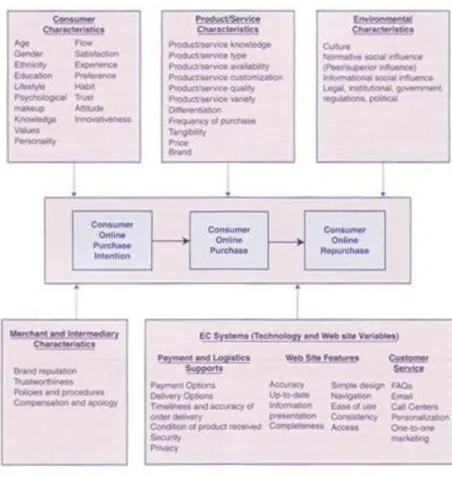
Understanding how the consumer behaves, as well as the consumer experience is essential in the e-business. The analysis of the consumer’s behavior is the most important aspect for the success of an e-business. To better understand this consumer behavior a lot of studies have been made to create a consumer behavior model to help vendors understand how these consumers take decisions, and most important, they make a purchasing decision.
This model is composed be the following parts (Turban, 2008):
- Independent variables, which are the personal characteristics and environmental characteristics (shown on the top of the next chart). These refer to demographic factors, internal individual factors, and behavioral characteristics (Cheung et al. 2005);
- Intervening variables are the variables that the vendor has control. They can be divided into market stimuli and EC systems. Like the offline environment these include pricing, advertising and promotion, and branding;
- The decision making process, which is represented in the middle of the chart are the ones influenced by the independent and intervening variables. It ends with the buyer’s decision;
- The dependent variables describe the types of decisions made by the consumers.
6 Figure 2.1 – Consumer Behavior Model
Source: Turban (2008)
2.2.2 Information Search and Buying Behavior
The capacity of the internet to access, organize and communicate information in a more efficient way has been crucial to the creation of new formulas for the relationship between the firms and the consumer, developing new economic agents and new business models. In this way, the development of the e-commerce offers great opportunities for manufacturers and retailers, also presenting important challenges for organizations, demanding an in-depth review of marketing strategies and consumer knowledge (Goldsmith e Bridges 2000, Jones e Vijayasarathy 1998 in Crespo, 2010).
Before making a purchase, consumers search information in order to handle the perceived risk involved in making the decision (Bettman, 1973, Srinivasan & Ratchford, 1991). Consumers search for information as long as they understand they benefit from it. The information search in Internet has many advantages. Many researchers have found many benefits. From the large quantity of information, entertainment while searching or the saving in time and money (due to not having
7 transportation issues) there are multiple advantages and benefits for the consumer’s of these types of purchases.
There are two main benefits of using Internet for information search. The first one is related to the use of Internet per se. The more dedicated users are more skilled in terms of navigation, and therefore are more aware of the availability of the information that is needed in the Internet. The second benefit is the fact that the Internet gives the possibility to search for specialized information about products whenever the consumer wants to. The interest in a product is expected to affect use of the Internet for pre-purchase information search positively (Jepsen, 2007).
Regarding the online purchase of products, for Constantinides (2004) the predominant approach that explains the fundamentals of consumer behavior, describes the consumer buying process as learning, information-processing and decision-making activity. This is divided in the next steps:
(1) Problem identification (2) Information search (3) Alternatives evaluation (4) Purchasing decision (5) Post-purchase behavior
But the consumer behavior and purchase decisions are beyond the control of marketers. Most academics and practitioners agree that demographic, social, economic, cultural factors among others have a major effect on this (Harrel and Frazier, 1999; Czinkota et al., 2001; Jober, 20001; Boyd et al., 2002; Solomon and Stuart, 2003 in Constantinides, 2002).
Attitude towards behavior refers to the global predisposition for or against developing such behavior (Crespo and Del Bosque, 2010). Attitude is considered to result from individual beliefs regarding behavior and its consequences, and the importance these beliefs are given (Fishbein and Ajzen, 1975).
However, to really understand the online purchasing adoption process, we have to look deeply at the intention, since it’s the best indicator of behavior. For Ajzen (1991), intentions “captures the motivational factors that influence a behavior; they are
8 indicators of how people are willing to try, of how much of an effort they are planning to exert, in order to perform a behavior”.
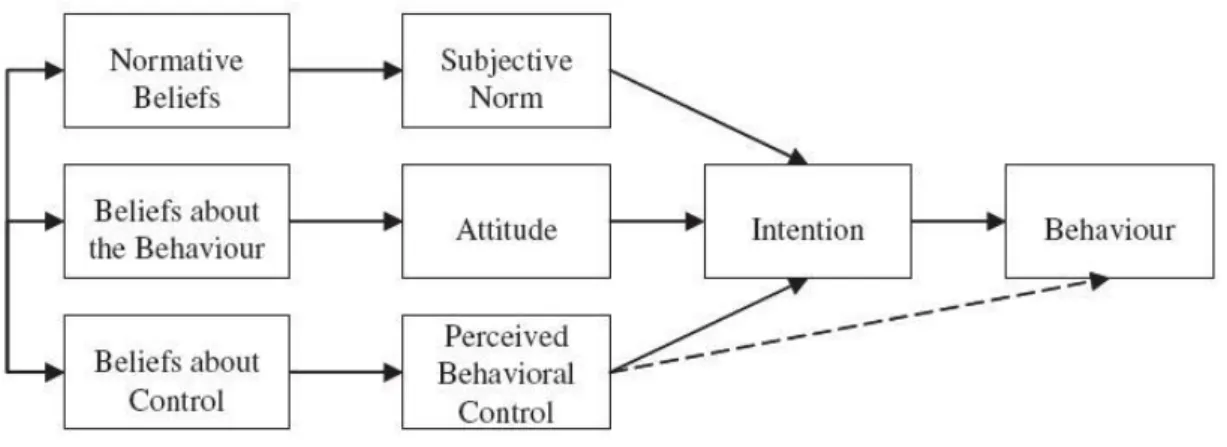
In this next model (Theory of Planned Behavior) proposed by Schifter and Ajzen (1985) there are 3 main variables that determine this behavioral intention: attitude towards behavior, subjective norm and perceived behavioral control.
Figure 2.2 – Theory of Planned Behavior
Source: Schifter and Ajzen (1985)
The attitude towards behavior is referred to the global predisposition for or against having such behavior. In the subjective norm, the consumer is influenced by the perception of some significant referents (relatives, friends). Finally the perceived behavioral control represents the individual perception on the availability or the lack of the necessary resources and opportunities to develop such behavior (Ajzen and Fishbein, 1980 in Crespo and Del Bosque, 2010). In this model attitude, subjective norm and perceived behavioral control help to understand the reason or factors explaining individual actions, although intention remains the best indicator of behavior.
Pachauri (2002) (in Bosnjak et al. 2006) has identified four main categories to identify the determinants of online shopping behavior. These are: (1) economics of information approach, (2) cognitive costs approach, (3) lifestyle approach, and (4) contextual influence approach.
The economics of information approach is related to the perceived efficiency of buying online. It explains the preferences of the consumer for the shopping channels by exploring the subjective costs of information search for different channels, such as the time costs.
9 The cognitive costs approach focuses on the costs stemming from search-related cognitive process. Consumers try to optimize their decision in terms of price, quality, reliability and credibility of the online merchants. On the other hand they try to minimize the cognitive costs associated with evaluating alternatives and making decisions.
The lifestyle approach is related to the socio-demographic characteristics of the potential consumers. It’s their way of life, patterns of spending time and money, buying motives and needs, interests, values and opinions. For example, Alreck and Settle (2002) investigated the motives of time spending and online shopping behavior, and they concluded that while the internet is seen as an efficient channel in terms of time spent shopping, consumers do not shop online for this motive.
Regarding the contextual influence approach it analyzes the influence of navigational aids as well as atmosphere on online-shopping behavior.
2.3 Relationship Marketing in an Online Context
Kalwani and Narayandas (1995) say that “companies with long term relationships with selected clients are in better conditions of creating loyalty and even maximize their level of return, when compared to organizations that have a transactional philosophy”.
Although there is no really consensus in the definition of relationship marketing, Morgan and Hunt (1994) present some differences regarding other authors, because they believe all activities of marketing are oriented to the establishment, development and maintenance of commercial trades. They also include in the definition of relationship marketing, the marketing done in the relation between the company and its public – clients, suppliers, distributors, employees and other institutions.
The main objective of relationship marketing is to convert new buyers in clients that maintain a regular level of purchases (Christopher et al. 2004). After, in a progressive way, transform them in active promoters of the company.
The business in Internet makes loyalty and client retention more important than ever because of the atmosphere of uncertainty and risk. The consumers show more preoccupation towards security and privacy (Rust and Kannan, 2002). These factors reinsure the notion of relationship marketing, which the main objective is to create,
10 develop and retain relationships based on trust, being very a very important aspect in the electronic market context (Urban, 2003).
There are many variables described in the literature that are relevant for the creation, maintenance and development of relations, as already mentioned. These are presented bellow.
2.3.1 Interactivity
Interactivity is a crucial element on having success in online marketing. Unlike traditional marketing where interactivity often is focused on communication in isolated episodes, it is now considered a continuous process (Stewart and Pavlou, 2002). Firms and consumers now communicate constantly and instantaneously in a wide board of issues.
The definition of interactivity is not a definition with a lot of consensus. Whereas researchers like Rogers (1986, p.4) and Steuer (1992, p.84) believe that interactivity has to do with an individual’s communication with a medium, other marketing scholars such as Deighton (1996, p.151) and Bezjian-Avery et al. (1998, p.23) include dialogue between individuals – through a medium- in their understanding of interactivity. Hoffman and Novak (1996) have defined these two types of interactivity as machine interactivity and person interactivity, respectively. (Thorbjornsen et al., 2002)
An example of a machine interactivity are personalized Websites. These websites are simply dynamic websites where each consumer has their information personalized through the use of profiles and identification. This gives the possibility of personalizing the information and content to each of the customer’s unique preferences and needs. (Roehm & Haugvedt, 1999; Bezjian-Avery et al.; 1998). These data can be very easily obtained by existing database asking the consumer for profile data on the website for example. By doing this and identifying the customer then it’s easy for the company to make possible multiple personalized applications.
An example of person interactivity is customer communities. These online communities are a social space where relationships and ties are built among the members. Usually a common set of values and norms are established and shares among the users (Nambisan, 2010). The dialogue in these communities can be in real time, called chatting, or asynchronously by members that post messages on a bulletin board. These
11 communities may also differ in the degree of openness; whether just members are allowed to read and post messages or this is also permitted by non-members.
Both these two examples of machine and person interactivity are very common applications on websites today and are very important tools to build brand loyalty and create strong consumer-brand relationships.
Constantinides (2002) has also divided Interactivity into two categories:
(1) Interactivity with the online vendor (2) Interactivity with other Web users
Interactivity with the online vendor includes all customer service, after sale service, interaction with the personnel and customization in general. A well organized online helpdesks, efficient reverse logistics and a quick response to e-mails are some issues that marketers must focus on. In terms of usability a good knowledge of the user profile and his/her needs is an essential part in these online services.
2.3.2 Satisfaction
Satisfaction is one of the most, if the not the most, important consumer reactions in the B2C online environment. Keeping a high level of satisfaction means having more probability of having a returning customer or a positive word of mouth. Cheung and Lee (2005) discovered that 80% of the satisfied consumers would shop again within 2 months, and 90% would recommend the site to other people. In other hand, 87% of dissatisfied consumers would leave their Internet retailers without any complaints. (Turban, 2008)
12 Regarding the consumer’s satisfaction Na Li and Ping Zhang (2002) created the next model explaining it (Figure 2.3).
Figure 2.3 – Research Model of Consumer’s Online Shopping Attitudes and Behavior
Source: Na Li and Ping Zhang (2002)
External Environment: Refer to the contextual factors that have an impact in the
attitudes and the behavior of the consumer’s online shopping (legal framework that protect the consumers of any kind of loss, other stores that provide the same service, etc.)
Demographics: Include variables such as age, gender, level of education, income and
time online.
Personal Characteristics: Group of specific customer features that can influence the
online shopping attitude and behavior, such as the Internet knowledge, specific needs and cultural environment.
Vender/Service/Products Characteristics: This refers as the name suggests to the
features of the internet stores, products they sell and the service they provide to support the transactions.
Website Quality: This includes the website’s information content, information
presentation, interaction between customers and venders, navigation, searching mechanism, security, site technical feature and media richness.
13
Attitudes towards online shopping: It’s the consumer’s acceptance of the Internet as a
shopping channel (Jahng et al. 2001) and the consumer’s attitudes toward a specific internet store (eg. do the consumers think that shopping at this store is appealing)
Intention to shop online: Refers to the willingness of a customer making a purchase in
an Internet store.
Online shopping decision making: This includes information seeking comparison of
alternatives, and choice making.
Online Purchasing: Refers to the actual actions of placing orders and paying from
consumers.
Another very important factor in the user’s satisfaction is the atmosphere of the online shop. The atmosphere in the online world is like a packaging around the products that are for sale, used as a method to create differential competitiveness, especially when the competition sells similar products or services (Farias, 2006). For some consumers, the purchase experience must be a fun experience, so they search for activation and stimulation in the atmosphere of the store, and tend to spend more money (Babin, Darden and Griffin, 1994). The more consumers achieve satisfactory experiences when purchasing online, the more they will trust and re-patronize (Dennis, 2009).
The ability to predict consumer satisfaction can be very useful when designing a website, advertising and making marketing strategies.
2.3.3 Personalization
Personalization is referred as the matching of services, products, and advertising content to preferences of each individual. This is based on what the company knows about each individual user, also known as his user profile. This information can be found in many ways. The major strategies used to compile users profiles are:
- Solicit information directly from the user: asking the user to fill in a questionnaire or by conducting an interview with the user;
- Observe what people are doing online: Even though this technique is controversial there is a way of observing what people are doing online, with the help of a cookie. This cookie is a data file stored on the user’s hard drive that collects information about the user’s activity in a certain site.
14 - Build from previous purchase patterns: Based on previous purchases the company recommends certain products (for example Amazon created customer profiles to recommend books, dvd’s, cd’s and other products);
- Perform marketing research: firms research the market using market segmentation research or market research for one-to-one (surveys, focus groups for example)
- Make inferences: This is the information provided by customers on other issues or by analyzing similar customers.
For example there are stores that send e-mails when a product that may interest the customer is on promotion, let the user personalize the web-site attributes such as the site’s color or the greeting name. However, the privacy and the lack of trust are still the mains issues of limiting the personalization (Cone, 2005 in Turban, 2008)
According to Sackmann et al. (2006) (in Turban, 2008), the Internet offers many options of the online retailers to tailor services to their customer. These next options are a way of personalization because the customer can choose a service that meets his need at any particular time. This will ultimately build customer relationships, increase their satisfaction and generate a greater product or service turnover. The options are:
- Personalized services: These services are built on a one-to-one communication channel requiring personal data from customers;
- Individual services: Recommendation based on the sequence of clicks, page requests or items that have been bought. This improves the experience while keeping the consumer anonymity.
- Universal services: Consumers use the product search function or read customer’s reviews.
2.3.4 Experience
Studies in psychology and communication have identified two main components in measuring the human experience – a cognitive and an affective component (Blumler, 1979; Forgas, 2000). The cognitive is related to the “information processing perspective and the experience that underlies information acquisition and processing” (also known as “utilitarian” or “extrinsic”) and the affective which “reflects the feelings and emotions derived as a result of interactions with stimuli from the external environment” (also known as “hedonic” or “intrinsic”) (p. 890, Nambisan, 2010).
15 Regarding the Web experience (also known as the virtual experience) it can be defined as “the consumer’s total impression about the online company (Watchfire Whitepaper Series, 2000) resulting from his/her exposure to a combination of virtual marketing tools under the marketer’s direct control, likely to influence the buying behavior of the online consumer” .(Constantinides, 2002)
The behavior in the Internet is not always the same; it changes as they acquire e-purchasing experience. (Gefen et al., 2003; Yu et al., 2005 in Hernández et al., 2009) As in other types of purchases of situations, this behavior is not stable over the time since the experience that one person gains from the past means that the perception also changes. Since it is still a “new” activity, the online purchases are still seen as riskier that terrestrial ones (Laroche et al. 2005), therefore are very dependent on experience qualities, which can just be acquired through prior purchase (Lee and Tan, 2003 in Dennis, 2009).
The importance of the online shopping experience is crucial in the e-commerce marketing issue. Considering that online consumers aren’t just simply shoppers but also information technology users (Cho and Park, 2001), the online experience is more complex when compared to the physical shopping experience (Constantinides, 2004).
Purchases in the internet allow customers to be more familiar of this kind of shopping channel and to value some other components of the shopping aspects and to ignore others as it is a very different process compared to physical purchases. (Taylor and Todd, 1995; Yu et al. 2005 in Constatinides, 2004). As Yu et al. (2005) affirm, there are differences between the experienced users and those that are potential users since they show different determinants for acceptance, intentions and usage.
We can define two types of behavior (Hernández et al., 2009):
(1) The adoption of e-commerce (first purchase) (2) Repurchase or subsequent behavior
Consumer’s experience influences their decision making-process (Hutchinson, 1983) since it plays a big part in their perceptions, attitude and behavior (Sheth and Parvatiyar, 1995; Montoya-Weiss et al., 2003) (in Hernández et al., 2010).
Bruner and Kumar (2000) concluded that, when the experience in the internet from consumers increased, attitude towards web sites tended to be more favorable in general.
16 This meant that consumers with a large experience in Internet would more easily develop online brand relationships comparing to other consumers with less experience (Thorbjornsen et al., 2002).
The Web experience includes elements like “searching, browsing, finding, selecting, comparing and evaluating information as well as interacting and transacting with the online firm” (Constantinides, 2002).
The high or low degree of involvement of a customer in an e-business is also a question of experience; products purchased for the first time, in general, require more involvement than the ones that are frequently purchased (Boyd et al., 2002 in Constantinides, 2002).
According to a study by Dieringer Research Group (2002), half of the online adult Internet users canceled online orders have changed their opinion about brands because of a negative online experience; 60% of these users that changed their opinion, switched brands at purchase.
In the study made by Hernández et al. (2009) they concluded that previous experience in the Internet has a significant importance for both, the initial and more experienced and repeating purchasers, although “its effect does not increase significantly once individuals acquire more e-purchasing experience.”
2.3.5 Trust
Trust is defined as the psychological status of depending on another person or organization to achieve a planned goal. In the online world, trust is a complicated issue. As users and sellers don’t meet face to face, users when buying something in the internet they have to rely on an image of a product or a person they don’t know. To deal with this kind of issue, the e-commerce vendors have to establish a high level of trust with potential and actual consumers. Trust is particularly important in this case because it is very difficult to pursue a legal action if something goes wrong. The matter of security is also a very important issue in this case because if people do not trust the security of the e-commerce infrastructures, they will not feel comfortable about using credit cards to make purchases (Turban, 2008). As web vendors are interested in building relationships with consumers, trust is crucial. Consumer’s beliefs and intentions related to trust depend on the level of risk they perceive and the amount of information they control (Palvia, 2009).
17 The online trust has similar characteristics to those of offline trust, but there are still some important distinctions. The characteristics of online trust can be described as follows (Wang and Emurian, 2004):
1. Trustor and trustee: The trustor is a consumer who is browsing an e-commerce website and the trustee if the actual website. These are the two vital parties to establish a trusting relationship in the online world.
2. Vulnerability: Consumers are still uncertain about the risks and consequences when doing online transactions. Even if they aren’t purchasing anything online information may be collected and later distributed without their consent. These reasons contribute to an insecure environment. Consumers are vulnerable to trust violations such as loss of money or loss of privacy (Friedman, Howe & Kahn, 2000).
3. Produced actions: In a safe and trust worthy environment consumers may take two kinds of actions: making an online purchase and “window-shopping”. Either these two actions bring positive outcomes to the e-business, they are only made when consumers are confident that they will gain more than they’ll lose.
4. Subjective matter: As in offline trust, each person is different and has different levels of trust. The level of trust and attitudes toward machines and technology differ from each individual.
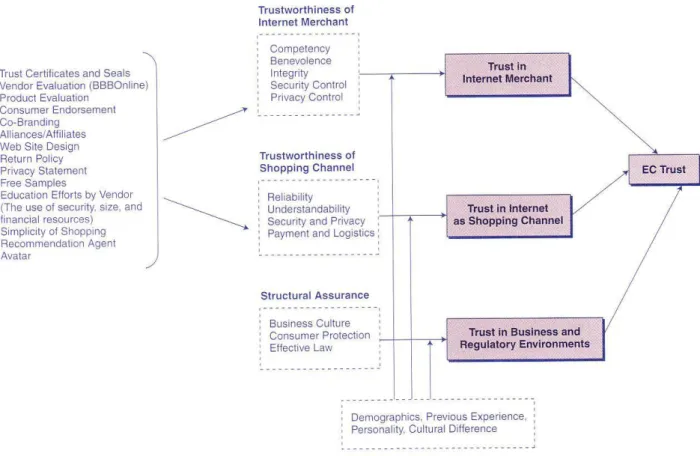
18 Lee and Turban (2001), after examining the various aspects of the e-commerce trust developed the following model:
Figure 2.4 - E-commerce Trust Model
Source: Turban (2008)
According to this model, the levels of trust are determined by numerous factors. These factors are shown in the left side and in the middle of the figure above.
But how can we increase the trust in e-commerce. The following guidelines are important ones to build trust in the relationship between the consumer and the online shop (Cheung and Lee, 2006, Jeanson and Ingham, 2006).
Affiliate with an Objective Third Party. In this approach, internet stores put hypertext
links on their websites of other reputable companies or well known portals. These other reputable companies are able to transfer brand equity to the Internet stores because these brand names induce trust.
Establish Trustworthiness. Establishing trustworthiness can be achieved through three
key elements: integrity, competence, and security. Integrity can be achieved by having an image of strong justice and fulfilling the promises made to the customer (eg. having
19 a clear guarantee policy on the website or offering a money-back guarantee with the products). Another indicator is the internet store’s competence. Stores can promote this by delivering a professional website. A professional appearance should include an easy navigation system, correct grammar and spelling, good use of graphic design, relevant information, among others. Finally, the security in an e-commerce is vital, and should be able to safeguard against any type of attacks. E-commerce security mechanisms are very important to solidify trust among the online consumers.
2.3.6 Loyalty
The success of an organization is related to its capacity to attract and retain customers. The customer’s loyalty is related to the desire of a specific product when he has many product vendors to choose based on what he prefers (Dick and Basu, 1994; Otim and Grover, 2006 in Ramanathan, 2011).
Customer loyalty defined by Oliver (1996) is a “deeply held commitment to re-buy or re-patronize a preferred product or service consistently in the future, despite situational influences and marketing efforts having the potential to cause switching behavior”. (in Caruana & Ewing, 2009). Yin (1999) defined “hard-core” loyalty as a “consisting exclusively of repeat purchase” (Kelley et al., 2002).
But loyalty is far from being a simple thing. It involves a very difficult task which is, for Reid Smith (2001), the humanization of digital loyalty. (P.K. Kannan et al., 2002). This is not easy because there is still a big skepticism on loyalty on internet, because relationships are built with people and not machines (Billington, 1996). The concept of loyalty can be defined by two dimensions: attitudinal loyalty and behavioral loyalty (Dick and Basu, 1994; Dorsett, Durand and Kannan 2000). The first can be defined as “the strength of the online customer’s commitment to an online business, how positively the customer feels about it, and the strength of the customer’s intention to repurchase.” In the other hand, the behavioral loyalty can be defined by “the actual frequency and volume of the customer’s purchases, and by the extent of positive word of mouth he or she generates” (Kannan et al., 2002).
In the beginning of the e-commerce, companies were more concerned with acquiring new customers rather than maximizing the ones they already had. However, nowadays we know that the cost of acquiring new customers is much higher than the cost of retaining them. The main issue in achieving customer retention and loyalty is trust
20 (Janoff, 2000). Loyal customers bring more benefits and are more profitable than new customers. However, in a study performed by Reichheld and Sasser (2000) in the Internet clothing market, they concluded that the cost of acquiring new customers is 20 to 40 per cent higher than in the traditional retailing marketplace (Lee-Kelley et al., 2003).
Other advantages, loyal customers bring to companies is the fact they can instantaneously send links to an unlimited number of friends. They also help reduce selling costs, as well as the cost of help-desk and support staff, because the referred customers rely on the friend that indicated the site to help him using it (Reichheld and Shefter, 2000 in Kannan et al., 2002).
These are some areas that e-retailers have to be aware of to engender online customer loyalty (Kannan et al., 2002):
- Personalization and Customization: The goal in this initiative is developing loyalty by creating value and earning the trust of the selected and most profitable customers for whom they can deliver a superior performance (Reichheld and Shefter 2000). A good example of this is Hallmark.com that has a option of creating a list of birthdays and anniversaries so people receive prompts to send cards (Clarkson, 2000);
- Loyalty Programs: This works better when they are related with both rational and emotional components of loyalty. The consumers should feel “special” and should receive tangible value for being loyal. Companies should add value to their service with things like: priority service, personalized offers or e-mail updates. Loyalty programs shouldn’t just be about discount, because this does not create a term commitment. “Short-term loyalty can be bought but long-term loyalty must be earned” (Smith 2000)
- Online Communities: Even though little is known about how to translate online communities to loyalty, many analysts believe that e-retailers should build these communities. Customers usually share reviews, engage in discussions and compare notes on experience with products and this makes them return to the site because they depend on its information and services (Mitchell, 2000). In these communities customers are creating value for each other, and they feel recognized as a member of the community for having contributed time and effort
21 to a communal cause. This positive effect may enhance perception of the e-retailer, and create certain conditions for e-loyalty.
- Privacy Management: In an online environment, achieving customer retention and loyalty, is a very difficult task and it’s all about trust (Janoff, 2000). Not having human contact or a physical store makes this even more difficult forcing the customers to take a “leap of faith” relying on images and promises. This is why a privacy management is crucial. The more customers trust you, the more is likely for them to share personal information. This also allows the companies to personalize even more their service and gain more trust and value for the customer. One way to develop this trust is to make privacy a priority, allowing consumers to control the amount of information they want to be shared. This means explaining clearly how they operate in this matter. This gives the image that they care about the customer and treats him/her with respect, and most important recognize that they are individuals who have privacy needs.
- Other Technologies: These technologies focus on creating a “holistic experience” for the customers that shop at a retailer’s site. A good example of this is for example the online chatting with customers.
22
3. The Portuguese Framework
According to a inquiry made by LINI (Lisbon Internet and Networks International Research Programme), in the first trimester of 2010, 48.8% of households in Continental Portugal had access of Internet and 44.6% of the population used the internet, in which 51,3% were males and 61,9% were between 15 and 34 years old. All senior professionals used internet as almost every student (96.1%), as well as scientific and intellectual occupations (94.2%). The professions with a smaller penetration of Internet were the retired (5.1%) and the domestic (10.8%). 43% of the inquired had a laptop versus 32.8% who had a fixed computer. 15.8% had a USB 3G of access to mobile Internet and just 2.6% of the Portuguese had smart phones.
In August 2011 the Portuguese spent about 39 minutes per day in the Internet, less than the worldwide average which is of 46 minutes and the European average of 49 minutes. The Portuguese users visited in average 3.20 pages per minute, more than the worldwide average of 3.02 but less than the European users with 3.20 (ComScore, 2011).
In 2010, when the LINI questionnaire was done, the social networks were the third most used activity of communication in the Internet with 56,4% of users employing social networks at least monthly (from the social network users in September 2011, 48% said they accessed several times a day preceded by the sending and reception of e-mails (89%) and for services of lms (74,5%). 40% of the respondents referred they used social networks for professional motives. However, the majority of the reasons are due to the possibility of communicating with people they already know. This means that these bonds in social networks are a reflection of personal relations in reality (78.4% of the respondents say that they had mostly known people in this circle of people). 45.1% of the respondents said that they had more than 100 friends in their social network. The Portuguese users of social network provided in 71.7% of the cases their interests in their profiles, 36.2 % provided videos and 47.3% music.
In a study from Nielsen (2008), a comparison is made between the use of e-commerce in Portugal to other European countries. 80% of the users of Internet said they already did at least once a purchase in internet. This puts Portugal in a relatively low place when compared to other European countries.
23 Regarding the frequency of purchase, 34% have done it in the last month, 22% between 1 and 3 months and 43% in more than 3 months. In this aspect Portugal remains in a lower place in the European ranking. Countries like Great Britain and France with 76% and 66%, respectively said that they purchased in the last month. The products that are more purchased in Portugal are, like in the rest of Europe, books (38%), flight tickets (24%), electronics (21%), tickets for shows (21%) and grocery (9%).
The Portuguese choose to purchase in websites for two main reasons: best online shop (39%) and the value of websites they use to buy from (38%) (Nielsen, 2008). Vítor Amaral (Marketing Director from Nielsen Portugal) says regarding the last factor that was the most referred in Europe (55%):“it shows the importance of getting new online buyers when purchasing for the first time. If the websites can captivate them in the beginning and give them a positive experience, probably they will obtain their loyalty and money. Comparing to Europe, we are one of the countries that less indicated this factor. This probably means that there is an opportunity for companies that use websit e as their distribution channel to develop”. The advertising influences the choice of websites even if just 1/5 of the Portuguese referred it, even if we are “two times superior to the European average (11%)” (Nielsen, 2008). Regarding the way of payment, Portuguese use credits cards (63% - with 75% using VISA), bank transfers (35%) but prefer the payments when the product is delivered (30%) (Nielsen, 2009).
According to a study performed by Marktest in 2010, 2591 thousand residents in the Continent, during the fourth trimester of 2010, visited online commerce websites in their homes. There was an increase of 6.1% relatively to the previous trimester and a raise of 0.3% relatively to the same trimester in 2009. In total, 203 millions e-commerce website pages were visited, which is approximately 78 pages per user. In terms of the time spent in websites, it represented approximately 2 million hours, which was 46 minutes per user.
24 Next, we have a ranking of the most visited websites per unique users (Chart 3.1), highlighting the Fnac website with 876.000 visits from different users.
Chart 3.1 – Most visited websites by unique users
Source: Marktest (2012)
Then we can see the ranking of the most visited pages (Chart 3.2)
Chart 3.2 – Ranking of the most visited pages in the 4th trimester of 2010
Source: Marktest (2010)
In the ranking presented above, the site Leiloes.net is in first place with more than 22 million visits, following by the site of La Redoute.
25 According to a study made by Markest in Bareme Internet (2010), 1.997 thousand Portuguese already did online shopping, representing 37,2% of the population with more than 15 years old – these values are significantly lower than the previous quoted study from Nielsen. The chart 3.3 shows the evolution of the online shopping from 2000 to 2009.
Chart 3.3 – Evolution, in percentage, of the people who have already purchased online
26 In a more specific demographic analysis the profile of the user and online buyer in Portugal is represented on the chart bellow (Chart 3.4)
Chart 3.4 – Demographic data of the online buyers
Source: Marktest (2009)
We can see that the people that buy products and services via internet are mainly man (26.5%), between 25 to 34 years old (37.1%) from Lisbon (27%), they are from a upper class (55.7%) and they are middle/superior managers (60,6%).
27
4. Methodology
In this chapter it will be presented the Hypothesis Model and the research methods and tools used in the data collection, the sample definition and the treatment of the statistical data that is used to validate the proposed conceptual model.
4.1 Hypothesis Model
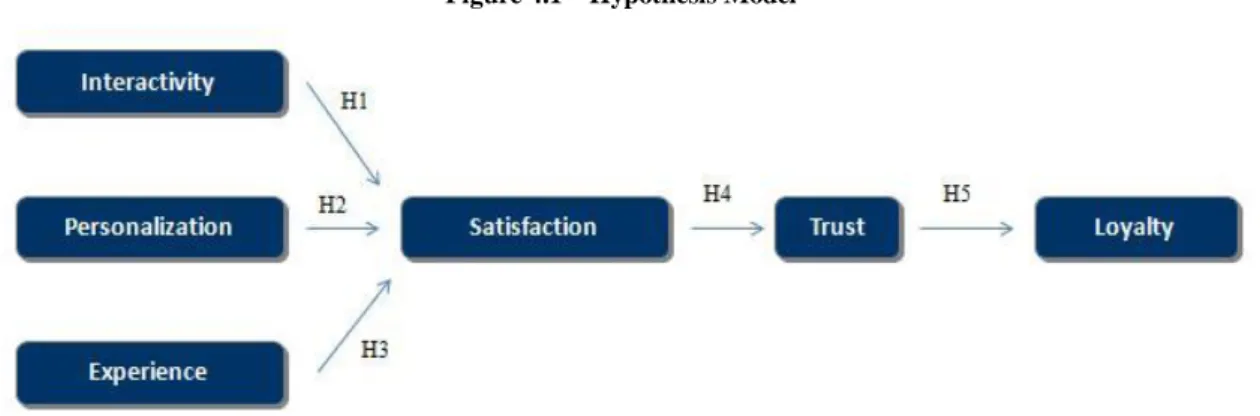
After analyzing the literature review, as well as the framework to the reality of the application field, the next Hypothesis model is proposed (figure 4.1).
Figure 4.1 – Hypothesis Model
From this model 5 hypothesis are determined:
H1: Interactivity will have a positive influence in the online buyer Satisfaction
H2: Personalization will have a positive influence in the online buyer Satisfaction
H3: Experience will have a positive influence in the online buyer Satisfaction
H4: Satisfaction will have a positive influence in the online buyer Trust
H5: Trust will have a positive influence in the online buyer Loyalty
4.2 Methodological Options
This chapter is related to the methodological approach. Here are described the mains methodological options related to the steps of the investigation:
- Exploratory study with quantitative questionnaires and focus group;
28 First of all, they were made face-to-face questionnaires that had the main objective of understanding better the use of internet as a research tool and/or purchase of products.
Regarding these questionnaires, they were done to a general public who used internet. It was done for a better knowledge of the reality of the usage of the internet as a tool for research and/or purchase, and had the main purpose to deepen the aspects related to the subject of study.
For a better execution, a pre-test to 40 people was done to improve the scale, identify the variables that weren’t yet considered and have a more clear and adequate language. The main objective was to get feedback from the respondents regarding the understanding and the applicability of the questions made, the difficulties and the general reaction of the questionnaire and to have an idea of the rate of the non response.
The questionnaire was divided in 3 mains parts:
- In the first part the respondents were asked about the tools they used for the access to the Internet, what was the frequency, the places (home, working place, etc.) where they used it more frequently (and which one was the most relevant) and also, the importance of each used tool;
- In the second part, a list was presented with the various products/services in the category. There was a first question about if the respondents research for information and in case of a positive response if they did it in the online of offline context. Next, regarding the purchase of products, the respondents were asked if they did it in an online and/or offline context. If the answer was affirmative in the online context, questions about the frequency of purchase in the last 12 months, place of the purchase, if it was a national or international website, and the estimated value spent were asked.
- Finally, and regarding the socio-demographic characterization of the respondents, their names, gender, age, county of residence, profession, academic qualifications and net monthly income of the household were asked. The last question was related to the phone number for internal validation.
29 Regarding the focus group, the purpose was to clarify which path was to follow having the same criteria as the questionnaires: individuals who seek for information and/or purchase products online.
According to Cook (1981) the main objectives of a focus group are:
1. Establish itself as a source of ideas or hypotheses to be tested in further research;
2. Develop the comprehension about a particular group of individuals thoughts about the topic of the investigation;
In a focus group the individuals that participate interact about a common interest. From this interaction, arise new ideas about the topic of discussion (Goldman, 1962). In a focus group the respondents react to each other, and their behavior is observed in the moment.
In a focus group they’re two main interveners: the moderator and the participants. The moderator is responsible for the content and for the actual process of the discussion. The participants are there to be “themselves” and sharing opinions and talking about a certain subject.
The number of focus group depends on the topic of investigation, as well as the budget and the available time (Bellenger et al., 1976). In this case 2 focus groups with 8 to 10 individuals were done. This was chosen by convenience of a group of regular users of the Internet, and in some cases were buyers. This allowed to achieve research objectives as well as the variability of responses needed.
In the third and last phase an online questionnaire was done. The sample was constituted by 426 people who has already shopped online. This questionnaire had 6 main steps:
1. Pre-test to 20 people;
2. Definition of the final version of the measuring scales used;
30 4. Gathering of information;
5. Codification and preliminary treatment of the data collected;
6. Definition of the methods and techniques of the quantitative analysis of the data
According to Kinnear and Taylor (1996), the questionnaire is one of the most appropriate forms for a conclusive investigation that is capable to gather valid and relevant information for the decision making. This questionnaire is a structured one, which reflects in the general control of eventual biases in the answers, increases the reliability of the information and makes the work simpler in terms of application, tabulation and analysis.
According to the hypothesis formed earlier, the necessary information to collect was defined. This means the type of questions to include in the questionnaire with the objective of ensuring the measurement of the constructs and the verification of the hypothesis. Questions can be general or specifics, open or closed. In this case most of them were closed questions because it facilitates the statistical analysis. The questions were associated to numbers in order to represent a measurement scale. The nature of the problem in study and the variables that were considered created the necessity of using ordinal and nominal scales.
The questionnaire was done online because of the various advantages (cost, speed and coverage) but especially regarding specific aspects, namely the necessity of sending a pre-notification, development of incentive schemes (in this matter a promotion “Pay 1, Get 2” with the Zon Lusomundo cinemas was arranged to incentive the people to answer the questionnaire), personalization, extension of the questionnaire, utilization of colors and especial formats (Cavusgil and Elvey-Kirk, 1998; Sheehan, 2001). Some authors such as Evan and Mathur (2005) say that the majority of that these kinds of questionnaires will likely be online.
As already said this online questionnaire was made to 426 users of Internet regarding the online purchase of products with an age superior to 15 years old.
31
5. Results
5.1 Exploratory Study 5.1.1 Questionnaire
5.1.1.1 Socio-demographic profile of internet users
In this chapter it will be analyzed the socio-demographic profile of 800 respondents of the questionnaire about the online buying behavior of the internet users.
Chart 5.1 – Distribution of the respondents by residence area (in %)*
*Question C1
From the 800 respondents, we can see that the majority (29, 4%) lives in Region III-N following Region V (20, 4%) and Region I (17, 9%) (Chart 5.1). (See Attachment 4 )
Chart 5.2 – Age histogram*
*Question C2
Relatively to the age of the users of internet, we verify that the average is 42 years old with a standard deviation of 16 years. The minimum and maximum age is 15 years old and 88 years old, respectively (Chart 5.2). 17,9% 10,6% 29,4% 9,6% 12,1% 20,4% 0% 5% 10% 15% 20% 25% 30% 35% Region I Region II Region III-N Region III-S Region IV Region V
32 Regarding the gender 54,6% of the
respondents are female and 45,4% are males. (Table 5.1)
Table 5.1 – Distribution of respondents by gender (in %)* Question C.3 Frequency Percent. Valid Percent. Female 436 54,5% 54,5% Male 364 45,5% 45,5% Total 800 100,0% 100,0%
Chart 5.3 – Distribution of the respondents by professional situation (in %)*
Employer/ Self employed 19,6% Employed by someone else 51,9% Other situations 28,6% *Question C4 1,1% 2,2% 4,5% 9,6% 11,1% Housewife Other Unemployed Pensioners/Retired persons Students 0,7% 4,7% 5,0% 7,6% 8,5% 8,7% 16,6% Armed forces Intellectual profession Senior management White collar workers Workers
Intermediate managers Commerce workers and vendors
4,8%
14,8% Liberal occupation Different sectors entrepreneurs
33 According to the previous Chart (Chart 5.3), in the category “Employer/Self employed”, 14,8% of the responses were from entrepreneurs from different sections; in the category “Employed by someone else”, 16,6% were from Commerce workers and vendors. In the “Other situations”, 11.1% of the responses were from Students.
In terms of education, 35,9% declare to have completed the secondary education, 22,3% declare to have the 9th grade (former 5th grade) and 21,1% claim to have a graduation (Chart 5.4).
Chart 5.4 – Distribution of the respondents by education (in %)*
*Question C.5 Chart 5.5 – Distribution of the respondents by
net income of the household (in %)*
*Question C.6
In terms of the net monthly income of the household, from the 799 respondents, the majority (39,5%) earns from 500€ to 1000€ per month, 28,7% earns 1001 to 2000€ per month and 14,5% earns 500€ and less. Only 6,8% earns more than 3000€ per month. 1 of the respondents didn’t answer this question (Chart 5.5). 2,8% 14,6% 22,3% 35,9% 21,1% 3,4% 0% 10% 20% 30% 40% Less than 4 years
4 years Until 9th grade (formes 5th grade) High School Bachelor Master/Doctoral 14,5% 39,5% 28,7% 10,5% 6,8% 0% 5% 10% 15% 20% 25% 30% 35% 40% 45% Until 500€ From 501€ to 1000€ From 1001€ to 2000€ From 2001€ to 3000€ More than 3000€
34
5.1.1.2 Electronic tools utilization 5.1.1.2.1 Used tools
Regarding the electronic tool usage, the use of e-mail (91.1% of utilization), text messages (67.6%) and the news sites (62.3%) stand out and possess the majority of the affirmative answers. On the other hand online gaming and the use of forums/blogs are the ones with lower percentages with 21.9% and 28.1% respectively (Chart 5.6).
Chart 5.6 –Utilization’ percentages of technological tools*
*Question A2
5.1.1.2.2 Utilization frequency
Regarding the frequency of the utilization of the various technological tools we can observe from the chart 5.7 that the big majority of them (e-mail, text messages, social networks, new sites and online games) are used daily. Other company’s sites, shopping sites and forums/blogs are mainly used 1-3 times per week.
91,1% 67,6% 62,3% 60,8% 58,6% 43,0% 28,1% 21,9% 0% 20% 40% 60% 80% 100% E-mail Text messages News sites Social Networks Other companies websites Shopping sites Forums/Blogs Online games
35
Chart 5.7 – Utilization frequency of the different technological tools*
*Question A.3
5.1.1.2.3 Places of internet utilization
Regarding the location of the access to the Internet, the big majority accesses at home (90.0%), followed by the work place (46.5%). As 51.6% of the respondents answered more than one option the total exceeded the 100%.(Chart 5.8)
Chart 5.8 – Internet utilization frequency in terms of access location* *Question A.5 46,5% 90,0% 15,1% 0% 20% 40% 60% 80% 100%
Work place Home Other places Daily 1-3 times per
week
1-3 times per month
36
5.1.1.3 Internet utilization types
In the following chart (where 1 is Non-relevant and 5 is Very Relevant) we can see that information search (53.0%) and professional purposes (32.0%) are the most relevant where as gambling (89.0%) and software download are the most irrelevant.
Chart 5.9 – Mean answer values for the different utilization types*
*Question A.7
5.1.1.3.1 Analysis of latent structure associated with the types of utilization
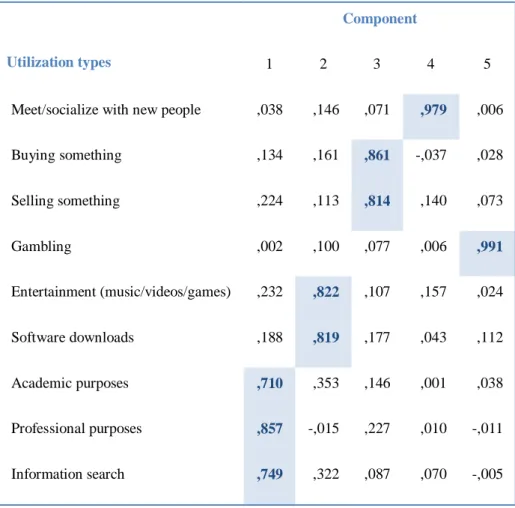
Through the analysis of the results obtained in this question, 5 main factors related to the reasons of the usage of Internet were identified. These factors are: knowledge, entertainment, commerce, socialization and gaming. These factors are identified in a Factorial Analysis in Principal Components of the obtained data.
The Factorial Analysis on the Principal Components shows a latent structure in internet utilization types. In the structure – Table 5.2 – 5 principal factors are identified that explain 80% of the variation of the original variables. For each of these factors corresponds a percentage of the total variation:
1. Knowledge – factor associated to the utilization in the professional and
academic and information search, that corresponds 21.7% of the total variation; Non-rel. Irrel. Reason.. rel. Rel. Very rel.
37 2. Entertainment – leisure factor – entertainment and software download that
corresponds 18.3% of the total variation
3. Commerce – factor associated to the buying and selling of products in Internet, 17.1% of the total variation
4. Socialization – utilization factor with the objective of meeting/socializing with new people, 11.2% of the total variation
5. Gaming – factor associated to gambling in the internet, 11.1% of the total variation.
Table 5.2 – Principal Factors – Association with the different types of utilization
Utilization types
Component
1 2 3 4 5
Meet/socialize with new people ,038 ,146 ,071 ,979 ,006
Buying something ,134 ,161 ,861 -,037 ,028 Selling something ,224 ,113 ,814 ,140 ,073 Gambling ,002 ,100 ,077 ,006 ,991 Entertainment (music/videos/games) ,232 ,822 ,107 ,157 ,024 Software downloads ,188 ,819 ,177 ,043 ,112 Academic purposes ,710 ,353 ,146 ,001 ,038 Professional purposes ,857 -,015 ,227 ,010 -,011 Information search ,749 ,322 ,087 ,070 -,005
38
5.1.1.3.2 Information research and shopping habits
The respondents expressed themselves about the product categories on which they searched information before making the purchase. In the case of a positive answer to a specific category, they answered if they searched the information digitally or not. If their answer was that they searched it digitally, they responded in which sources they bought the product digitally. If the answer was positive, I asked for the frequency of the purchases as well as the value in the last 12 months. These answers are analyzed in the next point.