Biologic width and Morse taper implant
Universidade Fernando Pessoa
Biologic width and Morse taper implant
Universidade Fernando Pessoa
Biologic width and Morse taper implant
Joumayma Saad Bassil
Trabalho apresentado à Universidade Fernando Pessoa como parte dos requisitos para obtenção do grau de
Implant connection maintains narrow link with the biologic width which represents a guarantee to a good health of soft and hard tissue. It will have a significant impact on the success of the prosthetic projects, both functional and aesthetic level.
There are basically three types of implant-abutment connections: External hexagon, internal hexagon, which have in common a transfixation screw which has a key role in the stability and another internal connection system called “Morse taper”. In internal and external hexagon connection, occlusal forces are transmitted at the crestal bone with the risk of cratering. Conversely the “Morse taper” system is much more tight which allows it to be positioned subcrestaly while avoiding the bacterial leakage. This connection system also has the advantage of distributing the occlusal forces throughout the implant.
Objective: This literature review aim to enumerate and describe the different implant connection type, the impact of the connectors on the biologic width and the therapeutic strategies implemented to preserve it.
Materials and methods: For this purpose a research has been done and data was obtained from online resources: Scielo, Medline, Bireme, Pubmed, Bon, books and specialized magazines which was conducted between December 2014 and June 2015. The key words used were Morse taper implant, biologic width, peri-implant biologic width, properties for implant connection, platform switching and preservation of peri-implant biologic width.
Implante conexão mantém estreita ligação com o espaço biológico que representa uma garantia para uma boa saúde dos tecidos moles e duros. Ela terá um impacto significativo sobre o sucesso dos projetos protéticos, tanto a nível funcional e estético.
Existem basicamente três tipos de implante-pilar conexões: hexágono externo, hexágono interno, que têm em comum um parafuso de transfixação que tem um papel fundamental na estabilidade e um outro sistema de conexão interna chamada "cone Morse". Em conexão hexagonano interno e externo, as forças oclusais são transmitidos na crista óssea com o risco de formação de crateras. Por outro lado o sistema de "cone Morse" é muito mais apertado, o que permite que ele seja posicionado subcrestal evitando a infiltração bacteriana. Este sistema de conexão apresenta a vantagem de a distribuição das forças oclusais ao longo do implante.
Objetivo: O objective desta revisao da literatura é enumerar e descrever os diferentes conexão implantare, o impacto dos conectores sobre o espaço biológico e as estratégias terapêuticas aplicadas para preservá-lo.
Material e Métodos: Para este efeito, uma pesquisa foi feita e os dados foram obtidos a partir de recursos on-line: Scielo, Medline, Bireme, PubMed, Bon, livros e revistas especializadas que foi realizado entre dezembro de 2014 e junho de 2015. As palavras-chave utilizadas foram : cone Morse implante, espaço biológico, espaço biológico peri-implantare , propriedades das conexões implantar, plateform switshing, a preservação do espaço biológico peri-implantare.
I would like to thank my dissertation supervisor, professor Jorge Pereira, for his input and valuable discussions.
I am very grateful for the support and motivation from my friends and family, particularly the help and support my friends Bakhos Fares & Fida Tawil and my sisters Gilberte, gladys and Adele.
I would like to thank my daughter Celena for being so patient with me and a great inspiration throughout this year.
Index of Figures ... i
Index of Tables ... ii
INTRODUCTION... 1
DEVELOPMENT ... 2
Materials and Methods ... 2
I. Biologic width around teeth and implants ... 3
I.1. Dental biologic width ... 3
I.1.1. Definition ... 3
I.1.2. Histological structures ... 4
I.1.2.1. The sulcular epithelium ... 4
I.1.2.2. The junctional epithelium (JE) ... 4
I.1.2.3. Connective tissue fibers ... 6
I.1.3. Role ... 7
I.2. Peri-implant biologic width ... 7
I.2.1. Description of peri-implant biologic width ... 7
I.2.2. Formation of the peri-implant biologic width ... 8
I.2.3. Differences and similarities between biologic width around implants and teeth ... 9
I.2.4. Role of the biologic width in the success of the implant ... 12
II. Implant connection types ... 14
II.1. External hexagon connection ... 14
II.2. Internal connection ... 15
II.3. Morse taper ... 16
II.3.1. Pure morse taper ... 16
II.3.2. Modified morse taper (centering cone) ... 17
III.1.1. Strength ... 19
III.1.2. Rigidity ... 19
III.2. Biological qualities ... 20
III.2.1. Biocompatibility ... 20
III.2.2. Micro-gap ... 20
IV. Implant connection and its influence on biological width ... 22
IV.1. Comparative studies between different types of implants connection ... 22
IV.1.1. General internal connection versus general external connection ... 22
IV.1.1.1. Mechanical strength ... 22
IV.1.1.2. Stress distribution ... 23
IV.1.1.3. Microgap and bacterial penetration ... 24
IV.1.1.4. Interest of morse taper ... 24
IV.2. Platform switching ... 27
IV.2.1. Definition ... 27
IV.2.2. Interpretation of the platform switching ... 30
IV.2.2.1. Repositioning of the inflammatory infiltrate and creation of mucosal joint . ... 30
IV.2.2.2. The biomechanical effect ... 31
V. Preservation of biologic width ... 33
V.1. Pre-implant assessment ... 33
V.1.1. Occlusal analysis ... 33
V.1.2. Prosthetic vertical space ... 35
V.1.3. Periodontal analysis ... 37
V.1.4. Implant Position ... 37
V.1.4.1. Corono apical direction ... 38
i
Figure 1: Biologic width ... 3
Figure 2: Junctional epithelium ... 5
Figure 3: Types of collagen fibers ... 6
Figure 4: Peri-implant biologic width ... 8
Figure 5: Differences and similarities between biologic width around implants and teeth ... 10
Figure 6: Biologic width after abutment connection and implant loading ... 11
Figure 7: External hexagon connection ... 15
Figure 8: Internal hexagon connection ... 15
Figure 9: trilobe implant ... 16
Figure 10: Axiom implant ... 17
Figure 11: Modified morse taper implant ... 18
Figure 12: External (EH) and internal torque implant (IT) connection resistance to different torque ... 23
Figure 13: Shematic drawing showing contact regions for an internal hexagon implant and an external hexagone implant ... 23
Figure 14 buccolingual cross section of internal hexagon implant and morse taper implant over stress loading ... 25
Figure 15: illustration of bone morphology in morse taper implant with platform switching and an external hexagon connection ... 26
Figure 16: Difference between platform switching and platform matching ... 28
Figure 17: comparative studies about bone resorption rate with and without platform- switching ... 29
Figure 18: a: Platform matching with inflammatory area of 180°, b: Platform-switching with inflammatory area of 90° ... 31
Figure 19: Diagnostic wax up ... 35
Figure 20: Chirurgical guide ... 36
ii
Table 1: Summary of different studies for implant connection performance ...………. 26 Table 2: Summary of clinical studies for difference between platform switching and
control group ………... 28
Table 3: Proprioceptive detection depending on antagonist teeth ...……….……. 33 Table 4: Relation between distance contact point-crest of the bone and the presence of
interproximal papilla ………..……….... 37
Table 5: Interproximal soft tissues dimensions measured from the most coronal
interproximal peak of bone ……… 37
1
INTRODUCTION
The late 70’s saw the advent of modern implantology, with the invention by the professor Per-ingvar Branemark of the osseointegration. Since then, progress and increase in the use of dental implants in prosthetic rehabilitations in dentistry have been noticed. The reliability, as well as the patient’s comfort while avoiding the use of natural teeth abutment, make implant’s therapeutic a solution of choice. However for a long time, only osseointegration was taken into account as criteria in the evaluation of implant success. Today both the patient and the practitioner have the requirement of esthetic and functional results.
In 1991, Tord Berglundh revealed the existence, around implants, like natural teeth, of a structure which he named peri-implant biologic width. Its existence seems to play a key role in the preservation of the gingival and osseous levels, which constitute the key elements of the sustainability of implants treatments.
The choice of the theme of this thesis is the result of a long reflection. The author intended helping practitioners has the necessary knowledge in order to establish the influence of implant connections on biologic width. To do so, definition of biologic width, similarities and characteristics between natural tooth and implant, last the different types of implant connections and their influence on surrounding tissues will be detailed in this thesis.
The objective of this study, through a literature review, is to deepen the dentist’s knowledge about the different implant-abutment connection types, their specificities, and to help him make a wise choice facing a large number of manufacturers who offer different designs. Far from claiming to address all aspects of all types of implant-abutment connection, this work is only meant to objectify a number of factors to consider when the practitioner chooses an implant system.
2
DEVELOPMENT
Materials and Methods
The analysis and preparation of this bibliographic review were based on the scientific material duly published in books, articles and publications. The bibliographic research was conducted via online using the Medline, Scielo, Bireme, Pubmed, Bon search bases.
The key words used in the research are: Morse taper implant, biologic width, peri-implant biologic width, peri-implant connections, platform switching, peri-implant positioning, properties of implant connection.
3
I. Biologic width around teeth and implants
I.1.Dental biologic width
I.1.1.Definition
Dental biologic width is defined as the dimension of the soft tissue, which is attached to the portion of the tooth coronal to the crest of the alveolar bone. This term was based on the work of Garguilo et al, in1961 who described the dimension and relationship of the dentogingival junction in humans. They reported the following mean dimensions: an epithelium attachment of 0, 97 mm, and a connective tissue attachment of 1, 07 mm. based on this work the biologic width is stated to be 2, 04 mm, which represents the sum of the epithelial and connective tissue measurements (Garguilo et al, 1961).
4
This space is made up by two separate structures that are:
- The epithelial attachment or junctional epithelium for a height of 0.97 mm. - The connective tissue attachment for a height of 1,07mm.
These values are average values and individual variations exist.
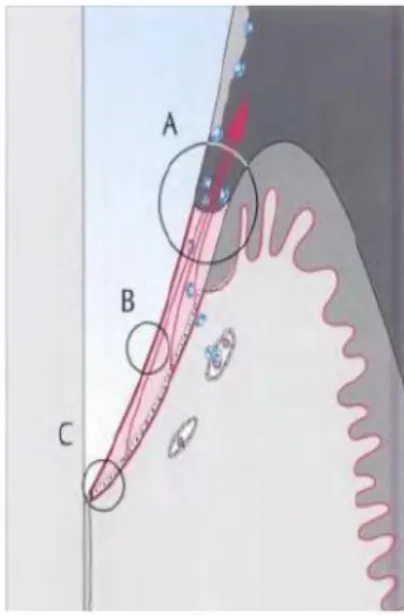
The biologic width is essential for preservation of periodontal health and removal of irritation that might damage the periodontium. The millimeter that is measured from the bottom of the junctional epithelium to the tip of the alveolar bone is held responsible for the lack of inflammation and bone resorption, and as such the development of periodontitis the dimension of biologic width is not constant it depends on the location of the tooth in the alveolus, varies from tooth to tooth, and also from the aspect of the tooth (Nugala et al, 2012)
I.1.2. Histological structures
I.1.2.1. The sulcular epithelium
While it is not strictly speaking part of the biologic width, it nevertheless constitutes the inner part of the gingival epithelium and is not attached to the tooth surface. It begins beyond the most coronal cells of the junctional epithelium and ends at the top of the gingival margins (Charon et al 2009)
It includes four epithelial cell layers without a well defined stratum corneum. It is a non keratinized squamous epithelium. The interface between the sulcular epithelium and and the lamina propria that it shares with the outer gingival tissue is relatively smooth compared with others strongly interdigitated interface. It is in constant interaction with the bacterial biofilm and the gingival fluid and has acanthosis attesting to these interactions. (Bercy et al 1996) (Wolf et al, 2005)
I.1.2.2. The junctional epithelium (JE)
5
the tooth, and in a healthy case against enamel to a zone close to amelo-cemuntum junction. It is approximately 1-2 mm in coronoapical dimension. At its apical extent, it consists of only a few cell layers (2 or 3) and more coronally it consists of 15-30 cell layers Bercy et al, 1996).
The junctional epithelium is bordered by two basal laminae: Basal lamina in contact with tooth: Internal basal lamina
Basal lamina in contact with lamina propria of gingiva: External basal lamina.
The junction between the epithelial cells /tooth and epithelial cells/lamina propria is ensured by hemidesmosomes (Wolf et al, 2005).
This epithelium has no acanthosis to gingival corium and is neither differentiated nor keratinized. Moreover it presents a rapid turnover (higher than the oral epithelium) (Charon et al, 2009).
In healthy situations, inflammatory cells are found within this epithelium (mostly polynuclear neutrophils, monocytes, macrophages and Langerhans cells), which form a barrier at the bottom of the sulcus, preventing bacteria from adhering to epithelial cells. Note that in pathological cases this inflammatory infiltrate is greatly increased. (Charon et al, 2009).
6
I.1.2.3. Connective tissue fibers
These fibers attach the tooth to the gingival tissue, they are called supracrestal fibers. They are collagen fibers organized in bundles to connect various anatomical structures together (Bercy et al 1996) (Charon et al,2009) (Wolf et al 2005)
The principal gingival fiber groups: - Cementogingival fibers (1) - Cementoperiosteal fibers (2) - Periostogingival fibers (3) - Alveologingival fibers (4) - Circular fibers (5)
- Transeptal fibers (6)
Figure 3: Different types of collagen fibers, Font (Bercy et al 1996)
7
I.1.3. Role
The characteristics of the biologic width define its role as: - Supportive
- Isolate the periodontal tissues of the external environment elements.
- Inform the periodontal tissues on the nature of the external environment through receptors located on the junctional epithelium cells (N-Acetyl-lactamine, EGF, LAF-3, IL-8 and ICAM-1)(Charon et al 2009) (Scroeder et al, 2000)
The biologic width has a real role of protection for periodontal tissues. However when attacked (by bacterial factor and or iatrogenic factor) and that aggression persists, we can attend either: (Ohayon L, 2005) (Schroeder et al, 2000)
- An irreversible gingival recession associated with bone resorption, in cases where the gingiva is thin.
- Chronic gingival inflammation associated with an increased gingival fluid and thereafter bone resorption with pockets formation, in case where the gingiva is thick (Schroeder et al, 2000).
I.2.Peri-implant biologic width
The success of implant treatment is not only related to the successful osseointegration. The peri-implant soft tissue also plays a major role.
I.2.1. Description of peri-implant biologic width
In 1991, studies carried out on animals by Berglundh et al showed that, as in dental case, peri-implant mucosa formed a three dimensional barrier adhering to the titanium abutment surface and creating a peri-implant biologic width (Berglundh et al, 1991).
This biologic width extends from the bottom of the sulcus to the bony septum.
It consists of three stages of constant dimensions over time; it is independent from load condition and function of the implant (Herman JS et al, 2000)
8
- A junctional epitjelium (JE)
- A connective tissue attachment (CT)
Figure 4: Peri-implant biologic width, Font (Davarpanah et al 2008)
The biologic width around implant is made after healing around a transgingival component, either an implant or a screw (De Sanctis M et al, 2010) (Sorni-Broker M et al, 2009)
I.2.2. Formation of the peri-implant biologic width
Berglundh et Al in 2007 specifically described the morphogenesis of the peri-implant tissues in dogs. These titanium implants have a smooth transgingival neck around which the biologic width may form.
- J0: Formation, immediately after the surgery, of a clot in the implant surface, mucous membrane and the alveolar bone.
- J+4: Granulocytes infiltration in the clot. An agglomeration of leukocytes in a dense fibrin network allows the initial closing of the mucosa.
9
Fibroblasts and fibers collagen occupy the central portion. The vertical dimension of the biologic width at this stage is 3,1mm.
- J+14: Adhesion of the peri-implant mucosa to the implant surface via a connective tissue. At this stage we can note the first signs of junctional epithelium proliferation.
- J+28: complete formation of the junctional epithelium. Apically we can observe a mature connective tissue.
- J+24-56: Maturation of the connective tissue with a layer of fibroblasts stretched into the titanium interface (collagen fibers pass between the fibroblasts parallel to the implant surface).
The biologic width increases during the process. He goes from 3,1mm in the first weeks to 3,5mm at the end of the study. The epithelial attachment varies during the study and ranges from 1,7mm to 2, 1 mm at the end of the study
Connective tissue attachment has a constant value, while the epithelial attachment is subject to variations (Berglundh et al, 2007)
Tomasi et al in 2013 have undergone experimental study in humans for morphogenesis of peri-implant mucosa. 21 patients receiving implant supported single tooth were enrolled in this study. At 8 weeks, the soft tissue was about 3, 6 mm and included a barrier epithelium of 1, 9 mm and connective tissue portion of 1, 7 mm (Tomasi et al, 2013)
I.2.3. Differences and similarities between biologic width around implants and teeth
10
Figure 5: 1: Buccal epithelium, 2: sulcular epithelium, 3:junctional epithelium, 4:connective tissue attachment, 5: avascular and hypocellular zone, 6: lack of
periodontal ligament, Font (SclarAG,2005)
11
Figure 6: Left: biologic width after abutment connection, Right: same biologic width few months after implant loading (notice the bone loss) (TC= connective tissue attachment, EJ= junctional epithelium, S= sulcus, Font (Davarpanah et al 2012)
The peri-implant biologic width also varies in its dimensions. It increases and measures 3mm in the vertical direction. (1 to 2mm for junctional epithelium and for connective tissue attachment as well, although the epithelium is generally more important than connective tissue attachment) (Davarpanah et al 2012) (De Sanctis et al 2010).
The epithelial attachment is very similar to that described around the tooth. It is formed of a layer of non keratinized epithelial cells which get thinner as it apicalise (Berglundh et al 1991). These cells have the ability to adhere bio-inert material such as titanium or ceramic using hemidesmosomes or basal lamina (Ikeda et al 2000). The implant surface state does not affect its adhesion. (Buser et al 1992).
However a study of Shioya et al conducted in 2009 tends to deny the existence of a basal lamina. It was found that, 8 weeks after placing the implant, the peri-implant epithelium was lost leaving room for particular cells aligned and surrounded by elongated fibroblasts and bundles of collagen fibers. No hemidesmosome or basal lamina has been found (Shioya et al, 2009).
12
bone crest run parallel to the implant surface. An area of dense circular fibers was found near to implant surface (Schierano et al, 2002) (Buser et al 1992).
Newins et al in 2008 and Schwarz et al in2007 in their studies has demonstrated the presence of connective tissue attachment around implant surface. (Newins et al, 2008) (Schwarz et al, 2007)
Cellular part of this connective tissue attachment is less important (13%) than in that of dental attachment, while collagen fibers represent approximately 80% of the volume (Moon et al 1999).
Finally because of the absence of the desmodont, the implant vascularization is lesser (especially the connective tissue area adjacent to the implant which is avascular). The vascularization comes from the periosteum and cortical vessels (Moon et al, 1999).
I.2.4. Role of the biologic width in the success of the implant
As periodontal tissue, peri-implant mucosa plays a role of barrier against the oral environment. When bacterial plaque colonizes implant surfaces, inflammatory infiltrate appears due to leucocytes migration into the junctional epithelium. This defense potential is less than that of the periodontal tissue because of the dental collagen fibers arrangement, the decreased number of fibroblasts and the loss of desmndontal vascularization, but stil enough to prevent any direct contamination of the implant by the oral environment (Comut et al, 2001) (Weyant R, 1994).
However many authors have observed that even a gum clinically healthy had a chronic inflammatory of low intensity. There is an indirect contamination through the prosthetic components due to:
- Microgap at the junction between the implant neck and the prosthetic abutment (Herman et al, 2001).
- Bacterial infiltrate formation along the implant abutment junction (Ericsson et al, 1996) (Broggini et al, 2006).
13
- occlusal loading (Miyata et al, 2009).
This chronic inflammation of the biologic width explains the existence of alveolar bone resorption of 1 to 1, 5 mm around the implant, almost always found in the first months of implant loading (Cardaropoli et al,2006) (Herman et al, 2000).(Herman et al, 2001).
14
II. Implant connection types
Implant connection is an element in the two stages implant system. This involves the fitting of a male part in a female part connecting the abutment to the implant.
When this union between these two parts allows accurate position of the abutment and prevents its rotation in the implant body, it is called antirotational connection. It is about geometric forms blocking the rotation and allowing precise positioning.
Implant and abutment are held together by a screw or by a system whose walls are convergentes and is called “Morse Taper” (Davarpanah et al, 2012).
This thesis will discuss three types of implant abutment connection:
- External hexagon connection: It is the oldest and the most prevalent form; it represents the Branemark implant connection (Davarpanah et al, 2012).
- Internal hexagon connection: A partial solution for unscrewing and screw fracture has occurred with this type of connection (Balfor, O’Brien,1995)
Today it takes precedence over the external connection (Finger et al 2003). - Morse taper connection: The principle of the conical connection provides better
distribution of forces at bone level. Transmitting lower stress along the implant prevents overload at crestal level (Norton MR, 1997). Improved “Morse taper” implants could be the future in implantology.
II.1.External hexagon connection
15
Figure 7: External hexagon connection, Font (Davarpanah, 2012)
II.2.Internal connection
There are different polygonal configurations, the most common are: Internal hexagon, internal octagon and internal trilobe (Belveze C, 2010).
A connection is called internal when the female part is in the body of the implant. The abutment fits in the implant. A screw maintains the system (Davarpanah et al, 2012).
A B
16
Figure 9: trilobe implant, Font (www.maxillofacialsurgeon.co.za) (accessed June 20, 2015)
Several geometric forms exist: polygons allowing easy positioning of the abutment and preventing its rotation. The more the polygon has faces, the more the possibilities of positioning are high (Belveze C, 2010) (Laurent T, 2006).
However these systems require positioning linked to the buccal surface. When the number of positioning is reduced (trilobe has less possible positions than hexagon), we gain en accuracy when a premachined abutment is planned (Davarpanah et al, 2012).
II.3.Morse taper
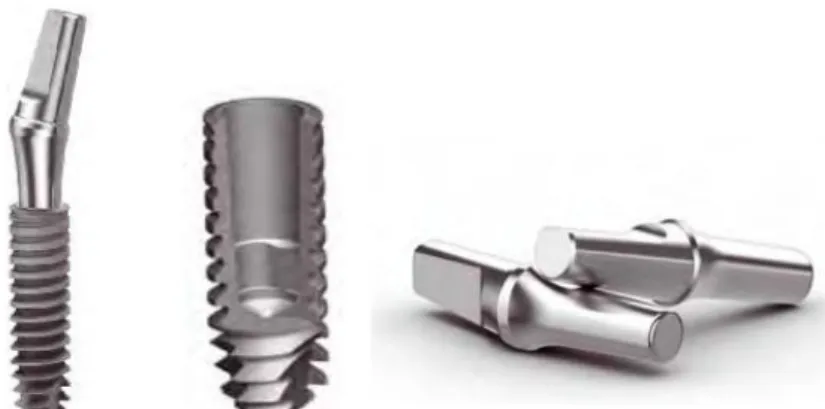
The morse taper was developed by the industry in 1864 to resist against the phenomenon of unscrewing. It is the interlocking of two cylinders with a conicity of 3 to 4°, the friction causes the system lock (Monin, Monin, 2010)
In implantology we have: - Pure Morse taper - Modified Morse taper.
II.3.1. Pure Morse taper
17
Figure 10: implant Axiom from Anthogyr.It has a morse taper with a conicity of 3° with a trilobe antirotational system.Font (www.anthogyr.fr) (accessed June 20, 2015).
II.3.2. Modified Morse taper (centering cone)
In these systems, the taper is greater than 4°. Increasing taper makes the friction and thus the retention lower. Therefore a screw consolidates the implant- abutment system (Belveze C, 2010)
In order to proceed to different stage of fitting and removal of healing abutment, transfer impression and to a possible reintervention, modified cone Morse can be used which allows to benefit from the advantages of a conical connection ( Monin, Monin, 2010):
- A greater contact surface thus and increased friction and retention (Chatzivarou et al, 2003)
- An easier fitting allowing optimal, centering positioning of the abutment over the implant (Chapman et al, 1996).
18
19
III.Properties required for implant connection
III.1. Mechanical properties
Implant connections must be perennial in order not to require maintenance or repair work. To measure this resistance, fatigue test are carried out by applying lateral forces.
III.1.1.Strength
The materials used in implant connectors must be strong enough not to give in to the occlusal forces to which they will be subjected, once the implant is under stress.
Titanium has largely proved its strength. However, zirconium abutments when subjected to occlusal stress seem to have sufficient resistance to withstand a force of 300N. (Maximum force during jaw closing at the incisors level noted in the literature). (Gherke et al, 2006). They can be recommended as an alternative in anterior single tooth restorations. However they are contraindicated for posterior teeth because occlusal force approaches their fracture limit (Etienne, Baixes, 2009).
III.1.2.Rigidity
Implant connectors who are subject to occlusal stress are prone to micro-movements (Davarpanah et al, 2005). The rigidity of the connectors aims to minimize these micro movements. These micro-movements can result in long term deterioration or early unscrewing of the connectors (Bartala M, 2008).
20
Moreover, these micro-movements cause microgap opening associated with an abrasion releasing microparticles that can be a source of irritation for the biologic width (Zipprich et al, 2007).
Thus, it appears that the rigidity of the implant connectors affects the response of the surrounding tissues (Rack et al, 2010).
III.2. Biological qualities
III.2.1.Biocompatibility
The materials used need to be biocompatible, it means that all the components must be biologically accepted by the body.
The requirements are:
- Absence of allergic, inflammatory or immunological reaction. - The absence of toxicity
- The absence of carcinogenicity
- The absence of damage to adjacent tissues, proteins of the plasma, enzymes (Chauvel-Lambret et al, 2002).
Titanium is the material of choice due to excellent biocompatibility. However ceramic abutments can be selected in anterior sector rehabilitation in case of thin gingiva for aesthetic reasons (Etienne, Baixes, 2009). The connectors involving zirconia and aluminium oxide show favorable histology results, “classic“dental ceramics and gold are less biocompatible (Welander et al,2008).
Titanium remains the material of reference in implantology (Rompen et al, 2007).
III.2.2.Micro-gap
21
In addition it has been demonstrated the existence of anaerobic bacteria infiltration at the micro-gap level, including the offending species in peri-implantitis such as Porphyromonas gingivalis or Fusobacterium nucleatum (Quirynem et al, 1994) (Misch et al, 2006)
In addition micro-movements lead to an opening and closure of the micro-gap causing by a pumping effect, the release of fluid containing bacterial endotoxins into the surrounding tissue initiating a pathophysiological process (Rack et al, 2010) (Zipprich et al,2007).
22
IV.Implant connection and its influence on biological width
IV.1. Comparative studies between different types of implants connection
As seen above, the tightness and rigidity of implant connectors influence the biologic width.
In the following paragraph a comparison of the implant performance among different types of existing connections.
IV.1.1.General internal connection versus general external connection
Most current studies and publications seem to show superiority of internal connections to external connections. This would be essentially due to the increase of the contact surface implant-abutment (Davi et al, 2008) (Hanson et al, 2000) (Jaworski et al, 2012).
IV.1.1.1. Mechanical strength
Generally internal connections initially showed increased fragility compared to the external connections, especially for small diameters. This fragility is due to the recess of the body of the implant destined to provide space for the implant abutment. This thinned the walls of the implant and decreased its strength. However the new titanium alloys resolve this problem (Gouet et al, 2012).
23
Figure 12: External (EH) and internal (IT) connection resistance to different torque Font (Davi et al 2008)
In a literature review, Theohridou et all, 2008 has analyzed the percentage of unscrewed implant for 586 external hexagon connection and 1113 internal connection after 3 years old.in single implant tooth restoration. The external connection systems had similar geometry while the internal systems where of three different types (caracterised as Straumann, Astra or other). The result showed no significant difference. The authors conclude that loosening of the abutment screw after single tooth restorations was a rare occurrence, regardless of the implant-abutment connection geometry, provided proper anti rotational features and torque were used (Theoharidou et al, 2008).
IV.1.1.2. Stress distribution
24
Chun et al, 2006 in their study demonstrated that in internal hexagon connections and due to large contact area implant-abutment, biomechanical stress was better distributed within the implant and thereby better redistributed within the bone. In the external hexagon connection, the highest strain concentration was found at the interface between the implant platform and the abutment which can cause irritation of the biologic width (Chun et al, 2006).
These results confirm those already published by Hanson in 2000 that compared Morse taper implants to flat top implants connection. The stress was exclusively located at the top marginal bone for the flat top implant-abutment interface whereas it was located more apically in the bone for the morse taper implants (Hanson et al, 2000).
IV.1.1.3. Microgap and bacterial penetration
Jaworski et al, 2012, compared in their study bacterial penetration within external hexagon connection and Morse taper. They concluded that, 30% of Morse taper were contaminated against 60% of external connections (Jaworski et al, 2012)
Tesmer et al in 2009 studied the difference of infiltration by the type of implant-abutment junction ( morse taper against tri-channel internal connection); following the incubation of different connectors systems in bacterial medium, the morse taper had a minimum contamination of the implant abutment interface either by actinomycetemcomitans (3 cases of contamination out of 10 against 9 out of 10 for a tri-channel internal connection) and porpphyromonas gingivalis (0 of 9 against 9 of 10).
IV.1.1.4. Interest of morse taper
All implant connection systems have a microgap enlarged by the stress on prosthetic implant restoration (rack et al, 2012) (Rack et al, 2013).
25
Figure 14 buccolingual cross section of system 1(internal hexagon implant) and 2 (morse taper implant) showing the distribution of Von Mises stresses under a 100N
vertical load, Font (Quaresma et al, 2008)
The bacterial leakage of Morse taper impalnt is slightly improved compared to internal hexagon connection with a scew: the study of Tripodi et al in 2012 demonstrated that 2 of the 10 Morse taper implants were contaminated against 5 of 10 internal hexagon connection implants (Tripodi et al, 2012).
26
Figure 15: illustration of bone morphology in morse taper implant with platform switching (left) and an external hexagon connection (right). The two implants were
placed in subcrestal. Yellow zone
represents bone loss after implant
placement. The morse taper implant shows less bone loss; the bone covering the implant collar without contact with the micro-gap, Adapt (weng et al 2008)
Zipprich et al in 2007 showed that the morse taper connections (“Ankylos” “Astratech conic seal”) did not show microgap opening during micro movements in relation to other internal connections. The pure Morse taper connections have slightly higher tightness and stability than modified Morse taper connection. But this difference is not clinically detectable. However they do not allow an easy fitting and require titanium as internal material due to the active engagement of the abutment into the implant( Assenza et al, 2012) (Rack et al, 2013).
27
Table 1: Summary of different studies for implant connection performance
Author Year Conclusion
Davi et Al 2008 Internal connectionmore resistant to unscrewing forces
Theoharidou et al 2008 Identical rate of screwing between internal and external connection
Chun et al 2006 Biomechanical stress better distributed for internal connection implants
Hanson et al 2000 Biomechanical stress better distributed for internal connection implants
Jaworski 2012 Implant abutment bacterial seal better in Morse taper than external hexagon
Quaresma et al 2008 Better distribution of biomechanical constraints for Morse taper implants
Tripodi et al 2012 slightly higher permeability to bacterial leakage of screwed retained internal connection implants compared to cone Morse implants
Weng et al 2008 Morse taper connections reduce marginal bone loss when placed in subcrestal position
Rack et al 2010 All connection types has micro-gap at the dental abutment interface
Assenza et al 2012 Morse taper slightly more stable than modified morse taper. No clinical difference
Mangano et al 2009 Same result for morse taper and modified morse taper
Aloise et al 2010 No significant difference between morse taper and modified morse taper for bacterial leakage through the implant- abutment interface
Seetoh et al 2011 external connection more resistant
Ribeiro et al 2011 external connection more resistant
IV.2. Platform switching
IV.2.1.Definition
28
discrepancy between the diameter of the implant and prosthetic abutment. The majority of implants had a platform matching which means continuity between diameters of the implant and the abutment (Lazzara, Porter, 2006).
Figure 16: Difference between platform switching and platform matching,Font (Lazzara et al 2006)
29
Since then, many studies seem to largely confirm this phenomenon TABLE 2 FIG17
Figure 17: comparative studies about bone resorption rate with (blue) and without (orange) platform- switching (Siffert et al 2011)
Table 2: Summary of clinical studies for difference between platform switching and control group (Siffert et al, 2011)
Author Year Difference between platform
switching group and control group
Number of implants studied
Follow up time
Canullo et al 2009 0, 89mm (74, 8%) Test group:11
control group:11
25 months
Canullo et al 2010 Group test 1:0,5mm(33,5%)
Group test 2:0,67mm(45%) Group test 3:0,93mm(62,4%)
Test Group1:17 Test group 2:15 Test group 3:18 Control group:19
21 months
Cappielo et al 2008 0, 72mm (43,1%) Test group:75 Control group:56
14 months
Hurzeler et al 2007 0, 17mm (56, 6%) Test group:14 Control group 8
12 months
Prosper et al 2009 0, 23mm (85, 2%) Test group:60 Control group:60
24 months
Vela -Nobert et al
2009 Mésial: 1, 77mm (70%) Distal: 1, 79mm (69, 9%)
Test group:30 Control group:30
6 months
Vigolo et al 2009 0, 3mm (30%) Test group:97 Control group:85
12 months
Becker et al 2007 Buccal: 0, 5mm (38, 5%)
Lingual: 0, 1mm (20%)
28 months
Becker et al 2009 Buccal: 0, 3mm (50%) Lingual: 0, 3mm (42,9%)
30
IV.2.2.Interpretation of the platform switching
Several hypotheses detail the consequences of the platform switching. They are biological and biomechanical
IV.2.2.1. Repositioning of the inflammatory infiltrate and creation of mucosal joint
Several studies presented by Siffert and Etienne in 2011 in their bibliographic review about the platform switching, show a biologic reaction that explains the decrease in bone resorption.
They observed horizontal repositioning of the biologic width toward the implant-abutment junction (seat of a chronic inflammation as seen above) (Siffert, Etienne, 2011).
This would:
- Place the chronic inflammation infiltrate in a spreading area of 90° instead of 180°, relative to the soft tissues. This results in a decrease in the intensity of inflammation and consequently the bone resorption.
31
Figure 18: a: Platform matching with inflammatory area of 180°, b: Platform-switching with inflammatory area of 90°, Font (Davarpanah et al 2012)
IV.2.2.2. The biomechanical effect
Several other studies detailed below demonstrate that the decrease in bone resorption found in the platform switching result of stress redistribution around the implant.
Various studies show that stress in alveolar bone decrease when using the platform switching. The value differences remain significant:
- 80% for Tabata et al (Tabata et al,2010)
- 2-7% for Schotenbauer et al (Schotenbauer et al, 2009)
For Maeda et al 2007, beside the amount of stress, it is also the distribution that changes.
When using platform switching, the forces are concentrated toward the center of the implant. They are thus redistributed more harmoniously into the bone. Tissues at the junction implant-abutment are in less stress (Maeda et al, 2007). Canullo et al in 2011 came to the same conclusion.
Starting with the assumption that the platform switching reduces bone resorption of peri-implant bone, Rodriguez-Ciruana et al, 2009, et al in their study wanted to verify if this characteristic causes a modification of the biomechanical stress.
32
33
V. Preservation of biologic width
As we have seen so far, the implant connectors play a major role in the preservation of peri-implant tissues and thus the success of implant therapy.
However, the preservation of biologic width must be included in an overall strategy from the beginning to the end of the treatment.
V.1.Pre-implant assessment
V.1.1. Occlusal analysis
Achieving an occlusal assessment is a necessary step before the realization of implant treatment. It aims to find any parafunctional habit and occlusal anomalies.
Bruxism
On a natural tooth, alveolar ligament act as visco-elastic structure. When the forces are of short duration, during mastication and swallowing, the tooth behavior does not differ from that of an implant since it acts as an ankylosed tooth (Richter EJ, 1995).
34
Table 3: Proprioceptive detection depending on antagonist teeth (Jacobs et al, 1991)
Scale nature of antagonist contact
20 Micron Tooth to tooth contact
48 Micron tooth to implant contact
64 Micron implant to implant contact
> 100 Micron Patient with a total removable prosthesis
As seen previously, the forces exerted on the implant restoration result in micro-movements in the connectors, which will interfere with the biologic width. In addition, the excessive occlusal loading in case of bruxism increases the risk of connector fracture.
Finally Miyata et al conducted a study in monkeys showed that occlusal overload greater than 180 micrometer induced bone resorption, even in the absence of initial bacterial inflammation. From 250 micrometer, bone destruction is faster than that observed for inflammation of bacterial origin. In addition, the authors did not observe spontaneous repair when stopping the occlusal overload, due to the absence of periodontal ligament (Miyata et al, 2000) (Miyata et al, 2002).
Even if the bruxism is not considered as a contraindication for implant reconstruction, it must be taken into consideration and treated with night guards in order to:
- Protect from the remaining tooth structure - Protect the implant components
- Try to reduce or resolve the parafunction.
35
V.1.2. Prosthetic vertical space
It is the prosthetic objective that guide the completion of the implant treatment through all satges due to :( FIG 19)
- The wax up
- Radiological guide - Surgical guides
- Temporary restorations (Boghanim et al, 2008).
Figure 19: Diagnostic wax up (a :anterior edentulous; b: diagnostic wax up occlusal view; c: diagnostic wax up vestibular view; d: try in of the wax up), Adapt (Davarpanah
36
Figure 20: Chirurgical guide (a: transformation of the diagnostic wax up into radiologic guide; b: radiologic guide, c: radiologic guide over diagnostic cast, d: try in
of the radiologic guide, e: preoperative view, f:use of the radiologic guide during surgery), Adapt (Davarpanah et al, 2012)
Old edentulous may be associated with egressions which reduce the prosthetic space. In this case coronoplasties or orthodontic ingressions have to be considered. If the space is less than 7mm, there is insufficient room for an abutment and a ceramic height. In these cases, trans-screwed prosthesis is indicated (Davarpanah et al, 2012).
37
V.1.3. Periodontal analysis
A periodontal examination should be performed before implant treatment in order to achieve different objectives.
First teach the patient the oral hygiene techniques which will enable him to perform implant maintenance. Then diagnosing of eventual periodontal disease and performing necessary periodontal care. It has been demonstrated that the peri-implantitis germs are essentially the same as those of periodontitis and that contamination from one site to another is possible. Thus, in mixed dentition, it is imperative to treat existing periodontal disease and to stabilize it before any implant therapy in order to reduce the risk of development of peri-implantitis (Joachim et al, 2001) (Riviere, Chaubron, 2012). Finally the periodontal examination will assess the quality of the mucosa of the implant site. Giovanni et al in 2012 considered that although some studies suggest that implant treatment can be done in absence of keratinized gingiva, a thick mucosal type and keratinized gingiva are elements required for the success of the implant treatment. Boghanim et al in 2008 demonstrated that these elements allow initially the protection of the implant site and second a better protection of the biologic width and a better resistance to to bacterial and mechanical aggressions (Boghanim et al, 2008). Lack of keratinized peri-implant tissue will require mucogingival surgery in order to improve the clinical situation.
V.1.4. Implant Position
As seen above the peri-implant biologic width has an incompressible vertical dimension of 3mm. if this distance is not respected, bone resorption in apical direction will be observed until recreation of the biologic width. However the latter has a horizontal component. Tarnow et al in 2000 showed that past the first months of implant loading, bone resorption occurs up to 1,5mm. This can cause soft tissue recession if the bone is insufficient to support them (Tarnow et al, 2000).
38
V.1.4.1. Corono apical direction
Tarnow et al in 1992 have demonstrated the existence of a relationship between the bone crest-contact point between two teeth and the presence or not of interdental papilla (Tarnow et al, 1992). Salama et al in 1998 confirmed the same report for implants. They found similar results with the difference that the scheme tooth/tooth is more favorable
Table 4: Relation between distance contact point-crest of the bone and the presence of
interproximal papilla (Tarnow et al 1992)
Distance in mm from contact point to crest of bone
≤ 5 6 ≥7
presence of the papilla (in%)
between two teeth 100 56 27
presence of the papilla (in%)
between an implant and a tooth 100 46,5 24
Table 5: Interproximal soft tissues dimensions measured from the most coronal
interproximal peak of bone (Salama et al 1998)
Situation vertical soft tissue measurment
Tooth-Tooth 5 mm
Tooth-Pontic 6,5 mm
Pontic-Pontic 6 mm
Tooth-Implant 4,5 mm
Implant-Pontic 5,5 mm
Implant-Implant 3,5 mm
39
diameter implant the implant burial will be close to 3mm.The larger the implant diameter, the less burial is required (1mm) (Armand S, 2008).
Figure 21: Corono- apical placement of the implant. Small diameter implant requires more burial. Font (Armand S, 2008)
If there are gingival recessions, the reference will be based on the gingival margin of adjacent teeth. This will allow the establishing of the biologic width. Weng et al in 2008 confirmed that only morse taper implants allow subcrestal implant positioning without bone cratering (Weng et al, 2008).
V.1.4.2. Buco-lingual direction
Due to initial bone cratering, it is necessary to position the implant so as to leave a sufficient bone thickness at the outer and inner bone tables so that soft tissue remains supported. This minimum thickness was estimated by Saadoun et al in 2004 of 1-2mm (94).
V.1.4.3. Mesio-distal direction
In mesio-distal direction it is important to leave a bone thickness between a tooth and an implant or two implants for different reasons:
- Allow proper cleaning of the interdental spaces. - Enable the realization of prosthetic rehabilitation
40
For these reasons, Saadoun et al in 2004 recommend a minimum distance between implants and between an implant and a tooth (Saadoun et al, 2004).
Table 6: Minimal values of interproximal spaces (Saadoun et al, 2004)
Situation Minimum distance of interproximal space
Tooth/tooth 1mm
Tooth/implant 1,5 to 2mm
41
CONCLUSION
It seems that implant-abutment connections constitute a high risk of the implant reconstruction.
They can be a source of irritation of mechanical (micro-movements) or bacterial (bacteria that colonizes the micro-hiatus and represents an aggression to the biologic width and the underlying bone) origin. The implant-abutment connection has a major role in the sustainability of implant treatment by the conservation of the position and the integrity of the biologic width. The biologic width is directly related to the bone level and gingival recession.
Nevertheless certain implant designs (platform switching, Morse taper etc) have enabled to minimise irritations caused by implant-abutment connections and to better control bone resorption. However studies for evaluation of the performance of different connections are sometimes contradictory. This can be attributed to the large number of existing designs and the multitude of parameters to be considered.
The preservation of the biologic width among others depends on of the implant connection. A global strategy must be implemented which must be defined by:
The periodontal typology and the occlusal parameters.
The comprehension of the biology and surgical concepts (implant diameter, implant positioning).
The industrialists are constantly in search of the best solution for connecting implant elements; they have to meet the expectations of the practitioners and the patients.
The requirements of the practitioners are optimal ergonomics, an easy reintervention, a reasonable cost, a maximal safety and especially simplicity in all the implant treatment phases.
The patient has his requirements that is necessary to take into account, mechanical resistance in the medium and long term and lesser possible cost.
42
BIBLIOGRAPHY
1. Abrahamsson I, Berglundh T. (2006). Tissue characteristics at microthreated implants: an experimental study in dogs. Clin Oral Implant Dent Relat Res, 8, p. 107-113
2. Abrahamsson I, Berglundh T, Sekino S et Al. (2003). Tissue reactions to abutment shift: an experimental study in dogs. Clin Implant Dent Relat Res, pp. 82-88.
3. Abrahamsson I, Berglundh T, Lindhe J. (1997). The mucosal barrier following abutment dis/reconnection. An experimental study in dogs. J Clin Periodontol, 24, p. 568-572.
4. Aloise JP, Curcio R, Laporta MZ. (2010). Microbial leakage through the implant-abutment interface of Morse taper implants in vitro. Clin Oral Implant Res, 21(3), p.328-335.
5. Antoun H, Uettwiller D. (2009). Le joint pilier-implant : influence sur la stabilité osseuse marginale : revue de littérature. Journal de parondontologie et implantologie orale, 28(3), pp. 189-205.
6. Armand S. (2008). Restauration unitaire antérieure en implantologie. Paris. Quintessence Internationale.
7. Assenza B, Tripodi B, Scarano A. (2012). Bacterial leakage in implants with different implant-abutment connections: an in vitro study. J Periodontol, 83(4), p.491-497. 8. Balfour A, Obrien GR. (1995).comparative study of antirotational single abutments. J prosthet dent, 73(1), p.36-43.
9. Bartala M. (2008). La jonction implant-pilier prothétique. Le fil dentaire, 35, p. 49-51.
10. Becker J, Ferrari D, Herten M, et al. 2007. Influence of platform switching on crestal bone changes at non-submerged titanium implants: a histomorphometrical study in dogs. J Clin Periodontol, 34(12), p. 1089-1096.
11. Becker J, Ferrari D, Mihatovic I, et al. (2009) Stability of crestal bone level at platform-switched non-submerged titanium implants: a histomorphometrical study in dog. J Clin Periodontol, 36(6), p.532- 539.
12. Belveze C. (2010). Evolution des connexions implants-prothèses. Le fil dentaire, 57, p.442-44I
43
14. Berglundh T, Abrahamson I, Welander M, et al. (2007). – Morphogenesis of the peri-implant mucosa: an experiment study in dogs. Clin Oral Implants Res, 18(1), p. 1-8 15. Berglundh T, Lindhe J, Ericsson I, et al. (1991). The soft tissue barrier at implants and teeth. Clin Oral Implants Res, 2(2) p.81-90.
16. Blanes RJ, Bernard JP, Blanes ZM et al (2007). A 10-years prospective study of ITI dental implant placed in the posterior region. Influence of the crown-to-implant ratio and different prosthetic treatment modalities on bone loss. Clin Oral Implants Res, 18 (6), p.707-714.
17. Boghanim P, Armand S, Campan P, et al. (2008). Observation du site implantaire : conséquences cliniques, Stratégie prothétique, 8(2), p. 113-123.
18. Brogginni N, Mcmanus LM, Herman JS et al. (2003). Persistent acute inflammation at the implant abutment interface. J Dent Res, 82, p. 232- 237.
19. Broggini N, Mcnamus LM, Herman JS et al. (2006). Peri-implant inflammation defined by the implant-abutment interface. J Dent Res, 85, p. 473-478.
20. Buser D, Weber HP, Donath K, et al. (1992).Soft tissues reaction to non-submerged unloaded titanium implants in beagle dogs. J periodontal; 63(3), p. 225-235.
21. Cappiello M, Luongo R, Di Lorio D, et Al. (2008). Evaluation of peri-implant bone loss around plateform-switched implants. Int J Periodontics Restorative Dent, 28(4), p.347-355.
22. Canullo L, Fedele GR, Lannello G, et al. (2010). Platform switching and marginal bone-level alterations: the results of a randomized-controlled trial. Clin Oral Implants Res, 21(1), p.115-121.
23. Canullo L, Goglia G, Lurlaro G et al. (2009). Short-term bone level observations associated with platform switching in immediately placed and restored single maxillary implants: a preliminary report. Int J Prosthodont, 22(3), p. 277-282.
24. Canullo L, Pace F, Coelho P, et al. (2011). The influence of platform switching on the biomechanical aspects of the implant-abutment system. A three dimensional finite element study, Med Oral Patol Oral Cir Bucal, 16 (6), p. 852-856.
25. Cardaropoli G, Lekholm U, Wennston JL. (2006). Tissue alteration at implant-supported single tooth replacements: a 1-s year prospective clinical study. Clin Oral Implant Res, 17 p. 165-171.
44
27. Charon J et al. (2009). Parodontie médicale : innovation clinique, 2éme édition. Paris. Edition CDP.
28. Chatzivarou M, Kanoy BE, Cooper L. (2003). Facteurs infleuneçant le choix d’un pilier pour les implants dentaires. Implant. 9, p. 165-179.
29. Choi KS, Park SH, Lee JH. (2012).Stress distribution on scalloped implants with different microthread and connection configurations using three dimensional finite element analysis. Int J Oral Maxillofac Implants; 27(3), p. 29-38.
30. Chun HJ, Shin HS, Han CH et al. (2006). Influence of implant abutment type on stress distribution in bone under various loading conditions using finite element analysis. Int J Oral Maxillofac Implants, 21(2), p.195- 202.
31. Comut AA, Weber HP, Shortkroff S et al. (2001). Connective tissue orientation around dental implant in a canine model. Clin Oral Implants Res, 12(5), p. 433-440. 32. Christophe R-B, Coraline, G, Boris, J-K. (2013). Le concept de platform switching : revue de synthèse.platform switching : a systematic review. Implant 19, p.87-89.
33. Davarpanah M, Jakubowicz-Kohen B, Caraman M. (2005). Vers un nouveau type de connexions internes. Implant, 11(4), p. 275- 284.
34. Davarpanah M, Szmukler-Moncler, et al. (2008). Manuel d'implantologie clinique : concepts, protocoles et innovations récentes. Paris, 2ème édition, Ed : CDP
35. Davarpanah M, Szmukler-Moncler S, et al. (2012). Manuel d'implantologie clinique : concepts,intégration des protocoles et esquisse de nouveaux paradigmes. Paris, 3éme édition, ed : CDP.
36. Davi LR, Golin AL, Bernardes SR. (2008). In vitro integrity of implant external hexagon after application of surgical placement torque simulating implant locking. Braz Oral Res, 22(2), p. 125-131.
37. DE Sanctis M, Baldini N, Vignoletti F. (2010). Espace biologique péri-implantaire. Preuve histologique : revue d'étude animale. JPIO, 29 (4), p. 245-259.
38. Dias, ECL, Bisognin EDC, Harrari ND, Machado SJ, Da Silva CP, Soares GD et al. (2012). Evaluation of implant abutment microgao leakage en five external hexagon implant system: an in vitro study. Int J Oral. Maxillofac implant, 27(2), p. 346-351. 39. Ericsson I, Nilner K, Klinge B et al. (1996). Radiological characteristcs of submerged and non-submerged titanium implant. An experimental study in the labrador dog. Clin Oral Implants Res 6, p.20- 26.
45
41. Garguilo AM, Wentz FM, Orban BJ (1961). Dimensions and relations of the dentogingival junction in humans. J. of Periodontal, 32, p. 261-267.
42. Gehrke P, Dhom G, Johcen B, et Al. (2006). Zirconium implant abutments: Fracture strength and influence of cyclic loading on retaining-screw loosening. Quintessence International, 37(1), p. 41-47.
43. Giovanolli JL, Renvert S. (2011) Péri-implantites. Paris, Quintessence International.
44. Gomes AL, Montero J. (2011). Zirconia implant abutment. A rewiew Med Oral Patol Cir Bucal, 16(1), p.50-55.
45. Gouet E, Azria D, Azmalag J et al. (2012). Codes de la réussite implantaire. Paris, Med'Com.
46. Grandi T, Guazzi P, Samarani R et al. (2012). Immediate positioning of definitive abutments versus repeated abutment replacements in immediately loaded implants: effects on bone healing at the 1-year follow-up of a multicentre randomised controlled trial. Eur J Oral Implantolo 5(1), p. 9-16.
47. Hansson S. (2000). Implant-abutment interface: biomechanical study of flat top versus conical. Clin Implant Dent Relat Res, 2(1), p.33-41.
48. Herman JS, Buser D, Schenk RK, et al. (2000). Biologic with around titanium implants. A physiologically formed and stable dimension over time. Clin Oral Implants Res, 11, p. 1-11.
49. Herman JS, Buser D, Schenk RK et al. (2000). Biologic width around one- and two-piece titanium implants – Clin Oral Implants Res, 12, P. 559-571.
50. Herman JS, Schoolfield JD, Schenk RK, et al. (2001). Influence of the size of the microgap on crestal bone changes around titanium implants. A histometric evaluation of unloaded non submerged implants in the canine mandible. J Periodontol, 72(10), p.1372-1383.
51. Hurzeler M, Fickl S, Zuhr O. (2008). Peri-implant bone level around implant with plateform-switched abutment : preliminary data from prospective study. J Oral Maxillofac Surg, 66 (10), p. 2195-2196.
52. Ikeda H, Yamaza T, Yoshinari M et al. (2000). Ultrastructural and immunoelectron microscopic studies of the peri-implant epithelium-implant (Ti-6al-4V) interface of rat maxilla. J periodontol, 71, p. 961-973.
46
54. Jacobs R, Van Steenberghe D. (1991). Comparative evaluation of the oral tactile function bv means of teeth or implant-supported prostheses. Clin Oral Implants Res, 2(2), p. 75-80.
55. Jansen VK, Conrads G, Richter EJ. (1997). Microbial leakage and marginal fit of the implant-abutment interface. Int J Oral Maxillofac Implants, 12, p. 527-540.
56. Jaworski ME, Melo AC, Picheth CM. (2012). Analysis of the bacterial seal at the implant-abutment interface in external-hexagon and Morse taper connection implants: an in vitro study using a new methodology. Int J Maxillofac Implants, 27(5), p. 1091-1095.
57. Joachim F, Duchatelle J, Charon J. (2001). Implantologie et maladies parodontales. L'information dentaire, 36, p. 2935-2946.
58. Jung RE, Jones AA, Higginbottom FL et al. (2008). The influence of non-matching implant and abutment diameters on radiographic crestal bone levels in dogs. J Periodontol, 79(2), p. 260-270.
59. King GN, Herman JS, Schoolfield JD et al. (2002). Influence of the size of microgap on crestal bone level in non submerged dental implants: a radiographic study in the canine mandible. J Periodontal, 73(10), p.1111- 1117.
60. Koutouzis T, Koutouzis G, Gadalla H et al. (2013). The effect of healing abutment reconnection and disconnection on soft and hard periimplant tissues: a short-term randomized controlled clinical trial. Int J Oral Maxillofac Implants, 28(3), p. 807-8014. 61. Koyturk A.E, Malkoc S. (2005). Orthodontic extrusion of subgingivally fractured incisor before restoration. A case report: 3- years follow-up. Dent. Traumat. 21: 174-178.
62. Laurent T. (2006). – Connexion implantaire interne ou externe. L'information dentaire, 25, p.1467-1470.
63. Lazzarra RJ, Porter SS. (2006). Platform switching: a new concept in implant dentistery for controlling postrestorative crestal bone levels. Int J periodontics Restorative Dent, 26 (1), p. 9-17
64. Lee KJ, Yong GK, Park JW et al. (2012). Influence of crown-to-implant ratio on peri-implant marginal bone loss in the posterior region: a five-year retrospective study. J Periodontal Implant Sci, 42(6), p. 231-236.
47
66. Lorenzoni FC, Coelho PG, Bonfante G et al. (2011). Sealing Capability and SEM Observation of the Implant-Abutment Interface. Int J Dent, 2011(epub): 864183.
67. Maeda Y, Miura J, Taki I et al. (2007). Biomechanical analysis on platform switching : is there any biomechanical rationale? Clin Oral Implants Res, 18 (5), p. 581 : 584.
68. Mangano C, Mangano F, Piattelli A. (2009). Prospective clinical evaluation of 1920 Morse taper connection implants: results after 4 years of functional loading. Clin Oral Implants Res, 20(3), p.254-261.
69. Maximo MB, DE Mendoca AC, Renata Santos V, et al. (2008). Short-term clinical and microbiological evaluations of peri-implant diseases before and after mechanichal anti-infective therapies. Clin Oral Implants Res, 20(1), p. 99-108.
70. Mish CE, Goodacre CJ, Finley JM et al. (2006).Consensus conference planel report: crown-height space guidelines for implant dentistry. Part 2, Impant Dent, 15, p. 113-121.
71. Miyata T, Kobayashi Y, Araki H et al – The influence of controlled occlusal overload on peri-implant tissue. Part 3 a histologic study in monkey. Int J Oral Maxilofac Implants, 15(3), p. 425-431.
72. Miyata T, Kobayashi Y, Araki H et al. (2002). The influence of controlled occlusal overload on peri-implant tissue. Part 4 a histologic study in monkey. Int J Oral Maxilofac Implants, 17(3), p. 384-390.
73. Monin JC, Monin A. (2010). Du bon usage de la divergence de la dent unitaire à la prothèse implanto-portée à l’aide d’implant à connectique cône morse sans vissage. Implantologie, p.131-139.
74. Moon IS, Berglundh T, Abrahamsson I, Linder E, Lindhe J. (1999). The barrier between the keratinized mucosa and the dental implant. An experimental study in the dog. J Clin Periodontal, 26, p. 658-663.
75. Nevins M, Nevins ML, Camelo M, et al. (2008). Human histologic evidence of a connective tissue attachment to a dental implant. Int J Periodontics Restorative Dent, 28, p. 111-121.
48
77. Norton MR. (1997). An in vitro evaluation of strenght of an internal conical interface compared to a butt joint interface in implant design. Clin Oral Implant Res, 8(4), p.290-298.
78. Ohayon L. (2005). Rétablissement de l’espace biologique par élongation coronaire chirurgicale ou égression orthodontique : indications et choix thérapeutiques. J. Parodontol Implant. Orale, 24(3), p. 187-196.
79. Prosper L, Radaelli S, Pasi M, et al. (2009). A randomized prospective multicenter trial evaluating the platform-switching technique for the prevention of postrestorative crestal bone loss. Int J Oral Maxillofac Implants, 24(2), p. 299-308.
80. Quaresma SE, Cury PR, Sendyk WR et Al. (2008). A finite element analysis of two different dental implants: stress distribution in the prosthesis, abutment, implant, and supporting bone. J Oral Implantolol, 34(1), p. 1- 6.
81. Quirynen M, Bollen CM, Eyssen H, et al. (1994). Microbial penetration along the implant components of the branemark system. A in vitro study. Clin Oral Implants Res, 5 (4), p.239-244.
82. Rack A, Rack T, Stiller M et al. (2010). In vitro synchrotron-based radiography of micro-gap formation at the implant-abutment interface of twopiece dental implants. J Synchrotron Radiat, 17(2), p. 289-294.
83. Rack T, Zabler S, Rack A et al. (2013). An in vitro pilot study of abutment stability during loading in new and fatigue-loaded conical dental implants using synchrotron-based radiography. Int J Maxillofac Implants, 28(1), p. 44-50.
84. Ribeiro CG, Maia ML, Scherrer SS et al. (2011). Resistance of three abutment interfaces to fatigue testing. J Appl Oral Sci. 19(4), p. 413- 420.
85. Ricomini filho AP, Fernandes FS, Straioto FG et al. (2010). Preload loss and bacterial penetration on different implant-abutment connection systems. Braz Dent J, 21(2), p. 123-129.
86. Richter EJ. (1995). In vivo vertical forces on implants. Int J Oral Maxillofac Implants, 10(1), p.99-108.
87. Riviere C, Chaubron F – Du diagnostic parodontal au choix du sytème implantaire : apports des implants supra-crestaux. L'information Dentaire ; 14, p. 24-29.