Braz. J. of Develop.,Curitiba, v. 6, n. 9, p.64236-64254,sep. 2020. ISSN 2525-8761
Polyphenols isolated from pomegranate juice (Punica granatum L.): Evaluation
of physical-chemical properties by FTIR and quantification of total
polyphenols and anthocyanins content
Isolamento de polifenóis do suco da romã (Punica granatum L.): Avaliação das
propriedades físico-química por FTIR e quantificação do teor total de
polifenóis e antocianinas
DOI:10.34117/bjdv6n9-017Recebimento dos originais: 08/08/2020 Aceitação para publicação: 01/09/2020
Juliana Ferreira de Souza
PhD student in Pharmaceutical Science by University of Sorocaba, UNISO, Brazil. Laboratory of Biomaterials and Nanotechnology, University of Sorocaba.
Raposo Tavares, Km 92.5, Sorocaba, São Paulo, Brazil. E-mail: [email protected]
Venâncio Alves Amaral
PhD student in Pharmaceutical Science by University of Sorocaba, UNISO, Brazil. Laboratory of Biomaterials and Nanotechnology, University of Sorocaba.
Raposo Tavares, Km 92.5, Sorocaba, São Paulo, Brazil. E-mail: [email protected]
Thais Francine Ribeiro Alves
PhD in Pharmaceutical Science by University of Sorocaba, UNISO, Brazil. Laboratory of Biomaterials and Nanotechnology, University of Sorocaba.
Raposo Tavares, Km 92.5, Sorocaba, São Paulo, Brazil. E-mail: [email protected]
Fernando Batain
PhD student in Pharmaceutical Science by University of Sorocaba, UNISO, Brazil. Laboratory of Biomaterials and Nanotechnology, University of Sorocaba.
Raposo Tavares, Km 92.5, Sorocaba, São Paulo, Brazil. E-mail: [email protected]
Kessi Marie de Moura Crescencio
PhD student in Pharmaceutical Science by University of Sorocaba, UNISO, Brazil. Laboratory of Biomaterials and Nanotechnology, University of Sorocaba.
Raposo Tavares, Km 92.5, Sorocaba, São Paulo, Brazil. E-mail: [email protected]
Braz. J. of Develop.,Curitiba, v. 6, n. 9, p.64236-64254,sep. 2020. ISSN 2525-8761 Cecilia Torqueti de Barros
PhD student in Pharmaceutical Science by University of Sorocaba, UNISO, Brazil. Laboratory of Biomaterials and Nanotechnology, University of Sorocaba.
Raposo Tavares, Km 92.5, Sorocaba, São Paulo, Brazil. E-mail: [email protected]
Alessandra Candida Rios
PhD student in Pharmaceutical Science by University of Sorocaba, UNISO, Brazil. Laboratory of Biomaterials and Nanotechnology, University of Sorocaba.
Raposo Tavares, Km 92.5, Sorocaba, São Paulo, Brazil. E-mail: [email protected]
Marco Vinícius Chaud
PhD in Drugs and Medicines by University of São Paulo, USP, Brazil. Laboratory of Biomaterials and Nanotechnology, University of Sorocaba.
Raposo Tavares, Km 92.5, Sorocaba, São Paulo, Brazil. E-mail: [email protected]
Braz. J. of Develop.,Curitiba, v. 6, n. 9, p.64236-64254,sep. 2020. ISSN 2525-8761 ABSTRACT
Pomegranate (Punica granatum L.) is a polyphenols source, such as anthocyanins, punicalagin, ellagitannins and tannins. Polyphenols are antioxidant compounds present in foods as cereals, fruits (peels, seeds and juice), vegetables, wine, and among others. Polyphenols are responsible to protect cells and to limit the risks of degenerative and tumoral diseases, as well as, to prevent cardiovascular diseases, neuronal diseases, and present important anti-inflammatory effects. The purpose of this study was to isolate polyphenols from pomegranate juice using solvents without heating. The solvents used were ultrapure water, ethanol, ethanol 70% and methanol. The samples were characterized by FTIR to evaluate the physical-chemical properties, the total polyphenols content was quantified by Folin-Ciocalteau method, using gallic acid as standard equivalent, and the total anthocyanins content was quantified by pH-differential method, using anthocyanins (cyanidin-3-glucoside) as standard equivalent. FTIR spectra showed the main characteristic groups of polyphenols, as hydroxyl group and stretching vibration of benzene rings. And the characteristic groups of solvents were CH2 ou CH3, hydroxyl, carboxyl e carbonyl group. For the quantification
of total polyphenols and anthocyanins content, the best results were found to the pomegranate juice: ultrapure water samples. According to the data obtained it was possible to conclude, who the process employed was effective to isolate the polyphenols from pomegranate juice and the use of different types of solvent influenced in the achievement of these results.
Keywords: Pomegranate juice; Polyphenols; Anthocyanins. RESUMO
Romã (Punica granatum L.) é uma fonte de polifenóis como as antocianinas, punicalagina, elagitaninos e taninos. Os polifenóis são compostos antioxidantes presentes em comidas como cereais, frutas (casca, sementes e suco), vegetais, vinho e entre outros. Polifenóis são responsáveis por proteger as células e limitar os riscos de doenças degenerativa e tumoral, assim como, prevenir doenças cardiovasculares, doenças neuronais e apresentam importantes efeitos anti-inflamatórios. O objetivo desse estudo foi isolar polifenóis do suco da romã usando solventes sem aquecimento. Os solventes usados foram água ultrapura, etanol, etanol 70% e metanol. As amostras foram caracterizadas por FTIR para avaliar as propriedades físico-química, o teor total de polifenóis foi quantificado pelo método de Folin-Ciocalteau, usando o ácido gálico como equivalente padrão e o teor total de antocianinas foi quantificado pelo método de pH-diferencial, usando antocianinas (cianidina-3-glucosídeo) como equivalente padrão. Os espectros de FTIR mostraram os principais grupos característicos dos polifenóis, como grupo hidroxil e estiramento de vibrações de anéis de benzeno. E os grupos característicos para os solventes foram os grupos CH2 ou CH3, hidroxil,
carboxil e carbonil. Para quantificação do teor total de polifenóis e antocianinas, os melhores resultados foram encontrados para as amostras de suco de romã: água. De acordo com os dados obtidos foi possível concluir, que o processo empregado foi efetivo para isolamento dos polifenóis do suco da romã e que o uso de diferentes tipos de solvente influenciou na obtenção desses resultados.
Braz. J. of Develop.,Curitiba, v. 6, n. 9, p.64236-64254,sep. 2020. ISSN 2525-8761 1 INTRODUTION
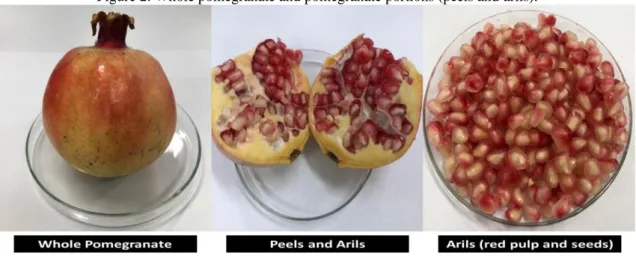
Pomegranate (Punica granatum L.) belongs to family Punicaceae, being cultivated in subtropical and tropical region, the fruit has been used in many countries and cultures of the worldwide (PUTNIK et al., 2018; BASSIRI-JAHROMI; DOOSTKAM, 2019). The pomegranate fruit contains many arils (red pulp and seeds) separated by a membrane called of pericarp. Pomegranate (peel, seeds and juice) has a valuable source of polyphenols, such as punicalagin, ellagitannins, tannins, flavonoids, anthocyanins and among others (AMBIGAIPALAN; CAMARGO; SHAHIDI, 2016; BASSIRI-JAHROMI; DOOSTKAM, 2019).
Polyphenols are originated from metabolism secondary of plants acting as an antipathogenic agent and contributing to pigmentation, and they are responsible for colour, astringency, aroma and oxidative stability (NACZK; SHAHIDI, 2004; MARTÍN et al., 2017). In our diets, the polyphenols are the most abundant antioxidants present in vegetables, cereals, teas, wines, and fruits such as orange, tangerine, cherry, grapes, blueberries and pomegranate (D’ARCHIVIO et al., 2007; FREITAS, 2019).
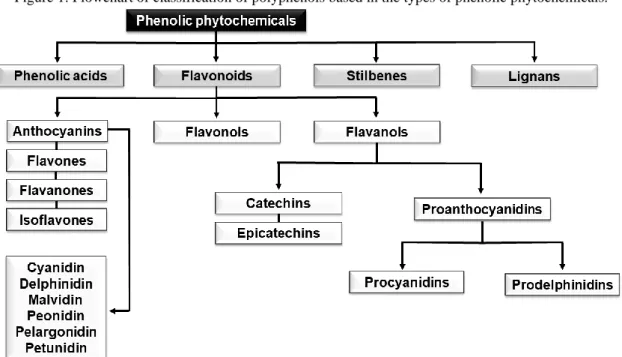
Chemically, the polyphenols present several hydroxyl groups on aromatic rings. Thus, polyphenols are classified by classes, according to number of phenol rings and structural elements to bind these rings. Thereby, the main polyphenols groups are phenolic acids, flavonoids, stilbenes and lignans (MARTÍN et al., 2017). Figure 1 describe the flowchart of classes and sub-classes of polyphenols.
Braz. J. of Develop.,Curitiba, v. 6, n. 9, p.64236-64254,sep. 2020. ISSN 2525-8761 Figure 1. Flowchart of classification of polyphenols based in the types of phenolic phytochemicals.
Anthocyanins belong to flavonoids class, being the largest group of water-soluble pigments (SHAIDI; NACZK, 2005). Basically, the structural chemical of anthocyanins is formed by benzene rings bonds (C6-C3-C6) who differ by number, position and hydroxylation and methoxylation degree of rings. In literature, there are six main anthocyanins described, being cyanidin, delphinidin, malvidin, peonidin, pelargonidin and petunidin (DELGADO-VARGAS; JIMENEZ; PAREDES-LOPEZ, 2010).
Anthocyanins from pomegranate has bioactive properties, although these properties may be varying according to cultivation type, growing, location, climate, and the maturity at harvest. In literature, the pomegranate is considered the healthy food, due its benefits and high antioxidants content. The mains medicinal properties related are antioxidant activity, wound healing, antidiabetic, antitumoral, anti-inflammatory, antimicrobial, and cardiovascular protective effect against low-density lipoprotein (LDL), high-density lipoprotein (HDL), and atherosclerosis (AVIRAM; ROSENBLAT, 2013; NASCIMENTO JÚNIOR et al., 2016; PUTNIK et al., 2018).
The purposes of this study was to isolate polyphenols from pomegranate juice using solvents applied mechanical agitation followed by centrifugation without heating. The solvents used were ultrapure water, ethanol, ethanol 70%, and methanol. The samples were characterized by FTIR to evaluate the physical-chemical properties. Total polyphenols content was quantified by folin-ciocalteau method, using gallic acid as standard equivalent and the total anthocyanins content was analysed by pH-differential method, using anthocyanins (cyanidin-3-glucoside) as standard
Braz. J. of Develop.,Curitiba, v. 6, n. 9, p.64236-64254,sep. 2020. ISSN 2525-8761
equivalent. Total polyphenols and anthocyanins content were evaluate using spectrophotometric methods.
2 MATERIALS AND METHODS 2.1 MATERIALS
Pomegranate (Punica granatum L.) (Harvest in Sorocaba, São Paulo, Brazil), ethanol (Synth, São Paulo, Brazil), ultrapure water (18,2 MΩ.cm-1), and methanol (Chemco, São Paulo, Brazil) were
used to obtain the samples. Gallic acid (Dinâmica, São Paulo, Brazil), folin-ciocalteau reagent (Dinâmica, São Paulo, Brazil) and sodium carbonate (Na2CO3) were used to total polyphenols
content. Potassium chloride (Dinâmica, São Paulo, Brazil) and sodium acetate (Dinâmica, São Paulo, Brazil) were used to quantified total anthocyanins content. All reagents used was analytical grade.
2.2 OBTAINING OF POMEGRANATE JUICE (PUNICA GRANATUM L.)
Pomegranate was harvested from tree located in Sorocaba (São Paulo, Brazil) before complete maturation. After manual harvesting, the fruit were transported to Laboratory of Biomaterials and Nanotechnology (LaBNUS). Figure 2 showed the pomegranate fruit portions. In this study was used the arils (red pulp and seeds), to obtain the pomegranate juice. Briefly, the fruits were selected and washed with water to remove impurities. And thus, manually were cut to separate the peels and arils. The pomegranate juice was obtained by compressed of arils, and after this process, the juice was stored in freezer (-18 °C).
Braz. J. of Develop.,Curitiba, v. 6, n. 9, p.64236-64254,sep. 2020. ISSN 2525-8761
2.3 POLYPHENOLS ISOLATED FROM POMEGRANATE JUICE (PUNICA GRANATUM L.) Polyphenols isolated from pomegranate juice was performed using four types different of solvents. Briefly, the samples were prepared in the proportion 1:10 (sample: solvent), and the solvents used were ultrapure water, ethanol (99.5%), ethanol 70% and methanol. The sample: solvent (v/v) were agitated by orbital shaker (Tecnal, TE-4200, Piracicaba, Brazil) in 100 rpm at 25 °C during 60 minutes, and in sequence, the samples were centrifuged (Celm, Combate, Barueri, Brazil) in 3.400 rpm (2.232 g-force) during 30 minutes. After this process, the supernatant was collected and stored in freezer (-18 °C).
2.4 FOURIER TRANSFORM INFRARED SPECTROSCOPY (FTIR)
FTIR (IRAffinity-1S. Shimadzu, Kyoto, Japan) analysis was used to determine the chemical interaction between pomegranate juice and solvents. The characterization of specific chemical groups was evaluated by FTIR using the attenuated reflectance technique (FTIR-ATR) in the transmittance mode. Spectra were obtained in the wavelength range from 4000 to 600 cm-1, with a
resolution of 4 cm-1 and 128 scans. The results were collect using Labsolutions Software. The spectra were normalized, and the vibration bands were associated with the main chemical groups of each component of the samples.
2.5 ANALYTICAL CURVE TO DETERMINE TOTAL POLYPHENOLS CONTENT
Total polyphenols content was determined by folin-ciocalteau method, described by Çam; İçyer (2013) and Fawole; Opara (2016) with modifications. For the quantification, the gallic acid was used as standard equivalent. The stock solution was prepared by dissolution aqueous of gallic acid (5 wt.%). Further dilutions were also performed in ultrapure water to obtain the calibration curve, in concentration range of 50-400 µg/mL. After this preparation, in each dilution was collect 500 µL and transferred in a glass test tube and added 2.5 mL of folin-ciocalteau reagent and 2.0 mL of sodium carbonate. The mixture was incubated for 15 min. in a thermostatic bath (Brookfield, TC 550, Middleborough, USA) at 50 °C and fast cooled in a freezer at -18 °C for 5 min.
The calibration curve had obtained by interpolation method, which unequivocally related to the analyte concentration, with the corresponding analytical signal at 760 nm (λ), resulting from a linear relationship. The coordinates between at least two points on the straight line was defined as the set of points, whose coordinates satisfied the linear equation. The calibration curve had carried out in triplicate on seven points. To interpolation of signal with analyte concentration was used spectrophotometer (Femto 800XI, São Paulo, Brazil).
Braz. J. of Develop.,Curitiba, v. 6, n. 9, p.64236-64254,sep. 2020. ISSN 2525-8761 2.6 TOTAL POLYPHENOLS CONTENT
Total polyphenols content was evaluated according to the folin-ciocalteau method. Briefly, the samples of 50 µL were dispersed in 2.5 mL of folin-ciocalteau reagent (2:10) and 2.0 mL of sodium carbonate (7.5%). The samples were maintained at 50 ºC in thermostatic bath, and in sequence, cooled in freezer (-18 ºC) for 5 min. The samples were analyzed in triplicate and the total polyphenols content was determined at wavelength (λ) of 760 nm by spectrophotometer, using FemtoScan Software. The results were expressed as µg of gallic acid equivalents (GAE) per mL of samples.
2.7 TOTAL ANTHOCYANINS CONTENT
Total anthocyanins content was evaluated according by the pH-differential method described by Lee; Durst; Wrolstad (2005) and Ambigaipalan; Camargo; Shahidi (2016) with slights modifications. The samples of 0.5 mL were dispersed in 9.5 mL of 0.025 M potassium chloride buffer (pH 1.0) and 0.4 M sodium acetate buffer (pH 4.5), separately. After 20 min, the samples were analysed in triplicate at 520 and 700 nm by spectrophotometer, using FemtoScan Software. The results of anthocyanins (cyanidin-3-glucoside) content were expressed in µg per mL of sample, being calculated according to Eq. (1).
𝐶 (𝑚𝑔/𝐿) = [(𝐴520 − 𝐴700) 𝑝𝐻 1.0 − (𝐴520 − 𝐴700) 𝑝𝐻 4.5]. 𝑀𝑀. 𝐷𝐹. 10
3
ε . 1 (1) Where C (mg/L) represents total anthocyanins (cyanidin-3-glucoside) content, A is absorbance, MM is molecular weight of cyanidin-3-glucoside (449.2 g/mol), DF is dilution factor, 103 is used to conversion from gram to milligram, ε is molar absorptivity (26.900), and 1 is de path
length (1 cm).
2.8 STATISTICAL ANALYSIS
All data were presented with the mean values ± standard deviation (SD). The data obtained were evaluated by one-way analysis of variance (ANOVA), followed by Tukey analysis. The test was performed using 95% of confidence interval. A two-sided P value of <0.05 was considered significant.
Braz. J. of Develop.,Curitiba, v. 6, n. 9, p.64236-64254,sep. 2020. ISSN 2525-8761 3 RESULTS AND DISCUSSION
3.1 POLYPHENOLS ISOLATED FROM POMEGRANATE JUICE (PUNICA GRANATUM L.) Polyphenols isolated from pomegranate juice was carried out with liquid-liquid samples (1:10). The liquid-liquid is a process to separate the components, due its distribution between two liquid phases. This process can be occurs, when the transfer of mass from one liquid phase into second liquid phase, this method may be performed in many different ways (ROBBINS; CUSACK, 1999; MARTÍN et al., 2017).
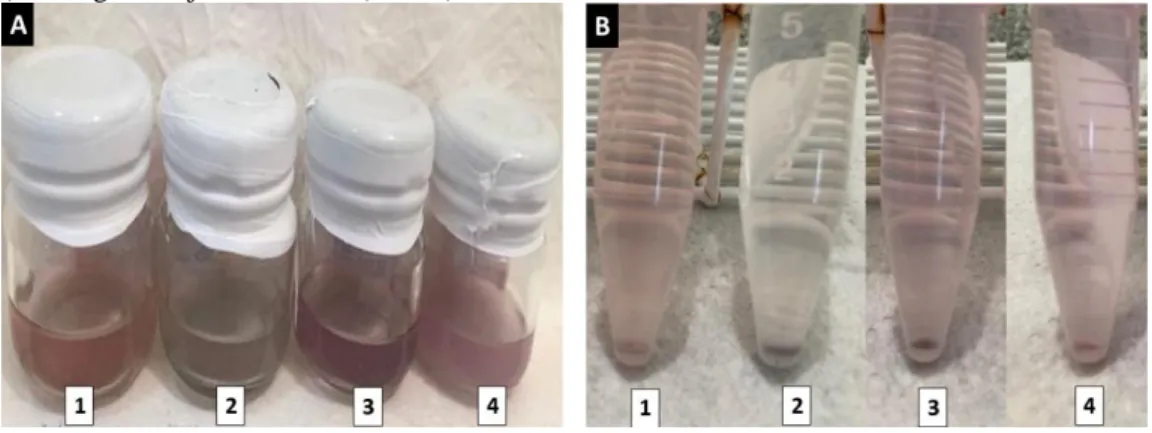
Therefore, in this study the method applied was the liquid-liquid process without heating, associating mechanical agitation, followed by centrifugation. Thereby, the centrifugation method act as sorting out of mixture, causing the suspended particles to tend to sedimentary (sedimentation process), and this is due to the difference in density, influenced by the centrifuge acceleration (g-force) that is employed in samples (ANLAUF, 2007). This sedimentation process that occurs can be seen in Figure 3 (B).
Figure 3 shown the samples of pomegranate juice (A) before and (B) after the polyphenols isolate process. Polyphenols isolate from pomegranate juice was performed using different solvents, being ultrapure water, methanol, ethanol 70%, and ethanol (99.5%).
Figure 3. Samples of pomegranate juice (A) before and (B) after polyphenols isolate process. The number identify the samples, being (1) Pomegranate juice: ultrapure water; (2) Pomegranate juice: methanol; (3) Pomegranate juice: ethanol 70%, and (4) Pomegranate juice: ethanol (99.5%).
3.2 FOURIER TRANSFORM INFRARED SPECTROSCOPY (FTIR)
The mid-infrared spectrometer was used to analyse the fundamental vibration energy linked rotational-vibrational that attached to interaction of infrared radiation between pomegranate juice samples. Infrared spectra were analysed in graph with FTIR in transmittance mode. The Figure 4 shows the samples of pomegranate juice with ultrapure water, ethanol (99.5%), ethanol 70%, and methanol.
Braz. J. of Develop.,Curitiba, v. 6, n. 9, p.64236-64254,sep. 2020. ISSN 2525-8761
Figure 4. FTIR spectra in samples of polyphenols isolated pomegranate juice. All spectra were obtained at 23±1ºC (room temperature).
The two characteristic peaks of pomegranate shown in the FTIR spectra (Figure 4) in pomegranate juice: ultrapure water. The 3421 cm-1 peak was corresponding hydroxyl group (-OH) and 1651 cm-1 peak was related to C=C stretching vibration of benzene rings (black dashed line) (EDISON; SETHURAMAN, 2013; OLIVEIRA et al., 2016), these peaks indicate the presence of polyphenols in pomegranate juice: ultrapure water samples.
Pomegranate juice: ethanol (99.5%) sample was observed characteristics peaks of ethanol and an intensity reduction between 1650-1600 cm-1 of C=C group (black dashed line). The region
between 3371-3419 cm-1 was related to -OH group, the peak in 3000-2980 cm-1 were related to
stretching vibration of CH2 or CH3 groups (ÖMEROĜLU AY et al., 2012; OLIVEIRA et al., 2016),
and the 1200-900 cm-1 bands were observed frequencies specific of C-O bonds (red dashed line)
(COLDEA et al., 2013).
While in pomegranate juice: ethanol 70% sample in 3419 cm-1, 2982 cm-1 and 1649 cm-1 corresponding, respectively, stretching vibration of hydroxyl group, CH2 or CH3 and stretching
vibration of C=C (black dashed line) was similar with pomegranate juice: ultrapure water sample (ÖMEROĜLU AY et al., 2012; OLIVEIRA et al., 2016). And peaks observed between 1200-900 cm-1 bands were specific stretching of C-O bonds (red dashed line) (COLDEA et al., 2013).
Pomegranate juice: methanol sample was observed characteristics peaks of methanol and an intensity reduction between 1650-1600 cm-1 of C=C group (black dashed line). The peak found were resemble with methanol, as described by Coldea et al., (2013) and Rizwana; Alwhibi; Soliman
Braz. J. of Develop.,Curitiba, v. 6, n. 9, p.64236-64254,sep. 2020. ISSN 2525-8761
(2016). Peak obtained at 3358 cm-1 represents hydroxyl group, the CH and CH2 stretching were
observed at 2943 cm-1 and 2833 cm-1, and the peak at 1028 cm-1 represents C-O stretch (red dashed line).
3.3 ANALYTICAL CURVE TO DETERMINE TOTAL POLYPHENOLS CONTENT
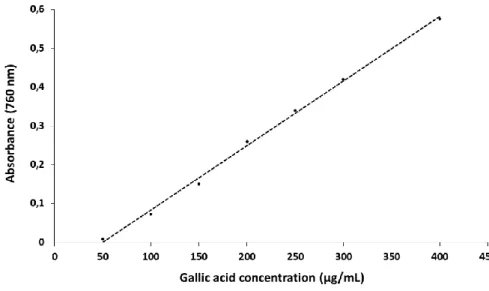
Analytical curve (Figure 5) was developed to determine total polyphenols content. The linearity was obtained between 50-400 µg/mL, corresponding to absorbance values between 0.01 and 0.6. The correlation coefficient was of 0,998 and linear equation obtained was y=0,0017x - 0,0832. The calibration curve is an empirical equation that relates the response of a specific instrument to the concentration of specific sample analyse. The analytical method obtained by spectrophotometer to determine polyphenols content was simple, reliable, easy to perform, reproducible and low-cost (BLAINSKI; LOPES; MELLO, 2013).
Figure 5. Analytical curve to determine total polyphenols content in samples of polyphenols isolated from pomegranate juice.
3.4 TOTAL POLYPHENOLS CONTENT
Total polyphenols content of samples were evaluated by folin-ciocalteau method. This colorimetric method relies in the reduction of phosphomolybdic-phosphotungstic acid reagent, due the transfer of electrons in alcaline medium of polyphenols to obtain blue complexes able to read by spectrophotometer (NACZK; SHAHIDI, 2004).
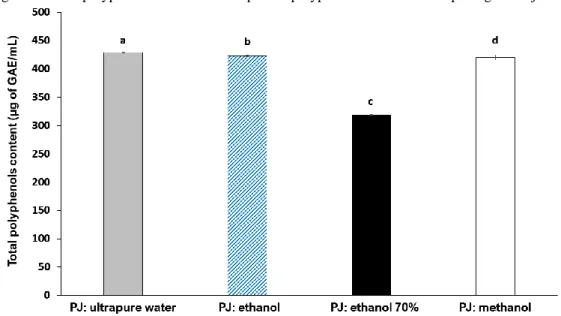
Total polyphenols content (Figure 6) was performed to analyze the polyphenols isolate from pomegranate juice using different types of solvents. The results were expressed as µg of gallic acid equivalents (GAE) per mL of samples. The results of total polyphenols content in pomegranate juice samples were different statistically (p>0.05). The results of samples showed who higher value was
Braz. J. of Develop.,Curitiba, v. 6, n. 9, p.64236-64254,sep. 2020. ISSN 2525-8761
found to pomegranate juice: ultrapure water, followed by pomegranate juice: ethanol, pomegranate juice: methanol and pomegranate juice: ethanol 70%.
Figure 6. Total polyphenols content in samples of polyphenols isolated from pomegranate juice.
Note: PJ - Pomegranate juice. Equal letters (for the same analysis) indicate that there is no significant difference between the mean values (p>0.05) (n=3).
3.5 TOTAL ANTHOCYANINS CONTENT
Total anthocyanins content of samples were evaluated by pH-differential method. The pH is crucial factor that influence in the colouring of anthocyanins, due the anthocyanins may be different colour and structural form. The difference of absorbance obtained, in this method to promote infer the real anthocyanins fraction present in samples (TEIXEIRA; STRINGHETA; OLIVEIRA, 2008; BORDIGNON JR. et al., 2009).
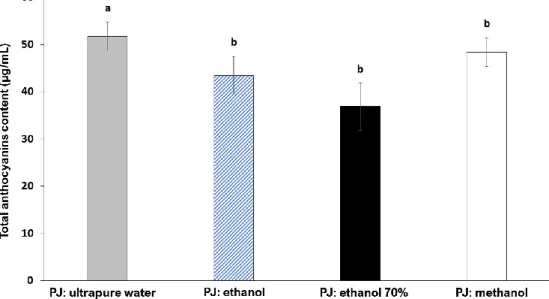
Total anthocyanins content (Figure 7) was performed to determine the polyphenols isolate from pomegranate juice using different types of solvents. The results of anthocyanins (cyanidin-3-glucoside) content were expressed in µg per mL of sample. The higher result was found to pomegranate juice: ultrapure water, followed by pomegranate juice: methanol, pomegranate juice: ethanol 99.5% and pomegranate juice: ethanol 70%. The samples of pomegranate juice with methanol, ethanol (99.5%), and ethanol 70% were similar statistically (p<0.05), being different statistically (p>0.05) to pomegranate juice: ultrapure water.
Braz. J. of Develop.,Curitiba, v. 6, n. 9, p.64236-64254,sep. 2020. ISSN 2525-8761 Figure 7. Total anthocyanins content in samples of polyphenols isolated from pomegranate juice.
Note: PJ - Pomegranate juice. Equal letters (for the same analysis) indicate that there is no significant difference between the mean values (p>0.05) (n=3).
Table 1 present values (mean ± SD) of total polyphenols content versus total anthocyanins content in samples of polyphenols isolate from pomegranate juice. When correlated the results of total polyphenols and anthocyanins content, in the samples of pomegranate juice: ultrapure water was found 12% of total anthocyanins content, 11.5% to ethanol 70%, and 10% to ethanol (99.5%) and methanol. Therefore, the sample of pomegranate juice: ultrapure water presented higher result to total anthocyanins content.
Table 1. Results of total polyphenols content versus total anthocyanin content in samples of polyphenols isolated from pomegranate juice.
Samples Total polyphenols content
(µg/mL)
Total anthocyanins content (µg/mL)
PJ: ultrapure water 429,05±0,75 a 51,77±2,99 a
PJ: ethanol 423,01±1,29 b 43,42±4,98 b
PJ: ethanol 70% 319,16±0,75 c 36,92±4,99 b
PJ: methanol 420,43±4,66 d 48,43±2,97 b
Note: PJ - Pomegranate juice. Equal letters (for the same analysis) indicate that there is no significant difference between the mean values (p>0.05) (n=3).
The different results found in the analysis to FTIR (Figure 4), total polyphenols content (Figure 6) and total anthocyanins content (Figure 7), may be attributed to type of solvents used to promote the process of polyphenols isolated from pomegranate juice, due the solubility of polyphenols vary according to, the polarity of the solvents, the degree of polymerization of polyphenols and their interactions with other constituents of pomegranate juice (Punica granatum
Braz. J. of Develop.,Curitiba, v. 6, n. 9, p.64236-64254,sep. 2020. ISSN 2525-8761
acetone, ethanol and their combination (NACZK; SHAHIDI, 2004; ANGELO; JORGE, 2006; WANG, 2011).
The compound solubility in solvent system depends on of structural characteristic of each molecule polar and apolar portion present in structure. Thus, molecules with a higher apolar ratio or poorly soluble in water decrease water solubility, thereby, its do not easily form hydrogen bonds. However, the polarity and dielectric constant is a crucial factors to improve the solubility, due its be a parameter that influences the dissolution process (GREMIÃO; CASTRO, 1999; MEDEIROS; KANIS, 2010).
According to Gremião; Castro (1999), in our study, the dielectric constant at 20 ºC were 25, 33.6, 41.6 and 80.4, respectively, to ethanol, methanol, ethanol 70% and water. Therefore, the better results of total polyphenols and anthocyanins content was found to pomegranate juice: ultrapure water, being the water the solvent with higher value of dielectric constant. Other factors that also influenced the process of polyphenols isolated from pomegranate juice in food are chemical nature, isolation method, sample particle size, storage time and conditions, thereby, the presence of interfering substances. The chemical nature of polyphenols vary from simple to highly polymerized substances, that include varying proportions of phenolic acids, phenylpropanoids, anthocyanins, tannins and among others substances (GREMIÃO; CASTRO, 1999; SHAIDI; NACZK, 2005).
Anthocyanins belong to a class of natural compounds known as flavonoids who also include flavones and isoflavones, who are formed via condensation of phenylpropane (C6-C3) compound. The anthocyanins constitute the largest group of water-soluble pigments in the plant kingdom, being present in tissues of higher plants, from leaves, stems, roots, flowers and fruits (peel, seeds and juice) (SHAIDI; NACZK, 2005; KHOO et al., 2017; FREITAS, 2019).
The chemical structural basic of anthocyanins (aglycone) is formed by C6-C3-C6. There are described, in literature, 17 types of anthocyanins who differ in the number, position and hydroxylation and methoxylation degree of rings, but six main of them are the most commonly described, being cyanidin, delphinidin, malvidin, peonidin, pelargonidin and petunidin (DELGADO-VARGAS; JIMENEZ; PAREDES-LOPEZ, 2010), these six main anthocyanins are described in Figure 8.
Braz. J. of Develop.,Curitiba, v. 6, n. 9, p.64236-64254,sep. 2020. ISSN 2525-8761
Figure 8. Chemical structure of the six main anthocyanins (cyanidin, delphinidin, malvidin, peonidin, pelargonidin and petunidin).
According to Freitas (2019) the composition of anthocyanins are present in plants, foods and fruit (peel, seeds and juice), in general, beside this are described some specifically anthocyanins to some fruits. The cyanidin was found isolated in apples, figs and peach. Delphinidin in eggplant and pomegranate and some fruits have two or more types of anthocyanins as cherry, grapes and blueberries.
Anthocyanins-rich food are higher consumed due the potential antioxidant, therefore, it is having been widely studied and used in medicine for treat several diseases. Anthocyanins possess antidiabetic, anticancer, anti-inflammatory and antimicrobial effect. In the cardiovascular disease, the pomegranate are considered a healthy fruit, because have antioxidants agents to protecting low-density lipoprotein (LDL) and high-low-density lipoprotein (HDL) from oxidation, attenuates atherosclerosis development and decrease the blood pressure (AVIRAM; ROSENBLAT, 2013; KHOO et al., 2017).
Nascimento Jr. et al., (2016) described the use of pomegranate (Punica granatum L.) to promote the healing action of stomatitis induced by burns on the tongue of rats. The rats were treated with pomegranate juice by gavage (G1), pomegranate juice by gavage associated with local application of pomegranate peel tea (G2), and only local application of pomegranate peel tea (G3). And it was found that after 14 days, the G2 group showed the better results. Thus, confirming the findings who the pomegranate (Punica granatum L.), also has a healing action on the lingual mucosa of rats.
On the other hand, structurally the anthocyanins (Figure 8) present interest due its composition. Specifically, in the hydroxyl (-OH) terminal, for being attractive to acting as
cross-Braz. J. of Develop.,Curitiba, v. 6, n. 9, p.64236-64254,sep. 2020. ISSN 2525-8761
linking agent. However, in literature, there are no studies who related anthocyanins as crosslinker effect in extracellular matrix (e.g. collagen) or biological devices, but there are some structural characteristics who evidence this potential. Cross-linking agent may be classified as chemical cross-linking agent (e.g. epoxy compounds, diphenylphosphoryl azide (DPPA) and glutaraldehyde) or natural cross-linking agent (e.g. genipin and proanthocyanidins). The cross-linking process can have chemical, physical, or biological approaches, and both are able to connect the group functional of polymers chain to another one through covalent, ionic or hydrogen bond (ORYAN et al., 2018; ALVES et al., 2019).
Although of use both cross-linking (chemical or natural), the natural cross-linking agent have more advantage, because its biocompatible and present low cytotoxic effect to clinical applicability (CHOI; KIM; MIN, 2016; ALVES et al., 2019). Thereby, some studies presented results using a natural cross-linking agent (ZHAI et al., 2013; PINHEIRO et al., 2015; VIDAL et al., 2016; WEI et al., 2018). Song et al., (2018) described the use of genipin as crosslinker to in situ formation of injectable hydrogel of chitosan-gelatine for sustained intraocular drug delivery. The use of proanthocyanidins were described by Choi; Kim; Min, (2016) and Alves et al., (2019) to promote crosslinker effect in scaffold to application in medicine regenerative.
4 CONCLUSION
According to set of results findings it concludes who, the technique employed to isolate polyphenols from pomegranate juice (Punica granatum L.) by liquid-liquid process using solvent method, and the quantification of total polyphenols and anthocyanins content were effective and satisfactory. In the study, it may conclude that the solvents used influenced in directly in process, being confirmed in the results of FTIR, total polyphenols content and total anthocyanins content. Thus, in the results were observed who sample obtained with ultrapure water (pomegranate juice: ultrapure water) showed the better results. Although the method applied is satisfactory and effective to isolation, the results may be optimized to future applications. The use of anthocyanins have been widely studied, due the significant results in disease treatment, presented the potential to antioxidants effect, anti-inflammatory effect, preventing cardiovascular diseases and neurodegenerative diseases.
ACKNOWLEDGEMENTS
This study had financial support from University of Sorocaba (UNISO) and CAPES/PROSUC-Brazil.
Braz. J. of Develop.,Curitiba, v. 6, n. 9, p.64236-64254,sep. 2020. ISSN 2525-8761 REFERENCES
ALVES, T. et al. Dense lamellar scaffold, biomimetically inspired, for reverse cardiac remodeling: Effect of proanthocyanidins and glutaraldehyde. Journal of Dispersion Science and Technology, p. 1–14, 2019.
AMBIGAIPALAN, P.; CAMARGO, A. C. DE; SHAHIDI, F. Phenolic Compounds of Pomegranate Byproducts (Outer Skin, Mesocarp, Divider Membrane) and Their Antioxidant Activities. Journal of Agricultural and Food Chemistry, v. 64, n. 34, p. 6584–6604, 2016.
ANGELO, P. M.; JORGE, N. Compostos fenólicos em alimentos - Uma breve revisão. Rev. Inst. Adolfo Lutz, v. 66, n. 1, p. 1–9, 2006.
ANLAUF, H. Recent developments in centrifuge technology. Separation and Purification Technology, v. 58, n. 2, p. 242–246, 2007.
AVIRAM, M.; ROSENBLAT, M. Pomegranate for Your Cardiovascular Health. Rambam Maimonides Medical Journal, v. 4, n. 2, p. e0013, 2013.
BASSIRI-JAHROMI, S.; DOOSTKAM, A. Comparative evaluation of bioactive compounds of various cultivars of pomegranate (Punica granatum) in different world regions. AIMS Agriculture and Food, v. 4, n. 1, p. 41–55, 2019.
BLAINSKI, A.; LOPES, G. C.; MELLO, J. C. P. DE. Application and analysis of the folin ciocalteu method for the determination of the total phenolic content from limonium brasiliense L. Molecules, v. 18, n. 6, p. 6852–6865, 2013.
BORDIGNON JR., C. L. et al. Influência do pH da solução extrativa no teor de antocianinas em frutos de morango. Ciencia e Tecnologia de Alimentos, v. 29, n. 1, p. 183–188, 2009.
ÇAM, M.; İÇYER, N. C. Phenolics of pomegranate peels: extraction optimization by central composite design and alpha glucosidase inhibition potentials. Journal of Food Science and Technology, v. 52, n. 3, p. 1489–1497, 2013.
CHOI, Y.; KIM, H.-J.; MIN, K.-S. Effects of proanthocyanidin, a crosslinking agent, on physical and biological properties of collagen hydrogel scaffold. Restorative Dentistry & Endodontics, v. 41, n. 4, p. 296, 2016.
COLDEA, T. E. et al. Rapid quantitative analysis of ethanol and prediction of methanol content in traditional fruit brandies from romania, using FTIR spectroscopy and chemometrics. Notulae Botanicae Horti Agrobotanici Cluj-Napoca, v. 41, n. 1, p. 143–149, 2013.
D’ARCHIVIO, M. et al. Polyphenols, dietary sources and bioavailability. Annali dell’Istituto Superiore di Sanita, v. 43, n. 4, p. 348–361, 2007.
DELGADO-VARGAS, F.; JIMENEZ, A. R.; PAREDES-LOPEZ, O. Critical Reviews in Food Science and Nutrition. Natural Pigments: Carotenoids, Anthocyanins, and Betalains — Characteristics, Biosynthesis, Processing, and Stability. In: Critical Reviews in Food Science and Nutrition. p. 173–289, 2010.
Braz. J. of Develop.,Curitiba, v. 6, n. 9, p.64236-64254,sep. 2020. ISSN 2525-8761
EDISON, T. J. I.; SETHURAMAN, M. G. Biogenic robust synthesis of silver nanoparticles using Punica granatum peel and its application as a green catalyst for the reduction of an anthropogenic pollutant 4-nitrophenol. Spectrochimica Acta - Part A: Molecular and Biomolecular Spectroscopy, v. 104, p. 262–264, 2013.
FAWOLE, O. A.; OPARA, U. L. Stability of total phenolic concentration and antioxidant capacity of extracts from pomegranate co-products subjected to in vitro digestion. BMC Complementary and Alternative Medicine, v. 16, n. 1, p. 1–10, 2016.
FREITAS, V. O mundo colorido das antocianinas. Revista de Ciência Elementar, v. 7, n. 2, p. 1– 6, 2019.
GREMIÃO, M. P. D.; CASTRO, A. D. Considerações sobre o processo de dissolução na preparação de dispersões moleculares. Infarma - Ciências Farmacêuticas, v. 9, n. 1/5, p. 7–11, 1999. KHOO, H. E. et al. Anthocyanidins and anthocyanins: Colored pigments as food, pharmaceutical ingredients, and the potential health benefits. Food and Nutrition Research, v. 61, n. 1, p. 1–21, 2017.
LEE, J.; DURST, R. W.; WROLSTAD, R. E. Determination of total monomeric anthocyanin pigment content of fruit juices, beverages, natural colorants, and wines by the pH differential method: Collaborative study. Journal of AOAC International, v. 88, n. 5, p. 1269–1278, 2005. MARTÍN, J. et al. Anthocyanin Pigments: Importance, Sample Preparation and Extraction. In: Phenolic Compounds - Natural Sources, Importance and Applications. p. 117–152, 2017. MEDEIROS, J. DE; KANIS, L. A. Avaliação do efeito de polietilenoglicóis no perfil de extratos de Mikania glomerata Spreng., Asteraceae, e Passiflora edulis Sims, Passifloraceae. Brazilian Journal of Pharmacognosy, v. 20, n. 5, p. 796–802, 2010.
NACZK, M.; SHAHIDI, F. Extraction and analysis of phenolics in food. Journal of Chromatography A, v. 1054, n. 1–2, p. 95–111, 2004.
NASCIMENTO JÚNIOR, B. J. et al. Estudo da ação da romã (Punica granatum L.) na cicatrização de úlceras induzidas por queimadura em dorso de língua de ratos Wistar (Rattus norvegicus). Revista Brasileira de Plantas Medicinais, v. 18, n. 2, p. 423–432, 2016.
OLIVEIRA, R. N. et al. Análise por FTIR e quantificação de fenóis e flavonóides de cinco produtos naturais disponíveis comercialmente utilizados no tratamento de feridas. Revista Materia, v. 21, n. 3, p. 767–779, 2016.
ÖMEROĜLU AY, Ç. et al. Characterization of Punica granatum L. peels and quantitatively determination of its biosorption behavior towards lead(II) ions and Acid Blue 40. Colloids and Surfaces B: Biointerfaces, v. 100, p. 197–204, 2012.
ORYAN, A. et al. Chemical crosslinking of biopolymeric scaffolds: Current knowledge and future directions of crosslinked engineered bone scaffolds. International Journal of Biological Macromolecules, v. 107, p. 678–688, 2018.
Braz. J. of Develop.,Curitiba, v. 6, n. 9, p.64236-64254,sep. 2020. ISSN 2525-8761
PINHEIRO, A. et al. Comparison of natural crosslinking agents for the stabilization of xenogenic articular cartilage. Journal of Orthopaedic Research, v. 34, n. 6, p. 1037–1046, 2015.
PUTNIK, P. et al. Comparing the effects of thermal and non-thermal technologies on pomegranate juice quality: A review. Food Chemistry, v. 279, p. 150–161, 2018.
RIZWANA, H.; ALWHIBI, M. S.; SOLIMAN, D. A. Antimicrobial activity and chemical
composition of flowers of Matricaria aurea a native herb of Saudi Arabia. International Journal of Pharmacology, v. 12, n. 6, p. 576–586, 2016.
ROBBINS, L. A.; CUSACK, R. W. Liquid-liquid extraction operations. In: Perry’s chemical engineers’ handbook. p. 15-1-15–48, 1999.
SHAIDI, F.; NACZK, M. Analysis of polyphenols in foods. In: Methods of analysis of food components and additives. p. 199–259, 2005.
SONG, Y. et al. In situ formation of injectable chitosan-gelatin hydrogels through double crosslinking for sustained intraocular drug delivery. Materials Science and Engineering C, v. 88, n. March, p. 1–12, 2018.
TEIXEIRA, L. N.; STRINGHETA, P. C.; OLIVEIRA, F. A. Comparação de métodos para quantificação de antocianinas. Revista Ceres, v. 55, n. 4, p. 297–304, 2008.
VIDAL, C. M. P. et al. Collagen-collagen interactions mediated by plant-derived proanthocyanidins: A spectroscopic and atomic force microscopy study. Acta Biomaterialia, v. 41, p. 110–118, 2016.
WANG, Z. Extract of Phenolics From Pomegranate Peels. The Open Food Science Journal, v. 5, n. 1, p. 17–25, 2011.
WEI, Y. et al. Integrated oxidized-hyaluronic acid/collagen hydrogel with β-TCP using proanthocyanidins as a crosslinker for drug delivery. Pharmaceutics, v. 10, n. 2, 2018.
ZHAI, W. et al. Crosslinking of saphenous vein ECM by procyanidins for small diameter blood vessel replacement. Journal of Biomedical Materials Research - Part B Applied Biomaterials, v. 102, n. 6, p. 1190–1198, 2013.