AR
TICLE
1 Programa de Pós-Graduação em Psicologia, Universidade Federal de Juiz de Fora (UFJF). R. José Lourenço Kelmer s/n, Campus Universitário. 36036-900. Juiz de Fora MG Brasil.
[email protected] ² Instituto de Ciências da Vida, Departamento de Educação Física, UFJF. Governador Valadares MG Brasil.
Body image, eating attitudes, depressive symptoms,
self-esteem and anxiety in pregnant women of Juiz de Fora,
Minas Gerais, Brazil
Abstract The experiences of change that pregnant women live through can have a negative effect on their bodily attitudes and the associated vari-ables. This study aimed to establish the influence on pregnant women’s body image of their eating attitudes, depressive symptoms, self-esteem, anx-iety and body mass index. This is a quantitative, cross-sectional study, of 386 pregnant women of a range of child-bearing age – from 18 to 46 (mean 29.32 ± 6.04) – of the city of Juiz de Fora, in the state of Minas Gerais, Brazil. Instruments were applied to evaluate body attitudes, food attitudes, depressive symptoms, self-esteem and anxiety. Anthropometric and obstetric data were collected. Descriptive, comparative and correlational statis-tical analyses were made. The findings indicated significant correlations between body attitudes and: inadequate eating attitudes (r = 0.478), de-pressive symptoms (r = 0.387), low self-esteem (r = 0.431) and high BMI (r = 0.339). In addition, these variables together exerted an influence mea-sured as 41.4% on the negative body image of the pregnant women. Thus, it is recommended that pregnant women should be assessed nutritionally and psychologically and given orientation in these aspects, in order to detect and prevent psycho-pathology, with a view to optimal maternal and child health.
Key words Pregnancy, Depression, Food
behav-ior, Nutritional state, Adult
Juliana Fernandes Filgueiras Meireles 1
Clara Mockdece Neves 1
Pedro Henrique Berbert de Carvalho 2
M
eir
eles JFF
Introduction
Pregnancy is a period in which a woman expe-riences profound physical, physiological and so-cial changes1-3. With the arrival of the child, the
mother-to-be goes through a readjustment of her life conditions, with the transition in her so-cial role: as well as being a daughter, the woman is now to be a mother4,5. In this phase of life the
pregnant woman can go through emotional in-stability, fear and anxiety2,5-7.
Among the physical changes during pregnan-cy: nails and hair grow faster; the body is hot-ter, and can produce more sweat; stretch marks can appear; cellulitis and varicose veins can get
worse; and skin pigmentation can also change8.
Added to this, the pregnant woman experiences substantial alterations in the form and weight
of her body over a short period of time2,9. The
recommended weight gain, for example, can vary between 7 and 18 kg, depending on with the woman’s initial nutritional state8. Although these
changes are a natural part of pregnancy, when women find themselves pregnant they experience conflicts with their values and concepts of beauty and sensuality10, which can affect their attitudes
in relation to their own bodies.
The body image of pregnant women has at-tracted the attention of today’s researchers, espe-cially internationally11-15. Authors have agreed to
define this construct as the mental representation of the body16,17. The attitude dimension is part
of the bodily image and is related to behaviors, thoughts and feelings in relation to physical ap-pearance16,18.
In previous studies significant associations were identified between the negative body image in pregnant women and certain characteristics,
including: high body mass index (BMI)19;
inap-propriate food attitudes20,21; depressive
symp-toms14,22; low self-esteem10,23; and high levels of
anxiety24. Such associations are worrying because
they can have negative consequences for health, both for the mother and for the fetus15, such as:
low birth weight; delayed infantile development; premature birth; and in some cases, abortion25.
Kamysheva et al.23, based on the theory of
Thompson et al.26, developed a theoretical model
that considered various factors related to the body during pregnancy. The authors concluded that de-pression, self-esteem and BMI can set off negative body attitudes in pregnant women. And anxiety, due to creating sensations of nervousness, concern and apprehension27, can be the source of negative
stimuli for pregnant women’s body image.
A recent review study, by Meireles et al.28,
identified only one investigation that assessed the body image in samples of Brazilian
preg-nant women. Further, Meireles et al.29 assessed
elements of the attitudinal dimension of the body image of pregnant women and took into consideration various anthropometric, obstet-ric, social-demographic and economic variables. The authors identified that BMI was the most important predictor for a negative body image in their sample and further indicated the need for studies to verify the influence of other factors on body image, such as psychological factors.
The main objective of the present study, thus, was to verify the influence of food attitudes, de-pressive symptoms, self-esteem, anxiety and BMI on pregnant women’s body image. Further, as a secondary objective, the study sought to analyze the prevalences of inappropriate food attitudes and depressive symptoms.
Methods
Design of the study
This investigation presents a cross-sectional delineation and was carried out in the munici-pality of Juiz de Fora, in the state of Minas Gerais, Brazil. Data was collected in October, November and December 2014.
Sample
The study population comprised pregnant women who were receiving pre-natal attention with obstetricians serving in the private and public sectors of the city of Juiz de Fora, Minas Gerais. Ten doctors were contacted, based on convenience, and after explanation of the ob-jectives and methods of the survey, all agreed to the survey being carried out. The resulting data were collected in three private consulting rooms or clinics, and four public institutions (Primary Healthcare Units or hospitals), of various dis-tricts of the city.
To estimate the number of pregnant women in the municipality, the recommendation of the Brazilian Health Ministry was used, which indi-cates that it is necessary to add 10% to the num-ber of live births of the previous year30. In 2013
aúd
e C
ole
tiv
a,
22(2):437-445,
2017
Prefecture). This being so, based on the proposed calculation30,and subtracting the percentage of
adolescent pregnancies, in 2004 the number of adult pregnant women in Juiz de Fora would be 5,849. For the sample calculation, as well as using this number, a prevalence of 50% of bodily dis-satisfaction was used27, with confidence interval
of 95% and 5% sampling error. The result was an ideal minimum sample of 361 adult pregnant women.
To reach this number, the doctors stated the best days and times for collection of data at each location, in accordance with each doctor’s at-tendance agenda. On these days, the researchers attended the locations and, for convenience, in-vited those pregnant women who were waiting to be seen to participate in the survey. After ex-planation of the study and acceptance to partic-ipate through signature of an Informed Consent Form, the patients received the questionnaires and answered individually in the waiting room itself, or in a room neighboring the consulting room made available by the doctor. We note that the participants received the same verbal orienta-tion and any quesorienta-tions were answered. No limit period of time was set for filling in of the ques-tionnaires.
The criteria for inclusion adopted were: preg-nant women, in the full range of childbearing age, who agreed voluntarily to participate in the sur-vey and signed the informed consent form. Wom-en who gave incomplete data were excluded.
This study was approved by the Human Re-search Ethics Committee of the Federal Universi-ty of Juiz de Fora (UFJF).
Instruments
The Body Attitudes Questionnaire (BAQ), val-idated for the adult Brazilian female population by Scagliusi et al.31,was used to assess some
as-pects of the pregnant women’s bodily attitudes. This self-reporting questionnaire comprises 44 items on a Likert-type scale with five reply op-tions (“I totally agree” to “I totally disagree”). For the calculation of the total BAQ score the markings under each one of these items are add-ed. This number can vary from 44 to 220 points. Higher score indicates greater feelings about: physical attraction, self-depreciation, total fat, body saliencies, perception of fat on the lower part of the body, and strength.
To assess inappropriate food attitude, the
Eating Attitudes Test – 26 (EAT-26) was used – validated for Brazilian adults by Nunes et al.32.
The questionnaire comprises 26 questions each with six response options, varying from zero (in-frequently, almost never, and never) to three (al-ways). The EAT-26 score is the sum of its items, and can vary from zero to 78. A score of 21 or over indicates possible inappropriate food atti-tudes.
To investigate the presence of depressive
symptoms the Beck Depression Inventory (BDI),
was used, validated in Brazil by Gorenstein and
Andrade33. The instrument comprises 21 items
with four response options (0, 1, 2, 3) and the total score is obtained by counting of each item corresponding to the alternatives indicated by the subjects, varying from zero to 63 points. Since this sample does not have a characteristic of ‘di-agnosed’, scores above 15 were used to detect dys-phoria (sudden and transitory change in mood), and the term ‘depression’ was used for subjects with score above 20, as recommended by Kendall et al.34.
The variable self-esteem was evaluated using the Rosenberg Self-esteem Scale (RSS)35. This
com-prises 10 items, with four Likert-type options for
response(a = I strongly agree, b = I agree, c =
I disagree, d = I strongly disagree). The answers can vary from zero to three and the final score from zero to 30 points. The higher the score, the higher the subject’s level of self-esteem.
For analysis of the subjects’ level of anxiety
the short version of the Brazilian State-Trait
Anxiety Inventory (STAI)36 was used. This
in-strument evaluates both anxiety in terms of state (how the subject feels at that moment) and in terms of trait (how the subject feels usually). The questionnaire has a total of 12 affirmations on a Likert-type scale, with response options from one to four. The final score is obtained from the sum of the items, and can vary from 12 to 48. A low score indicates a low level of anxiety, and a high score indicates a high level of anxiety.
Through the medical records of the subjects, anthropometric data (data on body mass and height) were obtained, for calculation of BMI – the result of dividing body mass in kilograms by height in meters squared (kg/m²)8. This
informa-tion was collected by the doctors responsible for the patient in the consulting rooms of the private sector or the public sector of the city of Juiz de Fora, Minas Gerais. Note that at the time of re-questing participation in the survey, the weigh-ing machines and height measurement devices employed were checked. All the locations used balances and height measurement devices of the
M
eir
eles JFF
Analysis of the data
For the statistical analyses, the software SPSS
was used, and in all cases the level of significance adopted was p < 0.05. Mean, standard deviation, median, minimum, maximum, and inter-quar-tile interval were calculated for each variable of the study. Also, for the category variables, fre-quently (absolute and relative) was analyzed. For all the instruments used, internal consistency was measured using the Cronbach alpha coefficient. This analysis showed values of 0.84, 0.80, 0.89, 0.85 and 0.75, for BAQ, EAT-26, BDI, RSS and STAI, respectively. All the values were considered to be adequate (α > 0.70)37.
This was followed by the Kolmogorov Smirn-ovnormality test38, and inspection of asymmetry
and kurtosis of the scores obtained. None of the variables presented values for asymmetry of kur-tosis indicating severe violations of normal distri-bution of the data, which justifies the use of para-metric tests. The Pearson correlation was used to verify associations between the parameters eval-uated (BAQ, IMC, EAT-26, BDI, RSS and STAI).
Finally, a multiple linear regression was car-ried out to verify how much the variables of the study influence the subjects’ body attitudes. The
forward technique was chosen to allow insertion of one variable at a time, respecting both the magnitude of the Pearson correlation coefficient from the largest to the lowest value, and also the theoretical models proposed by Thompson et al.26 and Kamysheva et al.23. The multicollinearity
between the variables was tested for the purpose of verifying the influence that one variable could have on the result of the others. Based on this analysis, the values for Variance Inflation Factor
(VIF) did not indicate problems of multicol-linearity (VIF > 5). Thus, all the variables associ-ated with the body attitudes of the subjects were included in the regression model.
Results
In total 417 pregnant women, who frequented pre-natal consulting rooms in the city of Juiz de Fora, took part in the study. After exclusion of those that had incomplete data (n = 31), the re-sult was a final sample of 386 volunteers (average age in complete years 29.32 ± 6.04). Of these, 198 were interviewed in public sector health facilities and 188 in private sector health facilities.
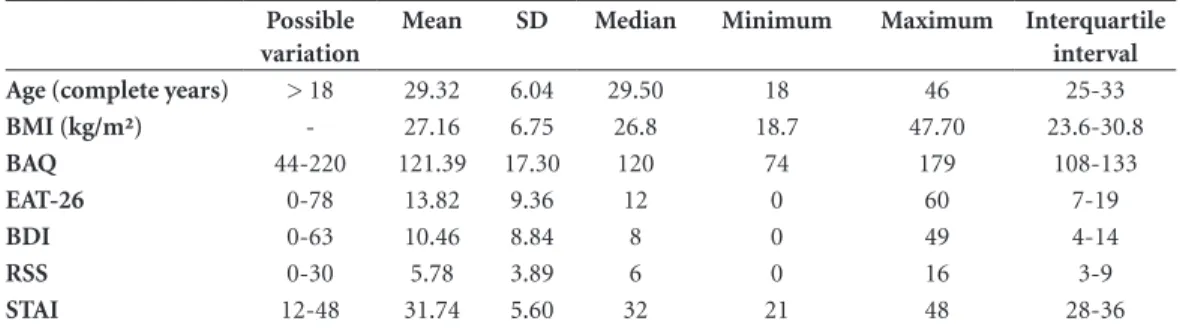
Table 1 gives the descriptive data of each vari-able of the survey (age, IMC, BAQ, EAT-26, BDI, RSS and STAI).
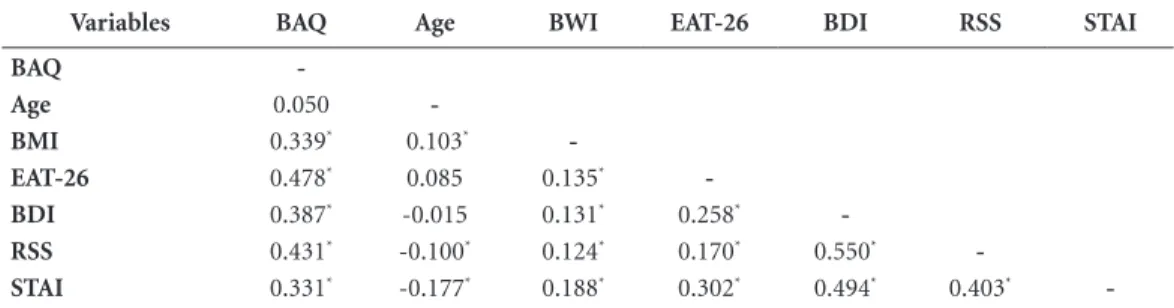
Table 2 gives the values of the Pearson cor-relation test. Statistically significant corcor-relations/ associations were identified between all the vari-ables of the study, except age. Based on these data, it was found that the correlations between the BAQ (outcome variable) and the other vari-ables of the study were considered positive and of moderate magnitude. No strong correlation was identified between the variables studied and the BAQ. This result highlights that the construct
body image is complex and multifaceted, and that multiple factors need to be considered for under-standing of the body attitudes of the pregnant subjects.
A multiple forward linear regression analysis was then carried out based on the associations shown, with the BAQ used as a criterion variable. These results are in Table 3. The EAT-26 was the
Table 1. Descriptive analysis of the variables age, IMC, BAQ, EAT-26, BDI, RSS and STAI in pregnant women of Juiz de Fora, Minas Gerais, Brazil.
Possible variation
Mean SD Median Minimum Maximum Interquartile
interval
Age (complete years) > 18 29.32 6.04 29.50 18 46 25-33
BMI (kg/m²) - 27.16 6.75 26.8 18.7 47.70 23.6-30.8
BAQ 44-220 121.39 17.30 120 74 179 108-133
EAT-26 0-78 13.82 9.36 12 0 60 7-19
BDI 0-63 10.46 8.84 8 0 49 4-14
RSS 0-30 5.78 3.89 6 0 16 3-9
STAI 12-48 31.74 5.60 32 21 48 28-36
aúd
e C
ole
tiv
a,
22(2):437-445,
2017
best predictor of variance of the BAQ (22.6%). When the variables RSS, BDI and BMI were add-ed, this prediction rate increased to 41.4%. We note that anxiety did not add explanation power to the model, and for this reason was excluded at the end of the regression.
Finally, prevalences were ascertained for the factors that had identifiable cut-off points in the questionnaires. In relation to the EAT-26 clas-sifications, 20.5% (n = 79) of the subjects pre-sented inappropriate food habits. Based on the cutoff point for the BDI, 78.8% (n = 304) of the subjects were classified as not having depressive characteristics, 9.1% (n = 35) were assessed as presenting dysphoria, and 12.2% (n = 47) as pre-senting depression.
Discussion
The study’s main aim was to establish the in-fluence of food attitudes, depressive symptoms, self-esteem, anxiety and BDI on pregnant wom-en’s body image self-perception. According to the regression results, the values for EAT-26, RSS,
BDI and BMI exercised an influence factor of 41.4% in prediction of BAQ scores. In the case of STAI, although there was association with BAQ, in the regression model it did not add predictive value. This association is not related to the possi-ble multicollinearity with the other independent variables, but due to the low predictive value of the variable anxiety on body attitudes.
These findings corroborate both the theo-retical model proposed by Thompson et al.26 for
the population in general and also the model de-veloped by Kamysheva et al.23 for the population
of pregnant women, in that both indicate the influence of various factors in the quest for an ideal body. Thompson et al.26 pointed out that
so-cio-cultural factors can exercise influence in the quest for an ideal body, and can be felt in a dif-ferent manner by difdif-ferent individuals. Thus, it is possible that some develop eating disorders or body image disorders, demonstrating the influ-ence of certain mediation factors. The theoretical model of Kamysheva et al.23 adds the influence of
depression, self-esteem and the BMI on negative body attitudes in pregnant women. On this as-pect, it seems that the way in which the pregnant
Table 2. Correlations between the variables BAQ, IMC, EAT-26, BDI, RSS and STAI in pregnant women of Juiz
de Fora, Minas Gerais.
Variables BAQ Age BWI EAT-26 BDI RSS STAI
BAQ
-Age 0.050
-BMI 0.339* 0.103*
-EAT-26 0.478* 0.085 0.135*
-BDI 0.387* -0.015 0.131* 0.258*
-RSS 0.431* -0.100* 0.124* 0.170* 0.550*
-STAI 0.331* -0.177* 0.188* 0.302* 0.494* 0.403*
-BAQ - Body Attitudes Questionnaire; BMI - Body Mass Index; EAT-26 - Eating Attitudes Test–26; BDI – Beck Depression Inventory; RSS - Rosenberg Self-esteem Scale; STAI - Brazilian State-Trait Anxiety Inventory. * p < 0.05
Table 3. Forward linear regression analyses using BAQ scores as criterion variable in pregnant women of Juiz de Fora, Minas Gerais.
Block R2 Adjusted R2 F p-value
EAT-26 1 0.228 0.226 113.544 0.0001*
RSS 2 0.354 0.351 105.075 0.0001*
BDI 3 0.364 0.359 72.930 0.0001*
BWI 4 0.420 0.414 69.004 0.0001*
M
eir
eles JFF
woman assesses her own value, her emotional state and her appropriateness in terms of body weight influences the way in which she relates to her own body.
The EAT-26 was the best predictor of negative body image, accounting for 22.6% of the vari-ance in body attitudes. Corroborating this result, the relationship between body and food attitudes has already been analyzed in the literature3,20,39.
This association is worrisome, since both nega-tive body image and inappropriate food attitudes are symptoms that lead to food disorders27.
Self-esteem added predictive power to the regression model: it and the EAT-26 together ac-counted for 35.1% of the variance of the BAQ.
Studies by Kazmierczak and Goodwin10 (in
Pol-ish women in the seventh to ninth months of pregnancy) and Kamysheva et al.23 (in Australian
women in their fifteenth to twenty-fifth week), proposed theoretical models evaluating both variables. The first found that body image was considered a mediator of self-esteem. The second found influence of low self-esteem on negative bodily attitudes, corroborating this present study. This merits the attention of investigators, since negative assessment of such factors can have consequences such as: premature birth, lower mother-fetus attachment and early termination of breastfeeding40-44.
Added to the food attitudes and self-esteem, depressive symptoms explained 35.9% of the variance of the pregnant women’s body attitudes. Depression has been related to body image in surveys with this public2,14,22,45, principally due
to the negative impacts that the latter can have on the health of the mother and the baby. In the present study, depression was considered to be one of the predictive factors for negative feelings about the body. However, since this is a cross-sec-tional study, it is not possible to relate any cause and effect. Thus, it is suggested that these vari-ables should be taken into consideration in fu-ture longitudinal studies in Brazil.
Finally, the final model of the regression in-cluded BMI, in which all the variables together provided an explanation capability of 41.4%. Studies have been made relating BMI to the body image of pregnant women13,22,46-48. These studies
agree that the greater the BMI, the greater the discontentment with the body. We note that in the case of pregnant women, having an appropri-ate BMI reflects the health not only of the mother but also of the fetus.
As a secondary objective, this study sought to analyze the prevalences of inappropriate food
attitudes, and depressive symptoms. In relation to the prevalence of the EAT-26, the findings indicated that 20.5% of the subjects presented inappropriate food attitudes. Similarly, Soares et al.39 found a prevalence of 17.3% of these
con-ducts among Brazilian pregnant women. At the same time, Lai et al.20 assessed Chinese pregnant
women and found that 9.8% of them reported food disorder symptoms. This discrepancy can be justified due to the social context between the west and the east that value different aesthetic patterns39. It is also noted that, while Soares et
al.39 and Lai et al.20 used the Eating Disorder Ex-amination Questionnaire and the Eating Disorder Inventory-2, respectively, this present investiga-tion used the EAT-26. This choice is justified by the fact that this is an instrument much used in Brazilian surveys50-52.
It can also be noted that, in the study of val-idation of the EAT-26 for the adult population of Brazil, Nunes et al.32 pointed out that it is
possible that the aesthetic pattern directed to-ward slimness in women might contribute to a high score in this instrument. Some items reflect food practices that have become very common in the population in general, helping to achieve an overestimate of the prevalence of food conducts that are harmful to health. The act of ‘paying at-tention to the number of calories of the foods that I eat’ and avoiding ‘eating foods that contain sugar’ are more frequent today than in the period when the instrument was created53. Thus, there is
a higher possibility of positive answers and con-sequently a higher mark on the questionnaire.
Taking into consideration the specificities of the period of pregnancy, in the questions as to whether ‘I cut my food into small pieces’ and ‘I take more time to eat my meals than other peo-ple’, for example, pregnant women can mark the options ‘always’, since these behaviors influence their physical wellbeing. Small pieces of food, and meals eaten more slowly, can help avoid nausea and heartburn, and help the process of digestion46. Added to this, how the question as to
whether ‘I vomit after eating’ is answered may be considered for the pregnant woman as involving a consequence of the nauseas that are common at this phase, rather than a conscious even indicat-ing less good health. In spite of this, this instru-ment showed good internal consistency for the sample in question (α = 0.80).
In relation to the classification of BDI, 12.2% of the women evaluated presented depressive symptoms. According to a systematic review
aúd
e C
ole
tiv
a,
22(2):437-445,
2017
of depression can vary in accordance with the di-agnostic method used, and also with which of the three-month periods of pregnancy is the subject of investigation. The authors also highlight that in Brazil this prevalence has varied from 12% to 38%. This present survey evaluated pregnant women from all the periods of pregnancy and they were within the lower limit of the variance
indicated by Lima and Tsunechiro54. We
under-line the recommendation that longitudinal stud-ies should be carried out, to assess levels of de-pression in the different three-monthly periods of a pregnancy.
As is the case with the EAT-26, the BDI has some questions that can overestimate the depres-sive level of the pregnant woman. An example is item 10, which tries to portray the act of cry-ing. Due to the natural emotional and hormonal
changes of pregnancy54, a pregnant woman may
feel moved and cry more than a woman who is not pregnant. Thus this fact may possibly not be related directly to the depressive state. However, in the present survey, only 12.2% of the pregnant women evaluated were classified as having de-pressive symptoms, possibly due to the cautious classification used.
This instrument is applied clinically for the purpose of classifying the levels of depression of patients with diagnosed affective disorders. How-ever, it is highlighted that the appropriate cutoff point depends on the nature of the sample and the objectives of the study. Since the pregnant wom-en of the preswom-ent survey do not have diagnosed pathology, the classification proposed by Kendall et al.34, which is considered more cautious in this
type of evaluation, was used. There are of course no physiological or biological parameters for as-sessing clinical manifestations of depression55.
BDI has been used to measure and characterize the phenomenon in objective and quantitative terms33, including in pregnant women2,23,40.
In spite of the contributions this study makes to a wider understanding of aspects of the body image of pregnant women, some limitations need to be pointed out.
First: the instruments used are not validated for this specific population – while on the other hand they do have the psychometric characteris-tics evaluated for the female adult Brazilian pop-ulation. Also, the internal consistency was veri-fied for all the instruments and was considered
adequate37; and further, these instruments have
already been previously used in other surveys assessing pregnant women2,23,24,40. It is suggested
that evaluation instruments for this specific pop-ulation should be created and validated.
Second: it is clear that the cross-sectional na-ture of the study makes it impossible to establish a cause and effect relationship between the vari-ables. At the same time, various studies have been made based on this same methodology10,19,23,24.
Third, some of the correlations found, al-though statistically significant, were of moderate intensity. Thus, the results should be interpreted with care.
Finally, it is recommended that longitudinal studies should be carried out assessing psycho-logical variables in pregnant women – since these values can undergo alterations over the period of a pregnancy.
It can be concluded that inappropriate food attitudes, low self-esteem, depressive symptoms and high BWI were related to and exercised in-fluence on the negative body attitudes of the pregnant women evaluated. Anxiety, although correlated to a negative body image, did not sig-nificantly predict feelings related to the body in the sample of this study. Further, the findings indicate that 20.5% of the participants had food conducts damaging to health, and 12.2% had symptoms of depression. Nutritional and psy-chological evaluation and orientation are recom-mended for pregnant women for the purpose of detecting and preventing psychopathologies, in view of the relationship with maternal and child health.
Collaborations
M
eir
eles JFF
References
1. Brasil. Ministério da Saúde (MS). Gestação de alto ris-co: Manual técnico. Brasília: MS; 2012.
2. Clark A, Skouteris H, Wertheim EH, Paxton SJ, Mil-grom J. The relationship between depression and body dissatisfaction across pregnancy and the post-partum: A prospective study. J Health Psychol 2009; 14(1):27-35.
3. Rocco PL, Orbitello B, Perini L, Pera V, Ciano RP, Bal-estrieri M. Effects of pregnancy on eating attitudes and disorders: a prospective study. J Psychosom Res 2005; 59(3):175-179.
4. Piccinini CA, Lopes RS, Gomes AG, De Nardi T. Ges-tação e a constituição da maternidade. Psicol Estud 2008; 13(1):63-72.
5. Segato L, Andrade A, Vasconcellos DIC, Matias TS, Rolim MKSB. Ocorrência e controle do estresse em gestantes sedentárias e fisicamente ativas. Rev Edu Fís/ UEM 2009; 20(1):121-129.
6. Bjelica A. Pregnancy as a stressful life event and strat-egies for coping with stress in women with preg-nancy-induced hypertention. Med Pregl 2004; 57(7-8):363-368.
7. Huizink AC, Medina PGR, Mulder EJ, Visser GH, Buitelaar JK. Stress during pregnancy is associated with developmental outcome in infancy. J Child Psy-chol Psychiatry 2003; 44(6):810-818.
8. Brasil. Ministério da Saúde (MS). Manual técnico de pré-natal e puerpério: Atenção qualificada e humaniza-da. Brasília: MS; 2005.
9. Mann L, Kleinpaul JF, Mota CB, Santos, SG. Altera-ções biomecânicas durante o período gestacional: uma revisão. Motriz 2010; 16(3):730-741.
10. Kazmierczak M, Goodwin R. Pregnancy and body image in Poland: Gender roles and self-esteem during the third trimester. J Reprod Infant Psychol 2011; 29(4):334-342.
11. Gow RW, Lydecker JA, Lamanna JD, Mazzeo SE. Rep-resentations of celebrities’ weight and shape during pregnancy and postpartum: A content analysis of three entertainment magazine websites. Body Image 2012; 9(1):172-175.
12. Loth KA, Bauer KW, Wall M, Berge J, Neumark-Sz-tainer D. Body satisfaction during pregnancy. Body Image 2011; 8(3):297-300.
13. Sui Z, Turnbull D, Dodd J. Effect of body image on gestational weight gain in overweight and obese wom-en. Women Birth 2013; 26(4):267-272.
14. Sweeney AC, Fingerhut R. Examining relationships between body dissatisfaction, maladaptive perfection-ism, and postpartum depression symptoms. J Obstet Gynecol Neonatal Nurs 2013; 42(5):551-561. 15. Watson B, Fuller-Tyszkiewicz M, Broadbent J,
Sk-outeris H. The meaning of body image experiences during the perinatal period: A systematic review of the qualitative literature. Body Image 2015; 14(3):102-113
16. Cash TF, Smolak L. Body image: A handbook of science, practice, and prevention. 2nd ed. New York: The Guil-ford Press; 2011.
17. Ferreira MEC, Castro MR, Morgado FFR. Imagem corporal: Reflexões, diretrizes e práticas de pesquisa. Juiz de Fora: Editora UFJF; 2014.
18. Slade PD. What is body image? Behav Res Ther 1994; 32(5):497-502.
19. Bagheri M, Dorosty A, Sadrzadeh-Yeganeh H, Eshra-ghian M, Amiri E, Khamoush-Cheshm N. Pre-preg-nancy body size dissatisfaction and excessive ges-tational weight gain. Matern Child Health J 2013; 17(4):699-707.
20. Lai BP, Tang CS, Tse WK. Prevalence and psychoso-cial correlates of disordered eating among Chinese pregnant women in Hong Kong. Eat Disord 2005; 13(2):171-186.
21. Dunker KLL, Alvarenga MS, Alves VPO. Transtornos alimentares e gestação: Uma revisão. J Bras Psiquiatr 2009; 58(1):60-68.
22. Rauff EL, Downs DS. Mediating effects of body image satisfaction on exercise behavior, depressive symp-toms, and gestational weight gain in pregnancy. Ann Behav Med 2011; 42(3):381-390.
23. Kamysheva E, Skouteris H, Wertheim EH, Paxton SJ, Milgrom J. Examination of a multi-factorial model of body-related experiences during pregnancy: the relationships among physical symptoms sleep quality, depression, self-esteem, and negative body attitudes. Body Image 2008; 5(2):152-163.
24. DiPietro JA, Millet S, Costigan KA, Gurewitsch E, Caulfield LE. Psychosocial influences on weight gain attitudes and behaviors during pregnancy. J Am Diet Assoc 2003;103(10):1314-1319.
25. Araújo DMR, Pacheco AHRN, Pimenta AM, Kac G. Prevalência e fatores associados a sintomas de ansie-dade em uma coorte de gestantes atendidas em um centro de saúde do município do Rio de Janeiro. Rev Bras Saúde Matern Infant 2008; 8(3):333-340. 26. Thompson JK, Heinberg LJ, Altabe M, Tantleff-Dunn
S. Exacting beauty: Theory, assessment, and treatment of body image disturbance. Washington: American Psy-chological Association; 1999.
27. American Psychiatric Association (APA). Diagnostic and statistical manual of mental disorders (DSM-V). 5th ed. Washington: APA; 2014.
28. Meireles JFF, Neves CM, Carvalho PHB, Ferreira MEC. Insatisfação corporal em gestantes: Uma revi-são integrativa da literatura. Cien Saude Colet 2015; 20(7):2089-2101.
29. Meireles JFF, Neves CM, Carvalho PHB, Ferreira MEC. Imagem corporal de gestantes: associação com variáveis sociodemográficas, antropométricas e obs-tétricas. Rev Bras Ginecol Obstet 2015; 37(7):319-324. 30. Brasil. Ministério da Saúde (MS). Programa nacional
de melhoria do acesso e da qualidade da atenção básica (PMAQ):Manual Instrutivo. Brasília: MS; 2012. 31. Scagliusi FB, Polacow VO, Cordás TA, Coelho D,
aúd
e C
ole
tiv
a,
22(2):437-445,
2017
32. Nunes MA, Camey S, Olinto MTA, Mari JJ. The va-lidity and 4-year test-retest reliability of the Brazilian version of the Eating Attitudes Test-26. Braz J Med Biol Res 2005; 38(11):1655-1662.
33. Gorenstein C, Andrade L. Validation of a Portuguese version of Beck Depression Inventory and the State-Trait Anxiety Inventory in Brazilian subjects. Braz J Med Biol Res 1998; 29(4):453-457.
34. Kendall PC, Hollon SD, Beck AT, Hammen CI, Ingram RE. Issues and recommendations regarding use of the Beck Depression Inventory. Cogn Ther Res 1987; 11(3):289-299.
35. Dini GM, Quaresma MR, Ferreira LM. Adaptação cultural e validação da versão brasileira da Escala de Auto-estima de Rosenberg. Rev Bras Cir Plast 2004; 19(1):41-52.
36. Fioravanti-Bastos ACM, Cheniaux E, Landeira-Fer-nandez J. Development and validation of a short-form version of the Brazilian State-trait Anxiety Inventory. Psicol Reflex Crit 2011; 24(3):485-494.
37. Streiner DL. Starting at the beginning: An introduc-tion to coefficient alpha and internal consistency. J Pers Assess 2003; 80(1):99-103.
38. Razali NM, Wah YB. Power comparisons of Shap-iro-Wilk, Kolmogorov-Smirnov, Lilliefors and Anser-son-Darling tests. J Stat Model Anal 2011;2(1):21-33. 39. Soares RM, Nunes MA, Schmidt MI, Giacomello A,
Manzolli P, Camey S, Buss C, Drehmer M, Melere C, Hoffman J, Ozcariz S, Manenti CN, Pinheiro AP, Duncan BB. Inappropriate eating behaviors during pregnancy: Prevalence and associated factors among pregnant women attending primary care in southern Brazil. Int J Eat Disord 2009; 42(5):387-393.
40. Duncombe D, Wertheim EH, Skouteris H, Paxton SJ, Kelly L. How well do women adapt to changes in their body size and shape across the course of pregnancy? J Health Psychol 2008; 13(4):503-515.
41. Dias MS, Silva RA, Souza LDM, Lima RC, Pinheiro RT, Moraes IGS. Auto-estima e fatores associados em gestantes da cidade de Pelotas, Rio Grande do Sul, Brasil. CadSaude Publica 2008; 24(12):2787-2797. 42. Dubow EF, Luster T. Adjustment of children born to
teenage mothers: The contribution of risk and pro-tective factors. J Marriage Fam 1990; 52(2):393-404. 43. Edwards CH, Cole OJ, Oyemade UJ, Knight EM,
Johnson AA, Westney OE, Laryea H, West W, Jones S, Westney LS. Maternal stress and pregnancy outcomes in a prenatal clinic population. J Nutr 1994; 124(6 Supl.):1006-1021.
44. Silva RA, Ores LC, Mondin TC, Rizzo RN, Moraes IGS, Jansen K, Pinheiro RT. Transtornos mentais co-muns e auto-estima na gestação: Prevalência e fatores associados. CadSaude Publica 2010; 26(9):1832-1838. 45. Skouteris H, Carr R, Wertheim EH, Paxton SJ, Dun-combe D. A prospective study of factors that lead to body image dissatisfaction during pregnancy. Body Image 2005; 2(4):347-361.
46. Davies K, Wardle J. Body image and dieting in preg-nancy. J Psychosom Res 1994; 38(8):787-799.
47. Fox P, Yamaguchi C. Body image change in pregnancy: a comparison of normal weight and overweight pri-migravidas. Birth 1997; 24(1):35-40.
48. Hauff LE, Demerath EW. Body image concerns and reduced breastfeeding duration in primiparous overweight and obese women. Am J Hum Biol 2012; 24(3):339-349.
49. Grogan S. Body image development in adulthood. In: Cash TF, Smolak L, editors. Body image: A handbook of science, practice, and prevention. 2nd ed. New York: The Guilford Press; 2011. p. 93-100.
50. Alvarenga MS, Scagliusi FB, Philippi ST. Comporta-mento de risco para transtorno alimentar em univer-sitárias brasileiras. Rev Psiquiatr Clin 2011; 38(1):3-7. 51. Bosi MLM, Luiz RR, Uchimura KY, Oliveira FP.
Comportamento alimentar e imagem corporal entre estudantes de educação física. J Bras Psiquiatr 2008; 57(1):28-33.
52. Carvalho PHB, Filgueiras JF, Neves CM, Coelho FD, Ferreira MEC. Checagem corporal, atitude alimentar inadequada e insatisfação com a imagem corporal de jovens universitários. J Bras Psiquiatr 2013; 62(2):108-114.
53. Garner DM, Garfinkel PE. The Eating Attitudes Test: An index of the symptoms of anorexia nervosa. Psy-chol Med 1979; 9(2):273-279.
54. Lima MOP, Tsunechiro MA. Repercussões materno-fetais da depressão na gravidez: Uma revisão sistemá-tica. Mundo da Saúde 2008; 32(4):530-536.
55. Parcias S, Rosario BP, Sakae T, Monte F, Guimarães ACA, Xavier AJ. Validação da versão em português do Inventário de Depressão Maior. J Bras Psiquiatr 2011; 60(3):164-170.
Article submitted 15/06/2015 Approved 20/01/2016