1 Universidade Federal de Minas Gerais, Escola
de Enfermagem, Belo Horizonte, MG, Brazil. ABSTRACTObjective: Estimating the incidence rate of pressure ulcers and verifying factors associated with this occurrence in a cohort of hospitalized patients. Method: his is a cohort study in which the considered outcome was the time until pressure ulcer occurrence. Estimated efect of the variables on the cumulative incidence ratio of the outcome was performed using the Cox proportional hazards model. Variable selection occurred via the Logrank hypothesis test. Results: he sample consisted of 442 adults, with 25 incidents of pressure ulcers. Patients with high scores on the Braden scale presented a higher risk of pressure ulcer incidence when compared to those classiied into the low score category. Conclusion: hese results reinforce the importance of using the Braden Scale to assist in identifying patients more likely to develop pressure ulcers.
DESCRIPTORS
Pressure Ulcer; Inpatients; Incidence; Survival Analysis; Nursing Care.
Factors associated with the incidence of
pressure ulcer during hospital stay
Fatores associados à incidência de úlcera por pressão durante a internação hospitalar Factores asociados con la incidencia de úlcera por presión durante la estancia hospitalaria
Fernanda Penido Matozinhos1, Gustavo Velasquez-Melendez1, Sabrina Daros Tiensoli1, Alexandra Dias Moreira1,
Flávia Sampaio Latini Gomes1
How to cite this article:
Matozinhos FP, Velasquez-Melendez G, Tiensoli SD, Moreira AD, Gomes FSL. Factors associated with the incidence of pressure ulcer during hospital stay. Rev Esc Enferm USP. 2017;51:e03223. DOI: http://dx.doi.org/10.1590/S1980-220X2016015803223
Received: 05/11/2016 Approved: 01/26/2017 Corresponding author:
Flávia Sampaio Latini Gomes Escola de Enfermagem
Universidade Federal de Minas Gerais Av. Alfredo Balena, 190
CEP 30130-100 – Belo Horizonte, MG, Brazil [email protected]
INTRODUCTION
Pressure ulcers (PU) represent an important challenge in relation to the care provided to hospitalized patients, since they signiicantly impact morbidity/mortality and quality of life(1-2). In addition, treating these wounds is often prolonged
and costly(2-3),and their occurrence is an important indicator
of the quality of care.
Most patients who develop PU have poor physical or mental health conditions(4), or other comorbidities, revealing
that these wounds have multifactorial etiology. hey can have direct causes such as pressure and friction in tissue, loss of sensation or immobility; and indirect causes such as: long hospital stay, old age, presence of neurological disorders, cancer or other comorbidities, the use of vasoactive drugs, and malnutrition(4-7).
Given the complexity of these factors, a high incidence of PU in several hospital sectors can be observed. A multicenter study conducted in hospitalization units in Brazil showed PU frequency in 17% of patients, most of which were afected by more than one lesion, and especially in the sacral, trochant-eric, calcaneal, back and elbow regions(5). his proportion can
range from 29 to 53% in intensive care units(6,8).
In this context, high PU frequencies demand early iden-tiication of patients with a high probability of developing wounds(9). One way to measure this risk is to use the Braden
Scale, which addresses intrinsic and extrinsic factors such as sensory perception, moisture, activity, mobility, nutrition, friction and shear(10). his evaluation has shown to be valid
for predicting wounds, thus allowing for implementation of preventive measures by the multidisciplinary team(10-11).
To our knowledge, there are few longitudinal studies in Brazil that evaluate PU determinants and their incidence in patients hospitalized in speciic sectors. Faced with this reality, it is necessary to understand factors associated with PU development in the medical clinic, where patients stay longer than in acute care clinics. We believe that studies focused on this theme can optimize planning of preventive measures in the care ofered by nursing professionals and promote reduction of pressure ulcers.
herefore, this study proposes to estimate PU incidence rate in a cohort of hospitalized patients in the medical clinic and to verify the factors associated with its occurrence.
METHOD
his is a prospective cohort study. he participants were recruited at a university hospital integrated to the Brazilian Uniied Health System (Sistema Único de Saúde – SUS), in the city of Belo Horizonte, Minas Gerais state. he population consisted of all adult patients hospitalized in the 67 beds of the Inpatient Unit. he convenience sample consisted of an open cohort of all hospitalized patients from May to November 2012. Data collection was performed during six months by a team of two properly trained nurses in the hospital under study and one undergraduate nursing student through a structured questionnaire with questions related to socio-demographic and clinical aspects recorded in the patients’ medical chart and by direct observation.
It should be emphasized that the ield supervision and training the interviewers for data collection was carried out by professors and researching nurses. his training consisted of a theoretical and a practical phase. he questionnaire was previously tested at the beginning of the data collection, including by the Kappa test for agreement of Braden Scale’s applicability among the interviewers.
PU was deined as “a wound on the skin or underlying tissue, usually located on a prominent bone as a result of pressure in the area or pressure in combination with shear-ing,” friction or the combination of the three forces(12).
he outcome or dependent variable was time until PU appearance. he event variable was PU appearance, which assumed a value of 1 if the event occurred, and 0 if it was censored (observation losses during follow-up or hospital discharge). A comparative analysis was performed between the losses and the inal sample, and no signiicant diferences were found between them.
he method used to calculate estimates of PU incidence was incidence density, in which the denominator was num-ber of patients-day, as considered from the 1st day of
hospi-talization of each patient in the hospihospi-talization unit until PU appearance. he cohort was followed up for a minimum of 10 hospitalization days and for a maximum of 80 days.
Independent variables included in this study were: age group (adults – between 18 and 60 years and older adults – individuals over 60 years of age); gender (male or female); self-reported skin color (white or brown + black); smoking (non-smoking, smoking or former smoker); Braden Scale scores and Body Mass Index (BMI).
he Braden Scale maximum score is 23 and the mini-mum score is 6, with risk classiication ranges considered as: > 18, no risk; 15 to 18, mild risk; 13 to 14, moderate risk; 10 to 12, high risk; and below or equal to 9, very high risk(13).
In this study, the original Braden Scale score was considered, according to the validated values, but also considering the median of the variable. hus, it was later opted to combine the classiication categories into low risk (13 to 18 or more) and high risk (lower than 13).
BMI was calculated and categorized according to the recommendation by the World Health Organization (WHO)(14). his data was used to evaluate the nutritional
status of hospitalized patients, considering patients as: mal-nourished with BMI < 18.5; eutrophic with BMI ≥ 18.5 and < 25; and overweight with BMI ≥ 25 kg/m2.
Descriptive analysis of the categorical variables was pre-sented as absolute means and percentage frequency, and con-tinuous variables as median and interquartile range (IQR), due to the absence of symmetrical distribution.
Non-parametric estimates were obtained using the Kaplan-Meier (KM) survival analysis technique in order to calculate the incidence density of PU (univariate analysis), and the Logrank test for comparison of cumulative incidence curves.
however, only the variables that obtained a level of signii-cance p < 0.05 were kept in the inal model. Statistical tech-niques were performed using the Statistical Software for Professionals, Stata, version 14.0.
he study was approved by the Research Ethics Committee of the Universidade Federal de Minas Gerais (Opinion number 02297412.1.0000.5149). Patients or caregivers were requested for approval to participate in the study, reading and signing of the Informed Consent Term. he study followed the regulations described in Resolution 466/2012 of the National Health Council.
RESULTS
he sample consisted of 442 adults and the median length of hospital stay was 22 days (IQR = 16-35). Twenty-ive (25) incident cases of PU were recorded, and the num-ber of patient-days was 10,324. hus, incidence density was 2.42/1,000 people-day (95%CI = 1.63-3.58).
Variable description and PU incidence in the sample are shown in Table 1. It should be noted that the total number of patients may vary due to the diferent rates of missing responses for the studied variables.
We found that the median BMI was 23.44 kg/m2
(IQR = 20.76-27.34), with a predominance of individuals in the age group between 18 and 60 years (275 or 62.22%), female (243 or 54.98%), with brown and black skin color (223 or 51.15%), non-smokers (225 or 51.96%), without risk according to original Braden Scale scores (265 or 59.95%), and eutrophic (179 or 49.04%).
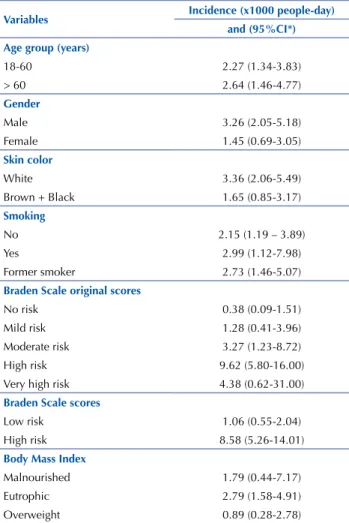
Table 2 shows the incidence densities of the outcome variable according to the independent variables of the study.
Table 2 – Incidence densities of the outcome variable, according to independent variables of the study – Belo Horizonte, Minas Gerais, Brazil, 2012
Variables Incidence (x1000 people-day)
and (95%CI*) Age group (years)
18-60 2.27 (1.34-3.83)
> 60 2.64 (1.46-4.77)
gender
Male 3.26 (2.05-5.18)
Female 1.45 (0.69-3.05)
Skin color
White 3.36 (2.06-5.49)
Brown + Black 1.65 (0.85-3.17)
Smoking
No 2.15 (1.19 – 3.89)
Yes 2.99 (1.12-7.98)
Former smoker 2.73 (1.46-5.07)
Braden Scale original scores
No risk 0.38 (0.09-1.51)
Mild risk 1.28 (0.41-3.96)
Moderate risk 3.27 (1.23-8.72)
High risk 9.62 (5.80-16.00)
Very high risk 4.38 (0.62-31.00)
Braden Scale scores
Low risk 1.06 (0.55-2.04)
High risk 8.58 (5.26-14.01)
Body Mass Index
Malnourished 1.79 (0.44-7.17)
Eutrophic 2.79 (1.58-4.91)
Overweight 0.89 (0.28-2.78)
Note: *95% conidence intervals. Source: Authors’ own elaboration.
Figure 1 shows the accumulated risk function for PU, which estimates the risk of developing PU during a speciic period of time for the total population.
he proportion of accumulated PU risk in individuals older than 60 years of age was not statistically higher when compared to those aged 18 to 60 years. A statistical signii-cance was also not found in comparing patients regarding gender, skin color, smoking or nutritional status.
Figure 2 shows the accumulated risk functions for PU
continued…
…continuation
Table 1 – Description of variables and PU incidence in the sample – Belo Horizonte, Minas Gerais, Brazil, 2012
Variables Total sample Pressure ulcers
n* (%) n*
Age group (years) 442 (100.00)
18-60 275 (62.22) 14
> 60 167 (37.78) 11
gender 442 (100.00)
Male 199 (45.02) 18
Female 243 (54.98) 7
Skin color 436 (100.00)
White 213 (48.85) 16
Brown + Black 223 (51.15) 9
Smoking 433 (100.00)
No 225 (51.96) 11
Yes 55 (12.70) 4
Former smoker 153 (35.33) 10
Braden Scale original scores 442 (100.00)
No risk 265 (59.95%) 2
Mild risk 83 (18.78%) 3
Moderate risk 40 (9.05%) 4
High risk 43 (9.73%) 15
Very high risk 11 (2.49%) 1
Variables Total sample Pressure ulcers
n* (%) n*
Braden Scale scores 442 (100.00)
Low risk (> 18 to 13) 388 (87.78) 9 High risk (12 and ≤ 9) 54 (12.22) 16 Body Mass Index (Kg/m2) 365 (100.00)
Malnourished (<18.5) 44 (12.05) 2 Eutrophic (≥18.5 and <25) 179 (49.04) 12 Note: *Number of individuals.
according to the Braden Scale score categories. A statistical signiicance (p < 0.01) was observed for a higher proportion of accumulated risk in high risk individuals (score below 13) in relation to the other category (low risk – score of 13 to 18 or higher). A similar situation was found with the original Braden Scale score categories (p < 0.01) (igure not shown).
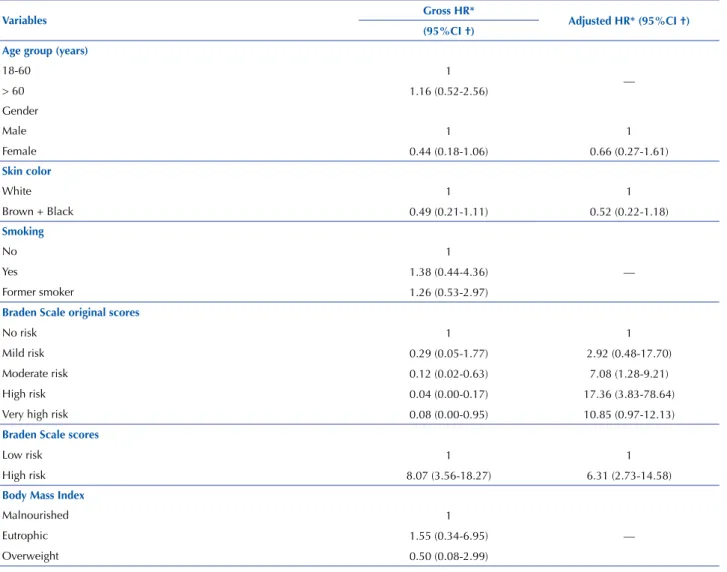
Table 3 shows Hazard Ratio (HR) and 95% CI for PU. No statistically signiicant diferences were observed in rela-tion to PU incidence in hospitalized patients, except for some of the Braden Scale categories (p < 0.001).
Table 3 – Hazard Ratio and 95%CI for pressure ulcers – Belo Horizonte, Minas Gerais, Brazil, 2012
Variables gross HR* Adjusted HR* (95%CI †)
(95%CI †) Age group (years)
18-60 1
—
> 60 1.16 (0.52-2.56)
Gender
Male 1 1
Female 0.44 (0.18-1.06) 0.66 (0.27-1.61)
Skin color
White 1 1
Brown + Black 0.49 (0.21-1.11) 0.52 (0.22-1.18)
Smoking
No 1
—
Yes 1.38 (0.44-4.36)
Former smoker 1.26 (0.53-2.97)
Braden Scale original scores
No risk 1 1
Mild risk 0.29 (0.05-1.77) 2.92 (0.48-17.70)
Moderate risk 0.12 (0.02-0.63) 7.08 (1.28-9.21)
High risk 0.04 (0.00-0.17) 17.36 (3.83-78.64)
Very high risk 0.08 (0.00-0.95) 10.85 (0.97-12.13)
Braden Scale scores
Low risk 1 1
High risk 8.07 (3.56-18.27) 6.31 (2.73-14.58)
Body Mass Index
Malnourished 1
—
Eutrophic 1.55 (0.34-6.95)
Overweight 0.50 (0.08-2.99)
Notes: *Hazard Ratio; † 95% conidence intervals. Source: Authors’ own elaboration.
Source: Authors’ own elaboration
Figure 2 – Proportion of accumulated PU risk according to the categories of grouped Braden Scale scores – Belo Horizonte, Minas Gerais, Brazil, 2012
Source: Authors’ own elaboration
DISCUSSION
he present study revealed a PU incidence rate in hos-pitalized patients of 2.42/1000 people-day (95%CI = 1.63-3.58). Another inding of this study shows that sociodemo-graphic and clinical factors in hospitalized patients were not shown to be associated with PU incidence in the adjusted multivariate model. However, patients who were classiied as being at higher risk on the Braden Scale presented more than six times the risk of PU incidence when compared to those classiied in the low risk category.
A study of PU incidence and prevalence shows how common these wounds are(2). PU incidence rates in
coun-tries around the world vary from 1.9% to 71.6%, and the incidence rate in the context of long-term care units (for example in medical clinic units) reaches 6.6%(2,15).
Despite incidence rate or incidence density representing more consistent analysis of the incidence data, few studies related to PU are found in the national literature. In this study, we found that 2.42/1,000 patients-day hospitalized in the medical clinic unit developed PU. Another study on PU incidence density in institutionalized elderly people in the south of Minas Gerais found 5.7 elderly people with wounds at every 1,000 days of hospitalization(16). A second study
car-ried out in the medical clinic units of two public hospitals in Bahia showed PU incidence densities of 70/1,000 people-days and 32/1,000 people-people-days, respectively(17).
It is worth noting that PU high incidence has been observed in environments where organizational strategies for PU prevention are inadequate or non-existent(18).
Regarding the independent variable of smoking, no sta-tistically signiicant diferences were found between smokers and non-smokers, similar to a study carried out in the city of São Paulo(19). It is known that despite these results,
smok-ing impairs the function of several cells, compromises tissue oxygenation and has efects on the physiology of chronic wounds, in addition to prolonging the treatment period(20).
Other studies have corroborated the results of the pres-ent study as they did not ind signiicant diferences in PU development between genders(21-22). However, demographic
data show that women have a higher life expectancy than men (78.6 and 71.3 years, respectively)(23), so therefore they
live longer periods with disabilities and chronic diseases, which could increase PU incidence in females(21).
Regarding the association between age and PU, some authors airm that age group over 60 years is a risk factor for developing PU due to changes in skin and subcutaneous tis-sue inherent to aging(21,24-25). Such lesions can be considered
mortality predictors in advanced-aged individuals, regardless of other risk factors(26). Despite no signiicant association
being found in this study between age group and PU, it is important to emphasize the importance of multidisci-plinary practice in preventing and treating PU in the elderly, especially those in situations of fragility, immobility and malnutrition. Reducing PU incidence related to population aging is a challenge for professionals and the health system, where multiprofessional teams’ continuing education is fun-damental to achieving qualiied care.
Although the patient’s nutritional status is considered a potential risk factor for PU development(24-25,27), no
signii-cant association was demonstrated in this study. Evidence that dietary interventions and dietary supplements can efectively prevent or accelerate the healing process of PU are conlicting and require more scientiic research(27).
Nonetheless, performance by members of the multidisci-plinary team such as nursing and nutrition professionals is essential to reach an appropriate BMI, thus preventing metabolic disturbances leading to the onset of PU and other health problems, which in most cases can worsen the patients’ general health status.
he highest risk category of the Braden Scale was associ-ated with PU development. his result corroborates the ind-ings of other studies(11,28). A previous study showed that the
scale is an adequate tool for predicting risk for PU appear-ance(11). One study also revealed high sensitivity in wound
evaluation, and the instrument is considered appropriate for screening and important for clinical practice(10).
A statistically signiicant association was observed between risk and the presence of PU in two hospital units, showing evidence that there was a higher percentage of patients with high risk in the group of patients with PU when compared to the group without PU in both units. In performing a logistic regression analysis to verify the inluence of the Braden Scale score on PU presence, it was observed that patients in the surgical clinic with high risk are about 10 times more likely to develop PU when compared to low-risk and moderate risk patients. On the other hand, high risk patients in the Intensive Care Unit are 25.5 times more likely to develop PU than low and moderate risk patients(28).
Diferences in the risk of developing PU between studies can be explained among other speciicities of the methods used, by the place of study. After all, it is known that PU incidence in acute care units is higher than in those of long-term care.
hese results show that the systematic use of the Braden Scale is an important strategy in treating patients, and the use of this scale should be understood as a parameter of good nursing practice which can contribute to improving the process indicator for PU prevention(13).
In addition, nursing staf dynamics in health institutions should be ensured in a way that not only allows for using the scale, but also for implementing preventive measures for PU development such as the periodic change of the patient’s position, use of necessary supplies and equipment such as appropriate mattresses, and multidisciplinary team involve-ment in providing speciic care to patients at greater risk.
Studies such as this contribute to reinforcing this care among the multidisciplinary team. Although the risk of PU has limits related to factors identiied here, improvement in the quality of care is a factor that must be taken into account aiming at patient safety.
RESUMO
Objetivo: Estimar a taxa de incidência de úlcera por pressão e veriicar fatores associados a essa ocorrência em uma coorte de pacientes hospitalizados. Método: Trata-se de estudo de coorte no qual o desfecho foi a ocorrência da úlcera por pressão. A estimativa do efeito das variáveis para a proporção de incidência acumulada do desfecho foi realizada utilizando o modelo de riscos proporcionais de Cox. A seleção das variáveis ocorreu por meio do teste de hipóteses Logrank. Resultados: A amostra foi composta de 442 adultos, com 25 casos incidentes de úlcera por pressão. Pacientes com altos escores na escala de Braden apresentaram maior risco de incidência de úlcera por pressão quando comparados com aqueles classiicados na categoria de baixo escore. Conclusão: Os resultados reforçam a importância do uso da Escala de Braden para auxiliar na identiicação dos pacientes com maior probabilidade de desenvolver úlcera por pressão. DESCRITORES: Úlcera por Pressão; Pacientes Internados; Incidência; Análise de Sobrevida; Cuidados de Enfermagem.
RESUMEn
Objetivo: Estimar la tasa de incidencia de úlcera por presión y veriicar factores asociados a esa ocurrencia en una cohorte de pacientes hospitalizados. Método: Se trata de estudio de cohorte en el que el resultado fue la ocurrencia de la úlcera por presión. La estimación del efecto de las variables para la proporción de incidencia acumulada del resultado fue realizada utilizando el modelo de riesgos proporcionales de Cox. La selección de las variables ocurrió mediante el test de hipótesis de Log-Rank. Resultados: La muestra estuvo compuesta de 442 adultos, con 25 casos incidentes de úlcera por presión. Pacientes con altos puntajes en la escala de Braden presentaron mayor riesgo de incidencia de úlcera por presión cuando comparados con aquellos clasiicados en la categoría de bajo escore. Conclusión: Los resultados refuerzan la importancia del empleo de la Escala de Braden para auxiliar la identiicación de los pacientes con mayor probabilidad de desarrollar úlcera por presión.
DESCRIPTORES
Úlcera por Presión; Pacientes Internos; Incidencia; Análisis de Supervivencia; Atención de Enfermería.
REFERENCES
1. Gorecki C, Nixon J, Madill A, Firth J, Brown JM. What inluences the impact of pressure ulcers on health-related quality of life? A qualitative patient-focused exploration of contributory factors. J Tissue Viability. 2012;21(1):3-12.
2. Moore ZE, Webster J, Samuriwo R. Wound-care teams for preventing and treating pressure ulcers. Cochrane Database Syst Rev. 2015;(9):CD011011.
3. Chou R, Dana T, Bougatsos C, BlazinaI, Starmer A, Reitel K, et al. Pressure ulcer risk assessment and prevention: comparative effectiveness [Internet]. Rockville: Agency for Healthcare Research and Quality; 2013 [cited 2016 Apr 25]. Available from http://www.ncbi.nlm.nih. gov/books/NBK143579/
4. Bhattacharya S, Mishra RK. Pressure ulcers: current understanding and newer modalities of treatment. Indian J Plast Surg. 2015;48(1):4-16.
5. Brito PA, Generoso SV, Correia MITD. Prevalence of pressure ulcers in hospitals in Brazil and association with nutritional status: a multicenter, cross-sectional study. Nutrition. 2013;29(4):646-9.
6. Costa ACO, Pinho CPS, Santos ADA, Nascimento ACS. Pressure ulcer: incidence and demographic, clinical and nutrition factors associated in intensive care unit patients. Nutr Hosp. 2015;32(5):2242-52.
7. Perrone F, Paiva AA, Souza LMI, Faria CS, Paese MCS, Aguilar-Nascimento JE, et al. Estado nutricional e capacidade funcional na úlcera por pressão em pacientes hospitalizados. Rev Nutr (Campinas). 2011;24(3):431-8.
8. Bezerra SMG, Pereira LC, Luz MHBA, Santana WS. Incidência de úlceras por pressão em uma Unidade de Terapia Intensiva de um hospital público. Rev Enferm UFPI. 2014;2(4):21-7.
9. Qaseem A, Mir TP, Starker M, Denberg T. Risk assessment and prevention of pressure ulcers: a clinical practice guideline from the American College of Physicians. Ann Intern Med. 2015;162(5):359-69.
10. Borghardt AT, Prado TN, Araújo TM, Rogenski NMB, Bringuente MEO. Evaluation of the pressure ulcers risk scales with critically ill patients: a prospective cohort study. Rev Latino Am Enfermagem. 2015;23(1):28-35.
11. Miller N, Frankenield D, Lehman E, Maguire M, Schirm V. Predicting pressure ulcer development in clinical practice: evaluation of Braden Scale Scores and nutrition parameters. J Wound Ostomy Continence Nurs. 2016;43(2):133-9.
12. National Pressure Ulcer Advisory Panel; European Pressure Ulcer Advisory Panel and Pan Paciic Pressure Injury Alliance. Prevention and treatment of pressure ulcers: quick reference guide. Cambridge Media: Osborne Park; 2014.
have similar sociodemographic characteristics, which makes it diicult to identify diferences between groups.
CONCLUSION
Hospitalized patients with high values on the Braden scale showed higher PU incidence when compared to those with low values. Socio-demographic and clinical factors in
13. Brasil. Ministério da Saúde; Agência Nacional de Vigilância Sanitária. Programa Nacional de Segurança do Paciente. Protocolo para Prevenção de Úlcera por Pressão. Brasília: Fiocruz; 2013.
14. World Health Organization. Physical status: the use and interpretation of anthropometry. Geneva: WHO; 1995.
15. Moore Z, Johanssen E, Van Etten M. A review of PU prevalence and incidence across Scandinavia, Iceland and Ireland (Part I). J Wound Care. 2013;22(7):361-8.
16. Souza DMST, Santos VLCG. Risk factors for pressure ulcer development in institutionalized elderly. Rev Latino Am Enfermagem. 2007;15(5):958-64.
17. Anselmi ML, Peduzzi M, França Júnior I. Incidência de úlcera por pressão e ações de enfermagem. Acta Paul Enferm, 2009;22(3):257-64.
18. Igarashi A, Yamamoto-Mitani N, Gushiken Y, Takai Y, Tanaka M, Okamoto Y. Prevalence and incidence of pressure ulcers in Japanese long-term-care hospitals. Arch Gerontol Geriatr. 2013;56(1):220-6.
19. Campanili TC, Gonçalves F, Santos VLCG, Strazzieri-Pulido KC, Thomaz PBM, Nogueira PC. Incidence of pressure ulcers in cardiopulmonary intensive care unit patients. Rev Esc Enferm USP. 2015;49(n.spe):7-13.
20. McDaniel JC, Browning KK. Smoking, chronic wound healing, and implications forevidence-based practice. J Wound Ostomy Continence Nurs. 2014;41(5):415-23.
21. Freitas JPC, Alberti LR. Application of the Braden Scale in the home setting: incidence and factors associated with pressure ulcers. Acta Paul Enferm. 2013;26(6): 515-21.
22. Soares DAS, Vendramin FS, Pereira LMD, Proença PK, Marques MM. Analysis of the incidence of pressure ulcers at Hospital Metropolitano de Urgência e Emergência in Ananindeua, PA. Rev Bras Cir Plást. 2011;26(4):578-81.
23. Brasil. Ministério do Planejamento, Orçamento e Gestão; Instituto Brasileiro de Geograia e Estatística. Tábua completa de mortalidade para o Brasil-2013: breve análise da mortalidade nos períodos 20122013 e 19802013. Rio de Janeiro: IBGE; 2014.
24. Horn SD, Barrett RS, Fife CE, Thomson B. A predictive model for pressure ulcer outcome: the Wound Healing Index. Adv Skin Wound Care. 2015;28(12):560-72.
25. Gould L, Abadir P, Brem H, Carter M, Conner-Kerr T, Davidson J, et al. Chronic wound repair and healing in older adults: current status and future research. J Am Geriatr Soc. 2015;63(3):427-38.
26. Gené BJ, Borràs SA, Contel SJC, Terén CA, González LC, Ramírez EL, et al. Predictors of mortality among elderly dependent home care patients. BMC Health Serv Res. 2013;13:316.
27. Meehan A, Loose C, Bell J, Partridge J, Nelson J, Goates S. Health system quality improvement: impact of prompt nutrition care on patient outcomes and health care costs. J Nurs Care Qual. 2016;31(3):217-23.
28. Rogenski NMB, Kurcgant P. The incidence of pressure ulcers after the implementation of a prevention protocol. Rev Latino Am Enfermagem. 2012;20(2): 333-9.