DOI: 10.1590/0004-282X20160148
CLINICAL SCALES, CRITERIA AND TOOLS
Factor structure and psychometric properties
of the Dispositional Resilience Scale among
Brazilian adult patients
Estrutura fatorial e propriedades psicométricas da Escala de Resiliência Disposicional
para pacientes brasileiros adultos
João Paulo Consentino Solano1, Eduardo Sawaya Botelho Bracher2, Alexandre Faisal-Cury3, Hazem Adel
Ashmawi1, Maria José Carvalho Carmona1, Francisco Lotufo Neto4, Joaquim Edson Vieira1
Resilience is a construct associated with the ability to adapt when challenged by stressors or adversities, or to strive despite the toughness of an experienced circumstance1.
he concept is rooted in other ields of science – physics, engineering and dentistry – where it relates to the resistance
of materials2. Resilient people are able to adjust rapidly to life adversities, thus keeping their trajectories of wellness.
Since the allegoric translation of resilience as a psychological construct, some features usually displayed by resilient peo-ple have been reported: hardiness (also named dispositional resilience), self-esteem, realistic optimism, high positive emo-tionality, spirituality, sense of purpose in life, and so forth3.
On the stress-health interface, some investigators empha-sized that hardiness may be protective to some individuals who
1Universidade de São Paulo, Faculdade de Medicina, Departamento de Anestesiologia, Grupo de Controle da Dor, São Paulo SP, Brasil; 2Axis Clínica de Coluna, São Paulo SP, Brasil;
3Universidade de São Paulo, Faculdade de Medicina, Departamento de Medicina Preventiva, São Paulo SP, Brasil; 4Universidade de São Paulo, Faculdade de Medicina, Departamento de Psiquiatria, São Paulo SP, Brasil.
Correspondence: João Paulo Consentino Solano; Departamento de Anestesiologia da FMUSP; Av. Dr. Enéas de Carvalho Aguiar, 44 (INCOR) / 2º andar / Bloco I; 05403-900 São Paulo SP, Brasil; E-mail: [email protected]
Conflict of interest: There is no conlict of interest to declare.
Support: This study was funded by Fundação de Amparo à Pesquisa do Estado de São Paulo (FAPESP - Brazil) – grant no. 2011/08406-0. Received 08 January 2016; Received in inal form 26 May 2016; Accepted 27 July 2016.
ABSTRACT
Objective: Verifying the psychometrics of a Brazilian version of the Dispositional Resilience Scale (DRS-15). Methods: Cross-cultural adaptation was done interviewing 65 adult patients. Validation was evaluated by application of the Lipp Brazilian Stress Symptoms Inventory (ISSL), Self-Report Questionnaire (SRQ), and other measures to 575 participants from the psychiatric ambulatories (for borderline personality, anxiety or post-traumatic stress disorders) and non-psychiatric ambulatories (chronic pain, pre-anesthetic consultation and companions for the latter). Temporal stability was veriied with 123 participants. Results: Exploratory factor analysis yielded a three-factor solution. Psychometrics were acceptable (alpha coeficient, 0.71; intraclass correlation coeficient, 0.81). Correlations with the ISSL, SRQ and other measures were noted except for factor 3. In the psychiatric sample, hardiness scores of borderline patients were lower than those of patients with anxiety disorders. Conclusion: This version of the DRS-15 exhibited good reliability in a sample of Brazilian patients; validity was conirmed in two of the scale factors.
Keywords: resilience, psychological; scales; cross-cultural comparisons; validation studies; borderline personality
RESUMO
Objetivo: Veriicar as propriedades psicométricas da versão brasileira da Escala de Resiliência Disposicional (DRS-15). Métodos: A adaptação transcultural foi feita com 65 pacientes. A validação foi estudada pela aplicação do Inventário de Sintomas de Stress para Adultos de Lipp (ISSL), Self-Report Questionnaire (SRQ) e outros instrumentos a 575 participantes de ambulatórios psiquiátricos (transtorno borderline de personalidade, ansiedade ou transtorno de estresse pós-traumático) e não-psiquiátricos (dor crônica, avaliação pré-anestésica ou acompanhantes). A estabilidade foi veriicada com 123 participantes. Resultados: A análise exploratória revelou três fatores, com propriedades aceitáveis (alfa de 0,71; coeiciente de correlação intraclasse de 0,81). Notaram-se correlações com o ISSL, SRQ e demais instrumentos, exceto para o fator 3. Na amostra psiquiátrica, a resiliência disposicional dos pacientes borderlines foi menor que a dos pacientes com transtornos de ansiedade. Conclusão: Esta versão da DRS-15 apresentou boa coniabilidade numa amostra de adultos; a validade foi conirmada para dois fatores da escala.
maintain (or regain) stability when faced with stressors or adver-sities4,5. heoreticians on the hardiness construct tend to con -ceptualize it as a personality dimension composed of the
con-luence of three facets: control, commitment and challenge6. A hardy person would be one who perceives him/herself as being in control of their life trajectory, keeps an inner commit-ment to his/her endeavors, and has the tendency to see stress-ors as challenges or opportunities to change. Hardiness has been considered a predictor of adaptation to stress/trauma and mental health1,5 and some studies have indicated that the lower the individual’s hardiness the higher the scores on self-reported measures of physical and psychological symptoms7,8.
Although seminal research on psychological resilience focused on children in unfavorable conditions (poverty, maltreatment)9,10, more recent studies have also focused on (a) the traumatic expe-rience of both children and adults and (b) the interrelationships between resilience and chronic stressors11. Among chronic stressors, attention has been paid to people enduring chronic illnesses and ailments12,13. In a country like Brazil where the population is rapidly growing older, the resilience/hardiness of people facing chronic diseases is of concern14.
here has been a remarkable interest in developing
assessment tools to measure individual resilience. A review by Windle, Bennett, and Noyes analyzed 15 measures15. One of these, the Dispositional Resilience Scale (DRS) was devel-oped by Bartone to cover the three facets of dispositional resilience (control, commitment and challenge)6. he objec -tive of the present study was to verify the reliability and valid-ity of a culturally adapted Brazilian Portuguese version of the Dispositional Resilience Scale (DRS-15) in a convenience sample of adult psychiatric and non-psychiatric patients.
METHODS
his study was approved by the Ethical Review Board of a
tertiary teaching hospital (Comissão de Ética para Análise de Projetos de Pesquisa). Cultural adaptation procedures were made in accordance with guidelines proposed by Beaton et al.16
Participants
For the cross-cultural adaptation phase, adult patients (18 years or older) were approached in the waiting rooms of either the general ambulatory of anxiety disorders or ambulatory of pre-anesthetic consultation for elective surgeries of the school of medicine teaching hospital. For the validation phase, patients from the waiting rooms of the programs for borderline personal-ity disorder, post-traumatic stress disorder, chronic pain ambu-latory and adult companions to the pre-anesthetic consultation patients were also approached. All participants consented to become subjects of the study, signing an informed consent prior to the interview initiation in both study phases. In both phases all participants answered the questionnaires by themselves in the presence of the interviewer who previously had read each study
item and response options to the participant (assisted
applica-tion). he interviewers were equally trained to approach each
potential participant and to ascribe their eligibility for becom-ing a participant. Readbecom-ing and hearbecom-ing disabilities and cognitive impairment halted the interview or led to its exclusion (exclusion criteria of the study protocol). Psychiatric patients were inter-viewed only after the consultant psychiatrist had stated that
her/his diagnosis was one of those pre-speciied in the inclusion
criteria of the study protocol (borderline personality, post-trau-matic stress disorder or other anxiety disorder).
Measures
The Dispositional Resilience Scale (DRS-15)
he DRS-15 was developed by Bartone as a means to assess
relatively stable traits of dispositional resilience (control,
com-mitment and challenge). he DRS-15 tries to determine those constructs by means of 15 items (ive in each of them). he scale used in the present study is its irst version, where there are
four items that are code-reverted (items 3, 4, 11 and 14).
he response options are “not at all true”, “a little true”, “quite true”, and “completely true”. Its original validation study was
done with a sample of 700 military men and women. Internal consistency was found to be 0.83 for the entire scale and varied from 0.70 to 0.77 in the three subscales6.
The Lipp Stress Symptoms Inventory (ISSL)
he ISSL was locally developed and validated by Lipp17 in a community sample of adults (Cronbach’s alpha, 0.91). It pools physical (37 items) and psychological (19 items) symptoms
related to stress, with yes/no responses. he ISSL comprises
six subscales, addressing physical and psychological symp-toms occurring during the last 24 hours, week and month.
The Self-Report Questionnaire (SRQ)
he SRQ is a widely-used screening tool for detecting
common mental disorders (depression, anxiety and somato-form ailments). In Brazil it was validated by Mari & Williams18. The Sheehan Disability Scale (SDS)
he SDS comprises three subscales to assess the extent
to which the symptoms and/or stressors experienced by the individual are disturbing his family routines, work perfor-mance and social relations. Respondents qualify such limi-tations on visual analogical scales from zero (no limitation) to ten (maximum limitation)19.
The Chronic Pain Grade (CPG)
he CPG was developed and validated on a clinical sam -ple of patients with back pain, migraine and/or facial pain20.
he CPG displays to the respondent six visual analogical scales (0-10), the irst three addressing pain intensity and the others addressing severity of limitation due to pain. he CPG
Cross-cultural adaptation phase
For the cultural adaptation phase, two specialists in
English-Portuguese translations independently prepared
Portuguese versions of the DRS-15. A synthesis of the two versions was obtained by consensus agreement. A cultural adaptation committee (CAC) was then created, including
both specialists in English-Portuguese translations, a psy -chologist, a psychiatrist, an epidemiologist and a physical medicine and rehabilitation doctor. Comprehension of the
Portuguese version was veriied through interviews with
subjects of the target population, during which the respon-dents were asked about their understanding of each
ques-tion and invited to ofer suggesques-tions for words or expressions
that might clarify their meaning. At three successive meet-ings, the CAC discussed the ongoing results of the interviews and suggested changes in the Portuguese version, aiming at comprehension improvement while maintaining the
equiv-alence with the original instrument. he inal version was deined after 60 patients had been interviewed. Two inde
-pendent back-translations of the inal version were made by native English speaking professional translators, and a syn
-thesis was agreed upon by consensus. he author of the origi -nal instrument was contacted, and agreed that conceptual equivalence had been maintained between the
back-transla-tion and the original instrument. he Figure presents a low -chart with the cross-cultural adaptation process.
Figure. Dispositional Resilience Scale cross-cultural adaptation phase. Translator 1: DRS-15
Translation into Portuguese 1
Translator 2: DRS-15 Translation into Portuguese 2
Synthesis of translations
Interviews to verify comprehension of the synthesis of translations: 20 participants
1st Cultural Adaptation Committee (CAC) meeting:
Pre-final version 1.0
Interviews to verify comprehension of the Pre-final version: Pre-final version 1.0 – 10 participants
Pre-final version 1.1 – 10 participants Pre-final version 1.2 – 10 participants
2nd CAC meeting: Final version draft
Interviews to verify comprehension of the Final version: 10 participants
3rd CAC meeting: Final version
Synthesis of the back-translations
DRS-15 author receives both the adapted and the back-translated versions for appraisal
Final version of DRS-15 approved by the original scale author Translator 3
Back-translation 1
Validation phase
Validation studies included the concurrent application of
the DRS-15, ISSL, SRQ, SDS and CPG to 575 participants from
the hospital ambulatories.
We hypothesized an inverse relationship between hardi-ness and self-report of distressing symptoms as measured by the
ISSL, SRQ and the subscale of pain intensity of the CPG; we also
hypothesized an inverse relationship between hardiness and the self-reported negative impact of those symptoms (as measured by the SDS) and the two subscales of activity limitation due to
pain of the CPG (severity and days of limitation). In other words,
lower hardiness was expected to be associated with higher scores in those instruments. We also expected that patients enduring chronic pain would probably display greater hardiness scores, and that the borderline patients would have the lowest ones.
Test-retest reliability was determined by a second inter
-view between seven and 14 days after the irst encounter.
Data analysis
Descriptive analysis established the demographic and clinical characteristics of the sample. Cronbach’s alpha
coef-icient was used to assess internal consistency among the items. Exploratory factor analysis was performed over the
validation phase data (n = 575). Principal components with eigenvalues above 1.0 were selected for oblique (direct
obli-min) rotation. he distribution of the DRS scores was checked
for normality using the Kolmogorov-Smirvov test.
A irst exploratory factor analysis yielded three components
accounting for 48% of the total variance of the scale. It was noted
that the irst component covered ten items of the DRS-15, leav -ing the second and third components with only three and two items, respectively. Furthermore, the content domains of those
ten items were somewhat disparate; for example, “most of life gets spent doing things that are worthwhile” (item 1) and “by working hard you can nearly always achieve your goals” (item
6). It was also noted that an item (the fourth) presented some
problems: irstly, its wordings elicited a negative afect, instead of positive ones like all other scale items (“working hard doesn’t matter much, since only others proit from it”); secondly, it
had a low item-total correlation (0.127 compared to the mean
item-total of the other items, 0.317; and thirdly, the Cronbach’s alpha coeicient of the scale could be improved from 0.701 to
0.709 by removing the item. Such considerations led the CAC to proceed to a second exploratory factor analysis after
drop-ping item 4. he second factor analysis again resulted in a
three-factor solution, though with items conceptually related to each other in ways that interpreting the factors would be feasible on the grounds of the hardiness theoretical framework.
he intraclass correlation coeicient was calculated with a subsample of the interviewees (n = 123). Spearman’s coei
-cient correlations were used to assess construct validity. he
mean scores of hardiness across the six subsamples of the
validation phase were tested for diferences by ANOVA and
the Dunn’s test for multiple comparisons.
RESULTS
Descriptive statistics
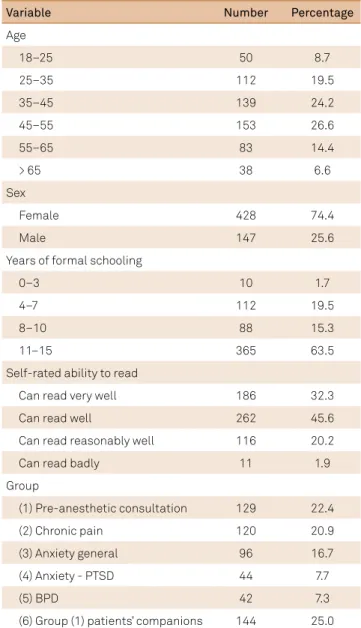
he subjects were mostly women (428; 74%), with an average of 44 years of age (18–81) and 10 years of formal schooling. here was a predominance of married people (56%) and of socioeconomic levels B or C (92%) on an A to E scale. Table 1 shows the distribution of the sample according
to socio-demographic characteristics.
Factor structure and reliability
Principal component analysis of the scale yielded three components, with eigenvalues of 3.68, 1.99 and 1.04.
hose values accounted for, respectively, 26.3, 14.3 and
7.4% of the total variance. Oblique rotation was done with this three-factor solution, and the resulting factors were named in accordance with the original scale: control
Table 1. Demographic characteristics of participants in the validation phase.
Variable Number Percentage
Age
18–25 50 8.7
25–35 112 19.5
35–45 139 24.2
45–55 153 26.6
55–65 83 14.4
> 65 38 6.6
Sex
Female 428 74.4
Male 147 25.6
Years of formal schooling
0–3 10 1.7
4–7 112 19.5
8–10 88 15.3
11–15 365 63.5
Self-rated ability to read
Can read very well 186 32.3
Can read well 262 45.6
Can read reasonably well 116 20.2
Can read badly 11 1.9
Group
(1) Pre-anesthetic consultation 129 22.4
(2) Chronic pain 120 20.9
(3) Anxiety general 96 16.7
(4) Anxiety - PTSD 44 7.7
(5) BPD 42 7.3
(6) Group (1) patients’ companions 144 25.0
(items 2, 6, 7, 13, 15), commitment (items 1, 8, 9, 10, 12), and challenge (items 3, 5, 11, 14) (Table 2).
he scale was completed a second time by 123 participants
(interval 7-14 days, median 10 days). Psychometrics related to
intraclass correlation coeicients are shown in Table 2.
Construct validity
hirteen subscales were used as a means of testing con
-struct validity: the six subscales of the ISSL, the SRQ, the
three subscales of the SDS and the three indices derived
from the CPG. Correlations were calculated between each
of these items against the total score and the three factors
of the DRS (Table 3). Signiicant negative correlations were
observed between the DRS total score and all but one of the
six subscales of the ISSL, and as well as with the SRQ and the SDS subscales. Spearman correlation coeicients varied
from -0.402 to -0.176 (p < 0.001). Overall, such correlations were stronger for factor 2 than for factor 1. Factor 3 did not correlate with the other two factors.
Stronger correlations were observed with ISSL psycho -logical rather than physical dimensions of stress symp-toms of both the previous week and month. Of the three dimensions of SDS, the one of social impairment had a stronger correlation with the DRS and its factors 1 and 2. Weak correlations were found between the DRS (and its
factor 1) and the ISSL dimension of psychological stress
symptoms of the previous 24 hours. Of the dimensions of
the CPG, there was a significant although modest nega -tive correlation between pain intensity and DRS factor 1 (-0.193 at p < 0.05).
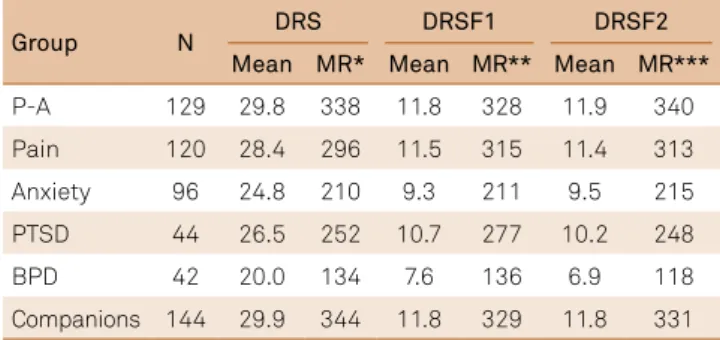
Table 4 comparatively shows the mean resilience scores within the six subgroups. he three groups of psychiatric patients presented with lower hardiness scores. hese were
further compared by means of Dunn’s test for multiple
com-parisons. he DRS scores of borderline patients were lower than those of PTSD patients (p < 0.001) and those of anx
-ious patients in general (p = 0.013). he diference between the hardiness scores of PTSD and anxious patients in general was not signiicant (p = 0.166).
DISCUSSION
his paper reports the cross-cultural adaptation and vali -dation of a version of the DRS in clinical samples of adult
psy-chiatric and non-psypsy-chiatric patients. he version has shown adequate reliability. A three-factor solution seemed to it well
with the theoretical framework of dispositional resilience.
Table 2. Items associated with each Brazilian dispositional resilience scale (DRS) factor.
Variable Eigenvalue %Var
Explained Alpha ICC Items
DRS complete
scale 0.71 0.81
Factor 1:
Control 3.68 26.3 0.66 0.70
2, 6, 7, 13, 15
Factor 2:
Commitment 1.99 14.3 0.72 0.78
1, 8, 9, 10, 12
Factor 3:
Challenge 1.04 7.4 0.64 0.69 3, 5, 11, 14
Var: variance; ICC: Intraclass correlation coeficient.
Table 3. Spearman correlations between the dispositional resilience scale (DRS), its factors and the comparison with external variables.
Variable DRS Factor 1 Factor 2 Factor 3
DRS 1
Factor 1 0.709**
Factor 2 0.744** 0.530**
Factor 3 0.463** -0.094* 0.003
Lipp-mb -0.255** -0.202** -0.244** -0.068
Lipp-mp -0.355** -0.270** -0.402** -0.069
Lipp-wb -0.259** -0.191** -0.248** -0.067
Lipp-wp -0.286 ** -0.219 ** -0.321 ** -0.051
Lipp-db -0.237 ** -0.176 ** -0.247 ** -0.049
Lipp-dp 0.096 * 0.104 * 0.026 0.051
SRQ -0.370 ** -0.298 ** -0.393 ** -0.070
Sheehan-f -0.261 ** -0.204 ** -0.293 ** -0.035
Sheehan-w -0.225 ** -0.179 ** -0.293 ** -0.016
Sheehan-s -0.336 ** -0.266 ** -0.383 ** -0.038
CPG-i -0.112 -0.193* -0.175 0.105
CPG-l -0.010 0.015 -0.171 0.096
CPG-d 0.090 0.150 -0.075 0.107
*p < 0.05; **p < 0.01; wb: body symptoms of last week; wp: psychological symptoms of last week; mb: body symptoms of last month; mp: psychological symptoms of last month; db: body symptoms of last day; dp: psychological symptoms of last day; SRQ: Self-Reporting Questionnaire; Sheehan-f: symptoms affect family relations; Sheehan-w: symptoms affect work activities; Sheehan-s: symptoms affect social/leisure activities; CPG-i: pain intensity; CPG-l: activity limitation due to pain; CPG-d: number of days of limitation.
Table 4. Dispositional resilience scale (DRS), DRS factor 1, and DRS factor 2 cross-groups means and means ranks on a Kruskal-Wallis test.
Group N DRS DRSF1 DRSF2
Mean MR* Mean MR** Mean MR***
P-A 129 29.8 338 11.8 328 11.9 340
Pain 120 28.4 296 11.5 315 11.4 313
Anxiety 96 24.8 210 9.3 211 9.5 215
PTSD 44 26.5 252 10.7 277 10.2 248
BPD 42 20.0 134 7.6 136 6.9 118
Companions 144 29.9 344 11.8 329 11.8 331
his version of the DRS-15 exhibited an inadequacy in
one of its items (the fourth), which led us to factor analyze a version without it. With the exclusion of the item, the fac-tor structure of the DRS turned out to be more resonant with the proposed theoretical grounds of control, commit-ment and challenge as facets of the hardiness construct. Factor 1, control, covered three out of ive items of the con -trol dimension of the original English scale (items 2, 6 and
15). Factor 2, commitment, also covered three out of ive
items of the commitment dimension of the original scale (items 1, 10 and 12). Finally, factor 3, challenge, covered four
out of ive items of the challenge dimension of the original
scale (items 3, 5, 11 and 14).
It must be pointed out that factor 3 did not show
cor-relation with the other two factors. his might be due to a
response-set bias, since these items have inverted polarity (and therefore must be code-reverted before computing). It is possible that the respondents did not recognize the inverted polarity while giving their answers. In fact, functional illiter-acy is a reality in our country as well as being reported else-where22. A report from the same hospital identiied that func -tional illiteracy among our patients was as high as 47%23.
his contamination of factor 3 by a response-set bias is
also likely to explain the absence of correlations between fac-tor 3 and the external variables used to explore construct
validity. Table 3 shows that there were signiicant correlations
for factors 1 and 2 against those variables. If a response-set biased the answers to the code-reverted items of factor 3 in a subset of respondents, a possible correlation between factor 3 and the external variables may have been diluted. A sen-sible recommendation would be to avoid assessing our
pop-ulation with code-reverted items. Reinements of resilience
scales have already been proposed. Campbell-Sills and Stein proposed a ten-item version of the 25-item Connor-Davidson resilience scale24. An 11-item version of the Resilience Scale ( from Wagnild and Young, with 25 items) has also been cross-culturally adapted and validated25.
An alpha coeicient of 0.71 demonstrates good internal
consistency for the scale. Another way of establishing reli-ability is searching for streli-ability and adequate intraclass
cor-relation coeicients testifying good temporal stability either
of the entire scale (0.81), or of its subscales (0.70, 0.78 and 0.69, factors 1 to 3, respectively). For Cicchetti and Sparrow26,
intraclass correlation coeicients between 0.60 and 0.74 are
good and those above, excellent ones.
As expected on theoretical grounds, hardiness scores
cor-related negatively with the SRQ, with the three SDS subscales and the majority of the ISSL dimensions. he lack of correla
-tion between the DRS-14 and the ISSL dimension of psycho -logical symptoms of the last 24 hours can be attributed to the
fact that these ISSL dimensions aggregate only three items,
all of them with antagonistic values in relation to all other
ISSL items – the three evoke “positive” feelings (“sudden urge to start new projects; feeling excitement; having increased
motivation”) instead of “negative” distressing symptoms (“dry mouth; dizziness; tiredness”)17.
his study did not demonstrate correlation between
chronic pain and hardiness, with only one modest negative correlation arising from factor 1 (control) and pain
inten-sity (0.193, p < 0.05) (Table 3). Nevertheless, the CPG has
shown appropriate psychometrics in its validation study21. It is possible that in our sample of chronic pain outpatients, a response-set may have biased the participant’s answers to endorse high levels of symptoms, regardless of their inner dispositional resilience, since those responses would assure them of the continuity of care in our chronic pain
ambula-tory clinic. In the CPG validation study, data on chronic pain
were collected from the community. Indeed the chronic pain
sample exhibited a tendency to score higher in the CPG (pain
assessment) than on the other measures in which the word pain was not mentioned – which can indicate the presence
of a response-set bias.
Signiicant diferences in resilience scores were found
when a Kruskal-Wallis ANOVA compared the means across
the six study groups. he psychiatric groups presented with signiicantly lower scores (Table 4). here have been indi -cations that hardiness is a predictor of mental health, and low hardiness is associated with psychiatric conditions (particularly anxiety disorders)27,28. Of note, the borderline patients had the lower resilience scores. As expected, such BPD patients performed even worse in a self-reported
mea-sure of resilience than the PTSD patients, perhaps because
their inner sense of self incoherence causes them to become distress-intolerant individuals29,30. Current psychiatric
litera-ture provides plenty of studies on resilience and PTSD, and
none on resilience and BPD. Borderline patients should also become a paradigmatic source of information regarding the hardiness/resilience constructs.
his study has limitations. Firstly, it is not population based. he absence of a sample from the community pre -cludes any inference about the dispositional resilience of our population. Secondly, no rigid criteria for participant accrual were adopted. Nevertheless, the six study sub-samples were all derived from the same population (cli-ents of the same hospital), which can have some degree of
restricted selection bias. hirdly, misclassiication is of con -cern since psychiatric diagnoses were ascertained on clini-cal grounds and not by the concurrent application of diag-nostic assessment tools. It is worth noting, however, that the three psychiatric subsamples were identical regarding demographic and socioeconomic characteristics and the
patients were all interviewed in the same way. herefore, despite the potential for a non-diferential misclassiication bias, signiicant diferences were found between the hardi -ness scores of the three subsamples of psychiatric patients.
If this misclassiication is absent (or lessened by the use of diagnostic assessment tools), the diference yielded could
he objective of making available to local researchers an
instrument to measure dispositional resilience among adults in
clinical settings seems to have been attained, after some reine -ments were done on the original instrument. After exclud-ing item 4, the DRS showed adequate reliability, temporal sta-bility and partial construct validity. Construct validity was not
totally conirmed because the code-reverted items of Factor 3
(challenge) seemed not to have been understood by the sample. Up until now, local researchers have been trying to assess if the construct of hardiness would better work with factors 1 and 2 generated from the present adaptation study. In other words,
a reined ten-item version of the DRS should be used locally.
References
1. Luthar SS, Brown PJ. Maximizing resilience through diverse levels of inquiry: prevailing paradigms, possibilities, and priorities for the future. Dev Psychopathol. 2007;19(3):931-55. doi:10.1017/S0954579407000454
2. Yunes MAM, Szymanski H. Resiliência: noção, conceitos ains e considerações críticas. In: Tavares J, editor. Resiliência e educação. 2a ed. São Paulo: Cortez; 2001.
3. Southwick S, Charney D. Resilience: the science of mastering life’s greatest challenges. New York: Cambridge University Press; 2012. 4. Kobasa SC, Maddi SR, Courington S. Personality and constitution as mediators in the stress-illness relationship. J Health Soc Behav. 1981;22(4):368-78. doi:10.2307/2136678
5. Maddi SR. The history of hardiness: twenty years of theorizing, research, and practice. Consult Psychol J. 2002;54(3):173-85. doi:10.1037/1061-4087.54.3.173
6. Bartone PT. Test-retest reliability of the dispositional resilience scale-15, a brief hardiness scale. Psychol Rep. 2007;101(3 Pt 1):943-4. doi: 10.2466/pr0.101.3.943-944
7. Taylor MK, Pietrobon R, Taverniers J, Leon MR, Fern BJ. Relationships of hardiness to physical and mental health status in military men: a test of mediated effects. J Behav Med. 2013;36(1):1-9. doi:10.1007/s10865-011-9387-8
8. Dolbier CL, Smith SE, Steinhardt MA. Relationships of protective factors to stress and symptoms of illness. Am J Health Behav. 2007;31(4):423-33. doi:10.5993/AJHB.31.4.9
9. Garmezy N. Resilience and vulnerability to adverse developmental outcomes associated with poverty. Am Behav Sci. 1991;34(4):416-30. doi:10.1177/0002764291034004003
10. Werner EE, Smith RS. Risk, resilience and recovery: perspectives from the Kauai longitudinal study. Dev Psychopathol.
1993;5(4):503-15. doi:10.1017/S095457940000612X 11. Bonanno GA. Uses and abuses of the resilience construct:
loss, trauma, and health-related adversities. Soc Sci Med. 2012;74(5):753-6. doi:10.1016/j.socscimed.2011.11.022
12. Stewart DE, Yuen T. A systematic review of resilience in the physically ill. Psychosomatics. 2011;52(3):199-209. doi:10.1016/j.psym.2011.01.036 13. Brooks MV. Health-related hardiness and chronic illness:
a synthesis of current research. Nurs Forum. 2003;38(3):11-20. doi:10.1111/j.0029-6473.2003.00011.x
14. Schmidt MI, Duncan BB, Silva GA, Menezes AM, Monteiro CA, Barreto SM et al. Chronic non-communicable diseases in Brazil: burden and current challenges. Lancet. 2011;377(9781):1949-61. doi:10.1016/S0140-6736(11)60135-9
15. Windle G, Bennett KM, Noyes J. A methodological review of resilience measurement scales. Health Qual Life Outcomes. 2011;9(1):8. doi:10.1186/1477-7525-9-8
16. Beaton DE, Bombardier C, Guillemin F, Ferraz MB. Guidelines for the process of cross-cultural adaptation of self-report measures. Spine. 2000;25(24):3186-91. doi:10.1097/00007632-200012150-00014
17. Lipp M. Manual do inventário de sintomas de stress para adultos de Lipp. São Paulo: Casa do Psicólogo; 2000.
18. Mari JJ, Williams P. A validity study of a psychiatric screening questionnaire (SRQ-20) in primary care in the city of Sao Paulo. Br J Psychiatry. 1986;148(1):23-6. doi:10.1192/bjp.148.1.23
19. Sheehan TJ. Creating a psychosocial measurement model from stressful life events. Soc Sci Med. 1996;43(2):265-71. doi:10.1016/0277-9536(95)00377-0
20. Von Korff M, Ormel J, Keefe FJ, Dworkin SF. Grading the severity of chronic pain. Pain. 1992;50(2):133-49. doi:10.1016/0304-3959(92)90154-4
21. Bracher ES, Pietrobon R, Eluf-Neto J. Cross-cultural adaptation and validation of a Brazilian Portuguese version of the chronic pain grade. Qual Life Res. 2010;19(6):847-52. doi 10.1007/s11136-010-9637-1 22. Apolinario D, Mansur LL, Carthery-Goulart MT, Brucki SM, Nitrini
R. Cognitive predictors of limited health literacy in adults with heterogeneous socioeconomic backgrounds. J Health Psychol. 2015;20(12):1613-25. doi:10.1177/1359105313520337
23. Araujo DV, Zoboli EL, Massad E. [How to make consent forms easier to read?]. Rev Assoc Med Bras. 2010;56(2):151-6. Portuguese. doi:10.1590/S0104-42302010000200011
24. Campbell-Sills L, Stein MB. Psychometric analysis and reinement of the Connor-davidson Resilience Scale (CD-RISC): validation of a 10-item measure of resilience. J Trauma Stress. 2007;20(6):1019-28. doi:10.1002/jts.20271
25. Stewart-Knox B, E Duffy M, Bunting B, Parr H, Vas de Almeida MD, Gibney M. Associations between obesity (BMI and waist circumference) and socio-demographic factors, physical activity, dietary habits, life events, resilience, mood, perceived stress and hopelessness in healthy older Europeans. BMC Public Health. 2012;12(1):424. doi:10.1186/1471-2458-12-424
26. Cicchetti DV, Sparrow SA. Developing criteria for establishing interrater reliability of speciic items: applications to assessment of adaptive behavior. Am J Ment Deic. 1981;86(2):127-37.
27. Pollack MH, Stein MB, Davidson JR, Ginsberg DL. New challenges for anxiety disorders: where treatment, resilience, and economic priority converge. CNS Spectr. 2004;9(4):1-10. doi:10.1017/S1092852900027097
28. Davydov DM, Stewart R, Ritchie K, Chaudieu I. Resilience and mental health. Clin Psychol Rev. 2010;30(5):479-95. doi:10.1016/j.cpr.2010.03.003
29. Leyro TM, Zvolensky MJ, Bernstein A. Distress tolerance and psychopathological symptoms and disorders: a review of the empirical literature among adults. Psychol Bull. 2010;136(4):576-600. doi:10.1037/a0019712