Revista de Gestão em Sistemas de Saúde - RGSS, São Paulo, v. 2, n. 1, p. 03-25, jan./jun. 2013. 3
E-ISSN: 2316-3712
DOI: 10.5585/rgss.v2i1.52
Organização: Comitê Científico Interinstitucional Editor Científico: Marcos Roberto Piscopo
Editora Adjunta:Lara Jansiski Motta e Chennyfer Dobbins Avaliação: Double Blind Review pelo SEER/OJS
Revisão: Gramatical, normativa e de formatação
O COMPROMETIMENTO DOS USUÁRIOS NA IMPLEMENTAÇÃO DE UM SISTEMA DE INFORMAÇÃO: O PAPEL DO COMPROMETIMENTO DA ALTA GESTÃO E DO
CONTEXTO ORGANIZACIONAL
USERS’ COMMITMENT IN INFORMATION SYSTEM IMPLEMENTATION: THE ROLE OF TOP-MANAGEMENT COMMITMENT AND ORGANIZATIONAL CONTEXT
Irene Rebelo Cardoso
Pesquisadora do Centro de Estudos em Gestão do Instituto Superior de Economia e Gestão – ISEG, Lisboa – Portugal
E-mail: [email protected] (Portugal)
Cristiane Drebes Pedron
Doutora em Gestão pela Universidade Técnica de Lisboa – Instituto Superior de Economia e Gestão, Portugal
Professora do Programa de Pós-Graduação em Administração da Universidade Nove de Julho – PPGA/UNINOVE
Users’ Commitment in Information System Implementation: The Role of Top-Management Commitment and Organizational Context
Revista de Gestão em Sistemas de Saúde - RGSS, São Paulo, v. 2, n. 1, p. 03-25, jan./jun. 2013.
4
O COMPROMETIMENTO DOS USUÁRIOS NA IMPLEMENTAÇÃO DE UM SISTEMA DE INFORMAÇÃO: O PAPEL DO COMPROMETIMENTO DA ALTA GESTÃO E DO
CONTEXTO ORGANIZACIONAL RESUMO
A melhoria na qualidade do atendimento dos pacientes é a grande preocupação e o que impulsiona o uso de Tecnologia de Informação na Saúde. Apesar da grande expectativa do uso das tecnologias de informação nesse setor, muitas tentativas de implementação falharam. Vários estudos revelam a importância do compromisso das partes interessadas bem como o contexto organizacional quando um sistema ou tecnologia de informação é implementado. Este artigo apresenta dois estudos de caso que analisam ambientes hospitalares após a implementação de um sistema de informação, tendo como principal foco de análise o compromisso das partes interessadas. Procura-se perceber como o compromisso da alta administração e o contexto organizacional influenciam as partes interessadas para a realização de benefícios da implementação de um sistema de informação na saúde. A pesquisa segue uma abordagem qualitativa, interpretativa e baseada em casos. Foram realizadas entrevistas semiestruturadas e análise de documentos. Os resultados revelaram que o contexto organizacional e o comprometimento da alta administração podem ser particularmente importantes para aumentar o comprometimento dos usuários do sistema e, assim, o alcance dos benefícios esperados.
Palavras-chave: Tecnologia de Informação na Saúde; Compromisso da Alta Administração; Contexto Organizacional; Benefícios.
USERS’ COMMITMENT IN INFORMATION SYSTEM IMPLEMENTATION: THE ROLE OF TOP-MANAGEMENT COMMITMENT AND ORGANIZATIONAL CONTEXT
ABSTRACT
The improvement in quality of care is a primary concern and driving force in the use of Healthcare Information Technology (HIT). Notwithstanding high expectations for the value of IT (Information Technology) in healthcare, many attempts at HIT implementation have failed. Various studies of the implementation of change programs have demonstrated the importance of stakeholders’ commitment as well as organizational context when Information Systems/Information Technology (IS/IT) is implemented. Here, two case studies following the implementation of a HIT in a hospital setting are analysed, focusing on stakeholders’ commitment to the IS/IT. An understanding is sought as to how top-management commitment and organizational context influence stakeholders’ commitment to benefits achievement from HIT implementation. A qualitative, interpretative and case-based research was used employing semi-structured interviews and document analysis. Findings revealed that organizational context and top-management commitment can be particularly important to the commitment of users in achieving the expected IS/IT benefits.
Keywords: HIT (Healthcare Information Technology); Top-Management Commitment; Project Commitment; Organizational Context; Benefits.
Irene Cardoso & Cristiane Drebes Pedron
Revista de Gestão em Sistemas de Saúde - RGSS, São Paulo, v. 2, n. 1, p. 03-25, jan./jun. 2013. 5
1 INTRODUCTION
Public healthcare organizations, such as hospitals are professional and bureaucratic organizations (Bate, 2000) that present a set of specific characteristics (e.g., their non-profit nature, a subordination to government, a large and varying number of stakeholders) (Ward & Daniel, 2006) and an environment characterized by tensions between different groups of actors with different perspectives (McKee & Healy, 2002), all making for excellent fields for research (LeRouge, Mantzana, & Wilson, 2007).
Information Systems and Information Technology (IS/IT) in healthcare have a significant potential to improve patient safety and organizational efficiency (Bhattacherjee & Hikmet, 2008; Thakur, Hsu, & Fontenot, 2012). The improvement in the quality of care is a primary concern and driving force of IT in Healthcare (HIT) (Marietti, 1998; Thakur, Hsu, & Fontenot, 2012), whose use has been recommended by various healthcare bodies as a strategy for improving the quality of patient records (Institute of Medicine, 2001).
Notwithstanding the high expectations for the value-added by HIT, the implementation of many projects has failed (Doolin, 2004; Lapoint & Rivard, 2005). Various studies have demonstrated that ensuring the commitment of stakeholders, either to the organization or to the implementation of change programs, is conducive to realising positive outcomes in terms of individual and organizational performance (Shum, Bove, & Auh, 2008; Dezdar & Ainin, 2011).
Starting from an understanding of existing problems with HIT implementations, an investigation was carried out in a hospital setting, focusing on stakeholders’ commitment to IS/IT implementation. Two case studies related to the implementation of clinical software in two Portuguese hospitals were analysed. A qualitative, interpretative and case-based research was used employing semi-structured interviews and document analysis.
The purpose of the research is to understand how top-management commitment and organizational context influence the commitment of stakeholders and achievement of benefits from a HIT implementation.
Users’ Commitment in Information System Implementation: The Role of Top-Management Commitment and Organizational Context
Revista de Gestão em Sistemas de Saúde - RGSS, São Paulo, v. 2, n. 1, p. 03-25, jan./jun. 2013.
6 2 THEORETICAL BACKGROUND
2.1 TOP-MANAGEMENT COMMITMENT
It is widely accepted that commitment to an IS development project affects the eventual success of the system (Sabherwal, Sein, & Marakas, 2003), and has a positive impact on business performance (Shum, Bove, & Auh, 2008). Relationships have been found between organizational commitment and the results/work behaviours potentially relevant to the company (Meyer & Herscovitch, 2001; Dezdar & Ainin, 2011).
Here, the definition of commitment of Meyer and Herscovitch (2001) has been adopted. They define commitment as “a force that binds an individual to a course of action of relevance to one or more targets” (p.301). These targets can be an entity (e.g., an organization), an abstract concept or the desired outcome of a particular course of action. In this study, the Paper Free Solution Software (PFSS) implementation represents a course of action.
In line with the definitions of commitment given by Meyer and Herscovitch (2001) and Coetsee (1999) that consider commitment as acceptance of change and resistance as the opposite, here, commitment to an IS project implementation is considered as an acceptance of that project and a high affinity, identification and engagement in achieving the expected benefits from it.
Top-management commitment has been emphasised as a critical factor in planning and successful implementation of IS (Basu, Hartono, Lederer, & Sethi, 2002; Dezdar & Ainin, 2011) as well as in the influence it has on the commitment of other stakeholders (Sabherwal, Sein, & Marakas, 2003).
Top-management support also influences the organization’s effectiveness in converting information technology investments into useful outputs (Weill & Olson, 1989; Dezdar & Ainin, 2011). Conversely, lack of commitment could lead to indifference or deliberate resistance (Coetsee, 1999) and may even cause the project to be abandoned (Doolin, 2004).
Irene Cardoso & Cristiane Drebes Pedron
Revista de Gestão em Sistemas de Saúde - RGSS, São Paulo, v. 2, n. 1, p. 03-25, jan./jun. 2013. 7
2.2 ORGANIZATIONAL CONTEXT
IS are complex social objects that are inseparable from the organizational context within which they are introduced and from the infrastructure supporting them, as well as being products of history and human agency (Symons, 1991).
The organizational context is unique, and it is not feasible to develop a generic set of benefits and related changes for certain application types, or kinds of organizations and units, even if they pertain to the same enterprise or public institutional system (Ward & Daniel, 2006).
Many authors have highlighted the role of organizational context in a successful IS implementation (Dhillon, 2005; Belkhamza & Wafa, 2011; Xu, Zhu, & Liao, 2011), or as a factor that encourages an organization to adopt successfully innovative ideas (Thakur, Hsu, & Fontenot, 2012).
2.3 BENEFITS
The benefits enabled by IS/IT can be seen as the advantages accruing to a particular stakeholder or group of stakeholders who want to obtain value from the investment. They are often described as either tangible or intangible, depending on the objectivity and capability to be measured (Ward & Daniel, 2006).
From the literature review, the perceived benefits of an Information System refer to: the anticipated advantages that the application can provide the organization with (Chwelos, Benbasat, & Dexter, 2001); the positive impact of implementation (Casedesus & Karapetrovic, 2005); or the characteristic that most influences the adoption (Mehrtens, Cragg, & Mills, 2001).
The benefits most associated with the use of HIT are included in the following categories: 1) improvement of patient safety, quality of care, organizational efficiency (Bhattacherjee & Hikmet, 2008; Thakur, Hsu, & Fontenot, 2012); 2) effects on the healthcare professionals’ performance (Bhattacherjee, Hikmet, Menachemi, Kayhan, & Brooks, 2007; Thakur, Hsu, & Fontenot, 2012); and 3) reduction of costs (Caldeira, Serrano, Quaresma, Pedron, & Romão, 2012).
Users’ Commitment in Information System Implementation: The Role of Top-Management Commitment and Organizational Context
Revista de Gestão em Sistemas de Saúde - RGSS, São Paulo, v. 2, n. 1, p. 03-25, jan./jun. 2013.
8 3 RESEARCH METHODOLOGY
The focus of this study is highly complex and context-dependent. Thus, research methods are required that allow such complexity to be observed, recorded and understood within its unique setting (Walsham, 2006). Following an interpretivist view of the world, a qualitative and interpretive case-study strategy is adopted, using multiple case studies.
Data collection was based mainly on semi-structured interviews, following Walsham (2006) and Yin (2003). However, to obtain an appropriate degree of internal validity (Yin, 2003), rigor, richness and depth (Flick, 2002), other sources of evidence were used, such as document analysis and direct observation. The field work was carried out between 2007 and 2011.
In the two organizations, ‘A’ and ‘B’, 64 and 65 interviews were respectively carried out and 32 and 15 business meeting (between organizational members and the IS provider to discuss the implementation process) summaries were analysed. The range of interviewees included: managers, implementers (both from the supplier and from the organization), and users (physicians, nurses, and assistants). Table 1 specifies the number of interviews within each group.
Table 1 - Interviews by group
Hospital A Nº Hospital B Nº
Implementation team Implementation team
Project managers 1 Project managers 2
On-site Monitoring Team (OT) 2 On-site Monitoring Team (OT) 2
Managers Managers
Board Members 3 Board Members 3
IS Manager 2 IS Manager 1
Service Directors 3 Service Directors 6
Nurse Managers 3 Nurse Managers 12
Users Users
Nurses 27 Nurses 19
Assistants 8 Assistants 8
Physicians 15 Physicians 12
Total 64 Total 65
Qualitative data analysis was adopted (Miles & Huberman, 1994; Denzin & Lincoln, 2011), seeking to find the most interesting themes relevant to the research question (Seidman, 2006). Meaning was attributed to the data, and efforts were made to ensure that the coding process preserved existing data relationships (Miles & Huberman, 1994), which were organized in themes and categories suggested by the data rather than imposed a priori.
Irene Cardoso & Cristiane Drebes Pedron
Revista de Gestão em Sistemas de Saúde - RGSS, São Paulo, v. 2, n. 1, p. 03-25, jan./jun. 2013. 9
4 FINDINGS
The HIT installed in the studied hospitals is referred to as Paper Free Solution Software (PFSS). This software facilitates the registration, consultation and analysis of information produced in the clinical care process, simultaneously incorporating the characteristics of an EMR (Electronic Medical Record) and DSS (Decision Support Systems).
In this section a general description of each case is presented followed by the four main themes found in the data relevant to stakeholders’ commitment (organizational context, top management commitment, usage and perceived benefits). All themes are related to each other.
Categories such as organizational climate, organizational structure and political context were found to be particularly significant within the organizational context theme, whereas leadership style was highlighted for the top-management commitment theme.
In this research top-management commitment is seen as the affinity and identification with the project and the ability to influence the progress and success of its implementation. It includes all the proceedings and support provided by the Board of Directors, both in terms of availability of resources and in the level of professional involvement in the project implementation.
4.1 CASE 1: HOSPITAL A
Hospital A is a large hospital with a capacity for 332 beds. Its clinical activity is grouped in departments within the main health care areas: surgical, medical, maternal/paediatric, emergency and Complementary Methods of Diagnosis and Therapy (CMDT).
In December 2010, the hospital employed 1458 people. During 2010, 191262 medical consultations, 13637 surgical operations, and 76014 emergencies episodes were logged, with more than 13000 patients being admitted.
The implementation of PFSS was initiated at the end of February 2007 in the Emergency Service (ER), gradually being extended to the other clinical areas. In July 2011, when the fieldwork finished, the implementation process was not fully complete.
The groups comprising nurses and assistants exhibited a greater acceptance of the IS, while doctors showed most difficulty in complying with, and using, the system.
Users’ Commitment in Information System Implementation: The Role of Top-Management Commitment and Organizational Context
Revista de Gestão em Sistemas de Saúde - RGSS, São Paulo, v. 2, n. 1, p. 03-25, jan./jun. 2013.
10 4.1.1 ORGANIZATIONAL CONTEXT
The internal climate is clearly marked by the leadership of the Board and the changes that have been made, either to the physical infrastructure or the IT.
Internally the environment is characterized as being “calm and relaxed and open to change”, in the words of a member of the Board responsible for the project, who also considers this aspect an important element in the implementation process. This executive highlights that “culture has been a catalyst to accepting this project in a positive light”.
This feeling of calm and friendly attitude to change transmitted by top-management was acknowledged by other professionals, both in the area of management and in the operational area, even by some who classify themselves as being against the IS project and its implementation:
“At this time the hospital has a climate predisposed to change. It has a management team (...) that is in favour of implementing changes.” (Physician_8)
The hospital exhibits, like other organizations whose supervision is controlled by the State and whose Board of Directors is appointed by government, the existence of a strong political component. This is sometimes expressed during the interviews as a factor that has influenced and continues to influence the process of commitment towards the implementation and even acceptance of the PFSS:
“(...) the political question [partisan], is very evident in hospital (...). As the PFSS emerged aligned with a ‘left-wing’ administration, I think people of the ‘right’ react more negatively to it. (...) In the medical area this is very evident; I think there is political influence in the matter.” (OT_1)
According to the Clinical Director, beside these partisan issues, “personal and group interests emerged, on the one hand related somewhat to corporatism and loss of autonomy by professionals of various medical specialties, and on the other hand, to interests of a particular nature”.
Another political component is related to the “great split in the different classes in the context of health”, according to a manager of the on-site team (OT) monitoring the implementation.
Irene Cardoso & Cristiane Drebes Pedron
Revista de Gestão em Sistemas de Saúde - RGSS, São Paulo, v. 2, n. 1, p. 03-25, jan./jun. 2013. 11
This team member highlighted this split as more evident in situations related to the IS screening module. This module is assigned to the nurses as a group, and provides them with the power to allocate the patients to medical specialties.
This ‘decision-making power’ for referral to a medical speciality appears to be seen by some medical experts as an intrusion on their professional ability, with an additional loss of autonomy, as a nurse of the ER explains:
“There is an attempt by the surgical teams to overlap with other groups. They try to discard what they think is not theirs (...). They [doctors] come and tell us screaming that a case is not for them (...), to try to get us to change our screening.”
4.1.2 TOP-MANAGEMENT COMMITMENT
The Board, as part of its implementation strategy, chose to intervene in the proceedings through a team of professionals with a leadership profile and ability capable of influencing the progress of the project [the working group (WG)], in which a member of the Board was also present.
The WG’s role is to implement the measures decided by the Board in conjunction with the PFSS team and encourage the use of and participation by professionals, while dealing with any difficulties that might arise.
A strong leadership was identified in this organization, adopting measures designed to foster control and stability, helping to overcome emerging resistant behaviours for example.
Evidence of top-management commitment was found here, either as stated by the members of the Board or as revealed by the other respondents:
“What is important is the need to focus on emergency services because the people who work there also work in the other services, and if these people do not see the benefits and advantages there will be problems when it comes to installing the other applications.” (Chairman of the Board)
“(…) we are trying to reduce the number of failures in the implementation, so that we can finish up successfully.” (Member of the Board)
Users’ Commitment in Information System Implementation: The Role of Top-Management Commitment and Organizational Context
Revista de Gestão em Sistemas de Saúde - RGSS, São Paulo, v. 2, n. 1, p. 03-25, jan./jun. 2013.
12
The support of the Board also included backing the measures that the WG adopted, either through formal communication or by providing the necessary means and resources, as mentioned by a physician:
“(...) there was never a lack of support. The biggest hurdles were overcome (...) with a bit of encouragement by the Board of Directors, with their letters alerting everyone of the need to cooperate.”
The permanent presence of the on-site monitoring team (OT) from the IS supplier, over a two-year period, was highly valued by the users, and positively contributed to user adherence and commitment:
“In terms of company staff, (...) during the implementation phase there were always present (...) they were available to provide the necessary support.” (Physician_4)
However, the OT sometimes expected more support from the Board of Directors, particularly relating to decisions taken by some Board members (in the clinical area) that would have helped to resolve or minimize some of the difficulties encountered in implementation:
“There are a number of decisions, (...) a series of mandatory procedures that we needed (...) which are currently of a clinical nature and the Clinical Director is not present.” (OT_1)
4.1.3 USAGE AND COMMITMENT
Cases of resistance (lack of commitment) occurred in some specialties, predominantly in the medical profession. These phenomena of resistance were mainly characterized by a refusal to use the application, by using it only partially, and/or by verbalizing opposition to the system, such as “I will not be using it, until I am forced to” or “We will be happy the day the system goes down and we have to return to paper” (Physician_6).
Partial use often signifies that the information entered is insufficient. This compromises continuity of the care process and access to the relevant information by other professionals, particularly so when information is spread over two different media (paper and digital).
Irene Cardoso & Cristiane Drebes Pedron
Revista de Gestão em Sistemas de Saúde - RGSS, São Paulo, v. 2, n. 1, p. 03-25, jan./jun. 2013. 13
Users from the two most significant professional groups (doctors and nurses) stressed the importance of the correct use of the information system for achieving desired benefits. Correct use consists of entering information in accordance with the functionality of the system, such that the information can be considered reliable and trustworthy for the purposes of continuity of care and the production of management indicators.
4.1.4 PERCEIVED BENEFITS
The majority of users recognized the main benefits that the system has brought, particularly those related to security, accessibility, legibility and reliability of information. These perceived benefits seem to have a great impact on the performance of professional daily activities, individual responsibility and patient safety.
4.2 CASE 2: HOSPITAL B
Hospital B is a medium-sized hospital with a capacity of 182 beds. In June 2011, Hospital B employed 589 workers. In February 2007 it was integrated into a Hospital Center (HC). Clinical activities are grouped in departments: Surgery, Medicine, Infant Care, Emergency and CMDT. During 2010, 4281 medical consultations, 1533 conventional surgeries, 62050 emergency processes and 6728 patient admissions were recorded.
The implementation process of the PFSS was gradual, starting with the Emergency Service (ER) in 2003. The expansion of the software to the whole hospital occurred only when the ER had completed some three or four years of successful implementation. The implementation process extended until 2010.
The level of use has been shown to vary between medical specialities and professional groups. The nurses and assistants have shown themselves to be completely committed with the project. However, the doctors presented different levels of commitment, including active resistance (e.g., refusal to use the system).
Users’ Commitment in Information System Implementation: The Role of Top-Management Commitment and Organizational Context
Revista de Gestão em Sistemas de Saúde - RGSS, São Paulo, v. 2, n. 1, p. 03-25, jan./jun. 2013.
14 4.2.1 ORGANIZATIONAL CONTEXT
The fieldwork revealed a pleasingly high quality of treatment in the hospital and a calm and organized environment.
The hospital and all its workers were driven by continuous improvement, investment in quality and acceptance of change. For instance, Hospital B was already a no-smoking area when legislation banning smoking in enclosed spaces was published.
With integration into the HC, the management body and its headquarters changed, moving location to the district’s capital. The organizational structure altered, with all HC unit departments allocated to Integrated Centres of Responsibility. Almost all the service directorates moved to the central hospital; the old Board of Hospital B then assumed a support role to management.
The new organizational structure, with the Board moved to another hospital, contributed to a climate of insatisfaction, uncertainty and ambiguity for the professional workers. They saw their hospital lose ‘its identity’ and ‘its Board’, and demonstrated feelings of loss, such as:
“The feeling is one of loss… that we lost some of our identity. The middle management and the service and department directors all went over to the Central Unit. Now we are not heard or included.” (Nurse_5)
The political context of Hospital B is therefore dominated by the resulting changes in the power structure and the loss of autonomy and identity compared with the central unit of the HC.
Other aspects mentioned by participants as influencing the political environment of the organization were the personal and professional interests held by some professional groups and also a division between doctors and nurses, visible in the way each group sees the IS. For example, after two years of the director of Medicine boycotting the implementation process in his department, the nurses decided to move forward and started using the PFSS without physicians. A nurse from that service commented:
“There was an expectation that the doctors would be dragged into it gradually, having to use the application every time they needed to consult the nursing records, but it didn’t happen like that.” (Nurse_21)
Irene Cardoso & Cristiane Drebes Pedron
Revista de Gestão em Sistemas de Saúde - RGSS, São Paulo, v. 2, n. 1, p. 03-25, jan./jun. 2013. 15
4.2.2 TOP-MANAGEMENT COMMITMENT
The commitment of the Board of Directors to the progress of the project exerted a marked influence on the way that the implementation was carried out. Firstly, in the ER, there was a lot of enthusiasm and close contact between Board and users while latterly, in the Operating Rooms and In-patient department, there was little support from the Board for the implementation and adoption of necessary measures to remove paper.
The previous Board of Directors was seen as very close and supportive, a facet that seemed to reinforce the link between the workers and the organization, its goals and objectives, contributing to the success of IS implementation in the ER. Hence, the organizational commitment was high, shown through expressions such as: “we were pioneers in adopting the Paper Free Hospital” (Nurse_15) or “(...) a clean hospital, organized, futuristic; we sought out challenges, we were showcased in various places” (Physician_12).
The integration process and the marked lack of interest from the new Board in the PFSS caused the project to diverge from its natural course. Following from the integration into the HC, a blockade followed and a slowdown in the implementation effort occurred that in some cases reduced users’ commitment to the project, as the following comments show:
“(...) it is a disorderly period for our hospital, in that the HC was created and as such, the hospital centre brought some resistance. Aside from this, as a central unit (...), it doesn’t have the PFSS and there exists a disconnect in terms of the systems adopted.” (Member of Board _1)
“It reached an impasse because there was a change in management and all the support that existed with the previous management was not carried over to the present management.” (Project manager_1)
The member of the Board responsible for the hospital argued that much of the resistance phenomena occurred because physicians are a professional group with considerable power and were also supported by the Clinical Director himself, who, in her perspective, should take control of the process: “the Clinical Director at the time was maybe the person who was most absent from the development of the project”.
Users’ Commitment in Information System Implementation: The Role of Top-Management Commitment and Organizational Context
Revista de Gestão em Sistemas de Saúde - RGSS, São Paulo, v. 2, n. 1, p. 03-25, jan./jun. 2013.
16 process:
“The leadership has a direct impact. Leadership at the moment is neither direct nor present. It is a leadership that is distant, because the leaders are in the central unit most of the time. In the previous case we had the manager present in the hospital every day; we had continual meetings with professionals of the hospital. Now it is different! There is no hands-on leadership. The administration and the boards of directors have an important role. (…) If people are not working for the system, the system by itself cannot win through. (…) The imposition and definition of rules has to happen, there has to be an authoritative figure, in whatever system, in whatever organization (…).”
His opinion about the role of top-management support is also shared by some health professionals:
“If there was more leadership and more commitment on the part of management, maybe, things would have been done a long time ago.” (Physician_9)
“It is really necessary that the leaders or the Board press them a bit harder to use it, because, while they can continue to use the paper system, they will use it.” (Nurse_11)
The main support for the implementation was provided by the supplying company, through their continual presence on-site for a significant time (between 2003 and 2010).
4.2.3 USAGE AND COMMITMENT
The perceived lack of commitment of the new management team contributed to a climate of uncertainty surrounding the continued use of the IS, also given the fact that Hospital B was the only unit that had an IS covering the whole organization. Feelings of distrust and insecurity concerning the continuity of the project were very noticeable in the years immediately after integration. This climate had a significant impact on users’ commitment and degree of system usage, while also compromising the achievement of all benefits expected from HIT implementation.
Usage was partial in most of the services, particularly by physicians. In both the In-patient services of Medicine and the Operating Room, the doctors refused to use the system. Contrary to
Irene Cardoso & Cristiane Drebes Pedron
Revista de Gestão em Sistemas de Saúde - RGSS, São Paulo, v. 2, n. 1, p. 03-25, jan./jun. 2013. 17
this, the nurses and assistants adopted the IS with great commitment in all services, seeing it as a work tool. The following comment from the IS manager is illustrative:
“From the professional groups, those that adopted it better were without doubt the nurses and the orderlies.”
The same manager referred to the impact that the refusal to use, or inappropriate use of the system, by a particular group, has on reaching the expected benefits:
“The most complete records would have to forcibly be those of the doctors, because from there, there is a domino effect: if a doctor makes an entry, a nurse also has to make an entry, and so do the orderlies – if the doctor doesn’t make an entry, it compels the others not to use it (…) as such, depending on their will to use it, they can block-up the system. In the services where there are incompliant doctors, the information is no longer reliable.”
The situation described above is extremely relevant, particularly in interdependent activities that imply the interactive participation of various professionals in the care process.
4.2.4 PERCEIVED BENEFITS
A large part of the workers that use the system in their daily work considers it a work tool that supports their activity, and now cannot see themselves working without it.
The perceptions of the benefits associated with the system are related to an increased legibility, accessibility, reliability and security of information. Other aspects referred to, mostly by nurses, include time savings for both the patient and healthcare professional as well as professional security. Together they influence commitment to the IS, encouraging an appropriate use:
“I think that now I cannot go back to paper, (…). I think it helps our work, it saves time, the records are more reliable, and I think that there is less information lost and this benefits everybody. It benefits the patient principally, and above all, we benefit ourselves, being probably less stressed in our work.” (Nurse_13)
Users’ Commitment in Information System Implementation: The Role of Top-Management Commitment and Organizational Context
Revista de Gestão em Sistemas de Saúde - RGSS, São Paulo, v. 2, n. 1, p. 03-25, jan./jun. 2013.
18 4.3 CROSS CASE ANALYSIS
The principal differences found between the two cases were related to stability of organizational structure, climate, leadership and management support for the project. These differences were connected mainly to the shift in leadership of Hospital B as a result of being integrated into an HC. Whereas in Hospital A the members of the Board continued unchanged following adoption of the PFSS and remained in close contact with the professionals, providing a supportive leadership (organizational support) as well as the necessary encouragement to progress implementation, in Hospital B, the members of the Board that were involved in the adoption of the IS changed during the course of integration, reducing their support for the implementation of the PFSS.
So, while the implementation in Hospital A follows what can be termed a ‘normal’ course, the implementation in Hospital B passed through two phases: one phase marked by a receptive environment, with a supportive management; and a second phase characterised by an ambiguous and unstable environment, without sufficient support from the Board necessary to advance the project and overcome existing issues (i.e., the resistance phenomena).
While the organizational climate and changes of organizational structure in Hospital B acted to reduce the commitment to the project, in Hospital A the calm climate and continual change (alongside the existence of many other innovation projects), and the fact that the management team were well accepted, contributed to an increase in the commitment of users.
The importance of a correct usage of IS in achieving the desired benefits was stressed by doctors and nurses in the two research sites.
With respect to the positive perceptions of the consequences of the system (perceived benefits), users refer only to the aspects related to improvement of clinical activity, professional performance and effect on care provided. The professional workers did not demonstrate any knowledge of other, more tangible, benefits of the system, such as the impact on costs. The perceived benefits from IS were similar in the two organizations. In Table 2 all the categories of benefits and their respective description are presented, along with the verbatim text that illustrates the interpretations of the health professionals.
Irene Cardoso & Cristiane Drebes Pedron
Revista de Gestão em Sistemas de Saúde - RGSS, São Paulo, v. 2, n. 1, p. 03-25, jan./jun. 2013. 19
Table 2 - List of Perceived Benefits
Perceived benefits Evidence
Information Security
This perception is associated with the interpretation that information is not lost or susceptible to alteration
‘(...) it is where we know that the information is (...) it is not likely to be lost’ (Nurse 9, case 1)
‘It is all recorded, anybody can access it, nobody can erase it, nobody can change it (…) I think that in terms of security it is much better’ (Nurse 11, case 2)
Reliability of Data
Refers to the credibility and quality that the information should possess.
‘The great benefit of the PFSS (...) is to give us really accurate information’ (Physician 1, case 1)
‘It is reliable information because (…), it stays recorded (…) who did what. …There are no doubts in relation to what is written’ (Nurse 17, case2)
Attendance Improvement
This is associated with the
perception of a general
improvement in treatment and service provision. It includes a set of benefits (e.g., responsibility, better clinical decisions and all the benefits that the professional workers receive), that together act to improve assistance.
‘For the user there is a very big advantage and that translates into an increase in the security with which the medical and nursing care can be provided.’ (Physician 8, case 1).
‘the PFSS helps make our life easier and avoids some of the communication errors’ (Nurse 22, case 2)
‘it allows us to save time in terms of having to go and talk to someone about the patient’ (Physician 4, case 2)
Patient benefits
Includes the perceptions associated with the positive impacts of IS for patients in care (e.g., error reduction, patient security, time savings)
‘The process is faster. (…) the patients are assessed in terms of priority’ (Assistant 3, case 1).
‘The patient saves more time, is better monitored and benefits from the quality of the service provided, because all the information relating to the patient is available’ (Physician 12, case 2)
‘Now there is less possibility of making a mistake’ (Assistant 4, case 2) Decision Support
The capacity that the system has to influence decision making.
‘It is a good system, much easier for us to realize what is happening in reality with the patient, (...) and this makes it much easier (...) the quality of work we provide’ (Physician 12, case 1).
‘It is important in terms of management because it supplies a lot of information to the managers’ (Physician 11, case 2)
Activity Support
Images of the system related to the positive impact of the system on users’ activities
‘In my work as a nurse (...) I think it's an asset (...)’ (Nurse 18, Case 1) ‘It facilitates our work, saves us time, records kept are more reliable and I think that this helps everybody’ (Nurse 13, case 2)
‘I think that for clinical activities it is very important’ (Physician 4, case 2).
Information Accessibility
Represents the way that users perceive the accessibility of information.
‘With the information system, in a second, we can get this information, whereas with traditional filing systems this was impossible’ (Physician 8, case 1)
‘We have access to all the files and we don’t have to go around looking to see where the patient is’ (Assistant 4, case 2)
‘It allows us (…) access to the patient file from any place in the hospital’ (Physician 9, case 2)
Users’ Commitment in Information System Implementation: The Role of Top-Management Commitment and Organizational Context
Revista de Gestão em Sistemas de Saúde - RGSS, São Paulo, v. 2, n. 1, p. 03-25, jan./jun. 2013.
20
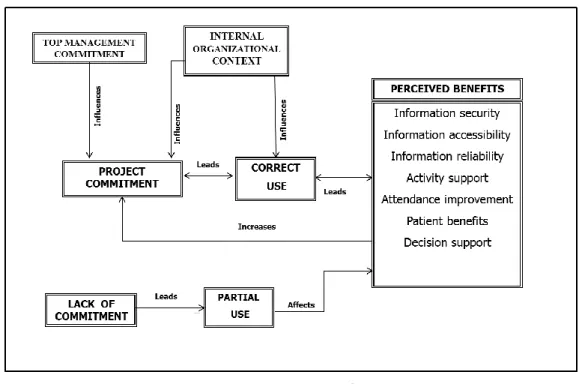
Figure 1 aims to reproduce the relationships found in the data, from the participants’ perspective. It represents the role that internal organizational context and top-management
commitment have in the project commitment and perceived benefits. The correct and efficient use of
the system is a prerequisite for the achievement of all the benefits and the perception of these benefits in itself constitutes an inducement to commitment.
Figure 1 - The Role of Commitment on Benefits
Professionals who are not committed to the project do not use, or only partially use, the IS. When this happens the information entered is sometimes woefully inadequate for an efficient monitoring of the patient. Besides compromising the continuity of care, a partial or inexistent use of the IS increases the risk of medical error and the disadvantages of paper clinical records (illegibility, risk of loss or adulteration, increased expenditure of resources and inefficiency).
Thus, these situations of resistance (lack of commitment) compromise the accessibility of information by other professionals and its reliability. In other words, a partial use of HIT compromises benefits achievement.
Irene Cardoso & Cristiane Drebes Pedron
Revista de Gestão em Sistemas de Saúde - RGSS, São Paulo, v. 2, n. 1, p. 03-25, jan./jun. 2013. 21
5 CONCLUSIONS
In this research it was seen how organizational context and support of management (top-management commitment) can be extremely relevant to the commitment of users and, concomitantly, in achieving the expected benefits from IS, in a manner consistent with Dhillon (2005) and Dezdar & Ainin (2012).
Associated with top-management commitment, it is worth highlighting the role of a strong leadership from the Board of Directors. The existence of a leadership that is engaged, supportive and committed to a project has been seen to have a direct impact on the commitment of professional workers to the project, as can also be seen in statements of Cho et al. (2011) about the role of leadership in IS success. The actions adopted by the management group to stimulate, or even force resistant elements to comply through the necessary procedures, are a type of support of great importance. This is valued by many professionals in an HIT implementation process, particularly when it is necessary to overcome certain barriers to use by some professional groups. Here, the clinical member of the Board of Directors was pointed out as being critical to a faster and more comprehensive implementation of the system.
The organizational context showed itself to be of particular importance in influencing commitment, especially with respect to the organizational climate, and political context. In terms of the implementation of a HIT, a quiet and transparent atmosphere, open to change, and a stable management team, proved to be extremely important in introducing changes in organizations.
Finally, the quality of clinical information and all benefits associated with HIT, particularly better quality of patient care and efficiency savings, depend increasingly on reliability and accessibility of information by all stakeholders. Therefore, it is important to assure not only a complete use of the system, but also the correct use of it.
Users’ Commitment in Information System Implementation: The Role of Top-Management Commitment and Organizational Context
Revista de Gestão em Sistemas de Saúde - RGSS, São Paulo, v. 2, n. 1, p. 03-25, jan./jun. 2013.
22
REFERENCES
Basu, V., Hartono, E., Lederer, A., & Sethi, V. (2002). The impact of organizational commitment, senior management involvement, and team involvement on strategic information systems planning. Information and Management, 39(6), 513-524.
Bate, P. (2000). Changing the culture of a hospital: from hierarchy to networked community. Public
Administration, 78(3), 485-512.
Belkhamza, Z., & Wafa, S. A. (2011). The Assessment of Information Systems Success from the Organizational Context Perspective. IEEE Symposium on Computers & Informatics (ISCI), 792-795.
Bhattacherjee, A., & Hikmet, N. (2008). Reconceptualising organizational support and its effect on information technology usage: evidence from the health care sector. The Journal of Computer
Information Systems, 48(4), 69-76.
Bhattacherjee, A., Hikmet, N., Menachemi, N., Kayhan, V., & Brooks, R. (2007). The differential performance effects of Healthcare Information technology adoption. Information Systems
Management, 24(1), 5-14.
Caldeira, M., Serrano, A., Quaresma, R., Pedron, C., & Romão, M. (2012). Information and communication technology adoption for business benefits: a case analysis of an integrated paperless system. International Journal of Information Management, 32(2), 196-202.
Casedesus, M., & Karapetrovic, S. (2005). The erosion of ISO 9000 benefits: a temporal study.
International Journal of Quality and Reliability Management, 22(2), 120-136.
Cho, J., Park, I., & Michel, J. W. (2011). How does leadership affect Information System success? The role of transformational leadership. Information & Management, 48(7), 270-277.
Chwelos, P., Benbasat, I., & Dexter, A. (2001). Research Report: empirical test of an EDI Adoption Model. Information System Research, 12(3), 304-321.
Coetsee, L. (1999). From resistance to commitment. Public Administration Quarterly, 23(2), 204-222.
Denzin, N. K., & Lincoln Y. S. (2011). The Discipline and Practice of Qualitative Research. In: Denzin N., & Lincoln, Y. S. (eds.), The Sage Handbook of Qualitative Research. Fourth edition, Thousand Oaks, California: Sage Publications, Inc., 1-32 (2011).
Irene Cardoso & Cristiane Drebes Pedron
Revista de Gestão em Sistemas de Saúde - RGSS, São Paulo, v. 2, n. 1, p. 03-25, jan./jun. 2013. 23
Dezdar, S., & Ainin, S. (2011). The influence of organizational factors on successful ERP implementation. Management Decision, 49(6), 911-926.
Dhillon, G. (2005). Gaining benefits from IS/IT implementation: interpretations from case studies.
International Journal of Information Management, 25(6), 502-515.
Doolin, B. (2004). Power and resistance in the implementation of a medical management information system. Information Systems Journal, 14(4), 343-362.
Flick, U. (2002). An introduction to qualitative research. 2nd ed. London: Sage Institute of Medicine (IOM) (2001). Crossing the Quality Chasm: The IOM Health Care Quality Initiative. The National Academies Press.
Lapoint, L., & Rivard, S. (2005). A multilevel model of resistance to information technology implementation. MIS Quarterly, 29(3), 461-491.
LeRouge, C., Mantzana, V., & Wilson, E. V. (2007). Healthcare information systems research, revelations and visions. European Journal of Information Systems, 16(6), 669-671.
Marietti C., (1998). Will the Real CPR/EMR/HER Please Stand Up. Health Informatics Online
[serial online]. Available at:
http://www.healthcareinformatics.com/issues/1998/05_98/cover.htm. Accessed October 2006. Mckee, M., & Healy J. (2002). The significance of hospitals: an introduction. In Martin M., &
Healy J. (eds.), Hospitals in a Changing Europe, eds. Copenhagen: European Observatory on Health Care Systems, WHO Regional Office for Europe, 3-13.
Mehrtens, J., Cragg, P., & Mills, A. (2001). A Model of Internet adoption by SME’s. Information
and Management, 39(3), 165-176.
Meyer, J. P., & Herscovitch, L. (2001). Commitment in the workplace: toward a general model.
Human Resource Management Review, 11(3), 299-326.
Miles, M. B., & Huberman, A. M. (1994). Qualitative Data Analysis: An Expanded Sourcebook, (2nd edition), Thousand Oaks, CA: Sage Publications.
Sabherwal R., Sein, M., & Marakas, G. (2003). Escalating commitment to information system projects: findings from two simulated experiments. Information and Management, 40(8), 781-798.
Seidman, I. (2006). Interviewing as qualitative research: a guide for researchers in education and the social sciences. 3rd edition, New York, NY: Teachers College Press, Columbia University.
Users’ Commitment in Information System Implementation: The Role of Top-Management Commitment and Organizational Context
Revista de Gestão em Sistemas de Saúde - RGSS, São Paulo, v. 2, n. 1, p. 03-25, jan./jun. 2013.
24
Shum, P., Bove, L., & Auh, S. (2008). Employees’ affective commitment to change. The key to successful CRM implementation. European Journal of Marketing, 42(11/12), 1346-1371.
Symons, V. J. (1991). A review information systems evaluation: content, context and process, European
Journal of Information Systems, 1(3), 205-212.
Thakur, R., Hsu, S. H. Y., & Fontenot, G. (2012). Innovation in healthcare: issues and future trends.
Journal of Business Research, 65, 562-569.
Walsham, G. (2006). Doing interpretive research. European Journal of Information Systems, 15(3), 320-330.
Ward, J., & Daniel, E. (2006). Benefits Management: delivering value from IS and Investments. Chichester: John Wiley & Sons Ltd.
Weill, P., & Olson, M. (1989). Managing Investments in IT: Mini Case Examples and Implications.
MIS Quarterly, 13(1), 3-17.
Yin, R. K. (2003). Case Study Research, Design and Methods. (3rd ed.), Thousand Oaks: Sage Publications, Inc.
Xu, J., Zhu, J., & Liao, S. Y. (2011). Organizational Context in Information Systems Research: Perspectives and Components. International Conference on Management and Service Science (MASS), IEEE.
Irene Cardoso & Cristiane Drebes Pedron
Revista de Gestão em Sistemas de Saúde - RGSS, São Paulo, v. 2, n. 1, p. 03-25, jan./jun. 2013. 25
___________________
Data do recebimento do artigo: 21/02/2013