www.jped.com.br
REVIEW
ARTICLE
Growth
and
mouth
breathers
夽,夽夽
Mario
Morais-Almeida
a,
Gustavo
Falbo
Wandalsen
b,
Dirceu
Solé
b,∗Q1
aCentrodeAlergiadosHospitaisCUF,Lisbon,Portugal Q2
bUniversidadeFederaldeSãoPaulo(UNIFESP),EscolaPaulistadeMedicina(EPM),DepartamentodePediatria,SãoPaulo,SP,
Brazil
Received11October2018;accepted9November2018
KEYWORDS Allergicrhinitis; Adenoidhypertrophy; Tonsillarhypertrophy; Mouthbreather; Growth Abstract
Objective: Toassesstherelationshipbetweenmouth breathingandgrowthdisordersamong childrenandteenagers.
Datasource:SearchonMEDLINEdatabase,overthelast10years,byusingthefollowingterms: ‘‘mouthbreathing’’,‘‘adenotonsilarhypertrophy’’,‘‘allergicrhinitis’’,‘‘sleepdisturbance’’ AND ‘‘growth impairment’’, ‘‘growth hormone’’, ‘‘failure to thrive’’, ‘‘short stature’’, or ‘‘failuretothrive’’.
Datasummary: A totalof247articles were identifiedand,after readingtheheadings, this numberwasreducedto45articles,whoseabstractswerereadand,ofthese,20weredeemed importantandwereincludedinthereview.Inadditionofthesearticles,referencesmentioned inthemandspecificbooksonmouthbreathingdeemedimportantwereincluded.Hypertrophyof palatineand/orpharyngealtonsils,whetherassociatedwithallergicrhinitis,aswellaspoorly controlled allergicrhinitis,arethemaincausesofmouthbreathinginchildren.Respiratory sleepdisordersarefrequentamongthesepatients.Severalstudiesassociatemouthbreathing withreducedgrowth,aswellaswithreducedgrowthhormonerelease,whicharereestablished aftereffectivetreatmentofmouthbreathing(clinicaland/orsurgical).
Conclusions: Mouthbreathingshouldbeconsideredasapotentialcauseofgrowthretardation inchildren;pediatriciansshouldassessthesepatientsinabroadmanner.
©2018SociedadeBrasileiradePediatria.PublishedbyElsevierEditoraLtda.Thisisanopen accessarticleundertheCCBY-NC-NDlicense(http://creativecommons.org/licenses/by-nc-nd/ 4.0/).
夽 Please cite this article as: Morais-Almeida M, Wandalsen GF, Solé D. Growth and mouth breathers. J Pediatr (Rio J). 2018.
https://doi.org/10.1016/j.jped.2018.11.005
夽夽StudyconductedatUniversidadeFederaldeSãoPaulo,EscolaPaulistadeMedicina,SãoPaulo,SP,Brazil. ∗Correspondingauthor.
E-mail:[email protected](D.Solé).
https://doi.org/10.1016/j.jped.2018.11.005
0021-7557/©2018SociedadeBrasileiradePediatria.PublishedbyElsevierEditoraLtda.ThisisanopenaccessarticleundertheCCBY-NC-ND license(http://creativecommons.org/licenses/by-nc-nd/4.0/). 2 3 4 5 6 7 8 9 10 11 12 13 14 15 16 17 18 19 20 21 22 23 24 25 26 27 28
PALAVRAS-CHAVE Rinitealérgica; Hipertrofiade adenoide; Hipertrofiade amígdala; Respiradororal; Crescimento
Crescimentoerespiradoresorais
Resumo
Objetivo: Foi objetivo deste artigo avaliar a relac¸ão entre respirac¸ão oral e distúrbios do crescimentoentrecrianc¸aseadolescentes.
Fontededados: Buscana basede dadosdo MEDLINE, nos últimos10 anos, empregando os seguintestermos:‘‘mouthbreathing’’ou‘‘adenotonsilarhypertrophy’’,ou‘‘allergicrhinitis’’ ousleepdisturbance’’AND‘‘growthimpairment’’ou‘‘growthhormone’’ou‘‘failuretothrive’’ ou‘‘shortstature’’ou‘failuretothrive’’.
Síntesedosdados: Foramidentificados247artigosqueapósaleituradostítulosforam reduzi-dosa45cujosresumosforamlidosedestes20foramconsideradosdeimportânciaeintegrarama revisão.Alémdesses,referênciasporelescitadaselivrostextoespecíficossobrerespirac¸ãooral consideradosimportantesforamincluídos.A hipertrofiadetonsilaspalatinase/oufaríngeas, associadasounãoàrinitealérgica,assimcomoarinitealérgicamalcontroladasãoasprincipais causasderespirac¸ãooralnacrianc¸a.Distúrbiosrespiratóriosdosonosãofrequentesentreesses pacientes.Váriosestudosassociamarespirac¸ãooralàreduc¸ãodocrescimento,bemcomoà reduc¸ãodeliberac¸ãodehormôniodocrescimento,quesãorestabelecidosapósotratamento efetivodarespirac¸ãooral(clínicoe/oucirúrgico).
Conclusões: Arespirac¸ãooraldevesercogitadacomopossívelcausaderetardodecrescimento emcrianc¸asecabeaopediatraatarefadeinvestigaressespacientesdeformamaisabrangente. ©2018SociedadeBrasileiradePediatria.PublicadoporElsevierEditoraLtda.Este ´eumartigo OpenAccesssobumalicenc¸aCCBY-NC-ND(http://creativecommons.org/licenses/by-nc-nd/4. 0/).
Introduction
Amouth breatheris everyindividualwhobreaths through
themouthasaresultofapathologicaladaptation,whether
in the presence of nasal and/or pharyngeal obstruction.1
The primary function of the nose is to bring the inhaled airtothelungsunderidealconditionsforhematosis,i.e., heated,humidified,andfreeofmicroorganismsand pollu-tantspresentinroomair.2
In children, nasal breathing is more important than in adults.Atbirth, nasalbreathing isa mandatorycondition duetothe high positionof thelarynx in comparisonwith theoralcavity, whichallowsthenewborntobebreastfed andbreathe.Thehighlocationoftheepiglottis,inthiscase, makesitdifficultforairtoenterthelowerairwayswhenthe flowcomesfromthemouth,causinganintenserespiratory discomfortinthepresenceofbilateralnasalobstruction.1,2 Additionally,nasalbreathinginchildrenaidsthegrowth ofcentralfacialbones andthefunctional arrangementof allthemusclesrelatedtobreathingandchewing.1,2Under chronicnasalobstructionconditions,anunderdevelopment ofthepalatalprocessesofmaxillamaybeobserved,leading to the appearance of high arched hard palate. Addition-ally,mouthbreathingrequiresseveralmuscularandpostural adaptationstoadjusttoanewformofbreathing,chewing, andevenswallowingfood.2
Lowering of the mandible, hypotonic lip musculature, andchangesinthephasesofswallowingarecommon find-ingsinthesechildrenand,ifunidentifiedandtreatedearly, can become irreversible. Furthermore, mouth breathing concomitant to nasal obstruction may predispose to air-waycollapseand,consequently,respiratorysleepdisorders (RSD).Fig.1presentsthearticlesearchmethodpapersused inthisreview. OU OR OR OR OU OU Tonsillar hypertrophy Sleep disturbance Allergic rhinitis Mouth breathing Growth hormone Failure to thrive Short stature Growth impairment AND
20 Articles included in the review 45 Relevant for the review 247 Articles (last 10 years)
Figure1 SearchmethodinMEDLINEdatabase(last10years).
Prevalence
of
mouth
breathers
Theprevalenceofchronicmouthbreathinginchildrenhas
beenhardlystudiedanditsdistributioninthedifferentage
groups is unknown. Values between 3.4% and 56.8% have
beendocumentedbasedonthestudiedpopulation(healthy,
with dental, respiratory problems, or others), age group
assessed,anddiagnosismethodused(questionnaire,
physi-calexamination).3---5
Clinical
status
Chronic mouth breathing may determine skeletal and
myofunctional changes that hinder facial growth.
Many children with mouth breathing present elongated
facies, incomplete lip closure, shortened upper lip with
29 30 31 32 33 34 35 36 37 38 39 40 41 42 43 44 45 46 47 48 49 50 51 52 53 54 55 56 57 58 59 60 61 62 63 64 65 66 67 68 69 70 71 72 73 74 75 76 77 78 79 80 81 82 83 84 85 86 87 88 89 90 91 92 93 94 95 96
S 66
N
Gn
Y-axis
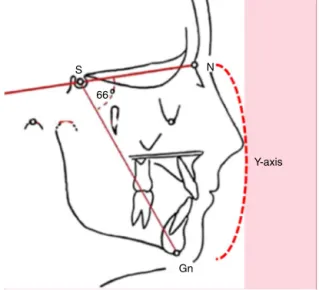
Figure2 Y-axisoffacialgrowth(representedbytheopening oftheNS-Gnangle).
accentuated concavity, everted lower lip, and presence
of dark circles, characterizing adenoid facies.6---9 At
cephalometricevaluation, anincreased Y-axisisobserved (Fig.2).
Thepresenceofsnoring,whetherassociatedwithapnea orrespiratorydistressduringsleep,isafrequentcomplaint among parents or caregivers, followed by restless sleep, frequent night awakenings,1 bruxism,11 and sometimes somnambulism.10---12 Mouth breathing is often associated withotherharmfuloralhabits,suchasthumbsucking, paci-fier sucking, sucking and biting the lips, and nail biting, amongothers,impactingqualityoflife.13
Chewing,swallowing,andspeechproblems(linguodental phonemes)arealsoobserved.Maxillaryarchatresiaandthe presenceof higharchedpalate arecommonfindings asso-ciated with cross-bite, which can already be observed in preschoolchildren.6---10
In addition, the presence of RSDs, such as snoring, increased airway resistance, or even apnea, is common amongthesepatients;itsfrequencyrangesfrom3.3% (chil-drenat 5---6years)to42%(mouthbreathers).5Obstructive sleep apnea syndrome (OSAS) is the most severe form of RSD, and affected children may have neurocognitive impairment due to attention and concentration deficits, hyperactivity, morning tiredness, decreased conceptual, verbalandnon-verbalreasoningskills,schooldisorders,14,15 or even delayed weight and height gain.1,2 Currently, cor pulmonale16andsystematicarterialhypertension17arevery rarecomplicationsassociatedwithOSAS.
Etiology
of
mouth
breathing
in
children
Among theseveralcauses ofmouth breathinginchildren,
themostfrequentarehypertrophyofpharyngeal(adenoids)
and/or palatine tonsils (amygdala) and untreated (and,
therefore,uncontrolled)allergicrhinitis.Nonetheless,other
etiologiesshouldalsobeconsidered:unilateralorbilateral
choanalatresia,anatomicalvariationsofthenasalconchae,
nasalforeignbody,septaldeformitiesornasalmasses,and
evenrarer entities that can cause nasal congestion, such
as cystic fibrosis, primary ciliary dyskinesia, and primary
immunodeficiencies.
Hypertrophyofpharyngealand/orpalatinetonsils,albeit
presentintheearlyphaseoflife,usuallybecomesapparent
aroundtheageof2years,asitfollowsthedevelopmentof
thelymphoidsystemandcanworsenwiththeadvancement
ofage.Mostofthetimes,thediagnosisisconfirmedthrough
a simple lateral radiography of the face and, in doubtful
cases,throughnasofibroscopy.Hypertrophyofthepalatine
tonsilscanbeconfirmedthroughasimpleoroscopy.
Rhinitiscanbedefinedasasymptomaticinflammationof
thenasalmucousmembraneandischaracterizedbynasal
obstruction,rhinorrhea(anteriorandposterior),sneezing,
anditchynose.Itisaverycommonproblemsincepre-school
ageandcanaffectupto40%ofchildren.18Nasalcongestion
isthemostfrequentcomplaintinchildrenwithpre-school rhinitis.19
Whennotproperlycontrolled,allergicrhinitiscanevolve to chronic nasal obstruction and, consequently, mouth breathing.Inadditiontothecharacteristicclinicalstatus,at physicalexaminationthesepatientspresentocular conjunc-tivalhyperemia,darkcircles,transverse nasalsulcus,and hypertrophiednasalconchae,hinderingthefreepassageof air. Often,there is an association of allergic rhinitis with pharyngealtonsil hypertrophy,20---22 considerablyworsening the respiratory condition.23,24 When assessed by specific questionnaires, children with moderate to severe persis-tent allergic rhinitis present a higher frequency of sleep disordersthan controlchildren, especiallyin the domains ofnocturnalrespiratorydisorders,daytimesleepiness,and parasomnias.25,26 Additionally, there is evidence of rela-tionship between the severity of allergic rhinitis and the intensityofsleepdisorders.25,27
Cho et al. confirmed this hypothesis when studying the presence of allergic sensitization as a risk factor for moresevereconditionsofpharyngealand/orpalatine ton-silhypertrophy.21Theseauthorsmeasuredallergen-specific IgElevels(sIgE)inserumandtonsillartissueexcised(during tonsilremovalsurgery)from102childrenwhoweremouth breathersandhadpharyngealtonsilhypertrophy.According tothe presenceor absenceofsIgE, patientsweredivided intothreegroups: allergic(serum andtissue sIgE,n=55), withlocalallergy(sIgEonlyattissue-level,n=17),and with-out allergy (absent in serum and tissue, n=32). In total population,70.6 of thepatients weresensible toat least oneallergen(serumand/ortissue).sIgEtissuelevelswere significantlyhigherthantheserumlevels,witha predom-inanceof sIgEto inhalantsin the pharyngeal tonsiltissue and sIgE to food in palatine tonsil. A significantly higher prevalenceofasthma,allergicrhinitis,moresevere symp-toms,andgreater consumptionofreliefmedicationswere observedamongallergicpatientswhencomparedwith non-allergicpatients.Thesedataareunequivocalevidencethat theassociationofallergyaggravatestheallergicconditions inthesepatients.21However,thisfactwasnotconfirmedin patientswithatopicdermatitis.23
Sleep
and
growth
Respiratorysleepdisorders(RSD,snoring,mouthbreathing,
andsleepobstructiveapnea)wereidentifiedasriskfactors
97 98 99 100 101 102 103 104 105 106 107 108 109 110 111 112 113 114 115 116 117 118 119 120 121 122 123 124 125 126 127 128 129 130 131 132 133 134 135 136 137 138 139 140 141 142 143 144 145 146 147 148 149 150 151 152 153 154 155 156 157 158 159 160 161 162 163 164 165 166 167 168 169 170 171 172 173 174 175 176 177 178 179 180 181 182 183 184 185 186 187 188 189 190 191 192 193
forgrowthretardation associatedwithchronicobstruction
ofthe upper airways, whetherdue tohypertrophy of the
pharyngealand/orpalatinetonsilsorallergicrhinitis.28---35
Sleepisdefinedasareversiblestateofperceptual dis-engagementandlackofresponsetotheenvironment.36Two basicstagesofsleepdocumentedbysignsofcortical activ-ity(electroencephalogram,EEG),rapideyemovements,and muscle tone are identified in mammals: rapid-eye move-ment(REM)sleep,andthesynchronized ornon-REM sleep (NREM).36
Simply put, sleep begins at the NREM stage, which is characterized by slow rotational ocular movements, reducedmuscletone,andfragmented,low-amplitudebrain activity.37Thisstageiscomposedofthreephases:thefirstis shortandtransient,followedbyasecondphase,inwhichthe brainactivityhasalargeramplitude;thethirdphase(deep sleep)is characterizedby slowwaves ofgreatamplitude, withdeltawavesandreleaseofgrowthhormone(GH).
Thesecond stage,calledREMsleep,is notdivided into stages;it ischaracterizedby rapideye movements,heart and respiratory rate variations, decreased blood pressure and cerebral blood flow. The mental activity during REM sleepisassociatedwithdreams,basedonthedream mem-oryreportedafterabout80%oftheawakeningsinthisstate ofsleep.38,39Sleepstagesoccurcyclicallyatnightwiththe successionof stages onetothreeof NREM sleepand REM sleepin cycles of 70---110min, with increasedduration of REMsleepperiodsandreductionofslow-wavesleep.
As previously mentioned, during the deep sleep or slow-wave(delta) sleepthereis a greater release of GH-releasinghormone (GHRH) throughthehypothalamus.40---42 Experimentalstudiesinanimalshavedocumentedthatthe administrationofGHRHincreasesNREMsleep,andthe inhi-bition of its secretion suppresses the duration and depth ofsleep.43---46Oncereleased,GHwouldactinspecific loca-tions (through the GH-IGF axis), performing its different functions,amongwhichgrowth.Changesinthe homeosta-sisofthesleepprocessmayinterferewiththephysiological releaseofthishormonalnetwork.
Mouth
breathing
and
growth
retardation
EvidenceindicatesreducedpituitaryGHreleasein
individu-alswithairwayobstruction.46 Althoughthecauseofgrowth
retardation is not fully understood, some of the possible explanations include low nocturnal levels of GH, lack of appetiteanddysphagiathatresultinlowcaloricintake, noc-turnalhypoxemia,nocturnalacidosis,andincreasedenergy consumptionafter anincrease inbreathingwork. Surgical removal of the pharyngeal and palatine tonsils has been shown toleadto resumptionof normal growthfor age in thesechildren,28---31,47aswellascontrolofallergicrhinitis.34 Anexperimentalstudywithratsdemonstratedthatupper airwayobstructionreducedthehypothalamicandserum lev-els of GHRH, as well as the levels of GHRH receptors.43 In these animals, the waking time was increased and slow-wavesleep,paradoxicalsleep,andlow-activitywaves werereduced.Theadministrationofritanserin(aselective serotonin receptorantagonist) relived theseeffects, i.e., normalizedthehypothalamiccontentofGHRH, decreased wavelength, increased duration and depth of slow-wave
sleep, and reduced growth retardation observed in these animals.Thus,theauthorssuggestthatthegrowth retarda-tionobservedintheseanimalswithupperairwayobstruction isassociatedwithhypothalamicGHRH.43Theabnormalities in the GHRH/GH axis underlie both, and growth retarda-tion and slow-wave sleep associated with upper airway obstruction.43
In humans,the evaluation of patients with pharyngeal and/or palatine tonsil hypertrophy has provided impor-tantinsightsforabetterunderstandingoftherelationship between airway obstruction and growth deficit. A sys-tematic review, followed by meta-analysis, identified 20 studies among 211 citations evaluating the relationship betweenthepresenceofhypertrophiedpharyngealtonsils, growth, growth markers, and sleep-disordered breath-ing in children.35 The joint review of data of more than 300 patients allowed to the authors to effectively confirm the results previously obtained. When com-pared withthe pre-operative period,significant increases were observed in weight (minimum significant difference [MSD]=0.57; 95% 95% CI=0.44---0.70), height (MSD=0.34; 95% CI=0.20---0.47; assessed by Z-score), and serum lev-els of IGF-1 (MSD=0.53; 95% CI=0.33---0.73) and IGFBP-3 (MSD=0.59;95%CI=0.34---0.83).Theauthorsconcludedthat primarycarephysiciansandspecialistsmustconsiderRSDs whencaringforchildrenwithgrowthdeficit.35
However,thelack ofhomogeneity inthe assessed pop-ulationswasalimitingfactorfortheobservedconclusions, which leadto thedevelopment ofnew studies. Tatlıpınar etal.assessedIGF-1andIGFBP-3 serumlevels,aswellas the relationship between the volumeof pharyngeal tonsil andnasopharynx(PT/N)ofpatients(aged3---10years)with sleepapnea secondarytopharyngeal tonsilhypertrophy.48 Thesurgicalremovalleadtoanincreaseinweight,height, andserumlevelsofIGF-IandIGF-BP3.Nonetheless,no sig-nificant correlation was observed between the increased biomarkersandthePT/Nindex.48
Inmorerecentstudyinpre-pubertalchildrenagedover5 yearswithahistoryofpharyngealtonsilhypertrophy,after tonsil removal, a significant increase in serum IGF-1 and ghrelinlevelswasobserved,aswellasasignificantincrease inweight,height,andbodymassindex.Ghrelinis predom-inantlyinvolvedintheregulationofthesleep---wakecycle; it is associated with sleep deprivation and has a role in regulating metabolism. Known asthe hunger hormone, it interactswithGH,leptin, andorexins inthe sleepcircuit regulation,emphasizingtheroleofenergeticbalance dur-ingsleep.49Accordingtotheseauthors,growthretardation inthesechildrenwouldberelatedtolowerserumlevelsof IGF-1.50
Final
considerations
Thenoseistheorganresponsibleforsmell,beingessential
tobreathing,throughhumidification,heating,andfiltering
oftheinhaledair;italsoallowsthedrainageoftheparanasal
sinuses. The upperairways undergomajorchanges during
childhoodandpre-schoolage:inthefirstfiveyearsoflife,
itincreasesfrom6%to40%ofthenasalrespiratoryvolume
ofadults.51 194 195 196 197 198 199 200 201 202 203 204 205 206 207 208 209 210 211 212 213 214 215 216 217 218 219 220 221 222 223 224 225 226 227 228 229 230 231 232 233 234 235 236 237 238 239 240 241 242 243 244 245 246 247 248 249 250 251 252 253 254 255 256 257 258 259 260 261 262 263 264 265 266 267 268 269 270 271 272 273 274 275 276 277 278 279 280 281 282 283 284 285 286 287 288 289 290 291 292 293 294 295 296 297 298 299 300 301 302 303 304 305 306 307 308 309 310
Fromthefirstmonthsoflifeonwards,duetothe anatom-ical conditions, nasal breathing is preferred,1,52 and half of the children have significant hypoxemias ifthe nose is congested.52
Mouth breathing can have dramatic consequences, includinggrowth retardation, highlighting the importance of early recognition of this health problem that must be diagnosedandproperlycontrolledthroughclinicaloreven surgicalapproach.
Conflicts
of
interest
Theauthorsdeclarenoconflictsofinterest.
References
1.DiFrancescoRC.Respiradororalsemobstáculodasviasaéreas superiores.In:SoléD,PradoE,WeckxLL,editors.Obstruc¸ão nasal---odireitoderespirarpelonariz.2nded.RiodeJaneiro: Atheneu;2017.p.69.
2.ValeraFC,Anselmo-LimaWT,TamashiroE.Acrianc¸arespiradora oral.In:SoléD,PradoE,WeckxLL,editors.Obstruc¸ãonasal---o direitoderespirarpelonariz.2nded.RiodeJaneiro:Atheneu; 2017.p.31.
3.GardeJB,SuryavanshiRK,JawaleBA,DeshmukhV,DadheDP, SuryavanshiMK.Anepidemiologicalstudytoknowthe preva-lenceofdeleteriousoralhabitsamong6to12-year-oldchildren. JIntOralHealth.2014;6:39---43.
4.Lopes TS, Moura LF, Lima MC. Association between breast-feedingand breathingpatternin children:a sectionalstudy. JPediatr(RioJ).2014;90:396---402.
5.FelcarJM,BuenoIR,MassanAC,TorezanRP,CardosoJR. Preva-lenceofmouthbreathinginchildrenfromanelementaryschool. CienSaudeColet.2010;15:437---44.
6.Bueno DA, Grechi TH, Trawitzki LV, Anselmo-Lima WT, Felí-cioCM,ValeraFC.Muscularandfunctionalchangesfollowing adenotonsillectomyinchildren.IntJPediatrOtorhinolaryngol. 2015;79:537---40.
7.SouzaJF, Grechi TH, Anselmo-Lima WT,Sander HS, Fernan-desRM,Anselmo-LimaWT,etal. Masticationanddeglutition changesinchildrenwithtonsillarhypertrophy.BrazJ Otorhino-laryngol.2013;79:424---8.
8.Vieira BB, Itikawa CE, de Almeida LA, Sander HS, Fernan-desRM,Anselmo-LimaWT,etal.Cephalometricevaluationof facialpatternandhyoidbonepositioninchildrenwith obstruc-tive sleep apnea syndrome. Int J Pediatr Otorhinolaryngol. 2011;75:383---6.
9.BasheerB,HegdeKS,BhatSS,UmarD,BaroudiK.Influenceof mouthonthedentalgrowthofchildren:acephalometricstudy. JIntOralHealth.2014;6:50---5.
10.MarcusCL,BrooksLJ,DraperKA,GozalD,HalbowerAC,Jones J,etal.Diagnosisand managementofchildhoodobstructive sleepapneasyndrome.Pediatrics.2012;130:e714---55. 11.ImbaudTC,MalloziMC,DomingosVB,SoléD.Frequencyof
rhini-tisandorofacialdisordersinpatientswithdentalmalocclusion. RevPaulPediatr.2016;34:184---8.
12.GrechiTH,TrawitzkiLV,FelícioCM,ValeraFC,Alnselmo-Lima WT.Bruxism inchildrenwithnasal obstruction. IntJPediatr Otorhinolaryngol.2008;72:391---6.
13.PiteoAM,Kennedy JD, RobertsRM,Martin AJ,NettelbeckT, KohlerMJ,etal.Snoringandcognitivedevelopmentininfancy. SleepMed.2011;12:981---7.
14.Ribeiro GC, Santos ID, Santos AC, Paranhos LR, César CP. Influence of the breathing pattern on the learning process:
a systematic review of literature. Braz J Otorhinolaryngol. 2016;82:466---78.
15.KuroishiRC, GarciaRB,Valera FC,Anselmo-LimaWT,Fukuda MT. Deficitsin working memory, reading comprehension and arithmetic skills in children with mouth breathing syn-drome: analytical cross-sectional study. Sao Paulo Med J. 2015;133:78---83.
16.Leung LC, Ng DK, Lau MW, Chan CH, Kwok KL, Chow PY, et al. Twenty-four-hour ambulatory BP in snoring children with obstructive sleep apnea syndrome. Chest. 2006;130: 1009---17.
17.AminR,SomersVK,McConnellK,WillgingP,MyerC,ShermanM, etal.Activity-adjusted24-hourambulatorybloodpressureand cardiacremodellinginchildrenwithsleepdisorderedbreathing. Hypertension.2008;51:84---91.
18.Ait-Khaled N, Pearce N, Anderson HR, Ellwood P, Monte-fort S, Shah J. Global map of the prevalence of symptoms of rhinoconjunctivitis inchildren: the International Studyof AsthmaandAllergiesinChildhood(ISAAC)phasethree.Allergy. 2009;64:123---48.
19.Morais-Almeida M,Santos N, Pereira AM, Branco-FerreiraM, Nunes C,Bousquet J, etal. Prevalence and classificationof rhinitisinpreschoolchildreninPortugal:anationwide study. Allergy.2013;68:1278---88.
20.Costa ECJr, SabinoHA, Miura CS, AzevedoCB, Menezes UP, ValeraFC,etal.Atopyandadenotonsillarhypertrophyinmouth breathers from a reference center.Braz JOtorhinolaryngol. 2013;79:663---7.
21.ChoKS,KimSH,HongSL,LeeJ,MunSJ,RohYE,etal.Local atopy in childhood adenotonsillar hypertrophy. Am J Rhinol Allergy.2018;32:160---6.
22.EvcimikMF,DogruM,CirikAA,NepesovM.Adenoidhypertrophy inchildrenwithallergicdiseaseand influentialfactors.IntJ PediatrOtorhinolaryngol.2015;79:694---7.
23.AlexopoulosEI, BizakisJ, GourgoulianisK,Kaditis AG.Atopy does not affect the frequency of adenotonsillar hypertro-phy and sleep apnoeain childrenwho snore. Acta Paediatr. 2014;103:1239---43.
24.DogruM,EvcimikMF,CalimOF.Doesadenoidhypertrophyaffect disease severity in children with allergic rhinitis? Eur Arch Otorhinolaryngol.2017;274:209---13.
25.LoekmanwidjajaJ,CarneiroA,NishinakaM,MunhoesD, Bene-zoli G, WandalsenG, et al. Sleepdisorders inchildren with moderatetoseverepersistentallergicrhinitis.BrazJ Otorhi-nolaryngol.2018;84:178---84.
26.Lin S, Melvin T, Boss E, Ishman S. The association between allergicrhinitisand sleep-disorderedbreathing inchildren:a systematicreview.IntForumAllergyRhinol.2013;3:504---9. 27.ColásC,GaleraH,A˜nibarroB,NavarroA,JáureguiI,PeláezA.
Diseaseseverityimpairssleepqualityinallergicrhinitis(The SOMINARstudy).ClinExpAllergy.2012;42:1080---7.
28.Ersoy B,Yuceturk AV,TaneliF,Urk V,UyanikBS. Changesin growthpattern,bodycompositionandbiochemicalmarkersof growthafteradenotonsillectomyinprepubertalchildren.IntJ PediatrOtorhinolaryngol.2005;69:1175---81.
29.Gumussoy M, Atmaca S, Bilgici B, Unal R. Changes inIGF-I, IGFBP-3andghrelinlevelsafteradenotonsillectomyinchildren withsleepdisorderedbreathing.IntJPediatrOtorhinolaryngol. 2009;73:1653---6.
30.YilmazMD,HosalAS,OguzH,YordamN,KayaS.Theeffects oftonsillectomyandadenoidectomyonserumIGF-IandIGFBP3 levelsinchildren.Laryngoscope.2002;112:922---5.
31. KirisM,MuderrisT,CelebiS,CankayaH,BercinS.Changesin serumIGF-1andIGFBP-3levelsandgrowthinchildren follow-ingadenoidectomy,tonsillectomyoradenotonsillectomy.IntJ PediatrOtorhinolaryngol.2010;74:528---31.
32.MaurasN,HaymondMW.ArethemetaboliceffectsofGHand IGF-Iseparable?GrowthHormIGFRes.2005;15:19---27.
311 312 313 314 315 316 317 318 319 320 321 322 323 324 325 326 327 328 329 330 331 332 333 334 335 336 337 338 339 340 341 342 343 344 345 346 347 348 349 350 351 352 353 354 355 356 357 358 359 360 361 362 363 364 365 366 367 368 369 370 371 372 373 374 375 376 377 378 379 380 381 382 383 384 385 386 387 388 389 390 391 392 393 394 395 396 397 398 399 400 401 402 403 404 405 406 407 408 409 410 411 412 413 414 415 416 417 418 419 420 421 422 423 424 425 426 427 428 429 430 431 432 433 434 435 436 437 438
33.Sant’AnnaCA,SoléD,NaspitzCK.Shortstatureinchildrenwith respiratoryallergy.PediatrAllergyImmunol.1996;7:187---92. 34.BaumWF,SchneyerU,LantzschAM,KloditzE.Delayofgrowth
and development in children with bronchial asthma, atopic dermatitisandallergicrhinitis.ExpClinEndocrinol Diabetes. 2002;110:53---9.
35.Bonuck KA, Freeman K, Henderson J. Growth and growth biomarker changes after adenotonsillectomy: systematic reviewandmeta-analysis.ArchDisChild.2009;94:83---91. 36.CarskadonM,DementW.Normalhumansleep:anoverview.In:
KrygerMH,RothT,DementWC,editors.Principlesandpractice ofsleepmedicine.3rded.Philadelphia,PA:W.B.SaundersCo.; 2000.p.15---25.
37.SilberMH,Ancoli-Israel S, Bonnet MH,ChokrovertyS, Grigg-DambergerMM,HirshkowitzM,etal.Thevisualscoringofsleep inadult.JClinSleepMed.2007;3:121e31.
38.ObálFJr,KruegerJM.Biochemicalregulationof non-rapid-eye-movementsleep.FrontBiosci.2003;8:d520e50.
39.García-García F, Acosta-Pe˜na E, Venebra-Mu˜noz A, Murillo-Rodríguez E.Sleep inducing factors.CNSNeurol Disord Drug Targets.2009;8:235e44.
40.ClintonJM,DavisCJ,ZielinskiMR,JewettKA,KruegerJM. Bio-chemicalregulationofsleepandsleepbiomarkers.JClinSleep Med.2011;7:S38e42.
41.Van Cauter E, Kerkhofs M, Caufriez A, Van Onderbergen A, ThornerMO,CopinschiG.Aquantitativeestimationofgrowth hormone secretion in normal man: reproducibility and rela-tion to sleep and time of day. J Clin Endocrinol Metab. 1992;74:1441---50.
42.SteigerA, Guldner J, HemmeterU, RotheB, Wiedemann K, HolsboerF.Effectsofgrowthhormone-releasinghormoneand somatostatinonsleepEEGandnocturnalhormonesecretionin malecontrols.Neuroendocrinology.1992;56:566---73.
43.TarasiukA,Berdugo-BouraN,TroibA,SegevY.Roleofgrowth hormone-releasinghormoneinsleepandgrowthimpairments
induced by upper airway obstruction in rats. Eur Respir J. 2011;38:870---7.
44.Obál F Jr, Payne L, Kapás L, Opp M, Krueger JM. Inhi-bition of growth hormone-releasing factor suppresses both sleep and growth hormone secretion in the rat. Brain Res. 1991;557:149---53.
45.Zhang J, Obál F Jr, Zheng T, Fang J, Taishi P, Krueger JM. Intrapreopticmicroinjection ofGHRHoritsantagonistalters sleepinrats.JNeurosci.1999;19:2187---94.
46.Obál F Jr, Krueger JM. GHRH and sleep. Sleep Med Rev. 2004;8:367---77.
47.GHResearchSociety.Consensusguidelinesforthediagnosisand treatmentofgrowthhormonedeficiencyinchildhoodand ado-lescence:summarystatementoftheGHResearchSociety.JClin EndocrinolMetab.2000;85:3990---3.
48.TatlıpınarA,AtalayS,EsenE,YılmazG,KöksalS,Gökc¸eerT.The effectofadenotonsillectomyonseruminsulin-likegrowth fac-torsandtheadenoid/nasopharynxratioinpediatricpatients:a blind,prospectiveclinicalstudy.IntJPediatrOtorhinolaryngol. 2012;76:248---52.
49.García-GarcíaF,Juárez-AguilarE,Santiago-GarcíaJ,Cardinali DP.Ghrelinanditsinteractionswithgrowthhormone,leptinand orexins:implicationsforthesleep---wakecycleandmetabolism. SleepMedRev.2014;18:89---97.
50.Moghaddam YJ, Golzari SE, Saboktakin L, Seyedashrafi MH, Sabermarouf B, Gavgani HA, et al. Does adenotonsillectomy alterIGF-1andghrelinserumlevelsinchildrenwith adenoton-sillarhypertrophyandfailuretothrive?Aprospectivestudy.Int JPediatrOtorhinolaryngol.2013;77:1541---4.
51.WestKS,McNamaraJAJr.Changesinthecraniofacialcomplex fromadolescencetomidadulthood:acephalometricstudy.Am JOrthodDentofacialOrthop.1999;115:521---32.
52.SohalM,SchoemSR. Disorders oftheneonatalnasal cavity: fundamental for practice. Sem Fet Neonatal Med. 2016;21: 263---9. 439 440 441 442 443 444 445 446 447 448 449 450 451 452 453 454 455 456 457 458 459 460 461 462 463 464 465 466 467 468 469 470 471 472 473 474 475 476 477 478 479 480 481 482 483 484 485 486 487 488 489 490 491 492 493 494 495 496 497 498 499 500 501 502 503 504 505 506 507