Protection of deoxyribose and DNA from
degradation by using aqueous extracts
of several wild plants
Maria S Gi ˜ao,
1M L Gonz ´alez-Sanjos ´e,
2Pilar Mu ˜niz,
2M D Rivero-P ´erez,
2Monika Kosinska,
1Manuela E Pintado
1and F Xavier Malcata
1∗1Escola Superior de Biotecnologia, Universidade Cat ´olica Portuguesa, Rua Dr. Ant ´onio Bernardino de Almeida, P-4200-072 Porto, Portugal 2Department of Biotechnology and Food Science, Universidade de Burgos, Plaza Misael Ba ˜nuelos, E-09001 Burgos, Spain
BACKGROUND: Aqueous extracts of 48 herbal plants were obtained via alternative extraction protocols, and were assayed for their capacity to protect deoxyribose and DNA itself from degradation (or, conversely, for their capacity to promote DNA degradation), using electrophoresis as analytical tool.
RESULTS: For a given (constant) volume of extract, deoxyribose protection ranged from 14.13± 1.35% (mean ±
SD) inhibition by dwarf mallow powder infusion, up to 106.51± 15.93% inhibition by avocado powder infusion.
DNA protection was tested at two extract concentrations, and was slightly greater at the higher concentration. Pro-oxidant effects were essentially absent.
CONCLUSION: The anti-oxidative roles of plants upon deoxyribose and DNA displayed by our experimental results were rather promising with regards to practical applications of those plants, viz. as ingredients in the formulation of nutraceutical beverages and/or foods.
Keywords: antioxidant; pro-oxidant; electrophoresis; Portuguese herbal plants; aqueous infusions
Oxidative stress has been implicated with pathogenesis of many diseases and health conditions, including (but not limited to) ageing, atheroschlerosis, cancer and respiratory diseases.1 Such a form of stress occurs when excessive amounts of reactive oxygen species (ROS), viz. superoxide (O2•−) and hydroxyl (OH•) radicals, over-run the antioxidant defenses of the host, thus producing (often irreversibly) cellular damage.
Note that ROS are normally generated, by all aer-obic organisms, as (unwanted) by-products of their regular oxygen metabolism, and those organisms accordingly synthesise antioxidants, aimed at even-tually inhibiting the damages brought about by ROS in their living tissues. As long as adequate amounts of antioxidants are produced, an oxidant– antioxidant balance can be maintained, so sufficient protection will be assured. However, if antioxidant protection is hampered due to disease, poor diet, risky lifestyle or other unfavourable environmental factors, net oxida-tive damage will take place.2
Antioxidants extracted from natural sources have been thoroughly studied in recent decades, owing to their beneficial effects upon human health. Those
compounds are frequently found in plants, particularly in herbs.3 – 10 However, under specific conditions, antioxidants can behave as free radicals, and hence lead to oxidation, thus exhibiting a pro-oxidant effect, which is often concentration dependent. Therefore, both favourable and unfavourable features of natural antioxidants should be taken into account, before an informed decision can be taken regarding their applications and usefulness.
By definition, an antioxidant is a compound which, when present at concentrations much lower than those of oxidisable substrate(s), delays to a significant extent, or even inhibits, oxidation of the substrate(s). Mechanisms by which antioxidants act include decrease of local concentration, or even depletion of O2; reduction of catalytic metal ions; removal of such ROS as O2•−and H2O2; scavenging of initiating radicals, viz. OH•, RO•and RO2•−; disruption of chain reactions that have already been initiated; quenching of singlet oxygen; promotion of endogenous antioxidant defenses, via up-regulating the expression of genes encoding antioxidant enzymes; repair of oxidative damage brought about by radicals; enhancing the elimination of damaged molecules; and by-passing
∗Correspondence to: F Xavier Malcata, Escola Superior de Biotecnologia, Rua Dr. Ant ´onio Bernardino de Almeida, P-4200-072 Porto, Portugal
E-mail: [email protected]
Contract/grant sponsor: Funda ¸c ˜ao para Ci ˆencia e a Tecnologia, Portugal; contract/grant number: SFRH/BD/19601/2004 Contract/grant sponsor: Ag ˆencia de Inova ¸c ˜ao, Portugal; contract/grant number: 13-05-04-FDR-00020 AdI
Introduction
Abstract
the repair of excessively damaged molecules, thus minimising the incidence of mutations.1,2,11 – 13Hence, the most effective antioxidants are those that are able to perform more than one of the aforementioned roles, without concomitantly generating toxic, or otherwise reactive, end-products.
Total antioxidant capacity can be ascertained by methods based on 2,2-azinobis(3-ethylbenzo-thiazoline-6-sulfonic acid) diammonium salt radi-cal cation (ABTS•+), 2,2-diphenyl-1-picrylhydrazyl (DPPH) or oxygen radical absorbance capacity (ORAC) as substrates,11 – 14 among others; these pri-mary, in vitro approaches have then to be comple-mented with in vivo studies, when an assessment of bioavailability and bioactivity is sought. In the case of protection of DNA from degradation, in vitro stud-ies include tests based on such simple molecules as deoxyribose (the backbone sugar in DNA),15 – 17 as well as lipid peroxidation; in vivo studies may include assessment of antitumour, antiplatelet, antiallergic, antischaemic and anti-inflammatory activities,18which will typically resort to animal or human models, in attempts to determine the antioxidant or pro-oxidant potential under live physiological conditions.19
When assaying for antioxidant capacity, hydroxyl radicals are typically generated within a mixture of ascorbic acid, H2O2 and Fe3+ -ethylenediamine-tetracetic acid (EDTA); those radicals that are not scavenged by other components of the reaction mixture will eventually attack deoxyribose, thus degrading it into a series of fragments. Some of the fragments (or even all of them) react upon heating with thiobarbituric acid (TBA), at low pH, thus yielding a pink chromogen: this TBA adduct possesses a three-carbon dialdehyde, malondialdehyde (MDA). If an OH• scavenger is meanwhile added to the reaction mixture, it will compete with deoxyribose for OH• radicals, and consequently inhibit deoxyribose degradation.20 – 22 Despite concerns regarding the specificity and validity of the TBA assay, viz. possible interference with haemoglobin or biliverdin present in the sample, potential thermal degradation due to heating during the assay, presence of iron in the assay reagents, rapid metabolism of MDA, and low representativeness of MDA among lipid peroxides (less than 1%),2the assay is still chosen by several researchers and is thus useful for comparative purposes. Furthermore, OH•radicals can also enhance DNA damage, via attack on its phosphate bonds; this type of degradation results in smaller fragments, which can be separated by agarose electrophoresis.21,22
Consequently, the aim of this work was to assess the capacity of a number of native plants to prevent oxidative degradation of deoxyribose and DNA, and also their possible pro-oxidant effect upon DNA. All previous reports (when available) that refer to the plants selected for our study have not conveyed any data on the protection of those important moieties with roles of transmission of genetic information. This screening is crucial in attempts to ascertain the
antioxidant potential of these plants, for eventual use in food and cosmetic formulations.
Forty-eight distinctive plants, which essentially cover the whole range of plants commonly used in Portugal for traditional medicine, were provided by ERVITAL (Castro Daire, Portugal). All were produced via organic farming, and were picked out at random. The plants were supplied in dried leaf form, following harvesting at the developmental stage known to maximise their putative therapeutic activity (which is the form presented to consumers); a sufficiently large portion was crushed (using a coffee mill) in order to obtain the corresponding powder. In the case of the preparations based on plain infusion, 110 mL of boiling distilled water was added to 1 g of leaves and/or powder and, after 5 min, the mixture was filtered through a 0.45µm filter. In the case of a preparation that required boiling, 110 mL of distilled water was added to 1 g of leaves, the mixture was boiled for 5 min and then filtered through a 0.45µm filter. For assays encompassing deoxyribose, plain extracts (obtained as described above) were used. For assays encompassing DNA, each plain extract was first concentrated 8-fold, then 40 mL of the concentrated extract was frozen and lyophilised. It was reconstituted with 5 mL of ultra-pure water prior to the analysis.
Ascorbic acid, EDTA, 2-deoxy-D-ribose (deoxyri-bose), calf thymus DNA, agarose and bromophe-nol blue where purchased from Sigma – Aldrich (Steinheim, Germany); TBA was obtained from Merck (Damstadt, Germany); NaH2PO4, Na2HPO4, Fe2Cl3, 33% (v/v) H2O2, TCA, glycerol and CuSO4 were supplied by Panreac (Barcelona, Spain); and ethidium bromide was from Amresco (Solon, OH, USA).
Deoxyribose protection was quantified by using the methods described by Guimar˜aes et al.16and Halliwell
et al.17 Aliquots (100µL) of 0.5 g L−1 standard solutions of ascorbic, ferulic and chlorogenic acids were studied in the same way as the actual samples. A 100µL sample of the extract of interest was added to 10µL of 100 mmol L−1 deoxyribose, and then incubated for 1 h at 37◦C in the presence of 10µL of 10 mmol L−1Fe3+, 10µL of 1 mmol L−1H2O2 33% and 10µL of 10 mmol L−1 EDTA, in a 24 mmol L−1 sodium phosphate buffer (pH 7.4) containing 15 mmol L−1 NaCl in order to generate hydroxyl radicals. As mentioned above, radicals break deoxyribose into fragments which, in the presence of 1 mL of 1% TBA in 0.05 mol L−1 NaOH, under acid conditions (1.5 mL of 28% TCA) and at high temperature (100◦C for 15 min), give rise to a
Assay for effects on deoxyribose Chemicals and reagents Sample preparation
chromophore (malonaldehyde), and this species was quantified by absorbance at 532 nm, using a Heλios α spectrophotometer (Unicam, Cambridge, UK). When antioxidants are present, they compete for the hydroxyl radicals, thus decreasing the extent of fragmentation of deoxyribose. All measurements were made against adequate blanks, as originally described by Halliwell
et al.17Triplicate samples were used, and for each one, analyses were run in quadruplicate.
DNA protection was quantified using the method described by Rivero et al. and Guimar˜aes et al.15,16 A 200- or 400-µL aliquot of the sample was initially prepared and processed as detailed below, as well as 150µL of 0.5 g L−1 standard solutions of ascorbic, ferulic and chlorogenic acids. This method includes assays of both controls and samples, and assesses both the anti- and pro-oxidant capacities of the latter. Different steps were considered for this purpose: (1) positive control, using 800µL of 100 mmol L−1 sodium phosphate buffer (pH 7.4) and 200µL of 1 mg mL−1 DNA; (2) negative control, using 690µL of 100 mmol L−1 sodium phosphate buffer (pH 7.4), 200µL of 1 mg mL−1 DNA, 100µL of 1 mmol L−1 ascorbic acid and 10µL of 100 mmol L−1Cu2+; (3) antioxidant effect of samples, using 490 or 290µL of 100 mmol L−1 sodium phosphate buffer (pH 7.4), 200µL of 1 mg mL−1DNA, 200 or 400µL of sample, 100µL of 1 mmol L−1 ascorbic acid and 10µL of 100 mmol L−1Cu2+; and (4) pro-oxidant effect of samples, using 600 or 800µL of 100 mmol L−1sodium phosphate buffer (pH 7.4), 200µL of 1 mg mL−1 DNA, and 200 or 400µL of sample. The final volume was, in all cases, adjusted to 1 mL with buffer solution, and the mixtures were incubated for 1 h at 37◦C. Following incubation, 50µL aliquots were mixed with 10µL of buffer: 20% (w/v) glycerol containing 0.1% (w/v) bromophenol blue, and placed on top of wells of 0.7% (w/v) agarose gel. This gel had been prepared with 100 mmol L−1 sodium phosphate buffer (pH 7.4), containing 5 mmol L−1 EDTA. After running, the gel was submerged in a 10 mg L−1 solution of ethidium bromide. Electrophoresis was run using a Bio-Rad (Richmond, CA, USA) power supply model 1000/500, at 400 V and 400 mA. DNA bands were finally digitalised using Gel Doc (from Bio-Rad).
Non-parametric tests were applied to each set of experimental data pertaining to deoxyribose, to show whether the type of plant, its degree of division and the form of extraction were statistically significant parameters. To study the correlation between the two methods used, a non-linear canonic correlation (OVERALS) was applied, with deoxyribose data being categorised in three groups (<40%, 40 –60% and >60% inhibition), and DNA results classified as positive or negative, depending on whether they
exhibited antioxidant activity or not. All analyses were carried out using SPSS v. 15.0.0 (Chicago, IL, USA).
All plants tested were previously described in terms of total antioxidant capacity and phenolic content,3 but not with regard to the specific consequences of bulk activity on deoxyribose and DNA protection. Further-more, the overall antioxidant capacity was statistically correlated by those authors to the protective principles observed, so it was not repeated here.
The data generated pertaining to deoxyribose protection are given in Table 1. Major differences can easily be seen: the protection ranged from 106.51± 15.93% inhibition for avocado (Persea americana, Lauraceae) down to 14.13± 1.35% inhibition for dwarf mallow (Malva silvestris, Malvacea). Both samples were obtained by powder infusion and each result is given as the mean± SD.
With regard to pure compounds, ascorbic acid presented a protection of 39.84± 20.92%, ferulic acid of 50.65± 6.09% and chlorogenic acid of 44.57± 9.00%. The great deviation observed for ascorbic acid relative to the mean value is pos-sibly due to the antioxidant activity of this com-pound (which is not very stable) when used in this method. In general, the highest deoxyribose pro-tection was provided by avocado, followed by red centaury (Erythraea centaurium, Gentianaceae), white Spanish broom (Cytisus multiflorus, Fabaceae), sweet amber (Hypericum androsaemum, Clusiaceae), lovage (Levisticum officinale, Apiaceae), European pennyroyal (Mentha pulegium, Lamiacea), savory (Satureja
mon-tana, Lamiacea), linden tree (Tilia cordata, Tiliaceae),
thyme (Thymus vulgaris, Lamiacea) and lemon thyme (Thymus citriodorus, Lamiacea), listed by decreasing degree of protection.
Avocado yielded unique and particularly interesting results, especially when considering that little infor-mation had to date been made available concerning that plant. Besides a strong protection of deoxyribose, this plant also exhibits a high antioxidant capacity (1.4280± 0.1261 g L−1 equivalent of ascorbic acid) and a high content of total phenolic compounds (0.5541± 0.0289 g L−1equivalent of gallic acid).3
From a statistical point of view, deoxyribose pro-tection was not characterised by a high discriminating power among plants, since only about 38% of the plants were statistically different between them, at a level of significance of 0.05. (Recall that non-parametric tests were applied to the experimental data, because they were not normally distributed, as such.) Furthermore, boiling was statistically different from infusion of leaves, as well as powder relative to plain leaf infusion; however, powder infusion was not sta-tistically different from boiling of leaves, at the above level of significance.
In what concerns anti- or pro-oxidant effects upon DNA, data pertaining to standards are shown in
Statistical analyses Assay for effects on DNA
Table 1 . P rotecti on of d e ox yri b ose (q u anti tati ve) from o x id a ti on (average ± standard deviation), a nd anti-a nd pro-ox idant e ff ects on DNA (qualitative) of several p lant extracts Infusion of powder Infusion of leaves Boiling o f leaves DNA (200 µ L) DNA (400 µ L) DNA (200 µ L) DNA (400 µ L) DNA (200 µ L) DNA (400 µ L) D e oxyribose D e oxyribose D e oxyribose Scientific n ame (family) E nglish c ommon n ame (% inhibi tion) A P A P (% inhibition) A P A P (% inhibition) A P A P Achillea m illefolium (Asteraceae) Yarrow 4 9 .37 ± 6 .35 +− −− 52 .64 ± 9 .43 −− −− 55 .49 ± 9 .41 −− + − Agrimonia e upatoria (Rosaceae) A grimony 6 6 .16 ± 8 .33 −− −− 32 .99 ± 7 .31 −− −− 47 .02 ± 4 .32 −− − − Artemisia d racunculus (Asteraceae) Tarragon 48 .02 ± 9 .29 +− −− 53 .81 ± 11 .12 −− −− 50 .24 ± 7 .80 −− − − Betula pendula (Betulaceae) Birch 5 4 .42 ± 4 .16 −− −− 42 .71 ± 12 .15 −− −− 45 .21 ± 11 .89 +− + − Calluna vulgaris (Ericaceae) Heath 5 7 .86 ± 16 .87 −− +− 30 .75 ± 15 .35 −− −− 51 .95 ± 7 .88 −− − + Chamaemelum nobile (Asteraceae) Wild camomile 66 .78 ± 7 .05 +− +− 59 .16 ± 4 .35 −− −− 46 .56 ± 6 .82 −− − − Chamaespartium tridentatum (Leguminosae) Winged broom 43 .10 ± 7 .19 +− +− 49 .42 ± 10 .90 −− −− 59 .83 ± 6 .04 −− − − Chamomilla sp. (Asteraceae) Chamomile 44 .38 ± 10 .24 +− +− 50 .66 ± 6 .33 −− −− 48 .93 ± 6 .91 +− + − Coriandrum sativum (Apiaceae) Coriander 3 5 .51 ± 9 .65 −− −− 23 .00 ± 5 .41 +− −− 51 .46 ± 6 .91 −− − − Cym b opogon citratus (Poaceae) Lemon g rass 59 .08 ± 18 .38 +− +− 33 .83 ± 5 .83 −− −− 41 .56 ± 3 .53 +− − − Cynara cardunculus (Asteraceae) Artichoke 5 1 .53 ± 4 .59 +− +− 15 .74 ± 2 .92 +− +− 54 .21 ± 6 .52 +− + − Cytisus m ultiflorus (Fabaceae) White S panish broom 70 .69 ± 9 .45 +− +− 54 .84 ± 10 .86 +− +− 46 .09 ± 7 .20 +− + + Echinacea purpurea (Asteraceae) Echinacea 53 .74 ± 2 .44 +− +− 20 .04 ± 1 .67 −− −− 30 .45 ± 7 .13 −− − − Equisetum arvense (Equisetaceae) Horsetail 6 3 .21 ± 10 .43 +− −− 32 .90 ± 13 .17 −− −− 67 .66 ± 15 .04 −− − − Erythraea centaurium (Gentianaceae) Red centaury 7 3 .27 ± 5 .97 −− −− 62 .85 ± 10 .87 −− −− 66 .95 ± 5 .80 −− + − Eucalyptus g lobulus (Myrtaceae) Eucalyptus 5 0 .42 ± 8 .58 −− −− 29 .05 ± 4 .30 −− −− 34 .95 ± 9 .77 −− − − Filipendula ulmaria (Rosaceae) Queen-of-the meadow 21 .16 ± 11 .73 −− −− 44 .57 ± 35 .92 −− +− 42 .83 ± 3 .87 −− + + Foeniculum vulgare (Apiaceae) l Fennel 5 1 .03 ± 6 .76 −− −− 31 .40 ± 5 .28 −− −− 51 .24 ± 4 .27 −− + − Fraxinus (Oleaceae) Ash 4 3 .52 ± 8 .04 −+ + − − 42 .52 ± 2 .39 −− −− 59 .00 ± 7 .33 −− − − Hypericum a ndrosaem um (Clusiaceae) Sweet amber 3 3 .68 ± 2 .75 +− −− 57 .13 ± 9 .97 −− −− 76 .06 ± 9 .61 −− − − Hypericum p erforatum (Clusiaceae) St John’s w ort 5 6 .73 ± 16 .98 −− −− 102 .51 ± 2 .91 −− −− 22 .73 ± 3 .52 −− − − Hyssopus o ffi cinalis (Lamiaceae) Hyssop 5 9 .45 ± 3 .81 −− −− 31 .06 ± 6 .08 −− −− 39 .56 ± 4 .11 +− + + Juglans regia (Juglandaceae) Walnut tree 45 .90 ± 13 .44 −− −− 53 .24 ± 4 .17 −− −− 51 .87 ± 8 .51 −− − −
Laurus nobilis (Lauraceae) Laurel 41 .60 ± 6 .82 − −−− 33 .23 ± 5 .22 −−−− 78 .12 ± 6 .07 −−−− Lavandula o ffi cinalis (Lamiaceae) Lavender 33 .71 ± 9 .48 − −−− 44 .22 ± 8 .94 −−−− 67 .01 ± 4 .44 −−−− Lavandula s toechas (Lamiaceae) French lavender 61 .54 ± 11 .57 − −−− 53 .97 ± 9 .66 −−−− 62 .54 ± 5 .98 −−−− Levisticum of ficinale (Apiaceae) Lovage 70 .28 ± 16 .72 + −+− 40 .53 ± 9 .55 −+−− 55 .71 ± 6 .03 +−+− Lippia c itriodora (Verbenaceae) L emon verbena 3 1 .54 ± 6 .92 − −−− 30 .09 ± 6 .77 −−−− 40 .62 ± 10 .89 −−+− Malva silvestris (Malvaceae) Dwarf m allow 1 4 .13 ± 1 .35 + −+− 47 .67 ± 6 .89 −−−− 39 .38 ± 7 .35 +−+− Matricaria chamomilla (Asteraceae) Chamomile 60 .87 ± 11 .64 + −+− 58 .15 ± 14 .05 −−+− 73 .23 ± 6 .95 +−+− Mentha p iperita (Lamiaceae) Peppermint 4 8 .16 ± 9 .97 − +−− 57 .59 ± 9 .92 −−+− 52 .00 ± 5 .55 −−−− Mentha p ulegium (Lamiacea) European pennyroyal 7 0 .83 ± 19 .19 + −+− 43 .67 ± 13 .31 −−+− 49 .65 ± 7 .04 −−+− Mentha s picata (Lamiaceae) S pearmint 44 .53 ± 10 .43 −−+ +− 41 .07 ± 3 .96 −−−− 67 .29 ± 4 .91 −−−− Myrtus communis (Myrtaceae) Myrtle 50 .08 ± 12 .16 − −−− 28 .28 ± 3 .54 −−−− 45 .36 ± 5 .47 −−−− Ocimum basilicum (Lamiaceae) Sweet basil 3 2 .64 ± 3 .08 − −−− 42 .68 ± 9 .28 −−−− 52 .38 ± 2 .19 −−−− Olea europaea (Oleaceae) Olive leaf 49 .55 ± 9 .21 − −−− 28 .34 ± 5 .78 +−+− 29 .21 ± 5 .00 −−+− Persea americana (Lauraceae) Avocado 106 .51 ± 15 .93 − −−− 56 .43 ± 28 .14 −−−− 40 .73 ± 10 .75 −−−− Rosmarinus of ficinalis (Lamiaceae) Rosemary 15 .74 ± 2 .98 − −−− 21 .39 ± 7 .71 −−−− 31 .34 ± 5 .15 −−−− Rubus idaeus (Rosaceae) Raspberry 55 .73 ± 8 .55 + −+− 50 .13 ± 9 .93 −−−− 48 .96 ± 12 .85 −−−− Salvia sp. (Lamiaceae) Sage 34 .22 ± 8 .93 − −−− 24 .54 ± 1 .48 −−−− 45 .29 ± 2 .25 −−−− Sambucus nigra (Caprifoliaceae) Black elder flowers 3 5 .38 ± 9 .34 + −+− 64 .02 ± 12 .53 +−+− 49 .82 ± 3 .21 +++− Satureja montana (Lamiaceae) Savory 53 .82 ± 5 .81 − −−− 51 .88 ± 8 .32 −−−− 72 .05 ± 3 .46 −−−− Thym us vulgaris (Lamiaceae) Thyme 7 2 .29 ± 8 .43 + −+− 41 .99 ± 14 .27 −−−− 51 .38 ± 4 .53 −−−− Thymus mastichina (Lamiacea) Spanish w ood marjoram 28 .59 ± 5 .73 − −−− 45 .45 ± 9 .34 +−−− 44 .47 ± 2 .99 −−++ Thym us citriodorus (Lamiacea) Lemon thyme 72 .60 ± 7 .34 − −+− 65 .87 ± 10 .87 −−+− 71 .23 ± 13 .52 +−+− Tilia cordata (Tiliaceae) Linden tree 90 .36 ± 14 .47 − −+− 30 .13 ± 14 .45 −−−− 61 .99 ± 6 .35 −−++ Urtica dioica (Urticaceae) Nettles 44 .70 ± 11 .80 +−+ +− 40 .90 ± 14 .65 +−+− 54 .76 ± 6 .08 +−+− Zea m ays (Poaceae) M aize stigmae 5 6 .42 ± 7 .52 + −++ 40 .01 ± 9 .61 +−−− 30 .15 ± 7 .57 +−−− Note: −no ef fect, +weak ef fect, ++ strong ef fect. A , anti ox id ant; P , p ro-ox id ant.
1 2 3 4 5 6 7 8
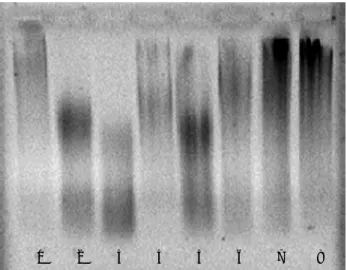
Figure 1. Effect of each standard, at various concentrations, upon
DNA oxidative damage (induced by Cu(II)-ascorbic acid) and protection, assessed by agarose gel electrophoresis. DNA alone (lane 1); DNA+ Cu(II)-ascorbic acid (lane 2); DNA + Cu(II)-ascorbic acid+ 150 µL of 0.5 g L−1ascorbic acid (lane 3), or 150µL of 0.5 g L−1 ferulic acid (lane 4) or 150µL of 0.5 g L−1chlorogenic acid (lane 5); DNA+ 150 µL of 0.5 g L−1ascorbic acid (lane 6), or 150µL of 0.5 g L−1 ferulic acid (lane 7) or 150µL of 0.5 g L−1chlorogenic acid (lane 8).
(a) (b) (c)
3 4 1 1 5 6
Figure 2. Effect of selected samples, labelled as no effect (−), weak
effect (+) and strong effect (++) in Table 1, upon DNA oxidative damage (induced by Cu(II)-ascorbic acid) and protection, assessed by agarose gel electrophoresis. (a) DNA alone (lane 1) and DNA+ Cu(II)-ascorbic acid (++; lane 2); (b) DNA + Cu(II)-ascorbic acid+ 400 µL spearmint powder infusion (++; lane 3) and DNA+ 400 µL spearmint powder infusion (+; lane 4); (c) DNA + Cu(II)-ascorbic acid+ 200 µL avocado powder infusion (−; lane 5); and DNA+ 200 µL avocado powder infusion (−; lane 6).
Fig. 1, whereas those pertaining to actual samples are presented in Table 1; selected data encompassing those samples featuring the poorest and strongest anti-and pro-oxidant effects are also shown in Fig. 2. From Fig. 1 it can be concluded that neither ascorbic, ferulic or chlorogenic acid display a pro-oxidant effect, at least at the levels tested. Ferulic acid yielded the greatest protection, followed by chlorogenic acid; ascorbic acid was unable to protect against DNA fragmentation, which was expected owing to its catalytic behaviour as an oxidant when in the presence of Cu.23Figure 2 illustrates the strong antioxidant (lane 3) and weak
pro-oxidant (lane 4) effects of 400µL powder infusion of spearmint, but no antioxidant (lane 5) or pro-oxidant (lane 6) effects of 200µL of avocado powder infusion.
The strongest antioxidant effect upon DNA was again associated with powder infusion, whereas the lowest was observed for leaf infusion. As already pointed out,3 an increase of specific area seems to significantly influence the degree of antioxidant extraction: this was somewhat expected, because a higher specific area will be available for mass transfer. However, the reverse holds in the case of sweet amber, dwarf mallow and sweet basil; in these cases, the effect of temperature appears to be more relevant toward liquid extraction.
Increasing the extract volume from 200 to 400µL did not significantly affect the extent of protection of DNA, and no pro-oxidant effect was observed, except in the cases of ash (Fraxinus, Oleaceae) and hyssop (Hyssopus officinalis, Lamiaceae). The strongest protection was attained with 400µL of powder infusion of spearmint (Mentha spicata, Lamiaceae) and nettles (Urtica dioica, Urticaceae). Catechin, epicatechin and gallic acid, at 0.5 mmol L−1, were reported8to inhibit cleavage of DNA strands, induced by 0.5 mmol L−1 peroxynitrite, by no less than 90%; these compounds also reduce the frequency of DNA strand breaks, when in the presence of nitroxyl anion. Furthermore, such polyphenols as epicatechin, epigalocatechin gallate, epigalocatechin and epicatechin gallate from green tea yielded a protective effect in vitro upon oxidative damage of DNA, when induced by hydroxyl radicals.24
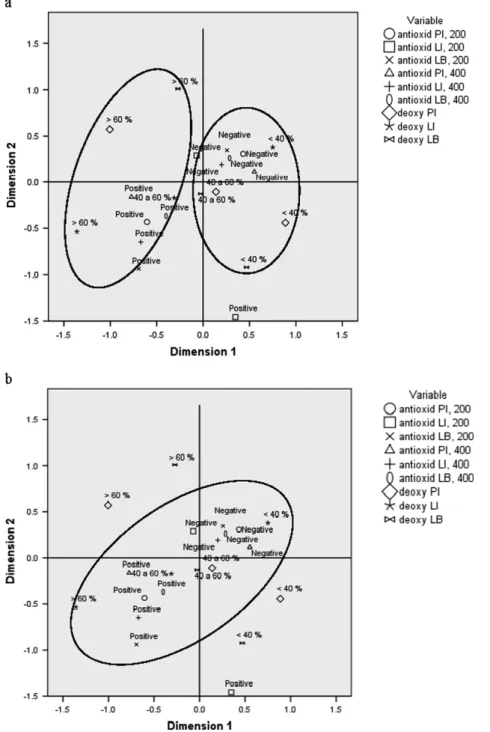
A non-linear canonic correlation, based on the generic principles of principal component analysis, was developed in two dimensions (with correlation coefficients for dimensions 1 and 2 of 0.478 and 0.332, respectively), with a fit value of 1.40 (70% of quality); these represent two groups of mutually correlated variables that are essentially independent (or orthogonal) from each other. Inspection of Fig. 3(a) indicates that dimension 1 discriminates between positive and negative results for antioxidant capacity (the weighted combination of the variables explains 74% of all variance amongst data), whereas inspection of Fig. 3(b) indicates that negative and positive results pertaining to DNA protection are closely associated to the intermediate values (40 – 60% inhibition) of deoxyribose protection, except for leaf infusion. Therefore, the two analytical methods employed are closely correlated with each other.
The technological process of aqueous extraction of the various plants affects the extent of recovery of compounds bearing antioxidant features: infu-sion of plant leaves in powder form is, in gen-eral, the most effective method, likely because the
Conclusions
Figure 3. Canonical plots pertaining to deoxyribose and DNA analytical methods. Antioxid PI, 200 or 400: antioxidant effect observed in DNA test
for powder infusion, using 200 or 400µL, respectively, of sample; antioxid LI, 200 or 400: antioxidant effect observed in DNA test for leaf infusion, using 200 or 400µL, respectively, of sample; antioxid LB, 200 or 400: antioxidant effect observed in DNA test for leaf boiling using 200 or 400 µL, respectively, of sample; deoxy PI: antioxidant effect observed in deoxyribose test for powder infusion; deoxy LI: antioxidant effect observed in deoxyribose test for leaf infusion; and deoxy LB: antioxidant effect observed in deoxyribose test for leaf boiling.
specific area of the feedstock plays a more rele-vant role in extraction than temperature of the sol-vent.
The highest degree of protection of deoxyribose occurs for powder infusion of avocado (106.51% inhibition) and of linden tree (90.36%); leaf boiling of sweet amber (76.06%); powder infusion of red centaury (73.27%), lemon thyme (72.60%) and thyme (72.29%); leaf boiling of savory (72.05%) and lemon thyme (71.23%); and powder infusion of European pennyroyal (70.83%), white Spanish broom (70.69%) and lovage (70.28%), listed by decreasing order. On the other hand, the highest degree of protection of
DNA is observed for powder infusion of spearmint and nettles. The deoxyribose and DNA protection methods are strongly correlated with each other. Our results display a high potential of the Portuguese plants tested for functional food (or cosmetic) formulations, should a protective effect on biological samples be sought.
ERVITAL is gratefully acknowledged for providing all samples, and Ms Claudia Pereira for statistical expertise. Partial funding for this research work was
via a PhD fellowship (ref. SFRH/BD/19601/2004), granted to Maria S. Gi˜ao and administered by Funda¸c˜ao para a Ciˆencia e a Tecnologia (Portugal), coupled with project grant EXTRAVIDA (ref. 13-05-04-FDR- 00020 AdI), coordinated by F. Xavier Malcata and administered by PRIME/IDEIA Agˆencia de Inova¸c˜ao (Portugal).
1 Wood LG, Gibson PG and Garg ML, A review of the methodology for assessing in vivo antioxidant capacity. J Sci Food Agric 86:2057–2066 (2006).
2 Bamforth CW, Nutritional aspects of beer – a review. Nutr Res
22:227–237 (2002).
3 Gi˜ao MS, Gonz´alez-Sanjos´e ML, Rivero-P´erez MD, Pereira CI, Pintado ME and Malcata FX, Infusions of Portuguese medic-inal plants: dependence of fmedic-inal antioxidant capacity and phenolic content on extraction features. J Sci Food Agric
87:2638–2647 (2007).
4 Sacchetti G, Maietti S, Muzzoli M, Scaglianti M, Manfredini S, Radice M, et al, Comparative evaluation of 11 essential oils of different origin as functional antioxidants, antiradicals and antimicrobials in foods. Food Chem 91:621–632 (2005). 5 Kirby AJ and Schmidt RJ, The antioxidant activity of Chinese
herbs for eczema and of placebo herbs – I. J Ethnopharmacol
56:103–108 (1997).
6 Miliauskas G, Venskutonis PR and van Beek TA, Screening of radical scavenging activity of some medicinal and aromatic plant extracts. Food Chem 85:231–237 (2004).
7 Runnie I, Salleh MN, Mohamed S, Head RJ and Abeywar-dena MY, Vasorelaxation induced by common edible tropical plant extracts in isolated rat aorta and mesenteric vascular bed. J Ethnopharmacol 92:311–316 (2004).
8 ˇSkerget M, Kotnik P, Hadolin M, Hraˇs AR, Simoni`e M and Knez ˇZ, Phenols, proanthocyanidins and their antioxidant activities. Food Chem 89:191–198 (2005).
9 Demo A, Petrakis C, Kefalas P and Boskou D, Nutrient antioxidants in some herbs and Mediterranean plant leaves. Food Res Int 31:351–354 (1998).
10 Ramos A, Visozo A, Piloto J, Garc´a A, Rodr´ıguez CA and Rivero R, Screening of antimutagenicity via antioxidant activity in Cuban medicinal plants. J Ethnopharmacol
87:241–246 (2003).
11 Re R, Pellegrini N, Proteggente A, Pannala A, Yang M and Rice-Evans C, Antioxidant activity applying an improved
ABTS radical cation decolorization assay. Free Radical Biol Med 26:1231–1237 (1999).
12 K¨ahk ¨onen MP, Hopia AI, Vuorela HJ, Rauha J, Pihlaja K, Kujala TS, et al, Antioxidant activity of plant extracts contain-ing phenolic compounds. J Agric Food Chem 47:3954–3962 (1999).
13 Singleton VL and Rossi JA, Colorimetry of total phenolics with phosphomolybdic–phosphotungstic acid reagents. Am J Enol Vitic 16:144–158 (1965).
14 Prior RL, Wu X and Schaich K, Standardized methods for the determination of antioxidant capacity and phenolics in foods and dietary supplements. J Agric Food Chem 53:4290–4302 (2005).
15 Rivero D, P´erez-Magari ˜no S, Gonz´alez-San Jos´e ML, Valls-Belles V, Codo ˜ner P and Mu ˜niz P, Inhibition of induced DNA oxidative damage by beers: correlation with the content of polyphenols and melanoidins. J Agric Food Chem
53:3637–3642 (2005).
16 Guimar˜aes CM, Martinez SS, Pintado AI, Gi˜ao MS, Pin-tado ME, Bento LS, et al, Antioxidant activity – including protective effect against DNA oxidative damage, of sugar molasses. J Food Sci 72:39–43 (2007).
17 Halliwell B, Gutteridge JMC and Aruoma OI, The deoxyribose method: a simple ‘‘test tube’’ assay for determination of rate constants for reactions of hydroxyl radicals. Anal Biochem
165:215–219 (1987).
18 Yilmaza Y and Toledo RT, Health aspects of functional grape seed constituents. Trends Food Sci Technol 15:422–433 (2004).
19 Marnewick JL, Gelderblom WCA and Joubert E, An investiga-tion on the antimutagenic properties of South African herbal teas. Mutation Res 471:157–166 (2000).
20 Halliwell B, Aeschbach R, Loliger J and Aruoma OI, The char-acterization of antioxidants. Food Chem Toxicol 33:601–617 (1995).
21 Halliwell B and Aruoma OI, DNA damage by oxygen-derived species. FEBS Lett 281:9–19 (1991).
22 Jornot L, Petersen H and Junod AF, Hydrogen peroxide-induced DNA damage is independent of nuclear calcium but dependent on redox-active ions. Biochem J 335:85–94 (1998).
23 Huang D, Ou B and Prior RL, The chemistry behind antiox-idant capacity assays. J Agric Food Chem 53:1841–1856 (2005).
24 Nie G, Wei T, Shen S and Zhao B, Polyphenol protection of DNA against damage. Method Enzymol 335:232–244 (2001).