Balanced scorecard performance assessment in a medical
imaging department
Poster No.: C-2775
Congress: ECR 2017
Type: Scientific Exhibit Authors: C. M. Faria1
, A. F. Abrantes1, L. P. Ribeiro1, J. P. Pinheiro1, R. P. P. Almeida1, C. A. Silva2; 1Faro/PT, 2Évora/PT
Keywords: Management, Radiographers, CT, Digital radiography, MR, Audit and standards, Socio-economic issues, Health policy and practice, Outcomes, Quality assurance, Economics
DOI: 10.1594/ecr2017/C-2775
Any information contained in this pdf file is automatically generated from digital material submitted to EPOS by third parties in the form of scientific presentations. References to any names, marks, products, or services of third parties or hypertext links to third-party sites or information are provided solely as a convenience to you and do not in any way constitute or imply ECR's endorsement, sponsorship or recommendation of the third party, information, product or service. ECR is not responsible for the content of these pages and does not make any representations regarding the content or accuracy of material in this file.
As per copyright regulations, any unauthorised use of the material or parts thereof as well as commercial reproduction or multiple distribution by any traditional or electronically based reproduction/publication method ist strictly prohibited.
You agree to defend, indemnify, and hold ECR harmless from and against any and all claims, damages, costs, and expenses, including attorneys' fees, arising from or related to your use of these pages.
Please note: Links to movies, ppt slideshows and any other multimedia files are not available in the pdf version of presentations.
Aims and objectives
• Develop a strategic management model based on the Balanced Scorecard by Kaplan and Norton to implement in an imaging ward.
Methods and materials
• Development of a Performance Measurement System that allows for the monitoring of the service's evolution, the alignment of objectives, and the evaluation of individual employees within the strategy of the ward and the hospital.
• The structure of the Strategic Map for the ward along with the strategy of the Hospital is the key document for the definition of objectives, initiatives, targets, weights and tolerances, and was indispensable to the construction of the "Cockpit" of Indicators for the Performance measurement.
The imaging service has a total of 57 employees, of whom 40 were interviewed, with the sample selected representing 70%.
The organic structure of the service is composed of the Technical Assistants, the Operational Assistants, the Radiology Technicians, the Radiologists, the Coordinating Technician and the Service Director.
The overall production of the radiology service, between 2014 and 2015, increased by 14.40%.
Strategic Decision: Election of Strategic Vectors
The analysis of the SWOT matrix allowed the identification of several alternative Strategic Vectors, among which were compared and evaluated:
(A) BSC and performance evaluation B) Innovation
D) Motivation and professional development E) Efficiency and the financial balance of the (F) Focusing (centering on users)
From the assessment carried out, it is concluded that the structuring of the strategy should be given preference through the assumption of the most scaled-up vectors, namely BSC and performance evaluation (375 points), innovation (368 points) and management and Information (316 points). These will be the guiding vectors of the BSC's strategic map.
Phase 1 - The purpose of this phase was to get to know the HF, EPE, the Radiology Department, to guarantee access to information and the participation of the interlocutors indispensable to the implementation of the social work plan.
Phase 2 - At this stage, we sought to identify and evaluate the critical success factors that characterize the internal and external environment of the service. For this purpose, empirical work was carried out, which consisted of collecting primary data from the heads, professional sectors and users of the service, in their treatment and compilation of results.
Phase 3 - In the face of the diagnosis, we tried to cross the internal and external environment in order to formulate alternative strategic initiatives that enhance opportunities and mitigate threats. Through an attentive analysis of the multiple strategic initiatives identified, we were able to extract alternative strategic vectors.
Phase 4 - At the stage of the identified alternative strategic vectors, a comparative analysis and corresponding evaluation were carried out.
Phase 5 - In this phase the strategic map was drawn up in all its extension, namely selection of perspectives, vectors, objectives, cause and effect relationships, indicators, initiatives, goals, tolerances, weights and tokens (for the objectives and initiatives).
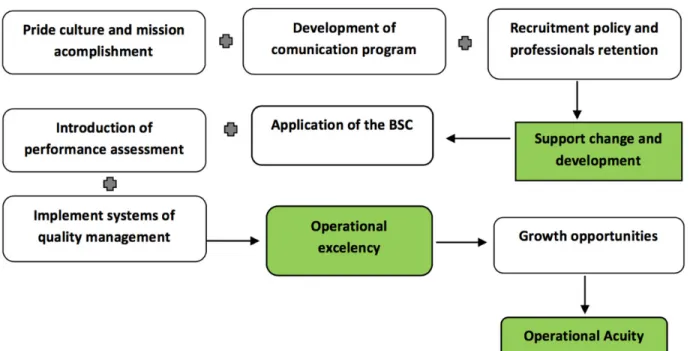
Fig. 1: Strategic vector - BSC and performance assessment
Results
• The balanced scorecard system has some advantages to other
management systems as it allows to measure performance and efficiency as well as the degree of accomplishment of the wards objectives.
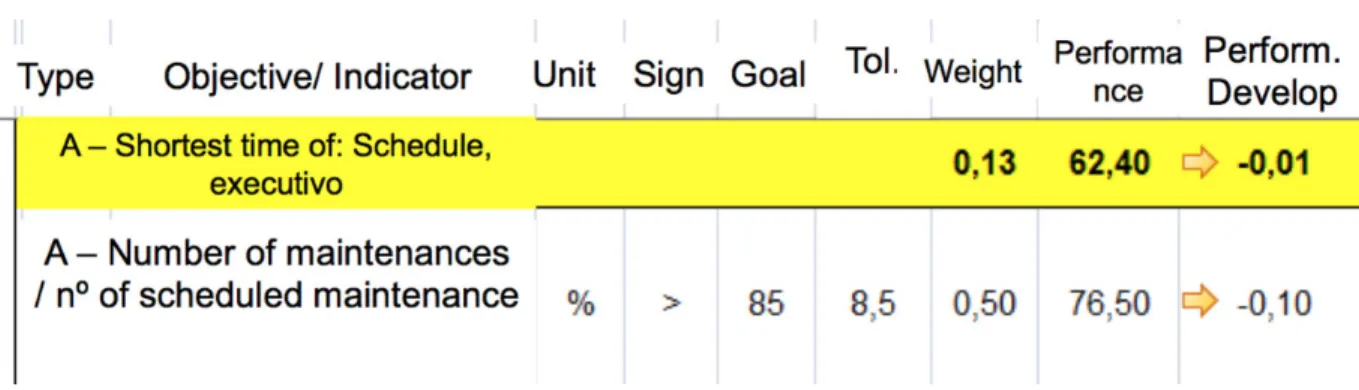
• When applied to the imaging ward of a public hospital the target for the achievement of strategic action was to hold at least 85% of maintenance provided for in plan, but the actually carried out maintenance were up 76.5% of the plan provided. This performance lies in the tolerance range.
Strategic Vectors
Once the Strategic Vectors have been defined, it is important to integrate them in a coherent way in the Strategic Map of the service in compliance with the strategic perspectives adopted, innovation and learning, processes, financial and clients.
Innovation
It is believed that betting on internal research or in partnership with other radiology services and higher education institutions, will enable the assimilation by the service staff of new knowledge and techniques, which will constitute the technological base (implement technology) to support the Present and future research priorities arising from the needs of the service. The alignment of these priorities will provide the service with the technological priorities to be endowed (hardware and software), to carry out high value-added tests and to optimize the installed capacity, in order to provide a full range of services, including those technologically More evolved.
BSC and Performance Evaluation
The implementation of the BSC and the introduction of the Performance Assessment of the organization, the professional sectors and the employees requires a great co-responsibility of all. In this sense, it is essential to establish a climate of pride in the service and commitment to the mission, to develop a communication plan and to initiate a policy of recruiting, promoting and retaining the best professionals coherent and unambiguous, resistant to criticism, The fear and the demotivation that often takes place in the course of the implementation process. A climate of acceptance, co-responsibility and promotion of change is the ideal substrate for: a) the application of BSC in its various levels of unfolding; B) the introduction of performance evaluation; C) implement quality systems for certification. It is expected that these actions will lead to an operational excellence that will translate into service growth opportunities, enhancing the diagnostic acuity.
Images for this section:
Fig. 2: Action indicator - "no. Of maintenance performed / no. Of planned maintenance" was as a result of the last measurement.
© Medical Imaging and Radiotherapy, School of Health - University of Algarve - Faro/PT
Fig. 3: Action indicator - "no. Of maintenance performed / no. Of planned maintenance" was as a result of the last measurement. -0.12 means that the last measurement of the indicator was 12% Below the threshold set for the target.
© Medical Imaging and Radiotherapy, School of Health - University of Algarve - Faro/PT
Fig. 4: Action indicator - "no. Of maintenance performed / no. Of planned maintenance" was as a result of the last measurement. Last measure - 15% indicator would be 82%
below target, and the degree of default would be such that the target would leave the zone of tolerance and would itself default.
© Medical Imaging and Radiotherapy, School of Health - University of Algarve - Faro/PT
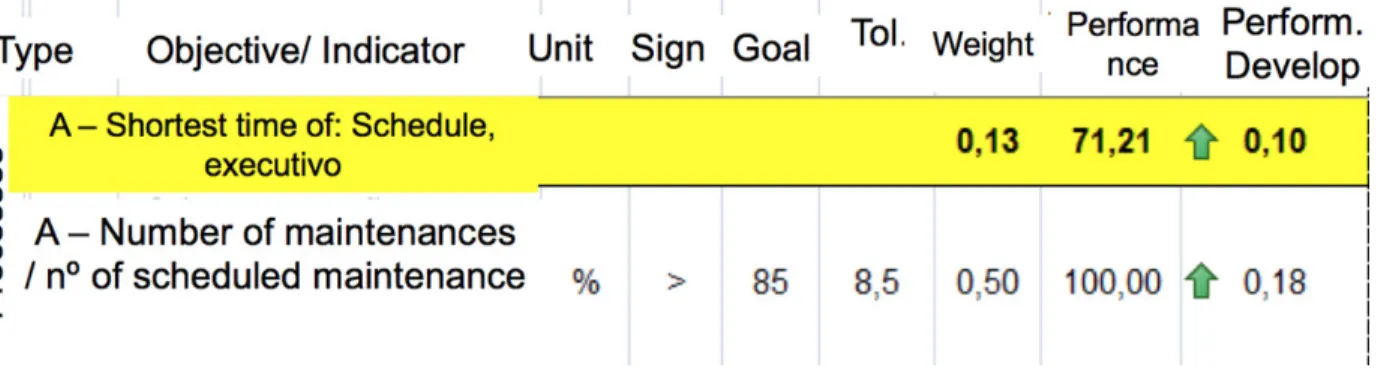
Fig. 5: Action indicator - "no. Of maintenance performed / no. Of planned maintenance" was as a result of the last measurement. Indicator quotation - 100% indicator performance - 18% above the target goal entered the compliance region.
© Medical Imaging and Radiotherapy, School of Health - University of Algarve - Faro/PT
Fig. 6: Global performance indicator. Indicator quotation 100% indicator performance -18% above the target goal entered the compliance region
Conclusion
• In the area of Health Management, as in other areas of management, the use of Quantitative Performance Evaluation Systems are a trend.
• Enable on the one hand the evaluation of the achieved performance (performance indicators or effectiveness); On the other, the degree of implementation of the defined strategy (action, strategy execution or efficiency indicators).
• The development of these systems requires the continued support of hospital administrations and the involvement of stakeholders.
• To capture vital aspects of organizational performance or individual performance, the service must use the BSC to develop a battery of indicators aligned with the strategy.
• These indicators should be easily accessible, timely availability, comparable in time and enable the construction of a control cockpit for effective
monitoring.
• To promote a culture of continuous improvement, performance indicators should be benchmarked, both internally with historical data and externally with the best sectoral practices identified.
• Performance indicators provide a common denominator for the ward and allow for comparisons between different wards over time. To
improve strategic performance, the quality of service and their processes accordingly, these indicators should be compared with the best practices in the sector.
Personal information
Cátia Faria (BSc), Collaborator in the Medical Imaging and Radiotherapy Department, Health School - University of Algarve, Portugal. Radiographer in Centro Hospitalar do Algarve - Faro. [email protected]
António Abrantes (PhD), Professor in the Medical Imaging and Radiotherapy Department, Health School - University of Algarve, Portugal. Researcher in CICS.NOVA (Universidade Nova de Lisboa - Pólo de Évora) and Member of Studies Center in Healthcare (CES-ESSUALG). E-mail: [email protected]
Luís Ribeiro (PhD), Professor in the Medical Imaging and Radiotherapy Department, Health School - University of Algarve, Portugal. Researcher in CIDAF - University of Coimbra (Centro de Investigação do Desporto e da Atividade Física) and Member of Studies Center in Healthcare (CES-ESSUALG). Email: [email protected]
João Pinheiro (MSc), Professor in the Medical Imaging and Radiotherapy Department, Health School - University of Algarve, Portugal. E-mail: [email protected]
Rui Almeida (MSc), Professor in the Medical Imaging and Radiotherapy Department, Health School - University of Algarve, Portugal. Radiographer in Centro Hospitalar do Algarve Faro, Portugal. Researcher in CICS.NOVA (Universidade Nova de Lisboa -Pólo de Évora) and Member of the Studies Center in Healthcare (CES-ESSUALG). E-mail: [email protected]
Carlos Alberto da Silva (PhD), Professor in Évora University, Portugal. Researcher in CICS.NOVA (Universidade Nova de Lisboa - Pólo de Évora). E-mail: [email protected]
References
[1] Kaplan, R.S.; Norton, D.P. - The Balanced Scorecard - Measures that Drive Performance. Harvard Business Review, Jan-Fev 1992, 71-79.
[2] Kaplan, R.S.; Norton, D.P. - Putting the Balanced Scorecard to Work. Harvard Business Review, Set-Out 1993, 134-147.
[3] Kaplan, R.S.; Norton, D.P. - Using the Balanced Scorecard as a Strategic Managements System. Harvard Business Review, Jan-Fev 1996, 75-85.
[4] Kaplan, R.S.; Norton, D.P. - A Estratégia em Acção: Balanced Scorecard. Editora Campus, Rio de Janeiro, 1997.
[5] Kaplan, R.S.; Norton, D.P. - Kaplan e Norton na Prática. 3ª ed. Editora Campus, Rio de Janeiro, 2004.
[6] Maroco, J. - Análise Estatística com Utilização do SPSS. 3ª ed. Edições Sílabo, Lisboa, 2007.
[7] Alves, M. C. - O Balanced Scorecard um Instrumento de Gestão Estratégica nas Empresas Portuguesas. VII Encontro Hispano-Luso de Economia Empresarial. Universidade do Algarve: Escola Superior de Gestão Hoteleira e Turismo, 2005; 42-47. [8] Carvalho, J. M. S. - Organizações Não Lucrativas. Edições Sílabo, Lda, Lisboa, 2005.
[9] Filho, E.H. - Balanced Scorecard e a Gestão Estratégica - uma Abordagem Prática. 2ª ed. Editora Campus, Rio de Janeiro, 2005.
[10] Gomes, A.; Ribeiro, N.; Carvalho, J.; Nogueira, S. - O Balanced Scorecard - Aplicado à Administração Pública. Publisher Team, Lisboa, 2007.
[11] Inamdar, N.; Kaplan, R.; Reydnolds, K. - Applying the Balanced Scorecard in Healthcare Provider Organizations. Journal of Healthcare Management, Maio/Junho 2002, 179-196.
[12] Neely, A. - Avaliação do Desempenho das Empresas - Porquê, o quê e como. Editorial Caminho, Lisboa, 2002.
[13] Russo, J. - Balanced Scorecard para PME. 3ª ed. Lidel - Edições Técnicas, Lda, Lisboa, 2006.
[14] Sousa, M.; Rodrigues, L. - O Balanced Scorecard - um Instrumento de Gestão Estratégica para o Séc. XXI. Editora Rei dos Livros, Porto, 2002.
[15] Ribeiro, N. - O Balanced Scorecard e a sua Aplicação às Instituições de Ensino Superior Público [Dissertação de mestrado]. Braga: Escola Superior de Economia e Gestão da Universidade do Minho; 2005.
[16] Pinto, F. - Balanced Scorecard - Alinhar Mudança, Estratégia e Performance nos Serviços Públicos. Edições Sílabo, Lisboa, 2007.
[17] Pinto, F. - Gestão da Performance nas Organizações - Conceitos, Processos, Modelos e Integração de Soluções. VII Encontro Hispano-Luso de Economia Empresarial. Universidade do Algarve: Escola Superior de Gestão Hoteleira e Turismo, 2005, 31-41.
[18] Cruz, C.P. - Balanced Scorecard - Concentrar uma Organização no que é Essencial. Vida Económica, Porto, 2005.
[19] Chan, S. - The Importance of Strategy for the Evolving Field of Radiology. American College of Radiology, 2002, 224, 639-648.
[20] Cohen, M.D.; Hawes, D.R.; Hutchins, G.D.; Mcphee, W.D;, Lamasters, M.B.;Fallon, R.P. - Activity-Based Cost Analysis: a Method of Analyzing the Financial and Operating Performance of Academic Radiology Departments. American College of Radiology, 2000, 215,708-716.
[21] Donnelly, L.F.; Strife, J.L. - Establishing a Program to Promote Professionalism and Effective Communication in Radiology. American College of Radiology, 2006, 238, 773-779.
[22] Parra, S.O.; Bhagwat, J.G.; Zou, K.H.; Gogate, A.; Intriere, L.A.; Kelly, P.; et al.-Practice Management Performance Indicators in Academic Radiology Departments. American College of Radiology, 2004, 233, 716-722.
[23] Parra, S.O.; Bhagwat, J.G.; Zou, K.H.; Gill, I.E., Nathanson, E.; Seltzer, S.E.; et al.- Essential Practice Performance Measurement. Journal of the American College of Radiology. 2004, 8, 559-566.
[24] Parra, S.O.; Bhagwat, J.G.; Zou, K.H.; Gill, I.E., Nathanson, E.; Ros, P.R. - Use of Productivity and Financial Indicators for Monitoring Performance in Academic Radiology Departments: U.S. Nationwide Survey. American College of Radiology. 2005, 236, 214-219.
[25] Fortin, M. - O processo de Investigação: da Concepção à Realização. Lusociência, Loures, 1999.
[26] Nunes, J. - O Balanced Scorecard na Gestão Estratégica de um Hospital Público. [Dissertação de Mestrado]. Évora: 2006.
96 800x600 Normal 0 21 false false false PT X-NONE X-NONE
[27] Yin, R. K. - Case Studies and an Organizational Innovation: Strengthening the Connection. Cosmos Corporation, Washington, 1983.