Corresponding Author: 2011 Mar-Apr;19(2):261-8
www.eerp.usp.br/rlae
Corresponding Author: Maria Celia Barcellos Dalri
Universidade de São Paulo. Escola de Enfermagem de Ribeirão Preto Departamento de Enfermagem Geral e Especializada
Av. dos Bandeirantes, 3900 Bairro: Campus Universitário
CEP:14040-902 Ribeirão Preto, SP, Brasil. E-mail: [email protected]
Theoretical Knowledge of Nurses Working in Non-Hospital Urgent
and Emergency Care Units Concerning Cardiopulmonary Arrest and
Resuscitation
Angélica Olivetto de Almeida
1Izilda Esmenia Muglia Araújo
2Maria Célia Barcellos Dalri
3Sebastião Araujo
4Non-Hospital Urgent and Emergency Care Units were created to deliver care to patients
in chronic or acute situations and to coordinate the flow of urgent care. This descriptive
study analyzed the theoretical knowledge of nurses working in these units concerning
cardiopulmonary arrest and resuscitation. A questionnaire was applied to 73 nurses from 16
units in seven cities in the region of Campinas, SP, Brazil. The respondents displayed some
gaps in their knowledge such as how to detect Cardiopulmonary Arrest (CPA), the ability to
list the sequence of basic life support, and how to determine the appropriate compression
to ventilation ratio (>60%). They also did not know: the immediate procedures to take after
CPA detection (>70%); the rhythm pattern present in a CPA (>80%); and they only partially
identified (100%) the medication used in cardiopulmonary resuscitation. The average score
on a scale from zero to ten was 5.2 (± 1.4). The nurses presented partial knowledge of the
guidelines available in the literature.
Descriptors: Heart Arrest; Knowledge; Nursing; Cardiopulmonary Resuscitation.
1 RN, M.Sc. in Nursing, Hospital de Clínicas, Universidade Estadual de Campinas, SP, Brazil. E-mail: [email protected]. 2 RN, Ph.D. in Nursing, Professor, Faculdade de Ciências Médicas, Universidade Estadual de Campinas, SP, Brazil.
E-mail: [email protected].
3 RN, Ph.D. in Nursing, Professor, Escola de Enfermagem de Ribeirão Preto, Universidade de São Paulo, WHO Collaborating Centre for
Nursing Research Development, SP, Brazil. E-mail: [email protected].
Conhecimento teórico dos enfermeiros sobre parada e ressuscitação cardiopulmonar, em unidades não hospitalares de atendimento à urgência e emergência
As unidades não hospitalares de atendimento à urgência e emergência foram criadas
para atender pacientes com quadros agudos ou crônicos agudizados e ordenar os luxos
de urgência. O objetivo deste estudo foi analisar o conhecimento teórico dos enfermeiros
dessas unidades, sobre parada cardiorrespiratória e ressuscitação cardiopulmonar. Este
é um estudo descritivo, cujos dados foram obtidos pela aplicação de questionário a 73
enfermeiros de 16 unidades, de sete municípios da Região Metropolitana de Campinas.
Observou-se que os entrevistados apresentaram lacunas de conhecimento sobre como
detectar a parada cardiorrespiratória, a sequência do suporte básico de vida e a relação
ventilação/compressão (>60%); desconhecem as condutas imediatas após detecção
(>70%) e os padrões de ritmos presentes na parada cardíaca (>80%) e que identiicaram
parcialmente (100%) os fármacos utilizados na ressuscitação cardiopulmonar. A nota
média foi 5,2 (±1,4), em uma escala de zero a dez. Conclui-se que os enfermeiros
apresentaram conhecimento parcial das diretrizes disponíveis na literatura.
Descritores: Parada Cardíaca; Conhecimento; Enfermagem; Ressuscitação
Cardiopulmonar.
Conocimiento teórico de los enfermeros sobre parada cardiorrespiratoria y resucitación cardiopulmonar en unidades no hospitalarias de atención de urgencia y emergencia
Las Unidades no hospitalarias de Atención de Urgencia y Emergencia fueron creadas para
atender pacientes con cuadros agudos o crónicos agudos y ordenar los lujos de urgencia.
El objetivo de este estudio fue analizar el conocimiento teórico de los enfermeros de
esas unidades sobre parada cardiorrespiratoria y resucitación cardiopulmonar. Se trata
de un estudio descriptivo, cuyos datos fueron obtenidos aplicando un cuestionario
a 73 enfermeros de 16 unidades, de siete municipios de la Región Metropolitana de
Campinas. Se observó que los entrevistados presentaron vacíos de conocimiento sobre
como detectar: la parada cardiorrespiratoria, la secuencia del soporte básico de vida
y la relación ventilación/compresión (>60%); desconocen las conductas que deben
adoptadas inmediatamente después de la detección (> 70%) y los estándares de ritmos
presentes en la parada cardíaca (> 80%); y identiicaron parcialmente (100%) los
fármacos utilizados en la resucitación cardiopulmonar. La nota promedio fue 5,2 (±1,4),
en una escala de cero a diez. Se concluye que los enfermeros presentaron conocimiento
parcial de las directrices disponibles en la literatura.
Descriptores: Paro Cardíaco; Conocimiento; Enfermería; Resucitación Cardiopulmonar.
Introduction
The Brazilian Ministry of Health (MH) established
the National Policy on Emergency Care in 2002. Since
demand for this service has risen in recent years in
Brazil given increased violence and a larger number of
accidents, the supply of urgent and emergency services
has become insuficient(1).
To meet such demand, the MH invested in
pre-hospital care, regulation centers, and in the structure of
urgent and emergency care networks. Therefore,
non-hospital urgent and emergency care units (N-HUECU),
previously called simply ‘emergency care’, emerged.
The teams in these N-HUECU should be prepared for
urgent and emergency situations and nurses are those
including interventions for patients with Cardiopulmonary
Arrest (CPA), initiating Basic Life Support (BLS) and
aiding in Advanced Life Support (ALS). For health
professionals to provide safe care and ensure the
survival of patients, they need to be prepared and have
knowledge concerning resuscitation techniques. Given
these requirements, we examine what the theoretical
knowledge of nurses working in N-HUECU concerning
this topic is.
The literature indicates that after CPA, survival
varies from 2% to 49% depending on the initial cardiac
rhythm and early initiation of resuscitation(2). Another
study reports that the survival rate can double or triple
when Cardiopulmonary Resuscitation (CPR) is properly
performed(3).
Considering the previous discussion, this study
analyzes the theoretical knowledge of nurses working in
N-HUECU concerning CPR and CPA.
Method
This is a descriptive study with quantitative
approach. The population comprised 91 nurses of the
16 N-HUECU in the metropolitan region of Campinas
working on the day shift (8 hours), morning and
afternoon (6 hours), and night shift (12 hours) from
August to October 2007.
Data were collected through a questionnaire
divided into parts: the irst characterized the nurses (identiication, professional background, characterization
of work, BLS and ALS training programs, and updates
on CPA and CPR) and the second part addressed the
knowledge of nurses concerning CPA and CPR. This
questionnaire was based on the instrument developed
by Bellan(4), adapted according to the guidelines of
the 2005 International Consensus of Cardiopulmonary
Resuscitation and Emergency Cardiovascular Care
Science(5). It was submitted to a new validation process
due to this update and included open and closed questions.
Authorization was asked of the Health Departments of
the metropolitan region of Campinas that had N-HUECU,
after the Ethics Research Committee at the university
approved the project (protocol nº 817/2006).
The questionnaire was individually applied
during all the shifts in each of the units according to
the nurses’ work schedules in the presence of one
of the researchers after the participants signed free
and informed consent forms. Data were entered into
Excel spreadsheets and descriptive and comparative
analyses were performed using the Mann-Whitney and
Kruskal-Wallis tests. Spearman’s correlation was used
in the analysis of scores obtained for the knowledge
evaluation in relation to the numerical variables. The
level of signiicance was set at 5%.
Results
The sample was composed of 73 (80.2%)
individuals. Three (2.7%) of the nurses refused to
participate, eight (7.3%) were on vacation or sick leave,
six worked in two different N-HUECU and one worked
in three different N-HUECU, thus, they answered the
questionnaire only once.
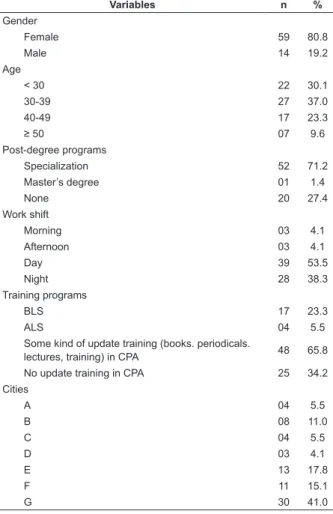
Table 1 – Distribution of socio demographic variables,
work shifts and professional update training of nurses
with post-degree and training programs from the
N-HUECU in the metropolitan region of Campinas.
Campinas, Brazil, 2007
Variables n %
Gender
Female 59 80.8
Male 14 19.2
Age
< 30 22 30.1
30-39 27 37.0
40-49 17 23.3
≥ 50 07 9.6
Post-degree programs
Specialization 52 71.2
Master’s degree 01 1.4
None 20 27.4
Work shift
Morning 03 4.1
Afternoon 03 4.1
Day 39 53.5
Night 28 38.3
Training programs
BLS 17 23.3
ALS 04 5.5
Some kind of update training (books. periodicals.
lectures, training) in CPA 48 65.8
No update training in CPA 25 34.2
Cities
A 04 5.5
B 08 11.0
C 04 5.5
D 03 4.1
E 13 17.8
F 11 15.1
G 30 41.0
There is a predominance of the female gender
(80.8%) among 30 and older than 50 years of age
(37%). The average age was 36.2 (±9.2) years old,
Rev. Latino-Am. Enfermagem 2011 Mar-Apr;19(2):261-8.
most frequently reported by the nurses were those in
the interior of the state of São Paulo. Most (71.2%) of
the individuals had attended post-degree programs. Of
these, some had one or more specializations and the most
frequently reported ields were: Family Health (11/73),
Intensive Care Unit (8/73), occupational nursing and
obstetrics (7/73 each), Hospital Administration (6/73),
Public Health and Pre-hospital Care (5/73 each).
Most (53.5%) of the study’s participants worked
during the day shift (Table 1) and there were no nurses
in some N-HUECU working during the night shift. A total
of 23.3% of nurses had attended BLS and 5.5% had
attended ALS training programs.
The BLS training programs were taken on average
three years and 10 months prior and the ALS programs
three years prior. In relation to updated training in CPA/
CPR, 65.8% reported some kind of activity: reading
books and periodicals, attending lectures, training
Table 2 – Presentation of variables: time since graduation,
time working in the unit, time working in similar unit,
experience in performing BLS/ALS and time since last
updated training in CPR of nurses of N-HUECU in the
metropolitan region of Campinas, Brazil – 2007
Variables n Average (in months) SD
Average (in months)
Time since graduation 73 77.3 68 48
Time working in the unit 73 23.5 31.4 9.5
Experience in BLS 17 47.1 38.8 36
Experience in ALS 4 37 40.5 24
Time since update in CPR 25 17.8 14.9 12
In relation to the frequency with which nurses
provided care in situations involving CPA, 50.7% of the
nurses reported this was a frequent event, while 34.3%
reported it was a rare event and 15.1% very rare.
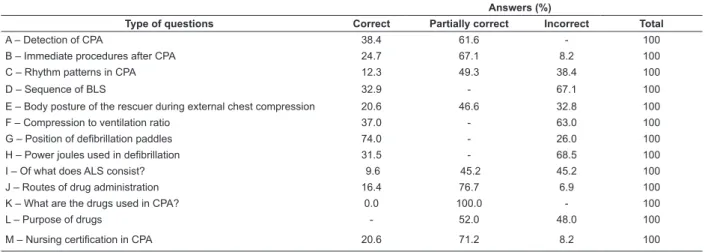
Table 3 – Distribution of answers of nurses of in the metropolitan region of Campinas concerning theoretical knowledge
of CPA/CPR. Campinas, Brazil, 2007
programs or workshops, which had occurred on average
one year and half prior (Table 2).
Answers (%)
Type of questions Correct Partially correct Incorrect Total
A – Detection of CPA 38.4 61.6 - 100
B – Immediate procedures after CPA 24.7 67.1 8.2 100
C – Rhythm patterns in CPA 12.3 49.3 38.4 100
D – Sequence of BLS 32.9 - 67.1 100
E – Body posture of the rescuer during external chest compression 20.6 46.6 32.8 100
F – Compression to ventilation ratio 37.0 - 63.0 100
G – Position of defibrillation paddles 74.0 - 26.0 100
H – Power joules used in defibrillation 31.5 - 68.5 100
I – Of what does ALS consist? 9.6 45.2 45.2 100
J – Routes of drug administration 16.4 76.7 6.9 100
K – What are the drugs used in CPA? 0.0 100.0 - 100
L – Purpose of drugs - 52.0 48.0 100
M – Nursing certification in CPA 20.6 71.2 8.2 100
A total of 38.4% of the answers presented in Table 3
regarding the topic A—Detection of CPA—were correctly
answered by nurses, while 61.6% were partially correct;
the least checked alternative among those considered
correct was the one that mentioned unconsciousness.
In relation to the procedures performed immediately
after the CPA diagnosis (topic B), the least checked
alternatives in partially correct answers (67.1%) were
those related to requesting help and the emergency cart
with the deibrillator.
In relation to the cardiac rhythms found in CPA
(topic C), only 12.3% of nurses answered correctly; the
answers of 49.3% were partially correct and of 38.4%
of them were incorrect. The least checked alternatives
among those considered correct were: pulseless
ventricular tachycardia, ventricular ibrillation, and
pulseless electrical activity.
A total of 67.1% of the nurses incorrectly answered
the question related to the sequence recommended for
BLS (topic D), that is, these individuals do not know the
BLS guidelines.
In regard to the body posture recommended during
external chest compression (topic G), the individuals did
not check the alternative related to the rescuer’s arms
position (which should form an angle of 90 degrees in
relation to the patient’s chest) in the partially correct
answers (46.6%).
When asked about the compression-ventilation
ratio (topic F), 63% of the respondents revealed lack
of knowledge concerning this topic; only 37% answered
it correctly. Most of the individuals checked the 15:2
ratio.
Most (74%) of the participants correctly answered
paddles during deibrillation (topic G). Nevertheless,
the question concerning the power load required for
monophasic deibrillation (topic H) obtained the highest
number of incorrect answers (68.5%); the alternative
most checked among those considered incorrect was
200 joules.
The percentage of correct answers in the question
concerning ALS (topic I) was low (9.6%); the answers
partially correct and incorrect totaled 45.2%. The items
in this question that recommended early deibrillation, the use of equipment for oxygenation and ventilation,
cardiac monitoring, obtaining and maintaining venous
access, and implementing medication were not
checked.
For the potential routes for the administration
of medication during CPA (item J), the individuals did
not check the alternative that indicated intraosseous
route and, therefore, 76.7% of the questions were only
partially correct.
The question addressing the medication used during
CPA (item K) obtained 100% of partially correct answers
while the least checked alternatives were those related
to vasopressin, lidocaine, calcium and amiodarone.
In regard to knowledge concerning the purpose
of medication (item L), 65.7% of the respondents
reported knowledge concerning its purpose, however,
the answers of 52% were partially correct. The
best-described medications were adrenaline (65.7%) and
atropine (54.8%).
The least checked alternative in the partially correct
answers concerning the question addressing nursing
records on care provided during CPA (item M) was the
one that required the nurse to note the type of CPA
(20.7%).
Overall, the mean score obtained by nurses was 6.7
(±1.8) out of 13, the total score they could obtain, with
a minimum of 2.3 and a maximum of 11.7. Converting
these scores to grades from zero to ten, the average
grade obtained by the nurses working in N-HUECU of the
Metropolitan Region of Campinas was 5.2 (±1.4), with a
minimum of 1.8 and maximum of 9.0.
When the total scores obtained by gender were
compared, we observed that the median score of male
nurses was higher than that obtained by female nurses
(p=0.011, Mann-Whitney test). Differences were also
found between genders in the medians of questions
concerning detection of CPA (p=0.018), ALS (p=0.013),
medication in CPA (p=0.012) and the question concerning
nursing records (p=0.013).
Another result found was a signiicant difference
between the scores of the individuals who attended
BLS training programs (n= 17) and those who did not
(n= 56) (p=0.015), including particularly the questions
addressing cardio rhythms in CPA (p= 0.007) and BLS
(p= 0.046). No differences were found in the scores
obtained concerning theoretical knowledge of those who
attended (n= 4) and who did not attend an ALS training
program (p= 0.146). Nevertheless, differences were
found in the scores related to the theoretical knowledge
of individuals who pursued update training in CPA in
relation to those who did not (p=0.045).
Association between the variables ‘time since
graduation’ and ‘compression to ventilation ratio during
CPR’ indicated that the longer the time since graduation
the lower the nurses’ theoretical knowledge (r =-0.24524; Spearman’s correlation coeficient p=0.0365).
Similarly, the longer the time since updating one’s
training, the lower one’s knowledge concerning body
posture required during external chest compressions
(r=-0.41483; p=0.0392). Another association
revealed that the older the individual the lower one’s
knowledge concerning the appropriate power load
used in defibrillation (r=-0.24942; p=0.0333).
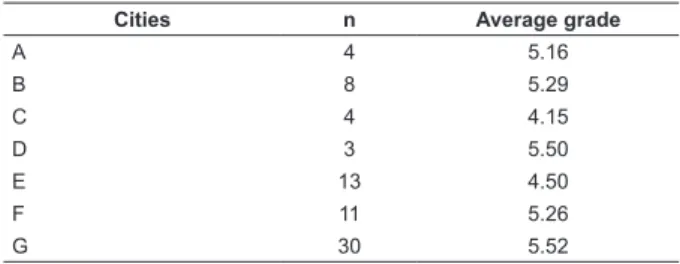
The comparative analysis of scores on knowledge
concerning CPA/CPR of nurses of different cities did not
display signiicant differences (p=0.329; Kruskal-Wallis
test) as presented in Table 4. Hence, the performance of
nurses was equivalent.
City G presented the best performance followed by
D, B, F and A (Table 4). The nurses who presented the
lowest average scores were those in the cities C and
E. However, when city G (with the largest number of
nurses) was compared to the other cities, a signiicant
difference was found mainly in relation to procedures
performed immediately after CPA is detected (p=0.040);
CPA rhythms (p=0.010); and knowledge concerning ALS
(p=0.019). Although, according to the Mann-Whitney
test, the total average scores were not signiicantly
different between city G and the others (p=0.105).
Table 4 – Distribution of nurses’ scores concerning
theoretical knowledge of CPA/CPR in the metropolitan
region of Campinas, Brazil, 2007.
Cities n Average grade
A 4 5.16
B 8 5.29
C 4 4.15
D 3 5.50
E 13 4.50
F 11 5.26
G 30 5.52
Rev. Latino-Am. Enfermagem 2011 Mar-Apr;19(2):261-8.
Discussion
This study indicated that the nurses’ average time
since last receiving update training was 18 months, a fact
falling short of what is recommended in the literature,
that knowledge should be updated every six months
for one to maintain knowledge and skills in the urgent/
emergency ield(4,6). There is a concern related to these professionals’ continuing qualiications.
The results of this study related to CPA update
training is of concern because we know that the less
frequent one updates knowledge the lower one’s
retention of knowledge/skills(7-8). Some aspects should be
reviewed and updated to ensure improved performance
and quality care, especially because updates should be
constant, since theoretical knowledge and skills tend to
decline over time(9-10) .
According to one study(10), only 42% of nurses require help, a inding similar to that of this study
(36.8%). It is important to note that procedures to
reestablish the health of patients are initiated earlier
with the help of the team(11).
Almost 70% of the nurses in this study had
dificulty listing the sequence of procedures required in
BLS. However, the primary ABC sequence (A – Airway,
B – Breathing, C – Circulation) has been emphasized in
literature(12) for years. More recently, deibrillation (D)
was added to the primary ABCD(13).
The results in relation to the rescuer’s body posture
during external chest compressions are of concern
because this is a procedure that should be performed in
the correct position and reach 100 compressions/minute
to be effective in taking medication and oxygen to vital
organs(13).
It is interesting to note that the compression to
ventilation ratio 30:2(3,5) is known by only 37% of nurses,
while most of them responded that the appropriate ratio
is 15:2, according to previous guidelines(14). This fact
reinforces the need for training programs and updating.
The same occurred in relation to the power load used
in deibrillation; the most frequent answer for this item
was 200J, which is according to the 2000 guidelines(15).
Of the drugs most frequently used during CPR, the
least mentioned were vasopressin, lidocaine, amiodarone
and calcium. More than 60% of the respondents reported
knowledge concerning the purpose of these medications,
however no one was able to describe all the purposes,
which suggests that nurses are concerned in correctly
administering the medications but are unaware of their
pharmacological actions(4).
In regard to the nursing record related to CPA/
CPR, the item ‘type of CPA’ was seldom mentioned. It is
important to note that currently there are protocols for
recording the CPR procedure. A form has been developed
and validated at a national level aiming to obtain concise
but complete information to accurately describe what
happened to the patient at the time of CPA/CPR, which
also serves as a legal document(16).
The performance of nurses in the theoretical test
presented results similar to those found in another study
in which physicians displayed deiciencies in theoretical
knowledge concerning resuscitation and whose average
knowledge score was 54.5%(17). A recent study revealed
that nurses presented an average of 6.8 correct answers
before training; about 60% of them correctly answered
more than 75% of the questions(18).
The author of another study(7) reported that only 6%
of nursing students achieved the minimum required to be
approved concerning the topic of resuscitation. However,
after theoretical-practical training, this proportion rose
to 72%. The scores found by other authors concerning
CPA/CPR knowledge were 50.3% pre-training and
60.5% post-training (p<0.001), conirming that training
should be periodically administered. A recent national
study corroborates these indings and reveals that 90%
of the studied professionals achieved satisfactory level
of knowledge after a training program(18).
A study conducted in Mexico in the 1980s addressing
the knowledge of physicians and nurses who received
formal training, no training, and informal training
indicates that groups without training and with informal
training correctly answered 64% of the items, while
the formally trained group correctly answered 77%(20).
A total of 2.4% of the physicians evaluated in another
study conducted in Ecuador in the 1990s failed a test
addressing knowledge concerning ALS; these individuals
wrongly answered all the 10 questions concerning
CPR(21).
Signiicant differences were found in this study in
relation to the median scores of males (5.8) and females
(4.9) (p=0.011). Differences between genders were also
found in relation to detection of CPA, ALS, medication
used and nursing records. These indings are similar to
another study(17) in which the average score for men was 11.4 and for women was 12.3 (p<0.05). Data explaining
such differences were not found in the literature.
Other differences found were related to the median
scores of those who attended BLS training (5.7) and
of those who did not (4.9), including questions that
indicate that professionals who attend a BLS program
are able to list the sequence of procedures without
dificulty. No differences, however, were found in the
scores of those who attended ALS and those who did
not, although few individuals in this study took part in
such a program.
This information shows the importance of basic
and advanced life support programs. Another study(17)
indicates that the score of emergency physicians who
attended an ALS program was 14.9 while the score of
those who did not was 10.5. These results are similar to
those found in another study(22), where the group with
BLS presented improved performance. Another study(23)
shows that the survival of patients cared for by nurses
who had attended ALS programs were almost four times
higher compared to those cared for nurses who had not
attended such programs. The chance of success and CPA
reversion is twice as high if there is an individual with
ALS training in the team(24).
This study also showed differences of knowledge
among those who made some kind of updating in CPR
(p= 0.045), congruent with another inding(25) in which
53% of the participants had attended update training
programs in the last six months and the nurses who had attended such programs less than six months ago
displayed better performance in CPA/CPR simulations.
Another study(11) stresses that despite the fact that
64% of the studied nurses had attended update
training programs, their theoretical knowledge was still
insuficient in the face of international consensus.
Data from this study suggest that the longer
the time since graduation the lower one’s theoretical
knowledge concerning compression to ventilation ratio
and electrical load used in deibrillation, which justiies
the need for professionals to update their knowledge to
keep track with periodic changes triggered by advances
in research in the ield.
No differences were found concerning the theoretical
knowledge of nurses on CPA/CPR among cities. The
average grade in the largest city with the highest number
of nurses was 5.5. These nurses displayed the highest
level of theoretical knowledge concerning procedures
taken immediately after CPA detection, cardiac rhythms
and ALS. However, no statistically signiicant differences
were found in the comparison between the scores of
nurses from the largest city and the other cities. This fact
is of concern because this city has nine nursing schools
in addition to centers of acknowledged excellence in
research and teaching, which would, in theory, favor
access to update training and BLS and ALS programs
that occur periodically. Nevertheless, the performance of
the professionals from this city was not satisfactory.
Conclusion
It was possible to conclude that the nurses working
in the N-HUECU of the metropolitan region of Campinas,
SP, Brazil have insuficient theoretical knowledge
concerning CPA/CPR, since the average grade obtained
was 5.2 (±1.4) out of 10, that is, they correctly answered
50% of what is required.
This study revealed that there are not many
differences in terms of knowledge among the nurses in
the metropolitan region of Campinas, though those in
city C presented the worse scores.
Given this study’s results, the need for qualiication
and update training programs is apparent so that
nurses can acquire improved theoretical knowledge and
consequently improve their performance, contributing
to patient survival.
This study contributes to the dissemination of
results concerning theoretical knowledge of nurses
working in the non-hospital scope since existing studies
focus on results from nurses working either in hospitals
or mobile pre-hospital care.
References
1. Ministério da Saúde (BR). Portaria n.º 2048/GM, de 5
de novembro de 2000. Regulamento técnico dos sistemas
estaduais de urgência e emergência. Brasília; 2002.
2. Horsted T, Rasmussen LS, Meyhoff CS, Nielsen SL.
Long-term prognosis after out-of hospital cardiac arrest.
Resuscitation. 2007;72:214-8.
3. Dalri MCB, Araújo IEM, Silveira RCCP, Canini
SRMS, Cyrillo RMZ. Novas diretrizes da ressuscitação
cardiopulmonar. Rev. Latino-Am. Enfermagem. 2008
dezembro; 16(6):1060-2.
4. Bellan MC. Capacitação do enfermeiro para
o atendimento da parada cardiorrespiratória.
[Dissertação]. Campinas (SP): Faculdade de Ciências
Médicas/Universidade Estadual de Campinas; 2006.
5. Guidelines 2005 for cardiopulmonary resuscitation and
emergency cardiovascular care. International consensus
on science. Part 1. Introduction to the Guidelines for
CPR and ECC. A consensus on science. Resuscitation.
2005;46:3-16.
6. Woollard M, Whitfield R, Smith A, Colquhoun M,
Newcombe RG, Vetter N, et al. Skill acquisition and
retention in automated external defibrillator (AED)
Rev. Latino-Am. Enfermagem 2011 Mar-Apr;19(2):261-8.
Resuscitation. 2004;60(1):17-28.
7. Madden C. Undergraduate nursing students’ acquisition
and retention of CPR knowledge and skills. Nurs Ed Tod.
2006; 26:218-27.
8. Nikandish R, Jamshidi H, Musavifard R, Zerbardast T,
Habibi N. Basic cardiopulmonary resuscitation skills of
nurses at a teaching hospital in Southeast Iran in 2006.
Resuscitation. 2006;73:321-2.
9. Hamilton R. Nurses’ knowledge and skill retention
following cardiopulmonary resuscitation training: a review
of the literature. J Adv Nurs. 2005;51(3):288-97.
10. Miotto HC. Fatores envolvidos na fixação do
aprendizado durante os cursos de suporte avançado de
vida em cardiologia. [Dissertação]. Belo Horizonte (MG):
Universidade Federal de Minas Gerais; 2007.
11. Galinski M, Loubardi N, Duchossoy MC. In-hospital
cardiac arrest resuscitation: medical and paramedical
theory skill assessment in an university hospital. Ann Fr
Anesth Reanim. 2003;22(3):179-82.
12. Silva AR. Parada cardiorrespiratória em unidades
de internação. Vivências do enfermeiro. [Dissertação].
Ribeirão Preto (SP): Escola de Enfermagem de Ribeirão
Preto/Universidade de São Paulo; 2006.
13. American Heart Association (AHA). Inc. Part III:
Overview of CPR. Circulation. 2005;112(24):12-8.
14. Guidelines 2000 for cardiopulmonary resuscitation
and emergency cardiovascular care. International
consensus on science. Part 3. Adult basic life support.
Resuscitation. 2000;46:29-71.
15. Guidelines 2000 for cardiopulmonary resuscitation
and emergency cardiovascular care.International
consensus on science. Part 6. Advanced cardiovascular
life support. Resuscitation. 2000;46:109-62.
16. Boaventura AP, Araújo IEM. Registro do atendimento
da parada cardiorrespiratória no ambiente
intra-hospitalar: aplicabilidade de um instrumento. Rev
Gaucha Enferm. 2006;27(3):434-42.
17. Filgueiras NMF, Bandeira AC, Delmondes T, Oliveira
A, Lima ASJ, Cruz V, et al. Avaliação do Conhecimento
geral de médicos emergencistas de hospitais de Salvador
– Bahia sobre o atendimento de vítimas com parada
cardiorrespiratória. Arq Bras Cardiol. 2006;87:634-40.
18. Brião RC, Souza EN, Castro RA, Rabelo ER. Estudo
de coorte para avaliar o desempenho da equipe de
enfermagem em teste teórico, após treinamento em
parada cardiorrespiratória. Rev. Latino-Am. Enfermagem.
2009 jan–fev;17(1):40-5.
19. Boonmak P, Boonmak S, Srichaipanha S, Poomsawat
S. Knowlegde and skill after brief ACLS training. J Med
Assoc Thai. 2004;87(11):1311-4.
20. Wheatley LL, Pérez ET, Macías AS. Estado actual de la
reanimatión cardiopulmonar em Monterrey, Nuevo León,
México. Arch Inst Cardiol Méx. 1988;58(3):237-41.
21. Toapanta EP, Troya ME, Córdova G. Conocimiento
médico sobre reanimatión cardiopulmonar. Rev Med
Cient. (Quito) 1997;9:71-6.
22. Ribeiro EP. Avaliação do ensino, treinamento e
aprendizagem em ressuscitação cardiopulmonar dos
residentes médicos e de enfermagem de um hospital
de ensino. [Tese em Cardiologia]. São Paulo (SP):
Escola Paulista de Medicina/Universidade Federal de
São Paulo;2004.
23. Dane FC, Russell-Lindgren KS, Parish DC. In-hospital
resuscitation: association between ACLS training and
survival to discharge. Resuscitation. 2000;47:83-7.
24. Moretti AM. Eficácia do treinamento em suporte
avançado de vida nos resultados das manobras de
ressuscitação cardiopulmonar. [Tese Doutorado]. São
Paulo (SP): Faculdade de Medicina da Universidade de
São Paulo;2002.
25. Nyman J, Sihvonen M. Cardiopulmonary resuscitation
skills in nurses and nursing students. Resuscitation.
2000;47:179-84.
Received: Dec. 12th 2009