UNIVERSIDADE DE LISBOA
FACULDADE DE CIÊNCIAS
DEPARTAMENTO DE BIOLOGIA ANIMAL
Conceptualizing the marine environment through the analysis
of children’s drawings
Joana Rita de Castro Nunes Soares
Mestrado em Ecologia e Gestão Ambiental
Dissertação orientada por:
Professor Doutor Henrique Cabral
Doutora Cristina Brito
2017
AGRADECIMENTOS
Agradecimentos
Talvez seja melhor começar estes agradecimentos recuando um pouco atrás no tempo, muito antes de ter pensado em trabalhar e escrever uma tese, e lembrando-me daqueles que ao longo do tempo me ensinaram a nunca desistir, a tentar ser mais e melhor, a ir mais longe e a agarrar as minhas convicções. Por mais turbulentas que fossem as viagens e sinuosos os caminhos, obrigada por me mostrarem que percursos mais fáceis não são necessariamente os melhores.
Hoje concluo mais uma etapa, etapa essa que não percorri sozinha. Aos meus Super-Amigos da licenciatura, porque a amizade dá outro sabor às coisas, um grande obrigada! A vocês, que enfrentaram comigo as dificuldades de ser estudante e de avançar para um mundo novo e diferente (e vamos ser realistas, por vezes assustador!). Não só tornaram o meu percurso mais fácil como fizeram com que eu vá ter muitas saudades das boas experiências que partilhámos, algo que vou guardar até ser velhinha
Passando aos meus amigos de mestrado… bora fazer mais mestrados juntos?! E especialmente a vocês, os que me acompanharam e apoiaram nos últimos tempos, Catarina, Carol Caracol, Laurindinha, Joãozinho, podia escrever 100 vezes a palavra “obrigada” em caps lock que não iria bastar. Foi muito bom rir (e chorar) convosco. Estiveram sempre disponíveis para mim, mesmo quando nem para vocês próprios tinham tempo. Conquistaram um lugarzinho importante
Às pessoas mais importantes da minha vida, as quais faço questão que fiquem registadas, quero que saibam que o meu esforço e empenho não é apenas a pensar em mim mas para vos deixar orgulhosos a vocês. Obrigada a ti Mãe, que és uma força da natureza que admiro, a ti Mana, e minha metade, a ti João, que foste e serás sempre o meu maior suporte. Um obrigada muito especial e obeso à minha irmã Ana, que por mais agitados que fossem os seus dias, garante sempre um espacinho para mim! Obrigada pai, avó, tio, e restantes manas, isto também é por vocês!
E finalmente, porque a ordem aqui não é intencional, obrigada ao Professor Henrique por ter aceite, sem hesitações, o convite para ser meu orientador (espero que nunca se tenha arrependido!), pela sua grande ajuda e profissionalismo (mesmo com a carga de trabalho que tem constantemente sobre os ombros) e espírito sempre positivo e carinhoso. E a si Cristina, pelo seu enorme perfeccionismo, por puxar sempre por mim e por ter acreditado no meu trabalho e me ter recebido de braços abertos assim que fui ter consigo para a escolha do projecto. Obrigada aos dois, que eu escolhi muito bem, e que possibilitaram a realização este trabalho!
Também não posso deixar de agradecer ao Ioannis, que desde o início se revelou muito prestável e entusiasmado com a minha participação neste trabalho.
E a todos os meus professores, com quem me cruzei durante a minha caminhada, que contribuíram não só para a minha formação enquanto aluna mas também enquanto pessoa. Todos participaram na construção de quem sou hoje e quem gostarei de ser no futuro.
RESUMO E PALAVRAS-CHAVE
Resumo
De entre os diversos problemas ambientais que caracterizam a idade contemporânea os do Oceano estão entre os mais preocupantes devido à diversidade e magnitude dos seus impactos. Na verdade estes problemas não são um inconveniente exclusivo dos organismos marinhos mas afectam sim, todas as formas de vida marinha e terrestre que dependem do oceano para a sua subsistência. Os presentes panoramas marinho e terrestre surgem como resultado das actividades humanas e apesar de todos os alertas que têm sido lançados para a consciencialização ambiental oceânica, os comportamentos humanos caminham, na maioria das vezes, numa direcção oposta a estes esforços. Uma vez que os comportamentos possuem uma dupla natureza racional e emocional, baseadas em percepções que levam a interpretações e, por sua vez, a intenções procurou-se clarificar a forma como era representado o oceano. Tendo em conta que o processo de aprendizagem e reconstrução de valores, atitudes e comportamentos exige tempo e trabalho, o foco nas gerações mais jovens é essencial. Para o efeito, no presente estudo, foram seleccionadas 6 escolas de três áreas distintas (Rural, Urbana Recente e Urbana Antiga, dentro de ou próximas de Lisboa). Através de uma visita presencial, foi pedido aos alunos do primeiro ciclo destas escolas que desenhassem aquilo que acreditavam existir no oceano, e as suas criações foram recolhidas e utilizadas como fonte de informação das percepções e conhecimentos prévios. Após um intervalo de aproximadamente duas semanas, 3 das escolas iniciais foram sujeitas a uma pequena sessão educativa sob o formato de PowerPoint e no mesmo dia, imediatamente após a sessão, foi pedido aos seus alunos que elaborassem novamente um desenho com base no mesmo enunciado da primeira visita e recolhidos os seus trabalhos. Esta segunda recolha efectuou-se tanto nas escolas que participaram na sessão, como também nas restantes. As 3 escolas que não assistiram a qualquer apresentação funcionaram como controlo para termos de comparação. A apresentação incidiu sobre dois tópicos essenciais, um natural e descritivo das características do oceano e de todos os seus atributos e um antropocêntrico, referente aos impactos a relação entre o Homem e o oceano. Com a análise dos desenhos correspondentes às duas visitas pretendeu-se averiguar o sucesso da transmissão e captação de conhecimentos, confirmado pela representação de novos elementos na segunda visita, e este sucesso mostrou-se evidente nas turmas submetidas à sessão educativa. Este trabalho detectou pequenas tendências em alguns dos elementos desenhados pelos géneros e registou também pequenas diferenças entre as áreas urbanas e rural. Dos temas abordados durante a apresentação, aquele cujo impacto nos desenhos das crianças registou maiores diferenças entre visitas foi o do lixo marinho. As crianças revelaram ter uma elevada sensibilidade para com os temas ambientais e comprovaram que abordagens visuais de causa-efeito produzem resultados imediatos numa fase precoce da idade.
Palavras-chave: Literacia sobre o Oceano, Consciencialização ambiental, Mares e oceanos, Desenhos, Percepções de crianças, Escolas.
ABSTRACT AND KEYWORDS
Abstract
Among the various environmental problems that characterize the contemporary age, those concerning the ocean are among the most concerning due to the diversity and magnitude of its impacts. In fact, these problems are not only an inconvenience for marine organisms but they affect all forms of marine and terrestrial life that depend on the ocean for their subsistence. The present seascape and landscape emerges as a result of human activities, and despite all the warnings that have been raised for ocean environmental awareness, human behaviours are often towards the opposite direction of these efforts. Since the behaviours are under a dual rational and emotional nature, based on perceptions that lead to interpretations and intentions, it was sought to clarify the way the ocean was seen and represented. Since the process of learning and rebuilding values, attitudes, and behaviours takes time and work, a focus on the younger generation is essential. With this scope, in the present study, six schools of three distinct areas were selected (countryside, urban recent and urban old areas, within or nearby Lisbon). Through a in person visit, students in the first cycle of these schools were asked to draw what they believed existed in the ocean, and their creations were collected and used as a source of information on perceptions and previous knowledge. After an interval of approximately two weeks, 3 of the initial schools were subjected to a small educational session in PowerPoint format and on the same day, immediately after the session, their students were asked to produce a drawing based on the same principle from first visit and their work was collected. This second collection took place both in the schools participating in the session and in the others. The 3 schools that did not attend any presentation functioned as controls for terms of comparison. The presentation focused on two essential topics, a natural and descriptive of the characteristics of the ocean and all its attributes and an anthropocentric one, concerning the impacts of the relation between mankind and the ocean. The analysis of the drawings corresponding to the two visits was intended to verify the success of the transmission and knowledge retention, confirmed by the representation of new elements in the second visit, and this success was evident in the classes submitted to the training session. This work detected small trends in some elements drawn by the genders and also revealed small differences between urban and rural areas. Of the topics covered during the presentation, the one whose impact on children's drawings recorded the greatest differences between visits was marine litter. Children have shown a high sensitivity to environmental issues and have demonstrated that visual cause-and-effect approaches produce immediate results at an early age.
Keywords: Ocean literacy, Environmental awareness, Seas and oceans, Drawings, Children perceptions, Schools.
RESUMO ALARGADO
Resumo Alargado
Perante as frágeis circunstâncias ambientais que actualmente se fazem sentir é cada vez mais imperativo a mudança de uma sociedade (aparentemente) desligada, distante e conformada perante o meio natural para uma sociedade consciente, dedicada e participativa das questões ambientais.
A ambição por um futuro sustentável e dotado de oportunidades é, em grande parte, alcançável através da substituição de valores, reflexão e mudança de atitudes e harmonia de comportamentos, uma vez que anteriormente, alguns desses mesmos valores, atitudes e comportamentos contribuíram para as condições menos positivas que caracterizam a relação Homem-Ambiente nos dias de hoje. Porquê valores? Porque somos movidos pelas nossas crenças. Porquê atitudes? Porque para agir é necessário uma intenção. E porquê harmonia de comportamentos? Porque o meio ambiente é comum a todos e compete igualmente a todos trabalhar para o mesmo objectivo.
O interesse e preocupação pelas temáticas ambientais poderão ser mais facilmente incutidos após um conhecimento abrangente dos factos, e este conhecimento revela-se (muitas e demasiadas vezes) insuficiente. Matérias não tão visíveis e directas para a maioria das pessoas, como sejam as relativas ao ambiente, necessitam de ser exploradas e aprofundadas para incentivar ao estabelecimento de uma ligação entre o Homem e o meio que o rodeia.
Assim, a educação assume um papel preponderante na consolidação de uma cidadania ambiental assente na responsabilidade, respeito e consideração pelo nosso património natural. É fundamental que o Homem seja instruído acerca dos diferentes ecossistemas, informado de todas as suas características e ciente da sua importância e valor.
Este trabalho centra-se num dos maiores atributos da vida no Planeta: O Oceano. O Oceano é parte integrante da Natureza e participa em diversos processos, sendo o suporte de vida, não só das populações marinhas mas também da vida terrestre, bem como de desporto e lazer, por se tratar de um local destinado a práticas desportivas e radicais associadas ao ser humano, de transporte de pessoas e bens, contribuindo para a eliminação de barreiras geográficas e como estimulador da economia, enquanto gerador de emprego e meio atractivo da actividade marítimo-turística. Finalmente, numa vertente mais estética, emocional e simbólica, funciona igualmente como fonte de inspiração e de relaxamento.
Apesar de todos os atributos inerentes ao Oceano também este tem sido alvo de algumas negligências, com efeitos negativos e drásticos tanto para as populações marinhas que o integram como para o próprio ser humano que depende dele para a supressão das suas necessidades mais básicas. O aumento dos níveis de poluição resultante das actividades humanas conduziu a alterações climáticas, contribuindo para a acidificação dos oceanos e levando à alteração das suas condições originais e à destabilização dos comportamentos e migração das espécies. Este fenómeno facilitou ainda a invasão e proliferação de espécies indígenas adaptadas às novas condições e, consequentemente, ao declínio das espécies naturais confrontadas com a competição por alimento e espaço e à perda de biodiversidade e transformação completa da estrutura natural das cadeiras tróficas. No entanto o declínio das populações marinhas não se deve apenas às mudanças na composição das águas mas também a factores directos, nomeadamente à pressão exercida pela intensa actividade piscatória que não só captura intencionalmente organismos em quantidades excessivas como utiliza métodos de pesca destrutivos lesivos para espécies não-alvo, muitas vezes provocando mesmo a sua morte. Adicionalmente, também algumas actividades económicas como o transporte marítimo e o turismo participaram neste processo de degradação ambiental. O transporte marítimo é muitas vezes responsável por derrames de produtos contaminantes
RESUMO ALARGADO
VIII
como o petróleo que tem efeitos sobre a qualidade das águas e muitos prejudiciais para répteis, mamíferos e aves, e o turismo praticado de forma incontrolada e insustentável é, não só uma fonte de perturbação para as população locais, como também gerador de enormes quantidades de lixo para as praias.
Uma vez que os comportamentos humanos têm consequências desastrosas evidentes nos efeitos que se fazem sentir nos dias de hoje, é imperativo que esses mesmos comportamentos sejam abandonados e substituídos por hábitos mais correctos e favorecedores de um futuro saudável. No entanto, os comportamentos estão muitas vezes bastante enraizados nas pessoas e a sua alteração exige estratégias trabalhosas e esforços acrescidos.
O presente trabalho segue precisamente essa direcção mas actua a um nível ainda mais básico: o das percepções e conceptualizações, a partir das quais são construídas crenças e valores, onde assentam esses comportamentos. Essas concepções podem ser fundamentadas por conhecimentos correctos, incorrectos e insuficientes. Após a enumeração de todos os problemas associados ao meio marinho, constata-se que a escolha das acções humanas não tem obedecido às tentativas de mitigação dos impactos causados. Assim, será importante identificar onde existem eventuais falhas a nível dos seus conhecimentos e percepções, que impeçam a conjugação destas acções com a melhoria do estado do oceano. Este estudo recorreu à análise de desenhos com foco no meio marinho, de crianças no primeiro ciclo do ensino básico, enquanto fonte indicadora dos seus conhecimentos.
A escolha de crianças ao invés de adultos deve-se ao facto dos adultos já terem conceitos e convicções bastante vincados, resultado do conhecimento adquirido e das experiências a que foram sujeitos ao longo da vida. O factor “tempo” é uma condicionante importante e este exerce uma menor influência em idades mais precoces. Contudo, essas influências existem e ocorrem desde muito cedo e de forma inevitável durante o crescimento e até iniciarem o seu percurso escolar, não podendo ser ignoradas.
A recolha dos desenhos feitos pelas crianças decorreu ao longo de duas fases: A primeira que testou os conhecimentos prévios já adquiridos acerca do oceano, e a segunda que teve lugar após uma pequena formação sob o formato de PowerPoint em matéria oceânica que focou aspectos científicos associados à natureza dos oceanos e espécies que o compõem e aspectos sociais ligados à relação entre as práticas humanas e o oceano, com a introdução das problemáticas marinhas e de possíveis alternativas a essas práticas.
Os participantes submetidos ao teste pertenciam a escolas representativas de três áreas distintas, classificadas como ‘Urbana Recente’, ‘Urbana Antiga’ e ‘Rural’. Destas três áreas foram amostradas duas escolas, sendo que uma delas foi tratada enquanto grupo de controlo. Ambas as sessões de recolha dos desenhos tiveram lugar nas salas de aula das respectivas turmas, sendo que a primeira teve a duração de uma hora e a segunda de hora e meia (meia hora para a apresentação PowerPoint e uma hora para a elaboração dos desenhos). Os elementos presentes nos desenhos foram registados e organizados em tabelas onde foram posteriormente associados a categorias. A partir destas tabelas foi realizada uma análise, procurando averiguar quais as categorias preferidas pelos alunos (antes e depois da acção de formação) e as eventuais influências mediante o género da criança ou área onde a escola estava inserida. Uma análise posterior efectuou uma comparação entre a primeira e a segunda visitas entre turmas de controlo e não-controlo, com o objectivo de detectar diferenças que reflectissem a aquisição de conhecimento durante a segunda sessão nas turmas de não-controlo.
RESUMO ALARGADO
A observação directa dos desenhos permitiu retirar algumas conclusões prévias ao nível da grande diversidade de elementos representados, da discrepância na complexidade dos desenhos relativos a alguns alunos e da concordância na escolha dos elementos, tendo-se revelado as algas marinhas o elemento mais comum na maioria dos desenhos. As análises realizadas ilustraram a existência de pequenas tendências na escolha de alguns elementos mais vezes associados a um dos sexos, assim como diferenças visíveis entre as áreas urbanas e a área rural, sendo que esta última reuniu uma maior percentagem de elementos humanos e míticos. A análise comparativa das turmas controlo e não-controlo relativamente à primeira e segunda sessão localizou diferenças após a apresentação PowerPoint, sendo essas diferenças particularmente evidentes em elementos mencionados durante a apresentação às escolas. O elemento que registou uma maior diferença na frequência de ocorrência entre sessões foi o lixo marinho. Verificou-se ainda que a segunda sessão realizada nas escolas provocou uma maior uniformização nos desenhos dos alunos relativamente aos elementos retractados, existindo uma maior orientação no sentido de alguns deles.
Conclui-se que a aquisição de conhecimento, de facto ocorreu, e que essa aquisição teve especialmente sucesso durante a transmissão de conhecimentos relativos à temática da poluição. Desta forma os alunos revelaram ser dotados de uma grande sensibilidade e sentido de responsabilidade e a abordagem utilizada eficaz na produção de resultados imediatos. A metodologia mostrou-se competente na recolha dos conhecimentos prévios e adquiridos pelos alunos e os resultados positivos para o objectivo último do trabalho: sensibilização e consciencialização ambiental.
TABLE OF CONTENTS
Table of contents
Agradecimentos……….…I Resumo………...………III Abstract………...…….V Resumo Alargado………..VII CHAPTER 1………...………..1 1.1. General introduction………..………. 3 1.2. References………...………8 CHAPTER 2………...………13 2.1. Introduction……….152.2. Material and methods………..19
2.2.1. Study design………19
i. Previous knowledge………...19
ii. Acquired knowledge……….19
2.2.2. Data analysis………20
2.3. Results……….23
2.3.1. Overall assessment………..23
2.3.2. First school visits: Previous knowledge………...23
2.3.3. Second school visits: Acquired knowledge………..27
2.3.4. Comparison between previous and acquired knowledge concerning control and non-control classes………31 2.4. Discussion………...39 2.5. References………...43 CHAPTER 3………...49 3.1. Final Remarks……….51 APPENDICES………53 Annex I………54 Annex II……….56
LIST OF FIGURES
List of figures
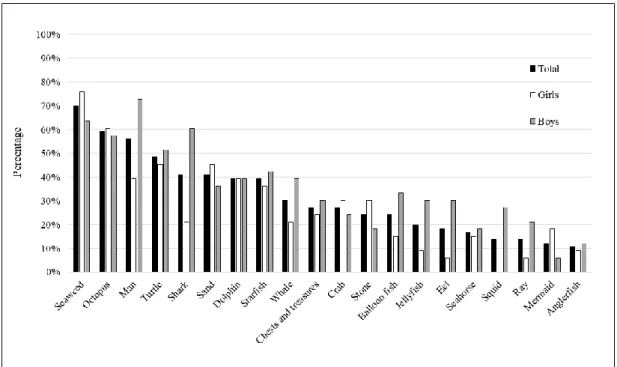
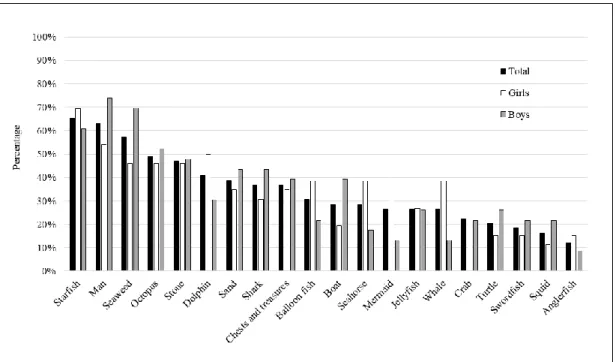
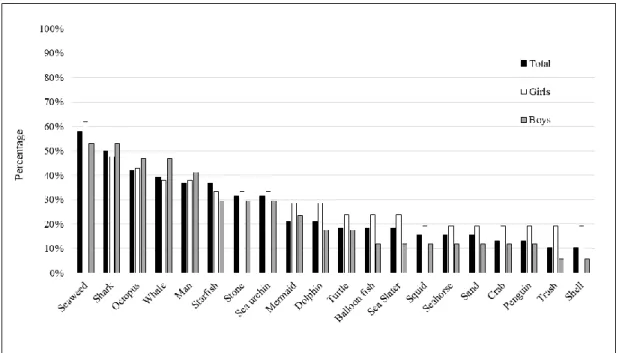
Figure 2.1: The 20 most drawn elements (highest frequency) of the Recent Urban Area, in the first visit to schools, by the total number of students (black bar), and the total number of boys (grey bar) and girls (white bar) - values relative to percentage of drawings that presented each element. ... 24
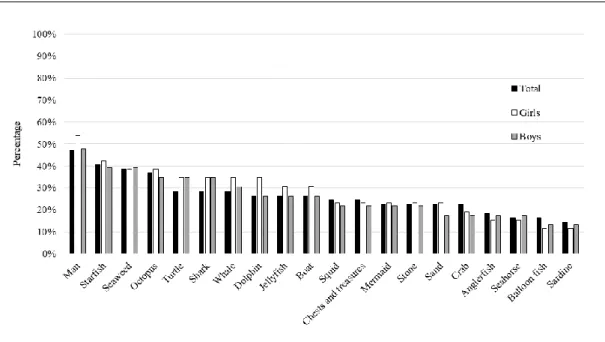
Figure 2.2: The 20 most drawn elements (highest frequency) of the Old Urban Area, in the first visit to schools, by the total number of students (black bar), and the total number of boys (grey bar) and girls (white bar) - values relative to percentage of drawings that presented each element. ... 25
Figure 2.3: The 20 most drawn elements (highest frequency) of the Countryside, in the first visit to schools, by the total number of students (black bar), and the total number of boys (grey bar) and girls (white bar) - values relative to percentage of drawings that presented each element. ... 26
Figure 2.4: Frequency of elements drawn at the first visit to schools, according to the higher categories - Marine Elements (black portion - 83%), Elements of Human Intervention (white portion - 10%) and Mythical Elements (grey portion - 7%)... 26
Figure 2.5: Occurrence frequency of the three main categories in the student drawings (percentage of students drawing these categories) of the first visit to schools: Marine Elements (99%), Elements of Human Intervention (81%) and Mythical Elements (75%). ... 27
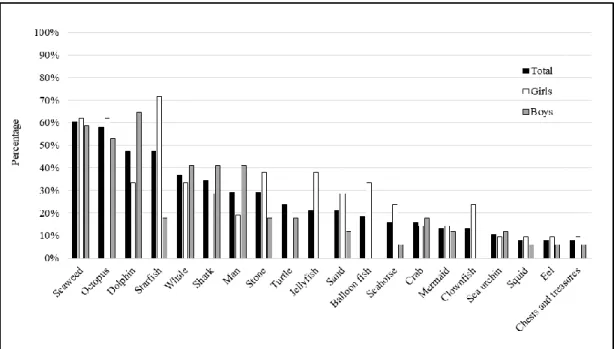
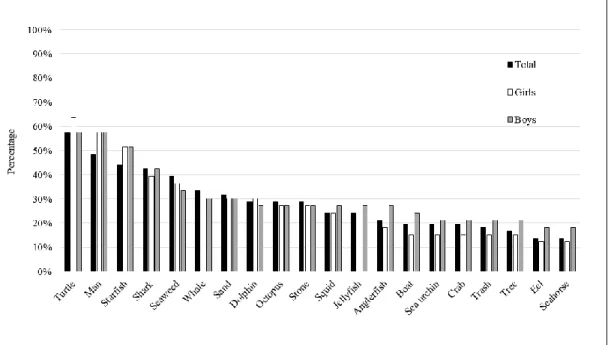
Figure 2.6: The 20 most drawn elements (highest frequency) of the Recent Urban Area, in the second visit to schools, by the total number of students (black bar), and the total number of boys (grey bar) and girls (white bar) - values relative to percentage of drawings that presented each element. .... 28
Figure 2.7: The 20 most drawn elements (highest frequency) of the Old Urban Area, in the second visit to schools, by the total number of students (black bar), and the total number of boys (grey bar) and girls (white bar) - values relative to percentage of drawings that presented each element. ... 29
Figure 2.8: The 20 most drawn elements (highest frequency) of the Countryside, in the second visit to schools, by the total number of students (black bar), and the total number of boys (grey bar) and girls (white bar) - values relative to percentage of drawings that presented each element. ... 30
Figure 2.9: Frequency of elements drawn at the second visit to schools, according to the higher categories - Marine Elements (black portion - 81%), Elements of Human Intervention (white portion - 15%) and Mythical Elements (gray portion - 4%). ... 30
LIST OF FIGURES
XIV
Figure 2.10: Occurrence frequency of the three main categories in the student drawings (percentage of students drawing these categories) of the second visit to schools: Marine Elements (100%), Elements of Human Intervention (100%) and Mythical Elements (39%). ... 31
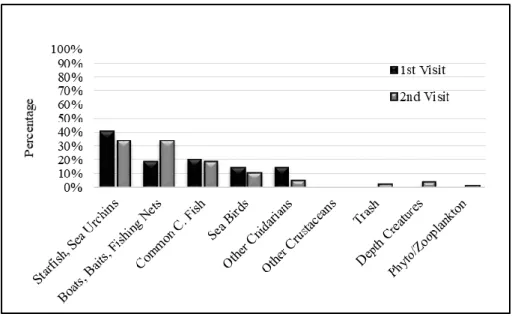
Figure 2.11: Percentage of occurrence in the drawings of the 9 elements presented during the training in the schools; comparison between the two visits, for schools which were subject to training.... 32
Figure 2.12: Percentage of occurrence in the drawings of the 9 elements presented during the training in the schools; comparison between the two visits, for schools not submitted to training session. ... 33
Figure 2.13: Diagram of the first two axes of the principal components analysis performed to data of the group of elements, relative to children’s drawings from Recent Urban Area (drawings with codes starting with 1 are relative to the first visit and with 2 to the second visit). Variables: W.D. = Whales and Dophins; OCet = Other cetaceans; Sl.S = Sea lions and Seals; Shk = Sharks; OEl = Other elasmobranchs; Sq.Oct = Squids and Octopi; OMoll = Other mollusks; J = Jellyfish; OCnid = Other cnidarians; Rep = Reptiles; C.L.S = Crabs, Lobsters and Shrimps; OCrus = Other crustaceans; CCF = Common commercial fish; OF = Other fish; Shr = Seahorses; E.M. = Eels and Morays; St.SUrch = Starfish and Sea urchins; SB = Seabirds; DCreat = Depth creatures; Phyto.Zoo = Phyto and zooplankton; Sw.Sto.S = Seaweeds, Stones and Sand; M = Man; B.B.FN = Boats, Baits and Fishing nets; T = Trash; OSEl = Other social elements; Mmd.C.AOb = Mermaids, Castles and Associated objects. ... 33
Figure 2.14: Diagram of the first two axes of the principal components analysis performed to data of the group of elements addressed in the training session, relative to children’s drawings from Recent Urban Area (drawings with codes starting with 1 are relative to the first visit and with 2 to the second visit). Variables: OCnid = Other cnidarians; OCrus = Other crustaceans; CCF = Common commercial fish; SB = Seabirds; DCreat = Depth creatures; Phyto.Zoo = Phyto and Zooplankton; St.SUrch = Starfish and Sea urchins; B.B.FN = Boats, Baits, Fishing Nets; T = Trash. ... 34
Figure 2.15: Diagram of the first two axes of the principal components analysis performed to data of the group of elements, relative to children’s drawings from Old Urban Area (drawings with codes starting with 1 are relative to the first visit and with 2 to the second visit). Variables: W.D. = Whales and Dophins; OCet = Other cetaceans; Sl.S = Sea lions and Seals; Shk = Sharks; OEl = Other elasmobranchs; Sq.Oct = Squids and Octopi; OMoll = Other mollusks; J = Jellyfish; OCnid = Other cnidarians; Rep = Reptiles; C.L.S = Crabs, Lobsters and Shrimps; OCrus = Other crustaceans; CCF = Common commercial fish; OF = Other fish; Shr = Seahorses; E.M. = Eels and Morays; St.SUrch = Starfish and Sea urchins; SB = Seabirds; DCreat = Depth creatures; Phyto.Zoo = Phyto and zooplankton; Sw.Sto.S = Seaweeds, Stones and Sand; M = Man; B.B.FN = Boats, Baits and Fishing nets; T = Trash; OSEl = Other social elements; Mmd.C.AOb = Mermaids, Castles and Associated objects……….35
LIST OF FIGURES
Figure 2.16: Diagram of the first two axes of the principal components analysis performed to data of the group of elements addressed in the training session, relative to children’s drawings from Old Urban Area (drawings with codes starting with 1 are relative to the first visit and with 2 to the second visit). Variables: OCnid = Other cnidarians; OCrus = Other crustaceans; CCF = Common commercial fish; SB = Seabirds; DCreat = Depth creatures; Phyto.Zoo = Phyto and Zooplankton; St.SUrch = Starfish and Sea urchins; B.B.FN = Boats, Baits, Fishing Nets; T = Trash. ... 35
Figure 2.17: Diagram of the first two axes of the principal components analysis performed to data of the group of elements, relative to children’s drawings from Countryside (drawings with codes starting with 1 are relative to the first visit and with 2 to the second visit). Variables: W.D. = Whales and Dophins; OCet = Other cetaceans; Sl.S = Sea lions and Seals; Shk = Sharks; OEl = Other elasmobranchs; Sq.Oct = Squids and Octopi; OMoll = Other mollusks; J = Jellyfish; OCnid = Other cnidarians; Rep = Reptiles; C.L.S = Crabs, Lobsters and Shrimps; OCrus = Other crustaceans; CCF = Common commercial fish; OF = Other fish; Shr = Seahorses; E.M. = Eels and Morays; St.SUrch = Starfish and Sea urchins; SB = Seabirds; DCreat = Depth creatures; Phyto.Zoo = Phyto and zooplankton; Sw.Sto.S = Seaweeds, Stones and Sand; M = Man; B.B.FN = Boats, Baits and Fishing nets; T = Trash; OSEl = Other social elements; Mmd.C.AOb = Mermaids, Castles and Associated objects……….36
Figure 2.18: Diagram of the first two axes of the principal components analysis performed to data of the group of elements addressed in the training session, relative to children’s drawings from Countryside (drawings with codes starting with 1 are relative to the first visit and with 2 to the second visit). Variables: OCnid = Other cnidarians; OCrus = Other crustaceans; CCF = Common commercial fish; SB = Seabirds; DCreat = Depth creatures; Phyto.Zoo = Phyto and Zooplankton; St.SUrch = Starfish and Sea urchins; B.B.FN = Boats, Baits, Fishing Nets; T = Trash. ... 37
CHAPTER 1:
General Introduction
CHAPTER 1
1.1. General Introduction
Oceans and seas occupy 70% of the Earth’s surface (Irigoien et al., 2004) and provide about 97% of water supply (Oceanic institute, 2017; NOOA, 2017). Oceans and seas are indispensable to the maintenance of life on the planet, play fundamental roles in the functioning of ecosystems and shape human communities, especially in coastal areas. Most people may not be aware that oceans and seas harbor the greatest biodiversity on Earth (Snelgrove, 1999), ranging from microscopic organisms to the largest known animal species (World Wildlife Fund, 2017d; National Geographic Society, 2017a). The lack of awareness and knowledge that some people reveal about marine environments is due to most of them having an occasional and mainly seasonal contact with it, seeing it as an activity.
Most of the population often interacts with coastal and marine environments exclusively for commercial, industrial and recreational purposes (Clark, 1992). Oceans and seas are often associated with beauty and vastness and its history is closely intermingled with human history and technical and economic developments across the globe(Canny & Morgan, 2011). Their value is usually underestimated mainly due to certain human limitations in assessing and observing it as a whole ecosystem, but marine environments are also places that envision prosperity and abundance as well as beauty (Roberts, 2007).
Marine environments perform several functions with its currents distributing heat and atmospheric gases across the globe and regulating Earth’s climate (Reid et al., 2009; National Geographic Society 2017a). Oceans and seas set in motion important hydrological and carbon cycles between the atmosphere, the physical environment and living organisms (Webster, 1994; Behrenfeld et al., 2006). These cycles were of extreme importance to provide the favorable conditions to the emergence of life on the planet, and continue to be fundamental to maintain them. The ocean is a natural filter for the atmosphere, with phytoplankton absorbing large amounts of carbon dioxide, and in turn producing much of the oxygen available – 70% of the oxygen we breathe comes from the microscopic aquatic organisms with photosynthetic capabilities (Sekerci & Petrovskii, 2015; National Geographic Society, 2017b).
Oceans and seas should not be reduced to their chemical and physical properties. More than large reservoirs of water, they encompass large sets of ecosystems intimately shaped by their waters, ranging from surface coastal areas down to the - practically unexplored by humans - ocean floor (Jebbar, 2015). Deep seas and seabed form an extensive and complex system which communicates with the rest of the planet through the exchange of matter, energy and biodiversity. The functioning of deep-sea ecosystems is crucial for global biogeochemical cycles, on which depend not only marine organisms but much of terrestrial life, including human civilization (Danovaro et al., 2016). Coastal areas play an essential role in general well-being and quality of life, providing recreational activities and psychological benefits (Fleming et al., 2006; White et al., 2010) as well as sheltering many marine organisms.
Along with tropical rain forests, oceans support the widest diversity of species on the planet (World Wildlife Fund, 2017a,b). Scientists estimate that this species-rich environment is home to 10 million species with 14 animal phyla (out of the total 35 existing) being exclusive to the marine environment (Gibb et al., 2013).The richness of marine environments is intrinsically linked to their own diversity, presenting a set of very different conditions and habitats suitable for species with distinct requirements. Although easily overlooked, the highest points, deepest valleys and vastest plains on Earth are all located in oceans (Greely, 2008), and they are not as homogeneous as appear to be at first glance from the surface.
CHAPTER 1
4
Moreover, considering an anthropocentric point of view, seas and oceans are used as means of transportation for people and goods, effectively stimulating trade and communications (Roberts, 2007). Globalization was first conducted via seas and oceans as early as the 15th century and still today these environments foster globalization and ensure a considerable part of the food requirements of human populations through fishing and aquaculture (Bolster, 2012). Living aquatic resources such as fish, mollusks and algae rank fifth as the world's largest resource after rice, forest products, milk and wheat, accounting for 7.5 percent of total world food production (Safran, 2009). Besides filling elementary nutritional needs, these habitats are also central to the health sector, providing resources to produce pharmaceuticals (Malve, 2016), as well as to the industrial sector, allowing the extraction of minerals and oil (Thurber et al., 2013).
Until the nineteenth century, the vast depth and width of the ocean were attractive as they were perceived to mean virtually unlimited and inexhaustible resources (Gopnik, 2015), without any notion of the repercussions and impacts of its overexploitation. Although undoubtedly very large, the ocean is also finite and limited in resources, having gone through significant changes as a result of human action. While earlier human exploitation of marine resources focused mainly on small-scale fishing for survival purposes, more recent changes in marine environments (in temperature, pH, chemical composition, etc.) are to a large extent the accumulation of collective impacts of human behaviour and lifestyle in modern industrialized countries (Mckinley & Fletcher, 2010).
Throughout history, with population growth coupled with the advancement of industry and technologies, as well as of food availability, human intervention became successively more frequent and intensive, and its effects have been worsening and some of them are now irreversible. Despite the promising discourse about renewable energy sources in the last years, there is still strong insistence on the exacerbated use of polluting energy sources - fossil fuels - such as coal, oil and natural gas. Pollution levels continue to increase bringing consequences for the oceans that absorb the atmospheric gases - it is estimated that at least a third of the total amount of carbon dioxide from human activities has been absorbed by the oceans since the 19th century, as well as about half of the emissions resulting from burning fossil fuels (Sabine, 2004).
The emissions contributed to the acidification of the oceans, leading to the transformation of their original conditions and the destabilization of the processes and behaviours of the species (Orr et al., 2005; Kuffner et al., 2007; Langdon, 2005). The invasion and proliferation of non-indigenous species, usually better adapted to the new conditions, benefit from the decline of the indigenous species often caused by competition for food and space with these new species (Naylor, 2001). Some species die and others migrate resulting in a loss of biodiversity and a complete transformation of the natural structure of the food chain (Byers, 2002; Occhipinti-Ambrogi & Savini, 2003). This is also critical for humans since biodiversity provides important ecosystem services – like jobs and food supply (Marchese, 2015). However, the decline in marine populations is not only due to changes in water composition but also to direct factors, in particular the pressure of intense fishing activity, which not only intentionally captures organisms in excessive amounts but uses destructive fishing methods as well, harmful to non-target species, often causing their death (Hall et al., 2000). Some species are now extinct and others in the process of becoming so, as they are captured at a much faster rate than they can be naturally restored. According to non-governmental organization Greenpeace, 63 percent of global fish populations are characterized as overfishing, for example, an increasing number of sharks and rays appear on the IUCN Red List of Threatened Species every year. In terms of social and economic impacts for society, 40 000 jobs were lost with the collapse of only one population of overfished cod (Greenpeace International, 2016).
CHAPTER 1
In addition, some activities such as shipping and tourism have also participated in this process of environmental degradation. Shipping contributes to the pollution of the oceans in several ways. This pollution can be chemical, generated by the loading and unloading of materials such as oil and other chemicals (accidental spills are frequent) and deliberate dumping of garbage from boats; it can also be biological - by the transport of invasive species that settle in ship hulls or infiltrate ballast waters; and not less important: physical pollution, through the launching of anchors, disturbances caused by the noise and agitation of the waters(World Wildlife Fund, 2017c; European Environment Agency, 2016). Beyond this, tourism and coastal occupation have negatively affected the coastal areas, which only accounts for 10% of the marine environment but it is home to more than 90% of all marine species – generating huge amounts of waste in beaches. These areas are the most popular holiday destinations in Europe - 63% of European tourists choose coastal areas for their vacations (Kubo, 2004) – and more than a half of the human population lives within 50 km of the coastline (Pereira et al., 2007; Mckinley & Fletcher, 2010; Boersma & Parrish, 1999), with the majority concentrated in urban areas along the coast. In 2001, 70 million people (14% of EU's total population) lived within 500 meters of the coast (European Environment Agency, 2016).
Marine environmental problems are frequently reported in the media, so several people may be well informed about them. Nevertheless, many of these problems continue to exist and it is observed that individual behaviours do not always intend to improve them (Félonneau & Becker, 2008). It is possible to arrive at several interpretations from this incoherence of behaviours: they happen because there is no access to information or the information arrives but it is not deciphered, because these problems are not perceived as a common responsibility, because there is a feeling of impotence to solve the problems presented, or simply due to lack of interest in the subject. Actually, there is some sense of futility in humans that makes them doubt about how their way of acting interferes with what happens in the ocean and that behavioural changes are useless (Fletcher & Potts, 2007). The fact that the information is not accessible to the public, is not comprehensible or is not valued, has the same result and can be mitigated with the help of citizen education.
If the improvement of the circumstances that are felt nowadays, and which will be felt in the future of subsequent generations, highly depends on a change in people’s routines and patterns of behaviour, it is paramount that we start by ensuring that environmental awareness reaches as many people as possible as soon as possible. Since education is a long and time-consuming process, and it occurs daily in different contexts and under different influences (Sorin & Gordon, 2012), many of which can not be controlled, it is imperative to start it at an early stage of life. A building needs a good foundation to sustain it to not collapse, and this foundation is the first thing to be built. Knowledge must follow the same logic: from the bottom to the top, from children to adults.
Thus, it is identified one of the foundations on which it is necessary to invest: education. Education can be achieved by different learning methods: formal education (obeying a structure, usually taking place in educational institutions), non-formal education (mediated by characteristics of formal education but where the motivation to learn must be totally intrinsic to the student, in institutions outside the school nucleus) or informal education (which can arise anywhere, in spontaneous situations, without any authority, figure or mediator) (Eshach, 2007).
Some advocate that education that occurs outside the school environment is quite effective as it stimulates interest, understanding, and commitment to future learning (Gardner, 1991), and while some critics question whether these environments actually work in the assimilation of contents, and are not
CHAPTER 1
6
just entertainment, others respond that entertainment works in capturing knowledge (Rennie & McClafferty, 1996).
In this context: Is an entertaining education method convincing enough to make citizens follow a different set of behaviours? Is it enough to add content to people's repertoire of knowledge? Using a very simple example: A box that is full does not have room to pack more stuff. However, a not so full box but with sharp objects makes it difficult to add incompatible objects like balloons. This can be compared to the human brain and the process of knowledge transfer. The full box represents most adults and the box with sharp objects can represent both children and some adults. The transfer of new knowledge to adults is already difficult given the convictions deeply rooted that have been instilled over the years. However, also in children with little experience where the knowledge and beliefs are not fully formed, the acquisition of correct and new knowledge (balloons) may conflict with the acceptance of prior knowledge (sharp objects), and the two cannot exist together. Thus, a new scope is identified on which investment is also necessary: perceptions, conceptions and representations, because the way people see, believe and feel things and the meaning they attribute to them is important to realize the choice of behaviours (Gómez, 2012).
Human perceptions are rarely homogeneous and are conditioned by variables such as age, gender, social values, or proximity to the coast (Russonelo et al., 1999; Rose et al., 2008; Jefferson et al., 2015). Over time human perceptions of the marine environment have been changing. Retreating only 150 years ago, until the early modern age, the ocean was especially known to travellers and explorers who told stories about monstrous and exotic creatures inhabiting the seas, where the ocean symbolized fear and mystery (Brito, 2016). In the book "Fictions of the Sea - Critical Perspectives on the Ocean in British Literature
and Culture" Klein (2002) makes the following distinction between the periods: "The negative image of the evil sea and its many associated dangers is traditionally seen to be replaced in the 18th century with an emerging conception of the ocean - in the contexts of colonization, economic modernization and global trade - as technically manageable but socially sensitive space (...) and contemporary nautical drama foregrounds realistic elements of life and work at sea. The romantic counter-image world re-invest the sea as a realm of unspoiled nature and refuge from the perceived threats of civilization."
Moving on to the contemporary age, the development of technology and the inherent curiosity of the ocean has led to its increasing exploration and use as a source of resources and leisure. By now, is possible to understand that the ocean is seen in different ways, by different people, at different times, under different contexts and that the way people see it dictates the way they use it. However, there are few studies to assess public perception of the marine environment (Rose et al., 2008; Williams, 2008), with most being conducted in United States of America (USA) and including investigations of children (Cummins & Snively, 2000), adolescents (Nordstrom & Mitteager, 2001; Plankis & Marrero, 2010) and adults (Steel et al., 2005).
The decision to move forward with this project was based precisely on the various parameters that have just been discussed above. Firstly, the ocean is increasingly a cause for concern given the adversities it faces from various directions and the importance it has for the subsistence of the human beings and all other forms of life, making necessary, and urgent, its protection. Second, virtually all of the problems identified are the result of human actions, and the conclusion is that instead of correcting the damage that has been caused, it is of prime importance that the source of such damage be corrected first. In other words, before correcting the ocean, it is mandatory to correct humankind. Correcting humanity means changing the established habits and behaviours, that is, educating it. So, in the third place, it is important that time is devoted to re-educating citizens to abandon practices harmful to the ocean.
CHAPTER 1
However, it has already been mentioned that this change cannot be achieved only through the supply of knowledge and must first start from the understanding of the basis of these behaviours, where their perceptions and representations reside, being the fourth motivation for this work. Finally, the studies that have been carried out so far have been directed to countries other than Portugal, so it is also interesting to gather examples from this country and also for children, since it has been commented previously that this education should start in the younger ones, who are the future of society and nature.
REFERENCES
8
1.2. References
Behrenfeld, M., O’Malley, R., Siegel, D., McClain, C., Sarmiento, J., & Feldman, G. et al. (2006). Climate-driven trends in contemporary ocean productivity. Nature, 444(7120), 752-755. http://dx.doi.org/10.1038/nature05317
Boersma, P., & Parrish, J. (1999). Limiting abuse: marine protected areas, a limited solution. Ecological Economics, 31(2), 287-304. http://dx.doi.org/10.1016/s0921-8009(99)00085-3
Bolster, W.J. (2012) The Mortal Sea: Fishing the Atlantic in the age of sail. The Belknap Press of Harvard University Press (379)
Brito, C. (2016). New science from old news (1st ed). Lisboa: Escola de Mar (120)
Byers, J. (2002). Impact of non-indigenous species on natives enhanced by anthropogenic alteration of selection regimes. Oikos, 97(3), 449-458. http://dx.doi.org/10.1034/j.1600-0706.2002.970316.x
Canny, N.; Morgan, P. (2011). Introduction: The Making and Unmaking of an Atlantic World. In The Oxford Handbook of the Atlantic World (1450-1850): Oxford University Press. http://www.oxfordhandbooks.com/view/10.1093/oxfordhb/9780199210879.001.0001/oxfordhb-9780199210879-e-1.
Clark, J.R. (1992) Integrated management of coastal zones. Rome: Food and Agriculture Organization of the United Nations.
Cummins, S. and Snively, G. (2000). The Effect of Instruction on Children’s Knowledge of Marine Ecology, Attitudes Toward the Ocean, and Stances Toward Marine Resource Issues. Canadian journal of environmental education, 5, 305–326.
Danovaro, R., Molari, M., Corinaldesi, C., & DellAnno, A. (2016). Macroecological drivers of archaea and bacteria in benthic deep-sea ecosystems. Science Advances, 2(4), e1500961-e1500961. http://dx.doi.org/10.1126/sciadv.1500961
Eshach, H. (2007). Bridging In-school and Out-of-school Learning: Formal, Non-Formal, and Informal Education. Journal Of Science Education And Technology, 16(2), 171-190. http://dx.doi.org/10.1007/s10956-006-9027-1
European Environment Agency (2016). Coasts and seas. Retrieved September 2017, from https://www.eea.europa.eu/themes/coast_sea/intro
Félonneau, M. & Becker, M. (2008). Pro-environmental attitudes and behavior: Revealing perceived social desirability. Revue internationale de psychologie sociale, tome 21, (4), 25-53. https://www.cairn.info/revue-internationale-de-psychologie-sociale-2008-4-page-25.htm.
Fleming, L., Broad, K., Clement, A., Dewailly, E., Elmir, S., & Knap, A. et al. (2006). Oceans and human health: Emerging public health risks in the marine environment. Marine Pollution Bulletin, 53(10-12), 545-560. http://dx.doi.org/10.1016/j.marpolbul.2006.08.012
Fletcher, S., & Potts, J. (2007). Ocean Citizenship: An Emergent Geographical Concept. Coastal Management, 35(4), 511-524. http://dx.doi.org/10.1080/08920750701525818
REFERENCES
Gibb, C., Pratt, N., & Ainsworth, D. (2013). The Youth Guide to Biodiversity (1st ed.). Rome: FAO.
Gómez, A. E. (2012) From Representations to Perceptions: Towards a New “Horizon of Expectation” in Historical Theory?. RCC Perspectives, Environmen(6), 33–39.
Gopnik, M. (2015). From the forest to the sea - public lands management and marine spatial planning (1st ed.). Nature.
Greely, T. (2008). Ocean literacy and reasoning about ocean issues: The influence of content, experience and morality (Doctoral dissertation). University of South Florida.
Greenpeace International (2016). Overfishing. Retrieved 27 September 2017, from http://www.greenpeace.org/international/en/campaigns/oceans/fit-for-the-future/overfishing/
Hall, M., Alverson, D., & Metuzals, K. (2000). By-Catch: Problems and Solutions. Marine Pollution Bulletin, 41(1-6), 204-219. http://dx.doi.org/10.1016/s0025-326x(00)00111-9
Irigoien, X., Huisman, J., & Harris, R. (2004). Global biodiversity patterns of marine phytoplankton and zooplankton. Nature, 429(6994), 863-867. http://dx.doi.org/10.1038/nature02593
Jebbar, M. (2015). Deep sea, the last great unexplored earth frontier harboring the largest unknown and untapped remote microbial diversity on our planet. Research In Microbiology, 166(9), 665-667. http://dx.doi.org/10.1016/j.resmic.2015.08.003
Jefferson, R., Bailey, I., Laffoley, D., Richards, J., & Attrill, M. (2014). Public perceptions of the UK marine environment. Marine Policy, 43, 327-337. http://dx.doi.org/10.1016/j.marpol.2013.07.004
Jefferson, R., McKinley, E., Capstick, S., Fletcher, S., Griffin, H., & Milanese, M. (2015). Understanding audiences: Making public perceptions research matter to marine conservation. Ocean & Coastal Management, 115, 61-70. http://dx.doi.org/10.1016/j.ocecoaman.2015.06.014
Klein, B. (2002) Fictions of the Sea - Critical Perspectives on the Ocean in British Literature and Culture. London: Routledge.
Kubo, A. (2004) The Sustainability of Coastal Tourism: Research into the Kenya Portfolio of Tui and its Environmental Performance. http://www.tourism4development2017.org/wp-content/uploads/2017/07/kubo-am_the-sustainability-of-coastal-tourism.pdf.
Kuffner, I., Andersson, A., Jokiel, P., Rodgers, K., & Mackenzie, F. (2007). Decreased abundance of crustose coralline algae due to ocean acidification. Nature Geoscience, 1(2), 114-117. http://dx.doi.org/10.1038/ngeo100
Langdon, C. (2005). Effect of elevated pCO2on photosynthesis and calcification of corals and interactions with seasonal change in temperature/irradiance and nutrient enrichment. Journal Of Geophysical Research, 110(C9). http://dx.doi.org/10.1029/2004jc002576
Malve, H. (2016). Exploring the ocean for new drug developments: Marine pharmacology. Journal Of Pharmacy And Bioallied Sciences, 8(2), 83. http://dx.doi.org/10.4103/0975-7406.171700
Marchese, C. (2015). Biodiversity hotspots: A shortcut for a more complicated concept. Global Ecology And Conservation, 3, 297-309. http://dx.doi.org/10.1016/j.gecco.2014.12.008
REFERENCES
10
McKinley, E., & Fletcher, S. (2010). Individual responsibility for the oceans? An evaluation of marine citizenship by UK marine practitioners. Ocean & Coastal Management, 53(7), 379-384. http://dx.doi.org/10.1016/j.ocecoaman.2010.04.012
National Geographic Society (2017a). Ocean. Retrieved September 2017, from https://www.nationalgeographic.org/encyclopedia/ocean/
National Geographic Society (2017b). Save the Plankton, Breathe Freely. Retrieved September 2017, from https://www.nationalgeographic.org/activity/save-the-plankton-breathe-freely/
National Oceanic and Atmospheric Administration (NOOA) (2017). Where is all of the Earth's water?. Retrieved 13 Oct. 2017 from https://oceanservice.noaa.gov/facts/wherewater.html.
Naylor, R. (2001). ECOLOGY: Aquaculture--A Gateway for Exotic Species. Science, 294(5547), 1655-1656. http://dx.doi.org/10.1126/science.1064875
Nordstrom, K., & Mitteager, W. (2001). Perceptions of the value of natural and restored beach and dune characteristics by high school students in New Jersey, USA. Ocean & Coastal Management, 44(7-8), 545-559. http://dx.doi.org/10.1016/s0964-5691(01)00065-5
Occhipinti-Ambrogi, A., & Savini, D. (2003). Biological invasions as a component of global change in stressed marine ecosystems. Marine Pollution Bulletin, 46(5), 542-551. http://dx.doi.org/10.1016/s0025-326x(02)00363-6
Oceanic Institute (2017). Retrieved 21 Sep. 2017 from https://www.oceanicinstitute.org/aboutoceans/aquafacts.html
Orr, J., Fabry, V., Aumont, O., Bopp, L., Doney, S., & Feely, R. et al. (2005). Anthropogenic ocean acidification over the twenty-first century and its impact on calcifying organisms. Nature, 437(7059), 681-686. http://dx.doi.org/10.1038/nature04095
Pereira, Luci & Guimarães, Danielly & J. S. Ribeiro, M & Marinho da Costa, Rauquirio & W. M. Souza Filho, P & M And, R & Souza Filho, Pedro Walfir (2007) Use and Occupation in Braganca Littoral, Brazilian Amazon. Journal of Coastal Research, (50), 1116–1120.
Plankis, B.J., Marrero, M.E. (2010). Recent Ocean literacy research in United States public schools: results and implications. International Electronic Journal of Environmental Education. 1, 21e51.
Reid, P., Fisher, A., Lewis-Brown, E., Meredith, M., Sparrow, M., & Andersson, A. et al. (2009). Impacts of the Oceans on Climate Change. In S. Larson & D. Lowry, Advances in Marine Biology (1-150). Academic Press. https://doi.org/10.1016/S0065-2881(09)56001-4
Rennie, L., & McClafferty, T. (1996). Science Centres and Science Learning. Studies In Science Education, 27(1), 53-98. http://dx.doi.org/10.1080/03057269608560078
Roberts, Callum M. (2007). The Unnatural History of the Sea. IslandPress, Shearwater Books: (435).
Rose, C., Dade, P. and Scott, J. (2008) Qualitative and quantitative research into public engagement with the undersea landscape in England. Natural England Research Report NERR019. Available at: http://scholar.google.com/scholar?hl=en&btnG=Search&q=intitle:Qualitative+and+quantitative+resea rch+into+public+engagement+with+the+undersea+landscape+in+England#0
REFERENCES
Russonelo, B., Stewart & American Viewpoint (1999). Communicating About oceans : Results of a National Survey. Ocean Project, 1–72.
Sabine, C. (2004). The Oceanic Sink for Anthropogenic CO2. Science, 305(5682), 367-371. http://dx.doi.org/10.1126/science.1097403
Safran, P. (2009). Fisheries and aquaculture (1st ed.). Oxford: Eolss Publishers Co Ltd. (1-26)
Sekerci, Y., & Petrovskii, S. (2015). Mathematical Modelling of Plankton–Oxygen Dynamics Under the Climate Change. Bulletin Of Mathematical Biology, 77(12), 2325-2353. http://dx.doi.org/10.1007/s11538-015-0126-0
Snelgrove, P. (1999). Getting to the Bottom of Marine Biodiversity: Sedimentary Habitats. Bioscience, 49(2), 129. http://dx.doi.org/10.2307/1313538
Steel, B., Smith, C., Opsommer, L., Curiel, S., & Warner-Steel, R. (2005). Public ocean literacy in the United States. Ocean & Coastal Management, 48(2), 97-114. http://dx.doi.org/10.1016/j.ocecoaman.2005.01.002
Thurber, A., Sweetman, A., Narayanaswamy, B., Jones, D., Ingels, J., & Hansman, R. (2013). Ecosystem function and services provided by the deep sea. Biogeosciences Discussions, 10(11), 18193-18240. http://dx.doi.org/10.5194/bgd-10-18193-2013
Webster, P. (1994). The role of hydrological processes in ocean-atmosphere interactions. Reviews Of Geophysics, 32(4), 427. http://dx.doi.org/10.1029/94rg01873
White, M., Smith, A., Humphryes, K., Pahl, S., Snelling, D., & Depledge, M. (2010). Blue space: The importance of water for preference, affect, and restorativeness ratings of natural and built scenes. Journal Of Environmental Psychology, 30(4), 482-493. http://dx.doi.org/10.1016/j.jenvp.2010.04.004
Williams, L. (2008). Public Attitudes Towards the Maritime Environment around the Menai Strait and Conwy Bay. CCW Policy Research Report.
World Wildlife Fund (2017a). Coral Reefs. Retrieved September 2017, from http://wwf.panda.org/about_our_earth/blue_planet/coasts/coral_reefs/
World Wildlife Fund (2017b). Deep sea. Retrieved September 2017, from http://wwf.panda.org/about_our_earth/blue_planet/deep_sea/
World Wildlife Fund (2017c). Marine problems: Shipping. Retrieved September 2017, from http://wwf.panda.org/about_our_earth/blue_planet/problems/shipping/
World Wildlife Fund. (2017d). Oceans Initiative. Retrieved September 2017, from https://www.worldwildlife.org/initiatives/oceans
CHAPTER 2:
Conceptualizing the marine environment through
the analysis of children’s drawings
CHAPTER 2
2.1. Introduction
The oceans are Earth's largest ecosystem and one of the major sources responsible for our fundamental needs: air to breathe, water to drink, food to consume, new medicines, a climate that allows the existence of life, beauty, inspiration and recreation (Marine Conservation Institute, 2017); and to preserve history, culture and the traditions of various countries (Grilo et al., 2017). Although the value of the oceans has been increasingly recognized, behaviours that neglect this same value continue to be practiced, bringing negative consequences for its proper functioning and for the survival of all the species that depend on it, including humans. Pollution, climate change, acidification, destruction/alteration of habitats, introduction of exotic species, intensive fishing and overexploitation or resources, destructive practices and uncontrolled tourism are some of the problems that have caused profound changes in marine ecosystems, resulting in its environmental degradation (Halpern et al., 2008).
Attempting to curb this scenario, environmental associations and movements were consolidated in several parts of the world, contributing to the dissemination of ecological awareness, which has since become increasingly more consistent in the search for socially and environmentally sound behaviours (Reigada & Reis, 2004). At present, there are assorted pro-environmental groups and organizations (with or without partnerships) devoted to raising awareness and concern, using different approaches to get citizens involved, to reduce negative human impacts and encourage behaviours considered friendly to the environment. Some organizations coordinate programs focusing specifically on marine environments, and in the development of environmental education projects. Recently, the United Nations Educational, Scientific and Cultural Organization, and specifically the Intergovernmental Oceanographic Commission, has developed the "One Planet, One Ocean" project with the aim of disseminating scientific knowledge about nature and oceanic resources and coastal areas (UNESCO, 2017); and specifically, in Portugal, some entities have also developed work in ocean literacy. Several research centres developed programs on Ocean Literacy, mainly directed to young people and schools. The Calouste Gulbenkian Foundation launched in 2003 the “Gulbenkian Oceans Initiative”, aiming to promote the scientific knowledge and public and political perception of the benefits of marine and coastal ecosystems (Calouste Gulbenkian Foundation, 2017). Also, the Blue Ocean Foundation acts on the knowledge, preservation and sustained use of the ocean, also investing in educational programs aimed at the school public (Blue Ocean Foundation, 2017). The success of these organizations, although developed locally, already had a wider impact.
It is known that diverse ideas have been put into practice and that various social efforts, both nationally and internationally, have been made in order to capture public’s attention and awaken its sense of perception to what is happening in the oceans. However, it is necessary to realize in advance the state in which these perceptions are found, whether these perceptions are right or wrong and, if not correct, receptive to the acquisition of new perceptions provided by the current environmental marine education strategies. This is a priority since the initial understandings affect the construction of new individual meanings (Bowker, 2007). Human environmental perception has been the subject of numerous studies. In fact, since the 1970s, these analyses have been considered crucial for understanding the relationship between man and the environment and for understanding how this relationship has been dealt with (Whyte 1977).
The perception of environmental themes has already been tested according to sociological approaches, whose target audience varied from children to adults. An example, is the work done regarding marine matter, mainly developed using questionnaires, reports and interviews with interest groups on different topics (Bearzi et al., 2010; Turvey et al., 2010; Maynou et al., 2011; Engel et al., 2014). Stakeholder
CHAPTER 2
16
interviews, i.e. people who are in some way involved and who are affected by certain decisions or restrictions, directly, such as fishermen and tourists, prove to be useful sources of information but not very suitable regarding the reliability of the sample due to the possibility of skewed responses based on stereotyped interests and points of view (Engel et al., 2014). Investigations focusing on human perceptions, whose target audience included adolescents and / or adults, were not the most reliable as unbiased sources of information or as receptive to new knowledge. Older people are likely to be influenced by previous education, experiences and by social representations and to potentially include prejudices in their interpretations and beliefs (Alerby, 2000; Cherney et al., 2006; Jefferson et al., 2014). Over time, experience of the world brings about higher cognizance about environmental issues, forming more knowledgeable individuals (Özsoy, 2012). At the same time, awareness can lead to more apprehension and frustration, fueling pessimism about the future (Barraza, 1999; Alerby, 2000; Engel
et al., 2014), and this can make the process of transmitting knowledge and adopting new attitudes and
behaviors more difficult. By the contrary, younger people have had little experience of the world and are therefore closer to a condition of “blank slate”. Their environmental conceptualizations are thus especially incipient, with little influence from school learning or other sources of information, such as media (Sorin & Gordon, 2012). Even children between the ages of 7 and 11, according to Anderson and Moss (1993), develop learned responses based on stereotyped images common in literature and media. Early ages experience the world in a more immediate fashion (in the "here and now") (Alerby, 2000) and research has concluded that positive environmental attitudes are developed at some time during early and middle childhood (White, 2004). However, the way young people's perceptions are assessed has to be different from how they are assessed in older people, since both expressed differently.
Children’s stories cannot be relied upon to accurately portray what they know, and some studies have recommended approaches more adequate to these ages. Adults’ knowledge on a particular subject can be probed through posing questions. However, this approach will have limited efficacy when directed at children, for example, in the of age of 6 or 7, as they lack the appropriate vocabulary for explaining their ideas and can moreover feel uncomfortable when subjected to questioning (Farokhi & Hashemi, 2011; Özsoy, 2012). Conversely, children often enjoy drawing without showing signs of tension (Barraza, 1999; Farokhi & Hashemi, 2011).
Drawings have been used for years as tools to access young people’s minds (Aronsson & Andresson, 1996; Guichard, 1995; Tunnicliffe & Reiss, 1999). Many researchers report that much of children's perceptions and attitudes about the environment can be revealed through drawings (Alerby, 2000). Another important aspect of this method, according to Chambers (1983), is that drawing is able to overcome language barriers between children of different nationalities, and can therefore serve as a universal communication tool. Some authors (Cherney et al., 2006) also suggested that children should be subjected to this approach as early in life as possible (provided they already possess the necessary skills) since over time children come to draw the world more as it is culturally represented, than as it is directly perceived by them. Children's perceptions and attitudes are the key to how good or bad they interact with the future environment (Ewert et al., 2005), and education is paramount for the building of awareness, concern and responsibility regarding the environment (Alerby, 2000; Cruz, 2007) and particularly, in this case, the ocean (Özsoy, 2012; Ananda, 2007). Awareness and knowledge resulting from education are key requirements for changing attitudes and behaviours, and thus to provide solutions to the environmental problems faced today (Özsoy, 2012; Mckinley & Fletcher, 2010).
This study, although based on environmental motivations associated with interest and concern for the ocean, is an interdisciplinary study that acts on a sociological level, aspiring to access the human ideas to understand the level at which the ocean, and everything related, is perceived as well as intervene on
CHAPTER 2
these perceptions by making them closer to reality; and uses artistic approaches to access representations of perceptions and knowledge. This investigation was directed to a younger audience: young in the age and in the way of seeing and interpreting the world, being more flexible in the assimilation of information.
It intended to assess students' level of knowledge: (1) at the global level, exploring differences in particular criteria, such as complexity of details, diversity, number and type of elements; (2) at a temporal level under a "Before and After" analysis:
Before - Prior marine knowledge and intrinsic to the students;
After - Marine knowledge acquired after an educational session, which focus on different
themes, administered to some of the students; and finally, the comparison of the results of the two evaluations and the detection (if some) of differences in the chosen themes represented in drawings that capture their attention the most.
This project is part of a wider international project related to the current perception of people about the marine environment and it is also integrated in European Action COST OPP - Oceans Past Platform (https://www.tcd.ie/history/opp/). This investigation has been applied in several countries, namely Greece and South Africa, and the same approach used for the oceans is pioneer in Portugal. The data, as well as being of great value for the understanding of children’s perceptions about the marine environment, will serve as objects of comparison between countries and the success of these actions will be evaluated, based on the differences found. The ultimate goal of this study was to make children citizens more aware about the reality, more receptive to decision-making that may be imposed in the future, and ultimately endowed with more tools for environmentally sound behaviours.