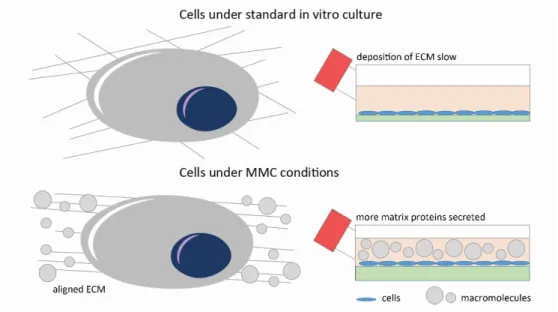
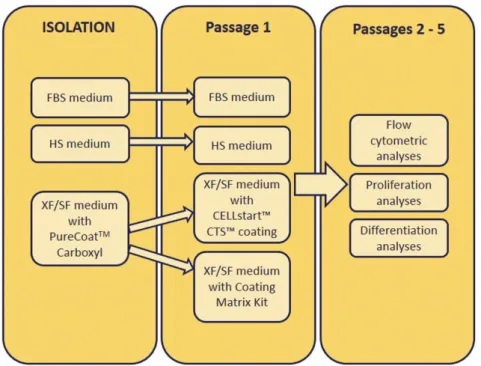
Basic stem cell characteristics such as immunophenotype, proliferation and differentiation potential were assessed in XF/SF conditions and compared with those in allogeneic human serum (HS) or the traditionally used fetal bovine serum (FBS) cultures. Effect of macromolecular crowding on human adipose stem cell differentiation and proliferation under FBS, HS and defined XF/SF cultures.
Stem cells
The risk of problems with immune rejection can also occur if the stem cells do not match the patient's tissue (Bongso et al., 2008). Pluripotent embryonic stem cells (ESCs) can be derived from the inner cell mass of the blastocyst, while induced pluripotent stem cells (iPSCs) are derived from somatic cells through genetic reprogramming.
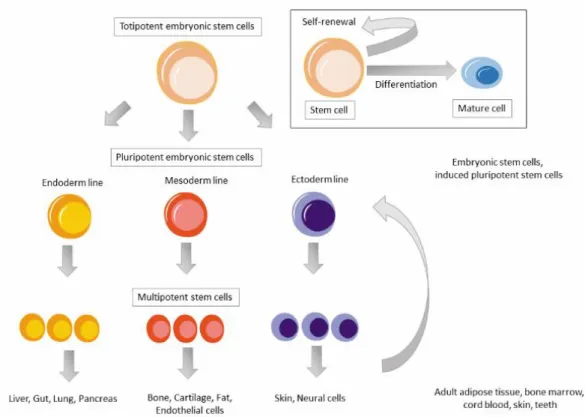
Mesenchymal stem cells
In addition, superior immunosuppressive ability of ASCs compared to BM-MSCs has been reported (Najar et al., 2010). Moreover, low oxygen conditions have been used for the efficient isolation and expansion of cord blood-derived MSCs (Laitinen et al., 2011).
Adipose stem cells
Adipose stem cells differentiation
OPN), osteocalcin (OC), bone sialoprotein, wrinkle-related transcription factor 1 (Runx-1), BMP-2, BMP-4, parathyroid hormone receptor, BMP receptor 1 and 2 phosphatases (Tsuji et al. , 2014). For chondrogenic inductions, ASCs are cultured in defined SF media in the presence of TGF-β1, insulin, dexamethasone, ascorbate-2-phosphate, and BMP-6 ( Tsuji et al., 2014 ).
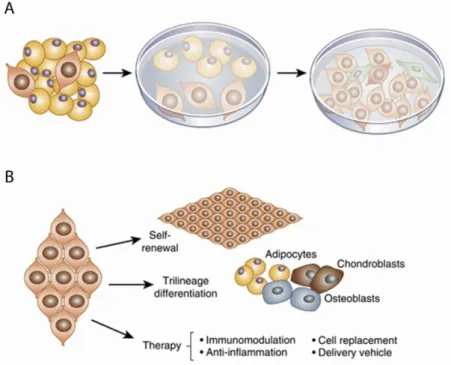
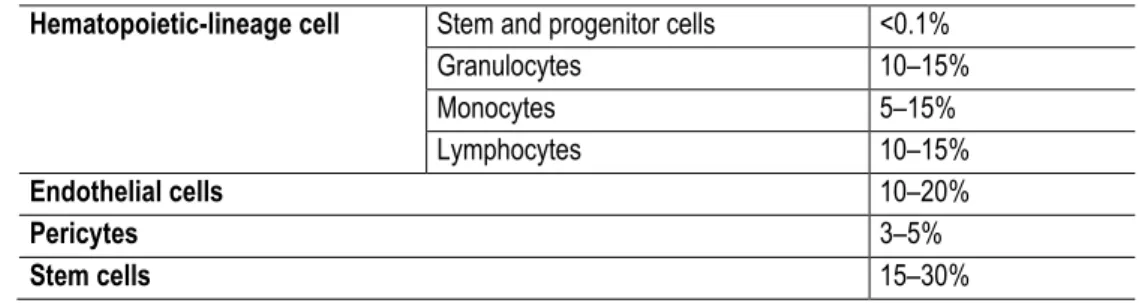
Adipose stem cell heterogeneity
Culture of ASCs
- Good manufacturing practice regulations
- Standard ASC cultures
- XF and/or SF cultures
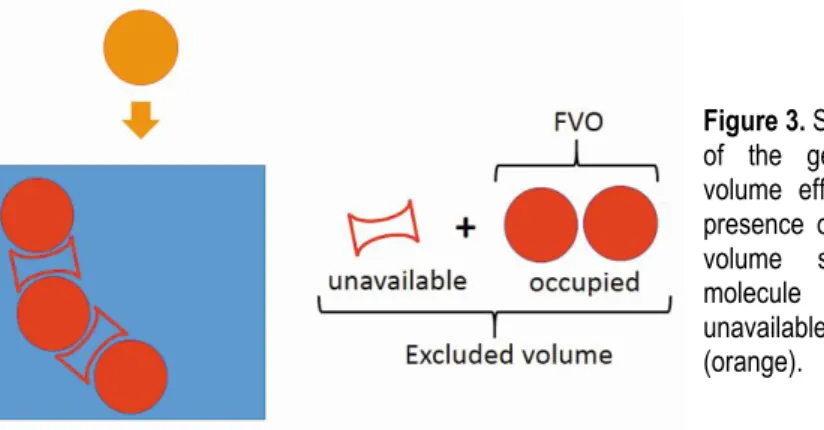
- Macromolecular crowding
HS was required to achieve cell proliferation levels comparable to those of 10% FBS (Lindroos et al., 2010). Because of these concerns associated with the use of animal components (Mackensen et al., 2000;.
Characterization of ASCs
Surface marker expression of ASCs
It is generally expressed during the early phase of culture, but its expression decreases as cell division continues (Maumus et al., 2011; Mitchell et al., 2006). However, when ASCs are defined using basic surface antigens, it is likely that ASC populations will show heterogeneity for additional surface antigens (Pachon-Pena et al., 2011).
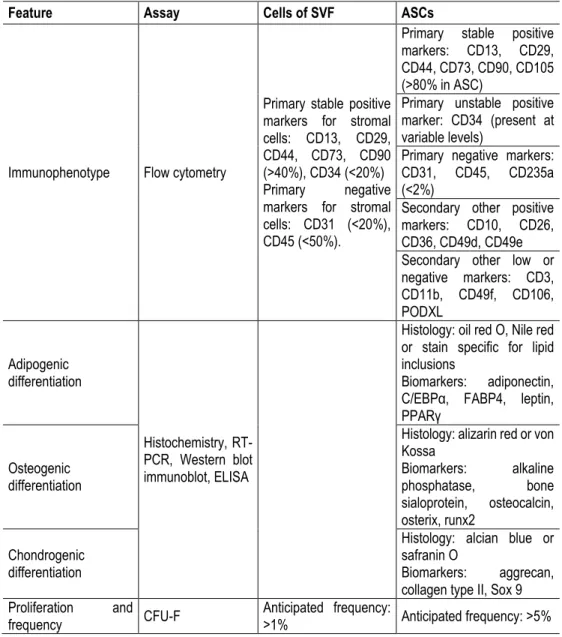
Differentiation potential of ASCs
Immunological properties of ASCs
ASC immunogenicity and immune regulatory properties
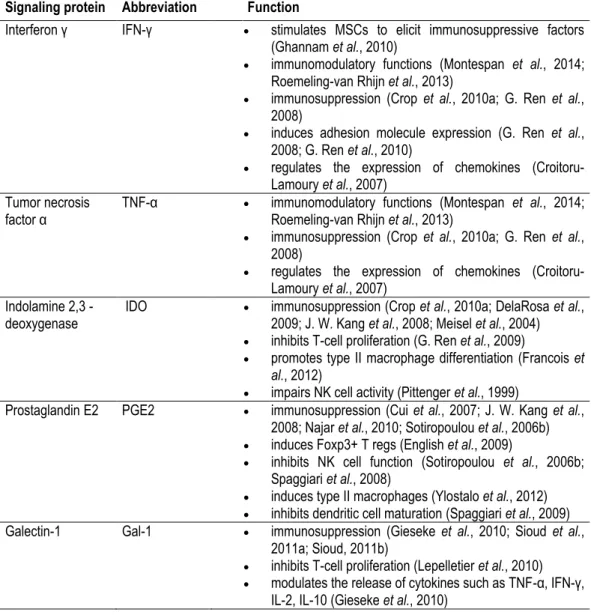
However, undifferentiated ASCs have emerged as potential candidates for allogeneic cell transplantation (Niemeyer et al., 2008). For example, the secretion of IFN-γ, tumor necrosis factor α (TNF-α) and IL-6 are increased in inflammatory conditions, further inducing the immunosuppressive potential of MSCs ( Crop et al., 2010a ).
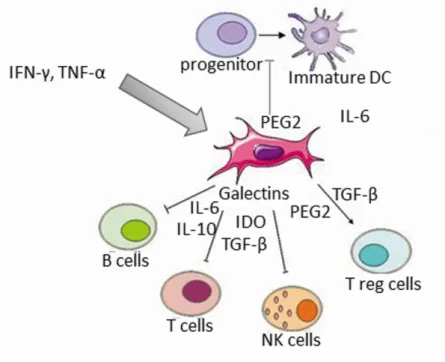
Immunological characterization
The immunological properties of MSCs, both phenotypic and functional, depend on the activation status of the cells after interaction with lymphocytes or other soluble mediators (Menard et al., 2013). In conclusion, the goal of the described methodological standardization is to obtain common, reproducible and consistent data to validate MSC-based clinical approaches as potentially useful treatments for immunological diseases (Krampera et al., 2013).
Bone tissue engineering
Biomaterials in clinical bone applications
Although they may not be osteoinductive, calcium phosphates have osteoconductive ability and bind directly to bone under certain conditions (Rezwan et al., 2006). With advanced material processing techniques, optimal porous and interconnected 3D structures can be produced to further support osteoblastic growth and maturation (Rezwan et al., 2006).
Bone morphogenetic proteins
In contrast, BMP-3 and -3b have been shown to have a negative effect on osteogenesis by down-regulating ALP expression in bone cells (Hino et al., 2004). Smads are the main signal transducers of these complex pathways that are tightly regulated (Bessa et al., 2008a; Derynck and Zhang, 2003).
Towards allogeneic bone treatments with ASCs
The use of allogeneic osteogenically differentiated ASCs for the treatment of critical size bone defects in vivo was also explored by Liu et al. Liu et al., 2013), who demonstrated the potential of allogeneic ASCs in the treatment of bone diseases using an immunocompetent canine cranial model without immunosuppressive therapies.
Safety aspects of ASC treatments
Thus, these results suggested that ASCs stimulated metastasis of MDA-MB-231 mammary tumors to multiple murine organs (Rowan et al., 2014). This discrepancy in the transformation studies can be explained by minimal contamination, and therefore more stringent cell culture procedures are required for the use of primary cells (Torsvik et al., 2010).
Clinical studies for evaluation of the potential of ASCs
A clinical trial using ASC injections for the treatment of critical limb ischemia was also published with encouraging results (Bura et al., 2014). Currently, four cell-based drugs have received marketing authorization in the European Union (Salmikangas et al., 2015).

Patent landscape in the field of ASC research
The more detailed keywords “adipose stem cell” and “adipose stromal cell” in the patent title or abstract yielded 464 and 83 hits, respectively. In the second study, the MMC method was tested under defined XF/SF conditions against different serum conditions.

Ethical considerations and tissue procurement
Isolation and culture of peripheral blood mononuclear cells (PBMCs)
Isolation and expansion of ASCs
Optimization of XF/SF isolation and expansion protocol
For XF/SF culture, cells were isolated under XF/SF conditions and seeded into carboxyl-coated flasks (PureCoat Carboxyl T75; BD Biosciences, Franklin Lakes, NJ, http://www.bdbiosciences.com) and expanded in STEMPRO MSC SFM (Life Technologies) supplemented with 1% GlutaMAX I, 0.3% antibiotics (p/s; 30 U/ml penicillin, 30 U/ml streptomycin) and 10% StemPro MSC SFM Xeno-free supplement. From passage 1, XF/SF cells were expanded in STEMPRO MSC medium supplemented with CELLstart CTS coating (Life Technologies) according to the manufacturer's instructions.
Macromolecular crowding in ASC cultures
Analyses of ASC characteristics
- Immunophenotype of ASCs
- Morphology of ASCs
- Viability of ASCs
- Proliferation assays
In Study IV, cell attachment and viability were evaluated using quantitative Live/Dead staining method (Molecular Probes, Eugene, OR, USA). In studies II and IV, cell numbers were quantitatively analyzed by determining the amount of total DNA with a cell proliferation assay kit (CyQUANT®, Molecular Probes, Invitrogen, Paisley, UK).
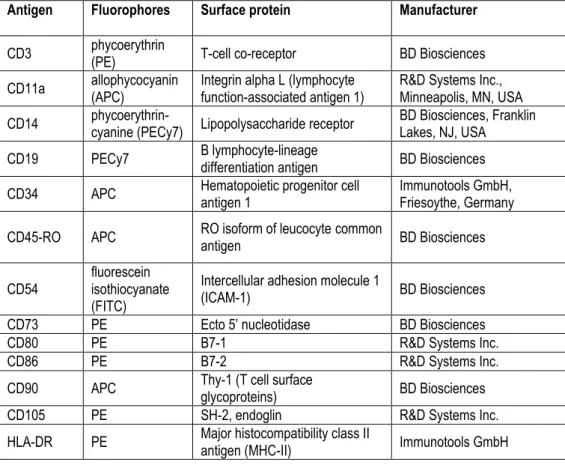
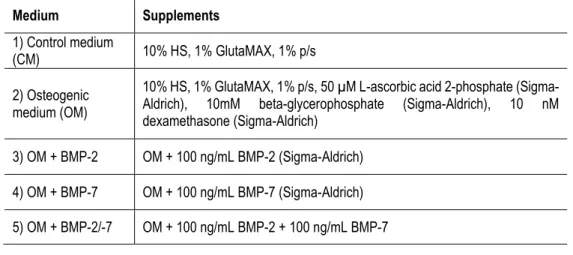
ASC multilineage differentiation
- Osteogenic differentiation
- Adipogenic differentiation
- Chondrogenic differentiation
- Real-time quantitative PCR
For adipogenic differentiation in study I, ASCs were seeded in 12-well plates at a density of 2.0 x 10 4 cells/cm 2 . Osteogenic XF/SF CS I,II and XF/SF CM I. same osteogenic supplements as in FBS/HS cultures in studies I and II.
Quantitating VEGF protein secretion
Total RNA was isolated using the NucleoSpin RNA® II kit (Macherey-Nagel, Düren, Germany) according to the manufacturer's instructions. Briefly, real-time detection of PCR product was monitored using SYBR Green dye (Applied Biosystems, Warrington, UK).

Analyses of ASC immunology
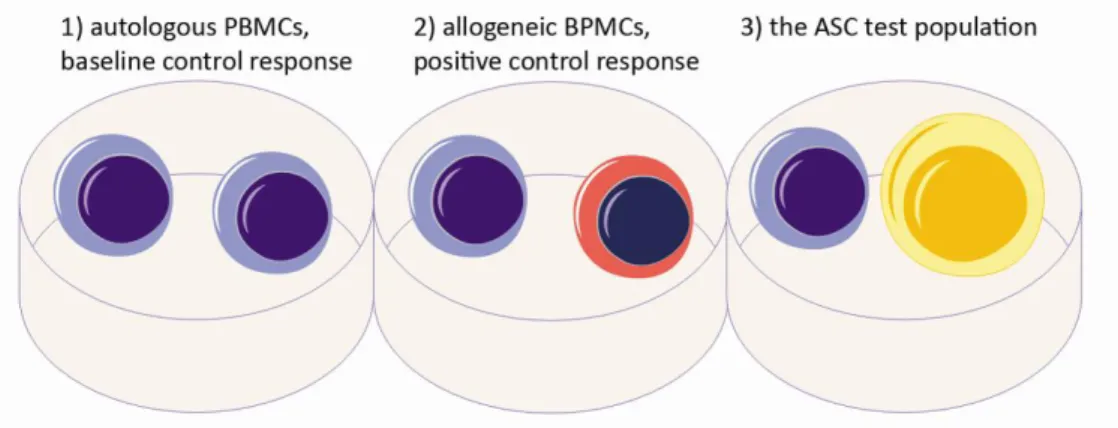
- One-way mixed lymphocyte reaction (MLR) immunogenicity assay
- Two-way MLR immunosuppression assay
- Bromodeoxyuridine (BrdU) ELISA
- Quantitative protein secretion in mono- and co-cultures
On day 4 of MLRs, 10 mM bromodeoxyuridine (BrdU) was added to the mono- and co-cultures, and the cells were incubated for another 16 h at 37°C. The intensity of the color is proportional to the amount of dividing cells in the sample.
Statistical analyses
Cytokine secretion data in Study III were analyzed using rank-order regression analysis. In study IV, one-way analysis of variance with Bonferroni's post hoc test for multiple comparisons was used to examine statistically significant differences between study groups.
Isolation of ASC under different culture conditions
Cell surface profile of ASCs
The effect of MMC on cell surface markers (II)
However, MMC treatment was not beneficial for ASCs cultured with XF/SF and, consequently, the proliferation capacity of cells was significantly decreased under MMC culture. ASCs showed expression for stromal markers CD73, CD90 and CD105 in both -/+MMC conditions in all studied FBS, HS culture conditions and in XF/SF (study II).
Adipose stem cell morphology, viability and proliferation capacity
Cell viability and proliferation
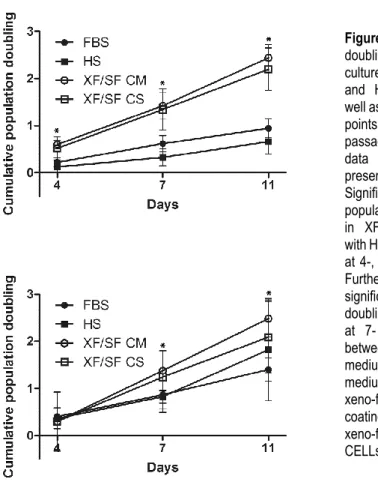
A statistically significant increase in population doubling was observed in XF/SF cultured cells compared to FBS and HS conditions. Significantly higher cumulative population doubling was observed in XF/SF ratios compared to HS/FBS cultures in both passages 2 and 5 of study I.
Metabolic activity under MMC conditions
Due to the significantly reduced proliferation capacity of ASCs under MMC in XF/SF conditions, the CyQUANT® assay can only be performed with a donor cell line under MMC in XF/SF media. Metabolic activity was increased in FBS media after MMC conditions compared to standard FBS conditions on day 1 and compared to HS conditions under MMC on days 4, 7, and 11.
Differentiation
Multipotent adipose stem cells in XF/SF conditions (I)
A trend towards higher PPARγ gene expression was observed under XF/SF conditions compared to serum-containing medium, but no significant differences were observed due to the high standard deviation between different donor cell lines (Study I; Figure 6A). Pellet size was also greater in XF/SF conditions compared to HS or FBS cultures.

The effect of MMC on cell differentiation (II)
Adipogenic differentiation was enhanced under MMC induction under FBS and HS conditions in treatment groups 2) E-MMC; D+MMC and 4) E+MMC; D+MMC compared with induction in standard media, as determined by Nile red staining area of lipid droplets. Accumulation of lipid droplets increased under MMC induction under FBS and HS conditions in treatment groups 2) E-MMC; D+MMC and 4) E+MMC; D+MMC compared with induction in standard media.

BMP-2- and BMP-7-supplemented media did not enhance osteogenic
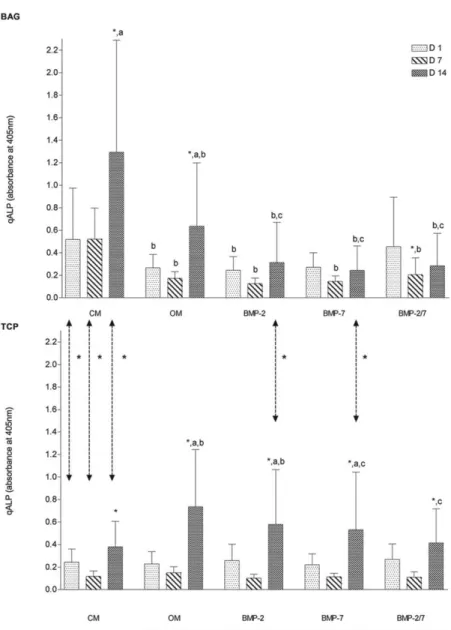
Osteogenic differentiation of ASCs in BAG was most efficient in CM without osteogenic supplements, whereas decreased ALP activities were observed when osteogenic induction media or BMP supplementation was used.
Angiogenic potential of ASCs (IV)
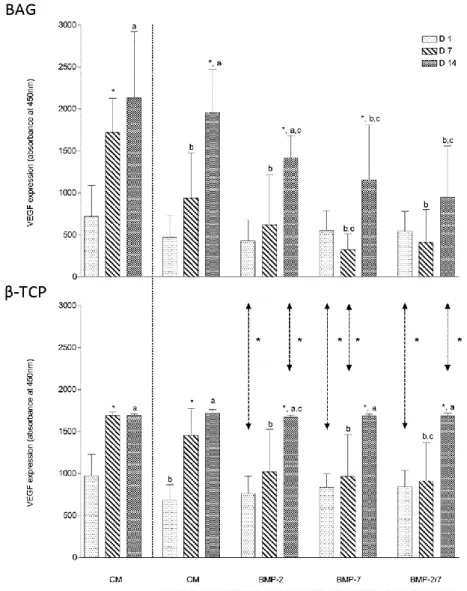
Supplementation with BMPs did not increase the angiogenic potential of ASCs in either material BAG or β-TCP. Although a higher expression of VEGF was measured in β-TCP group after BMP supplementation compared to BAG, an increased angiogenic potential was observed with BAG in CM compared to β-TCP.
Immunological properties of adipose stem cells (III)
ASCs elicited a weak immunogenic response
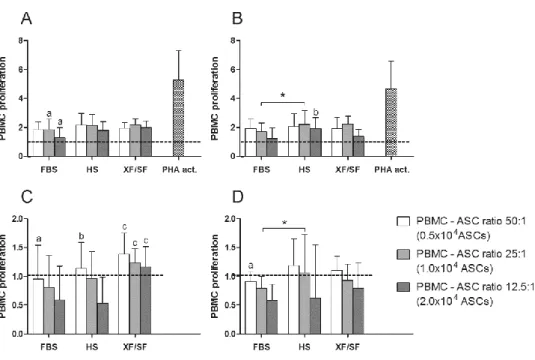
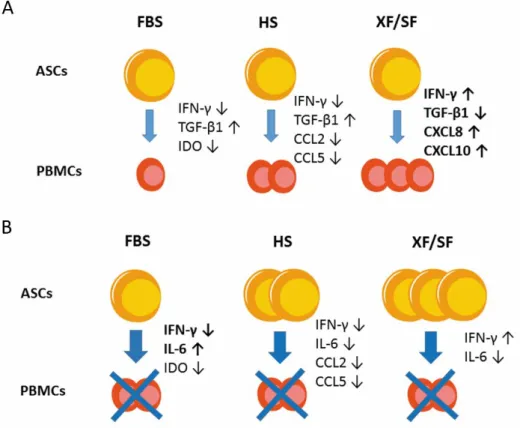
ASCs showed a suppressive effect on PBMC proliferation
Furthermore, XF/SF-expanded ASCs were significantly less suppressive (p<0.05) compared to HS and FBS conditions at passage 2 (Figure 28C, c). In addition, a significantly stronger suppression was observed at 1.0 x 10⁴ cells in FBS medium (p <0.05) compared to HS medium at passage 5.
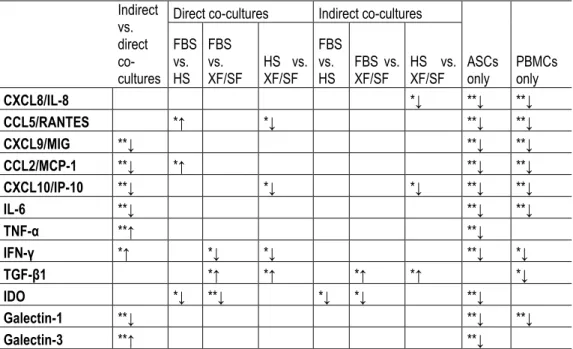
Signaling protein secretion of ASCs
I The new XF/SF culture conditions preserve the mesenchymal stem cell characteristics of ASCs, with a few exceptions. Importantly, the proliferation rate of ASCs was significantly increased in XF/SF conditions compared to HS- and FBS-containing medium.
The effect of culture condition on adipose stem cell characteristics
Cell surface markers under different culture conditions
Compared to BM-MSCs, CD45 is more readily expressed in ASCs because BM-MSCs do not express CD45 even at low levels (Liao and Chen, 2014; Pachon-Pena et al., 2011). In addition, CD34 is a marker of endothelial progenitor cells and a moderate expression of CD34 in endothelial cells (43±19) was reported as analyzed from human umbilical vein endothelial cells (HUVEC) (Huttala et al., 2015).
Cell proliferative behavior under different culture conditions
In contrast to previous results in which increased proliferation rates were observed after MMC treatment (C. Z. Chen et al., 2011; Rashid et al., 2014a), cell proliferation capacity was reduced under MMC under all culture conditions studied (Study II ). Chen et al., cells that do not produce much ECM cannot be induced to build a microenvironment even under MMC (C. Z. Chen et al., 2011).
Morphological features of ASCs under different culture conditions
Of note, multiple nuclei were observed in certain XF/SF cells after a longer MMC culture period. Ficoll can be transported inside XF/SF cells, but they lack methods to process these particles.
Differentiation potential affected by different culture conditions,
However, differences in serum performance between batches may affect the differentiation potential of ASCs (Parker et al., 2007). Tirkkonen et al., 2013), which showed that OM significantly increased the differentiation of ASCs towards bone-forming cells compared to the growth factors BMP-2 and BMP-7.
Immunological characterization of ASCs in different serum conditions
ASCs have low immunogenicity in all of the studied culture conditions 119
Characterization of signaling proteins secreted during ASC and PBMC co-
It can be assumed that, similar to PHA/IL-2, the indirect contact between ASC and lymphocytes changes the local inflammatory environment and activates PBMC for higher secretion of IFN-γ and TNF-α, as shown by Crop et al. Secretion of galectin-1 and -3 was included in the characterization panel because their expression was clearly associated with the immunosuppressive potential of ASC (Sioud et al., 2011a; Sioud, 2011b).
Methodological considerations and limitations of study
Inflammatory conditions affect gene expression and function of human adipose tissue-derived mesenchymal stem cells. Isolation of adipose stem cells (ASCs) from adipose tissue samples was performed using a mechanical and enzymatic method, as previously described [1,18,19].
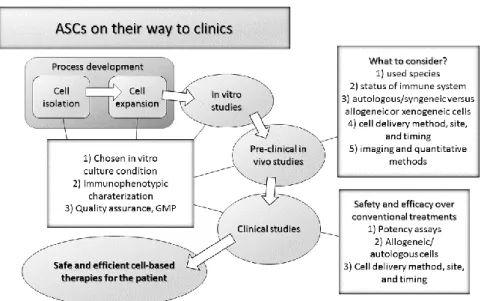
Not lost in translation: Challenges in translation of in vitro to in vivo and
Future perspectives
Efficiently differentiate vascular endothelial cells from adipose-derived mesenchymal stem cells in serum-free culture. Characterization of the optimal culture conditions for the production of human mesenchymal stem cells on a clinical scale.