This research analyzes the application of the IWRM approach and the related principles of integration, decentralization and participation in the development and management of water resources in the Lao water regime in the hydropower and irrigation water use sectors. ASEAN Association of Southeast Asian Nations AWRM Adaptive Water Resources Management BDP Basin Development Plan for MRC.
Background and Research Framework
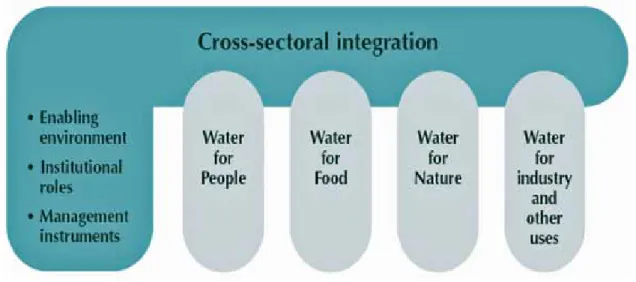
An essential element of IWRM is the integration of different sectoral perspectives and interests in the development and implementation of the IWRM framework. A key part of the framework is the identification of the action situation (AS) and the resulting patterns of interactions and outcomes, and the evaluation of these outcomes (see the right part of Figure 2).
Objectives
In Lao PDR, the transition process towards a more sustainable and integrated water management has started. Finally, key findings and some key actions and recommendations are discussed to promote sustainable and effective water management and to support the implementation of relevant IWRM principles in water resource development and management in Lao PDR.
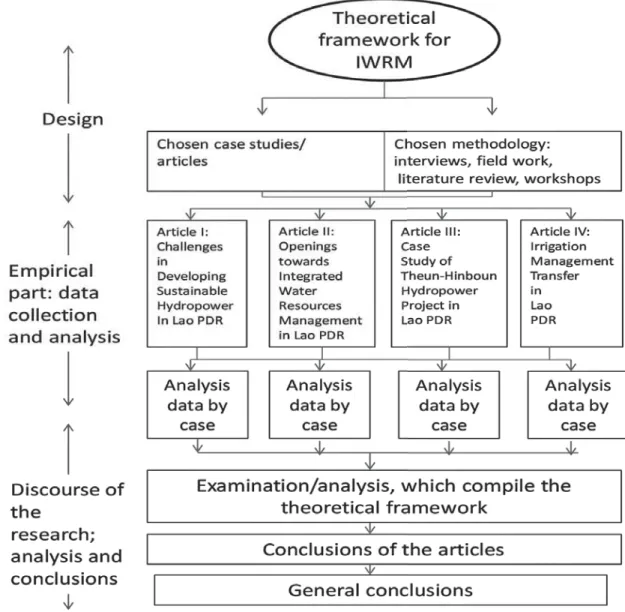
Structure of the Research
It presents the status of water resources and describes existing laws, policies and management organizations related to water management in the country. It examines how the integrated water resources management (IWRM) approach and generally accepted principles of integration, decentralization and participation (GWP, 2004; Xie, 2006) are implemented in the context of water resource development and management at different functional levels in the Lao PDR.
On Research Methods
Extensive fieldwork in Lao PDR has provided a foundation for research and a better understanding of the Laotian political, social, cultural and economic environment. Yin in Laine, Bamberg & Jokinen argue that the goal of the case study approach is analytic generalization that reinforces or calls into question a previously introduced or self-developed theoretical view.
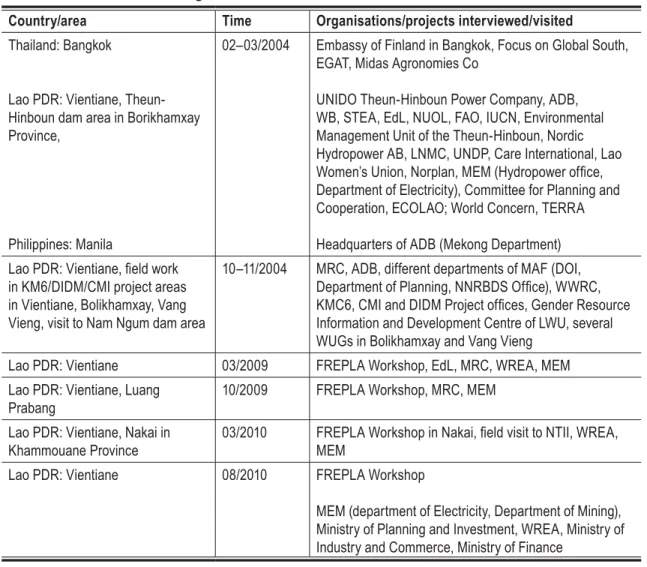
Some Research Issues and Problems Related to the Laotian Context
The author is also aware that it is good to recognize the problems associated with the use of interpreters, especially during field studies and grassroots/village level interviews. Using an interpreter in an interview situation always leaves the possibility that the interviewee's message will change due to the translation from Lao to English.
Socio-Economic Development of Lao PDR
Despite high economic growth, the Lao PDR remains an agrarian (and dualistic) economy, with three-quarters of its workforce still engaged in low-productivity subsistence agriculture sectors, whereas the resource-based, market-linked economy has high productivity (UN, 2001, 3). The transition economies of the Lower Mekong Basin (LMB) countries Vietnam, Cambodia and Lao PDR followed previously centrally planned economic systems that embarked on market-oriented reforms to support their economic growth in the late 1980s and early 1980s. The 1990s.

Status of Water Resources
Climate change is expected to affect water resources by intensifying floods and droughts in Lao PDR (ADB, 2007a; Global Environment Facility Asia [GEF], WREA & United Nations Development Program (UNDP K. Pholsena, personal communication, 26 August 2010; WREA , Ministry of Planning and Investment & Water Resources in the PDR of Laos contribute significantly to the economy through support for irrigated agriculture and growing revenues from hydropower (ADB, 2007b, 2).
Legal and Institutional Framework for Lao Water Governance
The Water and Water Resources Act will be revised to give MONRE (formerly WREA) clear legal support and authority to manage water resources at the national and river basin level (WREA, 2010a). The National Water Resources Strategy and Action Plan (NWRS) for the years 2011 to 2015 will be monitored by MONRE (formerly WREA).
Regional Context – Mekong River Basin
In the future, compromises may be necessary that have so far been avoided due to the relatively limited development of water resources in the basin. The MRC Secretariat and Chief Executive Officer's Office are located in Vientiane, Lao PDR.
Water Management Issues
15 Institutions are often referred to as “the rules of the game in society”, but they are also more formal. The context level determines how the network level is formed and functions, and in turn, the network level determines how organizations will play the game.” (Pahl-Wostl, Berkamp &. Cross, 2006 in Pahl-Wostl et al., 2007a, 51.) The network and organizational level both refer to policy arenas of the water management regime where the use or control of water resources is implemented.
IWRM Evolution and Definitions
Since water sustains life, effective management of water resources requires an integrated approach that links social and economic development with the protection of natural ecosystems. This central role of women as providers and users of water and guardians of the living environment is rarely reflected in institutional arrangements for the development and management of water resources. Past disregard for the economic value of water has led to wasteful and environmentally damaging use of the resource.
Application of IWRM
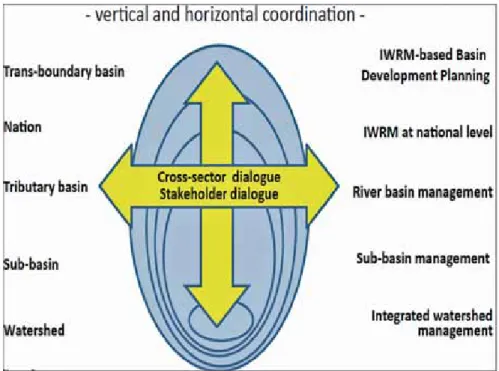
"The involvement of relevant stakeholders in the management and planning of water resources is widely recognized as a key element in achieving balanced and sustainable water use" (ibid., 28). 5 Discussion and Results: Integrating IWRM elements into the context of water resources development and management in Lao PDR. Key to the discussion of the integration of IWRM approaches in the context of water resources management in Lao PDR are the Dublin principles (presented in Information Box 2) or the elements of integration, decentralization and cooperation, which are widely recognized and accepted as key to implementing integrated water management. (GWP; 2004; Xie, 2006), are discussed and analyzed from the point of view of constitutional (water policy and legislation), operational (water use) and organizational (water management) levels.
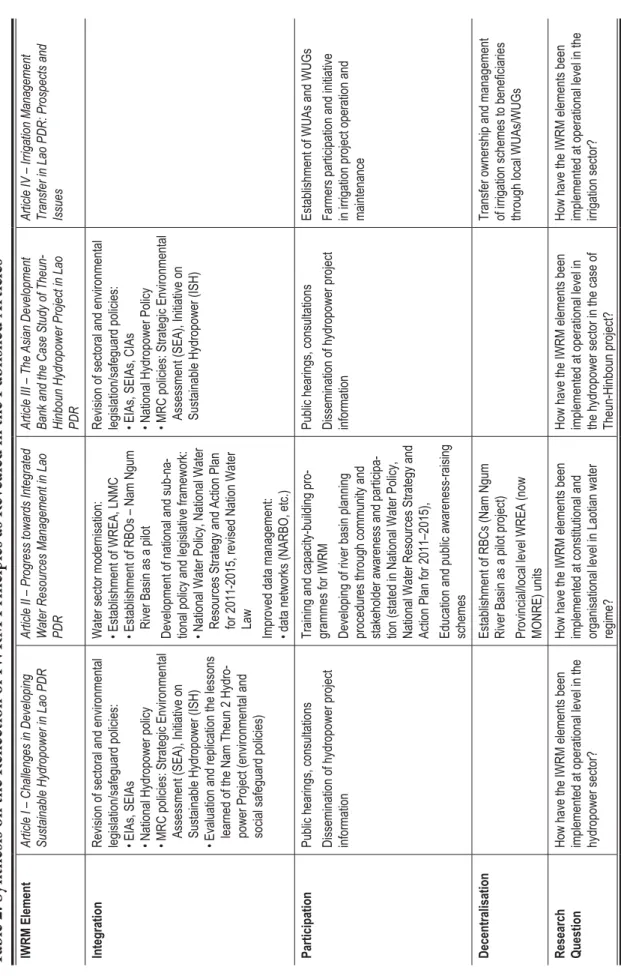
Integration
Hydropower and Integration
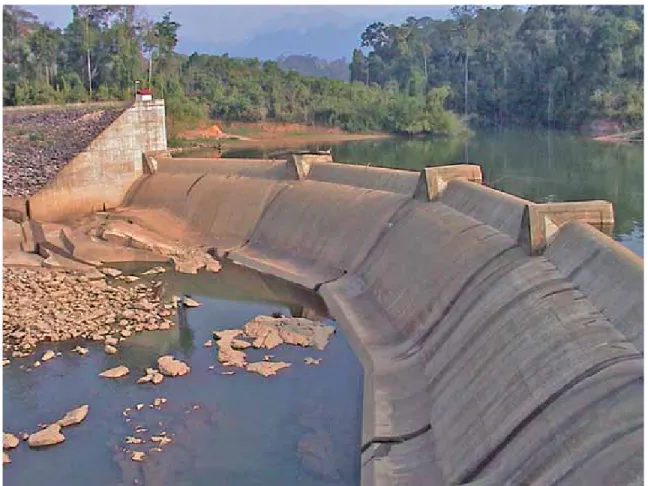
Furthermore, "The Government has announced the mandatory approval of the environmental and social impact assessment (ESIA) and the corresponding Certificate of Compliance, as part of the process of obtaining the concession" (BB, 2010a, 11). Project implementation shows the problems of accountability, transparency and environmental sustainability in the implementation of large-scale infrastructure projects in Lao PDR. The establishment of the first Watershed Management Protection Authority in Lao PDR is also an achievement of the Nam Theun 2 project.
Integration at the Regional Level
Decentralization is also among the national priorities in the development programs of Lao PDR (Government of Lao PDR. The stated objective of Ministerial Decree 01 (2000) was to "establish provinces as strategic units, districts as budget planning units, and villages as implementing units." "Initiative for decentralization was intended to make districts more self-financing, to give them greater incentives to raise revenue and better manage their expenditures, and to make budgeting more participatory' (IMF, 2006, 9). undisputed and severe capacity gaps (human and physical) of local governments and communities to manage decentralized planning, budgeting and service delivery (Government of Lao PDR, 2003, 30).
Decentralisation at the River Basin Level
The watershed or watershed organization (committee or council) approach is generally recommended for establishing integrated water resource management strategies and planning for water resource assessments nationally and subregionally (GWP, 2000). Sustainable financing of watershed and watershed management is also an issue throughout the LMB region. Nam Ngum River Basin Secretariat, which is currently designing a watershed fund.

Irrigation Sector – Irrigation Management Transfer
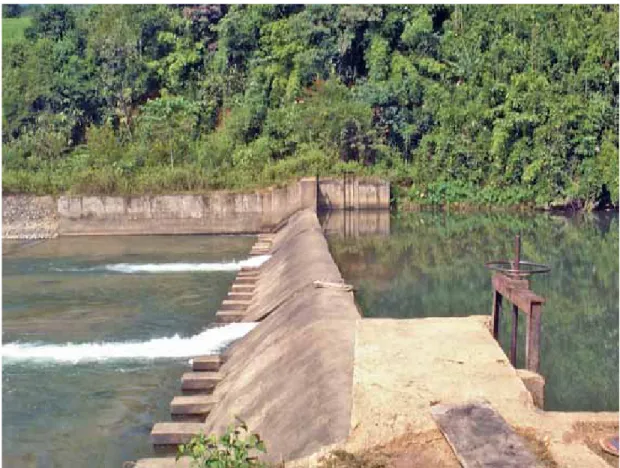
Cernea and Meinzen-Dick (1991) argue that WUAs should belong to the water users, not as an unpaid extension of the irrigation agency. It is desirable that ownership and management of irrigation schemes be transferred to WUA so that farmers take full responsibility for O&M of irrigation schemes. 40 The author also conducted field studies for some DIDM irrigation schemes and these are described in Article IV.
Participation
Some Characteristics of Participation in Lao PDR
People's participation is defined as one of the central pillars that is the basis of the state development strategy in Lao PDR. Geographical realities as well as cultural traditions deeply rooted in Lao society further hamper efforts to ensure equal opportunities for all population groups (The Government of Lao PDR, 2003a, 24). There have been profound obstacles to introducing participatory practices in the country, which is traditionally "top-down" driven.
Participation at the Water Sector
However, in the case of development of the Nam Ngum River Basin Committee, there are opportunities to improve civil society participation in the basin organization. The Vice-Governor is expected to act as chairman of the sub-basin committee and act as the vice-chairman of the Nam Ngum River Basin Committee, thereby ensuring that the efforts of civil society engagement and decisions are integrated at the basin level (ibid .) It remains to be seen whether the institutional arrangements of sub-committees succeed in improving participation and bringing forward the views of civil society and business actors by strengthening local linkages in the future.
Postscript: Self-assessment
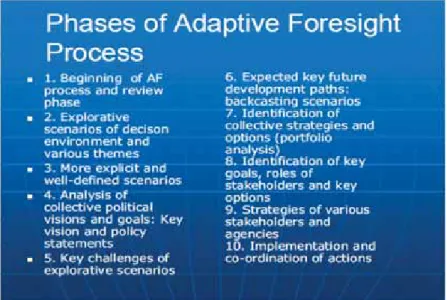
The results of the study are likely to be of interest to other researchers, government officials and NGOs working in the water field, as the topic of the research is becoming increasingly important due to the increased demand for water, complexity and rapid changes taking place in the water field. . The research expands on some new issues of IWRM and highlights them from different angles by using MTF. The author wishes that this research can provide more insight into IWRM processes and that the MTF and IAD approach of the research can stimulate interest in the water field.
Developing IWRM
Water actors in Lao PDR have not yet developed institutionalized routines and tools (structured approaches) to deal with uncertainty, as the complexity of the water environment and system must be taken into account. RBC's ability to provide sustainable and adequate funding will be critical to the outcome. This was also one of the key messages of Article II, in addition to the need for multi-objective decision-making on water resources at the basin level.
Policy Recommendations
IWRM approaches must be based on sufficient data and solid evidence to be successfully implemented (Bach et al., 2011, 9). There is a need to strategically assess water development opportunities (especially hydropower) for the Lao PDR and use the revenue generated from water resource development for social development and poverty reduction activities. There is a need to increase understanding of IWRM and its link to sustainable development and poverty reduction and the achievement of the Millennium Development Goals (water supply, sanitation) among Lao officials.
Further Research
Defining and planning the integrated water resources management (IWRM) and river basin management (RBM) component of MWD in Lao PDR and Thailand. Lao PDR Socio-Economic Atlas – an analysis based on the 2005 Population and Housing Census. Water resources in Lao PDR are also of regional importance: over 33 percent of the Mekong River's total flow is generated in catchments of Lao PDR [2].
Optimum utilization of the water resources in the country is the long-term goal of the Nam Ngum River Basin Development Sector Project. The Asian Development Bank and the case study of the Theun-Hinboun hydropower project in Lao PDR.