Any building extension, addition or change of use should be conditional on improving the overall energy performance of the original construction. As a result, there is no requirement to improve the vast majority of the existing building stock, where 40% of the EU's energy is consumed.
IMPROVEMENT OF ENERGY PERFORMANCE ON THE OCCASION OF OTHER WORKS
PROHIBITION OF RENTING OUT OR SALE OF A BUILDING UNIT WITH POOR ENERGY PERFORMANCE
The regulations apply to the domestic private rented sector in England and Wales, but the government will be able to add other types of tenancy in the future. The government aims for the first review to take place in 2020, before which it will build evidence of the progress and effectiveness of the regulations.
REQUIREMENTS IN CASE OF CHANGE OF BUILDING USE
The Government will work with the sector to develop guidance for the industry to help landlords, tenants, local authorities and wider sector bodies understand and prepare for the regulations before they come into force from April 2016. In line with the guidance regulatory good, the government has established a requirement to review the operation and effect of the regulations at intervals of not less than five years.
MANDATORY RENEWABLE ENERGY SUPPLY WHEN AN OLD BOILER NEEDS REPLACEMENT
External walls and basement walls in contact with the ground 0.15 0.25 Partitions and suspended upper floors adjacent rooms/. In the case of replacing or renewing a heat generator, renewable energy sources must supply at least 25% of the total primary energy demand and 60% of the hot water heating demand24.

MANDATORY REQUIREMENTS FOR OLD BUILDING PARTS IN THE CASE OF BUILDING EXTENSIONS
MANDATORY RENOVATION – KEY FINDINGS
Once introduced, mandatory renewal schemes need to be properly communicated so that they are seen as beneficial rather than an additional regulatory burden. Effective compliance and control mechanisms should be put in place to ensure that mandatory renewal requirements are being implemented in practice.
FIVE BEST PRACTICE RENOVATION CASE STUDIES
CASE STUDY 1
TECHNICAL AND FINANCIAL
RE-ENGINEERING OF THE RENOVATION CHALLENGE
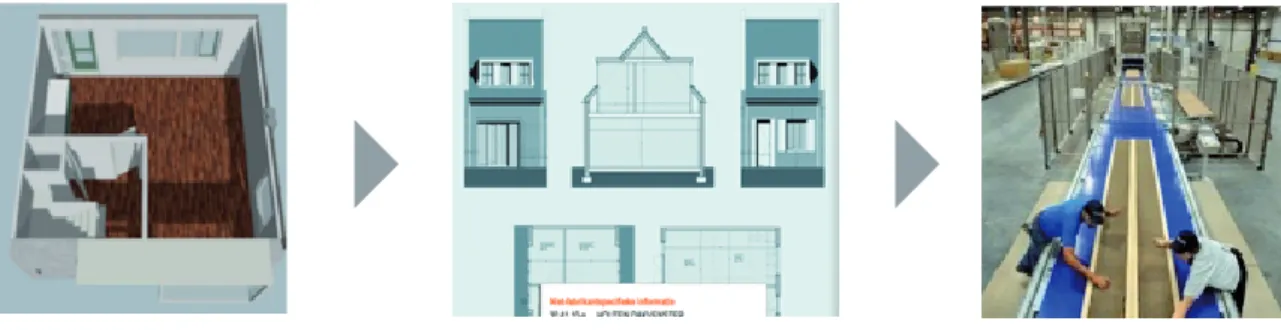
Tenants are offered an attractive proposal that emphasizes the comfort, quality of life and affordability of the renovated home. However, these will only enter the full industrialization phase when all aspects of the renovation are satisfactory to all parties involved (construction parties, corporations and tenants). Instead, renewable electricity generation is designed to roughly equal the electricity consumption of the renovated building, averaged over the year.
The financial engineering behind Stroomversnelling is based on the funding of the up-front capital costs of the triple A-rated WSW social bank35 which made available around €6.6 billion to underwrite state-supported loans to the housing associations36, giving a financial return of 5.25 % on investment generate. (using the WSW social bank discount rate for corporate projects) over a period of 30 years. The project managers estimate that the average net CO2 savings, once 111,000 houses are renovated, is 0.43 MtCO2 per year (total savings minus embodied energy), which represents 2.5% of the emissions of the Dutch residential sector38. These buildings have saved 2/3 of the original energy consumption by using energy efficiency measures, with the balance generated by renewable energy.
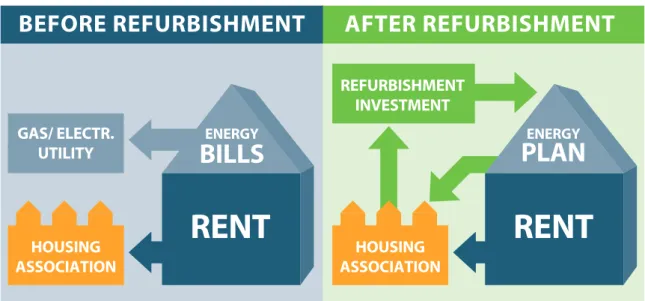
AFTER REFURBISHMENTBEFORE REFURBISHMENT
Residents pay a combined "rent + energy plan" bill of around €650/month to the housing association (equivalent to, and replacing, their previous separate rent and utility bills; the housing association pays approx. €100 per month to the construction company for property maintenance (existing maintenance allowance for houses);.Nationally, the investment contribution to the project will create employment for over 55,000 people in the construction industry39.
The Stroomsnel project has benefited from the lessons learned from previous Dutch initiatives to implement holistic renovations undertaken in the Netherlands in recent years40.
BILLS
RENT
PLAN
An initial funding allocation of €6.6 billion has been made available to participating housing associations by social bank WSW. 40 "TRANSITION ZERO - White paper on the expansion of Energiesprong access in France and the UK". The model is now being applied in the UK, with the establishment of Energiesprong UK43, set up by a group of housing providers, charities and construction companies, with the aim of replicating the game-changing Dutch system to deliver whole house renovations in the UK at almost zero energy bill44.

CASE STUDY 2
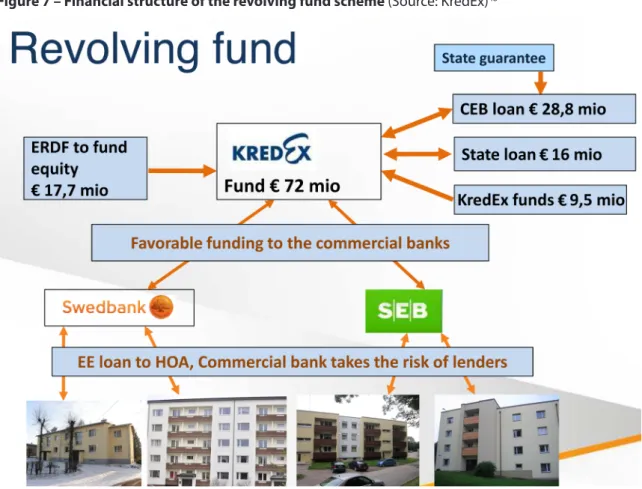
REVOLVING LOAN LEVERAGING EU FUNDS
Carry out an energy audit at the start of the application process (conducted by a recognized, accredited and independent audit company). The energy auditor takes measurements, collects data, provides a technical overview of the condition of the building to identify basic energy consumption and proposes energy efficiency renovation measures that will lead to a reduction of energy consumption of at least 20 %. The technical aspects of each project will differ depending on the needs of the building and the results of the audit.
KredEx, by checking invoices from heating companies, conducts random checks on approximately 5% of the beneficiaries. At least 15% of the total awarded loan must be co-financed by the final recipients. The lessons learned and good practices from the KredEx project can be used to support these countries in implementing similar programs.
CASE STUDY 3
LARGE-SCALE NATIONAL PROGRAMME INCENTIVISING DEEPER RENOVATION
CAPITAL MARKET
PROMOTIONAL MANDATE DEFINED BY KfW LAW
CUSTOMERS’ BANK
GOVERNMENT OR KfW
SINGLE MEASURES SUPPORTED BY KFW IN 2014 NUMBER OF IMPLEMENTATIONS IN
Quality assurance and trust building are ingrained by supporting the consultation and energy planning phase, improving the qualifications of market actors and, ultimately, ensuring compliance with the standards provided. In doing so, it also serves as a stimulus for further development of the Energy Savings Ordinance standards. KfW's schemes are designed to specifically promote deep renewal following the motto: "The deeper the renewal, the higher the incentive".
For example, the KfW Efficiency House 55 must achieve an overall heat loss target of 55% of the standard for new buildings. The close connection between the legislation and the promotion scheme plays an important role in the success of the KfW Efficiency House standards, which have become a frequently used trademark in the housing industry and serve as a marketing tool. The "Building Control" program can complement the financed energy renovation, offering grants of up to 50% of construction control costs, up to a maximum of €4,000.
EFFECTIVE P.A
A summary of the key indicators of the latest monitoring from December 2014 is provided in Table 3. This equates to around one-third of the annual reduction required by private households, assuming they have a proportionate role to play in achieving Germany's target for the reduction of GES60. According to the German National Action Plan for Energy Efficiency, the KfW financing instrument for building renovation will continue to develop according to the development of technology, the market, the Energy Saving Ordinance and in the light of the findings from the accompanying monitoring.
In summary, while the German KfW model benefits from a long tradition and the high financial reputation of the bank, the principles can be readily adapted to suit the prevailing conditions in other EU member states. Indeed, in the Czech Republic the New Green Savings Program63 is to a certain extent modeled on the KfW principles. While some aspects of the Czech delivery mechanism differ (for example, the scheme is administered centrally, rather than by retail banks), the loan/.

CASE STUDY 4 TACKLING FUEL
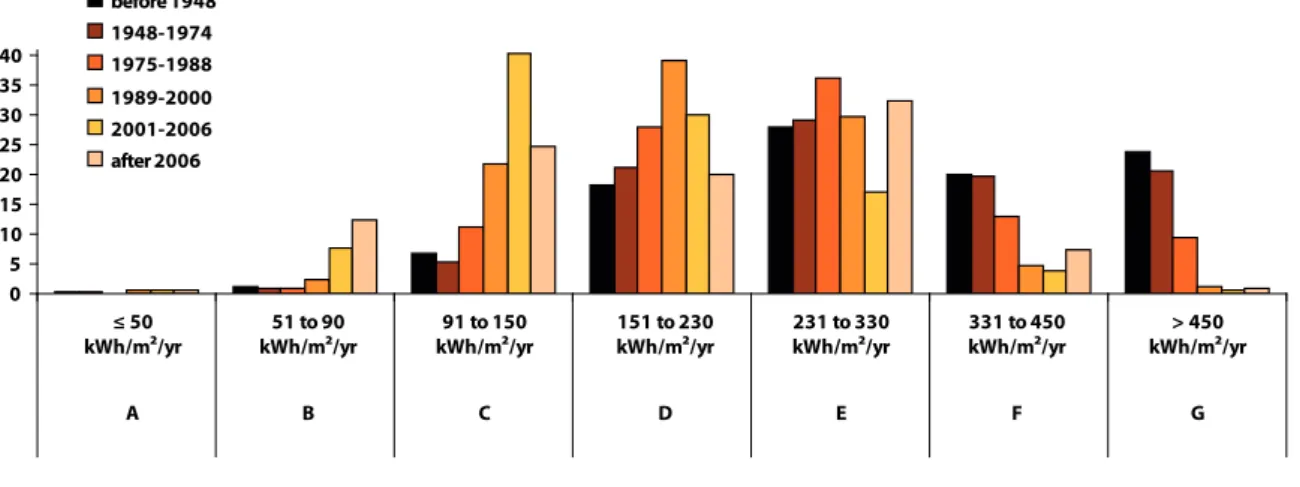
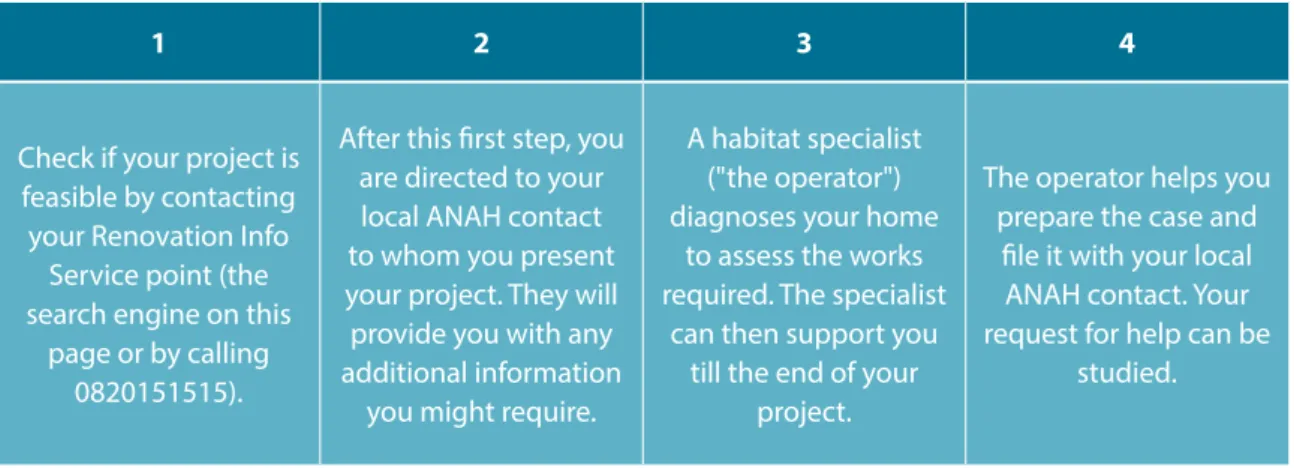
For a project to be funded by the Habiter Mieux programme, the estimated energy savings from the renovation work must be greater than 25%. Of the homes that have been renovated under the scheme since June 2013, two-thirds included roof and wall insulation and changing heating systems – see Table 6.69 Most homeowners have renovated more than one aspect of their homes using the finance of Habiter Mieux. The main success of the program is the change of positive energy class in renovated households from the two lowest categories G and F (62% of pre-renovation buildings) to D+ (45.5% of renovated buildings).
The first two years (2010 to 2012) of the project provided ANAH with important lessons to help them further develop the plan to meet the needs of the low fuel housing industry. The reform increased the number of eligible households to 45% of the housing stock.78 One of the main changes to the scheme involved the employment of “Energy Efficiency Ambassadors”, who were trained to identify low-income households . The initial diagnosis grant was increased, along with a grant offered to fund a larger share of the total renovation cost, allowing people with no financial resources or savings to participate in the program – see Table 8.
CASE STUDY 5
STREAMLINING PUBLIC BUILDING RENOVATION THROUGH ENERGY
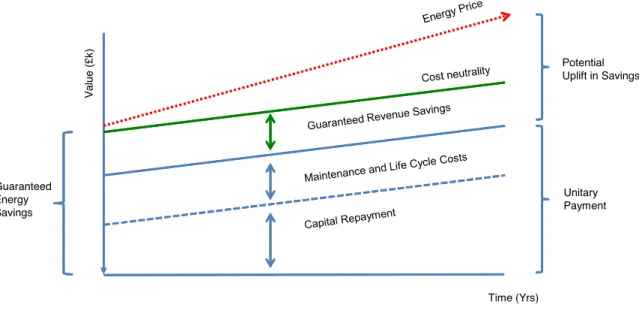
An NHS and Department of Health procurement board was established to oversee the CEF. CEF provides Trusts with an energy service contract that guarantees an agreed level of energy and carbon savings. The costs of the improvements are then repaid over the life of the contract with guaranteed energy savings approved by the contractor in the CEF contract.
Provide support during installation and operation – the entire project, from feasibility to completion, is supported by the CEF. The success of the first few phases of the CEF prompted Britain to scale up the project across sectors. People love the CEF and want it to continue elsewhere outside the NHS.

Review of CEF 1
Discussing the increasing take-up from organizations and foundations through the cost- and time-saving Carbon and Energy Fund, CEO Clive Nattrass said: "We're very busy. So we're looking for it to become the model of choice for the public sector."93 .
Pipeline
Tranche 4&5
The Trust does not pay for any of the project costs until they are acquired, installed and generate guaranteed savings.97 The CEF financing model of investment and energy savings can be seen in Figure 24 below. Instead, each project using the CEF framework has the choice to proceed with (i) its own funding, (ii) that of the contractor, or (iii) that of the CEF. The reassuring depth of experience that the CEF and its partners offer is one of the key benefits for Trusts looking to undertake a secure energy upgrade.
The CEF framework offers a protected and simplified cradle-to-grave contract for energy upgrades, with fewer administrative burdens and an energy guarantee. The success of the first few phases of the NHS's CEF funding model has led to the fund expanding into different sectors, such as the education sector (receiving £10-20m per year). Target sector(s) Health sector, expanding to other parts of the public sector Building types Hospitals and other public buildings.
CONCLUSIONS &
RECOMMENDATIONS
Adapt to the needs of applicants – every building is different and every occupant (family, business and organisation) has its own unique circumstances and needs. Within a standardized approach, it is important to provide flexibility to meet the specific needs of each situation and thereby ensure acceptance of applicants throughout the process.