This internal energy market, which is called the Target Model and constitutes one of the EU's main intentions, is examined from a legal perspective in the following chapters. The thesis's third chapter consists of an analytical overview of the operation of the Target model, which is mainly based on the power exchange model, as well as the coupling of national markets.
The Liberalization Progress of the Energy Markets in Europe
- Introduction
- The Community Directive 96/92/EC
- Legal Framework
- Evaluation of Directive 96/92/EC
- The Community Directive 2003/54/ EC
- Legal Framework
- Evaluation of Community Directive 2003/54/ EC
- The Community Directive 2009/72/EC
- Legal Framework
- Evaluation of Community Directive 2009/72/EC
- Clean Energy Package
- Legal Framework
- Expectations of Clean Energy Package implementation
However, Directive 2009/72/EC also provides for the possibility to derogate in some way from the provision of Article 9. Ownership unbundling is not mandatory in the distribution systems under the provisions of the Directive in question. Regulation (EU) on the governance of the Energy Union, related to the governance of the Energy Union.
Basic structures of electricity markets
- Introduction
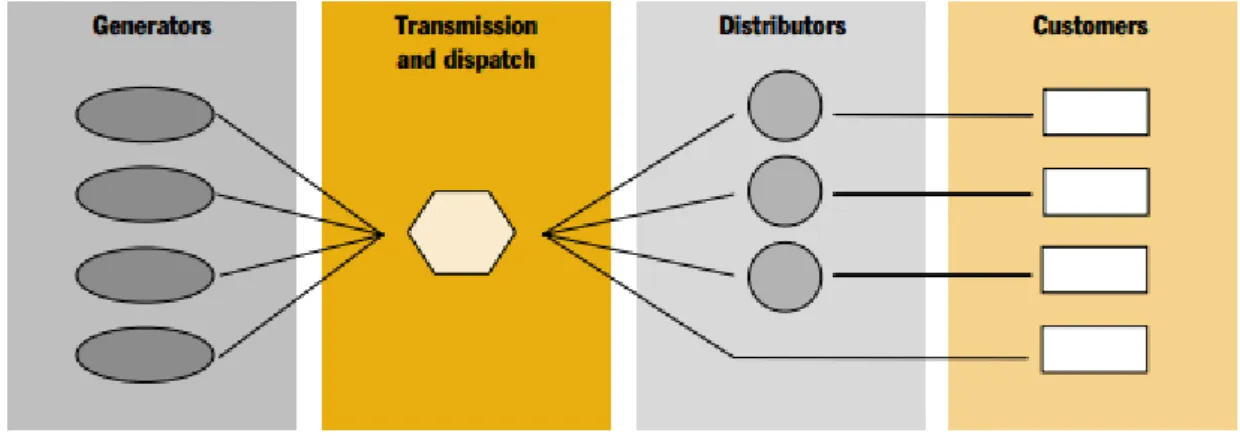
- Vertical Monopoly
- The Single Buyer Model
- The wholesale market competition model
- The retail market competition model
- Energy markets transformation
- Mandatory Pools
- Power Exchanges
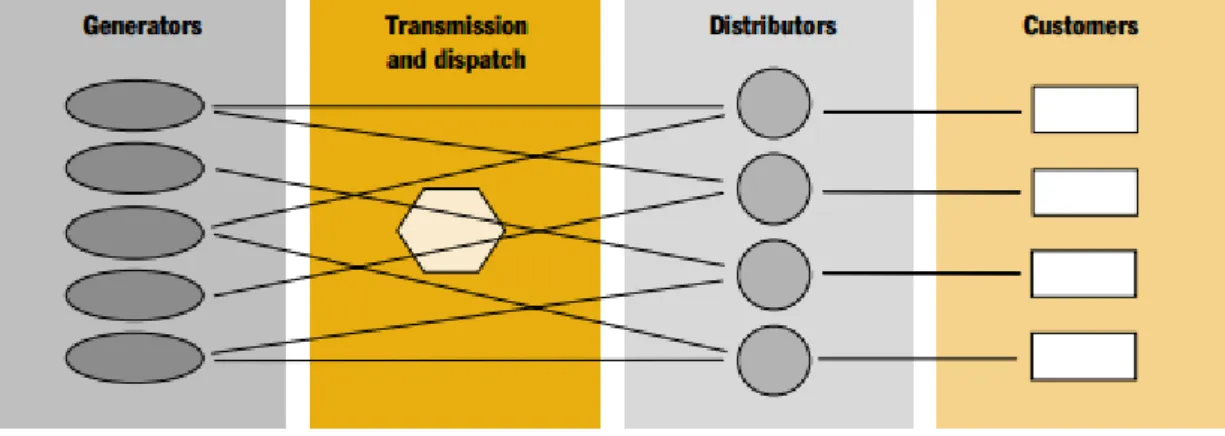
The monopolistic type of energy market was prominent in the European Union until the 1990s, when market conditions turned into more competitive forms with the separation of energy sectors. 49 Lovei, L., 2000, “The Single Buyer Model: A Perilous Road Toward Competitive Electricity Markets”, Public Policy Note 225 for the Private Sector, World Bank, Washington D.C. 52 Lovei, L., 2000, “The Single Buyer Model : A Dangerous Path toward Competitive Electricity Markets”, Public Policy for the Private Sector, note 225, World Bank, Washington D.C.
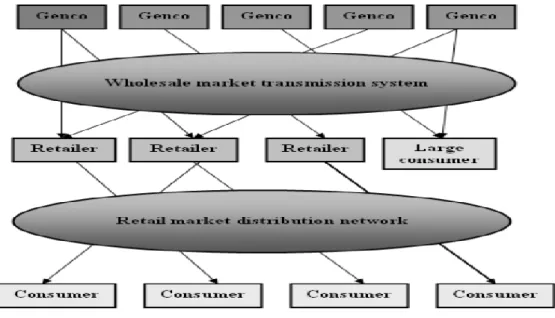
However, it is remarkable that this type of market functioning leads to increased transaction costs due to the complexity of trade contracts. Furthermore, application of regulatory and management principles is absolutely essential for the functioning of the market56. The price of energy for the day ahead is called "system marginal price" and is formed by taking into account the price and capacity of the offered energy in the previous day and the hourly demand as declared by suppliers59.
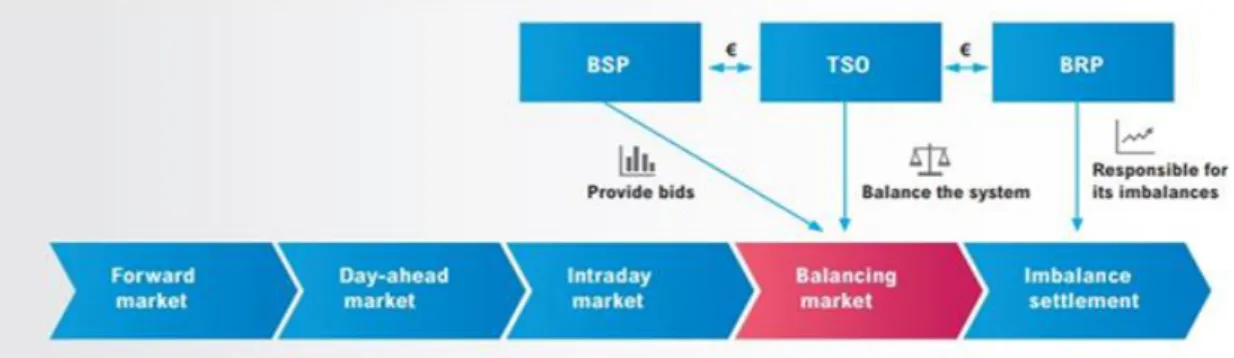
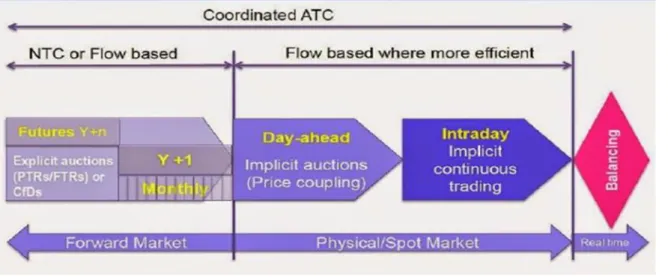
In the case of the Power Exchange model, the market is organized into separate submarkets that operate on different time frames through standardized transactions. Electricity exchange markets with standardized energy products offered for negotiation cannot always cover the specific transactional needs of producers and suppliers.
The EU Target Model
Introduction
Target Model’s fundamentals
The results of the calculation should be made available to all electricity exchanges on a non-discriminatory basis. Based on the results of the MCO's calculation, the electricity exchanges should inform their customers about the successful bids and offers. The energy must then be transferred over the network according to the results of the MCO's calculation.
Considering the above, it is obvious that electricity exchanges are considered by the European Union to be the most appropriate means of integration of the internal energy market, operating under common rules that will ensure effective market coupling and thus successful cross-border trade. Therefore, market coupling is of great importance for the functioning of the internal energy market, and its implementation is one of the basic principles of the Target Model. Flow-based means that the capacity is calculated and allocated taking into account the mesh shape of the transmission network and all possible paths through which the electricity flows in it.
The flow-based calculation algorithms will thus directly optimize the commercial power flows, taking into account the limitations of the network. In other words, the values of available transmission capacity will be calculated as part of the market algorithm itself, i.e.
The sub-markets of Power Exchange
- Forward Market
- Day-ahead Market (DAM)
- Intraday Market (IM)
- Balancing Market
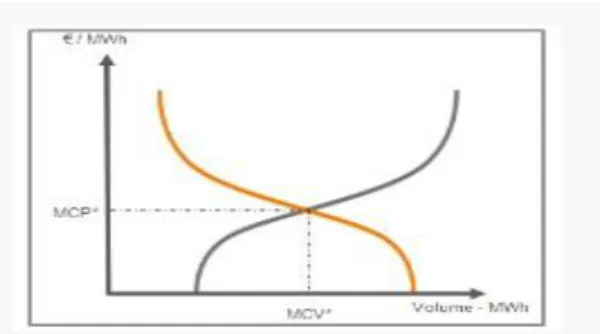
With options, the holder is not obliged to pay the counterparty if the value of the right is negative.”. The Clean Energy Package sets out a detailed general legislative basis for the operation of forward markets. Price and amount of energy that will be physically delivered hourly in the next day is estimated via a specific algorithm in the afternoon of the previous day according to the point where supply and demand curves meet balance.
The estimation of the clearing price defines which offers are to be executed at a certain time. The intraday market follows the clearing of the day-ahead market, and participants mainly aim to align their offers closer to real-time energy delivery. 82 Epex Spot, Basics of the Power Market, Day-Ahead and Intraday – the backbone of the European spot market, available at: https://www.epexspot.com/en/basicspowermarket.
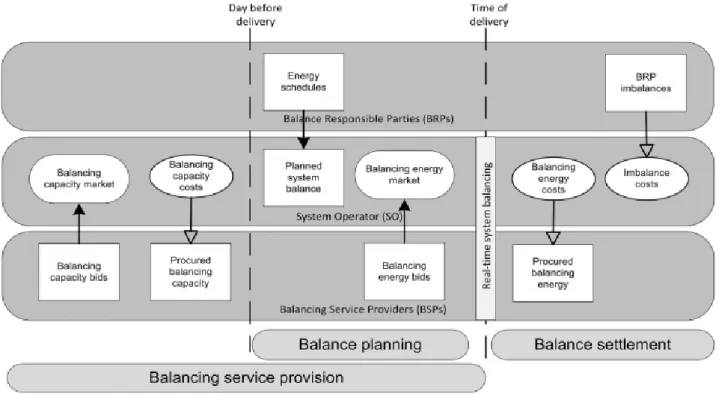
The balance market is the last stage of the energy exchange process and follows the closing of the Day-ahead and Intraday Markets. The functioning of the balancing market is one of the main competences of national TSOs (Transmission System Operators), which are responsible for taking into account the final output of the system's other markets (DAM & IM) and activating the balancing mechanisms to keep demand and supply aligned in real time.

Market Coupling
- Forward market integration
- Day-ahead market integration
- Intraday market integration
- Balancing markets integration
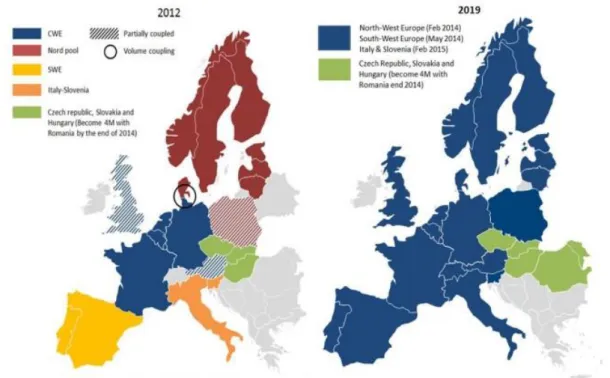
In the following units we will examine the process of integration at the European level for each of the four (4) above submarkets separately. 91 Roques, F., 2020, "The European Model for Electricity Markets - Achievements so far and the main opportunities for the emergence of a new model", Chaire European Electricity Markets/Working Paper #45, Dauphine, PLS, p. Through SDAC, the idea of a competitive internal market that increases the financial surplus for the benefit of economies comes even closer to realization.
Single Intraday Consolidation (SIDC) is the way to unify the relevant markets at cross-regional level. To realize a single intraday market, NEMO and TSOs from twelve countries launched a merger project called the Cross-Border Intraday Market (XBID) Project. PICASSO (Platform for International Coordination of Automated Frequency Restoration and System Stable Operation) was launched in 2017 in the context of the provisions of Article 21 of the Electricity Balancing Directive.
MARI (Manual Activated Reserves Initiative) was also first launched in 2017 and was finalized in 2018 under the provisions of Article 21 of the Electricity Balancing Guideline. The following figure shows schematically the countries participating in each of the above projects during the integration of their balancing markets.
Network codes
- Introduction
- Market Codes
- The capacity allocation and congestion management guideline (CACM GL)
- The forward capacity allocation guideline (FCA GL)
- The electricity balancing guideline (EB GL)
- Connection Codes
- The network code on requirements for grid connection of generators (RfG NC)
- The network code on demand connection (DCC NC)
- The network code on requirements for grid connection of high voltage direct current systems
- Operation Codes
- The Guideline on Electricity Transmission System Operation (SO GL)
- The Network Code on Electricity Emergency and Restoration (ER NC)
The competent authorities for the implementation of the relevant provisions are TSOs, NEMOs, NRAs and ACER. The forward capacity allocation guideline (FCA GL) is designated in Regulation (EU) and governs the estimation and allocation of network capacity at cross-zonal level in the future, to cover the function of the single market in the forward period. Guidance is intended to organize and harmonize the legal context of future allocation in the Union, thereby contributing to the construction of the internal market.
The Electricity Balancing Directive (EB GL) is designated in Regulation (EU) and refers to the time period after the closure of the forward, day-ahead and intraday markets, when power adjustment has to be made due to emerging imbalances. Producers who do not maintain a continuous connection and inject their production into the grid only conditionally fall outside the scope of the Regulation. to the operation and adequacy of the network, as well as the proper use of resources.
The Emergency and Restoration Network Code (ER NC) is set out in Regulation (EU) and concerns the common standards that must be established to ensure the safe operation of the system across the Union. Another important topic that the guidelines require is the network recovery process.
Greece’s electricity market
- Introduction
- History of electricity in Greece
- The structure of Greek former electricity market
- Purchase Long Term Power Availability (Capacity Market)
- Energy and ancillary services market (Wholesale Market)
- The Hellenic Energy Exchange (HEnEx)
- Energy System Agencies
- The Energy Regulatory Authority (RAE)
- The Independent Power Transmission Operator (IPTO)
- The Hellenic Electricity Distribution Network Operator (HEDNO)
- Renewable Energy Sources Operator & Guarantees of Origin (DAPEEP)
- Evaluation of the Target Model system operation in Greece’s power market
1298/2020 Decision set for 1 November 2020 as the start date of the Day-ahead Market, the Intraday Market and the Balancing Market120. In other words, this market consists of 24 products, one for each hour of the day (Market Time Unit). More specifically, the local intraday auctions are three (LIDA 1, LIDA 2, LIDA 3), with the first being a few hours after the closing of the Day-ahead market.
Finally, the operation of the Forward, Day-Ahead and Intraday market is assigned to the Hellenic Energy Exchange, while the Balancing Market is the exclusive responsibility of the IPTO. The Hellenic Energy Exchange is the Designated Electricity Market Operator (NEMO), for the integration of the day-ahead market and the integration of the single intraday electricity market125. Also, according to the Regulation of the Balancing Market, amended and in force, APTO is also responsible for the operation of the Balancing Market of the Energy Exchange.
In addition, HEDNO is also responsible for the electricity system of interconnected islands in the country. Adapting to the environmental requirements of the new environment and contributing to the sufficient operation of the electricity market129.
General Conclusion
ENTSO-E, November 2018, Electricity Balancing in Europe, An Overview of the European Balancing Market and Electricity Balancing Guidance, available at: https://eepublicdownloads.entsoe.eu/clean-. European Commission, 1996, Directive 96/92/EC of the European Parliament and of the Council of 19 December 1996 concerning common rules for the internal market in electricity, available at: https://eur-lex.europa.eu/ legal- content/EN/TXT/PDF/?uri=CELEX:31996L0092&from=EL. European Commission, 2015, COMMISSION REGULATION (EU) of 24 July 2015 establishing a guideline for capacity allocation and congestion management, available at: https://eur-lex.europa.eu/legal- content/EN/TXT /PDF/?uri =CELEX:32015R1222&from=EL.
European Commission, 2017, Commission Regulation (EU of 2 August 2017 establishing a guideline for electricity transmission system operation, available at: https://eur-lex.europa.eu/legal-content/EN/TXT/? uri=CELEX% 3A32017R1485 European Commission, 2017, Energy, Energy Union, available at: https://ec.europa.eu/energy/topics/energy-strategy/energy-union_en Florence School of Regulation (FSR), 2020, The Clean Energy for all Europeans Package, European University Institute (EUI), available at: https://fsr.eui.eu/the-clean-energy-for-all-europeans-package/.
Florence School of Regulation, 2020, Electricity Markets in the EU, available at: https://fsr.eui.eu/electricity-markets-in-the-eu/. Kyriakides Georgopoulos Law Firm, The Hellenic Power Exchange, Energy Institute for South East Europe, available at: https://www.iene.eu/the-hellenic-power-exchange-p4548.html.