The final part develops principles for a quantum field theory for a free particle within the framework of EPT. Already before his PhD exam, Marcoen sought mention in the university's weekly magazine Cursor at TU/e.
General introduction
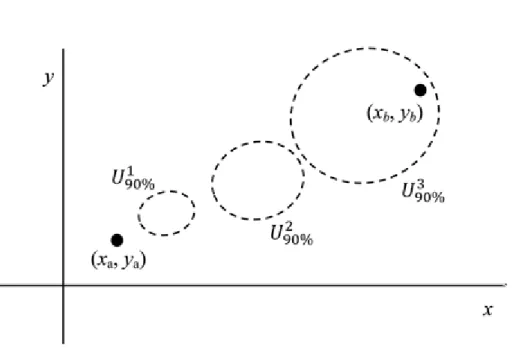
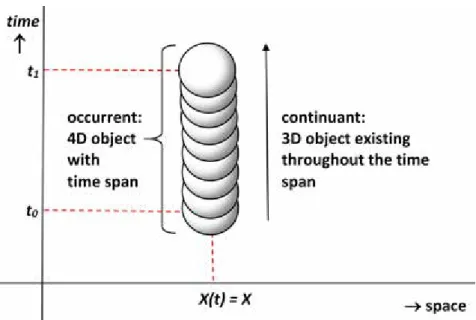
In the GR-based worldview, the electron has thus moved in a continuous trajectory X(t) from Xa to Xb, meaning that at each instant of time t between successive observations the electron was in a particle state and had a position setX (t); see Figure 1.1 below for a graphical illustration of the concept of continuous motion in GR. So, on the one hand, the "if" part of BIRP guarantees that the quantum system "has" property X with the value of a measurement of that property X with the result x.

A thought experiment
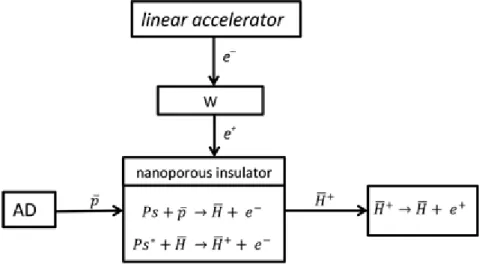
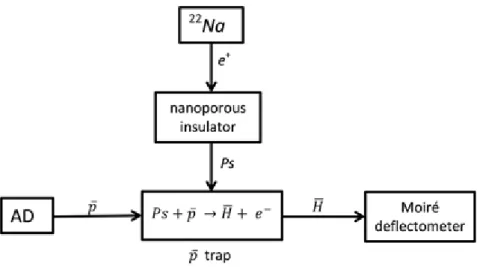
Like the GBAR experiment, the ALPHA experiment also aims to determine the gravitational acceleration of antihydrogen on Earth using H atoms that are initially at rest (ALPHA collaboration, 2013). H atoms are then trapped using an inhomogeneous magnetic field; the gravitational acceleration is then measured by measuring the time and position of annihilation events after a shutdown of the magnetic field. 1.9-(b).28 This thought experiment is a perfectly valid scientific technique in theoretical physics for thinking through the consequences of repulsive gravity for our understanding of the fundamental workings of the universe.
Figure (a) shows the height h(t) of an antimatter body above the earth's surface as a function of time, as predicted by modern physics (GR).
A criterion of truth
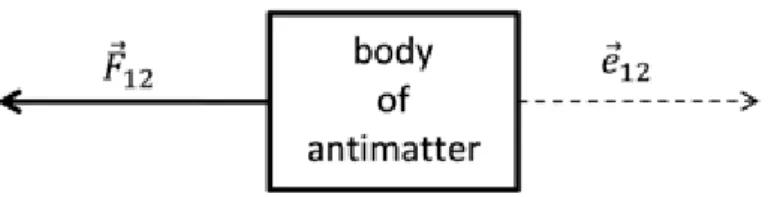
But this is only possible if the gravitational mass of the antimatter body is negative: all other factors on the right-hand side of Eq. 1.11) are positive and the unit vector ~e12 is directed towards the ground. Note that this expression is model-free: it has been derived without any assumption about what antimatter is, and without deciding whether inertial mass and gravitational mass are primary or secondary properties as intended by John Locke, i.e. whether these are observable properties that are also present in the thing-in-itself, or properties that are observable but not present in the thing-in-itself. With regard to active and passive gravitational mass as defined by Bondi - active gravitational mass is the mass that is the source of the gravitational fields and passive gravitational mass is the mass on which the gravitational fields act (Bondi, 1957) - we have thus deduced that the passive gravitational mass of antimatter is negative, but without commenting on its active gravitational mass.
Historically, the combination of positive inertial mass and negative gravity mass has appeared in the literature since the late 1950s (Morrison and Gold, 1958; Bondi, 1957; Morrison, 1958); in their 1957 essay, Morrison and Gold were the first to establish that antimatter must have this combination of properties in the case of gravitational repulsion of matter and antimatter.
Objections and replies
P1) a quantum system that is in the eigenstate | xj i of the operator ˆX does not∗not∗ has the property X with the value quantiorexj;. As for the first of these, P1, orthodox QM predicts that the probability P|ψ i(xj) that the value of the property X of a quantum system in state|ψ i is measured by bexj is. For a quantum system in the eigenstate|xj i, orthodox QM thus predicts that it is certain that the result of a measurement of the value of property X will be xj: Eq.
So accepting proposition P1 is denying that a quantum system has property X of quantity value xj when it is certain that the value of property X will be measured to be xj.

Rejection of theories of modern physics
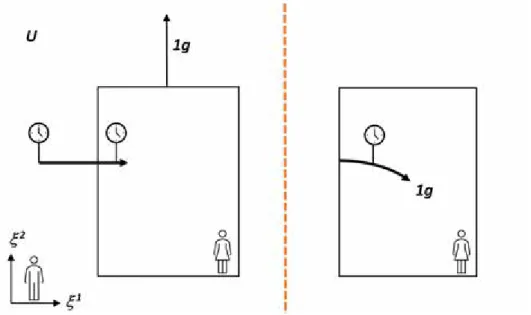
To the left of the dashed line is the force-free environment U; in the lower left corner, Bob and the coordinate system are depicted. Thus, due to WEP, it is absolutely impossible from GR's perspective for rest mass and gravitational mass of a body of antimatter to have opposite signs. From the perspective of the Standard Model, ΣQM is true, so the assumption Eq.
This may indicate the enormous consequences of a detection of repulsive gravity for physics.33.
Destruction of pseudoknowledge in physics
He then concludes that the ultra-short-lived unstable particle exists because the observed particles are the decay products of the ultra-short-lived unstable particle - i.e. "B due to A". So, suppose we have observed what can be described as the predicted decay products of an ultra-short-lived unstable particle X, with a significance of 5σ. In conclusion, although the supposedly sufficient claim of the 5σ-convention is satisfied, we are forced to admit that it is not necessarily true that the ultra-short-lived unstable X particle exists.
The answer is then: (absent divine intervention) we cannot - proving the existence of ultra-short-lived unstable particles is beyond the bounds of the scientific method.

Objections and replies
This objection is not of the "high quality" the journal boasts on its website. The point is that the observed particles are given a theory-laden description as "decay products of the short-lived unstable X particle". So the first change the referee suggests is irrelevant to the point of the paper.
This paper is not suitable for publication in [our journal].” - the third anonymous referee of the same journal as in Obj.

A new principle of gravitation in words
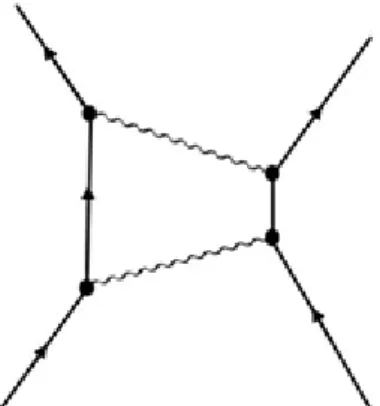
The energy E = ∆p0·c of the photon (with c the speed of light) was absorbed when the system was in its transition state. Second, in the framework of the Standard Model, the basic idea is that interactions between massive systems take place by means of exchanging particles. One can then hardly maintain that the size of the object is negligible compared to its (stepwise) movement.
However, the current gravitational principle entails a radically different ontology: the transition states that occur in the elementary processes through which a massive system as small as possible evolves in time are states of the system, not states outside the system.
Four-dimensionalistic concepts for physics
The idea is that the temporal part of the nonlocal wave phase quantum immediately "detects" the state of the vacuum at each point of its spatial extension in the correct IRF. So such an object violates the principle of locality: hence the adjective 'non-local' in the name of the phase quantum. Let these two seas be represented by the functions S+ and S− on R1,3, which can be considered as the sum of functions representing the quantum states of the extended particle-like phase in the sea.
The quantum state of the extended phase of conjugated particles in the antimatter can then be represented by a function ϕin R1,3 for which.
Elements of a new formal language for physics
The designation EPµnmj thus refers to the extended quantum of particle-like matter carrying the monad mj on the nth degree of evolution in the world. And the designation N Pµn+1mj refers to the unexpanded particle-like matter quantum carrying the monad mj on the (n+1)th degree of evolution in the world. In the language of mathematics, an equation is an atomic expression of type t1 = t2.
However, with the help of auxiliary hypotheses in the form of a model of EPT, testable predictions can still be derived.
The development of the EPT, philosophically
Moreover, three stages can be identified in the development of EPT: i) a fundamental stage in which a starting point for true knowledge is formulated on the basis of an analysis of a clear and distinct idea; ii) a destructive phase in which existing knowledge is rejected on the basis of contradiction with that starting point for true knowledge; iii) a constructive phase in which the system is extended to completion. In his Meditations on First Philosophy, Ren' Descartes goes through the same three stages for the development of his system, but in a different way: for Descartes, his "cogito ergo sum" was the only truth that remained after doubting fundamentally in existing knowledge. , while in the current research project the criterion of truth, Eq. 1.12), was formulated before existing theories were doubted. At the end of the constructive phase, when the theory had already taken shape, the axiomatic method was applied.
In the present case, this means that primitive concepts are formalized in mathematical language, but without reference to any concrete mathematical structure, that derived concepts are defined in terms of primitive concepts using a monoid structure, that axioms are expressed as well-formed formulas in mathematical language using the newly defined formalism, and that rules of interpretation have been defined that translate the formal axioms into statements about physical reality.
Objections and replies
So the objection here is that the terms of the formalism denote things rather than properties (such as coordinates) and that these terms are abstract sets rather than numbers or vectors. This objection can be dismissed as an expression of dislike of formalism - it has nothing to do with objective criticism. And last but not least, the final statement of the above objection is pure fiction: although I do not think that the entries for 'things in themselves' can be numbers -.
See Part IV, where the states of 'things in themselves' are modeled by vectors (although these are functions, not strings of numbers as in classical mechanics).
General introduction
In addition, we want to be able to "do math" within EPT. This is the second purpose of taking this or that theory as the mathematical foundation of EPT. Specifically, the axiomatic system containing the underlying theory provides a mathematical-logical framework for proof and reasoning within EPT.
However, it is emphasized that we could also go for a formalization of the EPT without mathematical substantiation.