5 1.2 METHODS AND MODELS SUITABLE FOR ANALYSIS OF THE POTENTIAL EFFECT OF A FREE TRADE AGREEMENT. 47 2.4. OVERVIEW OF EAEU AND TURKEY TARIFF REGULATION AND NON-TARIFF MEASURES AFFECTING MUTUAL GOODS. In other institutes of the Russian Academy of Sciences, there are numerous research groups and centers dealing with post-Soviet integration.
The liberal intergovernmental approach (hereinafter - LMP) can be used to explain the nature of the EAEU. In addition, there are some similarities in the structure of foreign trade of the FSU countries. By the end of the transition period (less than 10 years) this amount will reach 88% of positions.
44 Eurasian Economic Commission, 2020 “The results of the first year of the Vietnam-EAEU Free Trade Agreement are summarized.” At a meeting of the Eurasian Intergovernmental Council (EMPS) on October 25, 2019, a free trade agreement was signed between the Eurasian Economic Union (EAEU) and the Republic of Serbia. However, the customs union of Turkey and the European Union, which is already 22 years old, is standing in the way of the free trade agreement.
The increase in the value of mutual trade between EAEU member states (by 9.2%) is also the result of an increase in the average prices of goods (by 2.5%) and an increase in the physical volume of trade (by 6.5%). The increase in prices caused a 27% increase in the value of the indicator, an increase in the volume of goods - 73%. The volume of export deliveries in mutual trade of EAEU member states is presented in Table 4.
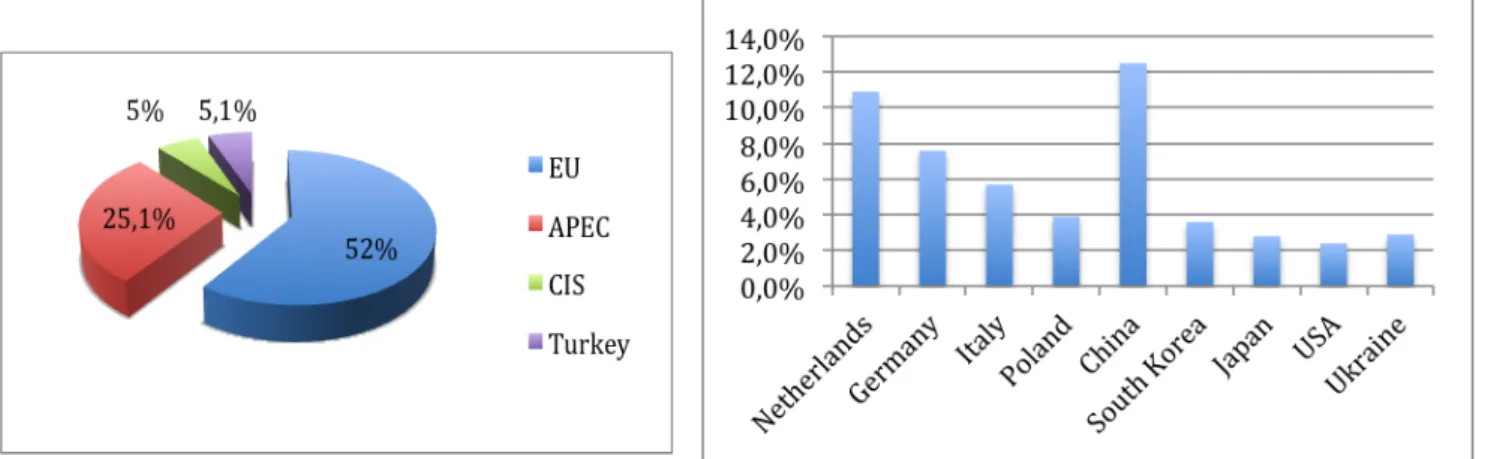
Volumes of export deliveries in the mutual trade between the member states of the EAEU. The structure of mutual trade by integrated product groups from 2018 (internal part) and 2019 (external part) as a percentage of the total EAEU is characterized by Figure 1. In the product structure of mutual trade in the EAEU member states, mineral products occupy the largest share ( 28.7% of the volume of mutual trade), of which 85.1% is supplied to the EAEU market by the Russian Federation.
The significant supply of machinery, equipment and vehicles, which occupy 19.1% of the volume of mutual trade (60.5% in the Russian Federation and 35.5% in the Republic of Belarus), food products and agricultural raw materials falls under the Republic of Belarus and 37.1% - the Russian Federation). Shares of metals and products constituted 13.2% of the volume of mutual trade, of which 63.5% was supplied by the Russian Federation. Compared to 2018, an increase in exports from the Republic of Armenia to the EAEU market by 20.7% was registered.
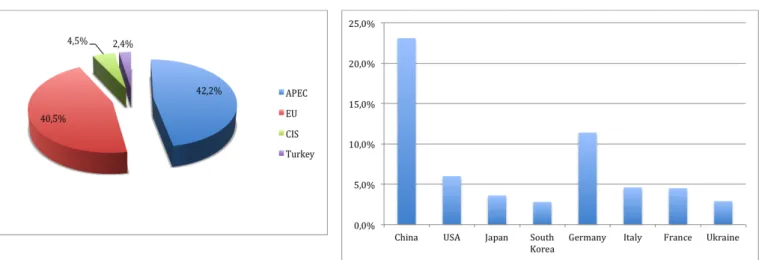
Compared to 2019, the volume of exports of the Kyrgyz Republic to EAEU member states increased by 5%. Exports to Turkey amounted to 5.1% of the total volume of exports of EAEU member states. Foreign purchases are concentrated in APEC countries (42.2% of all imported goods) and the European Union (40.5%).
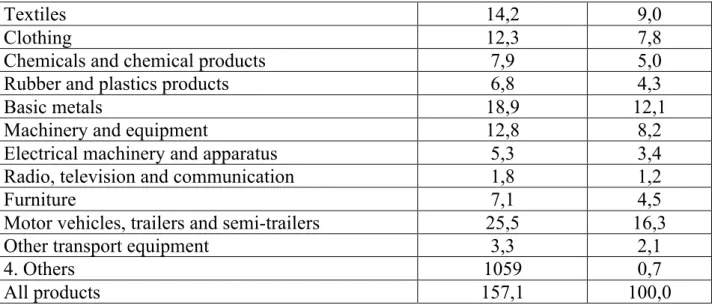
CIS countries supplied 4.5% of imported goods including 2.9% from Ukraine. Turkey's share in the total imports of EAEU Member States is 2.4%. In 2019, the dominant goods in the structure of goods exported by EAEU Member States to third countries include mineral products (67.2% of the total export volume of EAEU Member States to third countries), metals and metal products (10.4% ), chemicals, industrial products (5.7%).

Foreign trade export and import commodity structure, %
OECD countries account for 56.3% of Turkey's exports, and exports to the EU accounted for 47% of total exports in 2019. Turkey is one of the largest producers and exporters of agricultural products in Europe and the Middle East. Exports from the automotive and supplier industry were responsible for 18% of Turkey's total exports in 2019.
In the same year, 1.3 million vehicles were exported out of the total production of nearly 1.7 million and the industry's exports increased by 20% compared to 2018 and reached 28.8 billion USD. In 2019, the share of this sector fell to around 18% in the total export of the country. Relations between the Republic of Armenia and the Republic of Turkey are complicated by the issue of recognition of the Armenian Genocide, Armenia's.
Although Turkey was one of the first countries to recognize Armenia's independence after the collapse of the Soviet Union in 1991, relations between the two states are characterized as extremely cold. The construction of the Akkuyu nuclear power plant is another issue in which Russia and Turkey are working together. This project is important for both Moscow and Russia. 54 “President Serzh Sargsyan convenes meeting of the National Security Council The Office to the President of the Republic of Armenia, Copyright.
The continued successful implementation in 2017 of many economic and energy projects such as "Turkish Stream", the nuclear power plant "Akkuyu", as well as the recent purchase by Turkey of the Russian air defense system S-400, played an important role in relations economic between Russia and Turkey. They contributed 304 million dollars of capital to the economy of the Kyrgyz Republic and created 5000 jobs, according to the statistics of 2019. From table 8 it is clear that, except for Belarus and the Kyrgyz Republic, Turkey has a trade deficit with other EAEU countries.
In the same way, Turkey is also important for the EAEU from an export perspective or from the EAEU's perspective towards the world. The latter not only shows a record high in trade flows, but is also a clear sign that Turkey is one of the most important trading partners for the EAEU member states in the region.
Main Indexes of merchandise trade between the EAEU and Turkey (USDMillion)
Overview of EAEU and Turkish tariff regulation and non-tariff measures affecting mutual trade in goods. Today, all member states of the EAEU, with the exception of Belarus, are members of the WTO. Membership of the WTO entails a gradual reduction of customs duties on imports by a member of this organization, which in the case of the EAEU affects a single customs tariff.
Ad valorem provisions for agricultural products make up 73% of Russian tariff bindings and 93% - non-agricultural products. In this regard, a transitional period for adjustment to the common customs tariff of the EAEU is until 2020 with the ability to apply rates different from the common custom tariff during this time in the Kyrgyz Republic. Gor more than 50% of the tariff lines of agricultural products import customs duties not more than 10%.
As far as customs legislation is concerned, EAEU goods will be released by customs within 1 working day from the date of registration of the customs declaration. Currently, the main international treaty that constitutes the system of technical regulation of the EAEU is the Treaty on the EAEU. Import and export licenses are issued by competent authorities in the Member States of the EAEU in accordance with the procedures laid down in the Treaty on the EAEU.
The EAEU trade remedies regime is governed by articles of the Treaty on the EAEU, and the provisions of Annex 8 to the Treaty on the EAEU (Protocol on the Application of Safeguard, Anti-Dumping and Anti-Auctioning Measures to Third Countries) which fully consistent with the relevant WTO agreements. Turkey is not a signatory to the WTO Agreement on Government Procurement (GPA), but has been an observer of the GPA since 1996. According to the Turkish Ministry of Foreign Affairs of Turkey, the goal of the two countries is to increase their bilateral trade volume to $10 billion.
Kyrgyz-Turkey Business Forum in the framework of the official visit of the President of the Turkish Republic to the Kyrgyz Republic in 2018. Currenty, Ankara and the EAEU are making an effort to cooperate in signing an agreement on free trade in the agricultural sector and other areas not covered by the Customs Union Treaty with the EU.
The Potential Impact of Free Trade Agreement between EAEU and Turkey
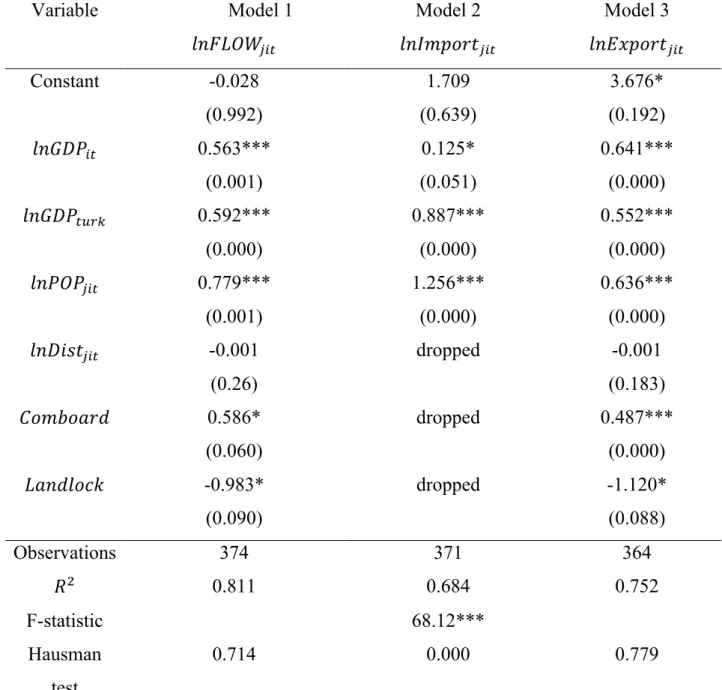
Another dummy that also has an impact on transaction costs and must be taken into account is the geographical location of the country, which can either be landlocked or have an access to the sea. One of the major limitations is that the cross-sectoral implications (second-round effects) of a trade policy change are not taken into account. This implies that an increase in demand for a chosen good will always be matched by exporters and producers of that good, without any impact on the price of the good.
As can be seen in the last column, exports are distributed quite differently between products, with the largest export product – fruits and nuts – reaching 18.7% of total exports to Russia, machinery, mechanical equipment, nuclear reactors, boilers – 15.1% in Kazakhstan, knitted or crocheted fabrics – 18.6% in Belarus and knitted or crocheted clothing items and clothing accessories – 25.3% in the Kyrgyz Republic. Some product categories are presented at the bottom of table 18, for which the drop in exports is large proportionally to the volumes exported before the FTA. Although, the exported volumes are quite low and constitute a small part of the total export loss.
Trade creation effects account for US$ billion) of the total trade effect, largely outweighing trade diversion effects (US$431,687). Assessment of the impact of the Economic Partnership Agreements between the ECOWAS countries and the European Union". It is considered that the main reason for this is the lack of a comprehensive strategy for the economic integration of Turkey and the EAEU through trade in goods, together with the fact that Turkey is part of the Customs Union Agreement with the EU, which may also contribute to the weakening of the economy. relations of the parties.
In addition, a free trade agreement between Turkey and the EAEU would cover almost all trade in goods, allowing for the maximum value of the considerable complementarity between the two economies to be exploited. Special attention should be paid to non-tariff measures for goods that are the main export interest of both sides. At the same time, specific differences in economic development and other important elements of the economies of both sides must also be taken into account.
Eurasian Economic Commission (EEC) (2017b) Provisional agreement on a free trade zone between the EAEU and Iran will operate by the end of the year on 1 June. Eurasian Economic Commission, 2020 "The results of the first year of the Vietnam-EAEU FTA are summarized''. EEC Trade Minister: Negotiations with Iran should be concluded in accordance with the win-win principle on June 9.
Evaluation of the impact of the economic partnership agreements between the ECOWAS countries and the European Union.