All the benefits of option 2 thanks to the mandatory enrichment of flour with folic acid. Description: According to option 3 and clarify the scope of the regulations regarding enrichment requirements for wheat flour.
Justification of analytical approach in the IA
Most of the data presented is for context to facilitate answers to questions in this assessment and accompanying consultation. Introducing the requirement for the addition of folic acid to non-whole wheat flour is part of the set of measures considered in this assessment.
Key regulation references
This includes moving away from criminal sanctions as the sole enforcement measure for breaches of BFR regulations to introducing the use of improvement notices as a front-line enforcement option, but with a retrospective criminal sanction for failure to comply with the improvement notice . Food Information (Scotland) Regulations 2014; Food Information (Wales) Regulations 2014; The Food Information (Northern Ireland) Regulations 2014 make provision for implementing the rules on the provision of food information to consumers in England, Scotland, Wales and Northern Ireland respectively.
Issue to be addressed
In Northern Ireland, the EU Regulation applies under the current terms of the Northern Ireland Protocol. The minimum enrichment requirements of the BFR compared to NRVs are illustrated in Table 1 below.
Rationale for Government Intervention
The main objective is to ensure that the understanding of the regulations (what type of grain falls within the scope of fortification requirements) is consistent across the industry and enforcement. Thus, ensuring that the interpretation of the rules is clear to industry and enforcement authorities.
Options considered
The main objective is to ease the burden of BFRs on small-scale millers. Clarify the wheat variety that falls within the scope of the enrichment requirements in the regulations, so that the enrichment requirements only apply to “soft wheat” Triticum aestivum. Exempt lower flour content foods from all fortification requirements where flour accounts for less than 10% of final product ingredients.
Thus, the differentiated nature of the various measures proposed means that any non-regulatory options intended to try to apply to all measures must be sufficiently generic – which in turn limits the effectiveness of those options to the various specific policy objectives of the country. each proposed measure individually16. For folic acid, non-regulatory options were considered as part of the pre-consultation impact assessment conducted in 201917, which included conducting awareness campaigns on folic acid supplements and encouraging voluntary fortification of flours with folic acid.
Alternative options considered
We have not focused in detail on this option or other possible non-regulatory options in this document, as we did not feel that they were sufficiently effective in addressing our rationale for intervention. A large part of the reason for this assessment is that a group of quite different measures are being considered, and thus the search for a non-regulatory option that is appropriate and achieves the policy objectives and rationale for the intervention of all those proposed. The promotion of the voluntary fortification of flour with folic acid was considered as part of a pre-consultation impact assessment18.
Introducing all/some of the measures on a phased basis – for example splitting the implementation of option 4 above into three phases to reflect the sequence of options 1 to 3. Consultation feedback regarding the timing of implementation of the various measures will be considered in the final assessments.
Shortlisted options
This option would involve amending the BFR to allow fortification of flour with folic acid. Amend BFRs to raise the required fortificant levels to 15% of the NRV in line with overlapping food fortification legislation in general - This option would involve raising the minimum levels of calcium, iron and niacin so that they are all at par with the 15% NRV threshold specified in Regulation 1925/2006. Clarify which type of wheat falls within the scope of the enrichment requirements in the regulation, so that the enrichment requirements apply to.
Introduce exemptions from all enrichment requirements for small-scale millers. This option would mean that any type of mill producing at least 500 tons per year would not be exempt from the requirement to strengthen. Exempting foods with a lower flour content where flour is <10% of the final product - this option would entail an exemption for millers, removing the rules.
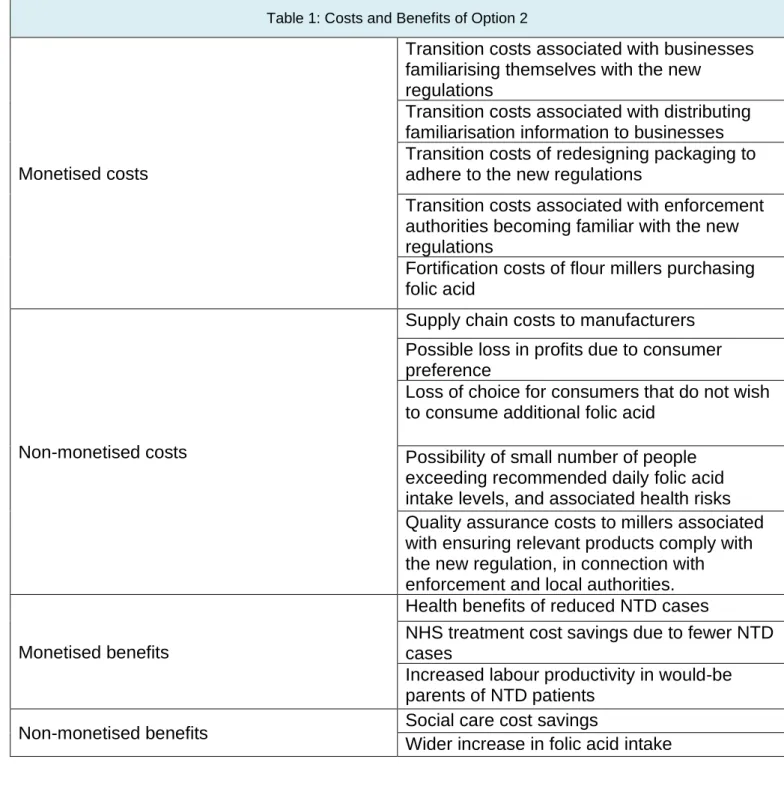
Cost and Benefits of option 2
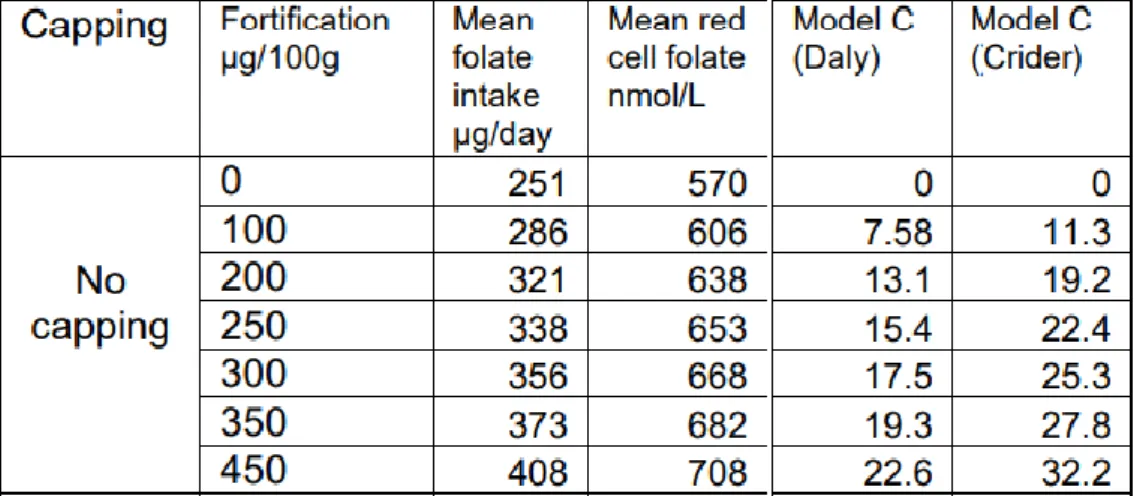
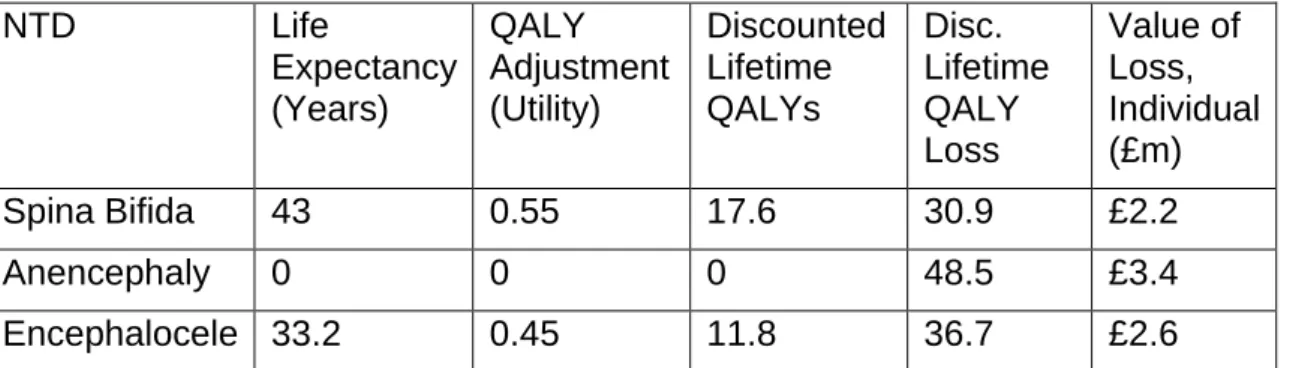
The total wage cost of this process is estimated at £4.6k after taking into account non-wage increases and further details are given in the appendix. Based on modeling by Food Standards Scotland (FSS) and Eurocat data on the distribution of NTD cases in the UK by NTD type, we estimated reductions in the number of cases for each of the three main NTDs by fort level. This was repeated for each year of the 10-year evaluation period with the same reduction in the number of cases each year to obtain the total health benefit.
Completed consultation episode (FCE) data accounts for unique hospital episodes for different conditions – in the year ending March 2021 there were 898 FCEs related to NTDs. The table below summarizes the discounted costs and benefits for the measure and provides a net present value, including a lower and upper estimate generated by sensitivity analysis, which can be found in the full write-up in the appendix.
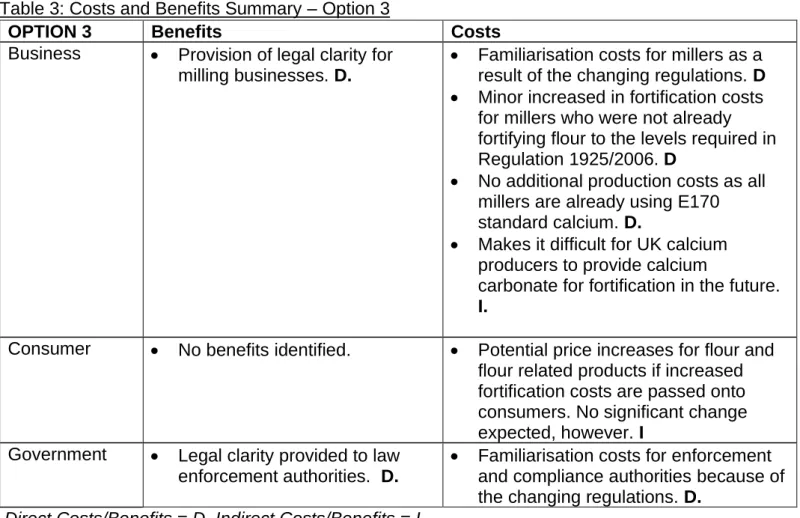
Cost and Benefits of option 3
We estimate that this number is small, given that 91% of premix sales in the UK comply with the minimum levels required by Regulation 1925/2006. Indicative costs of using a premix that complies with the higher levels are compared with premixes that comply with the minimum levels of nutrients as stated in the Bread and Flour Regulations in Table 4 below. Full estimates of the cost of moving from the minimum levels of fortification to those required in Regulation 1925/2006 will be included in future estimates following consultation.
The small proportion of millers who face increased fortification costs as a result of the increased minimum fortification requirements may pass this on to consumers in the form of price increases. This option will impose disclosure costs on compliance and enforcement authorities as a result of the changing regulations.
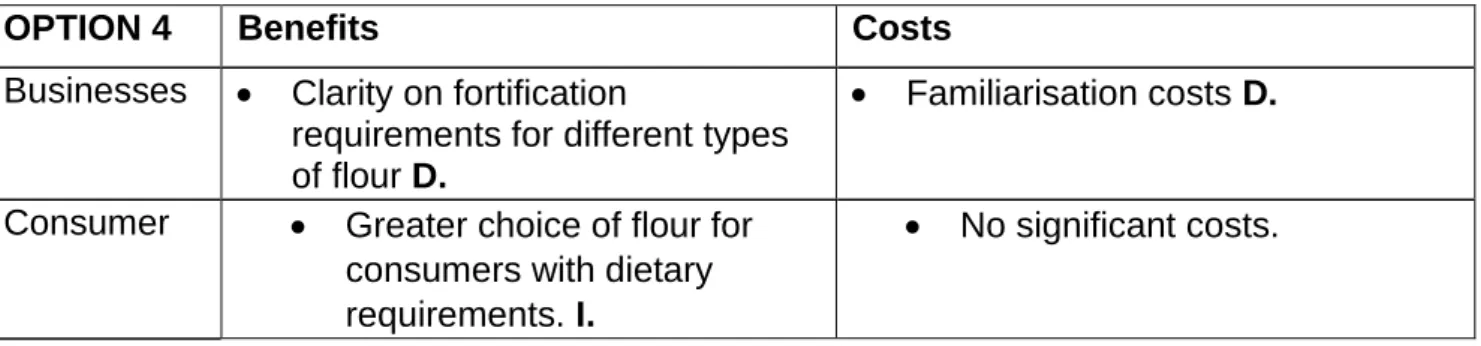
Costs and benefits of option 4
This is an unmonetized benefit due to the difficulty of putting a monetary value on legal clarity. Small increase in fortification costs for millers who have not already fortified flour to the levels required in Regulation 1925/2006. This option will provide legal clarity to businesses and resolve the current ambiguity about which grains they are expected to strengthen.
This is a non-monetized benefit due to the difficulty of placing a monetary value on the consumer's choice. This option would provide greater clarity to the industry and enforcement authorities and resolve the ambiguities on which cereals are required to be fortified.
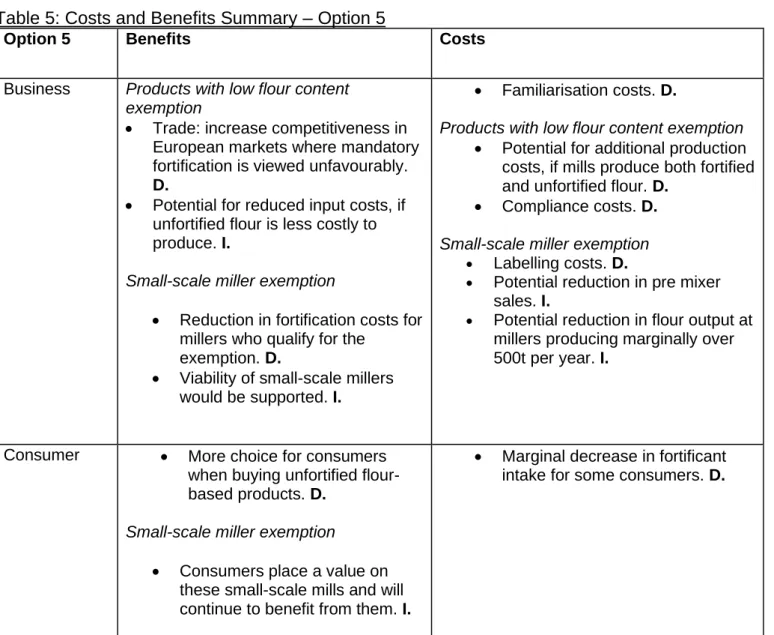
Costs and benefits of option 5
Food companies are likely to face higher compliance costs as they will need to have a mechanism in place to ensure that the flour content of finished products is at or below a certain threshold. There would be an additional compliance need to verify/monitor small millers covered by the exemption, which therefore do not strengthen and continue to produce less than 500 tonnes per year. Because they will be able to sell qualified products containing non-enriched flour without having to carry out duplicate production processes, thereby reducing their production costs.
The viability of small-scale millers would be supported if the need for consolidation was removed, taking into account the practical, legal and technological constraints they face. This option could reduce production costs for millers and food manufacturers if eliminating the need for enrichment would reduce flour production costs.
Overall risks and assumptions
This assumption will come into particular focus now with food supply chains facing a sustained period of cost pressure and the impact of the Russia-Ukraine conflict being felt by those who could be affected by these measures - e.g. , through volatility in global grain markets. Continued current levels of volatility and uncertainty mean that this assumption becomes increasingly challenging.
Measure-specific risks and assumptions
Export markets will continue to behave averse to mandatory enrichment and that this has a negative impact on the desirability of products containing very little, albeit enriched, flour. No suitable alternative markets could be found and the potential loss of export revenue could not be absorbed by the domestic market. Removing enhancers from products containing less than 10% flour will not pose a risk to consumers.
Modeling work is being carried out by DHSC to capture the impact this measure will have on health outcomes. All mills that produce less than 500 t of acceptable flour per year produce only for the domestic market.
Equality and Family Test Issues
Companies are not yet preparing to set up a separate production line for products destined for the export market and would otherwise be unwilling or unable to export enriched flour to certain European markets. Setting a threshold may prompt manufacturers to change recipes so that products other than those originally intended meet the unenriched flour use threshold. Any type of mill producing at least 500 tons per year would not be exempt from the obligation to reinforce.
Proportionality
Competition
Potential trade implications
Scope
Number and definition of SMBs
Output-based exemption
Such small-scale milling enterprises tend to produce less than 500 tons of flour individually per year44. The cost associated with the purchase and installation is also prohibitive compared to the income of most small-scale mills. Small-scale mills typically have limited space for grain storage, meaning that millers purchase small tonnages at any one time.
The income from the sale of flour is considered an essential part of safeguarding the future of the listed buildings in which the small mills operate and the tradition of small milling. In addition, compliance with enrichment requirements is likely to be particularly burdensome for small plants in the ways described above.
Anticipated costs and benefits from exemption
Local communities place value on these types of mills, which can attract tourists who want to see how their historic technology works. For those areas of the UK where there are currently no or very few millers who meet the exemption criteria, the measure will provide 'future-proofing' so that if more/some of these types of millers are set up, the existing policy framework will be in place to cover them .
Risks and assumptions
Essentially, folic acid increases folate levels in the blood, which then reduces the risk of NTDs. STOCHASTIC_MODELLING_TO_ESTIMATE_THE_POTENTIAL_IMPACT_OF_FORTIFICATION_OF_FLOUR_WITH_FOLIC_ACID_IN_THE_. Only non-whole wheat flour in the UK (the most used type and our base line).
The table below outlines the costs and benefits captured in the analysis of the policy. The results of the sensitivity analysis together with the central estimate are shown in the table below. There will be a small increase in the risk of people exceeding the guidance level of folic acid consumption as a result of the policy (FSS modeling estimates 0.4-0.6% of the population).
As the analysis above shows, the benefits of the policy far outweigh the costs, combined.
The Bread and Flour Regulation Amendments will be monitored and evaluated using: ...... Error!
What are the monitoring and evaluation provisions in place for the current system, and how can