This report brings together those three pieces of research and is a joint report by Citizens Advice and Citizens Advice Scotland (together referred to hereafter as 'The Citizens Advice Service'). The Citizens Advice Service is still working on changes to the welfare system and the impact they will have.
Introduction
Survey and interviews with Citizens Advice Bureaux advisers and clients
2. 2013/14 omnibus Survey of PPM users
Information from energy suppliers
In November 2013, Consumer Futures worked with the Parliamentary Energy and Climate Change Committee (ECCC) to develop and produce a series of questions about self-disengagement among PPM users. Consumer Futures followed this up with a further request for information from suppliers in December 2013, asking them about how they monitor customer accounts, communicate with customers who cannot afford to top up their meters and also asked them to detail any other help or support available to PPM users who have payment problems.
Who uses a PPM?
The majority also lived in social housing, with 59 per cent renting from the local council or The customer survey supported this by finding that 56 per cent had or lived with someone who had a physical or mental health condition .
Why do people have PPMs?
How do suppliers monitor whether PPM customers are topping-up?
Main six suppliers
It is important that all suppliers strive to understand how their customers prefer to communicate in order to increase engagement both around consumption and beyond. This is a positive approach to known vulnerable consumers, but it is important to note that vulnerability is an ongoing state and consumers can become vulnerable at any point – non-replenishment of a PPM can be an indicator of financial insecurity or other vulnerability and it is important to track replenishments as an indicator of potential problems. If a PPM is forcibly installed as part of a debt collection process, current best practice among suppliers is to monitor the bill to ensure that the consumer has topped up at least once within 14 days of installation (EDF Energy) and to continue to monitor the forcibly installed PPM until the supplier does not make sure that the consumer can supplement/or find out that he is no longer in the property (E.ON).
It is essential to ensure that consumers who may never have used a PPM before are able to successfully access energy supply and are given clear instructions on how their PPM works.
Smaller suppliers
Why do consumers self-disconnect?
14 percent of PPM consumers said they had not had any particular change in circumstances, but still found it difficult to find money to top up their PPM. When interviewing those PPM consumers who had lost their jobs, many indicated that they were dealing with what they thought (or hoped) were temporary problems until they found other employment. Some advisers have encountered PPM consumers who did not realize that they had to top up to pay off the debt or were unaware that there was an ongoing charge to pay even if they did not use gas or electricity.
This led to cases where PPM consumers have not topped up at all during the summer months, only to find themselves with a large debt to pay off before they could start using the gas supply in the colder months. Many of the top six suppliers told us they have been communicating with PPM consumers about the recent introduction of standing charges and the potential impact this will have.
What do suppliers do when there is known vulnerability or a consumer tells them that they cannot afford to top-up?
What do suppliers do when there are known vulnerabilities or a customer tells them they can't afford to replenish. issue a temporary credit to the meter remotely or via a wind up. check the settings on the meter to ensure accuracy. perform income and expense analysis and reduce the value of weekly settlement agreements for customers in debt. discuss consumption and check if the customer is on the best tariff for them. consider whether a PPM is still the most convenient payment method for the consumer. discuss the direct fuel option as an alternative method of debt settlement. refer the customer to their energy trust scheme for a grant if suitable. Most do not proactively perform any detailed ability-to-pay assessments or income/expense analysis or offer remote top-ups/top-ups. Small suppliers with larger PPM customer bases will often provide information about government schemes and direct the customer to other sources of help and support.
The Financial Conduct Authority26 and the Consumer Services Association27 (a trade body for debt recovery) emphasize the need to ensure that companies under their jurisdiction do not put undue pressure on any customer to borrow money. However, borrowing additional money on top of existing debts can often add to the problem for the consumer.
Bureaux and client interaction with energy suppliers
Case study – PPM consumer
In other cases, PPM consumers received no assistance from their supplier to help them resupply, reduce their debt repayment rate or secure additional emergency credit. They just said they couldn't do anything because I had a debt and that was it. These findings are disappointing and contradict the information we have received from suppliers about the measures they have taken to support PPM consumers and empower staff to reduce the rate of debt repayment and discuss other options that could help the consumer.
How suppliers work with third party organisations to support the consumer
Suggested areas of improvement
The omnibus survey found that the number of PPM users who were temporarily disconnected and sought help from a third party was low in both 2010 (20 percent) and in percentage terms. However, of calls to Citizens Advice consumer service in the past year, around a third (32.5 percent) of all PPM consumer contacts were from consumers who had disconnected themselves.28. 15 percent of Bureaux advisors told us that they had seen clients who had sought help for their situation before going to the Bureaux.
Most of them said that their customer had sought help from the energy supplier, friends/family or a job centre. Counselors estimated that in 65 percent of cases, their clients had not contacted any other organization/people for help.
Case Study – from Adviser
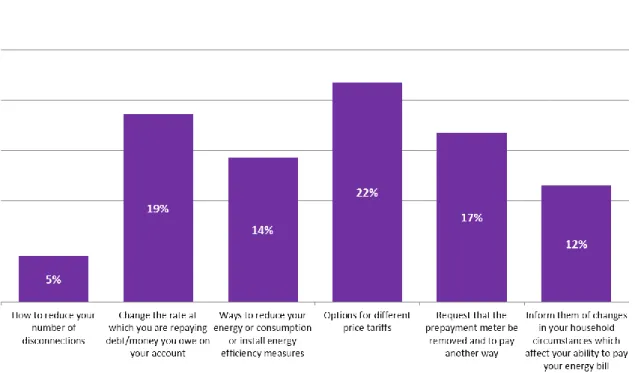
After consulting with the PPM consumer, Figure 5 shows that help desk counselors will turn to a range of resources. Counselors at the bureaus told us that they sometimes refer to social workers if they are concerned that the PPM consumer is unable to cope with their situation. A social worker can provide advice and support to vulnerable individuals and help them access the services they need to improve their situation and well-being.
Mortgage & secured loan arrears Payday loan debt Rent arrears - private landlords Rent arrears - LAs or ALMOs Rent arrears - housing. Telephone and broadband debt Other Credit, shop and debit card debt Unsecured personal loan debt Water supply and sewerage debt Council tax arrears.
The percentage of CAB fuel debt clients with the top 20 other debts January to June 2014
The percentage of CAB fuel debt customers with the top 20 other debts January to June 2014. Almost a quarter of customers with an energy debt were also informed of tax arrears (22 per cent), almost a fifth were also in debt to a water company (19 percent). The Citizens Advice Service understands that all the main six energy suppliers and some of the smaller suppliers will actively discuss debt management options with consumers, and will often refer them to other third party organizations for support and assistance with debt (for example National Debline or Stepchange).
Energy suppliers are also actively directing or alerting consumers to other sources of assistance, including emergency loans through local authorities and deposits into energy supplier trust funds. In addition to cooperation with the Citizens Advice Service, some energy suppliers also cooperate with a number of other organizations.
Information, help and support for consumers struggling to pay
This was followed by further communications in October to advise all PPM customers to start budgeting for winter by stocking up more before winter arrives. British Gas has an innovative, interactive online tool called 'Ways We Can Help' which aims to make it easier and faster for customers to understand whether they are eligible for support schemes such as Warm Home Discount, ECO and Priority Services Register from British Gas Gas that provides an overview of their eligibility at the touch of a button. We encourage the supplier to work with local partners so they can use it with consumers who are not online.
It includes energy and debt advice services to support customers who are having difficulty making payments. EDF Energy also has a dedicated debt advice helpline, provided by Plymouth Citizens Advice Bureau, where customers can receive free, impartial and confidential debt advice.
The impact of changes to welfare
Ovo, Ecotricity and Utility Warehouse all send out information to new customers about using the meter with contact details on what to do if they have difficulty paying via PPM. Utility Warehouse refers customers to the charity Stepchange if they are struggling to pay: It has also empowered its staff to reduce debt amounts based on ability to pay and refers to Citizens Advice Bureaux where appropriate. In light of the changing nature of the market and the increasing market share of the small suppliers, the Citizens' Advice considers it essential that the smaller suppliers think about how they proactively engage with PPM customers to ensure that they know how and where to seek support .
Conclusion and recommendations
- Monitor and understand how consumers use their PPM
- Prepare for changes to the welfare system
- Consider the unintended implications
- Prioritise pre pay options in the smart meter rollout
It is important that vendors are not complacent and continue to invest in understanding and supporting the needs of PPM consumers who are at risk of self-disruption. The Citizens Advice recommends that the trade body and the small supplier representative work together to ensure a consistent approach and minimum levels of support offered to consumers who are struggling to pay for energy (whether through a PPM or credit meter). However, it is important to recognize that there is a small 'hardcore' of consumers for whom the market does not work.
There are potentially groups of consumers who are fundamentally unlikely to ever be well served by the market because of their permanent disconnection. In the longer term, it is essential to build solutions to end the short-term solutions, such as providing emergency funds when there is a temporary crisis and a consumer cannot afford energy.
Next steps and recommendations
Citizens Advice Bureaux survey details
Client survey
Adviser survey
2013/14 omnibus survey
The key objectives of this research were to
Main six suppliers PPM contact numbers
Consumer Demand
Consumer Demand: Fair play for prepay
A better price
More control
Easier use