The entire content of the Third Expert Report, including this executive summary, is freely available online at dietandcancerreport.org. Between the expert reports, regular reports on the evidence and the conclusions of the CUP expert panel are published. 1Recommendations and Public Health and Policy Implications of the Third Expert Report are available online at wcrf.org/cancer-prevention-recommendations.
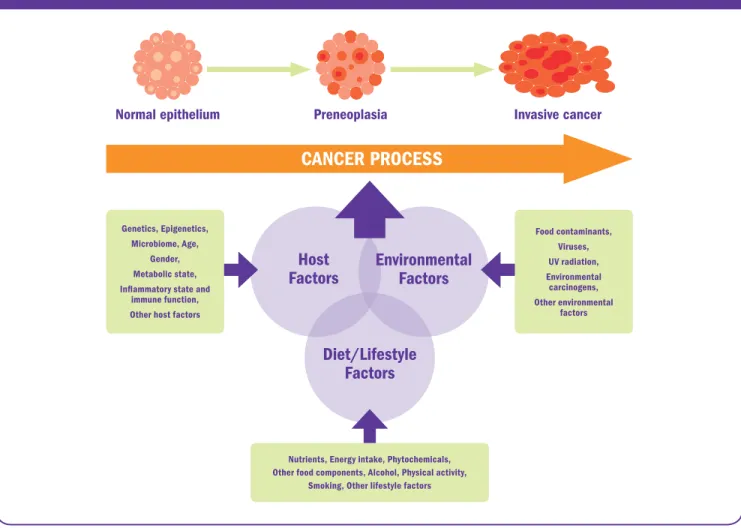
What is cancer and how does it develop?
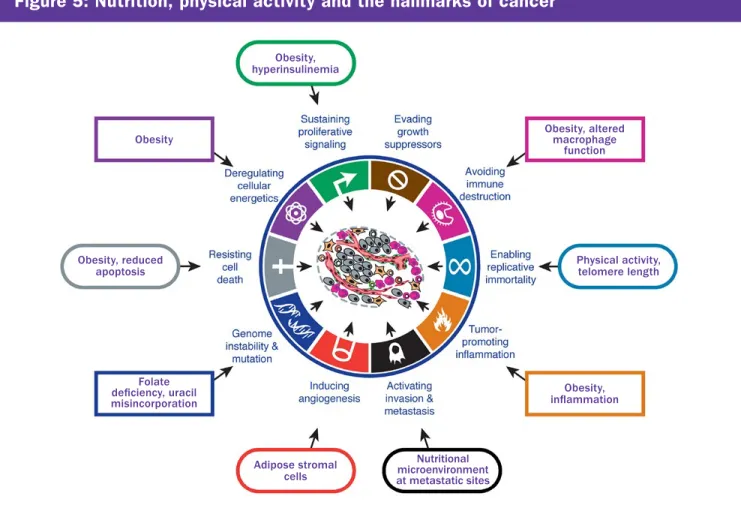
From: Cell 144, Hanahan D and Weinberg RA, Hallmarks of cancer: the next generation, 646–74, Copyright (2011), with permission from Elsevier. Text [adapted] and illustration taken from: Cell 144, Hanahan D and Weinberg RA, Hallmarks of cancer: the next generation, 646–74, Copyright (2011), with permission from Elsevier. Adapted from: Cell 144, Hanahan D and Weinberg RA, Hallmarks of cancer: the next generation, 646–74, Copyright (2011), with permission from Elsevier.
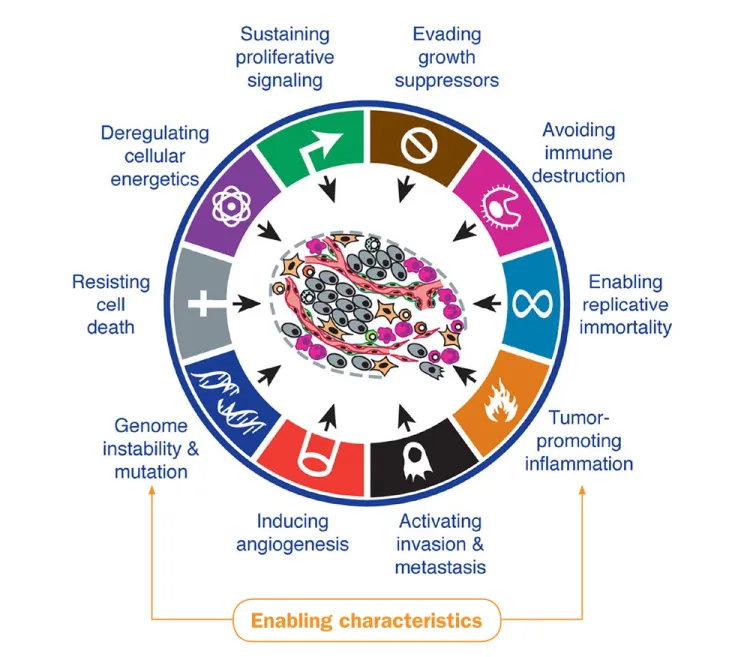
CANCER PROCESS
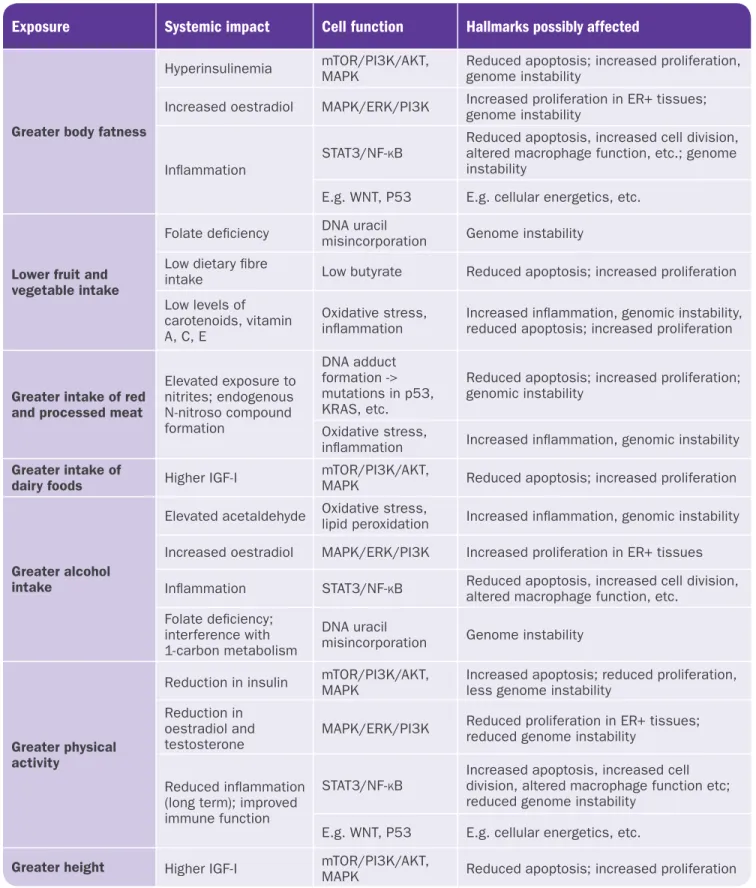
- Body fatness and the hallmarks of cancer
- Dietary exposures and the hallmarks of cancer
- Physical activity and height and the hallmarks of cancer
- Summary
- The aim
- The approach – in summary
- Gathering and presenting the evidence
- Discussing and judging the evidence
- Defining cancer survivors
- Findings from the CUP and other sources
2The Exposures: Physical Activity section of the third expert report is available online at wcrf.org/physical-activity. 1 The exposures sections of the third expert report are available online at wcrf.org/exposures. 3 The exposures sections of the third expert report are available online at wcrf.org/exposures.

DIET, NUTRITION, PHYSICAL ACTIVITY AND BREAST CANCER SURVIVAL – ALL-CAUSE MORTALITY
In recent decades, progress in the early detection and treatment of cancer has led to a dramatic increase in the number of cancer survivors: millions of people worldwide were living with a cancer diagnosis [4]. Therefore, it is increasingly important that evidence on how diet, nutrition and physical activity affect outcomes in cancer survivors is analyzed as part of the Continuing Update Project (CUP). The term "cancer survivor" covers people in a variety of circumstances from diagnosis, through cancer treatment to the end of life.
Using a single term to cover cancer survivors at all these stages cannot do justice to the diverse nature of cancer and its survivorship. Each stage of survival has its own particular characteristics, and the impact of interventions or exposures, including diet, nutrition and physical activity, varies accordingly. The evidence from the CUP (see matrix below) and other sources is convincing that nutritional factors such as body fat, as well as physical activity, reliably predict important outcomes for people with breast and other cancers.
However, the evidence that changing these factors after diagnosis will change the clinical course of cancer is limited, especially by the quality of published studies and by.
DECREASES RISK INCREASES RISK
STRONG EVIDENCE
LIMITED EVIDENCE
- Nature of the evidence
- Research gaps on cancer survivors
- Recommendations for cancer survivors
- Recommendations for Cancer Prevention
Greater understanding of the underlying biological mechanisms linking diet, nutrition and physical activity to outcomes in cancer survivors is important. 1The more detailed Survivors of Breast and Other Cancers part of the Third Expert Report is available online at wcrf.org/cancer-survivors. For further information, see the more detailed recommendations and public health and policy implications part of the Third Expert Report available online at wcrf.org/cancer-prevention-recommendations.
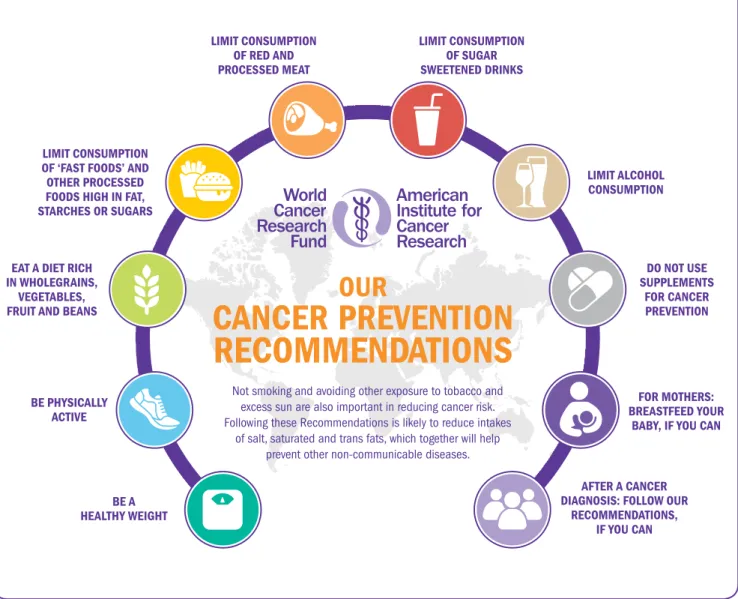
The cancer prevention recommendations presented in this section are one of the most important findings of the Continuous Update Project (CUP). The panel uses its assessments of the results of the CUP to make recommendations for cancer prevention. Evidence and judgments from the CUP are summarized in the exposure and cancer sections of the third expert report.
2CUP cancer reports of the Third Expert Report are available online at wcrf.org/cancers. 3 The Third Expert Report CUP systematic literature reviews are available online at wcrf.org/toolkit. 4 More detailed recommendations and policy and public health implications of the Third Expert Report are available online at wcrf.org/cancer-prevention-recommendations.
1The more detailed Recommendations and Public Health and Policy Implications section of the Third Expert Report is available online at wcrf.org/cancer-prevention-recommendations.
SUMMARY OF STRONG EVIDENCE ON DIET, NUTRITION, PHYSICAL ACTIVITY AND THE PREVENTION OF CANCER
OBJECTIVE Ensure that body weight during childhood and adolescence is projected toward the lower end of the BMI range for healthy adults. GOAL Keep your weight as low as possible within healthy limits throughout life. 2 WHO recommends keeping waist circumference below 94 cm (37 inches) in men and 80 cm (31.5 inches) in women (based on data from European people).
RECOMMENDATION
Regional and special circumstances
There is a need for a better understanding of the developmental factors that support the connection between greater growth and cancer risk. 1 The Exposures: Height and Birthweight section of the third expert report is available online at wcrf.org/height-birthweight. 2 The Exposures: Non-alcoholic drinks portion of the third expert report is available online at wcrf.org/non-alcoholic-drinks.
For further information, see the more detailed recommendations and public health and policy implications part of the Third Expert Report available online at 1 The exposures: whole grains, vegetables and fruits part of the third expert report is available online at wcrf.org/wholegrains-veg-fruit. For further information, see the Energy balance and body fat4 part of the Third Expert Report available online.
1 Exposures: Food Preservation and Processing, part of the Third Expert Report is available online at wcrf.org/preservation-processing. 2 Exposures: Meat, Fish, and Dairy Products, part of the Third Expert Report is available online at wcrf.org/meat-fish-dairy. 3 Exposures: Nonalcoholic Beverages Part of the Third Expert Report is available online at wcrf.org/non-alcoholic-drinks.
4 Part of the third expert report on energy balance and body fat is available online at wcrf.org/energy-balance-body-fatness.
Public health and policy implications
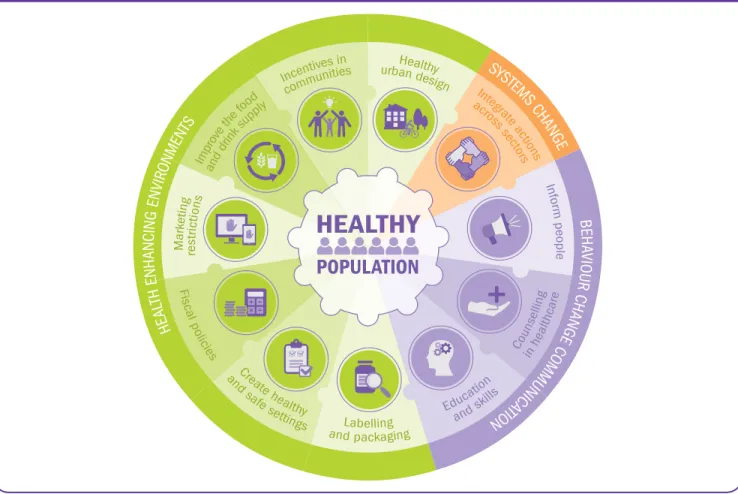
Environmental, economic and social factors are all important upstream determinants of the behaviors and choices that affect the risk of cancer and other NCDs. Sustainable development is also important when considering lifestyle factors that affect the risk of cancer and other NCDs. Given the success of the NOURISHING framework, as evidenced by its wide adoption by policy makers, researchers and civil society organisations, WCRF International has used it to inform the development of a new structured policy framework addressing physical activity, alcohol consumption and breastfeeding . to diet.
Recommendations and implications for public health and policy¹ part of the third expert report available online. It is important to strive for policy coherence – where policies work together to achieve agreed goals rather than undermining each other. It is crucial to develop a framework for monitoring and evaluating policies, to assess the impact and effectiveness of implemented policies, before implementing regulatory measures.
As such, it is necessary to monitor and evaluate policies to determine whether they are having the expected impact(s) along the impact pathway and, if not, why, so that policy can be adjusted accordingly. It is important to consider how the core interests of different actors may conflict with those of health, and whether the way they carry out their activities helps or hinders the promotion of healthy diets, physical activity and breastfeeding. as well as reducing alcohol consumption. Industry has a role to play, but this should be limited to the implementation phase of the policy-making process.
It is not the role of the industry, particularly the food and beverage industry, to be involved in policy setting (apart from when asked to provide specific feedback), due to the inherent and unavoidable conflict of interest.

Assessing and interpreting evidence
Where possible, the panel has increasingly taken into account the effects of dietary patterns when reviewing evidence on diet and nutrition. This is important because people do not eat foods individually, but in combination, to form an overall diet or eating pattern, which is itself related to other health behaviors, such as smoking or physical activity. Although advanced epidemiological or statistical techniques can help minimize the inevitable effect of confounding.
Therefore, even where there is no direct evidence for dietary patterns, the panel has endeavored to interpret evidence on specific foods in relation to dietary patterns. There is more evidence for subtypes of cancer now, such as esophageal cancer, and therefore more conclusions about the effect of diet, physical activity or body fat on different risks for these subtypes. This is important because different exposures can affect the risk of different subtypes in different ways.
For example, there may be a threshold in the level of exposure below which there is no association with the risk of cancer, and above which there is. This has proven to be important, e.g. when recommendations have been drawn up on the level of consumption of alcoholic beverages. Stratified analyzes have provided valuable insight, e.g. when assessing the effect of exposures in relation to smoking status.
Emerging evidence of note
Although adherence to each individual recommendation provides cancer protection benefits, the most benefit is obtained by treating all ten recommendations as an integrated pattern of behavior related to diet, physical activity and other factors as a single overarching 'package' or lifestyle can be considered. Future Research Directions part of the Third Expert Report available online at wcrf.org/future-research-directions. As part of the Continuous Update Project (CUP) process, the Panel discussed the implications of recent findings that highlight the importance of adopting a more holistic focus, considering how different patterns of diet and physical activity combine to ' to create a metabolic state that more or less
The impact of diet, nutrition and physical activity across the life course on cancer risk. Stronger evidence for the impact of diet, nutrition and physical activity on outcomes in cancer survivors. Globally representative research on specific exposures and cancer. These areas are discussed in the following paragraphs and are for consideration by the research community and funding organizations at large.
More detailed information on all six areas can be found in the full Future Research Directions¹ section of the Third Expert Report available online.
Biological mechanisms by which diet, nutrition and physical activity affect
The role of diet and specific nutrients in maintaining and perturbing appropriate metabolism and function in this microenvironmental context is a research priority.
The impact of diet, nutrition and physical activity throughout the life
Better characterisation of diet, nutrition, body composition and
Better characterisation of cancer-related outcomes
Stronger evidence for the impact of diet, nutrition and physical activity on
Globally representative research on specific exposures and cancer