Clore, PhD, Department of Psychology, University of Virginia, Charlottesville, Virginia Paul Condon, PhD, Department of Psychology, Northeastern University, Boston, Massachusetts Daniel C. Department of Applied Psychology, New York University, New York, New York Jasmine mote, MA, Department Psychology, University of California, Berkeley. Yale Center for Emotional Intelligence, Yale University, New Haven, Connecticut Paul Rozin, PhD, Department of Psychology, University of Pennsylvania.
Chan School of Public Health, Boston, Massachusetts Jamil Zaki, Phd, Department of Psychology, Stanford University, Stanford, California.
I nterdIscIplInary
N. Johnson‑Laird and Keith Oatley
In both cases, you are aware of the propositional content and the emotions it triggers. Basic emotions depend on evolutionarily older subcortical areas of the brain, such as the limbic system. They all refer to the start of the recapitulation (bar 301) in the first movement of Beethoven's Ninth Symphony.
When the intentions of the main character in the story encounter vicissitudes, you experience emotions from your simulation. Furthermore, areas of the neocortex, such as the orbitofrontal cortex (OFC), have been shown to be important in affective processing (Damasio, 2005). A common technique for manipulating affect in the laboratory aims to change the subject's mood.
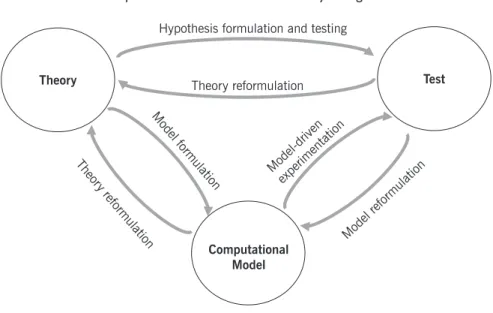
One of the most common measures of emotional arousal in the laboratory is the skin conductance response (SCR), a well-established correlate of sympathetic nervous system activity. The influence of stress on financial risk-taking depends on the riskiness of the decision. In the discussion that follows, we attempt to outline the nature of the links in these loops.
Those constructs will in turn be manipulated as part of the empirical testing of the model. Such a close connection between theory and model fundamentally affects the formulation of the model. The constructs of the theory must be mapped to the model's computational representations and algorithms in the model.
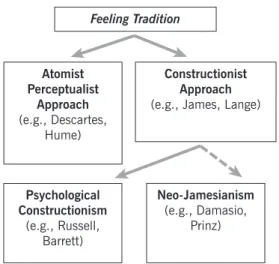
For example, appraisal theories (Scherer, Schorr, & Johnstone, 2001) typically argue that emotion arises from an assessment of the person. Consequently, it is not simply the predictions of the model that mattered under normal circumstances. They investigated whether a simulation of the model produces temporal dynamics similar to a real event.
Paper presented at the 33rd Annual Conference of the Cognitive Science Society, Austin, TX. Paper presented at the Proceedings of the National Conference on Artificial Intelligence, Vancouver, British Columbia, Canada.
B IologIcal p erspectIves
These processes may also be important for understanding the hedonic aspects of stable states of well-being in happy people, such as pleasure and reward mechanisms. The liking and wanting aspects of reward often appear to be lumped together in psychological experience, but evidence from affective neuroscience suggests that the psychological processes of liking versus wanting are quite distinct from each other and have separable brain mechanisms within the mesocorticolimbic. circuit. Here we examine how these brain mechanisms may help confer the distinct identity of two psychological components in ways that influence emotion.
In particular, we consider how desire and liking may help to understand the brain bases of human happiness, which is required by almost all individuals, and to understand the bases of drug addiction or addiction-related disorders. which destroy happiness. for some. Our thesis is that in everyday life, the processes of liking and wanting may occur together primarily as relatively transient paired psychological states that contribute to many rewarding emotions. If the liking component, in optimal balance with the desiring component, is recruited in a more frequent or repetitive manner, these components may also influence the realization of more stable states of well-being or happiness, which is a goal for many individuals. psychologically as.
When this happens in a way that the wanting component becomes specific and pathologically strong, the resulting imbalance between the two processes can contribute to addictions, which have powerful detrimental effects on well-being. We start with well-being or happiness and its relationship to the hedonistic psychology of liking and wanting. The first question is: “Can explanations of the brain basis of liking and wanting contribute to a better understanding of the hedonic side of happiness?” It has been proposed in Western psychological and philosophical frameworks for more than 2,000 years since it was originally proposed by Aristotle. , usefully thinks that happiness consists of at least two aspects: hedonia (pleasure) and eudaimonia (a life well lived in terms of average values). - ingfulness; Aristotle, 350 B.C.E./2009).
Based on this Aristotelian distinction, some choose to emphasize the eudaemonic side of happiness, assuming that happiness and well-being turn exclusively to a sense of meaning in life. A purely eudaimonic view may de-emphasize the hedonic side of happiness, since it holds that a well-lived and meaningful life must be happy regardless of whether a person takes.
Liking” and “Wanting” in Mind and Brain
Most of what affective neuroscience has learned so far about pleasure in the brain has come from studies of sensory pleasures, such as food pleasures or drug pleasures. In a sense, hedonic responses have been too important to survive for pleasure to be solely in the realm of subjective experience. At the conscious level, "liking" is the subjective feeling of pleasure in the ordinary sense of the word, which can be elaborated from (mostly subcortical) core liking reactions of cognitive brain mechanisms of consciousness.
These affective expressions are displayed by human infants in the very first days of life (Steiner, 1973). Integrated together, the two perspectives form a powerful standpoint for understanding the nature of pleasure and its sources in the brain. Each brain hotspot may be only a cubic millimeter or so in volume in a rat brain (and would be expected to be a cubic centimeter or so in a human, if proportional to the larger human volume of the whole brain).
The small size of each anatomical hotspot indicates a surprisingly localized concentration of trigger mechanisms sufficient to generate intense pleasure in the brain. Other hotspots are emerging in the prefrontal cortex and have been found further in the brain. For example, a very important hedonic hotspot lies in the ventral pallidum, which is close to the hypothalamus near the lower center of the forebrain and receives most of the output from the nucleus accumbens (Plate 7.2).
By comparison, “cognitive wanting,” in the more familiar sense of the word, is a very different form of desire. Conversely, tapping keys further back elicits strong anxious behavior (anti-predatory reactions to seeing or touching people, sometimes accompanied by anxious squeaks and escape attempts, or even attempts to bite someone who touches the normally free rat). is tame). ). Desire and fear are opposing emotions, but tapping the center of the accumbens keyboard reliably elicits both together.
In the stressful situation, the same taps in the nucleus accumbens mostly produced fearful responses. The hedonic impact and intake of food is increased by midazolam microinjection into the parabrachial nucleus. Meta-analysis, variation, and the search for brain-based essences in the science of emotion.
Meta‑analysis, Variation, and the Search for Brain‑Based essences in the Science of emotion
Similarly, electrical stimulation of the human medial temporal lobe (Halgren, Walter, Cherlow, & Crandall, 1978) has been shown to produce both pleasure and displeasure, and a recent review of human intracranial electrophysiological recordings reveals that upon stimulation, limbic, paralimbic, and cortical regions produce positive and negative affective responses in various cases (Guillory & Bujarski, 2014). More broadly, many regions in the affective workspace are considered “rich club hubs” (van den Heuvel & Sporns, 2013), meaning they are among the most connected regions of the brain. Consequently, different instances of the same emotion category will be variably represented in the brain, and instances belonging to different emotion categories (or even non-emotional categories such as cognitions or perceptions) will have some degree of similarity to each other.
In other work (Barrett b), we have proposed that the default mode network is one network that forms the core of the active inference process by which the brain perceives and acts on the world. This is logic of the active inference framework for understanding the brain (Barrett & Simmons, 2015). For example, individual differences in the use of regulation strategies are predictive of the experience of positive affect, better interpersonal functioning and general well-being (Gross & John, 2003).
To date, there has only been a systematic investigation of the brain basis of reappraisal as an emotion regulation strategy. A "brain state" refers to the full set of variables that. describe the neural circuits of the brain. Rather, to understand the magnitude of the variability in the brain basis for different instances of valence or emotion, or the similarity between two instances, it is necessary to quantify these instances in terms of brain states.
Large-scale brain networks in affective and social neuroscience: Toward an integrative functional architecture of the brain. The brain basis of positive and negative affect: Evidence from a meta-analysis of the human neuroimaging literature. The independence of affect is context dependent: An integrative model of the relationship between positive and negative affect.
For example, the authors of the meta-analyses published in two editions of the Handbook of Emotion (Cacioppo, Berntson, et al., 2000; Larsen et al., 2008) concluded that motivational tendencies embedded in emotional states show. somewhat consistent ANS pattern. For example, PEP is a chronotropic measure based on the time from left ventricular contraction to aortic valve opening. As such, it is one of the few non-dual innervated targets that solely represents SNS activation.