The first edition of The Coding Handbook for Qualitative Researchers (Sage Publications) has been cited by researchers and practitioners internationally in fields such as K-12 and higher education, human development, health care, social science, business, government, social services , technology - nology and the arts. The second edition of the Coding Handbook for Qualitative Researchers includes three new method profiles (Subcoding, Causal Coding, and Eclectic Coding); extended discussions in the Analysis sections; a new chapter describing the analytical processes of the transition between the First and Second Coding Cycles; additional methods of qualitative data analysis and writing after Second Cycle coding; and a new dictionary of 32 coding methods. Google Scholar updates, conferences, and e-mail correspondence with students and colleagues over the past four years have informed me how the first edition of the Coding Handbook for Qualitative Researchers has been used in a variety of international studies.
I hope that the expanded second edition of The Coding Manual for Qualitative Researchers will provide readers with even more pragmatic guidance for qualitative data analysis. This chapter first presents the objectives of The Coding Manual for Qualitative Researchers. The excellence of the research relies in large part on the excellence of the coding.
There are in fact several principles related to coding matters not discussed in the first two chapters that are unique to some of the profiles. The one-word capitalization code in the right column is called a descriptive code, which summarizes the primary subject of the excerpt:.
HOME
A related issue on which qualitative research methodologists disagree is the amount of data corpus—the totality of data—that should be coded. ATTENDANCE: I'd like to go back to the east coast, work at one of the major universities there. Basit (2003) compared personal experiences between manual and electronic coding and concluded, "the choice will depend on the size of the project, the funds and time available, and the inclination and expertise of the researcher."
I jokingly mused to myself whether this manual might be pejoratively labeled by some as "the Cliff's Notes of qualitative data analysis" or Coding for Dummies. Being rejected is one of the most devastating acts for a tween (and a child and a teenager and an adult). Ultimately, analytical memo writing is the transitional process from coding to the more formal writing up of the study (see Chapter Six).
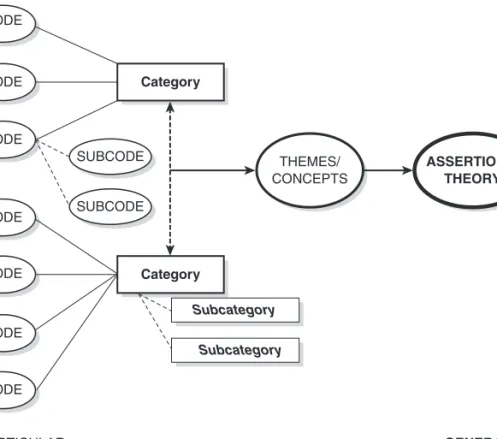
Briefly, grounded theory, developed in the 1960s, is generally considered one of the first methodologically systematic approaches to qualitative inquiry. Focused, axial, and theoretical coding are second-cycle methods—coding processes for the final stages of data analysis that both literally and metaphorically constantly compare, reorganize, or "focus" the codes into. Note how analytic note-taking is a connected component of the major stages, leading to the development of theory.
Spencer (2011) argues that reading the visual should use a sociological lens with a critical filter through analytical narratives with 'thick descriptions': 'the.
THREE
HOUSES
ECONOMICS 1. YEARS BUILT
- AVAILABLE UTILITIES B. DÉCOR
- OUTDOOR SURFACES 2. ART WORK
- RELIGIOUS ARTIFACTS C. YARDS
- FRONT YARDS
- SIDE AND BACK YARDS D. SECURITY
- FENCES AND GATES 2. SIGNAGE
- DOGS
They are more beautiful than last year." The flowers cost $150 and the goal is to earn $150 for them. 1b We're going to have so much 1b MOTIVATION a lot of fun today.” The girls leave with flowers. This type of coding can also help you see the "bigger picture" and "trees in the forest" at work in the data.
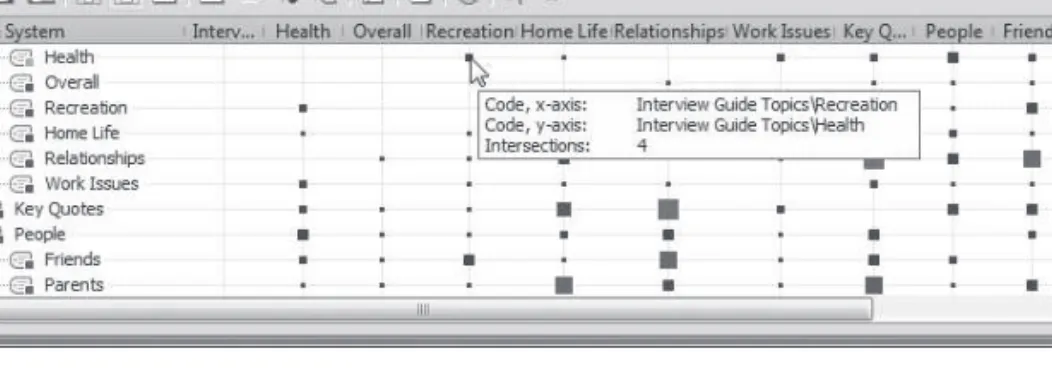
CAQDAS programs such as NVivo can apply multiple codes to the same passage of text, which later allows the computer to process “intersections”—creating associations, connections, and matrices (Bazeley, 2007). Descriptive coding summarizes with a word or a short phrase - most often as a noun - the basic theme of a passage of qualitative data. The root meaning of in vivo is “in that which is alive,” and as a code it refers to a word or short phrase from the actual language found in the qualitative data record, “the expressions [participants] use themselves” (Strauss, 1987, page 33).
Therefore, it is the memos themselves—the researcher's narratives—that are coded for further analysis. One analytical strategy with Emotion Codes is to trace the emotional journey or history of the codes—the structural arc they follow as certain events unfold. Researchers may choose to apply In Vivo codes during the first coding cycle (“TWILIGHT ZONE”), then more standard labels during the next cycle for emotions experienced by the participant (SUREAL).
Analytical memo writing can focus on what Gibson and Brown (2009) posit as “the reasons why the opposition exists; trying to explain how two oppositional features can exist in the same empirical space” (p. 141). Another concept of the dramaturgical character is the superobjective—the overarching or ultimate goal of the participant in the social drama. A motif is "the smallest element in a fairy tale" that has something unique about it, such as: characters (fools, ogres, widows, etc.), important objects or elements in the story (castle, food). , unusual habits, etc.) and individual events (hunting, transformation, marriage, etc.) (pp. 415-416).
The goal is to develop basic analytical skills to create an "evocative representation of the fieldwork experience," "the writing of a cultural history" (p. 121, emphasis in original). Goodall's text evocatively explores "the new ethnography"—stories based on data that weave "the researcher's personal experiences into meaning in ways that serve as analyzes of cultures" (p. 127). Holistic coding is useful when the researcher already has a general idea of what to examine in the data, or "to 'split' the text into broad topic areas as a first step to see what is there" (Bazeley, 2007, p . 67).
Gubrium and Holstein (1997) argue that “the what of the social world always shapes our understanding of the how. At the latent level, themes serve phenomenology, “the study of the lifeworld—the world as we immediately experience it pre-reflectively rather than as we conceptualize, categorize, or reflect on it.”