
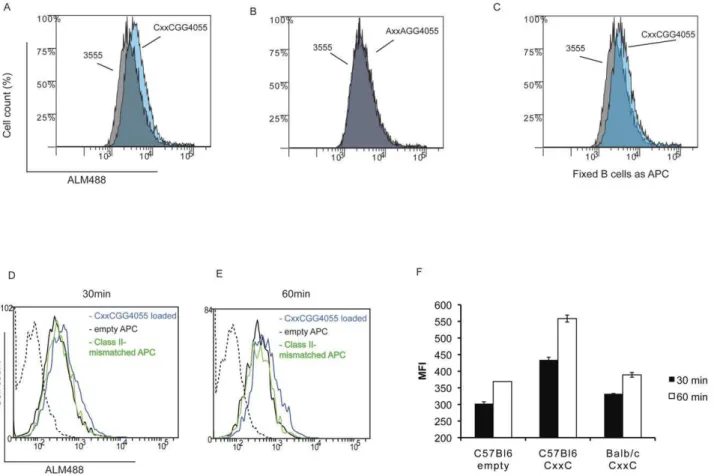
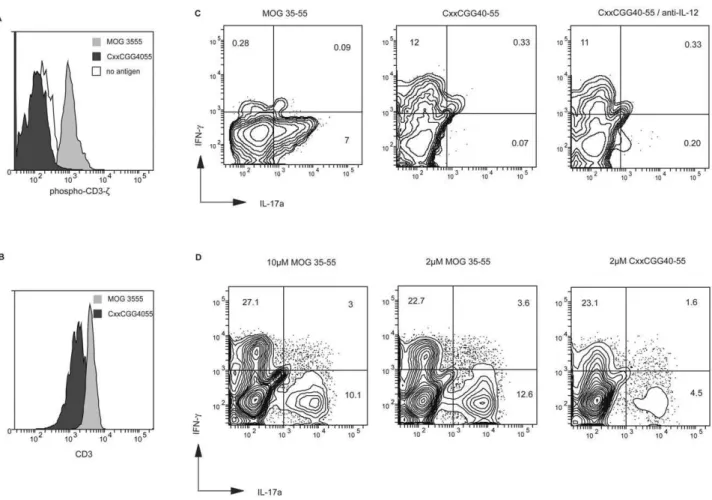
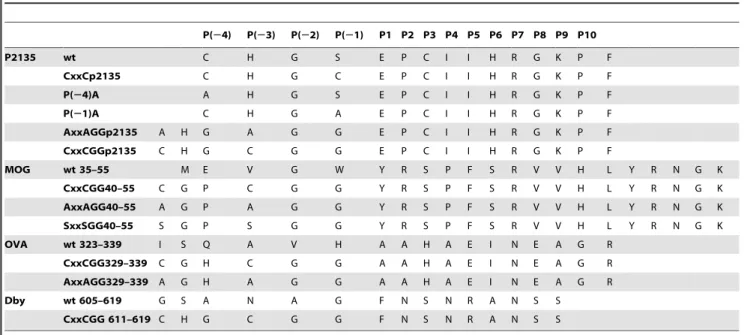
Increased synapse formation obtained by T cell epitopes containing a CxxC motif in flanking residues convert CD4+ T cells into cytolytic effectors.
Texto
Imagem



Documentos relacionados
These were characterized by a decrease in the frequency of activated effector T cell phe- notypes and of the T cell phenotype, most strictly associat- ed with Treg function (CD3 +
Thus, HVEM expressed on a CD8 T cell is required for survival of effector T cells and formation of a large population of cytokine- competent memory cells during infection with
These reagents were then used to assess vaccine performance as well as to establish T cell populations in quail, with a novel population of CD4/CD8 double positive T cells
IL-2R a expression was necessary for maximal GrB expression and Th1 effector functions in response to IAV infection. However, inflammation induced by viral infection could overcome
effects of CsA and Tac on the differentiation of naı¨ve CD4 + T cells into cytokine-producing memory T cells as well as on the actual cytokine secretion from memory CD4 + T cells
To further study the importance of CD8 T cells in the immunity to experimental malaria, T cell clones were obtained from spleen cells of BALB/c mice immunized with
marrow, T cell progenitors migrate to the thymus to develop to mature TCRalpha/beta CD4 and CD8 T cells, as well as TCRgamma/delta T cells.. During development in primary
Furthermore, mesenchymal stem cells promoted strong inhibition of CD4+ and CD8+ T cell proliferation, increased the frequency of CD4+CD25+Foxp3 T cells, and changed the global
