Propofol versus Midazolam for Upper
Gastrointestinal Endoscopy in Cirrhotic
Patients: A Meta-Analysis of Randomized
Controlled Trials
Hsiao-Chien Tsai1, Yu-Cih Lin1,2, Ching-Lung Ko1, Horng-Yuan Lou3, Ta-Liang Chen1,4, Ka-Wai Tam5,6,7,8*, Chien-Yu Chen1,9*
1Department of Anesthesiology, Taipei Medical University Hospital, Taipei Medical University, Taipei, Taiwan,2Graduate Institute of Nursing, College of Nursing, Taipei Medical University, Taipei, Taiwan,
3Division of Gastroenterology and Hepatology, Department of Internal Medicine, Taipei Medical University, Taipei, Taiwan,4Department of Anesthesiology, School of Medicine, College of Medicine, Taipei Medical University, Taipei, Taiwan,5Division of General Surgery, Department of Surgery, Taipei Medical University—Shuang Ho Hospital, New Taipei City, Taiwan,6Department of Surgery, School of Medicine, College of Medicine, Taipei Medical University, Taipei, Taiwan,7Center for Evidence-based Medicine, Taipei Medical University, Taipei, Taiwan,8Center for Evidence-based Health Care, Taipei Medical University-Shuang Ho Hospital, New Taipei City, Taiwan,9Graduate Institute of Humanities in Medicine, Taipei Medical University, Taipei, Taiwan
*[email protected](CYC);[email protected](KWT)
Abstract
Background
Sedation during gastrointestinal endoscopy is often achieved using propofol or midazolam in general population. However, impaired protein synthesis, altered drug metabolism, and compromised hepatic blood flow in patients with liver cirrhosis might affect the pharmacoki-netics of sedatives, placing cirrhotic patients undergoing endoscopy at a greater risk of ad-verse events. The objective of this study was to assess comparative efficacies and safety of propofol and midazolam in cirrhotic patients undergoing endoscopy.
Methods
Randomized, controlled trials comparing propofol with midazolam in cirrhotic patients un-dergoing gastrointestinal endoscopy were selected. We performed the meta-analysis, using a random-effect model, the Review Manager, Version 5.2, statistical software pack-age (Cochrane Collaboration, Oxford, UK) according to the PRISMA guidelines.
Results
Five studies between 2003 and 2012, including 433 patients, were included. Propofol provided a shorter time to sedation (weight mean difference: -2.76 min, 95% confidence in-terval: -3.00 to -2.51) and a shorter recovery time (weight mean difference -6.17 min, 95% confidence interval: -6.81 to -5.54) than midazolam did. No intergroup difference in the
OPEN ACCESS
Citation:Tsai H-C, Lin Y-C, Ko C-L, Lou H-Y, Chen T-L, Tam K-W, et al. (2015) Propofol versus Midazolam for Upper Gastrointestinal Endoscopy in Cirrhotic Patients: A Meta-Analysis of Randomized Controlled Trials. PLoS ONE 10(2): e0117585. doi:10.1371/journal.pone.0117585
Received:October 6, 2014
Accepted:December 28, 2014
Published:February 3, 2015
Copyright:© 2015 Tsai et al. This is an open access article distributed under the terms of theCreative Commons Attribution License, which permits unrestricted use, distribution, and reproduction in any medium, provided the original author and source are credited.
Data Availability Statement:All relevant data are within the paper and its Supporting Information files.
Funding:The authors have no support or funding to report.
incidence of hypotension, bradycardia, or hypoxemia was observed. Midazolam was asso-ciated with the deterioration of psychometric scores for a longer period than propofol.
Conclusion
This meta-analysis suggests that Propofol sedation for endoscopy provides more rapid se-dation and recovery than midazolam does. The risk of sese-dation-related side effects for pro-pofol does not differ significantly from that of midazolam. The efficacy of propro-pofol in cirrhotic patients undergoing endoscopy is superior to those of midazolam.
Introduction
Patients with liver cirrhosis undergo upper gastrointestinal endoscopy (UGIE) repeatedly dur-ing screendur-ing for adverse events related to portal hypertension, such as esophageal varices. To reduce patient discomfort, UGIE is frequently performed under sedation. However, impaired hepatic function and hepatic encephalopathy in cirrhotic patients increase the challenge and risk of sedation. Enhanced sedative effects caused by a higher plasma level of the drug or pro-longed sedative effects caused by delayed clearance might cause cardiopulmonary adverse
events and acute deterioration of hepatic encephalopathy, which might delay recovery.[1]
The most common sedative regimens used for UGIE consist of midazolam or propofol
alone with or without opioids [2,3]. Midazolam is superior to older benzodiazepines because of
its rapid onset and potent amnestic properties. However, the half-life of midazolam is still
pro-longed in patients with liver failure [4–6]. The hypnotic agent propofol is initially redistributed
to adipose tissue, reducing plasma concentration rapidly with short duration of action, then metabolized rapidly in the liver, and excreted by the kidney. Propofol is often used as an alter-native to midazolam in patients with impaired hepatic or renal function because it requires no
dose adjustment [7].
Because both midazolam and propofol are widely used sedate patients undergoing gastroin-testinal endoscopy (GIE), numerous comparative trials have been performed to evaluate the
ef-ficacy and safety of these drugs [1,8–16]. Some of these trials failed to detect a statistically
significant difference between midazolam and propofol because the samples were small. How-ever, two systematic reviews and meta-analyses of randomized controlled trials (RCTs) indicat-ed that the potential benefits of propofol sindicat-edation during GIE include a shorter recovery time, a shorter discharge time, higher postanesthesia recovery scores, greater sedation, and improved patient cooperation compared with midazolam sedation, with no increase in adverse events
[17,18]. However, whether propofol provides the same benefits in high-risk groups, such as
pa-tients with liver cirrhosis, remains unclear. The primary aim of our systematic review was to compare the safety and efficacy of using propofol and midazolam to sedate cirrhotic patients undergoing UGIE.
Methods
Data Sources and Search Strategy
Relevant studies were identified by conducting a computer search of the PubMed, EMBASE, Sco-pus, and Cochrane databases. The following Medical Subject Headings search headings were used
for the search:sedation,anesthesia,propofol,midazolamORdormicumORhypnovel and versedOR
endoscopyOResophago-gastro-duodenoscopyORpanendoscopyORgastroscopyORdiagnostic en-doscopic procedure. These terms and the combinations of these terms were also used in keyword
searches. To broaden the search, the“related articles”search feature provided by PubMed was used.
All of the retrieved abstracts, studies, citations were reviewed. We identified additional studies by manually searching the reference sections and contacting experts in the field. Unpublished studies
were identified by searching the ClinicalTrials.gov registry (http://clinicaltrials.gov/). The final
search was performed in November 2014 without language restrictions. The current systematic re-view was accepted by the international Prospective Register of Ongoing Systematic Rere-views of the National Institutes of Health Research (PROSPERO CRD42014009652).
Study Selection
Only RCTs that compared the use of propofol with the use of midazolam in sedating cirrhotic patients undergoing UGIE were included in our study. RCTs that (1) compared a propofol-based sedative regimen with a midazolam-propofol-based regimen, (2) examined patients with any stage of cirrhosis undergoing UGIE, and (3) addressed the incidence of sedation-related side effects or drug-related adverse events as outcomes of interest were included in the analysis. Studies meeting at least one of the following criteria were excluded from our analysis: (1) the patients were younger than 18 years of age; (2) other types of endoscopic examinations, such as colo-noscopy, were evaluated; (3) or the appropriate data could not be extracted or calculated based on the published results. When duplicate studies using the same data sets were published, the one with the larger population would be included.
Data Extraction and Quality Assessment
Two review authors (KWT and CYC) extracted the following information independently: au-thors; year of publication; study design and population characteristics; inclusion and exclusion criteria; the anesthetic regimen used; the anesthetic performance; and any resulting adverse events, including hypoxemia, hypotension, and bradycardia. The two reviewers assessed the el-igibility of the retrieved studies according to the inclusion criteria specified. All the data ex-tracted then cross-checked to rule out the discrepancy. Any disagreements were discussed with a third reviewer (HCT), and resolved by consnesus. The authors of the retrieved studies were contacted for additional information if necessary.
Methodological Quality Appraisal
The risk-of-bias method recommended by The Cochrane Collaboration was used to assess the
quality of the included RCTs[19]. The following domains were assessed: allocation
conceal-ment; allocation generation; blinding adequacy; completeness of outcome data; freedom from selective reporting and other biases.
Data Synthesis and Statistical Analysis
We used the following outcomes to evaluate the anesthetic performance of propofol and mida-zolam in cirrhotic patients during and after UGIE: (1) time to procedure; (2) time to recovery; (3) time to discharge; (4) procedure time; and (5) sedation-related adverse events, including hypotension, bradycardia, hypoxemia, and deterioration of encephalopathy. We conducted the meta-analysis using the Review Manager, Version 5.2, statistical software package (Cochrane Collaboration, Oxford, UK). The meta-analysis was performed according to the PRISMA
guidelines [20,21]. When necessary, standard deviations were estimated using the confidence
Risk ratios (RRs) were used as the summary statistic for the analysis of the dichotomous outcomes. The weighted mean difference (WMD) was determined for the continuous out-comes. The 95% CIs were determined for both the RRs and the WMDs. Pooled estimates of the
RR and WMD were determined using the DerSimonian and Laird random-effect model [22],
which provides an estimate of the average treatment effect in statistically heterogeneous studies and a large CI for conservative statistical claims.
To evaluate the statistical heterogeneity and the inconsistency of the treatment effects across
the studies, the CochraneQtest and theI2statistic were used, respectively. Statistical
signifi-cance was set at 0.10 for the CochraneQtests. The proportion of the total outcome variability
that was attributable to the variability across the studies was quantified asI2. Sensitivity
analy-ses were performed to asanaly-sess any impact of study quality on the effect estimates.
Results
Trial Characteristics
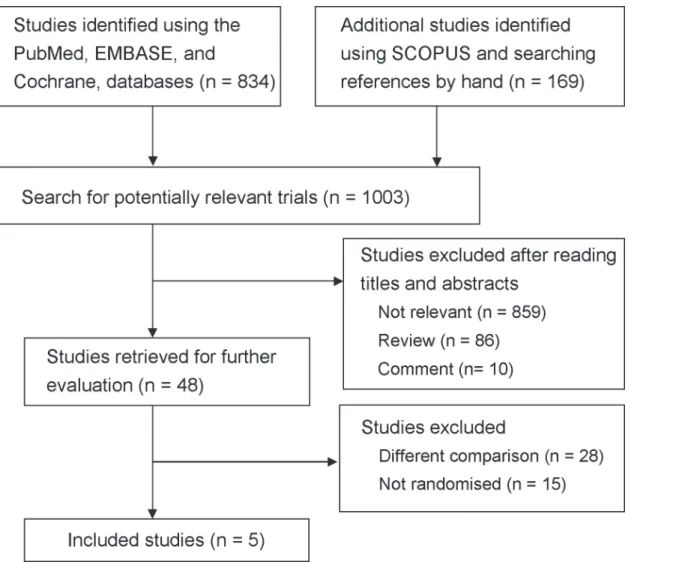
Five RCTs that examined a total of 433 patients were selected for our meta-analysis.Fig. 1
shows the selection process used in our study. The initial search strategy yielded 1003 citations.
Fig 1. Flowchart of the study selection process.
Based on the screening criteria for titles and abstracts, 955 studies were excluded. After review-ing the full text of the remainreview-ing 48 reports, five eligible RCTs were subjected to further analy-sis [1,23–26].
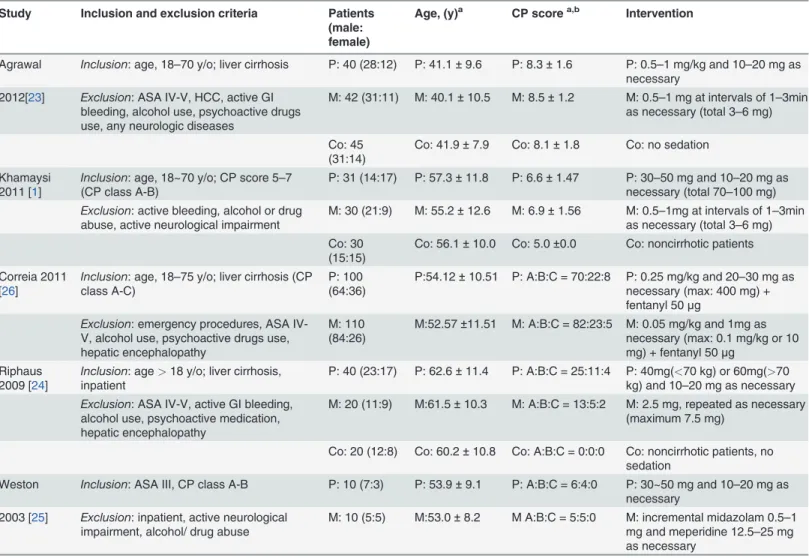
These five RCTS were published in English between 2003 and 2012, and had sample sizes ranging from 20 to 210 patients. All of the five trials examined cirrhotic patients with American
Society of Anesthesiologists (ASA) status II–III who underwent sedation with propofol or
mid-azolam for UGIE. A propofol group was compared with a midmid-azolam group in all of the trials. One RCT investigated the outcomes in cirrhotic patients who underwent UGIE without
under-going sedation [23]. In addition, one RCT compared the outcomes in a nonsedated group
with-out cirrhosis [24], and one study compared the outcomes in nonsedated and noncirrhotic
patients who were matched to the cirrhotic group [1]. Most of the patients included in the five
selected RCTs were Child-Pugh (CP) classification A or B. Similar regimens were used, except
the Weston study[25], which meperidine was used as rescue only in the midazolam group.
Other variation among the studies was minimal,. The patient characteristics, anesthetic
inter-ventions, and inclusion and exclusion criteria are reported inTable 1.
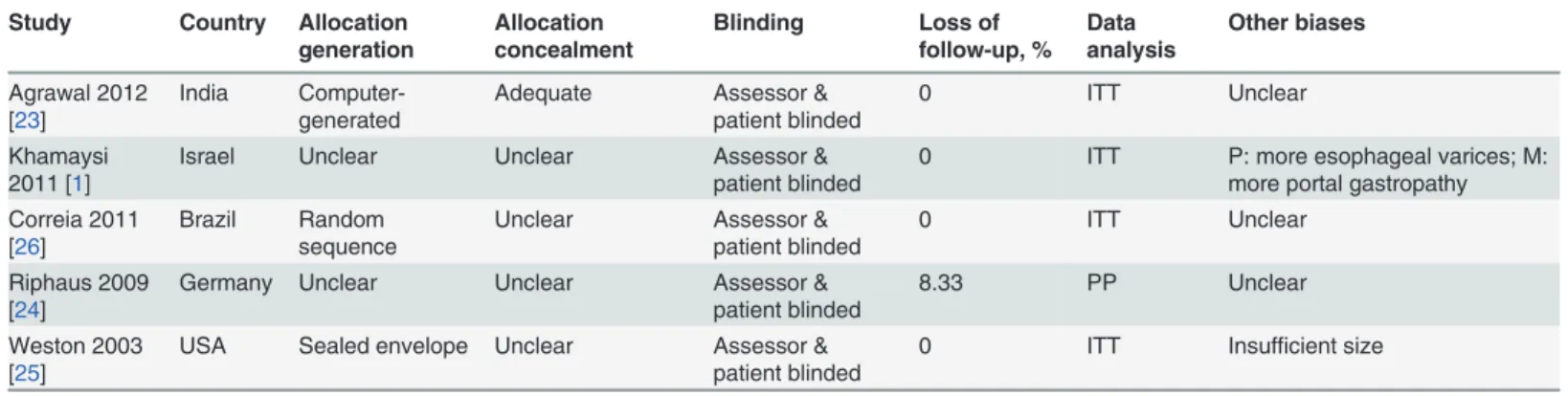
Table 2shows the results of the methodological quality assessment of the five selected RCTs.
Three of them used acceptable methods of randomization [23,25,26], and one of them clearly
de-scribed the method of allocation concealment [23]. All of them reported the blinding of the
pa-tients and the outcome assessors. All of the RCTs [1,23,25,26], except for the study by Riphaus
et al. [24], based their analyses on the intention-to-treat principle. The number of patients lost to
follow up was acceptable in all of the studies. None of the studies reported information that was relevant to determining incomplete data bias. Other biases included a significant difference in the
incidence of esophageal varices and portal gastropathy between two of the groups in one study [1].
Anesthetic Performance
(i) Time to sedation.Three of the selected RCTs [1,23,25] compared the time to sedation be-tween propofol and midazolam based on the time required to achieve adequate sedation after first administration of the sedative and reported significantly shorter induction times in the propofol groups. The meta-analysis revealed that the time to sedation for propofol was shorter
than that of midazolam (WMD: -2.67 min; 95% CI: -3.38 to-1.96;p<0.00001;Fig. 2).
Signifi-cant heterogeneity existed across these studies (I2= 73%,p= 0.03).
(ii) Time to recovery.One of the selected RCTs measured recovery based on a
postanesthe-sia recovery score of 10 [17]. Three of the selected RCTs [1,23,25] evaluated time to recovery
based on the following parameters: blood pressure and heart rate falling within 20% of baseline;
oxygen saturation>90% according to pulse oximetry, toleration of oral fluids, and ability to
stand without assistance or per baseline function. One of these three studies [25] required full
recovery of alertness based on the Observer’s Alertness and Assessment Scale [27]. The
meta-analysis indicated that propofol provided a significantly shorter time to recovery than
midazo-lam did (WMD: -8.27 min; 95% CI: -10.90 to-5.64;p<0.00001;Fig. 2). In addition, we
ob-served a high level of heterogeneity across the studies (I2= 82%;p= 0.0009).
.
(iii) Procedure time.Four of the selected RCTs [1,23–25] evaluated the period between en-doscope insertion and withdrawal. No significant difference was observed between the propo-fol and midazolam groups in any of these studies. However, the meta-analysis revealed that the procedure time was significantly shorter when midazolam was used than when propofol was
used (WMD: 0.61 min; 95% CI: 0.10 to 1.13;p= 0.02;Fig. 2).
endoscopist had discussed procedure results with the patient and his or her family member. The time to discharge with propofol was significantly shorter than that of midazolam in one
these studies (38.0 ± 9.0 vs 110.0 ± 42.0;p<0.001) [1], whereas no significant difference was
observed in the other study (54.2 ± 10.4 vs 71.0 ± 22.3;p= 0.07) [25]. The meta-analysis
re-vealed no significant difference in time to discharge between the propofol and midazolam
groups (WMD: -44.39 min; 95% CI: -98.49 to 9.7;p= 0.11;Fig. 3). A high level of heterogeneity
across the studies was noted (I2= 96%;p<0.00001).
Adverse events
(i) Hypotension.Four of the selected RCTs [23–26] evaluated hypotension based on a systolic
pressure below 90 mm Hg or a drop in blood pressure>20% from baseline. In these studies,
19 of the 190 patients in the propofol groups and 13 of the 182 patients in the midazolam
Table 1. Characteristics of the selected randomized controlled trials.
Study Inclusion and exclusion criteria Patients (male: female)
Age, (y)a CP scorea,b Intervention
Agrawal Inclusion: age, 18–70 y/o; liver cirrhosis P: 40 (28:12) P: 41.1±9.6 P: 8.3±1.6 P: 0.5–1 mg/kg and 10–20 mg as
necessary 2012[23] Exclusion: ASA IV-V, HCC, active GI
bleeding, alcohol use, psychoactive drugs use, any neurologic diseases
M: 42 (31:11) M: 40.1±10.5 M: 8.5±1.2 M: 0.5–1 mg at intervals of 1–3min
as necessary (total 3–6 mg)
Co: 45 (31:14)
Co: 41.9±7.9 Co: 8.1±1.8 Co: no sedation
Khamaysi 2011 [1]
Inclusion: age, 18~70 y/o; CP score 5–7 (CP class A-B)
P: 31 (14:17) P: 57.3±11.8 P: 6.6±1.47 P: 30–50 mg and 10–20 mg as
necessary (total 70–100 mg) Exclusion: active bleeding, alcohol or drug
abuse, active neurological impairment
M: 30 (21:9) M: 55.2±12.6 M: 6.9±1.56 M: 0.5–1mg at intervals of 1–3min
as necessary (total 3–6 mg) Co: 30
(15:15)
Co: 56.1±10.0 Co: 5.0±0.0 Co: noncirrhotic patients
Correia 2011 [26]
Inclusion: age, 18–75 y/o; liver cirrhosis (CP class A-C)
P: 100 (64:36)
P:54.12±10.51 P: A:B:C = 70:22:8 P: 0.25 mg/kg and 20–30 mg as
necessary (max: 400 mg) + fentanyl 50μg
Exclusion: emergency procedures, ASA IV-V, alcohol use, psychoactive drugs use, hepatic encephalopathy
M: 110 (84:26)
M:52.57±11.51 M: A:B:C = 82:23:5 M: 0.05 mg/kg and 1mg as necessary (max: 0.1 mg/kg or 10 mg) + fentanyl 50μg
Riphaus 2009 [24]
Inclusion: age>18 y/o; liver cirrhosis,
inpatient
P: 40 (23:17) P: 62.6±11.4 P: A:B:C = 25:11:4 P: 40mg(<70 kg) or 60mg(>70
kg) and 10–20 mg as necessary Exclusion: ASA IV-V, active GI bleeding,
alcohol use, psychoactive medication, hepatic encephalopathy
M: 20 (11:9) M:61.5±10.3 M: A:B:C = 13:5:2 M: 2.5 mg, repeated as necessary (maximum 7.5 mg)
Co: 20 (12:8) Co: 60.2±10.8 Co: A:B:C = 0:0:0 Co: noncirrhotic patients, no
sedation
Weston Inclusion: ASA III, CP class A-B P: 10 (7:3) P: 53.9±9.1 P: A:B:C = 6:4:0 P: 30~50 mg and 10–20 mg as
necessary 2003 [25] Exclusion: inpatient, active neurological
impairment, alcohol/ drug abuse
M: 10 (5:5) M:53.0±8.2 M A:B:C = 5:5:0 M: incremental midazolam 0.5–1
mg and meperidine 12.5–25 mg as necessary
CP: Child-Pugh; Co: control; P: propofol; M: midazolam; HCC: hepatocellular carcinoma
aData reported as the mean±standard deviation bCirrhosis staging reported as A:<7; B: 7
–9; and C:>9
Table 2. Methodological quality assessment of selected trials.
Study Country Allocation generation
Allocation concealment
Blinding Loss of follow-up, %
Data analysis
Other biases
Agrawal 2012 [23]
India Computer-generated
Adequate Assessor & patient blinded
0 ITT Unclear
Khamaysi 2011 [1]
Israel Unclear Unclear Assessor & patient blinded
0 ITT P: more esophageal varices; M: more portal gastropathy Correia 2011
[26]
Brazil Random sequence
Unclear Assessor & patient blinded
0 ITT Unclear
Riphaus 2009 [24]
Germany Unclear Unclear Assessor & patient blinded
8.33 PP Unclear
Weston 2003 [25]
USA Sealed envelope Unclear Assessor & patient blinded
0 ITT Insufficient size
ITT: Intention-to-treat; PP: Per-protocol; P: propofol; M: midazolam
doi:10.1371/journal.pone.0117585.t002
Fig 2. Forest plots of meta-analyses comparing the anesthetic performance of propofol to that of midazolam in RCTs of cirrhotic patients undergoing UGIE.Based on (1.1.1) time to sedation (1.1.2) time to recovery, or (1.1.3) procedure time.
groups exhibited hypotension. The meta-analysis revealed no significant difference in the
inci-dence of hypotension between the 2 groups (RR: 1.37; 95% CI: 0.69 to 2.73;p= 0.36;Fig. 4).
(ii) Hypoxemia.Hypoxemia was defined as saturation<85% in two of the selected studies
[1,25] and as<90% in the three remaining studies [23,24,26]. The incidence of hypoxemia
Fig 3. Forest plots of meta-analyses comparing the anesthetic performance of propofol to that of midazolam in RCTs of cirrhotic patients undergoing UGIE.Based on time to discharge.
doi:10.1371/journal.pone.0117585.g003
Fig 4. Forest plots of meta-analyses comparing the sedation-related adverse events of propofol to those of midazolam in RCTs of cirrhotic patients undergoing UGIE.Based on (2.1.1) incidence of hypotension, (2.1.2) incidence of hypoxemia, or (2.1.3) incidence of bradycardia.
was 4.52% (10/221) in the propofol group and 2.83% (6/212) in the midazolam group. The meta-analysis revealed no significant difference between the two groups (RR: 1.30; 95% CI:
0.48 to 3.54;p= 0.61;Fig. 4).
(iii) Bradycardia.Two of the selected RCTs [24,25] evaluated the incidence of bradycardia [24–26] based on a heart rate (HR)<50 beats per minute (bpm). A third RCT [26] defined
bradycardia as an HR<55 bpm or an HR<75% of the baseline HR. The incidence of
hypox-emia was 6% (9/150) in the propofol group and 2.86% (4/140) in the midazolam group. The meta-analysis revealed no difference between the two groups (RR: 1.64; 95% CI: 0.12 to 22.37;
p= 0.71). Significant heterogeneity existed among the selected RCTs (I2= 76%;p= 0.04;
Fig. 4).
(iv) Deterioration of hepatic encephalopathy.Three of the selected RCTs [1,23,24] evalu-ated the deterioration of minimal encephalopathy by using psychometric tests. Although a meta-analysis of these three studies was not possible because the evaluation methods used dif-fered, all three of the studies recommended that propofol be used as an alternative to
midazo-lam for sedating cirrhotic patients. Agrawal et al. [23] concluded that propofol sedation for
UGIE caused no deterioration in psychometric scores calculated using the number connection tests (NCTs) A and B, the digit symbol test, the line tracing test, and the serial dotting test. However, significant deterioration was observed in the critical flicker frequency (CFF) at
30 and 60 min (p= 0.01) [23]. At the mean CFF time, midazolam caused significant
deteriora-tion of psychometric test scores and increased the CFF compared with propofol [23]. Khamaysi
et al. [1] reported no overt hepatic encephalopathy after sedation, but acknowledged that
seda-tion with midazolam might exacerbate subclinical encephalopathy, leaving patients more encephalopathic at the time of discharge than at admission. The cognitive function score did not differ significantly between the two groups. Propofol impacted minimal encephalopathy less than midazolam did (NCT: 87.5 ± 62 s to 74.2 ± 58 s for propofol vs 72.8 ± 62 s to
85.6 ± 72 s for midazolam;p<0.01). The median discharge NCT scores for midazolam were
severe, whereas the median discharge NCT scores for propofol were moderate [1]. Riphaus
et al. [24] used the NCT and the portosystemic encephalopathy (PSE) test to evaluate minimal
hepatic encephalopathy, and observed that propofol sedation did not cause acute deterioration of minimal hepatic encephalopathy. The median time to complete the NCT improved by 13% in the propofol group, but remained unchanged in the midazolam group. Similar results were observed regarding the PSE scores. The PSE score generally declined after sedation with midazolam, whereas the propofol group exhibited a significant improvement in the PSE score,
possibly as the result of a learning effect [24].
Sensitivity analysis
A sensitivity analysis including trials with low methodological quality [1,24] (i.e., inadequate
description of the randomization and allocation concealment), or with a major research bias in
terms of rescue medication [25] showed no significant difference in the anesthetic performance
and the incidence of complications.
Discussion
We systematically evaluated and compared the efficacy and safety of using propofol and midazo-lam to sedate cirrhotic patients undergoing UGIE. Our results indicated that propofol does not cause acute deterioration of minimal hepatic encephalopathy. Propofol provided shorter times to sedation and recovery than midazolam, and no increase in adverse events was observed.
A previous meta-analysis [17] revealed that propofol sedation during GIE was associated
and/or fentanyl in the general population. Another meta-analysis showed that propofol was safe and effective for GIE and was associated with shorter recovery and discharge periods, higher post-anesthesia recovery scores, better sedation and greater patient cooperation than
traditional sedation, without an increase in cardiopulmonary complications [18]. However, the
impact of liver cirrhosis on the effects of sedatives in cirrhotic patients remains unclear. A pilot study evaluated the safety and efficacy of propofol use during endoscopy in Korean patients with cirrhosis, and determined that sedation with propofol was well tolerated in cirrhotic pa-tients; specifically, no deterioration in psychomotor function, even in cirrhotic patients with
hepatic encephalopathy, was observed [28]. Our study is the first meta-analysis to evaluate
an-esthesia for UGIE in cirrhotic patients. Our results indicated that propofol exhibits more favor-able anesthetic performance than midazolam does in reducing performance and does not increase the risk of adverse events or deterioration of encephalopathy.
Previous studies have reported that the pharmacokinetics and protein binding of propofol
are not markedly affected by moderate or uncomplicated cirrhosis [7,29,30]. Although
recov-ery times were significantly longer and the volume of distribution at a steady state was signifi-cantly greater in the patients with cirrhosis than in those without cirrhosis, no significant difference in protein binding, total body clearance, or terminal elimination half-life was
ob-served [31,32]. In the five RCTs selected for our study, 0.25 to 1 mg/kg of propofol was
admin-istered, and additional doses of 10 to 30 mg were administered as required. Such doses are
similar to those used to sedate healthy patients undergoing GIE. Khamaysi et al. [1] and
Riphaus et al. [24] reported that the anesthetic performance and the median PSE score change
in cirrhotic patients receiving propofol were similar to noncirrhotic patients, and were superior to those receiving midazolam.
Cardiopulmonary adverse events, such as hypoxia, hypotension, arrhythmia, and apnea, are concerns regarding propofol sedation in cirrhotic patients because propofol exhibits greater suppressive cardiopulmonary effects than midazolam does. A previous meta-analysis com-pared using propofol combined with other sedative agents to sedate patients undergoing GIE with sedation using propofol alone, and determined that administering a higher dose of
propo-fol did not increase the risk of cardiopulmonary adverse events [33]; this observation is
consis-tent with our findings that propofol sedation does not increase the risk of bradycardia, hypotension, or hypoxemia compared with midazolam sedation. Sedatives used for UGIE can be administered by anesthesiologists, gastroenterologists, and trained registered nurses. Among the RCTs analyzed in the current study, sedatives were induced by anesthesiologists,
gastroenterologists, and trained registered nurses in two [1,23], one [26], and one [25] of the
trials, respectively, and our meta-analysis revealed no significant difference in the incidence of major adverse events between these studies.
Our meta-analysis revealed that the procedure times in the midazolam groups were shorter than those in the propofol group, whereas propofol provided shorter times to sedation and re-covery. The times to sedation and recovery are direct indicators of anesthetic performance, whereas procedure time is influenced by additional factors such as endoscopic findings, the need for varix ligation, and the experience of the endoscopist. Riphaus et al. observed that band
ligation was more frequent in the propofol group than in the midazolam group [17]. Agrawal
et al. reported that the number of patients with large varices in the propofol group (n= 18) was
higher than that in midazolam group (n= 14) [16]. Future studies comparing UGIE procedure
time in patients sedated with propofol or midazolam are warranted to clarify these findings. The severity of liver cirrhosis is an independent variable in determining duration of drug
ac-tion. In our included studies, one mainly enrolled patients with CP classification A [1], one
re-cruited patients with CP classification B [23], and the other three trials included both CP
cirrhosis was, propofol provided faster time to sedation and time to recovery than those of mid-azolam. Because of the limited numbers of cirrhotic C patients recruited, the outcomes of pro-pofol and midazolam in these patients cannot be concluded and needs further investigations.
Various factors might have contributed to the high level of heterogeneity observed among the RCTs analyzed in our study. First, the CP scores varied considerably among the five studies. Second, the anesthetic interventions were not identical across all of the studies. Therefore, clini-cal factors, such as opioid dosages and the experience level of the anesthesiologists, might have contributed to heterogeneity. Third, differences in the definitions used for the various out-comes and adverse events might also have contributed to heterogeneity.
Our current findings are also subject to certain limitations. Variation in population charac-teristics, low patient numbers, unbalanced patient numbers among groups, differences in anes-thetic agents and dosages, variation in outcome analyses, and the methodological weaknesses inherent in the selected RCTs might limit inferences based on our results. Furthermore, in one of the RCTs, more esophageal varices occurred in the propofol group than in the midazolam group and more portal gastropathy occurred in the midazolam group than in the propofol
group [1]; these results might have confounded the outcome analysis. Moreover, most of the
RCTs included in our current study examined patients with mild to moderate cirrhosis. There-fore, our findings might not be applicable to patients with severe cirrhosis.
In conclusion, our meta-analysis revealed that, compared with midazolam sedation, cirrhot-ic patients undergoing UGIE who are sedated using propofol exhibit more rapid sedation, faster recovery, earlier discharge, and more favorable psychometric and cognitive scores than do those sedated using midazolam, with no increased risk of hypotension, bradycardia, or hyp-oxemia. Therefore, we recommend using propofol as an alternative to midazolam in sedating cirrhotic patients undergoing UGIE.
Supporting Information
S1 PRISMA Checklist.
(DOCX)
S1 Excluded Studies List.
(DOCX)
Author Contributions
Conceived and designed the experiments: KWT CYC. Performed the experiments: CYC HCT YCL. Analyzed the data: HCT YCL. Contributed reagents/materials/analysis tools: KWT CYC. Wrote the paper: HCT CLK KWT CYC TLC. Interpreted the results: HYL KWT.
References
1. Khamaysi I, William N, Olga A, Alex I, Vladimir M, et al. (2011) Sub-clinical hepatic encephalopathy in cirrhotic patients is not aggravated by sedation with propofol compared to midazolam: a randomized controlled study. J Hepatol 54: 72–77. doi:10.1016/j.jhep.2010.06.023PMID:20934771
2. Cohen LB, Wecsler JS, Gaetano JN, Benson AA, Miller KM, et al. (2006) Endoscopic sedation in the United States: results from a nationwide survey. Am J Gastroenterol 101: 967–974. PMID:16573781
3. Froehlich F, Harris JK, Wietlisbach V, Burnand B, Vader JP, et al. (2006) Current sedation and monitor-ing practice for colonoscopy: an International Observational Study (EPAGE). Endoscopy 38: 461–469. PMID:16767580
4. Allonen H, Ziegler G, Klotz U (1981) Midazolam kinetics. Clin Pharmacol Ther 30: 653–661. PMID: 6117393
6. Daneshmend TK, Bell GD, Logan RF (1991) Sedation for upper gastrointestinal endoscopy: results of a nationwide survey. Gut 32: 12–15. PMID:1991631
7. Servin F, Cockshott ID, Farinotti R, Haberer JP, Winckler C, et al. (1990) Pharmacokinetics of propofol infusions in patients with cirrhosis. Br J Anaesth 65: 177–183. PMID:2223333
8. Sipe BW, Rex DK, Latinovich D, Overley C, Kinser K, et al. (2002) Propofol versus midazolam/ meperidine for outpatient colonoscopy: administration by nurses supervised by endoscopists. Gastro-intest Endosc 55: 815–825. PMID:12024134
9. Carlsson U, Grattidge P (1995) Sedation for upper gastrointestinal endoscopy: a comparative study of propofol and midazolam. Endoscopy 27: 240–243. PMID:7664702
10. Chin NM, Tai HY, Chin MK (1992) Intravenous sedation for upper gastrointestinal endoscopy: Midazo-lam versus propofol. Singapore Med J 33: 478–480. PMID:1455272
11. Oei-Lim VL, Kalkman CJ, Bartelsman JF, Res JC, van Wezel HB (1998) Cardiovascular responses, arte-rial oxygen saturation and plasma catecholamine concentration during upper gastrointestinal endoscopy using conscious sedation with midazolam or propofol. Eur J Anaesthesiol 15: 535–543. PMID:9785067
12. Meining A, Semmler V, Kassem AM, Sander R, Frankenberger U, et al. (2007) The effect of sedation on the quality of upper gastrointestinal endoscopy: an investigator-blinded, randomized study compar-ing propofol with midazolam. Endoscopy 39: 345–349. PMID:17285514
13. Kiriyama S, Gotoda T, Sano H, Oda I, Nishimoto F, et al. (2010) Safe and effective sedation in endo-scopic submucosal dissection for early gastric cancer: a randomized comparison between propofol continuous infusion and intermittent midazolam injection. J Gastroenterol 45: 831–837. doi:10.1007/ s00535-010-0222-8PMID:20228999
14. Dewitt J, McGreevy K, Sherman S, Imperiale TF (2008) Nurse-administered propofol sedation com-pared with midazolam and meperidine for EUS: a prospective, randomized trial. Gastrointest Endosc 68: 499–509. doi:10.1016/j.gie.2008.02.092PMID:18561925
15. Ulmer BJ, Hansen JJ, Overley CA, Symms MR, Chadalawada V, et al. (2003) Propofol versus midazolam/fentanyl for outpatient colonoscopy: administration by nurses supervised by endoscopists. Clin Gastroenterol Hepatol 1: 425–432. PMID:15017641
16. Patterson KW, Casey PB, Murray JP, O’Boyle CA, Cunningham AJ (1991) Propofol sedation for outpatient upper gastrointestinal endoscopy: comparison with midazolam. Br J Anaesth 67: 108–111. PMID:1859744
17. Qadeer MA, Vargo JJ, Khandwala F, Lopez R, Zuccaro G (2005) Propofol versus traditional sedative agents for gastrointestinal endoscopy: a meta-analysis. Clin Gastroenterol Hepatol 3: 1049–1056. PMID:16271333
18. Wang D, Chen C, Chen J, Xu Y, Wang L, et al. (2013) The use of propofol as a sedative agent in gastro-intestinal endoscopy: a meta-analysis. PLoS One 8: e53311. doi:10.1371/journal.pone.0053311 PMID:23308191
19. Higgins JPT, Green S, Cochrane Collaboration (2008) Cochrane handbook for systematic reviews of interventions. Chichester, England; Hoboken, NJ: Wiley-Blackwell. xxi, 649 p. p. doi:10.1002/ 14651858.CD004741.pub2PMID:18843668
20. Moher D, Liberati A, Tetzlaff J, Altman DG, Group P (2009) Preferred reporting items for systematic reviews and meta-analyses: the PRISMA statement. BMJ 339: b2535. doi:10.1136/bmj.b2535PMID:19622551
21. Shea BJ, Hamel C, Wells GA, Bouter LM, Kristjansson E, et al. (2009) AMSTAR is a reliable and valid measurement tool to assess the methodological quality of systematic reviews. J Clin Epidemiol 62: 1013–1020. doi:10.1016/j.jclinepi.2008.10.009PMID:19230606
22. DerSimonian R LN (1986) Meta-analysis in clinical trials. Controlled Clin Trials 7: 177–188. PMID: 3802833
23. Agrawal A, Sharma BC, Sharma P, Uppal R, Sarin SK (2012) Randomized controlled trial for endosco-py with propofol versus midazolam on psychometric tests and critical flicker frequency in people with cirrhosis. J Gastroenterol Hepatol 27: 1726–1732. doi:10.1111/j.1440-1746.2012.07231.xPMID: 22861074
24. Riphaus A, Lechowicz I, Frenz MB, Wehrmann T (2009) Propofol sedation for upper gastrointestinal en-doscopy in patients with liver cirrhosis as an alternative to midazolam to avoid acute deterioration of minimal encephalopathy: a randomized, controlled study. Scand J Gastroenterol 44: 1244–1251. PMID:19811337
25. Weston BR, Chadalawada V, Chalasani N, Kwo P, Overley CA, et al. (2003) Nurse-administered pro-pofol versus midazolam and meperidine for upper endoscopy in cirrhotic patients. Am J Gastroenterol 98: 2440–2447. PMID:14638346
27. Chernik DA, Gillings D, Laine H, Hendler J, Silver JM, et al. (1990) Validity and reliability of the Observ-er’s Assessment of Alertness/Sedation Scale: study with intravenous midazolam. J Clin Psychophar-macol 10: 244–251. PMID:2286697
28. Suh SJ, Yim HJ, Yoon EL, Lee BJ, Hyun JJ, et al. (2014) Is propofol safe when administered to cirrhotic patients during sedative endoscopy? Korean J Intern Med 29: 57–65. doi:10.3904/kjim.2014.29.1.57 PMID:24574834
29. Servin F, Desmonts JM, Haberer JP, Cockshott ID, Plummer GF, et al. (1988) Pharmacokinetics and protein binding of propofol in patients with cirrhosis. Anesthesiology 69: 887–891. PMID:3264120
30. Servin F, Desmonts JM, Farinotti R, Haberer JP, Winckler C (1988) Pharmacokinetics of propofol ad-ministered by continuous infusion in patients with cirrhosis. Preliminary results. Anaesthesia 43 Suppl: 23–24. PMID:3259091
31. Wu J, Huang SQ, Chen QL, Zheng SS (2013) The influence of the severity of chronic virus-related liver disease on propofol requirements during propofol-remifentanil anesthesia. Yonsei Med J 54: 231–237. doi:10.3349/ymj.2013.54.1.231PMID:23225825
32. Costela JL, Jimenez R, Calvo R, Suarez E, Carlos R (1996) Serum protein binding of propofol in pa-tients with renal failure or hepatic cirrhosis. Acta Anaesthesiol Scand 40: 741–745. PMID:8836272