Submitted16 July 2015 Accepted 2 February 2016 Published1 March 2016
Corresponding author Karen S. Bishop, [email protected]
Academic editor D. Gareth Evans
Additional Information and Declarations can be found on page 12
DOI10.7717/peerj.1731
Copyright 2016 Bishop et al.
Distributed under
Creative Commons CC-BY 4.0
OPEN ACCESS
An examination of clinical differences
between carriers and non-carriers of
chromosome 8q24 risk alleles in a New
Zealand Caucasian population with
prostate cancer
Karen S. Bishop1, Dug Yeo Han2,3, Nishi Karunasinghe1, Megan Goudie4,
Jonathan G. Masters4and Lynnette R. Ferguson1,2,3
1Auckland Cancer Society Research Centre, Faculty of Medical and Health Sciences, University of Auckland, Auckland, New Zealand
2Nutrigenomics New Zealand, University of Auckland, Auckland, New Zealand
3Discipline of Nutrition and Dietetics, Faculty of Medical and Health Sciences, University of Auckland, Auck-land, New Zealand
4Urology Department, Auckland District Health Board, Auckland, New Zealand
ABSTRACT
Background.Prostate cancer makes up approximately 15% of all cancers diagnosed
in men in developed nations and approximately 4% of cases in developing nations. Although it is clear that prostate cancer has a genetic component and single nucleotide polymorphisms (SNPs) can contribute to prostate cancer risk, detecting associations is difficult in multi-factorial diseases, as environmental and lifestyle factors also play a role. In this study, specific clinical characteristics, environmental factors and genetic risk factors were assessed for interaction with prostate cancer.
Methods.A total of 489 prostate cancer cases and 427 healthy controls were genotyped
for SNPs found on chromosome 8q24 and a genetic risk score was calculated. In addition the SNPs were tested for an association with a number of clinical and environmental factors.
Results.Age and tobacco use were positively associated, whilst alcohol consumption
was negatively associated with prostate cancer risk. The following SNPs found on chromosome 8q24 were statistically significantly associated with prostate cancer:
rs10086908,rs16901979;rs1447295andrs4242382. No association between Gleason score and smoking status, or between Gleason score and genotype were detected.
Conclusion. A genetic risk score was calculated based on the 15 SNPs tested and
found to be significantly associated with prostate cancer risk. Smoking significantly contributed to the risk of developing prostate cancer, and this risk was further increased by the presence of four SNPs in the 8q24 chromosomal region.
SubjectsOncology, Urology, Medical Genetics
INTRODUCTION
Population differences in cancer incidence may reflect differences in genotype and intake of, or exposure to cancer promoting or preventative factors. Identification of genetic risk factors for cancer often utilises linkage studies in high-risk families, but this approach has proved difficult when applied to prostate cancer due to interacting lifestyle and environmental factors (Crawford, 2003;Xu, Sun & Zheng, 2013). The only clearly established risk factors for prostate cancer are increasing age, family history of prostate cancer and ethnicity (Crawford, 2003;Nordström et al., 2013;Sun et al., 2011), although adoption of a Western diet, increased life expectancy and PSA testing are thought to contribute to the rise in detection of prostate cancer in Asian countries (Xu, Sun & Zheng, 2013).
Although there is evidence for a significant hereditary component of prostate cancer susceptibility, results are inconsistently replicated. A positive family history of prostate cancer is associated with increased risk, but relative risk (RR) ratios vary from one study to the next (Goh et al., 2012). Twin studies have been used to reveal the heritability of prostate cancer and values have ranged from 0.36 to 0.57 (Ahlbom et al., 1997;Lichtenstein et al., 2000;Neale et al., 2005;Page et al., 1997) leaving no doubt regarding a strong genetic component. In addition, in a review of genetic association studies, Xu et al. (Goh et al., 2012;Xu, Sun & Zheng, 2013) concluded that RR of prostate cancer was highest if a primary relative, particularly a brother, was diagnosed with prostate cancer before the age of 60 years.
In numerous studies the association between single nucleotide polymorphisms (SNPs) in the 8q24 region and prostate cancer, have been reported (Amundadottir et al., 2006; Gudmundsson et al., 2007;Wang et al., 2011). For example the A allele of SNPrs1447295
was associated with an increased prostate cancer risk in Japanese, Native, Latino, African and European Americans (Freedman et al., 2006;Gudmundsson et al., 2007;Severi et al., 2007). However, reports on this SNP explain only a portion of the signal described (Amundadottir et al., 2006), and fail to account for all of the heritability. Of the five haplotype blocks (on 8q24) associated with various cancers, three solely and independently contribute to prostate cancer risk (Ghoussaini et al., 2008).
SNPs found in 8q24 regions 1-3 and thought to be associated with prostate cancer risk will be examined in this study and tested for interactions with clinical and environmental factors in a New Zealand population.
MATERIALS AND METHODS
A retrospective case-control, population-based study was performed to explore the association between 8q24 genotypes and the clinical manifestations of prostate cancer.
A total of 916 male participants (489 with prostate cancer and 427 healthy controls) were recruited from Auckland, New Zealand (NZ) between 2006 and 2014. The study was more than adequately powered based on calculations carried out prior to recruitment on expectedGPX1rs1050450T allele frequency (24 volunteers were required for each group based on a difference in allele frequency of 0.058, significance =0.05% and power= 80%). Only those who self-reported as having European ancestry were included in this analysis. Due to very small numbers, and therefore low statistical power, it was decided not to analyse data from other ethnic groups. Control participants were a group with no known cancers at recruitment (with the exception of skin cancers). The volunteers were recruited with written informed consent and formed part of either the Urology Study or the Selenium Supplementation Study carried out by the Auckland Cancer Society Research Centre, University of Auckland after receiving approval of the study from the Health and Disabilities Ethics Committees: Northern Y Regional Ethics Committee, NZ, (Ethics Ref: NTY/05/06/037 and NTY/06/07/060). Men with prostate cancer who met the study requirements were selected from the databases from the Auckland Regional Urology facility. This database incorporated the Auckland District Health Board, Counties Manukau District Health Board, Waitemata District Health Board and private practices within the Auckland region. Hardcopy invitations were sent to all eligible men with an approximately 25% response rate. Among the Selenium Supplementation Study participants, only those who consented to the use of their blood samples for future NZ Ethics Committee accredited studies were used in this analysis. The following data were collected and analysed: date of birth, height, weight, chronic medication, smoking status, family history of cancer, diagnostic PSA and Gleason score (where relevant). Data were collected at the time of enrolment. For the prostate cancer group, enrolment initially took place within 12 months of diagnosis (60.2% of those enrolled) and thereafter enrolment criteria were modified such that diagnosis could have taken place at any time prior to enrolment. Gleason scores were obtained from biopsy histopathology unless participants underwent a prostatectomy, in which case the post-surgical Gleason score was used. Alcohol consumption was categorised as ‘‘Yes’’ or ‘‘No’’ such that ‘‘Yes’’ applied to anyone who consumed one or more alcoholic units per week over the past year (prior to recruitment). Smoking was categorised as ‘‘never’’ or ‘‘ever’’ smoked. ‘‘Ever’’ smoked presented both ‘‘present’’ and ‘‘former’’ smokers, as there was insufficient power to analyse ‘‘present’’ smokers on their own. The study investigators were not blinded to group allocation.
Table 1 Association of SNPs with prostate cancer-from the literature.Association of 15 prostate cancer susceptibility single nucleotide polymor-phisms, found on 8q24, with the weighted genetic risk score and assigned weights.
SNP Tested Allele Published OR Weight LN (OR) % of total weight Source
rs10086908 T 1.25 from stage 1 0.223 5.94% Al Olama et al. (2009b)
rs1016342 C 1.26 0.231 6.15% Pal et al. (2009)
rs1016343 T 1.11 0.104 2.77% Al Olama et al. (2009b)
rs1378897 A 1.26 (ns) 0.231 6.15% Pal et al. (2009)
rs1447295 A 1.58 0.457 12.17% Gudmundsson et al. (2009)
rs16901979 A 1.8 0.588 15.65% Gudmundsson et al. (2009)
rs16902094 G 1.21 0.191 5.09% Gudmundsson et al. (2009)
rs4242382 A 1.39 0.329 8.76% Teerlink et al. (2014)
rs445114 T 1.14 0.131 3.49% Gudmundsson et al. (2009)
rs620861 C 1.11 from stage 1 (ns) 0.104 2.77% Al Olama et al. (2009b)
rs6470494 T 1.00a 0.0 0.0% Pal et al. (2009)
rs6470517 A 1.58 0.457 12.17% Pal et al. (2009)
rs6983267 G 1.19 0.174 4.63% Al Olama et al. (2009b)
rs7000448 T 1.23 0.207 5.51% Ghoussaini et al. (2008)
rs871135 G 1.39 0.329 8.76% Pal et al. (2009)
Notes.
aOR fromPal et al. (2009)was 1.00. InLiu, Wang & Han (2011)a meta-analysis was carried out with the following results: GWAS meta-analysis OR
=1.14; Replication meta-analysis OR=1.00; All meta-analyses OR=1.14. It was decided to use the OR value from the Replication meta-analysis.
SNP, Single nucleotide polymorphism; ns, Not significant; OR, Odds ratio; LN, Natural log.
genomic DNA extraction was carried out with the QIAamp DNA Blood Mini Kit (Qiagen, Hilden, Germany). A fully automated procedure on the QIAcube (Qiagen) was followed according to the manufacturer’s recommendations. DNA was quantified and checked for purity using a Nanodrop ND1000 (Thermo Fisher Scientific, Waltham, MA, USA), stored at−20 ◦C and used for genotyping at a concentration of 10 ng/
µl.
Genotyping: SNPs were selected based on results from a literature search targeting SNPs that are associated with prostate cancer and found on chromosome 8q24 (Al Olama et al., 2009b;Ghoussaini et al., 2008;Gudmundsson et al., 2009;Gudmundsson et al., 2007; Pal et al., 2009). None of the SNPs at the time of selection were known to be in LD with each other, and SNPs subsequently found to be in LD were removed from the analysis. Genotyping was performed using a Sequenom MassArray system (Sequenom, San Diego, CA, USA). The products were spotted and fired and run on a MALDI-TOF mass spectrometer. The quality of the genotyping was assessed by checking the results from CEU HapMap samples (n=6) and comparing them with SNP data available on the HapMap Genome Browser release #28, build #37.3 (http://hapmap.ncbi.nlm.nih.gov), as well as by comparing results from duplicate samples. SNP data are deposited in the Figshare repositoryfigshare.com/s/750929b0829d11e583c306ec4bbcf141.
Table 2 Lifestyle and clinical characteristics of the study participants.
Phenotypic variables Status Malignanta
(N=489)
Controla
(N=427)
OR (95% CI) Pvalue
Smoking status:N(%) Ever smoked (Current/Former)
227 (64.5) 144 (37.0) 2.28 (1.62–3.21) 2.32e−06
Never 125 (35.5) 245 (63.0) 1.00
137 38
Alcohol:N(%) Yes 265 (75.3) 338 (86.4) 0.57 (0.37-0.90) 0.0147
No 87 (24.7) 53 (13.6) 1.00
Missing Datab 137 36
Age at Diagnosis: Mean (SD) 65.8 (8.2) 53.1 (13.6) 1.10 (1.08–1.12) 9.88e−27
BMI: Mean (SD) 27.3 (3.8) 26.8 (3.7) 1.02 (0.98–1.07) 0.2934
Notes.
aN, Sample size (complete data set for all four variables with no missing data); OR, Odds ratio; CI, Confidence interval; SD, Standard deviation; BMI, Body mass index; ‘‘Yes’’, 1
or more alcoholic units a week;
bMissing Data, At least one missing datum point amongst the four variables.
value of each SNP made up to a total of 100%. Secondly, the weighted GRS (named wGRS15 in this study) was calculated by multiplying the weighted value of the SNP by the number of the tested allele of the SNP for each participant. Thirdly, these values were then summed across all of the 15 SNPs (De Jager et al., 2009).
Statistical Analysis: The outcome of interest, namely recorded pathology was fitted for association with 15 candidate SNPs found on chromosome 8q24. Four phenotypic variables (smoking status, alcohol consumption, age at diagnosis/joining the study, and body mass index (BMI)) were tested with the outcomes of interest using a multivariate analysis and squared data. Smoking status, alcohol consumption, and age at diagnosis (cases) were significantly associated with histology and hence these variables were adjusted for prior to further analyses. A generalised linear model was fitted to test the linearity of the genotype-phenotype relationship. For linearity of the genotype-phenotype relationship, an additive model was used whereby each SNP was coded 0, 1, and 2 (Balding, 2006).
All analyses were corrected for multiple testing using a false discovery rate (FDR) (Storey, 2002). SAS (V9.2 SAS Institute., Cary, NC, USA) and R (R Foundation for Statistical Computing, 2012) were used for statistical analyses.
RESULTS
The control group comprised of healthy men with no history of cancer (excluding melanoma) and a PSA below 4 ng/ml. The control group was significantly younger (mean age=53.1 years) than the men with prostate cancer (mean age 65.8 years). Within five years of enrolment 9 men from the control group had developed prostate cancer and were enrolled as volunteers on the Urology study. Tumour staging data were not used as less than 50% of the data were available. Gleason scores ranged from 4 to 10 with 36% of volunteers with a Gleason score of 6 or less, 45% with a Gleason score of 7 and 20% with a Gleason score of 8 or greater.
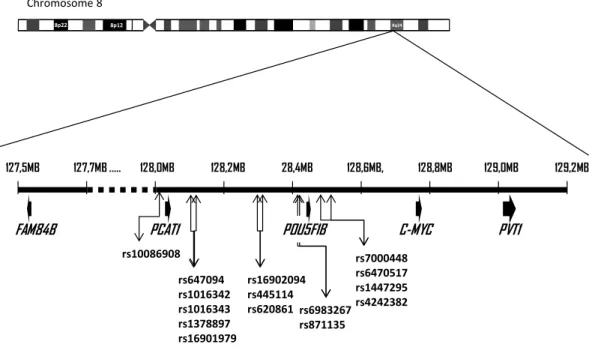
Figure 1 Schematic of 8q24 chromosomal region.Localisation of single nucleotide polymorphisms on 8q24.21 which were tested in this study and show association with prostate cancer risk and/or progression.
C-MYCandFAM84Bare known genes on 8q24 which border the so-called gene desert. The exact position
of the SNPs can be found inTable 3. (Figure adapted fromKastler et al., (2010)).
controls, with an odds ratio (OR) of 2.28 (95% CI [1.62–3.21]). An OR of 0.57 (95% CI [0.37–0.90]) was associated with alcohol consumption, indicating that fewer men with prostate cancer drank one or more alcoholic units per week, than healthy men. After performing a multivariate analysis it was found that as healthy men age, they tend to drink less, whereas men with prostate cancer drink comparatively more than healthy men of a similar age (p=3.24 e–07). In contrast, older men who smoked were more likely to have prostate cancer than those who never smoked (p=4.63 e–14). No significant association was found between BMI and prostate cancer. Smoking status, alcohol consumption and age of diagnosis were adjusted for further genotypic analysis. SNP locations are shown in Fig. 1 andTable 3. A risk assessment on malignancy in association with the SNPs is shown in Table 4.Rs16901979andrs6983561were both found to be in strong LD (D′
=0.999,p=2.22 e–16). For this reasonrs6983561was removed from all analyses. Four polymorphisms (rs10086908(T allele),rs16901979(Aallele),rs1447295(Aallele) andrs4242682(Aallele)) showed an increased risk of prostate cancer compared to the controls before and after adjustment for confounding variables, and remained significant after applying an FDR (Table 4).
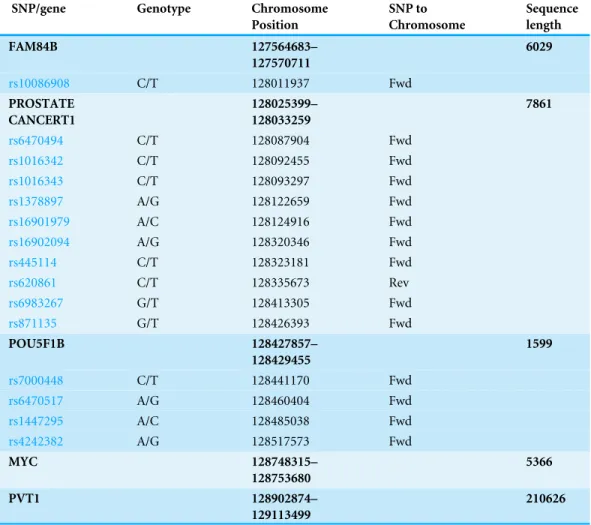
Table 3 Single nucleotide polymorphisms and known genes or pseudo genes in 8q24, listed by posi-tion on chromosome 8 (HapMap Genome Build 37.3).
SNP/gene Genotype Chromosome
Position
SNP to Chromosome
Sequence length
FAM84B 127564683–
127570711
6029
rs10086908 C/T 128011937 Fwd
PROSTATE CANCERT1
128025399– 128033259
7861
rs6470494 C/T 128087904 Fwd
rs1016342 C/T 128092455 Fwd
rs1016343 C/T 128093297 Fwd
rs1378897 A/G 128122659 Fwd
rs16901979 A/C 128124916 Fwd
rs16902094 A/G 128320346 Fwd
rs445114 C/T 128323181 Fwd
rs620861 C/T 128335673 Rev
rs6983267 G/T 128413305 Fwd
rs871135 G/T 128426393 Fwd
POU5F1B 128427857–
128429455
1599
rs7000448 C/T 128441170 Fwd
rs6470517 A/G 128460404 Fwd
rs1447295 A/C 128485038 Fwd
rs4242382 A/G 128517573 Fwd
MYC 128748315–
128753680
5366
PVT1 128902874–
129113499
210626
Notes.
SNP, Single nucleotide polymorphism; FAM84B, Family with sequence similarity 84, member B; PROSTATE CANCERT1, prostate cancer associated transcript 1; POU5F1B, POU class 5 homeobox 1B; MYC, v-myc avian myelocytomatosis viral oncogene homolog; PVT1, otherwise known as Pvt1 oncogene.
DISCUSSION
Table 4 Genotype and prostate cancer risk.Association of 15 prostate cancer susceptibility single nu-cleotide polymorphisms, found in 8q24, with risk of prostate cancer (after adjustment for age, alcohol consumption and smoking status).
Tested Allele N OR (95% CI) pvalue qvalue
rs10086908 Malignant T 364 1.64 (1.25–2.15) 3.03E−04 0.0040
Control 390 1.00
rs16901979 Malignant A 368 2.58 (1.48–4.50) 8.42E−04 0.0056
Control 388 1.00
rs1447295 Malignant A 362 1.70 (1.18–2.46) 0.0047 0.0209
Control 389 1.00
rs4242382 Malignant A 362 1.60 (1.10–2.33) 0.0133 0.0444
Control 388 1.00
rs16902094 Malignant G 366 1.31 (1.03–1.65) 0.0260 0.0695
Control 387 1.00
rs1016342 Malignant C 364 1.41 (1.02–1.95) 0.0369 0.0822
Control 389 1.00
rs445114 Malignant T 353 1.19 (0.93–1.54) 0.1729 0.3300
Control 392 1.00
rs620861 Malignant C 370 1.14 (0.90–1.46) 0.2798 0.3965
Control 369 1.00
rs6983267 Malignant G 362 1.14 (0.90–1.46) 0.2803 0.3965
Control 391 1.00
rs871135 Malignant G 355 1.14 (0.89–1.44) 0.2967 0.3965
Control 390 1.00
rs7000448 Malignant T 360 0.92 (0.72–1.18) 0.5032 0.6113
Control 386 1.00
rs1016343 Malignant T 345 1.06 (0.79–1.41) 0.7172 0.7986
Control 398 1.00
rs6470494 Malignant T 370 1.04 (0.81–1.34) 0.7794 0.8004
Control 390 1.00
rs1378897 Malignant A 372 1.05 (0.64–1.73) 0.8386 0.8004
Control 380 1.00
rs6470517 Malignant A 337 1.00 (0.68–1.45) 0.9836 0.8762
Control 391 1.00
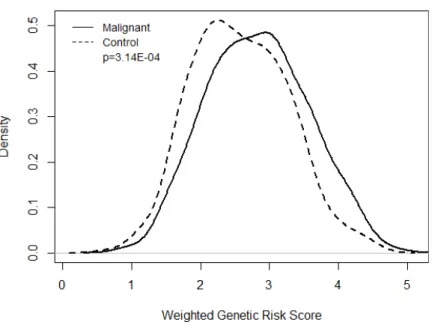
wGRS15 Malignant 283 1.10 (1.04–1.15) 3.14E−04
Control 341 1.00
Notes.
Bold text indicates statistically significant values.
N, Sample size; OR, Odds ratio; CI, Confidence interval; wGRS15, Weighted genetic risk score based on 15 single nucleotide polymorphisms;Q-value,p-value after correction for multiple testing (Storey, 2002).
Although in many cases the contribution to genetic risk and interaction with treatment type is understood, the interaction with environmental influences remains to be elucidated (Eeles et al., 2014).
Figure 2 Genetic risk score.Presentation of weighted genetic risk score differences using 15 genetic poly-morphisms found in the 8q24 chromosomal region.
degrees of uptake of available medical services, is that men in the different studies are diagnosed at a different stage of prostate cancer. PSA is a biomarker that was initially used to monitor response to treatment and since the early 1990’s has been used as an indicator for suspicion of asymptomatic prostate disease (Cooner et al., 1990). A problem arises as detection of prostate cancer using PSA as a screening method identifies lesions whose biological behaviour might not be the same as those identified due to clinical symptoms. In a country where a PSA screening programme is in place over a long period of time, one would expect most men to be recruited in the early stages of disease relative to a study carried out where PSA screening is not encouraged. Also, in the former one would expect to enrol more men with prostate cancer that might remain symptomless i.e., men who would die with prostate cancer and not from prostate cancer. NZ does not recommend PSA screening for asymptomatic men but the National Health Committee agree that prostate cancer is a suitable candidate for screening (NHC, 2004) and for example, one in four men over the age of 40 years living in the Waikato District of NZ were tested for PSA in 2010 (Hodgson et al., 2012). Of these, 71% were asymptomatic (Hodgson et al., 2012). For this reason one would expect a cohort of NZ men diagnosed with prostate cancer to consist of both early and later stage disease, and this is likely the case if Gleason score is considered as an indicator. Despite the increasing awareness of the risk of prostate cancer and the availability of the PSA test as an indicator of prostate cancer suspicion, those with a Gleason score of 8 or greater comprised 20% of the cohort, i.e., they were not diagnosed at an early stage of disease.
cancer risk (Table 2). No association was found between smoking and Gleason score (data not shown). Hereafter smoking was regarded as a confounding variable and adjusted for in further analyses (Table 2).
The lack of an association between BMI and prostate cancer incidence or more aggressive disease in our study could reflect the real lack of an association or it could be due to the inability of this study to adequately address this question. BMI was calculated at the time of enrolment, which varied from within 3 months to 8 years since diagnosis. However, just over 60% of volunteers with prostate cancer were enrolled within 12 months of diagnosis. BMI may have fluctuated over the lifespan and may also have changed since diagnosis and hence the measurement obtained may not reflect the BMI that influenced prostate cancer incidence. A cancer diagnosis sometimes evokes questions regarding causality, and some of our study participants self-reported a change in lifestyle with respect to smoking status, alcohol consumption, exercise and/or diet. Some of these lifestyle changes were maintained and were measurable (e.g., smoking cessation), whilst others (such as cooking methods and a decrease in animal fat intake) were not so easy to define and fluctuated over time. In addition to diagnosis, increasing age may influence lifestyle. In this study we know that fewer men with prostate cancer, drank alcohol than men who were healthy, but we also found that this association was confounded by age such that fewer older men with prostate cancer drank alcohol. Although there is evidence to support the view that alcohol consumption decreases with age, conflicting data also exists (Thomas & Dilip, 1999).
In contrast to the negative association between age and alcohol consumption, in this study age was positively associated with ever smoked and prostate cancer, thus supporting the view that risk of prostate cancer increases with age and smoking of tobacco. For this reason it is difficult to analyse the effect of some lifestyle changes on prostate cancer progression retrospectively and the time delay between diagnosis and enrolment is a limitation of this study.
The closest known gene is c-MYC (Hawksworth et al., 2010). Other neighbouring genes include the pseudogenePOU5F1P1(Kastler et al., 2010),FAM84B(Ghoussaini et al., 2008) andPVT1(Meyer et al., 2011) (Fig. 1).
C-MYC has an established role in carcinogenesis and is rearranged in approximately 15% of multiple myelomas (Glitza et al., 2015).C-MYC functions to regulate cell-cycle differentiation, proliferation and apoptosis (Albihn, Johnsen & Arsenian Henriksson, 2010) and hence it is an attractive candidate for an association with prostate cancer as these are important molecular targets for environmental variables in cancer prevention (Davis & Milner, 2007).C-MYCover-expression in prostate cancer enables androgen-independent growth and is associated with a Gleason score >5 (Karan et al., 2002;Yang et al., 2005). However, a number of authors have looked for an association between differences in c-MYCand miRNA transcription in normal and malignant tissues and 8q24 polymorphisms, yet no associations were found (Pomerantz et al., 2009;Ribeiro et al., 2007). Despite this, expression ofc-MYCin early prostatic cancer tissues has been shown to be a good indicator for aggressive disease (Hawksworth et al., 2010).
The coding sequence for the genePOU5F1Bis found in region 3 of chromosome 8q24 (also 4 exons and 3 transcriptional start sites are found in this region) and it is the only gene in this region with coding capacity. In addition it may play a role in regulating stem cell pluripotency (Nichols et al., 1998) and hence SNPs in this region may lead to prostate cancer susceptibility. AlthoughKastler et al. (2010)found a three-fold higherPOU5F1P1
expression in prostate cancer tissue versus surrounding normal tissue, andPal et al. (2009) have found an association between SNP variants in this region and susceptibility to prostate cancer (and in the case ofrs6470517with aggressive prostate cancer), no association has consistently been made between gene expression and prostate cancer risk variants in 8q24 (Gudmundsson et al., 2007) or experimental design has not included both expression and risk variants (Kastler et al., 2010;Pal et al., 2009). SNPs that may be associated with
POU5F1P1, namelyrs1447295andrs4242383, were found to be significantly associated with prostate cancer both before and after adjustment for confounders and after correction for multiple testing (Tables 2and4).Rs1447295 was one of the first variants in this region shown to have a strong association with prostate cancer risk in diverse populations (Amundadottir et al., 2006; Robbins et al., 2007; Yeager et al., 2007) and hence, in this respect, our data are consistent with that obtained by others.
Rs16901979 was found to be significantly associated with prostate cancer in this study). This is in general agreement with the article byGudmundsson et al. (2007)where
rs16901979is believed to contribute 2–4% to the heritability of prostate cancer in Caucasian populations, but a vastly greater percentage of heritability in Negroid populations.
CONCLUSION
Prostate cancer is one of the most common cancers amongst men, yet suitable biomarkers to accurately and reliably identify prostate cancer are not available. In this study both modifiable and non-modifiable risk factors for prostate cancer have been identified. A genetic risk score was calculated based on the 15 SNPs tested and found to be significantly associated with prostate cancer. Smoking and age significantly contributed to the risk of developing prostate cancer, and this risk was further increased by the presence of five SNPs in the 8q24 chromosomal region. The results presented here help to answer the question regarding the impact of modifiable risk factors, as well as polymorphisms in 8q24, on the risk of developing prostate cancer.
ACKNOWLEDGEMENTS
The authors thank Tom Manly (AgResearch, NZ) and Philip Shepherd (The Liggins Institute, NZ) for running the Sequenom plates. The volunteers who made this study possible by consenting to participate in this study are acknowledged.
ADDITIONAL INFORMATION AND DECLARATIONS
Funding
This work was supported by funding received from the New Zealand Cancer Society, Auckland Cancer Society, New Zealand; The Goodfellow Trust, New Zealand; and The A+ Trust, Auckland District Health Board, New Zealand. The funders had no role in study design, data collection and analysis, decision to publish, or preparation of the manuscript.
Grant Disclosures
The following grant information was disclosed by the authors: New Zealand Cancer Society.
Auckland Cancer Society. The Goodfellow Trust.
The A+ Trust, Auckland District Health Board.
Competing Interests
Lynnette R. Ferguson is an Academic Editor for PeerJ.
Author Contributions
• Karen S. Bishop conceived and designed the experiments, performed the experiments, wrote the paper, prepared figures and/or tables, reviewed drafts of the paper.
• Dug Yeo Han analyzed the data, contributed reagents/materials/analysis tools, wrote the paper, prepared figures and/or tables, reviewed drafts of the paper.
• Megan Goudie reviewed drafts of the paper, recruited and enrolled the volunteers with prostate cancer, obtained blood samples and obtain clinical data.
• Jonathan G. Masters reviewed drafts of the paper, involved in patient recruitment, provided clinical advice.
• Lynnette R. Ferguson contributed reagents/materials/analysis tools, reviewed drafts of the paper.
Human Ethics
The following information was supplied relating to ethical approvals (i.e., approving body and any reference numbers):
Health and Disabilities Ethics Committees: Northern Y Regional Ethics Committee, NZ. Ethics Ref: NTY/05/06/037 and NTY/06/07/060.
Data Availability
The following information was supplied regarding data availability: Figshare:https://figshare.com/s/750929b0829d11e583c306ec4bbcf141.
REFERENCES
Ahlbom A, Lichtenstein P, Malmström H, Feychting M, Pedersen NL, Hemminki K.
1997.Cancer in Twins: genetic and Nongenetic Familial Risk Factors.Journal of the
National Cancer Institute89:287–293DOI 10.1093/jnci/89.4.287.
Albihn A, Johnsen JI, Arsenian Henriksson M. 2010. Chapter 6—MYC in oncogenesis
and as a target for cancer therapies. In: George FVW, George K, eds.Advances in cancer research. Vol. 107. Cambridge: Academic Press, 163–224.
A, Kibel AS, Rybicki BA, Neslund-Dudas C, Hsing AW, Chu L, Goodman PJ, Klein EA, Zheng SL, Batra J, Clements J, Spurdle A, Teixeira MR, Paulo P, Maia S, Slavov C, Kaneva R, Mitev V, Witte JS, Casey G, Gillanders EM, Seminara D, Riboli E, Hamdy FC, Coetzee GA, Li Q, Freedman ML, Hunter DJ, Muir K, Gronberg H, Neal DE, Southey M, Giles GG, Severi G, Breast and Prostate Cancer Cohort Consortium (BPC3), PRACTICAL (Prostate Cancer Association Group to Investigate Cancer-Associated Alterations in the Genome) Consortium, COGS (Collaborative Oncological Gene-environment Study) Consortium, GAME-ON/ELLIPSE Consortium, Cook MB, Nakagawa H, Wiklund F, Kraft P, Chanock
SJ, Henderson BE, Easton DF, Eeles RA, Haiman CA. 2014.A meta-analysis of
87,040 individuals identifies 23 new susceptibility loci for prostate cancer.Nature Genetics46:1103–1109DOI 10.1038/ng.3094.
Al Olama AA, Kote-Jarai Z, Giles GG, Guy M, Morrison J, Severi G, Leongamornlert DA, Tymrakiewicz M, Jhavar S, Saunders E, Hopper JL, Southey MC, Muir KR, English DR, Dearnaley DP, Ardern-Jones AT, Hall AL, O’Brien LT, Wilkinson RA, Sawyer E, Lophatananon A, Horwich A, Huddart RA, Khoo VS, Parker CC, Wood-house CJ, Thompson A, Christmas T, Ogden C, Cooper C, Donovan JL, Hamdy
FC, Neal DE, Eeles RA, Easton DF. 2009b.Multiple loci on 8q24 associated with
prostate cancer susceptibility.Nature Genetics41:1058–1060DOI 10.1038/ng.452.
Al Olama A, Kote-Jarai Z, Giles G, Guy M, Morrison J, Severi G, Leongamornlert DA, Tymrakiewicz M, Jhavar S, Saunders E, Hopper JL, Southey MC, Muir KR, English DR, Dearnaley DP, Ardern-Jones AT, Hall AL, O’Brien LT, Wilkinson RA, Sawyer E, Lophatananon A, UK Genetic Prostate Cancer Study Collaborators/British Association of Urological Surgeons’ Section of Oncology; UK Prostate testing for cancer and Treatment study (ProtecT Study) Collaborators, Horwich A, Huddart RA, Khoo VS, Parker CC, Woodhouse CJ, Thompson A, Christmas T, Ogden C, Cooper C, Donovan JL, Hamdy FC, Neal DE, Eeles RA, Easton DF. 2009a.
Multiple loci on 8q24 associated with prostate cancer susceptibility.Nature Genetics
41:1058–1060DOI 10.1038/ng.452.
Amundadottir LT, Sulem P, Gudmundsson J, Helgason A, Baker A, Agnarsson BA, Sigurdsson A, Benediktsdottir KR, Cazier J-B, Sainz J, Jakobsdottir M, Kostic J, Magnusdottir DN, Ghosh S, Agnarsson K, Birgisdottir B, Le Roux L, Olafsdottir A, Blondal T, Andresdottir M, Gretarsdottir OS, Bergthorsson JT, Gudbjartsson D, Gylfason A, Thorleifsson G, Manolescu A, Kristjansson K, Geirsson G, Isaksson H, Douglas J, Johansson J-E, Balter K, Wiklund F, Montie JE, Yu X, Suarez BK, Ober C, Cooney KA, Gronberg H, Catalona WJ, Einarsson GV, Barkardottir
RB, Gulcher JR, Kong A, Thorsteinsdottir U, Stefansson K. 2006.A common
variant associated with prostate cancer in European and African populations.Nature Genetics38:652–658DOI 10.1038/ng1808.
Amundadottir LT, Thorvaldsson S, Gudbjartsson DF, Sulem P, Kristjansson K, Arna-son S, Gulcher JR, BjornsArna-son J, Kong A, Thorsteinsdottir U, StefansArna-son K. 2004.
Balding DJ. 2006.A tutorial on statistical methods for population association studies.
Nature Reviews Genetics7:781–791 DOI 10.1038/nrg1916.
Cooner WH, Mosley BR, Rutherford CL, Beard JH, Pond HS, Terry WJ, Igel TC, Kidd DD. 1990.Prostate-cancer detection in a clinical urological practice by ultrasonography, digital rectal examination and prostate specific antigen.Journal of Urology143:1146–1154.
Crawford ED. 2003.Epidemiology of prostate cancer.Urology62:3–12.
Davis CD, Milner JA. 2007.Biomarkers for diet and cancer prevention research:
potentials and challenges.Acta Pharmacologica Sinica28:1262–1273
DOI 10.1111/j.1745-7254.2007.00678.x.
De Jager PL, Chibnik LB, Cui J, Reischl J, Lehr S, Simon KC, Aubin C, Bauer D, Heubach JF, Sandbrink R, Tyblova M, Lelkova P, Steering committee of the, B. s., Steering committee of the, B. s., Steering committee of the, L. T. F. s., Steering committee of the, C. C. R. s., Havrdova E, Pohl C, Horakova D, Ascherio A, Hafler DA, Karlson EW. 2009.Integration of genetic risk factors into a clinical algorithm for multiple sclerosis susceptibility: a weighted genetic risk score.The Lancet. Neurology8:1111–1119DOI 10.1016/S1474-4422(09)70275-3.
Du M, Yuan T, Schilter KF, Dittmar RL, Mackinnon A, Huang X, Tschannen M, Worthey E, Jacob H, Xia S, Gao J, Tillmans L, Lu Y, Liu P, Thibodeau SN, Wang L. 2015.Prostate cancer risk locus at 8q24 as a regulatory hub by physical inter-actions with multiple genomic loci across the genome.Human Molecular Genetics
24:154–166DOI 10.1093/hmg/ddu426.
Eeles R, Goh C, Castro E, Bancroft E, Guy M, Al Olama AA, Easton D, Kote-Jarai Z. 2014.The genetic epidemiology of prostate cancer and its clinical implications.
Nature Reviews Urology11:18–31DOI 10.1038/nrurol.2013.266.
Freedman LS, Potischman N, Kipnis V, Midthune D, Schatzkin A, Thompson FE,
Troiano RP, Prentice R, Patterson R, Carroll R, Subar AF. 2006.A comparison of
two dietary instruments for evaluating the fat–breast cancer relationship. Interna-tional Journal of Epidemiology35:1011–1021DOI 10.1093/ije/dyl085.
Ghoussaini M, Song H, Koessler T, Al Olama AA, Kote-Jarai Z, Driver KE, Pooley KA, Ramus SJ, Kjaer SK, Hogdall E, DiCioccio RA, Whittemore AS, Gayther SA, Giles GG, Guy M, Edwards SM, Morrison J, Donovan JL, Hamdy FC, Dearnaley DP, Ardern-Jones AT, Hall AL, O’Brien LT, Gehr-Swain BN, Wilkinson RA, Brown PM, Hopper JL, Neal DE, Pharoah PD, Ponder BA, Eeles RA, Easton DF, Dunning AM, UK Genetic Prostate Cancer Study Collaborators/British Association of Urological Surgeons’ Section of Oncology; UK ProtecT Study Collaborators. 2008.
Multiple loci with different cancer specificities within the 8q24 gene desert.Journal of the National Cancer Institute100:962–966 DOI 10.1093/jnci/djn190.
Giovannucci E, Liu Y, Platz EA, Stampfer MJ, Willett WC. 2007.Risk factors for
Glitza IC, Lu G, Shah R, Bashir Q, Shah N, Champlin RE, Shah J, Orlowski RZ,
Qazil-bash MH. 2015.Chromosome 8q24.1/c-MYC abnormality: a marker for high-risk
myeloma.Leukemia & Lymphoma56:602–607DOI 10.3109/10428194.2014.924116.
Goh CL, Schumacher FR, Easton D, Muir K, Henderson B, Kote-Jarai Z, Eeles
RA. 2012.Genetic variants associated with predisposition to prostate cancer
and potential clinical implications.Journal of Internal Medicine271:353–365
DOI 10.1111/j.1365-2796.2012.02511.x.
Gudmundsson J, Sulem P, Gudbjartsson DF, Blondal T, Gylfason A, Agnarsson BA, Benediktsdottir KR, Magnusdottir DN, Orlygsdottir G, Jakobsdottir M, Stacey SN, Sigurdsson A, Wahlfors T, Tammela T, Breyer JP, McReynolds KM, Bradley KM, Saez B, Godino J, Navarrete S, Fuertes F, Murillo L, Polo E, Aben KK, Van Oort IM, Suarez BK, Helfand BT, Kan D, Zanon C, Frigge ML, Kristjansson K, Gulcher JR, Einarsson GV, Jonsson E, Catalona WJ, Mayordomo JI, Kiemeney LA, Smith JR, Schleutker J, Barkardottir RB, Kong A, Thorsteinsdottir U, Rafnar T,
Stefansson K. 2009.Genome-wide association and replication studies identify four
variants associated with prostate cancer susceptibility.Nature Genetics41:1122–1126
DOI 10.1038/ng.448.
Gudmundsson J, Sulem P, Manolescu A, Amundadottir LT, Gudbjartsson D, Helgason A, Rafnar T, Bergthorsson JT, Agnarsson BA, Baker A, Sigurdsson A, Benedikts-dottir KR, JakobsBenedikts-dottir M, Xu J, Blondal T, Kostic J, Sun J, Ghosh S, Stacey SN, Mouy M, Saemundsdottir J, Backman VM, Kristjansson K, Tres A, Partin AW, Albers-Akkers MT, Godino-Ivan Marcos J, Walsh PC, Swinkels DW, Navarrete S, Isaacs SD, Aben KK, Graif T, Cashy J, Ruiz-Echarri M, Wiley KE, Suarez BK, Witjes JA, Frigge M, Ober C, Jonsson E, Einarsson GV, Mayordomo JI, Kiemeney LA, Isaacs WB, Catalona WJ, Barkardottir RB, Gulcher JR, Thorsteinsdottir
U, Kong A, Stefansson K. 2007.Genome-wide association study identifies a
second prostate cancer susceptibility variant at 8q24.Nature Genetics39:631–637
DOI 10.1038/ng1999.
Han Y, Signorello LB, Strom SS, Kittles RA, Rybicki BA, Stanford JL, Goodman PJ, Berndt SI, Carpten J, Casey G, Chu L, Conti DV, Rand KA, Diver WR, Hennis AJM, John EM, Kibel AS, Klein EA, Kolb S, Le Marchand L, Leske MC, Murphy AB, Neslund-Dudas C, Park JY, Pettaway C, Rebbeck TR, Gapstur SM, Zheng SL, Wu S-Y, Witte JS, Xu J, Isaacs W, Ingles SA, Hsing A, The, P. C., The, E. G.-O. N. C., Easton DF, Eeles RA, Schumacher FR, Chanock S, Nemesure B, Blot
WJ, Stram DO, Henderson BE, Haiman CA. 2015.Generalizability of established
prostate cancer risk variants in men of African ancestry.International Journal of Cancer136:1210–1217DOI 10.1002/ijc.29066.
Hawksworth D, Ravindranath L, Chen Y, Furusato B, Sesterhenn IA, McLeod DG,
Srivastava S, Petrovics G. 2010.Overexpression of C-MYC oncogene in prostate
cancer predicts biochemical recurrence.Prostate Cancer and Prostatic Disease
13:311–315DOI 10.1038/pcan.2010.31.
Heidenreich A, Bastian PJ, Bellmunt J, Bolla M, Joniau S, van der Kwast T, Mason M,
Part 1: screening, diagnosis, and Local treatment with curative intent—update 2013.
European Urology65:124–137 DOI 10.1016/j.eururo.2013.09.046.
Helfand BT, Fought AJ, Loeb S, Meeks JJ, Kan D, Catalona WJ. 2010.Genetic prostate
cancer risk assessment: common variants in 9 genomic regions are associated with cumulative risk.The Journal of Urology184:501–505DOI 10.1016/j.juro.2010.04.032.
Hodgson F, Obertová Z, Brown C, Lawrenson R. 2012.PSA testing in general practice.
Journal of Primary Health Care204:199–204.
Karan D, Kelly DL, Rizzino A, Lin M-F, Batra SK. 2002.Expression profile of
differentially-regulated genes during progression of androgen-independent growth in human prostate cancer cells.Carcinogenesis23:967–976
DOI 10.1093/carcin/23.6.967.
Kastler S, Honold L, Luedeke M, Kuefer R, Möller P, Hoegel J, Vogel W, Maier C,
Assum G. 2010.POU5F1P1, a putative cancer susceptibility gene, is overexpressed
in prostatic carcinoma.The Prostate70:666–674 DOI 10.1002/pros.21100.
Kim S-T, Cheng Y, Hsu F-C, Jin T, Kader AK, Zheng SL, Isaacs WB, Xu J, Sun J. 2010.
Prostate cancer risk-associated variants reported from genome-wide association studies: meta-analysis and their contribution to genetic Variation.The Prostate
70:1729–1738DOI 10.1002/pros.21208.
Lichtenstein P, Holm NV, Verkasalo PK, Iliadou A, Kaprio J, Koskenvuo M, Pukkala E,
Skytthe A, Hemminki K. 2000.Environmental and heritable factors in the causation
of cancer—analyses of cohorts of twins from Sweden, Denmark, and Finland.New England Journal of Medicine343:78–85DOI 10.1056/NEJM200007133430201.
Liu H, Wang B, Han C. 2011.Meta-analysis of genome-wide and replication association
studies on prostate cancer.The Prostate71:209–224DOI 10.1002/pros.21235.
Meyer KB, Maia A-T, O’Reilly M, Ghoussaini M, Prathalingam R, Porter-Gill
P, Ambs S, Prokunina-Olsson L, Carroll J, Ponder BAJ. 2011.A functional
variant at a prostate cancer predisposition locus at 8q24 Is associated with <italic>PVT1</italic>expression.PLoS Genetics7:e1002165
DOI 10.1371/journal.pgen.1002165.
Neale RE, Mineau G, Whiteman DC, Brownbill PA, Murphy MF. 2005.Childhood
and adult cancer in twins: evidence from the Utah genealogy.Cancer Eidemiology, Biomarkers & Prevention14:1236–1240DOI 10.1158/1055-9965.EPI-04-0723.
NHC. 2004. Prostate cancer screening in New Zealand. In:NHC adviser. 6th edition,
vol. 2012.Available athttp:// nhc.health.govt.nz/ publications/ nhc-publications-pre-2011/ prostate-cancer-screening-new-zealand (accessed June 2012).
Nichols J, Zevnik B, Anastassiadis K, Niwa H, Klewe-Nebenius D, Chambers I,
Schöler H, Smith A. 1998.Formation of pluripotent stem cells in the
mam-malian embryo depends on the POU transcription factor Oct4.Cell95:379–391
DOI 10.1016/S0092-8674(00)81769-9.
Nordström T, Aly M, Eklund M, Egevad L, Grönberg H. 2013.A genetic score can
Okobia MN, Zmuda JM, Ferrell RE, Patrick AL, Bunker CH. 2011.Chromosome 8q24 variants are associated with prostate cancer risk in a high risk population of African ancestry.The Prostate71:1054–1063DOI 10.1002/pros.21320.
Page WF, Braun MM, Partin AW, Caporaso N, Walsh P. 1997.Heredity and
prostate cancer: a study of World War II veteran twins.The Prostate33:240–245
DOI 10.1002/(SICI)1097-0045(19971201)33:4<240::AID-PROS3>3.0.CO;2-L.
Pal P, Xi H, Guha S, Sun G, Helfand BT, Meeks JJ, Suarez BK, Catalona WJ, Deka R.
2009.Common variants in 8q24 are associated with risk for prostate cancer and
tumor aggressiveness in men of European ancestry.The Prostate69:1548–1556
DOI 10.1002/pros.20999.
Pomerantz MM, Beckwith CA, Regan MM, Wyman SK, Petrovics G, Chen Y, Hawksworth DJ, Schumacher FR, Mucci L, Penney KL, Stampfer MJ, Chan JA, Ardlie KG, Fritz BR, Parkin RK, Lin DW, Dyke M, Herman P, Lee S, Oh WK,
Kantoff PW, Tewari M, McLeod DG, Srivastava S, Freedman ML. 2009.Evaluation
of the 8q24 prostate cancer risk Locus and MYC expression.Cancer Research
69:5568–5574DOI 10.1158/0008-5472.CAN-09-0387.
R Foundation for Statistical Computing. 2012.R: a language and environment for
statistical computing. Vienna.Available athttp:// www.R-project.org.
Ribeiro FR, Henrique R, Martins AT, Jerónimo C, Teixeira MR. 2007.Relative
copy number gain of MYC in diagnostic needle biopsies is an independent prognostic factor for prostate cancer patients.European Urology52:116–125
DOI 10.1016/j.eururo.2006.09.018.
Robbins C, Torres JB, Hooker S, Bonilla C, Hernandez W, Candreva A, Ahaghotu C, Kittles R, Carpten J. 2007.Confirmation study of prostate cancer risk variants at 8q24 in African Americans identifies a novel risk locus.Genome Research
17:1717–1722DOI 10.1101/gr.6782707.
Severi G, Hayes VM, Padilla EJD, English DR, Southey MC, Sutherland RL, Hopper JL,
Giles GG. 2007.The common variant rs1447295 on chromosome 8q24 and prostate
cancer risk: results from an Australian population-based case-control Study.Cancer Epidemiology Biomarkers & Prevention16:610–612
DOI 10.1158/1055-9965.EPI-06-0872.
Storey JD. 2002.A direct approach to false discovery rates.Journal of the Royal Statistical Society: Series B (Statistical Methodology)64:479–498DOI 10.1111/1467-9868.00346.
Sun J, Kader AK, Hsu F-C, Kim S-T, Zhu Y, Turner AR, Jin T, Zhang Z, Adolfsson
J, Wiklund F, Zheng SL, Isaacs WB, Grönberg H, Xu J. 2011.Inherited genetic
markers discovered to date are able to identify a significant number of men at considerably elevated risk for prostate cancer.The Prostate71:421–430
DOI 10.1002/pros.21256.
Carpten J, Bailey-Wilson J, Whittemore A, Oakley-Girvan I, Hsieh C-L, Catalona
W, Zheng SL, Jin G, Lu L, Xu J, Camp N, Cannon-Albright L. 2014.Association
analysis of 9,560 prostate cancer cases from the International Consortium of Prostate Cancer Genetics confirms the role of reported prostate cancer associated SNPs for familial disease.Human Genetics133:347–356DOI 10.1007/s00439-013-1384-2.
Thomas LP, Dilip VJ. 1999.The potential impact of the baby-boom generation
on substance abuse among elderly persons.Psychiatric Services50:1184–1188
DOI 10.1176/ps.50.9.1184.
Wang Y, Ray AM, Johnson EK, Zuhlke KA, Cooney KA, Lange EM. 2011.Evidence
for an association between prostate cancer and chromosome 8q24 and 10q11 genetic variants in African American men: the flint men’s health study.The Prostate
71:225–231DOI 10.1002/pros.21234.
Wasserman NF, Aneas I, Nobrega MA. 2010.An 8q24 gene desert variant associated
with prostate cancer risk confers differentialin vivoactivity to a MYC enhancer.
Genome Research20:1191–1197DOI 10.1101/gr.105361.110.
Wolk A. 2005.Diet, lifestyle and risk of prostate cancer.Acta Oncologica44:277–281
DOI 10.1080/02841860510029572.
Wolk A. 2009.Mantzoros CS, ed.Diet and Physical Activity in Cancer Prevention
Nutrition and Metabolism. New York: Humana Press, 161–192.
Xu J, Sun J, Zheng SL. 2013.Prostate cancer risk-associated genetic markers and their potential clinical utility.Asian Journal of Andrology15:314–322
DOI 10.1038/aja.2013.42.
Yang G, Timme TL, Frolov A, Wheeler TM, Thompson TC. 2005.Combined c-Myc
and caveolin-1 expression in human prostate carcinoma predicts prostate carcinoma progression.Cancer103:1186–1194DOI 10.1002/cncr.20905.
Yeager M, Orr N, Hayes RB, Jacobs KB, Kraft P, Wacholder S, Minichiello MJ, Fearn-head P, Yu K, Chatterjee N, Wang Z, Welch R, Staats BJ, Calle EE, Feigelson HS, Thun MJ, Rodriguez C, Albanes D, Virtamo J, Weinstein S, Schumacher FR, Gio-vannucci E, Willett WC, Cancel-Tassin G, Cussenot O, Valeri A, Andriole GL, Gel-mann EP, Tucker M, Gerhard DS, Fraumeni Jr JF, Hoover R, Hunter DJ, Chanock
SJ, Thomas G. 2007.Genome-wide association study of prostate cancer identifies a
second risk locus at 8q24.Nature Genetics39:645–649DOI 10.1038/ng2022.
Zhang Y, Perez T, Blondin B, Du J, Liu P, Escarzaga D, Coon JS, Morrison LE, Pestova
K. 2014.Identification of FISH biomarkers to detect chromosome abnormalities
associated with prostate adenocarcinoma in tumour and field effect environment.