HANY AHMED FOUAD HANAFY MAHMOUD
RESPONSES OF Sitotroga cerealella TO SEMIOCHEMICALS
AND PHYSICAL CHARACTERISTICS OF CORN KERNELS
Thesis submitted to the Universidade Federal de Viçosa, as partial fulfillment of the requirements of the Post-Graduate Program in Entomology, for obtaining the degree of Doctor Scientiae
VIÇOSA
HANY AHMED FOUAD HANAFY MAHMOUD
RESPONSES OF Sitotroga cerealella TO SEMIOCHEMICALS
AND PHYSICAL CHARACTERISTICS OF CORN KERNELS
APPROVED: June 27, 2011
Thesis submitted to the Universidade Federal de Viçosa, as partial fulfillment of the requirements of the Post-Graduate Program in Entomology, for obtaining the degree of Doctor of Science
Prof. Eraldo Rodrigues de Lima (Co-Adviser)
Prof. Evaldo Ferreira Vilela (Co-Adviser)
Dr. Marco Aurélio Guerra Pimentel Prof. Antônio Jacinto Demuner
ii
ACKNOWLEDGEMENT
I wish to express my sincere gratitude and deep appreciation to Prof. Lêda Rita D’Antonino Faroni, Professor of integrated pest management, biological control of stored product pests in Departamento de Engenharia Agrícola, Universidade Federal de Viçosa for his supervision, cooperation, suggestions, correcting this investigation and invaluable help.
I would like to thank Prof. Eraldo Rodrigues de Lima, Professor of pheromones and insect behaviour, insect reproduction and biological control in Departamento de Biologia Animal, Universidade Federal de Viçosa for his supervision, suggestions throughout the course of this investigation and preparation of this manuscript.
I am grateful to Prof. Evaldo Ferreira Vilela, Professor of insect behaviour, mirmecology and pheromones in Departamento de Biologia Animal, Universidade Federal de Viçosa for his supervision, invaluable guidance and for contributing a lot of his time for help me.
Thanks are to Prof. Antônio Jacinto Demuner from Departamento de Química, Universidade Federal de Viçosa for his help in the part of gas chromatography-mass spectrometer analysis. Without his help an important part of this work would not be realized.
Thanks are to Prof. Paulo Cesar Corrêa from Departamento de Engenharia Agrícola, Universidade Federal de Viçosa for his help in hardness analysis of kernels. Additionally, the statistical analysis could not have been finished without my friend Cassiano S. Rosa in Lab. Termitologia-UFV, who helped me in some statistical analysis of this investigation.
This research could not have been done without Dr. Salwa A. Boshra, Biological Applications Department- Nuclear Research Centre- Atomic Energy Authority- Cairo- Egypt, who helped me how I can separate male and female of S. cereallela in pupal state. Thank you.
Many thanks are also extended to all the staff members in the Graduate Program in Entomology in UFV for their help and cooperation.
I would like to acknowledge and extend my heartfelt gratitude to my friends in the UFV: Talitta G. Simões, Rafael C. Ribeiro, José Osmar C. Silva, Wagner S. Tavares, Silvana A. S. Souza and Daniel A. Simões for great friendship.
Special thanks to "National Council for Scientific and Technological Development" (CNPq) and "The Academy of Sciences for the Developing World" (TWAS) for their intellectual contributions and financial support in this research.
iii
CONTENTS
LIST OF FIGURES…..………..…………... iv
LIST OF TABLES...…... vi
RESUMO ….……...……….……….…… vii
ABSTRACT……….………..…… ix
INTRODUCTION ……...…... 1
LITERATURE REVIEW...…... 3
MATERIALS AND METHODS...…... 8
RESULTS AND DISCUSSION...…... 20
CONCLUSIONS...…... 46
iv
LIST OF FIGURES
Figure 1- A wind tunnel with piezoelectric sprayer was used in this experiment; A. wind tunnel, B. microinjection pump (CMA/100) and C.
ultrasonic generator………...……… 16
Figure 2-The ultrasonic nozzle system used in the wind tunnel and the flying response of a male Sitotroga cerallela……….. 17 Figure 3- Mean number of eggs laid by Sitotroga cerealella female on five corn genotypes: A. No-choice (P < 0.05; n=15) and choice tests (P < 0.05;
n=20)……….……… 25
Figure 4- Mean number of eggs laid by Sitotroga cerealella female on two genotypes (choice tests, P<0.05; n=15)……… 26 Figure 5- Mean number of eggs laid by Sitotroga cerealella female on black paper black paper with a narrow substrate in one side or with black paper without a narrow substrate (choice test, P<0.05; n=15)………... 27 Figure 6- Mean number of eggs laid by Sitotroga cerealella female on black paper treated with hexane only (physical stimuli only) or black paper treated with 2 g-equivalent corn extract (UFVM100) in 0.5 mL of hexane (physical-chemical stimuli) (choice test, P<0.05; n=15)……….. 27
Figure 7-. Mean number of eggs laid by Sitotroga cerealella female on black paper treated with 2 g-equivalent corn extract of five corn genotypes (choice test, P<0.05; n=15). ……….
28 Figure 8- Behavioral responses of Sitotroga cerealella male in flight tunnel bioassay to different concentrations of synthetic sex pheromone. Bars with the same letter(s), are non significantly different………...………… 34
Figure 9- Mean time spent by Sitotroga cerealella male to synthetic sex pheromone in flight tunnel bioassay. Bars with the same letter(s), are non significantly different……….... 35
Figure 10- Behavioral responses of Sitotroga cerealella male in flight tunnel bioassay to synthetic sex pheromone alone (10 pg) and in mixtures with different quantities of corn kernel volatiles [15, 30, 60 and 120 g-equivalent of corn kernel volatiles (eckv)]. Bars with the same letter(s), are non significantly
v Figure 11- Mean time spent by Sitotroga cerealella male to synthetic sex pheromone alone and mixed with different quantity of kernel corn volatiles in flight tunnel bioassay. Bars with the same letter(s), are non significantly different... 37 Figure 12- GC-EAD responses of: (A) female and (B) male antennae of Sitotroga cereallela to aeration of corn kernels of UFVM100 genotype. EAD active compounds are marked by numbers according to their retention
vi
LIST OF TABLES
Table 1. Agronomic traits of corn tested genotypes………. 13 Table 2- Developmental period (days), survival (%) and grain weights loss (%) (Mean ± SE) of Sitotroga cerealella was reared on five corn genotypes... 20
vii
RESUMO
MAHMOUD, Hany Ahmed Fouad Hanafy, D. Sc., Universidade Federal de Viçosa, Junho de 2011. Respostas de Sitotroga cerealella para semioquímicos e características físicas dos grãos de milho Orientadora: Lêda Rita D’Antonino Faroni. Co-orientadores: Eraldo Rodrigues de Lima e Evaldo Ferreira Vilela
ix
ABSTRACT
MAHMOUD, Hany Ahmed Fouad Hanafy, D.Sc., Universidade Federal de Viçosa, June, 2011. Responses of Sitotroga cerealella to Semiochemicals and Physical Characteristics of Corn Kernels. Adviser: Lêda Rita D’Antonino Faroni. Co-Advisers: Eraldo Rodrigues de Lima and Evaldo Ferreira Vilela
1
1. INTRODUCTION
Plants and insects have lived together for at least 100 million years in the same environments, and arisen between them kind of beneficial and deleterious interactions. To understand this interaction between insects and their host plants we must know about biochemistry, ecology, behavior, physiology and genetics (Stotz et al., 1999).
Corn is one of the most widely adapted crops in the world. About 70% of the global corn production is from four main countries in the world including United States of America, China, Brazil and Argentina (Ipni, 2008). In 2010/2011, the corn area was 12.68 million ha in Brazil, which produced 52.56 million ton. of kernels (Conab, 2011).
Angoumois Grain Moth (AGM), Sitotroga cerealella Olivier (Lepidoptera: Gelechiidae), has been considered as one of major pests of agricultural stored products worldwide. The larvae of S. cerealella attack both in field or/and in storeroom a variety of kernels, among which; corn, sorghum, wheat, soybean, rice, paddy and products prepared from these kernels (Howlader & Matin, 1988; Cônsoli & Filho, 1995; Trematerra & Gentile, 2002; Ashamo, 2010). The larva of this pest walks outside kernels about 24 h, and after this time, it makes hole in a kernel and stay in it until larval-pupa development is completed. This damage makes kernels more susceptible to secondary insect pests (Weston & Rattlingourd, 2000).
2 et al., 2006; Ukeh et al., 2010). However, insects may use these compounds to find their host, not only depends on the quantity of these compounds but additionally to quality of these compounds (Hoballah et al., 2002). Using these plant volatiles in integrated pest management programs to crop protection is one of a new and environmental safety approaches for control pests (Arab & Bento, 2006). Therefore, very little attention has been given related to physical and chemical characteristics from different genotypes of plants on feeding and oviposition behavior of insects and the role of host plant volatiles on sex communication of insects.
Insects cannot detect all plant volatiles, but it depends mainly on plant characteristics and sensory system of insect, which must be able to detect and encode the information received (Schoonhoven et al., 2005). One of the widely used methods to detect the behaviorally active chemical compounds in an insect antenna is electroantennography (EAD) technique (Blomquist & Vogt, 2003). Gas chromatography-electroantennography (GC–EAD) has been used to elucidate sensitive and specific systems of detection of odors from plants and insects (Zhang et al., 1999; Olsson et al., 2005b), obtained from headspace collection of a combination of insects or plants. Then these compounds are identified by gas chromatography-mass spectrometry (GC-MS).
3
2. LITERATURE REVIEW
2. 1. Kernel resistance from different genotypes to Sitotroga cerealella
Plant resistance to insects is a cultural method that has been neglected as an alternative control of S. cerealella. Several studies about resistance of different genotypes of grains to S. cerealella were published (Cônsoli & Filho, 1995; Ahmed et al., 2002; Khan et al., 2005; Ashamo & Khanna, 2006b; Shafique & Chaudry, 2007a,b; Ashamo 2010). S. cerealella reared on kernels of Shrunhen genotype has the developmental time longer than other tested corn genotypes (Cônsoli & Filho, 1995). Some genotype like HO4R 3075-3 was less susceptible giving to the larvae the longest developmental time, a decrease in adult emergence, and the lowest susceptibility index (SI) and weight loss when it compared with six kernels of corn genotypes (Ashamo & Khanna, 2006b). Among seven kernels of corn genotypes were evaluated for their comparative resistance to S. cerealella. Adult progeny and weight loss of kernels were significantly low in White Monsanto and Yellow Pioneer than other tested genotypes (Shafique & Chaudry, 2007a).
S. cerealella has been shown feeding preference to genotypes of others cereals like wheat (Ahmed et al., 2002; Khan et al., 2005), paddy (Ashamo 2010) and rice (Shafique & Chaudry, 2007b).
2. 2. Effect of physical-chemical characteristics on susceptibility of kernel
genotypes to stored-product pests
Genotypes vary in susceptibility to infestation of S. cerealella and it is depends on their physical-chemical characteristics. Seed hardness directly affected on
4
Meikle et al., 1998). Significant correlation between kernel size of different corn genotypes and number of S. cerealella per kernel in a free-choice test was found (Villacis et al. 1972).
The corn kernels with moisture content above 31% were virtually non-infested with S. cerealella (Weston et al., 1993). Developmental time, weight loss and number of progeny produced by S. cerealella were correlated with the protein, sugar, and fat content of wheat kernels (Khan et al., 2005). The lowest survival from egg to adult was from S. cerealella reared on two genotypes, sugary (Su) and sugary-opaco2
(SuO2) and may be related to the high level of amylose of these genotypes (Cônsoli &
Filho 1995).
2. 3. Effect of physical-chemical stimuli on oviposition
The mated females of herbivores are choice a host plant to lay their eggs that supports the acceptable conditions for protection and development of them and their progeny (Bernays & Chapman, 1994). This choice is determined by characteristics of plants, such as: physical-chemical characteristics (Awmack & Leather, 2002; Mannion et al., 2003; Meiners et al., 2005; Coley et al., 2006).
Physical stimuli are often important factors for insects to select their host (Renwick & Chew, 1994), but chemical stimuli are play the major role (Udayagiri & Mason, 1995). The effect of physical and chemical stimuli in moths during the host-selecting process has been reported (Rojas & Wyatt, 1999; Sambaraju & Phillips, 2008; Sidney et al., 2008).
5 husk coverage of ear, under field condition (Butrón et al., 2008). The kernels traits may be important in the final stages of attraction to a plant by S. cerealella.
Several cues are used by insects to find and select its host. Insects can use volatile compounds released by their hosts, then landing and contact evaluation, and acceptance or rejection of the host (Renwick & Chew, 1994).
Gravid females of storage-product moths were had respond to plant odors to lay their eggs. However, oviposition preference of storage-product moths to grain odors has been showed in storage-product moths. For examples, Ephestia cautella Walker (Lepidoptera: Pyralidae)female was showed oviposition preference to wheat odor (Barrer & Jay, 1980). In a two-choice bioassay, gravid female of Plodia interpunctella Hübner (Lepidoptera: Pyralidae)was showed preference to lay its eggs in rearing diet based on corn meal (Phillips & Strand, 1994). Female of P. interpunctella was laid significantly more eggs in presence of chemical and physical stimuli of wheat compared with physical stimuli alone (Sambaraju & Phillips, 2008). Roasted almonds and hazelnuts extracts attracted gravid female of P. interpunctella for oviposition more than roasted cocoa bean extract (Hoppe, 1981). P. interpunctella female was laid significantly more eggs in dishes with wheat kernels treated with 17 types of oil compared with dished with wheat kernels only (Nansen & Phillips, 2003).
2. 4. Role of sex pheromone to management of S. cerealella
6 S. cerealella males. A trap baited with sex pheromone of S. cerealella used for S. cerealella males during both pre-harvest in field and post-harvest storage (Vick et al., 1987; Barney & Weston, 1996; Weston et al., 1997; Trematerra & Gentile, 2002) or to mating disruption (Fadamiro & Baker, 2002).
2. 5. Role of plant volatiles on sex communication and oviposition behavior of
moths
The use of semiochemicals for pest management and control is one of many new techniques to manage stored-product insects. This technique has been established as a viable alternative method, when problems are associated to the indiscriminate use of chemical control, like resistant insects to insecticide, toxic residues in food, environmental contamination and toxicity in non-target organisms (Hamacher et al., 2002; Saber et al., 2004; Pimentel et al., 2007).
Volatiles compounds from plants can enhance the response of insects to sex pheromones (Reddy & Guerrero, 2004). Additionally, mated females may use plant signals to find and select their host. Influence of host plants on sex communication and oviposition behavior has received very little attention. In recent years, several researchers have suggested that plant volatiles should modify sex pheromone caused behavior and that could possibly be used as a tool for enhancing the effect of synthetic sex pheromone moth or for disruption of mating (Light et al., 1993; Reddy & Guerrero, 2000; Yang et. al., 2004; Deng et al., 2004a,b; Kvedaras et al., 2007). Additionally, may possible using plant volatiles for attractants or repellents as insects (Cox, 2004; Arab & Bento, 2006).
7 (Gothilf et al., 1993). Gravid female of P. interpunctella showed upwind flight and attractive to rearing diet as bait in wind tunnel (Phillips & Strand, 1994). Additionally, it showed high attraction to wheat kernels treated with walnut oil in wind tunnel too (Nansen & Phillips, 2003).
A 1:1 mixture of acetic acid and isoamyl alcohol (3-methylbutan-1-ol) captured both sexes of Ephestia cautella Zeller (Lepidoptera: Pyralidae) and P. interpunctella to traps in mills (Toth et al., 2002).
The relationships between host plant and herbivores are complex relationships in agroecosystems. Understanding this relationship is important for development Integrated Pest Management (IPM) strategies.
2. 6. Use of GC-EAD for detection of volatile compounds
The EAG technique has been used insects of stored products to identify pheromone components and grain odors (Vick et al., 1974; White et al., 1989; Olsson et al., 2005b). Chemical volatiles compounds, which elicit an EAD response, can be identified using gas chromatography-mass spectrometry (GC-MS). The EAD technique has been used for determination of active volatile compounds from oat attractive the both sexes of Oryzaephilus surinamensis L. (Coleoptera: Cucujidae) (White et al., 1989). One compound, Hexanoic acid, isolated from pods of the carob tree, Ceratonia siliqua L. (Leguminaceae) was the most attractive volatile compound to O. surinamensis (Stubbs et al., 1985). Two compounds, phenylacetaldehyde and nonanal, were consistently eliciting responses in both sexes of E. cautella and P.
8
3. MATERIALS AND METHODS
3. 1. Insects
The insects of Sitotroga cerealella were obtained from stock cultures in Laboratory of Integrated Management of Grain-Pests, Departamento de Engenharia Agrícola (DEA) at the Universidade Federal de Viçosa (UFV). They were reared on wheat kernels, at 28±1 oC, 65±5% relative humidity (rh) and 12:12 photoperiod in glass jars.
3. 2. Crops
The kernels of five corn genotypes (UFVM100, UFVM200, UFVM100X200, AG1051 and DKB747) were planted and collected in experimental farm of UFV without using any insecticides. All kernels were stored in environmental-controlled chamber under 5 oC until experiments starts.
3. 3. Development and survivorship experiment
9
3. 4. Surface chemicals collection from corn kernels
Odor from surface corn kernels was extracted using 15 g of whole corn kernels of each genotype and placed in 50 mL Erlenmeyer flask with 15 mL of hexane 97% (Aldrich/Sigma Chemical Co., USA). Then the flask transferred to environmental-controlled chamber at 24±1 oC, 65±5% rh, and the kernels were changed every 2 h at 8 h, with 60 g a total quantity of kernels were used. After this period, the extract was filtered by filter paper (Whatman No.1) in 50 mL Erlenmeyer flask. Finally, we prepared stock solutions of 4 g-equivalent corn mL-1 concentrations. The stock solutions were stored in freezer at -19 oC until being experiments.
3. 5. Oviposition preference experiments
To study impact of physical and chemical stimuli of corn kernels on ovipositional preference of S. cerallela, six different experiments were used, no-choice test and five no-choice tests.
3. 5. 1. Oviposition preference on different kernels of corn genotypes
Adults of S. cerallela were obtained before mating by transfer rearing culture of S. cerallela in column of PVC closed with mesh screen lids from one side and placed it in cage (45 cm x 45 cm x 45 cm).
10 Pair (male and female) with 2-3 days age was transferred carefully to a 120 mL plastic container with 10 g of kernels of each corn genotype, in the same environmental-controlled chamber, for 48 h. After this time the number of eggs in each container was counted. Fifteen containers were observed for each genotype.
Multiple-choice test using five glasses Petri dish (5 cm diameter) with 10 g of whole kernels of each genotype were placed in a plastic box, 22 cm wide × 32 cm long × 12 cm high (7.5 litters), and placed in environmental-controlled chamber with the same condition. One pair of S. cerealella adults (male and female) with 2-3 days age was transferred carefully to the plastic box and left to oviposit for 48 h. After this time, the number of eggs in each container was counted. Twenty-five replicates were placed in environmental-controlled chamber, than the first twenty pair started mating were used for this test, and in all replicates Petri dishes were placed in boxes rotate to prevent position effects.
In two-choice test used the same method described above; just we selected UFVM100 genotype to be more susceptible to S. cerealella to compare it with each other genotypes for preference oviposition. Twenty replicates were placed in environmental-controlled chamber and the first fifteen pair started mating were used for this test.
3. 5. 2. Effect of physical stimuli on S. cerealella Oviposition
11 placed in a 22 cm × 32 cm × 12 cm plastic box in the environmental-controlled chamber as described above in the paragraph 3.5.1.
One pair of S. cerealella adults (male and female) was transferred carefully to plastic box, and after 48 h, the eggs in each tube were counted. A total of twenty boxes were placed in environmental-controlled chamber and the first fifteen pair started mating were observed for this test.
3. 5. 3. Effect of odor emissions from kernels on oviposition preference of
Sitotroga cerealella
Extract of UFVM100 kernels with hexane was tested in two-choice oviposition test. 3.5 cm diameter tubes with black paper applied with 0.5 mL of extract (2 g-equivalent of kernels), and 0.5 ml of hexane was used a control. Twenty cm of a piece of black paper was folded eight times and stapled in one side to create a narrow oviposition substrate. Two tubes were placed in a 22 cm × 32 cm × 12 cm plastic box in the environmental-controlled chamber as described above in the paragraph 3.5.1.
One pair of S. cerealella adults (male and female) was transferred carefully to plastic box, and after 48 h, the eggs in each tube were counted. Multiple-choice test was used to study the effect of different chemical stimuli from different genotypes of corn on ovipositional response of S. cerealella female. We used the same method described above just placed all five extracts in the same box.
12
3. 6. Physical-chemical characteristics of tested corn genotypes
Fifteen kernels of each corn genotype were used to determine the kernel size by using caliper rule. Ten replicates of one hundred kernels were randomly collected from each genotype and weighed using an electronic balance to determine the hundred-kernel weight. A set of fifteen kernels was randomly collected from each genotype to evaluate the kernel hardness. Hardness of kernel was expressed as the break force (Newtons, N) required to break the kernels at a maximum deflection of 1 mm was taken as a measure of kernel hardness using a TA.HD texturometer (Stable Micro Systems).
Fifteen kernels of each corn genotypes were used to determine the kernel length, kernel width and kernel depth. Ten replicates of ten grams of kernels were randomly collected from each genotype to count the number of Kernels/10 g, crevice number/10 g and crevice %. The color of corn kernel was measured by using a colorimeter (CR-400, Konica Minolta, Japan) with the color scores L*, a* and b*. The values of L*, a* and b* demonstrate darkness-lightness, greenness-redness and blueness-yellowness, respectively. The grayness color is intermediate scale for values.
The moisture content of kernels was determined according to ASAE methods (ASAE 2000). Fat content was determined according to AOCS (2009), method Am 5-04. Ash and protein contents were determined according to the method described by Silva & Queiroz (2002). Carbohydrate content was calculated by the empirical formula: Carbohydrate content = 100 – Σ (Ash % + Protein % + Fat %).
Results from percentages of ash, protein and fat were calculated in dry material of kernels.
13
Table 1. Agronomic traits of corn tested genotypes*
*From: Cnpms, 2011
Genotypes Parameters
UFVM100 UFVM200 UFVM100X200 AG1051 DKB747
Conventional/Transgenic Conventional Conventional - Conventional Conventional
Type Variety Variety - double-cross hybrid double-cross hybrid
Cycle - - - Semi-premature premature
Degree-Day or Days - - - 950 ºC 845 ºC
Planting time Off season Off season - Early/off season/ Normal/
later
Off season/ Normal/ Later
Use Grains/Silage/ Green corns
Grains - Grains/Silage/ Green corns Grains/Silage
Kernel color Yellow/
orange
Orange - Yellow Orange
Density (1000 plants / ha) 50-55 50-55 - 45-50 55-65
Texture of the grain Soft Hard - Soft Hard
lodging resistance High High - High High
Ear length (m) 1-1.15 1.10 - 1.6 1.2
Plant length (m) 2-2.30 2.20 - 2.6 2.2
Technology level Medium/Low Medium - High/Medium High/Medium
Adaptation region in Brazil SE/NE SE - SUL,CO, SE, NE, RO SUL,CO, SE, NE, RO, AC
14
3. 7. Culture rearing for wind tunnel bioassay
The insects of S. cerealella were obtained from stock cultures in laboratory of semiochemicals and behavior, Department of Animal Biology, UFV. They were reared on wheat kernels, at 28±1 oC, 65±5% rh and 12:12 photoperiod in glass jars.
Culture rearing of S. cerealella was transferred in column of PVC closed with mesh screen lids from one side and placed it in cage (45 cm x 45 cm x 45 cm), than collected the larvae first instar by shaking the PVC column. The larvae were placed in gelatin capsules with crushed wheat at their pupal stage. The pupae were separated by sex and each sex was placed in glass jars on different two environmental-controlled chambers (24±1 oC, 65±5% rh and L12:D12 photoperiod). The pupae were checked daily until adult emergence. We made this method to confirm that all males were no received any female sex pheromone before start experiment.
3. 8. Volatile collection
Volatiles from whole corn kernels were collected using 600 g of UFVM100 genotype that was placed in 2 liters glass flask, with two glass tubes. In one tube was putted charcoal-filtered ad in other tube was putted over a 50 mg Super Q trap that was held between rubbery hose and glass tube. The air was drawn by rate of 300 mL min-1, and was passed for 3 days. After this time, the trap was washed with 300 µL of hexane 97% (Aldrich/Sigma Chemical Co., USA) in vials with an elongated tip, and the sample was concentrated to 50 µL.
15
3. 9. Solution preparation
One μL of synthetic sex pheromone of S. cerealella female (Z7, E11-16: Ac) (Trécé Inc. Adair, USA) was mixed with 1000 μL of hexane 97% (Aldrich/Sigma Chemical Co., USA) to prepare a stock solution 1 μg μL-1. Then, stock solution was diluted to 1, 10 and 100 picogram (pg) using ethanol 99.5% (Aldrich/Sigma Chemical Co., USA) in 2 ml glass flask.
To prepare solution from S. cerealella pheromone with kernel corn volatiles, 100 µL of pheromone solution (100 pg) was mixed with 25, 50, 100 and 200 µL of stock volatiles solution and completed with 875, 850, 800 and 700 µL of ethanol 99.5%, respectively, at 1 mL to prepare four-mixing solution; 10 pg of pheromone with 15, 30, 60 and 120 g-equivalent of corn kernel volatiles, respectively.
A stock solution of 600 g-equivalent corn kernel volatiles was used to prepare four solutions of corn kernel volatiles; 15, 30, 60 and 120 g-equivalent corn kernel volatiles mL-1. 25, 50, 100 and 200 µL of stock volatiles solution and completed with 875, 850, 800 and 700 µL of ethanol 99.5%, respectively. All solutions were stored at -19 °C until start experiments.
3. 10. Wind tunnel bioassays
16 tube (15 x 3 cm) covered with piece of gauze in both side, and transferred to wind tunnel room for adaptation.
In the first experiment, virgin males responding were recorded to pheromone solutions (1, 10 and 100 pg), and in the second experiment they were recorded to 10 pg of pheromone alone and mixed with kernel volatile solutions; 15, 30, 60 and 120 g-equivalent. In the third experiment, virgin and meted males and females responding were recorded to corn kernel volatile solutions (15, 30, 60 and 120 g-equivalent). Ethanol was used to control in all experiments. Dilutions were injected using a microinjection pump (CMA/100), with 10 µL min-1 rate into ultrasonic nozzle system (Figure 2). Vibration of the nozzle at ultrasonic frequency was ca. 120 kHz. The glass tube and the metallic nozzle were placed on a stand 30 cm high.
All experiments were conducted using 2-3 days old virgin males. Experiments were started during the last 1 h of photophase. For each dilution, 40 insects were tested individually in four different days, and each individual was given 2 min to respond. The following behavioral responses were recorded; numbers of insects were activated from rest (wing-fanning and walking in the tube), flight, oriented flight toward the source at 120 cm, contact with source and time-spent flight (the time was the male tacked it from start flight at select one side or the source).
Figure 1: A wind tunnel with piezoelectric sprayer was used in this experiment; A. wind tunnel, B. microinjection pump (CMA/100) and C. ultrasonic generator.
A
17
Figure 2: The ultrasonic nozzle system used in the wind tunnel and the flying response of a male Sitotroga cerallela.
3. 11. Gas chromatography-electroantennography detection
Sample corn kernel volatiles from UFVM100 genotype was sealed in glass capillaries and stored at -19 °C until start gas chromatography analysis. A model used of GC-EAD was a Shimadzu GC-2010 and a Syntech electroantennography system (Hilversum, The Netherlands). The GC was equipped with a DB-5 column (30 m length x 0.25 mm diameter, film thickness 0.25 μm) and interfaced with an flame ionization detector (FID) were used with temperature of 270 oC. Nitrogen was used as carrier gas. Column oven temperature was held at 70 oC initially for 2 min, and then increase to 210 oC at a rate of 6 oC min-1, and then increase to 270 oC at a rate of 15
o
C min-1. The temperature of the gas chromatography (GC) injector was maintained at 250 oC. Injection of 1μL of sample corn kernel volatiles, split ratio at 5, column flow was at 1.41 mL min-1, total flow 11.5 mL min-1, linear velocity 28 cm sec-1, sampling time 1 min.
18 Twenty individuals used for each sex. Compounds that elicited consistent responses (in at least ten recordings on male and female antennae) are recorded. To record potentials from the antenna used Syntech GC-EAD32 software (version 4.6).
3.12. Gas chromatography-mass spectrometer analysis
A model of gas chromatography-mass spectrometer GCMS-QP5050A (Shimadzu, Kyoto, Japan), equipped with a DB-5 column (30 m length x 0.25 mm diameter , film thickness 0.25 μm) and interfaced with an ion trap detector were used. Helium was used as carrier gas. Column oven temperature was held at 70 oC initially for 2 min, and then increase to 210 oC at a rate of 6 oC min-1, and then increase to 270
o
C at a rate of 15 oC min-1. The temperature of the gas chromatography (GC) injector was maintained at 250 oC. Injection of 2 μL of the sample corn kernel volatiles, split ratio at 2, column flow 1.41 mL min-1, total flow 6.8 mL min-1, linear velocity 43.4 cm sec-1. The identity of antennal active components was assigned by comparison of its mass spectrum with either reference data from the equipment database (Wiley 330,000), from the literature (Adams, 2007) and comparison with arithmetic Kovates indices (KI), and on comparison of retention times with synthetic compounds.
3. 13. Chemicals
The synthetic compound, decanal was purchased from Fluka (Switzerland) and other chemicals (nonanal and geranyl acetone) were sourced from Max Planck (Germany).
19 Generalized Linear Modeling (GLM) with appropriated distribution was used. Data from choice oviposition test were subjected to binomial analysis model. Data from susceptibility test, no-choice oviposition test and wind tunnel tests were subjected to Poisson analysis model, if necessary, we corrected to sub-dispersion with quasi-binomial or quasi-Poisson, respectively. The analysis was performed and followed by residual analyses to confirm the error distribution and the suitability of the model.
20
4. RESULTS AND DISCUSSION
4. 1. Development and survivorship experiment
The data from development and survivorship experiment showed that significant differences were found in development period, percentage of survival and percentage of kernel weight loss among tested genotypes (Table 2). The lengthened egg to adult developmental period was found in AG1051 kernels (39.33 days) (F=4.20; P=0.012), and did not found significant difference among other genotypes.
The results regarding survival % and kernel weight loss % were almost of the same. Lower survival % was in UFVM100X200 and AG1051 with 28.67 and 28.00%, respectively (F=6.92; P=0.001). Similarly, kernel weight loss % was significantly lower in UFVM100X200 and AG1051 than on the other genotypes (F=10.77; P<0.0001).
Table 2: Developmental period (days), survival (%) and grain weights loss (%) (Mean ± SE) of Sitotroga cerealella was reared on five corn genotypes
Means followed by the same letter(s), within the same column, are insignificantly different at 5% level of probability.
4. 2. Physical-chemical characteristics of kernels for development and
survivorship experiment
Physical and chemical characteristics of kernels of corn genotypes tested are shown in Table 3. Kernel size (mm), hundred-kernel weight (g),moisture % and ash
Parameters
Genotypes
Development
period (days)
Survival % Grain weight loss %
UFVM 100 34.03±0.26 b 52.00±2.26 a 10.46±1.4 a
UFVM 200 38.16±1.50 b 41.33±4.78 a 7.52±0.98 b
UFVM 100X200 37.83±1.49 b 28.67±3.09 b 4.35±0.47 c
AG1051 39.33±0.82 a 28.00±4.29 b 3.92±0.62 c
21 % parameters were significantly higher in kernels of DKB747 genotype than other tested genotypes. The greater kernel hardness (N) was found in kernels of UFVM200 genotype. Moisture % of AG1051 kernel was significantly lower than in the other genotypes (F=102.28; P<0.0001), but it had higher percentage of carbohydrate compared with the other genotypes (F=23.51; P<0.0001). Kernels of UFVM100 genotype had greater percentage of protein compared with other genotypes (F=8.51; P=0.003).
4. 3. Correlation between physical-chemical characteristics of kernels and
development and survivorship parameters
22
Table 3: Physical and chemical characteristics of kernels of corn genotypes
Means followed by the same letter(s), within the same column, are insignificantly different at 5% level of probability.
Parameters
Genotypes
Kernel Size (mm)
Hundred-kernel weight (g)
Kernel hardness (N)
Moisture %
Wet Basis (WB)
Ash % Protein % Fat % Carbohydrate %
UFVM 100 247.43±8.81b 29.2±0.28b 347.25±43b 14.5±0.18b 1.9±0.02b 11.5±0.36a 5.0±0.03 c 81.6±0.31c
UFVM 200 219.42±14.04b 25.6±0.64c 379.28±41a 13.9±0.03c 2.1±0.07b 11.2±0.26a 5.7±0.05a 81.0±0.13c
UFVM 100X200 240.26±7.47b 27.8±0.46b 377.56±37b 14.7±0.02b 2.1±0.02 b 10.9±0.22a 5.3±0.04b 81.7±0.28c
AG1051 246.67±11.35b 28.6±0.83b 348.12±42b 13.5±0.03d 1.6±0.02b 9.8±0.04b 4.9±0.03c 83.7±0.01a
23
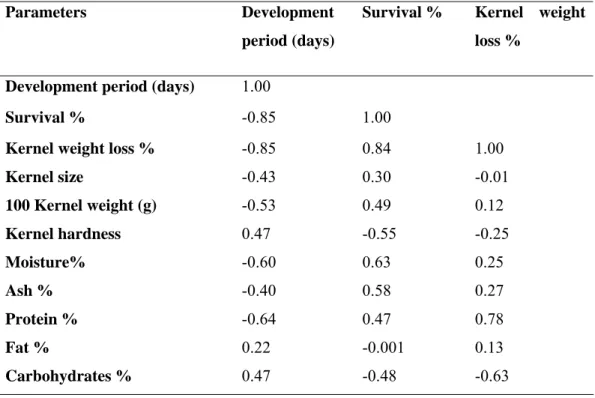
Table 4: Correlation coefficient (r) between susceptibility preference parameter and physical-chemical characteristics of corn genotypes
Results from development and survivorship experiment shows a significantly difference among the tested corn genotypes (Table 2). The mean developmental period from egg to adult of S. cerealella when reared on the tested corn genotypes was between 34.03 and 39.33 days. This is similar to that reported by Consoli & Filho (1995), they found that the mean developmental period from egg to adult reared on corn was between 5 and 6 weeks. However, the period was shorter on sorghum (Shazali & Smith, 1985; Ashamo & Khanna, 2006a) and rice, Oryza sativa L. (Cogburn et al., 1989).
The higher survival % was found in DKB747 genotype (55.33 %) (Table 2). In other study, a percent survival of S. cerealella reared on different corn genotypes were between 46.5 and 64.5% (Cônsoli & Filho, 1995). On paddy varieties was from 42.0 to 68.7% (Ashamo, 2010). A survival from egg to adult in our study was lowest
Parameters Development
period (days)
Survival % Kernel weight
loss %
Development period (days) 1.00
Survival % -0.85 1.00
Kernel weight loss % -0.85 0.84 1.00
Kernel size -0.43 0.30 -0.01
100 Kernel weight (g) -0.53 0.49 0.12
Kernel hardness 0.47 -0.55 -0.25
Moisture% -0.60 0.63 0.25
Ash % -0.40 0.58 0.27
Protein % -0.64 0.47 0.78
Fat % 0.22 -0.001 0.13
24 compared with data from Shazali & Smith (1985), found that a survival % of S. cerealella was (77.1%) when reared on sorghum. A highest weight kernel loss % was in UFVM100 kernels (10.46%). Ashamo & Khanna (2006b) found that the highest weight loss of grains was 8.7% when S. cerealella reared on corn varieties.
Several investigators have been found correlation between the physical and chemical characteristics of kernels and their ability to attacking by pests. Susceptibility preference in cereals to S. cerealella has been correlation between different parameters.
Positive and negative correlation was showed in Table 4. The lowest survival from egg to adult was between S. cerealella reared on two genotypes, sugary (Su) and sugary-opaco2 (SuO2) and may be related to the high level of amylose of these
genotypes (Cônsoli & Filho, 1995). In wheat, negatively correlated was found between present weight loss and fat and carbohydrate concentrations, and positive correlated was found between present weight loss and protein concentration (Khan et al., 2005). Other report demonstrated that the development period of S. cerealella was depending on the maturity of corn kernels (El-Sebai, 2006). Kernel Hardness was play important role to resistance plant against several stored product insects. In this study,
positive correlation was found between kernel hardness and development period, and
negative correlation was found between it and percentage of survival and kernel
25
4. 4. Oviposition preference using whole corn kernels
In no-choice experiment was observed that non significant difference was found among the numbers of eggs laid on tested genotypes (F=1.11; P=0.36). S. cerealella female presented the same preference level on tested genotypes (Figure 3A).
Ovipositional response of S. cerealella female among five corn genotypes in choice test is presented in Figure 3B. Higher mean number of eggs was laid on UFVM100X200 genotype. But insignificant difference was found among UFVM100, UFVM200, UFVM100X200 and DKB747. On the other hand, no eggs were found on kernels of AG1051 genotype in all replicas (F=6.48; P=0.0001).
Figure 3: Mean number of eggs laid by Sitotroga cerealella female on five corn genotypes: A. No-choice (P < 0.05; n=15) and B. Choice tests (P < 0.05; n=20).
Genotypes
UFVM100 UFVM200 UFVM100X200 AG1051 DKB747
M ea n num b er of e ggs 0 20 40 60 80 A Genotypes
UFVM100 UFVM200 UFVM100X200 AG1051 DKB747
26 An ovipositional response of S. cerealella female comparison between the genotype UFVM100 with other genotypes is presented in Figure 4. The obtained results demonstrate that the preference of S. cerealella female to oviposition was significantly greater in UFVM100X200 kernels. Approximately 2.58-fold more eggs were laid on UFVM100X200 kernels than on UFVM100 kernels. On the other hand, UFVM100 kernels received approximately 2.26-fold eggs more than AG1051 kernels.
Figure 4: Mean number of eggs laid by Sitotroga cerealella female on two genotypes (choice tests, P<0.05; n=15).
4. 5.1. Oviposition preference to substrate form
The number of eggs laid on black paper with a narrow substrate was significantly greater compared with black paper without a narrow substrate (Figure 5). Female of S. cerealella laid eggs on black paper with a narrow substrate 34.75-fold more than on black paper without a narrow substrate in a choice test (F=757.84; P<0.0001).
DKB747 AG1051
UFVM100X200 UFVM200
100 -80 -60 -40 -20 0 20 40 60 80 100
Mean percentage eggs laid
UFVM100
n.s.
n.s. *
27
Figure 5: Mean number of eggs laid by Sitotroga cerealella female on black paper black paper with a narrow substrate in one side or with black paper without a narrow substrate (choice test, P<0.05; n=15).
4. 5. 2. Oviposition preference using corn extract
The comparison between impacts of physical stimuli alone or together with chemical stimuli is presented in Figure 6. Association of chemical stimuli with physical stimuli significantly enhanced oviposition preference of S. cerealella. Black paper treated with 0.5 ml of corn extract (2 g-equivalent of whole kernels) received significantly more eggs than their respective control (black paper treated with hexane only) in a choice test (F=18.96; P=0.0002).
Figure 6: Mean number of eggs laid by Sitotroga cerealella female on black paper treated with hexane only (physical stimuli only) or black paper treated with 2 g-equivalent corn extract (UFVM100) in 0.5 mL of hexane (physical-chemical stimuli) (choice test, P<0.05; n=15).
Corn extract Hexane
M ea n num b er of e ggs 0 10 20 30 40 50 * M ea n num b er of e ggs 0 10 20 30 40 50 *
Black paper with a narrow substrate
28 A comparison between extracts from all tested kernel corn genotypes are presented in Figure 7. Black paper treated with extract from UFVM100 whole kernel received significantly greater number of eggs (21.73) compared with black paper treated with extracts derived from other corn genotypes (F=2.61; P=0.04).
Figure 7: Mean number of eggs laid by Sitotroga cerealella female on black paper treated with 2 g-equivalent corn extract of five corn genotypes (choice test, P<0.05; n=15).
4. 6. Physical characteristics of kernels for oviposition experiments
Physical characteristics of kernels are presented in Table 5. AG1051 kernel had higher degrees of color scores and kernel length, but it had lower kernel depth and crevice % compared with the other tested genotypes.
Genotypes
UFVM100 UFVM200 UFVM100X200 AG1051 DKB747
M
ea
n num
be
r o
f e
g
g
s
0 5 10 15 20 25 30
29
Table 5: Characteristics of kernels of corn genotype
* Color scores: L= lightness of sample, the + values for a and b indicate higher degrees of redness and yellowness, respectively. Means followed by the same letter (s), within the same row, are insignificantly different.
Genotypes Parameters
UFVM100 UFVM200 UFVM100X200 AG1051 DKB747
Color scores*
L 62.34±1.39b 64.46±0.47b 64.48±1.45b 68.08±1.24a 62.53±0.90b
a 12.50±0.80b 13.63±0.84b 12.28±1.05b 15.27±1.03a 11.18±1.16b
b 43.68±2.24b 40.51±2.43b 41.42±1.88b 49.0±1.96a 38.42±3.43b
Kernel length (mm) 10.72±0.21b 10.77±0.28b 11.16±0.22b 11.82±0.37a 10.10±0.26b
Kernel width (mm) 9.13±0.13b 8.69±0.25b 9.11±0.12b 9.33±0.19b 9.50±0.17a
Kernel depth (mm) 4.84±0.16a 4.44±0.15b 4.51±0.08c 4.27±0.11b 5.14±0.16a
Number of kernels/10g 32.9±0.74c 37.1±0.81a 34.5±1.1b 34.0±1.02c 31.1±0.5c
Number of kernels have crevice/10g 13.6±0.81a 14.8±1.07a 14.6±0.48a 10.2±0.84b 11.7±1.24b
30
5. 7. Correlation between physical stimuli of kernels and oviposition preference
In correlation test that presented in Table 6 showed that the color scores (a and b) and crevice % were an important factors determining the preference of S. cereallela gravid female to corn kernels. Negative correlation was found between preference of S. cereallela gravid female and color scores (a and b) of kernel, and strongly positive correlation between it and crevice %.
Table 6: Correlation coefficient (r) between oviposition preference and physical characteristics of corn genotypes
The gravid females of herbivores are choice a host plant to lay their eggs that supports the acceptable conditions for protection and development of them and their progeny. This choice is determined by characteristics of plants, such as physical-chemical characteristics (Awmack & Leather, 2002; Mannion et al., 2003; Meiners et al., 2005; Coley et al., 2006).
Our laboratory studies demonstrated that there is a difference between oviposition preferences of S. cerealella females to kernels from different corn genotypes. The oviposition preference experiments with whole corn kernels showed
Parameters Oviposition preference
Oviposition preference 1.00
Color scores
L -0.48
a -0.57
b -0.67
Kernel length (mm) -0.38
Kernel width (mm) -0.22
Kernel depth (mm) 0.24
Number of kernels/10g -0.08
Number of kernels have crevice/10g 0.75
31 that S. cerealella femalehad less oviposition preference in no-choice test (Figure 3A). Whereas, gravid female of S. cerealella had not preferred to lay its eggs on whole kernels of AG1051 when it allowed selecting among the tested genotypes (Figure 3B). In two-choice test it preferred to lay its eggs on UFVM100X200 kernels (Figure 4). On the other hand, S. cerealella female laid more eggs on black paper treated with corn extract than black paper treated with hexane (Figure 6). Additionally, it had
selected among corn extracts when it presented in multi-choice test, female laid more eggs in response to UFVM100 genotype extract compared with the other genotype extracts (Figure 7).
Different oviposition preference responds to S. cerealella female has been observed when it was tested on whole corn genotypes or on corn extracts in the choice
tests. This might be due to that the attraction from a distance might involve chemical or physical stimuli, or both (Bernays & Chapman, 1994). The chemical stimuli associated with physical stimuli are important in the final stages of attraction for oviposition of gravid female moths to a host (e.g., Ramaswamy, 1988; Renwick & Chew, 1994; Foster et al., 1997). Weston & Rattingourd (1999) found that chemical stimuli associated with physical stimuli of grains are important factors for S. cerealella oviposition, but physical stimuli, the straw on the kernel tip, which stimulates, primarily the presence of crevices, as receptors for eggs, were more important.
32 approach the end of their life and not have choice, they laid all their eggs (Roitberg et al., 1999).
Preference for physical stimuli to oviposition site has been reported for other moth in Gelechiidae family (Sidney et al., 2008), found that Anarsia lineatella Zeller (Lepidoptera: Gelechiidae) female prefer laid its eggs on leaves with hairs. However, this preference may due to the hairs allow the female to keep it on the leaf during oviposition, and its eggs are able to hold on the hairs (Bernays & Chapman, 1994). In this work, the female was preferably laid its eggs under kernel crevice when it present. This preference may due to the crevice keep a female on the kernel during oviposition too, and/or to protect its eggs against natural enemies (Thompson & Pellmyr, 1991; Tagawa et al., 2008).
When physical stimuli were a presented alone (black paper treated with hexane) a low number of eggs laid by female compared when both physical and chemical stimuli a presented together (black paper treated with corn extract) (Figure 6). Other species of stored-product moths were had the same behavior. For example P. interpunctella laid more number of eggs on glass beads treated with wheat extract (physical and chemical stimuli) than glass beads treated with hexane alone (physical stimuli) (Sambaraju & Phillips, 2008). But, when physical stimuli of corn genotypes become equal (Figure 7), the preference difference of S. cerealella female to tested genotypes was resulting to the different among chemical stimuli of corn extracts.
33 al., 2005a). P. interpunctella females laid significantly more eggs in dishes with 17 types of oil-treated wheat compared with dishes with wheat kernels only, with high preference for Sesame oil-treated wheat compared with dishes with wheat kernels only (Nansen & Phillips, 2003)
Corn tested genotypes may have different of quantity and qualitative composition of volatiles that influence on the oviposition behavior of S. cerealella. The genetic variability in herbivore-induced plant signals and about quantity and qualitative emissions of the volatiles blend depend on the corn genotype may make different response by insects. Thus, large differences in total volatile emission, quantity and qualitative compounds, among different corn genotypes have been recorded (Hougen, 1971; Gouiguené et al., 2001; Degen et al., 2004).
However, the high preference of S. cerealellafemales to extract of UFVM 100 and the low preference of S. cerealellafemales to AG1051 whole kernels and extract indicates that might have different ratio of stimulatory physicals and chemicals and/or deferent concentration of odors than other tested genotypes, and/or presence of inhibitory chemicals in AG1051 genotype. Other studies were demonstrated that the activity of odor emissions in attraction of females in family Gelechiidae. Odors from
quinoa, Chenopodium quinoa (Willd.) showed that the females of Eurysacca melanocampta Meyrick (Lepidoptera: Gelechiidae), is a main insect pest of quinoa crop, were more attractive to the Blanca de Junin variety than to Amarilla de Marangani variety in choice bioassay (Costa et al., 2009).
34 (Figure 5), additionally, the female was laid its eggs on kernels have dark yellow and red color. Color may be importance factor in the final stages of attraction to select oviposition host (Bernays & Chapman, 1994).
4. 8. Flight responses of male to different concentrations of synthetic sex
pheromone
Male behavior in wind tunnel bioassay is presented in Figure 8. The number of males activating from rest increased in all concentrations (1, 10 and 100 pg concentrations) than in ethanol. However, orientation flight to source % and contact with the source % was decreased with the high (100 pg) and low (1 pg) concentrations compared with middle concentration (10 pg) (F=25.74; P<0.0001).
Activation Flight Flight to source Conctact
M al es re sp on d in g (% ) 0 20 40 60 80 100 Ethanol
1 pg of pheromone 10 pg of pheromone 100 pg of pheromone
b b a a a a a a c b b a b c b a
35
4. 9. Flight time to reach the source of sex pheromone
The result in Figure 9 shows that the males of S. cerealella spent significantly more time flight at 100 pg of synthetic pheromone than with 1 and 10 pg of pheromone in wind tunnel bioassay (F=7.44; P=0.01).
Figure 9: Mean time spent by Sitotroga cerealella male to synthetic sex pheromone in flight tunnel bioassay. Bars with the same letter(s), are non significantly different.
4. 10. Flight responses of sex pheromone mixed with different concentrations of
corn kernel volatiles
To know the effect of plant volatile mixtures on S. cerallela pheromone, the response of a mixture of corn kernel volatile solutions 15, 30, 60 and 120 g-equivalent with AGM pheromone was tested. Blends of AGM pheromone with 15 and 30 g-equivalent corn kernel volatiles significantly enhanced the male behavioral to contact with source (F=84.39; P<0.0001). In response to these blends, 75% and 70% of the males were contacted with the source compared with 60% for AGM pheromone alone (Figure 10). No significant difference in the response to flight and upwind orientation to the source for AGM pheromone alone and mixed with these four different quantities of kernel volatiles was recorded.
T i m e s p e n t f l i g h t ( s e c . )
0 2 0 4 0 6 0 8 0
C
o
nc
e
n
tr
at
io
ns
1 p g 1 0 p g
1 0 0 p g a
b
36 Activation Flight Flight to source Contact
M al es re sp o n d in g (% ) 0 20 40 60 80 100 120 Ethanol
10 pg of pheromone 10 pg + 15 g-eckv* 10 pg + 30 g-eckv 10 pg + 60 g-eckv 10 pg + 120 g-eckv
b b b bb c a
aaaa
a a a a a aa a a a b a a
Figure 10: Behavioral responses of Sitotroga cerealella male in flight tunnel bioassay to synthetic sex pheromone alone (10 pg) and in mixtures with different quantities of corn kernel volatiles [15, 30, 60 and 120 g-equivalent of corn kernel volatiles (eckv)]. Bars with the same letter(s), are non significantly different.
*eckv = equivalent of corn kernel volatiles.
4. 11. Flight time spent of behavioral responses of male to sex pheromone mixed
with corn kernels volatiles
37
Figure 11: Mean time spent by Sitotroga cerealella male to synthetic sex pheromone alone and mixed with different quantity of kernel corn volatiles in flight tunnel bioassay. Bars with the same letter(s), are non significantly different.
*eckv = equivalent of corn kernel volatiles.
4. 12. Flight responses to different concentrations of corn kernels volatiles in
male and female of Sitotroga cerealella
The responses of the two sexes of S. cerealella in flight tunnel experiment with different concentrations of corn kernel volatiles are presented in Table 7. Meted males and virgin females of S. cerealella were no showed any respond to corn kernels volatiles. There was no significant difference between the concentrations of volatiles and ethanol in responses of mated males and virgin females to corn kernels volatiles. The percentage of males contacting the source was significantly in 60 g-equivalent of corn kernel volatiles compared with other concentrations and ethanol (Table 7). Ten percentages of males were flight, 2.5% flew upwind toward the source, and 2.5% successfully landed. Mated females were showed a significantly greater response to corn kernel volatiles (F=6.35; P=0.003). No detected any significant difference in responses of mated female to 60 and 120 g-equivalent of corn kernel volatiles. A 120 g-equivalent of corn kernel volatiles elicited upwind flights in 30% of the females
Time spent flight (sec.)
0 20 40 60 80
C
o
n
cen
tr
at
io
n
s
10 pg 10 pg + 15 g-eckv* 10 pg + 30 g-eckv 10 pg + 60 g-eckv
10 pg + 120 g eckv a
b b b
38 tested and 7.5% approached the source (Table 7). A maximum landing of mated females (10%) was obtained by using a 60 g-equivalent of corn kernel volatiles. Fewer females were flight with lower concentration of corn kernel volatiles, and females did not flight to the source or landing.
39
Table 7: Behavioral responses of Sitotroga cerealella adults in wind tunnel to different concentrations of volatiles collected from corn kernels
Means followed by the same letter(s), within the same column, are non significantly different.
*eckv = equivalent of corn kernel volatiles.
Virgin males Mated males Virgin females Mated females
Parameters
Flight
%
Flight to
source %
Landing
%
Flight
%
Flight to
source %
Landing
%
Flight % Flight to
source %
Landing
%
Flight
%
Flight to
source %
Landing
%
Ethanol 7.5 a 0 a 0 b 7.5 a 0 a 0 a 5 a 0 a 0 a 5 b 0 b 0 b
15 g-eckv* 7.5 a 2.5 a 0 b 7.5 a 0 a 0 a 5 a 0 a 0 a 7.5 b 0 b 0 b
30 g-eckv 12.5 a 5 a 0 b 7.5 a 2.5 a 0 a 7.5 a 2.5 a 0 a 20 b 12.5 a 2.5 b
60 g-eckv 10 a 2.5 a 2.5 a 7.5 a 0 a 0 a 7.5 a 2.5 a 0 a 25 a 17.5 a 10 a
40
4. 13. Gas chromatography– electroantennography detection for the volatiles
compounds
The GC-EAD results were demonstrated in Figure 11. We recorded GC-EAD responses of S. cereallela male and female antennae to aeration of corn kernels. Compounds that elicited consistent responses for both sexes’ antennae are marked with numbers in Figure 12. GC-EAG analysis of the volatiles from corn kernels, using male and female antennae, detected a total of four active components for male and female together. Tree compounds were recorded in both male and female antennae.
41
4. 14. Identification of active compounds
Several compounds were showed from volatiles collected by aeration of corn kernels, but the three active compounds that had responding by both male and female antennae were identified (Table 8). These compound were, nonanal, decanal and geranyl acetone [(E)-6,10-dimethyl-5,9-undecadien-2-one]. One more compound was unidentified that had responding by female antenna only.
Table 8: Volatile compounds identifiedin aeration collected from whole corn kernels of UFVM100 genotype
1
Kovates indices form the sample corn kernel volatiles.
2
Kovates indices from the synthetic compounds.
The result from the wind tunnel bioassay showed that the highest percentage of the males contacted with the source was in 10 pg than in 1 and 100 pg (Figure 8). Several investigators found that the optimal males response was differences by different of pheromone release rates (Hillbur et al., 2000; Witzgall et al., 2005;
Schmidt-Büsser et al., 2009).
We observed that, the males in high concentration of pheromone (100 pg) showed in flight arrestment behavior. Normally, the density of pheromone is more near the source than near the receptor. This means that males can encounter high quantity of high concentration near of source, consequently, decrease numbers of Peak
no.
Compound Class-functional groups Retention time
(min)
Kovates indices1 (KI)
Kovates indices2 (KI)
1 Unidentified - - - -
2 Nonanal Aliphatic-aldehyde 7.201 1096 1096
3 Decanal Aliphatic-aldehyde 9.533 1198 1197
42 males contact with source. This behavior probably occurs due to in high concentrations of pheromone causing excitation of olfactory receptor neurons and reducing the male’s capable to detect pheromone levels in the air (Schmidt-Büsser et al., 2009). This behavior may explains why the males taken more time flight to select on side in case of the high concentration of pheromone (100 pg) and in case of 10 pg of pheromone mix with the high concentration of corn volatiles (Figure 9 and 11).
Synthetic sex pheromone of S. cerealella with corn kernel volatiles were increased the percentage of S. cereallela males made contact with the source (Figure 10). The role of volatiles compounds was showed clearly in the final step for male finds its female. We observed that, the most individuals’ males that made upwind orientation to source (>120 cm) are made contact with the source. The role of physical characteristics may unimportant to affect in flight activity for S. cereallela, because the flight activity of the males are under low light condition (Weston et al., 1997; Kanaujia & Sidhu, 2009).
In several studies, when the two types of semiochemicals are presented in the same traps, volatiles from host plant could enhance attractively of sex pheromones. Studies with S. cereallela showed that a number of S. cereallela males captured in traps with sex pheromone and corn extract or cracked corn kernels was significantly different more than a number of S. cereallela males captured in those traps with pheromone alone (Stockel & Boidron, 1981; Ukeh et al., 2008). More strongly attracted of S. cereallela males found by the mixture of Z7, E ll-16: Ac + Z7, E l1-16: Ald (9:1) than Z7, E ll-16: Ac alone (Ando et al., 1985).
43 attractively of sex pheromones too. For example, sex pheromone of Cydia pomonella L. (Lepidoptera: Tortricidae) and Helicoverpa zea Boddie (Lepidoptera: Noctuidae) with green-leaf volatiles were captured significantly more males in traps than traps with sex pheromone alone (Light et al., 1993). Enhance responses of Heliothis virescens Fabricius (Lepidoptera: Noctuidae)males to sex pheromone with the green leaf volatile were more than pheromone or plant volatiles alone (Dickens et al., 1993).
Males of Plutella Xylostella L. (Lepidoptera: Plutellidae) were responding a mixture of odors from whole plant of Brassica oleracea subsp. capitata L. with sex pheromone significant more than pheromone alone (Pivnick et al., 1994).
Additionally, a mixture of some individual synthetic host plant volatiles with sex pheromone enhanced attractant behavior of Eupoecilia ambiguella Hb. (Lepidoptera, Tortricidae) (Schmidt-Büsser et al., 2009) and P. xylostella (Dai et al., 2008) moths more than single plant volatiles added to pheromone. In contrast, single individual synthetic host plant volatile enhanced attractiveness of pheromone more than whole host plant volatiles (Reddy & Guerrero, 2000).
44 Some of host plant volatiles are important olfactory stimuli to activate sex pheromone communication on moths. Male may use these olfactory stimuli with female sex pheromone to optimize the chance of find mate location (Landolt & Phillips, 1997; Bruce et al., 2005). Interactions between host plant volatiles and pheromones in the olfactory receptor neurons of insects have been reported (e.g. Ochieng et al., 2002; Broome et al., 2006; Sandoz, 2006; Carlsson et al., 2007; Namiki et al., 2008). Additionally, many plant families are producing structurally identical or similar as pheromones of many insects. Similar of 87% of volatile organic compounds were produced in 96 plant families and 87 insect families (Schiestl, 2010).
The flight tunnel bioassay demonstrated that, mated S. cerealella female was stimulated to find ovipositional host by corn kernel volatiles. A result showed that different preference respond of S. cerealella female to select ovipositional host when was tested in flight tunnel (Table 7). Generally, the first phase is search when females
select their host for oviposition, orientation and then encounter (Renwick & Chew, 1994). The olfactory antennal system of insect performs to receive information of quality and quantity (concentrations, ratios) of odors, and translates this information to behavioral decisions (Carlsson & Hansson, 2003; Schoonhoven et al., 2005). Activity of plant volatiles in attraction of females in family Gelechiidae has been reported in other studies. Volatiles from intact potato tubers were attractive to mated females of Phthorimaea operculella Zeller (Lepidoptera: Gelechiidae) in olfactometer bioassay (Arab et al., 2007). Pink bollworm moth, Pectinophora gossypiella Saunders (Lepidoptera: Gelechiidae) was respond to volatiles from cotton flowers in wind tunnel bioassay (Wiesenborn & Baker, 1990).
45 found in corn kernel volatiles for both sexes (Table 8). Responses to some of these compounds were small in the baseline of some EAD recording, but they were consistent. Other investigators were found these compounds in different part of corn plant, principally, in ear, husk, silk and kernels (Buttery et al., 1978; Hibbard, et al. 1997; Solé et al., 2010)
From other stored product moths, males and females, of E. cautella were responded to twelve electrophysiologically active compounds with GC-EAD. Additionally, both sexes of P. interpunctella responded to eight compounds, with greater responses to phenylacetaldehyde and nonanal in both species and sexes (Olsson et al., 2005b).
The ability of both sexes to detect the compounds of volatile presented is probably due to their similar habitat. Therefore, they use of the same cues to locate their host for survive, reproduction and for their progeny. Females of S. cereallela were responded to one compound of volatiles more than males. From several insects, females have been reported greater responses exhibited to compounds of plant volatiles compared with males (Ramachandran et al., 1990; Raguso et al., 1996; Zhang et al., 1999). These greater responses of female to compounds of corn kernel volatiles probably due to the female antennae in lepidopterans are have with a large number of olfactory receptor cells that are sensitive to plant volatiles (Raguso et al., 1996).
46
5. CONCLUSIONS
From the obtained results in this work concluded that, in development and survivorship experiment, the susceptibility of corn genotypes to Sitotroga cerealella was dependent on physical-chemical characteristics of kernels. Modifications in physical-chemical characteristics of kernels may an important factor in integrated pest management strategies for S. cerealella and in insect resistant genotype programs.
From the results obtained in oviposition experiments, conclude that S. cerealella gravid females are using several sensory strategies to select their ovipositional host. It showed response to characteristics of kernels to oviposition behavior in choice test, but when hadn’t chance for choice they didn’t any preference to tested genotypes. Additionally, showed response to chemical stimuli associated with physical stimuli to oviposition more than physical stimuli alone. Considering the number of eggs lay on the kernels or artificial oviposition substrate with or without corn extracts was result of difference among genotypes that affected on oviposition preference of S. cerealella female. This difference among genotypes tested was due to physical-chemical stimuli that favored oviposition preference. However, further studies will be need to establish exactly which compounds of odors are responsible for the observed differences in attractiveness among corn genotypes and if such differences can be used to enhance attract or repellent S. cerealella females in integrated pest management strategies and/or in insect resistant genotype programs.
47 plant volatiles is very important to decrease the costs of integrated management programs of insect pests.