in Aphid-Stressed Maize (
Zea mays
L.) Seedlings
Hubert Sytykiewicz*
Siedlce University of Natural Sciences and Humanities, Department of Biochemistry and Molecular Biology, Siedlce, Poland
Abstract
The aim of this study was to compare the expression patterns of superoxide dismutase genes (sod2,sod3.4,sod9andsodB) in seedling leaves of theZea maysL. Tasty Sweet (susceptible) and Ambrozja (relatively resistant) cultivars infested with one of two hemipteran species, namely monophagousSitobion avenaeF. (grain aphid) or oligophagousRhopalosiphum padiL. (bird cherry-oat aphid). Secondarily, aphid-elicited alternations in the antioxidative capacity towards DPPH (1,1-diphenyl-2-picrylhydrazyl) radical in insect-stressed plants were evaluated. Comprehensive comparison of expression profiles of the foursodgenes showed that both insect species evoked significant upregulation of three genes sod2,sod3.4andsod9). However, aphid infestation affected non-significant fluctuations in expression of sodBgene in seedlings of both maize genotypes. The highest levels of transcript accumulation occurred at 8 h (sod2andsod3.4) or 24 h (sod9) post-infestation, and aphid-induced changes in the expression ofsodgenes were more dramatic in the Ambrozja cultivar than in the Tasty Sweet variety. Furthermore, bird cherry-oat aphid colonization had a more substantial impact on levels of DPPH radical scavenging activity in infested host seedlings than grain aphid colonization. Additionally, Ambrozja plants infested by either hemipteran species showed markedly lower antioxidative capacity compared with attacked Tasty Sweet plants.
Citation:Sytykiewicz H (2014) Differential Expression of Superoxide Dismutase Genes in Aphid-Stressed Maize (Zea maysL.) Seedlings. PLoS ONE 9(4): e94847. doi:10.1371/journal.pone.0094847
Editor:Vladimir N. Uversky, University of South Florida College of Medicine, United States of America ReceivedJanuary 16, 2014;AcceptedMarch 19, 2014;PublishedApril 10, 2014
Copyright:ß2014 Hubert Sytykiewicz. This is an open-access article distributed under the terms of the Creative Commons Attribution License, which permits unrestricted use, distribution, and reproduction in any medium, provided the original author and source are credited.
Funding:This study was supported by the National Science Centre (NSC, Poland) under the grant no. N N310 733940. The funders had no role in study design, data collection and analysis, decision to publish, or preparation of the manuscript.
Competing Interests:The author has declared that no competing interests exist. * E-mail: [email protected]
Introduction
The global production and economic importance of maize (Zea mays L.) have steadily increased during the last decade. This increment is likely due to increased worldwide distribution, the adaptability of maize to multifarious environmental conditions, and the introduction of high-yield varieties [1–2]. Maize is a substantial source of raw materials for the pulp and paper industries as well as for fermentation processes in biogas and bioethanol synthesis [1–4]. Additionally,Z. maysis an important model organism in plant experimental biology, such as studies of the molecular basis of plant-insect interactions, pest resistance mechanisms, and genetic, biochemical and physiological aspects of plant development [1–3].
Aphids (Hemiptera, Aphidoidea) are one of the most destructive groups of insects colonizing a large number of maize varieties [5– 8]. Infestation of the host plants by these piercing-sucking hemipterans lead to a wide spectrum of deleterious effects, including ultrastructural organ damage, severe depletion of phloem sap constituents, and perturbation of many fundamental physiological processes such as photosynthesis, cellular respiration, growth, and development. Long-term and/or large-scale aphid colonization may result in additional detrimental effects such as large chlorotic lesions, stress-induced premature senescence, apoptosis, and local necrosis [9–17]. Furthermore, these arthro-pods serve as vectors for a broad range of plant-pathogenic viruses [18–19]. Aphid watery saliva, which is injected into target plant tissues, contains a broad collection of hydrolytic enzymes, metabolic effectors, and toxic compounds that may also stimulate
the host to excessive formation of reactive oxygen species (ROS) [20–24]. Circumstantial disturbance of intracellular redox ho-meostasis in stressed plants may result in diverse cytotoxic effects and initiate the cascade of reactions leading to programmed cell death. Prolonged overproduction of various ROS can lead to peroxidation of membrane lipids and pigments, denaturation of proteins, damage to DNA, and fragmentation of polysaccharides [25–29].
Higher plants have evolved a complex network of antioxidant systems to counteract elevated ROS levels produced in response to unfavorable environmental conditions. This sophisticated machin-ery encompasses a wide range of lipid- and water-soluble antioxidants (e.g., tocopherols,b-carotene, ubiquinone, ascorbate, glutathione) and antioxidant enzymes such as superoxide dis-mutases (SODs), catalase, glutathione transferase, glutathione peroxidase, and ascorbate peroxidase [25], [27], [30–36]. SODs are a group of metalloenzymes that constitute the primary line of antioxidative defense by catalyzing the dismutation reaction of superoxide anion radical (O2
–
50], ultraviolet-B irradiation [51–52], darkness [53], high salinity [54], nitrogen deficiency [55], supplementation with carbohy-drates [56], herbicide treatment [57], heavy metal exposure [28], [58–60], magnetic field influence [61], and pathogen infection [62–66].
Although aphid-stimulated physiological and biochemical modulations of a wide spectrum of infested host systems have been extensively studied, the specific effects on the antioxidant machinery remain unclear. To date, there are no available studies regarding the regulation of sod genes and antiradical activity against DPPHN in aphid-susceptible and aphid-resistant maize
varieties. There is a lack of comparative data regarding the influence of mono- and oligophagous aphid species on the expression patterns of sod genes and levels of the antioxidative capacity in colonizedZ. maysseedlings. It has been hypothesized that susceptible and resistant maize cultivars differ in their transcriptional regulation ofsodgenes and antioxidant activity in response to aphid infestation. Hence, the main purpose of the study was to compare the transcriptional activity ofsodgenes (sod2, sod3.4,sod9andsodB) in seedling leaves of the maize Tasty Sweet (susceptible) and Ambrozja (relatively resistant) cultivars colonized by monophagousSitobion avenae F. (grain aphid) or oligophagous Rhopalosiphum padiL. (bird cherry-oat aphid). Additionally, it was evaluated whether changes in the relative expression of thesesod genes and DPPH radical scavenging activity in the stressed maize plants reflect levels of aphid infestation.
Methods
Plant material
Tasty Sweet and AmbrozjaZ. maysseeds were purchased from local garden supply companies. Plants were grown in a climate controlled chamber at 2262uC/1662uC (day/night), relative humidity of 6565%, light intensity 100mM m22s21, and a long-day photoperiod (light 16 h: dark 8 h). Seedlings were separately planted in round plastic pots (1069 cm; diameter6height) filled with general-purpose horticultural substrate with no additional fertilization. According to Sytykiewicz et al., Tasty Sweet and Ambrozja maize varieties were classified as aphid-susceptible and aphid-relatively resistant, respectively [8].
Aphids
Apterous parthenogenetic females of the two aphid species were gathered from cereal plants in the Siedlce district (Poland) and reared for 1 year on the seedlings ofTriticum aestivumL. (Tonacja variety) at the Department of Biochemistry and Molecular Biology, University of Natural Sciences and Humanities, Siedlce. The insects were maintained in the climate controlled plant growth chamber described above. To sustain the aphid popula-tions, newT. aestivumplants were added every week, and the old plants were removed after the aphids had settled on the new seedlings. Adult wingless aphids were used in the experiments.
Experimental design
The bioassays were performed on leaves of 14-day-old seedlings of the two maize cultivars that were artificially infested with 10, 20, 40, or 60 adult apterous females aphids per plant. Control plants were not infested with the insects. Transcriptional activity of the SOD isozyme genes (sod2, sod3.4, sod9 and sodB) and the antioxidative capacity in the leaves of maize seedlings were measured at 1, 2, 4, 8, 24, 48, and 72 h post-initial aphid infestation (hpi). Aphid-stressed and controlZ. maysseedlings were caged individually in transparent plastic cylinders (20650 cm; diameter6height) covered with nylon mesh. To terminate each
series of experiments, aphids were removed from the infested maize plants, and the leaves were excised and immediately subjected to further analysis.
Assay of DPPH radical scavenging activity
The antioxidative activity of maize extracts towards DPPHN
(1,1-diphenyl-2-picrylhydrazyl radical) was determined according to the method of Brand-Williams et al. [67], with minor modifications. Freshly harvested seedling leaves (1.0 g) ofZ. mays were homogenized with 15 cm3 of methanol, and next, the samples were vigorously vortexed for 30 min. The cell-free homogenates were filtered through four layers of mesh gauze and centrifuged at 10,000gfor 15 min, and after that the pellet was discarded. The reaction mixture consisted of 20 mm3of the supernatant and 365 mm3of DPPH methanolic solution (0.04%; w/v), the control probe and the samples were incubated at room temperature for 30 min. L-ascorbic acid was used as a positive control. The absorbance at 517 nm was measured using an Epoch UV-Vis microplate spectrophotometer (BioTek, USA). The antioxidative activity of the maize extracts was calculated using the following formula: DPPHNscavenging activity (%) = A0– AS/ A06100 (where A0is absorbance of the control - DPPHNsolution;
AS– absorbance of the testedZ. mayssamples).
Total RNA isolation and quantification
Total RNA was extracted from the aphid-colonized and control Z. mays seedlings. The leaves were harvested and immediately homogenized in liquid nitrogen using a sterile, RNase-free ceramic mortar and pestle. Total RNA was isolated using the Spectrum Plant Total RNA kit (Sigma Aldrich, Poland), and residual genomic DNA was enzymatically hydrolyzed with the On-Column DNase I Digestion Set (Sigma Aldrich, Poland). The purified RNA was quantified using the Epoch UV-Vis microplate spectropho-tometer. Additionally, A260/280and A260/230ratios were calculated to estimate RNA integrity and purity. Only RNA samples of high quality (A260/280.2.0 and A260/230.1.8) were selected for further analysis.
cDNA synthesis
Purified total RNA (1mg) was used for reverse transcription using the RevertAid Premium First Strand cDNA Synthesis kit (Fermentas, Poland) and oligo(dT)18 primers. Two types of negative control reactions were prepared: no template and no reverse transcription.
Quantitative PCR
groove binder probe), 4 mm3of cDNA, and 5 mm3of RNase-free water. Amplification curves were generated under the following thermal parameters: 95uC for 20 s (activation of AmpliTaq Gold DNA Polymerase (Life Technologies, Poland), followed by 40 cycles of 95uC for 1 s and 60uC for 20 s. The comparative CT (DDCT) method of Livak and Schmittgen [68] was used to calculate the relative expression of each target gene, and the mean values are presented as the fold change6standard deviation (SD) in the transcript in aphid-infested samples compared with the controls.
Statistical analysis
All data are expressed as the mean6SD of three independent biological replicates. Significance of differences in the expression of sod genes and levels of the antioxidative capacity between the aphid-colonized seedlings of each variety and the relevant control plants was assessed by a factorial analysis of variance (ANOVA). The factorial ANOVA comprised the evaluation of four factors: maize genotype (Ambrozja and Tasty Sweet), aphid species (R. padi andS. avenae), treatment (10, 20, 40 and 60 aphids per plant), and time post-infestation (0, 1, 2, 4, 8, 24, 48 and 72 hpi). Subsequently, the post-hoc analysis was carried out by using the Tukey’s test (P-values #0.05 were considered statistically signif-icant). The obtained results were analyzed using STATISTICA 10 software (StatSoft, Poland).
Results
The influence of aphid colonization on the antioxidative potential of maize seedlings
The performed studies revealed that the investigated aphid species (R. padi or S. avenae) led to a decrement in levels of the
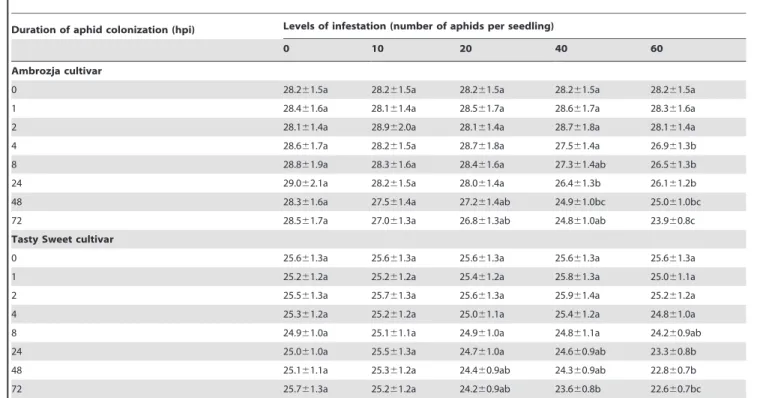
antioxidative capacity towards DPPH radical within the seedling leaves of Ambrozja and Tasty Sweet genotypes in relation to the uninfested plants (Table 1, 2). More severe decline in DPPH radical scavenging activity in the insect-colonized maize seedlings was influenced by the bird cherry-oat aphid feeding when compared toS. avenae infestation (e.g. 72-hour feeding of 60 R. padiinsects evoked 17% and 2% greater decrease in the analysed parameter in Ambrozja and Tasty Sweet plants, respectively, when compared to changes stimulated by the grain aphid). Additionally, seedlings of Ambrozja genotype colonized by the tested hemipteran species characterized by more significant deceleration in levels of the antioxidative potential (e.g. 1–5% and 2–19% greater decrease in plants infested by 10 and 60 aphids, respectively) in comparison with Tasty Sweet variety. Conducted experiments demonstrated that the scale of aphid-triggered depletion in the antioxidant activity in maize seedlings was dependent on duration of aphid exposure and insect density per plant. Exemplarily, the highest infestation level (60 R. padi aphids per plant) and the longest duration of insect colonization (72 hpi) resulted in 33 and 14% decrease of the analysed parameter in Ambrozja and Tasty Sweet plants, accordingly, while a lower decline (16 and 12%, respectively) was estimated in the investigated maize cultivars infested by the grain aphid. On the other hand, time-course analysis revealed that the antioxidative capacity in Tasty Sweet seedlings infested by 10S. avenae aphids remained unchanged at different intervals of aphid exposure (1– 72 hpi) when compared to the relevant controls, whereas colonization of these plants by the same number of bird cherry-oat aphid individuals led to a slight decline (3–4%) at 48 and 72 hpi, respectively. Ambrozja plants infested by the lowest number ofR. padiorS. avenaeaphids (10 per plant) responded a similar decrement (2–9% or 2–6%, respectively) in levels of the
Table 1.DPPH radical scavenging activity (%) of methanolic extracts prepared fromR. padi-infested maize seedlings.
Duration of aphid colonization (hpi) Levels of infestation (number of aphids per seedling)
0 10 20 40 60
Ambrozja cultivar
0 28.261.5a 28.261.5a 28.261.5a 28.261.5a 28.261.5a
1 28.461.6a 28.161.4a 28.661.7a 28.361.5a 27.961.4a
2 28.161.4a 28.361.5a 28.261.5a 27.661.4a 26.761.3ab
4 28.661.7a 28.461.6a 28.661.5a 26.961.3b 25.361.1b
8 28.861.9a 28.861.7a 27.761.4a 25.261.0b 22.460.8c
24 29.062.1a 27.361.4ab 26.861.3b 24.060.8bc 20.260.7c
48 28.361.6a 26.861.3b 25.261.1b 21.460.7c 16.360.5d
72 28.561.7a 25.761.1b 24.561.0b 18.660.6c 12.660.3d
Tasty Sweet cultivar
0 25.661.3a 25.661.3a 25.661.3a 25.661.3a 25.661.3a
1 25.261.2a 25.461.2a 25.361.2a 25.161.1a 25.261.2a
2 25.561.3a 25.861.4a 25.261.2a 25.661.3a 25.161.1a
4 25.361.2a 25.161.1a 25.661.3a 24.961.0a 24.660.9ab
8 24.961.0a 25.061.0a 25.161.1a 24.760.9ab 24.560.9ab
24 25.061.0a 25.561.2a 24.861.0a 24.160.9ab 23.260.8b
48 25.161.1a 24.661.0a 24.660.9a 23.560.8b 22.460.7b
72 25.761.3a 24.760.9a 24.060.9ab 22.960.7b 20.860.5bc
Values are presented as the mean6SD of three replicates; hpi-hours post-initial aphid infestation. Antioxidant capacity of the maize extracts is expressed as the percent inhibition of DPPH radical. The average values in rows denoted by different letters are statistically significant (Tukey’s test; P#0.05).
antioxidative potential after 8–24 hours of aphid feeding. The factorial analysis of variance evidenced that four tested factors and interactions between these parameters statistically affected levels of the antioxidative capacity in the maize seedlings (Table 3).
Expression profiles ofsod2 inR. padi– andS. avenae– stressed maize seedlings
Short-term (1 or 2 hpi) feeding by the aphids did not altersod2 expression, except in the case of Ambrozja plants infested with 60 R. padiat 2 hpi in which there was a 20% increase in transcript
Table 2.DPPH radical scavenging activity (%) of methanolic extracts prepared fromS. avenae-infested maize seedlings.
Duration of aphid colonization (hpi) Levels of infestation (number of aphids per seedling)
0 10 20 40 60
Ambrozja cultivar
0 28.261.5a 28.261.5a 28.261.5a 28.261.5a 28.261.5a
1 28.461.6a 28.161.4a 28.561.7a 28.661.7a 28.361.6a
2 28.161.4a 28.962.0a 28.161.4a 28.761.8a 28.161.4a
4 28.661.7a 28.261.5a 28.761.8a 27.561.4a 26.961.3b
8 28.861.9a 28.361.6a 28.461.6a 27.361.4ab 26.561.3b
24 29.062.1a 28.261.5a 28.061.4a 26.461.3b 26.161.2b
48 28.361.6a 27.561.4a 27.261.4ab 24.961.0bc 25.061.0bc
72 28.561.7a 27.061.3a 26.861.3ab 24.861.0ab 23.960.8c
Tasty Sweet cultivar
0 25.661.3a 25.661.3a 25.661.3a 25.661.3a 25.661.3a
1 25.261.2a 25.261.2a 25.461.2a 25.861.3a 25.061.1a
2 25.561.3a 25.761.3a 25.661.3a 25.961.4a 25.261.2a
4 25.361.2a 25.261.2a 25.061.1a 25.461.2a 24.861.0a
8 24.961.0a 25.161.1a 24.961.0a 24.861.1a 24.260.9ab
24 25.061.0a 25.561.3a 24.761.0a 24.660.9ab 23.360.8b
48 25.161.1a 25.361.2a 24.460.9ab 24.360.9ab 22.860.7b
72 25.761.3a 25.261.2a 24.260.9ab 23.660.8b 22.660.7bc
Values are presented as the mean6SD of three replicates; hpi - hours post-initial aphid infestation. Antioxidant capacity of the maize extracts is expressed as the percent inhibition of DPPH radical. The average values in rows denoted by different letters are statistically significant (Tukey’s test; P#0.05).
doi:10.1371/journal.pone.0094847.t002
Table 3.Results of the factorial ANOVA of experimental factors (maize genotype, aphid species, treatment = infestation level, time post-infestation) and their interactions influencing the antioxidative activity in maize seedlings.
Parameter Df F-value P-value
Maize genotype (M) 1 628.45 #0.001
Aphid species (A) 2 97.6 #0.001
Treatment (T) 3 45.6 #0.001
Time post-infestation (TPI) 7 44.7 #0.001
A6M 2 79.2 #0.001
A6T 6 18.5 #0.001
M6T 3 17.1 #0.001
A6TPI 14 16.7 #0.001
M6TPI 7 9.2 #0.001
T6TPI 21 5.4 #0.001
A6M6T 6 11.0 #0.001
A6M6TPI 14 9.2 #0.001
A6T6TPI 42 10.2 #0.001
M6T6TPI 21 8.1 0.009
A6M6T6TPI 42 5.7 0.035
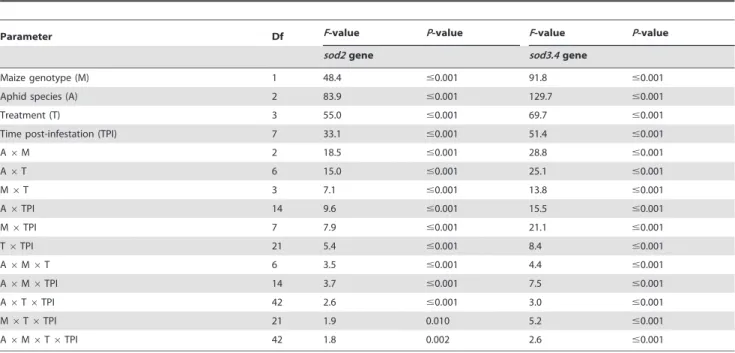
levels compared with the control (Figure 1). After 4 h of aphid feeding, thesod2 transcript level increased in both cultivars with both aphid species, ranging from a 1.3-fold increase in Tasty Sweet seedlings infested with 60S. avenaeto a 4.6-fold increase in Ambrozja plants infested with 60R. padi. Maximal enhancement of gene expression in aphid-infested seedling leaves in bothZ. mays cultivars was seen at 8 hpi with 60 aphids per plant (1.5- to 5.4-fold elevation). However, the insect-triggered increase in sod2 expression was greater in Ambrozja (5.4- and 3.7-fold upregula-tion by R. padiand S. avenae, respectively) than in Tasty Sweet plants (2.1- and 1.5-fold upregulation, respectively). The enhanced sod2expression in both maize genotypes became less pronounced with prolonged insect colonization (1.3- to 3.5-fold higher expression at 24 hpi, and 1.2- to 3.2-fold increase at 48 hpi, depending on the aphid species and maize cultivar). Consequently, the smallest difference insod2 expression between aphid-infested and control plants was seen after long-term aphid infestation (72 hpi). For example, at 72 hpi, 60R. padi aphids stimulated a 28% increase insod2expression in Tasty Sweet plants and a 160% increase in Ambrozja plants, whereas the same number ofS. avenae aphids increasedsod2expression by 70% in Tasty Sweet and 15% in Ambrozja plants. The factorial ANOVA testing proved that four experimental parameters and their interactions significantly influenced the transcriptional activity of sod3.4 gene in Z. mays plants (Table 4).
Effect of aphid infestation on the transcriptional activity
ofsod3.4inZ. maystissues
Low and moderate aphid densities (10, 20 and 40 per plant) did not altersod3.4 expression at 1 hpi in Tasty Sweet seedlings. In contrast, 60 aphids per plant induced a 12% increase in sod3.4 expression in R. padi–infested Tasty Sweet seedlings and a 5% increase in S. avenae–infested Tasty Sweet seedlings at 1 hpi (Figure 2). In the Ambrozja cultivar, the lowest density of either aphid species (10 per plant) did not altersod3.4expression at 1 hpi, but all other aphid treatments led to elevated sod3.4 expression relative to the control (ranging from a 12% increase in seedlings infested with 60S. avenaeper plant to an 86% increase in seedlings infested with 60S. avenaeper plant). Furthermore, at 4 hpisod3.4 transcript levels were higher in both maize cultivars than at the earlier time points, with the exception of Tasty Sweet seedlings infested with 10 aphids per seedling, for which no change insod3.4 expression was observed. The maximal increase in sod3.4 expression in aphid-stressed maize plants occurred at 8 hpi with 60 aphids per plant (2.3- to 9.4-fold increase relative to control seedlings), and the increase was greater in Ambrozja (6.2- and 9.4-fold increase in S. avenae– and R. padi–infested seedlings, respectively) than in Tasty Sweet (2.3- and 3.0-fold increase inS. avenae– and R. padi–infested plants, respectively). Continued feeding of R. padi orS. avenae on the seedlings (24, 48 and 72 hpi) resulted in progressively lower sod3.4 expression compared with 8 hpi. For example, 60 R. padiaphids per plant caused a 150% increase insod3.4 expression in Ambrozja seedlings and a 42% increase in expression in Tasty Sweet plants at 72 hpi. The same density ofS. avenaeresulted in less of an increase in expression
Figure 1. Transcription ofsod2in aphid-colonized seedlings of Tasty Sweet (susceptible) and Ambrozja (relatively resistant) maize varieties.(I) – infestation level (number of aphids per seedling). Values represent the average fold change in relative gene expression (6SD) in the aphid-infested maize seedlings compared with control (uninfested) plants. For each experimental combination, three independent biological replicates were performed. Different letters indicate statistically significant differences (Tukey’s test; P#0.05).
compared with control plants (21 and 52% in Tasty Sweet and Ambrozja plants, respectively). The factorial ANOVA confirmed the significant effects of four tested parameters and their interactions on the relative sod3.4 gene expression within maize seedlings (Table 4).
Impact ofR. padiorS. avenaecolonization on sod9 expression in maize plants
At 1 hpi with bird cherry-oat or grain aphids,sod9expression in both cultivars did not differ from that measured in control plants (Figure 3). Additionally, colonization with only 10 of either insect species per plant did not alter sod9 transcription at 2 hpi. Infestation of the maize plants with R. padi aphids at 20 per seedling evoked a slight increase in the relativesod9expression (6– 10%), whereas moreR. padiaphids (40 or 60 insects per seedling) resulted in a greater upregulation of sod9, ranging from a 10% increase in Tasty Sweet plants with 40 aphids per plant to a 90% increase in Ambrozja seedlings with 60 aphids per plant at 2 hpi relative to control plants. Prolonged aphid feeding (4 and 8 hpi) was associated with further augmentation in sod9 transcription compared with the control, and the highest stimulation of sod9 expression in the aphid-infested seedlings occurred at 24 hpi, with the Ambrozja cultivar showing a greater increase in the sod9 transcript (1.4- to 5.3-fold and 1.7- to 8.1-fold increases in S. avenae– andR. padi–infested seedlings, respectively) than the Tasty Sweet variety (1.1- to 2.2-fold and 1.1- to 2.9-fold increases inS. avenae– andR. padi–infested plants, respectively). However, at 48 and 72 hpi the difference in transcriptional activity ofsod9between the colonized and control maize seedlings was smaller than at 24 hpi. At 72 hpi with bird cherry-oat aphids,sod9expression was 4– 85% higher in Tasty Sweet seedlings and 5–330% higher in Ambrozja seedlings than in controls. The increases in sod9 expression were also dependent on aphid density, with 15–50% increase in expression at 40–60 R. padi aphids per Tasty Sweet seedling, and 80–130% increase (at 40–60 per seedling) in
Ambrozja cultivar compared with control plants. However, lower numbers of insects colonizing the Tasty Sweet cultivar (10R. padi and 10–20 S. avenae per plant) at 72 hpi did not alter sod9 expression. The factorial analysis of variance revealed the statistically significant influence of four experimental parameters and their interactions on the amount ofsod9transcript within the Z. maysplants (Table 5).
Aphid-evoked changes insodBexpression in leaf tissues
ofZ. maysseedlings
Predation by both aphid species for 1 or 2 h did not affectsodB transcript levels in tissues of eitherZ. mays genotype (Figure 4). Similarly, infestation with only 10R. padiorS. avenaeper plant did not alter sodB expression up to 4 hpi. However, higher aphid densities (20, 40 and 60 per plant) slightly enhanced sodB expression relative to the control. For example, infestation with 60 R. padi per plant led to 17 and 49% increases in the sodB expression in Tasty Sweet and Ambrozja plants, respectively, whereas infestation with 60S. avenaeper plant led to 13 and 16% increases in Tasty Sweet and Ambrozja seedlings, respectively. After prolonged aphid infestation (8 hpi) similar increases insodB expression were observed, ranging from a 5% increase in Tasty Sweet plants exposed to 10S. avenaeper plant to a 76% increase in Ambrozja seedlings exposed to 60R. padiper plant. The largest increases insodBexpression occurred at 24 hpi, when 10–60 bird cherry-oat aphids per plant led to 10–62% and 12–127% increases in Tasty Sweet and Ambrozja plants, respectively, relative to the controls. S. avenaecolonization (10–60 per plant) evoked slightly less of an increase insodB expression, with 7–52% and 9–80% increases in Tasty Sweet and Ambrozja plants, respectively. Relative expression ofsodBgene was downregulated at 48 and 72 hpi in Tasty Sweet seedlings infested with 40 or 60 R. padiper plant or 60S. avenaeper plant and in all infested Ambrozja plants, whereassodB transcript amount was unchanged in Tasty Sweet seedlings infested with 10 or 20R. padiper plant or 10, 20, or 40S. Table 4.Results of the factorial ANOVA of experimental factors (maize genotype, aphid species, treatment = infestation level, time post-infestation) and their interactions influencing the relative expression ofsod2andsod3.4genes in maize seedlings.
Parameter Df F-value P-value F-value P-value
sod2gene sod3.4gene
Maize genotype (M) 1 48.4 #0.001 91.8 #0.001
Aphid species (A) 2 83.9 #0.001 129.7 #0.001
Treatment (T) 3 55.0 #0.001 69.7 #0.001
Time post-infestation (TPI) 7 33.1 #0.001 51.4 #0.001
A6M 2 18.5 #0.001 28.8 #0.001
A6T 6 15.0 #0.001 25.1 #0.001
M6T 3 7.1 #0.001 13.8 #0.001
A6TPI 14 9.6 #0.001 15.5 #0.001
M6TPI 7 7.9 #0.001 21.1 #0.001
T6TPI 21 5.4 #0.001 8.4 #0.001
A6M6T 6 3.5 #0.001 4.4 #0.001
A6M6TPI 14 3.7 #0.001 7.5 #0.001
A6T6TPI 42 2.6 #0.001 3.0 #0.001
M6T6TPI 21 1.9 0.010 5.2 #0.001
A6M6T6TPI 42 1.8 0.002 2.6 #0.001
Figure 2. Transcription ofsod3.4in aphid-colonized seedlings of the Tasty Sweet and Ambrozja maize varieties.(I) – infestation level (number of aphids per seedling). Values represent the average fold changes in relative gene expression (6SD) in the aphid-infested maize seedlings compared with control (non-infested) plants. For each experimental combination, three independent biological replicates were performed. Different letters indicate statistically significant differences (Tukey’s test; P#0.05).
doi:10.1371/journal.pone.0094847.g002
Figure 3. Transcription ofsod9in aphid-colonized seedling leaves of the Tasty Sweet and Ambrozja maize varieties.(I) – infestation level (number of aphids per seedling). Values represent the average fold changes in relative gene expression (6SD) in the aphid-infested maize seedlings compared with control (non-infested) plants. For each experimental combination, three independent biological replicates were performed. Different letters indicate statistically significant differences (Tukey’s test; P#0.05).
avenaerelative to control plants. The greatest suppression ofsodB expression in tissues of both maize varieties relative to the controls occurred at 72 hpi. Amount of sodBtranscript in the seedlings colonized with 60R. padiper plant declined by 36 and 49% in the Tasty Sweet and Ambrozja plants, respectively, whereasS. avenae colonization reduced sodBtranscript levels by 28% in the Tasty Sweet seedlings and 44% in Ambrozja seedlings. The factorial ANOVA test did not confirmed any significant effects of four investigated parameters and their interactions on the transcrip-tional activity ofsodBgene in maize seedlings (Table 5). However, thepost-hocanalysis (Tykey’s test; P#0.05) revealed the significant differences in levels of relative expression of sodB gene only between Ambrozja plants infested with 60R. padiaphids (24 hpi) and other experimental variants (Figure 4).
Discussion
Harmful effects of the aphid colonization on plant growth and development as well as mechanisms underlying various aphid-elicited physiological and biochemical responses within tissues of the host systems have been extensively studied over the last decade [69–76]. In Poland, four aphid species have been identified on maize crops:Metopolophium dirhodumWalk.,Rhopalosiphum maidisF., Rhopalosiphum padi L. and Sitobion avenae F. [77–78]. The grain aphid (S. avenae) is a monoecious and monophagous hemipteran that colonizes thePoaceaeplants [79–81], whereas the oligophagous R. padi migrates between primary hosts (Prunus sp.) and a wide spectrum of secondary hosts (cereals and wild grasses) [70], [82– 84]. The present study is the first to demonstrate differences in the expression profiles of severalsod genes in maize plants having a susceptible or relatively resistant genotype colonized by monoph-agous or oligophmonoph-agous aphids, the salivary secretions of which may differ with respect to activity and toxicity—thereby underlying differences in their ability to induce defense responses in the host. The capacity of host systems to maintain redox balance under aphid attack depends on rapid and efficient functioning of
complex cellular antioxidative networks. Deciphering the specific strategies involved in sustaining homeostasis in colonized plants may lead to a better understanding of the resistance mechanisms of plants towards these highly deleterious insects.
Recent studies strongly suggest that ROS play a crucial role in complex plant-insect interactions [85–91]. Excessive O22 produc-tion in plant tissues under adverse condiproduc-tions may lead to substantial damage to cellular macromolecules (e.g. proteins, lipids, DNA) [27–29]. On the other hand, O22 can act as a signaling molecule that triggers ROS-dependent defense systems to allow adaptation to stressors. Mai et al. [24] reported that pea aphid (Acyrthosiphon pisum) colonization led to significant insect density- and time-dependent enhancement in the rate of O22and H2O2production in pea (Pisum sativum) seedlings. Moloi and van der Westhuizen [20] also demonstrated that Russian wheat aphid (Diuraphis noxia) colonization significantly stimulated H2O2 accu-mulation in leaves of the resistant wheat (T. aestivum,Tugela line) compared with near-isogenic susceptible plants. These authors postulated that the increased H2O2activates signaling pathways that are responsible for the resistance to D. noxia. Similarly, Kerchev et al. [22] observed that potato (Solanum tuberosum) leaves attacked by green peach aphids (Myzus persicae) have nearly twice the H2O2than uninfested plants. One of the pivotal functions of H2O2 in plant tissues is to trigger protein phosphorylation cascades in response to a wide range of environmental stimuli, which leads to widespread induction of stress-related genes [89– 90]. The DPPH assay has been widely employed to evaluate the total non-enzymatic antioxidative capacity of a diverse array of plant systems. This analytic procedure is based on reduction of an organic DPPHN (1,1-diphenyl-2-picrylhydrazyl) leading to a
gradual decline in the absorbance value in parallel with color changes of the reaction mixture from deep violet to pale yellow [92–94]. The study demonstrated the variability in the extent of the antioxidative capacity in colonized seedlings of aphid-tolerant and aphid-susceptible maize cultivars. The relatively resistant cultivar had a markedly stronger deceleration of the
Table 5.Results of the factorial ANOVA of experimental factors (maize genotype, aphid species, treatment = infestation level, time post-infestation) and their interactions influencing the relative expression ofsod9andsodBgenes in maize seedlings.
Parameter Df F-value P-value F-value P-value
sod9gene sodBgene
Maize genotype (M) 1 1081.0 #0.001 0.8 0.305
Aphid species (A) 2 1167.5 #0.001 1.2 0.364
Treatment (T) 3 586.6 #0.001 1.5 0.201
Time post-infestation (TPI) 7 485.4 #0.001 0.9 0.508
A6M 2 363.3 #0.001 1.3 0.275
A6T 6 188.3 #0.001 1.0 0.416
M6T 3 118.1 #0.001 0.9 0.434
A6TPI 14 145.3 #0.001 0.7 0.721
M6TPI 7 191.6 #0.001 0.6 0.743
T6TPI 21 70.0 #0.001 1.1 0.367
A6M6T 6 44.0 #0.001 1.2 0.279
A6M6TPI 14 59.5 #0.001 1.0 0.401
A6T6TPI 42 21.7 #0.001 0.8 0.748
M6T6TPI 21 24.9 #0.001 0.7 0.760
A6M6T6TPI 42 8.7 #0.001 1.1 0.315
scavenging activity of DPPH radicals in response to aphid infestation than the more susceptible variety. Additionally, bird cherry-oat aphid evoked a greater response in the antioxidative activity in maize seedlings than grain aphid, and the changes were proportional to insect abundance and duration of exposure. It should be emphasized that regeneration of the antioxidant pool during a prolonged oxidative burst is progressively less efficient, and therefore the scale of injuries to organelles and cellular compounds is increased under these conditions [25], [31–32]. Similar results were obtained by Xie et al. who reported a significant depletion in the DPPH radical scavenging capacity in salt-stressed seedlings of cotton (var. 99B) when compared to the control plants. However, the additional application of coronatine (COR – chlorosis-eliciting phytotoxin) enhanced levels of salt tolerance by acceleration of the antioxidative potential within the treated seedlings [95]. Demiral et al. also evidenced a profound diminution of the antiradical activity in watery extracts of Olea europaea (Gemlik cv.) plants subjected to high salinity [96]. It is important to underline that several other researchers confirmed significant modulations in levels of DPPHNscavenging activity in
plants exposed to a broad range of environmental stressors, such as chilling [97–98], drought [99], high temperature [97], pesticide treatment [100], wounding [101], phytopatogenic viruses, bacteria and fungi [102].
Only a few studies have demonstrated significant aphid-elicited modulation of gene expression in tissues of colonized host plants [91], [103–104]. The comparative analyses of sod specific expression patterns in the present study revealed that both aphid species tested substantially altered the expression of several sod genes in a density- and time-dependent manner. Interestingly,
most of thesodgenes examined were more markedly upregulated in the relatively resistant Ambrozja plants than in the aphid-susceptible Tasty Sweet plants. It should be noted that both insect species influenced slight fluctuations in expression ofsodBgene in maize cultivars, however, these modulations were not statistically significant. Kus´nierczyk et al. reported the downregulation of two genes encoding FeSOD (fsd1 and fsd2) in Arabidopsis thaliana colonized with cabbage aphids (Brevicoryne brassicae) [89]. The same study revealed upregulated expression of four other genes encoding germin-like protein precursors having SOD activity [89]. Kerchev et al. [22] found that the gene encoding a putative cytosolic Cu/ZnSOD was upregulated in M. persicae–infested potato plants, whereas the levels of an FeSOD gene transcript gradually declined. Similarly, Dubey et al. demonstrated that the CuSOD 1 gene was upregulated and the FeSOD 3 gene downregulated in leaves of cotton (Gossypium hirsutum) infested by cotton aphids (Aphis gossypii). These authors postulate that aphids may regulate a similar set of genes to those influenced by plant hormones, microbial infection, or wounding, implying complex crosstalk between the diverse pathways elicited by a broad range of environmental stimuli. Moran et al. [91] also found that the genes encoding cytosolic Cu/ZnSOD1 and a FeSOD were up- and downregulated, respectively, in A. thaliana colonized with M. persicae. Furthermore, microarray-based analyses ofA. thaliana–M. persicaeinteractions support the hypothesis that aphid feeding may alter gene expression profiles in a manner similar to wounding or pathogens [91].
In this study,R. padiaphids had a greater influence on maizesod expression when compared withS. avenae. Species-specific differ-ences in the mode of stylet penetration, feeding behaviors, and Figure 4. Transcription ofsodBin aphid-colonized seedling leaves of the Tasty Sweet and Ambrozja maize varieties.(I) – infestation level (number of aphids per seedling). Values represent the average fold changes in relative gene expression (6SD) in the aphid-infested maize seedlings compared with control (non-infested) plants. For each experimental combination, three independent biological replicates were performed. Different letters indicate statistically significant differences (Tukey’s test; P#0.05).
composition of salivary secretions are likely the main factors determining the scale of aphid-induced injuries and consequent ROS generation in host plants. In support of this model, extensive injuries have been observed in the parenchyma tissue ofR. padi– infestedT. aestivum[105], and bird cherry-oat aphid’s mouthpart penetration has been shown to disrupt large areas of the mesophyll in leaf tissues ofPrunus padus[106]. In contrast, stylet insertion and the phloem-feeding style of the grain aphid appear to result in less damage in colonizedT. aestivum[107].
Taken together, obtained results suggest that the greater SOD response of Ambrozja seedlings relative to Tasty Sweet seedlings might be an important factor in the ability to alleviate the aphid-stimulated oxidative burst and thus may be the basis of Ambrozja’s greater ability to survive infestation. Nevertheless, further com-prehensive profiling of stress-associated genes in aphid-infestedZ. maysplants is required to unravel the molecular mechanisms that regulate the highly complex intracellular antioxidant machinery.
Supporting Information
Table S1 List of the analysed Z. mays superoxide dismutase (sod) genes quantified using TaqManHGene
Expression Assaysa). a) TaqManH Gene Expression Assays were designed and prepared by Life Technologies (Poland). (DOC)
Table S2 A. List of Z. mays genes quantified using Custom TaqManH Gene Expression Assaysb). b) Custom TaqManH Gene Expression Assay were designed by the author and prepared by Life Technologies (Poland). B. Sequences of primers designed for amplification ofsod9 and gapdh genes.F – forward primer, R – reverse primer.C. Sequences of TaqManHfluorescent probes designed for amplifica-tion ofsod9andgapdhgenes.FAM – 6-carboxyfluorescein, NFQ – 39–non-fluorescent quencher.
(DOC)
Author Contributions
Conceived and designed the experiments: HS. Performed the experiments: HS. Analyzed the data: HS. Contributed reagents/materials/analysis tools: HS. Wrote the paper: HS.
References
1. Fornale´ S, Capellades M, Encina A, Wang K, Irar S, et al. (2012) Altered lignin biosynthesis improves cellulosic bioethanol production in transgenic maize plants down-regulated for cinnamyl alcohol dehydrogenase. Mol Plant 5: 817– 830.
2. Herrmann A (2013) Biogas production from maize: current state, challenges and prospects. Agronomic and environmental aspects. Bioenerg Res 6: 372– 387.
3. Reddy KR, Henry WB, Seepaul R, Lokhande S, Gajanayake B, et al. (2013) Exogenous application of glycinebetaine facilitates maize (Zea maysL.) growth under water deficit conditions. Am J Exp Agr 3: 1–13.
4. Semencˇenko VV, Mojovic´ LV, Ðukic´-Vukovic´ AP, Radosavljevic´ MM, Terzic´ DR, et al. (2013) Suitability of some selected maize hybrids from Serbia for the production of bioethanol and dried distillers’ grains with solubles. J Sci Food Agr 93: 811–818.
5. Straz_yn´ski P (2008) Aphid fauna (Hemiptera, Aphidoidea) on maize crops in Wielkopolska – species composition and increase in number. Aphids and Other Homopterous Insects 14: 123–128.
6. Khatoon T, Hussain K, Majeed A, Nawaz K, Nisar MF (2010) Morphological variations in maize (Zea maysL.) under different levels of NaCl at germinating stage. World Appl Sci J 8: 1294–1297.
7. Lewis MF, Lorenzana RE, Jung HJG, Bernardo R (2010) Potential for simultaneous improvement of corn grain yield and stover quality for cellulosic ethanol. Crop Sci 50: 516–523.
8. Sytykiewicz H, Czerniewicz P, Sprawka I, Krzyz_anowski R (2013) Chlorophyll content of aphid-infested seedling leaves of fifteen maize genotypes. Acta Biol Cracov Bot 55: 51–60.
9. Sprawka I, Goławska S, Czerniewicz P, Sytykiewicz H (2011) Insecticidal action of phytohemagglutinin (PHA) against the grain aphid,Sitobion avenae. Pestic Biochem Phys 100: 64–69.
10. Chrzanowski G, Leszczynski B, Czerniewicz P, Sytykiewicz H, Matok H, et al. (2012) Effect of phenolic acids from black currant, sour cherry and walnut on grain aphid (Sitobion avenaeF.) development. Crop Prot 35: 71–77.
11. Sprawka I, Goławska S, Goławski A, Czerniewicz P, Sytykiewicz H (2012) Antimetabolic effect of phytohemagglutinin to the grain aphidSitobion avenae Fabricius. Acta Biol Hung 63: 342–353.
12. Sempruch C, Leszczyn´ski B, Wo´jcicka A, Makosz M, Matok H, et al. (2010) Changes in activity of lysine decarboxylase within winter triticale in response to grain aphid feeding. Acta Biol Hung 61: 512–515.
13. Sytykiewicz H, Czerniewicz P, Sprawka I, Goławska S, Chrzanowski G, et al. (2011) Induced proteolysis within the bird cherry leaves evoked by Rhopalosiphum padiL. (Hemiptera, Aphidoidea). Acta Biol Hung 62: 316–327. 14. Louis J, Singh V, Shah J (2012)Arabidopsis thaliana-aphid interaction.Arabidopsis
Book 10: e0159. DOI: 10.1199/tab.0159.
15. Goławska S, Łukasik I, Wo´jcicka A, Sytykiewicz H (2012) Relationship between saponin content in alfalfa and aphid development. Acta Biol Cracov Bot 54: 1– 8.
16. Halarewicz A, Gabrys B (2012) Probing behavior of bird cherry-oat aphid Rhopalosiphum padi(L.) on native bird cherryPrunus padusL. and alien invasive black cherry Prunus serotina Erhr. in Europe and the role of cyanogenic glycosides. Arthropod-Plant Inte 6: 497–505.
17. Sytykiewicz H, Szpechcinski A, Czerniewicz P, Sprawka I, Chrzanowski G, et al. (2012) Expression profiling of glutathione transferase (Gst1) gene in maize
seedlings infested by the bird cherry-oat aphid (Rhopalosiphum padiL.). FEBS J 279 (Suppl.1): 70 pp.
18. Stewart LR, Bouchard R, Redinbaugh MG, Meulia T (2012) Complete sequence and development of a full-length infectious clone of an Ohio isolate of maize dwarf mosaic virus (MDMV). Virus Res 165: 219–224.
19. Zielin´ska L, Trzmiel K, Jez_ewska M (2012) Ultrastructural changes in maize leaf cells infected with maize dwarf mosaic virus and sugarcane mosaic virus. Acta Biol Cracov Bot 54: 97–104.
20. Moloi MJ, van der Westhuizen AJ (2006) The reactive oxygen species are involved in resistance responses of wheat to the Russian wheat aphid. J Plant Physiol 163: 1118–1125.
21. Carolan JC, Fitzroy CF, Ashton PD, Douglas AE, Wilkinson TL (2009) The proteome of the pea aphid saliva characterized by LC/MS-MS. Proteomics 9: 2457–2467.
22. Kerchev P, Fenton B, Foyer CH, Hancock RD (2012) Infestation of potato (Solanum tuberosumL.) by the peach-potato aphid (Myzus persicaeSulzer) alters cellular redox status and is influenced by ascorbate. Plant Cell Environ 35: 430–440.
23. Łukasik I, Goławska S, Wo´jcicka A (2012) Effect of cereal aphid infestation on ascorbate content and ascorbate peroxidase activity in triticale. Pol J Environ Stud 21: 1937–1941.
24. Mai VC, Bednarski W, Borowiak-Sobkowiak B, Wilkaniec B, Samardakiewicz S, et al. (2013) Oxidative stress in pea seedling leaves in response toAcyrthosiphon pisuminfestation. Phytochemistry 93: 49–62.
25. Lee YP, Baek K-H, Lee H-S, Kwak S-S, Bang J-W, et al. (2010) Tobacco seeds simultaneously over-expressing Cu/Zn-superoxide dismutase and ascorbate peroxidase display enhanced seed longevity and germination rates under stress conditions. J Exp Bot 61: 2499–2506.
26. Kar RK (2011) Plant responses to water stress: Role of reactive oxygen species. Plant Signal Behav 6: 1741–1745.
27. Ponce de Leo´n I, Montesano M (2013) Activation of defense mechanisms against pathogens in mosses and flowering plants. Int J Mol Sci 14: 3178–3200. 28. Rady MM, Osman ASh (2012) Response of growth and antioxidant system of heavy metal-contaminated tomato plants to 24-epibrassinolide. Afr J Agric Res 7: 3249–3254.
29. Rubio-Wilhelmi MM, Sanchez-Rodriguez E, Rosales MA, Begon˜a B, Rios JJ, et al. (2011) Effect of cytokinins on oxidative stress in tobacco plants under nitrogen deficiency. Environ Exp Bot 72: 167–173.
30. Kumar M, Yadav V, Tuteja N, Johri AK (2009) Antioxidant enzyme activities in maize plants colonized withPiriformospora indica. Microbiology 155: 780–790. 31. Gill SS, Tuteja N (2010) Reactive oxygen species and antioxidant machinery in abiotic stress tolerance in crop plants. Plant Physiol Biochem 48: 909–930. 32. Foyer CH, Shigeoka S (2011) Understanding oxidative stress and antioxidant
functions to enhance photosynthesis. Plant Physiol 155: 93–100.
33. Myouga F, Hosoda C, Umezawa T, Iizumi H, Kuromori T, et al. (2008) A heterocomplex of iron superoxide dismutases defends chloroplast nucleoids against oxidative stress and is essential for chloroplast development in Arabidopsis. Plant Cell 20: 3148–3162.
35. de Carvalho K, de Campos MK, Domingues DS, Pereira LF, Vieira LG (2013) The accumulation of endogenous proline induces changes in gene expression of several antioxidant enzymes in leaves of transgenic Swingle citrumelo. Mol Biol Rep 40: 3269–3279.
36. Sytykiewicz H (2011) Expression patterns of glutathione transferase gene (Gst1) in maize seedlings under juglone-induced oxidative stress. Int J Mol Sci 12: 7982–7995.
37. Parida AK, Das AB, Mohanty P (2004) Defense potentials to NaCl in a mangrove, Bruguiera parviflora: differential changes of isoforms of some antioxidative enzymes. J Plant Physiol 161: 531–542.
38. Rubio MC, Becana M, Sato S, James EK, Tabata S, et al. (2007) Characterization of genomic clones and expression analysis of the three types of superoxide dismutases during nodule development inLotus japonicus. Mol Plant Microbe Interact 20: 262–275.
39. Cohu CM, Abdel-Ghany SE, Gogolin Reynolds KA, Onofrio AM, Bodecker JR, et al. (2009) Copper delivery by the copper chaperone for chloroplast and cytosolic copper/zinc-superoxide dismutases: regulation and unexpected phenotypes in anArabidopsismutant. Mol Plant 2: 1336–1350.
40. Kukavica B, Mojovic M, Vuccinic Z, Maksimovic V, Takahama U, et al. (2009) Generation of hydroxyl radical in isolated pea root cell wall, and the role of cell wall-bound peroxidase, Mn-SOD and phenolics in their production. Plant Cell Physiol 50: 304–317.
41. Kar RK (2011) Plant responses to water stress: role of reactive oxygen species. Plant Signal Behav 6: 1741–1745.
42. Pilon M, Ravet K, Tapken W (2011) The biogenesis and physiological function of chloroplast superoxide dismutases. Biochim Biophys Acta 1807: 989–998. 43. Islam MR, Hu Y, Mao S, Jia P, Eneji AE, et al. (2011) Effects of water-saving
superabsorbent polymer on antioxidant enzyme activities and lipid peroxida-tion in corn (Zea maysL.) under drought stress. J Sci Food Agric 91: 813–819. 44. Benesˇova´ M, Hola´ D, Fischer L, Jedelsky´ PL, Hnilicˇka F, et al. (2012) The physiology and proteomics of drought tolerance in maize: early stomatal closure as a cause of lower tolerance to short-term dehydration? PLoS One 7: e38017. DOI: 10.1371/journal.pone.0038017.
45. Hasheminasab H, Assad MT, Aliakbari A, Sahhafi SR (2012) Influence of drought stress on oxidative damage and antioxidant defense systems in tolerant and susceptible wheat genotypes. J Agr Sci 4: 20–30.
46. Tian Z, Wang F, Zhang W, Liu C, Zhao X (2012) Antioxidant mechanism and lipid peroxidation patterns in leaves and petals of marigold in response to drought stress. Hort Environ Biotechnol 53: 183–192.
47. Zhang W, Tian Z, Pan X, Zhao X, Wang F (2013) Oxidative stress and non-enzymatic antioxidants in leaves of three edible canna cultivars under drought stress. Hort Environ Biotechnol 54: 1–8.
48. Li W, Qi L, Lin X, Chen H, Ma Z, et al. (2009) The expression of manganese superoxide dismutase gene fromNelumbo nuciferaresponds strongly to chilling and oxidative stresses. J Integr Plant Biol 51: 279–286.
49. Jevremovic´ S, Petric´ M, Zˇ ivkovic´ S, Trifunovic´ M, Subotic´ A (2010) Superoxide dismutase activity and isoenzyme profiles in bulbs of snake’s head fritillary in response to cold treatment. Arch Biol Sci 62: 553–558. 50. Kayihan C, Eyidogan F, Afsar N, Oktem HA, Yucel M (2012) Cu/Zn
superoxide dismutase activity and respective gene expression during cold acclimation and freezing stress in barley cultivars. Biol Plant 56: 693–698. 51. Sa´nchez-Venegas JR, Dinamarca J, Moraga AG, Gidekel M (2009) Molecular
characterization of a cDNA encoding Cu/Zn superoxide dismutase from Deschampsia antarcticaand its expression regulated by cold and UV stresses. BMC Res Notes 2: 198. DOI:10.1186/1756-0500-2-198.
52. Radyukina NL, Shashukova AV, Makarova SS, Kuznetsov VV (2011) Exogenous proline modifies differential expression of superoxide dismutase genes in UV-B-irradiatedSalvia officinalisplants. Russ J Plant Physiol 58: 51–59. 53. Camejo D, Martı´ Mdel C, Nicola´s E, Alarco´n JJ, Jime´nez A, et al. (2007) Response of superoxide dismutase isoenzymes in tomato plants (Lycopersicon esculentum) during thermo-acclimation of the photosynthetic apparatus. Physiol Plant 131: 367–377.
54. Rasoulnia A, Bihamta MR, Peyghambari SA, Alizadeh H, Rahnama A (2011) Proteomic response of barley leaves to salinity. Mol Biol Rep 38: 5055–5063. 55. Rubio-Wilhelmi MM, Sanchez-Rodriguez E, Rosales MA, Begon˜a B, Rios JJ, et al. (2011) Effect of cytokinins on oxidative stress in tobacco plants under nitrogen deficiency. Environ Exp Bot 72: 167–173.
56. S´lesak I, Hałdas´ W, S´lesak H (2006) Influence of exogenous carbohydrates of superoxide dismutase activity inTrifolium repensL. explants culturedin vitro. Acta Biol Cracov Bot 48: 93–98.
57. Qian H, Lu T, Peng X, Han X, Fu Z, et al. (2011) Enantioselective phytotoxicity of the herbicide imazethapyr on the response of the antioxidant system and starch metabolism inArabidopsis thaliana. PLoS One 6:e19451. DOI: 10.1371/journal.pone.0019451.
58. Pawlak S, Firych A, Rymer K, Deckert J (2009) Cu,Zn-superoxide dismutase is differently regulated by cadmium and lead in roots of soybean seedlings. Acta Physiol Plant 31: 741–747.
59. Rodrı´guez-Serrano M, Romero-Puertas MC, Pazmin˜o DM, Testillano PS, Risuen˜o MC, et al. (2009) Cellular response of pea plants to cadmium toxicity: cross talk between reactive oxygen species, nitric oxide, and calcium. Plant Physiol 150: 229–243.
60. Navascue´s J, Pe´rez-Rontome´ C, Sa´nchez DH, Staudinger C, Wienkoop S, et al. (2012) Oxidative stress is a consequence, not a cause, of aluminum toxicity in the forage legumeLotus corniculatus. New Phytol 193: 625–636.
61. C¸ elik O¨ , Bu¨yu¨kuslu N, Atak C¸, Rzakoulieva A (2009) Effects of magnetic field on activity of superoxide dismutase and catalase inGlycine max(L.) Merr. roots. Pol J Environ Stud 18: 175–182.
62. Ehsani-Moghaddam B, Charles MT, Carisse O, Khanizadeh S (2006) Superoxide dismutase responses of strawberry cultivars to infection by Mycosphaerella fragariae. J Plant Physiol 163: 147–153.
63. Morkunas I, Bednarski W (2008)Fusarium oxysporum-induced oxidative stress and antioxidative defenses of yellow lupine embryo axes with different sugar levels. J Plant Physiol 165: 262–277.
64. Morkunas I, Bednarski W, Kopyra M (2008) Defense strategies of pea embryo axes with different levels of sucrose toFusarium oxysporumandAscochyta pisi. Physiol Mol Plant Pathol 72: 167–178.
65. Fang X, Chen W, Xin Y, Zhang H, Yan C, et al. (2012) Proteomic analysis of strawberry leaves infected withColletotrichum fragariae. J Proteomics 75: 4074– 4090.
66. Morkunas I, Formela M, Marczak L, Stobiecki M, Bednarski W (2013) The mobilization of defence mechanisms in the early stages of pea seed germination againstAscochyta pisi. Protoplasma 250: 63–75.
67. Brand-Williams W, Cuvelier ME, Berset C (1995) Use of a free radical method to evaluate antioxidant activity. Food Sci Technol 28: 25–30.
68. Livak KJ, Schmittgen TD (2001) Analysis of relative gene expression data using real-time quantitative PCR and the 2-DDCt
method. Methods 25: 402–408. 69. Sempruch C, Horbowicz M, Kosson R, Leszczyn´ski B (2012) Biochemical
interactions between triticale (Triticosecale; Poaceae) amines and bird cherry-oat aphid (Rhopalosiphum padi; Aphididae). Biochem Syst Ecol 40: 162–168. 70. Czerniewicz P, Leszczyn´ski B, Chrzanowski G, Sempruch C, Sytykiewicz H
(2011) Effects of host plant phenolics on spring migration of bird cherry-oat aphid (Rhopalosiphum padiL.). Allelopathy J 27: 309–316.
71. Sytykiewicz H, Goławska S, Chrzanowski G (2011) Effect of the bird cherry-oat aphid,Rhopalosiphum padiL. feeding on phytochemical responses within the bird cherry. Pol J Ecol 59: 329–338.
72. Sempruch C, Marczuk W, Leszczyn´ski B, Czerniewicz P (2013) Participation of amino acid decarboxylases in biochemical interactions between triticale (Triticosecale, Poaceae) and bird cherry-oat aphid (Rhopalosiphum padi, Aphidi-deae). Biochem Syst Ecol. DOI: 10.1016/j.bse.2013.10.001 (in press). 73. Sempruch C, Marczuk W, Leszczyn´ski B, Kozak A (2013) Influence of pea
aphid (Acyrthosiphon pisum Harris) infestation on activity of amino acid decarboxylases within pea (Pisum sativumL.) tissues. Acta Biol Cracov Bot 55: 1–6.
74. Goławska S, Krzyz_anowski R, Łukasik I (2010) Relationship between aphid infestation and chlorophyll content in Fabaceae species. Acta Biol Cracov Bot 52: 76–80.
75. Sprawka I, Goławska S, Goławski A, Chrzanowski G, Czerniewicz P, et al. (2014) Entomotoxic action of jackbean lectin (Con A) in bird cherry-oat aphid through the effect on insect enzymes. J Plant Interact 9: 425–433. 76. Sprawka I, Goławska S, Parzych T, Goławski A, Czerniewicz P, et al. (2013)
Induction of apoptosis in the grain aphidSitobion avenae(Hemiptera: Aphididae) under the influence of phytohaemagglutinin PHA. Appl Entomol Zool 48: 525–532.
77. Pien´kosz A, Leszczyn´ski B, Warzecha R (2005) Podatnos´c´ kukurydzy na mszyce zboz_owe. Prog Plant Prot 45: 989–992.
78. Straz_yn´ski P (2008) Aphid fauna (Hemiptera, Aphidoidea) on maize crops in Wielkopolska - species composition and increase in number. Aphids and Other Homopterous Insects 14: 123–128.
79. Gao S, Liu D (2013) Differential performance ofSitobion avenae(Hemiptera: Aphididae) clones from wheat and barley with implications for its management through alternative cultural practices. J Econ Entomol 106: 1294–301. 80. Li F, Kong L, Liu Y, Wang H, Chen L, et al. (2013) Response of wheat
germplasm to infestation of English grain aphid (Hemiptera: Aphididae). J Econ Entomol 106: 1473–1478.
81. Svobodova´ E, Trnka M, Dubrovsky´ M, Semera´dova´ D, Eitzinger J, et al. (2013) Determination of areas with the most significant shift in pests’ persistence in Europe under climate change. Pest Manag Sci, DOI: 10.1002/ ps.3622. [Epub ahead of print].
82. Stoetzel MB, Miller GL (2001) Aerial feeding aphids of corn in the United States with reference to the root-feeding Aphis maidiradicis (Homoptera: Aphididae). Florida Entomologist 84: 83–98.
83. Aslan MM, Uygun N (2005) Aphids (Homoptera: Aphididae) of Kahraman-maras¸ Province, Turkey. Turk J Zool 29: 201–209.
84. Coulette Q, Couty A, Lasue P, Rambaud ZC, Ameline A (2013) Colonization of the biomass energy crop miscanthus by the three aphid species,Aphis fabae, Myzus persicae, andRhopalosiphum padi. J Econ Entomol 106: 683–689. 85. Cooper WR, Dillwith JW, Puterka GJ (2011) Comparisons of salivary proteins
from five aphid (Hemiptera: Aphididae) species. Environ Entomol 40: 151–156. 86. Łukasik I, Goławska S, Wo´jcicka A, Goławski A (2011) Effect of host plants on antioxidant system of pea aphidAcyrthosiphon pisum. B Insectol 64: 153–158. 87. Sytykiewicz H, Sprawka I, Czerniewicz P, Sempruch C, Leszczyn´ski B, et al.
(2013) Biochemical characterisation of chlorophyllase from leaves of selected Prunusspecies – A comparative study. Acta Biochim Pol 60: 457–465. 88. Sprawka I, Goławska S, Parzych T, Goławski A, Czerniewicz P, et al. (2014)
Mechanism of entomotoxicity of concanavalin A in the bird cherry-oat aphid, Rhopalosiphum padi. J Insect Sci (in press).
dynamics of earlyArabidopsisdefence responses to cabbage aphid (Brevicoryne brassicae) attack. Plant Cell Environ 31: 1097–1115.
90. Morkunas I, Mai VC, Gabrys B (2011) Phytohormonal signaling in plant responses to aphid feeding. Acta Physiol Plant 33: 2057–2073.
91. Moran PJ, Cheng Y, Cassell JL, Thompson GA (2002) Gene expression profiling ofArabidopsis thaliana in compatible plant-aphid interactions. Arch Insect Biochem Physiol 51: 182–203.
92. Clarke G, Ting KN, Wiart C, Fry J (2013) High correlation of 2,2-diphenyl-1-picrylhydrazyl (DPPH) radical scavenging, ferric reducing activity potential and total phenolics content indicates redundancy in use of all three assays to screen for antioxidant activity of extracts of plants from the Malaysian rainforest. Antioxidants 2: 1–10.
93. Rahman MM, Habib MR, Hasan MA, Al Amin M, Saha A, et al. (2014) Comparative assessment on in vitro antioxidant activities of ethanol extracts of Averrhoa bilimbi,Gymnema sylvestreandCapsicum frutescens. Pharmacognosy Res 6: 36–41.
94. Asghar MN, Khan IU, Bano N (2011) In vitro antioxidant and radical-scavenging capacities ofCitrullus colocynthes(L) andArtemisia absinthiumextracts using promethazine hydrochloride radical cation and contemporary assays. Food Sci Technol Int 17: 481–494.
95. Xie Z, Duan L, Tian X, Wang B, Eneji AE, et al. (2008) Coronatine alleviates salinity stress in cotton by improving the antioxidative defense system and radical-scavenging activity. J Plant Physiol 165: 375–384.
96. Demiral MA, Aktas¸ Uygun D, Uygun M, Kasirg˘a E, Karago¨zler AA (2011) Biochemical response of Olea europaeacv. Gemlik to short-term salt stress. Turk J Biol 35: 433–442.
97. Kang HM, Saltveit ME (2002) Antioxidant enzymes and DPPH-radical scavenging activity in chilled and heat-shocked rice (Oryza sativaL.) seedlings radicles. J Agric Food Chem 50: 513–518.
98. Kang HM, Saltveit ME (2002) Reduced chilling tolerance in elongating cucumber seedling radicles is related to their reduced antioxidant enzyme and DPPH-radical scavenging activity. Physiol Plant 115: 244–250.
99. Zhu Z, Liang Z, Han R (2009) Saikosaponin accumulate ion and antioxidative protection in drought-stressedBupleurum chinenseDCX. Plants Environ. Exp. Bot. 66: 326–333.
100. Krzepiłko A, Zych-We˛z_k I (2010) Effect of the pesticide Karate 025EC on the antioxidant properties of radish (Raphanus sativus L.) seedling extract. Ecol Chem Eng A17: 1629–1634.
101. Boue´ SM, Shih FF, Shih BY, Daigle KW, Carter-Wientjes CH, et al. (2008) Effect of biotic elicitors on enrichment of antioxidant properties and induced isoflavones in soybean. J Food Sci 73: H43–49.
102. Horsa´kova´ J, Sochor J, Krsˇka B (2013) Assessment of antioxidant activity and total polyphenolic compounds of peach varieties infected with the Plum pox virus. Acta Univ Agric Silvic Mendelianae Brun 187: 1693–1701.
103. Barah P, Winge P, Kus´nierczyk A, Tran DH, Bones AM (2013) Molecular signatures inArabidopsis thaliana in response to insect attack and bacterial infection. PLoS One 8: e58987.
104. Kus´nierczyk A, Tran DH, Winge P, Jørstad TS, Reese JC, et al. (2011) Testing the importance of jasmonate signalling in induction of plant defences upon cabbage aphid (Brevicoryne brassicae) attack. BMC Genomics 12: 423. 105. Urban´ska A, Niraz S (1990) Anatomiczne i biochemiczne aspekty z_erowania
mszyc zboz_owych. Zesz Probl Post Nauk Roln 392: 201–213.
106. Sytykiewicz H (2007) Biochemiczne i anatomiczne aspekty z_erowania mszycy czeremchowo-zboz_owej (Rhopalosiphum padi/L./) na z_ywicielu pierwotnym. Ph.D. dissertation, Akademia Podlaska, Wydział Rolniczy, Siedlce. 107. Urban´ska A (2010) Histochemical analysis of aphid saliva in plant tissue.