* Corresponding author: Ajit S Shinto, Nuclear Medicine Department, KMCH, Coimbatore, Tamil Nadu-14. Tel: 04224324150; Personal cell number: 9943689475; E-mail: [email protected], [email protected]
© 2014 mums.ac.ir All rights reserved.
This is an Open Access article distributed under the terms of the Creative Commons Attribution License (http://creativecommons.org/licenses/by/3.0), which permits unrestricted use, distribution, and reproduction in any medium, provided the original work is properly cited.
Clinical utility of indigenously formulated single-vial
lyophilized HYNIC-TOC kit in evaluating Gastro-entero
Pancreatic neuro endocrine tumours
Ajit S Shinto *, Kamaleshwaran K , Vyshak K , Natarajan Sudhakar ,
Sharmila Banerjee , Aruna Korde , Grace Samuel , Madhav Mallia
Nuclear Medicine Department, Kovai Medical Center and Hospital, India
Isotope Applications & Radiopharmaceuticals Division, Bhabha Atomic Research Centre, Mumbai, India
A R T I C L E I N F O A B S T R A C T
Article type:
Original article Objective(s):utility of mTc HYNIC-TOC planar scintigraphy and SPECT/CT in the diagnosis, The objective of this study was to evaluate the performance and
staging and management of gastroenteropancreatic neuroendocrine tumors GPNETs .
Methods: patients median age, years with histologically proven gastro- entero- pancreatic NETs underwent mTc HYNIC-TOC whole body scintigraphy
and regional SPECT/CT as indicated. Scanning was performed after injection of - MBq - mCi of mTc HYNIC-TOC intravenously. Images were
evaluated by two experienced nuclear medicine physicians both qualitatively as well as semi quantitatively tumor to background and tumor to normal liver ratios on SPECT -CT images . Results of SPECT/CT were compared with the results of conventional imaging. Histopathology results and follow-up somatostatin receptor scintigraphy with mTc HYNIC TOC or conventional
imaging with biochemical markers were considered to be the reference standards.
Results: mTc HYNIC TOC showed sensitivity and specificity of . % and
. %, respectively, for primary tumor and % and % for metastases. It was better than conventional imaging modalities for the detection of both primary tumor P< . and metastases P< . . It changed the management strategy in patients . % and supported management decisions in patients . % .
Conclusion: mTc HYNIC TOC SPECT/CT appears to be a highly sensitive and
specific modality for the detection and staging of GPNETs. It is better than conventional imaging for the evaluation of GPNETs and can have a significant impact on patient management and planning further therapeutic options. Article history:
Received: Aug Revised: Nov Accepted: Nov
Keywords:
HYNIC TOC
Neuroendocrine tumor SPECT CT
►Please cite this paper as:
Shinto AS, Kamaleshwaran K, Vyshak K, Sudhakar N, Banerjee Sh, Korde A, Samuel G, Mallia M. Clinical utility of indigenously formulated single-vial lyophilized HYNIC-TOC kit in evaluating Gastro-entero Pancreatic neuro endocrine tumours. Asia Oceania J Nucl Med Biol. ; : - .
Introduction
Neuroendocrine tumors NETs , generally considered to be an uncommon entity of neoplasms originating from the neural crest, located mainly in the gastroenteropancreatic tract and lung; with occasional reports of ovarian and thymic origin . GPNETs though
Asia Oceania J Nucl Med Biol. 2014; 2(1):30-41. 31
survival - . Complete surgical excision is the treatment of choice for patients with NET, but in many patients such treatment is not possible at diagnosis; with liver being the most common site of metastases - . On a case by case basis, various palliative treatments are offered, such as surgical debulking where the symptoms are related to tumors, chemotherapy or interferons for systemic control, intra arterial chemo or radio embolisation for hepatic metastases. However these treatments have only a limited role in symptomatic improvement and in partial tumor regression , .
This is an area where somatostatin analogs have played a significant role in not only diagnosis and staging, but also in identifying a potential molecular level target which can be utilized for therapeutic purposes. Thus, high-level of somatostatin receptor expression makes NETs amenable to treatment using peptide receptor radionuclide therapy in surgically inoperable cases and in advanced cases . Conventional imaging modalities such as CT, ultrasound and MRI have largely been replaced by Somatostatin receptor scintigraphy SSTRI for both staging, therapy planning and even for follow up imaging . Somatostatin, a cyclic peptide hormone consisting of amino acids, acts on tissues through specific receptors that are present in the central nervous system, gastrointestinal tract, and on many cells of neuroendocrine and non-neuroendocrine origin
.
Overexpression of these receptors has been identified in a wide range of malignant neoplasms. The expression of somatostatin receptors by NETs has led to the use of peptide receptor scintigraphy with radiolabeled somatostatin analogs for imaging. Somatostatin analogues are original hormone molecules which have been modified in various ways, usually in a form shortened to eight amino acids octapeptides , while preserving most of the biological activity of the original hormone and are less susceptible to enzymatic degradation. They are applicable for diagnostic purposes, as they are stable much longer in vivo and are metabolically stable in the human body their half-life may reach several hours . At present, five types of somatostatin receptors SSTR have been identified. The native somatostatin shows affinity for all of them; the analogues, however, show substantial variation in this respect .
In recent years, attempts have been made to develop an analogue with an affinity for all
receptor types because, at least one subtype is over expressed in the majority of tumors . There is an extensive amount of data in the literature demonstrating that the scintigraphic imaging of somatostatin positive tumors is possible using Octreoscan Mallinckrodt, Petten, The Netherlands , that is, a conjugate of octreotide labelled with In -DTPA. This tracer enables the scintigraphic imaging of neuroendocrine tumors, which are difficult to detect with other imaging modalities , . However, the use of this radiopharmaceutical has substantial drawbacks: the high cost of the cyclotron produced radionuclide, as well as its suboptimal physical characteristics and the energy of emitted gamma rays makes it suboptimal for scintigraphy. In addition, the physical half-life of hours of In causes a relatively high radiation exposure of patients and has the drawback of limited resolution of SPECT technology and uneven biodistribution of the radiotracer in the liver and spleen, obscuring small lesions.
Attempts to eliminate these drawbacks led, a few years ago, to the synthesis of depreotide, another small peptide, which, in contrast to octapeptides, can be directly labeled with mTc. This radiopharmaceutical, known under the commercial name of Neotect Schering , is now being used mostly for differential diagnostics of malignant from benign solitary pulmonary nodules - . Availability of Ga isotope, a generator-derived positron-emitting radionuclide that can be easily labeled to macrocyclic chelators such as DOTA , , , -tetraaz-acyclododecane- , , , -tetraacetic acid has made possible the development of new PET radiotracers for the detection of somatostatin receptors with greater specificity.
32 Asia Oceania J Nucl Med Biol. 2014; 2(1):30-41.
Centre BARC for the preparation of mTc Hynic TOC and report on their utility in GPNETS. The aim of this study was to assess the performance and obtain indications on the potential clinical usefulness of scintigraphy with the new mTc Hynic TOC radiopharmaceutical in GPNET's. The more specific purpose was to see whether it is possible to detect primary tumors and metastases of somatostatin receptor positive tumors and utilize it for therapy planning with Lu labeled peptides.
Methods
SubjectsThis was a prospective study. A total of patients with histologically proven GPNETs were evaluated with mTc Hynic TOCSPECT/CT between October and April . Only the staging planar and SPECT/CT studies were used for the analysis; follow-up studies were excluded. This study was conducted in accordance with our institute’s ethics protocol after obtaining ethics committee approval and written informed consent was obtained from all patients. The results of mTc Hynic TOC planar and SPECT/CT were analyzed from the following perspectives: staging disease in patients with already diagnosed NET, detecting sites of recurrence in patients with treated NET restaging , diagnosing NET in patients suspected of having NET on the basis of clinical features or biochemical results, comparing SPECT/CT results with the results of conventional imaging modalities, selecting potential candidates for peptide-based radioreceptor therapy PRRT , and establishing whether the results of mTc Hynic TOC SPECT/CT have an impact from a management point of view.
Radiopharmaceutical Preparation
Lyophilized Hynic TOC kit vials were obtained as gift from Radiopharmaceuticals Division, Bhabha Atomic Research Centre Mumbai . Detailed procedure for the preparation of Hynic TOC kit will be reported elsewhere. Each lyophilized kit vial contains Hynic TOC µg , EDDA mg , tricine mg , sodium phosphate dibasic heptahydrate
. mg , sodium phosphate monobasic mg and stannous chloride dehydrate µg . The lyophilized kits were subjected to thorough quality control checks, including bacterial endotoxin test and sterility test, at the manufacturer’s end before releasing for clinical use.
The radiolabeling procedure was performed under aseptic conditions. mTc-Hynic TOC was prepared by adding - mCi - MBq of freshly eluted sterile mTc-sodium pertechnetate in - mL of saline, obtained from Mo/ mTc alumina column generator Radioisotope Centre POLATOM , into the kit vial and heating the vial in boiling water bath for
min.
Quality control of the preparation was performed using ITLC-SG Varian USA About µL of the test solution was spotted on two separate ITLC-SG strips cm long at . cm from the bottom of the strip. One of the strips was developed in methyl ethyl ketone Strip A in which pertechnetate moves with the solvent front while mTc-Hynic TOC and reduced Technetium mTcO remains at the point of spotting. The other strip was developed in acetonitrile: water : , v/v Strip B where the mTc-Hynic TOC as well as pertechnetate moves with the solvent front while reduced Technetium remains at the point of spotting. When the developing solvent front reaches about cm from the top of the strip, the strips were removed from the TLC jar, dried, cut into two equal segments and activity associated with each segment was determined in a NaI Tl counter with the energy window set for mTc. %RCP was determined using the following equation where;
Atop=Activity of strip A top segment, Atotal=Total activity of strip A,
Bbot=Activity of strip B bottom segment, Btotal=Total activity of strip B.
% RCP= –[ Atop/Atotal + Bbot/Btotal]
The labeling yield in all cases exceeded %. The radiochemical purity determined in any of the procedures varied between % and %, with the free pertechnetate content in the range of . % to . %. Sterility and pyrogenicity testing was done by the supplier BARC prior to despatch of the kits to our centre.
Imaging Protocols
Somatostatin analogues were stopped in patients receiving cold analog therapy before imaging: short-acting analogs for days before scanning and long-acting analogs for – weeks. Fasting was not mandatory.
Asia Oceania J Nucl Med Biol. 2014; 2(1):30-41. 33
started . hours post injection and was repeated in selected cases after another hours. Repetition was prompted in case there were difficulties in the evaluation of the abdominal region, which usually resulted from the elimination of a part of the complex via the gastrointestinal GI tract. A whole-body scan and a single photon emission computed tomography SPECT acquisition in the region where the tumor was located e.g., head, thorax, abdomen was acquired. A dose of -MBq – mCi of mTc-Hynic TOC was injected IV. After a to minutes uptake period, patients underwent whole body scan followed by a regional SPECT/CT of the primary and metastatic sites. No contrast agent was used. The whole body images were acquired at a table speed of centimeters per minute in a dual headed gamma camera Siemens Symbia T equipped with an LEHR collimator, with energy peak of Kev± % window level .
In the SPECT/CT system, the CT acquisition was performed with a slice thickness of mm and a pitch of on a helical dual-slice CT unit. Images were acquired using a matrix of × pixels and a pixel size of mm. Additional spot views were obtained when necessary. SPECT data were acquired using a matrix of × pixels and a slice thickness of . mm. CT-based attenuation correction of the emission images was used. SPECT images were reconstructed by iterative method ordered subset expectation maximization iterations and subsets .After completion of SPECT acquisition, the reconstructed attenuation corrected SPECT images, CT images, and fused images of matching pairs of SPECT and CT images were available for review in the axial, coronal, and sagital planes, as well as in maximum intensity projections and in the D cine mode.
Image Analysis
mTc-Hynic TOC planar and SPECT/CT studies were evaluated by two experienced nuclear medicine physicians in consensus. They were blinded to the findings of structural imaging. They evaluated the mTc-Hynic TOC images both qualitatively and semi quantitatively. Any non physiologic focal area of increased mTc-Hynic TOC uptake was sought. For mTc-Hynic TOC, any non physiologic uptake that was greater than uptake in the surrounding area was interpreted as a positive finding for NET. Positive findings on mTc-Hynic TOC were localized to anatomic images from the
unenhanced CT study. The criteria for a correct detection of NET by mTc-Hynic TOC are both positive mTc-Hynic TOC uptakes and the correct anatomic localization of the tumor. The SPECT/CT findings were grouped as primary or metastatic disease. The maximum Tumor to background and tumor to normal liver ratios of primary lesions and metastatic lesions were calculated. For final analysis, the lesion with the highest pathologic tracer accumulation within each region in each patient was recorded.
Reference Standard
Histopathology results and the results of conventional imaging and follow-up imaging in combination with biochemical markers were used as the reference standard. Histopathologic confirmation was done for the primary site in most of the patients, which was not possible in all metastatic lesions because of technical or ethical reasons. Hence, few of the primary lesions and most of the metastatic lesions detected on mTc-Hynic TOC were confirmed with conventional imaging and follow-up data, with ultrasound, or in the case of pancreatic lesions, with endoscopic ultrasound and biochemical markers. Conventional imaging modalities contrast enhanced CT, MRI and ultrasound reports were retrieved from the hospital database and reviewed for comparison.
Statistical Analysis
Continuous variables were expressed as medians and ranges. Categoric data were expressed as numbers and percentages. The sensitivity, specificity, accuracy, positive predictive value PPV , and negative predictive value NPV of mTc-Hynic TOC and conventional imaging modalities for detecting primary and metastatic lesions were calculated. The McNemar test was used to compare the diagnostic accuracy of mTc-Hynic TOC with conventional imaging modalities. The Mann-Whitney test two-tailed was used to compare continuous variables. A P value of less than . was considered to be statistically significant. All the data analyses were performed using a statistical software package SPSS, version . , SPSS .
Results
Patient Characteristics
34 Asia Oceania J Nucl Med Biol. 2014; 2(1):30-41.
Table 1. Patient and disease characteristics
Variable Value Patients %
Age (y) Median Not applicable
Range to
Sex (no. of patients) Male .
Female .
Chromogranin A (ng/mL) Median Not applicable
Range
-Diagnosis
Carcinoid
Pancreatic NET .
Gastrinoma .
Neuroendocrine tumor NOS .
Treatment
Surgery .
Octreotide .
Surgery and octreotide .
Surgery and chemotherapy, radiotherapy, or both .
Octreotide and chemotherapy .
None .
Indication for scintigraphy Staging .
Restaging .
result, treatment received, and indication for scintigraphy are detailed in Table . The most common histopathologic variant was carcinoid tumor followed by pancreatic NET.
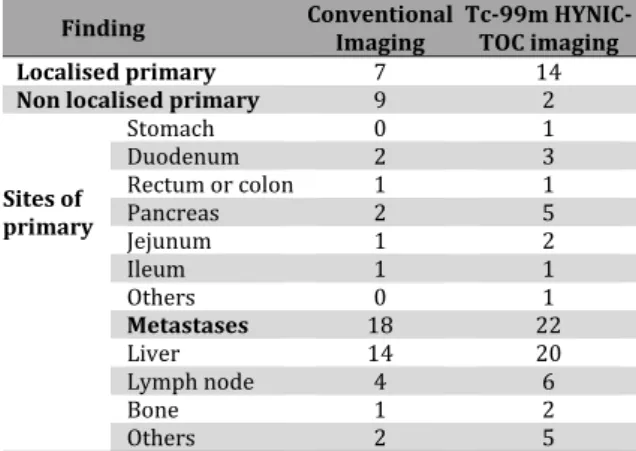
Table 2. Primary and metastatic sites obtained with Tc- m
HYNIC-TOC imaging
Finding Conventional Imaging
Tc-99m HYNIC-TOC imaging Localised primary
Non localised primary
Sites of primary
Stomach Duodenum Rectum or colon Pancreas Jejunum Ileum Others
Metastases
Liver Lymph node Bone Others
Most of the patients had more than one site of metastases.
Reference Standard
The reference standard for considering a lesion detected on mTc-Hynic TOC planar or SPECT/ CT as either positive or negative for NET was based on a combination of the followings: histopathology results of the primary tumor in patients biopsy, n= ; fine-needle aspiration, n= patients , histopathology of metastatic lesions in patients biopsy, n= fine-needle aspiration, n= patients , follow-up
mTc-Hynic TOC planar or SPECT/ CT in patients, correlation with conventional imaging contrast enhanced CT or MRI in patients, biochemical marker in patients, endoscopic ultrasound in patients, and upper
gastrointestinal endoscopy in patients. Hence, in some patients, more than one method was used to confirm the diagnosis. Based on the reference standard, patients had primary tumor and all patients had metastases.
99mTc‐Hynic TOC planar or SPECT/ CT for
Primary Tumor
mTc-Hynic TOC planar or SPECT/ CT detected primary tumor in of patients who had primary tumor according to the reference standard. A total of primary tumors were localized in these patients as patient had primary tumors Figure . The most common site of primary tumor was pancreas followed by duodenum Table . In the remaining patients, primary tumor was not localized by planar scintigraphy or SPECT/CT. The overall sensitivity, specificity, PPV, NPV, and accuracy of mTc-Hynic TOC planar or SPECT/ CT for primary tumor are detailed in Table . mTc-Hynic TOC planar or SPECT/ CT findings were true positive for primary tumor in patients, It localized primary tumor in patients with carcinoid, patients with pancreatic NET, and patients with NET not otherwise specified NOS .
Table 3. Patient-Based Diagnostic Accuracy of Conventional
Imaging and scintigraphy for the Detection of Primary Tumor
Performance Conventional Imaging %
Scintigraphy Imaging %
Sensitivity . .
Specificity .
Positive Predictive value .
Negative Predictive value .
Asia Oceania J Nucl Med Biol. 2014; 2(1):30-41. 35
Figure 1. a Whole body anterior and posterior Tc- m-HYNIC-TOC images showing primary pancreatic neuroendocrine tumour.
b SPECT,CT and fused SPECT/CT slices localized uptake to the pancreatic tumour
99mTc‐Hynic TOC planar or SPECT/ CT for
Metastases
mTc-Hynic TOC planar or SPECT/ CT detected metastases in all patients who had one or more sites of metastases according to the reference standard. A total of regions were noted in these patients. The most common site of metastases on mTc-Hynic TOC planar or SPECT/ CT was the liver Figure , followed by the lymph nodes Table . mTc-Hynic TOC planar or SPECT/ CT findings were false negative for few of the liver metastases in patient. The overall sensitivity, specificity, PPV, NPV, and accuracy of mTc-Hynic TOC planar or SPECT/ CT for detecting metastases are detailed in Table . mTc-Hynic TOC planar or SPECT/ CT was true-negative in lesions and there was one false-positive lesion, when based on histopatholgy results or imaging follow up, where available.
Semi quantitative Analysis
Semi quantitative analysis tumor to background and tumor to normal liver uptake ratios of primary tumors and metastases were evaluated in all lesions. Among the primary tumors, histologic subtype did not influence the
uptake of mTc-Hynic TOC planar or SPECT/ CT. No significant difference was found in the uptake of carcinoid compared with pancreatic NET and NET NOS. Similarly, no significant difference was found between pancreatic NET and NET NOS. However, the tumor to background and tumor to normal liver uptake
Figure 2. Transaxial SPECT, CT and fused SPECT/CT as well
36 Asia Oceania J Nucl Med Biol. 2014; 2(1):30-41.
Figure 3. a Whole body anterior and posterior Tc- m-HYNIC-TOC images showing multiple liver metastasis. b SPECT,CT and
SPECT/CT localized uptake to the liver lesions.
Table 4. Patient-Based Diagnostic Accuracy of Conventional
Imaging and SPECT/CT for the Detection of metastases
Performance Conventional Imaging %
SPECT-CT Imaging %
Sensitivity .
Specificity .
Positive Predictive value . . Negative Predictive value
Accuracy .
ratios of liver metastases was significantly higher than the uptake ratios of lymph node and bone metastases. No significant difference was found in uptake ratios between lymph node and bone metastases. Overall, no significant difference existed in uptake ratios of primary tumor and of metastases.
Conventional Imaging for Primary Tumor
Conventional imaging detected primary tumor in of patients who had primary tumor according to the reference standard. The overall sensitivity, specificity, PPV, NPV, and accuracy of conventional imaging for primary tumor are shown in Table . Conventional imaging findings were true positive for primary
tumor in patients, true-negative in .
Conventional Imaging for Metastases
Conventional imaging detected metastases in of patients who had one or more sites of metastasis according to the reference standard. A total of lesions were noted in these patients Table . The most common site of metastases on conventional imaging was the liver Figure , followed by the lymph nodes. The overall sensitivity, specificity, PPV, NPV, and accuracy of conventional imaging for detecting metastases are detailed in Table .
Comparison of 99mTc‐Hynic TOC planar or
SPECT/ CT and Conventional Imaging for
Primary Tumor
Asia Oceania J Nucl Med Biol. 2014; 2(1):30-41. 37
was , whereas primary sites were seen by conventional imaging.
Comparison of 99mTc‐Hynic TOC planar or
SPECT/ CT and Conventional Imaging for
Metastases
mTc-Hynic TOC planar or SPECT/ CT detected metastases in patients compared with patients on conventional imaging. A total of metastatic regions were seen on mTc-Hynic TOC planar or SPECT/ CT compared with lesions on conventional imaging. In patients, one or more additional metastatic sites were detected with mTc-Hynic TOC planar or SPECT/ CT. On analysis, mTc-Hynic TOC planar or SPECT/ CT was superior to conventional imaging for the detection of liver, lymph node and bone metastases.
Impact of 99mTc‐Hynic TOC planar or SPECT/
CT on Patient Management
Findings from this study led to a change in the management strategy in a number of patients. On the basis of the results, patients . % underwent surgery for primary lesions that were not detected on other imaging modalities. In another patients . % , mTc-Hynic TOC planar or SPECT/ CT helped in surgical planning by depicting additional surgically resectable sites. patients % were spared unnecessary surgery because evidence of the advanced stage of disease was seen. It changed the treatment regimen in patients with liver metastases and ruled out liver metastases in one patient. In addition, the detection of the expression of somatostatin receptors in these patients led to the continuation of octreotide-based treatments. In patients with progressive disease, imaging findings of strong receptor positivity led to peptide-based radionuclide therapy with Lu DOTA-d-Phe - Tyr -Octreotate TATE . Although continuation of treatment cannot be considered to be as management change, m Tc-Hynic TOC planar or SPECT/ CT definitely helped in supporting the treatment decisions in these patients % .
Discussion
In the past decade, SRS using In-pentetreotide OctreoScan has played a central role in the functional assessment of NETs with a high degree of sensitivity and acceptable specificity for both primary as well as metastatic gastroenteropancreatic NETs. However, problems with SPECT emanate from the low
resolution of the system that hampers imaging lesions that are small or have low receptor densities , . More recently, the development of novel PET tracers Ga-DOTA peptides that bind specifically to somatostatin receptors expressed on the surface of NET cells allows the visualization of NET on Ga-DOTA-peptide PET/CT scans. Several different DOTA peptides DOTA-d-Phe - Tyr -Octreotide [TOC], DOTA-NOC, and DOTA-TATE have been used in this clinical setting for either NET diagnosis or peptide receptor radionuclide therapy. However the use of Gallium based somatostatin scintigraphy is restricted to centers with a PET-CT facility and is additionally expensive to procure the generator and post elution technology. Hence, the search for a suitable gamma camera based alternative is mandatory, to enable universal utilization of somatostatin scintigraphy for diagnosis and staging as well as a prelude to therapy.
Decristoforo et al preclinical studies -show that mTc-Hynic TOC has important features in common with Octreoscan, i.e., fast plasma clearance and, predominantly, urinary excretion . Moreover, the new tracer has advantages deriving from the optimal physical characteristics of being labeled with mTc, improved scintigraphic image quality, availability and lower cost. In addition, as demonstrated by Maecke and Béhé and Decristoforo , mTc-Hynic TOC is characterized by a higher uptake in tumors than that of Octreoscan, especially when compared to the muscles and the heart.
38 Asia Oceania J Nucl Med Biol. 2014; 2(1):30-41.
Figure 4. a Whole body Tc- m-HYNIC-TOC images showing two focal uptake ,one in the right thigh and other just below bladder.
Also photopenic area noted in the liver lesion suggestive of necrosis. b Transaxial SPECT,CT and SPECT/CT showing uptake in the neck of right femur and left pubis.
tumor site. There was one false-positive study for primary tumor which was later confirmed to be physiologically high uptake in the uncinate process of the pancreas. Recent reviews routinely mention this finding of increased uptake in the head of pancreas as physiologic . mTc-Hynic TOC planar or SPECT/ CT showed higher accuracy for both primary % vs % and metastatic gastroenteropancreatic NETs % vs % in comparison to conventional imaging modalities P< . . In seven patients, additional primary sites were detected with mTc-Hynic TOC planar or SPECT/ CT. On lesion analysis, mTc-Hynic TOC planar or SPECT/ CT was superior to conventional imaging for the detection of lymph node P< . and bone P= . metastases Figure . However, no significant difference was found for liver metastases P= . . In two patients with documented liver metastases mTc-Hynic TOC planar or SPECT/ CT showed no uptake. This lack of uptake could be the result of poor differentiation of the lesions. Negative m Tc-Hynic TOC planar or SPECT/ CT findings are also crucial to select the appropriate therapy with combined chemotherapy using etoposide and
cisplatin . In the current study, mTc-Hynic TOC planar or SPECT/ CT had a significant impact on the management of patients with gastroenteropancreatic NETs. There was a substantial change in the management protocol for patients % . patients underwent surgery for primary lesions that were not detected on other conventional imaging modalities. One patient had confirmation of a primary tumor in the pancreas, which was suspected on conventional imaging. Other patients underwent resection of primary tumor based on mTc-Hynic TOC imaging that was not detected on other modalities.
Asia Oceania J Nucl Med Biol. 2014; 2(1):30-41. 39
overall influence in almost half of the patients % regarding management decisions change in % and support in % .
There have been reports of a kit formulation
for the preparation of mTc-Hynic TOC by
Guggenberg et al . Though very simple to
formulate, there were some limitations such as the lack of commercial kits in India, as well as a maximum of only two patient doses could be prepared using a single vial. The BARC kit is more versatile with capability of handling higher volumes of Technetium eluate, single step addition with no separate requirement for buffer solution, capability of handling up to
mCi , MBq without compromising on
radio chemical purity or image quality. The demonstration of quality of prepared product as well as high clinical performance in GPNET
population will encourage mTc-Hynic TOC
application in neuro endocrine patients for staging and planning treatment. Especially in developing countries, where the patient load is high but centers with a PET CT facility or Germanium Gallium based imaging facilities are very few; this would be economically a much more viable alternative with equivalent diagnostic sensitivity and specificity. More investigations comparing the SPECT and PET radiopharmaceuticals are needed to further
establish mTc-Hynic TOC based imaging in the
clinical algorithm.
A few limitations of the current study should be kept in mind. First, histopathologic confirmation of all lesions was not available. This was not technically or ethically feasible. Second, we could not compare the results with PET based somatostatin scintigraphy; which is currently considered the standard of care. Third, we did not attempt to reevaluate the conventional imaging modalities studies. Hence, we cannot comment on retrospective visibility of any lesion that was initially missed.
Conclusion
The newly developed lyophilized kits from BARC performed well in the clinical setting. mTc-Hynic TOC planar or SPECT/ CT appears to be a highly sensitive and specific modality in the detection of gastroenteropancreatic NET. It is better than conventional imaging for this patient population and can have significant impact on patient management. The detection of a high degree of somatostatin receptor expression can be exploited to treat patients with cold octreotide therapy and peptide receptor radionuclide therapy, while a negative
finding on mTc-Hynic TOC planar or SPECT/ CT can guide the physician to choose an alternate form of treatment.
References
. Modlin IM, Lye KD, Kidd M. A -decade analysis of , carcinoid tumors. Cancer. ;
: –
. Sutliff VE, Doppman JL, Gibril F, Venzon D J, Yu F, Serrano J, et al. Growth of newly diagnosed, untreated metastatic gastrinomas and predictors of growth patterns. J Clin Oncol. ; :
-.
. Fraker DL, Jensen RT. Pancreatic endocrine tumors. In: DeVita VT, Hellman S, Rosemberg SA, eds. Cancer: principles and practice of oncology, th ed. Philadelphia, PA: Lippincott-Raven; .
P. – .
. Eriksson B, Oberg K, Skogseid B. Neuroendocrine pancreatic endocrine tumors: clinical findings in a prospective study of patients. Acta Oncol.
; : – .
. Schillaci O, Spanu A, Scopinaro F, Falchi A, Danieli R, Marongiu P, et al. Somatostatin receptor scintigraphy in liver metastasis detection from gastroenteropancreatic neuroendocrine tumors. J Nucl Med. ;
: – .
. Madeira I, Terris B, Voss M, Denys A, Suavanet A, Flejou JF, et al. Prognostic factors in patients with endocrine tumours of the duodenopancreatic area. Gut. ; : – .
. La Rosa S, Sessa F, Capella C, Riva C , Leone BE, Klersy C, et al. Prognostic criteria in nonfunctioning pancreatic endocrine tumours. Virchows Arch. ; : – .
. Malagelada JR, Edis AJ, Adson MA, van Heerden JA, Go VLW. Medical and surgical options in the management of patients with gastrinoma. Gastroenterology. ; : – .
. Andersen DK. Current diagnosis and manage-ment of Zollinger-Ellison syndrome. Ann Surg.
; : – .
. Norton JA, Collen MJ, Gardner JD. Prospective study of gastrinoma localization and resection in patients with Zollinger-Ellison syndrome. Ann Surg. ; : – .
. Norton JA, Shawker TH, Doppman JL. Localization and surgical treatment of occult insulin-omas. Ann Surg. ; : – . . Howard TJ, Zinner MJ, Stabile BE, Passaro E Jr.
Gastrinoma excision for cure: a prospective analysis. Ann Surg. ; : – .
. Kwekkeboom DJ, Bakker WH, Kam BL, Teunissen JJM, Kooij PPM, de Herder WW, et al. Treatment of patients with gastro-entero-pancreatic GEP tumours with the novel radiolabelled somatostatin analogue [ Lu-DOTA ,Tyr ] octreotate. Eur J Nucl Med Mol Imaging. ;
: – .
40 Asia Oceania J Nucl Med Biol. 2014; 2(1):30-41. metastases from endocrine tumors: a
prospe-ctive comparison of somatostatin receptor scintigraphy, computed tomography, and magnetic resonance imaging. J Clin Oncol. ;
: – .
. Kwekkeboom DJ, Krenning EP. Somatostatin receptor imaging. Sem Nucl Med. ; : . . Breeman WAAP, De Jong M, Kwekkeboom DJ,
Valkema R, Bakker WH, Kooij PP, et al. Somatostatin receptor-mediated imaging and therapy: Basic science, current knowledge, limitations, and future prospectives. Eur J Nucl Med. ; : .
. Reubi JC, Schaer JC, Laissue JA, Waser B. Somatostatin receptors and their subtypes in human tumors and in peritumoral vessels. Metabolism. ; suppl. : .
. Reubi JC, Shaer JC, Waser B, Mengod G. Expression and localization of somatostatin receptor SSTR , SSTR , and SSTR messenger RNAs in primary human tumors using in situ hybridization. Cancer Res. ; : . . Lamberts SW, Reubi JC, Krenning EP. Validation
of somatostatin receptor scintigraphy in the localization of neuroendocrine tumors. Acta Oncol. ; : .
. Warner RRP, O’Dorisio TM. Radiolabeled peptides in diagnosis and tumor imaging: Clinical overview. Semin Nucl Med. ; : .
. Blum J, Handmaker H, Rinne N. The utility of a somatostatin-type receptor-binding peptide radiopharmaceutical P in the evaluation of solitary pulmonary nodules. Chest. ;
: .
. Blum J, Handmaker H, Lister-James J, Rinne N. A multicenter trial with a somatostatin analog mTc de-preotide in the evaluation of solitary pulmonary nodules. Chest. ; : . . Menda Y, Kahn D. Somatostatin receptor imaging
of non–small cell lung cancer with mTc-depreotide.Semin Nucl Med. ; : .
. Vallabhajosula S, Moyer BR, Lister-James J, McBride BJ, Lipszyc H, Lee H, et al. Preclinical evaluation of technetium- m-labeled somatostatin receptor-binding peptides. J Nucl Med. ; : .
. Pearson DA, Lister-James J, McBride WJ, Wilson DM, Martel LJ, Civitello ER, et al. Somatostatin receptor-binding peptides labeled with technetium- m: Chemistry and initial biological studies. J Med Chem. ; : .
. Maina T, Stolz B, Albert R, Bruns, C, Koch P, Mäcke H, et al. Synthesis, radiochemistry, and biological evaluation of a new somatostatin analog SDZ - labeled with
technetium-m. Eur J Nucl Med. ; : .
. Maecke HR, Béhé M. New octreotide derivatives labeledwith technetium- m. J Nucl Med. ;
: .
. Thakur ML, Kolan H, Wiaderkiewicz R, Pallela VR, Duggaraju R, Schally AV, et al. Radiolabeled somatostatin analogs in prostate cancer. Nucl Med Biol. ; : .
. Liu S, Edwards DS. mTc-labeled small peptides as diagnostic radiopharmaceuticals. Chem Rev.
; : .
. Bangard M, Behe M, Guhlke S,Otte R, Bender H, Maecke HR, et al. Detection of somatostatin receptor-positive tumors using the new mTc-tricine-Hynic-D-Phe -Tyr -octreotide: First results in patients and comparison with In-DTPA-DPhe - octreotide. Eur J Nucl Me. ;
: .
. Maina T, Nock B, Nikolopoulou A, Sotiriou P, Loudos G, Maintas D, et al. [ mTc]Demotate, a new mTc-based [Tyr ]octreotate analogue for detection of somatostatin receptor-positive tumors: Synthesis and preclinical results. Eur J Nucl Med Mol Imaging. ; : .
. Decristoforo C, Mather SJ. Technetium- m somatostatin analogues: Effect of labeling methods and peptide seuqence. Eur J Nucl Med.
; : .
. Decristoforo C, Mendelez-Alafort L, Sosabowski JK,Mather SJ . mTc-HYNIC-[Tyr ]-octreotide for imaging of somatostatin- receptor-positive tumors: Preclinical evaluation and comparison with In-octreotide. J Nucl Med. ;
: .
. Decristoforo C, Mather SJ, Cholewinski W, Donnemiller E,Riccabona G, Moncayo R, et al.
mTc- EDDA/HYNIC-TOC: A new mTc-labeled
radiopharmaceutical for imaging somatostatin receptor-positive tumors: First clinical results and intrapatient comparison with IN-labeled octreotide d rivatives. Eur J Nucl Med. ;
: .
. Krenning EP, Kwekkeboom DJ, de Jong M, Visser TJ, Reubi JC, Bakker WH, et al. Essentials of peptide receptor scintigraphy with emphasis on somatostatin analog octreotide. Semin Oncol.
; : – .
. Lamberts SWJ, Reubi JC, Krenning EP. Somatostatin and the concept of peptide receptor scintigraphy in oncology. Semin Oncol. ;
: – .
. Prasad V, Ambrosini V, Hommann M, Hoersch D, Fanti S, Baum RP. Detection of unknown primary neuroendocrine tumors CUP-NET using Ga- DOTA-NOC receptor PET/CT. Eur J Nucl Med Mol Imaging. ; : – .
. Campana D, Ambrosini V, Pezzilli R, Fanti S, Morselli Labate AM, Santini D, et al. Standardized uptake values of Ga-DOTA-NOC PET: a promising prognostic tool in neuroendocrine tumors. J Nucl Med. ; : – .
. Reubi JC, Kvols LK, Waser B, Nagorney DM, Heitz PU, Charboneau JW, et al. Detection of somatostatin receptors in surgical and percutaneous needle biopsy samples of carcinoids and islet cell carcinomas. Cancer Res.
; : – .
Asia Oceania J Nucl Med Biol. 2014; 2(1):30-41. 41 . Ruf J, Schiefer J, Furth C, Kosiek O, Kropf S, Heuck
F, et al. Ga-DOTATOC PET/CT of neuroendocrine tumors: spotlight on the CT phases of a triple-phase protocol. J Nucl Med.
; : – .
. Moertel CG, Kvols LK, O’Connell MJ, Rubin J. Treatment of neuroendocrine carcinomas with combined etoposide and cisplatin: evidence of major therapeutic activity in the anaplastic variants of these neoplasms. Cancer. ;
: – .
. Ambrosini V, Campana D, Bodei L, Nanni C, Castellucci P, Allegri V, et al. Ga- DOTA-NOC PET/CT clinical impact in patients with neuroendocrine tumors. J Nucl Med. ;
: – .
. Guggenberg EV, Mikolajczak R, Janota B, Riccabona G, Decristoforo C. Radiopharmaceutical development of a freezedried kit formulation for the preparation of [ mTc-EDDAHYNIC- D-Phe ,Tyr ]-octreotide, a somatos-tatin analog for tumor diagnosis. J Pharm Sci. ; : – .