FUNDAÇÃO GETULIO VARGAS
ESCOLA BRASILEIRA DE ADMINISTRAÇÃO PÚBLICA E DE EMPRESAS MESTRADO EM ADMINISTRAÇÃO
Can a great resume hurt? Gender and contrast effects on
recruiting
Aurélie Schleich
Dissertação submetida à Escola Brasileira de Administração Pública e de Empresas como requisite parcial para a obtenção do grau de Mestre em Administração
Orientador: Eduardo Bittencourt Andrade
Ficha catalográfica elaborada pela Biblioteca Mario Henrique Simonsen/FGV
Schleich, Aurélie
Can a great resume hurt? : gender and contrast effects on recruiting / Aurélie Schleich. – 2014.
60 f.
Dissertação (mestrado) - Escola Brasileira de Administração Pública e de Empresas, Centro de Formação Acadêmica e Pesquisa.
Orientador: Eduardo Bittencourt Andrade. Inclui bibliografia.
1. Pessoal – Recrutamento. 2. Entrevistas (Seleção de pessoal). 3.
Discriminação de sexo no emprego. 4. Curriculum vitae - Avaliação. I. Andrade, Eduardo Bittencourt. II. Escola Brasileira de Administração Pública e de Empresas. Centro de Formação Acadêmica e Pesquisa. III. Título.
2
C
ONTENTS
I. Introduction ... 4
II. Theoretical Background ... 8
Self-fulfilling Prophecy ... 9
Assimilation and Contrast ... 11
Gender Differences in Information Processing ... 15
Gender Similarity Effect ... 17
III. Experiments 1A and 1B ... 19
Method ... 20
Results ... 25
IV. Main Discussion ... 30
Managerial Implications ... 31
Limitations ... 33
Future Research ... 35
Appendix ... 37
3
A
BSTRACT
Recruiters make many inferences about applicants' abilities and interpersonal attributes on the basis of applicants' resumes. For example, every once in a while, a good resume leaves a strong positive impression and the recruiter creates a high expectation for the selection interview. What if a disappointing interview follows? Will the great resume help or hurt the candidate? The purpose of this study is to assess the impact of a good resume on the
recruiter’s evaluation of a candidate when a non-enthusiastic interview follows as well as the interacting role of gender. The results of two online experiments (n=454) where participants played the role of the recruiter, showed that, on average, a very good resume (vs. no resume) before a non-enthusiastic interview did not affect the recruiter’s evaluation
of the candidate. However, when the recruiter’s and the candidate’s gender were taken into
consideration, a different picture emerged. While no effect was found for male recruiters,
the candidate’s resume had a clear significant impact on female recruiter’s evaluations:
when the candidate was also a female, the good resume shown before the non-enthusiastic interview performance tended to help, whereas when the candidate was a male, the good
resume had a significant negative effect on female recruiters’ evaluation of the candidate.
4
I.
I
NTRODUCTION
In recruitment, it is not atypical for an organization to review thousands of resumes
in a year’s time (Useem, 1999) and the evaluation of applicants’ resumes continues to be an important pre-employment screening device. They are commonly used as an initial applicant screening tool because they provide an opportunity to appraise applicants’
qualifications in areas such as education, work experience, and special skills (Knouse, 1989).
Research suggests that recruiters make many inferences about applicants' abilities and interpersonal attributes on the basis of applicants' resumes (Ash, Johnson, Levine, & McDaniel, 1989; Brown & Campion, 1994), and establish a first impression of applicants’ employability. These impressions, in turn, are used to make pre-hire decisions (Ash et al., 1989; Dipboye, Fontenelle, & Garner, 1984).
Every once in a while, a resume leaves a very strong positive impression and the recruiter creates a high expectation for the selection interview. These expectations are proposed to affect evaluations of applicants (Schmitt, 1976). In particular, recruiters might be influenced by expectancy-confirmation processes, sometimes called “self-fulfilling
prophecies” (Darley & Fazio, 1980; Jones, 1977).
5 because of behavioral biases: recruiters' initial impressions influence their behavior, their communication style and their rapport with applicants during the interview (Dougherty, Turban, & Callender., 1994), or due to cognitive biases: recruiters notice, recall, and interpret events in a manner consistent with their initial impressions (Phillips & Dipboye, 1989); two biases that occur because of people’s tendency to confirm preheld beliefs (Snyder & Swann, 1978).
These self-fulfilling prophecies are largely supported in the field of recruitment (Blau & Ryan, 1997; Cable & Gilovich, 1998; Dipboye et al., 1984; Dougherty et al., 1994; Latham, Wexley, & Pursell, 1975; Macan & Dipboye, 1990). However, in other fields, mainly in psychology and marketing, another theory, called “the assimilation and
contrast theory” (Hovland, Harvey, & Sherif, 1957) has shown that contrast is another possible direction for the impact of prior expectations on subsequent evaluation. Both assimilation and contrast effects refer to the amount of displacement in current judgment that is attributable to prior impressions (Kravitz & Balzer, 1990). While assimilation occurs when judgments are biased towards the prior impression, contrast occurs when judgments are biased away from the prior impression.
According to this theory, pre interview impressions do not necessarily get confirmed post interview, but its confirmation depends on the disparity between the initial impression and the actual performance during the interview. As such, when a disappointing
interview follows a resume that created a high expectation, the recruiter’s evaluation of the candidate could go in two very different directions:
6 the basis for a possible contrast effect (Hakel, Ohnesorge, & Dunnette, 1970; Landy & Bates, 1973; Rowe, 1967).
However, when analyzing the effect of a candidate’s resume on recruiter’s evaluations, literature in recruiting has largely focused on assimilation (Cable & Gilovich, 1998; Dipboye, 1982; Dipboye et al., 1984; Dougherty et al., 1994; Latham et al., 1975; Macan & Dipboye, 1990), while, to our knowledge, no study has investigated possible contrast effects. For this reason, one of this study’s main contributions is to analyze whether a negative disconfirmation is possible when expectations based on a great resume are disconfirmed by a low interview performance.
There are many characteristics that may also affect how resume information is incorporated in the recruiting process. For example, Powell, Butterfield, & Parent (2002)
concluded that applicants’ demographics explained additional variance in selection
decisions beyond what is already explained by applicants’ qualifications. Further, several
studies propose that gender is one of the most influential of these demographic characteristics (Glick, Zion, & Nelson, 1988; Pratto & Bargh, 1991; Zikmund, Hitt, & Pickens, 1978).
However, the effects of gender on recruiter’s responses to applicants have yielded
7 Because of these inconsistent results, Powell (1987) highlights the necessity of further research to determine the conditions under which different explanations of the effect of gender apply.
Some studies have shown that there is a significant gender difference in information processing. This gender difference may lead female recruiters, who are said to be comprehensive rather than selective information processors and who engage in more creative, associative, imagery-laced interpretation (Wood, 1966) to be more prone to create
a strong prior upon seeing a candidate’ s resume and, in turn, be more affected by the
resume’s effect than are male recruiters. Therefore, one of our goals will be to investigate
the interaction of the recruiter’s gender and the expectation set by the resume on the
recruiter’s evaluation of the candidate.
In addition, Byrne (1971)’s similarity-attraction paradigm suggests that demographics, such as gender, can impact recruiter’s evaluation of applicants in a recruitment setting because the more similar one perceives another person to be, the more that other person is liked and thus the more probable it will be receiving more favorable evaluations. Thus, a final contribution of this dissertation will be to investigate the
matching role of the recruiter’s and the candidate’s gender.
Even though many studies have researched how gender can impact evaluations, we are not aware of any study that analyzed its impact in a recruitment situation where
recruiter’s evaluation arises in the context of negative disconfirmation (i.e., good resume
followed by a non-enthusiastic interview).
8
of the recruiter’s gender, (c) the role of gender matching (e.g., female candidate and female
recruiter).
In the following section, we will first provide a literature review on the self-fulfilling paradigm, on assimilation and contrast theory, as well as on gender differences in information processing and on the gender similarity effect along with a set of hypothesis. Second, we will describe the method used in experiment 1A and 1B and discuss its results and possible explanations. Finally, we will describe potential managerial implications, the main limitations, and a few ideas for future research.
II.
T
HEORETICAL
B
ACKGROUND
The first information recruiters have on applicants usually comes before the
interview and consists of paper credentials such as a candidate’s resume. An impression is
then created upon the applicant’s resume, which typically leads to an expectation or belief
about the candidate (Ash et al., 1989; Brown & Campion, 1994). The question has then
been “how does this initial impression impact subsequent evaluations?” Two somewhat
unrelated bodies of the literature can help address this question: self-fulfilling theory and assimilation and contract theory.
S
ELF-
FULFILLINGT
HEORYSelf-fulfilling theory has argued that assimilation is likely to occur. That is, the
9 evaluations in a way that matches their original impression. In other words, the basic proposition of the self-fulfilling model is that, all other things held constant, the more favorable the information on the candidate through his resume, the more favorable the interviewer's evaluation of the candidate after the interview (Dipboye, 1982; Tucker & Rowe, 1979).
These self-fulfilling assimilation effects are mediated by both the tendency of interviewers to convey their opinions of the interviewee in their conduct of the interview and their tendency to notice, recall, and interpret information in a manner that is consistent with pre-interview evaluations (Dipboye, 1982). In order words, assimilation happens either because of behavioral biases (i.e., recruiters' initial impressions influence their behavior, their communication style and their rapport with applicants during the interview; Dougherty et al., 1994), or due to cognitive biases (i.e., recruiters notice, recall, and interpret events in a manner that is consistent with their initial impressions; Phillips & Dipboye, 1989). These two biases occur because of people’s tendency to confirm preheld beliefs (Snyder & Swann, 1978).
The self-fulfilling theory has been supported by several studies that have examined relationship between pre- and post-interview evaluations in both controlled experiments (Dipboye, Stramler, & Fontenelle, 1984; Dipboye et al., 1984) or during actual hiring decisions (Cable & Gilovich, 1998; Dougherty, Ebert, & Callender, 1986; Phillips & Dipboye, 1989).
10 confirmatory behavior. Results showed that interviewers followed up positive first impressions, for example, by showing positive regard toward applicants, "selling" the company and gathering less information about the applicants, thus showing that interviewers in natural settings do use confirmatory strategies.
In another study, Cable & Gilovich (1998) examined preinterview impressions and post-interview evaluations in the context of prescreening decisions. 158 recruiters from 95 different organizations conducted a total of 1,501 interviews. Following their interviews, recruiters were asked to complete a voluntary survey about each applicant where they rated applicants among six dimensions using a 4-point scale. Fifty percent of the candidates had been prescreened, and the rest obtained interviews through the career office's internal bidding process. Two independent judges then coded applicants' resumes along the six dimensions. Results showed that job applicants who were prescreened into interviews were judged more favorably by recruiters than applicants who were not prescreened. Because many applicants were prescreened by some organizations and not by others, the authors were able to control for applicant qualifications and show that the same individuals were rated more favorably when pre screened than when not prescreened. Finally, the results ruled out the possibility that findings simply reflect accurate preinterview assessments of applicant-job "fit", thus providing evidence that the favorable evaluation was due to the recruiter’s initial impression of the candidate.
11 thus creating an expectancy: 24 received a favorable letter of reference, 24 received an unfavorable letter, and 24 received a neutral letter. Results suggested that an interviewer with an unfavorable expectancy is likely to give the applicant less credit for past successes and to hold the applicant more personally responsible for past failures while a favorable expectancy is likely to yield the opposite effect. Thus, the recruiter’s interpretations of the
candidate’s past results were closely related to their initial impression of the candidate.
Those three studies along with others provide considerable evidence that the self-fulfilling processes of behavioral confirmation and cognitive distortion are common in the interview context (Dipboye et al., 1984; Dougherty et al., 1994; Phillips & Dipboye, 1989).
A
SSIMILATION ANDC
ONTRASTAlthough assimilation, through self-fulfilling mechanisms, does exist, an unrelated research stream has proposed that contrast is another possible direction for the impact of prior expectations on subsequent evaluations. A study by Spector (1956) found that subjects whose expectations were negatively disconfirmed evaluated a reward less favorably than did subjects who expected and received the same reward. In order words, disappointed subjects magnified the difference between the presumably more desirable reward and the one they received.
12 Assimilation and contrast theory (Hovland et al., 1957) posits that both effects are quite likely and essentially depend on how big the disparity between expectations and actual performance of an applicant is. There are zones of acceptance and rejection in
individuals’ perceptions.
If the disparity between expectations and actual performance is sufficiently small to
fall into the individual’s zone of acceptance, he/she will tend to assimilate the difference
by giving an evaluation that is more in line with expectations than its objective performance justifies (Anderson, 1973). This happens because individuals “do not like to
be in a state of conflict” and by reinterpreting the performance so as to be consistent with
one’s expectations, individuals try to reduce dissonance (Oliver, 1977).
On the opposite side, if the discrepancy between expectations and actual performance is so large that it falls into the zone of rejection, then a contrast effect comes into play and the individual magnifies the perceived disparity (Anderson, 1973). Again, this negative unfavorable evaluation due to a negative disconfirmation of the expectancy
happens because of individuals’ need for consistency. This need is usually expressed by attitude change in the direction that eliminates inconsistency (Brown & Roger, 1965).
In marketing, for instance, the assimilation and contrast theory (Hovland et al., 1957) has widely been supported regarding consumer’s evaluation of products (Anderson, 1973; Khurana, 2011; Klein, 1999; Oliver, 1977).
In a study by Anderson (1973) for example, participants were randomly assigned to one of five levels of persuasive product information: substantially/slightly understating the
product’s features, describing the product accurately, slightly/substantially overstating the
13 ratings were assimilated toward expectations until the "very high" condition when contrast effect began, causing a downturn away from expectations in evaluations of the product.
Khurana (2011) came to the same conclusion. In her experiment, the evaluation was over service in either a restaurant or a café. Pre and Post type of questionnaires were used,
where the pre questionnaire helped in determining participant’s prior expectations and the post questionnaire was used for understanding the actual performance of the service. The result was that when disconfirmation size was small, the customer response was assimilated towards the initial impression, and when disconfirmation size was large, the customer response was contrasted away from the initial impression.
These studies showed that when expectations are not matched by actual product performance, the surprise effect or contrast between expectations and outcome may cause the consumer to exaggerate or magnify the disparity rather than assimilate. The experiments revealed that a negative disconfirmation of an expectancy (that is, results were poorer than anticipated) produced an unfavorable product evaluation and that there is a point beyond which consumers will not accept increasing disparity between product claims and actual performance.
Following this logic, the assimilation and contrast theory (Hovland et al., 1957)
leads us to expect that the recruiter’sexpectation created upon seeing a candidate’s resume
doesn’t always result in assimilation. As with product evaluation, if the gap between the
prior expectation and the actual performance is narrow (wide) enough to fall under the zone of acceptance (rejection), an assimilation (contrast) effect will occur.
14 contrast effects are theoretically possible. Two competing hypothesis are therefore described:
Hypothesis 1A: A good resume followed by a non-enthusiastic interview is going to impact the recruiter’s evaluation positively (assimilation).
Hypothesis 1B: A good resume followed by a non-enthusiastic interview is going to impact the recruiter’s evaluation negatively (contrast).
It is worth noting that contrast effects have been investigated in the recruitment literature, but only across candidates, where interviewer evaluations of job applicant’s resumes were a function of the qualifications of the immediately preceding applicants. In those studies, participants viewed several interviews of job candidates after another. The first two or three interviews provided a frame of reference while ratings of the following interview were evaluated for contrast effects. Those research projects found that if the applicants are seen singly, they will be given lenient evaluations; if seen as couplets, the contrast effect may be dramatic (Hakel et al., 1970; Landy & Bates, 1973; Rowe, 1967). However, a contrast effect has, to our knowledge, never been investigated as a possible effect of a disconfirmed expectation for a single candidate.
15
gender interacts with the resume’s impact on recruiter’s evaluation and will therefore be
discussed next.
G
ENDERD
IFFERENCES INI
NFORMATIONP
ROCESSINGFor decades, scientific studies have tried to delineate the fundamental similarities and differences between genders (Deaux & Kite, 1987). Many past empirical studies have been able to demonstrate significant gender differences across a variety of tasks and traits. Holbrook (1986) suggests that gender may be a key variable in moderating evaluative judgments. Indeed, a variety of research indicates that males and females may use significantly different processing strategies when doing evaluations.
According to the “selectivity model”, males are selective information processors
while females are comprehensive information processors. This means that males have a tendency not to process all available information as a basis for judgment. Instead, they tend to use heuristics processing, miss subtle cues and rely more on their own opinions (Meyers-Levy, 1988). As a result, males usually make decisions more quickly than females, relying on only highly available information.
16 In addition, Holbrook (1978) shows that women tend to be more subjective and resort to more individual interpretations. They are also said to engage in more creative, associative, imagery-laced interpretation (Wood, 1966) and to provide greater interpretation of stimuli in terms of feeling and motivation (Gleser, Gottschalk, & John, 1959). This lets us believe that females will be more likely to project an image of the candidate upon seeing his or her resume than will males.
As previously described, people must form and rely on strong priors for assimilation or contrast to take place. Because females process information in a more exhaustive and interpretive way and because their interpretations are usually more subjective, creative and imagery-laced, it is possible that female recruiters are more likely to form/rely on a strong prior upon seeing the good resume and an that the resume will significantly impact their evaluation of the candidate.
Because males process the information in a more objective way and because their interpretation are rarely left to imagination, male recruiters may be less likely to form a strong prior upon seeing the good resume and that the resume will have little or no impact on their evaluation of the candidate.
In a nutshell, our second Hypothesis will be as followed:
Hypothesis 2: The good resume is going to have a stronger (positive or negative) effect on
a female than on a male recruiter’s evaluation of the non-enthusiastic candidate.
17
Individuals show an unconscious, automatic tendency to favor “in-groups” (i.e., people similar to oneself) over “out-groups” (i.e., people different to oneself) (Brewer & Brown, 1998; Reskin, 2001). In particular, people feel more comfortable with in-group members and more readily offer them trust and cooperation. Therefore, similar individuals often receive more favorable evaluations from decision makers than dissimilar ones do. In the same line, Byrne (1971)’s similarity-attraction paradigm suggests that the more similar one perceives another person to be, the more that other person is liked, and the more likely they will be evaluated more favorably by others.
This paradigm is one of the most robust phenomena. A meta-analysis of over 300 similarity studies observed that similarity produces a positive, moderately sized effect in attraction (Montoya, Horton, & Kirchner, 2008) and the paradigm has been observed across a multitude of different attributes. More importantly, even though Byrne (1971)’s original research referred to similarity in attitudes, more recent research has extended these findings to include similarity in demographic characteristics like gender (Tsui & O’reilly, 1989; Zenger & Lawrence, 1989).
Byrne (1971) argues that similar attitudes serve as reinforcers. According to this perspective, individuals have a fundamental need for logic and consistency and therefore favor stimuli that reinforce this need. For instance, when people are similar to us or validate our ideas and attitudes, they reinforce the logic and consistency of our world. For this reason, we perceive similar people as reinforcing and thus associate them with positive feelings, which in turn lead to attraction and positive evaluations.
18 The similarity–attraction paradigm is complemented by social identity (Tajfel & Turner, 1986) and self-categorization theory (Turner, Hogg, Oakes, Reicher, & Wetherell, 1987), which propose that our self-concepts are in part formed by the groups to which we think we belong.
That is, because it is necessary to maintain a positive self-regard, seeing others t hat are similar to oneself in a positive light is psychologically beneficial. Although different factors may influence how people categorize themselves and others into groups in different situations, research indicates that demographic variables, including gender, are important in this regard.
If recruiters will perceive candidates of the same gender as more similar as candidates from the opposite gender, it is possible that, everything else being equal, the assessment of a candidate of opposite gender will fall under the zone of rejection, whereas the assessment of a candidate of same gender will fall under the zone of acceptance. Following the same logic, contrast should be more likely to occur between opposite-gender pairs (e.g., female recruiter-male candidate) whereas assimilation should more likely to occur for same-gender pairs (e.g., female candidate-female-recruiter).
Hypothesis 3: Contrast will prevail when the recruiter’s and candidate’s gender do not match whereas assimilation will prevail when the recruiter’s and candidate’s gender match.
Of course, given that female recruiters are expected to form and rely more strongly on their priors that male recruiters (i.e., hypothesis 2), the directional impact of gender
similarity on recruiter’s evaluation is logically more likely to occur among female
19 Two experiments have been conducted to assess these 3 main hypotheses.
III.
E
XPERIMENT
1A
AND
1B
In experiment 1A and 1B we asked participants to take the role of a recruiter and evaluate one candidate, a male candidate in experiment 1A and a female candidate in experiment 1B. Participants were either presented or not with a good resume followed by a video in which the applicant performs non-enthusiastically in an interview. Then participants provided a general evaluation and hiring assessment of the candidate. The experiments allowed us to assess the impact of the resume along with the moderating roles
of the recruiter’s (participants) gender as well as the matching between recruiter’s and
applicant’s gender.
M
ETHODFour hundred and forty five individuals participated voluntarily in an internet-based experiment about recruitment: two hundred and forty two in experiment 1A and two
hundred and three in experiment 2B. Participants were recruited on the Amazon’s
20
The main difference between experiments 1A and 1B was the candidate’s gender.
In both experiments, all other key aspects of the procedure remained constant—that is, same resume and same questions and answers during the interview.
Out of the four hundred and forty two participants, 61,12% are men and 38,88% are women. The mean age of the sample is 33,07 years (SD=11,21). Also, 55,3% are residents of the United States of America, 42% of India and 2,7% of other countries.
Each experiment had a 2 (Male candidate vs. Female Candidate) by 2 (Resume vs. No Resume) by 2 (video replicate: video 1 vs. video 2) between-subject design.
Stimuli
Resume. The resume of a fictitious candidate was created for the
experiment. All the information on it was made up but referred to existing universities and companies. The goal was to create a resume that would be perceived by the participants as being impressive, so that either an assimilation or a contrast effect could possibly occur
once they see the candidate’s non-enthusiastic performance during the interview. To reach this goal, the resume stated that the candidate had acquired extensive experience in big companies like Samsung or Allianz and had attended well-known international schools like New York University or London Metropolitan University. In addition, the resume showed that the candidate speaks four languages fluently, has had several achievements in his career and has significant international experience. The resume had the following
categories: “Work experience”, “Achievements”, “Education and Training”, “Languages
and IT”, and “Other Interests”. The only difference between the resume in experiment 1A
21
Video Interview. Two actors, a man and a woman, were asked to play the male and
female job candidates for the experiments 1A and 1B, respectively. The video showed participants a short clip of the candidate during his or her interview process. For this, an office at Fundação Getúlio Vargas was used as the location and the actors were wearing professional clothing to make the scenery of the video realistic. The participants saw only
the candidate but could clearly hear the interviewer’s questions as well as the candidate’s
answers. The goal was for the video to be perceived as non-enthusiastic, such that a negative disconfirmation (i.e., performance worse than expected) could result from seeing
the video right after having read the candidate’s good resume. To present a non -enthusiastic performance, the actors played a very annoyed, uninterested candidate with a very negative attitude.
In order to increase robustness, four different videos were used in the experiments, two with the male (experiment 1A) and two with the female (experiment 1B) candidate. All of them had a length of around two minutes.
Procedure
Participants typically needed between 5 and 12 minutes to complete the survey. The survey was all in English language. Before participants started the survey, the purpose of the experiment and what it consisted of was briefly explained to them and they were asked to agree to a statement of informed consent.
At the beginning of the experiment, participants were asked to imagine the
following scenario: “You work as a recruiter in the Human Resources department of a
medium-sized telecommunication company in São Paulo, Brazil. Your company needs to
22
selection process. The company wants to hire Sales Representatives that have great people
skills, are motivated, passionate, and that are team-players. They should have experience
in Sales and any language besides English is considered an advantage.”
After this short introduction, participants were randomly assigned to either the
“Resume” or the “No Resume” condition (i.e., main independent variable). In the “No
Resume” condition, all they saw was the name, the age and the nationality of the candidate.
They then proceeded immediately to the short interview clip. In the “Resume” condition,
participants had as much time as they wanted to go through the resume of the candidate. In order to control to a certain degree whether participants would actually read the resume, the survey page was blocked so that they could not continue to the next page for two minutes. In addition, in experiment 1B, they were asked to read carefully as they would be asked a few test questions about the resume later on.
Participants then saw a short video of the interview process of the candidate. In experiment 1A, the candidate was a man while in experiment 1B, the candidate was a women. They could press play at any time and repeat the video several times if they wanted. English subtitles were included in the video to make it more understandable as the candidates were from Brazil and English was not their native language. For each
experiment, there were two different videos of the candidate; in one the candidate’s
attitude is slightly worse than in the other one. In each of the two experiments, participants
were randomly assigned to either “Video 1” or “Video 2” (i.e., replicates). The content of
23 After this brief clip, we asked participants if they had been able to watch the entire video and if they experienced any problems with it. A box was available for them to write their answers.
Next, we asked participants to evaluate the candidate by answering the following two questions on an 11-point scale: “How do you evaluate the candidate?” and “How
likely are you to hire the candidate?” (-5=“S/he is terrible/Very unlikely to 5=“S/he is
excellent/Very likely”).Those two questions formed our main dependent variable—that is the evaluation of the candidate by the recruiter, here, the participants.
In addition, we asked the following open-ended question: “Please explain the
reasons for your answers”. At this point, participant had a big box where they were free to
write anything they wanted without having a limit of characters. With this question, we hoped to gather some qualitative data that would possibly help us gain some deeper insight regarding what participants thought of the candidate. In addition, this question served as a control question that allowed us to see that participants in fact perceived the resume as being very good, that they had created some expectations from it and that the interview really was perceived as non-enthusiastic. All the comments regarding the resume were very positive, which was mostly described as “outstanding” or “awesome” and the candidate in the interview was often described as having a bad attitude, having no motivation, no enthusiasm or no charisma. Also, many participants in the Resume condition wrote that the resume was great but that the interview was very disappointing, thus letting us think that they had created a high expectation upon seeing the resume.
All those questions were blocked, so that the candidate could not continue without answering all of them.
24 possible answers for each one. The questions were about what the candidate answered during the interview. We told the participants that for each question, there is one correct and one incorrect answer. Again, the questions were blocked and participants had to respond before being able to move on with the survey.
In experiment 1B only, we decided to add four questions about the resume for
participants in the “Resume” condition. They had been told before reading the candidate’s
resume that questions about it would be asked later on. The goal was to see how carefully they read it but also to assess how salient it was to them. All four questions had two possible responses, a correct and an incorrect one. In addition, we asked participants to evaluate on a scale from 0 to 100 how important each source of information is to them: the resume and the Interview.
At the end, we asked participants if they experienced any problems during the survey and left a box in which they could respond in length. Finally, beyond gender (i.e., the other critical independent variable), we asked them to answer a few demographic questions like, age, nationality and occupation.
Replication Material
The two surveys of experiment 1A and 1B are presented in the Appendix. The 4 video clips with the interviews can be watched on Qualtrics (links given in the appendix).
SPSS version 20 was used to conduct all the statistical analyses. The databases are available upon request.
25 Dependent Variable and Manipulation Check
As already pointed out, the dependent variable was the participant’s evaluation of
the candidate, measured on a scale from -5 to 5 by having participants respond the
following two questions: “How likely are you to hire the candidate?” and “How do you
evaluate the candidate?”. After checking for reliability (α = 0.99), an evaluation index was created.
As a reminder, we asked participants to answer two test questions about the video and four test questions about the resume to control for whether they had watched the video and read the resume carefully or not.
Six individuals were excluded from the dataset because they clearly did not follow the instructions and responded all six test questions wrong. The results were not affected by this exclusion.
The video replicates did not significantly impact the described results. Therefore, they were collapsed in all subsequent analysis. Given that experiment 1A and 1B were virtually identical to one another, we integrated both experiments in the subsequent analyses whenever possible. That said, we are aware that no random assignment occurred for this variable (i.e., male vs. female candidate). We will discuss the limitation in the general discussion.
Main Findings
On average, a good resume before a non-enthusiastic interview did not affect the
recruiter’s evaluation of the candidate neither did it interact with the candidate’s gender.
That is, there was no significant difference between the “No Resume” (M=0.38, SD=3.15;
26 1A) or female (experiment 1B). That is, the interaction term was also non-significant (F(1,445)=2.52, p=0.11). Thus, at first sight, neither Hypothesis 1A, that predicted a positive effect of the resume on the evaluation, nor Hypothesis 1B, that predicted a negative effect of the resume on the evaluation, was supported.
This result is somewhat surprising as this would mean that participants did not create any expectations upon seeing the good resume as no assimilation nor contrast effect
occurred. However, when the recruiter’s gender (that is, the gender of the participant who
has been asked to play the role of a recruiter) and the candidate’s gender are taken into
consideration, a different picture emerges.
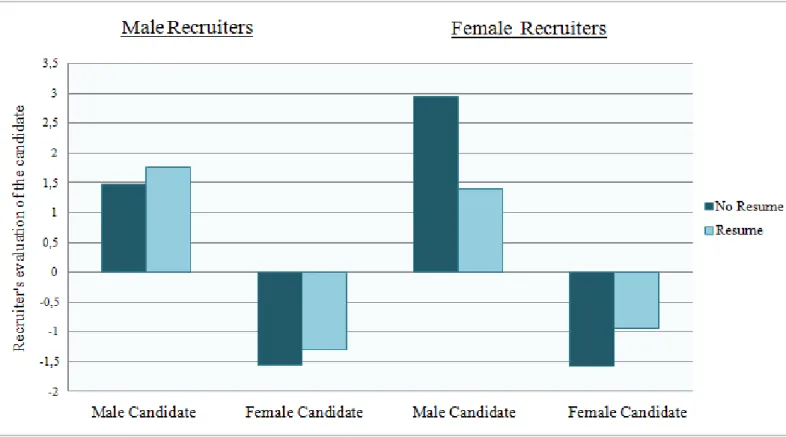
Figure 1 summarizes the main findings by Resume (present vs. absent prior to the
interview), recruiter’s gender (male vs. female) and candidate’s gender (male/experiment
1A vs. female/experiment 1B).
27 For male recruiters, there was a clear no effect of the resume on evaluation, independent of whether the candidate was male (experiment 1A) or female (experiment
1B). The mean for the “No Resume” condition was slightly lower than for the “Resume”
condition, though not significant for both the male candidate (M=1.47, SD=2.84; n=80 vs. M=1.76, SD=2.82; n=67; F(1, 146)=0.39, p=0.53) and the female candidate (M=-1.56, SD=2.59; n=69 vs. M=-1.30, SD=2.62; n=56; F(1, 125)=0.29, p=0.59). The two-way interaction was also non-significant (F(1, 271)=0.00; p=0.95).
For female recruiters, however, the candidate’s resume had a clear significant
impact on recruiter’s evaluations. Further, the direction of the effect was moderated by the
candidate’s gender. When the candidate was also a female, the good resume (M=-0.93, SD=2.97; n=39) tended to help relative to the No Resume (M=-1.58, SD=2.66; n=39) although it did not reach significance (F(1, 78)=1.01, p=0.32). When the candidate was a male, however, the good resume shown before the non-enthusiastic interview performance had a significant negative effect on female recruiters. The difference between the “No
Resume” (M=2.94, SD=1.78; n=48) and the “Resume” conditions (M=1.39, SD=3.05;
n=47) was significant (F(1, 95)=9.11, p < 0.01), thereby providing evidence of a contrast effect. The two-way interaction was also significant (F(1,172)=7.30, p<0.01).
Finally, the above effects were qualified by a three-way interaction between the
candidate’s gender, the recruiter’s gender, and the Resume/No Resume on the recruiter’s
evaluation of the candidate (F(1, 445)=4.43, p=0.04).
28 by a non-enthusiastic interview negatively impacted the recruiter’s evaluation of the candidate – that it, a contrast effect was observed.
The results also provide support for Hypothesis 2, which states that the impact of the good resume (and the priors it sets) should be bigger for females than for males, because females process information in a more exhaustive, interpretive way than males, thus being likely to create a stronger prior upon seeing the resume. As figure 1 demonstrates and the statistical analyses described above confirm, the resume has a significant impact among female recruiters but no impact among male recruiters.
This rationale finds support also on female recruiter’s report with respect to the
importance of the resume and the interview.
Remember that in experiment 1B, we asked participants to indicate on a 101-point scale how important both the resume and the interview were to them. While there was no significant difference between male recruiters (M=85.37, SD=16.21; n=38) and female recruiters (M=79.93, SD=16.85; n=55) with respect to the interview (F(1,93)=2,42, p=0.12), the results showed that the resume is significantly more important to female recruiters than to male recruiters (M=76.66, SD=16.99; n=38 vs. M=64.71, SD=23.14; n=55; F(1,93)=7.37; p<0,01).
Finally, there was also some support for Hypothesis 3, which states that the
direction of the effect should be moderated by matching between the recruiter’s and
candidate’s gender. Precisely, contrast is more likely to occur when the recruiter and
candidate’s gender do not match whereas assimilation is more likely occur when the
recruiter and candidate’s genders match. This phenomenon is observed in the data in
29 evaluating a female candidate (gender match), although, as already reported, it did not reach significance.
These results fit into the similarity-effect literature. According to this effect, women perceive the female candidate as more similar to themselves than the male candidate, thus are more likely to give the female candidate a more favorable evaluation. When evaluating the male candidate, female recruiters that had seen the resume before the poor interview performance gave a much less favorable evaluation to the candidate than did female participants that had seen only the poor performance during the interview. Thus, the resume had a very negative effect on the evaluation of the candidate. Though, when the
candidate was a female, the resume’s negative effect disappeared. Thus, we assume that
the fact that women identify the female candidate as an “in-group”, with whom they have more similarity, makes up for the disappointment felt upon seeing the bad interview and thus does not result in a worse evaluation than when no expectation was created.
IV.
G
ENERAL
D
ISCUSSION
The purpose of this study was to asses (a) the impact of a very good resume followed by a non-enthusiastic interview on the recruiter’s evaluation, (b) the role of the
recruiter’s gender, (c) the role of gender matching (e.g., female candidate and female
recruiter).
Three key findings emerge from this research.
First, in this study, a very good resume before a non-enthusiastic interview, on
average, did not affect the recruiter’s evaluation of the candidate neither did it interact with
30 Second, women process information in a much more exhaustive way and put more importance on the resume than do men, thus are more prone to have their judgment
affected by the candidate’s resume. As a result, when the recruiter’s gender was taken into
account, an effect of the resume was observed. For male recruiters, there was a clear no effect of the resume on evaluation, independent of whether the candidate was male or
female. For female recruiters, however, the candidate’s resume had a clear significant
impact on recruiter’s evaluations. When the candidate was also female, the good resume tended to help relative to the No Resume. On the contrary, when the candidate was a male, the good resume had a large negative effect on female recruiters, thereby providing evidence of a contrast effect. Those results support our hypothesis that the impact of the resume is bigger for female than for male recruiters and showed that, at least under certain circumstances (i.e., male candidate-female recruiter), a good resume followed by a
non-enthusiastic interview negatively impacted the recruiter’s evaluation of the candidate.
Third and last, in situations where the resume has a strong impact on the recruiter’s evaluation (female recruiters), the direction of the effect was moderated by the candidate’s gender. The similarity effect literature explains that women perceive the female candidate as more similar to themselves than the male candidate, thus are more likely to give the female candidate a more favorable evaluation. Indeed, for female recruiters, a contrast effect was observed when they evaluated a male candidate. However, this effect tended to reverse once they were evaluating a female candidate.
M
ANAGERIALI
MPLICATIONS31 First, this study shows that the female and male recruiters are impacted differently by a good resume followed by a non-enthusiastic interview, which in turn can have a big impact on the recruiting decisions of a company.
According to the results of this study, a good resume seen before a non-enthusiastic
performance interview will bias less a male recruiter’s decision but may have an important
impact on female recruiters’ evaluation. Also, while the resume impacted negatively
female recruiter’s evaluation when the candidate was male, it tended to have a positive
impact when the candidate was female. Thus, in one situation, the resume hurt while in the other, it seemed to help. As such, the outcome, which is of high importance for the
company, can turn out very different, depending on the recruiter’s gender and its matching
with the candidate’s gender.
In a situation of a good resume followed by a non-enthusiastic interview, both assimilation and contrast biases can potentially have a negative impact for the company.
When assimilation occurs, the recruiter runs the risk of hiring a candidate that is not the best choice for the company because he/she maintains his/her initial good impression even though the candidate had a bad performance during the selection interview, which can be an indicative of how well he or she will perform if hired. In this case, the assimilation bias might lead the recruiter to put aside the poor interview performance and focus solely on the good resume, thus ignoring important information when making his/her hiring decision.
32 To remedy this problem, we propose a few solutions:
As expectations created upon seeing a resume can lead to an assimilation or contrast bias, a first possible solution would be to have two recruiters involved in the selection process. A first person could go over the resumes to identify the candidates that fit the requirements of the company, while a second person could then interview the candidates that have been pre-selected. As such, this second recruiter would go in the interview without having any priors or expectation of the candidate.
While this solution might be effective, a company might not always have the necessary human or financial resources to have two recruiters, or might not find it to be in its best interest. Therefore, we believe that a second and better solution would be to make recruiters aware of the biases through training sessions in order for them to be able to avoid wrong decision-making. By clearly explaining the biases and their effects, recruiters can learn to detect them and to avoid them in the future.
A third solution we propose to reduce assimilation and contrast biases is to take into consideration additional information about the candidate when making a hiring decision. In fact, when there is a big discrepancy between a candidate’s resume and his/her interview performance, additional data can help the recruiter determine whether the bad interview
performance is the result of a bad day or if it realistically reflects the candidate’s
personality and skills. An example of additional data could be a candidate’s references or test scores.
33 first good impression of the candidate trough his/her resume if in addition of a bad interview performance, the candidate also has bad test scores.
L
IMITATIONSThe study trades off external validity for internal validity, thus making it hard to generalize the obtained results to similar situations in real interview contexts. Even though we did attempt to create a relatively realistic, and hence, generalizable set of stimuli (e.g., video clips), a study with experienced interviewers evaluating actual applicants in a business setting makes us wonder whether the observed effects would stand up in a real interview context where the stakes are higher and motivations more intense (Sackett, 1982). Although this study permits causal inferences to be drawn, it is uncertain whether the effects are strong enough to influence professional interviewers that are less likely to be biased.
In addition, a few other limitations are worth noting on the methodological front: First, the recruiters were not randomly assigned to male and female candidates. In fact, all participants in experiment 1A evaluated the male candidate while all participants in experiment 1B evaluated the female candidate. Although, all participants come from the same pool, proper random assignment did not take place. As a result, we incur the risk that the observed effect between treatment groups is due to a characteristic of the individuals in the group rather than linked to the treatment effect.
Second, we observe a big discrepancy between the average evaluation of the male candidate and the average evaluation of the female candidate, for both the “No Resume”
34 be caused by the fact that the actress playing the female candidate in the video was less enthusiastic in the videos than actor playing the male candidate or that the participants just liked one candidate better than the other one. Therefore, it is possible that the observed three way interaction might be at least in part driven by differences in the performance of the candidates rather than their gender.
Along the same lines, for the male candidate in the “No Resume” condition, female
recruiters rated the candidate on average higher than did male recruiters. When the resume
was added, the female recruiter’s evaluation dropped and came closer to the average of
male recruiter’s evaluation. The question is then whether this contrast effect would also be
observed if the evaluation in the “No Resume” condition had been lower (more similar to
the male recruiter’s evaluation), thus leaving less room for the evaluation to drop dramatically.
Finally, although the main properties of the procedure remained unchanged, the questions about the importance of the resume and of the interview were asked only in experiment 1B. Thus, this feedback is not available for experiment 1A, which could have been helpful in explaining differences between the two experiment results.
F
UTURER
ESEARCHAs a final step, we propose some ideas for future research.
First, it would be interesting to replicate the experiments in the real world setting to
(a) see if the results hold once we eliminate this study’s lack of consequences for
35 Second, a similar experiment with an inverted situation could be an interesting next step: a very mediocre resume could be presented to the recruiters before seeing a great performance during the selection interview. In fact, it happens in recruitment that a candidate is at the limit to pass for the second round but then performs surprisingly well during the selection interview. It would be interesting to observe the effect of such a
mediocre resume on recruiter’s evaluation when a great interview follows and see how
gender interacts with it.
Finally, two future experiments could help us determine whether the solutions provided in the managerial implication section are valid and potentially could help reduce assimilation and contrast biases.
The first solution proposed in the managerial implications section was to provide recruiters with training to help them identify and avoid biases. An experiment in the lab or in a real setting could be done to test this hypothesis. While in one condition, participants would be provided with the same procedure as this current study, a five minute lecture explaining how the biases occur and how they can be avoided could be added before the interview in the other condition. It would then be possible to analyze whether the lecture, representing the training, reduced assimilation and contrast biases. The same experiment could be done in a real work setting with real training, to see if the results hold. If training effects can be demonstrated, it would be interesting to have a longitudinal study to see if the effects hold over time or are merely ephemeral.
37
A
PPENDIX
S
URVEYL
INKS:
Experiment 1: https://fgvsocial.co1.qualtrics.com/SE/?SID=SV_6xQ6wXyUKCKNH1z
38
46
55
R
EFERENCES
Anderson, E. (1973). Consumer Dissatisfaction: The effect of Disconfirmed Expectancy on Perceived Product Performance. Journal of Marketing Research, 10(1), 38–44.
Ash, R. A., Johnson, J. C., Levine, E. L., & McDaniel, M. A. (1989). Job applicant training and work experience evaluation in personnel selection. personnel and human
resources management, (7), 183–226.
Blau, G., & Ryan, J. (1997). On measuring work ethic: A neglected work commitment facet. Journal of Vocational Behavior, 51(3), 435–448. doi:10.1006/jvbe.1996.1568 Brewer, M. B., & Brown, R. J. (1998). Intergroup relations. McGraw-Hill.
Brown, B. K., & Campion, M. A. (1994). Biodata phenomenology: Recruiters’ perceptions
and use of biographical information in resume screening. Journal of Applied
Psychology, 79(6), 897–908.
Brown, & Roger. (1965), Social Psychology, New York: The Free Press. Byrne, D. E. (1971). The attraction paradigm. Academic Pres, New York., 11.
Cable, D. M., & Gilovich, T. (1998). Looked over or overlooked? Prescreening decisions and postinterview evaluations. Journal of Applied Psychology, 83(3), 501–508. doi:10.1037//0021-9010.83.3.501
Darley, J. M., & Fazio, R. H. (1980). Expectancy confirmation processes arising in the social interaction sequence. American Psychologist, 35(10), 867.
Deaux, K., & Kite, M. E. (1987). Thinking about gender.
Dipboye, R. L. (1982). Self-fulfilling prophecies in the selection-recruitment interview.
56 Dipboye, R. L., Stramler, C. S., & Fontenelle, G. A. (1984). The effects of the application on recall of information from the interview. Academy of Management Journal, 27(3), 561–575.
Dipboye, Robert L., Fontenelle, G. a., & Garner, K. (1984). Effects of previewing the application on interview process and outcomes. Journal of Applied Psychology, 69(1), 118–128. doi:10.1037//0021-9010.69.1.118
Dougherty, T. W., Ebert, R. J., & Callender, J. C. (1986). Policy capturing in the employment interview. Journal of Applied Psychology, 71, 9–15.
Dougherty, Thomas W., Turban, D. B., & Callender., J. C. (1994). Confirming first impressions in the employment interview: A field study of interviewer behavior.
Journal of Applied Psychology, 79(5), 659.
Ferris, G. R., & Gilmore, D. C. (1977). Effects of mode of information presentation, sex of applicant, and sex of interviewer on simulated interview decisions. Psychological
Reports, 40, 566.
Gleser, G. C., Gottschalk, L. A., & John, W. (1959). The relationship of sex and intelligence to choice of words: A normative study of verbal behavior. Journal of
Clinical Psychology, 15(2), 182–191.
Glick, P., Zion, C., & Nelson, C. (1988). What mediates sex discrimination in hiring decisions?. Journal of Personality and Social Psychology, 55(2), 178.
Hakel, M. D., Ohnesorge, J. P., & Dunnette, M. D. (1970). Interviewer evaluations of job
applicants’ resumes as a function of the qualifications of the immediately preceding
applicants: An examination of contrast effects. Journal of Applied Psychology, 54(1), 27.
Heilman, M. E. (1984). Information as a deterrent against sex discrimination; The effects of applicant sex and information type on preliminary employment decisions.
57 Heilman, M. E., & Saruwatari, L. (1979). When beauty is beastly; The effects of appearance and sex on evaluations of job applicants for managerial and nonmanagerial jobs. Organizational Behavior and Human Performance, 23, 360–372. Heneman, H. G. (1977). Impact of test information and applicant sex on applicant
evaluations in a selection simulation. Journal of Applied Psychology, 62, 524–526. Holbrook, M. B. (1986). Aims, concepts, and methods for the representation of individual
differences in esthetic responses to design features. Journal of consumer research, 337–347.
Holbrook, Morris B. (1978). Beyond Attitude Structure. Journal of Marketing Research,
15(November), 546–56.
Hovland, C. I., Harvey, O. J., & Sherif, M. (1957). Assimilation and contrast effects in reactions to communication and attitude change. The Journal of Abnormal and Social
Psychology, 55(2), 244.
Jones, R. A. (1977). Self-fulfilling prophecies: Social, psychological, and physiological effects of expectancies. Lawrence Erlbaum Associates.
Khurana, N. (2011). Customer Satisfaction in High Involvement Products: AssimilationContrast Effects under the Expectation-Disconfirmation Paradigm.
International Journal of Management Research, (3), 71–82.
Klein, J. G. (1999). Developing Negatives: Expectancy Assimilation and Contrast in Product Judgments. Advances in Consumer Research, 26(1).
Knouse, S. B. (1989). The role of attribution theory in personnel employment selection: A review of the recent literature. Journal of General Psychology, 2(116), 183–196. Kravitz, D. A., & Balzer, W. (1990). Methodological problems with research on
assimilation and contrast effects. Fifth Annual Conference of the Society for
58 Landy, F. J., & Bates, F. (1973). Another look at contrast effects in the employment
interview. Journal of Applied Psychology, 58(1), 141.
Latham, G. P., Wexley, K. N., & Pursell, E. D. (1975). Training managers to minimize rating errors in the observation of behavior. Journal of Applied Psychology, 60(5), 550.
Macan, T. H., & Dipboye, R. L. (1990). The relationship of interviewers’ preinterview
impressions to selection and recruitment outcomes. Personnel Psychology, 43, 745– 768.
Medin, D. L., Goldstone, R. L., & Gentner, D. (1993). Respects for similarity.
Psychological review, 100(2), 254.
Meyers-Levy, J. (1988). The influence of sex roles on judgment. Journal of consumer
research, 522–530.
Meyers-Levy, J., & Maheswaran, D. (1991). Exploring differences in males' and females' processing strategies. Journal of Consumer Research, 63-70
Montoya, H., Horton, M. S., & Kirchner. (2008). Is actual similarity necessary for attraction? A meta-analysis of actual and perceived similarity. Journal of Social and
Personal Relationships, 25(6), 889–923.
Muchinsky, P. M., & Harris, S. L. (1977). The effect of applicant sex and scholastic standing on the evaluation of job applicant resumes in sex-typed occupations. Journal
of Vocational Behavior, 11, 95–108.
Oliver, R. L. (1977). Effect of expectation and disconfirmation on postexposure product evaluations: An alternative interpretation. Journal of Applied Psychology, 4(62), 480. Phillips, A., & Dipboye, R. L. (1989). Correlational tests of predictions from a process
mode! of the interview. Journal of Applied Psychology, 74, 41–52.
59 Powell, Gary N. (1987). The Effects of Sex and Gender on Recruitment. The Academy of
Management Review, 12(4), 731. doi:10.2307/258076
Pratto, F., & Bargh, J. A. (1991). Stereotyping based on apparently individuating information: Trait and global components of sex stereotypes under attention overload.
Journal of Experimental Social Psychology, 27(1), 26–47.
Reskin, B. F. (2001). Labor markets as queues: a structural approach to changing occupational sex composition. American Sociological Review, 52(2), 195–210.
Rose, G. L., & Andiappan, P. (1978). Sex effects on managerial hiring decisions. Academy
of Management Journal, 21, 104–112.
Rowe, P. M. (1967). Order effects in assessment decisions. Journal of Applied Psychology,
51, 170–173.
Sackett, P. R. (1982). The interviewer as hypothesis tester: The effects of impressions of an applicant on interviewer questioning strategy. Personnel Psychology, 35(4), 789–804. Schmitt, N. (1976). Social and situational determinants of interview decisions:
Implications for the employment interview. Personnel Psychology, 29(1), 79–101. Snyder, M., & Swann, W. B. (1978). Hypothesis-testing processes in social interaction.
Journal of Personality and Social Psychology, 36(11), 1202.
Spector, A. J. (1956). Expectations, Fulfillment, and Morale. Journal of Abnormal and
Social Psychology, (52), 51–6.
Tajfel, H., & Turner, J. (1986). The social identity theory of intergroup behavior.
Psychology of intergroup relations, 81, 7–24.
Taylor, M. S., & Ilgen, D. R. (1981). Sex discrimination against women in initial placement decisions; A laboratory investigation. Academy of Management Journal,
60
Tsui, A. S., & O’reilly, C. A. (1989). Beyond simple demographic effects: The importance
of relational demography in superior-subordinate dyads. Academy of management
journal, 32(2), 402–423.
Tucker, D. H., & Rowe, P. M. (1979). Relationship between expectancy, causal attributions, and final hiring decisions in the employment interview. Journal of
Applied Psychology, 64(1), 27.
Turner, J. C., Hogg, M. A., Oakes, P. J., Reicher, S. D., & Wetherell, M. S. (1987).
Rediscovering the social group: A self-categorization theory. Basil Blackwell.
Tversky, A. (1977). Features of Similarity. Psychological Review, 84, 327–352.
Useem, J. (1999). Will you find your next CEO on a Website? Executive search goes online. Fortune, Vol.139 No.9 pp156–7.
Wexley, K. N., & Yukl, G. A., Kovacs, S. Z. Sanders, R. E. (1972). Importance of contrast effects in employment interviews. Journal of Applied Psychology, 56(1), 45.
Wood, M. M. (1966). The influence of sex and knowledge of communication effectiveness of spontaneous speech. Word, 22, 112–137.
Zenger, T. R., & Lawrence, B. S. (1989). Organizational demography: The differential effects of age and tenure distributions on technical communication. Academy of
Management Journal, 32(2), 353–376.
Zikmund, W. G., Hitt, M. A., & Pickens, B. A. (1978). Influence of sex and scholastic performance on reactions to job applicant resumés. Journal of Applied Psychology,