Article
Medicinal plants growing in the Judea region: network approach for
searching potential therapeutic targets
Arie Budovsky1,2, Vadim E. Fraifeld2
1
Judea Regional Research & Development Center, Carmel 90404, Israel
2
The Shraga Segal Department of Microbiology and Immunology, Center for Multidisciplinary Research on Aging, Ben-Gurion University of the Negev, POB 653, Beer Sheva 84105, Israel
E-mail: [email protected]
Received 24 June 2012; Accepted 21 July 2012; Published online 1 September 2012 IAEES
Abstract
Plants growing in the Judea region are widely used in traditional medicine of the Levant region. Nevertheless, they have not so far been sufficiently analyzed and their medicinal potential has not been evaluated. This study
is the first attempt to fill the gap in the knowledge of the plants growing in the region. Comprehensive data mining of online botanical databases and peer-reviewed scientific literature including ethno-pharmacological
surveys from the Levant region was applied to compile a full list of plants growing in the Judea region, with the focus on their medicinal applications. Around 1300 plants growing in the Judea region were identified. Of them, 25% have medicinal applications which were analyzed in this study. Screening for chemical-protein
interactions, together with the network-based analysis of potential targets, will facilitate discovery and therapeutic applications of the Judea region plants. Such an approach could also be applied as an integrative
platform for further searching the potential therapeutic targets of plants growing in other regions of the world.
Keywords Judea region; medicinal plants; chemotypes; human targets; networks; age-related diseases.
1 Introduction
Humans have used plants as therapeutic agents from pre-historic times (Solecki and Shanidar, 1975). Since then, out of estimated 250,000 flowering plant species in the world (Cronquist, 1981), 15% have been
evaluated phytochemically and only 6% have been screened for biological activity (Verpoorte, 2000). While a relatively small portion of all plants have been used for medicinal purposes, their importance should not be
undermined as almost 65% of the world’s population has incorporated them into their primary modality of health care (Farnsworth et al., 1985). Moreover, the use of medicinal plants has brought a number of clear-cut benefits including (i) isolation of compounds that nowadays are used as drugs (e.g., digoxin, morphine, taxol);
(ii) synthesis of new compounds possessing higher activity and/or lower toxicity than the parent compounds found in medicinal plants (e.g., metformin, verapamil, and amiodarone which are based, respectively, on
galegine, podophyllotoxin, and khellin); (iii) application of the agents from plants as tools for pharmacological research (e.g., mescaline, yohimbine); and, finally, (iv) using the whole plant or its parts as an approved herbal remedy (e.g., echinacea, garlic, ginkgo biloba, St. John’s wort, and many others) (reviewed by Fabricant and
The important point is that ethno-medical information could facilitate the discovery of new drugs by providing a preliminary list of most promising candidate plants for further investigation. Besides shortening
the pipeline to drug discovery, using the plants as a starting point has another advantage of potentially reducing the toxic side effects, since active compounds from the plants used by humans are likely to be safer than those with no history of human use.
In particular, in the Levant region, plants were the dominant source of medicaments over thousands of years as supported by the medical tradition (Lev, 2002). Remarkably, out of more than 200 traditionally used
medicinal plants, 90.5% were native to the Levant (Lev, 2002). In case of the Land of Israel, located in the heart of the Levant, the combined influence of the Mediterranean as a moderating factor and the deserts as a drying factor contribute to the country’s floral diversity (Lev and Amar, 2000). Also, the unique geographical
location of Israel between three continents, and its position on the major trading routes between Mesopotamia and Egypt, and between Arabia and Europe, has enriched the country’s inventory of medicinal materials. As a
result, a variety of medicinal plants were exported from cultures such as Egypt, Assyria, Babylon, India, China, and later from Europe and Americas. Collectively, out of more than 2,600 plant species growing in Israel, 700 are noted for their uses as medicinal herbs or as botanical pesticides (Said et al, 2002). The large number of
herbal remedies reflects the high extent of ethno-medical knowledge accumulated in Israel (Silva & Avraham, 1981; Friedman et al, 1986; Ali-Shtayeh et al, 2000).
Among various phytogeographic zones found in Levant, the Judea region stands out in its unique biodiversity. The Judea region is situated between the Judean Hills, with an elevation of up to 1000 m above
sea level and a rainy Mediterranean climate, and the Dead Sea which is the lowest place on earth ― more than 400 m below sea level, with constantly warm and dry conditions.
These two climatic extremes are separated by a narrow strip of only 30 km in width. A strong climatic
gradient, results in generation of highly stressful conditions. As a consequence of this permanent stress,both endemic and widely distributed Mediterranean plants growing in the area have unique chemotypes, in
particular, accumulate relatively high levels of certain phytosteroids (Tamir et al., 2011). Highly valuable and well-studied medicinal plants such as Jericho balsam (Balanites aegyptiaca), ben tree (Moringa peregrina), Dead Sea apple (Solanum incanum), sebesten (Cordia myxa), and gum arabic (Acacia senegal) grow in the
vicinity of the Dead Sea Valley, the eastern part of the Judea region (Lev, 2002).
While it is clear that the Judea region is a biodiversity spot and a valuable resource of plants with
potential use in medicine, to the best of our knowledge, no ethno-pharmacological study has thus far been carried out to assess the folk uses of the local vegetation. This gap could be partially closed by collecting data from the ethno-botanical surveys performed in vicinity of the Judea region, the other regions of Israel
(Ali-Shtayeh et al., 2008; Said et al., 2002; Ali-(Ali-Shtayeh et al., 2000; Lev & Amar, 2000; Friedman et al., 1986; Dafni et al., 1984) and the neighboring Levant countries (Alzweiri et al., 2011; Al-Quran, 2009; Hudaib et al.,
2008; Al-Quran, 2006; Al-Quran, 2005; Aburjai et al., 2007; Alachkar et al., 2011). Furthermore, this data could be complemented and integrated with peer-reviewed modern scientific literature dealing with medicinal uses of herbal extracts and/or selected compounds isolated from the plants growing in the Judea region. With
this in mind, we have carried out comprehensive data mining of the plants growing in the Judea region, identified those with medicinal uses, and analyzed potential therapeutic targets for the selected plants, using a
network-based approach.
2 Methods
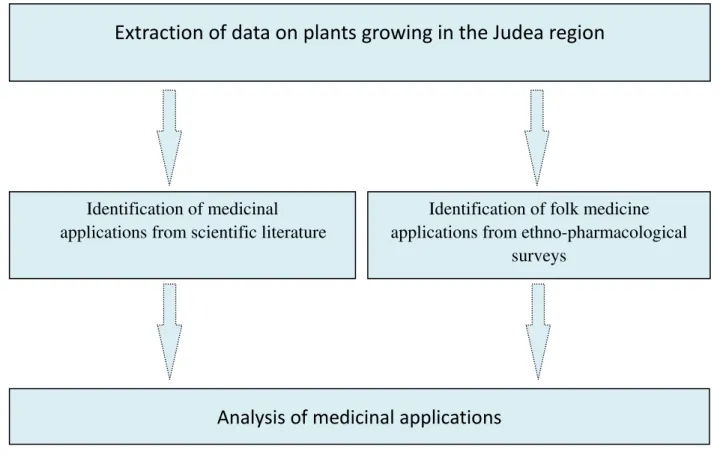
(http://flora.huji.ac.il) databases. An extensive data mining of scientific literature and ethno-pharmacological surveys was carried out to identify medicinal applications of the local vegetation (Fig. 1).
Fig. 1 Workflow of extraction of Judea region plants and their medicinal applications.
The validated and potential human targets of the major compounds found in the medicinal plants were downloaded from the STITCH database (Kuhn et al., 2010; http://stitch.embl.de/), one of the largest repositories of chemical-protein interactions. The NetAge database (Tacutu et al., 2010; http://netproject.org/) was applied to data mine association of the medicinal plants targets with the major human age-related diseases and associated processes. Protein-protein interaction (PPI) data for the targets was extracted from the BioGRID database (Stark et al., 2011; http://thebiogrid.org; human interactome release 3.1.71). The graphical output of the PPI networks between the targets of the herbal compounds was generated using Osprey (Breitkreutz et al., 2003; http://biodata.mshri.on.ca/osprey/servlet/Index).
3 Results and Discussion
3.1 Judean plants and their medicinal applications
The combined dataset of the plants growing in the Judea region (Judea Mountains, Judea Desert and Dead Sea valley) contains 1291 plant species belonging to 102 botanical families (Online Suppl Table1). For each plant entry, the scientific name, common name, botanical family, distribution in Israel, medicinal uses along with literature references (where available) are indicated. A remarkably high percent of plants growing in the Judea region (332 plants, 25% of the collected species) has been reported to have medicinal uses. Analysis of the medicinal plants showed that almost half of them (45%) have anti-microbial activity, and a considerable
Extraction
of
data
on
plants
growing
in
the
Judea
region
Analysis
of
medicinal
applications
Identification of medicinal
applications from scientific literature
Identification of folk medicine
applications from ethno-pharmacological
portion exerted anti-inflammatory, anti-cancer, anti-oxidant and anti-diabetic action (31%, 31%, 29%, and 22%, respectively) (Fig. 2). Other less frequent uses include modulation of the wound healing response, neuroprotective, immunomodulatory, diuretic, hypotensive and hypolipidaemic effects and treatment/prevention of various pathological conditions of the internal organs.
Fig. 2 Distribution of the medicinal plants growing in the Judea region by their major therapeutic applications.
Apart from the plants reported for having only one therapeutic application (about 40%), many are known for their pleiotropic mode of action. For example, approximately 35% of the Judean medicinal plants have at least three therapeutic applications. This finding is not surprising as medicinal plants contain complex mixtures of active compounds that simultaneously act on hundreds of targets in the human genome (Schmidt et al., 2008). Another important point is that secondary compounds in plants may synergize the primary active compounds and also ease their possible side effects (Wink, 2008).
3.2 Chemical composition of Judean plants: importance of chemotypes
analyzed for their chemical composition (Gorelick et al., 2011; Tamir et al., 2011). Nevertheless, considerable amount of data could be extracted from the scientific reports (430 reports in total) on Judean plants growing in neighboring as well as in other regions of the globe. Up to date, chemical compositions of 189 out of 332 (57%) local medicinal species have been analyzed. These reports are summarized in Online Suppl Table 2. For each chemical composition entry, the plant part from which the whole extracts and/or selected compounds were extracted, country of origin and link to the original work were indicated. The distribution of the collected chemical composition reports around the World supported importance of the examined plants in Levant's medical tradition. Around third (31%) of the analyzed plant specimens came from the Middle East, while another considerable portion of studies were carried out in the neighboring regions of Mediterranean Europe and North Africa (23% and 8%, respectively).
An important point is that plant populations belonging to the same species may differ in their chemical compositions (chemotypes) (Barra, 2009). For example, Varthemia (Chiliadenus) iphionoides, an endemic shrub of the eastern Mediterranean, which possesses cytotoxic, anti-oxidant, anti-diabetic and anti-bacterial activities (Al-Dabbas et al, 2006; Gorelick et al., 2011) was shown to have three major chemotypes in Israel, primarily associated with variations in the content of essential oils (Tamar et al., 2011). According to the dominant constituents, V. iphinoides chemotypes are divided into chemotype A (camphor/alpha-pinene/fokienol), chemotype B (t-cadinol/1,8-cineole/trans-chrysanthemol), and chemotype C (intermedeol). The distribution of the above chemotypes varies within Israel along the north-south axis, with the chemotype A increasing southward and the chemotype B increasing northward.
The difference in the chemical composition might have a deep impact on the effectiveness and suitability of a given vegetative population for medicinal uses. In case of V. iphinoides, intermedeol (chemotype C) was shown to be effective as a mosquito repellant (Cantrell et al., 2005) and holds therapeutic potential for the treatment of human leukemia (Jeong et al., 2002). The t-cadinol (chemotype B) has muscle-relaxing potential (Zygmunt et al., 1993) and may also be useful in immunotherapy (Takei et al., 2006). The alpha-pinene, one of the dominant compounds of the typical to the Judea region chemotype A, was shown to exert anti-cancer action in both in vitro and in vivo models (Neves et al., 2010). The alpha-pinene induced apoptosis in B16F10 murine melanoma cell line and inhibited the metastasis of melanoma in mice. Its potent anti-inflammatory activity was demonstrated on IL-1-treated human articular chondrocytes (Neves et al., 2010). The authors showed that a fraction containing 93% alpha-pinene prevented IL-1-induced NO production and reduced significantly the IL-1-induced degradation of IκB which inhibits the pro-inflammatory NF-κB transcription factor, in particular, through blocking its DNA-binding activity.
3.3 Identifying the human targets of herbal compounds
Up to date, a great amount of data on chemical-protein interactions has been accumulated. This knowledge could allow for identifying potential human targets of the chemicals found in the local plants. Such an approach combined with the data on the involvement of these targets in various diseases and pathological conditions could be helpful (i) for clarifying the mechanisms of therapeutic action of the already established medicinal plants including those growing in the Judea region; (ii) for predicting their new therapeutic applications; and (iii) for selecting the most promising plant candidates for further experimental and clinical examination.
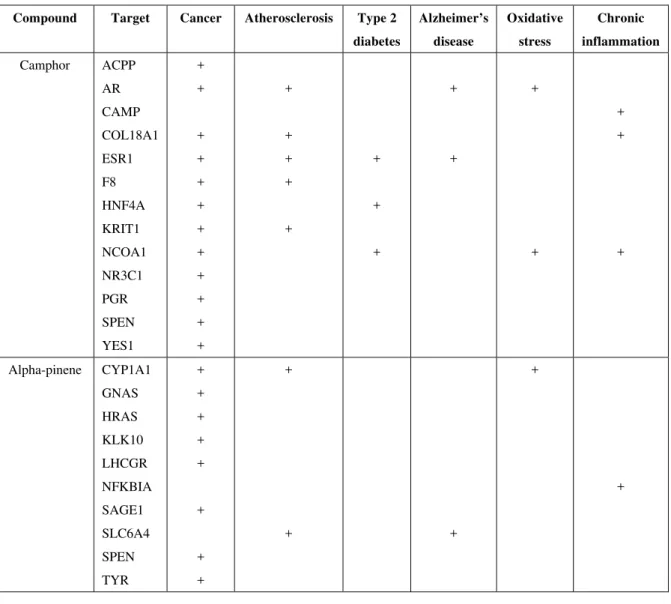
(typical to the Judea region) with various human pathologies. In total, 23 targets (13 of camphor and 10 of alpha-pinene) were reported as being involved in at least one age-related pathological condition (Table 1). As seen in Table 1, the majority of the target proteins are associated with cancer. Notably, several of them (e.g., AR, COL18A1, CYP1A1, ESR1, and NCOA1) are also involved in other age-related diseases and processes, thus possessing a potential for pleiotropic action. Some of the found targets and their interactions may, at least in part, explain the already acknowledged anti-diabetic (Gorelick et al., 2011), anti-oxidant (Al-Mustafa and Al-Thunibat, 2008), and anti-cancer (Al-Dabbas et al., 2006) activities of V. iphinoides extracts. For example, the alpha-pinene-containing chemotype might exert its anti-cancer activity through inhibition of oncogenes (HRAS, GNAS), and anti-inflammatory activities through inhibition of pro-inflammatory molecule NFKBIA (Giehl, 2005) (Table 1). Consequently, it is plausible to suggest that the alpha-pinene anti-inflammatory activities are mediated through inhibition of NF-κB, as has directly been shown in IL-1-treated human articular chondrocytes (Neves et al., 2010). Another camphor target molecule with pleiotropic activity is the steroid receptor co-activator NCOA1 (SRC1), one of the key downstream sensors of environmental signals (Lonard et al., 2010; York and O'Malley, 2010), shown to be involved in carcinogenesis, type 2 diabetes, oxidative stress, and chronic inflammation (Tacutu et al., 2010).
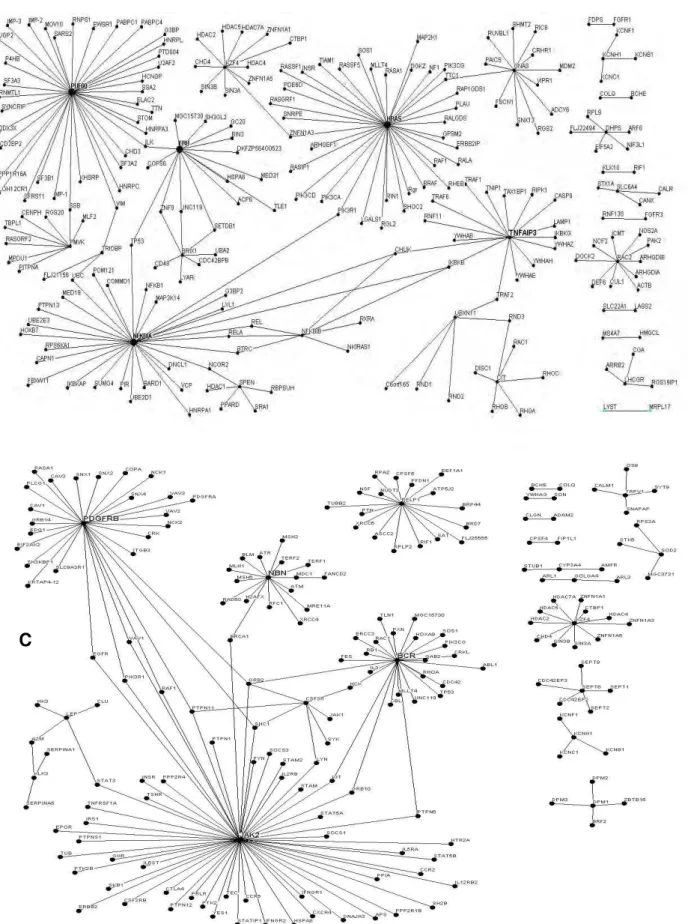
The network-based approach is becoming increasingly used as a systems biology tool to investigate complex biological processes including aging, age-related diseases and various pathologies (Budovsky et al., 2007; Wolfson et al., 2009; Ibrahim et al., 2011; Tacutu et al., 2010, 2011a,b; Zang, 2011; Zhang, 2012a,b; Moskalev et al., 2012). As shown by us and others (Goh et al. 2007), analysis of interactions between proteins involved in various diseases may provide new insights into their etiology and the links between them. With this in mind, we examined the protein-protein interactions (PPIs) between targets of major V. iphinoides
Table 1 The targets of major compounds found in the V. iphinoides chemotype A and their involvement in human age-related diseases and processes.
Compound Target Cancer Atherosclerosis Type 2
Fig. 3 Graphical output of the direct protein-protein interactions (PPIs) between human targets of the major compounds found in the V. iphinoides chemotypes. (A) PPIs between camphor targets. (B) PPIs between alpha-pinene targets including their first-order partners. (C) PPIs between 1,8-cineole targets including their first-order partners.
B
4 Concluding Remarks
The great medicinal potential of the plants growing in Judea is only beginning to be unveiled. This work serves as a first assessment of the unique flora found in this region. That being said, it is important to note that the application of network biology (holistic) approach to the study of the medicinal plants has great advantages over the conventional “one target at a time” attitude.
The collected dataset provides information to what extent the plants growing in the Judea region are used medicinally. This information may open new avenues for investigation aimed at rational and directed screening of potential plant species for biological activities. Importantly, such screening could be carried out in a planned rather than random manner, thus saving time, money and other valuable resources.
The collected data may also be used to predict medicinal uses of additional Judean plants and new applications for the already confirmed plants. This goal could be achieved by examination of common compounds and, subsequently, common human targets. This is also true in case of plants with a known chemical composition but without any evidence for biological activity.
Given the deep links between complex poly-genetic human diseases, especially those with age component (Tacutu et al., 2010), plant materials already known to be effective against at least one of these diseases are more likely to be active against the others. This could be clearly seen from the list of Judea plants medicinal applications. For example, in many cases, plants active against diabetes were also active against atherosclerosis, cancer and chronic inflammation and vice versa (Online Suppl Table 1). Screening for chemical-protein interactions together with the network-based analysis of potential targets will facilitate discovery and therapeutic applications of the Judea region plants. Such an approach could also be applied for searching the potential therapeutic targets of plants growing in other regions of the world, in particular those with an ancient folk medicine tradition, such as China and India.
Acknowledgment
This work was funded by the Israel Ministry of Science and Technology (to A.B.) and the European Union FP7 Health Research Grant number HEALTH-F4-2008-202047 (to V.E.F.).
References
Aburjai T, Hudaib M, Tayyem R, et al. 2007. Ethnopharmacological survey of medicinal herbs in Jordan, the Ajloun Heights region. Journal of Ethnopharmacology, 110(2): 294-304
Alachkar A, Jaddouh A, Elsheikh MS, et al. 2011. Traditional medicine in Syria: folk medicine in Aleppo governorate. Natural Product Communications, 6(1): 79-84
Al-Dabbas MM, Suganuma T, Kitahara, K, et al. 2006. Cytotoxic, antioxidant and antibacterial activities of Varthemia iphionoides Boiss. extracts. Journal of Ethnopharmacology, 108(2): 287-293
Al-Mustafa AH, Al-Thunibat OY. 2008. Antioxidant activity of some Jordanian medicinal plants used traditionally for treatment of diabetes. Pakistani Journal of Biological Sciences, 11(3): 351-358
Ali-Shtayeh MS, Jamous RM, Al-Shafie'JH, et al. 2008. Traditional knowledge of wild edible plants used in Palestine (Northern West Bank): a comparative study. Journal of Ethnobiology and Ethnomedicine, 12(4): 13
Ali-Shtayeh MS, Yaniv Z, Mahajna, J. 2000. Ethnobotanical survey in the Palestinian area: a classification of the healing potential of medicinal plants. Journal of Ethnopharmacology, 73(1-2): 221–232
Al-Qura'n S. 2006. Verification of folk medicinal potentiality for some common plants in Jordan. Pakistani Journal of Pharmacological Sciences, 19(4): 303-308
Al-Qura'n S. 2005. Ethnobotanical survey of folk toxic plants in southern part of Jordan. Toxicon, 46(2): 119-129
Alzweiri M, Sarhan AA, Mansi K, et al. 2011. Ethnopharmacological survey of medicinal herbs in Jordan, the Northern Badia region. Journal of Ethnopharmacology, 137(1): 27-35
Barra A. 2009. Factors affecting chemical variability of essential oils: a review of recent developments. Natural Product Communications, 4(8): 1147-1154
Breitkreutz BJ, Stark C, Tyers M. 2003. Osprey: a network visualization system. Genome Biology, 4(3): R22 Budovsky A, Abramovich A, Cohen R, et al. 2007. Longevity network: construction and implications.
Mechanisms of Ageing and Development 128(1): 117-124
Budovsky A, Tacutu R, Yanai H, et al. 2009. Common gene signature of cancer and longevity. Mechanisms of Ageing and Development, 130(1-2): 33-39
Cantrell CL, Klun JA, Bryson C.T, et al. 2005. Isolation and identification of mosquito bite deterrent terpenoids from leaves of American (Callicarpa americana) and Japanese (Callicarpa japonica) beautyberry. Journal of Agricultural and Food Chemistry, 53(15): 5948-5953
Csermely P, Agoston V, Pongor S. 2005. The efficiency of multi-target drugs: the network approach might help drug design. Trends in Pharmacological Sciences, 26(4): 178-182
Cronquist A. 1981. An Integrated System of Classification of Flowering Plants. Columbia University Press, New York, USA
Dafni A, Yaniv Z, Palevitch D. 1984. Ethnobotanical survey of medicinal plants in northern Israel. Journal of Ethnopharmacology, 10(3): 295-310
Fabricant DS, Farnsworth NR. 2001. The value of plants used in traditional medicine for drug discovery. Environmental Health Perspectives, 109: 69-75
Farnsworth NR, Akerele O, Bingel AS, et al. 1985. Medicinal plants in therapy. Bulletin of World Health Organization, 63(6): 965-981
Friedman J, Yaniv Z, Dafni A. et al. 1986. A preliminary classification of the healing potential of medicinal plants based on a rational analysis of an ethnopharmacological field survey among Bedouins in the Negev desert, Israel. Journal of Ethnopharmacology, 16(2-3): 275-287
Giehl K. 2005. Oncogenic Ras in tumour progression and metastasis. Biological Chemistry, 386(3): 193-205 Goh KI, Cusick ME, Valle D, et al. 2007. The human disease network. Proceedings of the National Academy
of Sciences of USA, 104(21): 8685-8690
Gorelick J, Kitron A, Pen S, et al. 2011. Anti-diabetic activity of Chiliadenus iphionoides. Journal of Ethnopharmacology, 137(3): 1245-1249
Hudaib M, Mohammad M, Bustanji Y, et al. 2008. Ethnopharmacological survey of medicinal plants in Jordan, Mujib Nature Reserve and surrounding area. Journal of Ethnopharmacology, 120(1): 63-71
Ibrahim SS, Eldeeb MAR, Rady MAH, et al. 2011. The role of protein interaction domains in the human cancer network. Network Biology, 1(1): 59-71
Jeong SH, Koo SJ, Choi JH, et al. 2002. Intermedeol isolated from the leaves of Ligularia fischeri var. spiciformis induces the differentiation of human acute promyeocytic leukemia HL-60 Cells. Planta Medicine, 68(10): 881-885
Kuhn M, Szklarczyk D, Franceschini A, et al. 2010. STITCH 2: an interaction network database for small molecules and proteins. Nucleic Acids Research, 38(Database issue): D552-D526
century. Journal of Ethnopharmacology, 72(1-2): 191-205
Lev E. 2002. Reconstructed materia medica of the Medieval and Ottoman al-Sham. Journal of Ethnopharmacology, 80(2-3): 167-179
Lonard DM, Kumar R, O'Malley BW. 2010. Minireview: the SRC family of coactivators: an entrée to understanding a subset of polygenic diseases? Molecular Endocrinology 24(2): 279-285
Moskalev AA, Smit-McBride Z, Shaposhnikov MV, et al. 2012. Gadd45 proteins: relevance to aging, longevity and age-related pathologies. Ageing Research Reviews, 11(1): 51-66
Neves A, Rosa S, Gonçalves J, et al. 2010. Screening of five essential oils for identification of potential inhibitors of IL-1-induced Nf-kappaB activation and NO production in human chondrocytes: characterization of the inhibitory activity of alpha-pinene. Planta Medicine, 76(3): 303-308.
Said O, Khalil K, Fulder S. et al. 2002. Ethnopharmacological survey of medicinal herbs in Israel, the Golan Heights and the West Bank region. Journal of Ethnopharmacology, 83(3): 251-265
Schmidt B, Ribnicky DM, Poulev A, et al. 2008. A natural history of botanical therapeutics. Metabolism, 57(7): S3-9
Silva F, Abraham A. 1981. The potentiality of the Israeli flora for medicinal purposes. Fitoterapia, 52: 195-200 Solecki R, Shanidar IV. 1975. A Neanderthal flower burial in northern Iraq. Science, 190(4217): 880-881 Stark C, Breitkreutz BJ, Chatr-Aryamontri A, et al. 2011. The BioGRID Interaction Database: 2011 update.
Nucleic Acids Research, 39 (Database Issue): D698-D704
Tamir H, Satovic Z, Gorelick J, et al. 2011.Intraspecific variation of Chiliadenus iphionoides essential oil in Israel. Chemicals Biodiversity, 8(6): 1065-1082
Takei M, Umeyama A, Arihara S. 2006. T-cadinol and calamenene induce dendritic cells from human monocytes and drive Th1 polarization. European Journal of Pharmacology, 537(1-3): 190-199
Tacutu R, Budovsky A, Fraifeld VE. 2010. The NetAge database: a compendium of networks for longevity, age-related diseases and associated processes. Biogerontology, 11(4): 513-522
Tacutu R, Budovsky A, Yanai H, et al. 2011. Molecular links between cellular senescence, longevity and age-related diseases - a systems biology perspective. Aging (Albany NY), 3(12): 1178-1191
Tacutu R, Budovsky A, Yanai H, et al. 2011. Immunoregulatory network and cancer-associated genes: molecular links and relevance to aging. Network Biology, 1(2): 112-120
Wolfson M, Budovsky A, Tacutu R, et al. 2009. The signaling hubs at the crossroad of longevity and age-related disease networks. International Journal of Biochemistry and Cell Biology, 1(3): 516-520
Verpoorte R. 2000. Pharmacognosy in the new millennium: lead finding and biotechnology. The Journal of Pharmacy and Pharmacology, 52(49): 253-262
Wink M. 2008. Evolutionary advantage and molecular modes of action of multi-component mixtures used in phytomedicine. Current Drug Metabolism, 9 (10): 996-1009
York B, O'Malley BW. 2010. Steroid receptor coactivator (SRC) family: masters of systems biology. Journal of Biological Chemistry, 285(50): 38743-38750
Zhang WJ. 2011. Network Biology: an exciting frontier science. Network Biology, 1(1): 79-80
Zhang WJ. 2012a. How to construct the statistic network? An association network of herbaceous plants constructed from field sampling. Network Biology, 2(2): 57-68
Zhang WJ. 2012b. Modeling community succession and assembly: A novel method for network evolution. Network Biology, 2(2): 69-78