
Submitted 4 June 2015 Accepted 3 October 2015 Published3 November 2015
Corresponding author Matthew J. Ravosa,
Academic editor Robert Druzinsky
Additional Information and Declarations can be found on page 14
DOI10.7717/peerj.1345
Copyright 2015 Ravosa et al.
Distributed under
Creative Commons CC-BY 4.0
OPEN ACCESS
Chewed out: an experimental link
between food material properties and
repetitive loading of the masticatory
apparatus in mammals
Matthew J. Ravosa1, Jeremiah E. Scott2, Kevin R. McAbee3, Anna J. Veit3
and Annika L. Fling3
1Departments of Biological Sciences, Aerospace and Mechanical Engineering, and Anthropology, University of Notre Dame, Notre Dame, IN, United States of America
2Department of Anthropology, Southern Illinois University, Carbondale, IL, United States of America
3Department of Biological Sciences, University of Notre Dame, Notre Dame, IN, United States of America
ABSTRACT
Using a model organism (rabbits) that resembles a number of mammalian herbivores in key aspects of its chewing behaviors, we examined how variation in dietary mechanical properties affects food breakdown during mastication. Such data have implications for understanding phenotypic variation in the mammalian feeding apparatus, particularly with respect to linking jaw form to diet-induced repetitive loading. Results indicate that chewing frequency (chews/s) is independent of food properties, whereas chewing investment (chews/g) and chewing duration(s), which are proportional to repetitive loading of the jaws, are positively related to food stiffness and toughness. In comparisons of displacement-limited and stress-limited fragmentation indices, which respectively characterize the intraoral breakdown of tough and stifffoods, increases in chewing investment and duration are linked solely to stiffness. This suggests that stiffer foods engender higher peak loadsandincreased cyclical loading. Our findings challenge conventional wisdom by demonstrating that toughness does not, by itself, underlie increases in cyclical loading and loading duration. Instead, tough foods may be associated with such jaw-loading patterns because they must be processed in greater volumes owing to their lower nutritive quality and for longer periods of time to increase oral exposure to salivary chemicals.
Subjects Anthropology, Evolutionary Studies, Paleontology, Zoology, Anatomy and Physiology Keywords Mammals, Masticatory system, Food mechanical properties, Diet, Cyclical/repetitive loading, Jaw loading patterns, Chewing parameters, Mandibular morphology, Rabbits
INTRODUCTION
to digestive enzymes in the alimentary canal. Apart from dental specializations to augment food fragmentation and maintain tooth function during an organism’s lifetime (Kay, 1975;
Lucas, 2004), a mechanically challenging diet may require larger bite and jaw-muscle forces and/or a greater number of chewing cycles to break down a resistant item into sufficiently small pieces for swallowing and further digestion. Variation in jaw-muscle activity patterns affects the magnitude and frequency of muscle, and ultimately bite, forces imparted to a food item and masticatory elements throughout a chewing sequence. For these reasons, it has been long hypothesized that feeding behavior and jaw morphology are dictated by food mechanical properties (Hylander, 1979a;Hylander, 1979b).
Understanding such functional relationships allows us to address evolutionary variation in the mammalian masticatory complex. Indeed, jaw form is frequently employed to make inferences about ecology and feeding behavior in extinct species (e.g.,Demes & Creel, 1988;Daegling & Grine, 1991;Janis, 1995;Menegaz et al., 2009;Gill et al., 2014;Scott et al., 2014a;Ravosa et al., 2015). This reflects the large literature linking diet and jaw form in extant species (Hylander, 1979b;Bouvier & Hylander, 1981;Daegling, 1992;Lieberman et al., 2004;Ravosa & Hogue, 2004;Ravosa et al., 2007;Scott, Hogue & Ravosa, 2012;Scott et al., 2014a), and the fact that mandibles are one of the most commonly preserved elements in the fossil record. Nonetheless, the strength of the connection between diet and jaw form has been questioned, highlighting the intervening factors that undermine the generality of such functional associations (Ross, Iriarte-Diaz & Nunn, 2012). Others have underscored the limitations of morphological inference in paleobiology, advocating an experimental and multifactorial perspective for understanding dietary effects on masticatory form (Ravosa et al., 2015).
Thus, despite a sizable body of prior experimental and comparative work, there remain a number of significant gaps in our understanding of the functional links among dietary properties, chewing patterns, and jaw form in living and fossil mammals. Continued difficulty with inferring the adaptive basis of phylogenetic transformations in the feeding apparatus is related to two shortcomings of the current evidence regarding dietary determinants of masticatory form and function. The first is the fact that infrequent, high-magnitude forces imparted to bone are expected to engender the same physiological and evolutionary responses as lower-magnitude, cyclical loading (Bouvier & Hylander, 1981;Lanyon & Rubin, 1985;Biewener, 1993;Turner, Forwood & Otter, 1994). A second and related issue pertains to an incomplete understanding of the impact of food mechanical properties on variation in chewing behaviors that may underlie load-related variation in jaw morphology. Uncertainty in how dietary mechanical properties differentially influence peak loads versus cyclical loading represents a significant impediment to integrating existing experimental, comparative, and ecological information regarding feeding behavior in mammals.
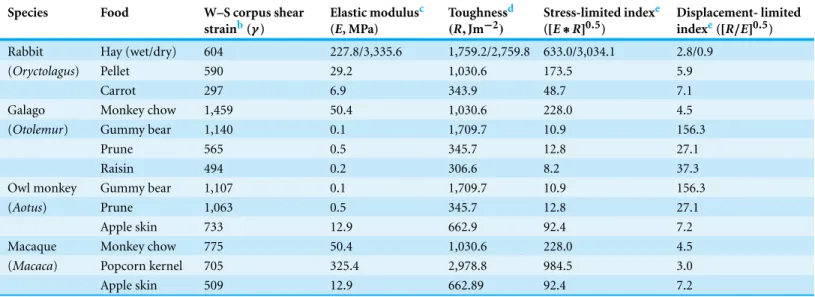
Table 1 Mean values for mandibular peak-strain data in mammals (available only for rabbits and primates) recorded while processing various experimental foods, with corresponding mean food mechanical properties and fragmentation indicesa.
Species Food W–S corpus shear
strainb(γ)
Elastic modulusc (E, MPa)
Toughnessd (R,Jm−2)
Stress-limited indexe ([E∗R]0.5)
Displacement- limited indexe([R/E]0.5)
Rabbit Hay (wet/dry) 604 227.8/3,335.6 1,759.2/2,759.8 633.0/3,034.1 2.8/0.9
(Oryctolagus) Pellet 590 29.2 1,030.6 173.5 5.9
Carrot 297 6.9 343.9 48.7 7.1
Galago Monkey chow 1,459 50.4 1,030.6 228.0 4.5
(Otolemur) Gummy bear 1,140 0.1 1,709.7 10.9 156.3
Prune 565 0.5 345.7 12.8 27.1
Raisin 494 0.2 306.6 8.2 37.3
Owl monkey Gummy bear 1,107 0.1 1,709.7 10.9 156.3
(Aotus) Prune 1,063 0.5 345.7 12.8 27.1
Apple skin 733 12.9 662.9 92.4 7.2
Macaque Monkey chow 775 50.4 1,030.6 228.0 4.5
(Macaca) Popcorn kernel 705 325.4 2,978.8 984.5 3.0
Apple skin 509 12.9 662.89 92.4 7.2
Notes.
aBy definition, stiffitems exhibit a high elastic modulus (E). Because such food items experience little strain at high stresses, they influence oral fragmentation in a
particular way characterized as stress-limited (Lucas, 2004;Williams et al., 2005). In contrast, when a food item exhibits greater toughness (R) and thus requires higher strains to fragment, oral breakdown of the bolus is displacement-limited. Fragmentation indices for displacement-limited ([R/E]0.5) and stress-limited ([E∗R]0.5) foods reflect the toughness and stiffness, respectively, of an item.
bRabbit data for the working-side (W-S) mandibular corpus are fromWeijs & De Jongh (1977), while similar data for primates are fromHylander et al. (1998). cData for hay and pellets are fromRavosa et al. (2007), while the remaining data are fromWilliams et al. (2005).
dData for hay are fromRavosa et al. (2007), whereas the remaining data are fromWilliams et al. (2005). Data for monkey chow are used to represent toughness for pellets. eData are calculated based on mean values for stiffness and toughness presented in this table.
(e.g.,Beecher & Corruccini, 1981;Bouvier & Hylander, 1981;Bouvier & Hylander, 1996;He & Kiliaridis, 2003;Lieberman et al., 2004;Ravosa et al., 2007;Ravosa et al., 2015;Scott et al., 2014a;Scott et al., 2014b). This research shows that postnatal variation in diet-related jaw-loading patterns has a marked influence on masticatory bone formation on par with levels of morphological variation between sister taxa that vary in dietary proclivities in the wild (Scott et al., 2014a;Scott et al., 2014b;Ravosa et al., 2015).
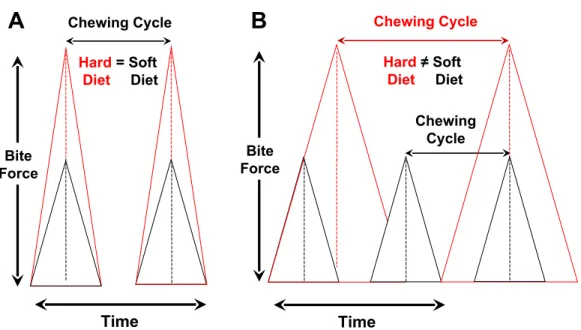
Figure 1 Relationships among bite-force magnitude, chewing cycle length and chewing frequency when the latter two parameters are the same for hard or tough vs. soft foods (A) or different between such foods (B).(A) Rate of force generation (=slope) is modified to produce a larger peak bite force for hard foods, with chewing cycle and chewing frequency being similar. In this scenario, chewing frequency will vary independent of chewing duration (and also chewing investment). (B) Rate of force generation is constant, but chewing cycle and chewing frequency differ due to the disparity in peak forces used to process hard/tough vs. soft foods. In this case, as chewing frequency is lower during the processing of hard/tough foods, this will also result in consequent increases in overall chewing duration.In vivostrain data for mammals support the model at left where chewing frequency is independent of food properties and peak bite-force magnitudes (Ross et al., 2007).
Hylander, 1979b;Bouvier, 1986;Biknevicius & Ruff, 1992;Daegling, 1992;Spencer, 1995;
Ravosa & Hogue, 2004;Hogue, 2008;Taylor, Vogel & Dominy, 2008;Vinyard, Yamashita & Tan, 2008). A similar argument exists regarding variation in mandibular symphyseal fusion in mammals (Scott, Hogue & Ravosa, 2012).
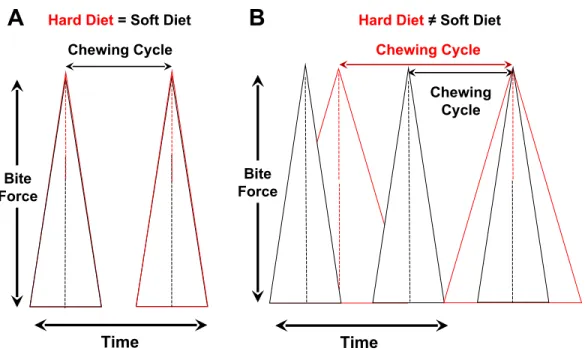
Figure 2 Controlling for variation in bite-force magnitudes, hypothesized relationships between chewing cycle length and chewing frequency when both parameters are the same for hard/tough vs. soft foods (A) or different between such foods (B).(A) Chewing cycle and chewing frequency are both similar, which means that increases in chewing duration of hard/tough foods are due solely to greater chewing investment and, in turn, cyclical loading. (B) Rate of force generation to orally process hard/tough vs. soft foods differs, such that chewing cycle and chewing frequency differ. In this scenario, chewing duration will be positively correlated with chewing cycle length and inversely related to chewing frequency.
Lieberman et al., 2004;Ravosa et al., 2007;Ravosa et al., 2015;Menegaz et al., 2009;
Scott et al., 2014a;Scott et al., 2014b).
Independent of variation in bite-force levels, there are two ways that dietary properties are hypothesized to affect cyclical or repetitive loading (Fig. 2). One is by modulating chewing frequency, which would alter the number of chewing cycles over a given time period and thus potentially increase the length of a chewing sequence orchewing duration. The second way to influence cyclical loading is via the alteration ofchewing investment, which would modify the number of chewing cycles per unit of food mass (i.e., chews/gram) and thus affect chewing duration; this need not result in the alteration of chewing frequency.
Cyclical loading is commonly invoked to explain mandibular robusticity in mammals (Hylander, 1979b;Hylander, 1988;Bouvier & Hylander, 1981;Demes & Creel, 1988;
Daegling & Grine, 1991;Ravosa & Hogue, 2004;Laden & Wrangham, 2005;Hogue, 2008;
hindered interpretations of phenotypic variation in diverse living and extinct taxa. For example, data regarding the role of dietary properties on cyclical loading are central for assessing ongoing debate about hominin evolution (Daegling et al., 2011;Daegling et al., 2013;Strait et al., 2013;Macho, 2014;Scott et al., 2014a;Smith et al., 2015) and differences in jaw form between artiodactyls and perissodactyls (Janis et al., 2010). In this study, we examine how variation in dietary mechanical properties affects cyclical loading during mastication in the New Zealand white rabbit (Oryctolagus cuniculus). Our results provide the first experimental evidence linking cyclical loading, long-argued to be a major determi-nant of jaw form in living and fossil mammals, to a specific food mechanical property.
MATERIALS & METHODS
SampleOur sample consisted of adult white rabbits. This species is an excellent model organism because it resembles many other mammalian herbivores in functionally important aspects of its physiology and chewing behavior, including cortical bone modeling and remodeling, transverse jaw movements, elevated levels of balancing-side jaw-adductor muscle force, and diet-related covariation in jaw-adductor muscle activity and mandibular bone-strain patterns (e.g.,Herring & Scapino, 1973;Weijs & De Jongh, 1977;Weijs & Dantuma, 1981;
Hylander, Johnson & Crompton, 1987;Hylander, Johnson & Crompton, 1992;Hylander et al., 1998;Hylander et al., 2000;Weijs, Brugman & Grimbergen, 1989;Hirano et al., 2000;
Herring et al., 2001;Herring et al., 2008;Rafferty et al., 2012). The masticatory apparatus ofO. cuniculusalso conforms to the morphological pattern seen in many other herbivores in possessing a jaw joint elevated high above the occlusal plane that is capable of rotational and translational movements, a vertically deep face, limited gape, and an anteriorly positioned masseter muscle.
Adulthood was defined as skeletal maturity, which is attained at about six months of age in this species (Sorensen, Rogers & Baskett, 1968;Yardin, 1974). All subjects were housed at the University of Notre Dame’s (ND) animal care facility, Freimann Life Science Center, which is USDA-licensed, AAALAC-accredited, and subject to periodic inspections. All procedures used in this study were approved by ND’s Institutional Animal Care and Use Committee (protocol# 14-04-1739). Day-to-day care of the animals, including monitoring of their health, was handled by trained veterinary staff.
Data
by, for example, wild primates (Williams et al., 2005), which also exhibit diet-related covariation in jaw-adductor muscle activity and mandibular bone-strain patterns (Table 1;
Hylander, Johnson & Crompton, 1987;Hylander, Johnson & Crompton, 1992;Hylander et al., 1998;Hylander et al., 2000).
Prior data on the mechanical properties of the experimental foods indicate that hay is the most mechanically challenging of the three, being tougher (higher fracture toughness, R) and stiffer (higher elastic modulus,E) than pellets and carrots, with pellets being tougher and stiffer than carrots (Williams et al., 2005;Ravosa et al., 2007) (Table 1). Wet hay, which models exposure to saliva, is an order of magnitude stiffer than pellets, while dry hay has an elastic modulus two orders of magnitude greater than pellets (Ravosa et al., 2007). Carrots are significantly less tough and less stiffthan pellets and especially hay (Table 1). The toughness of small rabbit pellets is technically difficult to quantify, but a reasonable estimate is the toughness value for monkey chow, which has an elastic modulus roughly similar to that of pellets (Table 1) (Williams et al., 2005;Ravosa et al., 2007). Using stiffness and toughness values, we calculated stress-limited ([R∗E]0.5) and displacement-limited ([R/E]0.5) fragmentation indices, which reflect the mechanical conditions dictating the rate of intraoral breakdown of a given food item due respectively to its stiffness and toughness (Lucas, 2004;Williams et al., 2005).
Feeding experiments typically occurred in the morning as part of the daily feeding schedule and did not require prior fasting. As data collection opportunistically employed rabbits from other ongoing projects, not all rabbits received the three food types, but each subject received at least two. Therefore, sample sizes vary for each food. Behavioral observations consisted of a feeding bout where a single rabbit was initially offered a given mass (g) of a particular food. The duration of a bout was considered to be paused when the subject stopped chewing and restarted if the subject began chewing again. The chewing bout was considered finished when the subject stopped chewing for several seconds, swallowed its food, and no longer expressed interest in any remaining food, which was collected and weighed to determine the amount consumed. The length of time spent chewing is referred to aschewing duration(s). Once the initial feeding bout ended, the subject was then fed a quantity of a second experimental food that was equal in mass to the amount of the first experimental food that the subject consumed; this procedure was then repeated for the third experimental food (for subjects that received all three), although in some cases feeding experiments were completed on consecutive days. The bolus size of all three foods was roughly similar. Thus, while the quantity of food ingested varied among rabbits, it did not vary for a given subject over the course of a given suite of experiments.
bout and dividing the product by the consumed food mass. This parameter is therefore the number of chews scaled by the amount of food consumed and is referred to aschewing investment (chews/g). The raw data collected from these experiments are available in
Tables S1–S3.
Analysis
We initially examined our data by comparing chewing parameters within individuals using ratios that expressed a given parameter for one type of food versus the same parameter for another food. Such ratios were computed with the more mechanically challenging food as the numerator: e.g., hay chewing investment divided by pellet chewing investment. Because only some individuals received all three food types, the number of individuals for which each ratio could be calculated varied: hay-pellet ratios,n=14; pellet-carrot ratios,n=13; hay-carrot ratios,n=4. These within-subject ratios facilitated a critically important control of between-individual variation in functional ability to chew foods of different mechanical properties, absent from prior experimental studies of chewing patterns (e.g.,Hylander, Johnson & Crompton, 1992;Hylander et al., 1998;Hylander et al., 2000;Ross et al., 2007). Such information reveals functional patterns that are potentially obscured when incomplete behavioral and physiological data are pooled for intraspecific and interspecific analyses of dietary effects.
Within each of the three chewing parameters, these ratios are directly comparable among individual subjects and were pooled for analysis. To evaluate whether a given ratio differed significantly from 1.0, we generated 95% confidence limits for the mean ratio using the bootstrap (percentile method) with 1,000 iterations. A ratio not significantly dif-ferent from 1.0 indicates the absence of a dietary influence on that chewing variable. Due to small sample size (n=4), confidence limits were not used for hay-carrot comparisons; in this instance, the range of values is presented. In cases where a ratio differed from 1.0, we evaluated the relationship of the corresponding parameter with the food mechanical properties(E,R)and fragmentation indices ([E∗R]0.5,[R/E]0.5; seeTable 1) using a linear mixed-effects model, with subject entered as a random effect. This procedure was used because it can handle samples consisting of repeated observations of the same individuals along with missing data (Baayen, Davidson & Bates, 2008), both of which present problems for standard ANOVA and regression approaches. Linear mixed-effects models were computed using the nlme package (version 3.1–120;Pinheiro et al., 2015) for R (R Core Team, 2014). Data were logged (basee) for analysis to reduce heteroscedasticity and to improve the linear relationship between mechanical properties and chewing parameters.
RESULTS
Table 2 Means, sample sizes, and 95% confidence intervals for within-individual chewing-parameter ratiosa.
Comparison Chewing frequency (chews/s)
Chewing duration (s)
Chewing investment (chews/g)
Hay/carrots 0.96 (n=4, 0.84–1.11) 9.02 (n=4, 7.10–10.81) 8.53 (n=4, 7.47–9.67) Hay/pellets 0.99 (n=12, 0.97–1.01) 3.22 (n=14, 2.79–3.68) 2.95 (n=12, 2.58–3.35) Pellets/carrots 1.06 (n=13, 1.00–1.10) 2.20 (n=13, 1.93–2.52) 2.32 (n=13, 2.01–2.61)
Notes.
aDue to small sample sizes, confidence limits were not generated for hay-carrot comparisons; in this instance, the range
of values is presented.
items requiring more time and investment in each comparison (Table 2). These disparities in time and investment range from pellets having values that are approximately twice as large as those for carrots, to hay having values that are 8–9 times greater than those for carrots. Note that because chewing frequency is similar among the foods, chewing duration and chewing investment are redundant measures, given that the latter parameter is computed using the former along with chewing frequency (and scaled by food mass). Accordingly, we focus on chewing investment in the remainder of the analysis.
Figure 3illustrates the relationships between individual chewing investments and the mean food mechanical properties and fragmentation indices. Here, we are comparing chewing investment rather than ratios of chewing investments for particular foods. Because chewing investment is scaled by food mass, it can be compared across individuals, unlike chewing duration. Analysis of these data using the linear mixed-effects model indicates that chewing investment is positively and significantly (p<0.0001) related to elastic modulus (E), toughness (R), and the stress-limited index ([R∗E]0.5), but inversely related (p<0.0001) to the displacement-limited index ([R/E]0.5). All individuals exhibit this pattern, but note that there is between-individual variation in chewing investment within each food type. It is also apparent that the relationships involvingRand the displacement-limited index are not strictly linear, but the directions of their associations with chewing investment are nonetheless clear.
DISCUSSION
There are two ways that dietary properties might influence repetitive loading of the jaws. One is by modulating chewing frequency, which would alter the number of chewing cycles over a given time period and thus potentially affect the duration of a chewing sequence (Figs. 1and2). The second means of influencing repetitive loading is via the alteration of chewing investment, which would modify the number of chewing cycles per unit of food mass (i.e., chews per gram) and ultimately influence overall time spent chewing (i.e., chewing duration); this need not result in the alteration of chewing frequency. Of course, some combination of both effects is possible.
Figure 3 Relationships between chewing investment (chews/g) and food mechanical properties (elas-tic modulus,E; toughness,R) and oral fragmentation indices (stress-limited,[E∗R]0.5; displacement-limited,[R/E]0.5). P-values generated using a linear mixed-effects model are provided. All data are logged (basee). Black circles represent subjects that were given only two of the experimental foods; the values for each of these subjects are connected with dashed black lines. Red triangles indicate individuals that were given all three experimental foods; the values for each of these subjects are connected with solid red lines. Note that individuals with three data points are similar to individuals represented by only two data points.
(Anderson, Hector & Linden, 1985). Because previous studies have not employed strict control of behavioral and dietary data for subjects used to characterize a given species, our findings provide perhaps the best support to date for the hypothesis that chewing frequency is independent of variation in food properties (Ross et al., 2009a;Ross et al., 2009b). This observation likewise strongly supports an earlier suggestion that the generation of greater occlusal forces, which vary in proportion to chewing cycle and jaw loading/unloading, occurs largely by increasing the rate of force production, rather than by lengthening the duration of a given chewing cycle and thus decreasing chewing frequency (Ross et al., 2007) (Fig. 1).
pellets, which are stiffer and tougher than carrots, required more chews per gram and longer chewing bouts than carrots. Unexpectedly, comparisons of oral fragmentation in-dices for the experimental foods indicate that while higher stress-limited inin-dices uniformly characterize foods that require more chews per gram, displacement-limited indices are, in contrast to predictions,lowerfor such foods. In other words, whereas chewing investment increases with stiffness, toughness, and the stress-limited index, the displacement-limited index is negatively related to chewing investment (Fig. 3). This contrast between the displacement-limited index and the other variables suggests that chewing investment— and by extension, chewing duration—is driven primarily by the elastic modulus.
However, chewing investment is also positively associated withR, and the stress-limited index is computed using bothEandR. These two variables are also correlated among the foods used in this study (i.e., asEincreases from carrot to hay, so doesR;Table 1). Therefore, to further evaluate the influence of food mechanical properties on chewing investment, we constructed a linear mixed-effects model withEandRboth entered into the analysis as independent variables. The results of this test support the conclusion that elastic modulus is the primary influence on variation in chewing investment in our sample: Eremains significantly positively related to chewing investment (p<0.0001) in this model, whereasRis no longer significant (p=0.4259). This result does not depend on the order in whichEandRare entered into the model. Taken as whole, our results reveal the singular importance of stiffness (elastic modulus) as a determinant of diet-related disparities in chewing patterns for rabbits.
Reconstructing feeding behavior in extinct species
As noted in the introduction, one of the motivations for our experimental work on rabbit feeding biology is to refine and improve the neontological comparative framework that is used to link phenotypic variation in jaw morphology to ecology and behavior in fossil species (Ravosa et al., 2007;Ravosa et al., 2015;Menegaz et al., 2009;Scott et al., 2014a;
Creel, 1988;Daegling & Grine, 1991;Lucas, 2004;Daegling et al., 2011;Ungar & Sponheimer, 2011), our data challenge this assumption.
Although our results indicate that increasing toughness, by itself, does not appear to be associated with greater chewing investment, we are hesitant to reject a link between tough foods and repetitive loading and concomitant increases in jaw robusticity in mammals. Rather, we hypothesize that nonmechanical factors may lead to greater cyclical loading of the jaws of species with diets that can be generally characterized as tough, such as grazers, browsers, and folivores. Many tough foods are recognized as being relatively low in quality, with reduced nutritive properties and potential limits on digestibility, requiring consumption in large quantities to meet basic metabolic and nutritional demands. Shifting to such a diet from one that is more nutrient-rich will result in increased intraoral processing and greater repetitive loading of masticatory elements, resulting in a more robust mandible (see alsoMacho, 2014). According to this line of reasoning, there is an indirect relationship between dietary toughness and repetitive loading that is mediated by a correlation between toughness and nutritional properties in low-quality foods. This suggestion is consistent with behavioral evidence that herbivores that rely on tough, low-quality foods spend a relatively large portion of each day engaged in feeding activities (Demment & Van Soest, 1985;Sailer et al., 1985;Wright et al., 2008). Thus, displacement-limited and stress-limited foods may both lead to similar levels of repetitive loading and increases in jaw robusticity but for different reasons. This observation presents a challenge with regard to using jaw form to make specific inferences about feeding behavior in fossil species (Ross, Iriarte-Diaz & Nunn, 2012), and it highlights the need to consider multiple lines of evidence (Ravosa et al., 2015).
Dental morphology and cyclical loading
One issue not addressed by our study is the potentially important role that dental form plays in chewing investment and cyclical loading. Mammals that masticate tough leaves tend to have long, well-developed molar shearing crests, whereas species that exploit hard fruits and seeds tend to have bunodont teeth with much shorter and blunter crests (Kay, 1975;Kay, 1978;Walker & Murray, 1975;Sheine & Kay, 1977;Sheine & Kay, 1982;
pattern holds—that such species are more effective at processing stress-limited foods versus displacement-limited foods, and that dietary toughness differentially drives chewing investment. Interestingly, it has been argued that prolonged milling and grinding in robust australopiths would have been necessary when consuming tough foods due to the fact that their low-cusped molars are poorly designed for shearing such items vis-a-vis the high-cusped molars of extant primate folivores (Ungar et al., 2010).
Thus, apart from being directly linked to food mechanical properties, cyclical loading due to higher chewing investment might be a consequence of a molar shape that is less effective at fracturing certain mechanically challenging foods (due to functional trade-offs or phylogenetic constraints). We were not able to incorporate data on occlusal relief and crest development for the experimental subjects included this study, but future investigations might use such information to inform inter- and intraspecific analyses of diet, food breakdown, and chewing patterns. By exploring direct and indirect effects of food properties on cyclical loading, this integrative perspective will increase our understanding of the complex links among diet, feeding performance, and mammalian skull form. Development of such a multivariate approach is requisite for unraveling the hierarchical suite of effects on masticatory form and function, an ongoing challenge that continues to hinder advances in functional and evolutionary research on chewing patterns such as cyclical loading (Ravosa et al., 2015).
CONCLUSIONS
Analysis of chewing patterns in rabbits suggests that repetitive loading in mammals is pro-portional to dietary stiffness, but not related directly to dietary toughness. This conclusion suggests that, while stiffer foods should result in higher peaks loadsandelevated cyclical loading during oral processing, a singularly tough item might only engender loads of greater magnitude. These findings challenge conventional wisdom by demonstrating that toughness does not, by itself, underlie increases in cyclical loading and loading duration. Rather, nutritive factors may explain the apparent link between toughness and repetitive loading. This association may be further modulated by variation in postcanine tooth form. Since intra- and interspecific comparisons have the potential to obscure functional signals clearly evident on an individual scale, which corresponds to the hierarchical level at which selection and functional adaptation occurs, the broader experimental, ecomorphological, and paleobiological implications of diet-related phenotypic patterns require further attention. Additional experimental analyses of variation in the masticatory complex of multiple clades will bring further resolution to our understanding of the relative contribution of loading magnitude and cyclical loading on mammalian skull form.
ACKNOWLEDGEMENTS
ADDITIONAL INFORMATION AND DECLARATIONS
Funding
Funding for this project was obtained by MJR from the NSF (BCS-1029149/1214767). The funders had no role in study design, data collection and analysis, decision to publish, or preparation of the manuscript.
Grant Disclosures
The following grant information was disclosed by the authors: NSF: BCS-1029149/1214767.
Competing Interests
The authors declare there are no competing interests.
Author Contributions
• Matthew J. Ravosa conceived and designed the experiments, analyzed the data, wrote the paper, prepared figures and/or tables, reviewed drafts of the paper.
• Jeremiah E. Scott conceived and designed the experiments, performed the experiments, analyzed the data, wrote the paper, prepared figures and/or tables, reviewed drafts of the paper.
• Kevin R. McAbee conceived and designed the experiments, performed the experiments, analyzed the data, reviewed drafts of the paper.
• Anna J. Veit and Annika L. Fling performed the experiments, reviewed drafts of the paper.
Animal Ethics
The following information was supplied relating to ethical approvals (i.e., approving body and any reference numbers):
All procedures used in this study were approved by the University of Notre Dame’s Institutional Animal Care and Use Committee (protocol #14-04-1739).
Supplemental Information
Supplemental information for this article can be found online athttp://dx.doi.org/ 10.7717/peerj.1345#supplemental-information.
REFERENCES
Anderson DJ, Hector MP, Linden RWA. 1985.The possible relation between mastication and parotid secretion in the rabbit.Journal of Physiology364:19–29DOI 10.1113/jphys-iol.1985.sp015726.
Beecher RM, Corruccini RS. 1981.Effects of dietary consistency on craniofacial and occlusal development in the rat.Angle Orthodontist51:61–69.
Biknevicius AR, RuffCB. 1992. The structure of the mandibular corpus and its
relationship to feeding behaviours in extant carnivorans.Journal of Zoology228:479–507
DOI 10.1111/j.1469-7998.1992.tb04450.x.
Biewener AA. 1993.Safety factors in bone strength.Calcified Tissue International53:568–574
DOI 10.1007/BF01673406.
Bouvier M. 1986.A biomechanical analysis of mandibular scaling in Old World monkeys.
American Journal of Physical Anthropology69:473–482DOI 10.1002/ajpa.1330690406.
Bouvier M, Hylander WL. 1981.Effect of bone strain on cortical bone structure in macaques (Macaca mulatta).Journal of Morphology167:1–12DOI 10.1002/jmor.1051670102.
Bouvier M, Hylander WL. 1996.Strain gradients, age, and levels of modeling and remodeling in the facial bones ofMacaca fascicularis. In: Davidovitch Z, Norton LA, eds.The biological mechanisms of tooth movement and craniofacial adaptation. Boston: Harvard Society for the Advancement of Orthodontics, 407–412.
Daegling DJ. 1992.Mandibular morphology and diet in the genusCebus.International Journal of
Primatology13:545–570DOI 10.1007/BF02547832.
Daegling DJ, Grine FE. 1991. Compact bone distribution and biomechanics of early hominid mandibles. American Journal of Physical Anthropology 86:321–339
DOI 10.1002/ajpa.1330860302.
Daegling DJ, Judex S, Ozcivici E, Ravosa MJ, Taylor AB, Grine FE, Teaford MF, Ungar PS. 2013. Feeding mechanics, diet, and dietary adaptations in early hominins.American Journal of
Physical Anthropology151:356–371DOI 10.1002/ajpa.22281.
Daegling DJ, McGraw WS, Ungar PS, Pampush JD, Vick AE, Bitty EA. 2011.Hard object feeding in sooty mangabeys (Cercocebus atys) and the interpretation of early hominin feeding ecology.
PLoS ONE6:e23095DOI 10.1371/journal.pone.0023095.
Demes B, Creel N. 1988.Bite force, diet, and cranial morphology of fossil hominids.Journal of
Human Evolution17:657–670DOI 10.1016/0047-2484(88)90023-1.
Demment MW, Van Soest PJ. 1985.A nutritional explanation for body-size patterns of ruminant and non-ruminant herbivores.The American Naturalist125:641–647DOI 10.1086/284369. Freeman PW. 1979.Specialized insectivory: beetle-eating and moth-eating molossid bats.Journal
of Mammalogy60:467–479DOI 10.2307/1380088.
Gill PG, Purnell MA, Crumpton N, Brown KR, Gostling NJ, Stampanoni M, Rayfield EJ. 2014. Dietary specializations and diversity in feeding ecology of the earliest stem mammals.Nature 512:303–305DOI 10.1038/nature13622.
He T, Kiliaridis S. 2003.Effects of masticatory muscle function on craniofacial morphology in growing ferrets (Mustela putorius furo).European Journal of Oral Sciences111:510–517
DOI 10.1111/j.0909-8836.2003.00080.x.
Herring SW, Rafferty KL, Liu ZJ, Marshall CD. 2001.Jaw muscles and the skull in mammals: the biomechanics of mastication.Comparative Biochemistry and Physiology Part A: Molecular &
Integrative Physiology131:207–219DOI 10.1016/S1095-6433(01)00472-X.
Herring SW, Rafferty KL, Liu ZJ, Sun Z. 2008.A nonprimate model for the fused symphysis:in vivostudies in the pig. In: Vinyard CJ, Ravosa MJ, Wall CE, eds.Primate craniofacial biology and function. New York: Springer Academic Publishers, 19–37.
Hirano T, Burr DB, Cain RL, Hock JM. 2000.Changes in geometry and cortical porosity in adult, ovary-intact rabbits after 5 months treatment with LY333334 (hPTH 1–34).Calcified Tissue
International66:456–460DOI 10.1007/s002230010091.
Hogue AS. 2008.Mandibular corpus form and its functional significance: evidence from ecologically convergent marsupials. In: Vinyard CJ, Ravosa MJ, Wall CE, eds.Primate craniofacial biology and function. New York: Springer Academic Publishers, 329–356. Hogue AS, ZiaShakeri S. 2010.Molar crests and body mass as dietary indicators in marsupials.
Australian Journal of Zoology58:56–68DOI 10.1071/ZO09084.
Hylander WL. 1979a.Mandibular function inGalago crassicaudatusandMacaca fascicularis: anin vivoapproach to stress analysis of the mandible.Journal of Morphology159:253–296
DOI 10.1002/jmor.1051590208.
Hylander WL. 1979b.The functional significance of primate mandibular form.Journal of
Morphology160:223–240DOI 10.1002/jmor.1051600208.
Hylander WL. 1986.In vivobone strain as an indicator of masticatory bite force inMacaca fascicularis.Archives of Oral Biology31:149–157DOI 10.1016/0003-9969(86)90120-2. Hylander WL. 1988.Implications ofin vivoexperiments for interpreting the functional
significance of “robust” australopithecine jaws. In: Grine FE, ed.Evolutionary history of the “robust” australopithecines. New York: Aldine de Gruyter, 55–83.
Hylander WL, Johnson KR, Crompton AW. 1987.Loading patterns and jaw movements during
mastication inMacaca fascicularis: a bone-strain, electromyographic, and cineradiographic analysis.American Journal of Physical Anthropology72:287–314DOI 10.1002/ajpa.1330720304. Hylander WL, Johnson KR, Crompton AW. 1992.Muscle force recruitment and biomechanical
modeling: an analysis of masseter muscle function during mastication inMacaca fascicularis.
American Journal of Physical Anthropology88:365–387DOI 10.1002/ajpa.1330880309.
Hylander WL, Ravosa MJ, Ross CF, Johnson KR. 1998. Mandibular corpus strain in primates: further evidence for a functional link between symphyseal fusion and jaw-adductor muscle force.American Journal of Physical Anthropology 107:257–271 DOI 10.1002/(SICI)1096-8644(199811)107:3<257::AID-AJPA3>3.0.CO;2-6.
Hylander WL, Ravosa MJ, Ross CF, Wall CE, Johnson KR. 2000.Symphyseal fusion and jaw-adductor muscle force: an EMG study.American Journal of Physical Anthropology 112:469–492DOI 10.1002/1096-8644(200008)112:4<469::AID-AJPA5>3.0.CO;2-V. Janis CM. 1995.Correlations between craniodental morphology and feeding behavior in
ungulates: reciprocal illumination between living and fossil taxa. In: Thomason JJ, ed. Functional morphology in vertebrate paleontology. Cambridge: Cambridge University Press, 76–98.
Janis CM, Constable EC, Houpt KA, Streich WJ, Clauss M. 2010.Comparative ingestive mastication in domestic horses and cattle: a pilot investigation.Journal of Animal Physiology
and Animal Nutrition94:e402–e409DOI 10.1111/j.1439-0396.2010.01030.x.
Kay RF. 1975.The functional adaptations of primate molar teeth.American Journal of Physical
Anthropology43:195–215DOI 10.1002/ajpa.1330430207.
Kay RF. 1978.Molar structure and diet in extant Cercopithecidae. In: Butler PM, Joysey KA, eds. Development, function and evolution of teeth. New York: Academic Press, 309–339.
Laden G, Wrangham R. 2005.The rise of the hominids as an adaptive shift in fallback foods: plant underground storage organs (USOs) and australopith origins.Journal of Human Evolution 49:482–498DOI 10.1016/j.jhevol.2005.05.007.
Lanyon LE, Rubin CT. 1985.Functional adaptation in skeletal structures. In: Hildebrand M, Bramble DM, Liem KF, Wake DB, eds.Functional vertebrate morphology. Cambridge: Harvard University Press, 1–25.
Lieberman DE, Krovitz GE, Yates FW, Devlin M, St Claire M. 2004.Effects of food processing on masticatory strain and craniofacial growth in a retrognathic face.Journal of Human Evolution 46:655–677DOI 10.1016/j.jhevol.2004.03.005.
Lucas PW. 2004.Dental functional morphology: how teeth work. Cambridge: Cambridge University Press.
Macho GA. 2014.Baboon feeding ecology informs the dietary niche ofParanthropus boisei.PLoS ONE9:e84942DOI 10.1371/journal.pone.0084942.
Menegaz RA, Sublett SV, Figueroa SD, Hoffman TJ, Ravosa MJ. 2009.Phenotypic plasticity and function of the hard palate in growing rabbits.Anatomical Record 292:277–284
DOI 10.1002/ar.20840.
Pinheiro J, Bates D, DebRoy S, Sarkar D, R Core Team. 2015.nlme: linear and nonlinear mixed effects models. R package version 3.1-120.
R Core Team. 2014.R: a language and environment for statistical computing. Vienna: R Foundation for Statistical Computing.Available atwww.R-project.org.
Rafferty KL, Liu ZJ, Ye W, Navarrete AL, Nguyen TT, Salamati A, Herring SW. 2012.Botulinum toxin in masticatory muscles: short- and long-term effects on muscle, bone, and craniofacial function in adult rabbits.Bone50:651–662DOI 10.1016/j.bone.2011.11.015.
Ravosa MJ, Hogue AS. 2004.Function and fusion of the mandibular symphysis in mammals: a comparative and experimental perspective. In: Ross CF, Kay RF, eds.Anthropoid evolution. New visions. New York: Springer/Kluwer Academic Publishers, 413–462.
Ravosa MJ, Kunwar R, Stock SR, Stack MS. 2007.Pushing the limit: masticatory stress and adaptive plasticity in mammalian craniomandibular joints.Journal of Experimental Biology 210:628–641DOI 10.1242/jeb.02683.
Ravosa MJ, Menegaz RA, Scott JE, Daegling DJ, McAbee KR. 2015. Limitations of a
morphological criterion of adaptive inference in the fossil record.Biological Reviews90Epub ahead of printDOI 10.1111/brv.12199.
Ravosa MJ, Ross CF, Williams SH, Costley DB. 2010. Allometry of masticatory loading parameters in mammals.The Anatomical Record293:557–571DOI 10.1002/ar.21133. Ross CF, Dharia R, Herring SW, Hylander WL, Liu Z-J, Rafferty KL, Ravosa MJ, Williams SH.
2007.Modulation of mandibular loading and bite force in mammals during mastication. Journal of Experimental Biology210:1046–1063DOI 10.1242/jeb.02733.
Ross CF, Iriarte-Diaz J, Nunn CL. 2012.Innovative approaches to the relationship between diet and mandibular morphology in primates.International Journal of Primatology33:632–660
DOI 10.1007/s10764-012-9599-y.
Ross CF, Reed DA, Washington RL, Eckhardt A, Anapol F, Shahnoor N. 2009a.Scaling of chewing cycle duration in primates.American Journal of Physical Anthropology138:30–44
DOI 10.1002/ajpa.20895.
Ross CF, Washington RL, Eckhardt A, Reed DA, Vogel E, Dominy NJ, Machanda Z. 2009b. Ecological consequences of scaling of chew cycle duration and daily feeding time in Primates.
Sailer LD, Gaulin SJC, Boster JS, Kurland JA. 1985.Measuring the relationship between dietary quality and body size in primates.Primates26:14–27DOI 10.1007/BF02389044.
Scott JE, Hogue AS, Ravosa MJ. 2012.The adaptive significance of mandibular symphyseal fusion in mammals.Journal of Evolutionary Biology25:661–673DOI 10.1111/j.1420-9101.2012.02457.x.
Scott JE, McAbee KR, Eastman MM, Ravosa MJ. 2014a. Experimental perspective on fallback foods and dietary adaptations in early hominins. Biology Letters 10:20130789DOI 10.1098/rsbl.2013.0789.
Scott JE, McAbee KR, Eastman MM, Ravosa MJ. 2014b.Teaching an old jaw new tricks:
diet-induced plasticity in a model organism from weaning to adulthood.Journal of Experimental
Biology217:4099–4107DOI 10.1242/jeb.111708.
Sheine WS, Kay RF. 1977.An analysis of chewed food particle size and its relationship to molar structure in the primatesCheirogaleus mediusandGalago senegalensisand the insectivoran Tupaia glis.American Journal of Physical Anthropology47:15–20DOI 10.1002/ajpa.1330470106. Sheine WS, Kay RF. 1982.A model for comparison of masticatory effectiveness in primates.
Journal of Morphology172:139–149DOI 10.1002/jmor.1051720202.
Smith AL, Benazzi S, Ledogar JA, Tamvada K, Pryor Smith LC, Weber GW, Spencer MA, Lucas PW, Michael S, Shekeban A, Al-Fadhalah K, Almusallam AS, Dechow PC, Grosse IR, Ross CF, Madden RH, Richmond BG, Wright BW, Wang Q, Byron C, Slice DE, Wood S, Dzialo C, Berthaume MA, Van Casteren A, Strait DS. 2015.The feeding biomechanics and dietary ecology of Paranthropus boisei.The Anatomical Record 298:145–167
DOI 10.1002/ar.23073.
Sorensen MF, Rogers JP, Baskett TS. 1968.Reproduction and development in confined swamp rabbits.The Journal of Wildlife Management32:520–531DOI 10.2307/3798931.
Spencer LM. 1995.Morphological correlates of dietary resource partitioning in the African Bovidae.Journal of Mammalogy76:448–471DOI 10.2307/1382355.
Strait DS, Constantino P, Lucas PW, Richmond BG, Spencer MA, Dechow PC, Ross CF,
Grosse IR, Wright BW, Wood BA, Weber GW, Wang Q, Byron C, Slice DE, Chalk J, Smith AL, Smith LC, Wood S, Berthaume M, Benazzi S, Dzialo C, Tamvada K, Ledogar JA. 2013.Diet and dietary adaptations in early hominins: the hard food perspective.American Journal of
Physical Anthropology151:339–355DOI 10.1002/ajpa.22285.
Strait SG. 1998.Tooth use and the physical properties of food.Evolutionary Anthropology: Issues, News, and Reviews5:199–211DOI 10.1002/(SICI)1520-6505(1997)5:6< 199::AID-EVAN2>3.0.CO;2-8.
Taylor AB, Vogel ER, Dominy NJ. 2008.Food material properties and mandibular load resistance abilities in large-bodied hominoids.Journal of Human Evolution55:604–616 DOI 10.1016/j.jhevol.2008.04.001.
Turner CH, Forwood MR, Otter MW. 1994.Mechanotransduction in bone: do bone cells act as sensors of fluid flow?FASEB Journal8:875–878.
Ungar PS, Scott RS, Grine FE, Teaford MF. 2010.Molar microwear textures and the diets of Australopithecus anamensisandAustralopithecus afarensis.Philosophical Transactions of the Royal Society B: Biological Sciences365:3345–3354DOI 10.1098/rstb.2010.0033.
Ungar PS, Sponheimer M. 2011. The diets of early hominins. Science 334:190–193
DOI 10.1126/science.1207701.
Von Koenigswald W, Anders U, Engels S, Schultz JA, Ruf I. 2010.Tooth morphology in fossil and extant Lagomorpha (Mammalia) reflects different mastication patterns.Journal of Mammalian
Evolution17:275–299DOI 10.1007/s10914-010-9140-z.
Walker P, Murray P. 1975.An assessment of masticatory efficiency in a series of anthropoid primates with special reference to the Colobinae and Cercopithecinae. In: Tuttle RH, ed.Primate functional morphology and evolution. Chicago: Aldine de Gruyter, 135–150.
Weijs WA, Brugman P, Grimbergen CA. 1989.Jaw movements and muscle activity during masti-cation in growing rabbits.The Anatomical Record224:407–416DOI 10.1002/ar.1092240309. Weijs WA, Dantuma R. 1981. Functional anatomy of the masticatory apparatus in
the rabbit (Oryctolagus cuniculusL.). Netherlands Journal of Zoology 31:99–147
DOI 10.1163/002829680X00212.
Weijs WA, De Jongh HJ. 1977.Strain in mandibular alveolar bone during mastication in the rabbit.Archives of Oral Biology22:667–675DOI 10.1016/0003-9969(77)90096-6.
Williams SH, Wright BW, Truong VD, Daubert CR, Vinyard CJ. 2005.Mechanical properties of foods used in experimental studies of primate masticatory function.American Journal of
Primatology67:329–346DOI 10.1002/ajp.20189.
Wright BW, Ulibarri L, O’Brien J, Sadler B, Prodhan R, Covert HH, Nadler T. 2008.It’s tough out there: variation in the toughness of ingested leaves and feeding behavior among four Colobinae in Vietnam.International Journal of Primatology29:1455–1466
DOI 10.1007/s10764-008-9294-1.
Yardin M. 1974.Sur l’ontog´en`ese de la mastication chez le lapin (Oryctolagus cuniculus).

![Figure 3 Relationships between chewing investment (chews/g) and food mechanical properties (elas- (elas-tic modulus, E ; toughness, R ) and oral fragmentation indices (stress-limited, [ E ∗ R ] 0.5 ; displacement-limited, [ R / E ] 0.5 )](https://thumb-eu.123doks.com/thumbv2/123dok_br/18140395.326349/10.918.280.862.125.616/relationships-investment-mechanical-properties-modulus-toughness-fragmentation-displacement.webp)
