75
Methodology for environmental risk assessment associated with
the use of veterinary medicinal products
Metodologia evaluarii riscului pentru mediu asociat cu utilizarea
produselor medicinale veterinare
Ioana Valentina Tihulca
Institutul pentru Controlul Produselor Biologice si Medicamentelor de uz Veterinar, Bucharest (ICPBMUV)
Cuvinte cheie: produse medicinale veterinare, evaluare risc pentru mediu, Faza I, Faza II
Keywords: veterinary products, medium risk evaluation, Phase I, Phase II
Abstract
Environmental risk assessment (ERA) is mandatory for all new applications for centralized marketing authorization or national regardless of their legal basis. ERA aims to protect the environment. Risk assessment has two phases of veterinary product evaluation possible role of exposure and its effects. Phase I of the ERA is based on filling a decision tree with 19 questions. If the answers to these questions do not stop the assessment at this stage then is advancing to Phase II. It uses a two stage approach stage A and stage B. The first stage, stage A, studies using simple, less expensive studies. I f the assessment is not complete, then is appealed to Step B to drill ERA. If there is still a risk indicator after filling and assessment in stage B, then, to mitigate risk, is recommended the file discussing and of the proposals for additional data.
Rezumat
Evaluarea Riscului pentru Mediu (ERA) este obligatorie pentru toate aplicatiile noi pentru o autorizare de comercializare centralizata sau nationala indiferent de baza legala a acestora. ERA vizeaza protectia mediului inconjurator. Evaluarea Riscului are doua faze de evaluarea posibilului rol, expunerii si efectelor produsului. Faza I a ERA se bazeaza pe o completare a unui arbore decizional cu 19 intrebari. Daca raspunsuri le la aceste intrebari nu opresc evaluarea in acest stadiu, atunci se avanseaza la Faza II. Se utilizeaza o abordare in doua trepte Treapta A si Treapta B. Prima treapta, Treapta A, utilizeaza studii simple, mai putin costisitoare. Daca evaluarea nu este completa, atunci se trece la Treapta B pentru a detalia ERA. Daca exista in continuare o indiciu de risc si dupa completarea si a evaluarii in Treapta B, atunci se recomanda discutarea dosarului si a propunerilor pentru date suplimentare sau pentru atenuarea riscului.
1. Structure of E.R.A. of veterinary
medicinal products
Risk assessment is an evaluation of the possible fate, exposure and effects of the product.
As a whole, the risk assessment is structured around the risk quotient approach as described in VICH guidelines GL6 (Phase I) and GL38 (Phase II). The risk quotient (RQ) is defined as the ratio between the predicted environmental concentration (PEC) and the predicted no-effect concentration (PNEC). If reliable monitoring
data are available, these may replace the predicted values. The risk quotients indicate the likelihood of adverse effects occurring.
In Phase I, the investigator shall assess the potential extent of exposure of the environment to the product, its active substances and other ingredients, taking into account:
• The target species, and the proposed pattern of use
• Characteristics of the constituents of the VMP
• The method of administration
75 In Phase I several exemptions from further testing are incorporated.
When these exemptions do not apply, and trigger values are exceeded, one enters Phase II.
As appropriate, further investigation may be required of:
• Fate and behaviour in soil, water and dung
• Effects on aquatic organisms
• Effects on other non-target organisms
The Phase II assessment starts at Tier A with a base data set on fate and effects that allows for risk characterisation.
If a risk cannot be excluded the assessment proceeds to Tier B.
The VICH documents present a set of Phase II Tier B fate and effects studies.
2. Environment’s exposure to the V.M.P.s
The route and quantity of a VMP entering the environment determines the risk assessment scenarios that are applicable and the extent of the risk assessment.
Emission can occur at various stages in the life cycle of the product.
However, with the exception of certain topicals or those added directly to water,
most VMPs first pass through the animal to which it is administered.
Generally the most significant environmental exposure results from excretion of the active substance being the parent and/or its metabolites.
Following excretion, residues are generally assumed to be uniformly distributed in the environment.
The route and quantity by which a VMP enters the environment determines the type of assessment (Phase I or Phase II) and the scenarios to be used.
Dosage, route of application, type of target animals, excretion, route of entry into the environment and agricultural practice all influence the point at which environmental exposure occurs.
The main scenarios are:
• Removal of material containing the product (manure, dirty water, fish farm effluent)
• Excretion via faeces and urine (grazing animals)
• Spillage at external application and/or direct exposure outdoors
Based on the husbandry conditions, the following possible exposure routes are identified (Table 1).
Table 1. Predominant exposure routes of veterinary medicines in key livestock species
Livestock category application Slurry Grazing animals Loss at application/ exposure outdoors Direct entry into water*
cattle X X X X
pigs X
horses and ponies X X
sheep/goats X X X
poultry X
fish farms X X
* this can mean direct excretion, loss from the fleece/hide or direct entry of the veterinary medicine
75
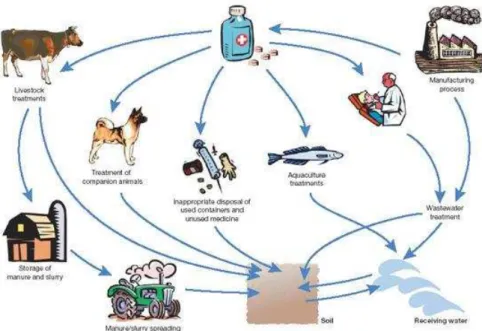
Figure 1. The VMP’s turnover in the environment
3. Environmental distribution
The route of distribution and the fate in the environment are important for the final exposure concentration.
For veterinary medicinal products, the predominant routes of exposure for the terrestrial and aquatic environment are through the application of manure, dung and urine.
Distribution of the product occurs within the directly exposed compartment(s) and between different compartments.
The terrestrial environment is exposed via:
• Direct excretion of dung and urine; • Loss from animals treated topically; • Spreading of contaminated slurry and/or
sludge.
• The aquatic environment is exposed via: • Leaching, run-off and drainage from
manured land;
• Direct spillage and/or feed spillage; • Direct excretion into water (pasture
animals);
• Direct application in water (aquaculture); • Direct discharge of waste water into
surface water (indoor aquaculture);
• Release from Sewage Treatment Plants (indoor aquaculture).
In Phase I, the potential for environmental exposure is assessed based on the intended use of the VMP.
It is assumed that VMPs with limited use and limited environmental exposure will have limited environmental effects and thus stop in Phase I.
Phase I also identifies VMPs that require a more extensive ERA under Phase II. The Phase I ERA for a VMP makes use of the decision tree.
To use the Phase I decision tree, the applicant works through the questions until they arrive at a question which allows them to conclude that their product qualifies for a Phase I report.
If there is no information on a particular question, the question is ignored and the applicant continues to the next question.
4
.
Predicted environmental
concentration
- Question 17 from the decision tree
Question 17. – „Is the predicted environmental concentration of the VMP
in soil (PECsoil) less than 100 µg kg-1?”
75 In Phase I the total residue approach is applied. This means that the total amount of the dose applied is excreted from the animal and data on metabolism / excretion should not be taken into account.
Food producing species can be raised indoors for all or a major part of their lives or they can be kept outdoors for all or a major part of their lives.
The calculation of the initial PEC in soil is performed when more than a “small number of animals” are treated.
PECsoil initial for intensively reared animals
Intensively reared animals are those which are housed indoors throughout the production cycle so treatment with the VMP is carried out in housing and the active residue is excreted in the stable and is incorporated in the manure.
This active residue reaches the environment when the manure from the stable is spread onto land.
Calculation of the PECsoil initial for intensively reared animals is dependent on the quantity of manure containing active residue, which can be spread onto land.
Based on the EUROSTAT database a nitrogen load of 170 kg N / ha is on average the maximum load in the most EU countries.
The PECsoil initial should be calculated using the following equation:
PECsol initial= D x Ad x BW x P x 170 x Fh x 1000 (Eq.1)
1500 x 10000 x 0.05 x Ny x H
Where:
• PECsoil initial = Predicted Environmental Concentration in soil [µg.kg-1]
• D = Daily dose of the active ingredient [mg.kgbw-1.d-1] • Ad = Number of days of treatment [d]
• BW = Animal body weight [kgbw] (see Table 3.)
• P = Animal turnover rate per place per year [place-1.y-1] (see Table 3.)
• 170 = EU nitrogen spreading limit [kg N.ha-1]
• Fh = Fraction of herd treated [value between 0 and 1] (see Table 2.)
• 1500 = Bulk density of dry soil [kg.m-3] • 10000 = Area of 1 hectare [m2 .ha-1] • 0.05 = Depth of penetration into soil [m]
• Ny = Nitrogen produced in one year per place [kg.N. place-1.y-1] (see Table 3.)
• H = Housing factor either 1 for animals housed throughout the year or 0.5 for animals housed for only 6 months (see Table 3.)
• 1000 = Conversion factor [1000 µg.mg-1]
In this equation the only inputs required from the user are the dose rate and the number of administrations of the veterinary medicine in a course of treatment.
These parameters will be available from the product’s SPC.
Table 2. Percentage herd treatment for various groups of VMPs
Product group % herd
treatment
Anthelmintics 100
Products for treatment of diarrhoea in calves, lambs and pigs (excluding products administered in feed and water)
30
Coccidiostatics 100
Ectoparasiticides 100
Intramammary preparations: for drying off in lactating animals
100 25
Antibiotics (feed and water medication) 100
Antibiotics (injectable) all pig treatments respiratory infections in cattle foot rot in sheep
50 50 100
Teat dip and sprays 100
All products for poultry 100
All products for fish 100
75
Table 3. Default values for use in calculating the PECsoil for intensively reared animals
Animal type
Number of animals raised
per place per year
Bodyweight (kg)
Nitrogen produced in 1 year per place
(kg.N.y-1)
Housing factor1
Calf 1.8 140 10 1
Dairy cow 1 425 60 0.5
Cattle (0-1 year) 1 200 18 0.5
Cattle (>2 years) 1 450 35 0.5
Weaner pig (to 25 kg) 6.9 12.5 2.25 1
Fattening pig (25-125 kg) 3 65 7.5 1
Sow (with litter) 1 240 262 1
Broiler 9 1 0.23 1
Laying hen 1 1.6 0.35 1
Replacement layer 2.6 0.8 0.24 1
Broiler breeder 1 1.7 0.69 1
Turkey 2.7 6.5 0.9 1
Duck 7 1.6 0.41 1
Horse 1 400 35 0.5
Rabbit 8 1.4 0.352 1
PECsoil initial for pasture animals
Pasture animals are those, which are on pasture throughout the production cycle so treatment with the veterinary medicine is carried out in the field and the residue of the veterinary medicine, is excreted directly onto the soil.
Calculation of the PECsoil initial for pasture animals is dependent on the number of animals kept on any area of land. This parameter is known as the stocking density and is expressed in animals per hectare.
PECsol initial = D x Ad x BW x SD x Fh x 1000 (Eq. 2) 1500 x 10000 x 0.05
Where:
• PEC soil initial = Predicted Environmental Concentration in soil [µg.kg-1]
• D = Daily dose of the active ingredient [mg.kgbw-1.d-1] • Ad = Number of day of treatment [d]
• BW = Animal body weight [kgbw.animal-1] (see Table 4.) • SD = Stocking density [animal.ha-1] (see Table 4.)
• Fh = Fraction of herd treated [value between 0 and 1] (see Table 2.)
• 1500 = Bulk density of dry soil [kg.m-3] • 10000 = Area of 1 hectare [m2.ha-1]
• 0.05 = Depth of penetration into soil [m] • 1000 = Conversion factor [1000 µg.mg-1]
Table 4.
Default values for use in calculating the PECsoil for pasture animals
Animal type Stocking density
(animals.ha-1)1
Bodyweight (kgbw)2,3
Dairy cow 3.5 600
Beef cattle 9.5 330
Sheep (adult ewe) 15 80
Lambs 25 36
Horse 3 600
Pony 5 250
Goat 15 60
5. Phase II
The aim of the Phase II (and in Phase I) is to assess the potential for VMPs to affect
non-target species in the environment. It is not possible to evaluate the effects of VMPs on every species in the environment that
77 may be exposed to the VMP following its administration to the target species.
The taxonomic levels tested are intended to serve as surrogates or indicators for the range of species present in the environment.
It is used a two-tiered approach to the environmental risk assessment.
The first tier, Tier A, makes use of simpler, less expensive studies to produce a conservative assessment of risk based on exposure and effects in the environmental compartment of concern.
If the ERA cannot be completed with such data, due to a prediction of unacceptable risk, then the applicant progresses to Tier B to refine the ERA.
In some cases, it may be possible to implement a risk management option instead of moving to Tier B.
At the beginning of Phase II a Tier A base data set on the fate and effects of the VMP is produced by the applicant.
This data set is a key element of the assessment procedure allowing for the rapid identification of hazards and/or risks associated with the use of the product.
At this point, it is important to make use of all available documentation relevant to the environmental risk assessment of the product. This includes physico-chemical data, relevant pharmacological toxicological and toxicokinetic studies and information on degradability or persistence of the active ingredient under relevant conditions.
These properties will vary between the parent compound and the individual excreted metabolites, for example, the latter may be more water-soluble than the parent compound and may be more mobile and/or more persistent in the environment.
Consideration of the excretion data is not initially recommended at Tier A, where a total residue approach should be taken and a PEC initial should be estimated. It should be assumed that the VMP is excreted 100% as parent.
The specific test guidelines / protocols recommended in Phase II are those finalized by OECD/ISO. This has the advantage of ensuring that environmental studies are current and broadly acceptable to regulatory authorities on a worldwide basis.
Finally, conducting ERA studies in accordance with Good Laboratory Practice (GLP) is a regional requirement and if studies are not conducted to GLP, they may not be accepted in some VICH regions.
PEC refinement
In Phase II Tier A the PECs are initially calculated based on the total residue approach and compared with the PNEC derived from the base set of toxicity tests. If the RQ is above one, the adjustments presented below can be used to refine the PECs.
Depending upon the scenario and the characteristics of the active ingredient being studied, a number of options may be available to refine the exposure assessment. Broadly speaking, these refinements fall into one or more of the following categories:
• Refinement based on metabolism • Refinement based on the excretion
pattern
• Refinement based on degradation in manure/slurry
• Refinement based on degradation in soil
Risk Quotient (RQ) Approach
The ERA is based on the accepted principle that risk is a product of the exposure, fate and effects assessments of the VMP for the environmental compartments of concern. The Phase II ERA is based on a RQ approach, which is the ratio of the predicted environmental concentration (PEC) and the predicted no effect concentration (PNEC) on non-target organisms. The RQ (PEC/PNEC) is compared against a value of one, and a
78 value less than one indicates that no further testing is recommended.
The PEC of the RQ is defined as the concentration of the parent compound and metabolites predicted to be present in the soil, water and sediment compartment.
The PNEC of the RQ is determined from the experimentally determined effects endpoint divided by an appropriate assessment factor (AF).
The AF is intended to cover uncertainties such as intra- and inter-laboratory and species variation, the need to extrapolate from laboratory study results to the field, and from short term to long term toxicity (acute:chronic ratios).
The value varies depending on the type of study conducted. If the RQ is 1 for one or more tested taxonomic levels, then metabolism/excretion data from the residues and Absorption, Distribution, Metabolism, Excretion (ADME) part of the dossier should be considered as part of the PEC refinement. Excreted metabolites representing 10% or more of the administered dose and which do not form part of biochemical pathways should be added to the active substance to allow the PEC to be recalculated.
If the RQ is still 1 after PEC refinement and testing at Tier B, then guidance should be sought from the regulatory authority, including whether testing of the major environmentally relevant metabolites needs to be considered.
Tier B Testing - Environmental Fate Studies
If the log Kow is 4, evidence from absorption, distribution, metabolism and excretion (ADME) and biodegradation studies and molecular mass should be considered to see whether there is the potential for bioaccumulation to occur. If so, then a bioconcentration factor (BCF) study is recommended to be carried out at Tier B.
Evidence of bioaccumulation from ADME studies would be the presence of high concentrations of the active in fat compared to other tissues and/or the slow depletion of the residue from fat tissue. In view of the fact that in general the activity of enzymes involved in the transformation of xenobiotics decrease at lower trophic levels, the lack of accumulation in mammals does not automatically exclude the potential for accumulation in fish.
If there is still an indication of risk on completion of the Tier B assessment, e.g. for VMPs which still have an RQ >1 or the BCF 1000, then the applicant is recommended to discuss their dossier and proposals for further data or risk mitigation with the regulatory authority.
References
1. CVMP/VICH Topic GL6 (Ecotoxicity Phase I). Guideline on Environmental Impact Assessment (EIAs) for Veterinary Medicinal Products-Phase I, 2. CVMP/VICH/592/98-FINAL, London, June 30 2000 3. CVMP/VICH Topic GL38. Guidel ine on
Environmental Impact Assessment for Veterinary Medicinal Products - Phase II, CVMP/VICH/790/03 - FINAL, London, 2005
4. EMEA/CVMP/ERA - Environmental impact assessment for VMPs in support of the VICH guidelines GL6 and GL38
5. EMA/CVMP/ERA - Determining the fate of veterinary medicinal products in manure
6. EMA/CVMP/ERAWP - Risk-mitigation measures related to the envi ronmental risk assessment of veterinary medicinal products
7. EMEA/CVMP - Reflection Paper on the implementation of Directive 2001/82/EC, as amended, in respect to the assessment of environmental risks of veterinary medicinal products
8. Directive 2001/82/EC of the European Parliament and of the Council of 6 November 2001 on The Community code relating to veterinary medicinal products (Official Journal L 311, Regulation 28/11/2001, p.1-66). Amended by Directive 2004/28/EC of the European Parliament and of the Council of 31 March 2004 amending Directive 2001/82/EC on the Community code relating to Veterinary medicinal products (Official Journal L 136, 30/4/2004 p. 58-84).