UNIVERSIDADE FEDERAL DE MINAS GERAIS
INSTITUTO DE CIÊNCIAS BIOLÓGICAS
DEPARTAMENTO DE BIOLOGIA GERAL
PROGRAMA DE PÓS-GRADUAÇÃO EM GENÉTICA
PhD Thesis
Comparative Microbial Genomics: Pangenomics and
Pathogenomics of C
orynebacterium
,
Campylobacter
and
Helicobacter
Amjad Ali
Prof. Dr. Vasco Ariston de Carvalho Azevedo
BELO HORIZONTE
AMJAD ALI
Comparative Microbial Genomics: Pangenomics and Pathogenomics
of C
orynebacterium
,
Campylobacter
and
Helicobacter
Thesis presented as partial requirement
for the degree of Doctor of Philosophy in
Genetics, to the Department of General
Biology at the Institute of Biological
Sciences, Federal University of Minas
Gerais.
SUPERVISOR:
Prof. Dr. Vasco Ariston de Carvalho Azevedo
Universidade Federal de Minas Gerais
Instituto de Ciências Biológicas
Belo Horizonte – MG
March – 2013
Ali, Amjad
Microbial comparative genomics: pangenomics and pathogenomics of corynebacterium, campylobacter and Helicobacter. [manuscrito] / Amjad Ali. – 2013.
Orientador: Vasco Ariston de Carvalho Azevedo.
Tese (doutorado) – Universidade Federal de Minas Gerais, Departamento de Biologia Geral.
1. Corynebacterium- Teses. 2. Pangênomica - Teses. 3. Patogênomica - Teses. 4. Genômica - Teses. 5. Genômica comparativa - Teses. 6. Campylobacter - Teses. 7. Helicobacter - Teses. 8. Candidatos vacinais. 9. Alvos de
drogas. 10. Ilhas genômicas. 11. Genética - Teses. I. Azevedo, Vasco Ariston de Carvalho. II. Universidade Federal de Minas Gerais. Departamento de Biologia Geral. III. Título.
CDU: 576.85
ACKNOWLEDGEMENTS
All the praises be to Almighty Allah, Who is merciful, gracious, and
whose bountiful blessings enabled me to persuade higher ideals of
life. All regards and respects to the Holly Prophet Muhammad PBUH
for guiding mankind towards the straight path of life. My sincere
gratitude for my parents, my siblings and family for their support,
love and friendship. I am very much grateful to my supervisor Prof.
Dr. Vasco Azevedo for his continued technical and moral support,
and guidance received. Thanks to Dr. Anderson Miyoshi for his
support. I am thankful to Prof. David Ussery from center for
biological sequence analysis, Technical University of Denmark for his
full time availability and guidance. I acknowledge the faculty of
Graduate Studies, the Coordinator, the Secretariat staff and fellow
students for their cooperation and support. I am grateful to
TWAS-CNPq for the financial assistance in the form of PhD Fellowship. My
cordial thanks to all the colleagues in Laboratory of Cellular and
Molecular Genetics
(
LGCM
)
, for their pleasant company and guidance
throughout my stay. I am very much thankful to my friends living all
over the world for their moral support, whenever it was required to
me.
CONTENTS
LIST OF ABBREVIATIONS ... 7
GLOSSARY ... 8
ACRONYMS ... 9
LIST OF FIGURES ... 11
LIST OF TABLES ... 11
Abstract ... 12
List of Papers ... 13
I. PRESENTATION ... 15
I.I Research Groups, Collaborators and Funding ... 16
I.II Structure of the Manuscript ... 19
II. INTRODUCTION ... 21
II.I Genome and Genomics ... 22
II.I.I Microbial Evolution and Diversity ... 23
II.I.II Characteristics of Microbial Genomes ... 25
II.I.III Levels of Microbial Genomics ... 26
II.I.IV Tree of Life and Statistics of Sequenced Genomes ... 27
II.II Microbial Comparative Genomics ... 29
II.II.I Gene/protein Analysis ... 31
II.II.II Intra-Genome Comparison (Single Genome Analysis) ... 32
II.II.III Inter-Genome Comparison (Pairwise Alignment) ... 33
II.III Pangenomics ... 34
II.III.I Open and Close Pangenome ... 36
II.III.II Application of Pangenome in Vaccine Design ... 37
II.III.III Essential Genes and Minimal Genome ... 39
II.IV Pathogenomics... 40
II.IV.I Genome Plasticity Analysis ... 41
II.IV.II Pathogenicity Islands ... 42
II.IV.III Virulence Factors in Pathogens ... 43
II.IV.IV Drug Targets Prediction ... 44
II.IV.V Vaccine Candidates Identification ... 46
II.IV.VI Reverse Vaccinology Approach ... 47
II.V Introduction to Bacterial Genera and Species Selected ... 48
III. OBJECTIVES ... 52
III.I General Objectives ... 53
III.II Specific Objectives ... 53
IV. METHODOLOGY ... 54
IV.I General Methodology ... 55
IV.II FLOWCHART ... 56
CHAPTER 1 ... 58
CORYNEBACTERIUM ... 58
1.1 Review Article ... 59
Microbial Comparative Genomics: An Overview of Tools and Insights into the Genus Corynebacterium. J Bacteriol Parasitol. March 2013. 1.2 Conclusion ... 76
CHAPTER 2 ... 77
CAMPYLOBACTER ... 77
2.1 Research Article ... 78
Campylobacter fetus subspecies: Comparative genomics and prediction of potential virulence targets. GENE 2012. 2.2 Conclusion ... 91
CHAPTER 3 ... 92
HELICOBACTER ... 92
3.1 Research Article ... 93
Computational comparative genomic based insights into human gastric pathogen Helicobacterpylori (38 species), essential features and species pangenome. (Manuscript). 3.2 Conclusion ... 125
V. DISCUSSION ... 126
VI. CONCLUSION AND FUTURE PERSPECTIVES ... 151
VII. BIBLIOGRAPHY ... 154
VIII. CURRICULUM VITAE ... 167
IX. APPENDIX ... 176
IX.I Chapter 1. Corynebacterium ... 177
IX.II Chapter 2. Campylobacter ... 179
LIST OF ABBREVIATIONS
INSTITUTES, DATABANKS AND FUNDING AGENCIES
CNPq: National Council for Scientific and Technological Development
DDBJ: DNA Databank of Japan
EMBL: European Molecular Biology Laboratory
FAPESPA: Fundação Amazonia Paraense
GOLD: Genomes OnLine Database
ICB: Instituto de Ciências Biológicas
LGCM: Laboratory of Cellular and Molecular Genetics
LPDNA: Laboratory of DNA Polymorphism
NCBI: National Center for Biotechnology Information
NIH: National Institutes of Health
RGMG: Minas Gerais Genome Network
RPGP: Network Paraense Genomics and Proteomics
TIGR: The Institute For Genomic Research
TWAS: The Academy of Sciences for the Developing World
UFMG: Federal University of Minas Gerais
GLOSSARY
Core genome: set of genes commonly shared by all genomes in a species or taxa.
Macroevolution: any evolutionary change above the level of species.
Microevolution: any evolutionary change under the level of species.
ORFan (orphan): gene for which no homolog is found in current databases.
Orthologs: genes with a relationship that arose from a speciation event.
Pan genome: the union of all the genes that can be found in a species.
ACRONYMS
ACT: Artemis Comparison Tool
BLAST: Basic Local Alignment Search Tool
BLASTn: Basic Local Alignment Search Tool (nucleotide)
BLASTp: Basic Local Alignment Search Tool (protein)
CDS: Coding sequence
Cff: Campylobacterfetus subspecies fetus 82-40
Cfv: Campylobacter fetus subspecies venerealis NCTC 10354T CGFs: Core gene families
CLA: Caseous Lymphadenitis
CMN: Corynebacterium, Mycobacterium and Nocardia
COG: Cluster of Orthologous Genes
Cp: Corynebacterium pseudotuberculosis
CRISPR: Clustered Regularly Interspaced Short Palindrome Repeats
DNA: Deoxyribonucleic acid
EGFs: Essential gene families
G+C: Guanine+Cytosine
GFs: Gene families
GO: Gene Ontology
GSS: Genomic Survey Sequence
HGT: Horizontal gene transfer
kb: kilobase (thousand bases)
Mb: mega bases (million bases)
ORF: Open Reading Frame
pb: base pair
PFGE: Pulsed- Field Gel Electrophoresis
PGFs: Pan gene families
PLD: phospholipase D
rDNA: Ribosomal DNA
RFLP: Restriction Fragment Length Polymorphism
RNA: Ribonucleic acid
rRNA: ribosomal RNA
SOLiD: Sequencing by Oligonucleotide Ligation and Detection
T4SS: Type IV secretion systems;
tBLASTx: Basic Local Alignment Search Tool (Translated nucleotides)
LIST OF FIGURES
Figure 1. ...28
Tree of life and phylogenetic distribution of sequenced organisms.
Figure 2. ………36
Illustration of the genes distribution in the pangenome of bacteria.
Figure 3. ………43
Graphical illustration of a model pathogenicity island.
Figure 4. ………57
A schematic representation of the methodology in flowchart.
LIST OF TABLES
Table 1. ...40 Representative bacterial species with estimated essential genes.
Abstract
In the last decade, robust sequencing technologies have revolutionized the genomic science.
As a result, comparative genomics is now recognized as a new discipline. Comparative
microbial genomics exploits both similarities and differences in the genomes, proteome,
trascriptome, and regulatory regions of different organisms to infer the evolutionary relations,
along with conserved and unique characteristics of species. These analyses have resulted in
some surprising biological discoveries in the recent past. This study presents comparative
genomic analysis of multiple pathogenic and non-pathogenic bacteria from related species,
to dissect the genomic information and to get insights into evolutionary relationships,
conserved information and mechanisms of pathogenicity. Starting from genus
Corynebacterium, 11 representative species are analysed and compared, resulting in 741
conserved Gene Families (GFs) in all of them, and significant intra-species proteome
similarities (98-99%) were observed. Subsequently, the pan- (7059 GFs) and core genome
(552 GFs) of genus Campylobacter is estimated. A detailed comparative pathogenomic study
of Campylobacter fetus subspecies resulted in identification of common and novel regions associated with pathogenicity; and species specific virulence factors and vaccine candidates
have been characterized. Furthermore, comparative genomics and pathogenomics analysis
of the genus Helicobacter (46 genomes) is accomplished. 38 Helicobacter pylori were found
to share 1,185 core gene families representing ~77% of the average genome size. The core
essential genes families (EGFs) are ascertained, and explored for potential therapeutics
against H. pylori. In conclusion, we propose that, these observed genomic variations, species
specific features and core virulence factors will enhance understanding of the lifestyle of the
List of Papers
This thesis is presented in articles format and is divided into three chapters based on studied
organisms and the following articles.
1. Amjad Ali, Siomar C Soares, Anderson R Santos, Eudes Barbosa,Debmalya Barh,
Syeda M. Bakhtiar, Syed S. Hassan, Anderson Miyoshi, Vasco Azevedo, Microbial
Comparative Genomics: An Overview of Tools and Insights into the Genus
Corynebacterium.J Bacteriol Parasitol 2013, 4:3.
2. Amjad Ali, Siomar C Soares, Anderson R Santos, Luis C Guimarães, Eudes
Barbosa, Sintia S Almeida, Vinícius AC Abreu1, Adriana, R Carneiro, Rommel TJ
Ramos, Syeda M Bakhtiar, Syed S Hassan, David W Ussery, Stephen On, Artur
Silva, Maria P Schneider, Andrey P Lage, Anderson Miyoshi, Vasco Azevedo.
Campylobacter fetus subspecies: Comparative Genomics and Prediction of
Potential Virulence Targets. Gene 2012 vol. 508 (2) p. 156-145;
3. Amjad Ali, Siomar C Soares, Syeda M Bakhtiar, Sandeep Tiwari, Syed S. Hassan,
Fazal Hanan, David W Ussery, Antaripa Bhattacharya, Debmalya Barh, Artur Silva,
Anderson Miyoshi, Vasco Azevedo. Computational comparative genomic based
insights into human gastric pathogen Helicobacterpylori (38 species), essential
My Contribution to the papers
All the work presented here was performed under the direct supervision of Prof. Dr. Vasco
Azevedo, in the Laboratory of Cellular and Molecular Genetics (LGCM), Department of
Genetics, Federal University of Minas Gerais, Belo Horizonte, Brazil.
I. I participated in designing theme of the manuscript, sought literature for relevant data
and performed the analysis. Co-authors (ARS, EB, SMB, SSH AM and DWU) helped
me in restructuring the manuscript and their inputs in sequencing, alignment,
assembly and annotation chapters. SCS and DB were involved in pathogenomic
analysis and PPI, respectively. I wrote the first draft of the manuscript and corrected it
after comments and suggestions from all the co-authors.
II. I participated in the data collection and comparative genomic analysis. The technical
guidance were obtained from DWU. SCS assist me in PIs predictions. All Co-author
had put their inputs in the form of validation of results and discussion. I wrote the
manuscript and finalized it after the suggestion and comments from all co-authors.
III. I participated in planning, collection of data and management of the work and carried
out comparative genomic analysis. To analyse this huge data access to CBS, DTU
servers was provided by DWU. All co-authors contributed in writing up and approving
the final manuscript.
There are other related articles in which I worked as the co-author. The list of these articles is
I.I Research Groups, Collaborators and Funding
This work was conducted in the Laboratory of Cellular and Molecular Genetics (LGCM) at the
Institute of Biological Sciences (ICB), Federal University of Minas Gerais (UFMG), Belo
Horizonte, Brazil. Furthermore, it had the following active partnerships: the Laboratory of
DNA Polymorphisms (LPDNA), Federal University of Pará; Center for Biotechnology
(CeBiTec), University of Bielefeld, Bielefeld, Germany; Institute of Integrative Omics and
Applied Biotechnology (IIOAB), India; Comparative Microbial Genomics Group, Center for
Biological Sequence Analysis (CBS), The Technical University of Denmark (DTU), and
Department of Mathematics and Computer Science (IMADA), University of Southern
Denmark (SDU), Denmark. The researchers involved were:
• Prof. Dr. Artur Silva, researcher and group leader of the Laboratory of DNA
Polymorphisms at the Institute of Biological Sciences, coordinator of the Network
UFPA Paraense Genomics and Proteomics (RPGP), Belém, Pará;
• Prof. Dr. David Ussery, researcher and group leader of the Comparative Microbial
Genomics group at Center for Biological Sequence Analysis (CBS) at
Biocentrum-DTU, Denmark;
• PD. Dr. Andreas Tauch, researcher and group leader, Center for Biotechnology
(CeBiTec), University of Bielefeld, Bielefeld, Germany;
• Prof. Dr. Jan Baumbach, researcher and group leader of Computational Biology
Laboratory, Department of Mathematics and Computer Science (IMADA), University
of Southern Denmark (SDU) Denmark;
• Dr. Debmalya Barh, researcher at the Centre for Genomics and Applied Gene
Technology, Institute of Integrative Omics and Applied Biotechnology (IIOAB)
• Dr. Guilherme Corrêa de Oliveira, researcher and head of the Laboratory of Cellular and Molecular Parasitology, Research Center René Rachou - FIOCRUZ and
coordinator of Minas Gerais Genome Network (RGMG).
• Dr. Stephen On, leader of Food Safety Program, Christchurch Science Centre,
Institute of Environmental Science and Research (ERS), New Zealand.
I joined the Laboratory of Cellular and Molecular Genetics (LGCM), Department of Genetics
in 2010 as full time PhD student under the supervision of Prof. Dr. Vasco Ariston de Carvalho
Azevedo.
The research group (LGCM) has been actively involved with the characterization of the C. pseudotuberculosis genomes (bench and Insilco) for more than 15 years, even before the
genomic era. Being the pioneer in Corynebacterium research in brazil, the group engaged in
intensive research projects covering diverse areas of biology, e.g. genomics, proteomics,
transcriptomics. Also, the development of vaccines and diagnostics has made the group a
reference point for the study of this microorganism.
The group also has gained sufficient expertise in the area of genomics with productive
collaboration to the Laboratory of DNA Polymorphism (LPDNA), Federal University of Pará
headed by the Prof. Dr. Artur Luiz da Costa Silva (Paraense Genomic and Proteomics
Network – RPGP). The groups acquired the high-tech sequencing facilities (SOLiD, Ion
Torrent and Sanger: 3130 and 3730) and have successfully sequenced 15 C.
pseudotuberculosis species so far, isolated from different locations around the world, biovars and hosts. The obtained sequenced genomes have been deposited to public databases
(genbank). Besides Corynebacterium, other species like Campylobacter, Exiguobacterium
and Leptospira genome projects have been accomplished.
Since I did my BS and MPhil in Biotechnology and Molecular Genetics, my academic
initially challenging for me to work with bioinformatics group. However, my enthusiasm and
devotion to the new area of science strengthened me enough to work with computational
biology and bioinformatics, and to acquired sufficient knowledge in the field. During the initial
period of my studies, I actively participated in ongoing sequencing projects, assembly and
annotation of genomes. After learning and hands-on training in basic genomics, I got an
opportunity to enhance my knowledge and acquired further skills in the area of comparative
microbial genomics, while working at Center for Biological Sequence Analysis (CBS),
Technical University of Denmark (DTU) under the supervision Prof. Dr. David Ussery, one of
the pioneering and distinguished scientists in the area of comparative microbial genomics.
This thesis was carried out with financial support from the following institutions: The
Academy of Science for the Developing World (TWAS), Trieste, Italy (http://twas.ictp.it/), in
agreement to National Council for Scientific and Technological Development (CNPq), Brazil
in the form of a PhD fellowship. Sequencing facilities and assistance came from Foundation
I.II Structure of the Manuscript
The thesis is divided into three parts based on three different bacterial species
(Corynebacterium, Campylobacter and Helicobacter) selected for analyses. In the start, a brief history and introduction to genome and genomics is given, followed by strategies for
comparative genomic, pangenomic and pathogenomic. A concise introduction to the selected
genera (species) and their significances is given, followed by hypotheses and objectives of
the study. The general methodology used in this study is demonstrated in a flowchart. The
first chapter focuses on Corynebacterium beginning with introductory review on “Microbial Comparative Genomics”. in the first part, the review describes the developments and
advances in genomic and comparative genomic sciences. In brief, an overview of microbial
comparative genomics pre-requisites: sequencing technologies, alignment tools, annotation
pipelines, databases and resources, visualization and genomic tools are described.
Conclusively, the insights obtained from comparative genomic and pangenomic analysis and
recent findings in genus Corynebacterium are discussed. The genus, as a whole, is
considered as the model for analysis with particular interest in pathogenic species: C. pseudotuberculosis, C. diphtheriae, C. ulcerans and C. kroppenstedtii. Other published
articles related to this chapter are mentioned in curriculum vitae at the end of thesis. Chapter
2 consists of a published article describing the comparative genomic/proteomic and
pathogenomic analysis of the genus Campylobacter. Particular emphasis is given to
pathogens Campylobacter fetus subspecies (C. fetus subspecies venerealis and C. fetus
subspecies fetus), which are the causative agents of serious diseases like bovine genital campylobacteriosis (BGC), abortions, and gastroenteritis in human. Chapter 3 comprises a
research article describing comparative genomic studies of genus Helicobacter, with specific
focus on human pathogen Helicobacterpylori, thecausative agent of peptic ulcer and gastric
cancer in human population. The specific methodology, results and discussions are
end of each chapter. Also, a separate discussion chapter is provided where all the results are
elaborated in the light of current literature. Furthermore, the potential features of the
conducted study are highlighted.
The final conclusion and future perspectives of the work are presented in the last section. In
the end, a curriculum vitae is affixed with academic and publications details. Additional (supplementary) files and figures associated with each chapter are provided in the
II.I Genome and Genomics
The DNA (Deoxyribonucleic acid) was first isolated as early as 1869 and one of the
remarkable discovery in science was the description of the DNA helix (nucleic acids)
structure by James D. Watson and Francis H. C. Crick in 1953 (Watson & Crick, 1953).
However, the term “genome” was first proposed by German botanist Hans Winkler, in 1920.
He merged the letters “gen” from genes and the suffix “ome” from chromosome ((McKusick
& Ruddle, 1987). According to modern molecular biology and genetics, the genome can be
defined as “The entirety of an organism's hereditary information”. Genomes can be classified
based on the organism or organelle which contain it, for example prokaryotic, eukaryotic,
nuclear, mitochondrial and chloroplast genomes.
Genomics was established by Fred Sanger when he first sequenced the complete genomes
of a virus and a mitochondrion. His group established techniques of sequencing, genome
mapping, data storage, and bioinformatics analyses in the 1970-1980s (Kuska, 1998; The
Sanger Centre, 1998).
The term “genomics” was later proposed by Dr. Thomas H. Roderick in 1986. He coined the
term by suggesting it to a journal, which is now known as genomics (Kuska, 1998). As a
result, the new discipline genomics was established. There are several definition of genomics
often creating confusion and misunderstanding. The simplest definition can be described as
“The Study of Genomes” (Kuska, 1998; Yadav, 2007).
In the late 1980s, after series of debates and discussions in the scientific community, the
genome sequencing projects were officially started including human, mouse and other
organisms (microbes). In the bacterial domain, the breakthrough was the first bacterial
genome Haemophilus influenzae in 1995 (Fleischmann et al., 1995), followed by E. coli
genome in 1997. By the end of the last century, almost 39 bacterial species had been
sequenced. Among the eukaryotes, Saccharomyces cerevisiae was the first genome
Sanger Centre, 1998) and the final version of human genome was released in 2003.
Genomics studies are vast and may include the organization, function and evolution of
genetic material at the level of the whole genome rather than individual genes. It analyses
genetic material of living organisms. The systematic study of genome information can be
applied to resolve questions in biology, medicine and industry.
Genome analyses can be studied both at transcription (RNA) level as well as at translation
(protein) level. Similarly, the study of and analyses of transcripts is called transcriptomics and
the study of proteins or proteome (proteins produces by an organism’s genome) is called
proteomics. In similar manner the suffix “omics” is used frequently in genomic literature referring to something big, demonstrating studies in life sciences dealing with large-scale
data and information. Recently, the word “omics” is used with diverse biological processes
(analyses) such as metabolomics, metabonomics, metallomics, lipidomics, interactomics,
transcriptomics, spliceomics, neuromics, physiomics, predictomics, and so on (Yadav, 2007).
II.I.I Microbial Evolution and Diversity
Microbes (bacteria) provide an interesting opportunity to study the mechanisms of evolution
because of their specific features: they harbor a previously unsuspected diversity even within
species and populations, they are found either in small or very large population sizes, they
can survive or grow in most unfriendly (extreme) environments from the inside of eukaryotic
cells to hot springs or spaceships, and they frequently acquire and exchange genetic
materials with distantly-related organisms (Abby & Daubin, 2007).
Like all other forms of life, bacteria also undergo evolution. However, the process of evolution
is relatively slow and steady. The bacteria pass through selection processes and with time
genetic changes occur in bacterial population. These changes may be results of mutations
of existing genes during DNA replication or horizontal gene transfer. Bacteria can take up
genetic elements either from their environment or from another bacteria through conjugation
the other side, genome reduction is also one outcome of bacterial pathogenic evolution. But
not all bacterial pathogens follow this evolutionary trajectory because many maintain larger
genomes and undergo frequent genetic changes, often accessorizing their core genome by
incorporating new DNA. The changes in DNA can results in altering the function of the
encoded protein molecules, which might be a new trait. If this newly acquired trait gives the
organisms a selective advantage, it may be inherited or transferred again and eventually
become dominant in the population.
If the DNA sequences undergo mutations, insertions or some other changes, these variations
directly affect the coded protein. This is due to the fact that proteins molecules are more
diverse in structure and functions, compared to DNA (Nishida, 2012). Another mechanism
that plays a role in variation is the DNA duplication (Pallen & Wren, 2007). Among these
phenomena, horizontal gene transfer is one of the most important factors in prokaryotes that
causes variation in bacteria.
To estimate evolutionary relationships between different species and to avoid the labor and
cost issues i.e., whole genome sequencing, single-gene analysis is widely in practice.
However, due to some concerns about accuracy in phylogenetic analysis, phylogeny can be
inferred from a number of universally conserved housekeeping genes using multi-locus
sequence analysis (MLSA) (Urwin & Maiden, 2003). Although 16S rRNA gene sequence
analysis and MLSA are recognized to be effective tools for phylogenetic analysis of bacterial
species (Jolley et al., 2012), a major limitation in these techniques is that only a small amount of information is used to represent an entire genome (Abby & Daubin, 2007; B. Trost,
Haakensen, Pittet, Ziola, & Kusalik, 2010). These genes (16S rRNA) are sensitive to minor
mutations and remain hot spots for variations (mutation) through evolutions ((Raskin,
Seshadri, Pukatzki, & Mekalanos, 2006). These genes are also considered useful regulators
to estimate the evolutionary relationships between organisms and to estimate the rate of
Beside these common principles of genome organization, comparative genomics has
revealed a previously unexpected degree of diversity among prokaryotic genomes. One of
the most striking examples of this diversity is the comparison of gene contents within and
between species. in this manner, all forms of life seem to share only a handful of
genes!(~60), which are mainly dedicated to translation. The genes for other fundamental
functions, such as DNA replication, transcription or basic metabolism seem to be more
sporadically spread in the tree of life (Acencio & Lemke, 2009; Fraser et al., 1995). Surprisingly, this diversity of genome content can be seen at every phylogenetic scale
(Nishida, 2012).
II.I.II Characteristics of Microbial Genomes
In the last decade, development in sequencing technologies and bioinformatics tools has led
to the characterization of many prokaryotic genomes in a very short period of time. The
sequenced microbial genomes so far represent great phylogenetic diversity and many of
them are associated with major human and animal pathogenesis. Microbial genomes
compared to eukaryotic genomes show variations in structure and content density. For
example viruses and organelles have tiny genomes sizes (kbs) and high gene density while
bacterial genomes are small (Mb) with high gene density (Koonin & Wolf, 2008).
The sequenced bacterial genomes span two orders of magnitude in size, from ~180 kb in the
intracellular symbiont Carsonella rudii to ~13 Mb in the soil bacterium Sorangium cellulosum.
Although there are many genomes of intermediate size, the mentioned distribution suggests
the existence of two (more or less) distinct classes of bacteria, namely those with ‘small’ and
those with ‘large’ genomes (Koonin & Wolf, 2008; Raskin et al., 2006).
The biological pressure and adoption to diverse environments may also advance genomic
difference for example, free-living bacteria possibly need to have more extensive adaptation
potential, reflected by a larger genome, as they may come across more variable situations
chromosome) can exist in bacteria. Additionally, some bacteria contain single or multiple
copies of essential or non-essential plasmids (Nishida, 2012).
One of the genomic characteristics recommended for the description of species and genera
is the G+C, where 5% and 10% are the common range found with in a species or genera,
respectively. This variation also modulates the amino acid content of proteins. In general,
genome size is significantly associated with GC content, so that a higher GC content is more
often observed for larger genomes and a low GC content is frequent in small genomes.
Beside the physical nature, genome size and content, it is important to understand the
functions of individual gene and protein, and characteristic differences among bacterial
species (Nishida, 2012; Rottger, Ruckert, Taubert, & Baumbach, 2012). Despite the
tremendous variety of life styles, as well as metabolic and genomic complexity, bacterial
genomes show easily discernible and common architectural principles.
II.I.III Levels of Microbial Genomics
Genomics is a broad discipline, which may be divided into three main areas: Structural
genomics, dealing with the physical nature of genomes. Its primary objective is to determine
and analyse the genomic DNA sequence (mapping of genes – DNA sequencing – sequence
annotation). Functional genomics is concerned with the way the genome functions. That is,
it examines the transcripts produced by the genome and the collection of proteins and
functional RNAs they produce (transcriptomics – proteomics). The third and relatively new
area of genomics is comparative genomics,a large-scale, holistic approach that compares
two or more genomes to discover the similarities and differences between the genomes and
to study the biology of the individual genomes. This helps in identification of important,
conserved portions of the genome and discriminate patterns in function and regulation. The
data obtained also provide much information about microbial evolution, especially with
respect to phenomena such as horizontal gene transfer (Ali et al., 2013; Jensen, Friis, &
In the last decade, introduction of next generation sequencing technologies and
sophisticated bioinformatics tools have enhanced the genomic science and made it possible
to sequence genome from diverse environments, faster and cheaper than ever.
Consequently, the number of sequences on public databases is increasing at an exponential
rate (Pagani et al., 2012). This much genomic data greatly facilitated genomic science and established comparative genomics as a new discipline of genomics. In the next chapter, we
will discuss in detail the next generation sequencing platforms, their specific features and
associated bioinformatics tools and strategies for management of genomic data generated
by these platforms .
II.I.IV Tree of Life and Statistics of Sequenced Genomes
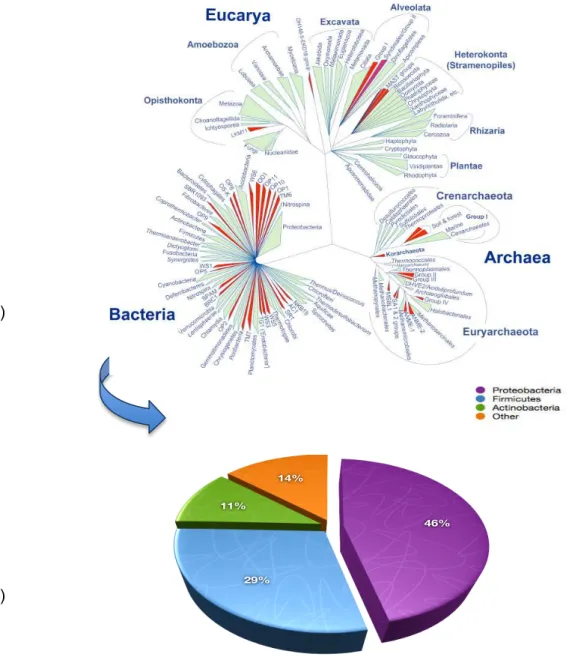
Considering the tree of life and its three domains: Eukarya, Archaea and Bacteria and the
statistics on Gold Online Database (
www.genomesonline.org
), the total number of completegenome projects is 4,169 (Figure 1). Among these projects, there are 183 and 182 complete
projects from the first two domain (Eukarya and Archaea), respectively. On the other hand,
from bacterial domain alone there are 3,804 complete projects and the sum total of genomes
on the database are 23,423 (cited on march 6, 2013).
The number is rapidly growing and in the last couple of months we have witnessed a
continuous increase in the sequencing projects. Phylogenetic distribution of sequenced
genome recorded at end of last year (2012), among the bacterial genome projects (8,448)
indicate that the highest number of species belong to Proteobacteria (46%) followed by
Firmicutes (29%), and Actinobacteria (11%). All the three classes constitute 86% of the total
bacterial genome sequencing projects (Figure 1). The remaining 14% contains bacteria from
all other classes (Pagani et al., 2012). Compared to eukarya and archaea, bacterial genomes
projects species are sequenced at a much higher rate (Pagani et al., 2012).
The interest in microbial genome sequencing is increasing because microbes provide an
46%
29% 11%
14%
structure compared to higher, multicellular organisms. Furthermore, analysis of the microbial
genomes also provides insight into microbial evolution and diversity beyond single protein or
gene phylogenies. In practical terms, microbial genome analysis provides assistance to
various biological phenomena, for example, environmental and waste clean up and wider
applications in biotechnology. Most importantly, this analysis can be applied to designing
new approaches for the treatment and control of pathogenic organisms (Forde & O’Toole,
2013; Metzker, 2005).
A)
B)
Figure 1.(A)Tree of life and its three domains Eukarya, Archaea and Bacteria.
(B)Phylogenetic distribution of sequenced organism.
II.II Microbial Comparative Genomics
The availability of complete genomes is crucial to the entire enterprise of comparative
genomics for at least two related but distinct and fundamental reasons: (i) the availability of
complete genome sequences (complete sets of genes/proteins) provides the possibility to
identify sets of orthologs, i.e. genes evolved from the same ancestral gene in the common
ancestor of the compared genomes and also (ii) comparison of complete genomes
(gene/proteins sets) is the necessary condition to determine not only which genes are
present in any particular genome but also which ones are absent. The ability to define sets of
orthologs and to pinpoint missing genes is crucial for genome-based reconstruction of an
organism’s metabolism, other functional systems and for reconstructions of genome
evolution (Abby & Daubin, 2007; Grant, Arantes, & Stothard, 2012; Koonin & Wolf, 2008).
In post genomic era, multiple complete genome sequences from related and diverse species
(pathogenic, non-pathogenic) have been published and are constantly added. Researchers
are now interested in understanding the fundamental biological processes such as bacterial
evolution, physiology and pathogenicity (Fraser et al., 2000). From evolutionary point of view,
all modern genomes arise from common ancestors and information gained by one organism
can have functions in others (similarly or differently). All the three levels of genomic analysis
i.e. structural, functional and comparative genomic are equally important to decipher genomic
sequences information. Differences between the strains of a distinct taxonomic clusters
shows that the bacteria have a huge diversity. Therefore, comparison of multiple microbial
genome sequences in the last decade has brought great insights into bacterial evolution and
the amount of diversity (Raskin et al., 2006).
The comparison of genomes with different life style will contribute significantly to the
understanding of microbial evolution and will help deduce which genes are responsible for
various cellular processes (Arnold & Jackson, 2011). The sequences from these organisms
application of the genome sequencing is the complete genome sequence of Mycoplasma
genitalium, a human parasitic bacterium and sexually transmitted organism with one of the
smallest genome of 580 kilo bases in size and having approximately 517 genes. Among the
interesting findings, minimum gene set required for laboratory growth conditions was
estimated to be approximately 265 to 350 genes and about 100 of these have unknown
functions (Mushegian & Koonin, 1996). This gave rise to the concept of minimal genome, i.e.,
the number (set) of genes required for an organism to survive. As an applications of
comparative genomics, M. genitalium was compared to Haemophilus influenzae (larger
genome having 1,743 genes). Interestingly, more than 40% of the genes were found to have
unknown functions and also it was observed that the bacterium lacks three Krebs cycle
genes and consequently a functional cycle. As soon the Escherichia coli K12 genome was published in 1997, when compared to others, it became evident that about 5 to 6% of the
genes code for proteins are involved in cell and membrane structure, 12 to 14% in transport
proteins, 10% in the enzymes of energy and central intermediary metabolic pathways, 4% in
regulatory genes and 8% in replication, transcription, and translation proteins. Out of 4,288
predicted genes in this genome, almost 2,500 do not resemble known genes. These findings
suggested deep insights of microbial genomic analysis and comparisons to understand
microbial biology (Fraser et al., 1995; Maurelli, 1998).
Different organisms share some common characteristics, and by comparison bacterial
species can provides genomic information about the common essential biological process in
different organisms. For example, identification of genes found in widely diverged species,
can teach us what is required for fundamental biological processes of an organism
(metabolism, biosynthesis etc.). On the other hand, the comparison of closely related species
can reveal the origins of adaptive traits and events (virulence genes, pathogenicity islands,
HGT etc.). In principle, genomes that diverged recently are expected to share more
the opportunity to understand fundamental information coded in genomic sequences by
comparing them. It also helps in understanding the common (basic) and unique (special or
common) genomic characteristics in closely related species. This would eventually lead us to
the pathogens mechanism of evolution, host and environmental adaptation and more
importantly pathogenicity (Pallen & Wren, 2007).
Comparative genomic analysis can be performed at different levels of the genomes to obtain
multiple perspectives about the organisms. However, it can be divide into Intra-genomic and
inter-genomic comparisons. The former analysis helps us to understand the degree of genes
duplication, degree of divergence and genes organization in a genome. The later helps in
estimation of degree of conservation between genes and degree of homology between
genomes. Similarly, multiple intra- and inter-species similarities and differences can be
utilized to classify the species based on genomic contents, rather than classical phenotypes
and specific genomic regions can be identified for development of diagnostics and vaccine
against pathogenic species (Kawai et al., 2011; Röttger et al., 2013).
II.II.I Gene/protein Analysis
To predict an evolutionary relationship and functional similarity between specific genes or
proteins in different species/organisms, sequence analysis and comparisons tools are
extensively used. Once the genomic sequences are available, in silico sequence comparison
strategies are quite faster and cheaper. If a particular sequence (gene) is present in different
organisms or conserved along evolution, it can be predicted that it might have a similar
function in all the organisms. On the other side, based on observations, two molecules of
related function usually have similar sequences reciprocally (Raskin et al., 2006). However,
searching diverse genes may show different evolutionary histories which reflects transfers of
genetic material between species. By recognizing structure and function of a member of
evolutionary family then it becomes possible to predict the function of all other member of
discovering functional, structural, and evolutionary information in biological sequences (Wen,
Wang, Li, Nie, & Yang, 2005).
Alignment of sequences from different origins is a tool to estimate the functional relationship
between them. On the level of genes, the use of reciprocal BLAST hits is the most widely
accepted approach suitable for tasks like gene annotation and the inference of homologies. If
sufficient similarities in sequences is observed most probably they may have evolved from a
common ancestor and the sequences are then defined to be homologous. Multiple
sequences (more than one sequence) alignments often give us more information than
pair-wise alignment because it is more informative about evolutionary conservation (Edgar &
Sjölander, 2004).
II.II.II Intra-Genome Comparison (Single Genome Analysis)
Single genome sequencing is of practical importance in genomics and can bring enormous
amount of information which leads to a broad range of knowledge about the organism
(Fraser et al., 2000). The analysis and comparison of individual genome sequences highlight
events such as degree of genes duplication (multiple copies of a gene), degree of divergence
and genes organization in a genome. For example, the use of alignment tools to find a
specific gene in a genome is very fast and is employed to identify a genetic marker for a
specific phenotype. The structural analysis of genomic DNA can locate chromosomal regions
that lend themselves to certain genes and genomic elements. Beside this, bunches (clusters)
of genes encoding surface-proteins (usually more AT rich), phage insertions, and regions
expected to contain highly expressed genes can be identified (Friis, Jensen, & Ussery, 2000;
Jensen et al., 1999). Based on careful annotation of a genome it is also possible to find the
gene neighbors of a specific gene, consequently identifying functionally connected genes.
Therefore, to some major extent, the sequencing of individual genomes has facilitated the
bench research. However, broader applications of genomics are manifested through
diversity that would otherwise not have been detected (Fraser et al., 2000).
II.II.III Inter-Genome Comparison (Pairwise Alignment)
Analysis and comparison of the global structure of genomes, such as nucleotide
composition, orthologous genes, syntenic relationships, and gene ordering provides insight
into the similarities and differences between genomes. Such comparisons provide
information on the organization and evolution of the genomes, and highlight the unique
features of individual genomes. The structure of different genomes can be compared at three
levels: i) overall nucleotide statistics, ii) genome structure at DNA level, and iii) genome
structure at gene level (Muzzi, Masignani, & Rappuoli, 2007).
To compare two genomes, exact functional counterparts of genes in genomes have to be
identified and compared. Homologues are genes derived from some common ancestral
gene. Paralogues (para = in parallel) are homologous genes comprising a multi-gene family
(as a result of gene duplication) with possible variations in functionality. Due to the presence
of many multi-gene families in genomes which are homologues, one has to identify the exact
functional counterpart of a gene in another species out of a multi-gene family. These
functional counterparts are called orthologues (ortho = exact) that have arisen from
speciation. The orthologues are targets for comparisons and can be the only basis of gene
comparison since the history of orthologous genes represents the history of species. To find
the conserved genes in different organisms all-versus-all comparison of the genomes is
performed using one of the three different strategies: i) a protein versus protein search; (ii) a
DNA search of all the predicted ORFs of a strain against the genomic sequence of the other
strain; and (iii) a translated protein search of all the predicted proteins of a strain against the
complete DNA sequence of the other strain. A gene is considered conserved if at least one
of these three methods produced an alignment with a minimum of 50% sequence
conservation over 50% of the protein and/or gene length (He, Xiang, & Mobley, 2010;
There are many tools available for whole genome alignment and comparison for example,
MUMmer and Artemis are available for comparative genomic analysis. These tools can be
used for both pairwise genome alignment as well as multiple genome alignment. However,
the BLAST (Basic Local Alignment Search Tool) algorithm, as well as other anchor-based
algorithms, are commonly used for the identification of homologous gene candidates across
diverse genomes (Lu et al., 2006; Tang et al., 2011).
II.III Pangenomics
Recently, when multiple complete genome sequences from closely related species have
been obtained, it became evident that each new sequenced species brings in its
novel/unique genes. Consequently, bacterial species have been observed with substantial
diversity in them, resulting in the formation of new area of comparative genomics known as
“pangenomics”, first introduced by Tettelin and colleagues in 2005 (Tettelin et al., 2005). The true diversity of a species can be estimated by multiple sequence comparisons across
genomes calculating the pangenome of the species. Though hypothetical, these terms can
serve to be used for defining and classifying bacteria. The so called pangenome contains the
total number of genes found in the gene pool of compared genomes (Tettelin et al., 2005).
The term pangenome can also be defined as “the global gene repertoire of a group of closely
related organisms (preferably same species)”, includes core genome plus dispensable
genome. The concept of pangenome can also be extended to other taxa such as genus.
Pangenome of bacterial species can be divided into different parts based on the
conservation of gene content. The part that consists of conserved genes common to all
genomes in a species (compared) is known as the core genome. It has been observed that
core genome of phylogenetically coherent groups remains conserved in closely related
species and contains genes that are less prone to Horizontal Gene Transfer (HGT). Hence,
conserved between some of the species but not all species are categorized into dispensable
genome. The third category called accessory genome, where the contents (genes) are
confined to certain species (genomes), are also known as unique genes.
Pangenome can also be classified based on functions, and each gene in the pangenome can
be classified into one of three groups (Figure 2): i) “core genes” which include those that
control translation, replication and energy homeostasis (blue). The core genes often remain
evolutionary conserved and have essential role in biological processes. Hence, they are
good candidates for vaccine and drugs against pathogenic bacteria. ii) “character genes” are
the set of genes (red) involved in colonization, survival or adaptation to a specific
environment and are thought to form the lifestyle genes, which can also be named as the
character genes (Röttger et al., 2013). These genes define group or species and hence, are
candidates for evolutionary studies. The third part is named as iii) “accessory genes”
(genome) or the cloud as this part consists of genes that are rarely found in all of the species
and are often strain specific, non essential and therefore less conserved (Lapierre &
Gogarten, 2009). However, these genes can be used to distinguish strains or serotypes.
These groups can be used to explain the differences and similarities between species or
genera, and are visualized by pangenome trees which is also a part of this project (Snipen &
Figure 2. Illustration of the genes distribution in the pangenome of bacteria. Results obtained by BLASTp analysis of 573 genomes and 15,000 sequences from
293 bacterial genomes. (Modified from Lapierre & Gogarten, 2009).
Bacterial strains from the same species may also vary considerably and pangenome of the
species remains larger than the gene content of individual strains. Based on analysis of
diverse and multiple genome sequences it has become clear that the bacterial domain has
an open pangenome of infinite size. However, at genomic level, a typical bacterial genome
may contains ~8% core genes, ~64% character genes and ~28% accessory genes (Lapierre
& Gogarten, 2009).
II.III.I Open and Close Pangenome
Once the eight different isolates (genomes) of S. agalactiae (group B Streptococcus) were sequenced and compared for diversity estimation, the analysis resulted in addition of 33 new
to 300 (missing in at least one of the other genome). With emergence of new genes (strain
specific genes) into the pool the species pangenome increases (open pangenome). Similar
diversity was observed in case of S. pyogenes and 27 new genes were discovered with
addition of each genome. Similar to the pangenome of Group B Streptococcus and S.
pyogenes, the pangenome of E. coli (seven genomes) is open: the number of new genes
contributed by each new E. coli genome is predicted to be 441 genes, substantially higher
than the 27 and 33 genes predicted to be added with each new Group A and B
Streptococcus genome (S. L. Chen et al., 2006).
On the there side, the close pangenome was observed while analyzing eight B. anthracis
isolates. Upon addition of new genome, the novel genes added to pangenome continue to
decreased and almost reach to zero (in case of adding the fourth genome). This is indicative
of complete pangenome with only four genomes and hence poorly variable regions in
genomes of B. anthracis (Muzzi et al., 2007).
II.III.II Application of Pangenome in Vaccine Design
The classical vaccine development approach requires the pathogen to be grown in laboratory
conditions. The process of growing pathogen in laboratory is some times not that practical
(highly infectious) and a number of limitations are associated with this approach i) the
approach is time-consuming, ii) not applicable to non-cultivable pathogens, and iii) in many
cases the antigens expressed in vivo during infections are not produced under laboratory
conditions, or are variable in sequence (Muzzi et al., 2007).
The concept of reverse vaccinology was introduced by Rappuoli in 2000, where instead of
doing the research for vaccine targets identification considering single strain or subspecies of
an organism, simultaneously dozens of genomes could be explored for potential shared
antigens and hence, pangenome reverse vaccinology was established (Lapierre & Gogarten,
The determination of pangenome is of practical importance in identification of novel vaccine
candidates. The core genes category represents the most appropriate sets for the selection
of conserved and potentially universal vaccine candidates, furthermore, they are also more
likely to be immunologically silent in any successful pathogen. On the other side, the set of
dispensable genes, by contrast, might be an invaluable source of novel antigens, the reason
is they are only present in a subgroup of selected genomes, although they might encode
important virulence-associated functions and might be exploited in appropriate combinations
to elicit a broad immune response. Beside the core genome, mobile genetic elements, such
as transposons, plasmids and phage related genes, are frequently responsible for the
pathogenic activity of bacteria or for drug resistance mechanisms. Generally, these genes do
not belong to the core genome. Thus, their characterization will become more accurate as
more genomes are sequenced.
The pangenomic approach was first applied on S. agalactiae (GBS) genomes by Maione and
colleagues to design vaccine. The core and dispensable genome, were analysed
computationally and putative surface-associated and secreted proteins coding genes were
ascertained. Among the identified proteins, 396 were part of the core and 193 were part of
the dispensable genome. Selected proteins (potential antigens) were then expressed as
recombinant proteins, purified and tested for protection using an animal mouse model, in
which mothers were immunized with the selected antigen, and the offspring are then
challenged with the infecting strain. By doing so, four antigens were found capable of
significantly increasing the survival rate among challenged infant mice. Unexpectedly, only
one of these antigens belonged to core genome (not able to confer global protection, as its
level of expression was shown to be highly variable among different strains). The remaining
three were encoded by genes present in 75% of strains (dispensable). Nevertheless, the final
vaccine was then formulated comprising a combination of the four antigens (universal strain
carbohydrate-based vaccines (Tettelin et al., 2005). This example demonstrates the importance of having access to the genome sequence of multiple strains and performing
straightforward genome comparisons prior to developing vaccines based on genome data.
Furthermore, as the number of genomes from related bacterial pathogens increases it would
provide opportunity to select a suitable broad spectrum antigens for selected pathogens
(Barh et al., 2011a; Donati & Rappuoli, 2013).
II.III.III Essential Genes and Minimal Genome
In general, genes required for basic but fundamental cellular process (metabolism,
biosynthesis etc. ) are usually confined to the central (core) genome of the bacteria. The
genes in bacteria which are indispensable for growth, cellular activities and foundation of life
are known as essential genes. These genes constitutes a minimal gene (genome) set which
is essential for an organism to survive (R. Zhang & Lin, 2009). The idea of essential genes
came as a result of genomic analysis of a parasitic bacterium Mycoplasma genitalium
(genome) containing only 468 proteins coding genes (minimal gene complement). When
compared to H. influenzae 1703 protein coding genes, 240 M. genitalium genes were found
orthologous to H. influenzae. Filtering the 240 genes the final set of 256 were suggested sufficient to survival of the M. genitalium (Mushegian & Koonin, 1996).
It has also been observed that essential genes remain conserved through evolution and are
required by the organism for essential cellular processes such as metabolism and replication
(Acencio & Lemke, 2009a). Few representative bacteria with estimated essential genes are
Table 1. Representative bacterial species with estimated essential genes
The identification of essential genes is of practical importance in drugs and vaccine
development against bacterial infections. This is due to the fact that most antibiotics target
essential cellular processes and essential gene products of microbial cells. Hence, these
processes and products are candidate targets for such antibiotics (Acencio & Lemke, 2009).
A database for essential genes, DEG (http://tubic.tju.edu.cn/deg/) is available for comparing
the gene sets. DEG is widely used in in silico drug and vaccine development strategies and
contains essential genes data from more than 10 bacteria, for example, E. coli, B. subtilis, H.
pylori, S. pneumoniae, M. genitalium and H. influenzae (R. Zhang & Lin, 2009).
II.IV Pathogenomics
Pathogen evolution and host interaction is quite interesting. Generally, under stress
conditions in the host, bacterial ability to uptake DNA is activated. This ability facilitates the
pathogen to acquire genetic material that can help it resist the stress condition. Conversely,
the loss of a mobile genetic element (MGE) carrying an avirulence gene can lead to
enhanced virulence. The accessory genome, including MGEs such as genomic islands (GIs),
plasmids, bacteriophage, insertion sequences and transposons, is often considered to
provide the ‘optional extra’ genes (assessory genes, may be virulence factors) in a genome,
enhancing the fitness and pathogenicity of pathogens (Arnold & Jackson, 2011; Jackson,
Johnson, Clarke, & Arnold, 2011).
Comparative genomic analysis of pathogen genomes also provides new insights into how
Bacteria Species Essential Genes
Streptococcus pneumoniae 244
Mycoplasma genitalium 381
Haemophilus influenzae 642
Staphylococcus aureus 653
Vibrio cholerae 779
pathogens have acquired common and divergent virulence strategies through evolution. By
now, genomes of almost all major pathogens have been sequenced and analysis of
sequences from diverse pathogens highlighted the crucial role of horizontal gene transfer
and genome decay in the evolution of bacterial pathogens (Pallen & Wren, 2007).
Before the genomic era, only a few virulence genes were known in pathogenic species,
leading to a merely incomplete sketch of the interaction of bacteria with the host. The
determination of whole genome sequences of pathogenic bacteria and the comparison of
genome sequences from pathogenic and closely related nonpathogenic species revealed a
much more detailed picture of bacterial virulence. In some cases, it even invalidated previous
concepts (Donati & Rappuoli, 2013; Santos et al., 2011).
Comparative pathogenomics approaches have also enhanced our understanding of genomic
modifications when comparing two or more genomes. Thus, they help us to build up the
bacterial pathogen virulome (the virulence gene pool across species and genera) (Arnold &
Jackson, 2011). Moreover, the predicted potential virulence factors by these comparisons
and potential antigens identified by pathogenomic approaches will contribute in development
of suitable vaccine. Determining the presence or absence of certain pathogenicity islands or
genomic islands harboring multiple antibiotic resistance genes in bacterial isolates may
further aid in identifying the cause of a disease, estimating its pathogenic potential, and
predicting its antibiotic resistance. Thus, pathogenomic research has contributed to microbial
diagnostics, pathotyping of bacteria, and the detection of novel target structures for the
therapy and prevention of microbial infections (Hacker & Carniel, 2001; Schmidt & Hensel,
2004).
II.IV.I Genome Plasticity Analysis
Genome plasticity refers to the dynamic property of bacterial genome by which they involve
in DNA gain, loss and rearrangement providing the microbe with higher adaptability to new
mechanisms like punctual mutations, gene conversions, rearrangements, inversion or
translocation; deletions, and DNA insertions from other organisms, through plasmids,
bacteriophages, transposons, insertion elements and genomic islands (Schmidt & Hensel,
2004). During such events i.e., recurrent losses of genes and functions must be
compensated by the acquisition of new genetic material. In eukaryotes, the evolution of new
genes is thought to occur mainly through duplication followed by sub- or neo-functionalization
of one or both resulting copies. But prokaryotes can integrate genes of diverse origin into
their genomes through HGT, which is believed to have a crucial role in speciation and
prokaryotic adaptation to new environments (Koonin & Wolf, 2008).
Genomic Islands (GEIs) are large mobile elements which affect genome plasticity by carrying
blocks of genes and causing evolution by leaps (Hacker & Carniel, 2001). GEIs may be
classified, according to their gene content, into symbiotic islands, resistance islands,
metabolic islands and pathogenicity islands (Barcellos et al., 2007; Krizova & Nemec, 2010).
There are several studies based on GEIs identification and their relationship with genome
plasticity and also with pangenome size and singletons generation (D’Auria,
Jiménez-Hernández, Peris-Bondia, Moya, & Latorre, 2010).
II.IV.II Pathogenicity Islands
Pathogenicity Islands (PAIs) are distinct genetic elements of pathogens encoding various
virulence factors, acquired by bacteria through horizontal gene transfer (Dobrindt et al., 2000). These islands are found both in gram positive and gram negative bacteria
(pathogens) and are absent in same or closely related non-pathogenic bacteria.
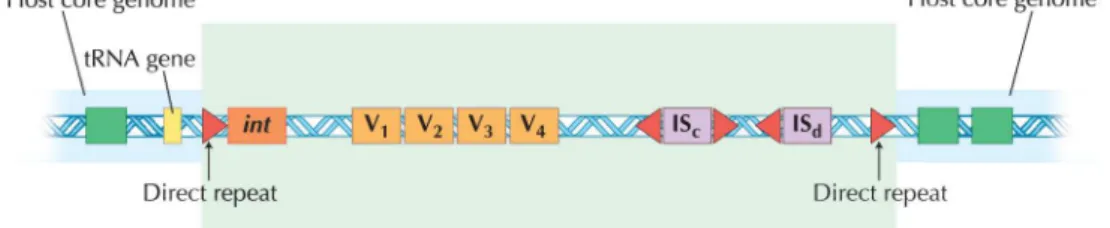
Characteristic features of these genomic regions include different pattern of GC content and
codon usage from the rest of the genome and being often flanked by direct repeats (the
sequence of bases at the two ends of the inserted sequence are the same). Presence of
Insertion sequences or tRNA genes (sites for this integration event) acts as sites for