UNIVERSIDADE FEDERAL DE MINAS GERAIS
INSTITUTO DE CIÊNCIAS BIOLÓGICAS
DEPARTAMENTO DE BIOLOGIA GERAL
PROGRAMA DE PÓS-GRADUAÇÃO EM GENÉTICA
PhD Thesis
Co parative Ge o ics a d Pa
-
Ge o ic Study of ge us
Cory e a teriu
PH.D. STUDENT: Luis Carlos Gui arães
SUPERVISOR: Prof. Dr. Vas o Aristo de Carvalho Azevedo
CO
-
SUPERVISOR: Dr. Sio ar de Castro Soares
Luis Carlos Guimarães
Co parative Ge o ics a d Pa
-
Ge o ic Study of ge us
Cory e a teriu
Thesis presented as partial
requirement for the degree of
Doctor of Philosophy in Genetics,
to the Department of General
Biology at the Institute of
Biological
Sciences,
Federal
University of Minas Gerais.
SUPERVISOR: Prof. Dr. Vasco Ariston de Carvalho Azevedo
CO-SUPERVISOR: Dr. Siomar de Castro Soares
BELO HORIZONTE
043
Guimarães, Luis Carlos.
Comparative genomics and pan-genomic study of genus Corynebacterium
[manuscrito] / Luis Carlos Guimarães. – 2015.
118 f. : il. ; 29,5 cm.
Orientador: Vasco Ariston de Carvalho Azevedo. Co-orientador: Siomar de Castro Soares.
Tese (doutorado) – Universidade Federal de Minas Gerais, Departamento de
Biologia Geral.
1. Corynebacterium - Teses. 2. Genômica comparativa – Teses. 3.
Pan-genoma. 4. Genoma central. 5. Filogenômica. 6. Genética – Teses. I. Azevedo,
Vasco Ariston de Carvalho. II. Soares, Siomar de Castro. III. Universidade Federal de Minas Gerais. Departamento de Biologia Geral. IV. Título.
ACKNOWLEDGEMENTS
“The all thoughts construction and scientific attitude takes years and is surrounded by several people that present their experiences, ideas barriers and solutions.”
With this manuscript I arrive to the end of another cycle in my life, for the beginning of another one.
It is for consideration and respect that I will not say thank nominally to each person who contributed to the development of this doctoral thesis. Even because, some of these people are not aware of my existence, the most people which I know do not notion of the value that represented in this process (even to push me up or push me down), those who know they have done a significant role in my life, probably never will read this manuscript and if happen to have access to it, can feel overvalued by the acknowledgements expressions.
This way, I must acknowledge and be thankful to all those people who in one way or another way were my "SUPERVISORS". I thank those who have guided my decision to be a biologist and after this, geneticist and bioinformatician. To my counselors: family, personal, emotional, professional, and intellectual, and why not cite, who guided me philosophically and spiritually, after all, as I once read in a text: "Does not matter if a researcher has or not religion, which he cannot deny is that research is a process of faith."
Special acknowledgements
Even no saying names before, I could not leave to say thank nominally to:
Prof. Dr. Vasco Ariston de Carvalho Azevedo, supervisor of this PhD thesis, for all commitment, time expended during my own development and development of this work. As well as, non-academic advices and, also, for the friendship.
“All research is a permanent start and restart in converging cycles that represent the personal expression increasingly free, productive and constructive towards the benefit of all.”
Table of contents
List of Figures ... i
List of Tables ... ii
Abbreviations ... iii
Abstract ... 1
I. Presentation ... 2
I.1 Collaborators ... 3
II. Preface ... 4
II.1 Manuscript Structure ... 5
III. Introduction ... 7
III.1. Chapter I – Inside the pan-genome - methods and software overview ... 8
IV. Research Articles ... 17
IV.1. Chapter II. Complete genome sequence of Corynebacterium urealyticum strain DSM 7111, isolated from a 9-year-old patient with alkaline encrusted cystitis ... 18
IV.2. Chapter III Genome informatics and vaccine targets in Corynebacterium urealyticum using two whole genomes, comparative genomics, and reverse vaccinology ... 21
IV.3. Chapter IV A pan-genomic view of the genus Corynebacterium ... 31
IV.4. Chapter V Corynebacterium ulcerans... 57
IV.4.1. Corynebacterium ulcerans– State of the art ... 57
IV.4.2. Corynebacterium ulcerans data ... 60
IV.4.3. Genome Sequence of Corynebacterium ulcerans strain 210932 ... 62
IV.4.4. The complete genome sequence of Corynebacterium ulcerans strain 210931 .. 65
IV.4.5. The complete genome sequence of Corynebacterium ulcerans strain FRC11 ... 78
IV.4.6. Genome sequence of Corynebacterium ulcerans strain 05146 ... 81
V. General Discussion ... 94
VI. Conclusions and Perspectives ... 97
VII. Bibliography ... 99
VIII. Appendices ... 102
i
List of Figures
ii
List of Tables
Table 1. General information about the 9 C. ulcerans strains available at GenBank ... 60 Table 2. Status information about the 7 C.ulcerans strains sequenced by our network
iii
Abbreviations
AQUACEN Laboratório Oficial Central do Ministério da Pesca e Aquicultura Ministério da
Pesca e Aquicultura (National Reference Laboratory for Aquatic Animal Diseases)
CAPES Coordenação de Aperfeiçoamento de Pessoal de Nível Superior (Coordination
for the Improvement of Higher Education Personnel)
CeBiTec Center for Biotechnology
CLIB Cluster Industrial Biotechnology
CNPq Conselho Nacional de Desenvolvimento Científico e Tecnológico (National
Counsel of Technological and Scientific Development)
CRISPR Clustered Regularly Interspaced Short Palindromic Repeats
DT Diphtheria Toxin
EDTA Ethylenediamine tetraacetic acid
Fapemig Fundação de Amparo à Pesquisa do Estado de Minas Gerais (Foundation for
Research Support of the State of Minas Gerais)
LGCM Laboratório de Genética Celular e Molecular (Laboratory of Molecular and
Cellular Genetics)
LPDNA Laboratório do Polimorfismo do DNA (Laboratory of DNA Polymorphisms)
NGS Next-Generation Sequencing
PLD Phopholipase D
1
Abstract
The genomic area has distinguished itself between different areas of modern biology, mainly after the advent of new high-throughput sequencing technologies (Next-Generation Sequencing - NGS), which allowed the massive deposit of whole genomes in public databases. The deluge of sequenced data, then, required the development of new bioinformatics software, with the ability to analyze these data, culminating in the creation of new areas such as comparative genomics that involves the comparison of the genetic content of an organism against another and helping the prediction of gene function and coding region sequences, identification of evolutionary events and finding of phylogenetic relationships. In this scenario, pan-genome studies allow the comparison of a large number of related bacteria enabling infer correlated genes with a lifestyle, gene repertoires and minimal genome size. In this work, first we describe the genome sequence, assembly and annotation of the Corynebacterium urealyticum strain DSM7111 followed by the comparison
of two C. urealyticum, an opportunistic pathogen normally isolated from skin and mucous
membranes in humans. Altogether, the strains encode 2,115 non-redundant coding sequences, of which 1,823 are commonly shared by both. Additionally, we applied the Vaxign software and we found 19 putative antigenic proteins through the application of the reverse vaccinology approach. Moreover, we expanded the comparative genomic analyses to the genus Corynebacterium,using 44 genomes of 25 different species. The pan-genomic analyses revealed an “open” pan-genome, which is currently composed of 22,177 protein-coding genes; the predicted core genome is composed of 562 genes; and, the predicted singletons account for 8,762 genes. Phylogenomic analysis using different strategies revealed the occurrence of four different clusters in the taxonomic tree: one composed of pathogenic, one of non-pathogenic and two of opportunistic pathogenic species. Finally, we presented genomes of C. ulcerans, which will be importante for future pan-genomic studies
2
3
I.1 Collaborators
This work was executed at Laboratory of Molecular and Cellular Genetics (LGCM) – Federal University of Minas Gerais (UFMG); National Reference Laboratory for Aquatic Animal Diseases (AQUACEN) – Federal University of Minas Gerais (UFMG); Laboratory of DNA Polymorphisms (LPDNA) – Federal University of Pará; and Center for Biotechnology (CeBiTec) – Bielefeld University. In collaboration between the following researchers:
Prof. Dr. Vasco Ariston de Carvalho Azevedo, Researcher and Professor from LGCM/UFMG, Brazil;
Prof. Dr. Henrique César Pereira Figueiredo, Researcher and Professor from AQUACEN/UFMG, Brazil;
Dr. Siomar de Castro Soares, Researcher from AQUACEN/UFMG, Brazil;
Prof. Dr. Artur Luiz da Costa da Silva, Researcher and Professor from LPDNA/UFPA, Brazil;
Prof. Dr. Rommel Thiago Jucá Ramos, Researcher and Professor from LPDNA/UFPA, Brazil;
PD. Dr. Andreas Tauch, Researcher from CeBiTec and member of the Graduate Cluster Industrial Biotechnology (CLIB), Germany.
4
5
II.1 Manuscript Structure
The thesis is divided in five chapters based on 1 review article (introduction) and 7 research articles, as follow:
a. The first chapter (introduction) presents the review article showing an overview about Pan-genomic studies. In this article, we start writting about the advent of new sequencing technologies – Next-Generation Sequencing (NGS), which enabled the massive submission of genomic data in public database. Consequently, the development of new bioinformatics areas as comparative genomics and subsequently pan-genomic studies – Submitted article to Current Genomics in 27-Jan-2015.
b. The second chapter presents a research article announcing the sequencing, assembling, annotation and deposit at GenBank of the Corynebacterium
urealyticum DSM 7111 genome, isolated from urine samples of a 9-year-old
patient with an ectopic kidney. The genome project is complete; under accession number NC_020230.1. The assembly, annotation and deposit of the genome data were done during my sandwich PhD – Published article in Genome Announcements.
c. The third chapter presents a research article comparing two genome sequences of C. urealyticm strains DSM 7109 and DSM 7111 cited above. The C. urealyticum DSM 7109 was sequenced, assembled and deposited by Andreas
Tauch and colleagues under accession number NC_010545.1 at GenBank. In this work, we used comparative genomics strategies, analysis of metabolic pathways and, genome plasticity as well as, prediction of putative antigenic targets – Article accepted for publication in BMC Genomics.
d. The fourth chapter presents a research article describing the pan-genomic study of the genus Corynebacterium. In this work, we used 44 genomes of 25 different
species with medical, veterinary and biotechnological importance. The pan-genome, core genome and singletons analyses were performed. All data were retrieved from Genbank and incorporated in EDGAR software. The statistical analyses were performed by R package – Submitted article to BMC Genomics in 27-oct-2014.
e. The fifth chapter is divided in six sections: the first section consists in a brief introduction about the Corynebacterium ulcerans and the state of the art; the
6
present four research articles announcing the sequencing, assembly, annotation and deposit at GenBank of the four Corynebacterium ulcerans, strains 210932(Published article in Genome Announcements), 210931 (Submitted article to SIGS in 15-oct-2014), FRC11 (Submitted article to Genome Announcements in 30-jan-2015) and 05146 (Submitted article to SIGS in 02-feb-30-jan-2015), all isolated from humans. The genome projects are complete; under accession number CP009500.1, CP009583.1, CP009622.1 and CP009716.1, respectively. These works are the basis for the C. ulcerans pan-genome.
7
III.1. Chapter I
–
Inside the pan-genome - methods and software overview
1Luis Carlos Guimarães, Leandro Benevides de Jesus, Marcus Vinícius Canário
Viana, Rommel Thiago Jucá Ramos, Artur Silva, Siomar de Castro Soares, Vasco Azevedo.
Considering the importance of pan-genome studies, which allow a better understanding of the bacteria lifestyle through comparative genomics, and in view of the lack of a condensed material to explain this, we wrote an overview about this topic. The overview gives us a brief introduction on the comparative genomics emergence allowed by the Next-Generation Sequencing – NGS advent. This new sequencing platform boosted the development of comparative genomics and, consequently, the rising of the pan-genomic area through genomic sequencing of a large number of genomes from different isolates of the same organism allowing researchers to investigate several genomic features intrinsic to a given species. Additionally, we reviewed pan-genome concepts as core genome, accessory or dispensable genome and, species-specific or strain-specific genes, as well as, “open” and “closed” pan -genome. Furthermore, we summarize pan-genome results of free-living, facultative intracellular and obligate intracellular bacteria. Finally, we described software developed to calculate these analyses.
1
IV.1. Chapter II. Complete genome sequence of Corynebacterium
urealyticum strain DSM 7111, isolated from a 9-year-old patient with
alkaline encrusted cystitis
2Luis Carlos Guimarães, Siomar Castro Soares, Andreas Albersmeier, Jochen Blom,
Sebastian Jaenicke, Vasco Azevedo, Francisco Soriano, Andreas Tauch, Eva Trost
Corynebacterium urealyticum is an opportunistic pathogen causing mainly acute or
encrusted cystitis, encrusted pyelitis, and pyelonephritis. This bacterium is normally isolated from the skin of hospitalized patients who are receiving broad-spectrum antibiotics. The sequencing of this strain will give us more data to perform pan-genomic study and try to understand the different lifestyle present in genus Corynebacterium. In
this section we present an article announcing the sequencing, assembly, annotation and deposit at GenBank of the Corynebacterium urealyticum DSM 7111 genome,
isolated from urine samples of a 9-year-old patient with an ectopic kidney. The genome project is complete; under accession number NC_020230.1.
2
IV.2. Chapter III Genome informatics and vaccine targets in
Corynebacterium urealyticum using two whole genomes, comparative
genomics, and reverse vaccinology
3Luis Carlos Guimarães, Siomar de Castro Soares, Eva Trost, Jochen Blom, Rommel
Thiago Jucá Ramos, Artur Silva, Debmalya Barh, Vasco Azevedo
As highlighted in previous section about the importance of the comparative genomics studies in this article we present two genome comparison of multi-drug resistant
Corynebacterium urealyticum (strains DSM 7109 and DSM 7111). Even both strains
have been isolated from patients with alkaline encrusted cystitis, the strain DSM 7109 shows approximately 50 Kb more than strain DSM 7111 and 2,011 and 1,927 protein coding regions respectively. Together, both strains encode 2,115 non-redundant coding sequences, share in common 1,823 protein coding regions, the strain DSM 7109 has 188 strain-specific genes and the strain DSM7111 has 104 strain-specific genes. Additionally, reverse vaccinology analysis showed 19 putative antigenic proteins, among which the spaDEF operon that encodes pili forming proteins which
may play a pivotal role in facilitating the adhesion of the pathogen to the host tissue.
3
IV.3. Chapter IV A pan-genomic view of the genus Corynebacterium
4Luis Carlos Guimarães, Christina Bomholt, Jochen Blom, Siomar Castro Soares,
Mariana Passos Santana, Rommel Thiago Jucá Ramos, Pablo Henrique Caracciolo Gomes de Sá, Ulisses de Pádua Pereira, Maria Paula Cruz Schneider, Artur Silva, Anderson Miyoshi, Vasco Azevedo, Andreas Tauch
The following research article shows the first work using 25 different species of the
Corynebacterium genus level, for better understanding and evaluating the evolutionary
relationship between pathogenic, non-pathogenic, and opportunistic pathogenic species. Using EDGAR software we predicted an “open” pan-genome for the genus, where new genes will be added for each newly sequenced genome. Additionally, core genome and singleton analyses revealed a low number of core genes and a high number of singletons, which mainly comes from the fact that our study considered bacteria with different lifestyles. Tests using different strategies for phylogenomic analyses were done combining whole genome-based, single-gene, and gene concatenation. Altogether, we found four clusters based on their lifestyle: one pathogenic cluster, one non-pathogenic cluster, and two opportunistic pathogenic clusters.
4
A pan-genomic view of the genus
Corynebacterium
Luis Carlos Guimarães
1,2, Christina Bomholt
2, Jochen Blom
3, Siomar Castro
Soares
4, Mariana Passos Santana
1, Rommel Thiago Jucá Ramos
5, Pablo
Henrique
Caracciolo Gomes de Sá
5, Ulisses de Pádua Pereira
6, Maria Paula Cruz Schneider
5,
Artur Silva
5, Anderson Miyoshi
1, Vasco Azevedo
1,*§, Andreas Tauch
2§1
Department of General Biology, Federal University of Minas Gerais, Belo Horizonte, Minas Gerais, Brazil
2
Center for Biotechnology, Bielefeld University, Bielefeld, Germany 3
Bioinformatics and Systems Biology, Justus-Liebig-University Giessen, Giessen, Germany 4
Department of Preventive Veterinary Medicine, Federal University of Minas Gerais, Belo Horizonte, Minas Gerais, Brazil
5
Department of Genetics, Federal University of Pará, Belém, Pará, Brazil 6
Department of Genetics, Federal University of Uberlândia, Uberlândia, Brazil
* Corresponding author
§
These authors share the senior authorship
Email addresses:
LCG:
[email protected]
CB:
[email protected]
JB:
[email protected]
SCS:
[email protected]
MPS:
[email protected]
RTJR:
[email protected]
PHCGS:
[email protected]
UPP:
[email protected]
MPCS:
[email protected]
AS:
[email protected]
AM:
[email protected]
VA:
[email protected]
Abstract
Background
The genus Corynebacterium represents a taxon of diverse bacteria from human, animal
and environmental sources. It is characterized by a specific organization of the bacterial
cell wall and by its high G+C content of the DNA. We report here a comparative
genomic study using 44 genome sequences from members of the genus
Corynebacterium.
Results
This in silico analysis revealed that the pan-genome is currently composed of 22,177
protein-coding genes, including 8,762 strain-specific genes (singletons). The mean
number of singletons estimated to be added by each additionally sequenced
corynebacterial genome comprises 236 protein-coding genes. The number of genes
present in the core genome will comprise about 580 protein-coding genes when adding
further genome sequences to the current data set. Considering that the genus
Corynebacterium is composed of species with very different lifestyles, the low number
of genes assigned to the core genome and the large number of predicted singletons
indicate a conservation of genes with basic cellular functions and the acquirement of
new genes that may be advantageous for the adaptation to new environments.
Phylogenomic analysis using different strategies showed the presence of four distinct
clusters in the taxonomic tree of the genus Corynebacterium one pathogenic, one
non-pathogenic and two opportunistic non-pathogenic.
Conclusions
This way, the comparative genomic study of the Corynebacterium genus shows a
foundation for identification and analysis of new genes that may be involved in more
diverse adaptation to different hosts and environments.
Background
The taxonomic class Actinobacteria is the third largest phylogenetic branch
among the bacteria [1]. This taxon is of substantial scientific interest as it includes a
large number of pathogenic species and numerous bacteria of significant relevance for
biotechnology [2]. The so-called CMNR group of this taxon comprises the genera
Corynebacterium, Mycobacterium, Nocardia, and Rhodococcus that are extensively
studied due to their medical, veterinary and biotechnological importance. These four
genera are characterized by a specific organization of the cell wall including mycolic
acids and by their high G+C content of the DNA [3]. The genus Corynebacterium was
initially created to include the pathogenic species Corynebacterium diphtheriae, the
causative agent of diphtheria [4], but numerous other species were included later into
this taxon that nowadays contains a large collection of corynebacteria with various
lifestyles [2]. Hitherto sequenced corynebacterial genomes consist of a circular
chromosome with a size ranging from 2.3 Mbp to 3.4 Mbp and of 2,000 to 3,200 genes
(Table 1). So far, the genomes of species from human clinical sources and from animals
have been shown to be smaller than those found in other ecosystems, such as soil and
dairy products (Table 1). Moreover, the order of orthologous genes is highly conserved
throughout the species [2], although Corynebacterium jeikeium, Corynebacterium
resistens, Corynebacterium urealyticum, and Corynebacterium variabile show
inversions and evidence for their common evolutionary origin [5
–
8].
A previous evolutionary study using 16S rRNA and rpoB gene sequence showed
a close relationship between C. jeikeium, C. urealyticum, and C. variabile [9].
However, besides the accuracy of rpoB analyses, a recent study using whole genome
comparisons has shown a divergent location for the low-pathogenic potential species C.
kroppenstedtii in the phylogenetic tree, where it appears between clusters of pathogenic
and non-pathogenic species [10].
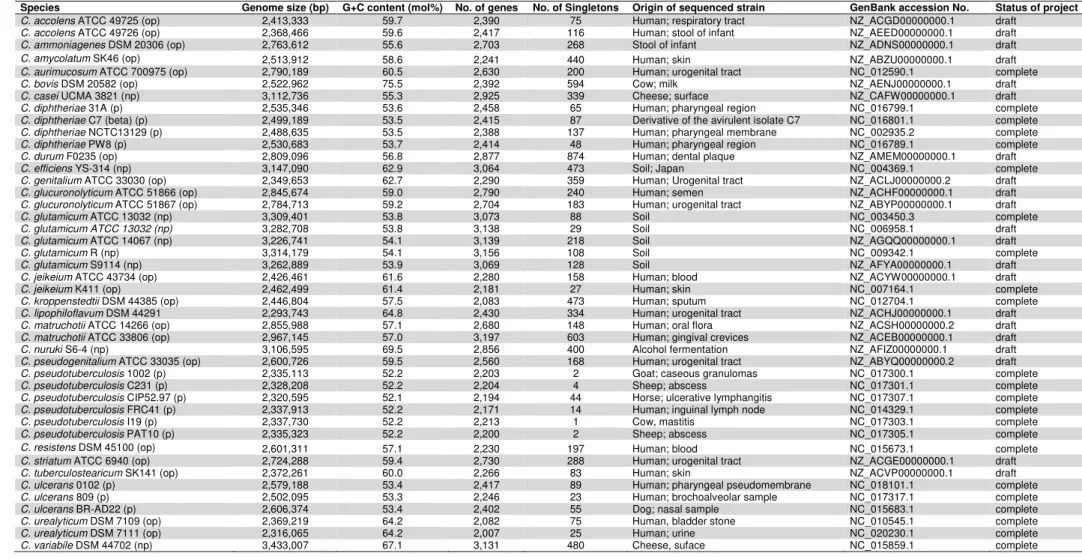
Table 1: General information about the 44 genomes of members of the genus Corynebacterium.
Species Genome size (bp) G+C content (mol%) No. of genes No. of Singletons Origin of sequenced strain GenBank accession No. Status of project
C. accolens ATCC 49725 (op) 2,413,333 59.7 2,390 75 Human; respiratory tract NZ_ACGD00000000.1 draft
C. accolens ATCC 49726 (op) 2,368,466 59.6 2,417 116 Human; stool of infant NZ_AEED00000000.1 draft
C. ammoniagenes DSM 20306 (op) 2,763,612 55.6 2,703 268 Stool of infant NZ_ADNS00000000.1 draft
C. amycolatum SK46 (op) 2,513,912 58.6 2,241 440 Human; skin NZ_ABZU00000000.1 draft
C. aurimucosum ATCC 700975 (op) 2,790,189 60.5 2,630 200 Human; urogenital tract NC_012590.1 complete
C. bovis DSM 20582 (op) 2,522,962 75.5 2,392 594 Cow; milk NZ_AENJ00000000.1 draft
C. casei UCMA 3821 (np) 3,112,736 55.3 2,925 339 Cheese; surface NZ_CAFW00000000.1 draft
C. diphtheriae 31A (p) 2,535,346 53.6 2,458 65 Human; pharyngeal region NC_016799.1 complete
C. diphtheriae C7 (beta) (p) 2,499,189 53.5 2,415 87 Derivative of the avirulent isolate C7 NC_016801.1 complete
C. diphtheriae NCTC13129 (p) 2,488,635 53.5 2,388 137 Human; pharyngeal membrane NC_002935.2 complete
C. diphtheriae PW8 (p) 2,530,683 53.7 2,414 48 Human; pharyngeal region NC_016789.1 complete
C. durum F0235 (op) 2,809,096 56.8 2,877 874 Human; dental plaque NZ_AMEM00000000.1 draft
C. efficiens YS-314 (np) 3,147,090 62.9 3,064 473 Soil; Japan NC_004369.1 complete
C. genitalium ATCC 33030 (op) 2,349,653 62.7 2,290 359 Human; Urogenital tract NZ_ACLJ00000000.2 draft
C. glucuronolyticum ATCC 51866 (op) 2,845,674 59.0 2,790 240 Human; semen NZ_ACHF00000000.1 draft
C. glucuronolyticum ATCC 51867 (op) 2,784,713 59.2 2,704 183 Human; urogenital tract NZ_ABYP00000000.1 draft
C. glutamicum ATCC 13032 (np) 3,309,401 53.8 3,073 88 Soil NC_003450.3 complete
C. glutamicum ATCC 13032 (np) 3,282,708 53.8 3,138 29 Soil NC_006958.1 draft
C. glutamicum ATCC 14067 (np) 3,226,741 54.1 3,139 218 Soil NZ_AGQQ00000000.1 draft
C. glutamicum R (np) 3,314,179 54.1 3,156 108 Soil NC_009342.1 complete
C. glutamicum S9114 (np) 3,262,889 53.9 3,069 128 Soil NZ_AFYA00000000.1 draft
C. jeikeium ATCC 43734 (op) 2,426,461 61.6 2,280 158 Human; blood NZ_ACYW00000000.1 draft
C. jeikeium K411 (op) 2,462,499 61.4 2,181 27 Human; skin NC_007164.1 complete
C. kroppenstedtii DSM 44385 (op) 2,446,804 57.5 2,083 473 Human; sputum NC_012704.1 complete
C. lipophiloflavum DSM 44291 2,293,743 64.8 2,430 334 Human; urogenital tract NZ_ACHJ00000000.1 draft
C. matruchotii ATCC 14266 (op) 2,855,988 57.1 2,680 148 Human; oral flora NZ_ACSH00000000.2 draft
C. matruchotii ATCC 33806 (op) 2,967,145 57.0 3,197 603 Human; gingival crevices NZ_ACEB00000000.1 draft
C. nuruki S6-4 (np) 3,106,595 69.5 2,856 400 Alcohol fermentation NZ_AFIZ00000000.1 draft
C. pseudogenitalium ATCC 33035 (op) 2,600,726 59.5 2,560 168 Human; urogenital tract NZ_ABYQ00000000.2 draft
C. pseudotuberculosis 1002 (p) 2,335,113 52.2 2,203 2 Goat; caseous granulomas NC_017300.1 complete
C. pseudotuberculosis C231 (p) 2,328,208 52.2 2,204 4 Sheep; abscess NC_017301.1 complete
C. pseudotuberculosis CIP52.97 (p) 2,320,595 52.1 2,194 44 Horse; ulcerative lymphangitis NC_017307.1 complete
C. pseudotuberculosis FRC41 (p) 2,337,913 52.2 2,171 14 Human; inguinal lymph node NC_014329.1 complete
C. pseudotuberculosis I19 (p) 2,337,730 52.2 2,213 1 Cow, mastitis NC_017303.1 complete
C. pseudotuberculosis PAT10 (p) 2,335,323 52.2 2,200 2 Sheep; abscess NC_017305.1 complete
C. resistens DSM 45100 (op) 2,601,311 57.1 2,230 197 Human; blood NC_015673.1 complete
C. striatum ATCC 6940 (op) 2,724,288 59.4 2,730 288 Human; urogenital tract NZ_ACGE00000000.1 draft
C. tuberculostearicum SK141 (op) 2,372,261 60.0 2,266 83 Human; skin NZ_ACVP00000000.1 draft
C. ulcerans 0102 (p) 2,579,188 53.4 2,417 89 Human; pharyngeal pseudomembrane NC_018101.1 complete
C. ulcerans 809 (p) 2,502,095 53.3 2,246 23 Human; brochoalveolar sample NC_017317.1 complete
C. ulcerans BR-AD22 (p) 2,606,374 53.4 2,402 55 Dog; nasal sample NC_015683.1 complete
C. urealyticum DSM 7109 (op) 2,369,219 64.2 2,082 75 Human, bladder stone NC_010545.1 complete
C. urealyticum DSM 7111 (op) 2,316,065 64.2 2,007 25 Human; urine NC_020230.1 complete
To better understand the lifestyle of Corynebacterium species and to evaluate the
evolutionary relationship between them, we performed a comparative analysis with 44
genomes of bacteria isolated from several niches. Comparative genomics analyses in related
bacteria have shown an extensive genomic intra-species diversity and highlighted bacterial
promiscuity [11].
In the subsequent sections, we describe the pan-genome, the core genome and the
singletons for the genus Corynebacterium. The pan-genome concept was used for the first
time by Tettelin and colleagues in 2005 [12]. The main goal of pan-genomics is the genomic
comparison of different members of the same taxon to get insights into whole gene repertoire
and the genomic diversity of a given taxonomic group [12, 13]. The pan-genome involves: (i)
the core genome formed by a subset of genes shared by all genomes and normally involved in
essential cellular processes; (ii) the accessory genome composed of a subset of genes present
in two or more genomes, but not in all; and (iii) the group of singletons comprising genes
present in a single genome [12, 14]. Genes present in the accessory genome and singletons are
usually involved in functions related to niche adaptation [13, 15].
At the genus level, this is the first pan-genomic work with 25 different corynebacterial
species.
Results
Corynebacterium pan-genome subsets: pan-genome, core genome, and singletons
To calculate the total number of non-redundant genes (pan-genome) of the genus
Corynebacterium (44 species), we used the software EDGAR. Briefly, this software analyzes
Fig. 1: Venn diagram representing pan-genome, core-genome, and singletons of the 44 genomes of Corynebacterium genus. Pan-genome, number of non-redundant genes composing Corynebacterium genus. Singletons, number of genes present in only one genome. Core genome, number of genes present in two or more genomes, but not in all. Hypothetical minimal genome and candidates for essential genes, number of genes of the core genome calculated using previously studies [17, 18].
Next, we compared the core-genome subset with 658 genes previously defined as
candidate essential genes from C. glutamicum R [17] and 123 Coding DNA sequences (CDSs)
from the core genome of Actinobacteria [2]. From those, 268 essential genes of C.
glutamicum R and 103 actinobacterial essential CDSs are part of the total core genome of the
genus Corynebacterium. Interestingly, 76 CDSs are shared between both datasets (Fig. 1).
Corynebacterium pan-genome extrapolations
pan-genome will increase [13]. As we calculated
= 0.405, it is possible to infer that the
pan-genome for the 44 pan-genomes of the genus Corynebacterium considered here is open.
Fig. 2: Pan-genome development of the genus Corynebacterium. The pan-genome extrapolation is based on 10,000 randomly selected permutations of the set of 44 genomes belonging to members of the genus Corynebacterium.
The Corynebacterium core genome extrapolations
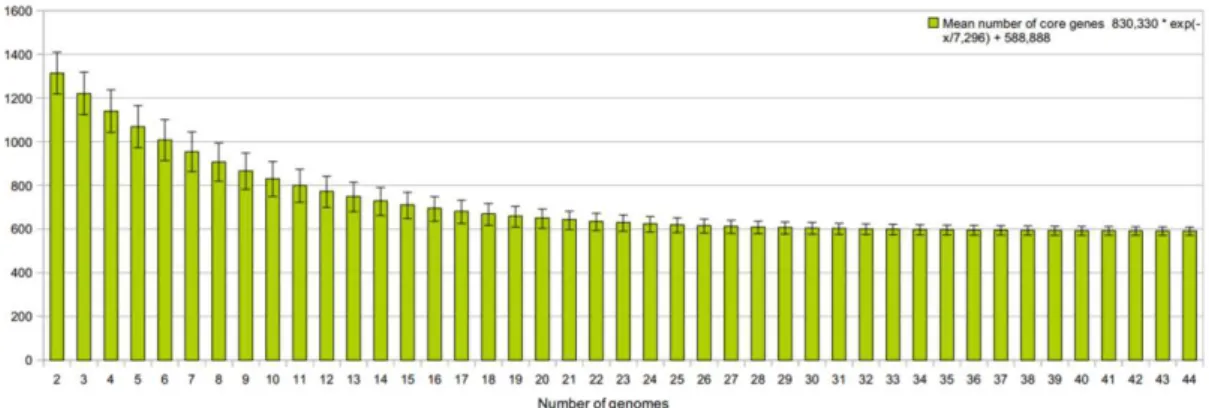
The extrapolation of the core genome subset was calculated using the formula obtained
from the least-squares fit of the exponential regression decay to the mean values (Fig. 3). As a
result, a
tg(θ)
of 580.921 was predicted, meaning that the corynebacterial core genome tends
to stabilize at ~580 genes. Compared to the extrapolation of the pan-genome (Fig. 2), the
curve of the core genome reached a stable plateau, indicating that the addition of new
corynebacterial genomes will not significantly decrease the number of genes in the core
genome (Fig. 3). Therefore, the current set of core genes is already representative of the final
stabilizing core genome and provides a solid basis for phylogenomic studies of the genus
Corynebacterium.
Corynebacterium singleton extrapolations
We also performed extrapolation analysis for singletons, as described in the Materials
and Methods section. The
tg(θ)
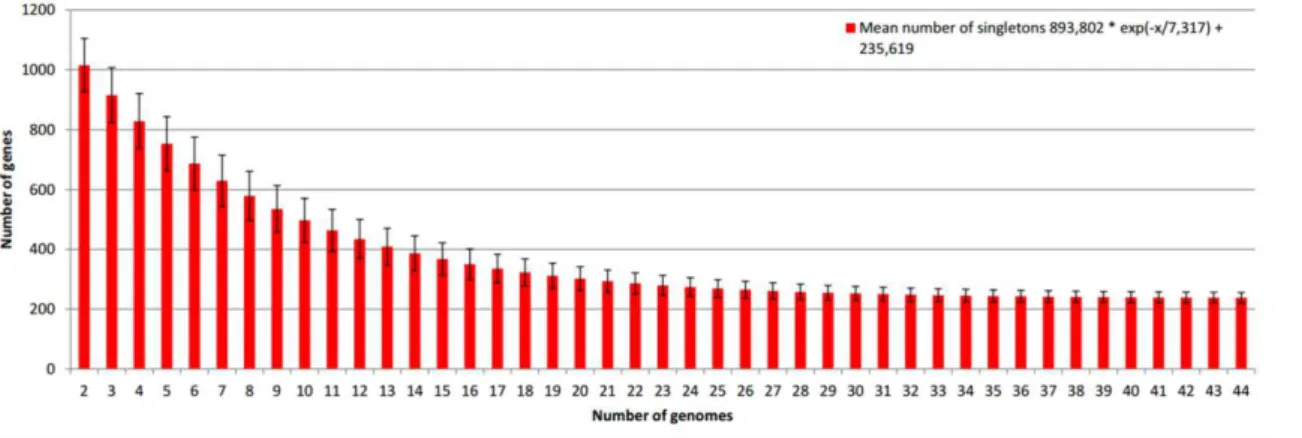
was predicted to be 235.619, meaning that, for each new
genome, ~236 genes will be added to the total pan-genome (Fig. 4). Again, the extrapolation
curve reaches a stability plateau, suggesting that the addition of new genomes will not
significantly change the number of singleton genes.
Fig. 4: Singleton development of Corynebacterium genus. The singleton extrapolation is based on 10,000 randomly selected permutations of the set of 44 genomes belonging to members of the genus Corynebacterium.
Pathogenic, non-pathogenic, and opportunistic Corynebacteria core genomes
The 44 species studied herein were divided into pathogens, opportunistic pathogens,
and non-pathogens according to the literature (Table 1); and the differential core genome,
comprising the specific core genes of a given subset that are not present in the core genome of
the 44 species, was calculated for each one using the SRV method with EDGAR software.
The differential core genome of pathogenic Corynebacteria contains 272 genes using C.
pseudotuberculosis FRC41 as reference; the core genome from opportunistic Corynebacteria
contains 125 genes using C. urealyticum 7109 as reference; and the subset from
non-pathogens contains 462 genes using C. glutamicum R as reference.
The core genome of the total dataset and the differential core genome of the
pathogens, opportunistic pathogens, and non-pathogens were analyzed by COG functional
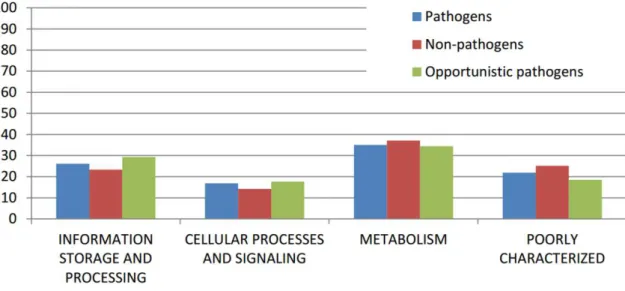
category. According to figure 5, a large number of genes for the core genome were related to
the “
Metabolism
”
category, followed by
the “
Information
Storage and Processing” category
.
core genomes,
a high number of genes were related to the “Metabolism” and “Poorly
Characterized” categories and a low number to “Information Storage and Processing.”
Fig. 5: Core genes of the Corynebacterium genus classified by COG functional category. Core genome all species, the genes composing the core genome of 44 genomes; Differential core genome pathogens, the genes of the core genome of pathogen species which were absent in one or more genomes of the non-pathogens and opportunistic pathogens; Differential core genome opportunistic pathogens, the genes of the core genome of opportunistic pathogen species which were absent in one or more genomes of the non-pathogens and pathogens; Differential core genome non-pathogens, the genes of the core genome of non-pathogen species which were absent in one or more genomes of the pathogens and opportunistic pathogens.
Corynebacterium phylogenomics
Phylogenetic analyses were performed by using single-gene (16S rRNA and rpoB),
gene concatenation (two porin genes and five conserved proteins), and whole-genome datasets
to compare the resolution of the five resulting phylogenetic trees. We used the Maximum
Likelihood method with MEGA software [19] to construct the single-gene and gene
concatenation trees. For the whole-genome, we
used the EDGAR’s pipeline
[16].
The shared gene content from the 44 genomes was predicted with the EDGAR
software and each genome was cross-compared to plot a heatmap using the Gegenees
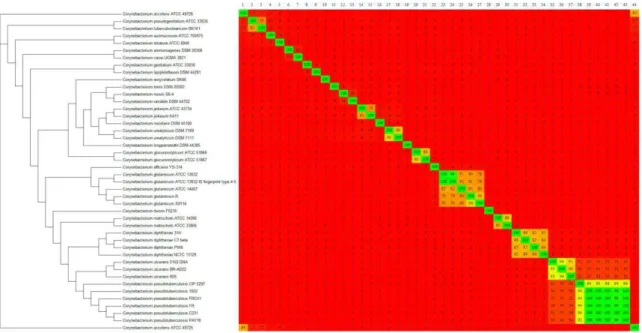
software (Fig. 6). The pathogenic species C. diphtheriae, C. ulcerans, and C.
pseudotuberculosis formed a related cluster. The pathogenic species C. kroppenstedtii and C.
bovis were positioned in a cluster closely related to two non-pathogenic species (C. nuruki
pathogenic and non-pathogenic species. Finally, the opportunistic pathogenic species C.
jeikeium, C. resistens, and C. urealyticum were also positioned between pathogenic and
non-pathogenic species, although in a different cluster. All other opportunistic non-pathogenic species
formed different clusters.
Fig. 6: Phylogenomic tree and heatmap analyses of the Corynebacterium genus. Comparisons between the genomes were plotted as percentages of similarity on the heatmap using Gegenees (version 1.1.4). The percentage of similarity was used to generate a phylogenomic tree with MEGA (version 5.10). Numbers from 1 to 44 represent species from C. accolens ATCC 49726 to C. accolens ATCC 49725 (upper-left to lower-left corner). Percentages were plotted with a spectrum ranging from red (low similarity) to green (high similarity).
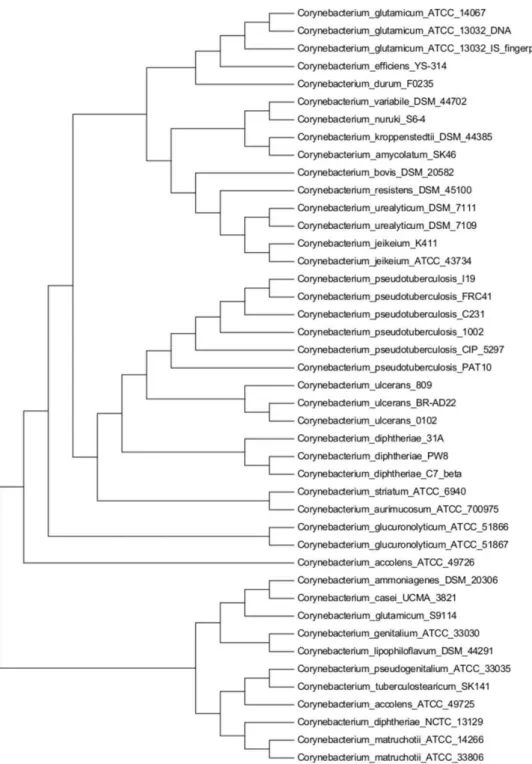
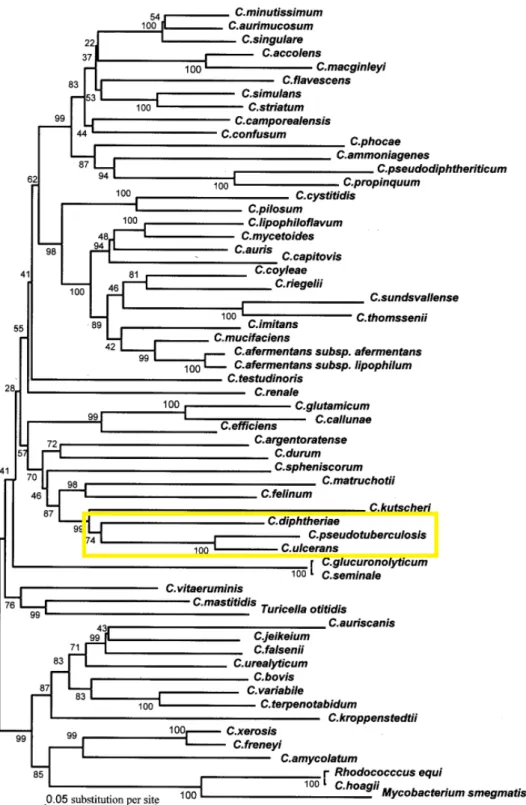
The tree based on 16S rRNA gene (Fig. 7) also showed good resolution but, different
from the tree based on the whole-genome, C. diphtheriae NCTC 13129 was positioned in a
cluster together with opportunistic pathogenic species (C. matruchotti, C. accolens, C.
tuberculostearicum, and C. pseudogenitalium) instead of clustering with other pathogenic
species (C. diphtheriae, C. ulcerans, C. pseudotuberculosis). In agreement with the
whole-genome tree, the pathogenic species C. kroppenstedtii and C. bovis were also positioned
among opportunistic (C. amycolatum, C. jeikeium, C. urealyticum, and C. resistens) and
non-pathogenic species (C. variabile and C. nuruki). The non-non-pathogenic species C. casei and C.
glutamicum S9114 were positioned in a distant unrelated cluster among opportunistic
Fig. 7: Phylogenetic tree based on 16S rRNA. The construction was obtained by the Maximum Likelihood statistical method. The tree was derived from the alignments of 16S rRNA gene sequences. The phylogenetic distances were calculated by the software MEGA 5.
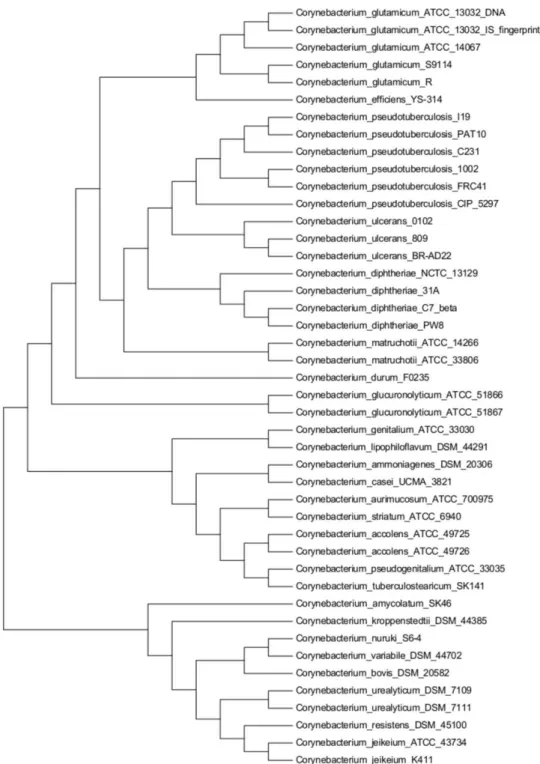
The phylogenetic tree based on rpoB
(RNA polymerase
-subunit) gene (Fig. 8) shows
very good resolution and agreement with the whole-genome phylogenetic tree. Indeed, the
non-pathogenic species formed a closely related cluster, except for the non-pathogenic species
C. casei. Moreover, in both cases (rpoB and Gegenees), C. casei was positioned in a different
genitalium, C. aurimucosum, C. striatum, C. accolens, C. pseudogenitalium, C.
tuberculosteriacum); and C. nuruki and C. variabile formed another cluster with pathogenic
(C. bovis) and opportunistic pathogenic (C. urealyticum, C. resistens, and C. jeikeium)
species. The pathogenic species C. pseudotuberculosis, C. ulcerans, and C. diphtheriae
formed a closely related cluster.
The proteins Isoleucyl tRNA synthetase, ribosomal protein S1, DNA topoisomerase,
SecY, and GTPase are highly conserved in Corynebacterium species [20]. The phylogenetic
tree based on the concatenation of the predicted sequence of those proteins also produced a
good resolution (Fig. 9) and agreement with the whole-genome plylogenetic tree. The
pathogenic species C. pseudotuberculosis, C. ulcerans, and C. diphtheriae formed a closely
related cluster. The pathogenic species C. kroppenstedii and C. bovis were positioned in a
different cluster among opportunistic pathogenic species (C. amycolatum, C. urealyticum, C.
resistens, and C. jeikeium) and pathogenic species (C. nuruki and C. variabile). The
non-pathogenic species C. glutamicum and C. efficiens formed a closely related cluster, and C.
casei (another non-pathogenic species) was positioned in a different cluster among
opportunistic pathogenic species.
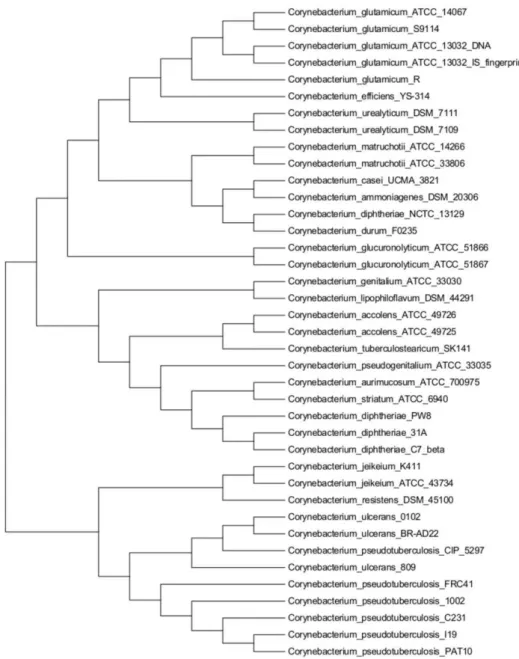
The phylogenetic tree based on the concatenation of two porins, porA and porH, gives
a good resolution; however, the species arrangement is in disagreement with the above
presented phylogenetic trees (Fig. 10). The pathogenic species C. pseudotuberculosis and C.
ulcerans formed a cluster which is also closely related to the opportunistic pathogens C.
jeikeium and C. resistens. Unexpectedly, C. diphtheriae strains split into one cluster with
Fig. 10: Phylogenetic tree based on porin genes. The construction was obtained by the
Maximum Likelihood statistical method. The tree was derived from the alignments of porA
and porH gene sequences. The phylogenetic distances were calculated by the software MEGA
5.
Discussion
Pan-genome, core genome, and singleton analyses
dataset, i.e., the lower the α value, the higher the variability inside the dataset. The
α
value of
the 44 species of Corynebacterium genus is far lower than the one obtained for the
pan-genome of the clonal-like species C. pseudotuberculosis
(α=0.89)
[10] and also for the highly
variable species C. diphtheriae
(α=0.69)
[21]. This low
α
value is, then, indicative of the high
variability of the 44 species. This prospect of the pan-genome being highly variable may also
be suggested from the high number of non-redundant genes present in this dataset (22,177),
which is 7.97-fold and 4.63-fold the size of the pan-genome subsets of C. pseudotuberculosis
and C. diphtheriae, respectively [10, 21]. Although previous reports have indicated high
conservation and synteny between the Corynebacterium species [2], the variability found with
the pan-genomic analyses performed herein considering the whole genus was expectedly high.
The explanation underlying this apparent inconsistency is that the genus comprises a large
number of species with different lifestyles. Therefore, they are expected to have adapted their
gene content to their particular host and environment, each of them contributing a large
number of genes (singletons) to the pan-genome subset. Indeed, this scenario is also indicated
in the core genome subset and in the singleton extrapolation of the Corynebacterium genus.
The core genome of the 44 species is composed of 562 genes, whereas in pan-genomic
analyses of C. diphtheriae and C. pseudotuberculosis, the core genomes contained 1632 and
1504 genes, respectively [10, 21]. The singleton extrapolation showed that ~236 genes are
expected to be added to the pan-genome of the 44 species for each newly sequenced genome,
whereas in pan-genomic analyses of C. pseudotuberculosis and C. diphtheriae, the total
number of singletons expected to be added to their specific pan-genomes is ~19 and ~65
genes, respectively [10, 21]. Because our dataset is composed of bacteria with different
lifestyles, the low number of genes of the core genome subset and the high number of
singletons predicted to be added to the Corynebacterium pan-genome suggests the
conservation of genes with basic cellular functions and the acquisition of genes that may
confer adaptative advantage to new environments.
Differential core genome analyses: pathogenic, non-pathogenic, and opportunistic
contains genes involved in translation, ribosomal structure and biogenesis, RNA processing
and modification, transcription, replication, recombination and repair, and other important
functions. This result reflects the high importance of these two categories, containing genes
involved in essential biochemical pathways [22]. This high proportion of genes in the
categories “Metabolism” and “Information
Storage and Processing” is also in agreement with
previous pan-genomic studies using C. pseudotuberculosis and Aggregatibacter
actinomycetemcomitans [23]. On the other hand, the low proportion of genes in the
“Poorly
Characterized” category is in disagreement with the abovementioned studies. However,
genus-level analyses assume that only highly essential genes are present in the core genome,
which possibly explains the small number
of “Poorly Characterized” genes.
The same assumption underlies comparisons between differential core genomes with
the total core genome. In the differential core genomes, a higher number of genes are related
to “Metabolism” and “Poorly Characterized” genes
than the total core genome; conversely,
there is a lower number
in “Information Storage and Processing
.
” Th
us, it is likely that the
differential core genome contains genes that may be associated to the specific environments
and hosts of the species in the given subsets.
Phylogenetic analyses based in different datasets
Phylogenetic trees to correlate Corynebacterium species studied with their lifestyles
were performed using five different strategies: 16S rRNA, rpoB, whole-genome, two porin
genes, and five conserved proteins.
The pathogenic species C. pseudotuberculosis, C. ulcerans, and C. diphtheriae formed
a closely related cluster. Likewise, the non-pathogenic species C. efficiens and C. glutamicum
also formed a closely related cluster. However, the phylogenomic tree based on 16S rRNA
positioned C. diphtheriae NCTC 13129 and C. glutamicum S9114 in different clusters.
Although previous studies have shown that both rpoB and 16S rRNA are the genes of choice
for phylogenetic analyses of Corynebacterium genus [9, 24], our results highlight that rpoB
gene analyses present better accuracy than 16S rRNA and, therefore, should be adopted as the
method of choice for single-gene phylogenetic analyses of this genus.
species of Corynebacterium are characterized by the lack of mycolic acids in the cell wall: C.
atypicum, C. amycolatum, and C. kroppenstedtii, which is in agreement with their close
relationship in all phylogenomic trees [25]. The pathogenic species C. bovis and the
non-pathogenic species C. variabile and C. nuruki were closely related in all strategies.
Interestingly, these three species share in common the ability to use glucose, fructose,
mannose, and ribose as carbon and energy sources [5, 7, 26]. The non-pathogenic species C.
casei and the opportunistic species C. ammoniagenes cluster together in all phylogenetic trees,
which is in agreement with the previously described high similarity (98%) between these two
species [27].
Finally, the opportunistic species C. genitalium, C. lipophiloflavum, C. aurimucosum,
C. striatum, C. accolens, C. pseudogenitalium, and C. tuberculostearicum are closely related
in all phylogenetic trees. Besides, the opportunistic species C. jeikeium, C. urealyticum, and
C. resistens tend to always cluster together, except for the concatenated two porins tree, where
C. urealyticum presents a close relationship with the non-pathogenic species C. glutamicum
and C. efficiens.
Altogether, we suggest that the Corynebacterium genus is composed of four major
clusters based on lifestyle: one pathogenic cluster, with C. pseudotuberculosis, C. diphtheriae,
and C. ulcerans; one non-pathogenic cluster, with C. glutamicum and C. efficiens; and two
opportunistic clusters, one represented by C. jeikeium, C. urealyticum, and C. resistens, and
the other by C. genitalium, C. lipophiloflavum, C. aurimucosum, C. striatum, C. accolens, C.
pseudogenitalium, and C. tuberculostearicum.
Conclusions
At the Corynebacterium genus level, this is the first research that works with 25
different species for better understanding and evaluating the evolutionary relationship
between pathogenic, non-pathogenic, and opportunistic pathogenic species.
genes
in “Metabolism” followed by “Information Storage and Processing”
; this reflects the
high importance of these two categories, containing genes involved in essential biochemical
pathways. On the other hand, the differential core genome analyses for pathogenic,
non-pathogenic, and opportunistic species showed a higher number of genes related to
“Metabolism” and “Poorly Characterized” according to COG classification; here, we can infer
that these genes are involved in the adaptation to the specific environment and hosts. The
phylogenomic analysis for the corynebacteria revealed that the species of this genus are
divided among four clusters based on their lifestyle: one pathogenic cluster, one
non-pathogenic cluster, and two opportunistic non-pathogenic clusters.
This way, the comparative genomic study of the Corynebacterium genus shows a
foundation for identification and analysis of new genes that may be involved in more diverse
adaptation to different hosts and environments.
Methods
Corynebacterial genome sequences
All 44 genome sequences of the genus Corynebacterium used in this work are publicly
available from the GenBank database. Accession numbers, the status of the genome sequence
(complete or draft), the origin of the sequenced strain, and additional information are
summarized in Table 1. The species were classified as pathogenic (C. diphtheriae, C.
pseudotuberculosis, and C. ulcerans) [10, 21, 28]; opportunistic pathogenic (C. accolens, C.
ammoniagenes, C. amycolatum, C. aurimucosum, C. bovis, C. durum, C. genitalium, C.
glucuronolyticum, C. kroppenstedtii, C. jeikeium, C. lipophiloflavum, C. matruchotii, C.
pseudogenitalium, C. resistens, C. striatum, C. tuberculostearicum, and C. urealyticum) [29
–
38]; and non-pathogenic (C. casei, C. efficiens, C. glutamicum, C. nuruki, and C. variabile)
[29, 38
–
41]. There is not a consensus if the species C. bovis and C. kroppenstedtii are
pathogenic or opportunistic pathogens species [32, 37]. In this work, we considered both as
opportunistic pathogens.
Pan-genome, core genome and singleton analysis
where C. urealyticum strain DSM 7109 was used as reference; and (iii) non-pathogens where
C. glutamicum strain R was used as reference.
Orthology analysis to calculate the sizes of the pan-genome and the core genome and the
number of singletons was performed using BLAST Score Ratio Values (SRV). This method
divides the BLAST bit score by the maximum possible bit score, thereby generating the SRV.
The cutoff was calculated by the EDGAR software using a sliding window, instead of a fixed
SRV as proposed previously [42].
The core genome was predicted through iterative pairwise comparison using all 44
genomes. One genome was selected as a reference and its gene set (A) was compared with
another gene set (B). Genes with a reciprocal best BLAST hit (A and B gene set) were filtered
according to the orthology criterion based on the SRV, and this new gene subset formed the
core AB. Subsequently, this subset was compared with another gene set (C), and these
comparisons were continued with all 44 genomes. The corynebacterial pan-genome was
predicted in the same way, however, adding also non-orthologous genes. Singletons were
predicted as genes present in only one corynebacterial genome. Extrapolations of the
pan-genome, the core genome and the detected singletons were calculated based on 10,000
randomly selected permutations of the set of 44 genomes. The pan-genome extrapolation was
performed
using Heaps’ Law (n =
× N
) estimating the empiric parameters
and
. The core
genome and singleton extrapolations were calculated using the least-squares fit of the
exponential regression decay to the mean values [12, 13].
COG (Cluster of Orthologous Genes) was used to classify the proteins inside the core
genome as: (i) Information storage and processing; (ii) Cellular processes and signaling; (iii)
Metabolism; and (iv) Poorly characterized. Additionally, the differential core genomes of
pathogen, non-pathogen, and opportunistic pathogen species were also submitted to the COG
database and a BLAST protein was performed to look for similarity among proteins. All
proteins that showed E-values higher than 10
-6were excluded, and the best BLAST results for
each protein were considered for the COG classification.
Phylogenomic analysis