INDUCED DEFENSES AND THEIR EFFECT ON INTERACTIONS AMONG HERBIVORES ON SOLANACEOUS PLANTS
Tese apresentada `a Universidade Federal de Vi¸cosa, como parte das exigˆencias do Pro-grama de P´os-Gradua¸c˜ao em Entomologia, para obten¸c˜ao do t´ıtulo de Doctor Scientiae.
VI ¸COSA
Viçosa - Campus Viçosa
T
Arce, Carla Cristina Marques, 1985-A668i
2014 herbivores on Solanaceous plants / Carla Cristina Marques Arce. -Induced defenses and their effect on interactions among Viçosa, MG, 2014.
vii,114f. : il. (algumas color.) ; 29 cm.
Orientador: Eraldo Rodrigues de Lima.
Tese (doutorado) - Universidade Federal de Viçosa. Inclui bibliografia.
1. Plantas. 2. Solanaceae. 3. Defesa induzida. 4. animais. I. Universidade Federal de Viçosa. Departamento de Entomologia. Programa de Pós-graduação em Entomologia. II. Título.
AGRADECIMENTOS
`
A Universidade Federal de Vi¸cosa e ao Programa de P´os-gradua¸c˜ao em Entomo-logia pela oportunidade e estrutura concedida para realiza¸c˜ao deste trabalho.
`
A CAPES e CNPq pelo concedimento de bolsa durante meu doutorado e finaci-amento de projetos
Ao meu orientador Eraldo Lima que com muita boa vontade me ensinou muito no decorrer destes anos. Sou muito grata pela oportunidade de ter compartilhado e aprendido muito com sua experˆencia, me tornando assim uma profissional melhor. Al´em disso muito obrigada pela sua amizade!
Aos meu coorientadores Arne Janssen e Fl´avia Maria da Silva Carmo pela dis-ponibilidade sempre e pelos bons conselhos.
Aos membros da banca do Exame de qualifica¸c˜ao Alngelo Pallini, Eliseu Jos´e Guedes Pereira, Leandro Grassi d Freitas e Fl´avia Maria da Silva Carmo pelas cr´ıticas e sugest˜oes.
Aos colegas de laborat´orio que fizeram parte desta longa jornada Amanda, Wen-del, Farah, Silvana, Sandra, Daniel, Morgana, Luisa, Alejandro, Rebeca, Hernane, Aline, Antˆonio, Mateus e Juliana. Em especial gostaria de agradecer a Livia, pois juntas come¸camos e aprendemos, sem ela n˜ao seria poss´ıvel ter enfrentado todos os desafios experimentais desta tese. Sou muito grata a todos que de alguma forma con-trubu´ıram n˜ao s´o para realiza¸c˜ao desta tese, mas tamb´em pelo meu engrandecimento pessoal atrav´es da convivˆencia com todos.
Aos estagi´arios que incansadamente me ajudaram Gabriel, Thamyres, Lorena e Nat´alia. Meu sincero Muito Obrigada!
Durante estes anos sem a ajuda do Manuel, mas conhecido como “Seu Manuel”, esta longa caminhada teria sido mais dif´ıcil. Ele fez os momento mais dif´ıcieis se tornarem menos dolorosos. Muito Obrigada.
Ao Max Plack Institute for Chemical Ecology, por ter me recebido de portas abertas para realiza¸c˜ao de um est´agio por um ano.
Aos pesquisadores Matthias Erb e Ian T. Baldwin por disponibilizarem um es-pa¸co dentro do grupo de Ecologia Molecular. E por me ensinarem um novo jeito de fazer ciˆencia.
Aos colegas do laborat´orio Root-group: Meredith, Raja, Christelle, Ines e Dani onde tive o prazer de dividir experˆencias e aprender muito. Em especial gostaria de agradecer a Abbie e Ricardo, pois sem eles nada seria poss´ıvel neste um ano, sem medir esfor¸cos eles fizeram meu sonho se concretizar e al´em disso ganhei duas pessoas muito importantes na minha vida. Muito obrigada por tudo!!
Aos novos amigos da Alemanha que me fizeram sentir a saudade minimizada, os “brazucas” Felipe, Varilusca e Mariana. Em especial Ana Carolina “a vizinha” que
nas noites mas dificieis esteve presente com suas palavras de conforto.
Aos amigos sempre presentes de Vi¸cosa mesmo n˜ao estando mais aqui sempre ser˜ao Vi¸cosenses: Silvia, Camila, Cassiano, Roberta, Neguinho, Polly, Luiza, Alex, Bina, Rod, Damis, Fl´avia, Carol Muito obrigada pela for¸ca e ´otima amizade.
Aos amigos distantes mas presentes no cora¸c˜ao e pensamentos, “o quarteto fan-t´astico”: Vanessa, Mar´ılia, Portela e Aretha.
Em espececial gostaria de agradecer uma pessoa a qual n˜ao sei que defini¸c˜ao usar para expressar o que ela significa. Amigo, irm˜ao, parceiro, etc... Paulo escolhi vocˆe dentre muitas pessoas para ocupar um lugar especial na minha vida. E hoje tenho plena certeza que fiz a escolha certa. Te admiro muito, por isso me espelho em vocˆe!!! Sem vocˆe n˜ao sei como seria. Valeu mesmo core!
`
SUM ´ARIO
Resumo . . . vi Abstract . . . vii
1 General Introduction 1
2 The effect of silencing a Nicotiana attenuata proteinaceous inver-tase inhibitor on food utilization by specialist herbivore Manduca
sexta 12
3 Manduca sexta herbivory improve the reproduction of root feeder
Meloidogyne incognita without strong plant fitness costs in
Nicoti-ana attenuata 53
4 The root feeder Meloidogyne incognita in tomato plants affects oviposition and offspring development of leaf-miningTuta absoluta 84
RESUMO
ARCE, Carla Cristina Marques, D. Sc., Universidade Federal de Vi¸cosa, Agosto de 2014. Induced defenses and their effect on interactions among herbivores on Solanaceous plants. Orientador: Eraldo Rodrigues de Lima. Coorientadores: Arnoldus Rudolf Maria Janssen e Fl´avia Maria da Silva Carmo.
ABSTRACT
ARCE, Carla Cristina Marques, D. Sc., Universidade Federal de Vi¸cosa, August, 2014. Induced defenses and their effect on interactions among herbi-vores on Solanaceous plants. Adviser: Eraldo Rodrigues da Silva. Co-advisers: Arnoldus Rudolf Maria Janssen and Fl´avia Maria da Silva Carmo.
Chapter
1
General Introduction
Plants and insects are associated for millions of years and their coexistence demonstrates intricate interdependence and interactions. Plants need insect pol-linators for their reproduction and phytophagous insects need plants for their devel-opment and protection. In the context of evolutionary arms races with their enemies, plants have evolved various strategies to defend themselves against herbivores. The 5
constitutive defenses include any continuously present plant trait (e.g. trichomes, toxins and digestibility reducers) that improves the resistance of a host plant to in-sect attack (Karban & Baldwin, 1997; Kessler & Baldwin, 2002). Inducible defenses, on the other hand, are traits that become more abundant or active when the plant is under attack (Karban & Myers, 1989). Two types of inducible defenses have been 10
observed: direct and indirect defenses. Direct defenses are characterized by their immediate negative impact on herbivores, while indirect defenses act through the attraction or maintenance of natural enemies of the herbivores (Kessler & Baldwin, 2001, 2002; Heil, 2008). Induced defenses may have several advantages such as re-ducing biosynthetic costs of defense or avoiding that other organisms can exploit 15
the defense for their own benefit (Karban & Baldwin, 1997; Cipollini et al., 2003; Zangerl, 2003).
Plant tissues are not attacked uniformly nor are they uniformly responsive to insect herbivores, in part because they are modular organisms made up of source and sink tissues. While sink tissues (e.g. young leaves, flowers, and roots) are 20
usually the major determinants of carbon partitioning in plants, defense induction can also reconfigure the primary metabolism to provide additional substrates and energy required to produce secondary metabolites (Schwachtje & Baldwin, 2008). This results in complex patterns of defense that may vary spatially and temporally (Karban & Baldwin, 1997).
25
Herbivore-induced changes do not only occur locally, but involve non-attacked tissues as well (Schwachtje & Baldwin, 2008; Erb et al., 2009a). Systemic effects fol-lowing herbivory can have fitness consequences for temporally or spatially separated organisms (Sticher et al., 1997; Poelman et al., 2008; Erb et al., 2009b). Both pri-mary and secondary metabolic profiles of shoots can be altered upon root herbivory 30
vice versa. Root feeding by wireworms can increase the amount of terpenoids in 50% in leaves (Bezemer et al., 2003). Several other studies have a reported that plant defense compounds increase in the foliage following root herbivory (e.g. Bezemer et al., 2004; Soler et al., 2005; van Dam et al., 2005). But a decrease of defensive compounds can occur as well (e.g. Bezemer & Van Dam, 2005; van Dam et al., 2005). 5
Currently, more studies examine the impact of root-feeders on above-ground herbi-vores than the contrary, possibly because the performance of root-feeders is more difficult to observe and quantify (Johnson et al., 2007). Soler et al. (2007) reported a significant increase in root indole glucosinolates following foliar herbivory. Other studies also show that foliar herbivory can lead to an increase in plant defense com-10
pounds in roots (Ludwig-Muller et al., 1997; van Dam et al., 2005). Besides foliar nutritional resources are allocated in roots (Schwachtje et al., 2006). According to Kaplan et al. (2008), an increase in fecundity of nematodes was associated with an increase in roots of photoassimilates elicited by caterpillar feeding. The same author found no evidence that caterpillar leaf herbivory alters the secondary chemistry of 15
tobacco roots (Kaplan et al., 2008).
In this thesis I have focused on local and systemic induction of defense in Solanaceae plants. The main aim was to elucidate mechanisms and ecological rel-evance around interactions between above- and below-ground herbivores mediated by plant defense.
20
The first chapter (this chapter) is the General Introduction that provides to readers an overview of the central topic of the thesis and the specific questions addressed in the following chapters. In chapter 2, the central question is: What is the role of cell wall invertase inhibitor in plant-insect interaction? A range of regulatory mechanisms supports the idea that invertases play a crucial role in plant 25
metabolism. It is also reported that this invertase expression is related to wounding and pathogen infections. Therefore none information about this invertase inhibitor involved in plant defense against insects have been reported. This chapter provides through the plant mechanism and the ecological impact in the insect, the first step to elucidate the role of cell wall invertase in plant defense. To accomplish this 30
interaction. Besides the fact that plant-insect interactions are complex with plants being simultaneously attacked by more than one herbivore; this multiple attack can occur in the same parts of the plant or spatially separated (e.g. leaves and roots). Sharing of the same host plant by many herbivores can mediate interactions among them, through plant defense. Thus, in subsequent chapters I evaluated the 5
interactions mediated by host plants among above- and bellow-ground herbivores. In chapter 3, the central question is: What is the impact of a foliar herbivory in the root nematodes and their consequences to the plant with regard to costs associated in defense? Studies about above- and below-ground interactions have been well documented in the last years, however, the effect of above-ground on below-ground 10
herbivores has been poor investigated. For this, we used theN. attenuata plants, its specialist above-ground herbivore M. sexta and the generalist root-knot nematode Meloidogyne incognita. In chapter 4, the central question is: How is the influence of a below-ground herbivore on the preference-performance of a foliar herbivore? Here, we used the cultivated tomato plants Solanum lycopersicon, its specialist above-15
ground herbivoreTuta absoluta and the generalist root-knot nematodeMeloidogyne incognita. Chapter 5 is the General Conclusion of all results obtained from this thesis. In the following subsection I will briefly describe the model systems used in the experiments.
The systems
20
Nicotiana attenuata is a tobacco species native to southwestern United States. BecauseN. attenuata is highly plastic in nature, it should have facilitated its adap-tation to natural habitats. Habitat selection of N. attenuata is largely determined by its peculiar germination behavior. Seeds from a long-lived seed bank germinate in post-fire environments by responding to germination stimulants in wood-smoke 25
(Baldwin et al., 1994). In post-fire burns with high nitrogen (N) content in the soil, these plants act as pioneering species. With highly synchronized germination behavior and living in a habitat with fast rising temperatures and resources being lastly depleted, N. attenuata plants have been selected for rapid growth. The rep-resentation of a genotype of N. attenauta in the seed banks is determined by how 30
variable biotic selection regimes, translating vegetative growth into reproductive output, i.e. seed (Baldwin, 2001). Therefore,N. attenuata caters to the needs of an ideal model system for understanding the genetic basis of regulation of phenotypic plasticity. Herbivores from more than 20 different taxa attack these plants, and spe-cific herbivore populations vary from year to year because they also recolonize the 5
habitat after fire. An insect that is frequently found attacking N. attenuata plants is the tobacco hornworm Manduca sexta (Lepidoptera: Sphingidae), the larvae are polyphagous and become oligophagous when feeding on Solanaceous plants. They remain polyphagous when reared on artificial diet or non-host plants (Yamamoto, 1974). M. sexta is used extensively in research, particularly for physiological and 10
biochemical studies (Kanost et al., 2004). Its large size (±10 cm), makes this insect easy to manipulate physically.
Tomato, Solanum lypersicon L. (Solanaceae), is one of the most important veg-etable crops grown worldwide and can be used as a host by approximately 200 species of herbivores. Tomato plants have been used as a model for studies involving gene 15
expression (Fung et al., 2006; Kok et al., 2007), induced defenses against bacteria (Cavalcanti et al., 2006), nematodes (Molinari & Loffredo, 2006) and volatiles re-leased after injury (Farag & Par´e, 2002). Among the insects associated with this culture, the specialist tomato leafminerTuta absoluta M. (Lepidoptera: Gelechiidae) which attacks leaves, flowers and fruits, which may cause even death of the plant 20
and nowadays is considered a key pest of this crop in Brazil. The first occurrence of T. absoluta in Brazil dates from 1979, at the coast of Paran´a state (Muszinski et al., 1982), and at the end of the 80s this pest was reported in all fields of tomato production in this country (France, 1993). Under laboratory conditions, the entire life cycle of T. absoluta ranges 26-35 days, their miner larvae feed initially on the 25
leaf mesophyll, building transparent galleries.
A generalist organism that attacks many plants and exploits a wide variety of ecological niches are the nematodes. According to Semblat et al. (2000), the root-knot nematodes belonging to the genusMeloidogyne(Treud) are sedentary endopar-asites that cause extensive damage to a wide range of economically plants, such as 30
References
BALDWIN, I.; SCHMELZ, E.; OHNMEISS, T. Wound-induced changes in root and shoot jasmonic acid pools correlate with induced nicotine synthesis in Nico-tiana sylvestris Spegazzini and Comes. Journal of Chemical Ecology, v.20, p.2139–2157, 1994.
5
BALDWIN, I. T. An ecologically motivated analysis of plant-herbivore interactions in native tobacco. Plant Physiology, v.127, p.1449–1458, 2001.
BEZEMER, T.; VAN DAM, N. Linking aboveground and belowground interactions induced plants defense. Trends in Ecology and Evolution, v.20, p.617–624., 2005.
10
BEZEMER, T. M.; WAGENAAR, R.; VAN DAM, N. M.; VAN DER PUTTEN, W. H.; WACKERS, F. L. Above- and below-ground terpenoid aldehyde induction in cotton, Gossypium herbaceum, following root and leaf injury. Journal Of Chemical Ecology, v.30, n.1, p.53–67, 2004.
BEZEMER, T. M.; WAGENAAR, R.; VAN DAM, N. M.; WACKERS, F. L. In-15
teractions between above- and belowground insect herbivores as mediated by the plant defense system. Oikos, v.101, n.3, p.555–562, 2003.
CAVALCANTI, F. R.; RESENDE, M. L. V.; CARVALHO, C. P. S.; SILVEIRA, J. A. G.; OLIVEIRA, J. T. A. Induced defence responses and protective effects on tomato againstXanthomonas vesicatoria by an aqueous extract fromSolanum 20
lycocarpum infected withCrinipellis perniciosa. Biological Control, v.39, n.3, p.408–417, 2006.
CIPOLLINI, D.; PURRINGTON, C. B.; BERGELSON, J. Costs of induced re-sponses in plants. Basic And Applied Ecology, v.4, n.1, p.79–89, 2003. VAN DAM, N. M.; RAAIJMAKERS, C. E.; VAN DER PUTTEN, W. H. Root
herbivory reduces growth and survival of the shoot feeding specialist Pieris rapae on Brassica nigra. Entomologia Experimentalis Et Applicata, v.115, n.1, 5
p.161–170, 2005.
ERB, M.; GORDON-WEEKS, R.; FLORS, V.; CAMA ˜NES, G.; TURLINGS, T. C.; TON, J. Belowground ABA boosts aboveground production of DIMBOA and primes induction of chlorogenic acidin maize. Plant Signal and Behavior, v.4, p.636–638, 2009a.
10
ERB, M.; LENK, C.; DEGENHARDT, J.; TURLINGS, T. The underestimated role of roots in defence against leaf attackers. Trends in Plant Science, v.14, p.653–659, 2009b.
FARAG, M. A.; PAR´E, P. W. C-6-green leaf volatiles trigger local and systemic VOC emissions in tomato. Phytochemistry, v.61, n.5, p.545–554, 2002.
15
FUNG, R. W. M.; WANG, C. Y.; SMITH, D. L.; GROSS, K. C.; TAO, Y.; TIAN, M. S. Characterization of alternative oxidase (AOX) gene expression in response to methyl salicylate and methyl jasmonate pre-treatment and low temperature in tomatoes. Journal Of Plant Physiology, v.163, n.10, p.1049–1060, 2006. GANGE, A.; BROWN, V. Effects of root herbivory by an insect on a foliarfeeding 20
species, mediated through changes in the host plant. Oecologia, v.81, p.38–42, 1989.
HEIL, M. Indirect defence via tritrophic interactions. New Phytolotist, v.178, p.41–61, 2008.
HOL, W.; MACEL, M.; VAN VEEN, J.; VAN DER MEIJDEN, E. Root damage 25
JOHNSON, S.; CRAWFORD, J.; GREGORY, P.; GRINEV, D.; ET AL. Non-invasive techniques for investigating and modelling root-feeding insects in managed and natural system. Agricultural and Forest Entomology, v.9, p.39–46, 2007. KANOST, M. R.; JIANG, H.; YU, X. Q. Innate immune responses of a lepidopteran
insect, Manduca sexta. Immunological Reviews, v.198, p.97–105, 2004. 5
KAPLAN, I.; HALITSCHKE, R.; KESSLER, A.; REHILL, B.; SARDANELLI, S.; DENNO, R. Physiological integration of roots and shoots in plant defense strategies links above- and belowground herbivory.Ecology Letters, v.11, p.841– 851, 2008a.
KAPLAN, I.; HALITSCHKE, R.; KESSLER, A.; SARDANELLI, S.; DENNO, R. 10
Constitutive and induced defenses to herbivory in above and belowground plant tissues. Ecology, v.89, p.392–406, 2008b.
KARBAN, R.; BALDWIN, I. Induced responses to herbivory.. University of Chicago Press, Chicago., 1997.
KARBAN, R.; MYERS, J. H. Induced Plant-Responses To Herbivory. Annual
15
Review Of Ecology And Systematics, v.20, p.331–348, 1989.
KESSLER, A.; BALDWIN, I. Defensive function of herbivoreinduced plant volatile emissions in nature. Science, v.291, p.2141–2144, 2001.
KESSLER, A.; BALDWIN, I. Plant responses to insect herbivory. Annual Review of Plant Biology, v.53, p.299–328, 2002.
20
KOK, E. J.; FRANSSEN-VAN HAL, N. L. W.; WINNUBST, L. N. W.; KRAMER, E. H. M.; DIJKSMA, W. T. P.; KUIPER, H. A.; KEIJER, J. Assessment of repre-sentational difference analysis (RDA) to construct informative cDNA microarrays for gene expression analysis of species with limited transcriptome information, us-ing red and green tomatoes as a model. Journal Of Plant Physiology, v.164, 25
n.3, p.337–349, 2007.
varieties during development of clubroot disease. Phytochemistry, v.44, p.407– 414, 1997.
MOLINARI, S.; LOFFREDO, E. The role of salicylic acid in defense response of tomato to root-knot nematodes.Physiological And Molecular Plant Pathol-ogy, v.68, n.1-3, p.69–78, 2006.
5
MUSZINSKI, T.; LAVENDOWSKI, I.; MASCHIO, L. Constata¸c˜ao deScrobipalpula absoluta (Meyrick, 1917) ( = Gnorimoschema absoluta) (Lepidoptera: Gelechi-idae), como praga do tomateiro (Lycopersicon sculentum Mill.), no litoral do Paran´a. Anais da Sociedade Entomol´ogica do Brasil, v.11, p.291–292, 1982. PEIXOTO, J. R.; MALUF, W. R.; CAMPOS, V. P. Evaluation of resistance of 10
lines, hybrids F-1 and cultivars of sweet pepper to Meloidogyne spp. Pesquisa Agropecuaria Brasileira, v.34, n.12, p.2259–2265, 1999.
POELMAN, E.; BROEKGAARDEN, C.; VAN LOON, J.; DICKE, M. Early season herbivore differentially affects plant defence responses to subsequently colonizing herbivores and their abundance in the field. Molecular Ecology, v.17, p.3352– 15
3365, 2008.
SCHWACHTJE, J.; BALDWIN, I. Why does herbivore attack reconfigure primary metabolism? Plan Physiology, v.146, p.845–851, 2008.
SCHWACHTJE, J.; MINCHIN, P.; JAHNKE, S.; VAN DONGEN, J.; SCHITTKO, U.; BALDWIN, I. SNF1-related kinases allow plants to tolerate herbivory by allo-20
cating carbon to roots. Proc. Natl. Acad. Sci. U S A., v.103, p.12935–12940, 2006.
SEMBLAT, J. P.; BONGIOVANNI, M.; WAJNBERG, E.; DALMASSO, A.; ABAD, P.; CASTAGNONE-SERENO, P. Virulence and molecular diversity of partheno-genetic root-knot nematodes, Meloidogyne spp. Heredity, v.84, n.1, p.81–89, 25
2000.
SOLER, R.; BEZEMER, T.; VAN DER PUTTEN, W.; VET, L.; HARVEY, J. Root herbivore effects on above-ground herbivore, parasitoid and hyperparasitoid performance via changes in plant quality. Jounal of Animal Ecology, v.74, p.1121–1130, 2005.
STICHER, L.; MAUCH-MANI, B.; METRAUX, J. Systemic acquired resistance. 5
Annual Review of Phytopathology, v.35, p.235–270, 1997.
YAMAMOTO, R. . Induction of hostplant specificity in the tobacco hornworm, Manduca sexta. Journal of Insect Physiology, v.20, p.641– 650, 1974.
ZANGERL, A. R. Evolution of induced plant responses to herbivores. Basic And Applied Ecology, v.4, n.1, p.91–103, 2003.
Chapter
2
The effect of silencing a
Nicotiana
attenuata
proteinaceous invertase
inhibitor on food utilization by
specialist herbivore
Manduca sexta
Abstract
Plant invertases are sucrolytic enzymes essential for plant metabolism and devel-opment whose activity is regulated post-translationally by proteinaceous inhibitor. Changes in plant invertase activity have been well documented in response to abiotic and biotic stresses, including pathogens and insects. However, the role of proteina-5
ceous inhibitors in regulating these changes within the context of plant defense is un-known. Here we show that a putative invertase inhibitor (NaCWII) is up-regulated 5 hours following attack by the specialists herbivore,Manduca sexta. To understand the potential defensive role of NaCWII, we silenced its expression byAgrobacterium transformation and measured M. sexta performance and utilization of irCWII and 10
wild-type (EV) plants. Larval performance was correlated to changes in plant pri-mary and secondary metabolism following simulated herbivory. Although we found that irCWII displayed a greater depletion of carbohydrates and secondary defense metabolites relative to their EV controls, we found that these changes did not impact M. sexta performance despite changes in digestibility of the leaf tissue. Despite the 15
lack of evidence for a defensive role for NaCWII this work highlights the strength of using plant transformation to uncover novel roles for herbivore-induced genes of interest, and provides the foundation for future studies to understand NaCWII’s role in post-translational regulation of cell-wall invertase during the process of plant defense.
20
Introduction
Plant response to attack by insects lead to a local need for resources to support defense by inducing a profound and dynamic reconfiguration of both primary and secondary metabolism (Schwachtje & Baldwin, 2008). This induction of defense involves a massive redistribution of energy towards defense response. Carbon is in 5
high demand when a plant tissue is requested upon to defend itself (this incurs a metabolic cost in terms of biosynthesis, storage, and fitness impacts). Yet, local photosynthetic rates are known to decrease upon herbivory (Creelman & Mullet, 1997; Hristova & Popova, 2002; Izaguirre et al., 2003; Schwachtje & Baldwin, 2008; G´omez et al., 2010).
10
Plants may not be adding to their carbon pool via photosynthesis; however they may rely on other means to amass/store soluble sugars and starch to support sec-ondary metabolism generating plant defenses, as well as support growth (Chapin et al., 1990). For example, re-allocating resources from other tissues/inducing local sink strength (reviewed by Schultz et al., 2013), or manipulating invertase activ-15
ity to ‘protect’ sucrose (via regulatory mechanisms, including protein inhibitors). Cell wall invertase (CWI), an enzyme ionically that bound to plant cell walls, fa-cilitates phloem unloading at sink tissues by cleaving sucrose into fructose and glu-cose (Sturm & Tang, 1999). In addition to its pivotal role in plant development (Roitsch & Gonz´alez, 2004), invertases have also been implicated in response to 20
stress via controlling carbon allocation and sugar signalling (Koch, 2004). For these reasons, the activity of CWI needs to be tightly regulated at transcriptional and post-transcriptional levels (Webe et al., 1996; Rausch & Greiner, 2004; Essmann et al., 2008).
Studies have focused primarily on transcriptional induction of invertase genes or 25
a group of small peptides with molecular masses between 15-23kDa (Ruan et al., 2010).
These regulatory mechanisms are known to be affected by mechanical damage, grazing, pathogen infection, galling, all classes of plant hormones, and the devel-opment of floral organs, fruits, and seeds, among other tissue types (Roitsch & 5
Gonz´alez, 2004). There has been significant progress in understand transcriptional regulation of invertases, yet their regulation by proteinaceous inhibitors is less un-derstood. Those studies which have examined the role of invertase inhibitors have focused on their role in plant development (Jin et al., 2009) or during plant-pathogen interactions (Bonfig et al., 2010). Jin et al. (2009) found that silencing the tomato 10
invertase inhibitor (INVINH1) increases invertase activity in developing fruits, in-creases seed size, and delays leaf senescence. Bonfig et al. (2010) demonstrates a role for proteinaceous invertase inhibitors in post-translational regulation of inver-tase activity during pathogen infection. They found that the expression and activity of invertase inhibitors were suppressed inArabidopsis thalianaduring Pseudomonas 15
syringae infection, which released cell-wall invertase from post-translational inhibi-tion and allowed a successful inducinhibi-tion of plant defense. Infiltrainhibi-tion of A. thaliana leaves with acarbose (a chemical invertase inhibitor) increased plant susceptibility to this pathogen, suggesting a role for extracellular invertase in successful to plant defense.
20
Although the presence of proteinaceous invertase inhibitors in plants has been reported for many species (Pressey, 1994; Krausgrill et al., 1998; Bate et al., 2004; Reca et al., 2008; Bonfig et al., 2010), and their role in controlling sucrose use in plants and developmental processes has been well-established (Rausch & Greiner, 2004; Jin et al., 2009), their involvement in regulating growth and metabolism within 25
the context of plant defense systems against insect herbivores has never been ad-dressed. Here, we explore the function of INVINH1 in the interactions between Nicotiana attenuata and its specialist herbivore, Manduca sexta by cloning its re-spective homolog in N. attenuata (NaCWII) and silencing transcript levels using an Agrobacterium-mediated transformation method. Subsequent changes in plant 30
Materials & Methods
Plant growth conditions
Seeds of the 31st generation of an inbred line of Nicotiana attenuata Torr. Ex
Watts originally collected from Utah, USA, were used as the wild-type genotype in all experiments. Seeds were first surface sterilized and incubated with 1:50 (v/v) 5
diluted liquid smoke (House of Herbs, Passaic, NY, USA) and 0.1M gibberellic acid (GA3), and germinated on plates containing Gamborg’s B5 medium as described in Krugel et al. (2002). Ten days after germination, seedlings were transferred to Teku pots (Poppelmann GmbH & Co. KG, Lohne, Germany) for an additional 10-12 days, followed by a final transplanting to 1L pots filled with washed sand. Plants 10
were grown under glasshouse conditions at 45-55% relative humidity, 24-26➦C, and 16:8 light:dark and 14:14:14 of N:P:K twice per week. (Krugel et al., 2002).
Identification of a CWII homolog in N. attenuata and plant
trans-formation
The amino acid sequence of an invertase inhibitor in tomato INVINH1 Solanum 15
lycopersicum (Jin et al., 2009) was used to search Nicotiana RefSeq databases by basic local alignment (BLAST). Full-length amino acid sequences of Nicotiana spp. were aligned using BioEdit version 7.0.9.0 (Hall, 1999). Accession numbers of tobacco and tomato can be found in the GenBank/EMBL database under: NT VINVINH, AY594170; NT CWINVINH, Y12805; LE INVINH1, AJ010943. Spe-20
cific primers (forward 5‘-ACATGCAAGAACACACCAAATTACCAA and reverse 5‘-TCCCCTGTTTCACTCCGTTTGTCC) were designed to via PCR amplify the respective homolog inN. attenuata (NaCWII). PCR product was obtained usingN. attenuataleaf cDNA as template and a 293-bp fragment was cloned into the pRESC8 transformation vector in an inverted repeat orientation driven by the CaMV 35S 25
Krugel et al. (2002). Independent transgenic lines were selected for homozygosity by hygromycin resistance (Gase et al., 2011). Real-time qPCR was used to con-firm silencing efficiency and to select two single-insert-containing transgenic lines, irCWII439-5 and irCWII432-3, which were used in further experiments as irCWII-1 and irCWII-2, respectively. For all experiments, WT plants transformed with an 5
empty vector construct (EV, line A-03-9-1) were used as control.
Regulation of a N. attenuata CWII by wounding and simulated
herbivory
A time course experiment was conducted to establish expression dynamics of NaCWII following simulated herbivory. Rosettes of EV, irCWII-1 and irCWII-2 10
plants(n=27) were treated by rolling a serrated fabric pattern wheel three times on each side of the midvein of three middle-aged leaves per plant, and by immediately applying 20µL of water (W+W) or M. sexta oral secretions (W+OS) diluted 1:5 in distilled water to the fresh puncture wounds of each leaf. Control leaves remained untreated. Leaves were harvested 1, 3 and 6 h after treatments and immediately 15
frozen in liquid nitrogen for subsequent analysis. Total RNA was extracted from ground tissue by TRIZOL method, followed by DNase-I treatment (Fermentas) ac-cording to the manufacturer’s instructions. Five micrograms of total RNA were reverse-transcribed using oligo(dT)18 and the SuperScript-II Reverse Transcriptase kit (Invitrogen). Resulting cDNA was used for quantitative analysis with SYBR 20
Green I following the manufacturer’s protocol, and the △Ct method was used for transcript evaluation (Bubner & Baldwin, 2004). ACTIN was used as an endogenous reference.
Regulation of cell-wall and soluble invertase activity by NaCWII
after simulated herbivory
25
over a total of 6 days, resulting in six treated leaves per plant. Leaves (n=30) were harvested 6 days after the first treatment at mid-day. Cell-wall and soluble invertase activities were determined according to Ferrieri et al. (2013).
Primary and secondary metabolite profiles of NaCWII-silenced
plants
5
An additional time course experiment was performed to assess the impact of silencing NaCWII on herbivore-induced reconfiguration of primary metabolism (Schwachtje & Baldwin, 2008). Herbivory was simulated every other day for 8 days using W+OS treatments on two leaves per plant (4 treatments, 8 damaged leaves per plant in total), as described above. Leaves were harvested at 2:00 AM, 6:00 AM, 10
2:00 PM and 10:00 PM following the last day of treatment. Soluble sugars (glucose, fructose and sucrose) and starch levels were extracted from 100 mg of frozen leaf ma-terial using an 80% (v/v) ethanol extraction procedure according to Machado et al. (2013). Sucrose, glucose and fructose were quantified enzymatically in supernatant pooled during the extraction steps as described by Velterop & Vos (2001), and re-15
maining pellets were used for starch determination according to Smith & Zeeman (2006).
Secondary metabolites were extracted from 100 mg of frozen leaf material using a 40% methanol extraction procedure (Gaquerel et al., 2010). Separation of leaf extracts was performed using a RSLC system (Dionex) according to Kim et al. 20
(2011). Briefly, 4 µL of extract were injected onto a C18 column (Acclaim, 2.2 µm particle size, 150 mm Ö 2.1 mm diameter, Dionex Corporation, Sunnyvale, USA). The mobile phase consisted of solvent A (0.1% (v/v) acetonitrile and 0.05% (v/v) formic acid in deionized water) and solvent B (0.05% (v/v) formic acid in acetonitrile) in the following gradient: 0-0.5 min 10% B, 0.5-6.5 min linear gradient 25
80% B, 6.5-10 min 80% B, and re-equilibration at 10% B for 3 min with a flow rate of 300 µL/min. An ESI-TOF mass spectrometer (Bruker Daltonic, Bremen, Germany) was used to determine the molecular mass of ionized molecular fragments and the amounts of the eluted analytes. The capillary voltage was 4500V, and dry gas (200➦C) flow rate was 8 L/min. Detected ion range was from m/z 200 to 1400 at 30
solution (10 mM sodium hydroxide and 0.2% formic acid in isopropanol/water 1:1, v/v).
The effect of NaCWII on M. sexta performance and behavior
To test whether the N. attenuata cell wall invertase inhibitor affects the ac-tivity of M. sexta mid-gut invertase, insect nutritional indices (Waldbauer, 1968) 5
were assessed for larvae feeding on EV, irCWII-1 and irCWII-2 tissue and mid-gut tissues were harvested for invertase activity assays. Manduca sexta larvae (n=150) were reared to 4thinstar on irCWII-1, irCWII-2 or EV plants under normal
glasshouse conditions after which they were transferred to individual Petri dishes (3.5 Ö4.5 cm; DG-Distler-Gastro GmbH, Erfurt, Germany) placed in a climate chamber 10
(70➧5%RH, 28➧2➦C, 16:8h light:dark) for 24 h. Larvae were weighed before and after this starvation period. During the following 2 days, larvae were fed ad libitum in a diet of irCWII-1, irCWII-2 or EV leaves previously treated with 15 µL of M. sexta oral secretion (W+OS). Initial leaf fresh masses were recorded at each feed-ing time. At the end of the experiment, remainfeed-ing plant tissue, larvae, and frass 15
were dried and weighed. The following nutritional indexes were calculated according Waldbauer (1968): CI = [C/(G*T)] measures the amount of leaf mass consumed; AD = [(C-F)/C]*100 approximated digestibility; ECI = (G/C)*100 measures the ef-ficiency of digestion of ingested food; ECD = [G/(C-F)]*100 measures the efef-ficiency with which digested food is converted to body mass. C = ingested food (g), G = 20
insect mass gain, T = duration of feeding period (days) and F = frass produced (mg).
A total of 75 larvae were used for mid-gut invertase activity measurements. To extract larval mid-gut invertase, larvae were starved for 4 h and placed on ice to facilitate mid-gut removal. The 3rd and 5th segments from the head were cut and
25
mid-gut was removed using a fine forceps. Mid-guts were then washed in distilled water, dried, weighed, and placed in eppendorf tubes containing 100µL of 50% (v/v) MeOH. Samples were centrifuged for 20 min at 4➦C and 13000 rpm and supernatants were used to quantify soluble invertase activity levels according Ferrieri et al. (2013). Larval performance was also assessed under glasshouse conditions by placing 30
plants (1 neonate/plant n = 150) and allowing them to feed freely for 10 days. Larvae were weighed after 6, 8 and 10 days of feeding using a microbalance (Sartorius TE214S; Data Weighing Systems Inc., Elk Grove, IL, USA).
Additional behavioral measurements were recorded during the course of the ex-periment to further evaluate larval performance. We assessed feeding patterns ofM. 5
sexta larvae (n = 50) by quantifying area of leaf material eaten (cm2) via digital image analysis of damaged leaves each day at 6:00 AM and 10:00 PM (day and night). Pictures were taken during first seven days of the larvae on plants.
Nicotiana attenuata plants with reduced direct defenses (e.g. protease inhibitors) have been shown to increase M. sexta larvae aggressiveness and subsequent fitness 10
as this behavior acts to protect larvae against attack by Geocoris spp. predators (Schuman et al., 2012). Given this previous observation, we measured larval ag-gressiveness 6 days following feeding according to protocols described by (Schuman et al., 2012) fed on EV, irCWII-1 and irCWII-2 plants. We first poked larvae (n = 75) below the horn five times, 3 s apart, with the end of a toothpick and counted 15
how often they attacked the toothpick. Here, a successful attack was defined by whether the larva could whip its head around toward the toothpick and make direct contact. Larvae were then lifted with a forceps for 10 s during which we counted how often they attempted to attack, or succeeded in attacking (made direct contact with) the forceps.
20
Water content and leaf area of NaCWII-silenced plants
To evaluate whether silencing NaCWII alters leaf water content, we collected one undamaged rosette leaf from EV, ir-CWII-1 and ir-CWII-2 plants (n = 75). The leaves were weighed using a microbalance (Sartorius TE214S; Data Weighing Systems Inc., Elk Grove, IL, USA), scanned at 300dpi using an Epson Expression 25
scanner (Seiko Epson Corp; Nagano, Japan) and areas were calculated in ImageJ (Fiji).
Jasmonate levels of NaCWII-silenced plants
iso-jasmonoyl-L-isoleucine) (JA-Ile), abscisic acid (ABA) and salicylic acid (SA) 1 h following W+OS simulated herbivory on EV, irCWII-1 and irCWII-2 plants (n=30). Phytohormone extraction and quantification was performed according to Machado et al. (2013).
Statistical analysis
5
All data were analyzed using Generalized Linear Models (GLM) under normal distribution. When necessary, model simplification was performed through Pairwise GLM contrast analyses with F tests, combining treatment levels when it did not cause significant (P < 0.05) changes in the model, as recommended by Crawley (2007). All analyses were performed in R (R Development Core Team, 2012), fol-10
Table 2.1: Constructed models for each figures. y-var = response variable andx-var = explanatory variable.
Models
Figures y-var x-var
1 (A) Expression of the CWII in local leaves Herbivory and time points 1 (B) Expression of the CWII in systemic leaves Herbivory and time points 1 (C) Expression of the CWII in roots Herbivory and time points
3 CWII Relative transcript abundance Plant genotypes, herbivory and time points 4 (A) Cell wall invertase activity Plant genotypes and herbivroy
4 (B) Soluble invertase activity Plant genotypes and herbivroy
5 (A) Glucose + fructose Plant genotypes, herbivory and time points
5 (B) Sucrose Plant genotypes, herbivory and time points
5 (C) Starch Plant genotypes, herbivory and time points
6 (A) Nicotine Plant genotypes, herbivory and time points
6 (B) Caffeoylputrescine Plant genotypes, herbivory and time points 6 (C) Dicaffeoylpermidine Plant genotypes, herbivory and time points
6 (D) Rutin Plant genotypes, herbivory and time points
7 Larval mass Plant genotypes
8 (A) Cell wall invertase activity in the mid gut Plant genotypes 8 (B) Soluble invertase activity in the mid gut Plant genotypes
9 Leaf area comsumed Plant genotypes and time
10 Succesful attacks (poke and lift) Plant genotypes
11 (A) Water content Plant genotypes
11 (B) Fresh weight /area of leaves Plant genotypes
12 (A) Jasmonic acid (JA) Plant genotypes and herbivory 12 (B) Jasmonic acid L-isoleucine (JA-ile) Plant genotypes and herbivory 12 (C) Abscisic acid (ABA) Plant genotypes and herbivory 12 (D) Salicylic acid (SA) Plant genotypes and herbivory
Table 1 CI Plant genotypes
Table 1 AD Plant genotypes
Table 1 ECI Plant genotypes
Table 1 ECD Plant genotypes
Table 1 Frass Plant genotypes
Results
Cloning of NaCWII, a cDNA encoding a putative invertase inhibitor
in N. attenuata
We utilized a previously conducted microarray to evaluate the expression pat-terns of a putative NaCWII. In this initial analysis, we discovered that the expres-5
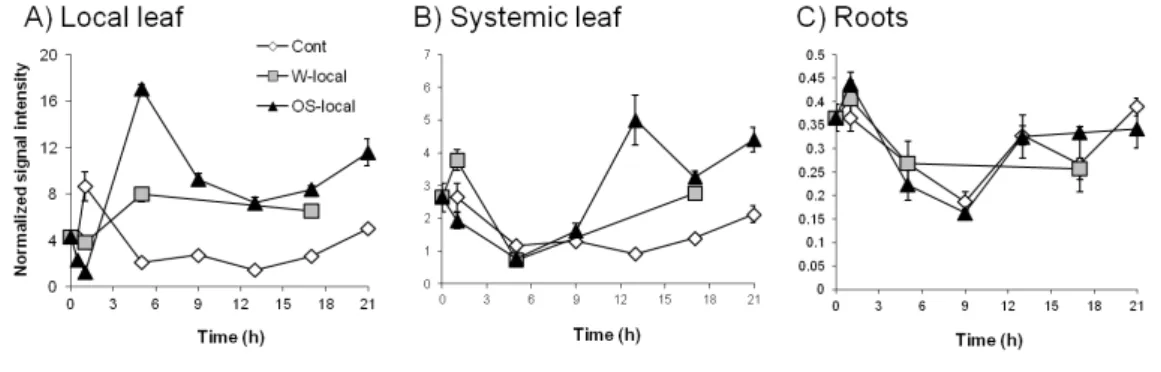
sion of NaCWII appears to be up-regulated at 6 hours following simulated herbivory (W+OS). This up-regulation is specific to local leaves (Fig. 2.1A), but also occurs in systemic leaves after 12hr (Fig. 2.1B). No changes following simulated herbivory were observed in roots (Fig. 2.1C). As the first step toward elucidating the role of cell wall invertase inhibitor in N. attenuata, we found one putative N. attenu-10
ata invertase inhibitor gene sequence using internal Nicotiana spp. BLAST server. Full-length cDNA was then cloned from N. attenuata leaves and named NaCWII. Sequence alignment of CWII with invertase inhibitors from tomato and tobacco showed the conserved four Cys residues (Fig. 2.2), a hallmark of all known plant invertase inhibitors (Rausch & Greiner, 2004).
15
Figure 2.1: A putative N. attenuata invertase inhibitor is up-regulated in local and systemic leaves
leaves, but not roots, following simulated herbivory. EV rosette stage leaves were treated by wounding
(W-local), wounding and oral secretion of M. sexta larvae (OS-local) and untreated leaves (control).
NaCWII is up-regulated upon simulated herbivory
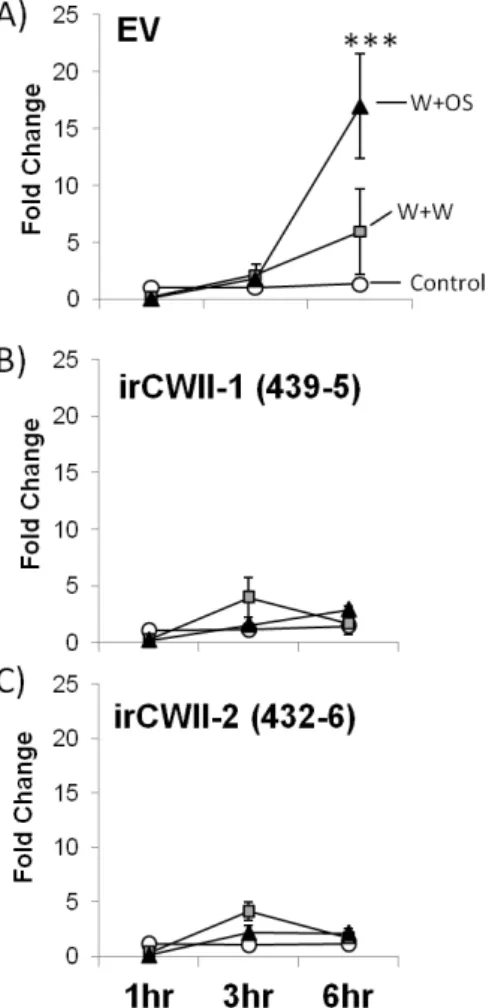
From our initial time course experiment, we found a strong, OS-specific up-regulation of NaCWII (16-fold increase relative to control) 6h following simulated herbivory on EV plants (Fig. 2.3A). In contrast to EV plants, NaCWII expression in two independently transformed irCWII lines remained at control levels following 5
both W+W (Fig. 2.3B) and W+OS (Fig. 2.3C) treatments.
Figure 2.3: Silencing NaCWII suppresses herbivore-induced up-regulation of NaCWII. Relative transcript
abundance of NaCWII in EV (A) and two independently transformed irCWII lines, irCWII-1 (B) and irCWII-2 (C). Analysis of mRNA was quantified by RT-qPCR in unelicited leaves, and at different
times following wounding and treatment with 20 µL of water (W+W) or 1:5 water-dilutedM. sexta
oral secretions (W+OS). NaCWII mRNA levels are expressed as the ratio of abundance relative to an
endogenous reference gene (ACTIN). Mean±SE (n=3) are shown. Asterisks indicate significant effect
Simulated herbivory decreases plant cell-wall invertase activity in a
NaCWII-dependent manner
To investigate whether the activity of plant invertase is regulated by NaCWII, we quantified cell-wall and soluble invertases activities in control and W+OS-treated EV and irCWII plants. We found that multiple W+OS treatments significantly 5
suppressed cell-wall invertase activity in EV, but not irCWII plants (Fig. 2.4A). Although soluble invertase was constitutively higher in irCWII lines (Fig. 2.4B), activity levels were unaltered by W+OS treatment, regardless of plant genotype.
Figure 2.4: Simulated herbivory decreases cell-wall invertase activity in a NaCWII-dependent manner.
Cell-wall (A) and soluble (B) invertase activities in EV and two NaCWII-silenced lines (irCWII-1 and irCWII-2). Two rosette leaves were treated every 48 h for 6 days with 1:5 water-diluted OS (W+OS,
black) from M. sextalarvae and untreated as control (white). Bars represent average±SE (n = 5).
Asterisks indicate significant differences between treatments within each genotype and differences among
NaCWII regulates N. attenuata primary and secondary metabolism following simulated herbivory
To examine whether NaCWII affects long-term dynamics of plant primary and secondary metabolism following simulated herbivory, we measured foliar concentra-tions of soluble sugars, starch, nicotine, caffeoylputrescine, dicaffeoylspermidine, and 5
rutin in EV and irCWII genotypes in a time course following repeated damage. In general pattern, CWII-silenced plants had more depletion of soluble sugars. While starch levels did not differ significantly between the genotypes at night (2:00 AM and 6:00 AM); however during the day (2:00 PM and 10:00 PM), EV plants ac-cumulated more starch relative to irCWII plant. As we expected based on previously 10
published studies (Machado et al., 2013), soluble sugars (Fig. 2.5A and B) and starch (Fig. 2.5C) were significantly depleted in leaves uponsimulated herbivroy (W+OS). This depletion was found to be driven primarily by a reduction in glucose and fruc-tose (Fig. 2.5A), rather than sucrose (Fig. 2.5B), which occurred more dramatically in CWII-silenced plants at 6:00AM and 2:00PM relative to EV (Fig. 2.5A).
15
Six days after W+OS treatments, concentrations of nicotine, caffeoylputrescine, and dicaffeoylspermidine were increased upon W+OS application (Fig. 2.6A-C) in both genotypes. EV plants, in particular, contained higher levels of dicaffeoylsper-midine following W+OS relative to irCWII plants (Fig. 2.6C). Foliar rutin concen-tration was reduced following W+OS, which occurred to a greater extent in EV 20
EV irCWII-1 EV irCWII-1 EV irCWII-1 EV irCWII-1
n.s. **
EV irCWII-1 EV irCWII-1 EV irCWII-1 EV irCWII-1 2:00AM 6:00AM 2:00PM 10:00PM
* ***
A)
B)
C)
Genotype: 0.012* Timepoint: <0.001*** G*T: 0.058 EV irCWII-1 EV irCWII-1 EV irCWII-1 EV irCWII-1
** **
Genotype: <0.001*** Timepoint: 0.002** G*T: <0.001***
Figure 2.5: Silencing NaCWII increases herbivore-induced carbohydrate depletion in leaves. Combined
glucose and fructose (A), sucrose (B) and starch (C) concentrations were measured in a time course following 4 rounds of simulated herbivory (W+OS). Bars represents mean concentration in W+OS tissue
relative to mean control±SE (n = 4). Asterisks indicate significant differences between EV (white) and
NaCWII-silenced plants (irCWII-1, hatched within each timepoint. ∗ ∗ ∗P<0.001,∗∗P<0.01, ∗P
Figure 2.6: Silencing NaCWII attenuates the production of herbviore-induced secondary metabolites in leaves. Circles: untreated controls. Triangles: simulated herbivory (W+OS). Asterisks indicate significant differences between EV (grey) and irCWII (black) genotypes within herbivory treatment and
NaCWII regulates N. attenuata, not M. sexta, invertase activity and behavior
We took a two-fold approach to assess whether NaCWII directly influences the growth and performance ofM. sextalarvae. First, we assessed the utilization of leaf material byM. sexta larvae using a Waldbauer and glasshouse performance assays. 5
Second, we measured the activity of invertases residing in mid-gut of larvae fed EV or irCWII tissue. Results from the Waldbauer assay show that M. sexta feeding on elicited EV and irCWII tissues both consume (CI), and effectively convert ingested material (ECI), to the same degree (Tab. 4.1). Larvae feeding on elicited irCWII leaves displayed a greater ability to digest this leaf material (AD); however, the 10
conversion of digested material to larval biomass occurred at a reduced capacity compared to larvae fed elicited EV leaves (ECD). Despite these differences, all larvae produced equivalent amounts of frass and reached similar body masses by the end of the experiment (Tab. 4.1). Consistent with these findings, M. sexta larvae mass gain was not influenced by host plant genotype in the glasshouse performance assay 15
(Fig. 2.7). We found no difference in the activities of insoluble (Fig. 2.8A) or soluble (Fig. 2.8B) invertases extracted from the mid-gut of larvae fed EV or irCWII tissue. Another approach was the behavior measurements; in agreement with the Waldbauer assayM. sextaduring first seven days consumed the same amount of leaf tissue when fed in EV nd irCWII plants (Fig. 2.9). But not surprising, larvae ingested more leaf 20
32
conversion of digested food (%), and 2-day frass production (g) and mass gain of larvae (mg) are shown ±SD. C = ingested food (g), G = insect mass gain, T = duration of
feeding period (days), F = frass produced (mg). Different letters indicate significant differences among plant genotypes. (∗ ∗ ∗P<0.05).
Nutritional Index Formula EV irCWII-1 irCWII-2 F value P value
Consumption index (CI) [C/(G*T)] 2.13 4±0.07a 2.29 ±0.06a 2.24 ±0.06a [2,67] 1.328 0.271
Approximate digestibility (AD) [(C-F)/C]*100 74 ±0.9a 79 ±0.9b 77 ±1.2b [1,68] 9.897 0.002 ***
Efficiency of conversion of ingested food (ECI) (G/C)*100 24 ±0.8a 22 ±0.6a 23 ±0.6a [2,67] 1.633 0.203 Efficiency of conversion of digestive food (ECD) [G/(C-F)]*100 33 ±1.4a 28 ±0.9b 30 ±1.1b [1,68] 5.821 0.01 ***
Frass 0.274 ±0.01a 0.276 ±0.01a 0.278 ±0.02a [2,66] 0.092 0.912
Figure 2.7: Silencing NaCWII does not affectM. sexta growth. The performance of the larvae was
observed on EV and silencing irCWII-1 and irCWII-2 plants under glasshouse conditions. Average (±SE)
Figure 2.8: Silencing theN. attenuata invertase inhibitor does not affect the activity of insoluble (A)
and soluble (B) invertases present in the mid-gut of M. sextalarvae. Invertases were extracted from
the mid-gut of 4th instar feeding on leaves of EV, irCWII-1 and irCWII-2 plants. Each bar represents
Figure 2.9: M. sextaexhibits similar feeding patterns on EV (white) and irCWII-1 (black) genotypes. Leaf area eaten by larvae during seven days was quantified during the day and at night. Each bar
represents average leaf area consumed±SE (n = 25). (P>0.05).
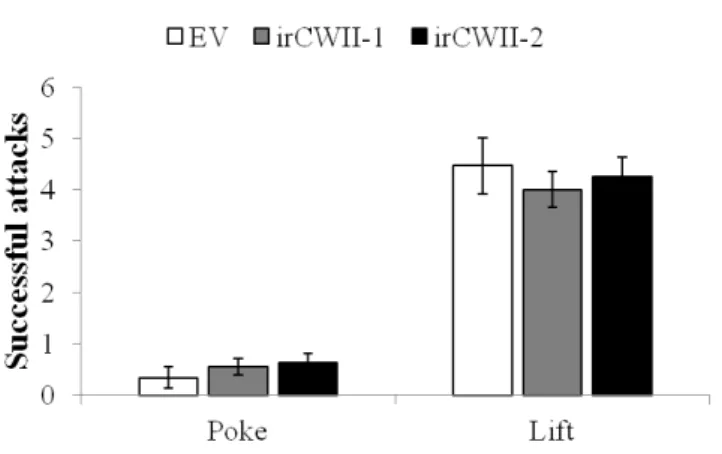
Figure 2.10: Silencing NaCWII does not affect the aggressiveness of 6 day-oldM. sexta. Larvae on EV
(white), NaCWII-silenced lines (black) were poked and lifted to mimic predation. Each bar represents
Water content and leaf area of NaCWII-silenced plants does not
change
As we expected the water content in undamaged leaves was around 90% in EV and both irCWII plants (FigS. 2.11A) and also the amount of fresh tissue (g) per area was the same for all lines evaluated (FigS. 2.11B). These results strengthen 5
our findings onM. sexta Waldbauer assay, showing that larvae had eaten the same quantity of leaf tissue.
Simulated herbivory induced JA and JA-Ile in leaves of EV and
irCWII plants, but not change ABA and SA
Both jasmonic acid (JA) and (+)-7-iso-jasmonoyl-L-isoleucine (JA-Ile) were 10
Supplemental Figures
Figure 2.11: Silencing NaCWII does not affect leaf water content (A) or mass per area (B). Undamaged
leaves fromN. attenuataplants (EV, irCWII-1 and irCWII-2) in the rosette stage were weighed, scanned
Figure 2.12: Silencing NaCWII does not affect the herbivore-induced accumulation of JA (A), JA-Ile
(B), ABA (C), SA (D). Plants of N. attenuata (EV, irCWII-1 and irCWII-2) were treated with 1:5
water-diluted OS (W+OS) fromM. sextalarvae or left as untreated control. JA (jasmonic acid), JA-ile
((+)-7-iso-jasmonoyl-L-isoleucine), ABA (abscisic acid) and AS (salicylic acid). Bars represent average
Discussion
We identified NaCWII, a homolog of INVINH1, that is known to specifically inhibit cell-wall invertase activity in tomato (Jin et al., 2009), and used a reverse genetics approach to silence its expression in N. attenuata by RNA interference (ir-CWII) in order to understand the role of this putative invertase inhibitor in induced 5
plant defense. Our analysis of invertase activity, downstream changes in primary and secondary metabolites, and NaCWII-silenced lines provide new insights into the post-translational regulation of cell-wall invertase during plant defense and suggests a role for NaCWII in regulating the defense induction in N. attenuata following attack by M. sexta.
10
In wild-type N. attenuata, we found that the expression of NaCWII increased dramatically (16-fold) following simulated herbivore damage. Analyzing the activity of invertases in wild-type plants confirmed that the inhibitory activity of NaCWII was not only increased upon OS-elicitation, but specific to cell-wall bound invertase. This finding is consistent with others showing that the overexpression of an invertase 15
inhibitor in A. thaliana (INVINH1) specifically reduces cell wall invertase activity, while silencing its expression in tomato significantly increased the activity of cell wall invertase, without altering activities of cytoplasmic and soluble invertases (Jin et al., 2009).
The regulatory role of NaCWII was first validated by qPCR, which revealed gene 20
transcripts were significantly attenuated in NaCWII-silenced lines following W+OS. In contrast to wild-type plants which exhibited a significant suppression of cell-wall invertase activity following simulated herbivore attack, the activity of cell-wall in-vertase of NaCWII-silenced lines remained unaltered. To examine whether NaCWII affects long-term dynamics of plant primary and secondary metabolism, we concur-25
wild-type conditions, we found that the concentrations of soluble sugars and starch were significantly depleted in leaves upon repeated W+OS treatments. This is con-sistent with previous studies showing reduction in sugar pools following exogenous JA application and herbivore damage (Skrzypek et al., 2005; Machado et al., 2013). As previous studies have also shown, we found OS-induced depletion in carbohy-5
drates response to be driven primarily by a reduction in glucose and fructose and starch, which varied according to time of day: the response was more pronounced at 2:00 and 6:00 AM time points. This finding aligns well with that of previous studies demonstrating a strong endogenous rhythm of carbohydrates in plants, which de-cline during the dark cycles and peak between 4 and 8h after dawn (Lu et al., 2005; 10
Dalchau et al., 2011).
The accumulation of defensive compounds in plants in response to insect at-tack can represent a significant metabolic cost in terms of biosynthesis, storage, and eventual fitness impacts (Gershenzon, 1994), and can therefore result in in-creasing demand for carbon. Indeed, carbohydrates support the production of plant 15
phenolics, which can exceed > 25% of plant dry mass, via the shikimic acid and phenylpropanoid pathways (Harding et al., 2009). Alkaloids (e.g. nicotine) can re-quire upwards of 3.62 g of glucose per gram produced, representing about 17% of a tobacco plant’s net carbon gain (Wink & Roberts, 1998). Within this context, the repression of cell-wall invertase and simultaneous depletion in soluble sugars ob-20
served in locally damaged leaves may reflect an increase in localized sink metabolism following simulated herbivory which is necessary to satisfy the increased demand for energy for the activation of defense pathways leading to secondary metabolite accu-mulation.
In contrast to our study, the depletion in carbohydrate pools following herbivory 25
has also been explained by an increase in local invertase (Arnold & Schultz, 2002; Bogatek et al., 2002; Arnold et al., 2004; Ferrieri et al., 2013), which results in higher fructose and glucose necessary for the production of defensive compounds (Machado et al., 2013). However, we have found that constitutive JA-deficiency plants leads to higher sugar levels and higher invertase activity inN. attenuata leaves (Machado 30
application. Clearly, our understanding of the underlying mechanisms by which en-dogenous JA regulates invertase and subsequent carbohydrate pools deserves further attention. Although we found that irCWII lines were not compromised herbivory-induced JA and JA-Ile accumulation, these plants display an attenuation in the accumulation of herbivory-induced defensive compounds, in particular the produc-5
tion of dicaffeoylspermidine following repeated W+OS treatments.
Given its strong up-regulation following M. sexta damage, we expected our pu-tative CWII gene to play a role in anti-herbivore defense in N. attenuata. Yet, in contrast to this expectation, we found that silencing of the CWII gene in N. at-tenuata did not affect the larval performance. Similar results were found in both 10
glasshouse performance assays using intact plants and Waldbauer nutritional as-says using previously elicited detached leaves. Interestingly, we found that M. sexta larvae had reduced ECI and increased AD when fed irCWII leaves. Despite these observations, all larvae exhibited similar mass gain and excreted the same amount of frass. Independently of plant genotype, larvae consumed more leaf tissue during 15
the day than at night. This feeding pattern not only corresponds to the highest period of activity for this species (personal observation), but also is related to the most exaggerated OS-induced metabolites changes we observed in the plant.
The efficiency of food utilization can be seen as an indicator of nutritional quality of a plant. Thus, it is possible that irCWII tissue represents a poor host in terms 20
of nutritional quality. Thompson & Borchardt (2003) showed that M. sexta larvae have growth unaffected by carbohydrate consumption in artificial diet. Similarly, on the carbohydrate-free diets, growth increased with increased protein consump-tion. M. sexta larvae tend to adjust their feeding behavior so that protein ingestion is either equal to or greater than carbohydrate ingestion (1:1 ratio Thompson & 25
Renack, 2005). Carbohydrates are thought to be nonessential because they can be synthesized from fats and/or amino acids, and regulated within the larval midgut when they are limiting (Chapman, 1998). The ability ofM. sexta to practice gluco-neogenesis (Thompson, 1997), an internal regulatory strategy by which amino acids can be converted to energy in the midgut, provides a possible explanation for why 30
between over and under ingesting nutrients on nutritionally imbalanced foods may also act to maintain optimal insect growth (Raubenheimer & Simpson, 1999).
Insect herbivores face the challenge of simultaneously regulating the intake of multiple nutrients. Interactions among secondary plant compounds and nutrients have been demonstrated from tests in which the nutritional content was varied. 5
Duffey et al. (1986) showed that deleterious effect of rutin varies not only with the amount of protein in the food, but also with protein type. Others show that carbon-based tannin secondary metabolites can incur negative effects on locust performance only when the ratio of protein:carbohydrate of the diet becomes more imbalanced (Simpson & Raubenheimer, 2001).
10
In our study, we found that irCWII plants failed to induced secondary metabo-lite production to the same extent as their EV counterparts. This attenuation was observed especially for carbon-based phenolic compounds known as phelonamides (DCS dicaffeoylspermidine, and to a lesser extent caffeoylputrescine). Phenolics are found in all plants, play a vital role in survival of the plant, and can function as 15
defensive molecules against herbivores and plant pathogens (Appel, 1993; Matsuki, 1996). When incorporated into artificial diets, some phenolics negatively affects growth and development of several different caterpillar species (Isman & Duffey, 1982; Stevenson, 1993; Stamp & Yang, 1996), but positive and neutral effects have been reported (Reese & Beck, 1976; Lindroth & Peterson, 1988). Eichenseer et al. 20
(1998) suggested thatM. sexta is insensitive to chlorogenic acid (a type of phenolic). Thus, future work will examine the levels of other nutrients (amino acids, lipids, pro-teins) within irCWII plants, and their interactions with secondary metabolites using artificial and semi-artificial (plant-based) artificial diet assays to test for interactive effects between primary and secondary metabolites and their impact on M. sexta 25
performance.
Digestion and absorption occur along the length of the midgut, with columnar cells secreting digestive enzymes that facilitate absorption. Under wild-type con-ditions, we found that the activity of plant cell-wall invertase was significantly de-creased after simulated herbivory. To test whether plant-derived invertase inhibitor 30
invertase activities larval midgut did not differ between irCWII- and EV-fed larvae, suggesting that plant NaCWII may not directly target M. sexta invertase. Christo-pher & Mathavan (1985) showed an analysis on the amylase and invertase activities in the midgut of Catopsilia crocale an increased in these enzymes activities is cor-related with food intake, but not proportional to an increase in food uptake. Some 5
carbohydrates have a stimulant action that can induce the activity of digestive en-zymes in the midgut as amylase, invertase and proteinase of insects (Meisner et al., 1972). Sucrose, glucose, fructose, raffinose and maltose are carbohydrates reported to induce the feeding responses by induction of digestive enzymes activities (Ito, 1960; Yamamoto & Fraenkel, 1960; Augustine et al., 1964; Hsiao & Fraenkel, 1968). 10
Future studies may explore how plant protein inhibitors may regulate other aspects of insect sugar metabolism.
In our study, we found that attenuation in plant primary and secondary metabolism in herbivore-induced irCWII did not correlate to changes in insect ag-gressiveness, even though previous studies show that food quality ingested by M. 15
sexta may directly relate to their survival rate in the field. Schuman et al. (2012) found that larvae fed on irPI plants which have suppressed trypsin proteinase in-hibitor defense were more vulnerable to Geocoris spp. predation in the field even thoughM. sextalarva showed more aggressive behavior while feeding on these plants. In this study, the authors concluded that changes in the larvae as a nutritious food 20
source for Geocoris predators (Kaplan & Thaler, 2011) may better explain the in-crease in predation rates.
In summary, a clear defensive role for NaCWII remains elusive asM. sextafeeding on pre-induced leaves as well as intact rosettes in the glasshouse failed to increase in biomass on irCWII compared to EV controls. Despite the lack of correlation 25
between induced changes in plant primary and secondary metabolism upon silencing of NaCWII, our study is the first of its kind to explore the role of a plant cell wall invertase inhibitor is relation to plant defense against insect herbivores. The use of transgenic plants silenced in a gene of interest coupled with insect performance and nutritional assays provides a robust tool for analyzing the potential defensive role 30
References
APPEL, H. M. Phenolics in ecological interactions: the importance of oxidation.
Journal of Chemical Ecology, v.19, p.1521–1551, 1993.
ARNOLD, T.; APPEL, H.; PATEL, V.; STOCUM, E.; KAVALIER, A.; SCHULTZ, J. Carbohydrate translocation determines the phenolic content of Populus fo-5
liage: a test of the sink-source model of plant defense. New Phytologist., v.164, p.157–64, 2004.
ARNOLD, T.; SCHULTZ, J. Induced sink strength as a prerequisite for induced tannin biosynthesis in developing leaves ofPopulus.Oecologia, v.130, p.585–593, 2002.
10
AUGUSTINE, M. G.; FISK, F. W.; DAVIDSON, R. H.; LAPIDUS, J. B.; CLEARY, R. W. Host-plant selection by the Mexican bean beetle, Epilachna varivestis.
Arm. ent. Soc. Am., v.57, p.127–134, 1964.
BATE, N. J.; NIU, X.; WANG, Y.; REIMANN, K. S.; HELENTJARIS, T. G. An invertase inhibitor from maize localizes to the embryo surrounding region during 15
early kernel development. Plant Physiology, v.134, p.246–254, 2004.
BOGATEK, R.; COME, D.; CORBINEAU, F. Jasmonic acid affects dormancy and sugar metabolism in germinating apple embryos. Plant Physiology and Biochemistry, v.40, p.167–173, 2002.
BONFIG, K. B.; GLABER, A.; SIMON, U. K.; ET AL. Post-translational dere-20
pression of invertase activity in source leaves via down-regulation of invertase
inhibitor expression is part of the plant defense response. Molecular Plant, v.3, p.1037–1048, 2010.
BUBNER, B.; BALDWIN, I. T. Use of real-time PCR for determining copy number and zygosity in transgenic plants. Plant Cell Reports, v.23, p.263–271, 2004. CHAPIN, F. S.; SHULZE, E. D.; MOONEY, H. A. The ecology and economics of 5
storage in plants. Annual Review in Ecology and Systems, v.21, p.423–447, 1990.
CHAPMAN, R. F. The insects: structure and function. 4ed.. Cambridge University Press, Cambridge. United Kingdom, Cambridge, 1998.
CHRISTOPHER, M. S. M.; MATHAVAN, S. Regulation of digestive enzyme activity 10
in the larvae ofCatopsilia crocale(Lepidoptera).Journal of Insect Physiology, v.31, p.217–221, 1985.
CRAWLEY, M. J. The R book.. John Wiley & Sons Ltd, 2007.
CREELMAN, R. A.; MULLET, J. E. Biosynthesis and action of jasmonates in plants. Annual Review of Plant Physiology and Plant Molecular, v.48, 15
p.355–381, 1997.
DALCHAU, N.; BAEK, S. J.; M., B. H.; ROBERTSON, F. C.; DODD, A. N.; GARDNER, M. J.; STANCOMBE, M. A.; HAYDON, M. J.; STAN, G.-B.; GON ¸CCALVES, J. M.; ET AL. The circadian oscillator gene GIGANTEA me-diates a long-termresponse of the Arabidopsis thaliana circadian clock to sucrose. 20
Proc. Natl Acad. Sci.USA 108, 5104–5109. Proc. Nat. Acad. Sci. (USA), v.108, p.5104–5109, 2011.
DUFFEY, S. S.; BLOEM, K. A.; CAMPBELL, B. C. Consequences of sequestration of plant natural products in plant-insect-parasitoid interactions.. In: BOETHEL, D. J.; EIKENBARY, R. D. (Ed.). In interactions of plant resistance and
25
parasitoids and predators of insects. Ellis Horwood, Chichester, 1986. p.31-60.
in tobacco leaves. Entomologia Experimentalis Et Applicata, v.87, p.73–78, 1998.
ESSMANN, J.; SCHMITZ-THOM, I.; SCHON, H.; SONNEWALD, S.; WEIS, E.; SCHARTE, J. RNA interference-mediated repression of cell wall invertase impairs defense in source leaves of tobacco. Plant Physiology, v.147, p.1288–1299, 2008. 5
FERRIERI, A.; BEVERLY, A.; APPEL, H.; FERRIERI, R.; SCHULTZ, J. Tem-poral changes in allocation and partitioning of new carbon as 11C elicited by simulated herbivory suggest that roots shape aboveground responses in Arabidop-sis thaliana . Plant Physiology, v.161, p.692–704, 2013.
GAQUEREL, E.; HEILING, S.; SCHOETTNER, M.; ZUREK, G.; BALDWIN, I. T. 10
Development and validation of a liquid chromatography-electrospray ionization-time-of-flight mass spectrometry method for induced changes in Nicotiana atten-uata leaves during simulated herbivory. Journal of Agricultural and Food Chemistry, v.58, p.9418–9427, 2010.
GASE, K.; WEINHOLD, A.; BOZOROV, T.; SCHUCK, S.; BALDWIN, I. T. Effi-15
cient screening of transgenic plant lines for ecological research. Molecular Ecol-ogy Resources, v.11, p.890–902, 2011.
GERSHENZON, J. Metabolic costs of terpenoid accumulation in higher plants.
Journal of Chemical Ecology, v.20, p.1281–1328, 1994.
G ´OMEZ, S.; FERRIERI, R.; SCHUELLER, M.; ORIANS, C. Methyl jasmonate 20
elicits rapid changes in carbon and nitrogen dynamics in tomato. New Phytol-ogist, v.188, p.835–844, 2010.
HALL, T. A. BioEdit: a user-friendly biological sequence alignment editor nd analy-sis program for Windows 95/98/NT. Nucleid Acids Symposium Series, v.41, p.95–98, 1999.
25
HRISTOVA, V.; POPOVA, L. Treatment with methyl jasmonate alliviates the effects of paraquat on photosynthesis in barley plants. Photosynthetica, v.40, p.567–574, 2002.
HSIAO, T. H.; FRAENKEL, G. The influence of nutrient chemicals on the feeding behavior of the Colorado beetle, Leptinotarsa decemllneata (Coleoptera: 5
Chrysomelidae). Annals of the Entomological Society of America, v.61, p.44–54, 1968.
ISMAN, M. B.; DUFFEY, S. S. T. Toxicity of tomato phenolic compounds to the fruitworm, Heliothis zea. Entomologia Experimentalis Et Applicata, v.31, p.370–376, 1982.
10
ITO, T. Effect of sugars on feeding of larvae of the silkworm,Bombyx mori.Journal of Insect Physiology, v.5, p.95–107, 1960.
IZAGUIRRE, M. M.; SCOPEL, A. L.; BALDWIN, I. T.; BALL ´ARE, C. I. Conver-gent responses to stress. Solar ultraviolet-B and Manduca sexta herbivory elicit overlapping transcriptional in field-grown plants of Nicotiana longiflora. Plan
15
Physiology, v.132, p.1755–1767, 2003.
JIN, Y.; NI, D.-A.; RUAN, Y.-L. Posttranslational elevation of cell wall invertase activity by silencing its inhibitor in tomato delays leave senescense and increases seed weight and fruit hexose level. Plant Cell, v.21, p.2072–2089, 2009.
KAPLAN, I.; THALER, J. S. Do plant defenses enhance or diminish prey suppres-20
sion by omnivorous Heteroptera? Biological Control, v.59, p.53–60, 2011. KIM, S.; YON, F.; GAQUEREL, E.; GULATI, J.; BALDWIN, I. Tissue specific
diurnal rhythms of metabolites and their regulation during herbivore attack in a native tobacco, Nicotiana attenuata. PLoS ONE, v.6, p.e26214, 2011.
KOCH, K. Sucrose metabolism: regulatory mechanisms and pivotal roles in sugar 25