UNIVERSIDADE DE LISBOA
Faculdade de Ciências
Departamento de Informática
SENSING AND AWARENESS OF 360º
IMMERSIVE VIDEOS ON THE MOVE
João Carlos Reis Ramalho
DISSERTAÇÃO
MESTRADO EM ENGENHARIA INFORMÁTICA
Engenharia de Software
UNIVERSIDADE DE LISBOA
Faculdade de Ciências
Departamento de Informática
SENSING AND AWARENESS OF 360º
IMMERSIVE VIDEOS ON THE MOVE
João Carlos Reis Ramalho
DISSERTAÇÃO
MESTRADO EM ENGENHARIA INFORMÁTICA
Engenharia de Software
Trabalho orientado pela Prof. Doutora Maria Teresa Caeiro Chambel
Acknowledgements
First and foremost, I want to thank my Professor and advisor, Prof. Teresa Chambel, for guiding me throughout this journey. The creative freedom that she entrusted in me really opened the window for me to get the required inspiration to produce something that I can say I am proud of and can call my own. Also, I am grateful for the endless patience, immense knowledge, valuable advices, critical opinion, and for the countless brainstorm sessions that I enjoy so much.
I would like to thank Fundação para a Ciência e Tecnologia for the financial support through the research project (UTA- Est/ MAI/0010/2009) (url-ImTV). I extend this appreciation to LaSIGE and the Department of Informatics of FCUL for the outstanding conditions provided to accomplish the work comprised in this thesis. In the scope of the ImTV project, an especial thanks to the ImTV project colleagues of Universidade Nova de Lisboa for the collaboration regarding the Facial Expression Recognition Framework.
To those friends always caring. You know who you are.
To Joana, for growing up beside me. May I thank you for being unconditionally supportive and for puting up with me every single day (which is a mighty task in itself). Thank you for sharing countless moments of joy with me, but, most importantly, for always being able to turn moments of sorrow in moments of pure happiness.
I cannot express in words, nor in any other way, how thankfull I am to my parents. I can only thank you for the permanent guidance, continuous love and unconditional support, moral values and education. I am today, and will continue to be, what you made of me. Also, I must never forget to express my deep gratitude towards you for introducing me to the greatest passion of my life: music. Pedro, I thank you for always being able to put up with everything that means being the younger brother ;).
Finally, to my grandfather, for being my role model, and my best friend throughout the forever-short period of life I got to share with you.
i
Resumo
Ao apelar a vários sentidos e transmitir um conjunto muito rico de informação, o vídeo tem o potencial para causar um forte impacto emocional nos espectadores, assim como para a criação de uma forte sensação de presença e ligação com o vídeo. Estas potencialidades podem ser estendidas através de percepção multimídia, e da flexibilidade da mobilidade. Com a popularidade dos dispositivos móveis e a crescente variedade de sensores e actuadores que estes incluem, existe cada vez mais potencial para a captura e visualização de vídeo em 360º enriquecido com informação extra (metadados), criando assim as condições para proporcionar experiências de visualização de vídeo mais imersivas ao utilizador.
Este trabalho explora o potencial imersivo do vídeo em 360º. O problema é abordado num contexto de ambientes móveis, assim como num contexto da interação com ecrãs de maiores dimensões, tirando partido de second screens para interagir com o vídeo. De realçar que, em ambos os casos, o vídeo a ser reproduzido é aumentado com vários tipos de informação. Foram assim concebidas várias fundionalidades para a captura, pesquisa, visualização e navegação de vídeo em 360º. Os resultados confirmaram a existência de vantagens no uso de abordagens multisensoriais como forma de melhorar as características imersivas de um ambiente de vídeo. Foram também identificadas determinadas propriedades e parâmetros que obtêm melhores resultados em determinadas situações.
O vídeo permite capturar e apresentar eventos e cenários com grande autenticidade, realismo e impacto emocional. Para além disso, tem-se vindo a tornar cada vez mais pervasivo no quotidiano, sendo os dispositivos pessoais de captura e reprodução, a Internet, as redes sociais, ou a iTV exemplos de meios através dos quais o vídeo chega até aos utilizadores (Neng & Chambel, 2010; Noronha et al, 2012). Desta forma, a imersão em vídeo tem o potencial para causar um forte impacto emocional nos espectadores, assim como para a criação de uma forte sensação de presença e ligação com o vídeo (Douglas & Hargadon, 2000; Visch et al, 2010). Contudo, no vídeo tradicional a experiência dos espectadores é limitada ao ângulo para o qual a câmara apontava durante a captura do vídeo. A introdução de vídeo em 360º veio ultrapassar essa restrição.
ii
Na busca de melhorar ainda mais as capacidades imersivas do vídeo podem ser considerados tópicos como a percepção multimídia e a mobilidade. Os dispositivos móveis têm vindo a tornar-se cada vez mais omnipresentes na sociedade moderna, e, dada a grande variedade de sensores e actuadores que incluem, oferecem um largo espectro de oportunidades de captura e reprodução de video em 360º enriquecido com informação extra (metadados), tendo portanto o potencial para melhorar o paradigma de interação e providenciar suporte a experiências de visualização de video mais ponderosas e imersivas. Contudo, existem desafios relacionados com o design de ambientes eficazes que tirem partido deste potencial de imersão.
Ecrãs panorâmicos e CAVEs são exemplos de ambientes que caminham na direção da imersão total e providenciam condições priveligiadas no que toca à reprodução de video imersivo. Porém, não são muito convenientes e, especialmente no caso das CAVEs, não são facilmente acessíveis. Por outro lado, a flexibilidade associada aos dispositivos móveis poderia permitir que os utilizadores tirassem partido dos mesmos usam-do-os, por exemplo, como uma janela (móvel) para o video no qual estariam imersos. Mais do que isso, seguindo esta abordagem os utilizadores poderiam levar estas experiências de visualização consigo para qualquer lugar. Como second screens, os dispositivos móveis podem ser usados como auxiliares de navegação relativamente aos conteúdos apresentados no ecrã principal (seja este um ecrã panorâmico ou uma CAVE), representando também uma oportunidade para fazer chegar informação adicional ao utilizador, eliminando do ecrã principal informação alheia ao conteúdo base, o que proporciona uma melhor sensação de imersão e flexibilidade.
Este trabalho explora o potencial imersivo do vídeo em 360º em ambientes móveis aumentado com vários tipos de informação. Nesse sentido, e estendendo um trabalho anterior (Neng, 2010; Noronha, 2012; Álvares, 2012) que incidiu maioritariamente na dimensão participativa de imersão, a presente abordagem centrou-se na dimensão perceptual de imersão. Neste âmbito, foram concebidas, desenvolvidas e testadas várias funcionalidades, agrupadas numa aplicação de visualização de vídeo em 360º – Windy Sight Surfers. Considerando a crescente popularidade dos dispositivos móveis na sociedade e as características que os tornam numa oportunidade para melhorar a interação homem-máquina e, mais especificamente, suportar experiências de visualização de vídeo mais imersivas, a aplicação Windy Sight Surfers está fortemente relacionada com ambientes móveis. Considerando as possibilidades de interação que o uso de second screens introduz, foi concebida uma componente do Windy Sight Surfers relacionada com a interação com ecrãs de maiores dimensões.
iii
Os vídeos utilizados no Windy Sight Surfers são vídeos em 360º, aumentados com uma série de informações registadas a partir do Windy Sight Surfers durante a sua captura. Isto é, enquanto a câmara captura os vídeos, a aplicação regista informação adicional – metadados – obtida a partir de vários sensores do dispositivo, que complementa e enriquece os vídeos. Nomeadamente, são capturadas as coordenadas geográficas e a velocidade de deslocamento a partir do GPS, a orientação do utilizador a partir da bússola digital, os valores relativos às forças-G associadas ao dispositivo através do acelerómetro, e são recolhidas as condições atmosféricas relativas ao estado do tempo através de um serviço web. Quando capturados, os vídeos, assim como os seus metadados, podem ser submetidos para o sistema.
Uma vez capturados e submetidos, os vídeos podem ser pesquisados através do mais tradicional conjunto de palavras chave, de filtros relacionados com a natureza da aplicação (ex. velocidade, período do dia, condições atmosféricas), ou através de um mapa, o que introduz uma componente geográfica ao processo de pesquisa. Os resultados podem ser apresentados numa convencional lista, no formato de uma cover-flow, ou através do mapa.
No que respeita à visualização dos vídeos, estes são mapeados em torno de um cilindro, que permite representar a vista dos 360º e transmitir a sensação de estar parcialmente rodeado pelo vídeo. Uma vez que a visualização de vídeos decorre em dispositivos móveis, os utilizadores podem deslocar continuamente o ângulo de visão do vídeo 360º para a esquerda ou direita ao mover o dispositivo em seu redor, como se o dispositivo se tratasse de uma janela para o vídeo em 360º. Adicionalmente, os utilizadores podem alterar o ângulo de visualização arrastando o dedo pelo vídeo, uma vez que todo o ecrã consiste numa interface deslizante durante a visualização de vídeos em 360º.
Foram ainda incorporadas na aplicação várias funcionalidades que pretendem dar um maior realismo à visualização de vídeos. Nomeadamente, foi desenvolvido um acessório de vento na plataforma Arduino que leva em conta os metadados de cada vídeo para produzir vento e assim dar uma sensação mais realista do vento e da velocidade do deslocamento durante a visualização dos vídeos. De referir que o algoritmo implementado leva em conta não só a velocidade de deslocamento, como também o estado do tempo em termos de vento (força e orientação) aquando da captura do vídeo, e a orientação do utilizador de acordo com o ângulo do vídeo a ser visualizado durante a reprodução do vídeo.
Considerando a componente áudio dos vídeos, neste sistema, o áudio de cada vídeo é mapeado num espaço sonoro tridimensional, que pode ser reproduzido num par de auscultadores estéreo. Neste espaço sonoro, a posição das fontes sonoras está associada
iv
ao ângulo frontal do vídeo e, como tal, muda de acordo com o ângulo do vídeo a ser visualizado. Isto é, se o utilizador estiver a visualizar o ângulo frontal do vídeo, as fontes sonoras estarão localizadas diante da cabeça do utilizador; se o utilizador estiver a visualizar o ângulo traseiro do vídeo, as fontes sonoras estarão localizadas por de trás da cabeça do utilizador. Uma vez que os vídeos têm 360º, a posição das fontes sonoras varia em torno de uma circunferência à volta da cabeça do utilizador, sendo o intuito o de dar uma orientação adicional no vídeo que está a ser visualizado.
Para aumentar a sensação de movimento através do áudio, foi explorado o Efeito de Doppler. Este efeito pode ser descrito como a alteração na frequência observada de uma onda, ocorrendo quando a fonte ou o observador se encontram em movimento entre si. Devido ao facto deste efeito ser associado à noção de movimento, foi conduzida uma experiência com o intuito de analisar se o uso controlado do Efeito de Doppler tem o potencial de aumentar a sensação de movimento durante a visualização dos vídeos. Para isso, foi adicionada uma segunda camada sonora cuja função é reproduzir o Efeito de Doppler ciclicamente e de forma controlada. Esta reprodução foi relacionada com a velocidade de deslocamento do vídeo de acordo seguinte proporção: quanto maior a velocidade, maior será a frequência com que este efeito é reproduzido.
Estas funcionalidades são relativas à procura de melhorar as capacidades imersivas do sistema através da estimulação sensorial dos utilizadores. Adicionalmente, o Windy Sight Surfers inclui um conjunto de funcionalidades cujo objectivo se centra em melhorar as capacidades imersivas do sistema ao providenciar ao utilizador informações que consciencializem o utilizador do contexto do vídeo, permitindo assim que este se aperceba melhor do que se está a passar no vídeo. Mais especificamente, estas funcionalidades estão dispostas numa camada por cima do vídeo e disponibilizam informações como a velocidade atual, a orientação do ângulo do vídeo a ser observado, ou a força-G instantânea. A acrescentar que as diferentes funcionalidades se dividem numa categoria relativa a informação que é disponibilizada permanentemente durante a reprodução de vídeos, e numa segunda categoria (complementar da primeira) relativa a informação que é disponibilizada momentaneamente, sendo portanto relativa a determinadas porções do vídeo.
Procurando conceber uma experiência mais envolvente para o utilizador, foi incorporado um reconhecedor emocional baseado em reconhecimento de expressões faciais no Windy Sight Surfers. Desta forma, as expressões faciais dos utilizadores são analisadas durante a reprodução de vídeos, sendo os resultados desta análise usados em diferentes funcionalidades da aplicação. Presentemente, a informação emocional tem três aplicações no ambiente desenvolvido, sendo usada em: funcionalidades de
v
catalogação e pesquisa de vídeos; funcionalidades que influenciam o controlo de fluxo da aplicação; e na avaliação do próprio sistema.
Considerando o contexto do projeto de investigação ImTV (url-ImTV), e com o intuito de tornar a aplicação o mais flexível possível, o Windy Sight Surfers tem uma componente second screen, permitindo a interação com ecrãs mais amplos, como por exemplo televisões. Desta forma, é possível utilizar os dois dipositivos em conjunto por forma a retirar o melhor proveito de cada um com o objectivo de aumentar as capacidades imersivas do sistema. Neste contexto, os vídeos passam a ser reproduzidos no ecrã conectado, ao passo que a aplicação móvel assume as funcionalidades de controlar o conteúdo apresentado no ecrã conectado e disponibilizar um conjunto de informações adicionais, tais como um minimapa, onde apresenta uma projeção planar dos 360º do vídeo, e um mapa da zona geográfica associada ao vídeo onde se representa o percurso em visualização em tempo real e percursos adicionais que sejam respeitantes a vídeos associados à mesma zona geográfica do vídeo a ser visualizado no momento.
Foi efectuada uma avaliação de usabilidade com utilizadores, tendo como base o questionário USE e o Self-Assessment Manikin (SAM) acoplado de dois parâmetros adicionais relativos a presença e realismo. Com base na observação durante a realização de tarefas por parte dos utilizadores, foram realizadas entrevistas onde se procurou obter comentários, sugestões ou preocupações sobre as funcionalidades testadas. Adicionalmente, a ferramenta de avaliação emocional desenvolvida foi utilizada de forma a registar quais as emoções mais prevalentes durante a utilização da aplicação. Por fim, as potencialidades imersivas globais do Windy Sight Surfers foram avaliadas através da aplicação do Immersive Tendencies Questionnaire (ITQ) e de uma versão adaptada do Presence Questionnaire (PQ). Os resultados confirmaram a existência de vantagens no uso de abordagens multisensoriais como forma de melhorar as características imersivas de um ambiente de vídeo. Para além disso, foram identificadas determinadas propriedades e parâmetros que obtêm melhores resultados e são mais satisfatórios em determinadas condições, podendo assim estes resultados servir como diretrizes para futuros ambientes relacionados com vídeo imersivo.
Palavras-chave: Vídeo, Imersão, Presença, Percepção Visual, 360º, Percepção Táctil,
Vento, Percepção Auditiva, Áudio 3D, Mobilidade, Movimento, Velocidade, Orientação, Emoção, Segundo Ecrã.
vii
Abstract
By appealing to several senses and conveying very rich information, video has the potential for a strong emotional impact on viewers, greatly influencing their sense of presence and engagement. This potential may be extended even further with multimedia sensing and the flexibility of mobility. Mobile devices are commonly used and increasingly incorporating a wide range of sensors and actuators with the potential to capture and display 360º video and metadata, thus supporting more powerful and immersive video user experiences.
This work was carried out in the context of the ImTV research project (url-ImTV), and explores the immersion potential of 360º video. The matter is approached in a mobile environment context, and in a context of interaction with wider screens, using second screens in order to interact with video. It must be emphasized that, in both situations, the videos are augmented with several types of information. Therefore, several functionalities were designed regarding the capture, search, visualization and navigation of 360º video. Results confirmed advantages in using a multisensory approach as a means to increase immersion in a video environment. Furthermore, specific properties and parameters that worked better in different conditions have been identified, thus enabling these results to serve as guidelines for future environments related to immersive video.
Keywords: Video, Immersion, Presence, Perception, Visual Sensing, 360º, Tactile
Sensing, Wind, Auditory Sensing, 3D Audio, Mobility, Movement, Speed, Orientation, Emotion, Second Screen.
ix
Contents
Chapter 1 Introduction ... 1 1.1 Motivation ... 2 1.2 Research Objectives ... 5 1.3 Context ... 6 1.4 Contributions ... 7 1.5 Development Plan ... 8 1.6 Document Structure ... 10Chapter 2 State of the Art ... 13
2.1 Immersion ... 13
2.2 Historical Context of Immersion in Video ... 17
2.3 Hypervideo ... 23
2.4 360º Hypervideo ... 27
2.5 Wind Based Interfaces ... 30
2.6 3D Audio ... 33
2.7 Emotions ... 36
2.7.1 Emotional Models ... 36
2.7.2 Emotional Representations and Visualizations ... 38
2.8 Social TV ... 41
2.9 Second Screen ... 46
2.9.1 TV Environments ... 47
2.9.2 Video Game Environments ... 49
2.9.3 Other Environments ... 51
2.10 Maps and Georeferenced Guidance ... 53
2.11 Recommendation Systems ... 56
Chapter 3 Windy Sight Surfers ... 59
3.1 Requirements Specification ... 60
3.1.1 Functional and Non-Functional Requirements ... 60
x
3.2 User Registration and Authentication... 65
3.3 Video & Metadata Capture ... 65
3.4 Video & Metadata Sharing ... 70
3.5 Video Search... 71
3.6 Perceptual Sensing Features ... 76
3.6.1 Visual Sensing in 360º Video ... 76
3.6.2 Tactile Sensing Through a Wind Accessory ... 77
3.6.3 Auditory Sensing: Spatial Audio ... 80
3.6.4 Auditory Sensing: Cyclic Doppler Effect ... 81
3.7 Context Awareness Features ... 83
3.7.1 Permanent Information Features: ... 83
3.7.2 Momentary Information Features: ... 84
3.8 The Emotional Perspective ... 86
3.8.1 Video Emotional Cataloguing ... 87
3.8.1.1 EmoMap ... 87
3.8.1.2 EmoMe ... 89
3.8.2 Emotion Driven Control Flow ... 89
3.8.3 User Evaluation Based on Emotional Impact ... 90
3.9 Interaction with TVs & Wider Screens using Second Screens ... 90
3.9.1 Minimap ... 91
3.9.2 Hyperlinks ... 91
3.9.3 Geographical Navigation & Orientation in the 360º Videos and Maps . ... 92
3.9.4 Related Videos ... 92
Chapter 4 System Implementation ... 93
4.1 System Architecture ... 93
4.2 System Development Methodology ... 97
4.3 Metadata Capture ... 98
xi
4.3.2 Orientation Tracking Component ... 99
4.3.3 Weather Status Tracking Component ... 100
4.3.4 G-Force Tracking Component ... 102
4.4 Location Based Video Search... 103
4.5 Perceptual Sensing Features ... 105
4.5.1 Visual Sensing in 360º Video ... 105
4.5.2 Wind Accessory ... 106
4.5.3 Auditory Sensing ... 111
4.6 Emotional Perspective ... 114
4.7 Interaction with TV’s & Wider Screens ... 115
4.7.1 Controlling the TV’s Video Viewing Angle Through the Mobile Application ... 116
4.7.2 Geographical Navigation & Orientation in the 360º Videos and Maps . ... 116
Chapter 5 User Evaluation ... 119
5.1 Method ... 120
5.2 Results ... 122
5.2.1 Video Search Features ... 122
5.2.2 Perceptual Sensing Features ... 123
5.2.3 Context Awareness Features ... 127
5.2.4 Perceptual Sensing & Context Awareness features in Conjunction . 129 5.2.5 Emotional Features ... 130
5.2.6 Interaction with TV’s & Wider Screens Features ... 131
5.2.7 Evaluating the Emotional Impact of Windy Sight Surfers ... 133
5.2.8 Global Presence and Immersion Evaluation ... 134
5.2.9 Final Overview ... 135
Chapter 6 Conclusions and Future Work ... 137
6.1 Conclusions ... 137
xii
Bibliography ... 141
Internet References ... 147
Annex A: Video’s Metadata File Example ... 153
Annex B: User Evaluation One Script ... 155
Annex C: User Evaluation Two Script ... 157
Annex D: Immersive Tendencies Questionnaire ... 161
xiii
List of Figures
Figure 1.1: Initial Gantt Chart ... 9
Figure 1.2: Final Gantt Chart ... 10
Figure 2.1: Representative image in the 5760x1080 format ... 15
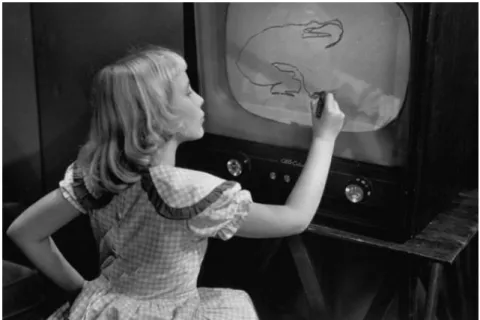
Figure 2.2: Winky Dink and You ... 19
Figure 2.3: Content being streamed from an iPad to a TV through the AppleTV ... 21
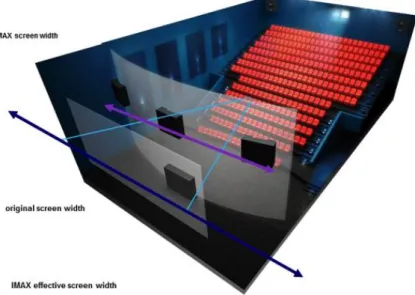
Figure 2.4: Comparison between IMAX and conventional film systems ... 22
Figure 2.5: Hypersoap ... 24
Figure 2.6: HyperCafe ... 24
Figure 2.7: Hyper-Hitchcock ... 25
Figure 2.8: YouTube Annotations ... 26
Figure 2.9: 360º Hypervideo Player ... 29
Figure 2.10: Synchronization between 360º Hypervideo Player and maps ... 29
Figure 2.11: The WindCube. ... 31
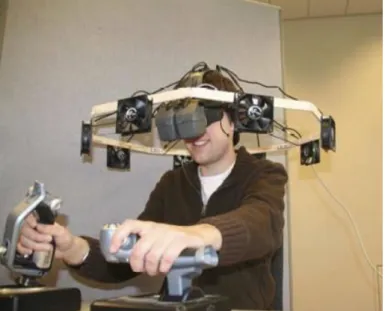
Figure 2.12: Head Mounted Display ... 32
Figure 2.13: Lehmann notched box plot for presence in different wind prototypes ... 33
Figure 2.14: Emotional Models ... 37
Figure 2.15: Mappiness ... 38
Figure 2.16: Wee Feel Fine’s different views ... 39
Figure 2.17: The Million Pound Drop’s PlayAlong Application ... 41
Figure 2.18: Miso ... 42
Figure 2.19: TVCheck ... 43
Figure 2.20: Facebook’s BuzMuzik Application ... 44
Figure 2.21: SentiTVchat with the sentiment graph ... 45
Figure 2.22: Avatar Theater... 46
Figure 2.23: PDA prototype ... 47
Figure 2.24: Wii U GamePad ... 50
Figure 2.25: Xbox SmartGlass ... 51
xiv
Figure 2.27: Akai’s SysthStation keyboard controller ... 52 Figure 2.28: Line6 StageScape M20d ... 53
Figure 2.29: Google Maps Web Application ... 54
Figure 2.30: Google Maps Mobile Application ... 54
Figure 2.31: Nike+ Application ... 55
Figure 2.32: ATC9K Application ... 56
Figure 3.1: Use Cases Diagram ... 62
Figure 3.2: Sony Bloggie Handy Cam1 ... 66
Figure 3.3: 360º Video, as captured by the Sony Bloggie camera ... 66
Figure 3.4: 360º Video, after being converted to a rectangle ... 66
Figure 3.5: Windy Sight Surfers: home screen (left) and Capture Mode (right)... 67
Figure 3.6: Windy Sight Surfers Capture Mode ... 69 Figure 3.7: Sharing the video’s metadata (upper left) and the video itself (upper right); Notification for incomplete submissions (bottom) ... 71
Figure 3.8: Windy Sight Surfers search through keywords and filters ... 72
Figure 3.9: Windy Sight Surfers Search Through Map ... 72
Figure 3.10: Search example. ... 73
Figure 3.11: Video Search results in Cover-flow presentation ... 74
Figure 3.12: Video search results in the map, with info-box highlighting information about one of the videos. ... 75 Figure 3.13: Videos “Being Watched Now” functionality ... 75 Figure 3.14: Pan around the 360º video in both left and right directions by moving the tablet around ... 77
Figure 3.15: Drag interface ... 77
Figure 3.16: 3D Audio: Red rectangle representing the video viewing viewport ... 81
Figure 3.17: 3D Audio: source location changing around the 360º video viewing. ... 81
Figure 3.18: Doppler Effect: Audio changes cyclically as in grey paths ... 82
Figure 3.19: Video Context Awareness: Video being reproduced with the overlay, displaying the orientation, speed and G-Force values ... 83
xv
Figure 3.21: Hyperlinks in 360º video ... 85
Figure 3.22: EmoMap ... 88
Figure 3.23: Windy Sight Surfers search through keywords and filters ... 88
Figure 3.24: Windy Sight Surfers Second Screen application ... 91
Figure 4.1: Windy Sight Surfers conceptual architecture... 94
Figure 4.2: Windy Sight Surfers concrete architecture ... 95 Figure 4.3: Accelerometer’s Axis ... 102 Figure 4.4: Android Activity’s lifecycle... 107 Figure 4.5: Wind Accessory inside view ... 108
Figure 4.6: Wind Accessory inside view ... 108 Figure 4.7: Wind Accessory’s architecture (breadboard perspective) ... 109 Figure 4.8: Wind Accessory’s architecture (schematic perspective) ... 109 Figure 4.9: Pulse Width Modulation ... 110
Figure 4.10: Waveforms used in sound design... 113
Figure 5.1: Self-Assessment Manikin 9-Point Scale ... 121
xvii
List of Tables
Table 3.1: Beaufort Scale ... 79
Table 5.1: USE evaluation of the Video Search features ... 123
Table 5.2: SAM and PR evaluation of the Video Search features ... 123
Table 5.3: USE evaluation – Visual and Tactile ... 124
Table 5.4: SAM and PR evaluation – Visual and Tactile ... 124
Table 5.5: USE evaluation – Spatial Audio ... 125
Table 5.6: SAM and PR evaluation – Spatial Audio ... 125
Table 5.7: USE evaluation – Cyclic Doppler Effect ... 127
Table 5.8: SAM and PR evaluation – Cyclic Doppler Effect ... 127
Table 5.9: USE evaluation of Context Awareness features... 128
Table 5.10: SAM and PR evaluation of Context Awareness features ... 128
Table 5.11: USE evaluation of Perceptual Sensing & Context Awareness features in Conjunction ... 129
Table 5.12: SAM and PR evaluation of Perceptual Sensing & Context Awareness features in Conjunction ... 130
Table 5.13: USE evaluation of Emotional features ... 131
Table 5.14: SAM and PR evaluation of Emotional features ... 131 Table 5.15: USE evaluation of Interaction with TV’s & Wider Screens features ... 132 Table 5.16: SAM and PR evaluation of Interaction with TV’s & Wider Screens features ... 133
Table 5.17: Immersive Tendencies Questionnaire ... 134
1
Chapter 1
Introduction
Video allows capturing and presenting events and scenarios with great authenticity, realism, and emotional impact, and it is becoming pervasive in our lives, in personal capturing and display devices, over the Internet, in social media, and through video on demand services on iTV (Neng & Chambel, 2010; Noronha et al, 2012). With its immersive capabilities, video has a strong impact on the viewers’ emotions, their sense of presence and engagement (Douglas & Hargadon, 2000; Visch et al, 2010). However, in traditional video, the user experience is limited to the angle that the camera was pointing during the video’s capturing. 360º video is a technology that overcomes this restriction, and that has the potential to create highly immersive video scenarios, by allowing users to feel the experience of being surrounded by the video.
This potential may be extended even further with multimedia sensing and the flexibility of mobility. Mobile devices are commonly used and increasingly incorporating a wide range of sensors and actuators with the potential to capture and display 360º video enriched with additional information (metadata), thus supporting more powerful and immersive video user experiences. Nevertheless, there are challenges related to the design of effective environments that may profit from this immersive potential.
Widescreens and CAVEs, for their shapes and dimensions, are examples of steps towards full immersion, and are privileged displays for immersive video view. However, they are not very convenient, and especially CAVEs are not widely available. On the other hand, the flexibility associated with mobile devices could allow users to actually turn around, as if they hold in their hands a window to the video where they are immersed in. Moreover, mobile devices create the opportunity for users to bring this experience with them everywhere. As second screens, mobile devices may also be used to help navigation in a video that is projected or displayed outside in a wider screen (from TV to CAVE), allowing for example to display and interact with additional
2
information and navigational aids, thus clearing the video display of additional extraneous info, which contributes for an increased sense of immersion and flexibility.
This thesis addresses immersion in interactive environments for future TV and was carried out in the context of the ImTV research project (url-ImTV). It explores the immersive potential of 360º video enriched with additional information in mobile environments. This first chapter starts with the motivation behind this work and the main research objectives. It describes the scientific context in which design and development took place, presents the main contributions, alongside with the accomplished project’s development plan and an overview of the thesis' structure.
1.1 Motivation
People strive for the fulfilment of their entertainment and information needs. When considering the technologies that support those needs, two technologies that are right on top of population’s choices are TV and, more recently, the Internet. Since it first appeared, video has been one of the main means of communication, as it is able to present a large quantity of information in a rich cultural context through a brief period of time, and its effectiveness is well proven by its solid success over time. Television was the technology responsible for bringing video to the masses, and it has been one of the most popular means to deliver video ever since it first appeared. However, during the last decade, the world has seen an astonishing revolution due to the Internet’s boom. In the late nineties, the Internet primarily consisted of a mean to communicate information, through simple websites, email clients or even social networks. But from then on, the Internet has grown immensely, broadening the content categories it provides and, due to technological development, allowing to store and transmit video more effectively. In particular, video consumption has been growing consistently, and rapidly (regarding both video submission and access). YouTube announced in 2013 one billion active users every month (url-YoutubeReport). This translates to one out of every two people on the Internet using YouTube, and therefore consuming video content. It is important to note that Internet’s traffic is increasing exponentially every month, as stated by a Cisco study (url-CiscoGlobalIPTraffic), where the conclusions point to the fact that Global IP traffic has fourfold between 2012 and 2017, and is predicted to increase threefold over the next five years, being that, every second, 1.2 million minutes of video content is predicted to cross the network in 2016. Therefore, a conclusion that may be drawn is that video is already one of the main media types accessed on the Internet and its importance is still increasing at a high pace.
As an opportunity to integrate and extend the different media, thus enhancing their capabilities and flexibility, Interactive TV (iTV) is becoming a reality. Video has been
3
able to benefit greatly with the combination of TV and Internet, by becoming increasingly dominant in both means. Regarding iTV, this concept is often used interchangeably to describe a variety of rather different kinds of interactivity. However, these can be separated in three distinct interactivity categories. The simplest one refers to the interactivity with the TV set. This category of interaction started with the use of the remote control to enable channel surfing behaviours, and evolved to what is now known as video-on-demand. This kind of interaction does not change any content or its inherent linearity, only how users control the viewing of that content. Other category of interaction, and the one that ultimately represents the real “interactive TV” is the Interactivity with TV program content, which is also the most challenging to produce. This paradigm is based on the idea that the program itself might change based on the viewer’s input. The third interaction category, Interactivity with TV-related content, is commonly the least understood, and presents itself as the most promising when it comes to changing the way we watch TV over the next decade. Examples of this interaction level include getting more information about what is appearing on the TV, whether it is about complementing the news, additional information on sport events broadcasts, or publicity and e-commerce on clothes that actors wear in movies (Dakss, 1998; url-HyperSoap).
Immersion is related to the subjective experience of being fully involved in an environment or virtual world, and this concept is often associated with the concept of presence, which relates to the viewer’s conscious feeling of being inside the virtual world. When discussing immersive environments, a multitude of approaches that may enhance their immersive capabilities can be considered. Namely, technology has been playing a very important role, especially in the virtual reality field, as the computer games industry is becoming evermore interested in improving the realism of their approaches.
Recently, a new interest has arisen about the creation of immersive environments around video. The main objective is to offer a more immersive experience to users, so that they ultimately feel as part of that same environment, being 360º video a technology that is beginning to be used as a means to enhance immersion. Systems composed of wide screens or CAVES - provide privileged display conditions for immersive video viewing, but they are not very handy as they rely heavily on specific (and often expensive) hardware. CAVES in particular are not widely available. On the other hand, mobile devices are becoming ubiquitous in everyday life and represent, by the sensors and actuators they are increasingly incorporating, a wide range of opportunities to experiment new approaches. Their flexibility opens new opportunities for more realistic designs. Moreover, this is the first time an entire new generation has grown up accessing content on demand, which is characterized by the Internet, Mobile
4
and Social environments. Nielsen (url-GenC) defines this group of people by the connected behaviour, referring to it as the Generation-C. In this context, video appears as one of the most pervasive content types, and its consumption is ever increasing. Considering YouTube’s report (url-YoutubeReport), although its numbers highlight the popularity of video in this group, they must be contextualized, by specifying what types of devices is Generation-C using to consume video content. Addressing this question, Google (url-GoogleGenC) states that YouTube usage on smartphones mirrors usage on PCs, and around 70% of the population watch YouTube on two or more devices, which confirms the significance of mobile devices in the video access context. Also, Strover et al. (Strover & Moner, 2012) investigated the role of Internet-based content, alongside various user-owned technologies (such as mobile devices and laptop computers), in order to map the new dynamics of entertainment media, with results suggesting that audiences are evolving to expect to create and use content in various forms and in various places. Strover concludes that using a mobile device, such as a laptop computer is nearly as common as using a television for entertainment. Considering the importance and proliferation of mobile devices in our society, there is an interest in finding out how they can contribute towards the enhancement of immersive characteristics in video environments. A possible approach considers the possibility to enhance the 360º video capture with metadata collected through the mobile device (e.g. geo-location, speed, or local weather), thus having the potential to support more powerful and immersive video user experiences. An example would be to allow users to actually turn around when viewing video, as if they held in their hands a window to the video where they were immersed in, while watching and sensing it, as if they were there. By using mobile platforms, users could bring this experience with them everywhere, benefiting from greater flexibility when compared to more immersive environments, such as CAVES, which impose significant hardware restrictions to users.
Also, mobile devices are being associated with the previously mentioned “Interactivity with TV-related content” interaction category. This is related with the recently popular concept of using mobile devices as second screens in TV or computer environments. Again regarding the video context, mobile devices may be used to assist navigation in a video that is being displayed in a wider screen (from TV to CAVE), allowing e.g. to display and interact with additional information and navigational aids. In addition to providing more information to the user, this approach allows clearing the video display of additional information, in order to reduce information overload and maximise the immersiveness of the environment.
The conjunction of all these concepts and technologies forms the guidelines for the proposed work.
5
1.2 Research Objectives
This project has as its main objective to explore means to increase immersion in video through the design and development of innovative interfaces that involve users in an interactive and immersive video environment using different media and devices. More specifically, immersion is addressed in a perceptual perspective, where the focus relates to the development of technologies that may enhance the users’ video viewing and navigation experience, by striving to increase their sense of presence, and give them the feeling of being inside the video. Additionally, immersion is addressed in a participatory perspective, where users can contribute to the environment.
In the approach towards the described goal, where users are able to capture 360º video alongside additional information, referred to as the video’s metadata, which is captured through a mobile device to enhance the 360º video with information regarding a variety of dimensions, such as geo-location, speed, or weather conditions. After capturing videos, users may submit them to the system (mainly targeted at mobile platforms), where there are a variety of search processes users can use in order to find videos in which they are interested (such as a set of “search through map” features). Focusing the design on the empowerment of users in their immersive video experiences, this approach may provide several components that enhance the video visualization by exploring senses or perceptions, which might increase the experience’s realism and sense of presence. Namely, wind may be used in order to provide a more realistic perception of speed and movement. Additionally, sound is considered as a means to assist users’ sense of orientation in the 360º video, and as a means to increase the movement sensation while viewing videos by the controlled use of a simulation of the Doppler Effect. Also, this system must in some way provide users with context awareness information, both to provide them with additional information about the video content (such as hyperlinks or information regarding perception – speed or weather information) and to alert to important information located outside the viewing area (such as link awareness, used to alert users to hyperlinks outside the viewing area). Beyond these functionalities, this system incorporates an emotional component, whose role in the environment is to provide users with a recommendation system based on emotional recognition. Lastly, this approach may allow the mobile application to be extended to iTVs and wider screens, thus creating a more immersive environment, where both categories of devices are used together. In this context, the work comprised in this thesis strives to answer the following Research Questions (RQs):
RQ1: “Do the designed map search features enhance the search process?”
RQ2: “Would a full screen pan-around interface increase the sense of immersion
6
RQ3: “Does wind contribute to increasing realism of sensing speed and direction
in video viewing?”
RQ4: “Does a 3D mapping of the video sound allow for easier identification of the
video orientation while it is being reproduced?”
RQ5: “Can a controlled use of the Doppler Effect increase the movement sensation
while viewing videos?”
RQ6: “Do the designed context awareness features contribute to a more immersive
environment?”
RQ7: “Do users consider the emotional perspective relevant in the access and
search of videos?”
RQ8: “Does the interaction with TVs & wider screens, with video in full screen
and additional content and navigation control in a second screen, contribute to a more immersive environment?”
Windy Sight Surfers was designed, developed and evaluated in order to address these research questions. This work was carried out in extention to a previous approach – Sight Surfers – in the ImTV research project (Noronha, 2012; Álvares, 2012).
1.3 Context
This work has been developed in the context of the ImTV – “On-Demand Immersive TV for Communities of Media Producers and Consumers” research project (UTA- Est/ MAI/0010/2009) (url-ImTV), in the Human-Computer Interaction and Multimedia (HCIM) research group (url-HCIM), which is part of the LaSIGE research lab of the Informatics Department of the Faculty of Sciences of the University of Lisbon (url-LaSIGE), in collaboration with the following entities: FCT-UNL, INESC-Porto, UTAustin - Communication and Information Schools, FCCN, ZON, RTP, Duvideo and MOG.
The ImTV project has as its main goal the design and development of an immersive and interactive TV environment that engages spectators and increases the overall quality of the video watching experience. In order to do so, the project envisions exploiting the full potential of new trends in media production and consumption by devising an on-demand immersive TV framework that combines the TV industry, Internet distribution models and end-user’s needs and interests.
7
1.4 Contributions
The major contributions of this work relate with Windy Sight Surfers: a prototype for a system that encompasses the capture, submission and visualization of 360º video and hypervideo, with several components aimed at the enhancement of the system’s immersive capabilities in mind. In this context, the main solutions that were designed, implemented and evaluated include:
The extension of a mobile application module for the capture and submission of video metadata (by extending the amount and categories of information acquired and standardizing the data that was already being captured) (Noronha, 2012). A set of search features to allow the users to search for videos according to
keywords, filters, geographic locations, and emotional characteristics.
A mobile application module for the reproduction of 360º videos, comprising different mechanisms to view around the different video angles (visual perceptual immersion), and a video overlay with a set of features designed to increase context awareness (using the video metadata as the source information). Extension of an algorithm for the synchronization between video and its
metadata.
A hardware prototype of a Wind Accessory for the enhancement of the speed and movement sensations while viewing 360º videos.
A mobile application module for the reproduction of the video’s audio component in a three dimensional space, as a means to enhance user orientation while viewing 360º videos.
A mobile application module for the reproduction of a cyclic emulation of the Doppler Effect in a three dimensional space for the enhancement of the speed and movement sensations while viewing 360º videos.
Extension of an auxiliary web interface for extending the mobile application to interactive TVs.
A mobile interface aimed at the control of video reproduction through interactive TVs (exploring the second screen paradigm).
These contributions were presented to the scientific community through the publication of a full paper in the international reference conference on interactive TV and video (url-EuroITV), and a full paper in the Immersive Media Experiences workshop at ACM MM’13, the primier international conference on multimedia:
8
Ramalho, J. and Chambel, T. "Immersive 360º Mobile Video with an Emotional Perspective". In Proceedings of the International ACM Workshop on Immersive Media Experiences 2013 at ACM Multimedia 2013, Barcelona, Spain, October 21-25th, 2013.
Ramalho, J. and Chambel, T. "Windy Sight Surfers: sensing and awareness of 360° immersive videos on the move". In Proceedings of EuroITV 2013: 11th European conference on Interactive TV and video (pp. 107-116), Como, Italy, June 24-26th, 2013.
Still in the context of this work, I took part in additional activities during the year that allowed me to present my work and get more involved in the academic and research community and activities:
Participation, as Web Chair, in the organization of the International ACM Workshop on Immersive Media Experiences 2013 (url-ImmersiveME) at the ACM Multimedia 2013 International Conference on Multimedia, Barcelona, Spain, October 21-25th, 2013 (url-ACM) (to be held), where I contributed with the design and development of the workshop website.
Presentation of a Demo of the Windy Sight Surfers prototype in the “FCUL – Dia Aberto 2013” event, April 11th 2013 (url-FCULDiaAberto), where I presented my work and experience to younger students who are about to graduate from high school, and seeking information to choose a university graduation.
Presentation of “Sharing & Navigating Immersive Video” with Prof. Teresa Chambel in the ImTV 2nd Workshop at INESC-Porto, January 10th 2013 (url-ImTVWorkshop).
Participation in the 22o Congresso das Comunicações da APDC 2012, November 21st-22nd 2013 (url-APDC) as a selected student in the “Talentos da Nova Geração” program.
1.5 Development Plan
Regarding the development plan, as the work comprised in this thesis has a strong focus on user interaction, it is imperative that its development methodology embraces the opportunities to introduce new elements that might arise during the course of the project. Therefore, the development was structured around an iterative methodology, where there was the possibility to add new functionalities and refine the ones being designed.
9
The first period of this work was focused on the exploration of concepts and related works on the areas more closely related to this thesis. This approach allowed to get a better understanding of the core themes of this work, and constituted the basis for the creative process of designing the features that would later result in this thesis.
Afterwards, focus shifted to the design and implementation of the refered features, which were comprised in the Windy Sight Surfers Application. These features were evaluated afterwards in order to analyse their perceived usability and usefulness.
Given the dynamic nature of this work, the iterative methodology that was adopted for this project, and the opportunities to publish my work earlier, the initial development plan suffered modifications, as can be seen in figures 1.1 and 1.2. Also, the project’s planned duration of nine months was exceeded by two months, being the main motivations to this extension, the writing of two research papers, instead of one, as it was initially planned, the involvment on the Immersive Media Experiences ACM workshop organization, and the other reported activities that were not initially planned.
10
Figure 1.2: Final Gantt Chart
1.6 Document Structure
This document is structured around six chapters, as follows:
Chapter 1: Introduction – presents the main motivations and goals, outlining an
overview of this thesis, summarising its research context, the contributions and the development plan.
Chapter 2: Related Work – presents the current state of the art in the research
areas more closely related to this thesis. At first, the historical context of immersion in video is introduced, as this topic is at the core of this thesis. Afterwards, several relevant areas and examples of related work are presented and discussed, being that the core concepts are introduced along the way.
Chapter 3: Windy Sight Surfers – presents the design of Windy Sight Surfers,
focusing on the video and metadata capture and publishing, the designed tools to search videos, and to increase immersion during viewing, in the two main categories of Perceptual Sensing and Context Awareness, followed by the Emotional dimension, which relates to video cataloguing and access and to user engagement and satisfaction evaluation, and lastly, the interaction with TV and wider screens.
Chapter 4: System Implementation – focuses on the implementation aspects of
the features described in Chapter 3. Due to the exploratory nature of this thesis, several challenges emerged during implementation, which relate to both the functionalities
11
design (conceptual challenges), and to their implementation (implementation challenges). As such, these challenges are analysed and addressed in this chapter.
Chapter 5: User Evaluation – describes the user evaluation of the Windy Sight
Surfers application, whose main objective was to investigate whether and in which conditions the designed features contribute to a more immersive environment for the user, according to the research questions established in section 1.2.
Chapter 6: Conclusions – sumaryzes and analyses the contributions of the
accomplished work regarding its importance to the development of immersive video environments, and outlines directions towards future developments.
13
Chapter 2
State of the Art
This chapter presents the current state of the art in the research areas more closely related to this thesis. In order to do so, a first section introduces the main concepts related to Immersion, which is followed by a section that introduces the historical context of immersion in video, as this topic is at the core of this thesis. After this section, several relevant examples of related work are presented and discussed, being that the core concepts are introduced along the way. Advances in the Hypervideo and 360º Hypervideo fields are presented, followed by prior experiences related to Wind and 3D Audio are discussed, as these topics are closely related with some of the major components of this thesis. Later on, an Emotional Perspective is introduced, which motivates the analysis of several Emotional Models and Representations. In order to establish a link between Interactive TV and Mobile Environments, the concept of Social TV is introduced. Afterwards, the increasingly popular topic of Second Screen applications is presented, followed by the Guidance Systems in Maps and Recommendation Systems.
2.1 Immersion
Even if immersion is a wide concept, it can be assumed that immersion relates to an experience that creates the feeling in the users that they are part of the simulated environment (in some cases, as it occurs frequently with video, the environment is captured instead of simulated). However, given this concept’s importance to the purpose of this work, immersion must firstly be defined carefully. A widely accepted definition of immersion follows:
“A stirring narrative in any medium can be experienced as a virtual reality because our brains are programmed to tune into stories with an intensity that can obliterate the world around us.... The experience of being transported to an elaborately simulated place is pleasurable in itself, regardless of the fantasy content. We refer to this experience as immersion.
14
Immersion is a metaphorical term derived from the physical experience of being submerged in water. We seek the same feeling from a psychologically immersive experience that we do from a plunge in the ocean or swimming pool: the sensation of being surrounded by a completely other reality, as different as water is from air, that takes over all of our attention, our whole perceptual apparatus.... in a participatory medium, immersion implies learning to swim, to do the things that the new environment makes possible.... the enjoyment of immersion as a participatory activity.” (Murray, 1997)
Many scholars and scientists seem to agree that audio and photo-realism is not a necessary condition for an environment to produce in the user a sense of immersion. However, an aspect that can be taken for granted is that the more surrounding the virtual exhibition is (the bigger the screen, the more screens or the better the sound system) the more immersive it will be. Therefore, virtual reality producers have not changed their long-term focus from aiming for audio and photo-realism. It is anyway important to highlight that it is perfectly possible to create an extremely immersive environment in a standard computer, once immersion does not totally depend on the physical dimensions. According to McMahan, there are three conditions responsible for the production of an immersion sensation in an environment: (1) the user’s expectations towards the environment must match the environment’s conventions as much as possible; (2) the user’s actions must have a non trivial impact in the environment; and (3) the environment conventions must be consistent, even if they do not meet the “real world” conventions (McMahan, 2003). It is therefore important to state that the user’s psychological factor has a major role in the success or failure of the immersive environment. Lets consider the first movie of the Star Wars saga (1977): As soon as it debuted in cinemas it became a world phenomenon, mostly because of its realism. This happened because the technology used in the movie’s production was the state of art at the time. As it was much more realistic than everything viewers had experienced to that day, the ones who saw the movie frequently felt completely immersed in the story. On the other hand, with technology’s evolution, if someone goes to the cinema (this day) and watches a movie produced with the same technology George Lucas produced the first movie of the Star Wars saga, chances are the user will not feel as immersed by the created environment, even if the plot has all the requirements for a good story. This is mainly because the first condition has not been met, being that the user’s expectations were not matched, as today’s technology largely surpasses the technology used in the movie and users are expecting realism levels associated with today’s technology.
Immersion can be divided in two main categories: Perceptual Immersion, were the user’s physical senses are stimulated and the viewer has the feeling of being inside the
15
video; and Participative Immersion, were it is intended that users take a participatory role by contributing with their own content. According to Erkki Huhtamo (Huhtamo, 1995), immersion techniques can be split into two types: some techniques induce immersion as inward experiences, while others do it as outer experiences. As an example, chemical drugs clearly relate to inward experiences, while television, cinema or virtual games enable immersion to be experienced socially, as outer experiences. For the purposes of this work, the techniques considered are the ones that induce immersion as an outer experience.
With the goal of taking new immersive technologies to a growing customer base through in-situ demonstrations and experiments, Baker et al. (Baker et al, 2011) presented a combination of novel capture and display capabilities in delivering life-sized immersive 3D entertainment experiences. Although 3D technology is becoming consolidated by now, there are still some barriers to it. Producing 3D movies requires a lot of computer-generated information. Furthermore, unlike cinema, the broadcast of live events with 3D technology (with acceptable quality) continues to be a hard and expensive task. The reason for this is mainly related to the fact that, in a live environment, there is only one chance to acquire the desired video data (it is not possible to “rewind” real life events) and the production is not able to use the required computer-generated information, as it is a live environment. Baker addressed this problem, developing systems capable to generate good quality 3D (therefore creating immersive environments) and at the same time maintaining the production costs low. Unlike standard video formats, such as 16:9 HD, Baker considers much more panoramic formats in order to enhance the 3D experience (Figure 2.1). One such example is the 5:1 format, which can cover a much wider width. There are several cases where this might be useful, for example in a basketball match, with this technology it is possible to simultaneously film the whole width of the field, delivering an experience closer to the real one.
Figure 2.1: Representative image in the 5760x1080 format captured by one of the prototype cameras
Immersion and engagement have been studied more often in the context of games, with some properties shared with other environments. Brown e Cairns (Brown & Cairns, 2004) described work done to define immersion, being that their results are based on experiences of gamers. Gamers were interviewed about their gaming and
16
immersion experiences whilst gamming, being that the results suggest users experience different engagement levels. More specifically, Grounded Theory was used to construct a robust division of immersion into three levels: engagement, engrossment and total immersion.
Engagement represents the first (lowest) level of immersion and it must occur
before any other level. The fewer barriers there are to enter this level, the less time, effort and attention are required to the gamer. Two initially barriers are the access (the gamer’s preference and game controls) and the investment the gamer puts into the game. Once these barriers are transposed, the users begin to feel engaged. An engaged player is interested in the game and intends to continue playing. At this stage, what the experience lacks is the emotional level of attachment that is seen in later levels of immersion.
The next immersion level is Engrossment, which is achieved if the gamer transposes the game construction barrier. This barrier states that the game’s characteristics are combined in such a way that the gamers’ emotions are directly affected by the game. Due to the time, effort and attention put in the game, there is a high level of emotional investment at this immersion level. The player intends to continue playing and feels emotionally drained when he stops playing.
The final immersion level is Total Immersion, or presence. The barriers to this level are empathy and atmosphere. At this level, users feel disconnected from reality to such an extent that the game is all that matters. In other words, at this level of immersion, the game becomes the only thing that has an impact in the gamer’s feelings and thoughts. Therefore, this study concludes that a shared concept of immersion exists, but instead of being a static experience, it is described as a scale of involvement with a game. The authors also state that immersion is not a necessary feature for enjoyment, once users choose the games based on mood.
Douglas and Hargadon (Douglas & Hargadon, 2000) used schema theory to define the characteristics of immersion and engagement in both conventional and new media. They examined how reader’s experiences of these two different aesthetics may be enhanced or diminished by changes in interface design, options for navigation, and other features. After that, the authors studied “flow”, a state where users are both immersed and engaged. The authors point out that, to this date, most studies related to the experience of reading hypertext documents have focused almost exclusively on readers’ physical and cognitive encounters with texts, not on the affective pleasures readers derive from paging through mysteries, science fiction, and classic literature. Although not much has been done to this day, the affective dimension of interactive narratives can be readily explored by the use of schema theory to analyse hypertexts and
17
understand how interactive narratives frustrate or gratify readers in comparison with other texts. According to the authors, the pleasures of immersion stem from our being completely absorbed within the ebb and flow of a familiar narrative schema. The pleasures of engagement tend to come from our ability to recognize a work’s overturning or conjoining conflicting schemas from a perspective outside the text, our perspective removed from any single schema. Concluding, the authors state that immersion and engagement are neither mutually exclusive properties nor polar opposites, despite the assumptions and assertions of most critics. Instead, most interactive texts necessarily rely on both, even though readers may perceive the narrative as entirely immersive or completely engaging.
As the video distribution over the Internet is becoming more and more common and its consumption switches from the TV screen to the computer, users expectations are constantly increasing. In this context, Sekar et al. (Sekar et al, 2011) studied the impact of video quality in the user’s engagement. For the purposes of the study, a set of different kinds of video was used: short video-on-demand (VoD), which corresponds to video clips with a length between 2 and 5 minutes; long VoD, which corresponds to video clips with a length between 35 and 60 minutes; and live content. Several video quality metrics were used in the evaluation, such as the join time, buffering ratio, average bitrate, rendering quality and rate of buffering events. The user’s engagement was quantified, both at the “each video” and the “each user” levels. One of the main conclusions was that the time spent on buffering has the major impact on the user engagement across all types of content. Another conclusion was that the average bitrate has a much more important role in the live content than in the VoD (regarding the user’s engagement).
2.2 Historical Context of Immersion in Video
This section aims to provide an insight through the historical context of video, and its ability in providing Immersive experiences to the viewers. Also, when discussing video, it is impossible to unbind this concept from the three main mediums that viewers use to access and consume video: Cinema, Television and, more recently, the Internet. For this reason, this section interlinks all these concepts, thus providing a description on how these three mediums changed the way video is used in the creation of Immersive experiences throughout the years.
When the 1880s first witnessed the invention of the movie camera, pioneers started to turn their attention to the then new film production industry. Namely, Eadweard Muybridge conducted an experiment that consisted of a series of photographs where the trotting of a horse was represented. Being developed under the motivation of providing