Recency or Relevance: A Quest for
Pedagogical Framework in Teaching
Philippine and World Literature in Senior
High School
Richard M. Bañez
College of Teacher Education, Batangas State University – JPLPC Campus, Malvar, Batangas, Philippines
Date Received: September 19, 2016; Date Revised: November 10, 2016
Asia Pacific Journal of Multidisciplinary Research
Vol. 4 No.4, 78-86 November 2016 Part II
P-ISSN 2350-7756 E-ISSN 2350-8442
www.apjmr.com
Abstract –Pedagogical questions on whether recency or relevance of literary texts, and the importance of generic academic over discipline-based learning objectives as the core of literature instruction are increasingly becoming the interest of debates in senior high school education. Hence, this study determined the degree of importance of literary instruction in preparation for college education and workplace challenges as assessed by 38 Grade 11 students at Malvar Senior High School, Philippines during the school year 2016-2017. By employing the survey type of descriptive research with a self-made questionnaire, it was found out that the respondents assessed both recency and relevance as important consideration in selecting literary texts. They also perceived that discipline-based/work-oriented learning objectives, especially those that focus on honing their human relation skills, were relevant in preparing themselves for college education and workplace responsibilities. Moreover, the respondents preferred language-based activities that tend to provide the former opportunities and develop other complex skills which are important in tertiary education and workplace challenges. With these, revitalizing the literature instruction in the senior high school is highly recommended in this study.
Keywords –21st Century Philippine and World Literature, Enhanced Basic Education Act of 2013, K-12 Basic Education, Senior High School Education, Teaching of Literature
INTRODUCTION
As the Philippines embraces the challenges of ASEAN 2015 integration, educational reforms had been made on its basic educational system. By the virtue of the Enhanced Basic Education Act of 2013, the Department of Education (DepEd) implemented the K-12 basic education curriculum adding two years of senior high school education from the previous four-year junior high school education. Filipino students are then required to take academic tracks such as Accountancy, Business and Management (ABM), Humanities and Social Sciences (HUMSS), Science, Technology, Engineering and Mathematics (STEM), and General Academic Strand (GAS) to prepare themselves for college education or workplace challenges. Senior high school core courses with their respective competencies had been crafted to attain these goals.
However, one of the core curriculum subjects, 21st Century Literature from the Philippines and the
the Filipino college learners job ready as this course mainly focuses on recency of the literary texts rather than the relevance of the literary pieces to the
learners’ preferred academic tracks or their future
careers. This limits the study of literature to the types and forms written in 2001 up to the present. However, the curriculum guide released by DepEd for teaching the said course seems to be redundant as indicated in the competencies which are already taken by the students during their junior high school. This literary pedagogy calls for revisiting its contents and competencies to acknowledge relevance of the literary texts rather than their recency to comply with the standards and set of principles in the implementation of rules and regulations of the enhanced basic education act which prescribes the curriculum to be relevant, responsive, contextualized, and global.
In a progressivist view, an effective curriculum is
one that is relevant to students’ lives. Lessons taught
students. A course merely focusing only on factual knowledge with limited scope may be perceived as irrelevant. This lack of relevance according to
Saavedra and Opfer [1] can decrease students’
motivation and may decrease learning. On the other hand, Boix-Mansilla and Jackson [2] pointed out that learning may be increased if students know how to use their knowledge of a principle in improving their understanding of the things that surround them. The relevance of a course or topic is clearer to students if it is within a meaningful context where its importance to their career paths is properly communicated. Once it is clear to the students, they will easily understand how the knowledge and skills set in the objectives of their lessons contribute to their competence as individuals and future professionals.
The relevance of literary texts to the lives of the students has been long recognized by educators as an ideal literary pedagogy. Chambers and Gregory [3] describe this connection of literary study to students as existential connection, a manifestation of terms and conditions of human existence to literary pedagogy. They further challenge educators to center the literary instruction to conditions that affect students as human beings, i.e., linking their lives to the literary texts. If this will be considered in the context of teaching literature in senior high school, a shift from recency to relevance of the literary texts is expected as Horner [4] emphasized that the relevance of literature is important in the holistic development of students. The text selection will not be limited to 21st century writings but will include those with artistic merits written earlier as they are found relevant to the preferred academic tracks of the students. The contents and learning objectives of literary instruction may be discipline-based which is anchored on global and workplace issues.
As the present literary instruction in the core curriculum subjects in senior high school primarily focuses on the recency of the literary texts, it neglects the idea of the universality of literature. Universality as one of the literary standards describes a great literary work as timeless and timely. In terms of classical or contemporary works, My Van [5] indicated that themes of literary texts can be easily accessible to students by connecting them to their individual experiences and activating their background knowledge. In consonance with this, curriculum makers may reconsider the selection of literary texts not only limiting it to those 21st century writings but those with literary merits.
In considering text selection in literature instruction, works which are well-known for their literary merits have been proven valuable resources
for teachers in shaping students’ personality and
critical thinking. Djikic, Oatley, and Carland [6] determined whether genre or artistic merit caused variability in the perceived personality traits of an individual whenever reading a literary piece. They
found out that individuals’ perceived artistic merit had an effect to opening readers’ personality to variability.
They concluded that the transformative effect of literature is associated with the artistic merit of the
literary text as readers’ self-perceived personality appeared unstable while comprehending literary texts which are well-known for their artistry.
Khatib and Derakhshan [7] noted that studying literature promotes critical thinking enhancement among language learners as it brings about changes in the attitudes of the learners allowing them to reflect on their lives, learning, and language. This may also provide them opportunity to question, interpret, connect, and explore issues depicted in the literary texts.
Similarly, Al-Khader [8] emphasized that studying literature provides students opportunity for personality development and cultural adaptation. This teaches them on how to appreciate and respect cultural diversity which enables them to adapt to a multicultural and global education. He added that students may learn openness as they recognize that their perspectives on issues concerning their lives which seem to be one of the numerous available options. Literature then contributes in redefining
students’ personality with a fresh outlook towards others and their culture. This enriches their experiences and becomes part of their repertoire of knowledge.
classroom that will decrease students’ motivation for
learning. Meanwhile, Rashid, Vethamani and Abdul Rahman [10] noted that language-based activities and personal-response activities were the least activities conducted in the literature classroom.
As a literature enthusiast and educator and at the same time taking up Doctor of Education major in Educational Management, the researcher deemed that the conduct of this study that focused on pedagogical shift from recency to relevance is necessary as it can revitalize the teaching of literature in the senior high school. Literature teachers can then be challenged to transform the literature instruction in varied strategies and competencies against previous encounters by students during their junior high school education. Critical thinking and personality development in relation to college and workplace challenges can be considered in making the senior high school literature subject relevant to the lives of the students and the national goals of basic education in the country.
OBJECTIVES OF THE STUDY
The study aimed to determine the degree of importance of literary instruction in preparation for college education and workplace challenges as assessed by senior high school students who are taking HUMSS as academic track at Malvar Senior High School during the school year 2016-2017.
Specifically, it investigated the following: the respondents assessment of the degree of importance of text selection in literary instruction in terms of recency and relevance; their perception on the relevance of studying literature as to generic academic learning objectives and discipline-based/work-oriented learning objectives; their preferred activities in studying Philippine and World Literature; and the significant difference between the assessments of the respondents as to the degree of importance of text selection in literary instruction.
MATERIALS AND METHODS
Research Design
This study utilized the descriptive type of research. It covered a total population of 38 Grade 11 students who are taking HUMSS as academic track at Malvar Senior High School for the School Year 2016-2017. The researcher believed that these students can provide pertinent data since literary study is an allied discipline of humanities and social sciences which is their chosen career path. He also believes that
determining students' perceived and subjective needs can promote learning-centered approach to literary instruction as he supports the concept of Learning Needs Analysis wherein strategies and skills which students see as relevant to themselves are identified and considered in designing learning experiences. This research endeavor underwent three phases: planning, data gathering, and analysis. The researcher was able to formulate the research problem through examining a number of resources and existing studies on literature pedagogy. His acquaintance with concepts on the teaching of literature and the curriculum guide for senior high school literature course enabled him to devise a self-made questionnaire that served as the main instrument used in obtaining information needed in the study.
Instrumentation
The questionnaire is composed of three parts. The
first part deals with the respondents’ assessment of the
degree of importance of text selection in literary instruction having five items for recency of the text and another five items for its relevance. The second
part pertains to the respondents’ perception on the
relevance of studying literature as to generic academic learning objectives and discipline-based/work-oriented learning objectives wherein each is represented by five items. The last part refers to the preferred activities of respondents in studying Philippine and World Literature with six categories. The instrument underwent content validation to ensure its appropriateness to the main objective of the study and clarity of the item statements for the target respondents.
To facilitate the interpretation of the computed mean, the following mean ranges with their corresponding interpretations were used: 3.51-4.00: Strongly Agree (SA)/Highly Important (HI)/Highly Relevant (HR)/Highly Preferred (HP); 2.51-3.50: Agree(A)/Important(I)/Relevant(R)/Preferred (P); 1.51-2.50: Slightly Agree (SA)/Slightly Important (SI)/Slightly Relevant SR)/Slightly Preferred (SP); 1.00-1.50: Disagree (D)/Not Important (NI)/ Not Relevant (NR)/Not Preferred (NP).
Data Collection Procedure
to the target respondents and clarified some of the items for their convenience. The copies of the questionnaire were immediately retrieved. The responses made by the respondents in the administered questionnaire underwent tabulation and scoring.
With the help of a statistician, the data gathered were treated using descriptive statistics such as Mean, Ranking, and Z-test. The researcher interpreted and analyzed the results to provide answers to the specific problems posed in the study. The results also served as basis in the formulation of recommendations to revitalize the literature instruction in the senior high school education.
This study is only limited to the responses made by the respondents in the administered questionnaire. Moreover, it did not evaluate the effects of the
recency and relevance of literary texts to the students’
personality types nor their academic performance.
RESULTS AND DISCUSSION
This paper determined the degree of importance of literary instruction in preparation for college education and workplace challenges as assessed by senior high school students at Malvar Senior High School. The succeeding tables reflect the results of the study.
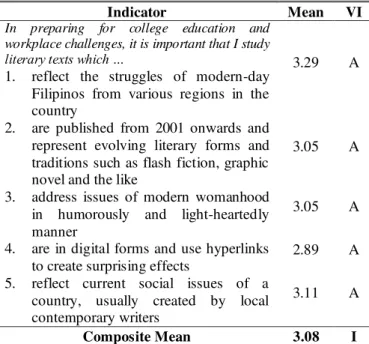
Table 1. Importance of Recency in Text Selection
Indicator Mean VI
In preparing for college education and workplace challenges, it is important that I study
literary texts which …
1. reflect the struggles of modern-day
Filipinos from various regions in the country
3.29 A
2. are published from 2001 onwards and represent evolving literary forms and traditions such as flash fiction, graphic novel and the like
3.05 A
3. address issues of modern womanhood
in humorously and light-heartedly manner
3.05 A
4. are in digital forms and use hyperlinks to create surprising effects
2.89 A
5. reflect current social issues of a
country, usually created by local contemporary writers
3.11 A
Composite Mean 3.08 I
Text selection in the context of teaching literature deals with the collection of appropriate literary pieces to be incorporated with the curriculum guide or with
the course syllabus of any literature class as it appears to be the learning needs of the students. A question whether recency or relevance be prioritized in mainstreaming literary pieces in teaching Philippine and World literature to senior high school students are encountered by literature teachers. The results of the survey conducted regarding this matter is presented in the following tables.
Table 1 presents the importance of recency in text selection. It can be observed in the table that the items have acquired mean scores ranging from 2.89 to 3.29. The respondents agreed that it is important that they study literary texts which reflect the struggles of modern-day Filipinos from various regions in the country to prepare for college education and workplace challenges as this item obtained the highest mean of 3.29. This result implies that students are interested in literary selections that deal with current issues in the society. As living witnesses, their familiarity with these societal issues is increased as they can easily draw out their personal experiences in interpreting the meaning of literary texts dealing with modern-day Filipinos. Rosenblatt [11] coined the term schemata to refer to this familiarity with the topic. He added that students often use their background knowledge and personal feelings to understand a work and improve their comprehension when reading.
In spite of garnering the least mean of 2.89, the respondents still agreed that studying texts which are in digital forms and use hyperlinks to create surprising effects are important in preparing them for tertiary education or workplace challenges. The result manifests that the utilization of information and communication technology especially hypermedia is compatible with the learning modality of 21st century students. This is parallel to the findings of Macaraig and Cabrera [12] regarding the use of technology that allows more students to actively think about information, make choices, and evaluate skills than the typical teacher-led lessons.
reflecting the beliefs and values of their time and culture, with multiple meanings conditioned by the structure of discourse, emphases and omissions as stipulated in Tasmanian Curriculum [13]. They offer selected and partial versions of reality, producing, reproducing, and maintaining different social ideologies. Working with literary texts is not only good for students to acquire the basic language skills, but also to explore the historical, cultural and social contexts in which texts are created and interpreted. Thus, students often consider the recency of the texts important.
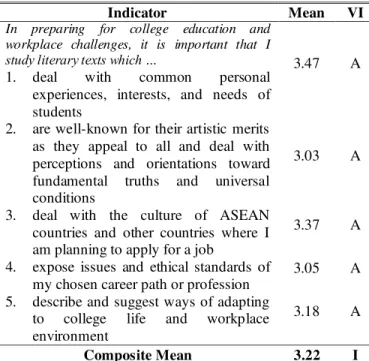
Table 2. Importance of Relevance in Text Selection
Indicator Mean VI
In preparing for college education and workplace challenges, it is important that I
study literary texts which …
1. deal with common personal
experiences, interests, and needs of students
3.47 A
2. are well-known for their artistic merits as they appeal to all and deal with perceptions and orientations toward
fundamental truths and universal
conditions
3.03 A
3. deal with the culture of ASEAN
countries and other countries where I am planning to apply for a job
3.37 A
4. expose issues and ethical standards of my chosen career path or profession
3.05 A
5. describe and suggest ways of adapting
to college life and workplace
environment
3.18 A
Composite Mean 3.22 I
Table 2 shows the importance of relevance in text selection. It can be found in the table that the five items acquired mean scores ranging from 3.03 to 3.47. The respondents agreed that it is important that they study literary texts which deal with common personal experiences, interests, and needs of students with the highest mean score of 3.47. This result implies that the respondents are motivated to read literary selections that can provide them opportunity to reflect on their personal experiences, interests and needs as these literary texts bring the study of literature to a personal level. According to Maley [14], literary texts that commonly deal with events, ideas, feelings and
emotions that conform to the readers’ experience
produce personal relevance. This enables students to relate their reading experience with their previous
background knowledge that facilitates the learning process. In the same manner, Duff and Maley [15] described the motivational criterion in support of the use of literature in the language classroom. They pointed out that this criterion refers to the adequacy of literary texts to the exploration of students’ feelings and to the enhancement of their motivation, which is provided by authenticity and meaningful contexts. They further discussed that literary texts helped students to stimulate their imagination, develop their critical abilities, and increase their emotional awareness.
Although obtaining the least mean of 3.03, the respondents still agreed that studying literary texts which are well-known for their artistic merits which are important to prepare them for college education and workplace challenges. This result denotes that students still acknowledge the importance of aesthetic especially in the use of language in literature to decipher meaning of literary texts. They are interested on how the overall structure of a literary selection work with unison with its content to reveal its meaning and significance. Savvidou [16] supports this contention that analyzing the overall structure of the text leads to a deeper exploration of the message of a literary text.
The composite mean 3.22 indicates that the respondents considered the relevance of the literary pieces important in the selection of text for literary instruction. They considered relevance of literary texts necessary in studying literature due to its capacity of establishing personal connection between the students and the texts. This finding is similar to the argument of Collie and Slater [17] that choosing a book that is relevant to the life experiences, emotions, or dreams of the learners can foster personal involvement and can establish creative relationship between the reader and the text.
Respondents’ Perception on the Relevance of Learning Objectives in Studying Literature
In junior high school education, most learning objectives encountered by students in literature class are anchored on language development and literary criticism. Teachers often found these generic academic learning objectives essential in promoting
students’ critical thinking. This is commonly
On the other hand, the primary goal of senior high school education is to prepare learners to tertiary education and workplace environment. It is then imperative that the learning objectives in this level do not only emphasize technical skills but also human relation skills which are often considered in the recruitment and selection of employees in an organization. The relevance of discipline-based/work-oriented learning objectives should also be recognized in literature instruction to support the goal of senior high school education. The results of the survey conducted on this matter are shown in the following tables.
Table 3. Relevance of Generic Academic Learning Objectives in Studying Literature
Indicator Mean VI
In preparing for college education and workplace challenges, it is important that the learning objectives in my literature class will
focus on …
1. valuing the contributions of local
writers to the development of regional literary traditions
3.24 A
2. differentiating the various literary
genres citing their elements, structures and traditions
3.05 A
3. analyzing the figures of speech and other literary techniques and devices in the text
3.21 A
4. explaining how varied contexts
enhance the meaning of a literary piece to enrich my understanding
3.18 A
5. producing a creative representation of a literary text by applying multimedia skills
3.11 A
Composite Mean 3.16 R
Table 3 illustrates the relevance of generic academic learning objectives in studying literature. The table shows that the items acquired mean scores ranging from 3.05 to 3.24. It should be noted that the item statement, valuing the contributions of local writers to the development of regional literary traditions, obtained the highest mean of 3.24. This implies that Filipino students value their cultural heritage by patronizing writings of local authors which they find relevant to their undertakings. This result is similar with the Qualification Framework Articulation of the Department of Education [18] which stressed that senior high school students should
possess an understanding of right and wrong; one’s
history and cultural heritage; and deep respect for self, others and their culture, and the environment.
The composite mean of 3.16 reveals that the respondents perceived that generic academic objectives are relevant to the primary goal of senior high school education. The respondents deemed that generic academic learning objectives promote critical and creative thinking which are important in attaining success across the curriculum. According to Bobkina and Dominguez [19], studying literature is deemed suitable in founding and inculcating critical and creative thinking skills for its diversity in terms of contents compared to other subjects.
Table 4. Relevance of Discipline-based/Work-oriented Learning Objectives in Studying Literature
Indicator Mean VI
In preparing for college education and workplace challenges, it is important that the learning objectives in my literature class will focus on …
1. appreciating and respecting for cultural diversity to adapt to a multicultural and global education
3.26 A
2. analyzing issues and ethical standards related to my field of specialization or my career path
3.13 A
3. adapting to the demands and
challenges of college education or workplace environment
3.11 A
4. developing skills, knowledge, and
abilities that will enable me to compete in the global economy
3.39 A
5. honing my human relation skills to
help me easily adapt in an organization
3.42 A
Composite Mean 3.26 R
Table 4 presents the relevance of discipline-based/work-oriented learning objectives in studying literature. As seen in the table, the items acquired mean scores ranging from 3.11 to 3.42. The respondents agreed that the learning objectives in literature class should focus on honing students’ human relation skills to help them easily adapt in an organization, developing skills, knowledge, and abilities that will enable them to compete in the global economy, and appreciating and respecting for cultural diversity to adapt to a multicultural and global education as these item statements generated mean scores of 3.42, 3.39, and 3.26 respectively. The
respondents’ favorable responses on the stated items
employment after graduation. This is the reason why they perceived the work-oriented learning objectives highly relevant in making them job ready. In similar manner, Denisi and Griffin [20] noted that human relation skills and knowledge of cultural diversity are important in organization and served as criteria in the recruitment and selection of employees.
Furthermore, the computed composite mean of 3.26 reveals that the respondents perceived the discipline-based/work-oriented learning objectives in studying literature relevant. The respondents see the importance of the practical application of the outcomes of these learning objectives to their career paths. Likewise, Fry, Ketteridge, and Marshall [21] acknowledge the importance of teaching in the disciplines. They emphasized the power of maximizing discipline relevance and encouraged educators to promote connections between students and their discipline and its application in the real world which can be further enhanced through a disciplinary understanding that includes researching the employment market for the discipline, entrepreneurship among recent graduates, and the range of national and international work-placement opportunities.
Respondents’ Preferred Activities in Studying Philippine and World Literature
Students learn best when the teaching modality is appropriate to their skills and interests; hence, teachers need to identify classroom activities which
are favorably increasing the students’ motivation to
learn which tend to carry out the learning objectives. With this, classroom instructions have become a shared responsibility between students and teacher.
Table 5 shows the preferred activities in studying Philippine and World Literature. This is presented with the aid of mean and ranking. It can be observed in the table that the items acquired mean scores ranging from 3.26 to 3.47. The respondents preferred all of the presented activities in studying literature. Language-based activities which are anchored on guiding the students to express their opinions towards a text by setting language activities in the lesson and providing them language practice using the text placed first in rank by receiving the highest mean score of 3.50.
This result suggests that students recognized the importance of language-based activities in a literature
class as these can provide them opportunities to develop other complex skills important in tertiary education and workplace challenges. Durant [22] noted that language oriented pedagogy can promote the development of a wide range of skills which are linked together such as close reading skills, writing competence, reflective critical awareness, independence as learners, and willingness to work and discuss intellectual issues together. He emphasized that such activities may have a special role to play in providing continuity between secondary and tertiary education, by building on strengths students already established in secondary-school language teaching.
Table 5. Preferred Activities in Studying Philippine and World Literature
Indicator Mean VI Rank
1. Information-Based Activities
elicit information from us about the text by explaining the content of the text to the class and asking questions based on what I have read
3.47 P 2
2. Personal Response-Based Activities
encourage us to relate the themes to our personal experiences and to express our feelings towards the issues of the text
3.29 P 5
3. Language-Based Activities
guide us to express our opinions towards a text by setting language activities in the lesson and providing us language practice using the text
3.50 P 1
4. Paraphrastic-Based Activities
ask us to re-tell the text by using simple terms to explain what the story is about
3.26 P 6
5. Moral/Philosophical-Based Activities
incorporate moral lessons by raising our awareness of values derived from the text
3.37 P 3
6. Stylistics-Based Activities
ask us to mark any linguistic features from the text that are significant to our reading enabling us to discuss beyond the surface meaning of the text
3.32 P 4
stressed that the inclusion of literary texts in an English class can develop different language aspects. They emphasized that literature can promote students second language vocabulary knowledge, knowledge of lexical phrases and fixed expressions, grammatical knowledge, language awareness, and sociolinguistic and pragmatic competences.
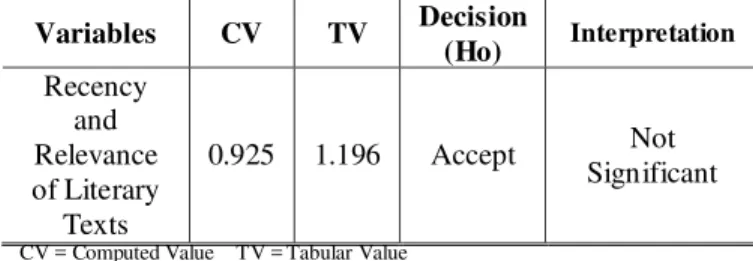
Table 6. Difference between the Assessments of the Respondents as to the Degree of Importance of Text
Selection in Literary Instruction
Variables CV TV Decision
(Ho) Interpretation Recency
and Relevance of Literary
Texts
0.925 1.196 Accept Not
Significant
CV = Computed Value TV = Tabular Value
To ponder from the question whether recency or relevance of the literary selections should be prioritized in crafting a course syllabus in teaching
Philippine and World Literature, the students’
assessments of the importance of the above cited criteria in text selection were subjected to Z-test. In this attempt, the researcher asserted that there is no significant difference between the assessments of the respondents as to the degree of importance of text selection in literary instruction.
Table 6 illustrates the difference between the assessments of the respondents as to the degree of importance of text selection in literary instruction. As found in the table, the computed z value of 0.925 is found less than the tabular value of 1.196; therefore, the null hypothesis is accepted and concluded that there is no significant difference between the degree of importance of recency and relevance in text selection for literary instruction. It implies that both recency and relevance of the literary texts appear to be important in text selection. This result is affirmed by Lima [23] who encouraged educators to consider a number of different factors when choosing a text and not to limit text selection into certain criteria. This consideration includes learners’ language proficiency, age, gender, background knowledge, and the like.
CONCLUSION AND RECOMMENDATION
A successful literature instruction lies on analyzing the learning needs of the students and translating these needs into outcomes that will be beneficial for the
students as they prepare for continuing education or workplace challenges. It is in this premise that this paper had been conceptualized. This study determined the importance of recency and relevance as criteria in text selection in Philippine and World Literature instruction to senior high school students. The assessment of the respondents and the result of significant difference of the investigation between the importance of the mentioned criteria revealed that both recency and relevance are important considerations in selecting literary texts for literature instruction as students deem literary pieces appropriate as reflected to the struggle of modern day Filipinos and those that deal with their common personal experiences, interests, and needs which appear to be important in preparing themselves for college education and workplace challenges. Moreover, they perceived that the discipline-based/work-oriented learning objectives in studying literature relevant in their chosen career path especially those that focus on honing their human relation skills to help them easily adapt in an organization. Generic academic learning objectives
were also found relevant to the respondents’ academic
undertaking as they can foster critical and creative thinking. In terms of classroom activities, the respondents preferred language-based activities as they recognized the importance of these activities in providing them opportunities to develop other complex skills in tertiary education and workplace challenges.
Teachers are also encouraged to make use of language-based activities in teaching literature to further enhance the communication skills of the students and develop other complex language skills that may be used in their future professions. Since
this study covers only the students’ assessment of
importance of text selection in literature instruction, the perceived relevance of generic and discipline-based learning objectives, and their preferred activities in studying literature, the researcher calls for further investigation about the effects of recency and relevance of literary texts to students’ personality types or their academic performance.
REFERENCES
[1] Saavedra, A & Opfer, D. (2012). Teaching and learning 21st century skills: Lessons from the learning sciences. RAND Corporation: Hong Kong.
[2] Boix-Mansilla, V. & Jackson, A. (2011). Educating for global competence: Preparing our youth to engage in the world. New York, NY: Asia Society.
[3] Chambers, E. & Gregory, M. (2006). Teaching &
learning English literature. London:SAGE
Publications.
[4] Horner, S. (1983). Best laid plans: English teachers at work for school council. York: Longman.
[5] My Van, T. (2009). The relevance of literary analysis
to teaching literature in the EFL classroom. English Teaching Forum. Number 3.
[6] Djikic, M., Oatley, K. & Carland, M. (2012). Genre or artistic merit? The effect of literature on personality. Scientific Study of Literature Vol. 2, No. 1, ISSN No. 2210-4372, pp. 25-36.
[7] Khatib, M., Rezaei, S., & Derakhshan, A. (2011). Literature in EFL/ESL classroom. English Language Teaching. Vol. 4, No. 1.
[8] Al-Khader, M. (2010). The role of literature in
promoting university students' self-reliance.
Unpublished thesis. Al-Quds Open University.
[9] Hwang, D. & Embi, M. (2007). Approaches
employed by secondary school teachers to teaching the literature component in English. Jurnal Pendidik dan Pendidikan, 22, pp. 1-23.
[10] Rashid, R., Vethamani, M., & Abdul Rahman, S. (2009). Approaches employed by teachers in teaching literature to less proficient students in form 1 and form 2. English Language Teaching. Vol. 3, No. 4. ISSN 1916-4742 E-ISSN 1916-4750
[11] Rosenblatt, L. M. (1978). The reader, the text, the poem: The transactional theory of the literary work. Carbondale, IL: Southern Illinois University Press.
[12] Macaraig, F. K. C., & Cabrera, M. A. S. (2006). The effect of computer education to the music class of St. Louis Anne College. Unpublished Thesis, Batangas
State University-JPLPC, Malvar Campus, Malvar, Batangas.
[13] Tasmanian Curriculum (2012). Tasmanian
Curriculum: Rationale. In J. Bobkina & E. Dominguez, The use of literature and literary texts in the EFL classroom: Between consensus and controversy (pp. 256-257). International Journal of Applied Linguistics & English Literature. Vol. 3 No. 2, ISSN 2200-3592.
[14] Maley, A. (1989). Down from the pedestal:
Literature as resource. In Literature and the Learner: Methodological Approaches. Cambridge: Modern English Publications.
[15] Duff, A. & Maley, A. (1990). Literature. Oxford: Oxford University Press.
[16] Savvidou, C. (2004). An integrated approach to the teaching of literature in the EFL classroom. The Internet TESL Journal (12).
[17] Collie, J. & Slater, S. (1987). Literature in the language classroom: A resource book of ideas and activities. Cambridge University Press: Cambridge.
[18] Department of Education. (2013).DEPED PQF
articulation for grades 10 & 12. Retrieved July 10,
2016 from
https://www.scribd.com/doc/310638255/Deped-Shs-Dr-Almeda-Deped-Ncr
[19] Bobkina, J. & Dominguez, E. (2014). The use of literature and literary texts in the EFL classroom: Between consensus and controversy. International Journal of Applied Linguistics & English Literature. Vol. 3 No. 2, ISSN 2200-3592.
[20] Denisi, A. S. & Griffin, R. W. (2012). Human resource management. Cengage Asia: Philippines.
[21] Fry, H., Ketteridge, S. & Marshall, S. (2009). A handbook for teaching and learning in higher education: enhancing academic practice. Routledge: New York.
[22] Durant, A. (1995). Language through Literature:
Approaches to teaching Literature in English in L2 Contexts, In M. Linnarud, T. Ronnerstrand, Y. Leffler & R. Kvillerud, SPRAK OCH FIKTION (pp.291-311). Hogskolan I: Karlstad Press.
[23] Lima, C. (2010). Selecting literary texts for language learning. Journal of NELTA, 15 (1-2), 110-114.
COPYRIGHTS
Copyright of this article is retained by the author/s, with first publication rights granted to APJMR. This is an open-access article distributed under the terms and
conditions of the Creative Commons Attribution