DOI:
10.1590/0004-282X20150081
ARTICLE
Incidence and mortality of ischemic
stroke subtypes in Joinville, Brazil: a
population-based study
Incidência e mortalidade dos subtipos de AVCi em Joinville, Brasil: um estudo de base
populacional
Marcos C. Lange
1, Norberto L. Cabral
2, Carla H. C. Moro
2, Alexandre L. Longo
2, Anderson R. Gonçalves
2,
Viviane F. Zétola
1, Tatjana Rundek
3Previous population-based studies reported the
inci-dence and mortality of ischemic stroke (IS) subtypes in
dif-ferent settings, most of them on the White population from
high-income countries
1,2,3,4,5,6,7,8. In Latin America, there is only
one study, which was conducted in a Spanish and Mestizo
population in Iquique, Chile
9. As far as we know, no previous
study has reported IS subtypes rates among predominantly
White people from Latin America.
The crude annual incidence rate of IS in Brazil range
from 62 to 92 per 100,000 inhabitants with a mixed
pat-tern of cardiovascular risk, characterized by high
prev-alence of ischemic heart disease, dyslipidemia,
hyper-tension and diabetes
10,11. Determining the incidence,
mortality and risk factors among IS subtypes may help to
improve the public health actions and reduce the IS
dis-ease burden
12,13.
1Universidade Federal do Paraná, Hospital de Clínicas, Divisão de Neurologia, Curitiba PR, Brazil; 2Universidade da Região de Joinville, Hospital Municipal São José, Joinville SC, Brazil;
3University of Miami, Miller School of Medicine, Miami, USA.
Correspondence: Marcos C. Lange; Rua General Carneiros, 181/4º andar; 80060-900 Curitiba PR, Brasil; E-mail [email protected] Conflicts of interest: There is no conlict of interest to declare.
Support: Fundação de Amparo a Pesquisa do Estado de Santa Catarina, University of the Region of Joinville and the Joinville Municipal Health Department. Received 10 December 2014; Received in inal form 12 March 2015; Accepted 02 April 2015.
ABSTRACT
Aims:
To measure the incidence and mortality rates of ischemic stroke (IS) subtypes in Joinville, Brazil.
Methods:
All irst-ever IS patients
that occurred in Joinville from January 2005 to December 2006 were identiied. The IS subtypes were classiied by the TOAST criteria, and
the patients were followed-up for one year after IS onset.
Results:
The age-adjusted incidence per 100,000 inhabitants was 26 (17-39) for
large-artery atherosclerosis (LAA), 17 (11-27) for cardioembolic (CE), 29 (20-41) for small vessel occlusion (SVO), 2 (0.6-7) for stroke of other
determined etiology (OTH) and 30 (20-43) for stroke of undetermined etiology (UND). The 1-year mortality rate per 100,000 inhabitants was
5 (2-11) for LAA, 6 (3-13) for CE, 1 (0.1-6) for SVO, 0.2 (0-0.9) for OTH and 9 (4-17) for UND.
Conclusion:
In the population of Joinville
,
the
incidences of IS subtypes were similar to those found in other populations. These indings highlight the importance of better detection and
control of atherosclerotic risk factors.
Keywords:
stroke, risk factors, Latin America, epidemiology.
RESUMO
Objetivos:
Avaliar as incidências e as taxas de mortalidade dos subtipos de acidente vascular cerebral (AVC) isquêmico em Joinville,
Brasil.
Métodos:
A partir do Registro de AVC de Joinville, um banco de dados de base populacional em curso, foram identiicados todos os
primeiros eventos de AVC isquêmico que ocorreram em Joinville entre janeiro de 2005 e dezembro de 2006. Os subtipos foram classiicados
pelos critérios de TOAST, e os pacientes foram seguidos por um ano após o evento.
Resultados:
A incidência ajustada por idade por
100.000 habitantes foi de 26 (17-39) para a aterosclerose da artéria grande (AGA), 17 (11-27) para cardioembolia (CE), 29 (20-41) para a
oclusão de pequena artéria (OPA), 2 (0,6-7) para outras etiologias determinadas (OTR) e 30 (20-43) para etiologia indeterminada (IND). A taxa
de mortalidade de 1 ano por 100.000 habitantes foi de 5 (2-11) para AGA, 6 (3-13) para CE, 1 (0,1-6) para OPA, 0,2 (0-0,9) para OTR e 9 (4-17)
para IND.
Conclusão:
Na população de Joinville, as incidências dos subtipos foram semelhantes aos encontrados em outras populações.
Estes resultados destacam a importância de uma melhor detecção e controle dos fatores de risco para aterosclerose.
Our aim was to determine the incidence, mortality and
the risk factors for IS subtypes in Joinville, Brazil.
METHOD
Study population
he data were extracted from the Joinville Stroke Registry,
an ongoing prospective population-based data bank started
in 2005 in Joinville, southern Brazil. he city population was
487 047 inhabitants in 2005 and 496 050 in 2006
14. he city
has four general hospitals and one public institutional care
facility, for a total of 840 beds, all four hospitals have
comput-ed tomography (CT) services available on a 24-h basis. he
predominantly race-ethnicity based on skin color from the
Joinville is White (85.6%)
15.
We identified all cases of first-ever IS (FEIS)
occur-ring between January 1, 2005 and December 31, 2006.
The detailed methods of cohort recruitment have been
reported previously
10.
Diagnosis work-up and criteria
Ischemic stroke was deined as the presence of signs of
sudden focal or global cerebral dysfunction that lasted
lon-ger than 24 h without any apparent nonvascular cause, with
brain CT revealing hypodense brain areas with a topography
consistent with the clinical syndrome
16,17.
All patients underwent biochemical,
electrocardiograph-ic and radiologelectrocardiograph-ical tests. For the diagnosis of IS subtypes, all
patients underwent extracranial and intracranial Doppler
ul-trasound, transthoracic echocardiography and at least one
brain CT. Whenever possible, imaging of the brain or vessels
by magnetic resonance imaging, transesophageal
echocar-diography or digital angiography was performed. he routine
for stroke investigation followed the guidelines issued by the
Brazilian Society of Cerebrovascular Diseases
17. All patients
were clinically classiied by the Bamford classiication and
pathophysiologically classiied by the TOAST classiication
in large-artery atherosclerosis (LAA), cardioembolic (CE),
small vessel occlusion (SVO), stroke of other determined
eti-ology (OTH) and stroke of undetermined etieti-ology (UND)
18,19.
he following cardiovascular risk factors were analyzed:
hypertension, diabetes, coronary artery disease, congestive
heart failure, previous antiplatelet and anticoagulant
treat-ment, hypercholesterolemia and current smoking. After
dis-charge, a trained nurse contacted all patients by telephone
at 30 days and 12 months after IS onset. his routine investi
-gation was performed after obtaining written informed
con-sent. his study was approved by the ethics committee of the
hospitals and universities involved.
Statistical analysis
he data are summarized by their mean and standard devi
-ation for continuous variables and percentage for categorical
variables. he non-parametric Kruskal-Wallis test was used
to compare the diferent IS subtypes with respect to categori
-cal variables. he Chi-square test was used to compare the
IS subtypes with respect to the homogeneity of the
distribu-tion of the qualitative variables and to evaluate the
indepen-dence between the qualitative variables. he Jarque-Bera test
was used to determine how well the continuous variable it a
normal distribution. Student’s t test for independent samples
(normal distribution) and the Mann-Whitney test were used
to examine the diferences between IS subtypes with respect
to quantitative variables. he annual incidence and the mor
-tality rate per 100,000 inhabitants of the diferent IS subtypes
were analyzed. A 95% conidence interval (CI) was calculat
-ed assuming a Poisson distribution for the number of events.
he incidence and mortality rates were calculated using in
-tercensus data from the 2005–2006 periods as the
denomina-tors
14. he crude incidence rates and crude mortality rates
were calculated for the years 2005 and 2006, using the sum of
the intercensus population from those years as the
denomi-nator and the sum of the cases (deaths) from the same years
as the numerator. he incidence and mortality rates were age
adjusted by the direct method, using the population of Brazil
as the standard according to the intercensus projection for
the years 2005-2006
20and Segi´s World
21population. he re
-sults were expressed as multivariable-adjusted odds ratios
(ORs) and 95% conidence intervals (CIs), [OR(95%CI)]. he
age-speciic and sex-speciic analyses for IS subtypes were
also included.
All tests were two tailed. All data analyses were performed
using Microsoft Excel 2010 (Microsoft Corporation, USA).
RESULTS
Incidence
Over 2 years, we registered 610 patients who had IS.
Among them, two who had no brain images were excluded.
he inal sample was 608 patients. he adjusted 2-year cum
-mulative incidence per 100,000 inhabitants for all IS subtypes
was 86 (95%CI, 79-93). For all IS subtypes, patients were
pre-dominantly White, with percentages ranging from 84% for
the OTH subtype to 98% for CE.
Table 1 shows the crude total, age-adjusted and sex-speciic
incidences. he highest adjusted incidence rates were regis
-tered for UND [30(20-43)] and SVO [29(20-41)]. Among the
subtypes, OTH had the lowest incidence [2(0.6-7)]. It was ob
-served an increase of incidence rates with age to all IS subtypes
and the age-adjusted incidences for the SVO, UND and LAA
subtypes were not signiicantly higher in men for all age groups.
Stroke risk factors
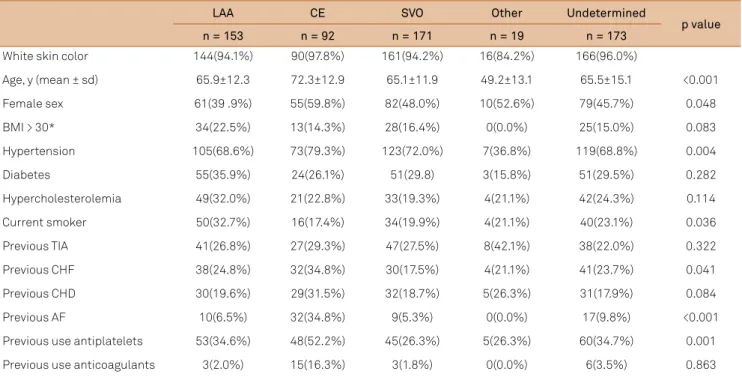
Table 2 shows baseline characteristics and risk
treatment before the ictus. Only 107 (25%) of all the
hyper-tensive patients had controlled blood pressure, 90 (21%) of
the patients did not have control, and in 90 (21%) the control
state was unknown. As expected, compared to all other IS
subtype groups, the OTH subtype group contained fewer
pa-tients who had hypertension (36.8%; p = 0.004). Diabetes was
previously recognized in 30% (184); 52% (96) were using an
oral antidiabetic drug, and 21% (39) were using insulin
ther-apy. Dyslipidemia was previously recognized in 25% (149);
56% (83) of these patients were regularly using medication.
Current smokers were most prevalent in the LAA subtype
group (p = 0.036). Previous CHF (p = 0.041), AF (p < 0.001), the
use of antiplatelet medication (p = 0.001) and age (p < 0.001)
were most prevalent among CE IS.
Mortality
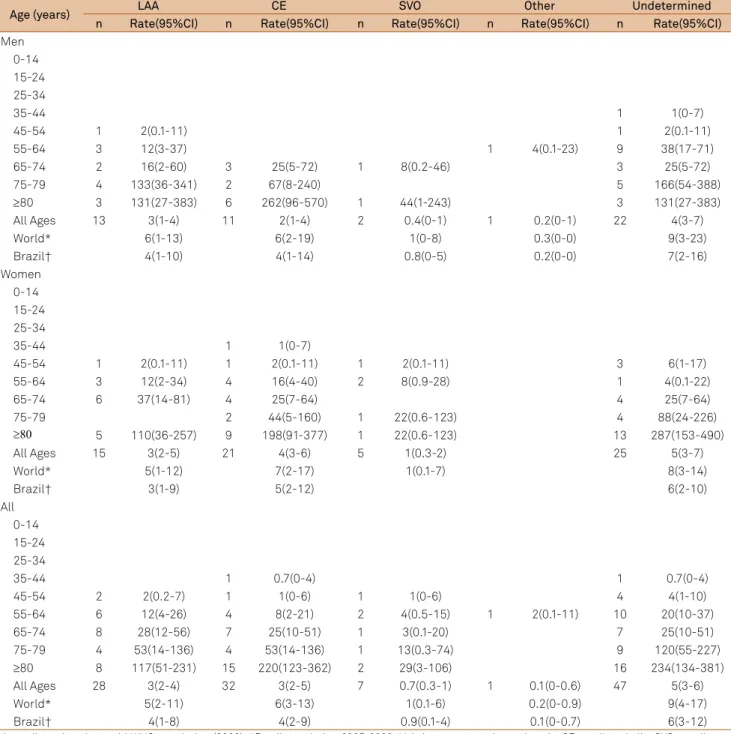
After one year, the overall age-adjusted mortality rate to
IS in the present study was 5 (4-6). Table 3 shows the one-year
mortality rate. he highest adjusted mortality rates were reg
-istered for UND [9 (4-17)] and CE [6 (3-13)], followed by LAA
[5 (2-11)]. he OTH subtype [0.2 (0-0.9)] had a lower mortality
rate than the UND, CE and LAA subtypes. In men and
wom-en separately, the OTH subtype had a lower mortality rate
than all other IS subtypes to both sexes.
Table 1.
Incidence rates by age and sex (per 100,000 per year) of ischemic stroke subtypes in Joinville, Brazil, 2005-2006.
Age
(years)
LAA
CE
SVO
Other
Undetermined
n
Rate(95%CI)
n
Rate(95%CI)
n
Rate(95%CI)
n
Rate(95%CI)
n
Rate(95%CI)
Men
0-14
1
0.7(0-4)
15-24
25-34
1
1(0-6)
1
1(0-6)
35-44
2
3(0.3-9)
5
7(2-15)
3
4(0.8-12)
11
14(7-26)
45-54
21
43(26-65)
8
16(7-32)
17
35(20-55)
2
4(0.5-15)
11
22(11-40)
55-64
29
121(81-174)
4
17(5-43)
31
130(88-184)
3
12(3-37)
31
130(88-184)
65-74
20
165(101-255)
9
74(34-141)
21
173(107-265)
22
181(114-275)
75-79
10
333(160-612)
7
233(94-480)
3
100(21-292)
11
366(183-655)
≥
80
10
437(209-803)
9
393(180-746)
12
524(271-915)
6
262(96-570)
All Ages
92
19(15-23)
37
8(5-10)
89
18(15-22)
9
2(0.8-3)
94
19(15-23)
World*
36(21-58)
17(7-34)
34(20-56)
2(0.4-11 )
35(20-57)
Brazil†
26(15-42)
12(5-24)
25(14-41)
2(0.3-9)
25(14-42)
Women
0-14
15-24
25-34
2
2(0.3-8)
3
3(0.7-10)
35-44
2
3(0.3-9)
1
1(0-7)
3
4(0.8-11)
1
1(0-7)
2
3(0.3-9)
45-54
9
18(8-34)
4
8(2-20)
12
24(12-42)
4
8(2-20)
11
22(11-39)
55-64
10
39(19-71)
8
31(13-61)
20
78(47-120)
1
4(0.1-22)
6
23(9-51)
65-74
20
124(76-192)
12
75(38-130)
24
149(96-222)
1
6(0.2-35)
22
137(86-207)
75-79
9
199(91-378)
7
155(62-319)
11
243(121-435)
10
221(106-407)
≥
80
11
242(121-434)
23
507(321-761)
12
265(137-462)
1
22(0.6-123)
25
551(357-814)
All Ages
61
12(9-16)
55
11(8-14)
82
17(13-21)
10
2(1-4)
79
16(13-20)
World*
19(10-33)
18(9-32)
25(14-41)
2(0.3-10)
24(14-37)
Brazil†
14(7-24)
13(7-23)
18(10-30)
2(0.3-8)
18(10-27)
All
0-14
1
0.4(0-2)
15-24
25-34
3
2(0.4-5)
4
2(0.6-6)
35-44
4
3(0.7-7)
1
0.7(0-4)
8
5(2-10)
4
3(0.7-7)
13
8(4-14)
45-54
30
30(20-43)
12
12(6-21)
29
29(20-42)
6
6(2-13)
22
22(14-34)
55-64
39
79(56-107)
12
24(12-42)
51
103(76-135)
4
8(2-21)
37
75(52-103)
65-74
40
142(101-193)
21
74(46-114)
45
159(116-213)
1
3(0.1-20)
44
156(113-210)
75-79
19
252(152-394)
14
186(102-312)
14
186(102-312)
21
279(173-427)
≥
80
21
308(190-470)
32
469(321-662)
24
352(225-523)
1
15(0.4-82)
31
454(309-645)
All Ages
153
16(13-18)
92
9(7-11)
171
17(15-20)
19
2(1-3)
173
18(15-20)
World*
26(17-38)
17(11-27)
29(20-41)
2(0.6-7)
30(20-43)
Brazil†
19(13-27)
12(8-19)
21(14-30)
2(0.5-6)
22(14-32)
DISCUSSION
In Joinville, in the years 2005 and 2006, the higher
inci-dence rates observed in the present study were for UND, SVO
and LAA subtypes. he incidence of LAA was almost two-fold
higher in men than in women. One year after FEIS, the higher
mortality rate was observed for UND and CE subtypes. he
OTH subtype presented lower mortality rates than for the
other subtypes.
In Iquique, Chile, the world standardized incidence for
atherothrombotic IS was 2.8/100,000. However, only 25% of
those patients underwent carotid duplex ultrasound
9. In our
sample, all patients were assessed using conirmatory meth
-ods, and those patients who had an incomplete investigation
were included in the UND subtype. he rates for the SVO, CE
and UND subtypes were similar in both studies
9.
Despite performance of biochemical,
electrocardiograph-ic, extracranial and intracranial Doppler ultrasound,
trans-thoracic echocardiography and at least one brain CT in all the
patients in the current study, a signiicant number of strokes
of UND subtype was observed. his was previously reported
in epidemiological studies based on the same
pathophysio-logical classiication
2,3,4,10. Recent studies have chosen difer
-ent criteria for stroke subtype deinition
5,22. hese new crite
-ria, combined with advanced diagnostic techniques, could
help reducing the cryptogenic stroke observed in UND
sub-type
23. In addition, not all of the patients in the present study
were submitted to Holter monitoring and/or
transesopha-geal echocardiography. his may partially explain the relative
low incidence of CE subtype Unfortunately, we do not have
the exact number of patients submitted to these methods.
he epidemiology of IS subtypes in White patients from
South America was previously analyzed in two hospital-based
studies
24,25. In Buenos Aires, Argentina, 42% of all IS subtypes
were SVO
24. In Porto Alegre city, also in southern Brazil, 32%
were LAA
25.
hese inding could be related to dietary condi
-tions, the poor control of risk factors, socioeconomic
condi-tions, age, sex and race
24,25. However, the study design was not
suitable for these analyses because non-hospitalized patients
had diferences in the etiological subtypes and risk factors
compared to hospitalized patients
26.
he incidence of LAA in Joinville was similar to that in
previous studies of mostly White populations. In two
re-cent population-based studies focused on a predominantly
White population, a high incidence of the LAA subtype was
reported, which might be related to the stroke
pathophysiol-ogy classiication system used, distinct of the classic TOAST
classiication
5,8. In our study, the incidence observed could be
explained by the prevalence of risk factors and possibly
ge-netic susceptibility, because most of the Brazilian population
has some amount of African genomic ancestry, and it is
rec-ognized that ethnicity is an important contributor to
athero-sclerotic risk factors
3,6,7,27,28.
In a recent case-control study, hypertension, current
smoking, abdominal obesity, diet and physical activity
ac-counted for more than 80% of the global risk of stroke
29. he
hypertension treatment measures taken previous to stroke
in the current study (67%) were similar to those in a recent
study (77%)
4. However, in the Adelaide Study, only 2.5% of
Table 2.
Demographic and risk factors present in the IS subtype groups in Joinville, 2005-2006.
LAA
CE
SVO
Other
Undetermined
p value
n = 153
n = 92
n = 171
n = 19
n = 173
White skin color
144(94.1%)
90(97.8%)
161(94.2%)
16(84.2%)
166(96.0%)
Age, y (mean ± sd)
65.9±12.3
72.3±12.9
65.1±11.9
49.2±13.1
65.5±15.1
<0.001
Female sex
61(39 .9%)
55(59.8%)
82(48.0%)
10(52.6%)
79(45.7%)
0.048
BMI > 30*
34(22.5%)
13(14.3%)
28(16.4%)
0(0.0%)
25(15.0%)
0.083
Hypertension
105(68.6%)
73(79.3%)
123(72.0%)
7(36.8%)
119(68.8%)
0.004
Diabetes
55(35.9%)
24(26.1%)
51(29.8)
3(15.8%)
51(29.5%)
0.282
Hypercholesterolemia
49(32.0%)
21(22.8%)
33(19.3%)
4(21.1%)
42(24.3%)
0.114
Current smoker
50(32.7%)
16(17.4%)
34(19.9%)
4(21.1%)
40(23.1%)
0.036
Previous TIA
41(26.8%)
27(29.3%)
47(27.5%)
8(42.1%)
38(22.0%)
0.322
Previous CHF
38(24.8%)
32(34.8%)
30(17.5%)
4(21.1%)
41(23.7%)
0.041
Previous CHD
30(19.6%)
29(31.5%)
32(18.7%)
5(26.3%)
31(17.9%)
0.084
Previous AF
10(6.5%)
32(34.8%)
9(5.3%)
0(0.0%)
17(9.8%)
<0.001
Previous use antiplatelets
53(34.6%)
48(52.2%)
45(26.3%)
5(26.3%)
60(34.7%)
0.001
Previous use anticoagulants
3(2.0%)
15(16.3%)
3(1.8%)
0(0.0%)
6(3.5%)
0.863
hypertension patients did not have it controlled
4. In contrast,
we found that 21% of previous hypertensive patients, even
when regularly treated, did not have it controlled before
hos-pital admission. In the last decade, measures were started to
reduce the cardiovascular death in Brazil by controlling risk
factors
12,30,31. However, a Brazilian telephone survey
demon-strated that obesity and diabetes have been continuously
in-creasing in the last ive years, though fortunately smoking
has been reduced by 2.1% in the same period
32.
he higher mortality rates observed for UND and CE were
described previously in the Mestizo sample in Chile
9and in
other predominantly White population studies, where the
authors also demonstrated that LAA had elevate mortality
rates as shown in the present study
1,2.
his study has some limitations. First, race-ethinicity was
based on skin color classiication of the IBGE, responsible for
the oicial census of Brazil
33. Most Brazilians, have a
predomi-nantly European genomic ancestry, with some proportion of
African and Amerindian genomic ancestry
27,28. Second, a large
number of patients were included in the UND subtype because
of a failure to be put in one of the other groups. Despite the
ex-tensive investigation performed, patients who had
cryptogen-ic etiology were not distinguished from those who had two or
more mechanisms in the UND group. Making this distinction
Table 3.
One-year mortality rates by age and sex (per 100,000 per year) of ischemic stroke subtypes in Joinville, Brazil, 2005-2006.
Age (years)
LAA
CE
SVO
Other
Undetermined
n
Rate(95%CI)
n
Rate(95%CI)
n
Rate(95%CI)
n
Rate(95%CI)
n
Rate(95%CI)
Men
0-14
15-24
25-34
35-44
1
1(0-7)
45-54
1
2(0.1-11)
1
2(0.1-11)
55-64
3
12(3-37)
1
4(0.1-23)
9
38(17-71)
65-74
2
16(2-60)
3
25(5-72)
1
8(0.2-46)
3
25(5-72)
75-79
4
133(36-341)
2
67(8-240)
5
166(54-388)
≥
80
3
131(27-383)
6
262(96-570)
1
44(1-243)
3
131(27-383)
All Ages
13
3(1-4)
11
2(1-4)
2
0.4(0-1)
1
0.2(0-1)
22
4(3-7)
World*
6(1-13)
6(2-19)
1(0-8)
0.3(0-0)
9(3-23)
Brazil†
4(1-10)
4(1-14)
0.8(0-5)
0.2(0-0)
7(2-16)
Women
0-14
15-24
25-34
35-44
1
1(0-7)
45-54
1
2(0.1-11)
1
2(0.1-11)
1
2(0.1-11)
3
6(1-17)
55-64
3
12(2-34)
4
16(4-40)
2
8(0.9-28)
1
4(0.1-22)
65-74
6
37(14-81)
4
25(7-64)
4
25(7-64)
75-79
2
44(5-160)
1
22(0.6-123)
4
88(24-226)
≥
80
5
110(36-257)
9
198(91-377)
1
22(0.6-123)
13
287(153-490)
All Ages
15
3(2-5)
21
4(3-6)
5
1(0.3-2)
25
5(3-7)
World*
5(1-12)
7(2-17)
1(0.1-7)
8(3-14)
Brazil†
3(1-9)
5(2-12)
6(2-10)
All
0-14
15-24
25-34
35-44
1
0.7(0-4)
1
0.7(0-4)
45-54
2
2(0.2-7)
1
1(0-6)
1
1(0-6)
4
4(1-10)
55-64
6
12(4-26)
4
8(2-21)
2
4(0.5-15)
1
2(0.1-11)
10
20(10-37)
65-74
8
28(12-56)
7
25(10-51)
1
3(0.1-20)
7
25(10-51)
75-79
4
53(14-136)
4
53(14-136)
1
13(0.3-74)
9
120(55-227)
≥
80
8
117(51-231)
15
220(123-362)
2
29(3-106)
16
234(134-381)
All Ages
28
3(2-4)
32
3(2-5)
7
0.7(0.3-1)
1
0.1(0-0.6)
47
5(3-6)
World*
5(2-11)
6(3-13)
1(0.1-6)
0.2(0-0.9)
9(4-17)
Brazil†
4(1-8)
4(2-9)
0.9(0.1-4)
0.1(0-0.7)
6(3-12)
could improve the understanding of the high incidence and
mortality rates in this subtype. Still, previous studies with
simi-lar methodology did not report the percentage of
complemen-tary tests performed, and did not provide information about
the numbers of cryptogenic strokes or of strokes caused by two
or more in the UND subtype
2,4. herefore, we understand that
these limitations do not reduce the importance of the present
work, the irst study in Latin America to demonstrate the real
incidence and mortality rates of ischemic stroke subtypes in a
predominantly White population.
Some risk factors were not analyzed in the current study,
primarily abdominal circumference, diet and physical
activ-ity, all of which are clearly recognized as important risks to
control
29. Another important issue is the non-diferentiation
between intracranial and extracranial atherosclerosis, a
dis-ease with high incidence in Black and Hispanic populations
3.
Furthermore, the current study does not represent the whole
population of Brazil; the heterogeneity present in the
coun-try, where some regions are more than 40% Brown (Northeast,
North and Central-West), could change the predominant risk
factors and the frequency of the IS subtypes
33. An ongoing
study could help to address this variation in future studies
be-cause the sample is representative of diferent regions
34.
In conclusion, the incidence and mortality rates of IS
sub-types in Joinville, Brazil, were similar to those from other
pre-dominantly White population-based studies. hese indings
highlight the importance of better detection and control of
atherosclerotic risk factors in the Brazilian population.
References
1. Petty GW, Brown RD Jr, Whisnant JP, Sicks JD, O”Fallon WM, Wiebers DO. Ischemic stroke subtypes: a population-based study of functional outcome, survival, and recurrence. Stroke. 2000;31(5):1062-8. http://dx.doi.org/10.1161/01.STR.31.5.1062
2. Kolominsky-Rabas PL, Weber M, Gefeller O, Neundoerfer B, Heuschmann PU. Epidemiology of ischemic stroke subtypes according to TOAST criteria: incidence, recurrence, and long-term survival in ischemic stroke subtypes: a population-based study. Stroke. 2001;32(12):2735-40. http://dx.doi.org/10.1161/hs1201.100209
3. White H, Boden-Albala B, Wang C, Elkind MS, Rundek T, Wright CB et al. Ischemic stroke subtype incidence among whites, blacks, and Hispanics: the Northern Manhattan Study. Circulation. 2005;111(10):1327-31. http://dx.doi.org/10.1161/01.CIR.0000157736.19739.D0
4. Leyden JM, Kleinig TJ, Newbury J, Castle S, Craneield J, Anderson CS et al. Adelaide stroke incidence study: declining stroke rates but many preventable cardioembolic strokes. Stroke. 2013;44(5):1226-31. http://dx.doi.org/10.1161/STROKEAHA.113.675140
5. Palm F, Urbanek C, Wolf J, Buggle F, Kleemann T, Hennerici MG et al. Etiology, risk factors and sex differences in ischemic stroke in the Ludwigshafen Stroke Study, a population-based stroke registry. Cerebrovasc Dis. 2012;33(1):69-75.
http://dx.doi.org/10.1159/000333417
6. Schneider AT, Kissela B, Woo D, Kleindorfer D, Alwell K, Miller R et al. Ischemic stroke subtypes: a population-based study of incidence rates among blacks and whites. Stroke. 2004;35(7):1552-6. http://dx.doi.org/10.1161/01.STR.0000129335.28301.f5
7. Hajat C, Heuschmann PU, Coshall C, Padayachee S, Chambers J, Rudd AG et al. Incidence of aetiological subtypes of stroke in a multi-ethnic population based study: the South London Stroke Register. J Neurol Neurosurg Psychiatry. 2011;82(5):527-33. http://dx.doi.org/10.1136/jnnp.2010.222919
8. Bejot Y, Caillier M, Ben Salem D, Couvreur G, Rouaud O, Osseby GV et al. Ischaemic stroke subtypes and associated risk factors: a French population based study. J Neurol Neurosurg Psychiatry. 2008;79(12):1344-8. http://dx.doi.org/10.1136/jnnp.2008.150318
9. Lavados PM, Sacks C, Prina L, Escobar A, Tossi C, Araya F et al. Incidence, case-fatality rate, and prognosis of ischaemic stroke subtypes in a predominantly Hispanic-Mestizo population in Iquique, Chile (PISCIS project): a community-based incidence study. Lancet Neurol. 2007;6(2):140-8. http://dx.doi.org/10.1016/S1474-4422(06)70684-6
10. Cabral NL, Gonçalves AR, Longo AL, Moro CH, Costa G, Amaral CH et al. Incidence of stroke subtypes, prognosis and prevalence
of risk factors in Joinville, Brazil: a 2 year community based study. J Neurol Neurosurg Psychiatry. 2009;80(7):755-61. http://dx.doi.org/10.1136/jnnp.2009.172098
11. Minelli C, Fen LF, Minelli DP. Stroke incidence, prognosis, 30-day, and 1-year case fatality rates in Matão, Brazil: a
population-based prospective study. Stroke. 2007;38(11):2906-11. http://dx.doi.org/10.1161/STROKEAHA.107.484139
12. Martins SC, Pontes-Neto OM, Alves CV, Freitas GR, Oliveira Filho J, Tosta ED et al. Past, present, and future of stroke in middle-income countries: the Brazilian experience. Int J Stroke. 2013; 8(Suppl A100):100-6. http://dx.doi.org/10.1111/ijs.12062
13. Lotufo PA, Benseñor IM. Stroke mortality in Brazil: one example of delayed epidemiological cardiovascular transition. Int J Stroke, 2009;4(1):40-1. http://dx.doi.org/10.1111/j.1747-4949.2009.00240.x
14. Ministério da Saúde (BR). [Estimativas preliminares para os anos intercensitários dos totais populacionais, estratiicadas por idade e sexo pelo MS/SGEP/Datasus]. Brasília, DF: Datasus; 2013 [cited 2013 May 20]. Available from: http://tabnet.datasus.gov.br/cgi/ deftohtm.exe?ibge/cnv/popsc.def
15. Instituto Brasileiro de Geograia e Estatística – IBGE. Censo 2010. Rio de Janeiro: Instituto Brasileiro de Geograia e Estatística; 2013 [cited 2013 May 20]. Available from: www.censo2010.ibge.gov.br/apps/mapa/
16. Aho K, Harmsen P, Hatano S, Marquardsen J, Smirnov VE, Strasser T. Cerebrovascular disease in the community: results of a WHO collaborative study. Bull World Health Organ. 1980;58(1):113-30.
17. Sociedade Brasileira de Doenças Cerebrovasculares. [Brazilian guideline for the management of acute stroke]. Arq Neuropsiquiatr. 2001;59(4):972-80. Portuguese. http://dx.doi.org/10.1590/S0004-282X2001000600026
18. Bamford J, Sandercock P, Dennis M, Burn J, Warlow C. Classiication and natural history of clinically identiiable subtypes of cerebral infarction. Lancet. 1991;337(8756):1521-6. http://dx.doi.org/10.1016/0140-6736(91)93206-O
19. Adams HP Jr, Bendixen BH, Kappelle LJ, Biller J, Love BB, Gordon DL et al. Classiication of subtype of acute ischemic stroke. Deinitions for use in a multicenter clinical trial. TOAST. Trial of Org 10172 in Acute Stroke Treatment. Stroke. 1993;24(1):35-41. http://dx.doi.org/10.1161/01.STR.24.1.35
21. Ahmad OB, Boschi-Pinto C, Lopez AD, Murray CJL, Lozano R, Inone M. Age standardisation of rates: a new WHO world standard. Geneve: World Health Organization; 2001 [cited 2013 May 20]. (GPE Discussion Paper Series, vol 31). Available from: www.who.int/ healthinfo/paper31.pdf
22. Marnane M, Duggan CA, Sheehan OC, Merwick A, Hannon N, Curtin D et al. Stroke subtype classiication to mechanism-speciic and undetermined categorie by TOAST, A-S-C-O, and causative classiication system: direct comparison in the North Dublin populaiton stroke study. Stroke. 2010;41(8):1579-86. http://dx.doi.org/10.1161/STROKEAHA.109.575373
23. Bang OY, Ovbiagele B, Kim JS. Evaluation of cryptogenic stroke with advanced diagnostic techniques. Stroke. 2014;45(4):1186-94. http://dx.doi.org/10.1161/STROKEAHA.113.003720
24. Saposnik G, Caplan LR, Gonzalez LA, Baird A, Dasche J, Luraschi A et al. Differences in stroke subtypes among natives and caucasians in Boston and Buenos Aires. Stroke. 2000;31(10):23859. http://dx.doi.org/10.1161/01.STR.31.10.2385
25. Porcello Marrone LC, Diogo LP, Oliveira FM, Trentin S, Scalco RS, Almeida AG et al. Risk factors among stroke subtypes in Brazil. J Stroke Cerebrovasc Dis. 2013;22(1):32-5. http://dx.doi.org/10.1016/j.jstrokecerebrovasdis.2011.05.022
26. Schulz UG, Rothwell PM. Differences in vascular risk factors between etiological subtypes of ischemic stroke: importance of population-based studies. Stroke. 2003;34(8):2050-9. http://dx.doi.org/10.1161/01.STR.0000079818.08343.8C
27. Cardena MM, Ribeiro-Dos-Santos A, Santos S, Mansur AJ, Pereira AC, Fridman C. Assessment of the relationship between self-declared ethnicity, mitochondrial haplogroups and genomic ancestry in brazilian individuals. PLoS One. 2013;8(4):e62005. http://dx.doi.org/10.1371/journal.pone.0062005
28. Pena SD, Di Pietro G, Fuchshuber-Moraes M, Genro JP, Hutz MH, Kehdy FS et al. The genomic ancestry of individuals from different geographical regions of Brazil is more uniform than expected. PLoS One. 2011;6(2):e17063. http://dx.doi.org/10.1371/journal.pone.0017063
29. O’Donnell MJ, Xavier D, Liu L, Zhang H, Chin SL, Rao-Melacini P et al. Risk factors for ischaemic and intracerebral haemorrhagic stroke in 22 countries (the INTERSTROKE study): a case-control study. Lancet. 2010;376(9735):112-23. http://dx.doi.org/10.1016/S0140-6736(10)60834-3
30. Schmidt MI, Duncan BB, Silva GA, Menezes AM, Monteiro CA, Barreto SM et al. Chronic non-communicable diseases in Brazil: burden and current challenges. Lancet. 2011;377(9781):1949-61. http://dx.doi.org/10.1016/S0140-6736(10)60834-3
31. Ministério da Saúde (BR). Protocolos clínicos e diretrizes
terapêuticas. Brasília, DF: Ministério da Saúde; 2012 [cited 2013 May 20]. Available from: http://portal.saude.gov.br/portal/arquivos/pdf/ pcdt_trombolise_avc_isq_agudo.pdf
32. Ministério da Saúde (BR), Secretaria de Vigilância em Saúde. Vigitel Brasil 2011: vigilância de fatores de risco e proteção para doenças crônicas por inquérito telefônico. Brasília, DF: Ministério da Saúde; 2012 [cited 2013 May 20]. (Série G. Estatística e Informação em Saúde). Available from: http://bvsms.saude.gov.br/bvs/publicacoes/ vigitel_brasil_2011_inal.pdf
33. Ministério do Planejamento, Orçamento e Gestão (BR); Instituto Brasileiro de Geograia e Estatística. Características étnico-raciais da população: um estudo das categorias de classiicação de cor ou raça: 2008. Rio de Janeiro: Instituto Brasileiro de Geograia e Estatística; 2011.