ScienceDirect
Available online at www.sciencedirect.com
Procedia Manufacturing 51 (2020) 1327–1331
2351-9789 © 2020 The Authors. Published by Elsevier Ltd.
This is an open access article under the CC BY-NC-ND license (https://creativecommons.org/licenses/by-nc-nd/4.0/) Peer-review under responsibility of the scientific committee of the FAIM 2021.
10.1016/j.promfg.2020.10.185
10.1016/j.promfg.2020.10.185 2351-9789
© 2020 The Authors. Published by Elsevier Ltd.
This is an open access article under the CC BY-NC-ND license (https://creativecommons.org/licenses/by-nc-nd/4.0/) Peer-review under responsibility of the scientific committee of the FAIM 2021.
ScienceDirect
Procedia Manufacturing 00 (2019) 000–000 www.elsevier.com/locate/procedia
2351-9789 © 2020 The Authors. Published by Elsevier Ltd.
This is an open access article under the CC BY-NC-ND license https://creativecommons.org/licenses/by-nc-nd/4.0/) Peer-review under responsibility of the scientific committee of the FAIM 2020.
30th International Conference on Flexible Automation and Intelligent Manufacturing (FAIM2021)
15-18 June 2021, Athens, Greece.
Analysis and Improvement of the Packaging Sector of an Industrial
Company
Diogo Alves
a, L. P. Ferreira
a, T. Pereira
a,b, J. C. Sá
a,c,
F. J. G. Silva
a,*, N. O. Fernandes
d aISEP – School of Enginnering, Polytechnic of Porto, Rua Dr. António Bernardino de Almeida, 431, Porto 4200-072, PortugalbCIDEM - Centre for Research & Development in Mechanical Engineering, School of Engineering of Porto, Polytechnic of Porto, Portugal
c
IPVC – School of Business Sciences, Polytechnic Institute of Viana do Castelo, Av. Pinto da Mota, Valença 4930-600, Portugal
dInstituto Politécnico de Castelo Branco, Av. do Empresário, Castelo Branco, 6000-767, Portugal
* Corresponding author. Tel.: +351 22 83 40 500; fax: +351 22 832 1159. E-mail address: [email protected]
Abstract
Manual operations in manufacturing companies are still a common practice. This often results in high costs, high cycle times and therefore in lower productivity, particularly for companies operating in western countries. This is why many manufacturing companies relocated their production facilities in low age countries. This study was developed at a leading Portuguese material construction manufacturing company. The objective was to improve the packaging and labeling processes, that were identified as main bottlenecks in the factory. Lean was used to streamline these processes before being automated. This allowed for annual savings of 12432 €, with human operators being reallocated to other departments where they are more useful. Furthermore, cycle times were reduced by 42,9%, non-value-added activities were minimized, and operations with potentially high ergonomic risks were eliminated. In addition, a reduction of 84,3% in lithographed packaging was achieved, with a cost reduction of around 36 000 €/year, which is expected to continue in the forthcoming years.
© 2020 The Authors. Published by Elsevier Ltd.
This is an open access article under the CC BY-NC-ND license https://creativecommons.org/licenses/by-nc-nd/4.0/) Peer-review under responsibility of the scientific committee of the FAIM 2020.
Keywords:Lean manufacturing, Package Labeling, Automation, ABC Analysis.
1. Introduction
Today manufacturing companies are confronted with increasing competition, increasing technology changes and increasing customers’ expectations. Lean plays a fundamental role in dealing with these challenges, as it enables identifying non-value-adding tasks, underutilized resources and, in general, how to more with less [1]. Lean contributes for the companies’ goal of making the right products, in the right quantity, at right time, at the lowest cost [2]. Waste elimination is therefore central to the Lean philosophy, and can be achieved through the materials and information flows mapping [3]. This
study was developed at a company in the Chemical Industry, more specifically in the production sector of materials for construction in Portugal. The main objective was to enhance the effectiveness of the labeling sector of the company by improving the procedures associated with operations and reducing the costs inherent to the purchase of lithographed packaging. Thus, the research objective was analyze the impact that the implementation of several improvements will have on the packaging sector and consequently in the organization. This study is organized in five sections. Section 2 presents the literature review supporting our study. Section 3 addresses the research methodology used and Section 4 provides a detailed
ScienceDirect
Procedia Manufacturing 00 (2019) 000–000 www.elsevier.com/locate/procedia
2351-9789 © 2020 The Authors. Published by Elsevier Ltd.
This is an open access article under the CC BY-NC-ND license https://creativecommons.org/licenses/by-nc-nd/4.0/) Peer-review under responsibility of the scientific committee of the FAIM 2020.
30th International Conference on Flexible Automation and Intelligent Manufacturing (FAIM2021)
15-18 June 2021, Athens, Greece.
Analysis and Improvement of the Packaging Sector of an Industrial
Company
Diogo Alves
a, L. P. Ferreira
a, T. Pereira
a,b, J. C. Sá
a,c,
F. J. G. Silva
a,*
, N. O. Fernandes
d aISEP – School of Enginnering, Polytechnic of Porto, Rua Dr. António Bernardino de Almeida, 431, Porto 4200-072, PortugalbCIDEM - Centre for Research & Development in Mechanical Engineering, School of Engineering of Porto, Polytechnic of Porto, Portugal
cIPVC – School of Business Sciences, Polytechnic Institute of Viana do Castelo, Av. Pinto da Mota, Valença 4930-600, Portugal dInstituto Politécnico de Castelo Branco, Av. do Empresário, Castelo Branco, 6000-767, Portugal
* Corresponding author. Tel.: +351 22 83 40 500; fax: +351 22 832 1159. E-mail address: [email protected]
Abstract
Manual operations in manufacturing companies are still a common practice. This often results in high costs, high cycle times and therefore in lower productivity, particularly for companies operating in western countries. This is why many manufacturing companies relocated their production facilities in low age countries. This study was developed at a leading Portuguese material construction manufacturing company. The objective was to improve the packaging and labeling processes, that were identified as main bottlenecks in the factory. Lean was used to streamline these processes before being automated. This allowed for annual savings of 12432 €, with human operators being reallocated to other departments where they are more useful. Furthermore, cycle times were reduced by 42,9%, non-value-added activities were minimized, and operations with potentially high ergonomic risks were eliminated. In addition, a reduction of 84,3% in lithographed packaging was achieved, with a cost reduction of around 36 000 €/year, which is expected to continue in the forthcoming years.
© 2020 The Authors. Published by Elsevier Ltd.
This is an open access article under the CC BY-NC-ND license https://creativecommons.org/licenses/by-nc-nd/4.0/) Peer-review under responsibility of the scientific committee of the FAIM 2020.
Keywords:Lean manufacturing, Package Labeling, Automation, ABC Analysis.
1. Introduction
Today manufacturing companies are confronted with increasing competition, increasing technology changes and increasing customers’ expectations. Lean plays a fundamental role in dealing with these challenges, as it enables identifying non-value-adding tasks, underutilized resources and, in general, how to more with less [1]. Lean contributes for the companies’ goal of making the right products, in the right quantity, at right time, at the lowest cost [2]. Waste elimination is therefore central to the Lean philosophy, and can be achieved through the materials and information flows mapping [3]. This
study was developed at a company in the Chemical Industry, more specifically in the production sector of materials for construction in Portugal. The main objective was to enhance the effectiveness of the labeling sector of the company by improving the procedures associated with operations and reducing the costs inherent to the purchase of lithographed packaging. Thus, the research objective was analyze the impact that the implementation of several improvements will have on the packaging sector and consequently in the organization. This study is organized in five sections. Section 2 presents the literature review supporting our study. Section 3 addresses the research methodology used and Section 4 provides a detailed
1328 Diogo Alves et al. / Procedia Manufacturing 51 (2020) 1327–1331
2 Diogo Alves et al./ Procedia Manufacturing 00 (2020) 000–000
description of the identified problems, as well as the proposed solutions and presents the obtained results. Finally, conclusions and future work are put forward at Section 5.
2. Literature Review
The mass production system possesses extremely specific features and guidelines, which drive the production of great quantities characterized by little or no variety. This type of production was developed by Ford Motor Company which, in turn, inspired the TPS methodology (Toyota Production System) in 1940 by Taiichi Ohno. He travelled to the U.S. to observe Ford's manufacturing processes, with the premise of enabling production that could be customized for the client, thus generating greater value for the stakeholders [4, 5]. This methodology allowed for the development of various tools [6,7]: JIT (Just-in-Time), Standard Work, ABC Analysis, the PDCA cycle (Plan, Do, Control, Act), and VSM (Value/Visual Stream Mapping). JIT was developed in order to ensure that assembly lines consumed as few resources as possible, in addition to minimizing stocks between processes, which meant that it constituted an excellent "weapon" to combat waste in production [8]. This methodology was applied at several manufacturing companies in Nigeria to study its direct impact at a financial level, with costs reduction and an increased return on investment [9]. Another example was carried out at a solar radiation panels manufacturing company, with the aim to reduce stocks and, proportionally, lower the costs of production [10]. The application of standard work on a production line manufacturing components for air conditioning systems in cars allowed for an increase in OEE (Overall Equipment Effectiveness). This was due to the improved balancing of the workstations, as well as the elimination of non-value-adding tasks [11]. This standard work methodology was also tested in Indonesia in the furniture industry, with the purpose of reducing waste and improving productivity. When combined with VSM, it contributed to minimizing setup and waiting times by operators, thereby increasing production [12]. Supported by the Pareto principle, ABC Analysis emerged in the mid-nineteenth century in Italy, when Vilfredo Pareto decided to study the distribution of wealth in the country, and realized that 80% of this belonged to 20% of the country’s population. After the study, he invoked his theory that 80% of problems arise from 20% of the causes [13]. This tool distributes products into three groups: the products of highest consumption are classified as A (80%), whereas products which production presents little impact are rated as C (5%); the intermediate levels of consumption are distinguished as B (15%) [14]. The application of ABC Analysis at an electrical component production company in Tijuana, Mexico, allowed for a reduction in waste as well as an increase in production capacity [15]. With regard to other Lean Production tools, there are several scientific articles which point to the benefits of their use in the most diverse market sectors. The PDCA cycle has already been used as a resource for the study in epoxy resin production organizations, having achieved the goal of reducing environmental impact [16]. It has also been implemented in metalwork companies, where failures in production resources were addressed, with a reduction in logistic operation times of
about 20% and a decrease in the time spent accessing tools in near 61%. [17]. The VSM and Pull System enhanced productivity by 20% with the same number of resources at a valve manufacturing company in Poland [18]. In order to improve the setup times of a line producing seat cables for the automotive sector, several tools such as SMED, 5S and VSM were used. Besides contributing to the flexibility of production, production times were reduced by at least 58,3% within a week using the same number of operators, which corresponds to 210 minutes [4]. VSM has also been used to improve setup times in other types of industry, such as the cork stopper industry and the electrical cables industry, presenting excellent results [19,20].
3.Methodology
Here we follow the Action-Research methodology, during which the study is undertaken through the combination of "action (or change) and research (or understanding)" [21]. Whenever the changes do not meet the expected objectives, the process is restarted; namely, the cyclical activity is repeated until the result is refined. In the search for a solution to the problem, this methodology complements scientific knowledge with organizational knowledge, which includes the flexibility to implement improvements [22, 23]. Fig. 1 presents an outline of the phases and tools pertaining to this methodology.
Fig. 1. Phases of the Action-Research methodology [21,22,23].
4. Analysis of the Production Labeling Process
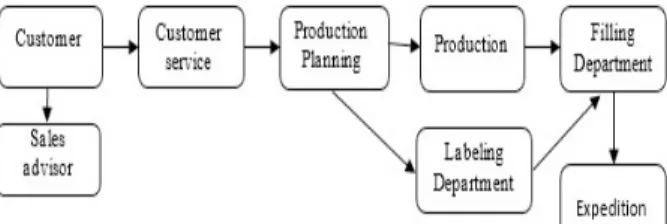
Fig. 2 summarizes the information flow in the company after order acceptance. In brief, the entire process begins with the customer's order. The Production Planner then transforms the customer order into a production order by issuing the production Kanban’s to the Production Leader. It is the latter who distributes these production orders to the various sectors, where the labeling activity is carried out for all the products produced by the company. The focus of the analysis will be the packaging area, which works simultaneously with the production, as it is the area with most problems, due the manual task and the amount of packaging to be labeled.
Fig. 2. Production process flow.
Diogo Alves et al./ Procedia Manufacturing 00 (2020) 000–000 3
Package labelling is currently carried out manually,which is a time and money consumption task. It requires two operators, and depending on the department workload, a third operator may be introduced in order to prevent the creation of a bottleneck. Since the operation is repetitive and involves the hauling of loads there are potential ergonomic risks for the operators. In addition, at the time of the evaluation of the entire process, one concluded that there were too many packaging and label references, which impacted directly on the final costs of the product.
4.1. Identification of Potential Problems
Throughout the evaluation of the production process, several potential problems were detected (see Table 1). Thus, it was essential to address these issues with a solution that would enable adjusting the requirements of all the parts involved.
Table Erro! Marcador não definido.1. Problems detected in labeling activities.
Sector Action Description of the problem
Labeling
Production process
Manual procedure (high cycle time)
Pasting of the hazard label Management of
costs and stocks
High costs associated to the various lithographed packages
4.1.1. Manual Procedure (high cycle time)
The activity of manual labeling required an excessive number of human resources. As a rule, two operators were involved in this task and, when the load of work was higher than average, a third worker was incorporated. These operators were allocated to sectors where human input is inevitable or when there was a bottleneck, which is the case in the filling section or in the solvent-based paint sectors. As many as seven labels are affixed to the packaging and, even in the case of lithographed packages, these must carry labels to indicate batch information, as well as the term of validity and color (if applicable). This task represented a cost of approximately 12,73 €/hour for the company and, when a third operator was required, this increased to 21,80 €/hour.
4.1.2. Pasting of the Hazard Label
Tactile hazard symbols for the blind were manually labeled, with the allocation of three operators during a 50-minute time period for each production lot (450 units). Additional expenses resided in the cost of the label itself, which amounted to 0,011 €/unit, as well as the price of the package, which was 1,768 €.
4.1.3. High Costs of the Various Lithographed Packaging
The lithographed packaging represented a high cost in the context of the product. In addition to this expense is the cost of changing the lithography, which includes any and all changes to the label, whether this is related to image, language or legislation. This occurs rather frequently and, when it happens, it implies eliminating the packages in stock, as well as designing new lithography and the production of packaging.
The problem is compounded by the fact that IML (In Mould Labeling) labels are only valid for a one-year period due to static electricity concerns. In 2016, the company spent as much as 5200 € on changes to the image on product packaging; in 2019, this expenditure amounted to approximately 7000 €.
4.2. Proposals for Improvement
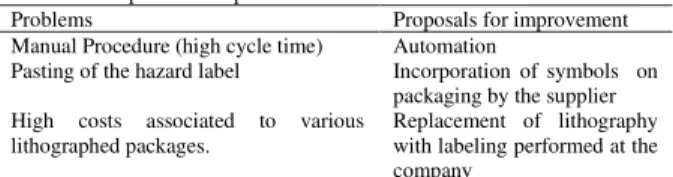
Table 2 presents the problems identified and the solutions proposed for improvement that were implemented by the organization.
Table 2. Description of the problems detected.
Problems Proposals for improvement Manual Procedure (high cycle time) Automation
Pasting of the hazard label Incorporation of symbols on packaging by the supplier High costs associated to various
lithographed packages.
Replacement of lithography with labeling performed at the company
4.2.1. Automation
A proposal of automation in the labeling sector was analyzed with a view to reducing human interaction in the labeling task. Other objectives included in this proposal resided in the improvement of the process itself, exponentially reducing the likelihood of failures and freeing operators who can be allocated to other sectors. To this end, the company purchased a 3-head labeling machine (see Figure 3), which can label in one single passage. The equipment consists of two stainless steel tables: one for feeding and the other for packaging output (with a capacity for up to 60 x 5 L packages, 35 x 15 L packages and up to 30 x 27 L packages). In this context, only one operator is required for operations in the labeling sector.
Fig. 3. Labeling machine implemented.
In order to obtain a labelled package, the machine operator now simply collects the packages from the storage area, feeds the machine and waits for the labeling. The removal of one worker from the labeling sector enabled savings of 4,87 €/hour for company. Furthermore, when there is a greater workload, during which 3 operators were previously required, the savings now amount to 11,29 €/hour. This means that, at the end of a one-year period, during which two operators are released, and estimating ¼ of the time required for labeling by the third operator, the amount of savings achieved is 12432 €/year. This saving comes from the allocation of the auxiliary operator to another job (€ 9350.40), plus € 3081.6 due to the extra operator that was needed during the 3 months of greatest workload in the labelling sector. The automation of this labelling process not only allowed a cost reduction but also a productivity increase. Table 3 presents a comparison of the production rate values in units/minute for packages up to 1L (increase in rate
Package labelling is currently carried out manually,which is a time and money consumption task. It requires two operators, and depending on the department workload, a third operator may be introduced in order to prevent the creation of a bottleneck. Since the operation is repetitive and involves the hauling of loads there are potential ergonomic risks for the operators. In addition, at the time of the evaluation of the entire process, one concluded that there were too many packaging and label references, which impacted directly on the final costs of the product.
4.1. Identification of Potential Problems
Throughout the evaluation of the production process, several potential problems were detected (see Table 1). Thus, it was essential to address these issues with a solution that would enable adjusting the requirements of all the parts involved.
Table Erro! Marcador não definido.1. Problems detected in labeling activities.
Sector Action Description of the problem
Labeling
Production process
Manual procedure (high cycle time)
Pasting of the hazard label Management of
costs and stocks
High costs associated to the various lithographed packages
4.1.1. Manual Procedure (high cycle time)
The activity of manual labeling required an excessive number of human resources. As a rule, two operators were involved in this task and, when the load of work was higher than average, a third worker was incorporated. These operators were allocated to sectors where human input is inevitable or when there was a bottleneck, which is the case in the filling section or in the solvent-based paint sectors. As many as seven labels are affixed to the packaging and, even in the case of lithographed packages, these must carry labels to indicate batch information, as well as the term of validity and color (if applicable). This task represented a cost of approximately 12,73 €/hour for the company and, when a third operator was required, this increased to 21,80 €/hour.
4.1.2. Pasting of the Hazard Label
Tactile hazard symbols for the blind were manually labeled, with the allocation of three operators during a 50-minute time period for each production lot (450 units). Additional expenses resided in the cost of the label itself, which amounted to 0,011 €/unit, as well as the price of the package, which was 1,768 €.
4.1.3. High Costs of the Various Lithographed Packaging
The lithographed packaging represented a high cost in the context of the product. In addition to this expense is the cost of changing the lithography, which includes any and all changes to the label, whether this is related to image, language or legislation. This occurs rather frequently and, when it happens, it implies eliminating the packages in stock, as well as designing new lithography and the production of packaging.
The problem is compounded by the fact that IML (In Mould Labeling) labels are only valid for a one-year period due to static electricity concerns. In 2016, the company spent as much as 5200 € on changes to the image on product packaging; in 2019, this expenditure amounted to approximately 7000 €.
4.2. Proposals for Improvement
Table 2 presents the problems identified and the solutions proposed for improvement that were implemented by the organization.
Table 2. Description of the problems detected.
Problems Proposals for improvement Manual Procedure (high cycle time) Automation
Pasting of the hazard label Incorporation of symbols on packaging by the supplier High costs associated to various
lithographed packages.
Replacement of lithography with labeling performed at the company
4.2.1. Automation
A proposal of automation in the labeling sector was analyzed with a view to reducing human interaction in the labeling task. Other objectives included in this proposal resided in the improvement of the process itself, exponentially reducing the likelihood of failures and freeing operators who can be allocated to other sectors. To this end, the company purchased a 3-head labeling machine (see Figure 3), which can label in one single passage. The equipment consists of two stainless steel tables: one for feeding and the other for packaging output (with a capacity for up to 60 x 5 L packages, 35 x 15 L packages and up to 30 x 27 L packages). In this context, only one operator is required for operations in the labeling sector.
Fig. 3. Labeling machine implemented.
In order to obtain a labelled package, the machine operator now simply collects the packages from the storage area, feeds the machine and waits for the labeling. The removal of one worker from the labeling sector enabled savings of 4,87 €/hour for company. Furthermore, when there is a greater workload, during which 3 operators were previously required, the savings now amount to 11,29 €/hour. This means that, at the end of a one-year period, during which two operators are released, and estimating ¼ of the time required for labeling by the third operator, the amount of savings achieved is 12432 €/year. This saving comes from the allocation of the auxiliary operator to another job (€ 9350.40), plus € 3081.6 due to the extra operator that was needed during the 3 months of greatest workload in the labelling sector. The automation of this labelling process not only allowed a cost reduction but also a productivity increase. Table 3 presents a comparison of the production rate values in units/minute for packages up to 1L (increase in rate
1330 Diogo Alves et al. / Procedia Manufacturing 51 (2020) 1327–1331
4 Diogo Alves et al./ Procedia Manufacturing 00 (2020) 000–000
of 42,9%) and for larger labels (increase in productivity of 75%).
Table 3. Manual rate vs machine rate.
Manual labeling Automatic labeling Variation in production rate Packaging up to 1L: 7 units/minute Packaging up to 1 L: 10 units/minute Packaging up to 1 L: + 42,9% 1 L< Packaging < 27 L: 4 units/minute 1 L< Packaging < 27 L: 7 units/minute 1 L < Packaging < 27 L: +75%
4.2.2. Incorporation of Symbols on Packaging by the Supplier
After observing and analyzing operators at work, one was able to conclude that the time dedicated to the pasting of the tactile hazard symbol for the blind was too long. The follow-up made it possible to obtain gains of 14,44 € for each production batch, without having to allocate operators to the task (see table 4). With the direct incorporation of the symbols now executed by the packaging supplier, savings are expected to be 288,8 € for the 20 batches produced over a one-year period.
Table 4. Cost ratio per production lot (450 units). Packaging without
tactile symbols
Packaging with tactile symbols Savings 1,768 € (package cost) *450 units = 795.6 € 1,78 € (package cost) *450 units = 801 € 14,44 € 0,011 € (label cost) *450 units = 4.95 € Not applicable 14,89 € (cost of 3 operators for 50 minutes) Not applicable Total = 815,44 € Total = 801 €
4.2.3. Replacement of Lithography by Labeling at the Company
There were initially 75 different packages, 51 of which were lithographed. Through the use of JIT tools and ABC Analysis, we were able to reduce the number of lithographed packages to 8, which represents a decrease of 84,3%. The ABC analyses allowed to focus, at least, on the 80% of the problem and get a compatibilism with JIT methodology, because the company now has basic package for most products labelled in order of requires. A comparison of costs is presented in Table 5, which provides the example of 15L packages, assuming a time period of 12 seconds for the operator to perform the task, and a printing cost of 0,045 €. Table 6 presents the cost of a 4 L package (the time required for label pasting is now 15 seconds).
Table 5. Cost of one 15-L package, lithographed vs not lithographed. Lithographed package Package without lithography • 1 * Package: 1,85 € • 1 * Package: 1,38 € • 1 * IML Label: 0,31 € • 1 * Printing: 0,045 €
(cartridges) + 0,105 € (1 label)
• Operator: Not applicable • Operator: 0,022 €/12 seconds • Cost of one lithographed
package: 2,16 €
• Cost of one package without lithography: 1,56 € Table 6. Cost of one 4-L package, lithographed vs not lithographed.
Lithographed package Package without lithography • 1 * Package: 0,63 € • 1* Package: 0,54 € • 1 * IML Label: 0,19 € • 1* Printing: 0,045 €
(cartridges) + 0,069 € (1 label)
• Operator: Not applicable • Operator: 0,028 €/15 seconds
• Cost of one lithographed package: 0,82 €
• Cost of one package without lithography: 0,69 €
Considering an average of 400 packed packages per day, the reduction of expenditure for the company is 150 € which, at the end of one-year period (240 days), is translated into an amount of savings of 36000 €.
4.3. Analysis of Results
The improvement of the labeling sector allowed for an increase in productivity of 42,9% for packages of up to 1L, and 75% for packages between 1L and 27L. Table 7 presents the added value obtained through the proposals implemented in this study.
Table 7. Gains promoted by the improvements implemented. Proposal for
improvement
Quantitative/qualitative gains
Automation
• Cost reduction of between 4,87 €/hour (removal of one labeling operator from the labeling sector) and 11,29 €/hour (removal of two operators from the labeling sector);
• Increase in production rate of 42,9% for packages up to 1 L and 75% for packages between 1 L and 27 L. Incorporation of symbols
on packaging by supplier
• Reduction of 14 ,44 € for each production lot;
• No operators allocated. Replacement of
lithography with labeling at the company
• Cost reduction amounting to 150 €/day.
The proposed objectives were achieved through the automation of the labeling tasks, as well as by means of the tools of ABC Analysis and Just-in-Time. These tools allowed the company to reduce labor costs, thus saving 12,432 €/year. Furthermore, the elimination of 84,3% of lithographed packaging represents an additional reduction of 36000 €/year. It is estimated that the payback of the machine will be reached after 51 months (4 years and 3 months) when compared to direct labour costs, as it had a cost of € 52 300.
5. Conclusions and Future Work
This study was developed and grounded on the Lean methodology during 6 months. Lean is recognized as one of the most effective methodologies to improve production processes. Lean was used in this study to in package labelling sector of the company. We follow the idea of “streamline first and then automate”. This approach resulted in reduced operation times, increased production rate and in better use of human resources. , a method of improvement through which problems and methods of action in production are scrutinized in order to find a solution that will ensure quality and greater efficiency, constantly seeking to use fewer resources. The objectives determined by the company were achieved by means of labeling automation, which allowed for an increase in productivity of 42,9% for packages of up to 1 L, and an increase of 75% for packages between 1 L and 27 L, using only one worker to operate the machine. In addition, there was a cost reduction of 84,3% unassociated with the lithographed
Diogo Alves et al./ Procedia Manufacturing 00 (2020) 000–000 5
packaging, which represents 36,000 €/year in savings. The prospect of a continued reduction in the costs obtained can be sustained in the long-term, thus making the process susceptible to constant improvement. Future work should contemplate the printing of labels on a transparent base (unlike the current white base), which will substantially reduce the cost of yellow ink cartridges.
Acknowledgments
Teresa Pereira acknowledges the financial support of CIDEM- Research Center of Mechanical Engineering, FCT – Portuguese Foundation for the Development of Science and Technology, Ministry of Science, Technology and Higher Education, under the Project UID/EMS/0615/2019.
References
[1] Neves P, Silva FJG, Ferreira LP, Pereira T, Gouveia A, Pimentel C. Implementing Lean Tools in the Manufacturing Process of Trimmings Products. Procedia Manuf 2018;17:696–704.
[2] Costa T, Silva FJG, Ferreira LP. Improve the extrusion process in tire production using Six Sigma methodology. Procedia Manuf 2017;13:1104– 11.
[3] Rosa C, Silva FJG, Ferreira LP, Campilho R. SMED methodology: The reduction of setup times for Steel Wire-Rope assembly lines in the automotive industry. Procedia Manuf 2017;13:1034-42.
[4] Melton, T. The benefits of lean manufacturing: What lean thinking has to offer the process industries. Chem Eng Res Des 2005;83(6):662–73. [5] Rosa C, Silva FJG, Ferreira LP. Improving the quality and productivity of
steel wire-rope assembly lines for the automotive industry. Procedia Manuf 2017;11:1035-42.
[6] Ferreira C, Sá JC, Ferreira LP, Lopes MP, Pereira T, Silva FJG. iLeanDMAIC - A methodology for implementing the lean tools. Procedia Manuf 2019;41:1095-102.
[7] Womack JP, Jones DT. From lean production to the lean enterprise. Harvard Business Review 1994;72(2):93-103.
[8] Singh G, Ahuja IS. Just-in-time manufacturing: literature review and directions. International Journal of Business Continuity and Risk Management 2012;3(1):57–98.
[9] Ganiyu AB, Henry AW, Adekunle AM, An assessment of just in time system on the financial performance of manufacturing firms in Nigeria. J. Account. Taxation 2019; 11(7):111–19.
[10] Prawira AY, Syahrial I, Purba HH. Application of just-in-time manufacturing techniques in radioactive source in well logging industry. Manag. Sci. Lett. 2017;7:119-24.
[11] Antoniolli I, Guariente P, Pereira T, Ferreira LP, Silva FJG. Standardization and optimization of an automotive components production line. Procedia Manuf 2017;13:1120–27.
[12] Suhardi B, Sahadewo A, Laksono PW. The Development and Implementation Lean Manufacturing in Indonesian Furniture Industry. Appl. Mech. Mater. 2015;815:258–63.
[13] Kinaci İ, Kus C, Karakya K, Akdogan Y. APT-Pareto Distribution and its Properties. Cumhuriyet Sci. J. 2019:40(2):378–87.
[14] Reiter BS, Heger J, Meinecke C, Bergm J, Integration of demand forecasts in ABC-XYZ analysis: practical investigation at an industrial company. Int. J. Product. Perform. Manag. 2012; 61(4):445-51
[15] Vargas AR, Soto KCA, Gutiérrez TC, Ravelo G. Applying the Plan-Do-Check-Act (PDCA) cycle to reduce the defects in the manufacturing industry. A case study. Appl. Sci. 2018;8(11):2181.
[16] Goyal A, Agrawal R, Chokhani, RK, Saha C. Waste reduction through Kaizen approach: A case study of a company in India. Waste Manag. Res. 2019;37(1):102–7.
[17] Dias JA, Ferreira LP, Sá JC, Pereira T, Silva FJG. Improving The Order Fulfilment Process At A Metalwork Company. Procedia Manuf 2019;41:1031-1038.
[18] Horbal R, Kagan R, Koch T. Implementing Lean Manufacturing in High-mix Production Environment. In: Koch T. (eds) Lean Business Systems and Beyond. IFIP – The International Federation for Information Processing, vol 257.Springer, Boston,MA, U.S.A., 2008.
[19] Sousa E, Silva FJG, Ferreira LP, Pereira MT, Gouveia R, Silva RP. (2018). Applying SMED methodology in cork stoppers production. Procedia Manuf 2018;17:611-22.
[20] Martins M, Godina R, Pimentel C, Silva FJG, Matias JCO. A practical study of the application of SMED to electron-beam machining in automotive industry, Procedia Manuf 2018;17,647-54.
[21] Coutinho CP, Sousa A, Dias A, Bessa F, Ferreira MJ, Vieira S. Investigação-Acção: Metodologia preferencial nas práticas educativas (In Portuguese). Psicologia, Educação e Cultura 2009;13(2):455-79. [22] Carr W. Philosophy, methodology and action research. Journal of
Philosophy of Education 2006;40(4):421-35.
[23] Banegas DL, Castro, LSV. Action Research. In Steve Walsh & Steve Mann (eds.), The Routledge Handbook of English Language Teacher Education, Routledge, London/New York, pp. 570-582, 2019.
of 42,9%) and for larger labels (increase in productivity of 75%).
Table 3. Manual rate vs machine rate.
Manual labeling Automatic labeling Variation in production rate Packaging up to 1L: 7 units/minute Packaging up to 1 L: 10 units/minute Packaging up to 1 L: + 42,9% 1 L< Packaging < 27 L: 4 units/minute 1 L< Packaging < 27 L: 7 units/minute 1 L < Packaging < 27 L: +75%
4.2.2. Incorporation of Symbols on Packaging by the Supplier
After observing and analyzing operators at work, one was able to conclude that the time dedicated to the pasting of the tactile hazard symbol for the blind was too long. The follow-up made it possible to obtain gains of 14,44 € for each production batch, without having to allocate operators to the task (see table 4). With the direct incorporation of the symbols now executed by the packaging supplier, savings are expected to be 288,8 € for the 20 batches produced over a one-year period.
Table 4. Cost ratio per production lot (450 units). Packaging without
tactile symbols
Packaging with tactile symbols Savings 1,768 € (package cost) *450 units = 795.6 € 1,78 € (package cost) *450 units = 801 € 14,44 € 0,011 € (label cost) *450 units = 4.95 € Not applicable 14,89 € (cost of 3 operators for 50 minutes) Not applicable Total = 815,44 € Total = 801 €
4.2.3. Replacement of Lithography by Labeling at the Company
There were initially 75 different packages, 51 of which were lithographed. Through the use of JIT tools and ABC Analysis, we were able to reduce the number of lithographed packages to 8, which represents a decrease of 84,3%. The ABC analyses allowed to focus, at least, on the 80% of the problem and get a compatibilism with JIT methodology, because the company now has basic package for most products labelled in order of requires. A comparison of costs is presented in Table 5, which provides the example of 15L packages, assuming a time period of 12 seconds for the operator to perform the task, and a printing cost of 0,045 €. Table 6 presents the cost of a 4 L package (the time required for label pasting is now 15 seconds).
Table 5. Cost of one 15-L package, lithographed vs not lithographed. Lithographed package Package without lithography • 1 * Package: 1,85 € • 1 * Package: 1,38 € • 1 * IML Label: 0,31 € • 1 * Printing: 0,045 €
(cartridges) + 0,105 € (1 label)
• Operator: Not applicable • Operator: 0,022 €/12 seconds • Cost of one lithographed
package: 2,16 €
• Cost of one package without lithography: 1,56 € Table 6. Cost of one 4-L package, lithographed vs not lithographed.
Lithographed package Package without lithography • 1 * Package: 0,63 € • 1* Package: 0,54 € • 1 * IML Label: 0,19 € • 1* Printing: 0,045 €
(cartridges) + 0,069 € (1 label)
• Operator: Not applicable • Operator: 0,028 €/15 seconds
• Cost of one lithographed package: 0,82 €
• Cost of one package without lithography: 0,69 €
Considering an average of 400 packed packages per day, the reduction of expenditure for the company is 150 € which, at the end of one-year period (240 days), is translated into an amount of savings of 36000 €.
4.3. Analysis of Results
The improvement of the labeling sector allowed for an increase in productivity of 42,9% for packages of up to 1L, and 75% for packages between 1L and 27L. Table 7 presents the added value obtained through the proposals implemented in this study.
Table 7. Gains promoted by the improvements implemented. Proposal for
improvement
Quantitative/qualitative gains
Automation
• Cost reduction of between 4,87 €/hour (removal of one labeling operator from the labeling sector) and 11,29 €/hour (removal of two operators from the labeling sector);
• Increase in production rate of 42,9% for packages up to 1 L and 75% for packages between 1 L and 27 L. Incorporation of symbols
on packaging by supplier
• Reduction of 14 ,44 € for each production lot;
• No operators allocated. Replacement of
lithography with labeling at the company
• Cost reduction amounting to 150 €/day.
The proposed objectives were achieved through the automation of the labeling tasks, as well as by means of the tools of ABC Analysis and Just-in-Time. These tools allowed the company to reduce labor costs, thus saving 12,432 €/year. Furthermore, the elimination of 84,3% of lithographed packaging represents an additional reduction of 36000 €/year. It is estimated that the payback of the machine will be reached after 51 months (4 years and 3 months) when compared to direct labour costs, as it had a cost of € 52 300.
5. Conclusions and Future Work
This study was developed and grounded on the Lean methodology during 6 months. Lean is recognized as one of the most effective methodologies to improve production processes. Lean was used in this study to in package labelling sector of the company. We follow the idea of “streamline first and then automate”. This approach resulted in reduced operation times, increased production rate and in better use of human resources. , a method of improvement through which problems and methods of action in production are scrutinized in order to find a solution that will ensure quality and greater efficiency, constantly seeking to use fewer resources. The objectives determined by the company were achieved by means of labeling automation, which allowed for an increase in productivity of 42,9% for packages of up to 1 L, and an increase of 75% for packages between 1 L and 27 L, using only one worker to operate the machine. In addition, there was a cost reduction of 84,3% unassociated with the lithographed
packaging, which represents 36,000 €/year in savings. The prospect of a continued reduction in the costs obtained can be sustained in the long-term, thus making the process susceptible to constant improvement. Future work should contemplate the printing of labels on a transparent base (unlike the current white base), which will substantially reduce the cost of yellow ink cartridges.
Acknowledgments
Teresa Pereira acknowledges the financial support of CIDEM- Research Center of Mechanical Engineering, FCT – Portuguese Foundation for the Development of Science and Technology, Ministry of Science, Technology and Higher Education, under the Project UID/EMS/0615/2019.
References
[1] Neves P, Silva FJG, Ferreira LP, Pereira T, Gouveia A, Pimentel C. Implementing Lean Tools in the Manufacturing Process of Trimmings Products. Procedia Manuf 2018;17:696–704.
[2] Costa T, Silva FJG, Ferreira LP. Improve the extrusion process in tire production using Six Sigma methodology. Procedia Manuf 2017;13:1104– 11.
[3] Rosa C, Silva FJG, Ferreira LP, Campilho R. SMED methodology: The reduction of setup times for Steel Wire-Rope assembly lines in the automotive industry. Procedia Manuf 2017;13:1034-42.
[4] Melton, T. The benefits of lean manufacturing: What lean thinking has to offer the process industries. Chem Eng Res Des 2005;83(6):662–73. [5] Rosa C, Silva FJG, Ferreira LP. Improving the quality and productivity of
steel wire-rope assembly lines for the automotive industry. Procedia Manuf 2017;11:1035-42.
[6] Ferreira C, Sá JC, Ferreira LP, Lopes MP, Pereira T, Silva FJG. iLeanDMAIC - A methodology for implementing the lean tools. Procedia Manuf 2019;41:1095-102.
[7] Womack JP, Jones DT. From lean production to the lean enterprise. Harvard Business Review 1994;72(2):93-103.
[8] Singh G, Ahuja IS. Just-in-time manufacturing: literature review and directions. International Journal of Business Continuity and Risk Management 2012;3(1):57–98.
[9] Ganiyu AB, Henry AW, Adekunle AM, An assessment of just in time system on the financial performance of manufacturing firms in Nigeria. J. Account. Taxation 2019; 11(7):111–19.
[10] Prawira AY, Syahrial I, Purba HH. Application of just-in-time manufacturing techniques in radioactive source in well logging industry. Manag. Sci. Lett. 2017;7:119-24.
[11] Antoniolli I, Guariente P, Pereira T, Ferreira LP, Silva FJG. Standardization and optimization of an automotive components production line. Procedia Manuf 2017;13:1120–27.
[12] Suhardi B, Sahadewo A, Laksono PW. The Development and Implementation Lean Manufacturing in Indonesian Furniture Industry. Appl. Mech. Mater. 2015;815:258–63.
[13] Kinaci İ, Kus C, Karakya K, Akdogan Y. APT-Pareto Distribution and its Properties. Cumhuriyet Sci. J. 2019:40(2):378–87.
[14] Reiter BS, Heger J, Meinecke C, Bergm J, Integration of demand forecasts in ABC-XYZ analysis: practical investigation at an industrial company. Int. J. Product. Perform. Manag. 2012; 61(4):445-51
[15] Vargas AR, Soto KCA, Gutiérrez TC, Ravelo G. Applying the Plan-Do-Check-Act (PDCA) cycle to reduce the defects in the manufacturing industry. A case study. Appl. Sci. 2018;8(11):2181.
[16] Goyal A, Agrawal R, Chokhani, RK, Saha C. Waste reduction through Kaizen approach: A case study of a company in India. Waste Manag. Res. 2019;37(1):102–7.
[17] Dias JA, Ferreira LP, Sá JC, Pereira T, Silva FJG. Improving The Order Fulfilment Process At A Metalwork Company. Procedia Manuf 2019;41:1031-1038.
[18] Horbal R, Kagan R, Koch T. Implementing Lean Manufacturing in High-mix Production Environment. In: Koch T. (eds) Lean Business Systems and Beyond. IFIP – The International Federation for Information Processing, vol 257.Springer, Boston,MA, U.S.A., 2008.
[19] Sousa E, Silva FJG, Ferreira LP, Pereira MT, Gouveia R, Silva RP. (2018). Applying SMED methodology in cork stoppers production. Procedia Manuf 2018;17:611-22.
[20] Martins M, Godina R, Pimentel C, Silva FJG, Matias JCO. A practical study of the application of SMED to electron-beam machining in automotive industry, Procedia Manuf 2018;17,647-54.
[21] Coutinho CP, Sousa A, Dias A, Bessa F, Ferreira MJ, Vieira S. Investigação-Acção: Metodologia preferencial nas práticas educativas (In Portuguese). Psicologia, Educação e Cultura 2009;13(2):455-79. [22] Carr W. Philosophy, methodology and action research. Journal of
Philosophy of Education 2006;40(4):421-35.
[23] Banegas DL, Castro, LSV. Action Research. In Steve Walsh & Steve Mann (eds.), The Routledge Handbook of English Language Teacher Education, Routledge, London/New York, pp. 570-582, 2019.