Minor psychiatric disorders in nursing: prevalence and associated factors
Distúrbios psíquicos menores na enfermagem: prevalência e fatores associados
Disturbios psíquicos menores en la enfermería: la prevalencia y los factores asociados
Evelin Daiane Gabriel Pinhatti
I, Renata Perfeito Ribeiro
I, Marcos Hirata Soares
I,
Júlia Trevisan Martins
I, Maria Ribeiro Lacerda
III Universidade Estadual de Londrina. Londrina, Paraná, Brazil. II Universidade Federal do Paraná. Curitiba, Paraná, Brazil.
How to cite this article:
Pinhatti EDG, Ribeiro RP, Soares MH, Martins JT, Lacerda MR. Minor psychiatric disorders in nursing: prevalence and associated factors. Rev Bras Enferm [Internet]. 2018;71(Suppl 5):2176-83.
[Thematic Issue: Mental health] DOI: http://dx.doi.org/10.1590/0034-7167-2018-0028
Submission: 01-30-2018 Approval: 04-20-2018
ABSTRACT
Objective: to investigate the prevalence of Minor Psychiatric Disorders and associated factors in nursing workers. Method: observational and analytical sectional study. Data were collected from 285 nursing workers. A questionnaire containing sociodemographic, occupational, psychosocial aspects of work and mental health was used. Bivariate and multivariate analysis were performed by binary logistic regression. Results: the global prevalence of suspected Minor Psychiatric Disorders among nursing workers was 32.6%. Higher prevalence rates were found among female, young, married/common-law married individuals, in the nursing assistant/technician categories, with income up to four minimum wages, developing high-demand work with low social support, high effort-reward imbalance, and over-commitment. Conclusion: the variables that remained associated with the mental health outcome in the fi nal model were: female gender, married/common-law married, high-demand work, high effort-reward imbalance, and over-commitment.
Descriptors: Nursing; Occupational Health; Nursing Research; Working Environment; Mental Disorders.
RESUMO
Objetivo: investigar a prevalência de Distúrbios Psíquicos Menores e os fatores associados em trabalhadores de enfermagem. Método:
estudo seccional, observacional e analítico. Os dados foram coletados junto a 285 trabalhadores de enfermagem. Utilizou-se questionário contendo variáveis sociodemográfi cas, ocupacionais, aspectos psicossociais do trabalho e de saúde mental. Realizada análise bivariada e multivariada por regressão logística binária. Resultados: a prevalência global para suspeição de Distúrbios Psíquicos Menores entre os trabalhadores de enfermagem foi de 32,6%. Foram encontradas maiores prevalências entre indivíduos do sexo feminino, jovens, casados/com união estável, nas categorias auxiliar /técnico de enfermagem, com renda de até quatro salários mínimos, desenvolvendo o trabalho de alta exigência, com baixo apoio social, alto desequilíbrio esforço-recompensa e excesso de comprometimento. Conclusão: as variáveis que permaneceram associadas ao desfecho de saúde mental no modelo fi nal foram: sexo feminino, situação conjugal casado/ união estável, trabalho de alta exigência, alto desequilíbrio esforço-recompensa e presença de comprometimento excessivo.
Descritores: Enfermagem; Saúde do Trabalhador; Pesquisa em Enfermagem; Ambiente de Trabalho; Transtornos Mentais.
RESUMEN
Objetivo: investigar la prevalencia de Disturbios Psíquicos Menores y los factores asociados en trabajadores de enfermería.
INTRODUCTION
This study plays a central role for individuals, provides struc-ture for daily life, contributes to financial stability, enables social interaction and personal development, indispensable factors for the achievement of well-being and adequate mental health(1).
In the current scenario, the workforce has undergone nu-merous political, economic and social transformations, which have influenced the health of workers(2). In recent years, mental
health of workers has become important, especially of those professionals working in health institutions(3).
In the nursing context, these people are exposed to biologi-cal, physibiologi-cal, chemibiologi-cal, ergonomic and psychosocial risks. They also face emotional inherent demands in the profession―living with human suffering, pain and death, direct and prolonged contact with patients―becoming a source of additional mental burden(4-5). Among the numerous risks to which these workers
are exposed, one of them deserves to be highlighted: the psy-chosocial, considered harmful to mental and physical health and generated by psychological and social mechanisms. Work-ers who develop their activities in direct contact with people constitute the most exposed group(6), as is the case of nursing.
Work, as a generator of mental illness, has fostered a con-siderable source of debate and discussion. In most developed countries, mental disorders have already replaced musculo-skeletal disorders. Work-related health impairment is due to psychiatric problems, which include depression, anxiety, and other stress-related conditions(7).
Most symptoms of anxiety and depression represent a spe-cific threat to participation in work, reducing functionality and negatively affecting income, self-esteem and quality of life(1).
In Brazil, mental illness is the third cause of disability benefit grant due to occupational incapacity(8). Analogous data are found
on the international scenario. In Norway, Minor Psychiatric Dis-orders (MPD) account for about 20% of medical leave episodes and about one-third of all disability pensions(1).
MPDs refer to depressive and anxiety disorders(9), which
have been considered social and economic problems among working populations due to their high prevalence and impact on work functioning(10). According to estimates by the World
Health Organization (WHO), Brazilians have the highest anxiety rate in the world (9.3%), and the country ranks 5th in cases of
depression (5.8%)(9).
A study that evaluated the factors associated with work ab-sence by occupational mental disorders in the state of São Paulo showed as main causes depressive episodes (40.4%) and anxious disorders (19.8%)(8).
Regarding MPDs, national studies with nursing workers from Rio Grande do Sul, Rio de Janeiro and Bahia found a prevalence of 20.6%, 27.7% and 35%, respectively(11-13).
Thus, it is considered that the knowledge of workers mental health situation, based on updated data, is an indispensable factor for the elaboration of measures with intervention in practice, which is why this study was idealized.
OBJECTIVE
To investigate the prevalence of Minor Psychiatric Disorders and associated factors in nursing workers.
METHOD
Ethical aspects
This research was approved by the Ethics Committee in Research with Human Beings, following all the recommendations of Resolu-tion n° 466/2012 of the Brazilian NaResolu-tional Health Council (CNS).
Design, place of study and period
Sectional, descriptive-analytical study. Data were collected between November 2016 and January 2017, among nursing workers of a public university hospital in Paraná. The institution has 300 beds and is a reference center for the Unified Health System (SUS), serving more than 350 municipalities.
Population or sample; inclusion and exclusion criteria
At the time of the collection of information for this investigation, the institution had 680 nursing employees. For the calculation of the sample size, a prevalence of the 44% outcome, estimated by a pilot study performed in the hospital, with a 95% confidence interval and a sampling error of 5% was considered. Correction was performed for the finite population and stratified by profes-sional category, obtaining a sample of 243 workers. Considering possible losses, 20% was added to the size of this sample.
The following inclusion criteria were established: nurses who have worked for at least 12 months. Those who were on leave of absence or away of professional activities for any reason during the collection period and were re-qualified in another function were excluded, in addition to those who had returned to work in a period shorter than 30 days, according to criteria determined by the Self-Reporting Questionnaire (SRQ-20 ) used in this research(14).
Study protocol
To collect data, a structured and self-administered question-naire was used, containing sociodemographic, occupational, psychosocial aspects of work and mental health. Workers were approached by one of the authors of this study, in the working place and in working hours; after clarifying the research objectives, the questionnaires were delivered and collected by the researcher.
The dependent variable MPD was measured by SRQ-20, de-veloped by WHO and validated for the Brazilian population(14).
Evelin Daiane Gabriel Pinhatti E-mail: [email protected] CORRESPONDING AUTHOR
permanecieron asociadas al desfecho de salud mental en el modelo final fueron: sexo femenino, situación conyugal casado/ unión estable, trabajo de alta exigencia, alto desequilibrio esfuerzo-recompensa y presencia de comprometimiento excesivo.
The instrument has 20 dichotomous questions (yes/no) to track non-psychotic disorders, which evaluate depressive, somatic and anxiety symptoms.
The cut-off point used for suspected MPD was seven or more positive responses, based on previous research with health work-ers(15). The questions were grouped by symptoms and classified
into the following categories: depressive-anxious mood, somatic symptoms, decreased vital energy and depressive thoughts(16).
The exposure variable related to psychosocial aspects was evaluated by two models, Demand-Control-Support (DCS) and Effort-Reward Imbalance (ERI). The Swedish Demand-Control-Support Questionnaire (DCSQ), validated for the Brazilian population, was used(17). The DCSQ consists of 17 questions,
five to assess psychological demand, six to assess control, and six to investigate social support. For the categorization of the dimension (high/low), the median was adopted as the cut-off point after verification of asymmetric data distribution. Subsequently, from the association of dimensions, the work experience was classified as: active work (high demand and high control); passive work (low demand and low control); low stress (low demand and high control) and high stress (high demand and low control). The social support dimension was evaluated separately because high social support was used as a reference category(17).
The Brazilian version of the Effort-Reward Imbalance (ERI) scale(18) is composed of 23 questions. Six of them evaluate the
effort, 11, the reward, and six, the over-commitment. The three dimensions were dichotomized (high/low), and the cut-off point is the median. In order to analyze the relations between effort and reward, the score of each dimension was initially calculated, and then a ratio was constructed using the formula: e ÷ (r × c), where “e” is the score obtained by the effort questions; “r” is the score obtained by summing the reward questions, and “c” is a correction factor (0.545454), considering the number of items in the numerator compared to the denominator (6/11). Values close to zero indicate a favorable condition, that is, low effort and high reward, and higher values indicate greater effort and lower reward(19). The dimension of over-commitment was
separately analyzed, and the absence of over-commitment was used as reference category(18).
Analysis of results and statistics
Data were analyzed and processed using the Statistical Pack-age for Social Sciences (SPSS), version 20.0, after double typing. For the sociodemographic and occupational variables, absolute and relative frequencies were calculated when qualitative, and measures of central tendency, dispersion, minimum and maximum when quantitative.
The bivariate analyses were performed to verify the associa-tions between the MPD (dependent variable) and the other variables; the statistical significance was assessed using the Chi-squared test or the Fisher’s exact test (p<0.05). For the multivariate analysis of binary logistic regression (Stepwise method), the variables showing p<0.20 were presented. The Odds Ratio (OR) and their respective Confidence Intervals (95%CI) were estimated considering a significant association with the outcome of variables that presented p<0.05.
RESULTS
The study group consisted of 285 nursing workers and the losses, based on the sample calculation, were 2.1% (n=6), resulting from incorrectly filling out of the questionnaire. The overall prevalence of suspected MPD among nursing workers was 32.6% (n=93) in the sample investigated.
The mean of the SRQ-20 affirmative responses was 4.90 (± 4.5), with a minimum of zero and a maximum of 19. The highest frequency of positive responses was identified in the somatic symptoms group (66.6%), followed by symptoms of depressive/anxious mood (62.5%), decreased energy (60.8%) and depressive thinking (23.2%).
The questions that presented the highest prevalence of posi-tive responses were: “Do you feel nervous, tense, or worried?”, with 50.5% (n=144), followed by “Do you have frequent head-aches?”, with 41.8% (n=119), “Do you sleep poorly?”, with 41.1% (n=117), “Do you feel tired all the time?”, with 36.1% (n=103), and “Do you have unpleasant sensations in your stomach?”, with 35.1% (n=100).
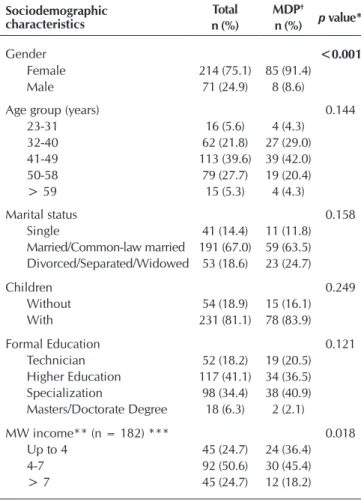
Table 1 shows the data referring to the prevalence of MPD and the association with the sociodemographic and occupa-tional characteristics of nursing workers. Gender, income and work shift were significantly associated with MPD (p<0.05).
Table 1 – Sociodemographic and occupational characteristics and the association with Minor Psychiatric Disorders in nursing workers (N=285), Paraná, Brazil, 2016-2017
Sociodemographic characteristics
Total MDP†
p value*
n (%) n (%)
Gender <0.001
Female 214 (75.1) 85 (91.4)
Male 71 (24.9) 8 (8.6)
Age group (years) 0.144
23-31 16 (5.6) 4 (4.3)
32-40 62 (21.8) 27 (29.0)
41-49 113 (39.6) 39 (42.0)
50-58 79 (27.7) 19 (20.4)
> 59 15 (5.3) 4 (4.3)
Marital status 0.158
Single 41 (14.4) 11 (11.8)
Married/Common-law married 191 (67.0) 59 (63.5) Divorced/Separated/Widowed 53 (18.6) 23 (24.7)
Children 0.249
Without 54 (18.9) 15 (16.1)
With 231 (81.1) 78 (83.9)
Formal Education 0.121
Technician 52 (18.2) 19 (20.5)
Higher Education 117 (41.1) 34 (36.5) Specialization 98 (34.4) 38 (40.9) Masters/Doctorate Degree 18 (6.3) 2 (2.1)
MW income** (n = 182) *** 0.018
Up to 4 45 (24.7) 24 (36.4)
4-7 92 (50.6) 30 (45.4)
> 7 45 (24.7) 12 (18.2)
Regarding the psychosocial aspects of work, most workers were classified as follows: passive work (43.9%); high-demand work (25.6%); active work (17.2%) and low-demand work
(13.3%). Low social support (56.5%) was reported. In the ERI relationship, there was a high effort-reward imbalance (79.6%) and absence of over-commitment (58.2%).
Considering MPD, the prevalence of high-demand work (34.4%) was the highest; low social support (69.9%); high effort-reward imbalance (73.1%) and over-commitment work (66.7%). All variables related to psychosocial aspects were significantly associated with the outcome (p<0.05) (Table 2).
After the bivariate, the analysis of the multivariate model continued. In this analysis, with possible variables associated with the outcome, the following remained as significant predictors associated with MPD: female gender, which increased in six times the chances of developing the outcome; married/common-law married status and high-demand work, with approximately three times greater probabilities; high effort-reward imbalance, with two times greater chance when compared to the non-exposed group; and presence of over-commitment, increasing almost five times the probability of developing MPD (Table 3).
Table 2 – Indicators of psychosocial stress at work among nurs-ing workers (N = 285), Paraná, Brazil, 2016-2017
Models of psychosocial stress Total MPD
†
p
value* n (%) n (%)
Demand-control and social support
Low demand (↓demand/↑control) 38 (13.3) 13 (14.0) <0.001
Active work (↑demand/↑control) 49 (17.2) 27 (29.0) Passive work (↓demand/↓control) 125 (43.9) 21 (22.6) High demand (↑demand/↓control) 73 (25.6) 32 (34.4)
Social support
Low 161 (56.5) 65 (69.9) 0.001
High 124 (43.5) 28 (30.1)
Effort-reward imbalance
ERI** ≤ 1 58 (20.4) 25 (26.9) 0.042
ERI > 1 227 (79.6) 68 (73.1)
Over-commitment
No 166 (58.2) 31 (33.3) <0.001
Yes 119 (41.8) 62 (66.7)
Note: †MPD=Minor Psychic Disorders; *p-value of the Chi-squared test; and Fish-er’s exact test for effort-reward imbalance; **ERI=Effort-Reward Imbalance.
Table 3 – Factors associated with Minor Psychiatric Disor-ders in nursing workers (N = 285), Paraná, Brazil, 2016-2017
Characteristics OR (95%CI) p value
Gender
Male 1.00
Female 6.19 (2.23-17.19) <0.001
Marital status
Single 1.00
Married/Common-law married 3.43 (1.23-9.52) 0.018 Divorced/Separated/Widowed 1.10 (0.55-2.17) 0.784
Demand-control
Low-demand work 1.00
Active work 0.53 (0.24-1.17) 0.119
Passive work 1.74 (0.79-3.83) 0.166
High-demand work 3.04 (1.34-6.87) 0.007
Effort-reward imbalance
ERI* ≤ 1 1.00
ERI > 1 2.27 (1.13-5.60) 0.047
Over-commitment
No 1.00
Yes 4.97 (2.25-10.98) <0.001
Note: *ERI=Effort-Reward Imbalance.
Occupational characteristics
Total MDP†
p value*
n (%) n (%)
Professional category 0.195
Nursing assistant 82 (28.8) 28 (30.1) Nursing technician 157 (55.1) 53 (57.0)
Nurse 46 (16.1) 12 (12.9)
Work shift 0.038
Daytime 161 (56.5) 60 (64.5)
Nighttime 124 (43.5) 33 (35.5)
Work sector 0.540
Outpatient clinic 25 (8.8) 9 (9.6)
Surgical ward 54 (18.9) 13 (14.0)
Infirmary 110 (38.6) 38 (42.0)
Emergencies 51 (17.9) 19 (20.4)
ICU 45 (15.8) 13 (14.0)
Workload (hours) 0.490
Up to 40 204 (71.6) 66 (71.0)
Over 40 81 (28.4) 27 (29.0)
Time in the Institution (years) 0.680
Up to 5 72 (25.3) 25 (26.9)
6 to 10 64 (22.5) 24 (25.8)
11 to 20 46 (16.1) 14 (15.0)
Over 20 103 (36.1) 30 (32.3)
Other work 0.540
No 217 (76.1) 71 (76.3)
Yes 68 (23.9) 22 (23.7)
Note: †MPD=Minor Psychiatric Disorders; *P-value of the Chi-squared test; and Fisher’s Exact test for children, professional category, work shift, workload and other work; **MW=Minimum Wage; in 2017=R$ 937.00; ***Participants who answered the income question.
Table 1 (concluded)
DISCUSSION
The prevalence of MPD found in this study (32.6%) was higher than that observed in other investigations with health workers, with prevalence between 17.1% and 27.9%(15,20-21). However, similar
numbers were reported in studies with nursing workers from hospitals in Bahia (35.0%) and Rio Grande do Sul (33.7%)(4,13).
Note that MPDs may reflect negatively on other aspects of per-sonal and professional life, since some studies have shown their negative relation with satisfaction(20), reduced capacity for work(4) and
Burnout(12). In the Dutch research, the reduction in work
productiv-ity was reported in three out of four workers with mental disorders, compared to one out of four among those without the illness(10).
Regarding the symptom groups, the somatic patients had a higher prevalence in the sample studied, which is in line with other studies that approached nursing workers(4,23). Among
Indian nurses, there was a high perception of stress and also a low satisfaction at work related to the increase of somatic symptoms (p<0.001). Exposure to emotional problems com-ing from contact with the patient under various conditions may lead to an increase in somatic symptoms(24).
It is considered that, in addition, the symptoms reported by nursing workers may negatively interfere with the ability to work, because occurrences such as poor sleep, easy fatigue, headaches and feeling tense, nervous or worried can affect the concentration, predisposing the worker to commit adverse events. Literature describes that both fatigue and stress, from work, intensify the conditions for an eventual mistake(25).
The symptom group related to depressive thoughts was shown to be relevant, even though it presents the lowest prevalence. These symptoms are related to the inability to play a useful role in life, lack of interest in things, worthlessness feelings and suicidal ideation that presented a prevalence of 3.9% in this study. The relationship between mental disorder and suicide, with a high predisposition in people diagnosed with depression, is reported in the literature. There is still a high risk of suicide among nurses(26).
Regarding the variables studied, in this study there was a higher prevalence of MPD among female, young, married or common-law married participants, in the nursing assistant/technician categories and with income up to four minimum wages, which confirms other investigations carried out with nursing workers(4,27).
It should also be considered that in this study, being the sample predominantly female, the greater occurrence of MPD among wom-en is reliable. The predominance of females meets the characteristics of the nursing profile in Brazil (85.1%) and in other countries, which corresponds to the historical profile of the profession(24,28).
Regarding age group, although no significant association was found with the outcome, it is emphasized that younger workers were more likely to develop MPD. A European study, which investigated approximately 40,000 nurses, also found that the psychological disorder was more pronounced among younger people and seemed to decrease throughout life(29). This finding
may be related to the fact that these workers have less experience in the development of their daily activities and, therefore, less capacity to face what can trigger the mental suffering.
Low income seems to influence mental illness(21,26),
converg-ing with the prevalence found in this sample. Purchase power can improve life conditions and, thus, reduce workers’ stress(30).
In this study, the highest prevalence was found in the nursing assistant/technician categories. Research on the stressors expe-rienced by nursing technicians evidenced their association with working conditions, relationships in the working environment and lack of work reward, such as low wages, disrespect, lack of incentive and recognition for the work done(31).
Another important aspect is that workers that develop their activities in the nursing assistant/technician categories of this study had higher percentage of education background than that required for the professional performance, such as undergradu-ate and/or graduundergradu-ate degrees. Although greundergradu-ater schooling may lead to better socioeconomic conditions and opportunities for better insertion in the labor market, in this context higher qualification can generate discontent and undesirable effects on mental health, considering that these professionals work in a public institution, where they can only ascend to another professional category by going through a public service exam(4).
Among the variables that remained associated with the outcome in the final model, in this study stands out the female gender, the married/common-law married status, the high-demand work, the high effort-reward imbalance, and the over-commitment at work. These results were also identified by other authors(4,15).
Furthermore, investigations demonstrate that MPD have obtained greater prevalence among women(4,9). A study with
hospital health professionals revealed that women were 2.36 times more likely to have it (p=0.028)(21), which is lower than
the data found in this study.
In the last decades there has been a significant increase of women in paid work. However, there was no corresponding increase of men’s participation in domestic activities. Research that evaluated work and health based on gender, considering domestic work, pointed out that, due to work volume, women are more predisposed to mental illness(27).
It is known that the greater the time spent in domestic ac-tivities, the greater the consequences on professional work, which can be aggravated when this workload is also high(27).
This condition may still explain the association of married or common-law married status with MPD, considering that most of the sample studied is composed of women, and those who have companions in their daily lives are subjected to overload of activities, facing double or triple working days.
The DCS model considers active and low-demand work to be the ideal, since it inhibits accumulated anxiety and favors motivation and learning attempts. On the other hand, passive and high-demand work are considered harmful, because the feeling of domination inhibits the perception of tension, increasing risk of psychological and physical stress and exposing workers to illness, with high-demand work being considered the greatest responsible for sickness and/or decrease of well-being. This model also assumes that a high social support in working environment can moderate the adverse impact of high-demand work(32).
A study carried out with primary health care workers showed that, in the analysis of the isolated factors effect from the DCS model, those classified in the high-demand work had 41% more prevalence of MPD than the low-demand group. Regarding low social support, those workers were 5% more predisposed to mental disorder(15). This result is in accordance with this study,
in which social support, despite being associated with the outcome, did not remain as predictor factor of MPD.
associated with an increased risk for development of MPD(7,27),
confirming the data from this investigation. In this sense, note that the reward to which ERI is referred is related to the recog-nition of work, to the prospects for professional growth and to safety at work, factors that surpass remuneration(19).
Over-commitment was a significant predictor of MPD in this sample, increasing by almost five times the odds of develop-ing the outcome. Workers with these characteristics tend to underestimate the demands, assuming excessive workloads and overvaluing their coping capacities; thus, they may be more exposed to experiencing unfavorable situations, increasing mental stress and illness(33).
Study limitations
Although the objectives of this study were achieved, there was a limitation regarding the possibility of the healthy worker bias, since the investigation was carried out in workplace. Thus, those who were eventually on leave, sick from their work, were not part of the study sample, which may underestimate the prevalence of MPD in this population. Another limiting factor was that, in this study, the indicators of domestic work and family environment, which can be a source of stress and mental illness, were not evaluated.
Contributions to the nursing field, health or public policy.
The results obtained in this study contribute to the factors influ-encing mental health situation of nursing workers, considering that
among the global goals set for 2030 are those of promoting mental health, well-being, and safe/decent working environments(34), being
fundamental the understanding of the current scenario.
CONCLUSION
The overall prevalence for MPD suspicion among nursing workers was 32.6%. Higher prevalence was found among female, young, married/common-law married, in the nursing assistant/ technician categories, with income up to four minimum wages, classified as developing high-demand work, with low social support, high effort-reward imbalance and over-commitment. Variables that remained associated with the outcome in the final model were: female gender, married/common-law married status, high-demand work, high effort-reward imbalance, and over-commitment.
These data show the need for special attention to this group of workers, and also a need for the elaboration and implementation of intervention measures, aiming at organizational improvements of work and prevention of mental disorders.
FUNDING
Financial support for conducting this research offered by the Coordination for the Improvement of Higher Education Personnel (CAPES).
REFERENCES
1. Lovvik C, Shaw W, Overland S, Reme SE. Expectations and illness perceptions as predictors of benefit recipiency among workers with common mental disorders: secondary analysis from a randomised controlled trial. BMJ Open[Internet]. 2014[cited 2017 Aug 15];4:e004321. Available from: https://doi.org/10.1136/bmjopen-2013-004321
2. Knuth BS, da Silva RA, Oses JP, Radtke VA, Cocco RA, Jansen K. Mental disorders among health workers in Brazil. Ciênc Saúde Colet[Internet]. 2015[cited 2017 Aug 10];20(8):2481-8. Available from: http://dx.doi.org/10.1590/1413-81232015208.05062014
3. Bronkhorst B, Tummers L, Steijn B, Vijverberg D. Organizational climate and employee mental health outcomes. Health Care Manage Rev[Internet]. 2015[cited 2017 Oct 15];40(3):254-71. Available from: https://doi.org/10.1097/HMR.0000000000000026
4. Magnago TSBS, Prochnow A, Urbanetto JS, Greco PBT, Beltrame M, Luz EMF. Relationship between work ability in nursing and minor psychological disorders. Texto Contexto Enferm[Internet]. 2015[cited 2017 Dec 15];24(2):362-70. Available from: http:// dx.doi.org/10.1590/0104-07072015002580013
5. Jaracz M, Rosiak I, Bertrand-Bucińska A, Jaskulski M, Nieżurawska J, Borkowska A. Affective temperament, job stress and professional burnout in nurses and civil servants. PLoS One[Internet]. 2017[cited 2017 Sep 20];6;12(6):e0176698. Available from: https://doi. org/10.1371/journal.pone.0176698
6. Giurgiu DI, Jeoffrion C, Roland-Lévy C, Grasset B, Dessomme BK, Moret L, et al. Wellbeing and occupational risk perception among health care workers: a multicenter study in Morocco and France. J Occup Med Toxicol[Internet]. 2016[cited 2017 Oct 20];11(20). Available from: https://doi.org/10.1186/s12995-016-0110-0
7. Harvey SB, Modini M, Joyce S, Milligan-Saville JS, Tan L, Mykletun A, et al. Can work make you mentally ill? a systematic meta-review of work-related risk factors for common mental health problems. Occup Environ Med[Internet]. 2017[cited 2017 Oct 20];74(4):301-10. Available from: https://doi.org/10.1136/oemed-2016-104015
8. Silva-Jr JS, Fischer FM. Sickness absence due to mental disorders and psychosocial stressors at work. Rev Bras Epidemiol[Internet]. 2015[cited 2017 Nov 10];18(4):735-44. Available from: http://dx.doi.org/10.1590/1980-5497201500040005
9. World Health Organization-WHO. Depression and other common mental disorders: global health estimates[Internet]. Geneva: WHO; 2017[cited 2017 Aug 30]. Available from: http://www.who.int/mental_health/management/depression/prevalence_global_health_estimates/en/
on work functioning trajectories after sick leave due to common mental disorders. J Occup Rehabil[Internet]. 2017[cited 2017 Aug 15];27(2):210-7. Available from: https://doi.org/10.1007/s10926-016-9647-0
11. Urbanetto JS, Magalhaes MCC, Maciel VO, SantAnna VM, Gustavo AS, Poli-de-Figueiredo CE, et al. Work-related stress according to the demand-control model and minor psychic disorders in nursing workers. Rev Esc Enferm USP[Internet]. 2013[cited 2017 Aug 15];47(5):1180-6. Available from: http://dx.doi.org/10.1590/S0080-623420130000500024
12. Silva JLL, Soares RS, Costa FS, Ramos DS, Lima FB, Teixeira LR. Psychosocial factors and prevalence of burnout syndrome among nursing workers in intensive care units. Rev Bras Ter Intensiva[Internet]. 2015[cited 2017 Sep 17];27(2):125-33. Available from: http://dx.doi.org/10.5935/0103-507X.20150023
13. Rodrigues EP, Rodrigues US, Oliveira LMM, Laudano RCS, Nascimento Sobrinho CL. Prevalência de transtornos mentais comuns em trabalhadores de enfermagem em um hospital da Bahia. Rev Bras Enferm[Internet]. 2014[cited 2017 Aug 12];67(2):296-301. Available from: http://dx.doi.org/10.5935/0034-7167.20140040
14. Mari JJ, Williams P. A validity study of a psychiatric screening questionnaire (SRQ-20) in primary care in of São Paulo. Br J Psychiatry. 1986;148:23-6.
15. Mattos AIS, Araújo TM, Almeida MMG. Interaction between demand-control and social support in the occurrence of common mental disorders. Rev Saúde Pública[Internet]. 2017[cited 2017 Sep 15];51:48. Available from: https://doi.org/10.1590/ s1518-8787.2017051006446
16. Santos KOB, Araújo TM, Oliveira NF. Estrutura fatorial e consistência interna do Self-Reporting Questionnaire (SRQ-20) em população urbana. Cad Saúde Pública[Internet]. 2009[cited 2017 Sep 15];25(1):214-22. Available from: http://dx.doi.org/10.1590/ S0102-311X2009000100023
17. Alves MGM, Chor D, Faerstein E, Lopes CS, Werneck GL. Short version of the “job stress scale”: a Portuguese-language adaptation. Rev Saúde Pública[Internet]. 2004[cited 2017 Oct 15];38(2):164-71. Available from: http://www.scielo.br/pdf/rsp/v38n2/en_19774.pdf
18. Silva L, Barreto SM. Adaptação transcultural para o português brasileiro da escala effort-reward imbalance: um estudo com trabalhadores de banco. Rev Panam Salud Pública[Internet]. 2010[cited 2017 Nov 10];27(1):32-6. Available from: http://dx.doi. org/10.1590/S1020-49892010000100005
19. Siegrist J, Starke D, Chandola T, Godin I, Marmot M, Niedhammer I, et al. The measurement of effort-reward imbalance at work: European comparisons. Soc Sci Med[Internet]. 2004[cited 2017 Nov 10];58(8):1483-99. Available from: https://doi.org/10.1016/ S0277-9536(03)00351-4
20. Pai DD, Lautert L, Souza SBC, Marziale MHP, Tavares JP. Violence, burnout and minor psychiatric disorders in hospital work. Rev Esc Enferm USP[Internet]. 2015[cited 2017 Sep 20];49(3):457-64. Available from: http://dx.doi.org/10.1590/S0080-623420150000300014
21. Alves AP, Pedrosa LAK, Coimbra MAR, Miranzi MAS, Hass VJ. Prevalência de transtornos mentais comuns entre profissionais de saúde. Rev Enferm UERJ[Internet]. 2015[cited 2017 Oct 12];23(1):64-9. Available from: http://www.epublicacoes.uerj.br/index. php/enfermagemuerj/article/view/8150
22. Santana LL, Sarquis LMM, Brey C, Miranda FMA, Felli VEA. Absenteeism due to mental disorders in health professionals at a hospital in southern Brazil. Rev Gaúcha Enferm[Internet]. 2016[cited 2017 Aug 15];37(1):e53485. Available from: http://dx.doi. org/10.1590/1983-1447.2016.01.53485
23. Tito RS, Baptista PCP, Silva FJ, Felli VEA. Mental health problems among nurses in paediatric cardiac intensive care. Br J Nurs[Internet]. 2017[cited 2017 Oct 15];26(15):870-3. Available from: https://doi.org/10.12968/bjon.2017.26.15.870
24. Gandhi S, Sangeetha G, Ahmed N, Chaturvedi SK. Somatic symptoms, perceived stress and perceived job satisfaction among nurses working in an Indian psychiatric hospital. Asian J Psychiatr[Internet]. 2014 Dec[cited 2017 Oct 12];12(1):77-81. Available from: https://doi.org/10.1016/j.ajp.2014.06.015
25. Forte ECN, Machado FL, Pires DEP. Nursing’s relationship with medication errors: an integrative review. Cogitare Enferm[Internet]. 2016[cited 2017 Dec 15];21(Esp):01-10. Available from: http://dx.doi.org/10.5380/ce.v21i5.43324
26. Silva DSD, Tavares NVS, Alexandre ARG, Freitas DA, Brêda MZ, Albuquerque MCS, et al. Depression and suicide risk among nursing professionals: an integrative review. Rev Esc Enferm USP[Internet]. 2015[cited 2017 Sep 17];49(6):1023-31. Available from: http://dx.doi.org/10.1590/S0080-623420150000600020
27. Rotenberg L, Silva-Costa A, Griep RH. Mental health and poor recovery in female nursing workers: a contribution to the study of gender inequities. Rev Panam Salud Publica[Internet]. 2014 [cited 2017 Oct 10];35(3):179-85. Available from: https://doi. org/10.1177/1049732314557087
28. Machado MH, Aguiar Filho W, Lacerda WF, Oliveira E, Lemos W, Wermelinger M, et al. Características gerais da enfermagem: o perfil sócio demográfico. Enferm Foco[Internet]. 2016[cited 2017 Nov 10];7:09-14. Available from: http://revista.portalcofen.gov. br/index.php/enfermagem/article/view/686/296
29. Van der Heijden BI, Mulder RH, König C, Anselmann V. Toward a mediation model for nurses’ well-being and psychological distress effects of quality of leadership and social support at work. Med [Internet] 2017[cited 2017 Sep 10];96(15):e6505. Available from: https://doi.org/10.1097/MD.0000000000006505
31. Pereira SS, Teixeira CAB, Reisdorfer E, Vieira MV, Gherardi-Donato ECS, Cardoso L. The relationship between occupational stressors and coping strategies in nursing technicians. Texto Contexto Enferm[Internet]. 2016[cited 2017 Oct 15];25(4):e2920014. Available from: http://dx.doi.org/10.1590/0104-07072016002920014
32. Theorell T, Karasek RA. Current issues relating to psychosocial job strain and cardiovascular disease research. J Occup Health Psychol[Internet]. 1996[cited 2017 Aug 20];1(1):9-26. Available from: https://doi.org/10.1037/1076-8998.1.1.9
33. Martinez MC, Latorre MRDO, Fischer FM. Stressors influence work ability in different age groups of nursing professionals: 2-year follow-up. Ciênc Saúde Colet[Internet]. 2017[cited 2017 Aug 25];22(5):1589-600. Available from: http://dx.doi. org/10.1590/1413-81232017225.09682015